Update on the Potomac
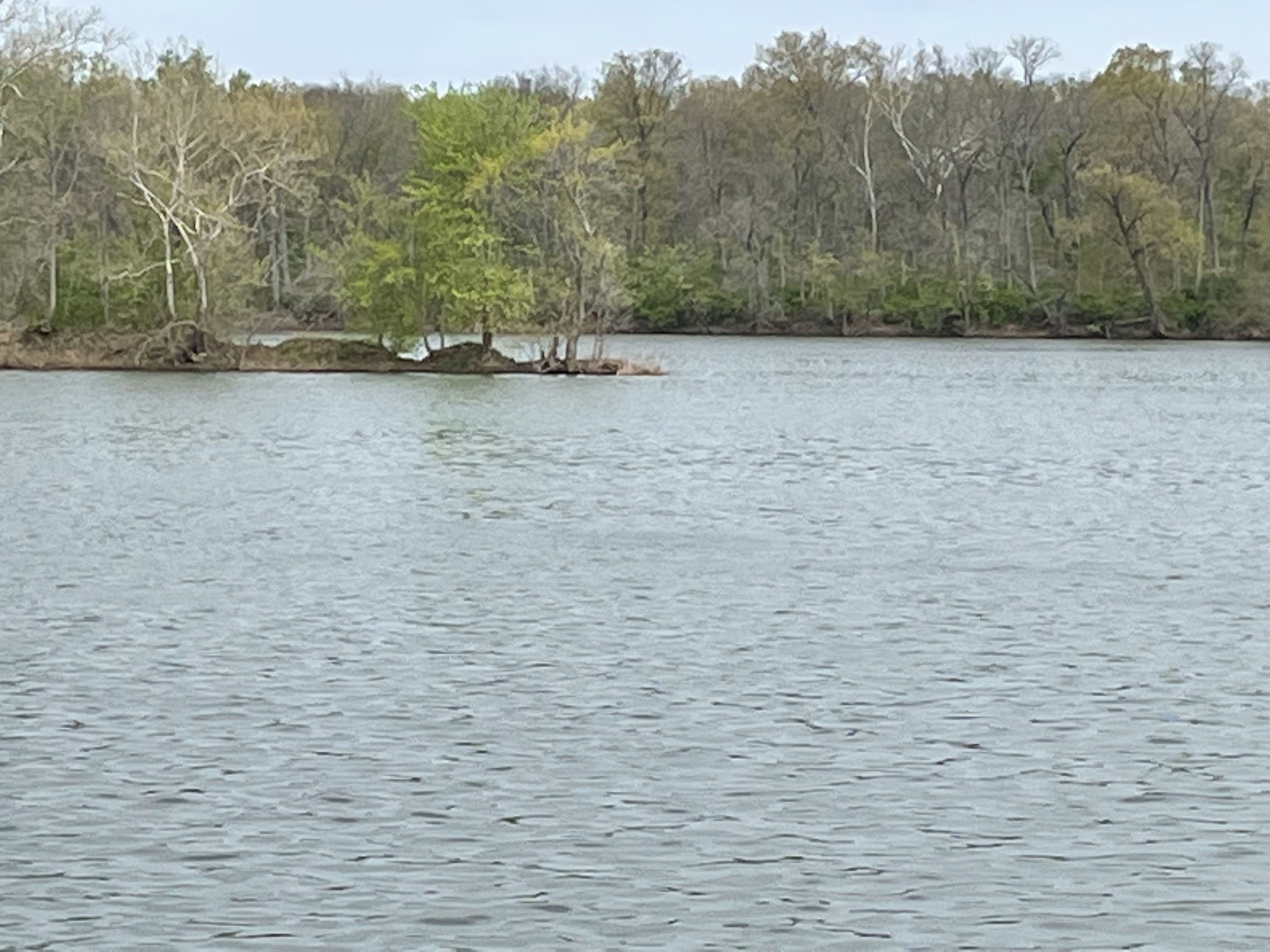
We returned to Algonkian Park when the Potomac River was running bank-to-bank and about to spill onto its flood plain (Fig. 1).
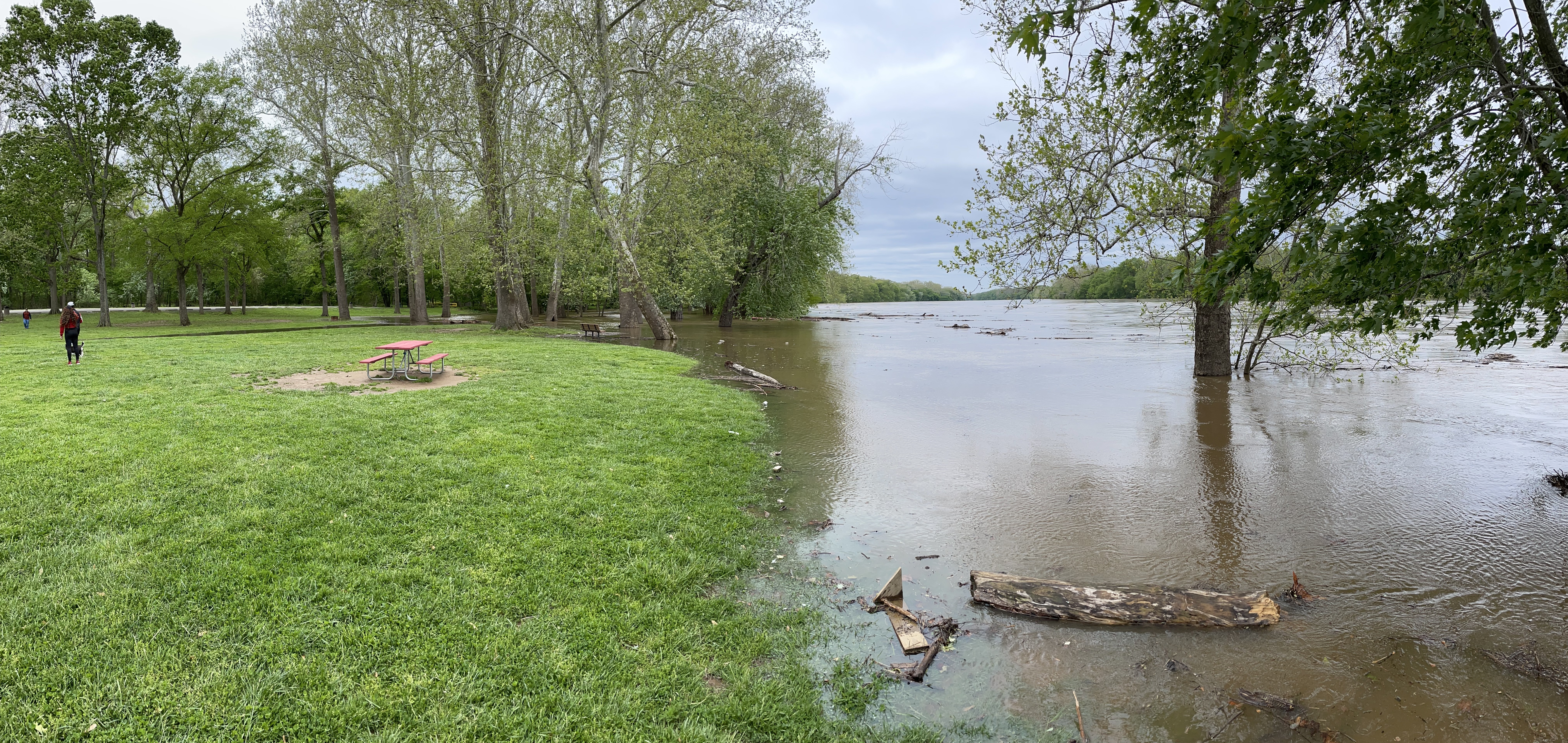
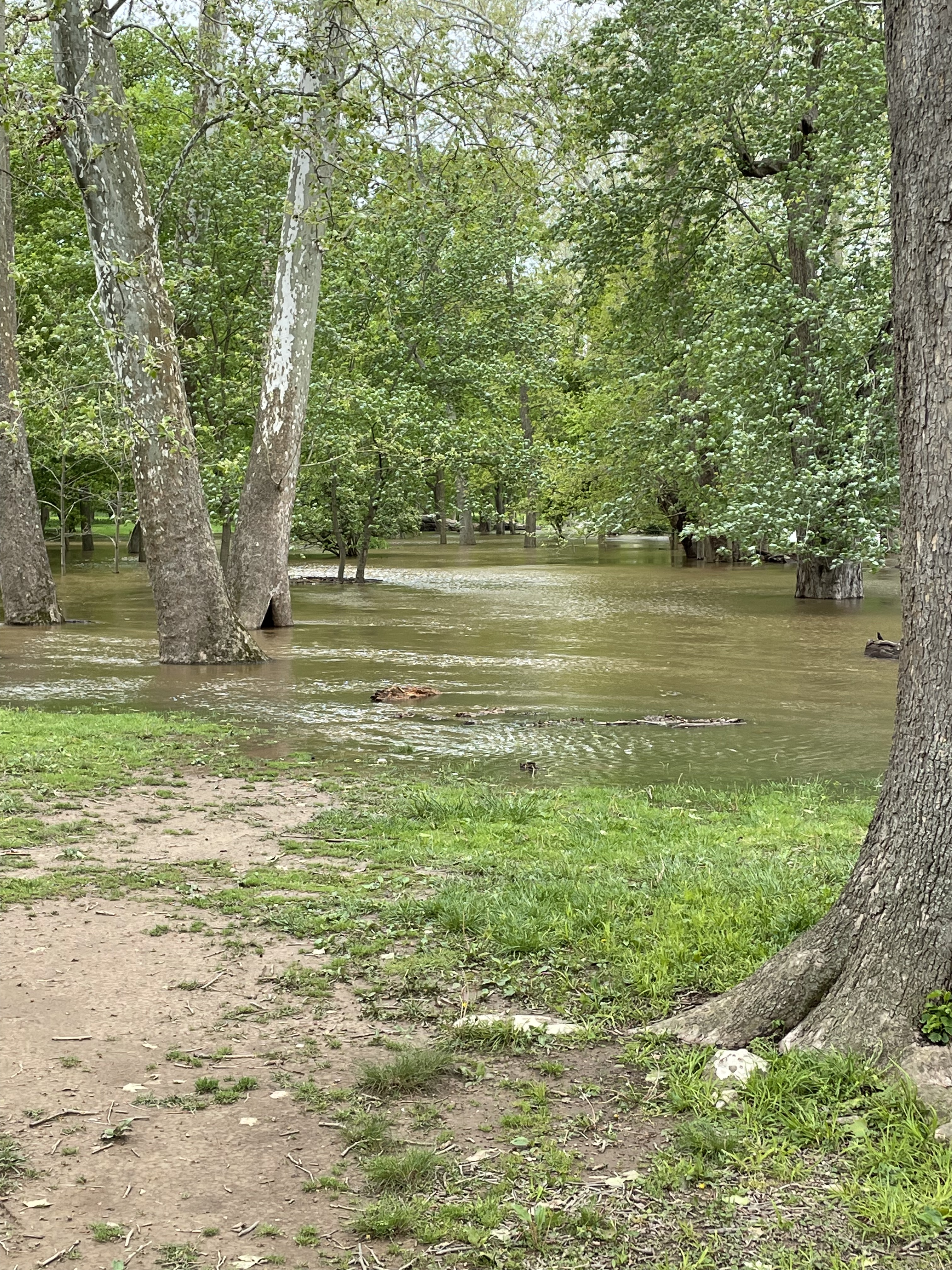
The water level is several feet higher than on our last visit, and is expected to crest in two days. Unfortunately, I won’t be here to document that event, but I expect the water to be covering the picnic table placed on the active floodplain in Fig. 1. Low areas were inundated (Fig. 2).
Unfortunately, I didn’t take a photo of several large logs resting on the grassy floodplain, deposited by a previous high-water event. Nevertheless, a log can be seen lodged against the bank in Fig. 1, and many more were racing by at 3 feet/second, some more than twenty feet long.
Because of its dynamic height and flow strength, the Potomac is constantly switching from eroding its banks to depositing fine sediment and organic matter on its floodplain. Still, it is downcutting into previous river deposits and spring floods are nothing more than a temporary anomaly in the inexorable transport of sediment from the Blue Ridge Mountains to Chesapeake Bay.
What’s the Difference?
Recent posts have discussed metamorphic rocks found along the banks of the Potomac River in Northern Virginia, buried and deformed during closing of the Iapetus ocean, between 1000 and 500 Ma (million years ago). Those rocks are schist, which formed at depths of about 15 km (10 miles), and temperatures of approximately 500 C (about 1000 F). The original mudstone was ductile under these conditions and the sedimentary layers (bedding) were folded like taffy, while low-melting minerals like quartz were squeezed out and filled cracks and voids, to form veins and irregular, rounded bodies. As extreme as these conditions sound, these are intermediate-grade metamorphic rocks.
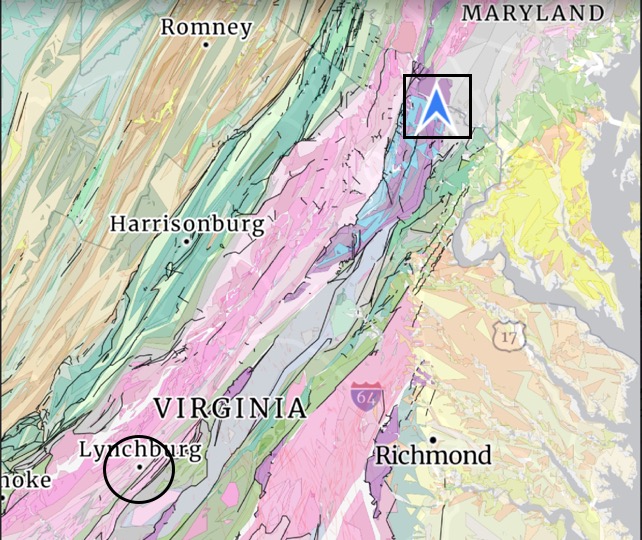
I took a trip to Lynchburg, Virginia (Fig. 1), to see some higher grade metamorphic rocks that were formed at about the same time.
I looked at three exposures of Precambrian rocks on this trip. I would love to show all of the photos I took of the metamorphic and igneous structures I saw, but I will have to restrain myself. (I’ll try anyway…)
The first locale we visited was Ivy Creek Park (Fig. 2), where there was an exposure of the Lynchburg Group that revealed one of its many facies.
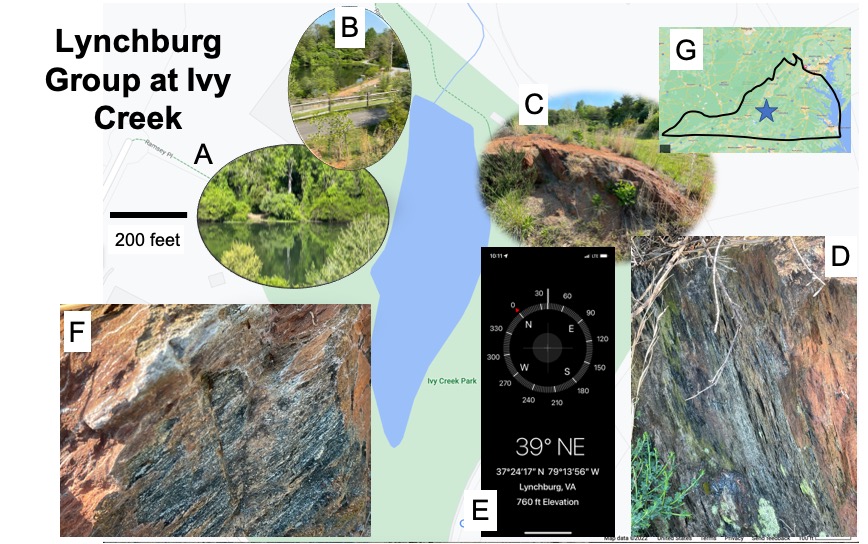
The rocks seen in Fig. 2 (especially Plate F) are probably either biotite schist or graphite schist. Without petrological analyses that are unavailable at this time, there is no way to tell–not that it would matter. The protoliths of these metamorphic rocks were fine-grained sediments, probably deposited in either a back-arc basin or continental subduction zone. They were buried to at least 10 miles and compressed by colliding tectonic plates; however, this small outcrop showed no evidence of ductile deformation (e.g., folds or quartz inclusions). Note that the strike of the foliation in these rocks (Fig. 2E) is consistent with the orientation of geologic trends seen in Fig. 1. So far, so good…
Our next stop took us to Candler Mountain, where a road cut exposed metamorphic rocks for more than 100 m along a narrow road, still part of the Lynchburg Group (Fig. 3).
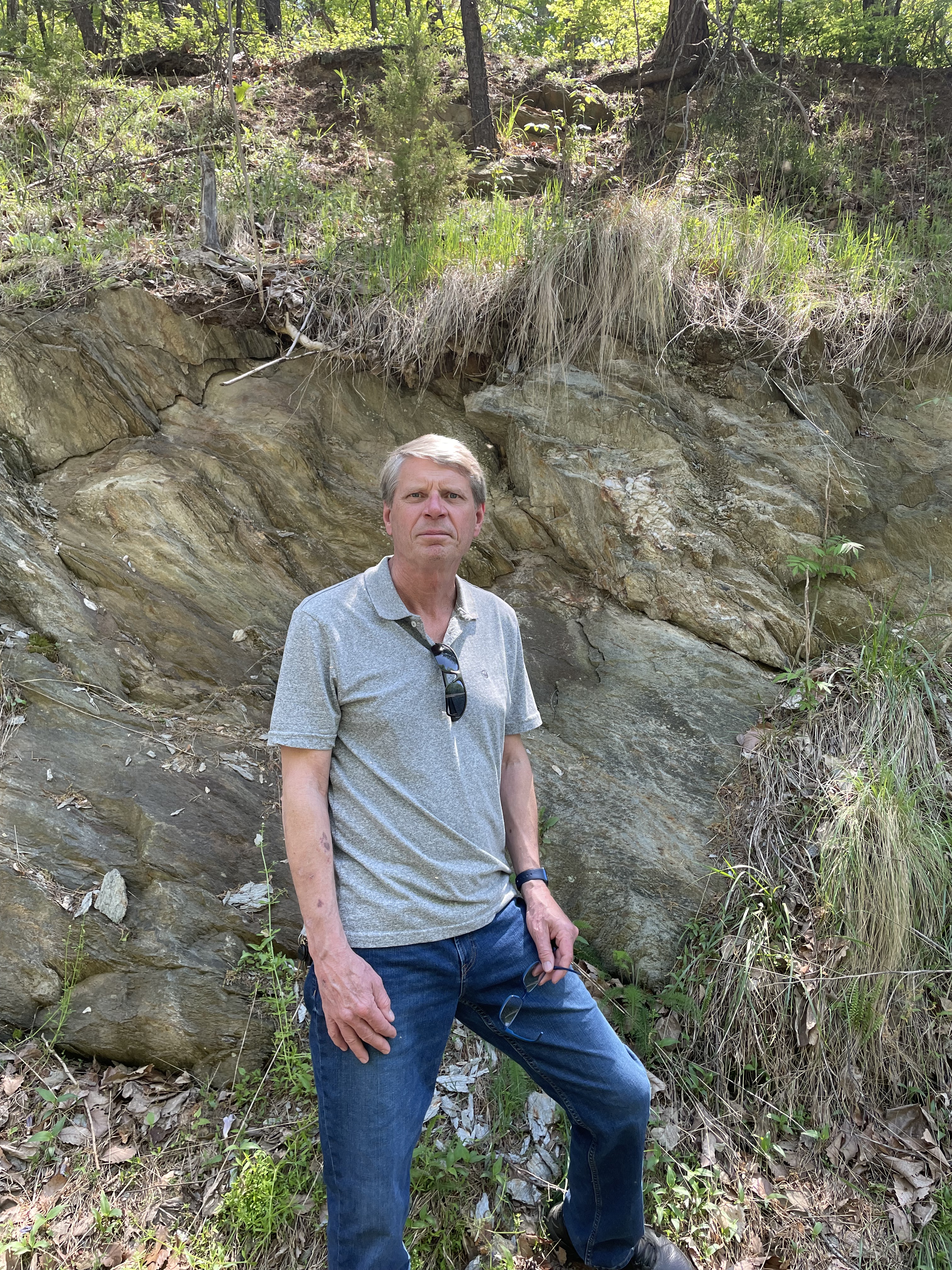
This exposure revealed many fascinating metamorphic textures–too many to share here. I’m going to focus on extensional features, which might not be expected since I just said that these rocks were deformed during collision of solid land masses, at least island chains like Japan of the Philippines, if not continents.
The context for this situation–stretched crust in a tectonic plate collision–is best illustrated in a cartoon (Fig. 4), which shows how the crust can actually stretch to release the stress caused by volcanism, as subducting crust melts under increasing pressure and temperature.

Keeping Fig. 4 in mind, let’s look at the rocks we found on Candler Mountain.

Phyllite is a low-grade metamorphic rock that forms from mud stone at fairly low temperature and pressure (Fig. 6). It is associated with convergent tectonic plate boundaries, and is found in both subduction zones (see Fig. 4) and continental collisions.

Focusing on extensional tectonics for this post, we can see some of the textures we’ve seen elsewhere on Candler Mountain.


The extensional features seen in Figs. 7 and 8 are consistent with these rocks being deformed as suggested in a back-arc basin (Site 1 in Fig. 4) but not buried too deeply (Site e in Fig. 6). However, they are not horizontal, as indicated by the steep dip seen in Fig. 8 (actually they are dipping at more than 60 degrees).
After being heated in the back-arc basin environment, they would have been crushed by the imminent collision of continental land masses, which cannot be subducted because of the low density of the granitic rocks that comprise them. During this compressional stress, they were folded and probably transported many miles along thrust faults, without being buried deeply enough to transform them into schist.
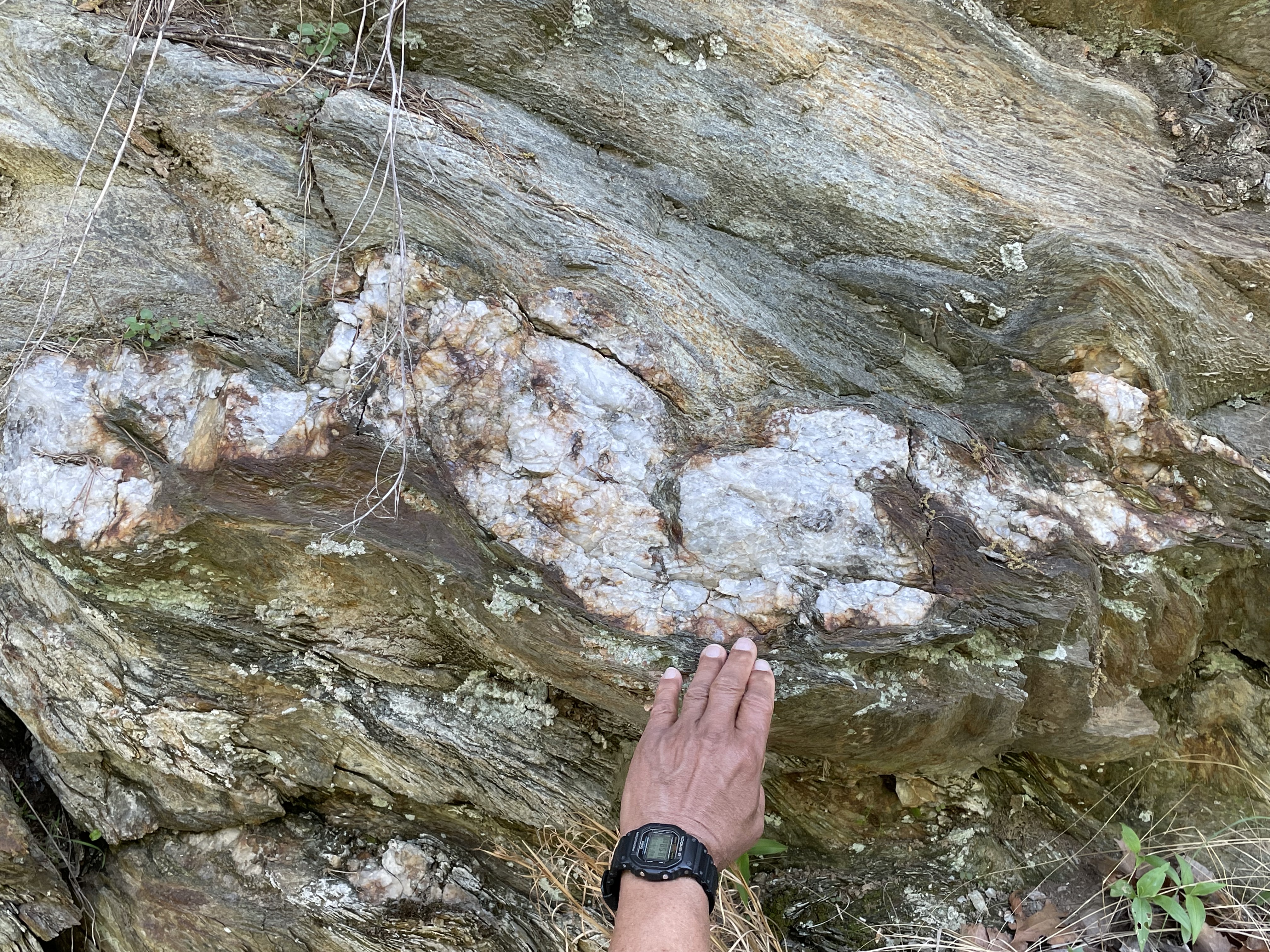
The tilting of these rocks is due to large-scale folding during this later compressional period. The rocks of this area are actually part of an anticlinorium–a region filled with anticlines of every scale, from inches to miles in width. There are a couple of additional superimposed structures I would like to mention before we move on.
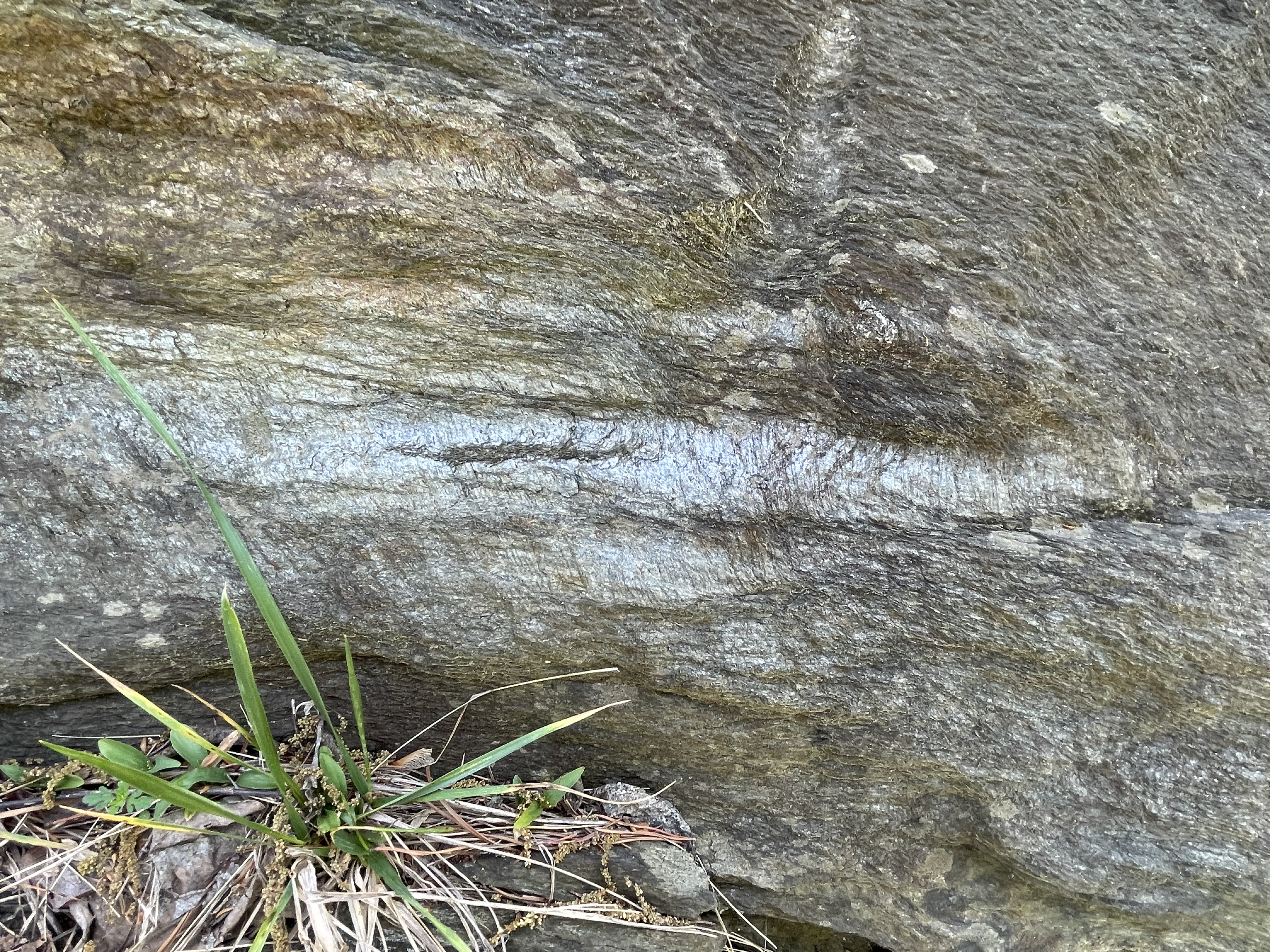

There is one more piece of the puzzle that we observed on our field trip. Before we finish with a wave of our hands (and a good bit of conjecture), let’s review.

The dashed line in Fig. 12 is oriented approximately in line with the general lithological trends in Fig. 1, as well as several faults (solid lines in Fig. 1) that have been identified. This line is meant to delineate the schist and phyllite zones (~300 C isotherm in Fig. 6) within a back-arc basin. Schist is high grade. But what do we expect to find at Site C?
The last location we visited was a slope, the edge of a bulldozed lot covered by an apartment complex. None of the rocks we saw were in place, but they hadn’t been moved far, maybe a few yards. We weren’t looking for orientation data, so that wasn’t a problem. What we found was very interesting.
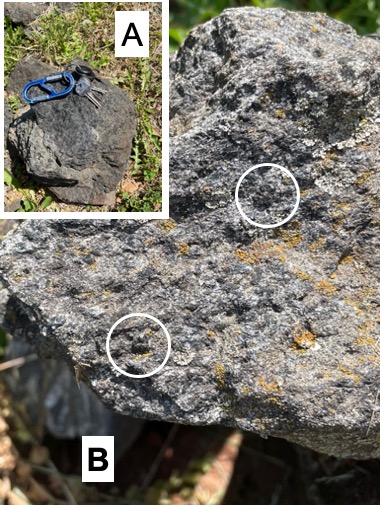
The exposure faced a ravine that had been partly filled to support a road, so we followed the slope until we found more loose boulders with a different lithology.

I cannot say, from the available photographs, which lithology in Fig. 14 is intrusive. However, those details are not the purpose of this post; between the high-grade (schist and gneiss) and low-grade (phyllite) metamorphic rocks we’ve observed, there is a line of intrusive and possibly volcanic rocks with the same general orientation (about 40 degrees east of north). We cannot say anything about post-emplacement deformation of these magmatic rocks, but it is curious that they lie between metamorphic rocks of different grade, in an area with several identified faults (see Fig. 1) having the same orientation.
I have followed one interpretation of the rocks discussed in this post, that they were deposited as muddy sediments about a billion years ago and deformed when volcanic processes stretched the crust. The subduction zone that created this tectonic environment was subsequently caught between opposing continental plates and crushed like a beer can. At some point–probably continuously until the final cataclysm–basaltic magma collected in a subterranean chamber and periodically emerged, creating submarine basaltic flows.
I had a lot of fun with this post (and crushed a few beer cans myself)…
Seneca Regional Park: The Rocks are Awakened
The title of this post refers to the furthest upstream exposure of Precambrian metamorphic rocks (see a previous post) along the Potomac River I have encountered; Precambrian schists rise from the riverbed and surrounding hills, reflecting the plate-tectonic processes that created them, but in a human-friendly form. The perfect harmony of rocks and life is revealed in the mature forests lining the Potomac River (Fig. 1).
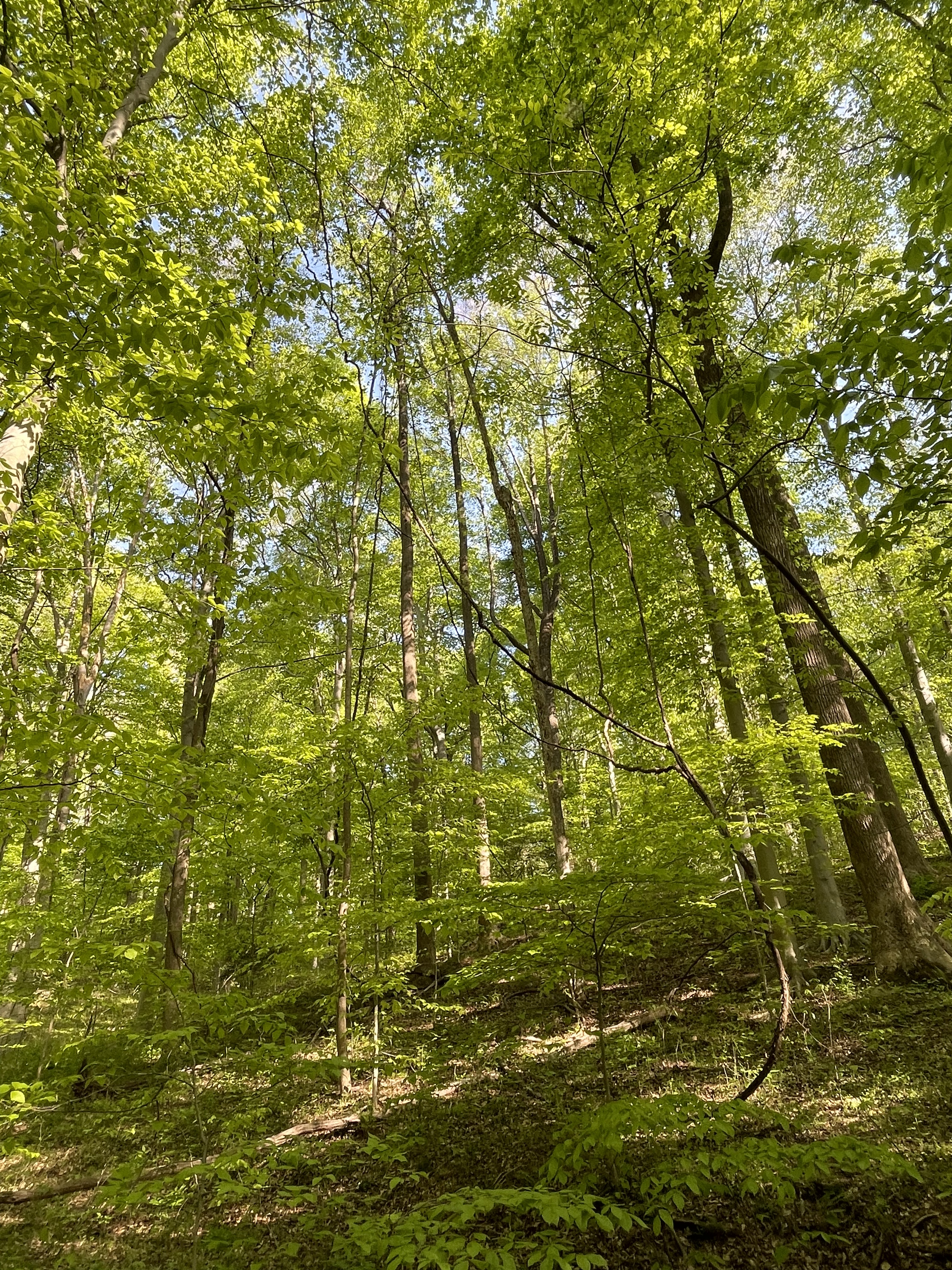
I have been reporting on the geology along the Upper Potomac in recent posts (e.g., this post), revealing a braided river that is cutting into flood deposits, until it reaches a bottleneck at Great Falls, where the earth slows the Potomac’s rush to the sea.
This isn’t an overview post, however, so Fig. 2 shows only shows today’s study area. Note that there are three inset maps; the largest (Seneca Park) will be referred to most often in this post.

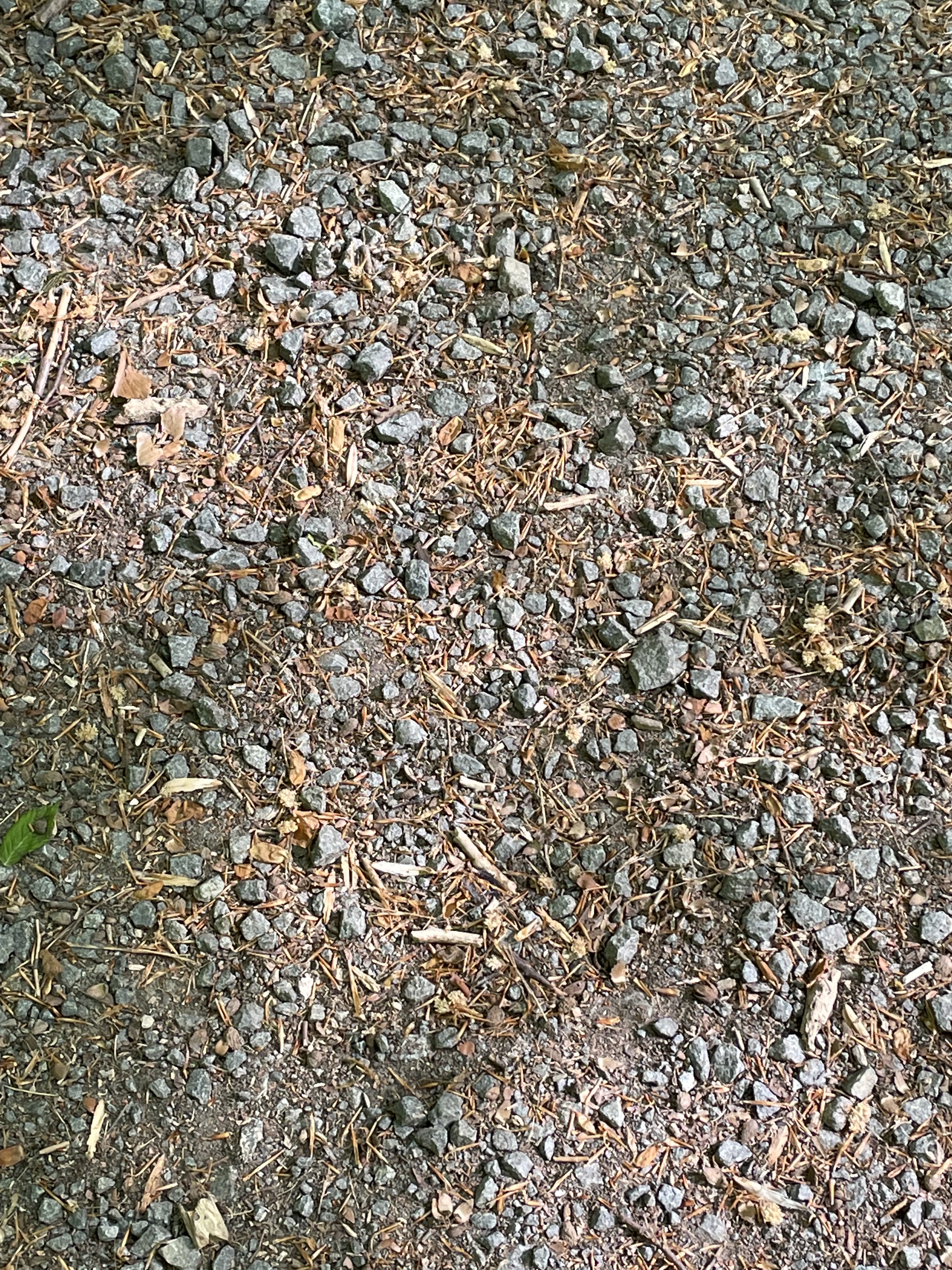
Starting from the parking lot (P in the Seneca Park inset of Fig. 2), we proceeded towards site A, surrounded by a mature forest (see Fig. 1) established on a thick soil horizon (Fig. 3) that was incised by creeks (runs in NOVA), cut into the regolith surmounting the Precambrian basement rocks (Fig. 4).

The Potomac River at Site A (Dave’s Lookout on Fig. 2) is made up of several islands (Fig. 5) and includes remnants of the Patowmack Canal (Fig. 6), which was part of George Washington’s lifelong dream to make the Potomac River navigable, to open up the frontier as far as Ohio.

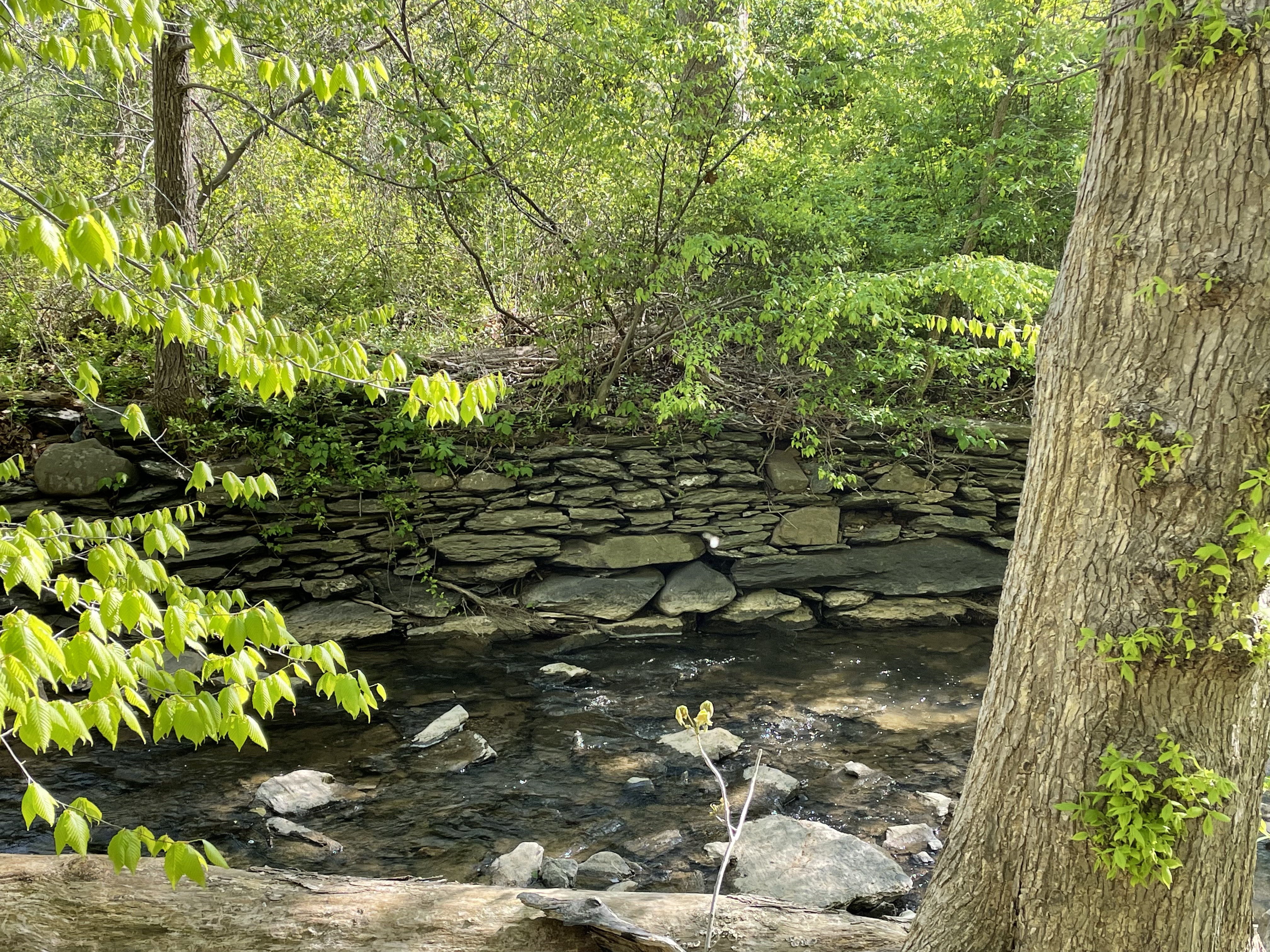
The ready supply of fragments of flat rock to construct the canal came from many exposures of the same schist we saw at Great Falls and River Bend Park (1000 to 500 Ma old).

The chemical alteration of the original sedimentary rock (mud deposited more than one-billion years ago) to concentrate quartz (Fig. 8) is evidence of very high temperature and pressure caused by deep burial and deformation during a geological process called metamorphism.
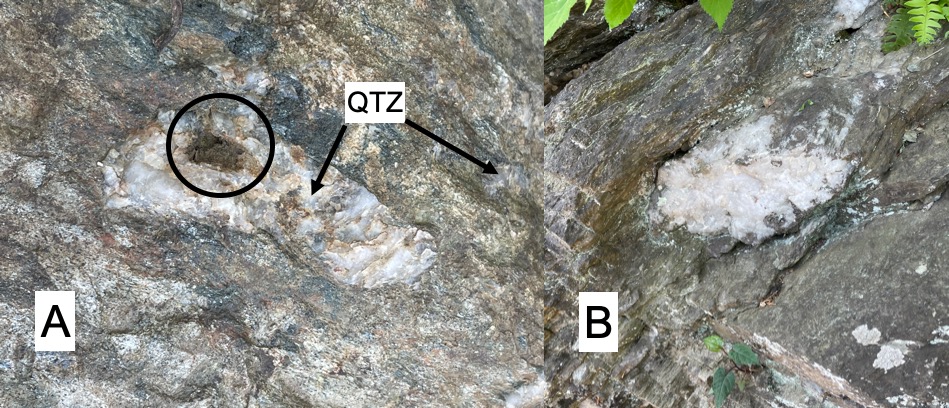
The formation of quartz porphyroblasts within a foliated rock like schist suggests that heat and pressure were distributed irregularly within the study area, melting the silica out of the parent rock but not destroying its original sedimentary layering. This is a fine line that is poorly understood because the extreme temperatures and pressures that produce schist can only be reproduced in the lab at scales less than a millimeter.

Figures 8 and 9 are from the same exposure, taken less than 100 feet apart horizontally, and maybe (I’m guessing) about 30 feet separated them vertically (in their original reference frame). These schists were tilted by normal faults that occurred hundreds of millions of years after deformation, during the breakup of Pangea.
The path took us to Site B (see Fig. 2 for location), along a very shallow channel nearly blocked by a gravel bar (Fig. 10). The Potomac flood plain was wider here but erosion was just as evident as further upstream.
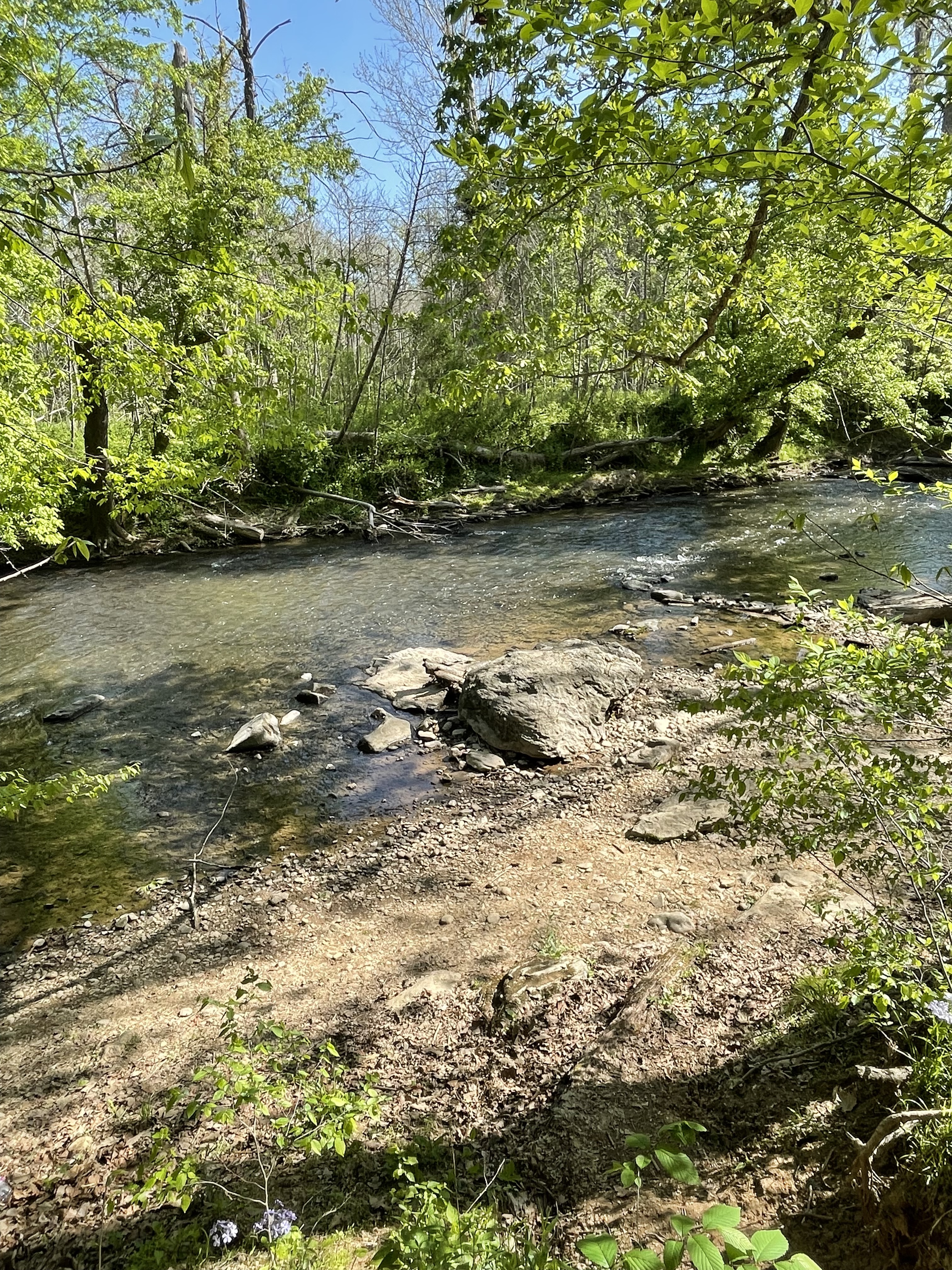
The Potomac’s floodplain is much narrower here than further upstream, as revealed in the topographic map (Fig. 2). Note the number of valleys leading to the Potomac in Seneca Park. However, because of the sudden decrease in channel size, a bottleneck is formed that causes substantial deposition. This created the islands seen in Fig.2 in the past as well as a well-developed flood plain (Fig. 11) characterized by greater foliage than at Horsepen Run. It floods frequently at this bottleneck because the river’s flow is constrained to a narrow and shallow channel as the Potomac approaches Great Falls.
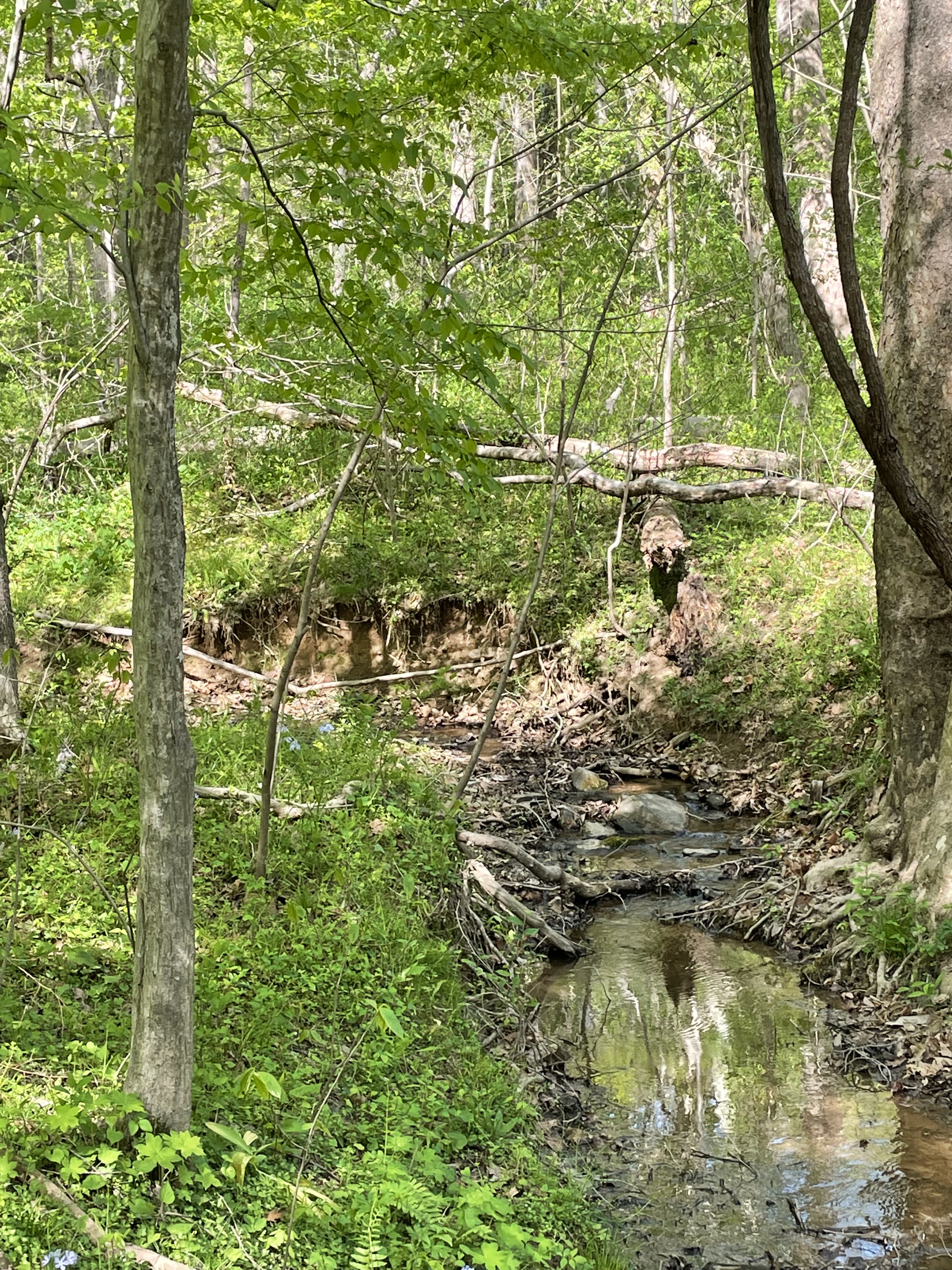
The return to the parking lot (labeled P in Fig. 2) followed a steeper valley lined with outcrops of the same Precambrian schist we saw at Site A, with foliation oriented the same (dipping to the south). The stream followed the rocks (along strike) to the southwest, finding an irregular path around bedrock that surfaced constantly. There were many ledges and dead ends, resulting in shallow pools, along the meandering path the stream had forged in its effort to join the Potomac (Fig. 12).

This was an interesting field trip. We saw how the rocks can rise up from the bowels of the earth to change the character of rivers, where they flow and what they can transport.
Maybe someday we will understand the earth well enough to explain Figs. 5, 10 and 11, using the geological clues presented in Figs. 7-9. The highest mountains and deepest canyons are the result, in large part, to the secrets hidden within the material science of geochemical processes.
Someday we may move mountains…
Geological Bottleneck
Last week’s post showed some of the effects of erosion along the banks of the Potomac River, which flows lazily along a broad floodplain while not becoming so sluggish that it meanders. We know this condition doesn’t last, however, because the broad and anastomosed channels of the Potomac are forced into a narrow throat bordered by immovable Precambrian schist, as we discovered in a previous field trip. Today I am going to approach this series of cataracts from upstream and document the changing river morphology (Fig. 1).

Previous posts have described the floodplain morphology from Algonkian Regional Park (circled area to the upper left of Fig. 1) to the west (upstream), a terrain defined by relict riverbed topography incised by modern stream erosion from the surrounding terraces. At the other extreme, we visited Great Falls in a previous post, where we discovered Precambrian schists that resisted the river’s erosional power.
The field trip began at the Nature Center (black circle at top of Riverbend Park inset map). We followed a trail over poorly sorted gravelly sand (Fig. 2) cut by numerous channels, through what appeared to be a mature and healthy forest. I don’t know what kinds of trees they were but they were at least 80 feet in height.

The assortment of gravel and boulders seen in Fig. 2 is classified as a conglomerate. The rounded boulders and poor sorting suggests that these are fluvial. The boulders became round by rolling along the bottom of the river. This conglomerate (sediment is an unconsolidated rock to a geologist) is matrix supported, which suggests that high-flow events were common, but the majority of the sediment was the product of chemical weathering of rocks like the diabase we saw in a previous post. (Minerals with complex compositions react to water easily, compared to quartz.)
I will return to this later in the post.
However, there were angular pieces of a fissile, dark rock showing up as regolith along the trail (Fig. 3), suggesting that the conglomeratic sediments were a thin veneer over resistant bedrock.

The trail dropped to the river where outcrops of resistant bedrock appeared within the shallow river channel (Fig. 4). This was a substantial change from a few miles upstream

Our path follows the red line along the river bank in the Riverbend inset map of Fig. 2. We are approaching Great Falls. The trail is no longer constructed on conglomerate, but now is traversing sandy silt sediments deposited during the Holocene epoch (Fig. 5).

Schistose rocks with nearly vertical layering appear along the riverbank, and begin to obstruct the trail (Figs. 6 and 7).


Our short hike led to the Aqueduct damn, which supplies water to Washington DC (Fig. 9), where the river transforms into a raging torrent that is challenged only by experienced kayakers.


The transformation of the Potomac, from the placid stream in Fig. 4, to the convoluted and dangerous channel that follows no commonsense rules of river flow seen in Fig. 11, took place in less than two miles (see Fig. 1). I know because I walked the river bank, passing from one era to another before being confronted by a past that will not die…
There is one last point I’d like to make in this post. The imposition of Holocene erosion–streams fed by the Pleistocene highlands bounding the Potomac floodplain–applies here as well as in the gentler topography we saw upstream. The transition from the conglomerate we saw at a major stream draining into the Potomac (Fig. 2) to the more typical fluvial sediment (sand/silt/mud) we found further downstream (Fig. 5) reflects the input of erosion of bedrock only a few miles from the Potomac. This was documented in a previous post, which showed the breakdown of regolith into cobbles, which were transported inexorably to the Potomac.
It is my opinion that this is what has been recorded in the rocks along the banks of the Potomac River, creating the juxtaposition of sediment types along the path of a river that is draining the roots of an ancient mountain range.
The Dynamic Potomac
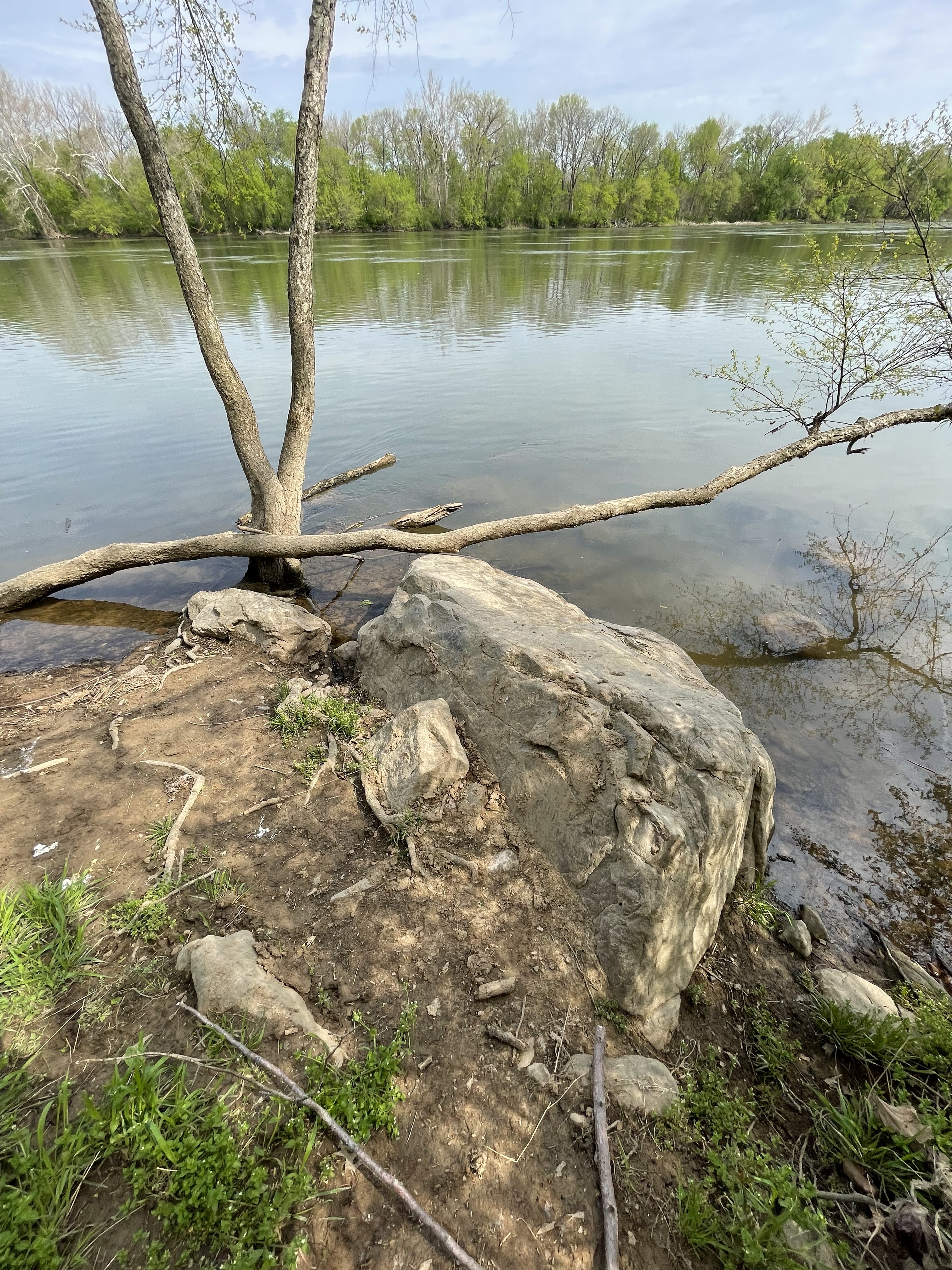
This post returns to the Potomac River. We have previously discussed several features along this stretch of the famous waterway: Precambrian metamorphic rocks at Great Falls; sediment contributed by tributaries as well as erosion; and emplacement of intrusive rocks during rifting of Pangea to form the Atlantic Ocean. This time we’ll see evidence of recent erosion, as evidenced in Fig. 1, which shows a large block of stone that has collapsed along the steeply eroded south bank. The bank consists of silt and clay just like further upstream.
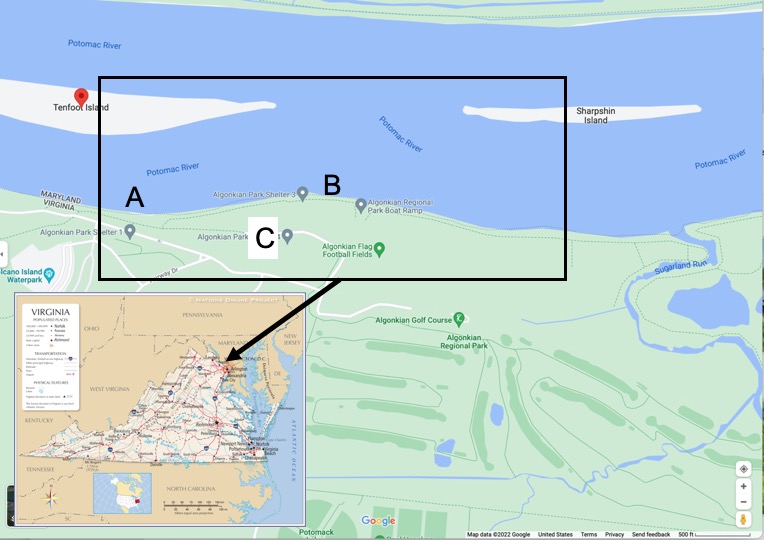
Site A (see Fig. 2) is where Fig. 1 was taken. The meandering stream to the east in Fig. 2 is Sugarland Run, which we examined further south, near its headwaters, in a previous post. The Rock-D geologic map suggests that the river is underlain by a Triassic (237-203 Ma) fining-upward sedimentary sequence consisting of sands to shales. A close-up image of the boulder at Site A (Fig. 3), despite a covering of mud and some biological material, reveals no apparent bedding. This is contrary to the description of the Balls Bluff (sedimentary) Member of the Bull Run Formation, contemporaneous with the Newark Supergroup although no longer considered stratigraphically equivalent.
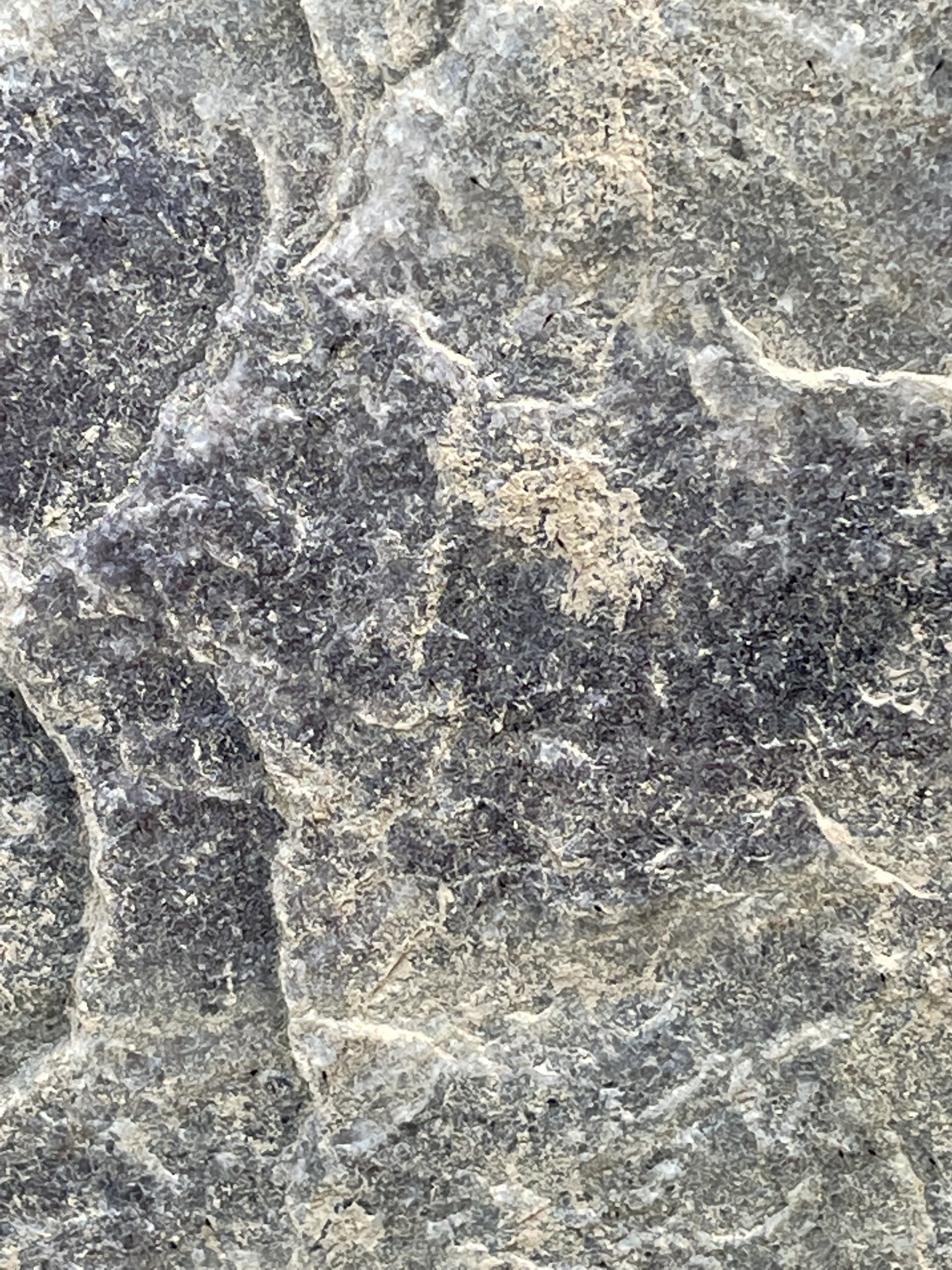
Figure 3 doesn’t look sedimentary to me, but more like the diabase we saw further upstream on Sugarland Run. The streak of white material in the upper-left corner looks like quartz. If these are Triassic sedimentary rocks, they wouldn’t have been metamorphosed, so this exposed block is anomalous. It is possible that this is an outlier of sedimentary rocks that were thermally altered when intrusive rocks were emplaced during Triassic. The area consists of faulted and folded diabase, sedimentary rocks, and metasediments–intruded, deposited or altered, respectively, during the breakup of Pangea during the Triassic period.
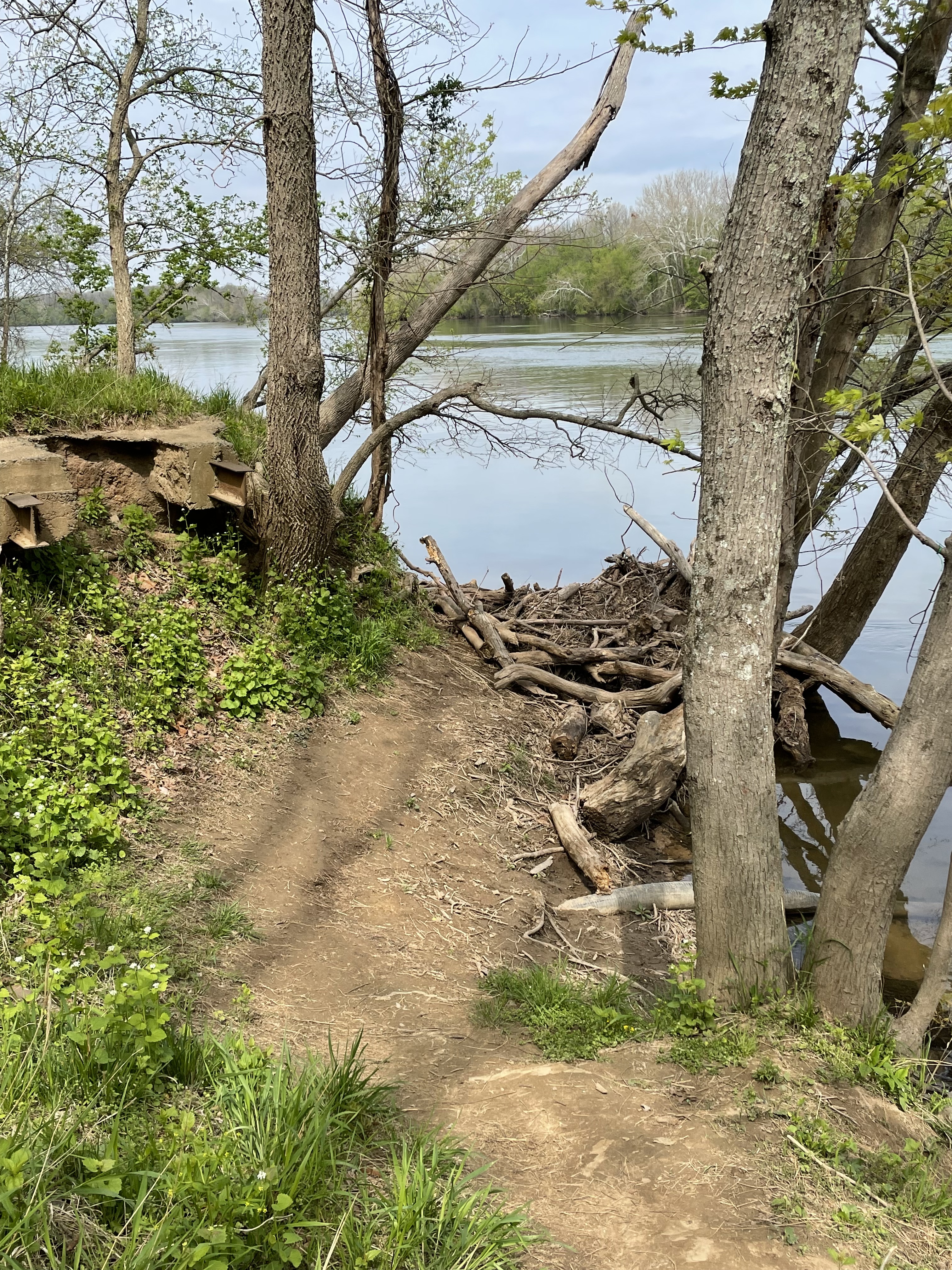
The bank is steeply eroded with trees collapsing into the river, indicating rapid lateral erosion during the lifetime of a typical tree (less than a century).
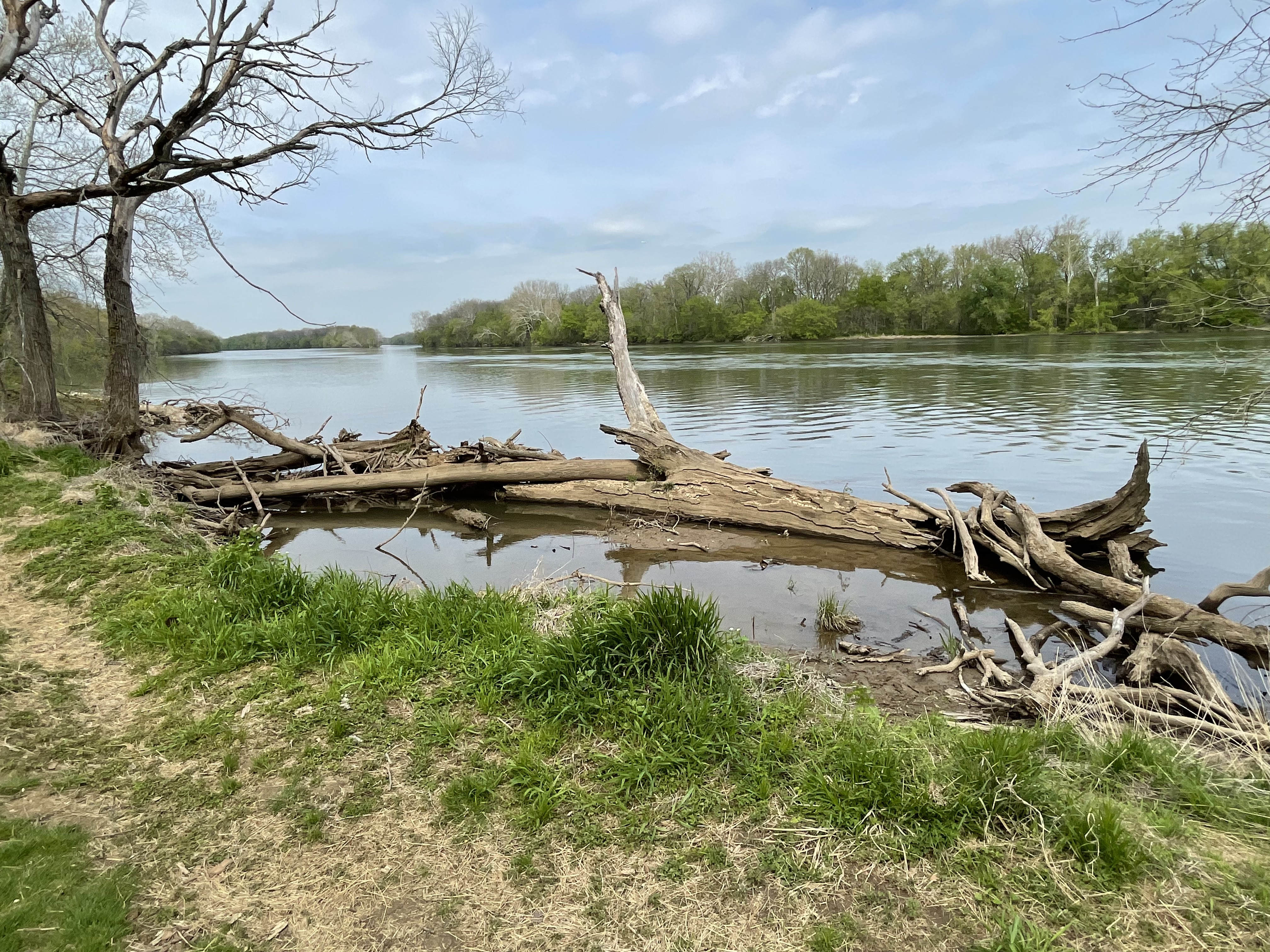

This section of the southern flank of the Potomac River is characterized by a wide floodplain covered with hummocks that represent bars on the original river bed. Superimposed on this older morphology is a natural levee (Fig. 7) that varies in height, steepness, and distance from the modern channel along the river. This landscape has been cut by numerous streams that drain the Pleistocene highlands overlooking the incised river.
Substantial islands (Figs. 5 and 6)divide the Potomac river into two anastomosed channels (see Fig. 2) that have become unstable during the last ten thousand years, as demonstrated by rapid downcutting and lateral instability (Figs. 1 and 4).
The Subsiding Tidal Basin

In previous posts from northern Virginia I have discussed Precambrian orogenies, the rifting of Gondwana to form the Atlantic Ocean, erosion of the deep-seated roots of mountains, and the deposition of sediments along the modern Potomac River. With so much of earth’s history displayed here in my new home, I always keep my eyes open for the next geological adventure. I wasn’t disappointed when I walked along the banks of the famous Tidal Basin in Washington D.C. (Fig. 1), surrounded by monuments to Jefferson, Franklin Roosevelt, Martin Luther King Jr., Lincoln, George Washington…
The Tidal Basin itself (Fig. 2) is a monument, cherished by D.C.’s residents, because the cherry trees that line its banks, which were in bloom during my visit, were originally given to the United States by Japan in 1912. However, it has another symbolic meaning, as a reminder that the earth doesn’t stand still, not even long enough for our civilizations to flourish and decline naturally.
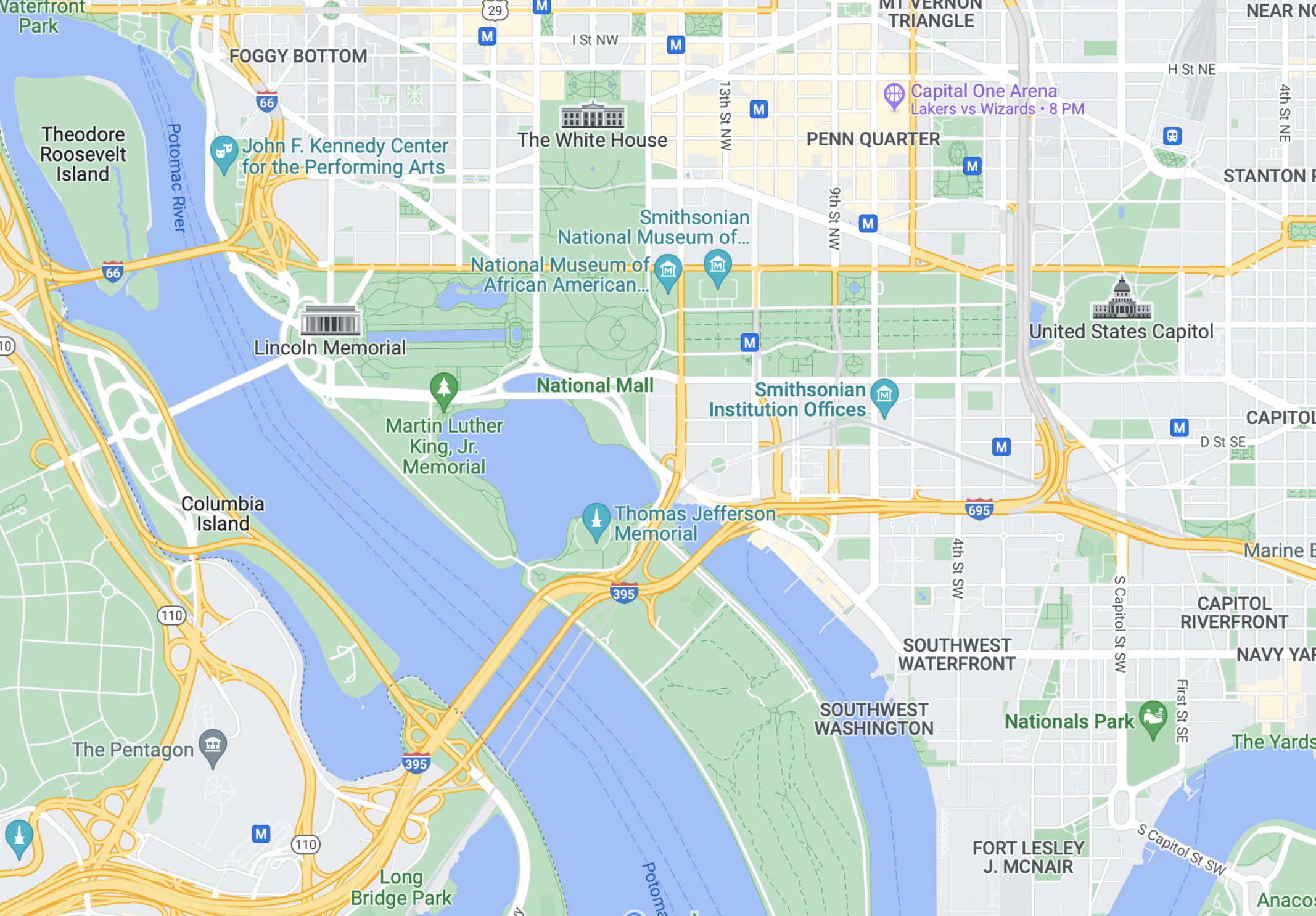
The western side of the Potomac River (Fig. 3) comprises rolling hills and many creeks draining the deeply eroded topography. Capitol Hill (see Fig. 2 for location) is also high ground, but between these two topographic highs, the river’s channel has filled with fine-grained sediment (i.e. mud).

The northern end of the Tidal Basin (see Fig. 2 for location) is high and dry (Fig. 4).
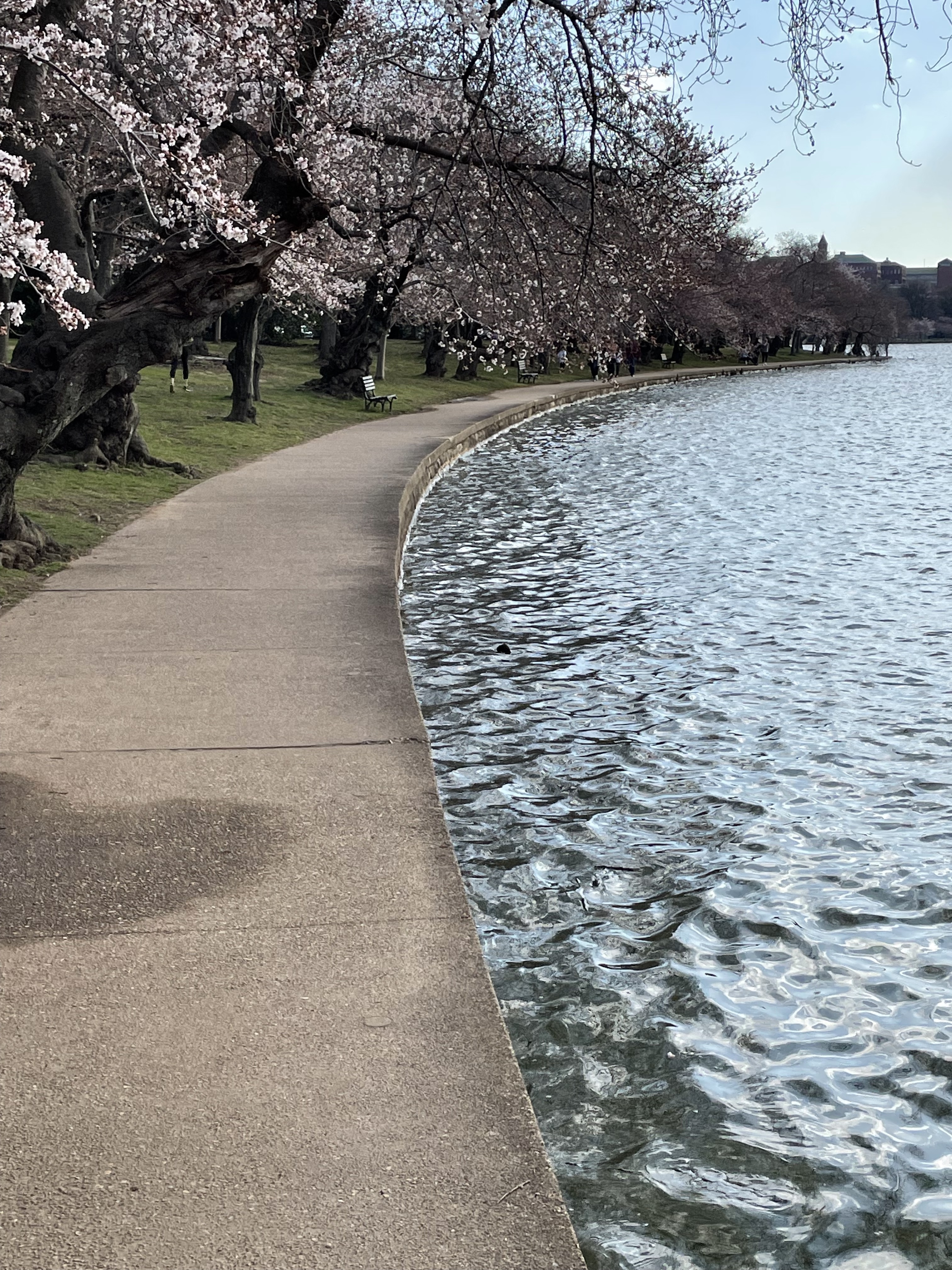


The southern end of the Tidal Basin is subsiding. This isn’t surprising, but the rate is alarming. For example, a back-of-the-envelope calculation, comparing Figs. 4 and 6, suggests subsidence of about three feet in less than a hundred years (since construction of the seawall). That works out to a burial rate on the order of 3/8 inches per year. That is substantial and explains why the National Park Service hasn’t kept up with the problem.
There is nothing surprising about the settling of muddy sediments at the apparent rate I observed in the Tidal Basin. The only confusing aspect of this predictable problem is why anyone would have thought it was a good idea to build massive stone edifices (e.g. Jefferson and FDR memorials) on muddy soil only a few feet above the high-tide line.
How long until Washington Monument becomes the leaning tower of America?
The Potomac River Floodplain
This post is going to talk about fluvial processes during the last few millennia, with the Potomac River as an example. A previous post discussed the geology of the Potomac’s fall line, where it drops out of the foothills of the ancestral Appalachian Mountains to the coastal plain before entering Chesapeake Bay. I’m going to keep this simple because, to be honest, fluvial geomorphology is not a straightforward topic. Rivers are constantly changing at time scales from years to millions of years. We won’t be walking back billions of years today, only a few hundred thousand, maybe a couple of million.

The lower Potomac River is braided, with multiple channels defining wooded islands (e.g. Van Deventer Island in Fig. 1). I won’t be talking about them but instead focus on what I saw, what the rocks (river sediment is unlithified rock to a geologist) tell me. The river flood plain extends to the Pleistocene terrace (yellow line in Fig. 1), which is about 80 feet higher in elevation than the river surface. No permanent structures have been constructed on the flood plain.
Some of the features we will examine are shown schematically in Figure 2. Note however, that the image shows a meandering stream whereas the Potomac is braided, which means that its channel doesn’t take those big loops shown in Fig. 2. That’s because the lower Potomac drops rapidly from Great Falls just upstream of the study area, to Washington D.C. in this area.

We started out on the area labeled “Bluffs” in Fig. 2 and traversed the flood plain, following a tributary called Horsepen Run (see Fig. 1 for location). Note that Horsepen Run is a meandering stream, so we’ll see several features that scale downward from Fig. 2 as we cross the Potomac flood plain.

Horsepen Run (aka creek) drops quickly from the Pleistocene terrace (Fig. 1) but then crosses the Potomac flood plain and begins to meander. The photo in Fig. 3 is from a location just before this change in stream topography occurred.

The changes in stream morphology seen between Figs. 3 and 4 occur in larger streams (like the Potomac) but on much longer spatial scales.
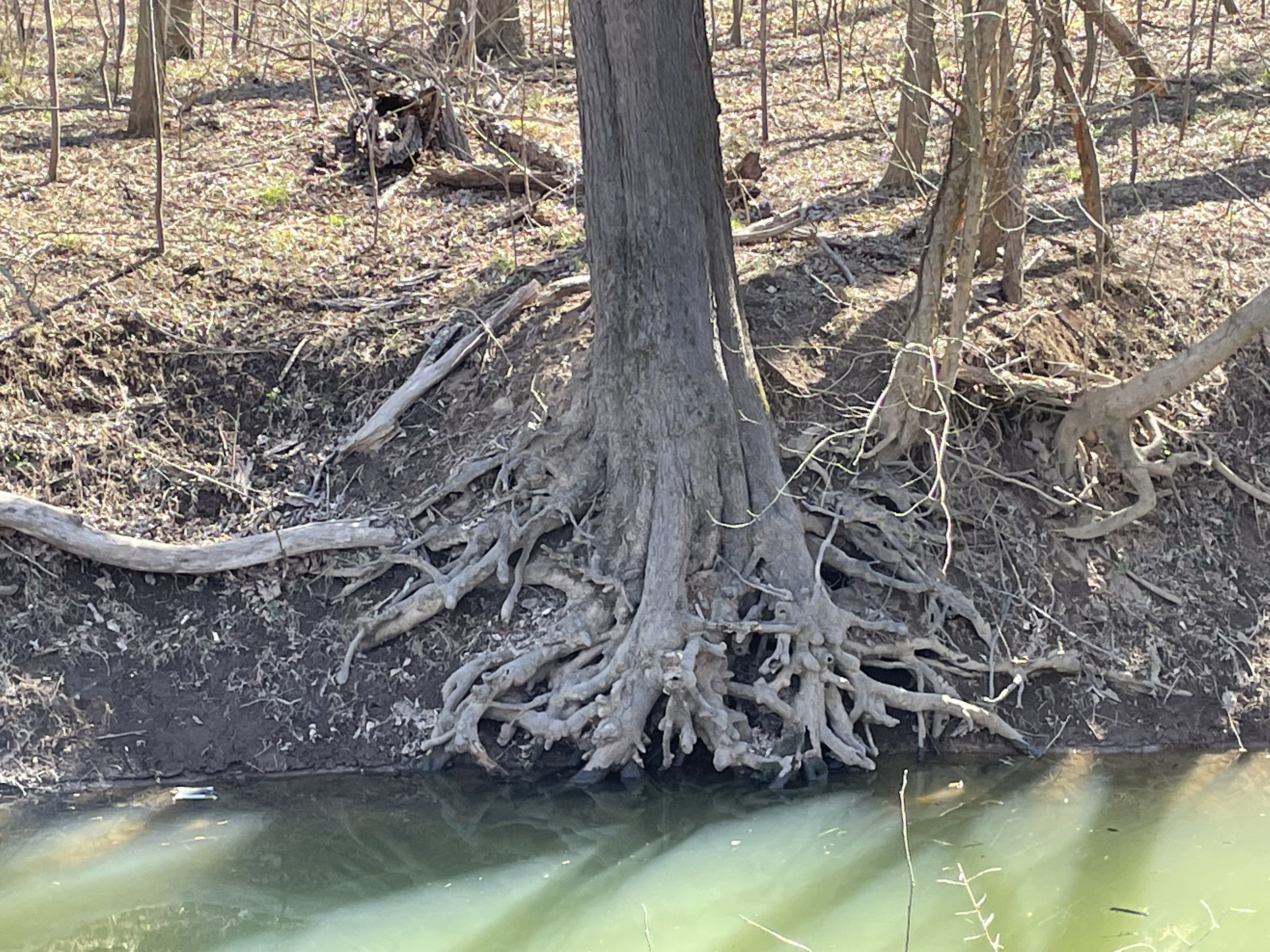


Figure 1 indicates the presence of natural levees (lower center of Fig. 1) near the main river channel. There is no “Yazoo Tributary” (see Fig. 2) at this location, so Horsepen Run cut across the Potomac’s natural levee. This can be seen beautifully in Fig. 8.
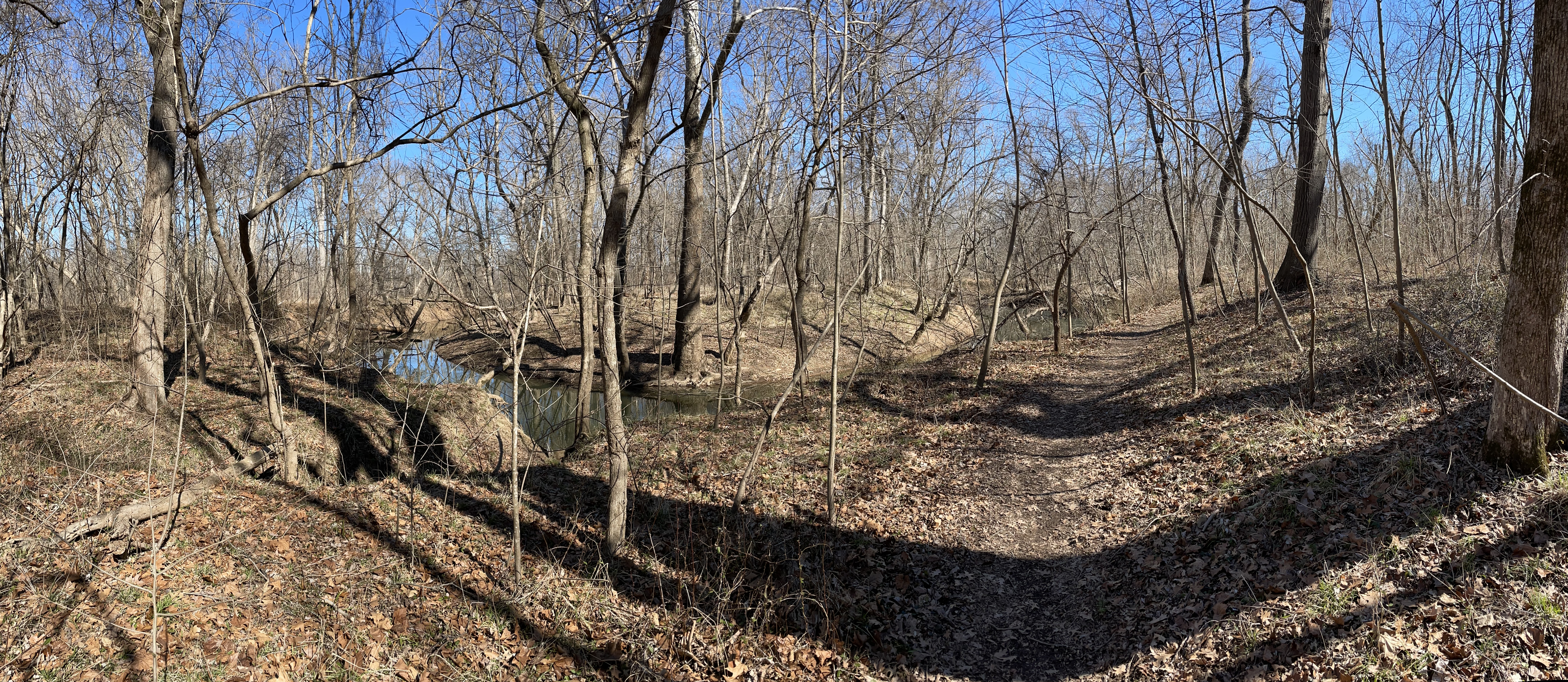

It was a beautiful February day to hike to across the Potomac River flood plain. I hadn’t expected to find so much dynamic geology so close to my new home, but there it was. The historic Potomac River transitions from its rocky confluence with the Shenandoah River at Harper’s Ferry, to the tidal river that defines Washington D.C., right here and, like America, it is not in equilibrium. The cut banks of the Potomac and its tributary, Horsepen Run, portend of rapid changes in the relative elevation of the land and the sea.
We are in for a wild ride…
A Typical Basin and Range

My last post examined some structures and petrology of a Metamorphic Core Complex (MCC), whereas the previous one discussed the geology of the Central Highlands of Arizona. I mentioned several times that these geologic provinces were but two manifestations of the profound tectonic change associated with uplift of the the Colorado Plateau.
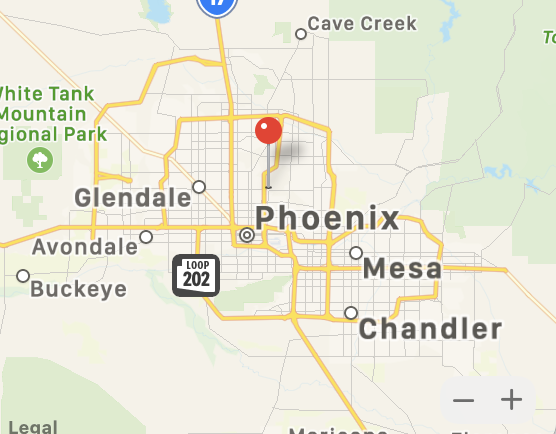
Today’s post is from the Phoenix Mountains, a municipal park inside the city limits (Fig. 2). My geological interpretations and dates, etc, come from a report by the Arizona State Geological Survey.

To the west (left of Squaw Peak in Fig. 3), a deep fault has been identified, which thrust the metasedimentary rocks comprising the eastern part of the range into juxtaposition with the metavolcanic rocks of Stoney Mtn and other outcrops to the west (Fig. 4).
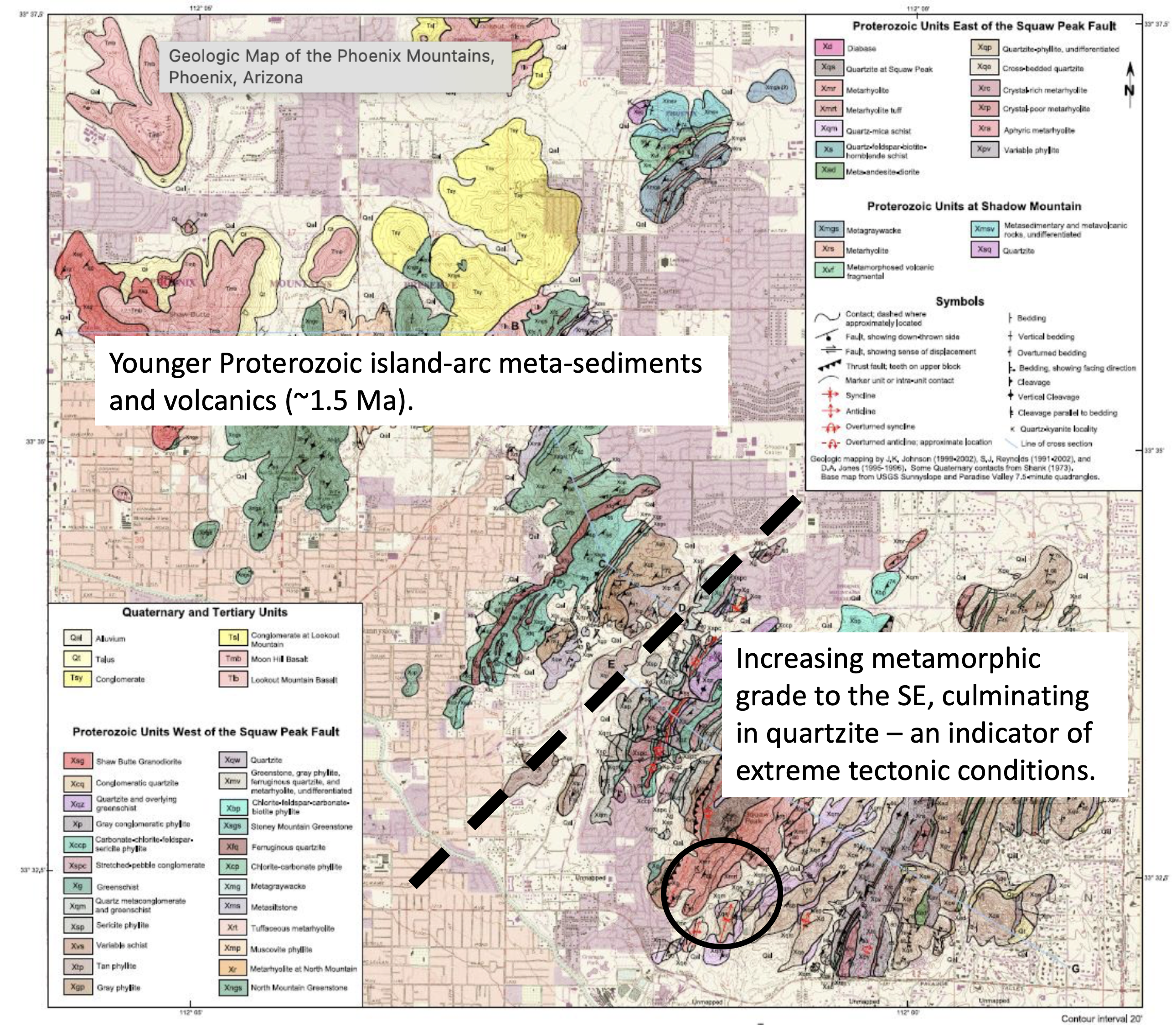
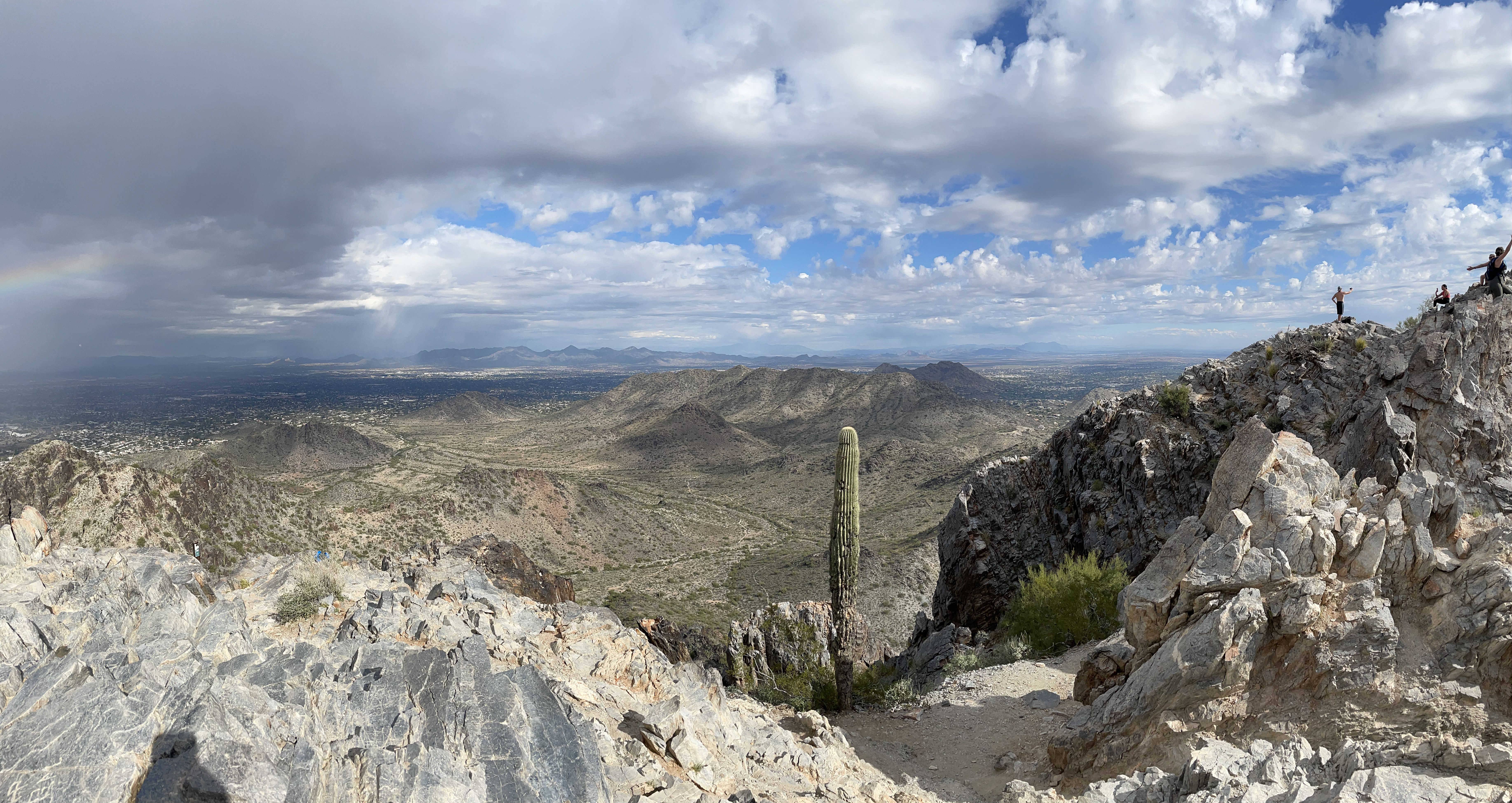
Today’s post is focused on the circled area in Fig. 4 which, if we look back to Fig. 3, is the highest peak within the Phoenix Mountains. I was intrigued by the view from the parking lot (Fig. 1), and compelled to explore this fault-block in person. Note that the area discussed in this post in contained within the circle in Fig. 4.
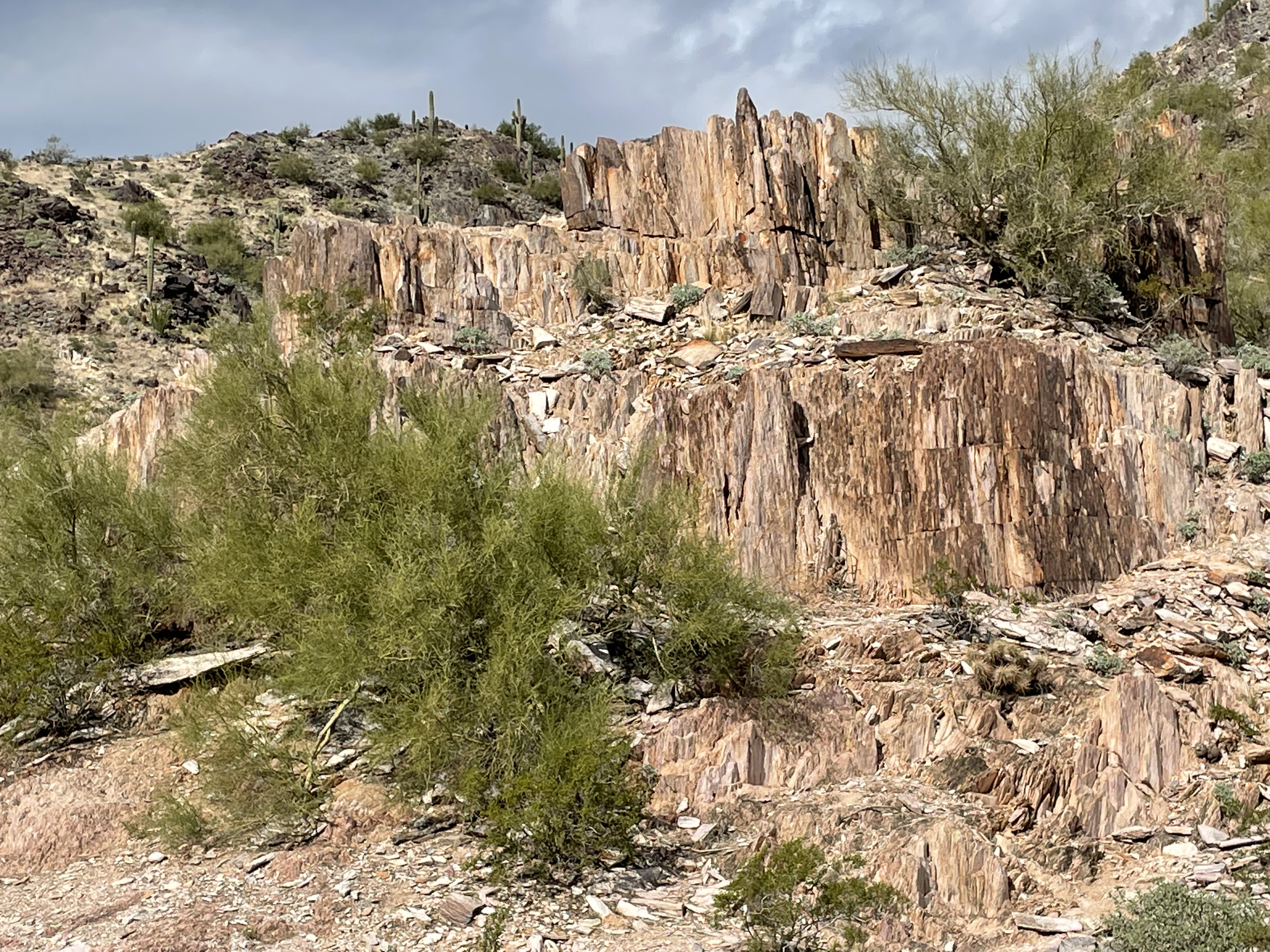
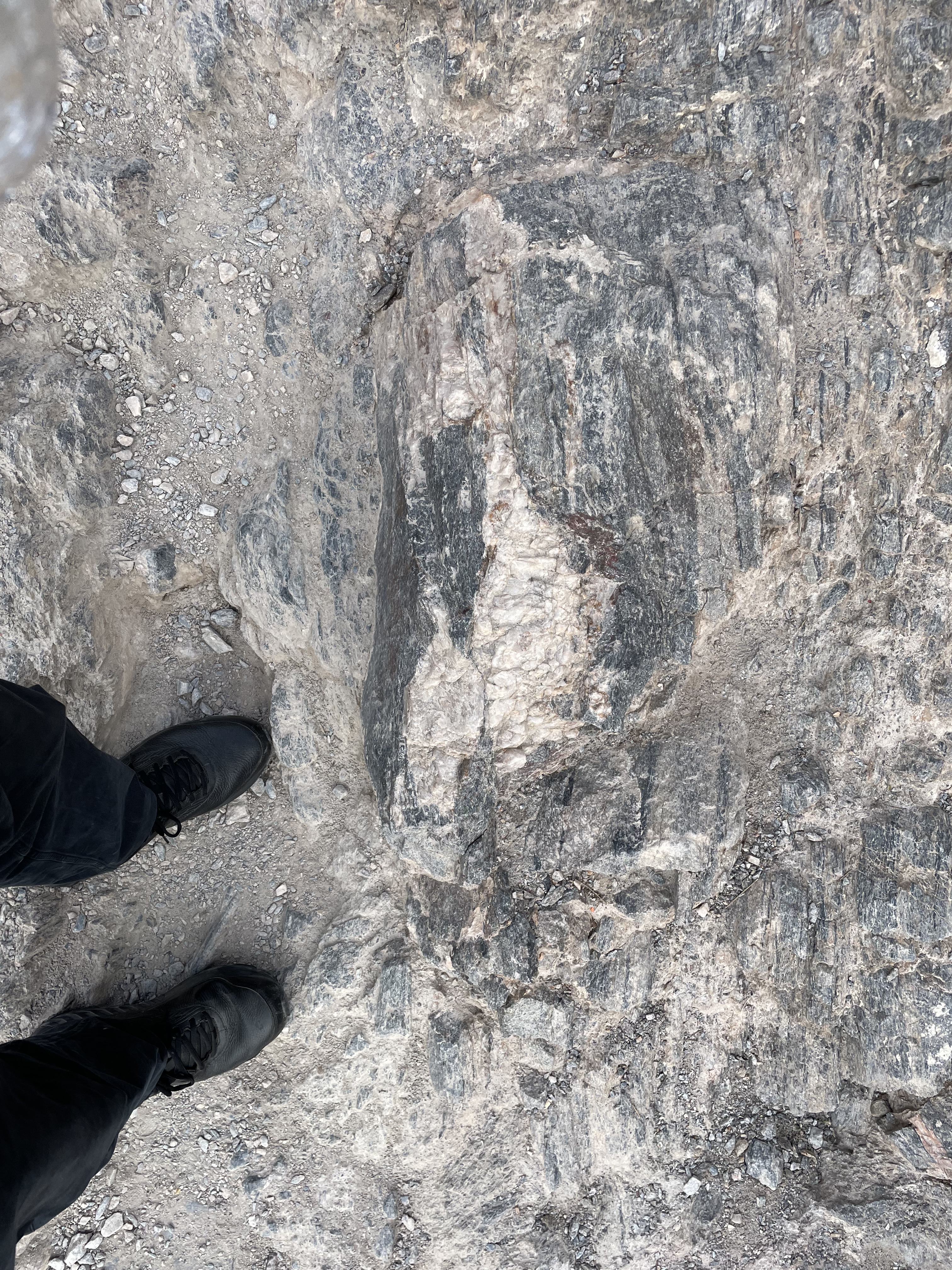
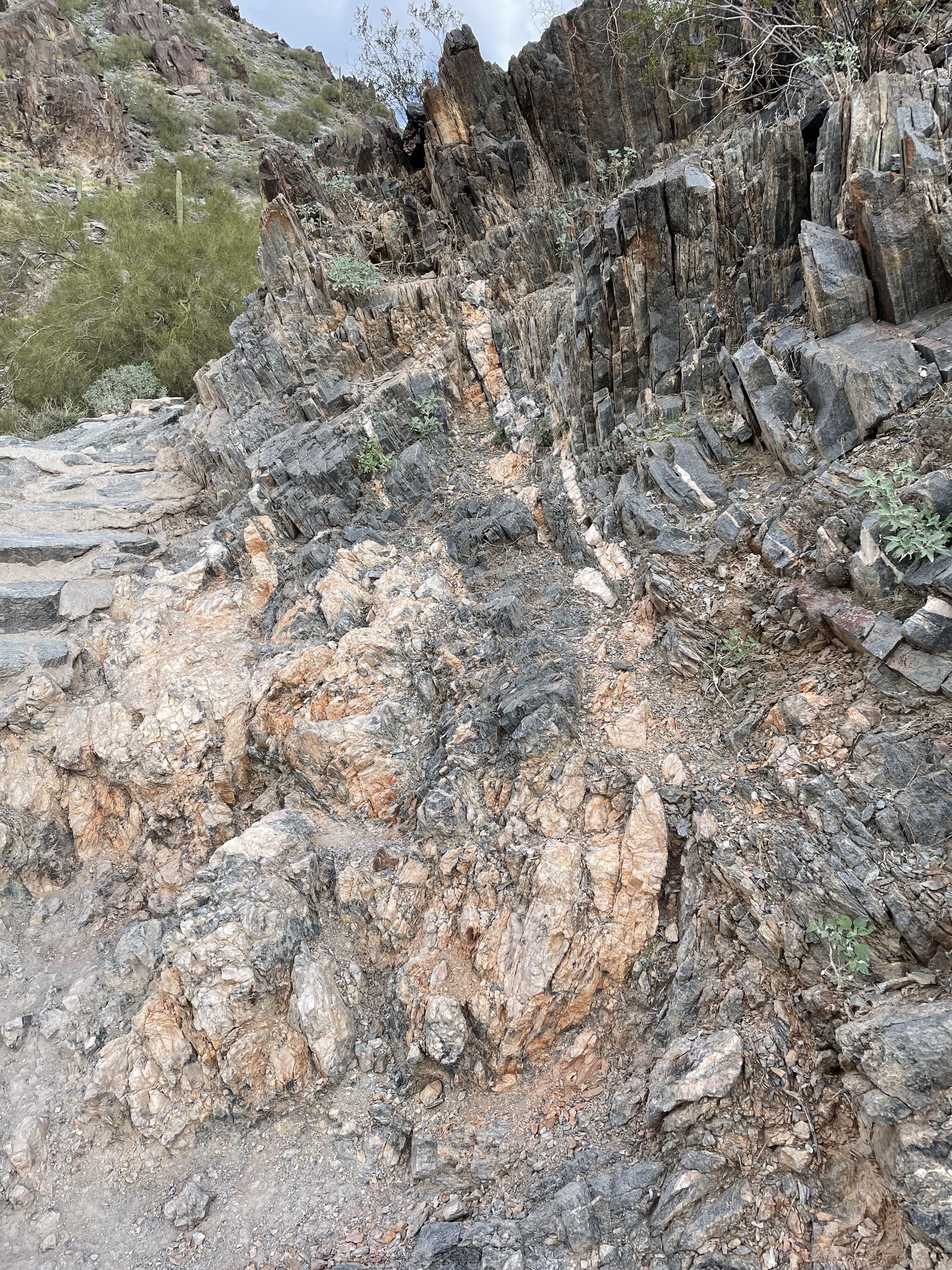
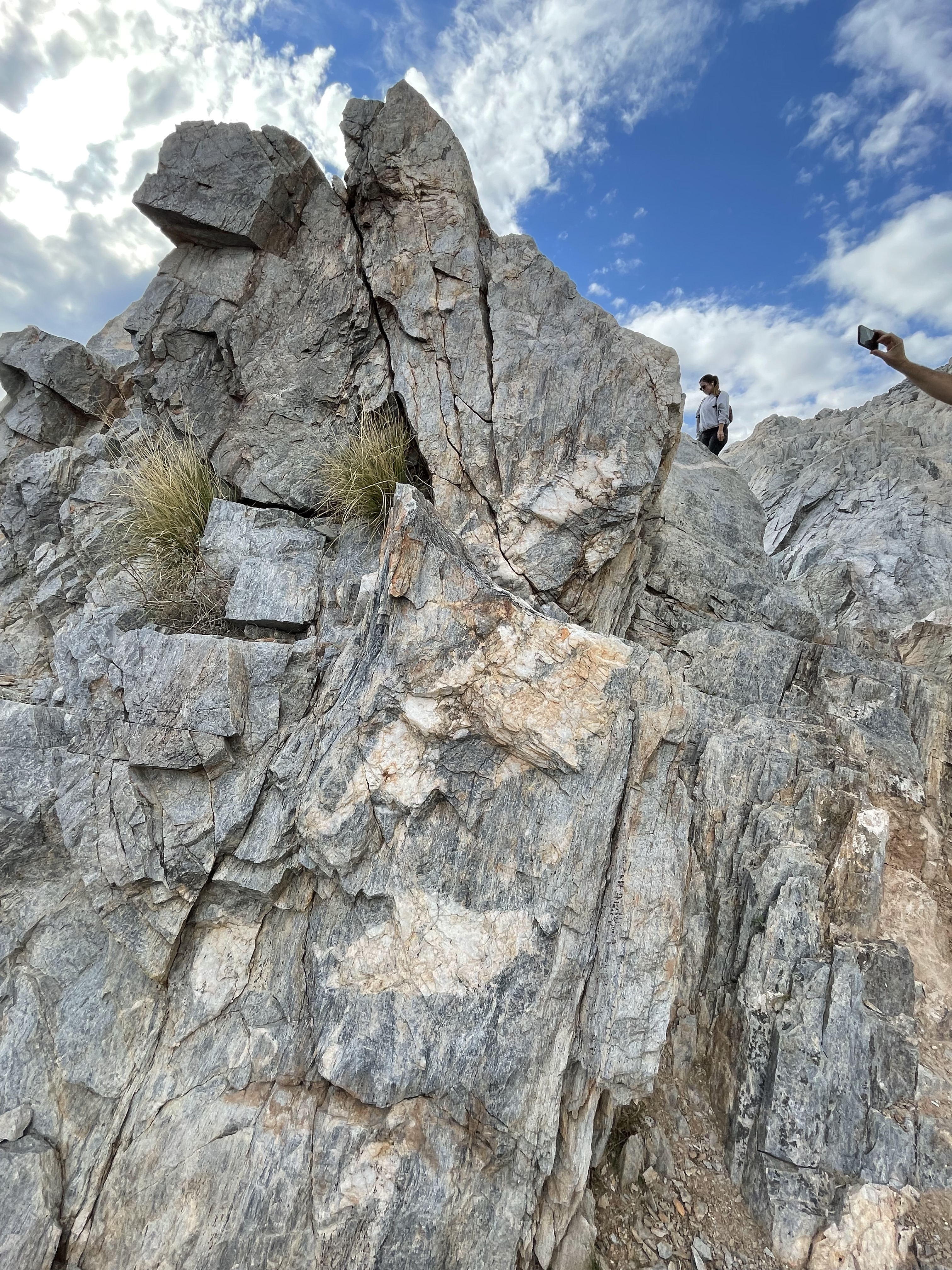
The geology of Piestewa Peak is relatively simple. Schist. In this case, the metamorphic grade isn’t too high and the rocks preserve much of their original thin-bedded layering. However, they are standing on end (Fig. 5).


Summary
There isn’t much to say about this post after my road trip to Prescott, and then a hike in the White Tank mountains. The first thing I can say with confidence, however, is that Squaw Peak (aka Piestewa Peak) is squarely located within the Basin and Range, defined by faults that have brought disparate rocks into juxtaposition, but only in a small area. The Phoenix Mountains are nothing like the vast, overlapping fault-bounded mountains of the Central Highlands, but instead they are isolated in a sea of sand and gravel, sediment eroded from the long-gone rocks that encased them for eons. There was no superimposed shear evident in these rocks as in the White Tank mountains. They just rose from the earth’s bowels along nearly vertical faults.
These rocks aren’t as old as those we encountered in the Central Highlands — by about a billion years. Nevertheless, they suggest that plate tectonics determined the history of central Arizona, even so long ago. Because of the lack of suitable rocks, no plate reconstruction can be attempted for the Precambrian (neither a geologic period, era, or eon); thus, we can only assume that things were the same but different — upper mantle processes dragging crustal plates around, but without plants, oxygen, or animals to intervene in surface erosion.
We don’t know what happened that long ago, not to mention the billion years between the creation of these sedimentary/metamorphic rocks and the emergence of multicellular life. We can only view the rocks we’ve seen in Arizona through a glass darkly…
The White Tank Mountains: Anatomy of a Metamorphic Core Complex
My last post set the stage for this report, but this time I did a lot of walking to get the facts. A short drive took me to White Tank Mountain Regional Park, about 30 miles west of Phoenix. I studied geology at Arizona State University in Tempe…it must have been 40 years ago, and Metamorphic Core Complexes (MCC) were a big thing then. Let’s start with a map (actually several maps that focus ever closer on the field area).
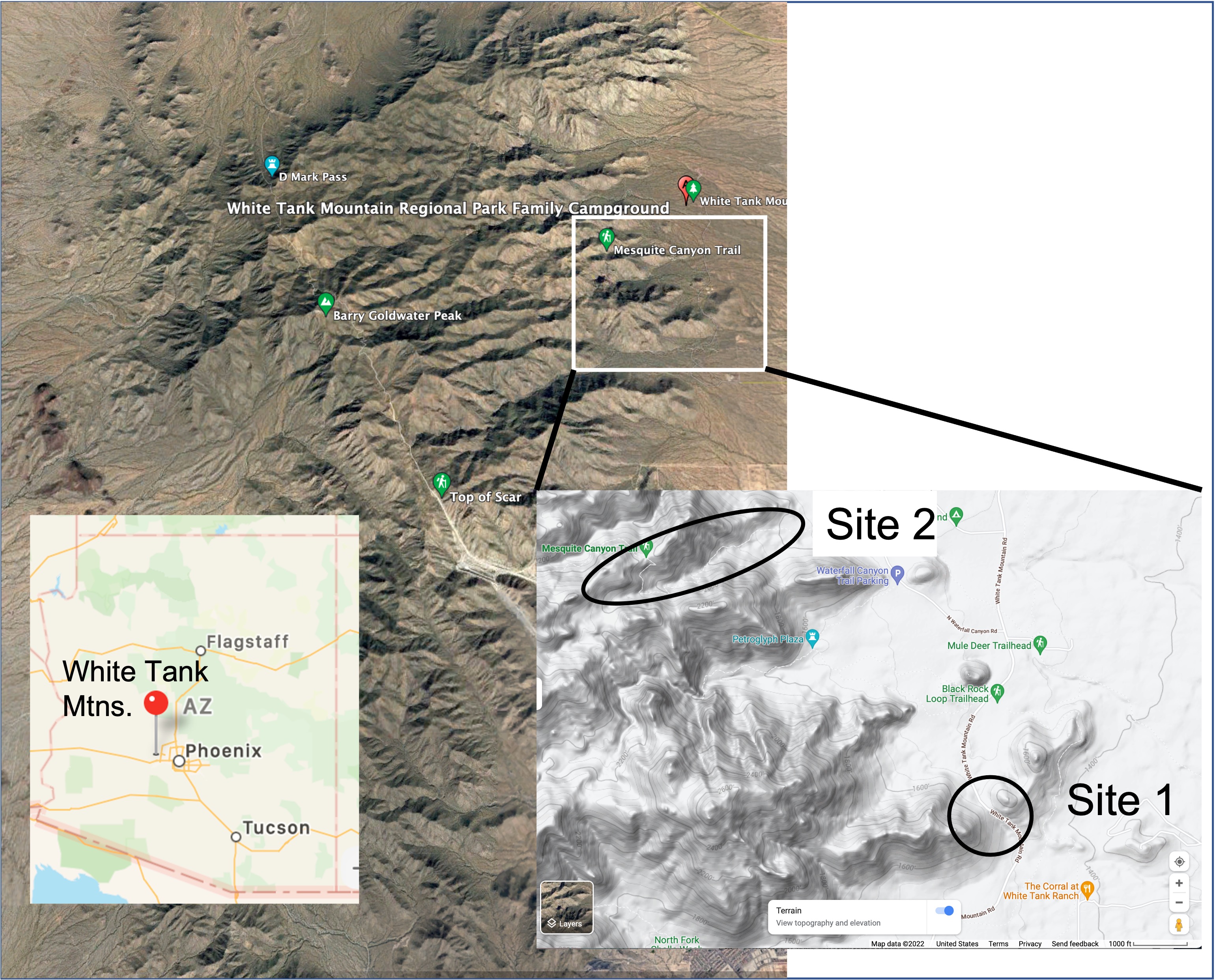
Now for a view from the ground.
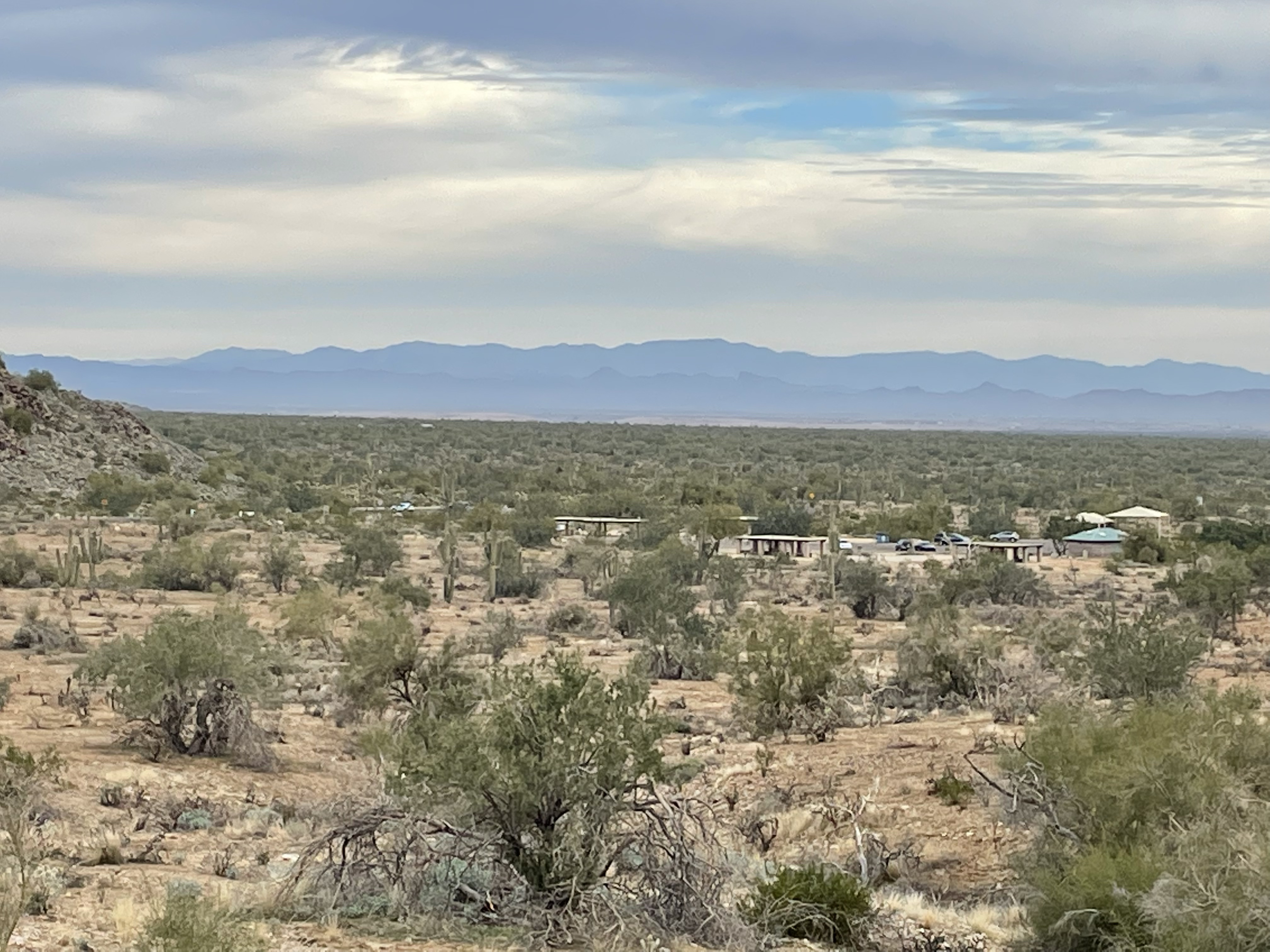
Site 1.
The White Tank MCC is located within the Basin and Range Province. In the middle of a low-lying flat desert, MCCs appeared within the last 60 my, in close proximity to a region defined by faulting and the uplift of Precambrian rocks on a huge scale. Time to look at some rocks.

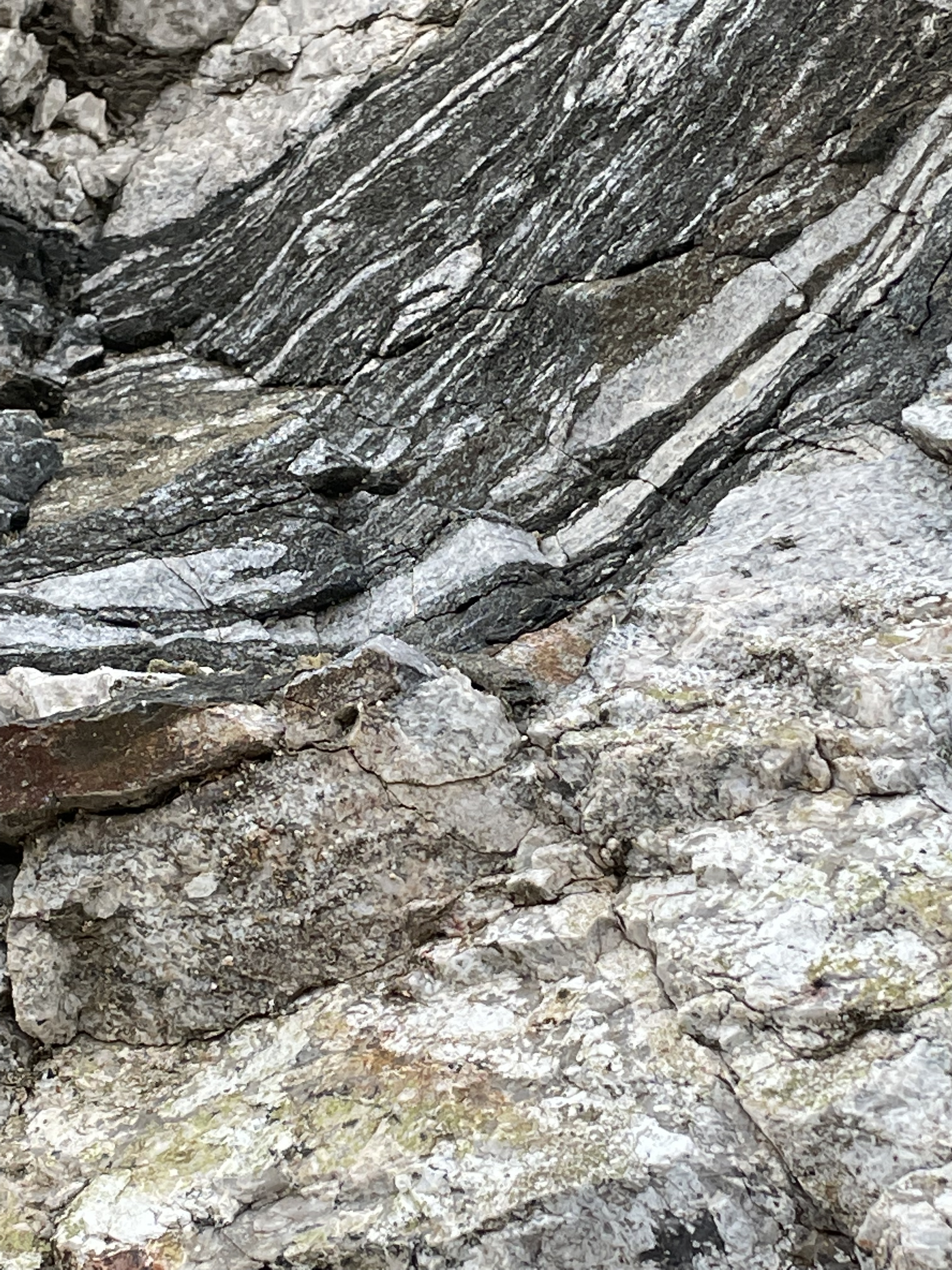
Figure 3 reveals a complex pattern of deformation and magmatism. The most striking feature of this outcrop is the brilliant white veins that cut across the dark rocks, and folded in a crazy pattern on the right side. What is going on here?
The background is that the dark rocks are Precambrian metamorphic rocks and granites. As I discussed before, these rocks were deformed several times during the billion years spanning the resetting of their radiometric clocks and the tectonics associated with the uplift of the Colorado Plateau. The lighter-colored rocks are of Cretaceous age, injected as veins into preexisting weak fracture zones.



SIte 2.
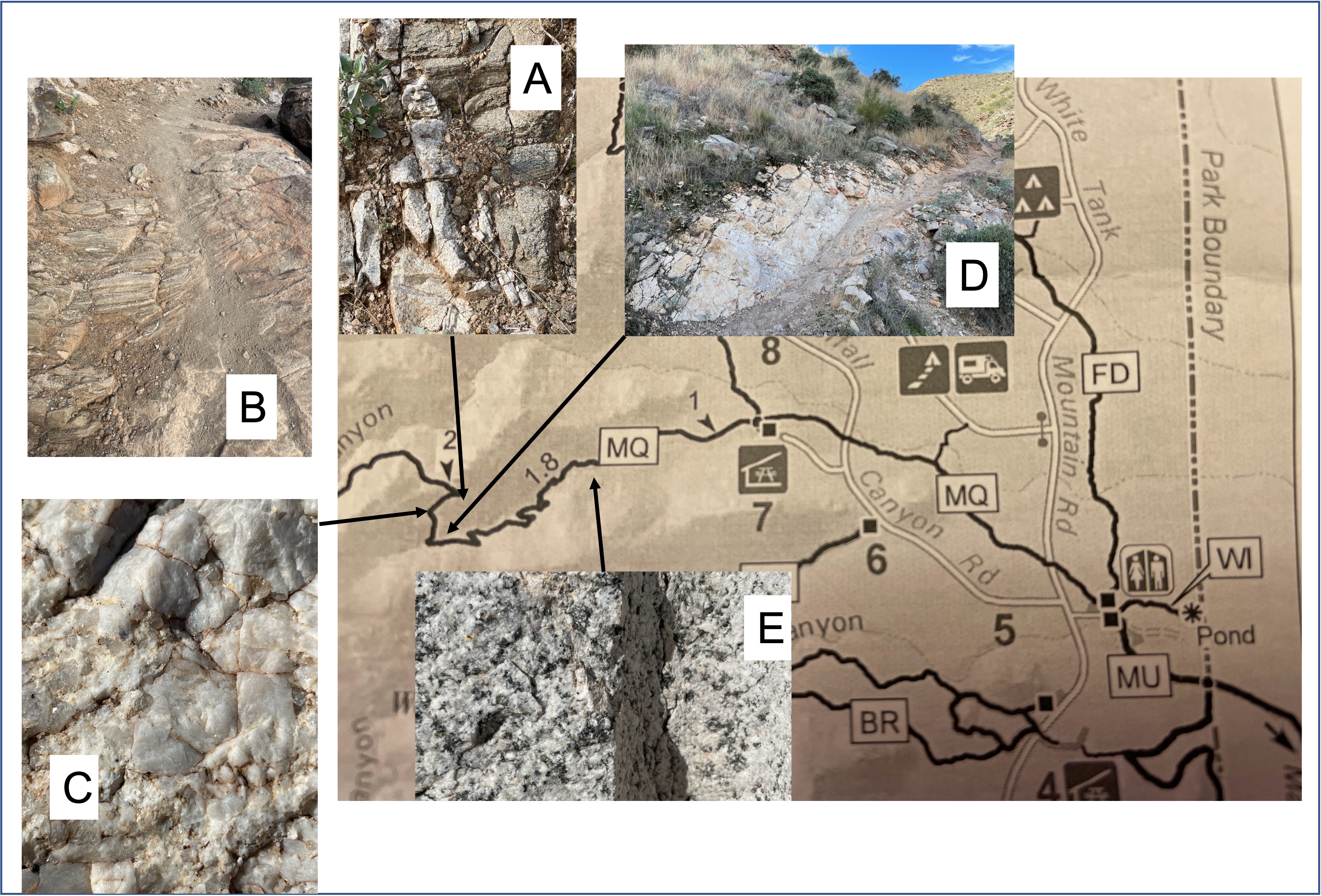
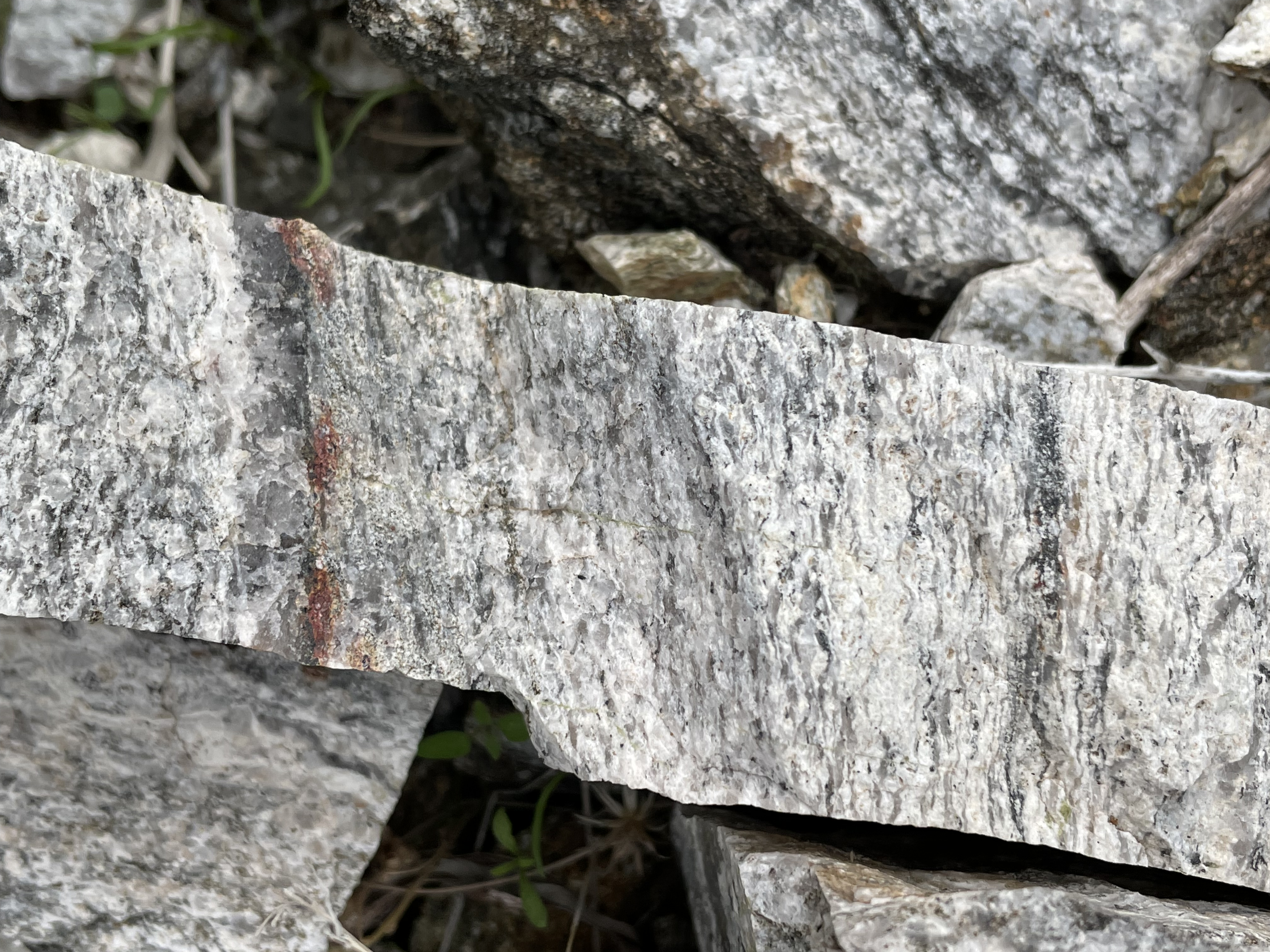
Figure 10 reveals some of the field textures seen along the trail, starting at the uphill end, where medium and small blocks litter the landscape as the granite weathers in place (Fig. 11). Panel A (Fig. 10) shows a sharp contact between the main granite and a whiter material with microcrystalline structure similar to what we saw at Site 1 (Fig. 3). As the magma was intruded, the melt was fractionating into a component with a lower melting temperature and so it filled fractures, which indicates there was tectonic movement at that time. Panel B is evidence of syntectonic intrusion because it shows a lineation that was present in many of the rocks. Panel C is a close up (5x magnification) showing larger crystals in a finer matrix. All of it is feldspar (dominated by Na also known as albite). Panel D is a good exposure of the relationship between the finer grained material that forms veins in the main rock. Panel E shows a salt-and-pepper texture that dominates the rocks along the trail.

A close up of a fresh surface near Sample D (see Fig. 10 for location) shows simple mineralogy of the main rock body (Fig. 12). I would estimate 70-80% albite, >15% quartz, and minor biotite (a platy mineral, a variety of mica).

The mineralogical composition can be used to classify this granite as tonalite. Tonalite is a granite that contains no potassium feldspar (no pink color), very little quartz, and mostly feldspar containing sodium and calcium. These rocks originate deep in the earth where ocean crust (basalt) melts and rises, losing much of the iron and magnesium it originally contained. The tectonic setting is an island arc, like Japan.

Summary
Just as in the Central Highlands, sediments were deposited here in ocean basins as long ago as 2.8 by and subsequently buried and deformed, changing through heat and pressure into gniess, and injected with veins of quartz and feldspar during metamorphism. Several orogenic events followed, deforming the assemblage further. It was exhumed slowly over the ensuing billion years, and eventually injected with a tonalite granite created deep beneath an island arc. This was the time when the White Tank granite was emplaced. This magma was intruded when the region was undergoing extensional stress (pulling apart) as part of the adjustment to complex tectonic process associated with uplift of the Colorado Plateau.
Rather than breaking into irregular blocks as in the Central Highlands, the White Tank mountains (and other MCCs in the western Cordillera), were formed by the uplift of Precambrian basement along deep sub-horizontal surfaces called detachment faults. In other words, the crust stretched in the Basin and Range rather than breaking into fragments.
I haven’t attempted to describe the complex tectonics of central Arizona, a task that is well beyond my experience. This is a topic that is hotly debated in the geological community to this day. This has only been a brief effort to relate the rocks I saw with my own eyes to what is known about the history of the earth.
Always listen to the rocks…
Road Trip: The Central Highlands of Arizona. Precambrian Rocks Torn Asunder.
To keep this post from going off the rails and becoming a treatise on metamorphic textures and their relationship to regional tectonic trends, I’m going to address the bullet list I ended the last post with. I hoped to find the following rocks, from youngest to oldest:
- Quaternary gravel
- Quaternary and Tertiary lava flows
- Tertiary stream deposits of sand, silt and gravel with rounded pebbles
- Tertiary lake sediments of horizontal, whitish, fine-grained rock with layers of volcanic ash
- Precambrian granite
- Precambrian gneiss and schist
The descriptions in The Roadside Geology of Arizona include unique features, from outcrop to hand sample scales. By the way, the “Roadside Geology” series books (available for many U.S. states) include introductory sections for the layman, and a level of detail that will increase anyone’s appreciation of the natural world, whether driving cross-country or on a daily excursion.
I’m going to dispense with my usual lengthy introduction. For the first figure, which becomes the de facto icon for the post, I’m going to skip maps and cut to the chase. I was driving north from Phoenix on Interstate 17, scoping for interesting exposures, checking the mileposts, and trying to remember several outstanding stops from the previous night’s reading. Frustrated at having passed the exit for Crown King, the ramp and interchange (beneath the I-17 roadbed) magnificently adorned by a long road cut that displayed interlayered dark and lighter colored rocks (Fig. 1), berating myself for not taking the path less traveled, I searched for the on-ramp and, when it came into view, I hit the brakes hard and cut onto the last fragment of the slip road. Traffic on the ramp was nonexistent and, with no unmarked Arizona Highway Patrol vehicles within sight, I backed several hundred yards while avoiding the drainage ditch and concrete barricade.
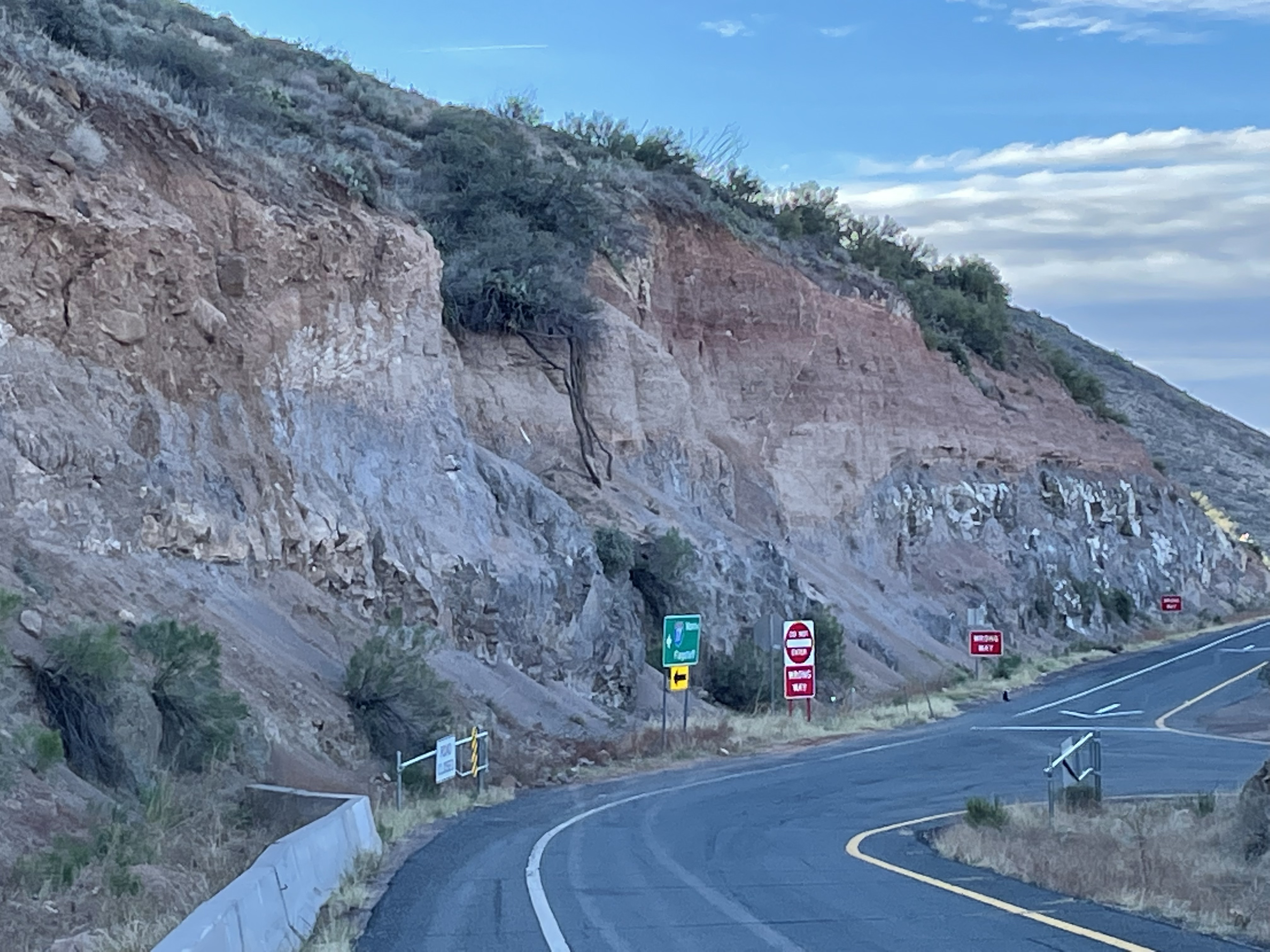
All I’m going to say about Fig. 1 right now is that this was the exposure that prompted me to drive — shall I say “recklessly?” But it is only the tip of the iceberg in the Central Highlands.
This post isn’t a typical report. Instead of a trip log, I’m going to show examples of the six rock-types from my list. I took a lot of photos but I will try (really hard) to limit the interpretation to a concluding paragraph.
The block faulted mountain ranges of the Basin and Range province, accompanied by Metamorphic Core Complexes like South Mountain or the White Tank Mountains, bounding Phoenix, Arizona, on the south and west, respectively, suggest extensional forces at play. The Colorado Plateau, on the other hand, reveals no significant evidence of either crustal extension or shortening, instead comprising relatively undeformed Paleozoic sedimentary rocks that appear to have been exhumed vertically. The earth’s crust had to accommodate not only 6000 feet of differential uplift, but a change in tectonic regime, within the distance from Phoenix to Prescott in the last 80 million years, creating the Central Highlands.
Quaternary Gravel
The Quaternary Period spans the last 2.58 my. It is identified with the most recent occurrence of extensive continental ice sheets.
Dating sediments deposited during the Quaternary is extremely difficult because of a scarcity of suitable material for radiometric dating of the time of deposition. Thus, stratigraphic relationships are used, along with sedimentary textures, to determine the relative age of sedimentary rocks. For example, Lithology (1), Quaternary gravel, contains very little organic debris for carbon-14 dating; Lithology (3), on the other hand, may occasionally contain some plant fragments in the finer-grained components; but carbon-14 dating can’t be used for rocks older than 500 ky (thousand years).
Gravel was present everywhere, filling topographic lows and even forming cliffs. Often, these sediments were found in thick intercalated beds of silt and gravel, but sometimes cross-cutting relationships reveal erosion of older sediments before infilling (Fig. 2).
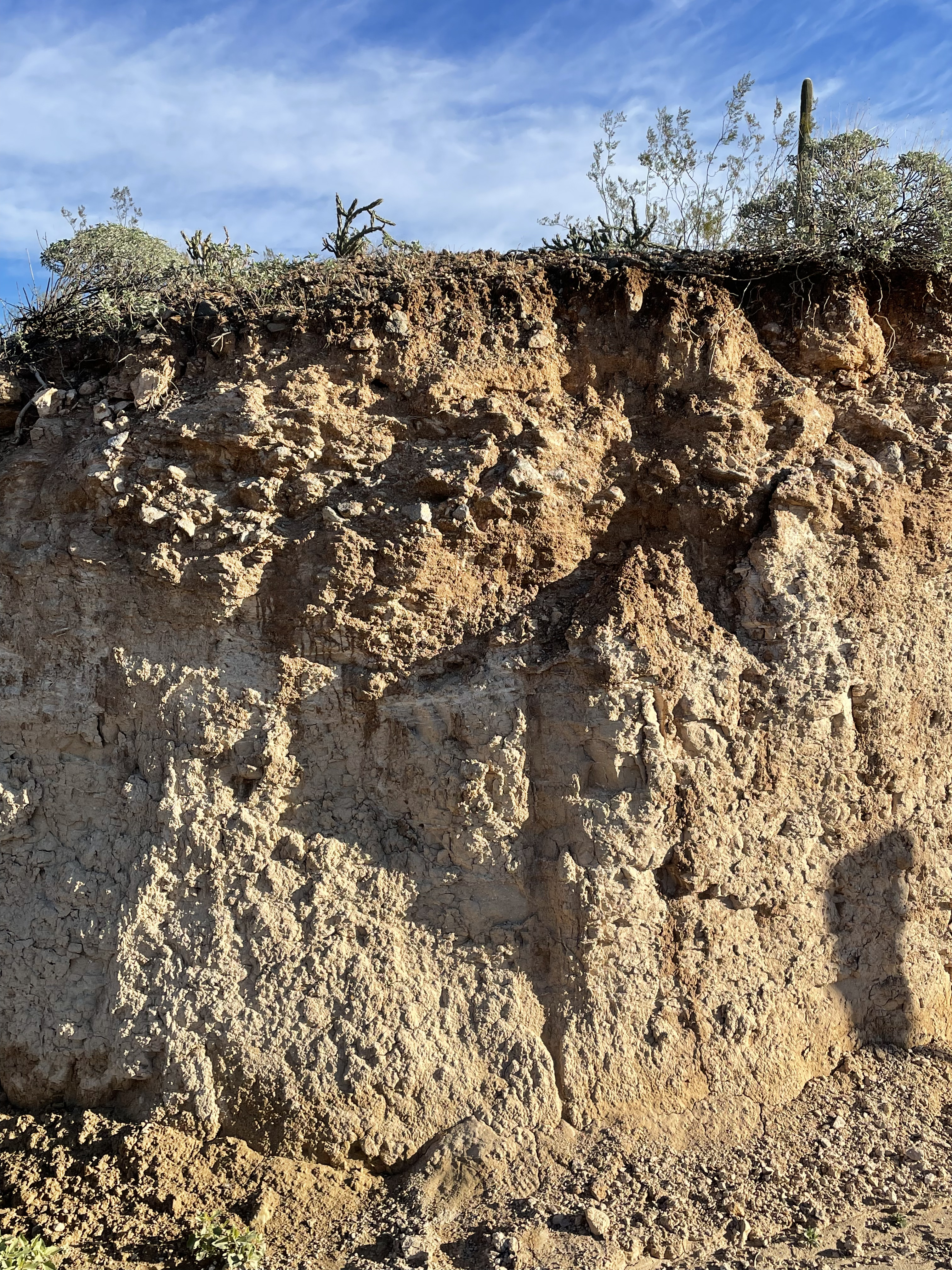
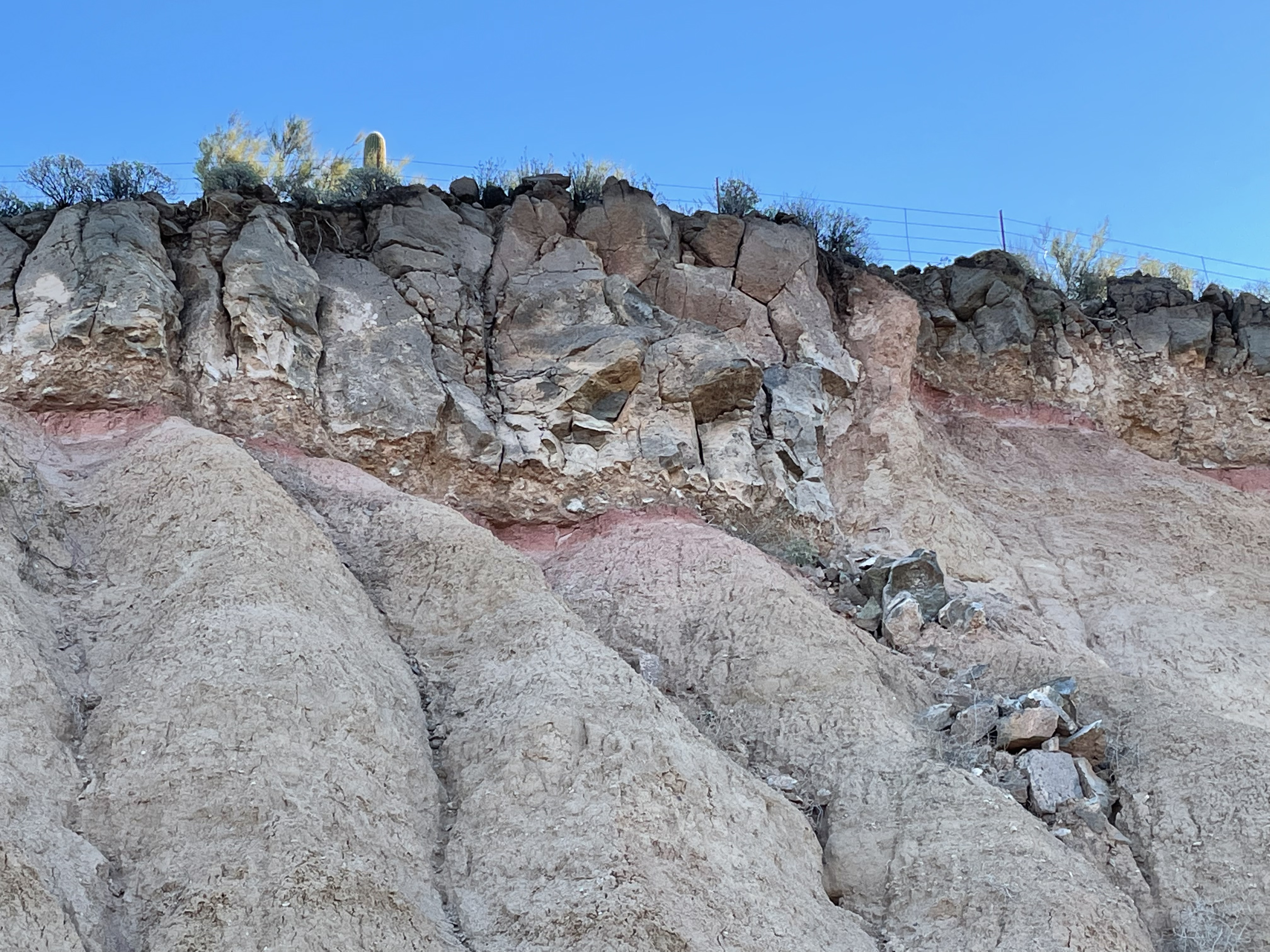
The darker gravel in Fig 2 fills a channel in the finer, buff-colored silt. The difference in lithology, and presence of an erosion surface, suggest that the upper unit is representative of the Quaternary gravels of Lithology (1). The underlying rock is a siltstone representing the Tertiary (66-2.58 my) stream deposits of Lithology (3).
Quaternary and Tertiary Lava Flows
Several volcanic complexes were active during the last 66 my in the Central Highlands. The lava sometimes flowed from fissures and often from central cones. Their remnants can be seen in the arid landscape.
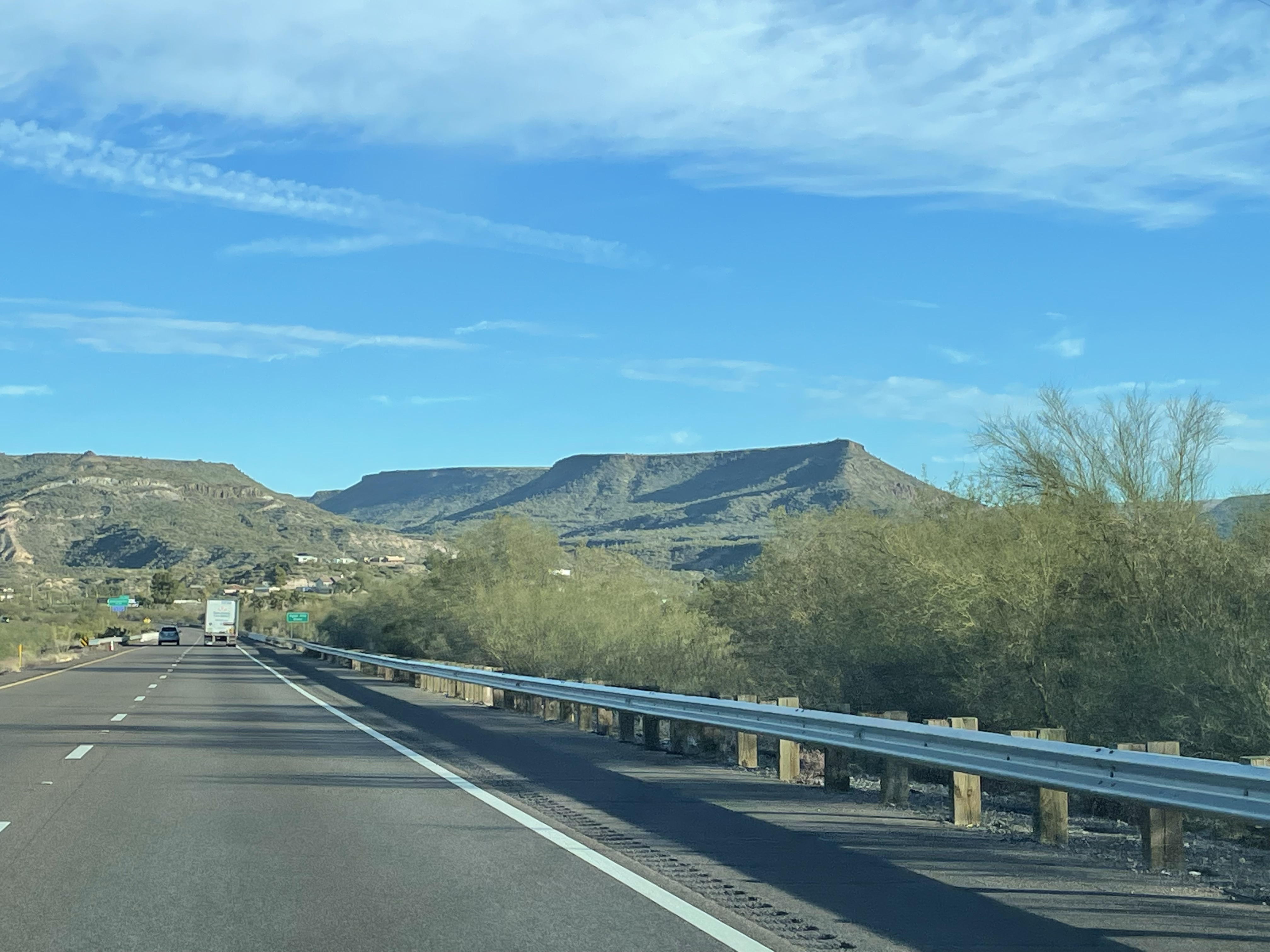
The lava flows are not very thick and individual flows can be identified. I’ll say more about the lava in the following discussions because of its relationship with the other lithologies.
Tertiary Stream Deposits
Figure 2 shows a silty bed that I have attributed to older Tertiary sediments, which could have been deposited over a 60 my time span. However, specific thickness of stream deposits can be dated by their relationship to the rocks of Lithology (2), because volcanic rocks can be easily dated. When such data are unavailable (as in this situation), we can’t be more specific.

An interesting thing about Fig. 4 is that ancient stream sediments are eroding to form new stream sediments in an endless cycle of deposition, erosion, etcetera.

Tertiary Lake Sediments

Lithology (4) was broadly distributed near Black Canyon City but it wasn’t safe to stop and examine them. Figure 6 reveals some evidence of soft-sediment deformation in the underlying chalky sediment. The implication that the lava flowed into a lake is further supported by pillow structures (Fig. 7).
Precambrian Granite
The oldest rocks I’ve discussed so far were less than 70 my, but now we’re going to jump back to between 2.5 and 1.5 billion-years ago. There are no rocks from the Paleozoic or Mesozoic Eras in this part of the Central Highlands.
Granite outcrops weren’t ubiquitous along the highway until Prescott, although they are everywhere within the area — just not next to Interstate 17. I had an opportunity to see them up close on the return, which took me through Peeples Valley to Congress (Fig. 8).
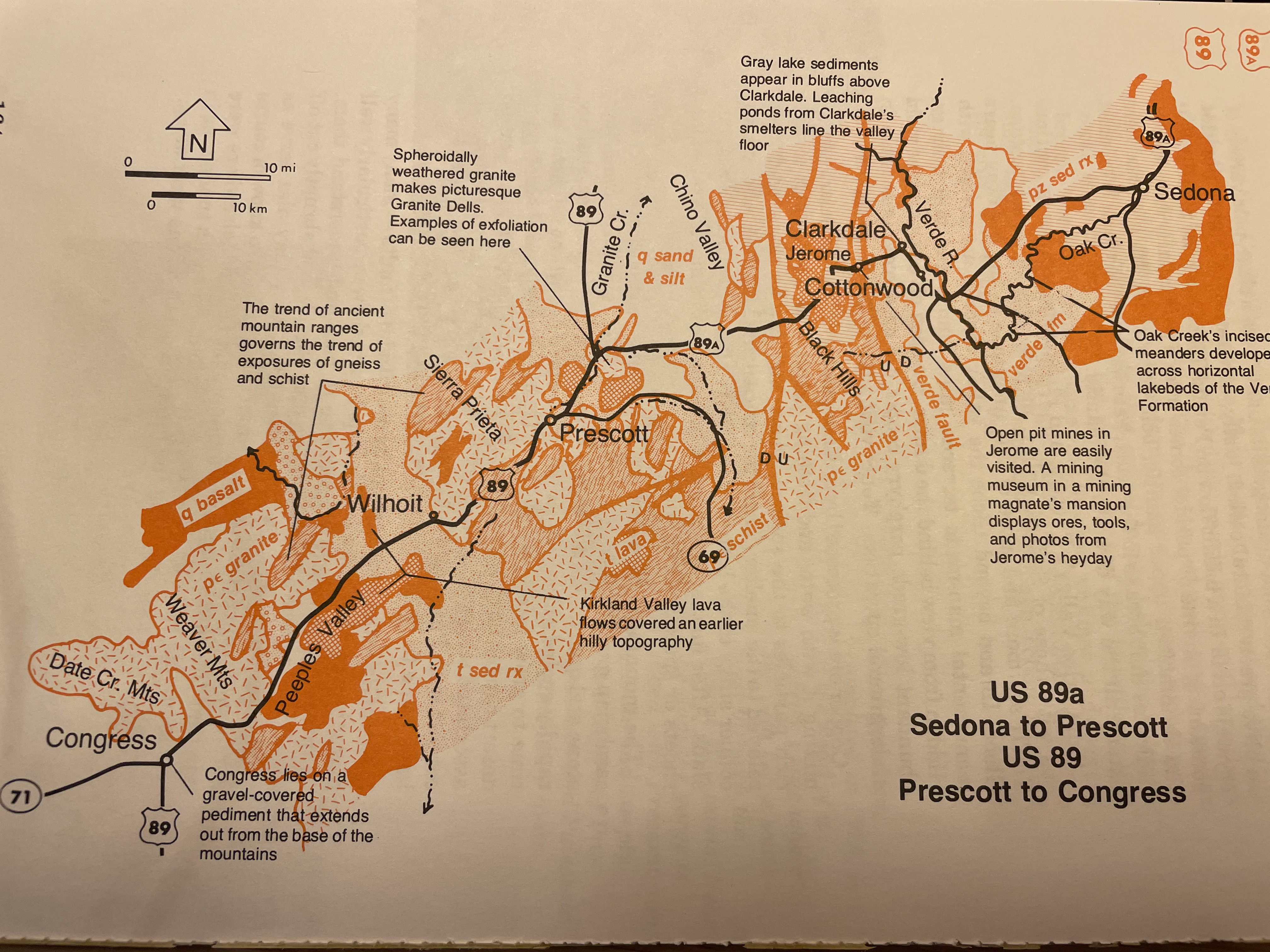
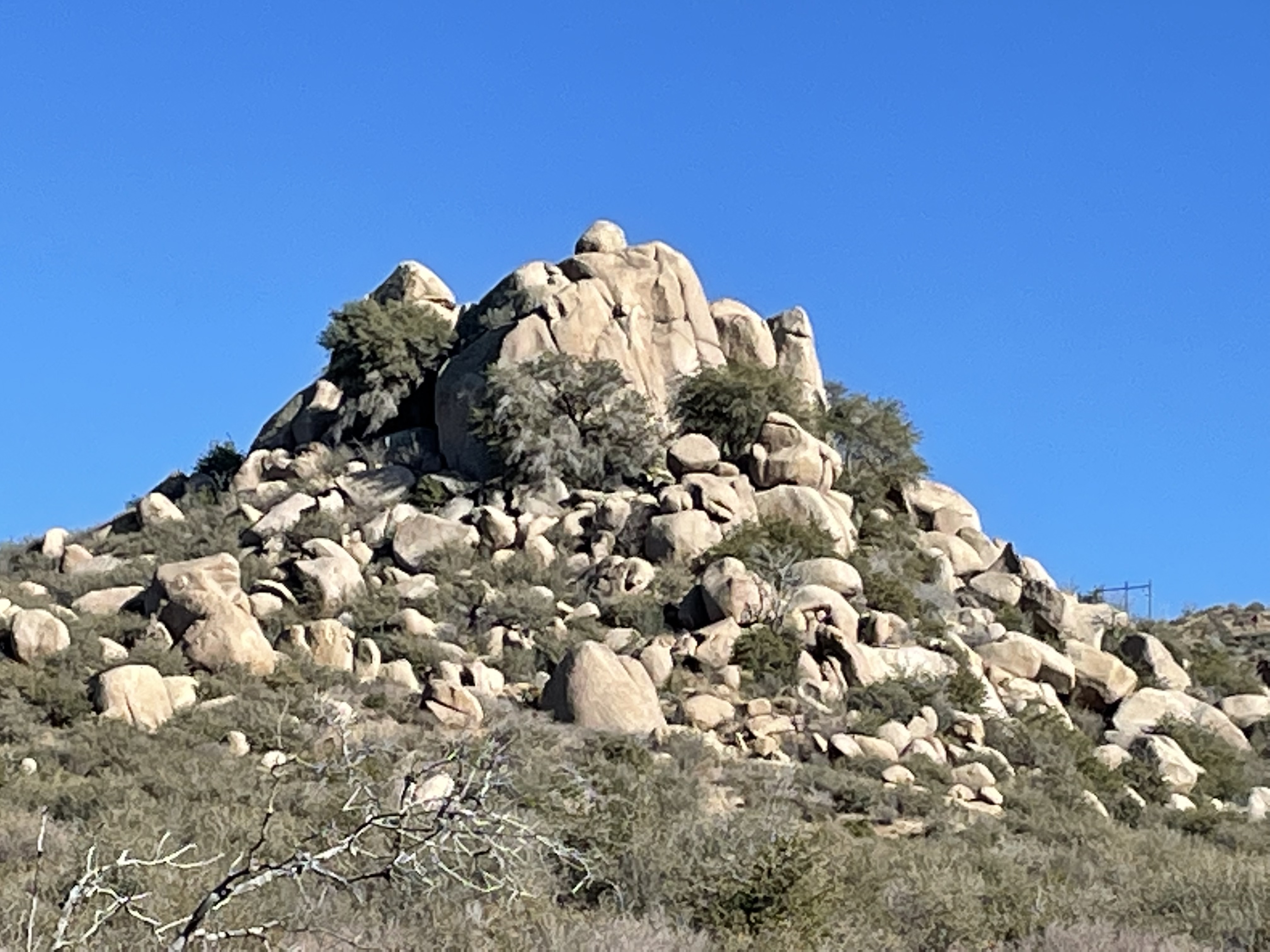
I drove through overlapping plutons, with variations in the granite composition indicated by differences in their color, which varied from orange (orthoclase feldspar) to light gray (plagioclase feldspar). Most were weathered to a reddish color by the oxidation of iron-containing minerals, and they were all rounded as seen in Fig. 9. The one-billion year duration of magmatism suggests that this was a time of intense continent building.


Precambrian Metamorphic Rocks
Arizona (as well as most of the earth’s surface) is underlain by a crumbled, jumbled, layer of metamorphic rocks — reflections of long-forgotten oceans that teemed with life, collecting fine particles eroded from the slowly emerging continents, as well as the bodies of earth’s first inhabitants. In other words, for metamorphic rocks to have formed about two-billion years ago, sedimentary particles must have collected in ocean basins a couple hundred million years earlier. The earth is only 3.8 billion-years old, so there could have been only so many cycles of metamorphism in any given location. I’m guessing…maybe two or three?
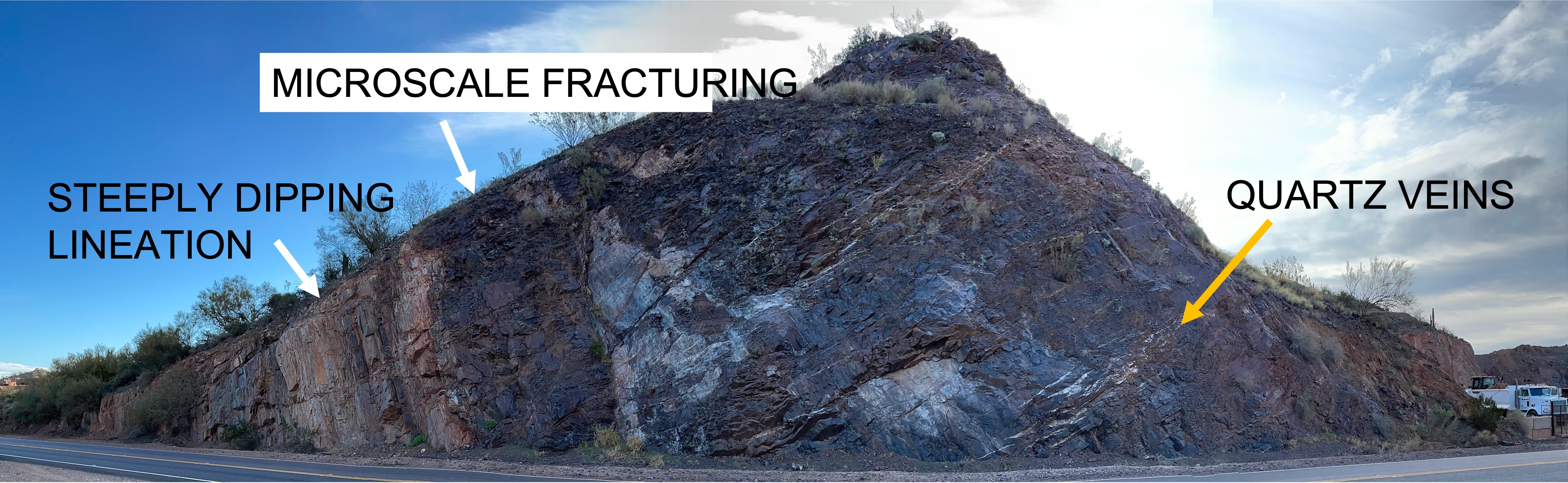
The title of this post refers to Precambrian rocks being torn apart during the separation of the Colorado Plateau from the lowlands represented by the Basin and Range province. Figure 12 exemplifies this dynamic process. To the north (left side of Fig. 12), it is difficult to ignore the nearly vertical lineation of rocks that are more like schist, with a sheen caused by the alignment of muscovite minerals. The tan color suggests that the original sediment contained a lot of quartz. The rocks exposed on the south (right in Fig. 12) end of the road cut are dark in color and include lenses of quartz (white flecks beneath the yellow arrow), suggesting a very different post-depositional history. They were probably mudstones before alteration.
The dark rocks (below the white arrow…) that conjoin these discordant blocks exhibited fine-scale jointing (scales of inches) and conchoidal fractures, an indicator of microcrystalline structure. I haven’t shown the photographic evidence of my description, to shorten the report. (I really wanted to.) These metamorphic textures indicate stress regimes with different orientations. Figuring it out would require substantial, detailed field work to measure stress indicators, and geochemical analyses. Not being in a position to do any of that, and unaware of any reports on this area, I’m going to treat this as a fault that cuts the plane of the road-cut at an angle similar to the steep dip of the lighter beds on the left of Fig. 12.
It is time to address the geological questions raised in Fig. 1 which, it turns out was a cause of confusion in deciphering the geological history of the Central Highlands.

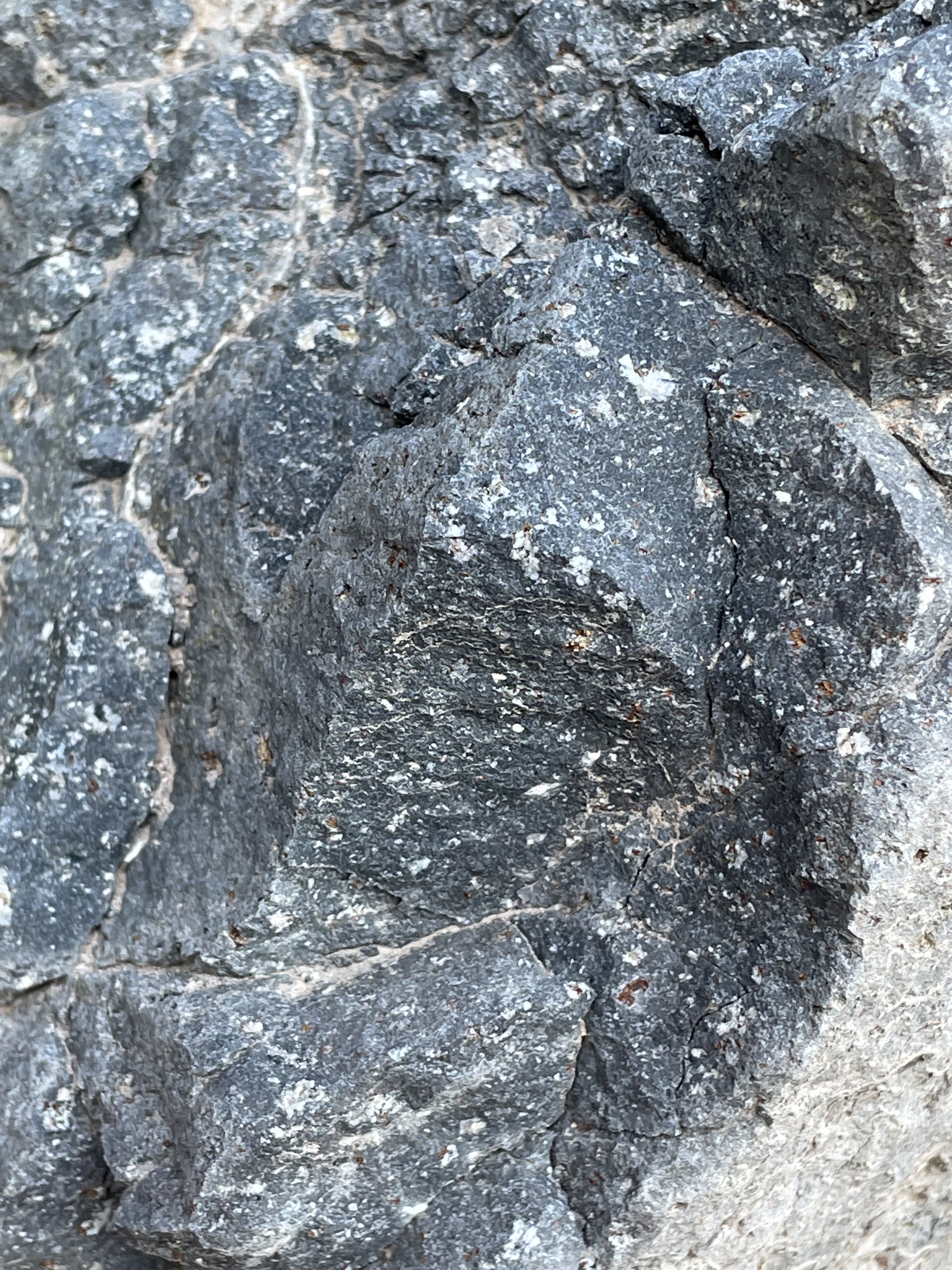
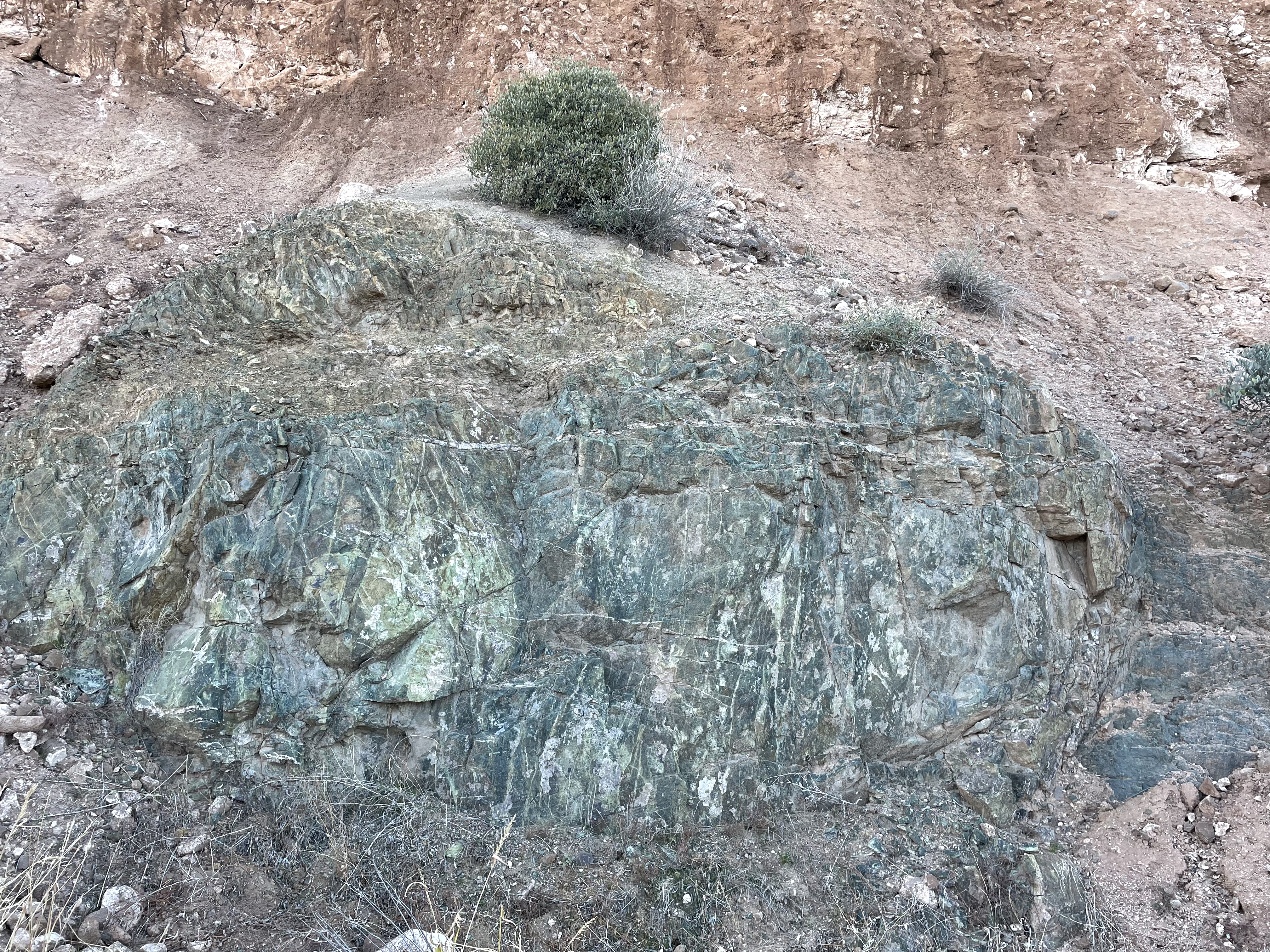
The black, metamorphic rock in Fig. 14 gave the name Black Canyon to the region because it outcrops throughout the area, underlying both volcanic and sedimentary rocks.

Summary
Almost three-billion years ago, the western half of what is today North America was an ocean margin, possibly like the East Coast. Mud and sand was accumulating in environments much as we find today except there were no plants so erosion was probably more intense. By about 2.5 Ga (billion years ago) these sediments were buried to depths as great as 35 km (~20 miles) and were compressed as tectonic plates collided. This process continued, no doubt in pulses, for another billion years, producing the complex textures we see in Figs. 12-15. This area was on the trailing edge of proto-North America during the formation of the supercontinent Gondwana, between ~500 and 200 Ma. When the modern Atlantic Ocean began to open, subduction of oceanic crust began and new continental crust was created, forming modern California.
Streams crisscrossed the area much as we see today, but in a different climate. The volcanism associated with subduction of the Pacific Ocean crust didn’t reach Arizona until ~30 Ma, when volcanoes spewed out numerous lava flows such as those that cap the mesas seen in Fig. 3, and the Colorado Plateau began to rise by thousands of feet. This is when the Central Highlands (aka Transition Zone) formed, a buffer between the block-faulted Basin and Range of central Arizona and much of the western deserts of Nevada, and the uniform and mostly undisturbed Paleozoic sedimentary rocks of the Colorado Plateau.


 Timothy R. Keen
Recent Comments