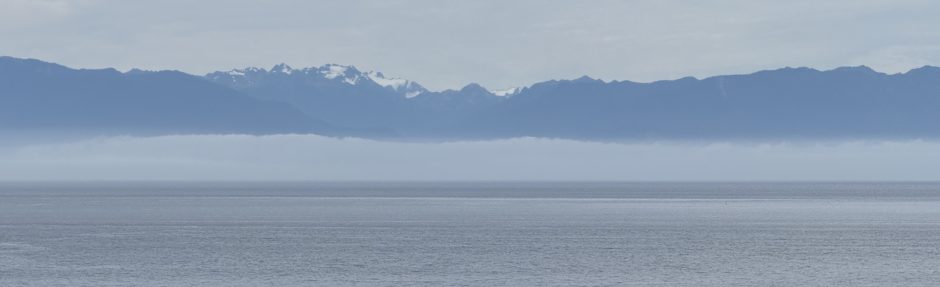
Disarray Along Commencement Bay
This morning we went for a walk along the western shoreline of Commencement Bay, which was home to many sawmills, even a smelter, between the 19th and late 20th centuries. Rather than removing all of the industrial debris, the city has left the remaining infrastructure as a kind of museum. There are signs explaining a lot of the history and even a piece of sculpture integrated with an original saw.
The shoreline is a dynamic environment where plants struggle to keep up with the sea and weather. Thus, pioneer plants dominate the flora.
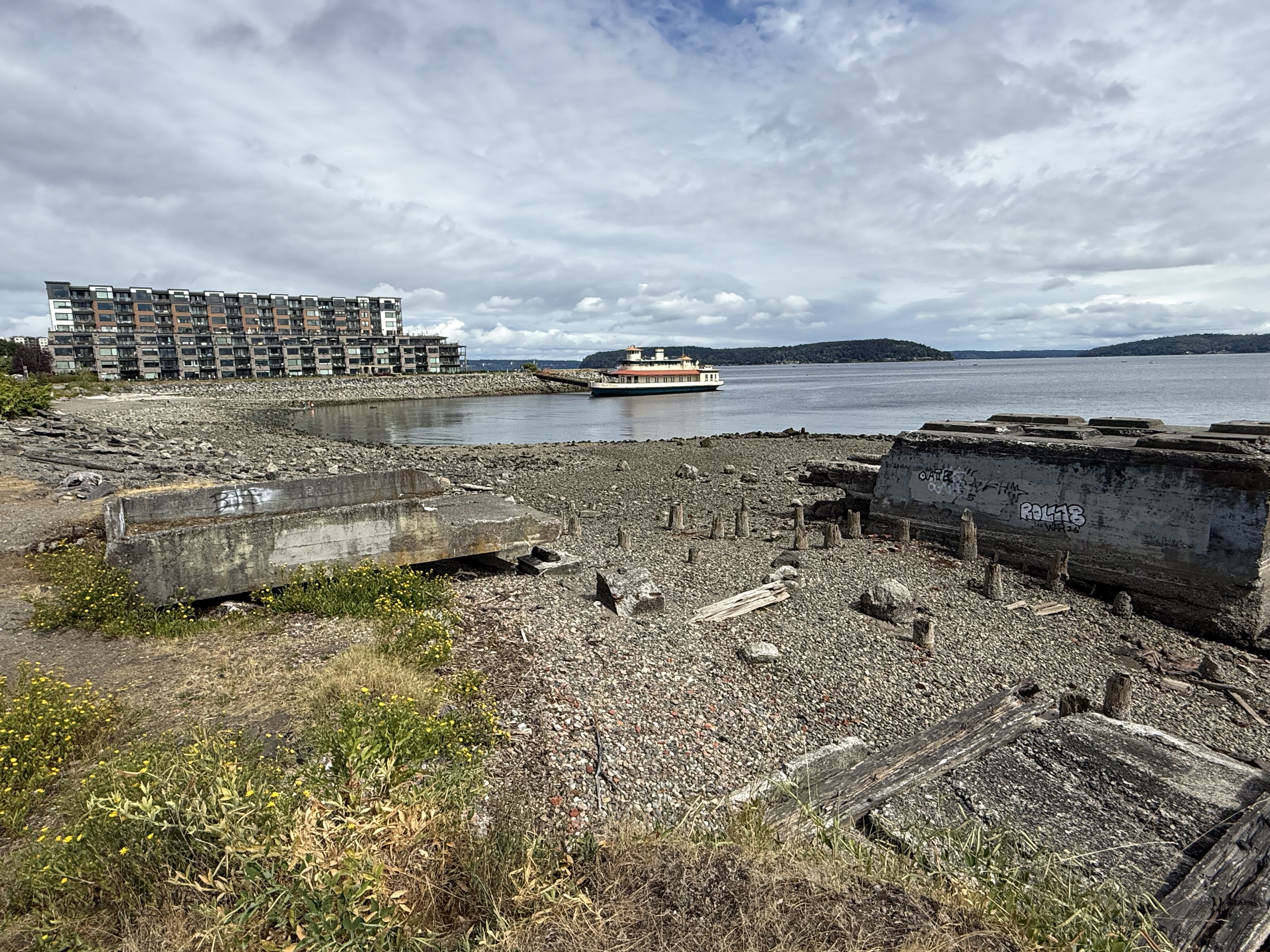
This view is looking to the NE. This is the last sawmill site along the bay, but it doesn’t have any signage explaining its history. Nevertheless, this image, taken at low tide, says a lot: The large concrete structure was the foundation for a piece of heavy equipment like a saw or winch; the piling stubs reveal where it was connected to land, where a receiving platform (left of image) was constructed. The remnants of a dock are in the lower right. There are a line of pilings further seaward that demarcate a dock that would have served as a wharf for ships.
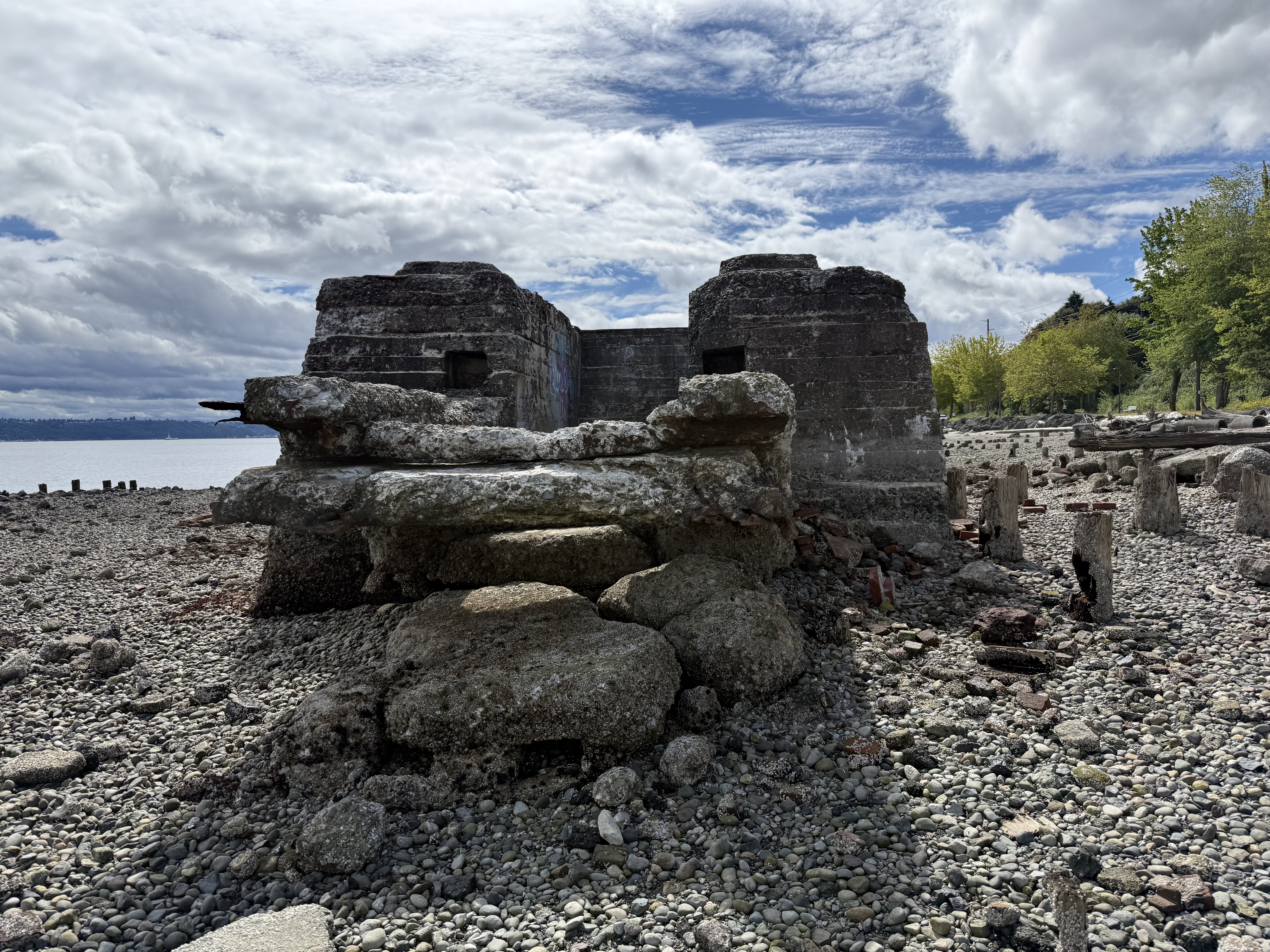
Most of this structure would have been submerged at high tide (7-10 feet, twice a day). This reinforced concrete structure probably was the base for the saw, the channel likely designed for pulleys, chains, etc, that ran the saw or pulled trees (up to 14 feet in diameter) into it. The sawmills often located their saw heads offshore to make processing logs, which arrived by raft, easier.
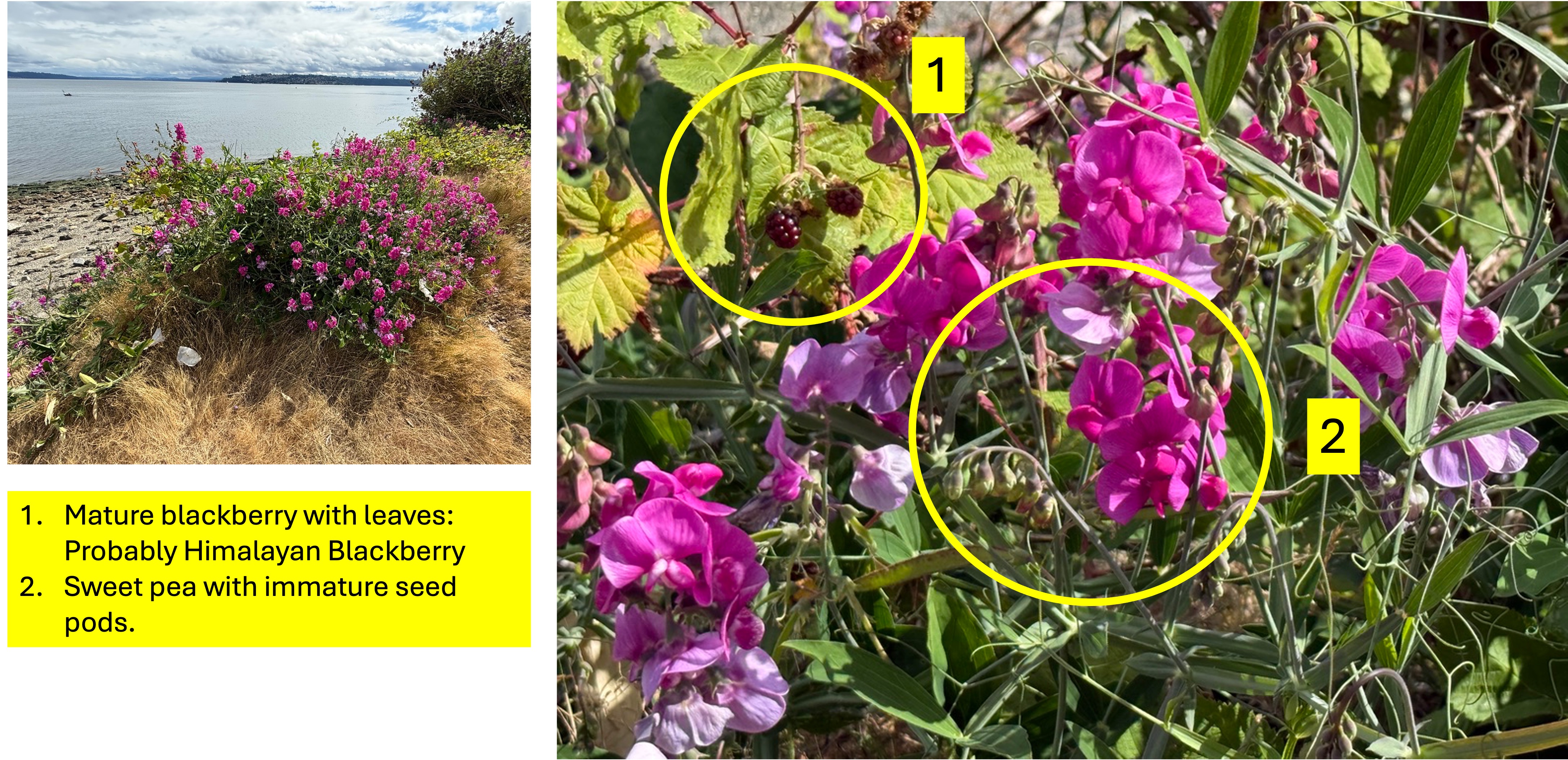
This bramble caught my eye, so I took a closer look. It is a mixture of two pioneer plants. Sweet peas of different species are native to the PNW (I don’t know which exactly this is), but Himalayan blackberry is invasive and threatens ecosystems across the region. They are fighting it out, so I’m cheering for the sweet pea — to fend off the foreign invader.
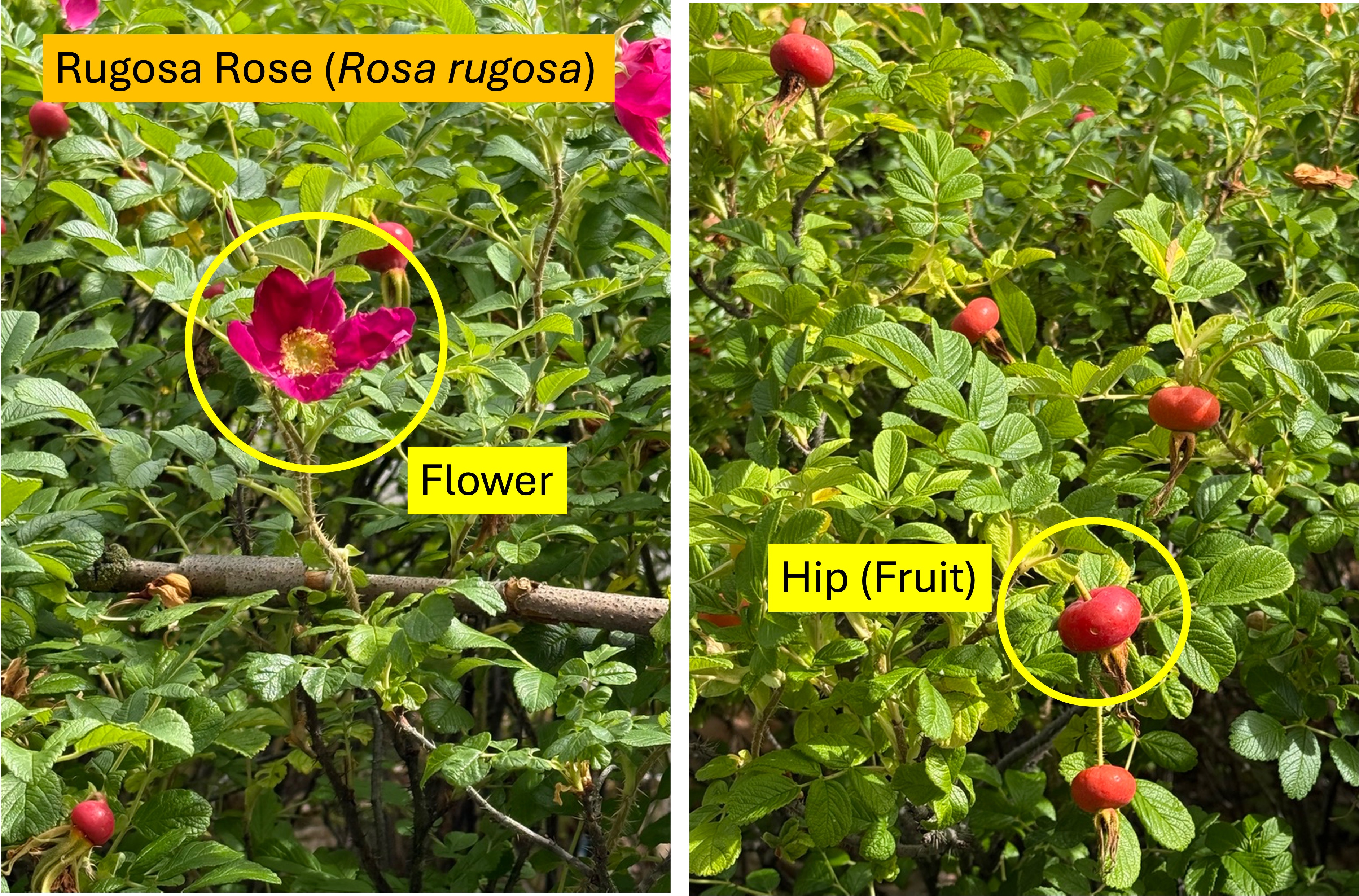
This wild rose species caught my eye because of the huge fruit (golfball sized), which is apparently edible. Just put enough gravy on it and it’ll taste fine.
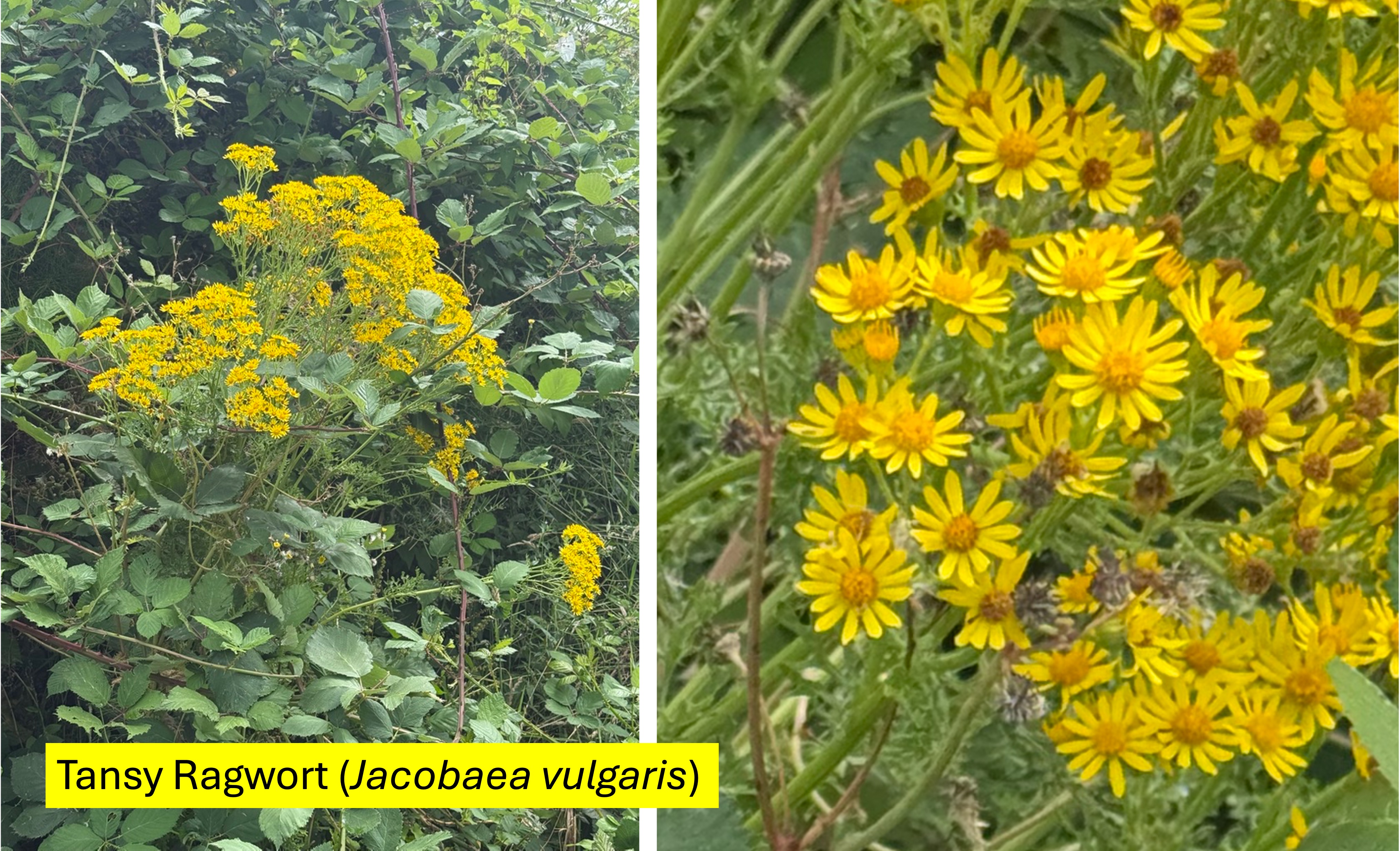
I thought these bright, yellow flowers looked familiar. I checked a previous post to discover that the flowers are not common tansy. The flowers are curved upward and the centers are large, orange domes. It is invasive and toxic to animals (and people), so it is actively monitored. This example is growing in a thicket along with Rugosa Rose, which is also invasive; and yes, there are native plants that thrive in a coastal environment but they have natural controls that are lacking for these alien species.
Final Thoughts
I didn’t mean to photograph anything today, but the flowers are so eye-catching. And I love old industrial sites.


Recent Comments