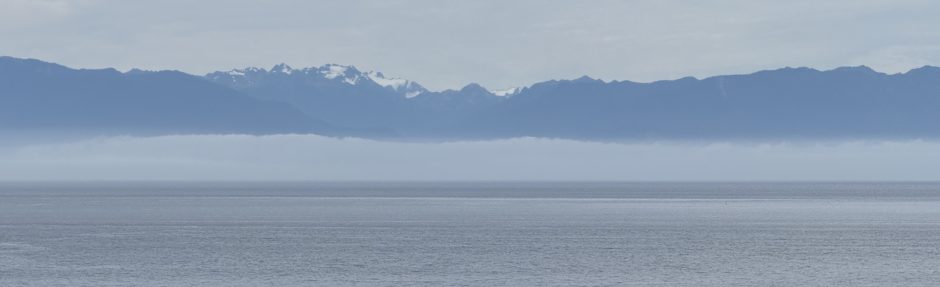
Disarray Along Commencement Bay
This morning we went for a walk along the western shoreline of Commencement Bay, which was home to many sawmills, even a smelter, between the 19th and late 20th centuries. Rather than removing all of the industrial debris, the city has left the remaining infrastructure as a kind of museum. There are signs explaining a lot of the history and even a piece of sculpture integrated with an original saw.
The shoreline is a dynamic environment where plants struggle to keep up with the sea and weather. Thus, pioneer plants dominate the flora.
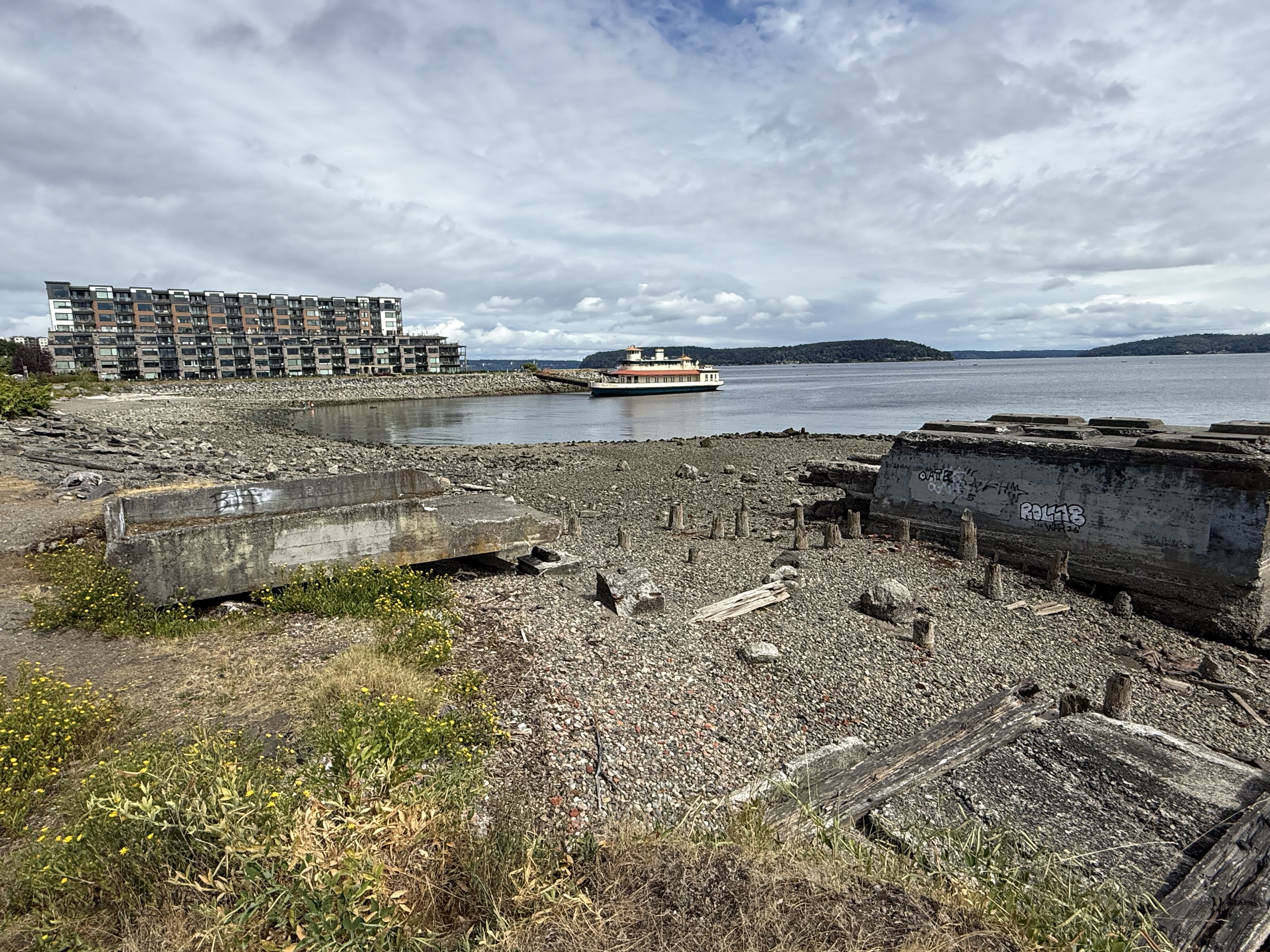
This view is looking to the NE. This is the last sawmill site along the bay, but it doesn’t have any signage explaining its history. Nevertheless, this image, taken at low tide, says a lot: The large concrete structure was the foundation for a piece of heavy equipment like a saw or winch; the piling stubs reveal where it was connected to land, where a receiving platform (left of image) was constructed. The remnants of a dock are in the lower right. There are a line of pilings further seaward that demarcate a dock that would have served as a wharf for ships.
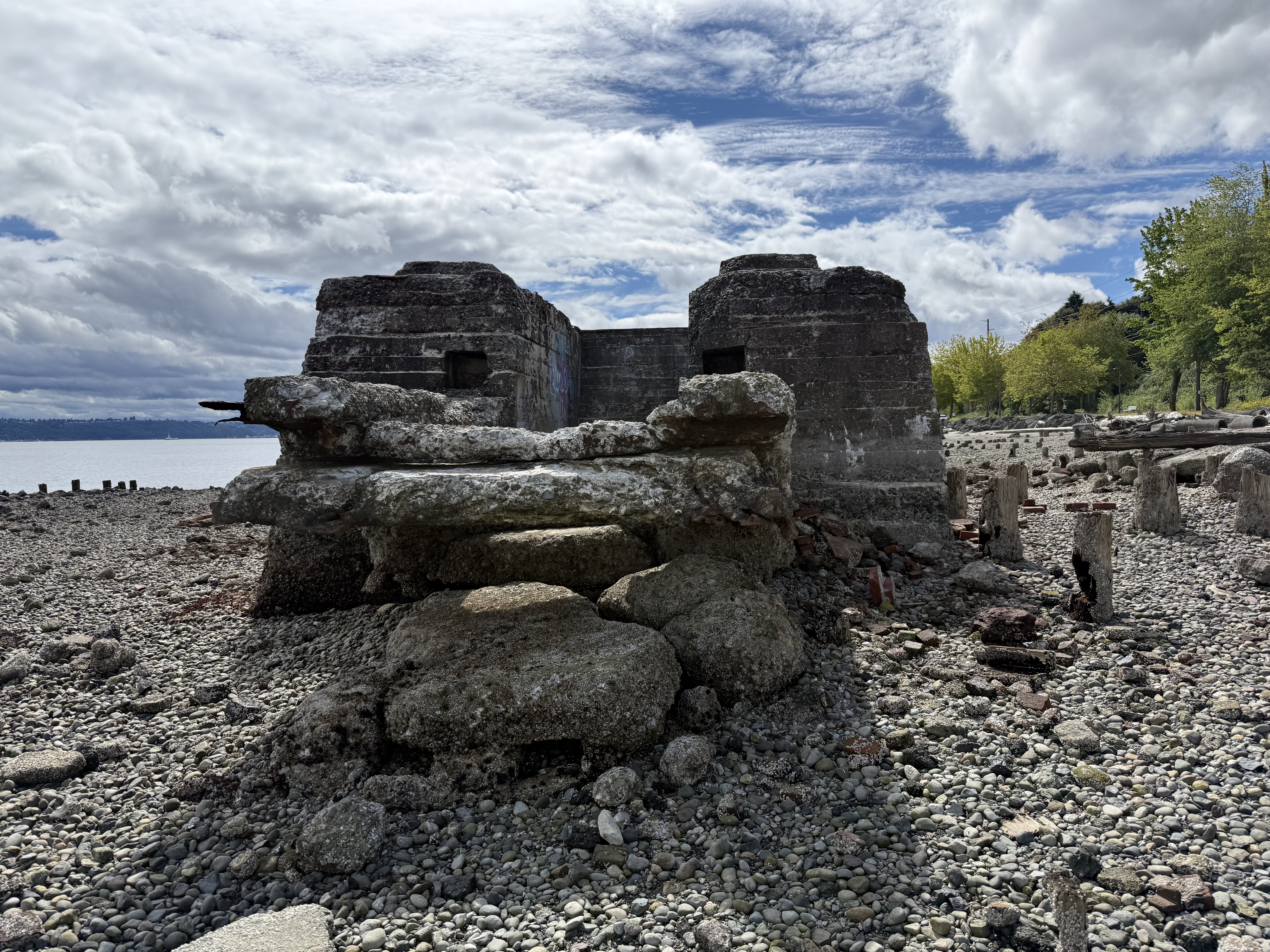
Most of this structure would have been submerged at high tide (7-10 feet, twice a day). This reinforced concrete structure probably was the base for the saw, the channel likely designed for pulleys, chains, etc, that ran the saw or pulled trees (up to 14 feet in diameter) into it. The sawmills often located their saw heads offshore to make processing logs, which arrived by raft, easier.
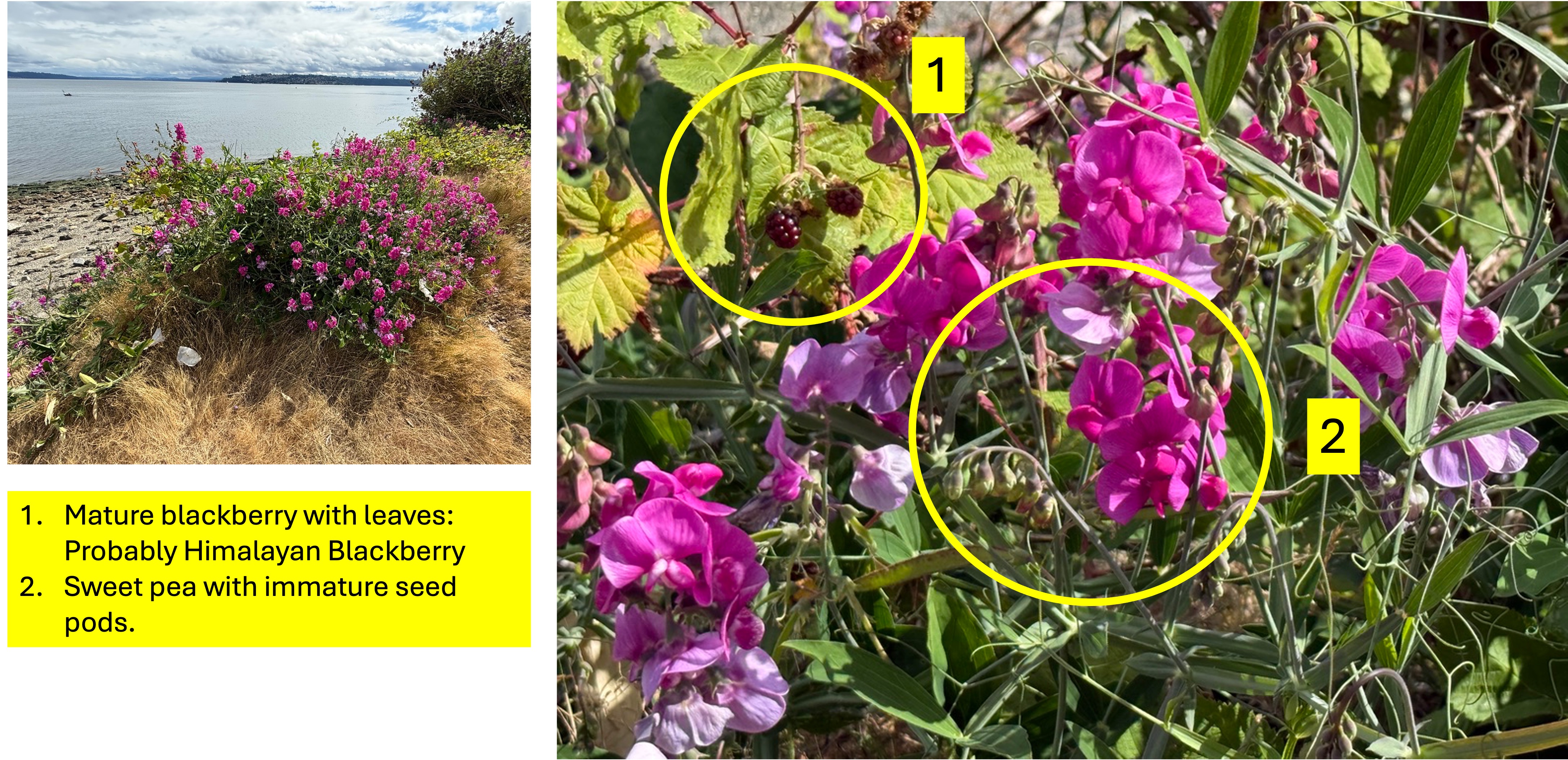
This bramble caught my eye, so I took a closer look. It is a mixture of two pioneer plants. Sweet peas of different species are native to the PNW (I don’t know which exactly this is), but Himalayan blackberry is invasive and threatens ecosystems across the region. They are fighting it out, so I’m cheering for the sweet pea — to fend off the foreign invader.
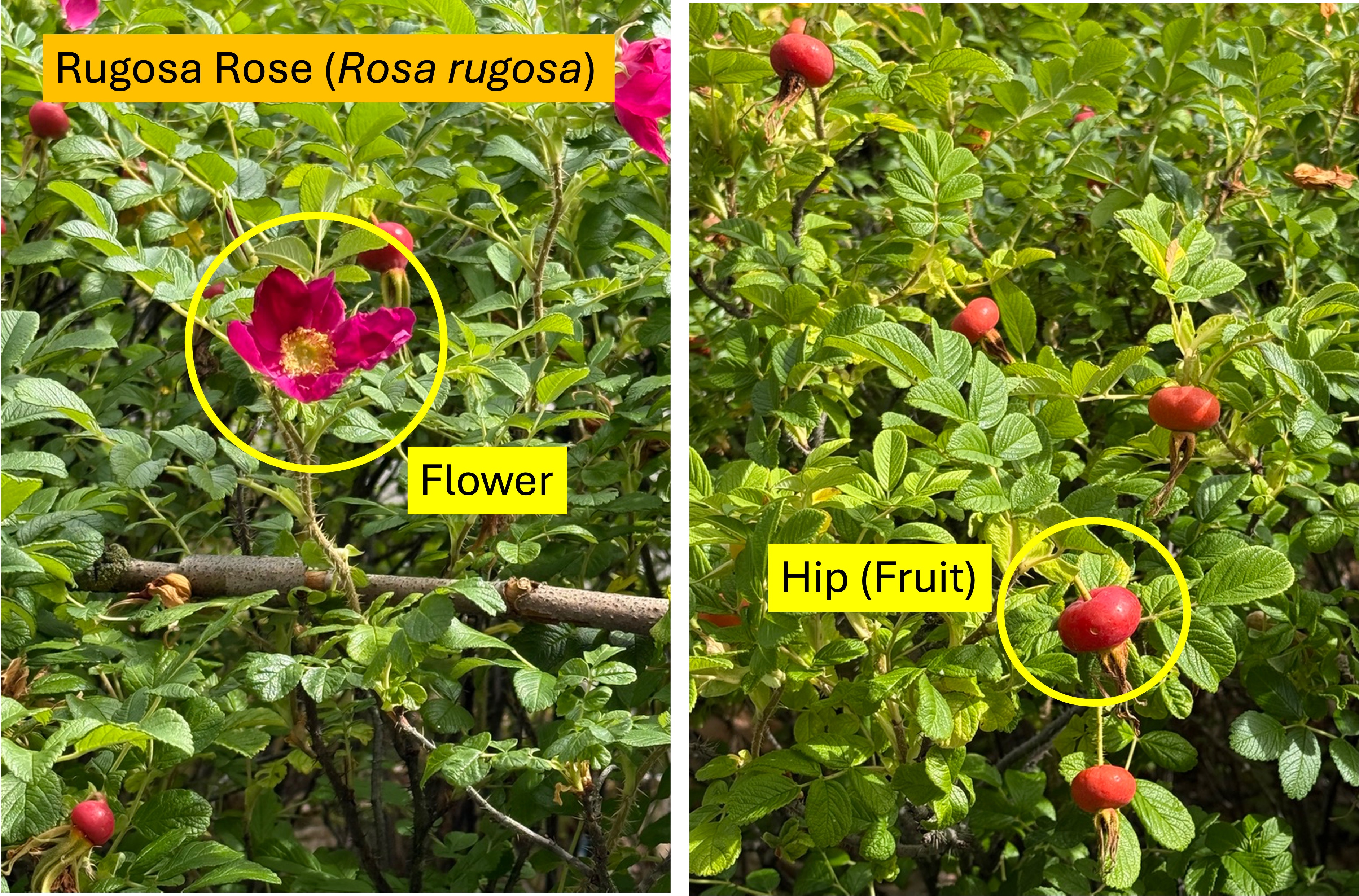
This wild rose species caught my eye because of the huge fruit (golfball sized), which is apparently edible. Just put enough gravy on it and it’ll taste fine.
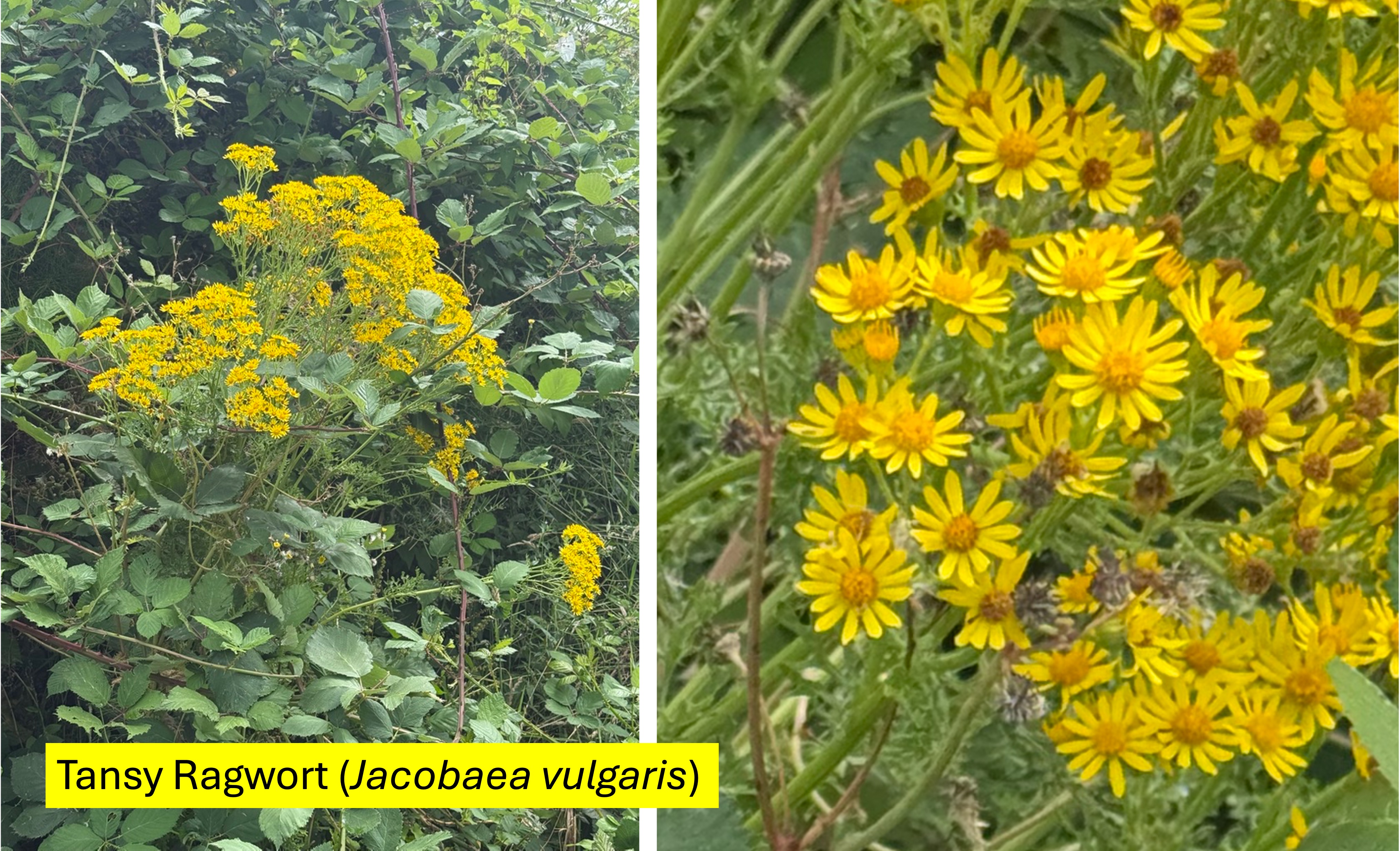
I thought these bright, yellow flowers looked familiar. I checked a previous post to discover that the flowers are not common tansy. The flowers are curved upward and the centers are large, orange domes. It is invasive and toxic to animals (and people), so it is actively monitored. This example is growing in a thicket along with Rugosa Rose, which is also invasive; and yes, there are native plants that thrive in a coastal environment but they have natural controls that are lacking for these alien species.
Final Thoughts
I didn’t mean to photograph anything today, but the flowers are so eye-catching. And I love old industrial sites.
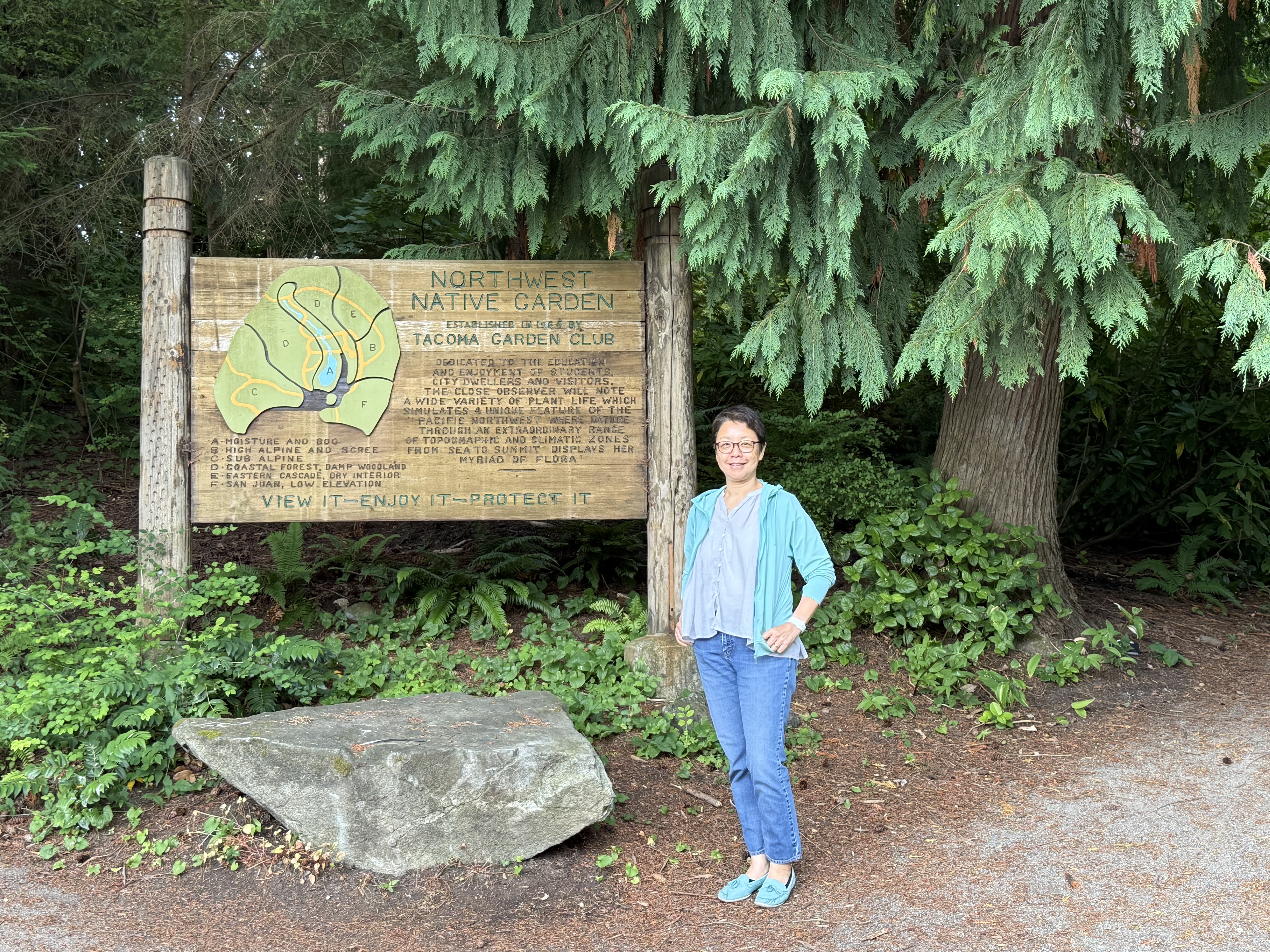
The Northwest Native Garden
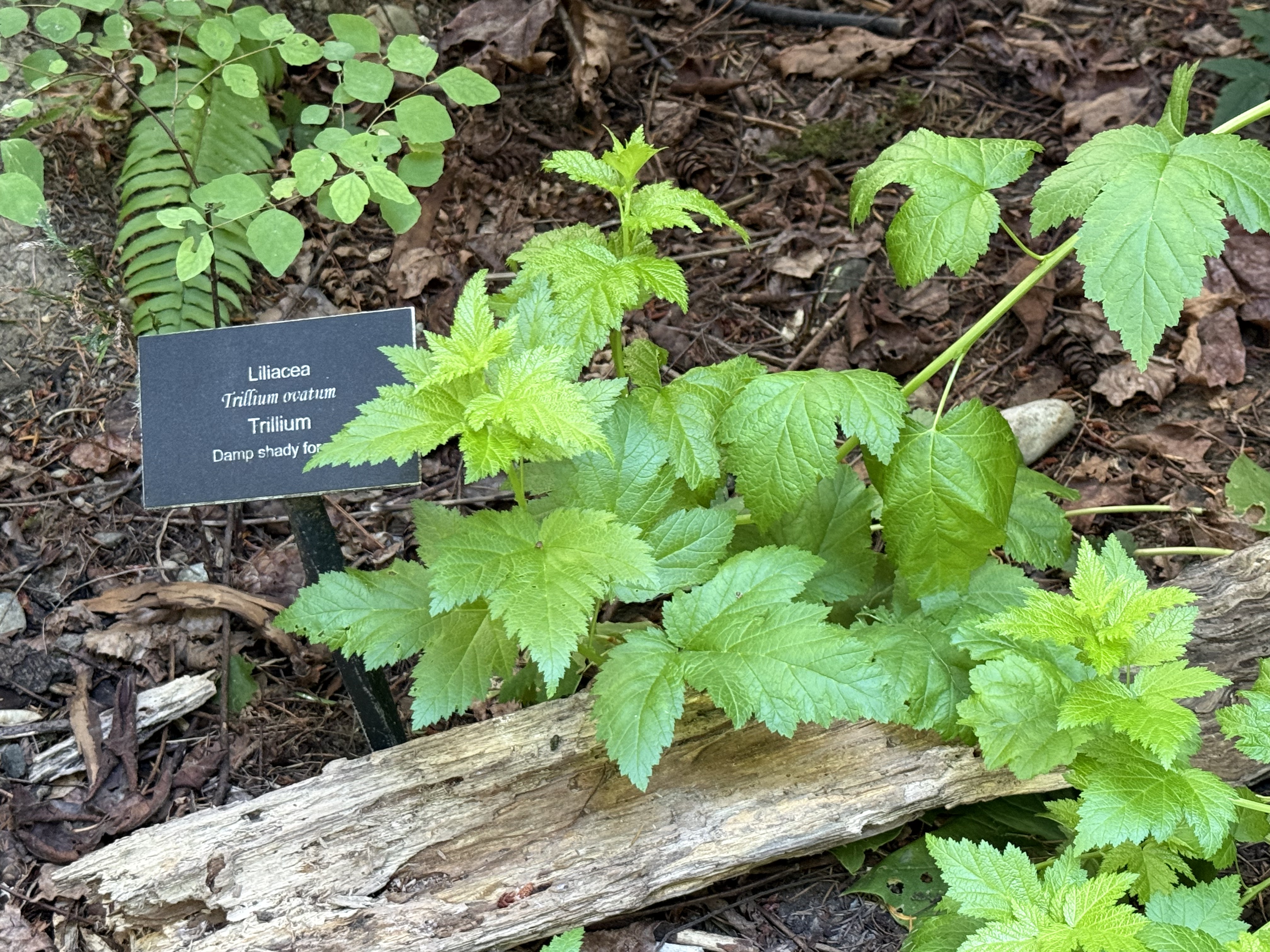
Like the (rare) sign says: Trillium likes moist coastal forests.
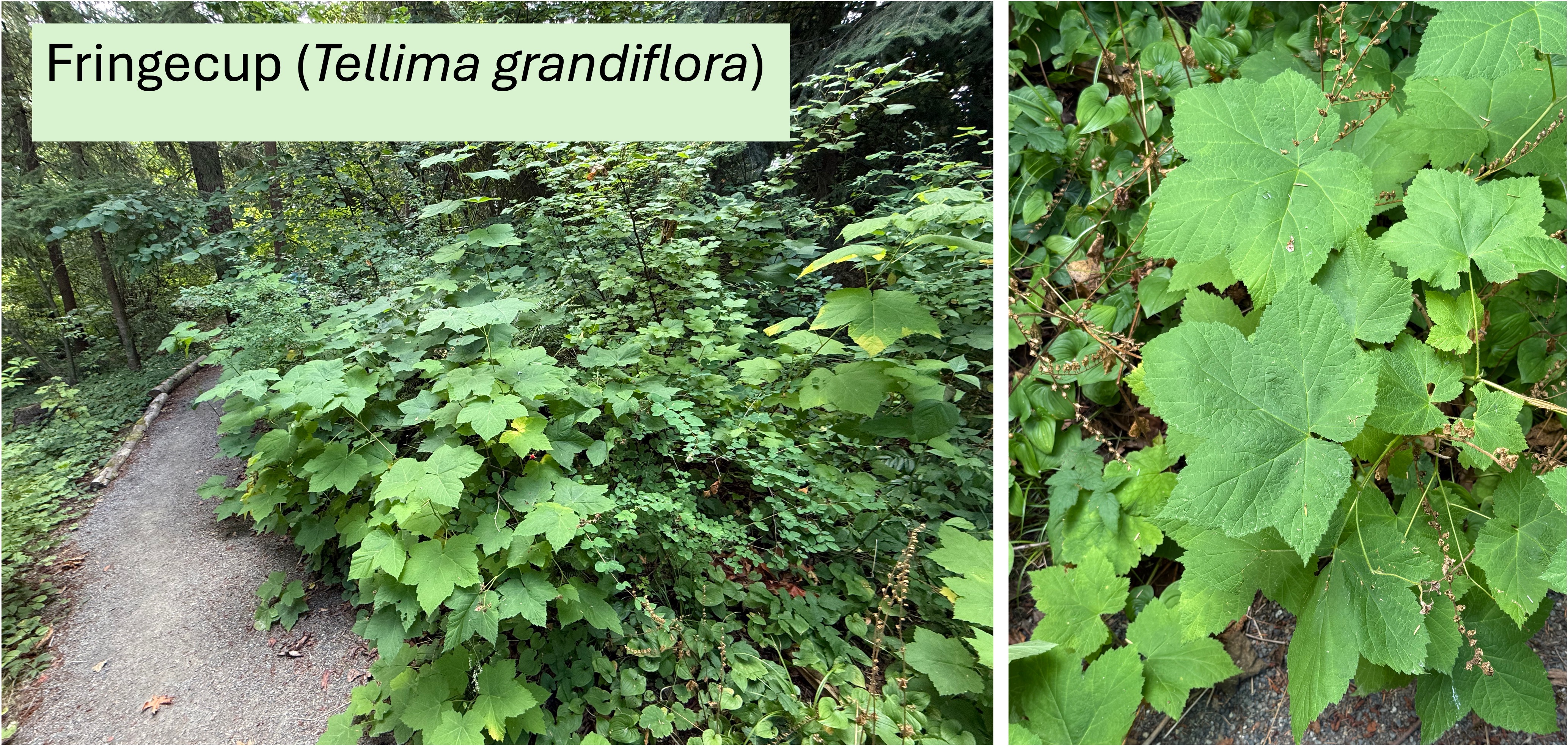
This common PNW shrub thrives in moist coastal forest environments.
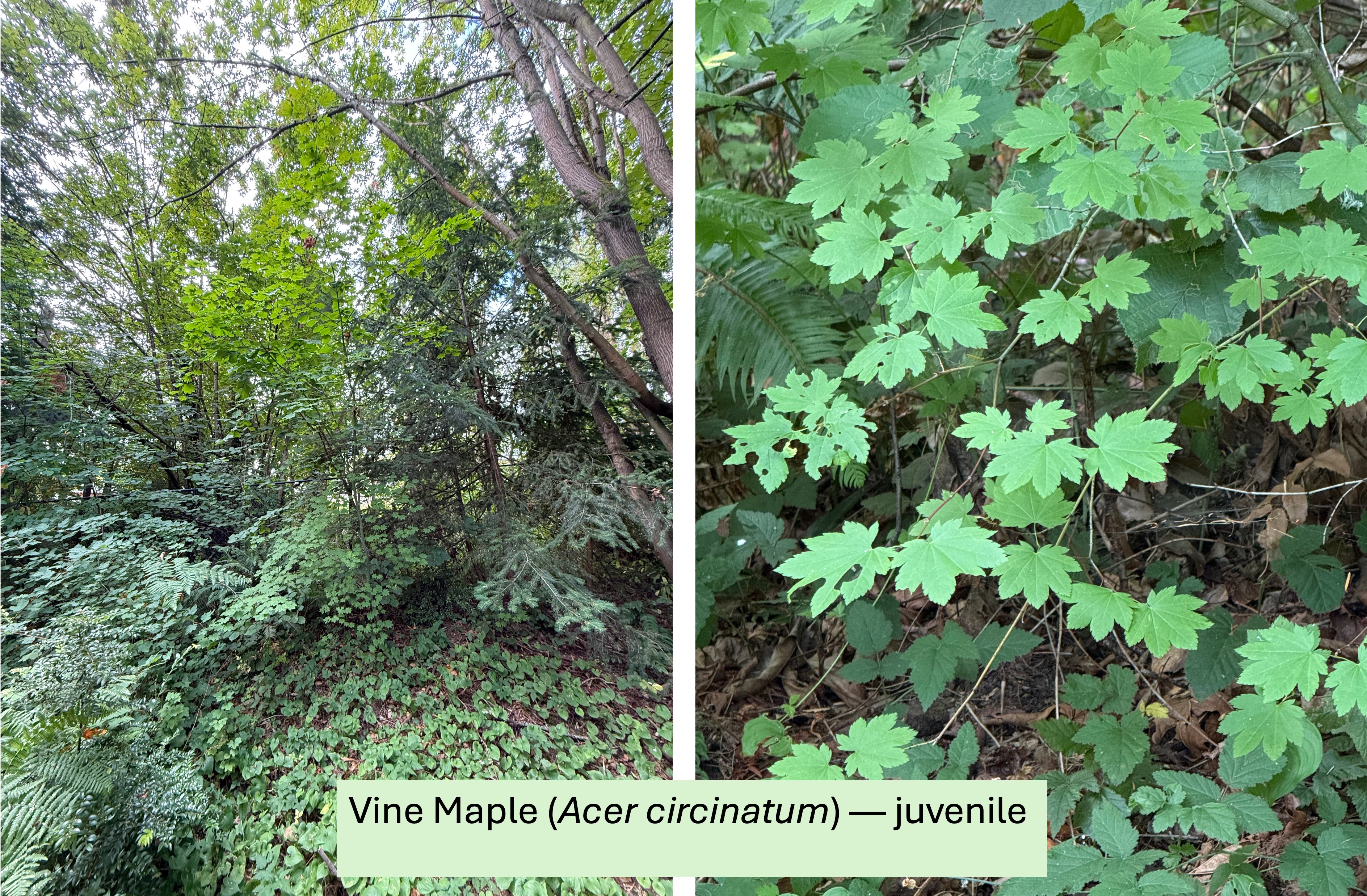
Vine Maple is an understory tree, which doesn’t grow high enough to compete for full sun; instead, it grows beneath the conifers and gives even more shade to the shrubs. This sapling is just starting to get some height. Moist coastal forest.
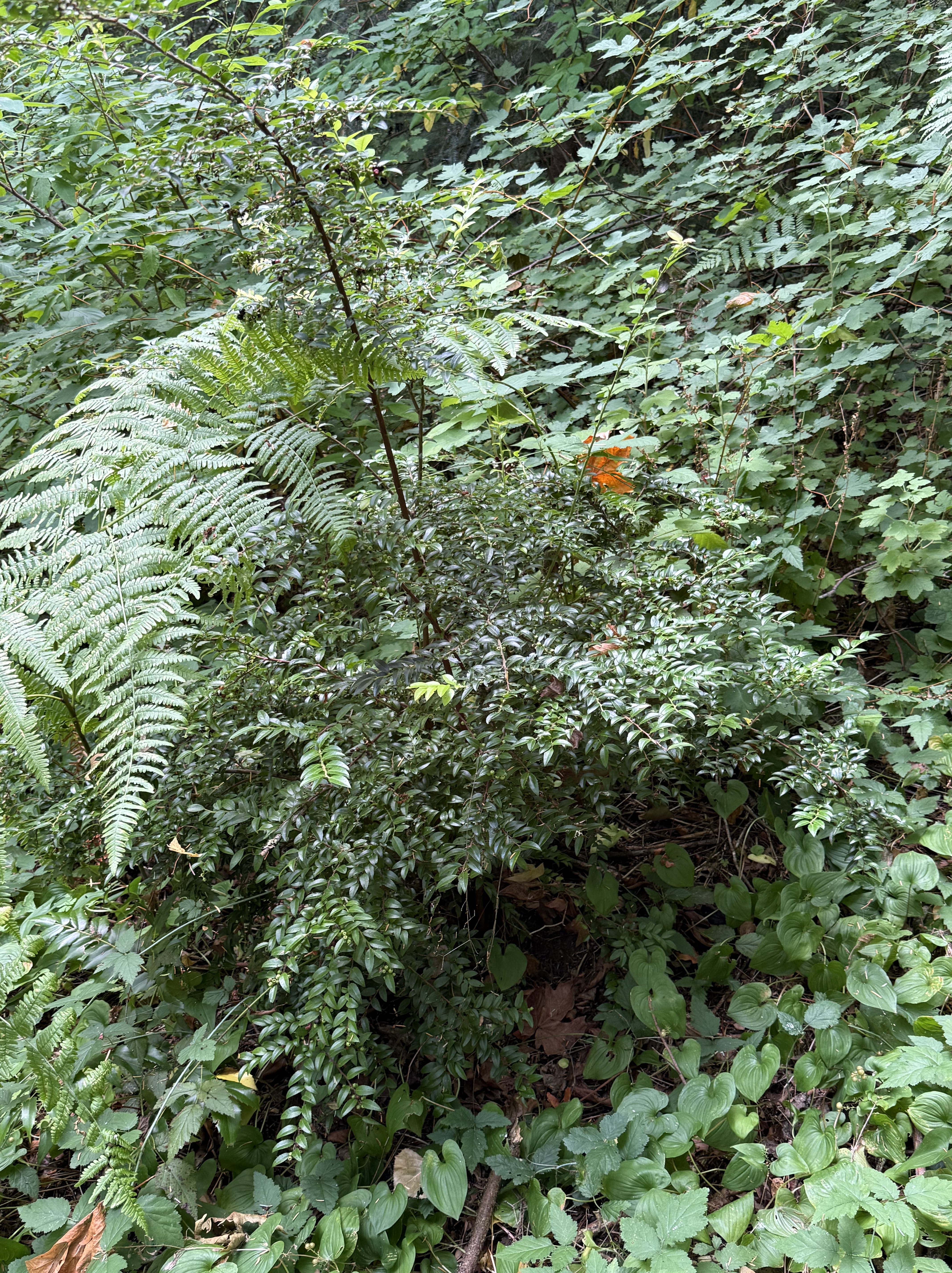
This is Salal (Gaultheria shallon). It grows in an environment similar to Vine Maple, in nutrient-rich, well-drained soils, often near water. Moist coastal forest.
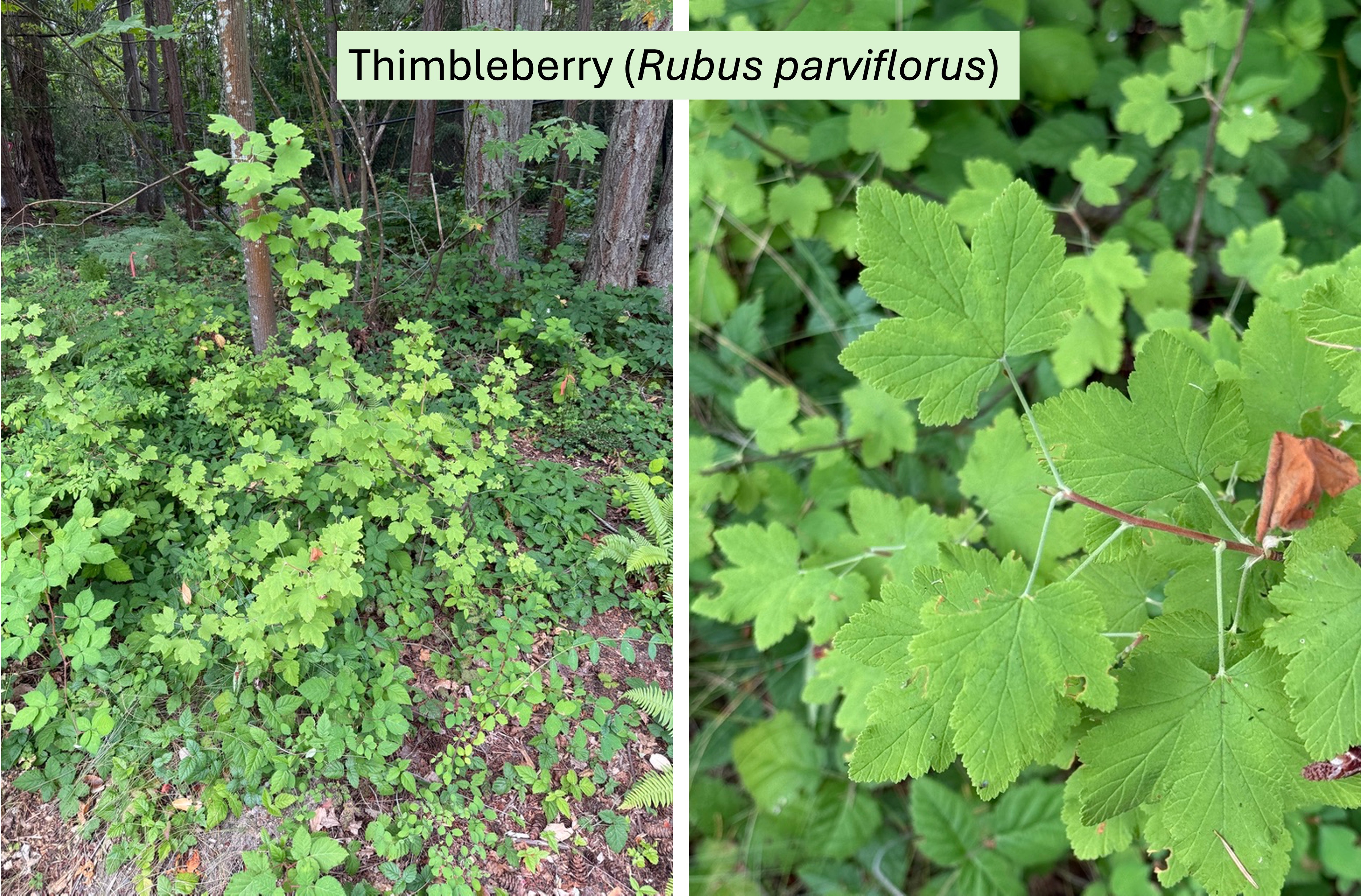
This shrub forms colonies in mesic forest patches, where partial sun is available although it is shade tolerant. The identification is difficult because of so many plants with similar leaf shapes, but I agree with CoPilot. A denizen of moist coastal forests.
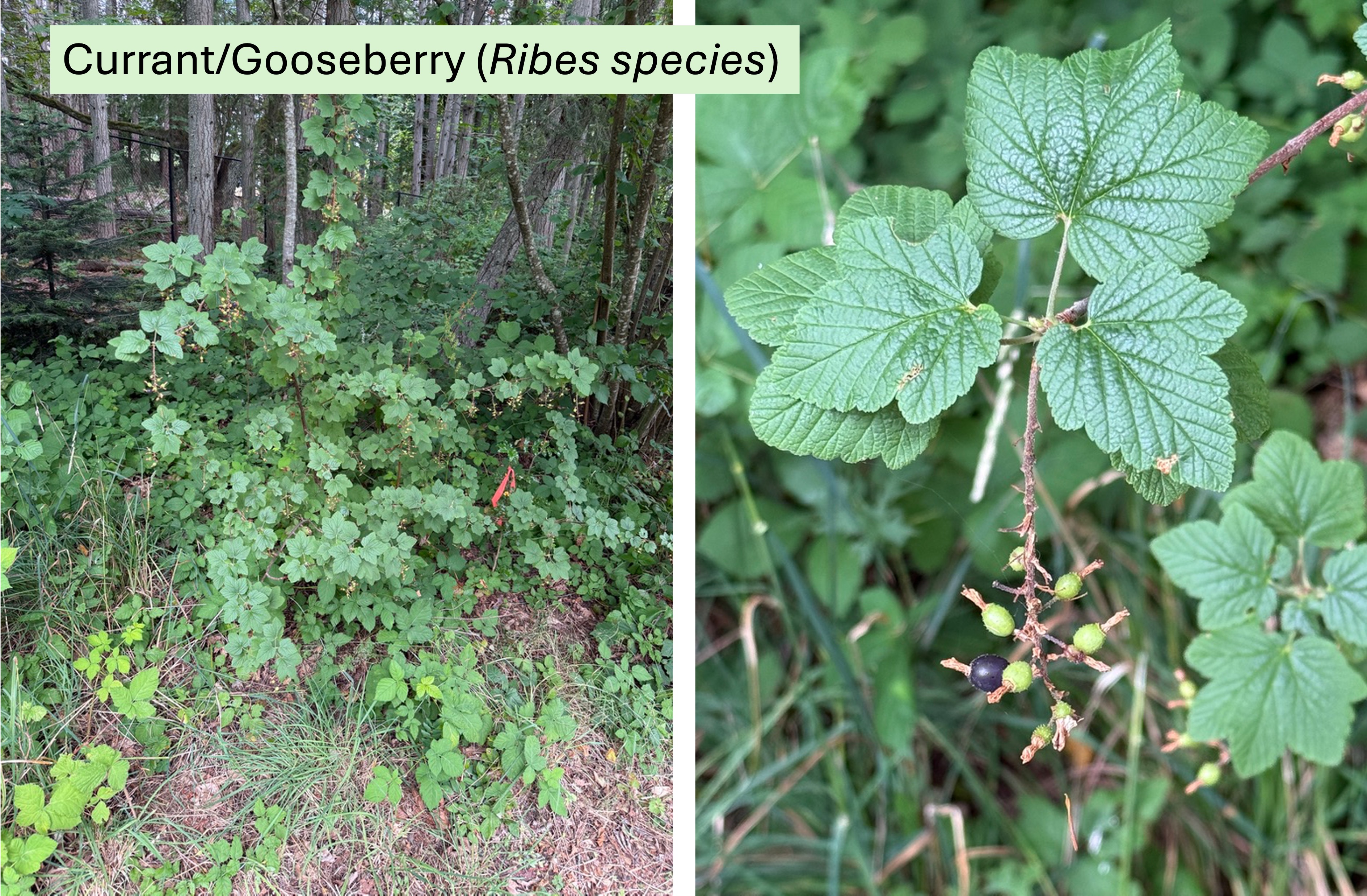
This plant is common to shrub thickets and riparian edge habitats.
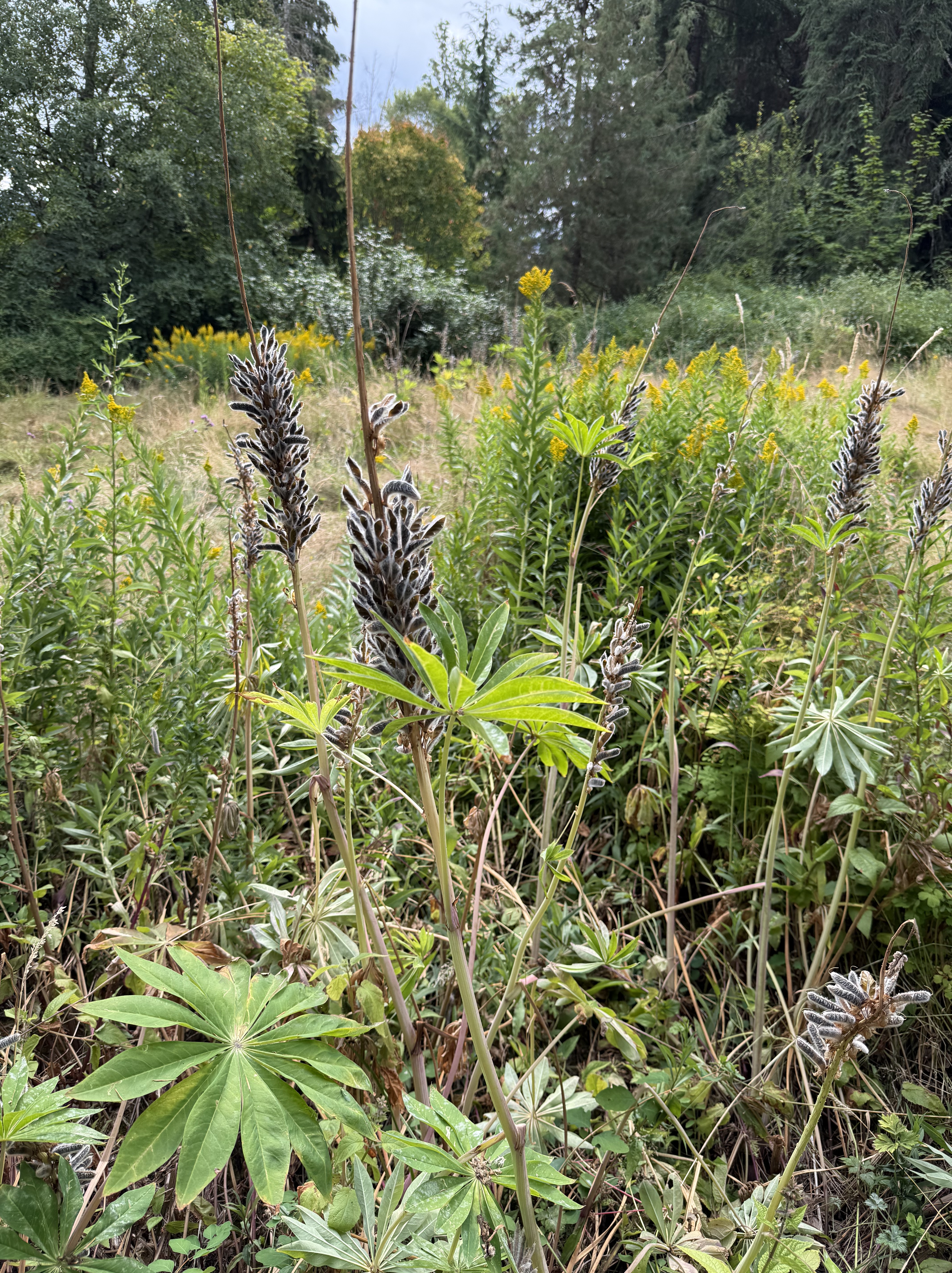
This distinctive plant is Bigleaf Lupine (Lupinus polphyllus). It thrives at the edges of meadows in a full-sun environment with moist to dry soil. Those lovely appendages are seed pods, so I don’t know what the flowers look like. This plant thrives in prairie/oak woodland habitats.
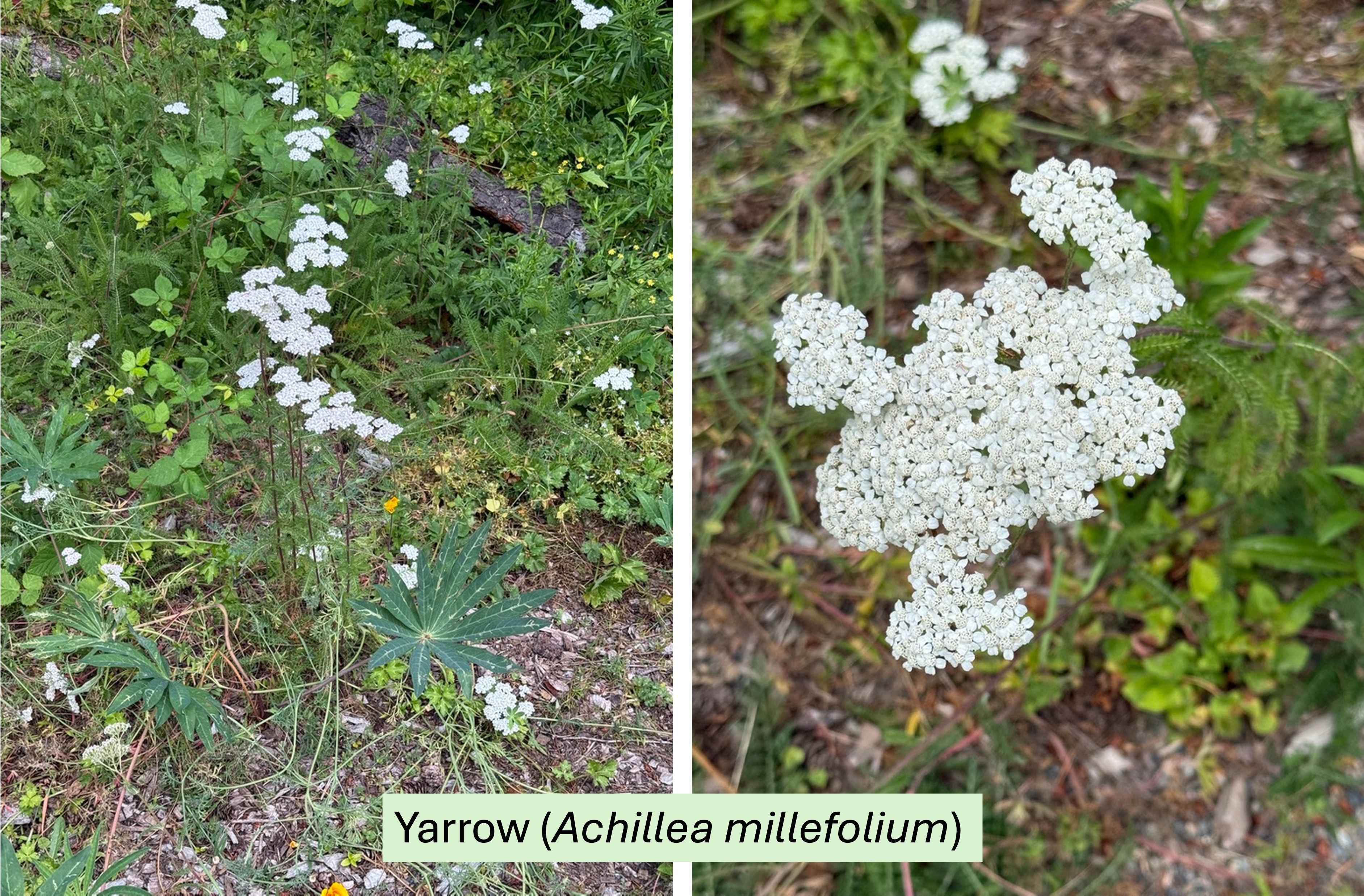
This slender, flowering plant is thriving in the prairie section of the garden. Prairie/oak woodland environments.
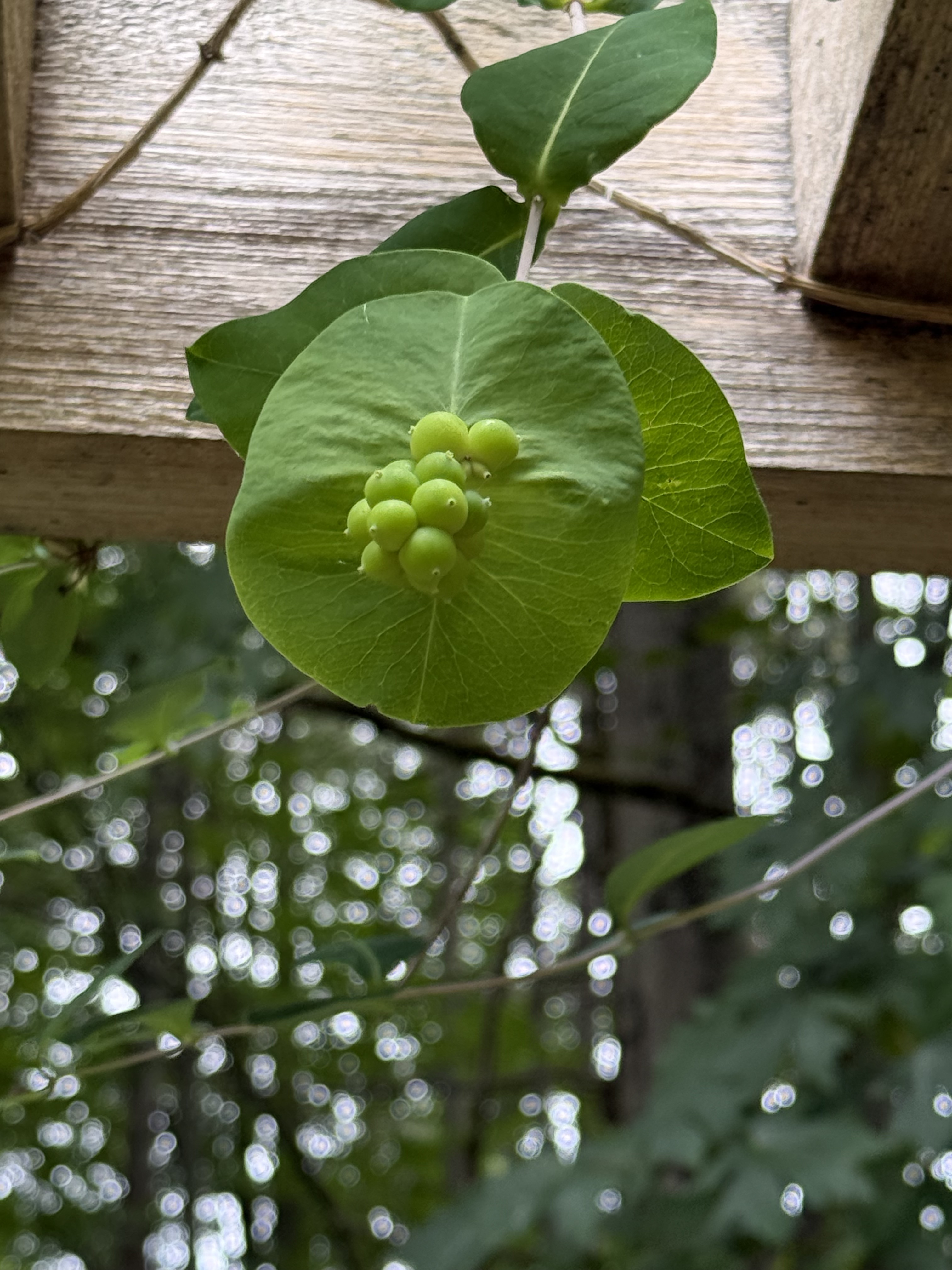
This vine is Perfoliate Honeysuckle (Lonicera caprifolium). It is a non-native variety that is commonly planted on trellises and fences. This one was hard to identify; CoPilot failed completely but, with help from Claude (Anthropic’s AI), we finally figured it out. We could still be wrong, however.
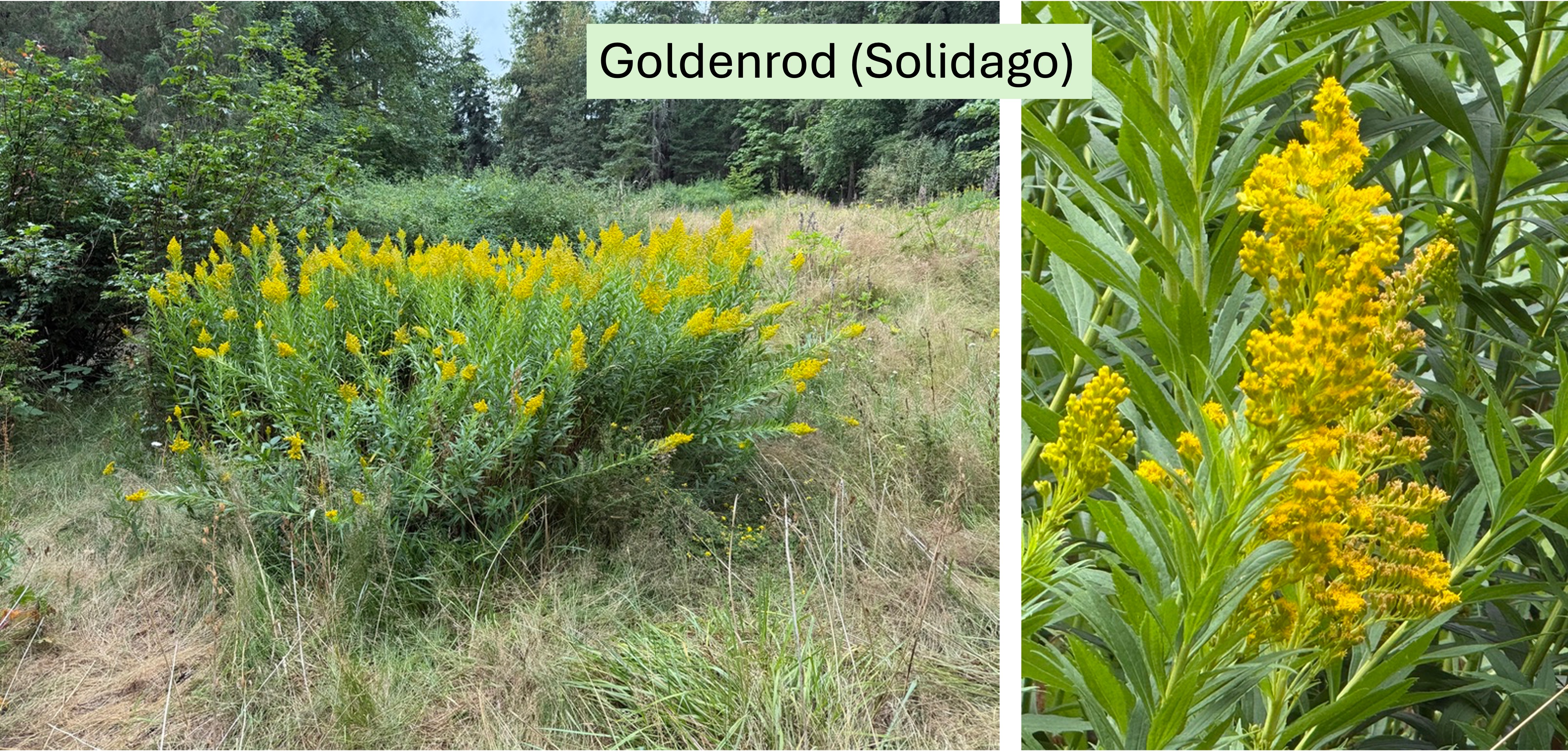
This flowery shrub grows in meadows like the micro-environment at the Northwest Native Garden. Prairie/oak woodland habitats.
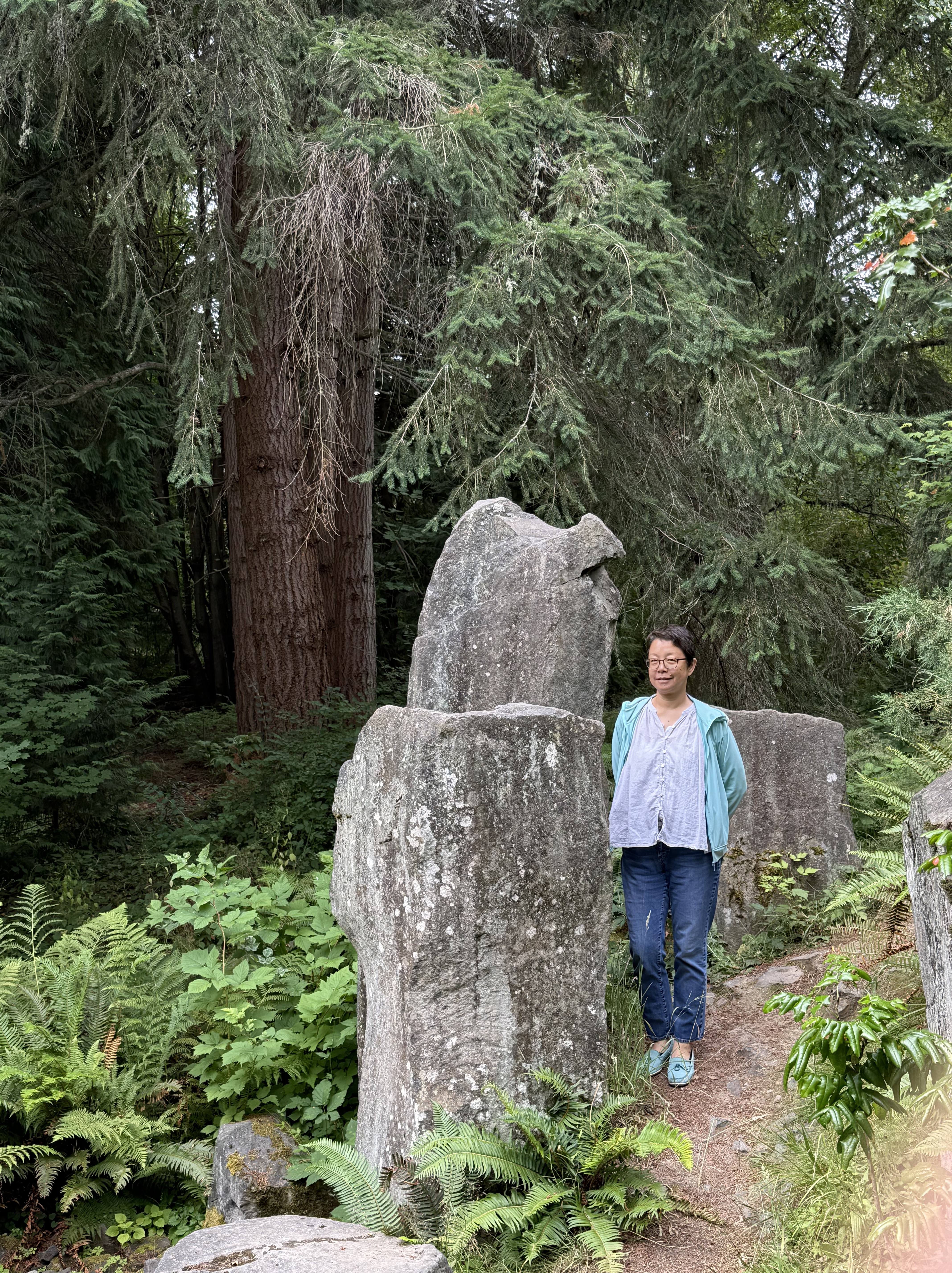
These non-native (to Tacoma) columns of volcanic rock show up everywhere in the PNW. They originate within the Cascades Range, near volcanic vents and volcanoes.
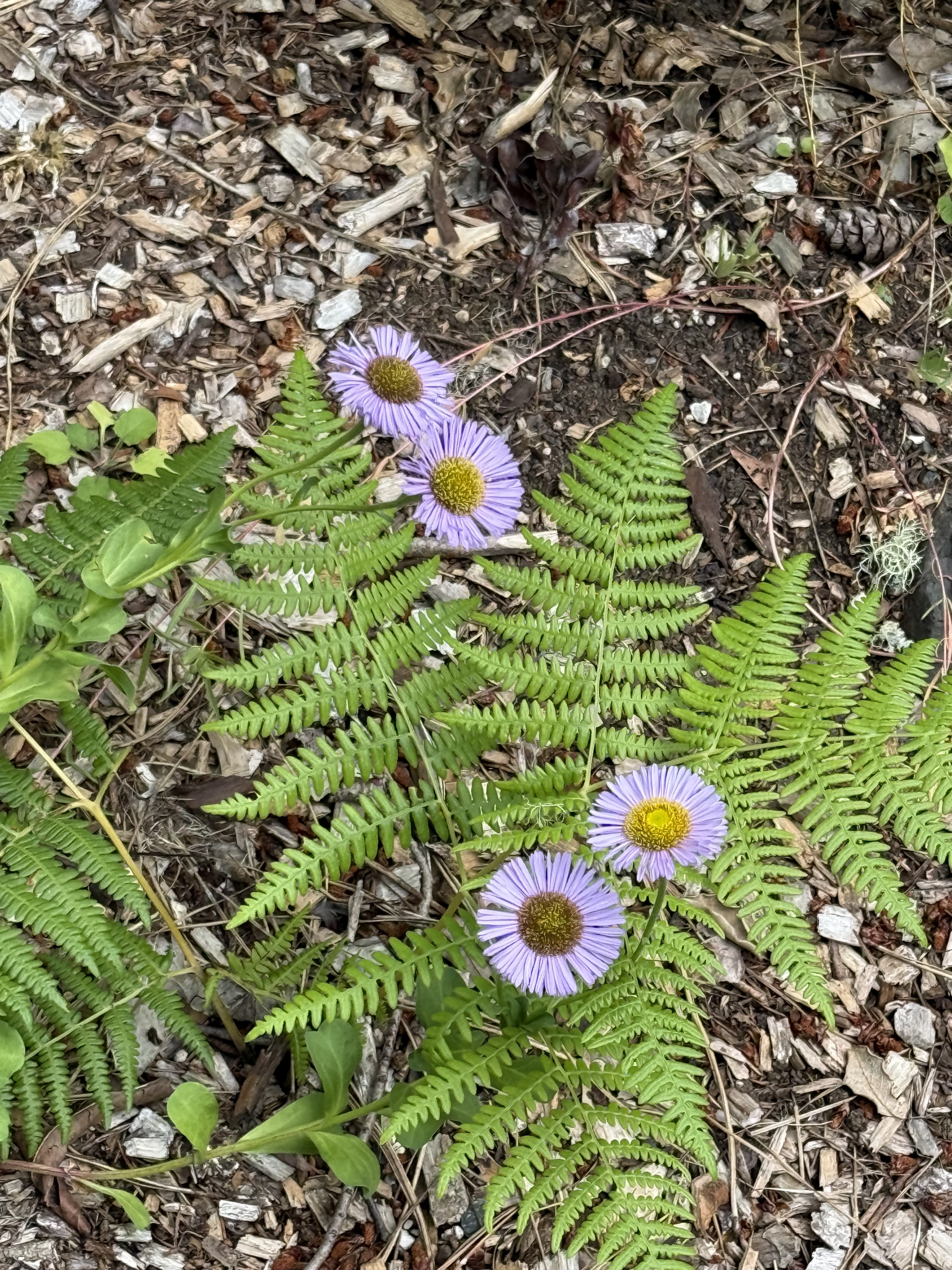
This lovely flower, growing through some ferns, is Douglas Aster (Symphyotrichum subspicatum). It is common in moist meadows and forest edges. I verified the identification from CoPilot. Common in moist woodland/forest edge habitats.
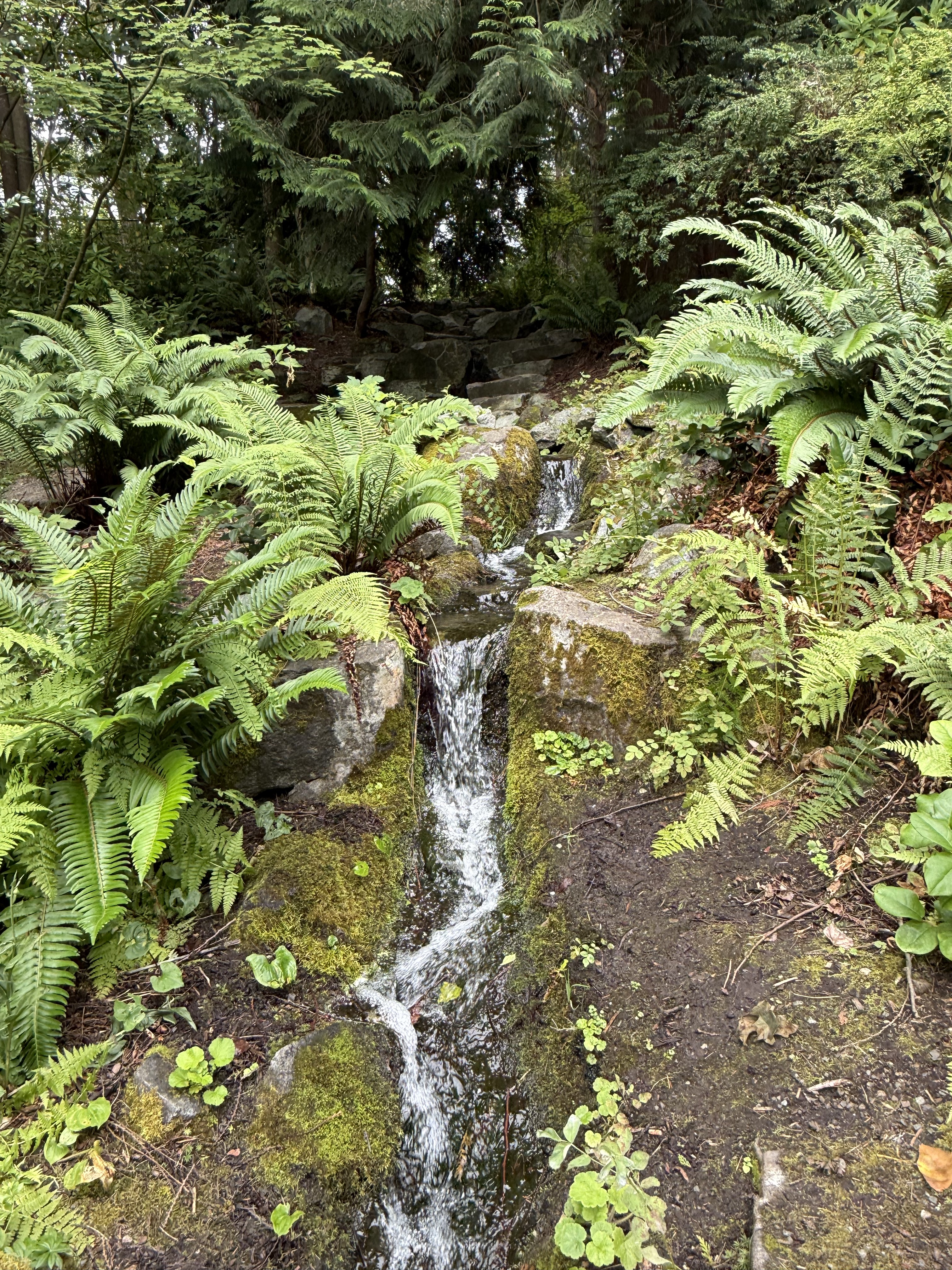
There is a small, articficial stream flowing through the garden and feeding a small pond. I don’t know where the water comes from … is it natural or recycled? No idea.
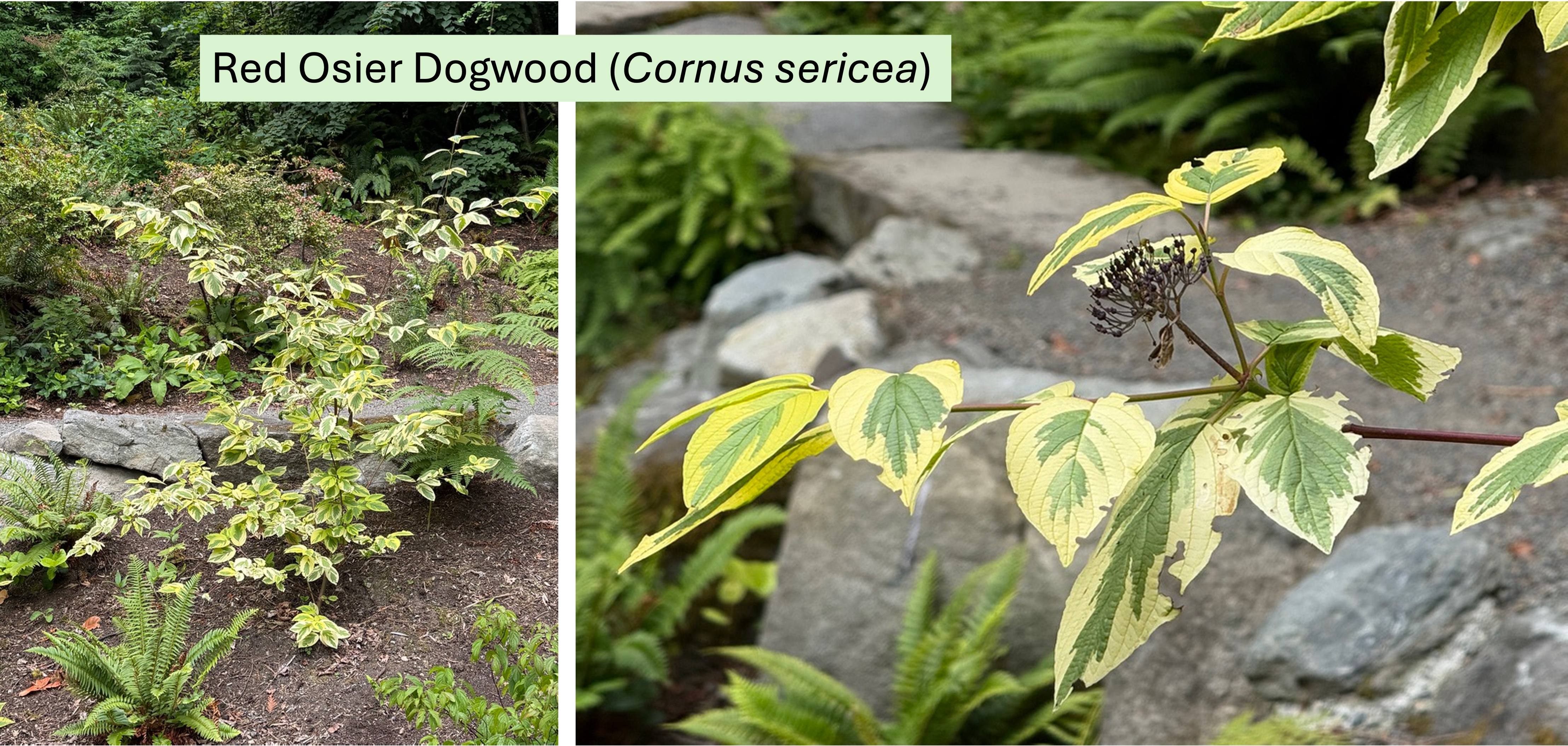
This is a rare non-native species planted in the garden for contrast. I checked this myself, and this variety is variegated.
Final Thoughts
The Northwest Native Garden is a great place to see many of the ecosystems in the PNW in one place. However, the lack of identification is a problem, which I addressed using CoPilot. But I had to check it a lot because it is a Large Language Model, not a specific plant-identification model. Nevertheless, it always got me into the ballpark; and it is easy to work with, like collaborating with a human who knows a lot but tends to jump the gun sometimes.
We spent about an hour strolling through four PNW environments, which was a lot easier than driving around. It reminded me of a Japanese garden, like the one in Portland. Very peaceful and colorful.
I hope that anyone who got this far enjoyed my trip through the Northwest Native Garden as much as I did. I plan to revisit it and learn about some more native PNW flora.
Ecological Notes from Cowiche Canyon
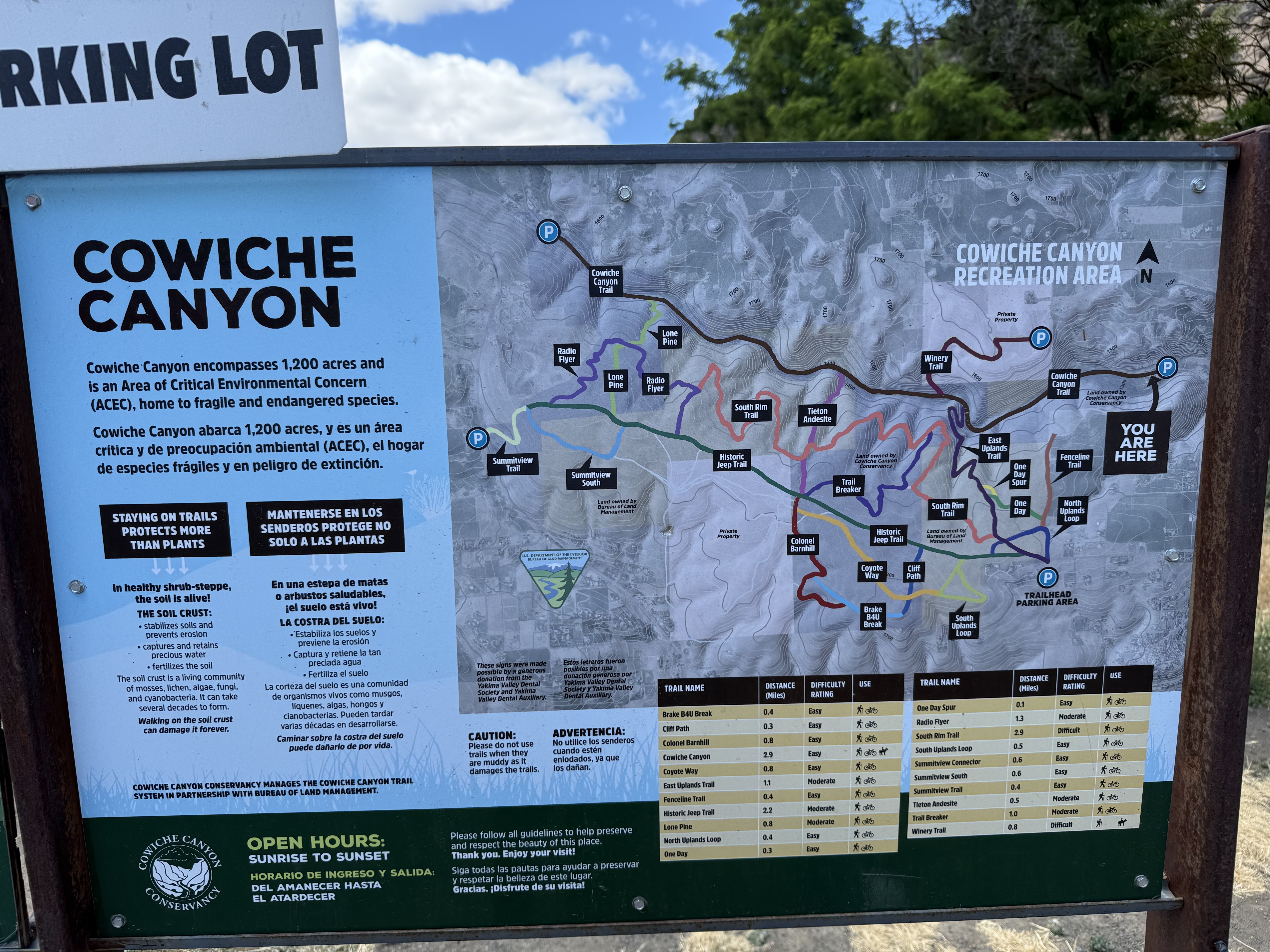
Cowiche Canyon Recreation Area is located on US12 just west of Yakima, Washington. The region receives 9-14 inches of rain per year, making it a dry area; thus, the trail system includes both shrub steppe (uplands) and riparian (along Cowiche Creek) habitats. We followed the main trail along the path of a rail line that was in use between 1913 and 1984 along the creek; however, the wetland is very narrow, in places constricted to less than 100 yards. Thus, I encountered plants from both environments.
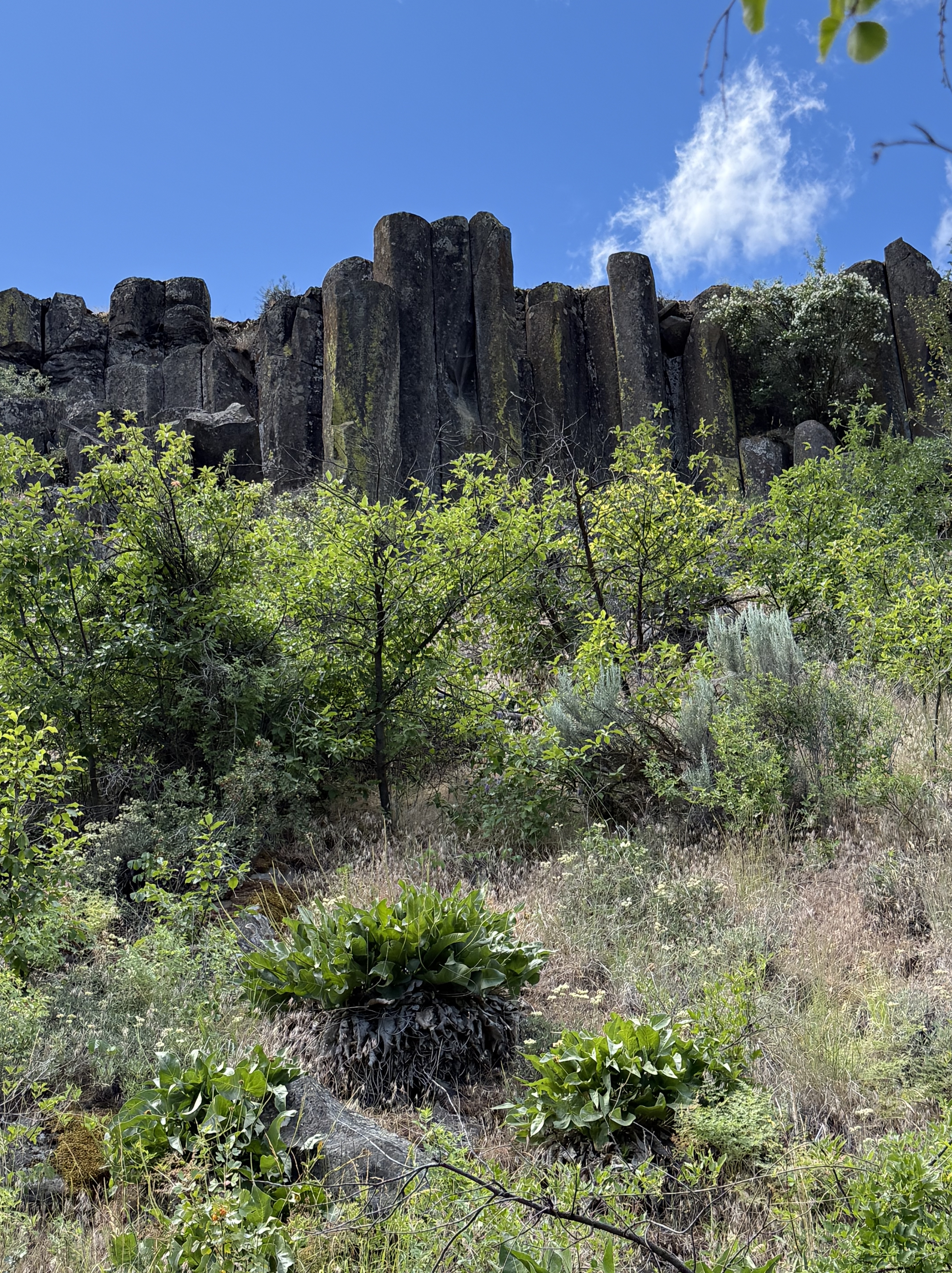
The canyon walls are composed of a series of basalt ledges with intervening slopes covered by talus and colluvium, which are part of the shrub-steppe habitat. I discussed the geology of the area in another post.
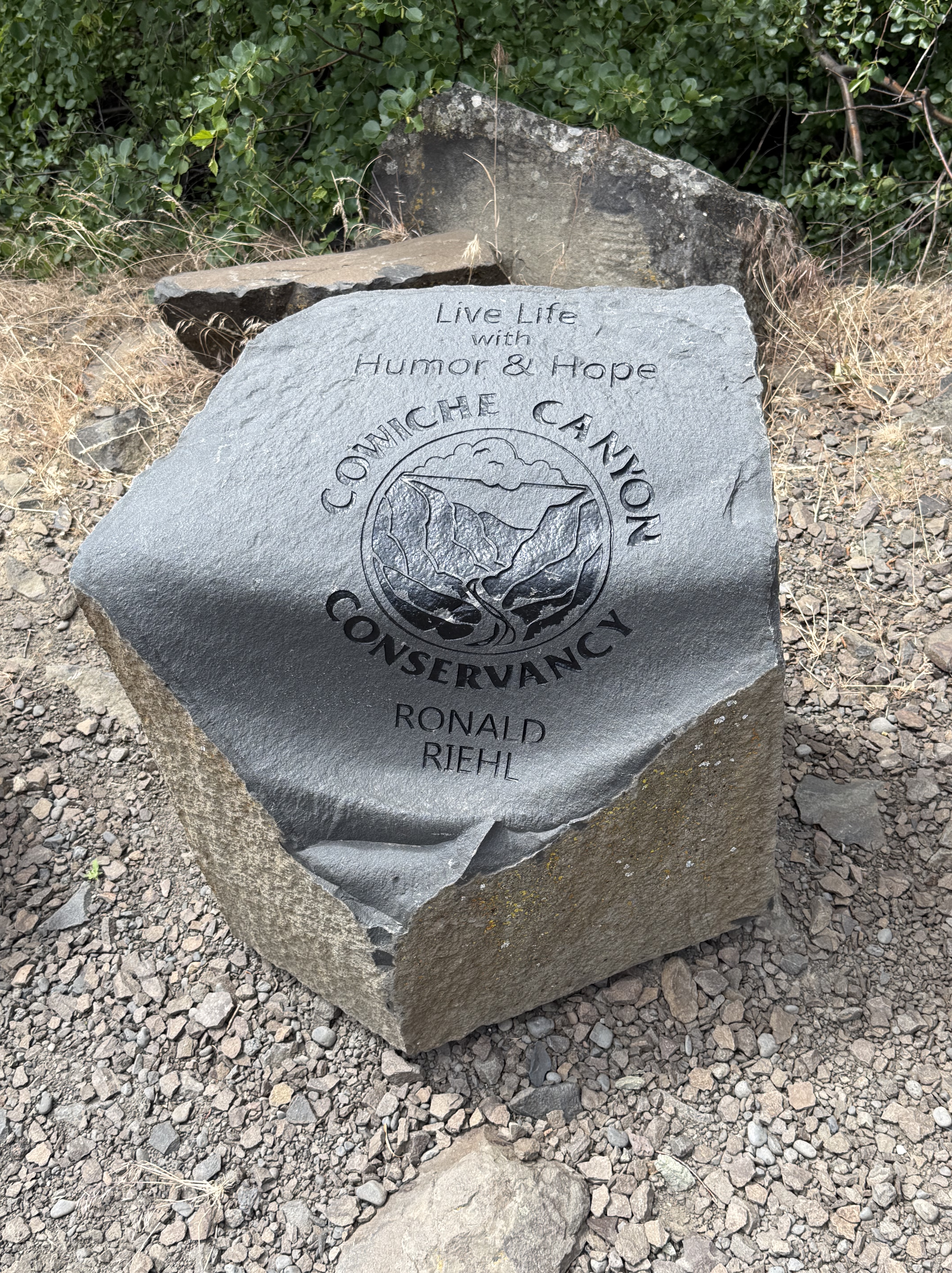
The recreation area is maintained by the Cowiche Canyon Conservancy in partnership with Bureau of Land Management. This stone is a piece of the columnar basalt that lines the canyon.
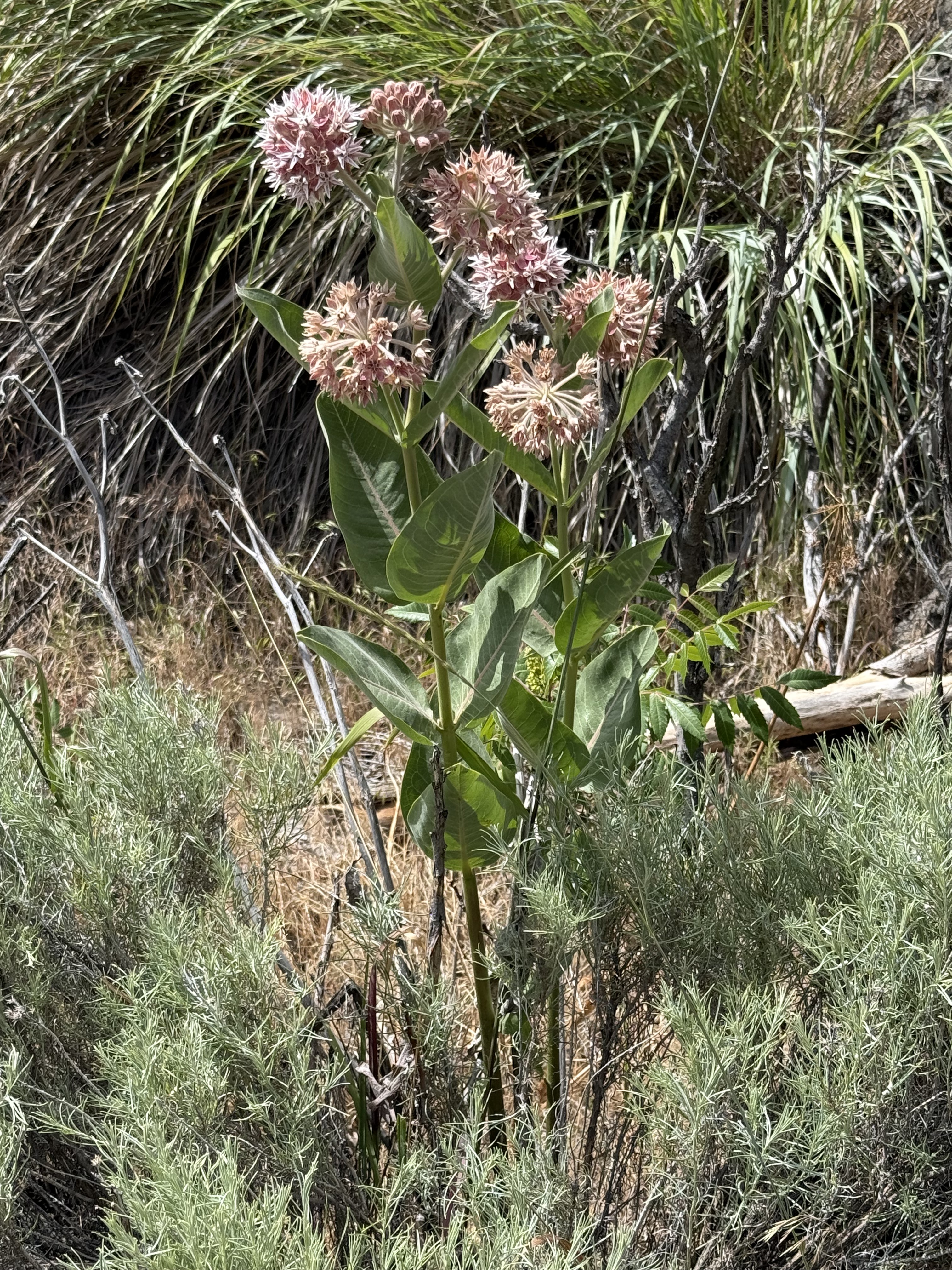
It’s fortunate that I visited this area during spring, which lasts a little longer here in the Pacific Northwest. As always, I used CoPilot (AKA ChatGPT) for identification while I try to remember scraps of the huge amount of information presented in this mixed environment.
This is Asclepias speciosa, also known as showy milkweed. It is native to Yakima county and is a host species for Monarch butterflies.
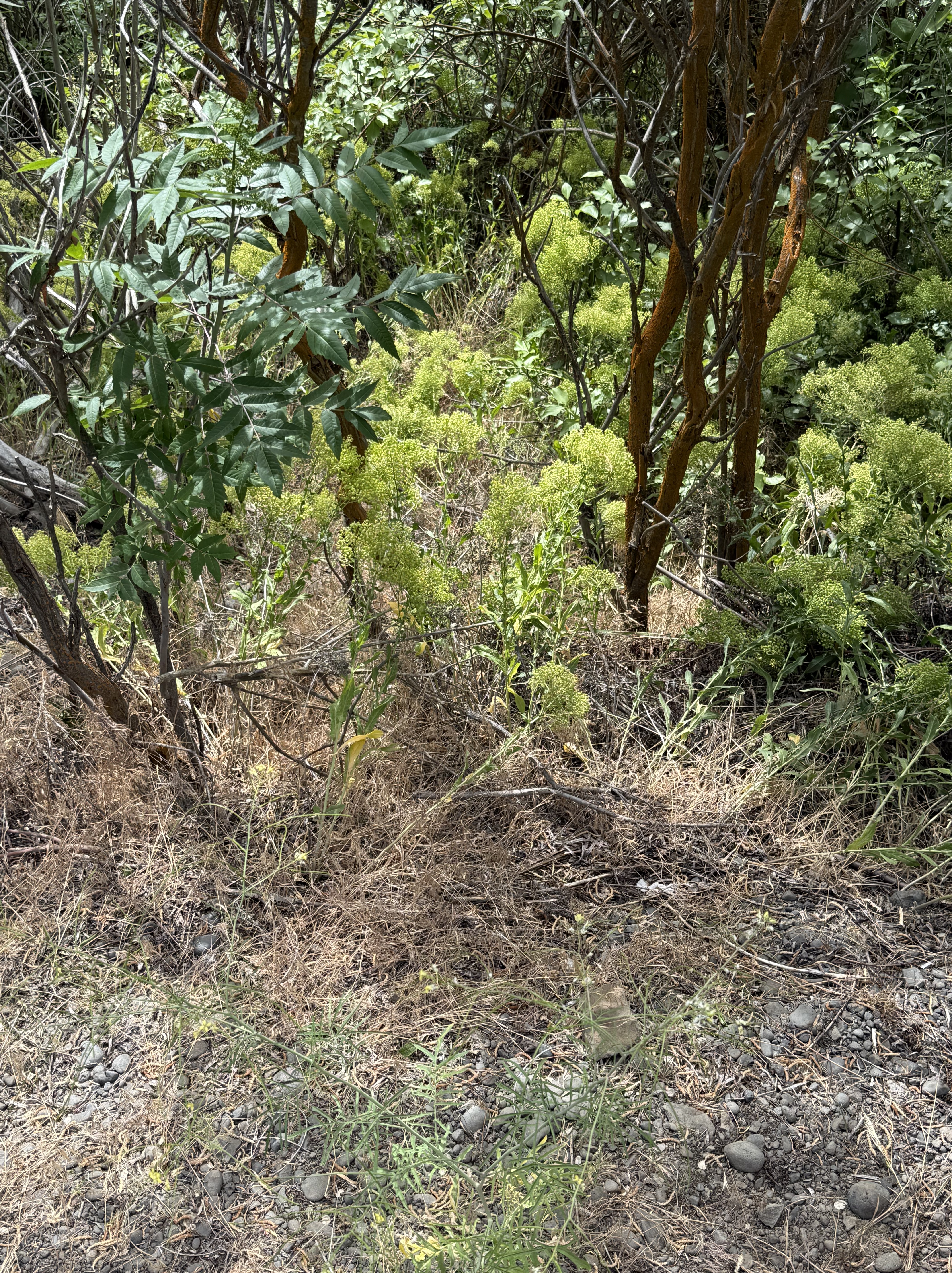
The leafy shrub with dark leaves is snowberry–Symphoricarpos albus (or possibly S. oreophilus, which also occurs around Yakima).
The low, brightly colored shrub with straight stalks is probably wax currant (Ribes cereum). The bright green is small leaves and the small patches of pink–barely visible in the photo–are the flowers. These are both native plants.
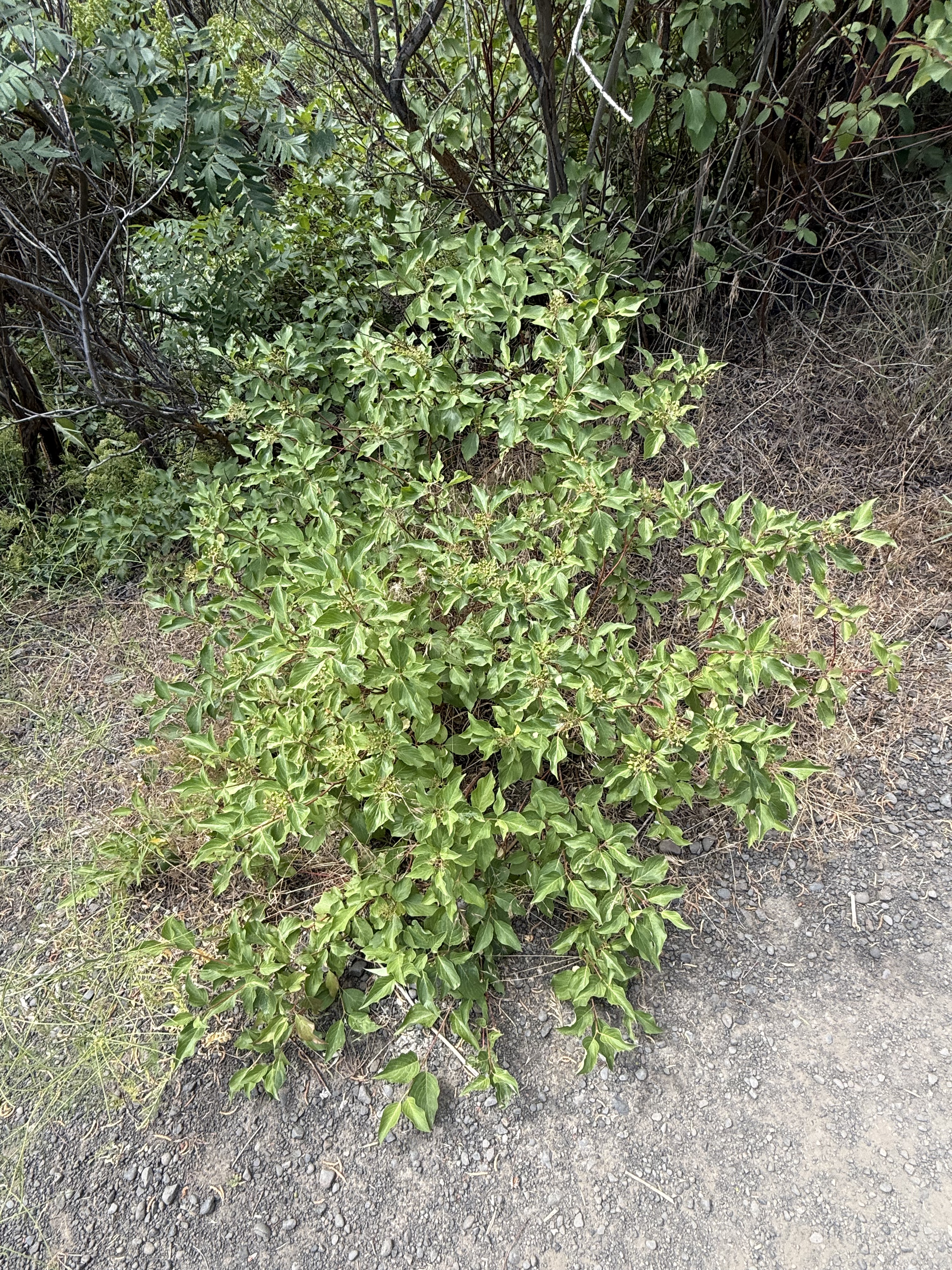
CoPilot wasn’t so sure about this, but it might be Creek or Red-osier Dogwood (Cornus sericea). This specimen was growing in the bottom of the canyon, not far from Cowiche Creek, which is a natural location for this native riparian species. It will probably become a small tree.
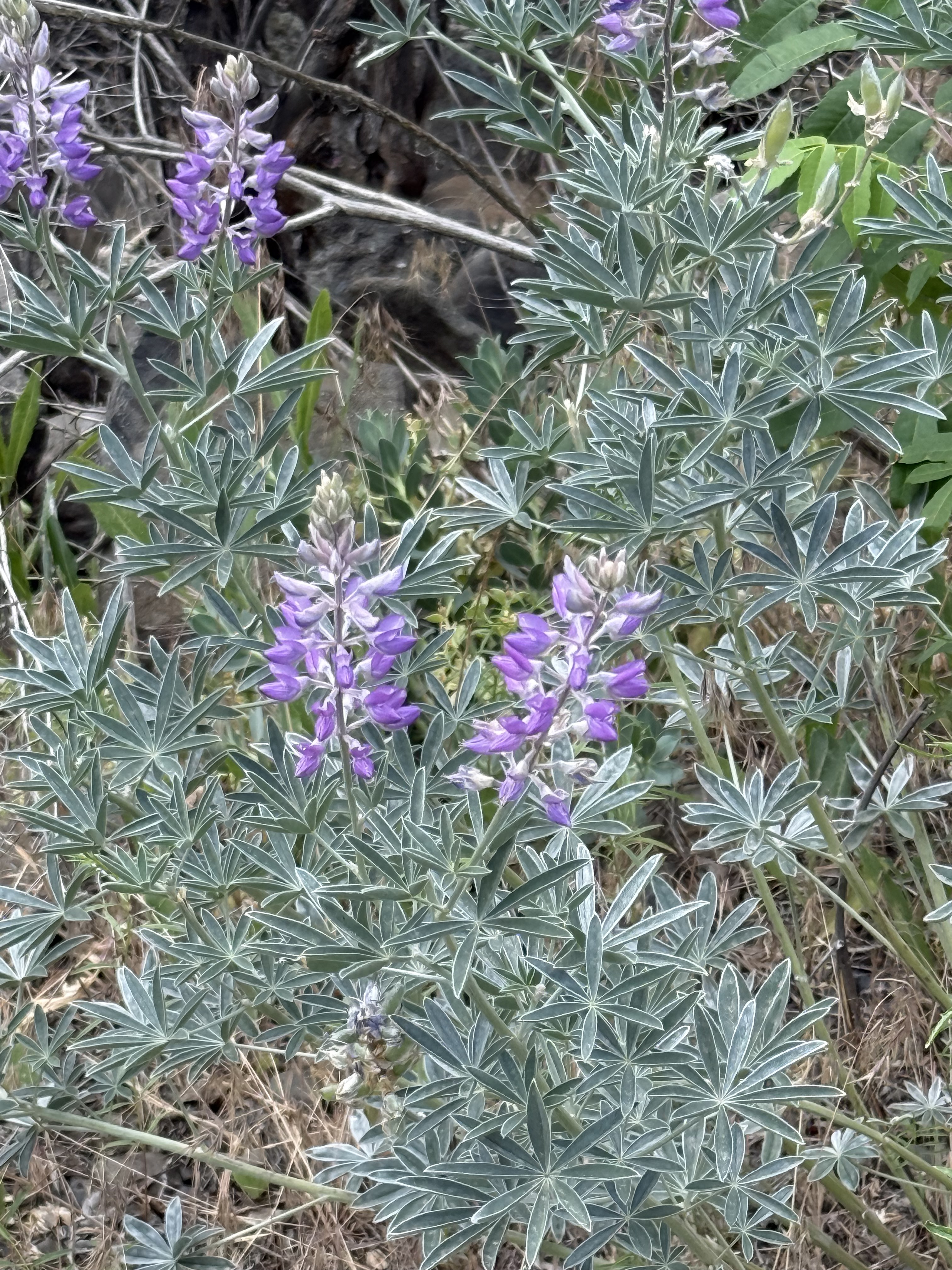
This is my favorite from the walk. Silky lupine (Lupinus sericeus) is one of the signature wildflowers of eastern Washington. I sure am glad we caught them in bloom.
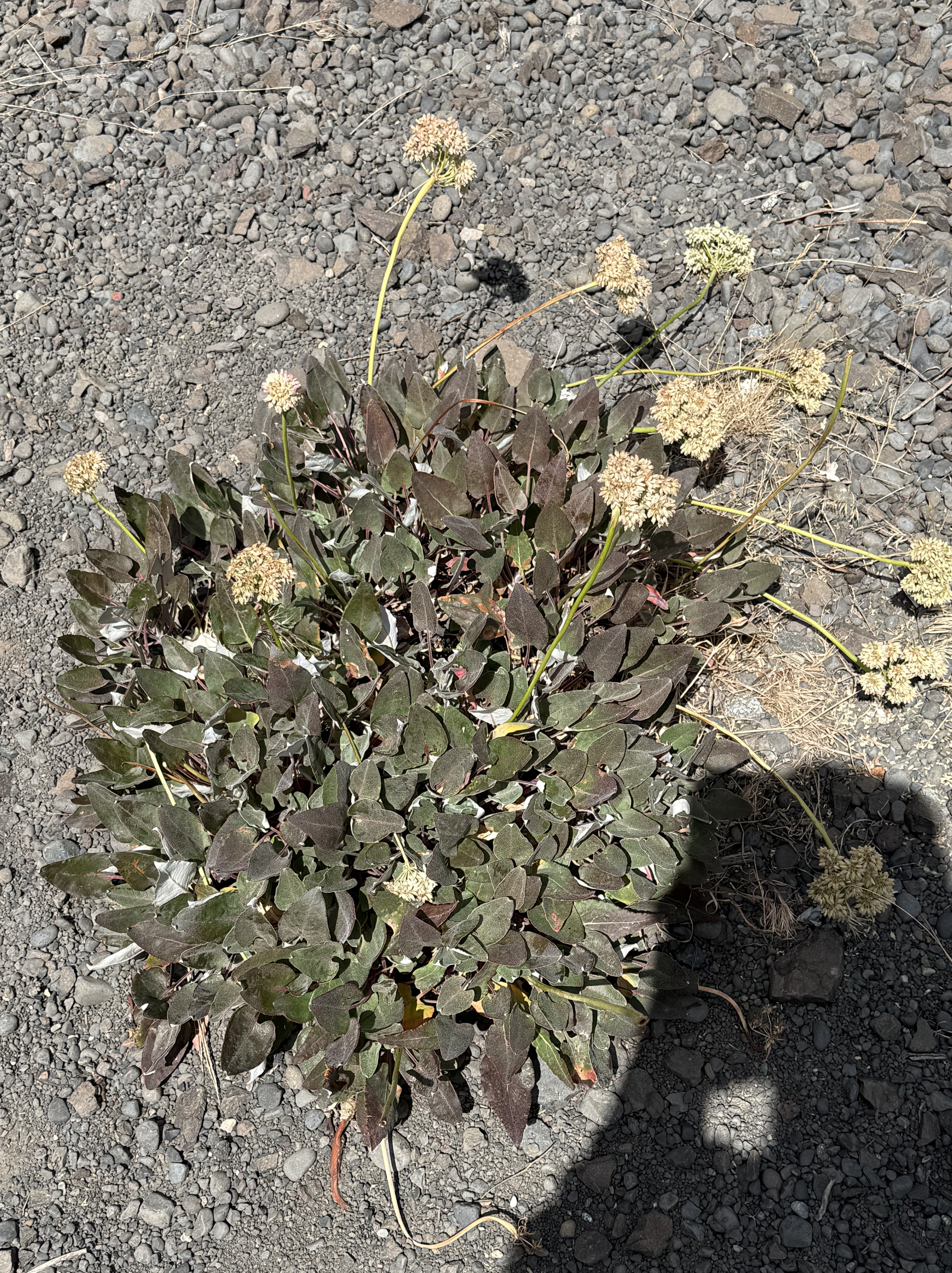
This looks like Pale‑stem buckwheat (Eriogonum heracleoides), another native wildflower to the shrub-steppe habitat.
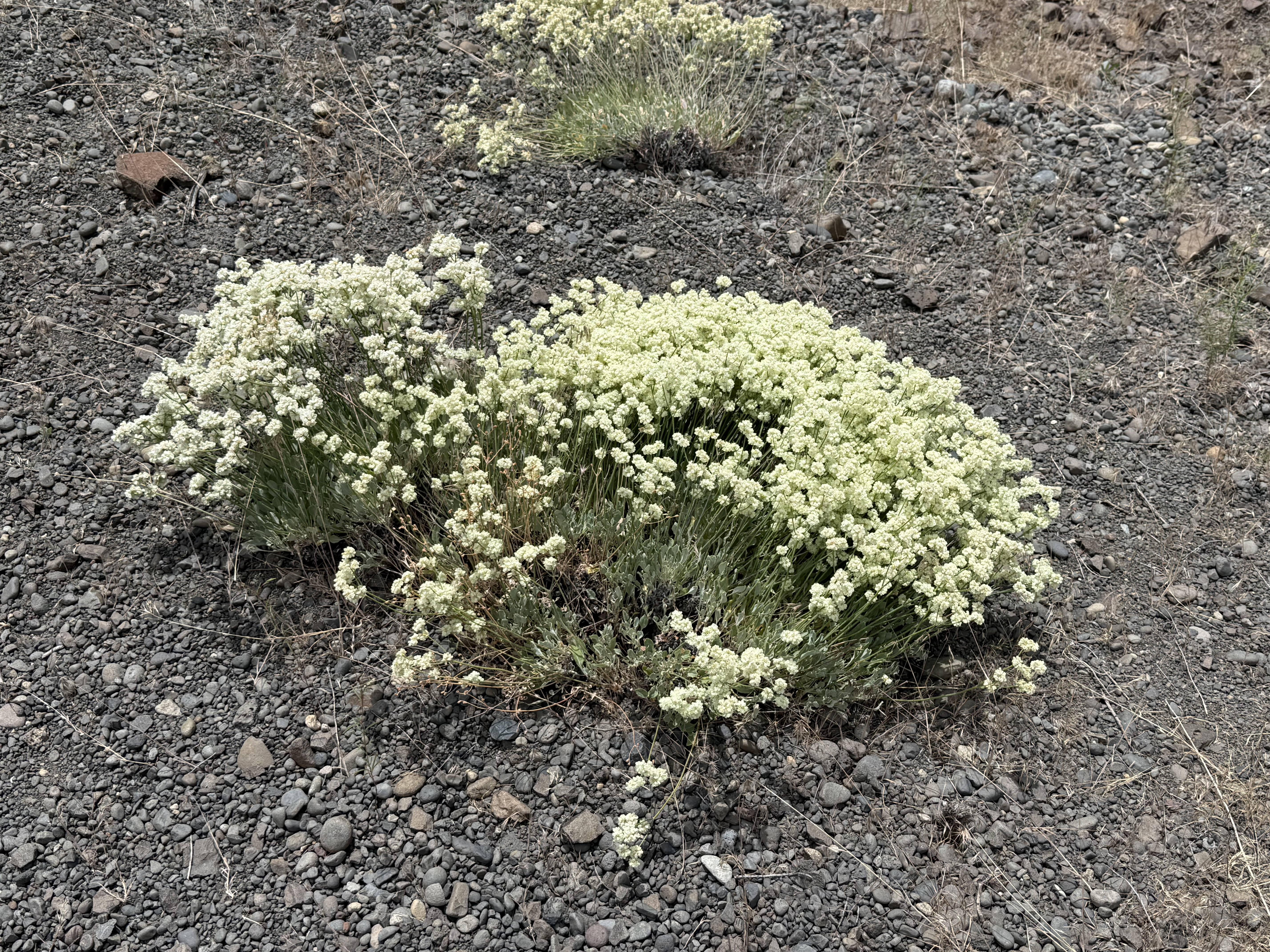
My untrained eye thought this was Pale-stem buckwheat, but CoPilot pointed out the different leaf pattern and color. This is (probably) Sulphur Buckwheat (Eriogonum umbellatum), another common wildflower to Yakima County’s uplands.
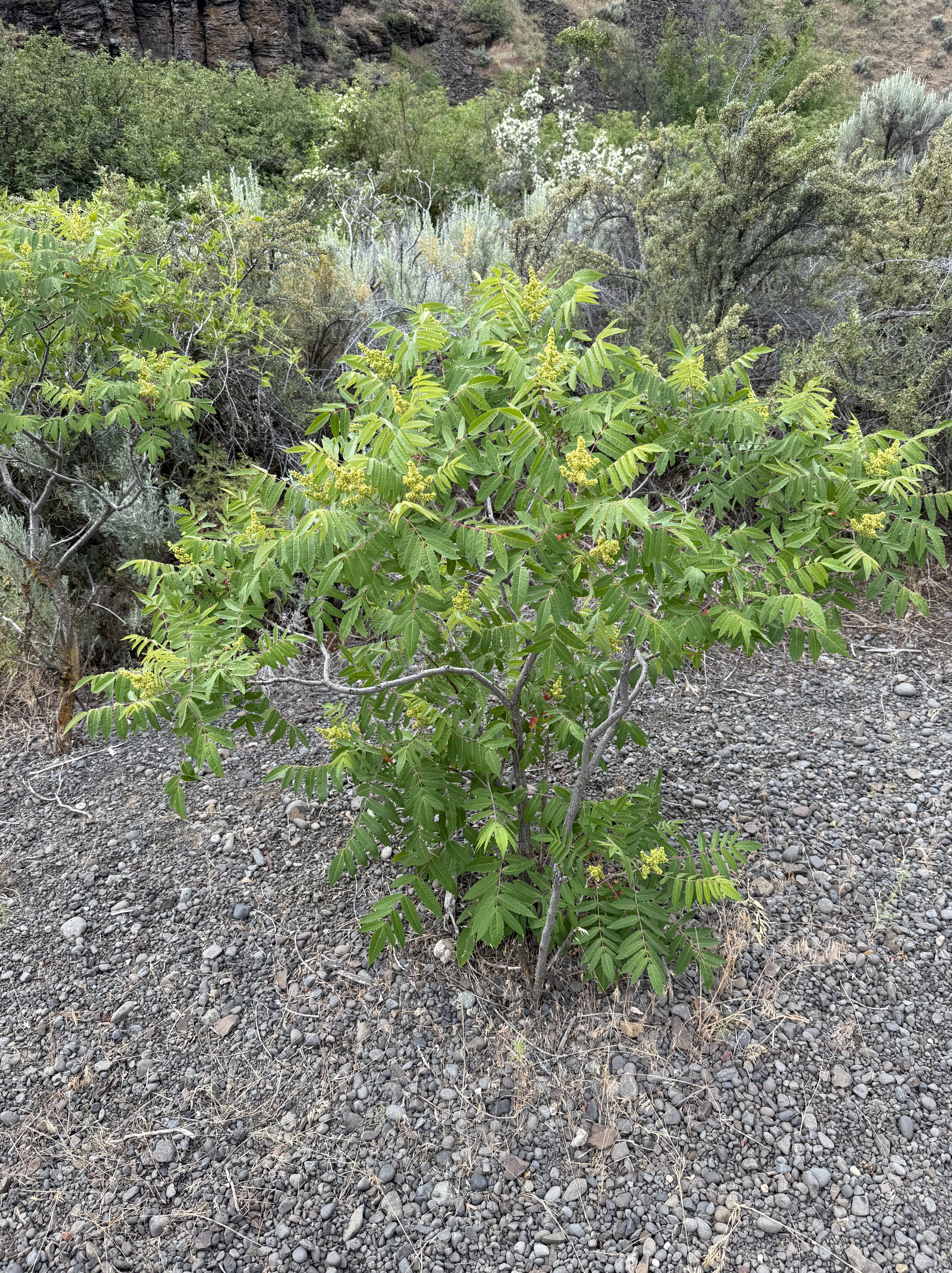
Antelope bitterbrush (Purshia tridentata) is a foundation species of the steppe. This young one had lots of flowers, but the old ones have bare branches; and groups of them grow and die together in cohorts after a disturbance like a wildfire. Yet another native plant.
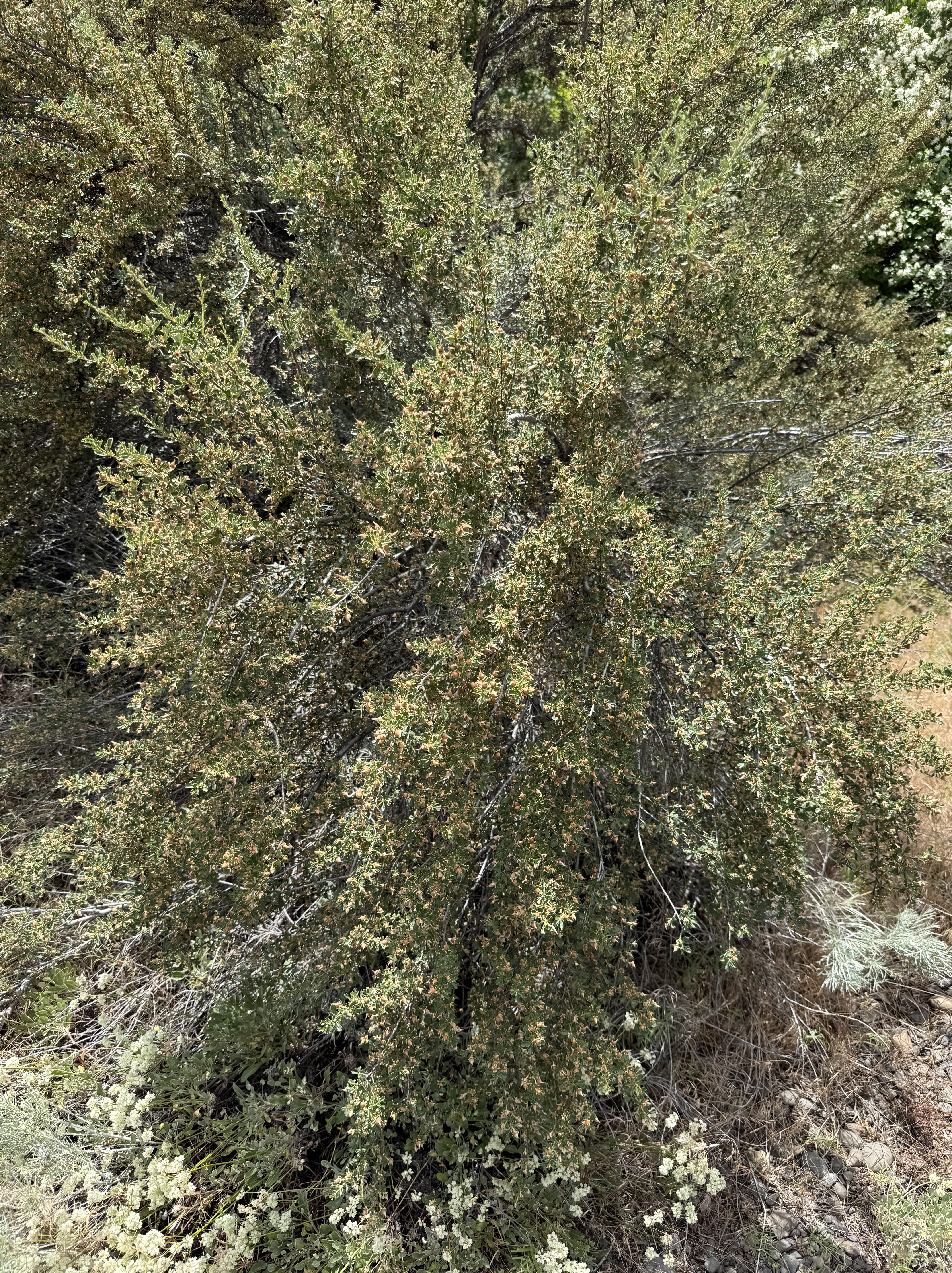
After some discussion, and sharing a close-up, CoPilot swears (hahaha) this is Woods’ rose (Rosa woodsii). However, its justification fits what I see with my own, somewhat confused eyes.
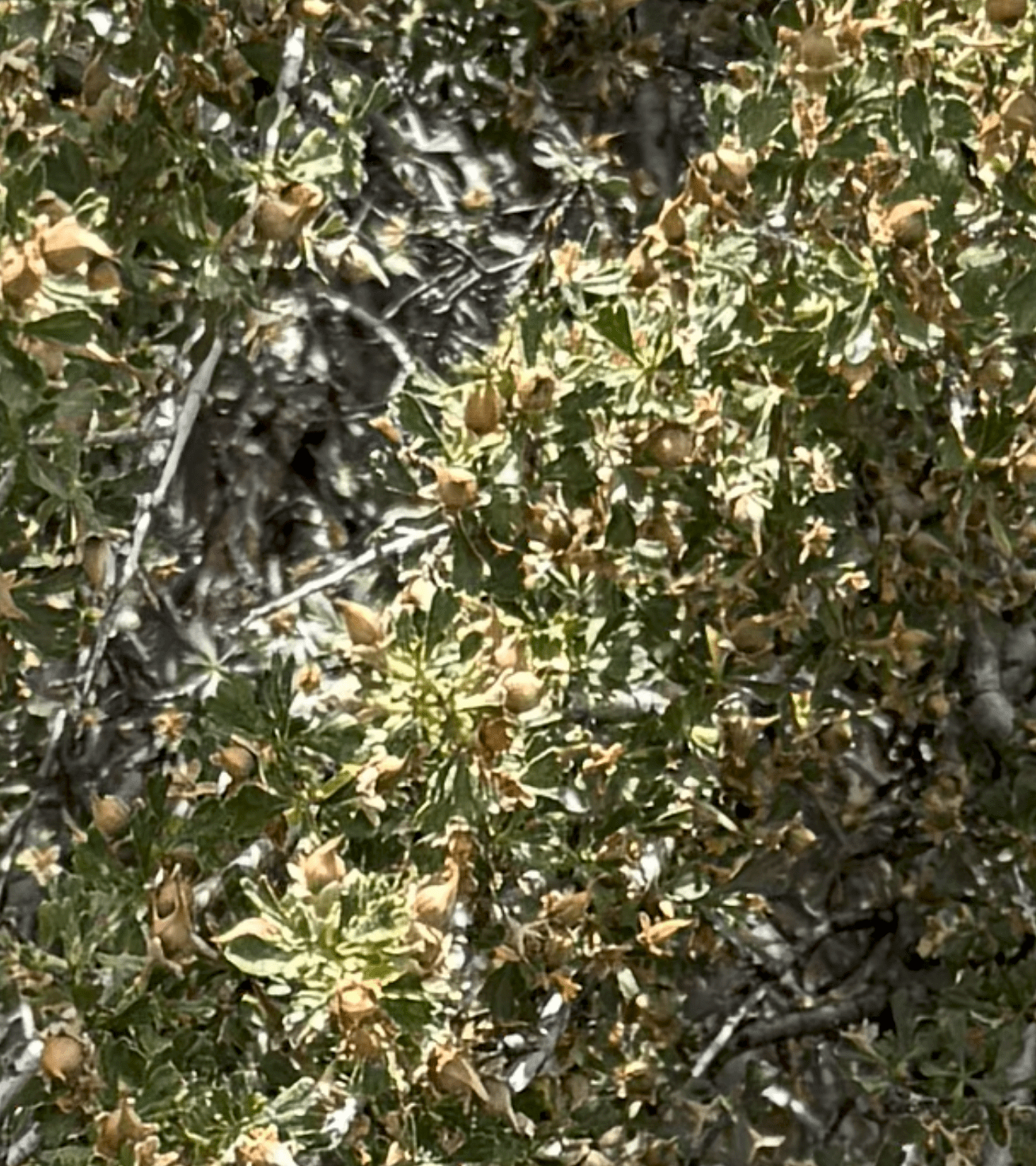
Here’s a close-up of the fruit. The shrub is covered with small nuts that have a distinctive shape, and are definitive for a wild rose. This is another native species to the steppe habitat of Eastern Washington.
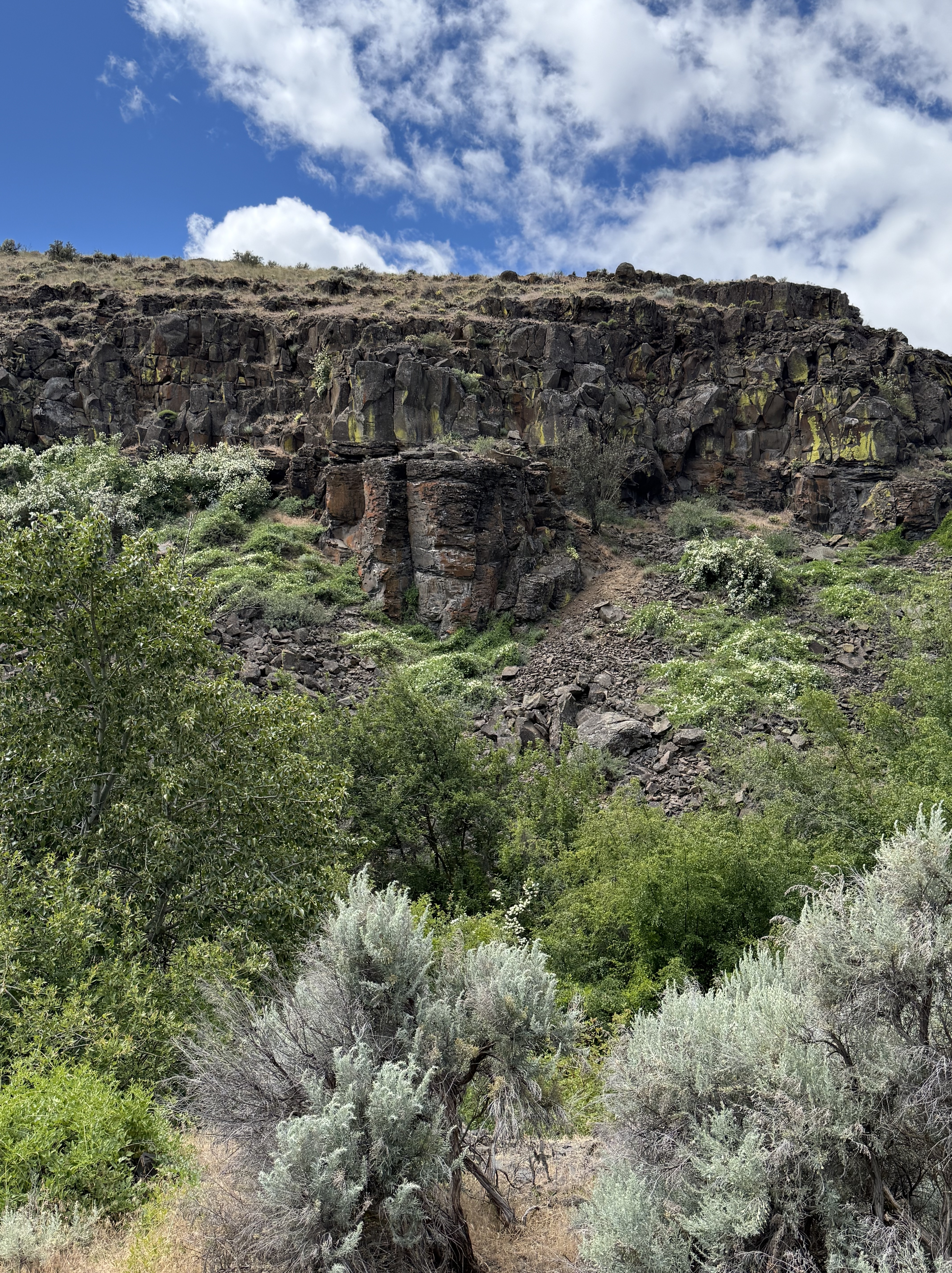
This photo, looking across Cowiche Creek, puts it all together for me. On the other side of the canyon we see columnar jointed basalt, several plant species similar to snowberry, bitterbrush, and buckwheat. Along the creek are dogwood and wild rose; and in the foreground is (maybe) big sagebrush (Artemisia tridentata).
When I took this picture, all I saw was a bunch of plants. After carefully examining them with CoPilot, it has become a mixed riparian-shrub-steppe habitat. However, I didn’t see/hear any birds or other animals, even though it was a cool day with temperatures in the mid-sixties.
CoPilot was a great help, but it is not infallible–more like working with someone who has studied some biology/ecology. After all, it is only a Large Language Model, not an AI system trained on recognizing plant species. Nevertheless, it was a great collaborator and I learned a lot from our collaboration.


Recent Comments