Ecology Notes from Tacoma Nature Center
Today’s field trip took us to the center of Tacoma, where the city operates a nature center focused on education and outreach programs.
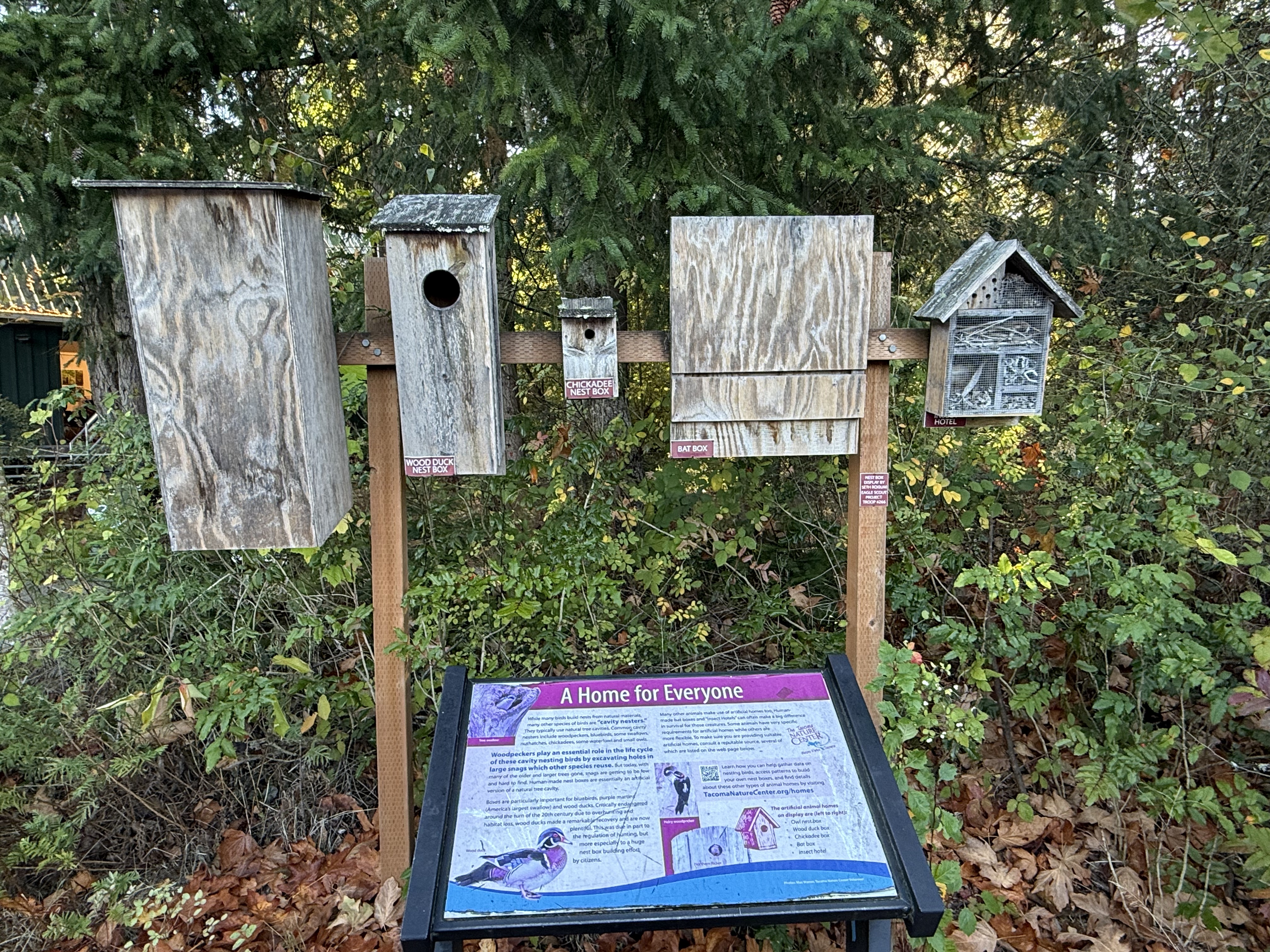
We weren’t looking for birds, but this display showcases some of the birdhouses constructed within the area.
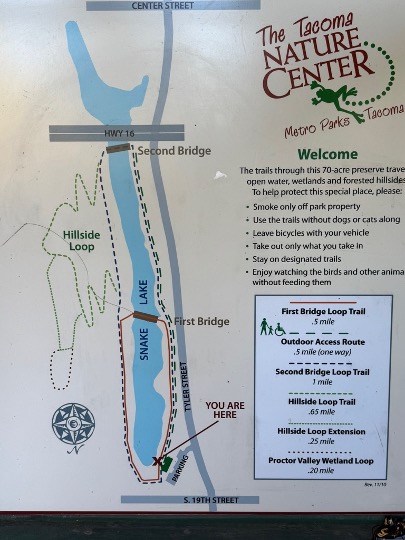
We walked the entire trail system, which is almost three miles, and noticed several signs indicating stops on different self-guided tours. Unfortunately we didn’t have a guidebook. This post is about learning from experience. (LOL!)
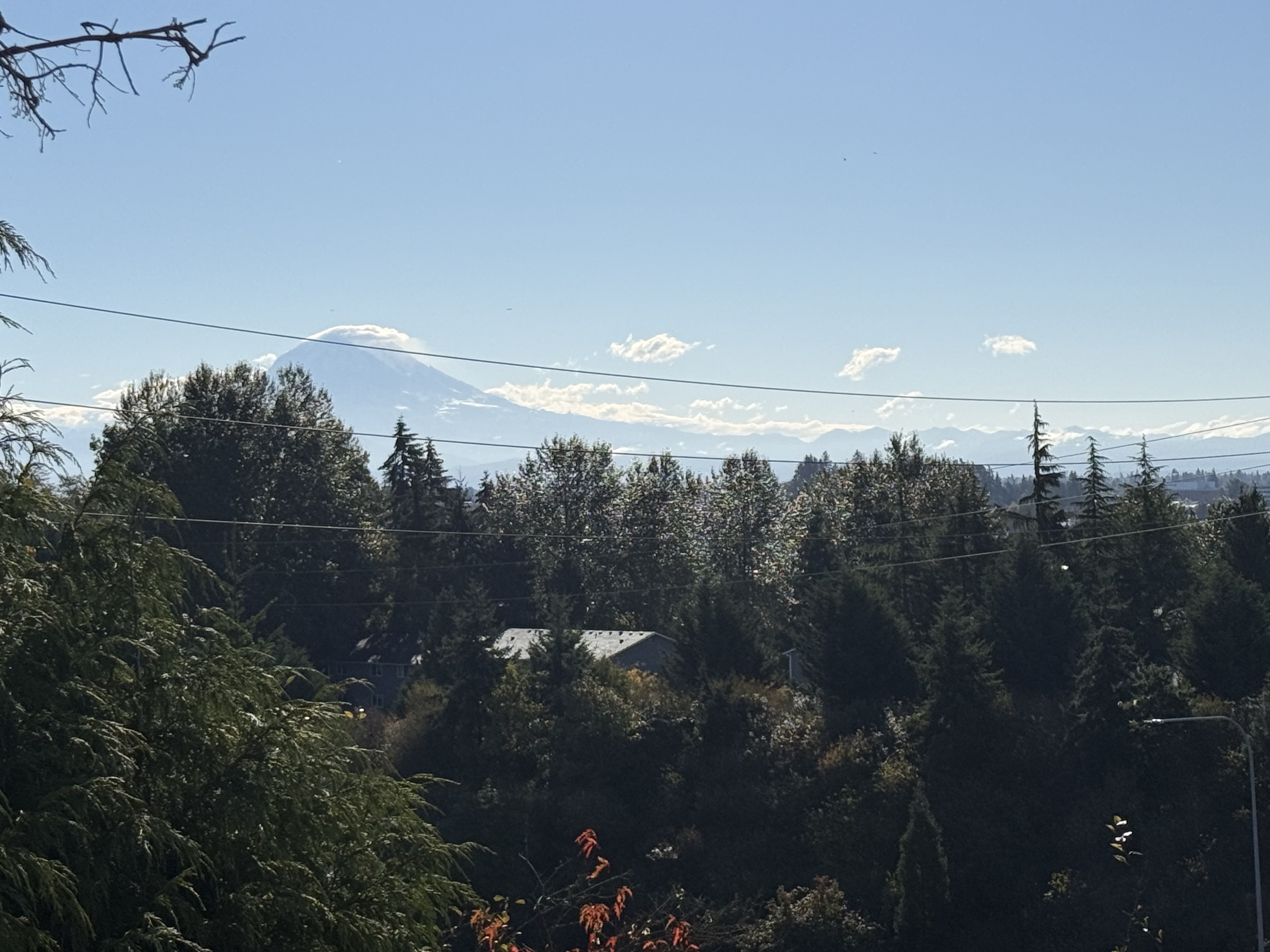
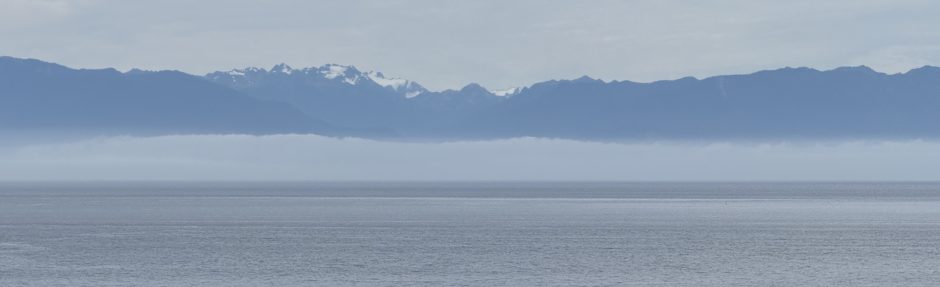
The trail climbed about 100 feet to a ridge that gave a great view of Mt. Tahoma (aka Mt. Rainier) on a beautiful day. Note the cloud trailing off the top of the mountain in a northerly wind.
Snake Lake was dry and the deciduous trees in the wetland were losing their leaves, so I didn’t take much interest in them. It wasn’t until we followed the Hilltop Trail that I began to notice the different ecosystems juxtaposed in this seventy-acre site. The rest of this post, therefore, will focus on trying to salvage something intellectual from what started as simply a walk in the woods.
Tacoma Nature Center supplies a catalogue of the flora and fauna located within its limits. I took a couple of photos and, when I got home, discovered the lists they supplied on their web page. Thus, instead of guessing what I’d seen, it was more like a homework assignment with a limited number of choices.
Trees
This is a list of the trees known to exist at Tacoma Nature Center. The ones I identified are in bold typeface.
- Sitka Alder
- Oregon Ash
- Cascara Buckthorn
- Black Cottonwood
- Douglas Fir
- Pacific Madrone
- Scouler Willow
- Garry Oak
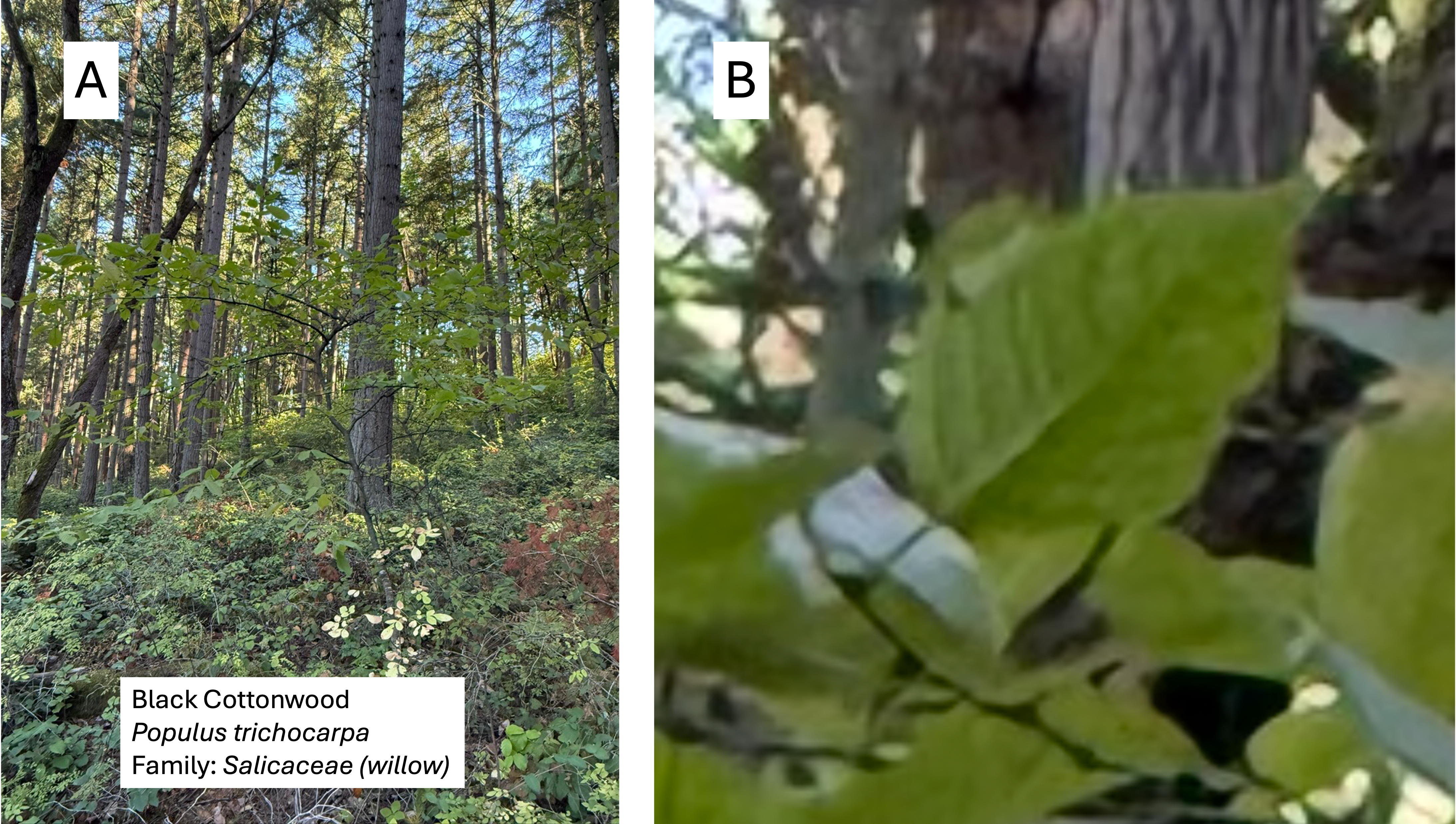
(A) This young tree still had all of its leaves, so I used my copy of Pacific Coast Tree Finder to identify it. (B) The leaf shape and vein structure was critical. If I hadn’t already had a list of possible choices, however, this would have been a lot harder; in fact, my answer may well be incorrect.
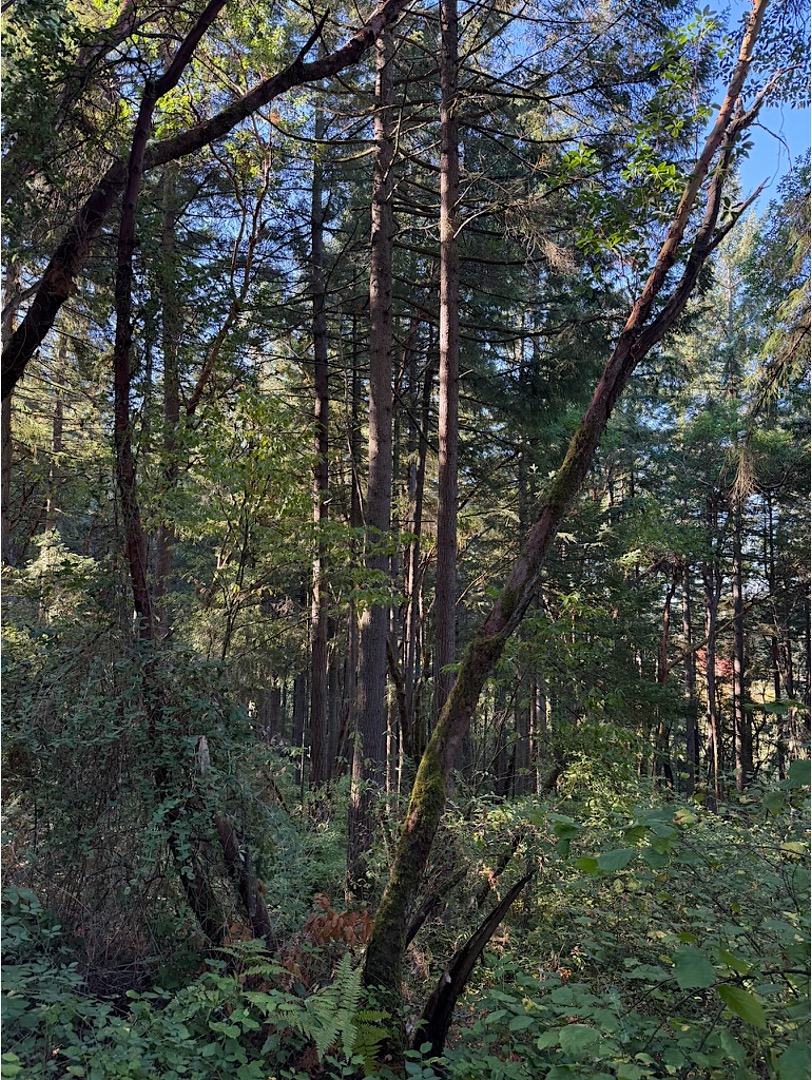
I’ve seen enough Douglas Firs to guess these conifers, especially since it is the only native conifer found within the nature center; all of the old-growth forest was clear cut and this species planted because it grows fast and is a good source of lumber.
Shrubs
This is where my homework got very difficult. So I asked for some assistance from ChatGPT, but I fact-checked everything it said and, after a long discussion, we agreed on the final identifications. It may have read everything ever written, but it can’t see what isn’t visible in a photograph, and it is prone to making things up–just like people.
As with the trees, I’ve emphasized my answers in bold type.
- Baldhip Rose
- Beaked Hazelnut
- Black Twinberry
- Bracken Fern
- Clustered Wildrose
- Common Snowberry
- Creeping Snowberry
- Douglas Spirea
- Dwarf Oregon Grape
- Evergreen Huckberry
- False Lily-of-the-valley
- Indian Plum
- Oceanspray
- Orange Honeysuckle
- Red Elderberry
- Red Huckleberry
- Salal
- Sword Fern
- Tall Oregon Grape
- Trailing Blackberry
- Western Trillium

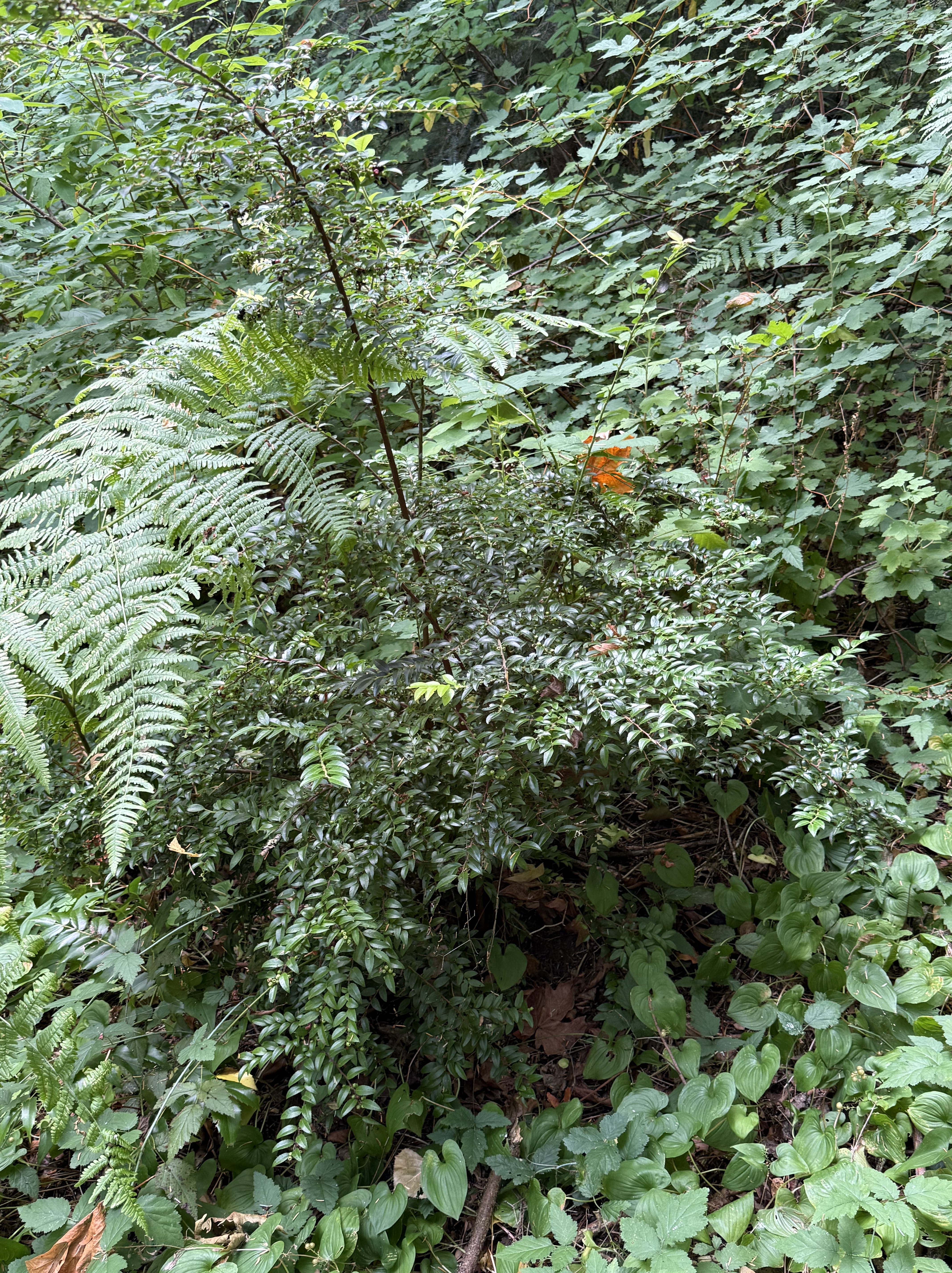
This bramble of shrubs contains five separate species of shrubs or ground cover from the list. I’ve circled examples of each and discussed them below. I supplied ChatGPT with close-up images to get its input. It was very useful, but not infallible. In fact, I identified (A) and (D) on my own, after taking a closer look at the photo–and using Wikipedia as a reference.
(A) Bracken Fern (Pteridium sp., family Dennstaeditaceae) is the oldest known fern, with fossils from the Eocene epoch (~55 my). If you zoom in on this area, you’ll notice that each branch has perpendicular stems, which then have perpendicular leafs. The entire plant reminds me of what I’ve heard about fractals in nature; a simple pattern repeating over and over.
(B) Baldhip Rose (Rosa gymnocarpa, family Rosaceae). There are two roses on the list, but their leaves are very different.
(C) Dwarf Oregon Grape (Mahonia nervosa, family Berberidaceae). Wikipedia redirected my reality check of ChatGPT’s identification to Berberis nervosa. The explanation was that Mahonia is an alternative scientific name to the accepted one. Not being a botanist, I don’t care about such subtleties. The name, Berberis, certainly fits the family lineage better. I’ll leave the name as is and include these notes.
(D) Western Sword Fern (Polystichum munitum, family: Dryopteridaceae). This more modern cousin (note the different family) of the Bracken Rose has a simpler leaf design: it has one broad leaf growing perpendicular to the main stalk. I didn’t notice such a blatant difference when the two plants were right in front of my eyes!
(E) Creeping Snowberry (Symphoricarpos mollis, family Caprifoliaceae) is my best estimate after a long conversation with ChatGPT, examining photos of several species, and comparing their growth habits. This example is more like ground cover than an erect, woody plant. I wouldn’t bother with the species name except that the catalogue lists two species. I’ll look for the other one next time I get to the nature center.
Final Thoughts
I hope that everyone who reads this takes more notice of the plants they encounter wherever they go. And you can always take a picture.
And don’t be afraid to ask a Large Language Model (e.g. ChatGPT, Claude, Gemini) for help identifying whatever you find. They are knowledgeable, unassuming, and fun to work with.
And they will readily admit when they are wrong…
Autumn at Kubota Garden
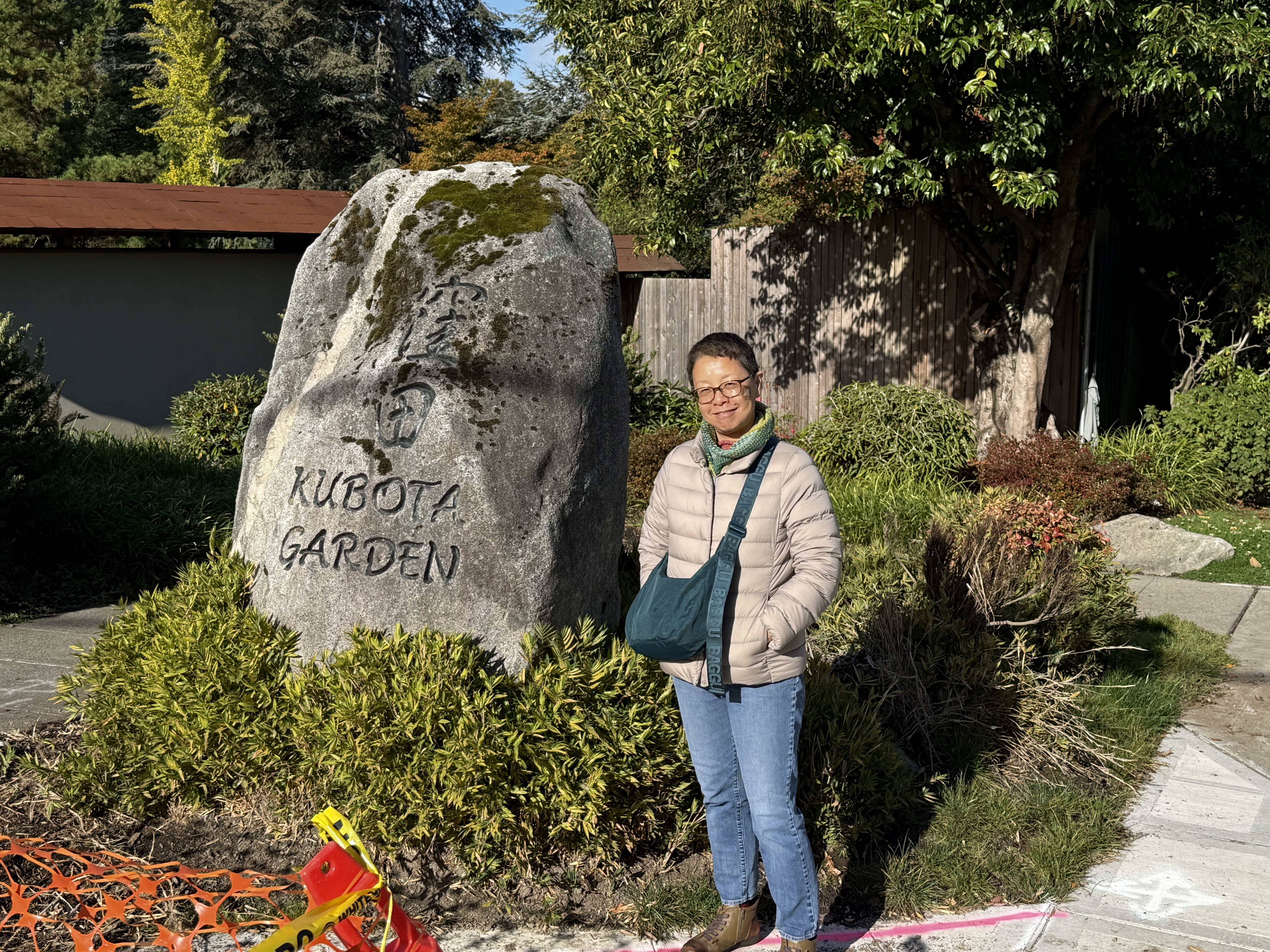
It was a beautiful fall morning that brought us to Kubota Garden in Seattle (https://www.kubotagarden.org; https://en.wikipedia.org/wiki/Kubota_Garden). Links aren’t working on WordPress so I inserted those two as references. The garden is 100 years old next year, but it has been a public park since 1987.
We wandered around the 20 acre area on meandering paths lined with every kind of shrub you would expect in a classic Japanese garden. I used ChatGPT to tentatively identify some of the plants.
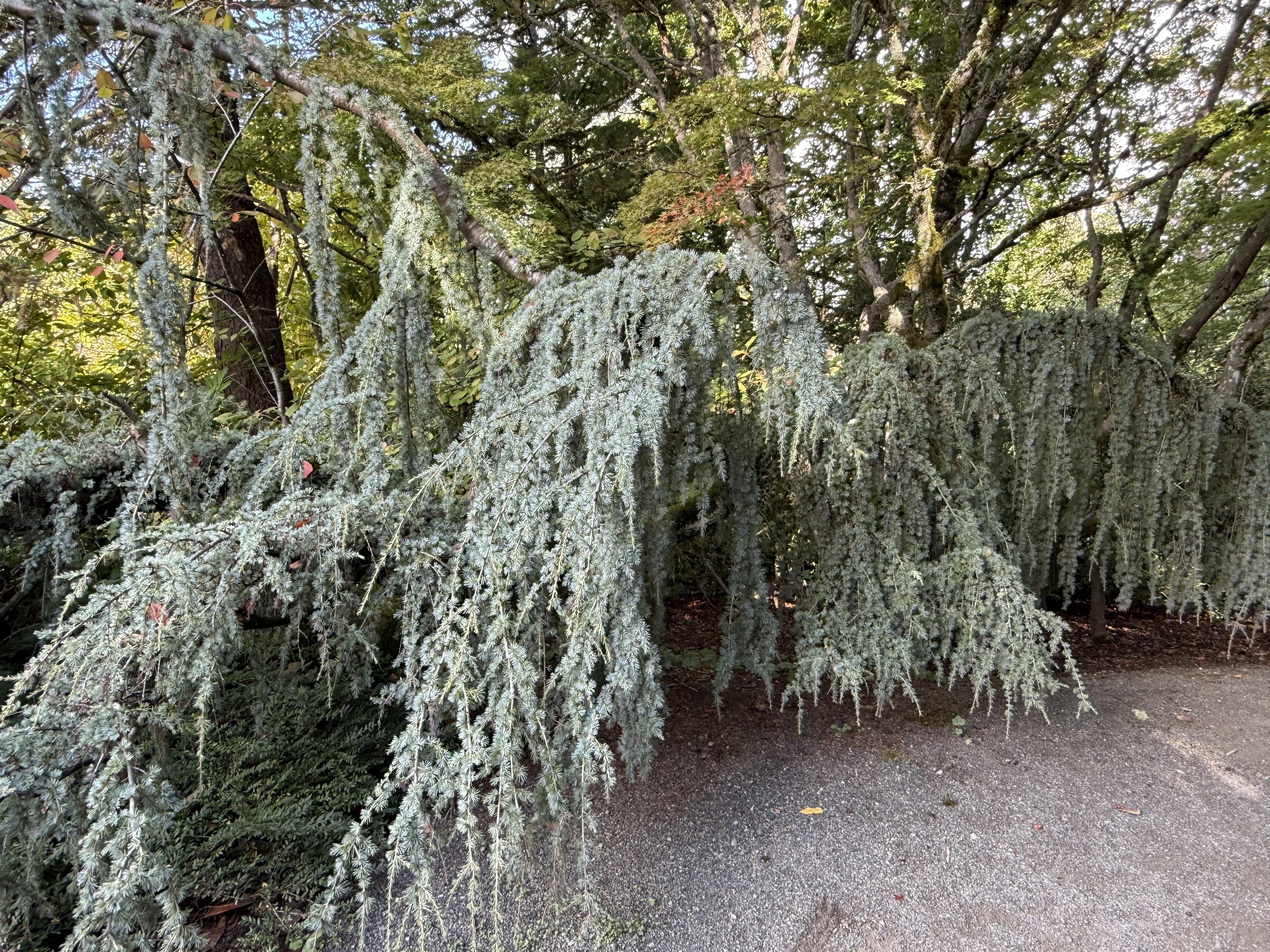
ChatGPT had high confidence that this is Weeping Blue Atlas Cedar (Cedrus atlantica ‘Glauca Pendula’).
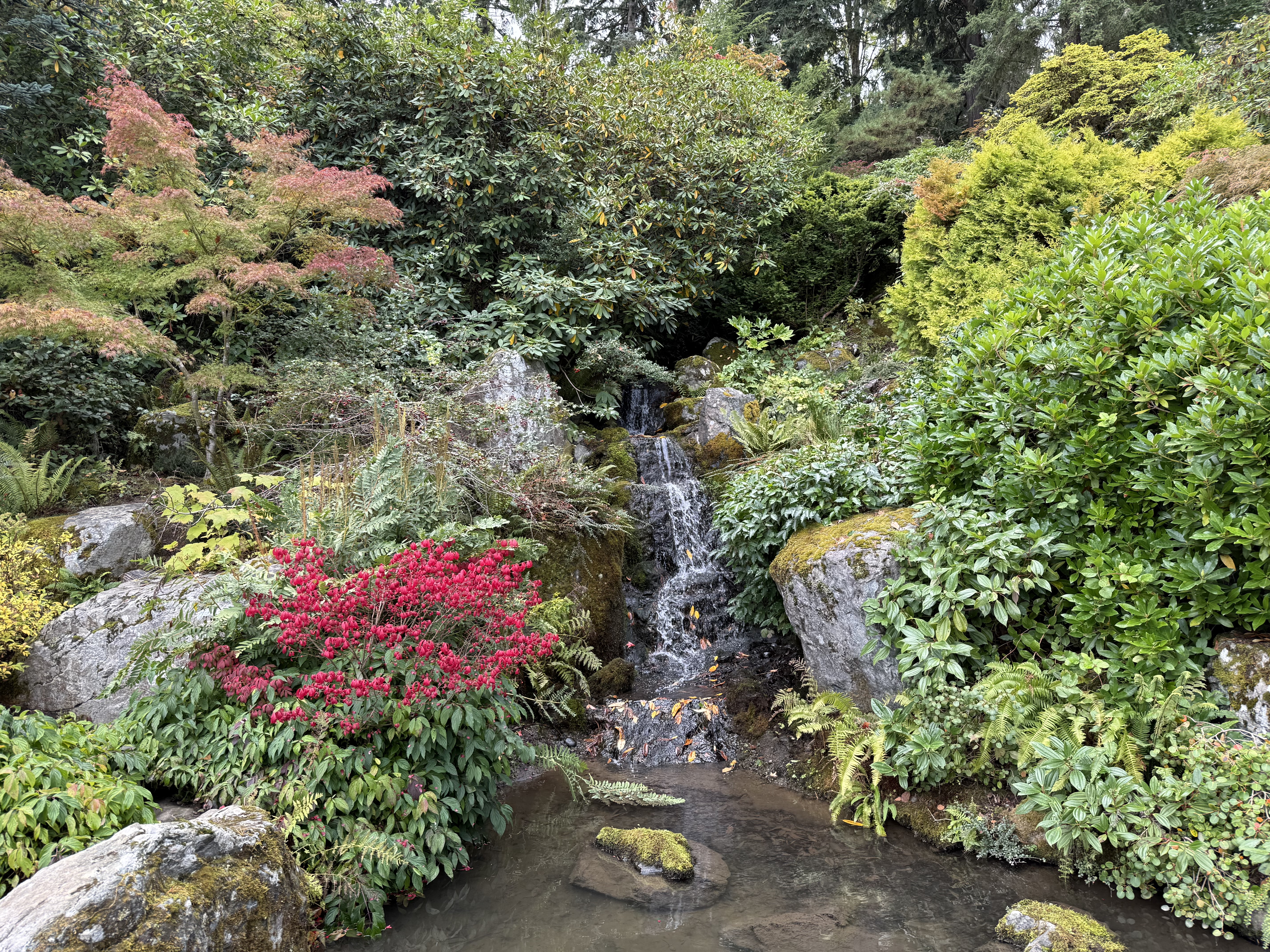
The park has a central pumping facility that recirculates water through several waterfalls and a dozen ponds, making for a very serene environment.
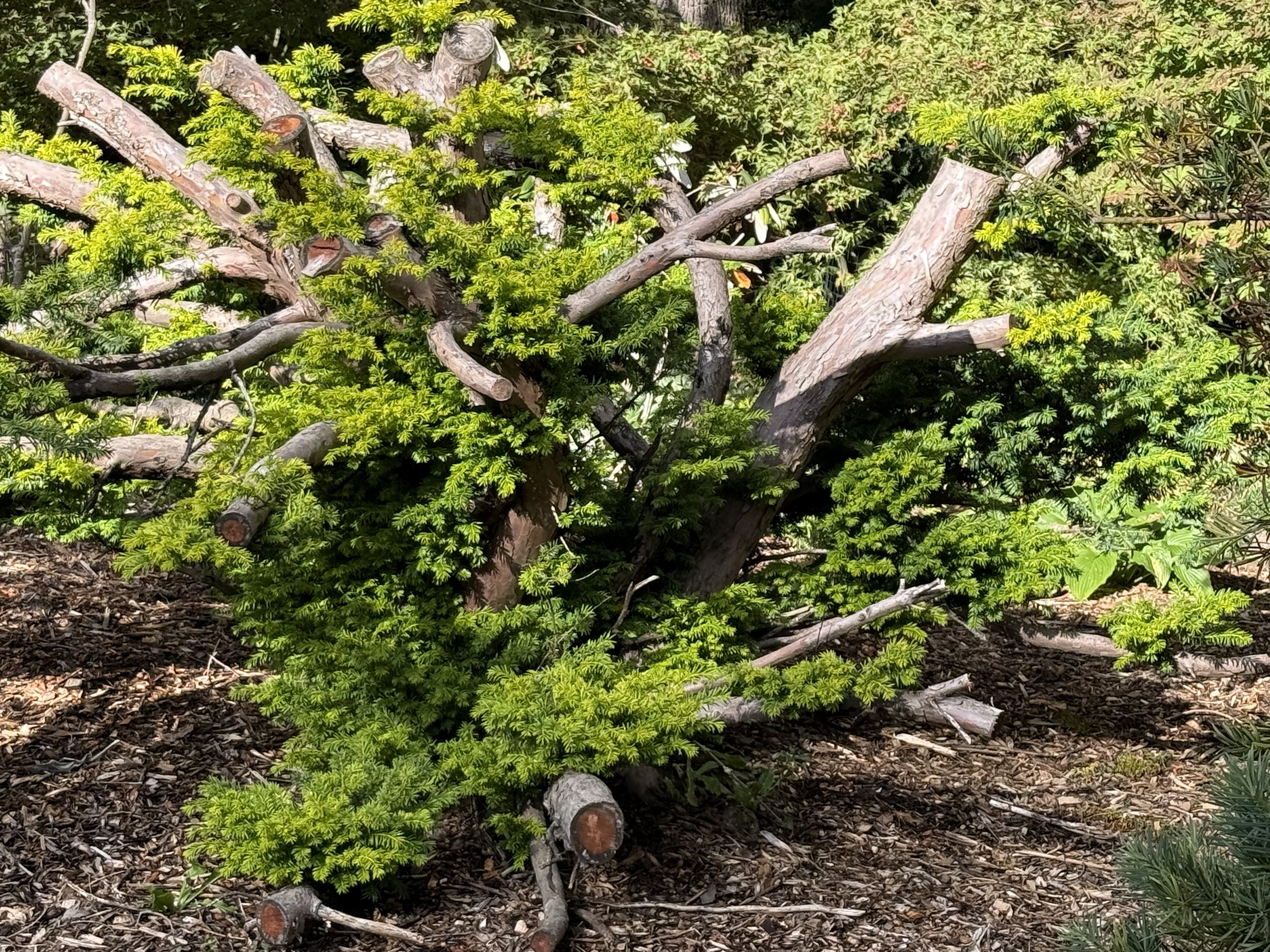
ChatGPT tentatively identified this reborn, small tree as Japanese Plum Yew (Cephalotaxus harringtonia). It was recently cut back, but it is growing vigorously now.
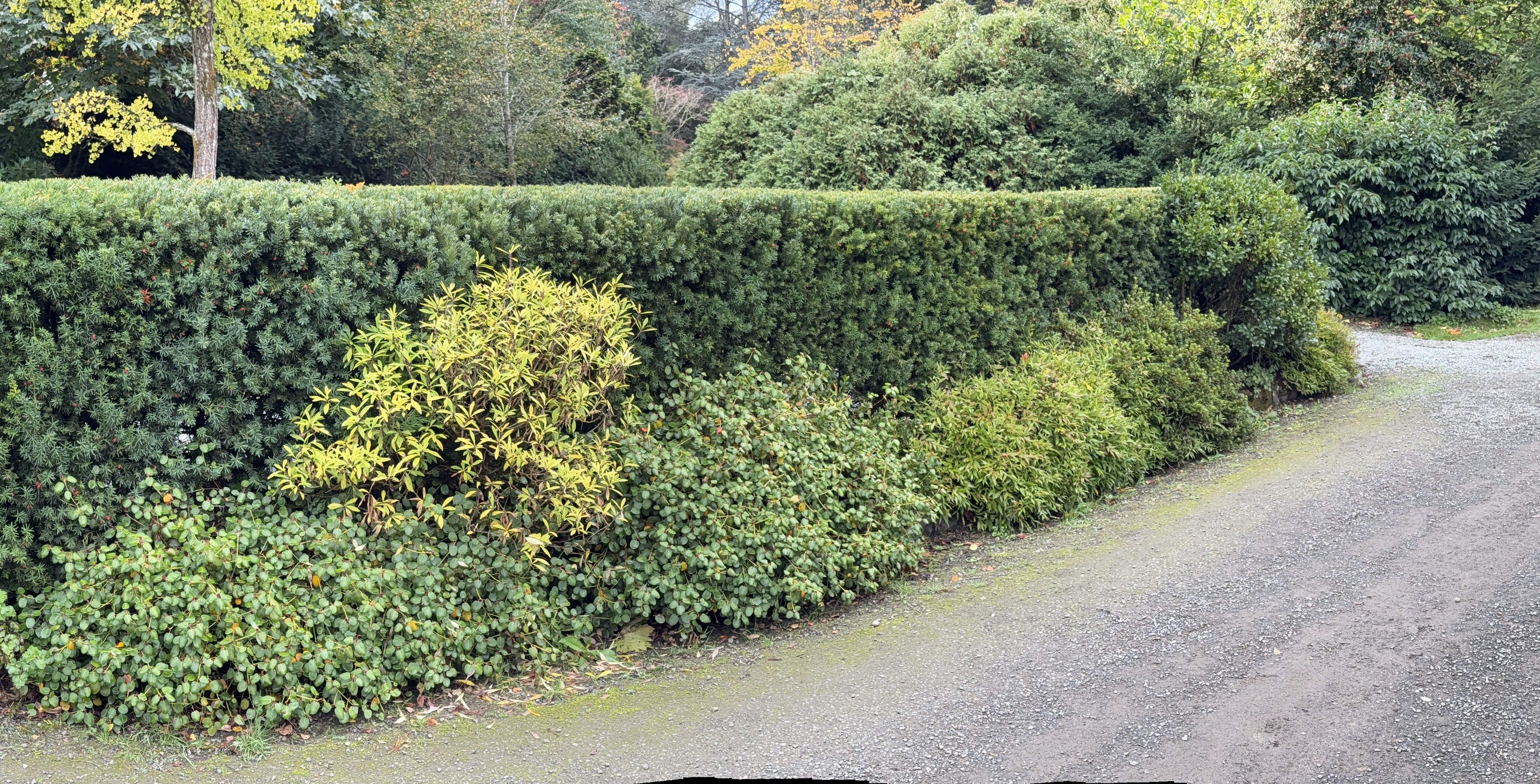
This is a fascinating hedge because only one of the bushes is being trimmed while the others protrude, almost like sculpture.
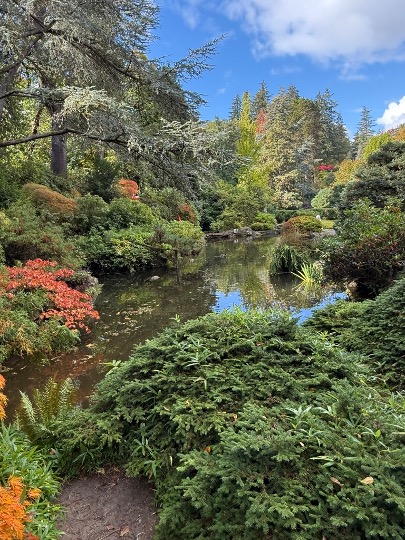
There were many pagodas and ponds with stone bridges and private spots, creating a sense of privacy in a public space.
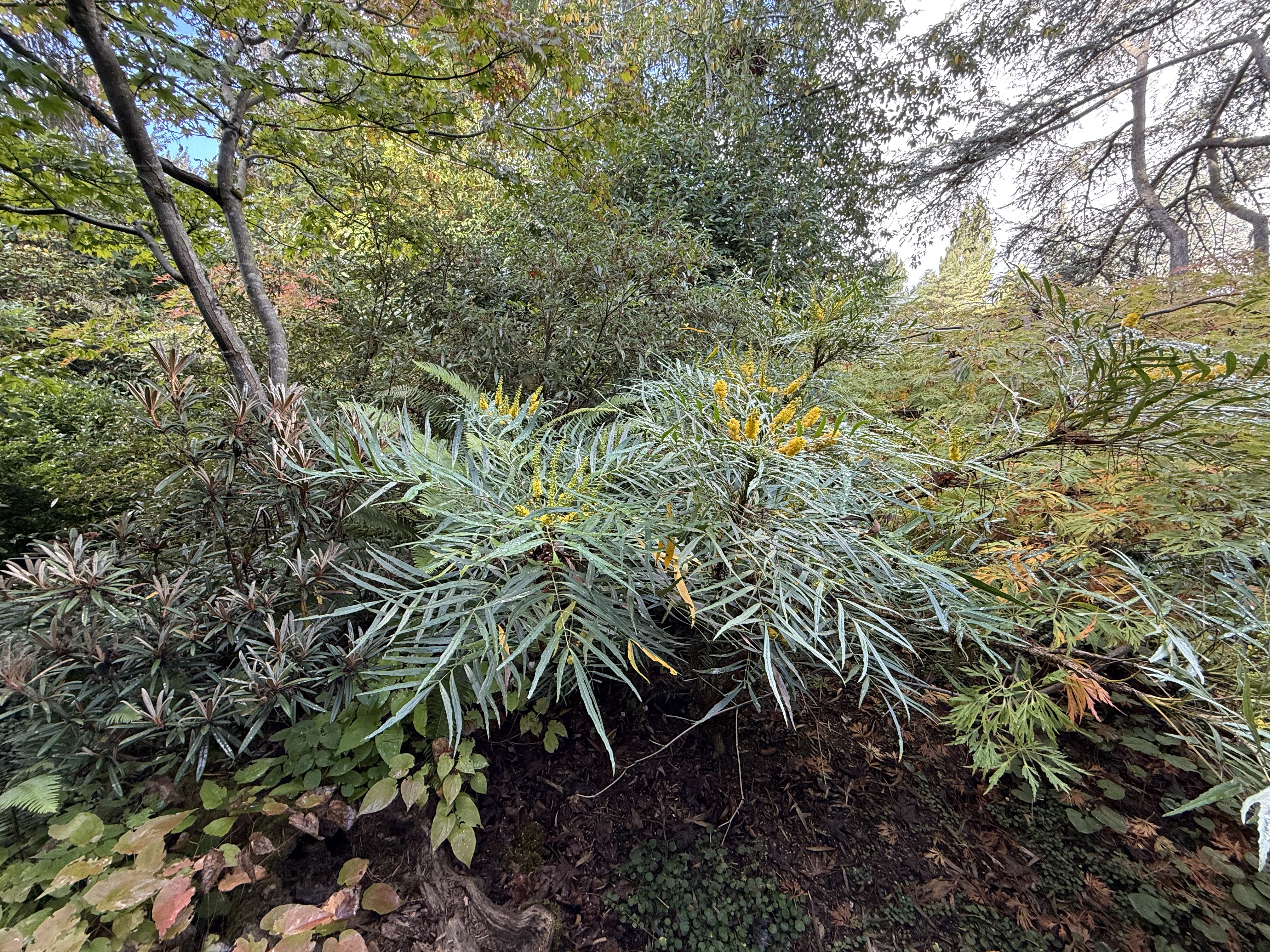
Mahonia eurybracteata subsp. ganpinensis ‘Soft Caress’ is a fall-flowering plant.

Lacecap Hydrangea (Hydrangea serrata or a lacecap cultivar of Hydrangea macrophylla) has two sets of flowers; the typical hydrangea flowers, and an outer layer of decorative petals to attract pollinators.
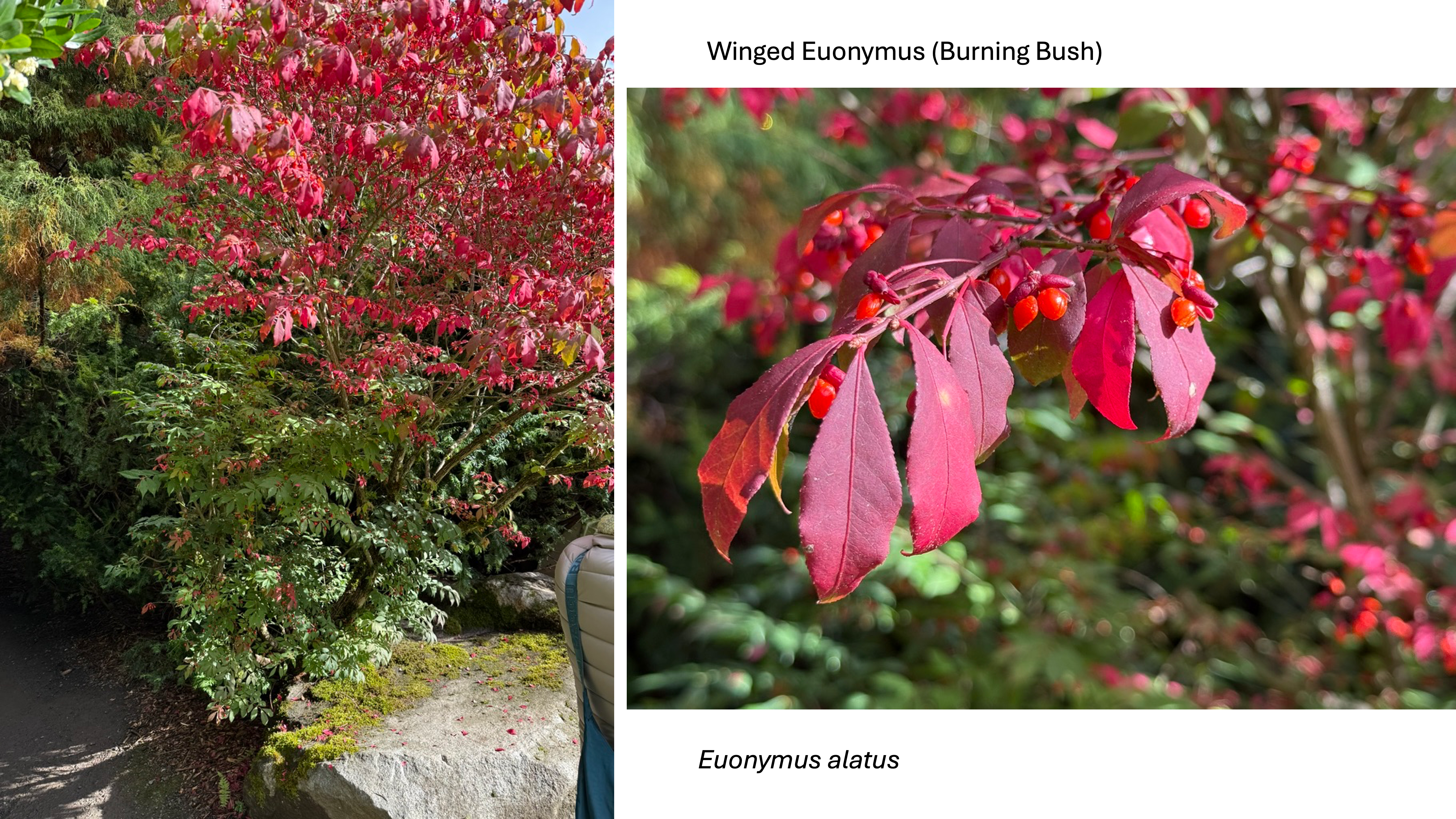
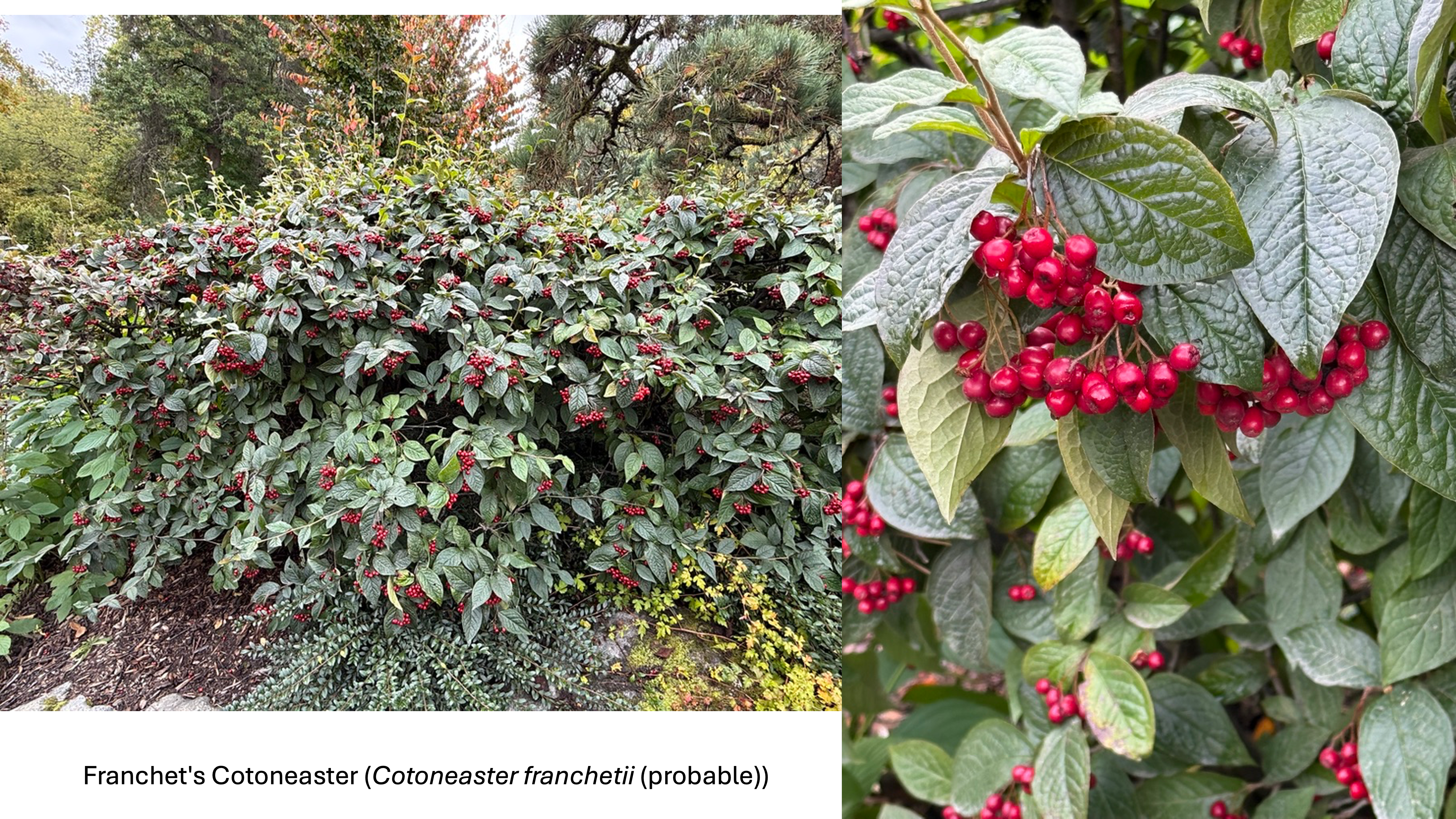
There were red berries everywhere. I’ve had Euonymus several times over the years, but they were never as colorful as Burning Bush.
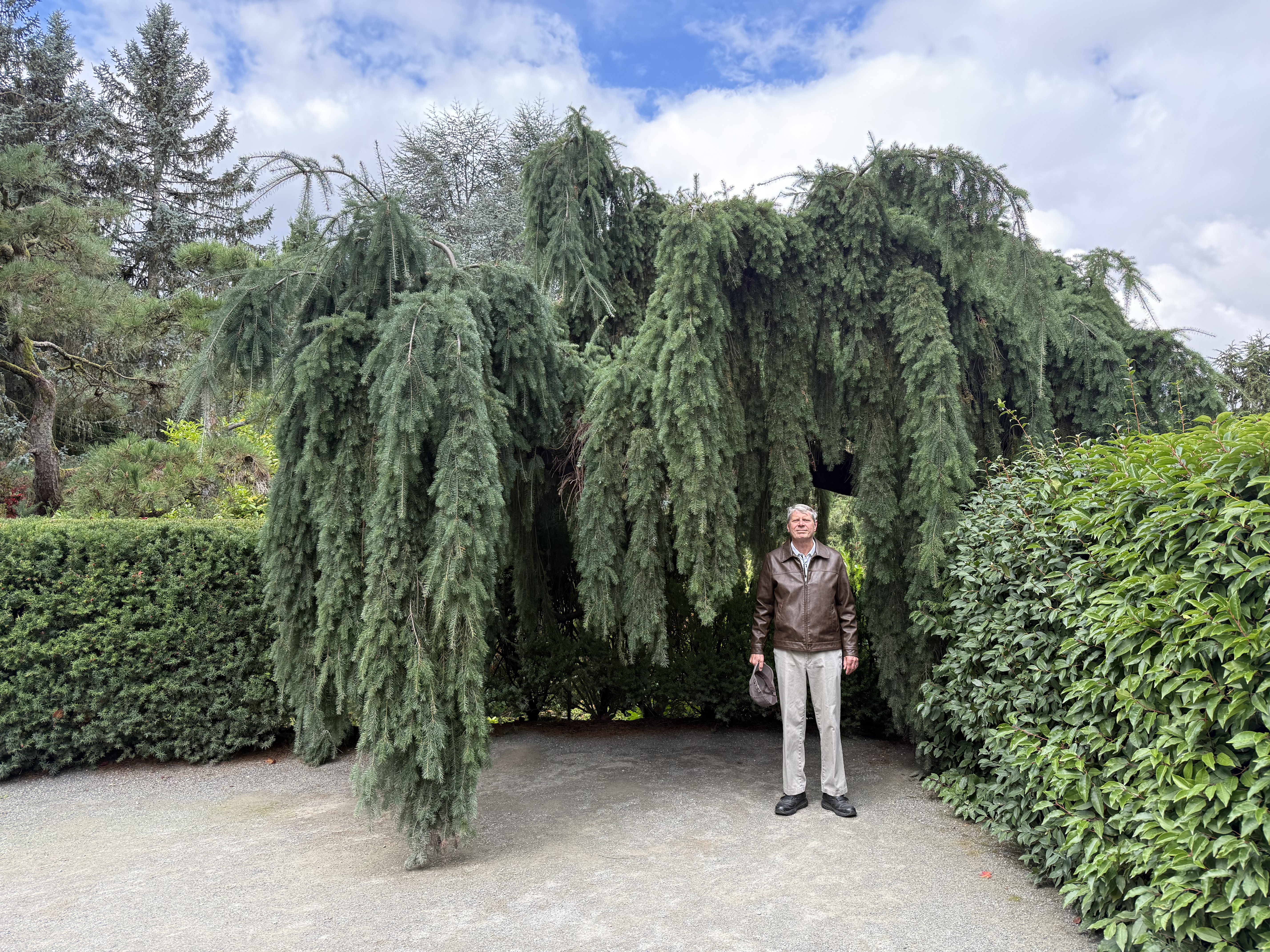
Weeping Conifer (likely a Weeping Hemlock) said goodbye at the exit, just as a Weeping Cedar greeted us. The aura of evergreen was overwhelming beneath its boughs.
Final Thoughts
Kubota Garden is a great place to spend a couple hours. There were a lot of visitors, and even a youth naturalist activity, but it didn’t feel crowded; however, the parking lot was full and we had to park a couple hundred yards up the street.
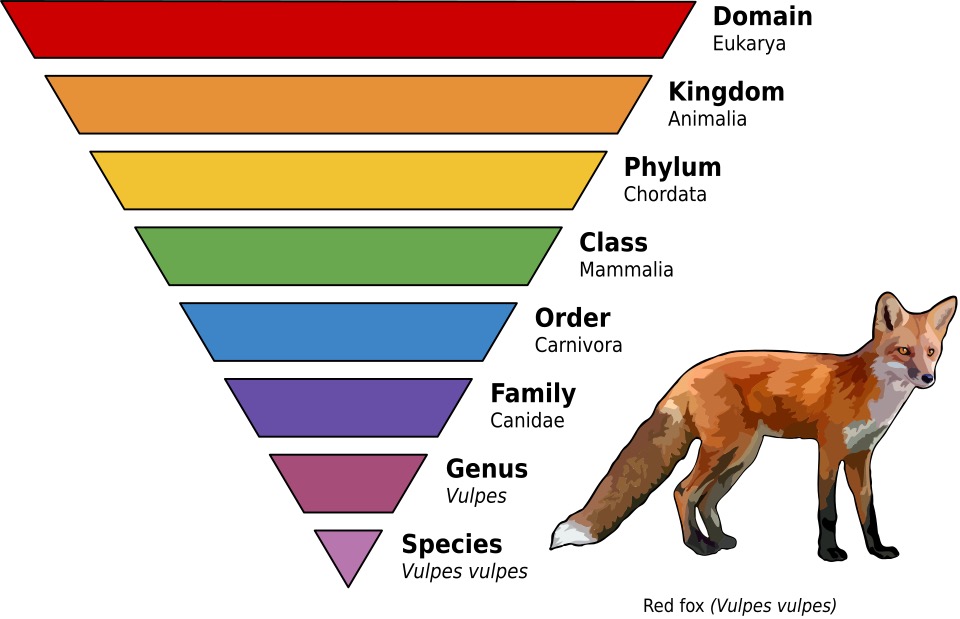
As part of my expanded interest in local sights here in the Pacific Northwest, I’m learning about plants. ChatGPT is an excellent assistant in this endeavor, but I can’t memorize a thousand species names. It referred to taxonomic FAMILY several times today, so I included this photo from Wikipedia as a memory helper. I will try to remember this when I report on ecology in the future. I will go as far up the plant family tree as I can in the future.
The only thing missing from this gorgeous fall morning in the park was a fresh cup of coffee. Alas, Kubota Garden is in a residential area and there isn’t even a Seven-Eleven nearby.
Later…
Mount Saint Helens Revisited: Ape Cave
We made it to our destination (Fig. 2) and explored a rare lava tube at Mount Saint Helens. This lava was erupted 1900 years ago as part of the same sequence that destroyed the forest a short distance away.
A full discussion of this fascinating natural feature is available from Washington Department of Natural Resources.
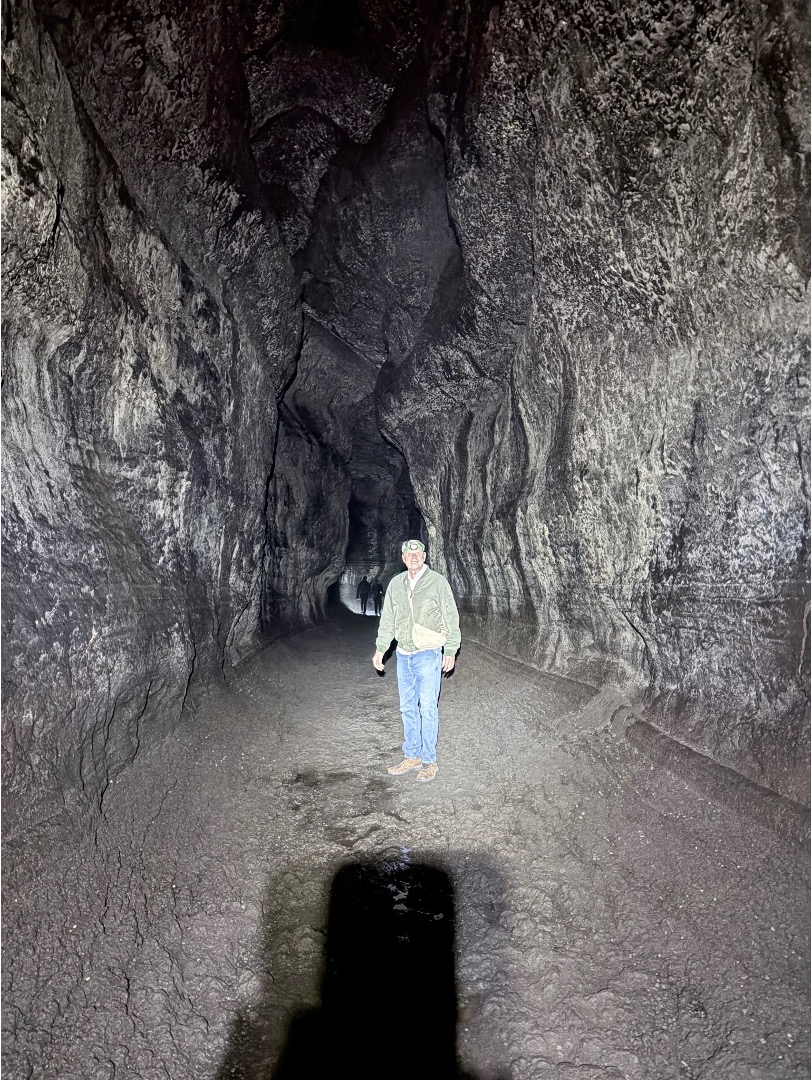
Figure 1. This lava tube is a lot larger than the tree casts we described in the last post. This immense cavern, which is more than 2.5 miles long, was created when a single basaltic lava finger flowed over the landscape. The outer material cooled in the air and insulated the interior, like an oven, allowing the remaining lava to exit the end of the tube. This left a void to be filled by subsequent lava flows. According to the information displayed at the site, the entire eruption lasted about 100 days.
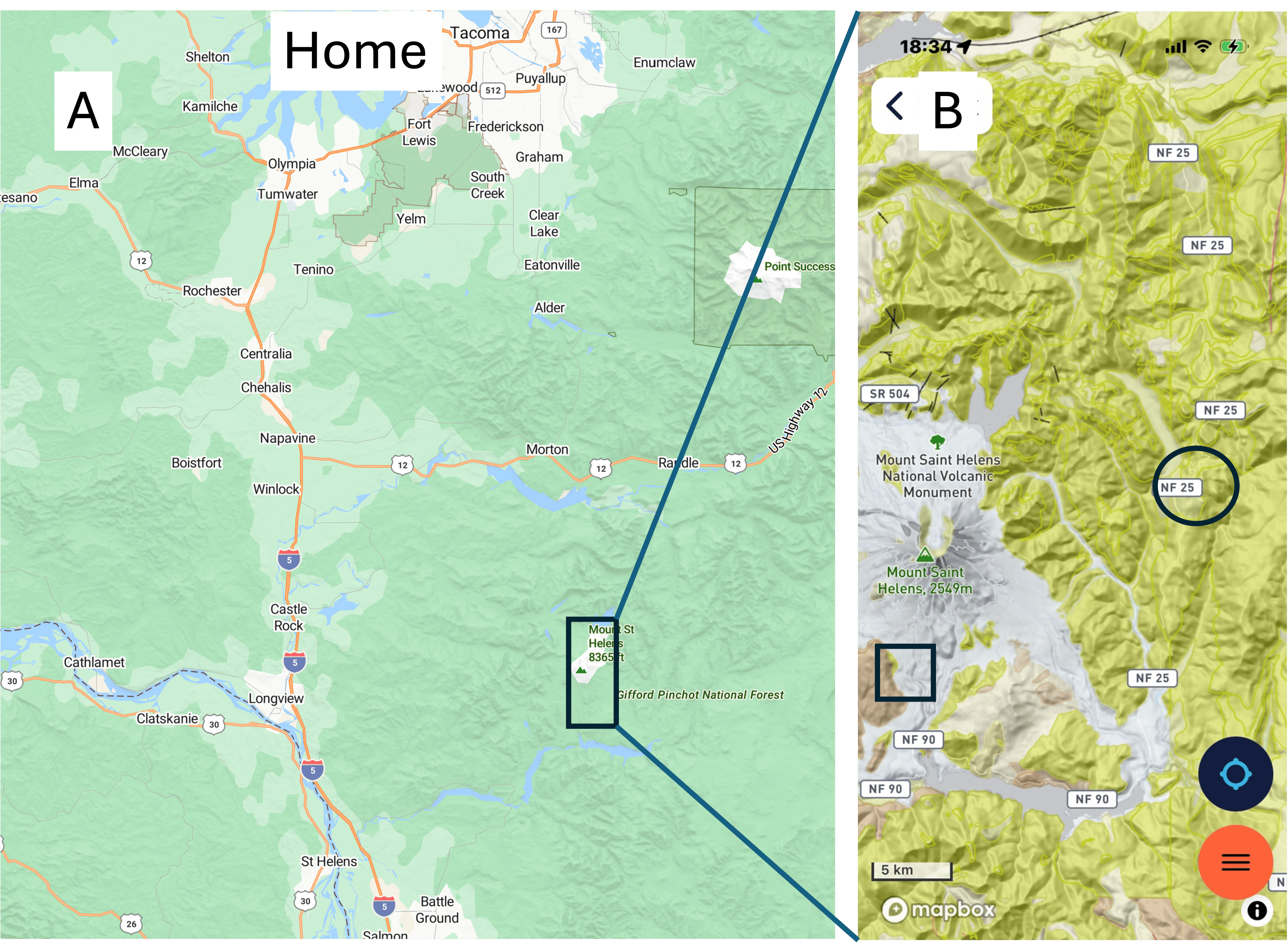
Figure 2. Ape Cave is presumably named after the first eruption sequence of Mount Saint Helens, dated about 40 Ka. I didn’t find an explanation for this confusion, but it might have something to do with the Bigfoot legend associated with Ape Canyon, not far away. At any rate, the lava tube is indicated by the square in (B).
This video captures the scale of one of the many chambers better than any image. My narration isn’t very technical.
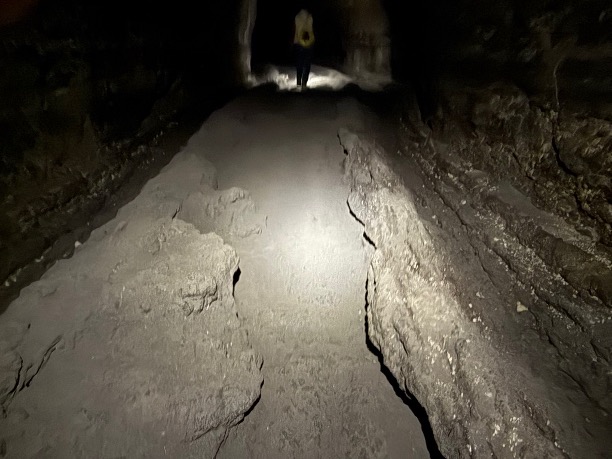
Figure 3. These parallel ridges running along the bottom of the cave near its terminus are the remnant of the last flow to use this conduit to reach open air.
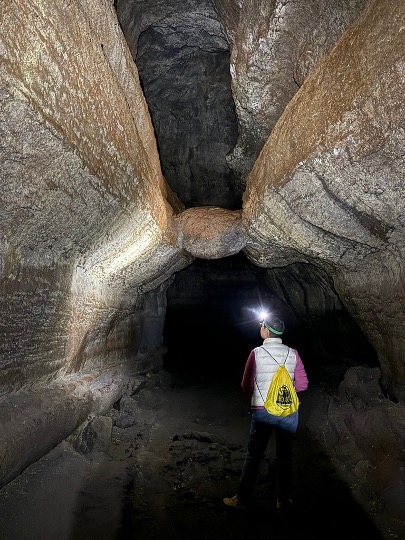
Figure 4. A block of basalt transported through this narrow passage became stuck where the walls of a previous flow almost meet, leaving it stranded. It looks like it partially melted into the walls, however.
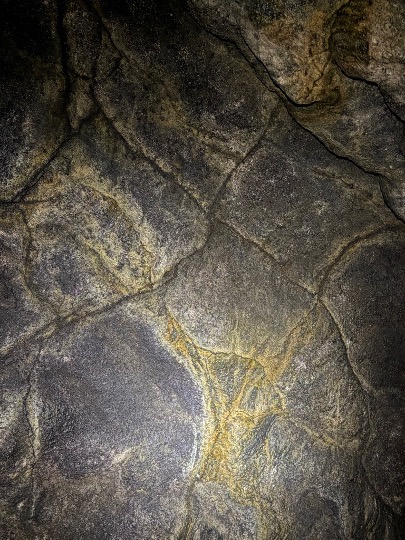
Figure 5. This view of the ceiling reveals a joint pattern caused by cooling of the outer layer of lava. Several generations of fractures occur throughout the cave, created as individual flows cooled differentially.
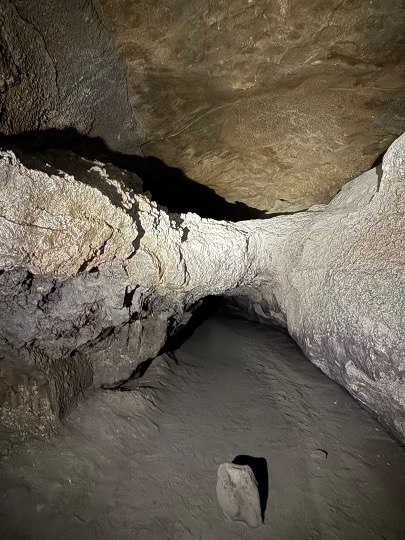
Figure 6. This is the end of the tube as it exists today. Apparently, there is no modern opening; it probably collapsed during the last 1900 years.
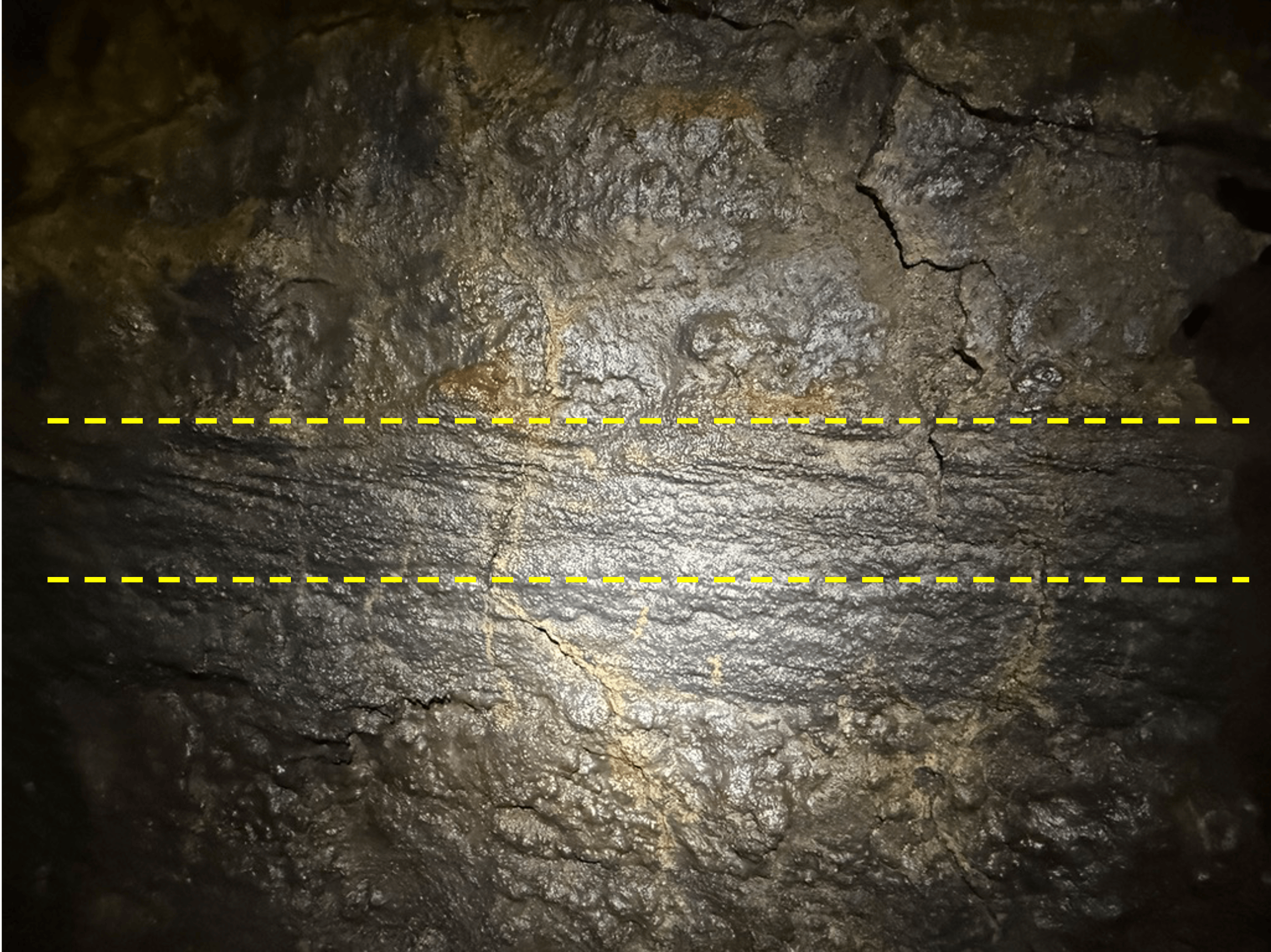
Figure 7. As a retired sedimentologist, I immediately noticed the layer outlined by the dash lines. This looks like cross-bedding; the layer fills a depression below the line, and is truncated by an overlying flow. This is interesting because cross-bedding is associated with particles being transported by wind or water; how it appears in a lava flow is an intriguing problem–perhaps heavy minerals like pyroxenes and lighter plagioclase feldspar?
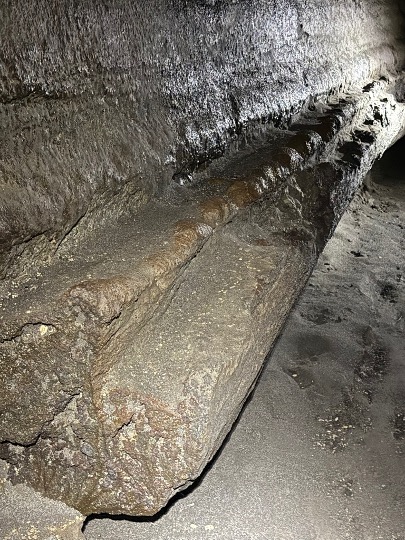
Figure 8. This is a good time to briefly explain how the ledges seen in Figs 1, 4, and 6, and the video, were formed.
Once the lava tube was created by cooling of the surface of the original flow, subsequent flows ran through, but didn’t fill, an insulated tube. Their surface was usually below the original ceiling. The coolest parts of this conduit would have been the sides (heat dissipates more quickly through older, cooler basalt than the superheated air above the lava river). Thus, ridges like these formed where the molten basalt hardened. Of course, these subsequent flows were of different volumes and the rules of stratigraphy cannot be applied. Geologists have worked out these relationships but that is beyond the scope of this report.
Let’s just say that many rivers of magma flowed through this channel, like stormwater through a sewer pipe–some larger than others.
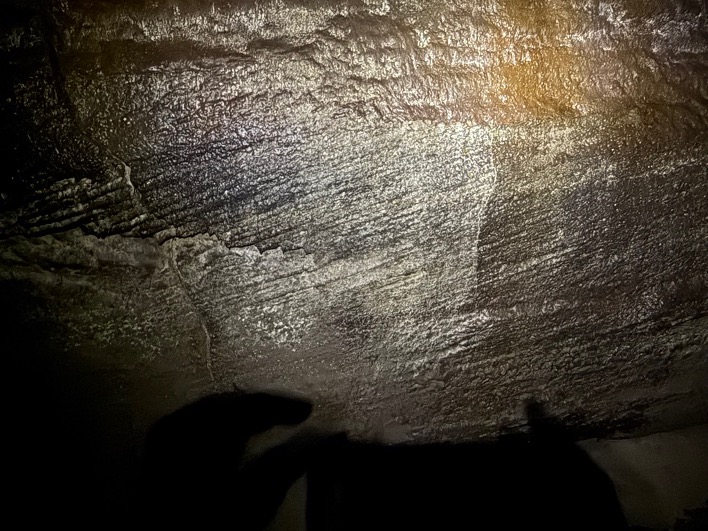
Figure 9. This is an enigmatic photograph because I don’t remember which wall it was on. I didn’t notice the detail when I took the photo, and now I can’t say if this is an excellent example of cross-bedding (always tilts downstream) as in Fig. 7. or a total mystery. My only excuse is that it was TOTALLY BLACK in the cave and I was disoriented the entire time.
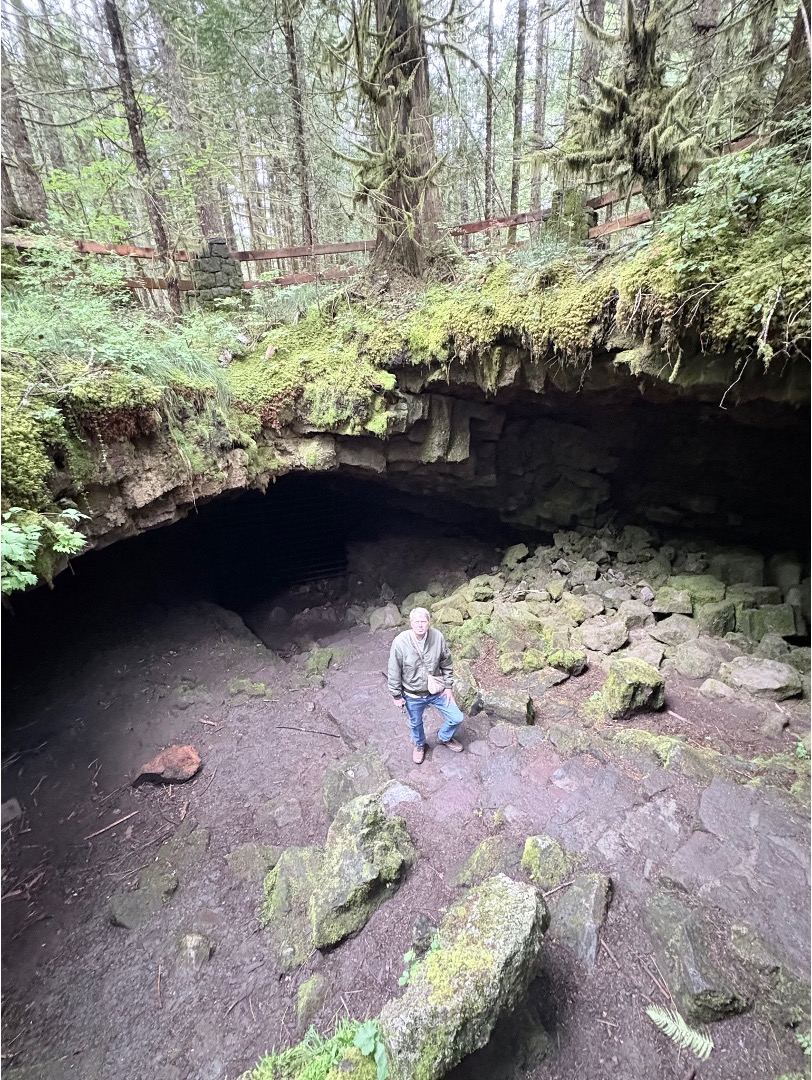
Figure 10. We made it out without spraining an ankle or hitting our heads. This cave-in is the only entrance/exit for the downstream part of the tube. There is another one 1.5 miles upstream, but that route is difficult (according to the park information).
Final Thoughts
The Ape Cave lava tube, and the missing forest from my previous post, are part of the Spirit Lake eruption phase of Mount Saint Helens, which began about 1900 years ago and continues to this day. The magma chamber didn’t erupt at the center of the stratovolcano, but instead found an opening along one of the many cracks in the thick pile of volcanic rock that had accumulated during at least 50 million years.
Lava tubes present a unique eruption environment. Ground water that finds its way into the magma chamber cannot escape, thus pressurizing the conduit and altering the lava’s behavior. Imagine lava as thin as water surging through this passage, sloshing around, encountering obstacles, rushing headlong downhill towards what apparently was a small opening, if Fig. 6 is any indication of the narrowing channel.
It was a great drive through a wild terrain to reach Mount Saint Helens, and the destination was worth the effort.
Mount Saint Helens Revisited: A Missing Forest
My last post reported on Miocene (23-5.3 Ma) volcanic rocks on the eastern flank of Mount Saint Helens. Those rocks predate the creation of Mt St Helens, however; we reached our destination and, before exploring a lava tube called Ape Cave, we examined some interesting geology that is part of the most recent eruptive stage of this active stratovolcano. The Spirit Lake stage began about 4500 years ago. There were three earlier stages, beginning about 40,000 years ago; each lasted less than 5000 years.
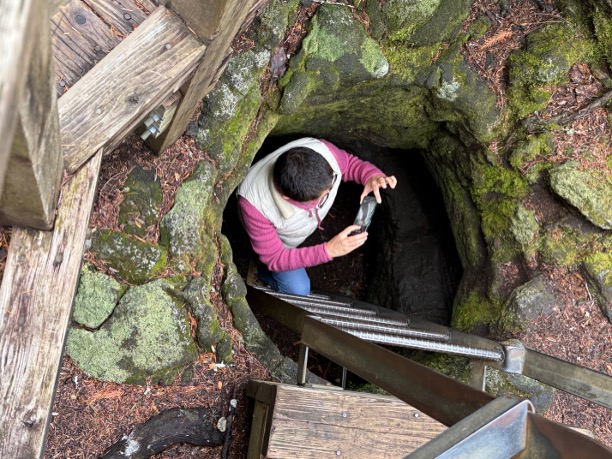
Figure 1. About 1900 years ago, a large amount of basalt lava flowed from a fissure on the south flank of the volcano (indicated by a square in the inset map of Fig. 2). The lava was hot (~1200 C or 2200 F) and set the forest on fire; when the wood had been turned to charcoal, the lava cooled to leave casts of the trees. My wife is taking a photo of a small-diameter tube we’ll examine it more closely below.
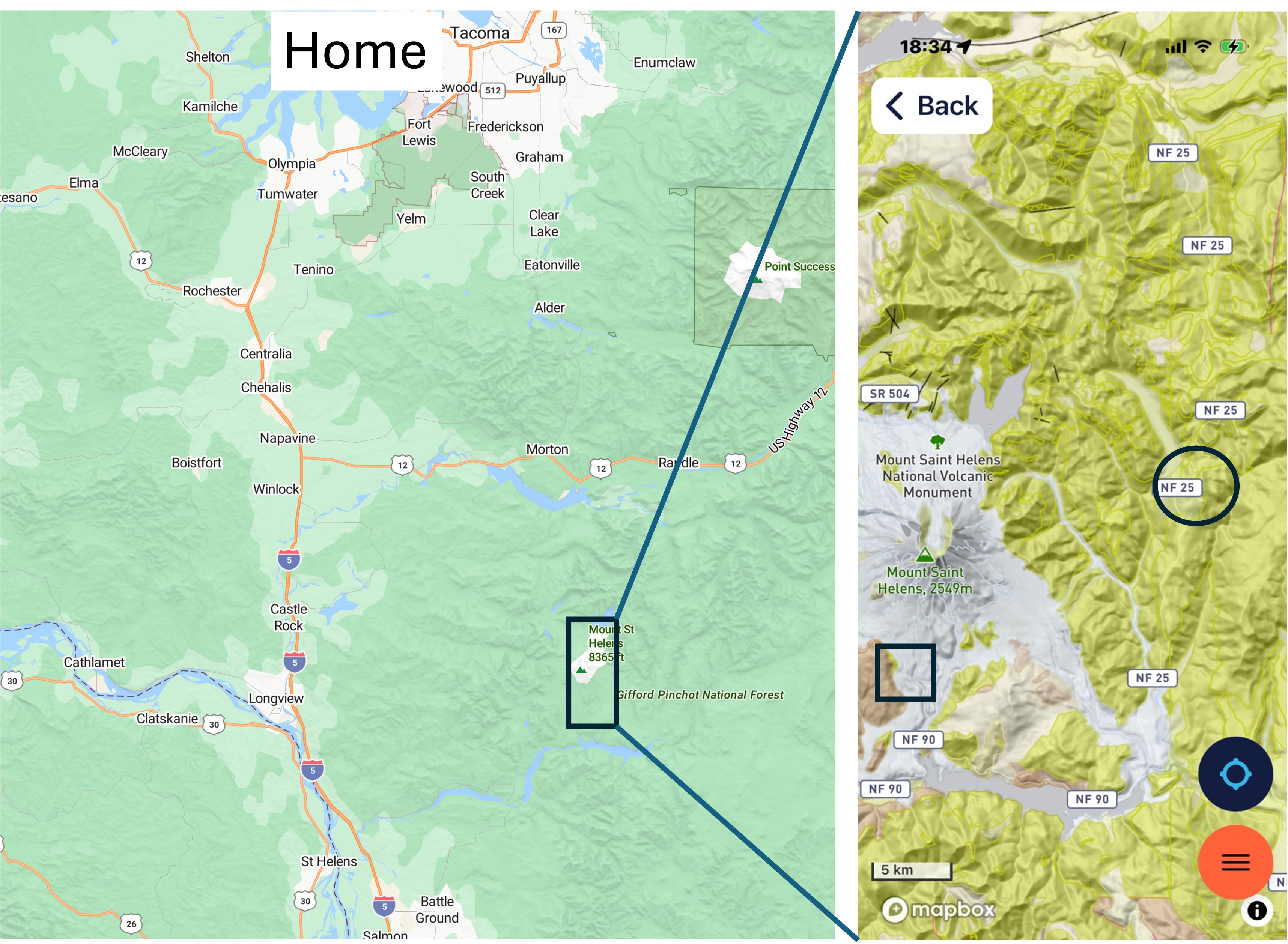
Figure 2. Mount Saint Helens is about 70 miles south of Tacoma (Home in the right map), but the route we followed, around the north and east flanks, takes 3.5 hours to drive. The yellow areas in the inset map are mostly andesite lava flows older than 5 Ma. The circle is where we looked at them in the last post.
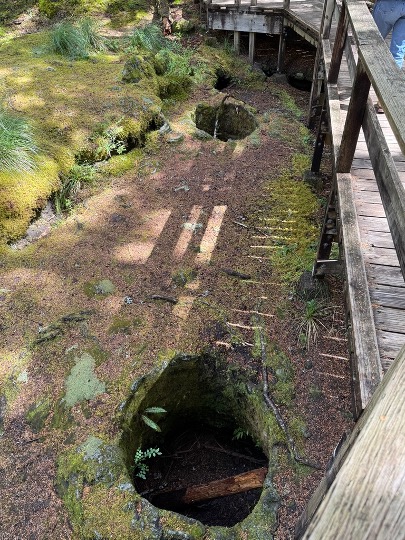
Figure 3. These holes were everywhere, forming a hazard for people walking, so a walkway was constructed over the area where the tree holes are densest. They haven’t been cleaned out and most are 3-4 feet deep.
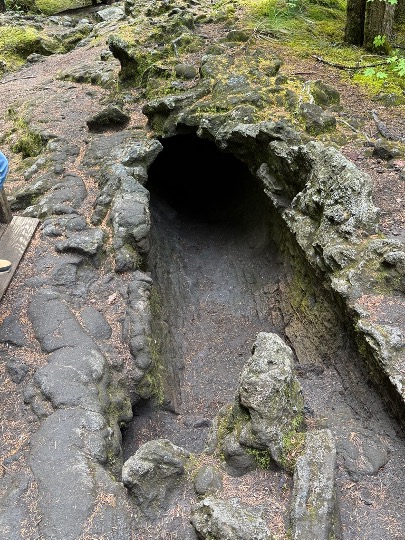
Figure 4. This is the cast of a fallen log. The entrance is shown in Fig. 1; visitors are encouraged to crawl through it, about 40 feet, but it was too tight for us. However, several children I met there had braved the dark, tight tunnel.
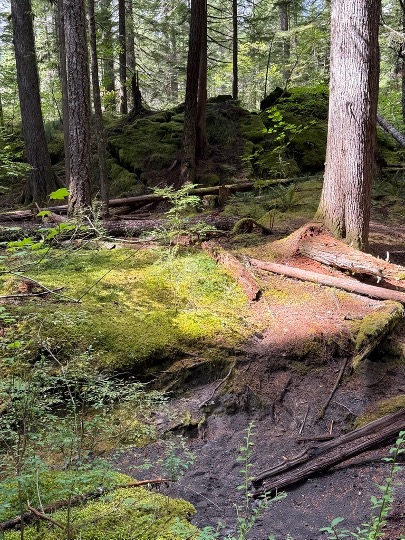
Figure 5. This photo was taken a couple-hundred yards from the missing forest. The background reveals the leading edge of a lava flow that’s about ten-feet high. The foreground shows a stream being incised into the landscape, probably created along a collapsed lava tube. Regrowth of the forest is slow in the lava surface; however, there was no mention of whether or not this area was logged in the last century–it probably was, given the documented greed of the forest industry when it came to cutting down trees. However, I didn’t see any large stumps, so maybe it wasn’t worth the effort.
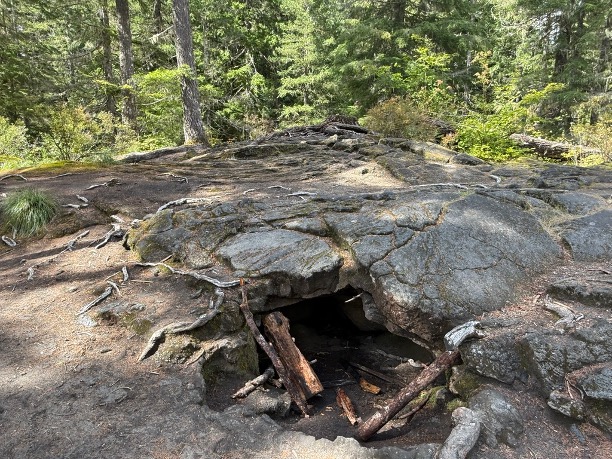
Figure 6. This is a mound of lava projecting up to 8 feet above the surrounding landscape. Several features are worth mentioning: 1) it is circular in plan and about 30 feet in diameter; 2) the upper-center of the image shows concentric bands of ropy lava known as pahoehoe, from its common occurrence in Hawaii; and 3) there is a small cave beneath it where lava ran out of the hardened surface. We’ll see a lot more of that in my next post.
Final Thoughts
Our journey along the backroads took us through a vast terrane of andesitic volcanism created more than five-million years ago. Then, about forty-thousand years ago, a new phase of volcanism began and Mount Saint Helens was created from this rugged ground.
Stratovolcanoes don’t just erupt at their summit, even though that is exactly what Mt St Helens did in 1980; more often they leak lava from the myriad faults and fissures surrounding them, especially in an active subduction zone where the earth’s crust is being compressed, twisted, and warped by tectonic forces.
Life is difficult in such an environment and we are fortunate to have a moment in time frozen for us to contemplate how immense the forces are that constantly reform the surface. Eruptions like the one that destroyed this forest are unlikely to kill many people, but they are crucial in reforming the environment. A new forest grows, possibly inhabited by different species of fauna and flora, and life goes on.
My next post will examine this same eruption event, but at a scale that dwarfs what we saw today.
Flaming Geyser State Park
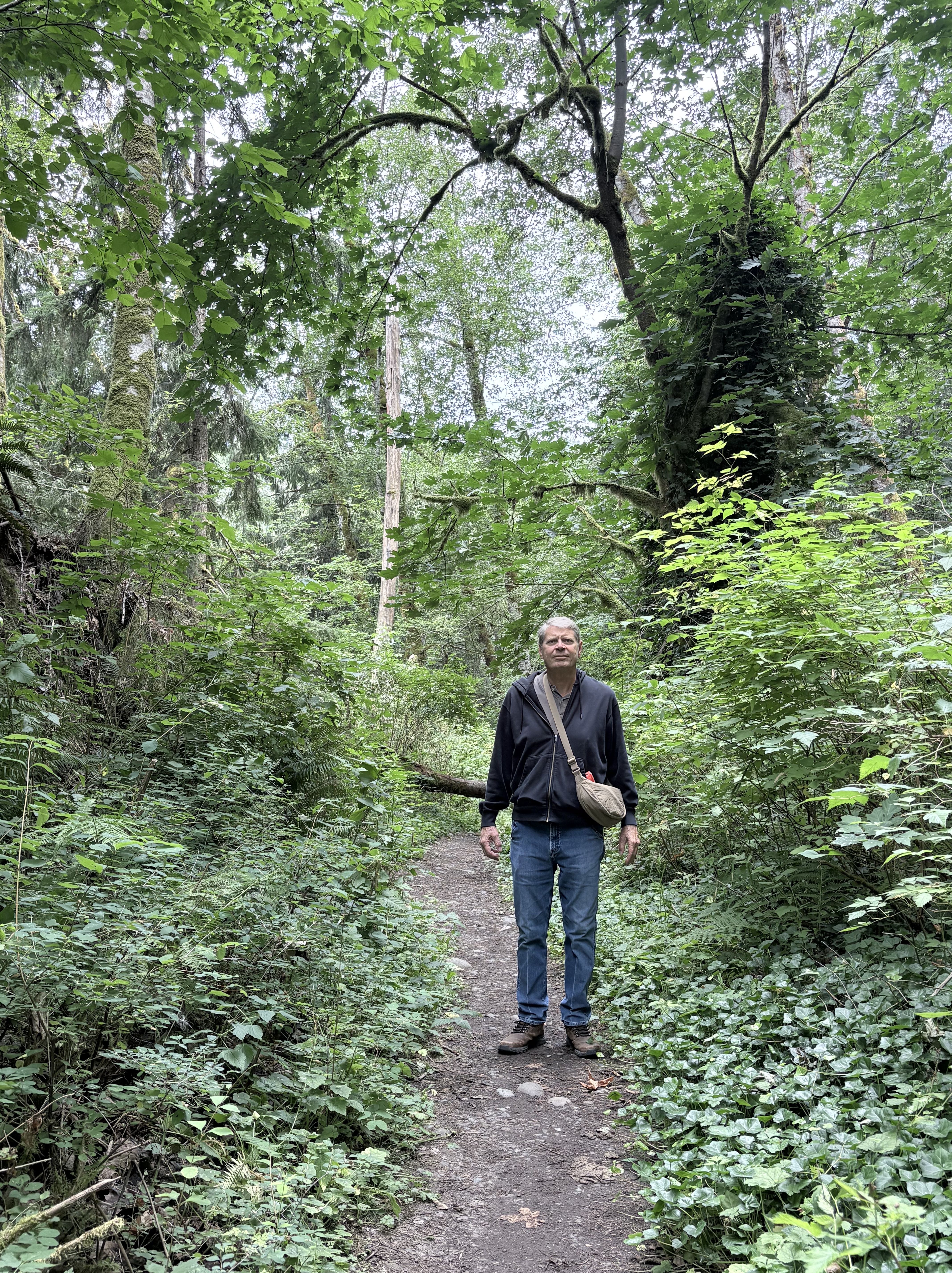
The park is located at the upstream end of Green River, where it enters a gorge. This is one of the best places I’ve seen anywhere for taking a stroll through nature; the path is moist but not muddy, and well trimmed, with breathtaking natural scenes like this. A veritable Garden of Eden. This post is an overview of the park; I discuss the geology and flora in other posts.

With a name like that, I’m expecting a spectacular show…
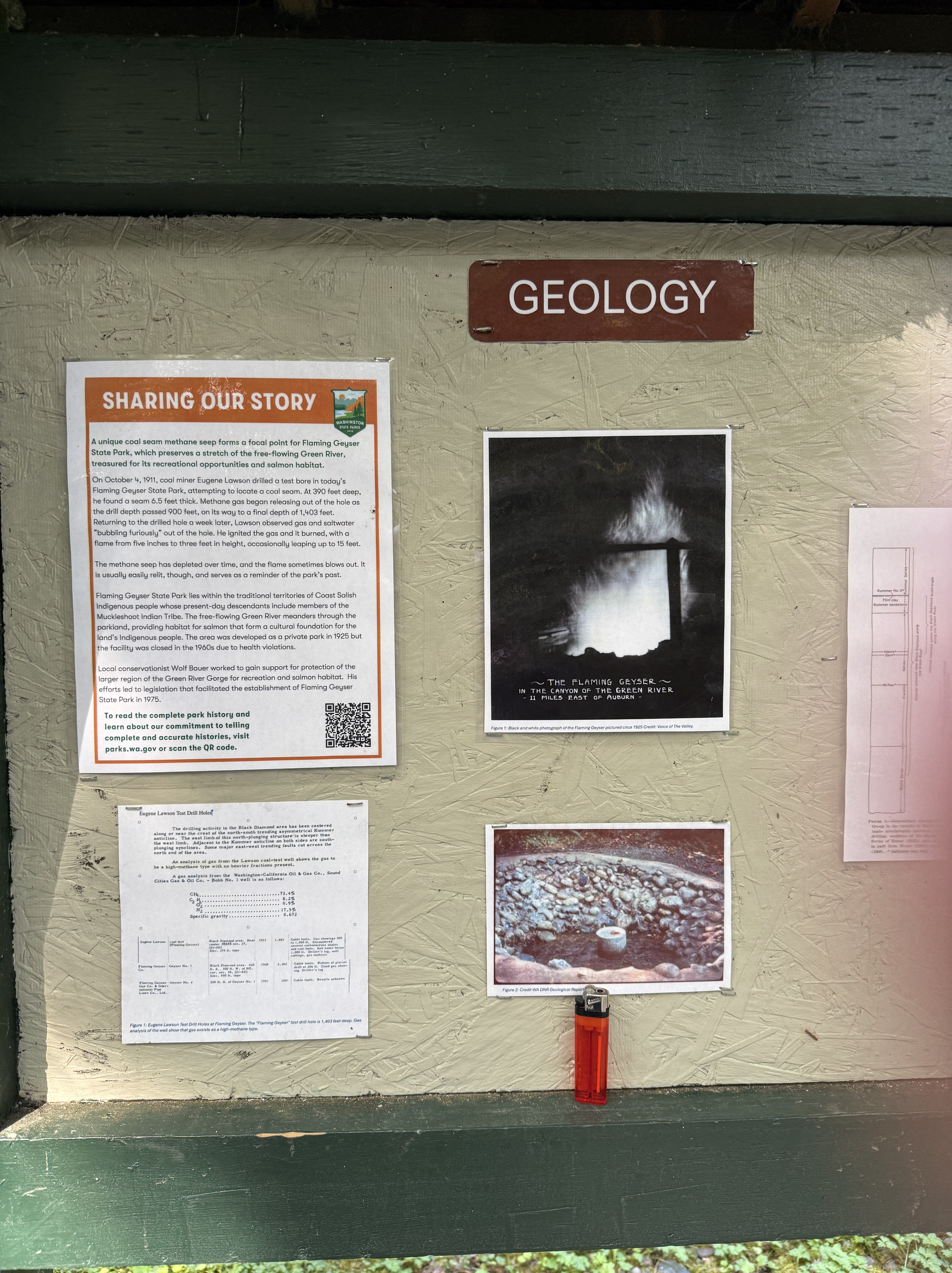
I’ll summarize what you can read if you zoom in on the information presented in this billboard. An exploratory well was drilled here about 100 year ago, looking for coal–they found it, along with methane (natural gas) and other gases produced by decaying vegetation at several hundred feet below the surface. The small well produced a flammable gas that has burned intermittently since it was first lit by a geologist.

Flaming geyser wasn’t very active when we visited, but it was burning. To repeat, this is NOT a natural seep, but the result of a well drilled a century ago. Nevertheless it has become a local tradition, and it is relit whenever it goes out.
Bubbling geyser is a lot more fun. This video shows small bubbles of methane, as well as hydrogen sulfide and other, unnamed, gases. Methane is odorless, but this area smelled strongly of H2S, which is added to natural gas to help detect leaks.
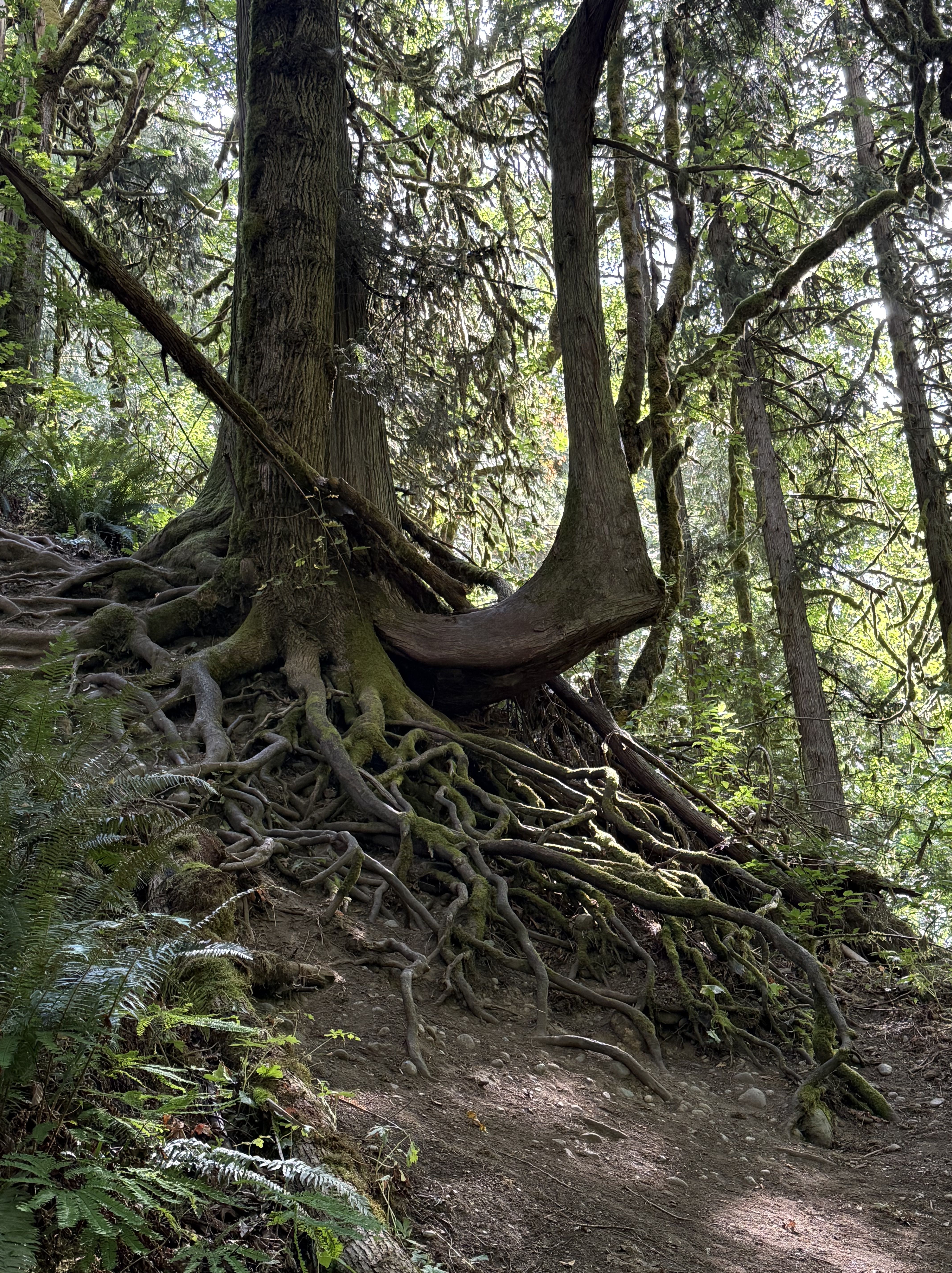
This is a beautiful example of survival. The surface roots have all been exposed by erosion, but the tree is thriving; its roots have turned into separate trunks. I read somewhere that these conifers in the PNW send their roots out for hundreds of feet, far beyond their canopies.
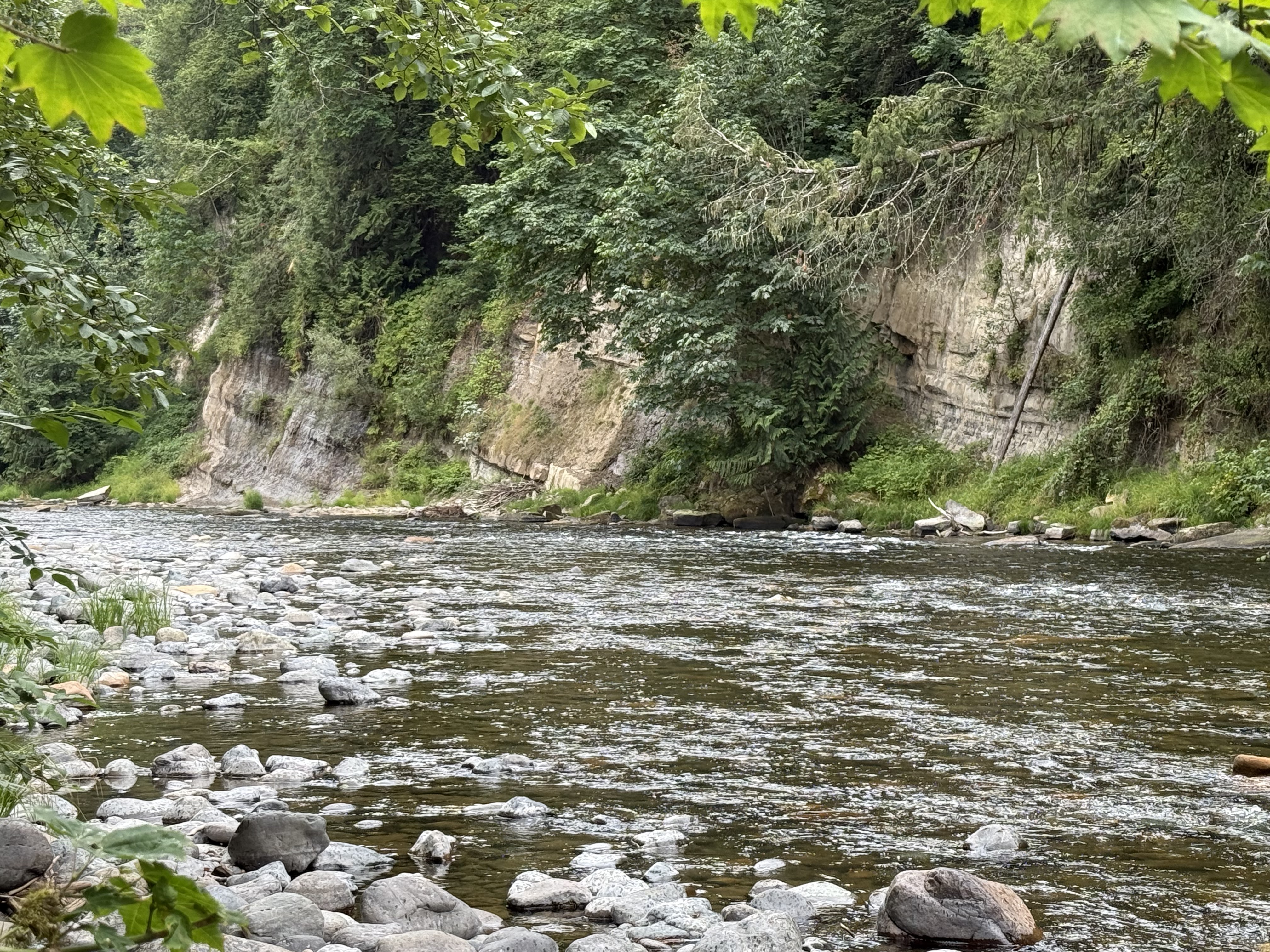
This is where Green River Valley turns into Green River Gorge. The water was perfectly clear, with a slight green tinge, even though there is no algae visible. It reminds me of Commencement Bay, which is also devoid of aquatic plants. And it is all natural, simply a unique ecosystem.
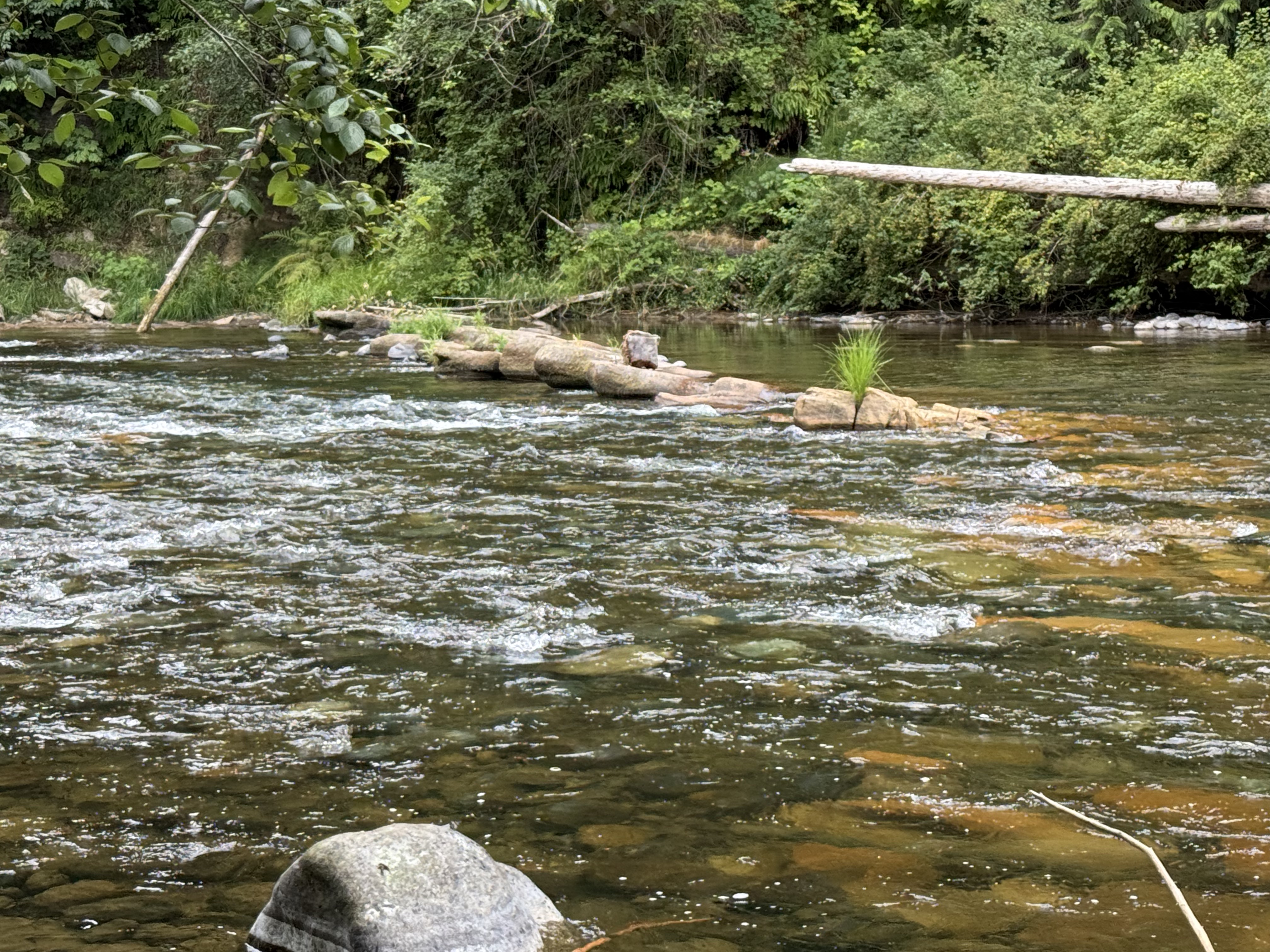
If you wear waders, you can walk on water here.
Final Thoughts
This is a place you have to visit for yourself, especially on such a gorgeous summer day. The temperature was in the mid-seventies, the sky was clear, and people were filling the huge number of picnic areas, carrying their supplies and tubes, ready for a fun day of floating down one of the best rivers I’ve ever seen.
You’ve got to see it for yourself.
Disarray Along Commencement Bay
This morning we went for a walk along the western shoreline of Commencement Bay, which was home to many sawmills, even a smelter, between the 19th and late 20th centuries. Rather than removing all of the industrial debris, the city has left the remaining infrastructure as a kind of museum. There are signs explaining a lot of the history and even a piece of sculpture integrated with an original saw.
The shoreline is a dynamic environment where plants struggle to keep up with the sea and weather. Thus, pioneer plants dominate the flora.
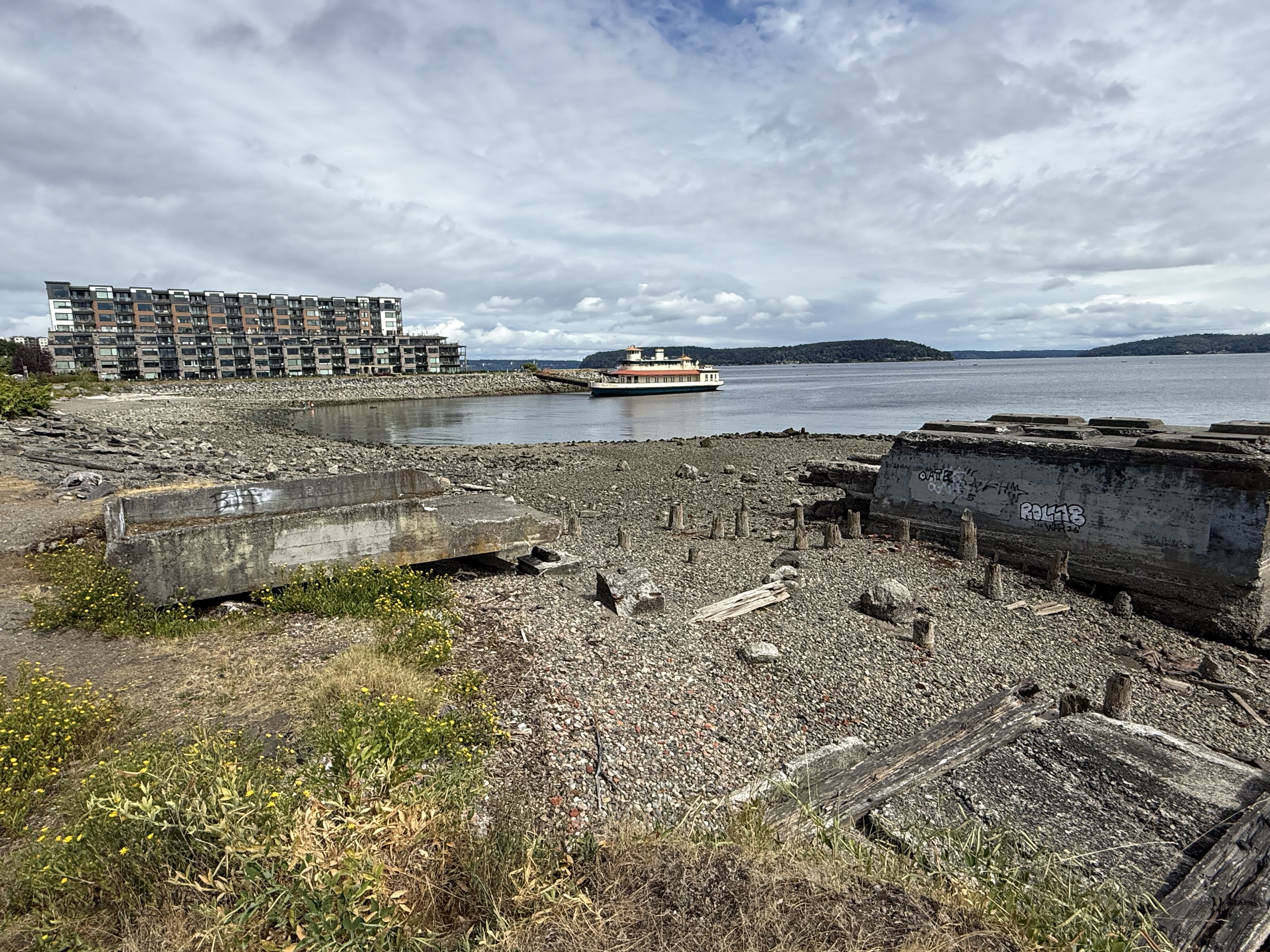
This view is looking to the NE. This is the last sawmill site along the bay, but it doesn’t have any signage explaining its history. Nevertheless, this image, taken at low tide, says a lot: The large concrete structure was the foundation for a piece of heavy equipment like a saw or winch; the piling stubs reveal where it was connected to land, where a receiving platform (left of image) was constructed. The remnants of a dock are in the lower right. There are a line of pilings further seaward that demarcate a dock that would have served as a wharf for ships.
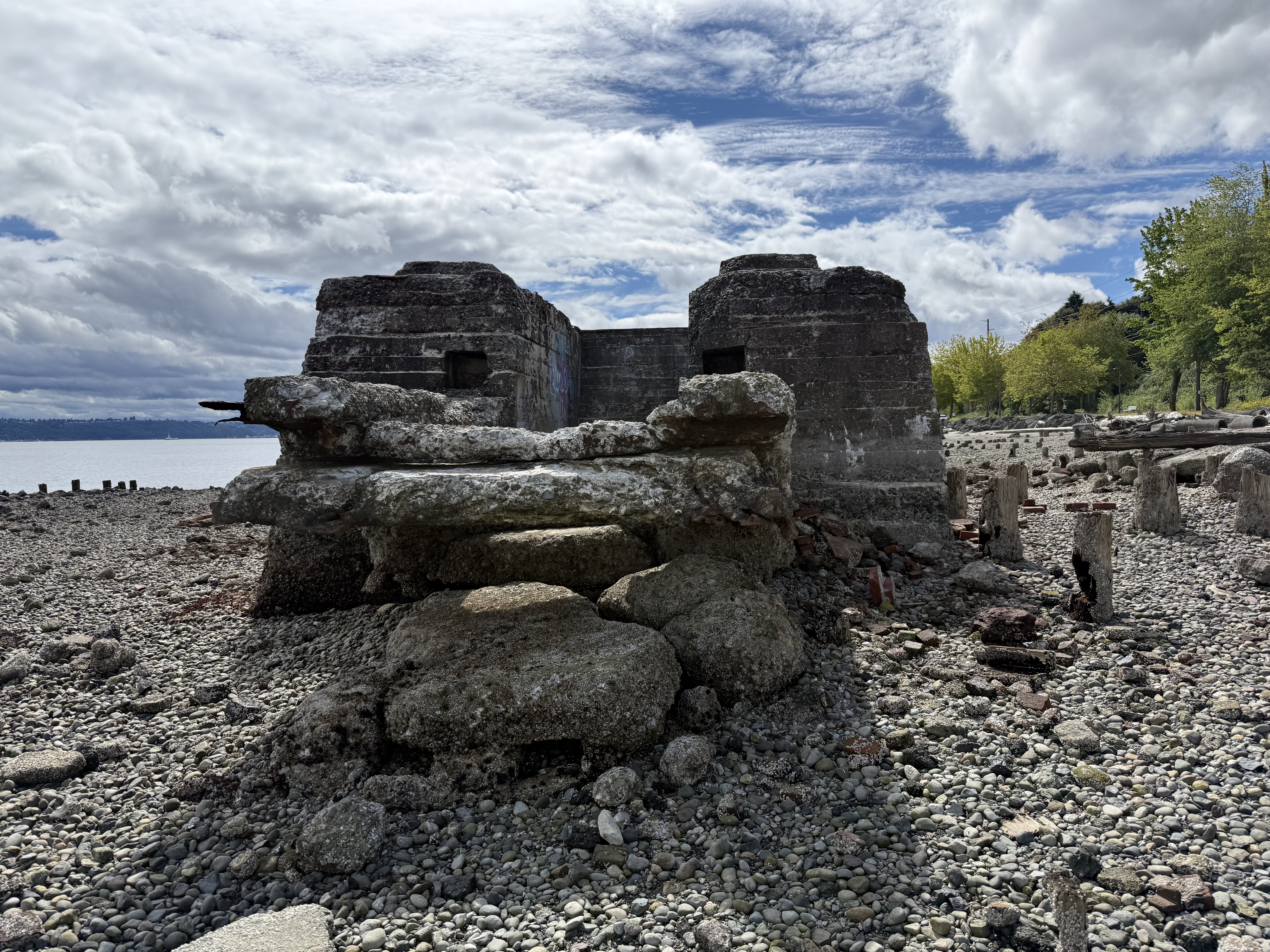
Most of this structure would have been submerged at high tide (7-10 feet, twice a day). This reinforced concrete structure probably was the base for the saw, the channel likely designed for pulleys, chains, etc, that ran the saw or pulled trees (up to 14 feet in diameter) into it. The sawmills often located their saw heads offshore to make processing logs, which arrived by raft, easier.
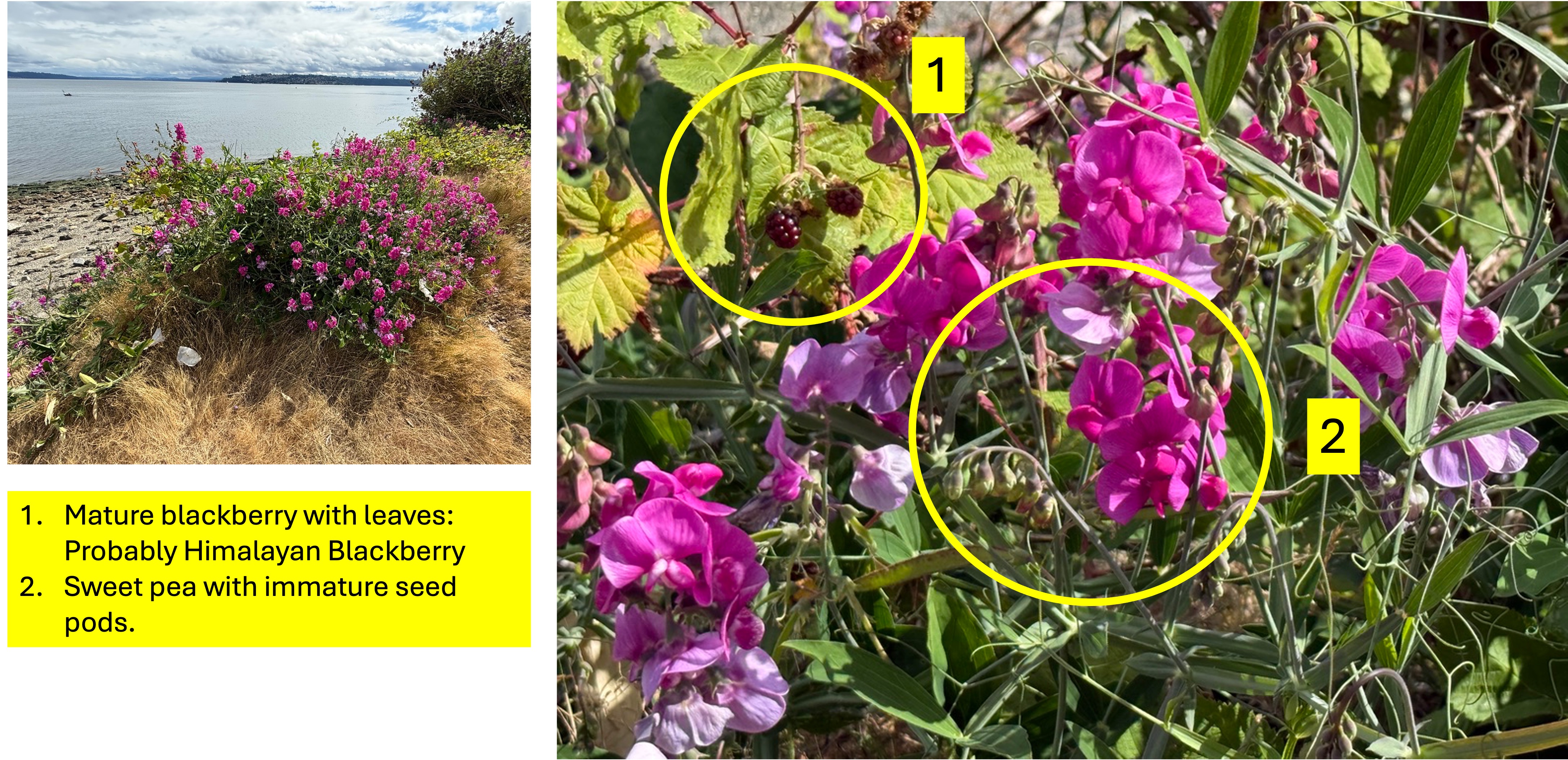
This bramble caught my eye, so I took a closer look. It is a mixture of two pioneer plants. Sweet peas of different species are native to the PNW (I don’t know which exactly this is), but Himalayan blackberry is invasive and threatens ecosystems across the region. They are fighting it out, so I’m cheering for the sweet pea — to fend off the foreign invader.
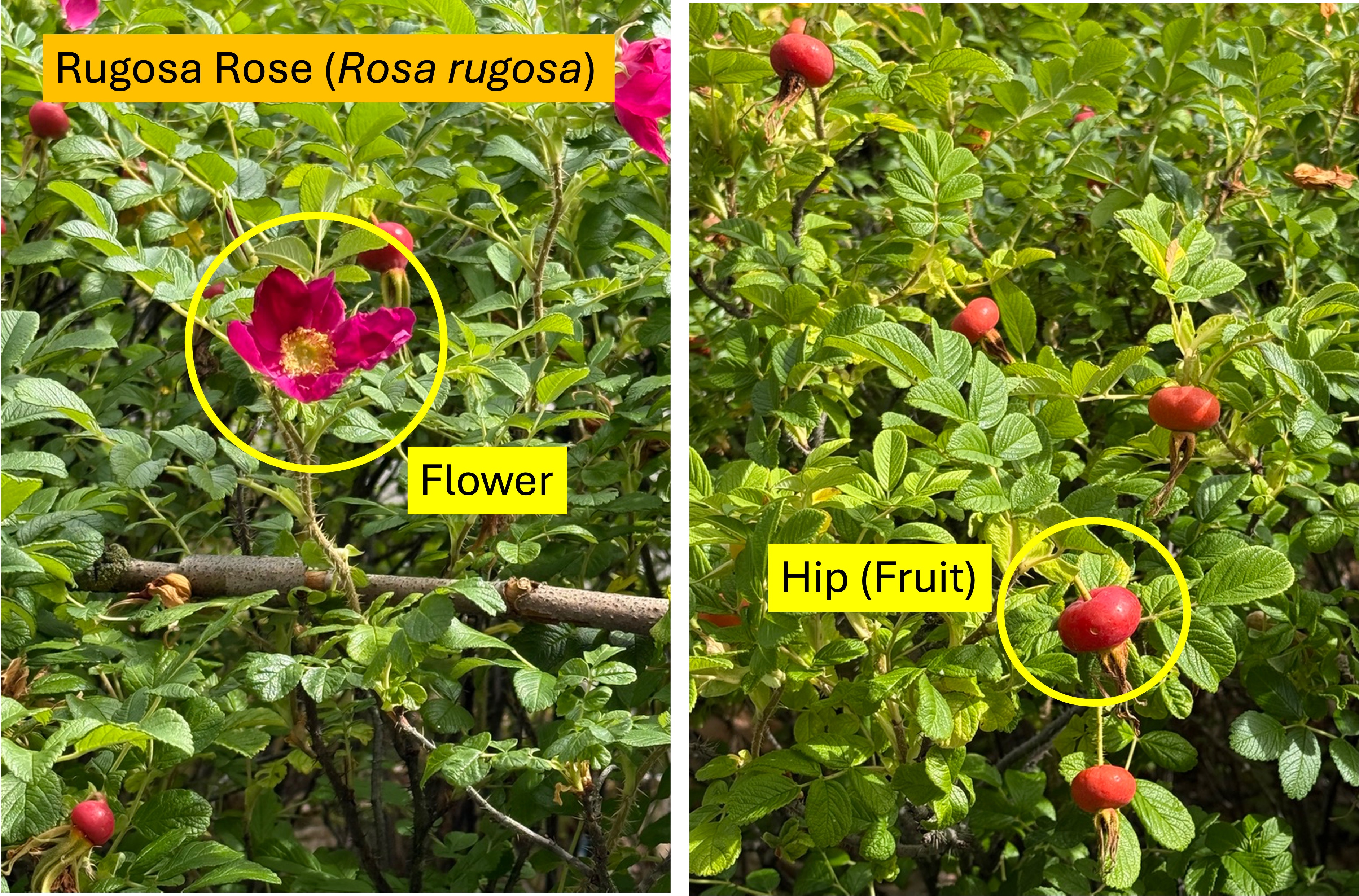
This wild rose species caught my eye because of the huge fruit (golfball sized), which is apparently edible. Just put enough gravy on it and it’ll taste fine.
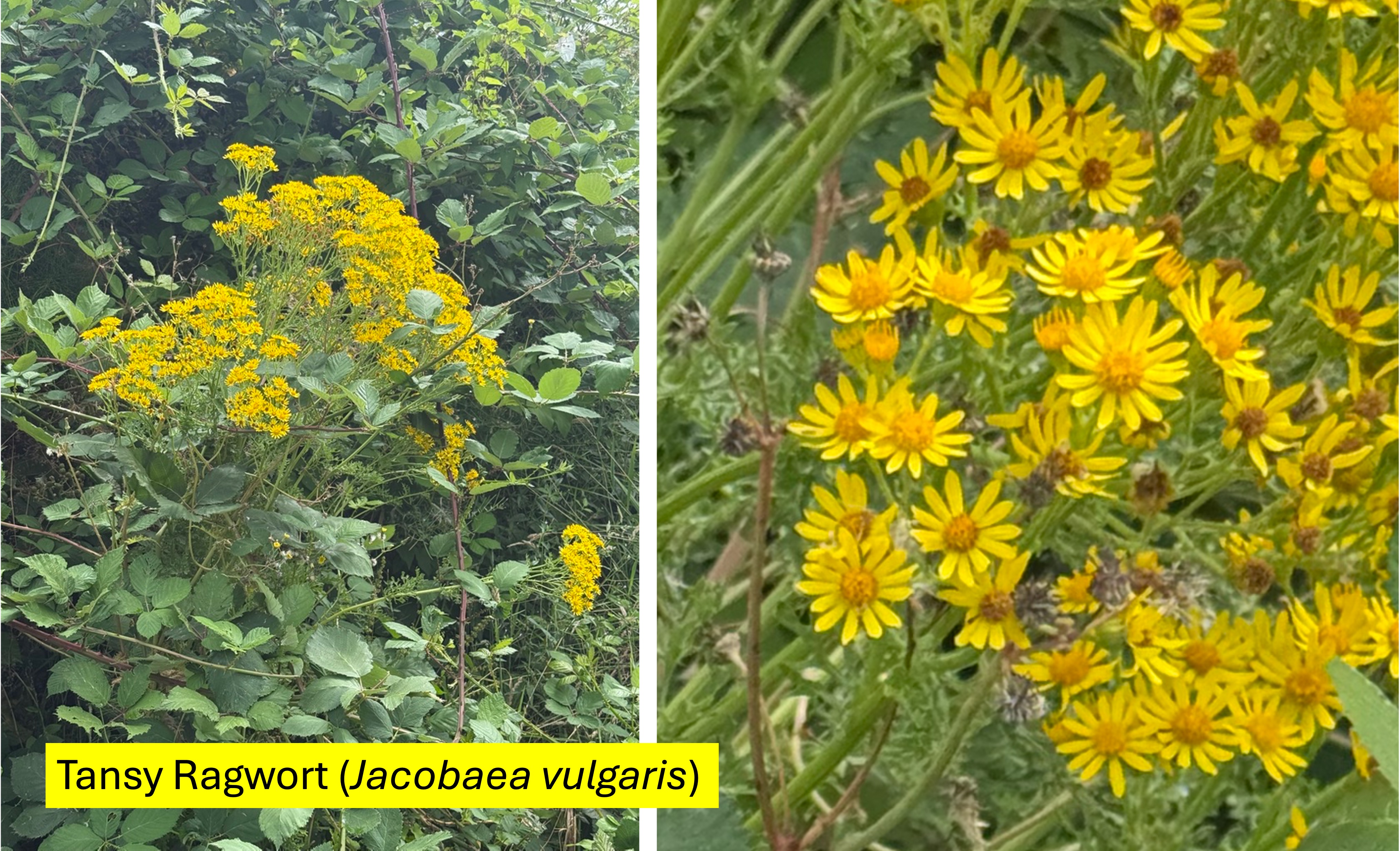
I thought these bright, yellow flowers looked familiar. I checked a previous post to discover that the flowers are not common tansy. The flowers are curved upward and the centers are large, orange domes. It is invasive and toxic to animals (and people), so it is actively monitored. This example is growing in a thicket along with Rugosa Rose, which is also invasive; and yes, there are native plants that thrive in a coastal environment but they have natural controls that are lacking for these alien species.
Final Thoughts
I didn’t mean to photograph anything today, but the flowers are so eye-catching. And I love old industrial sites.
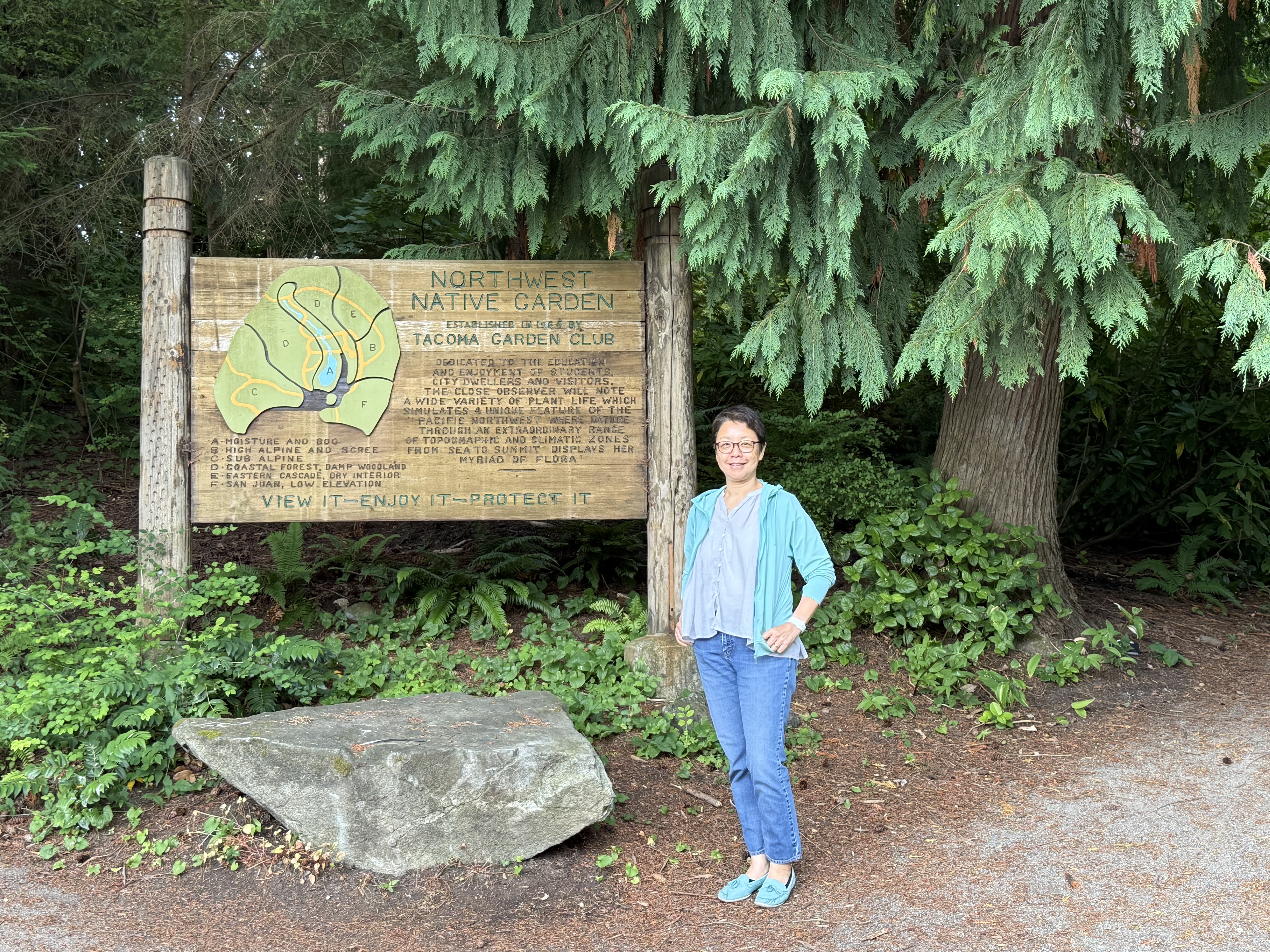
The Northwest Native Garden
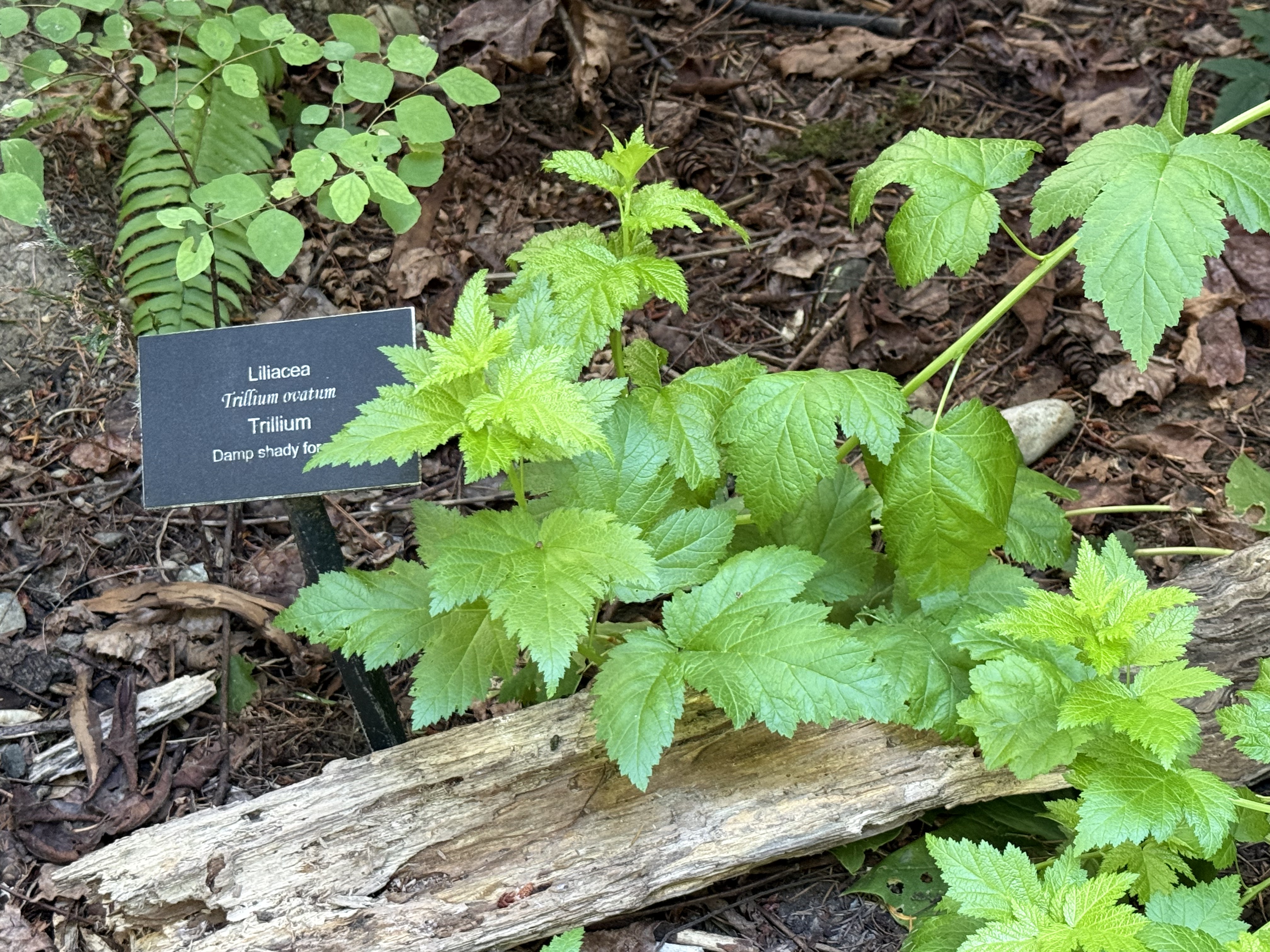
Like the (rare) sign says: Trillium likes moist coastal forests.
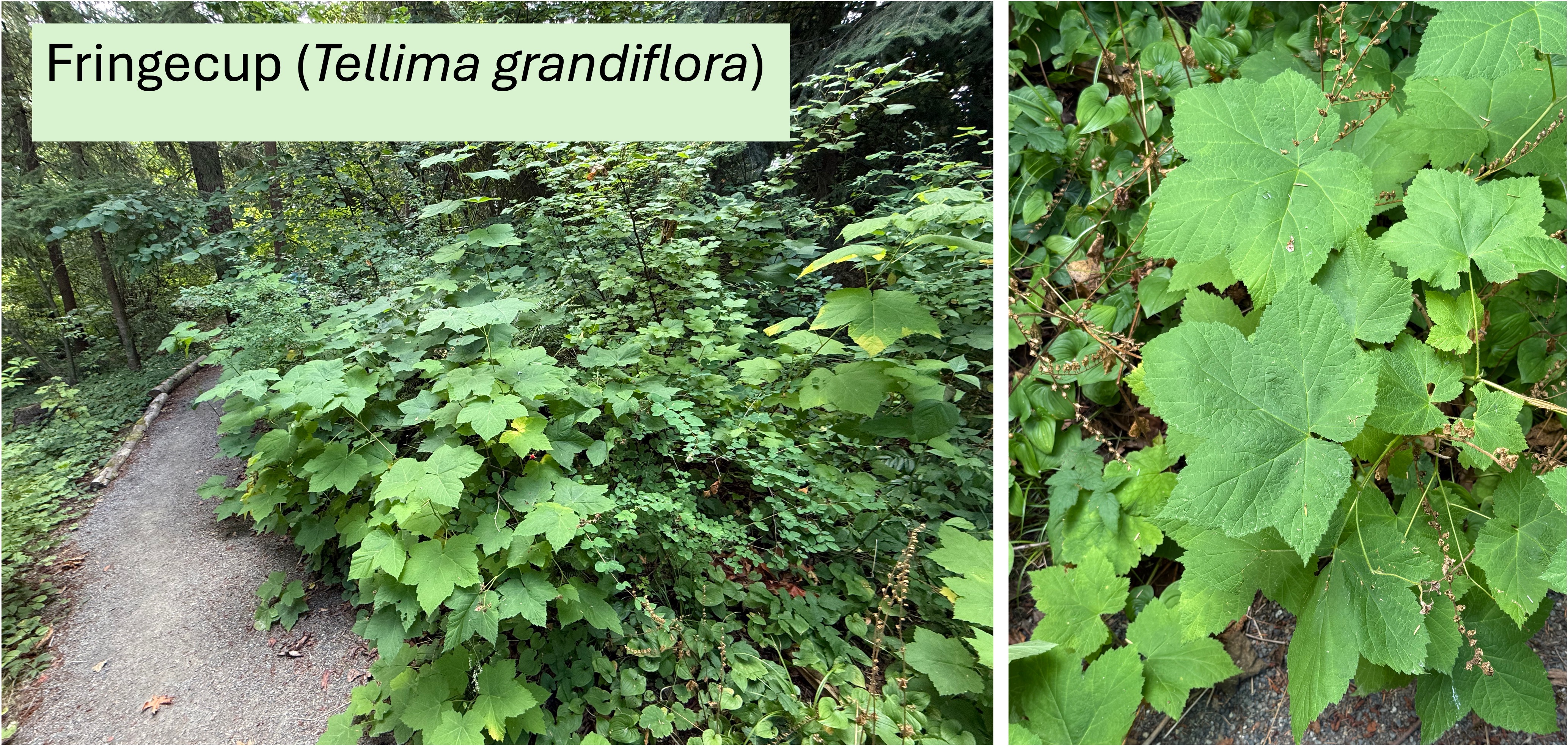
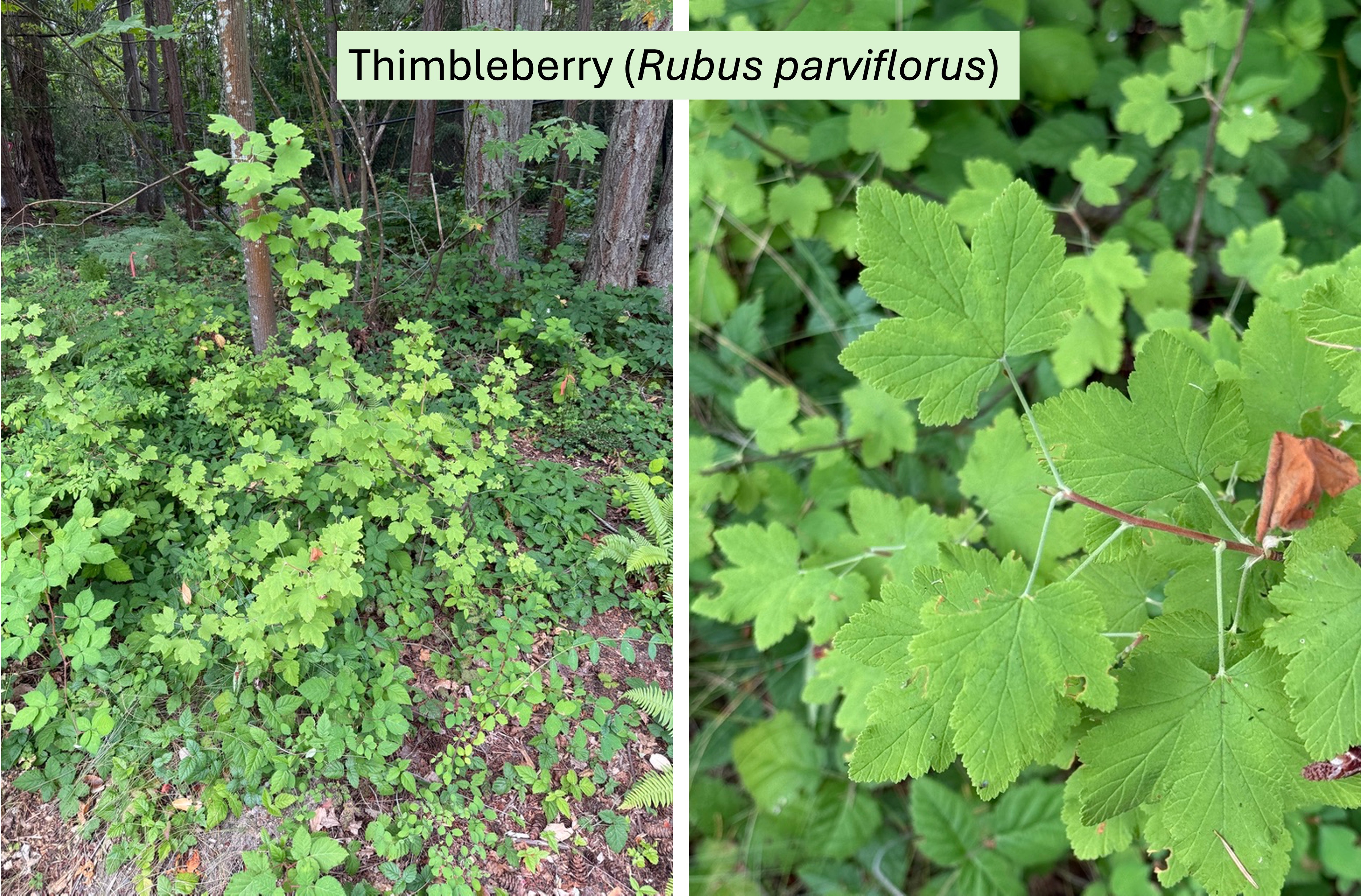
This common PNW shrub thrives in moist coastal forest environments.
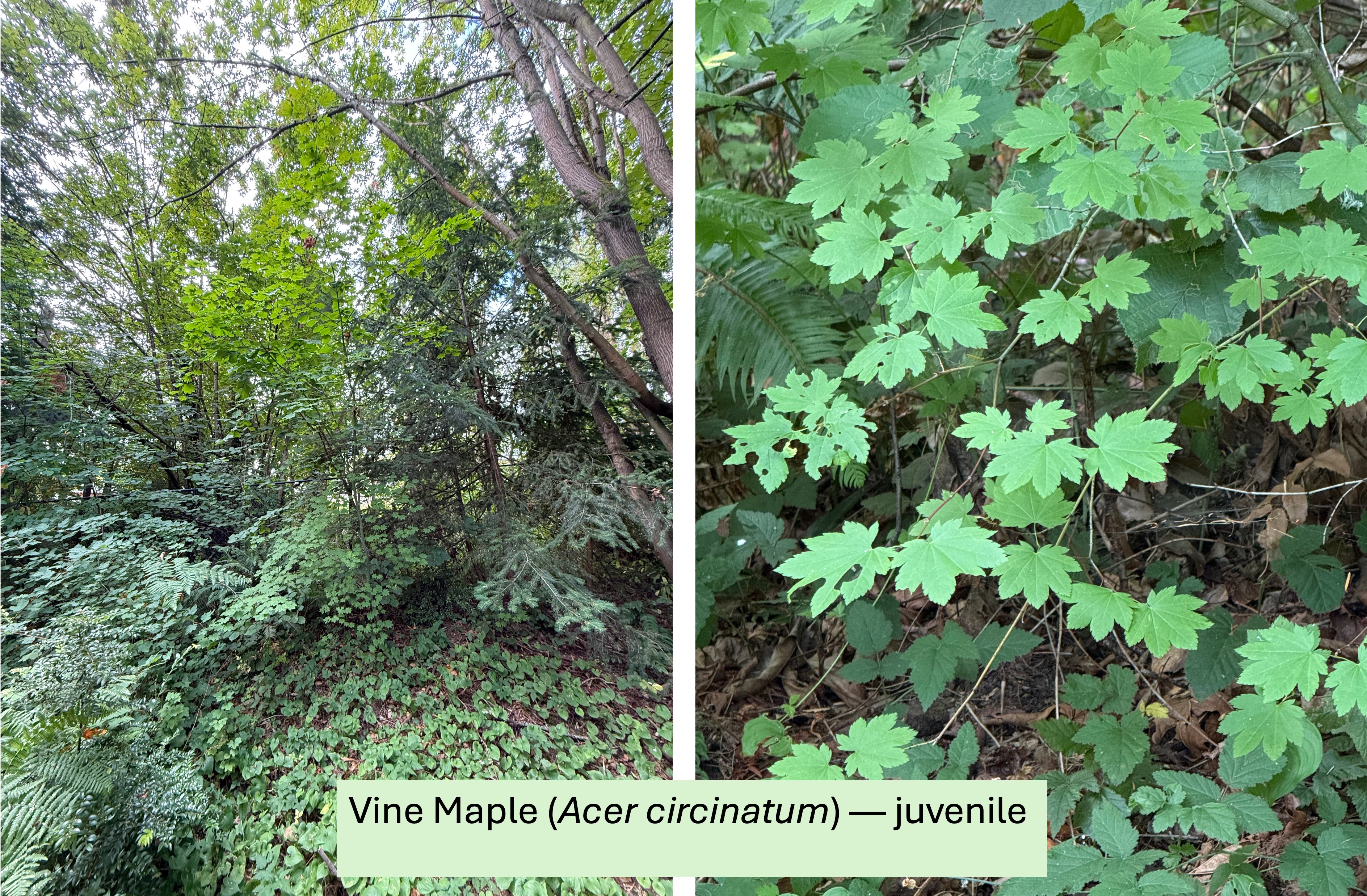
Vine Maple is an understory tree, which doesn’t grow high enough to compete for full sun; instead, it grows beneath the conifers and gives even more shade to the shrubs. This sapling is just starting to get some height. Moist coastal forest.
This is Salal (Gaultheria shallon). It grows in an environment similar to Vine Maple, in nutrient-rich, well-drained soils, often near water. Moist coastal forest.
This shrub forms colonies in mesic forest patches, where partial sun is available although it is shade tolerant. The identification is difficult because of so many plants with similar leaf shapes, but I agree with CoPilot. A denizen of moist coastal forests.
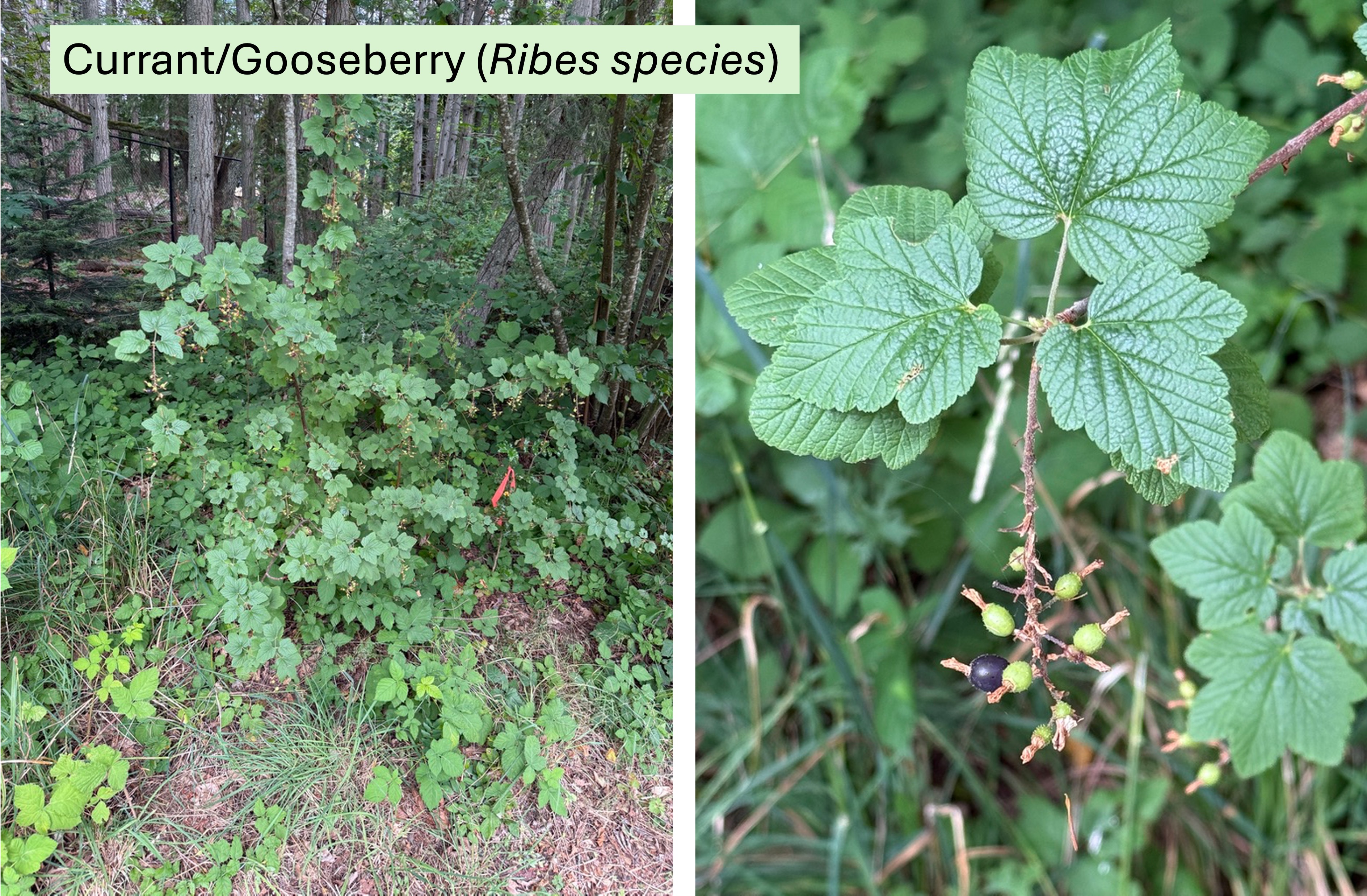
This plant is common to shrub thickets and riparian edge habitats.
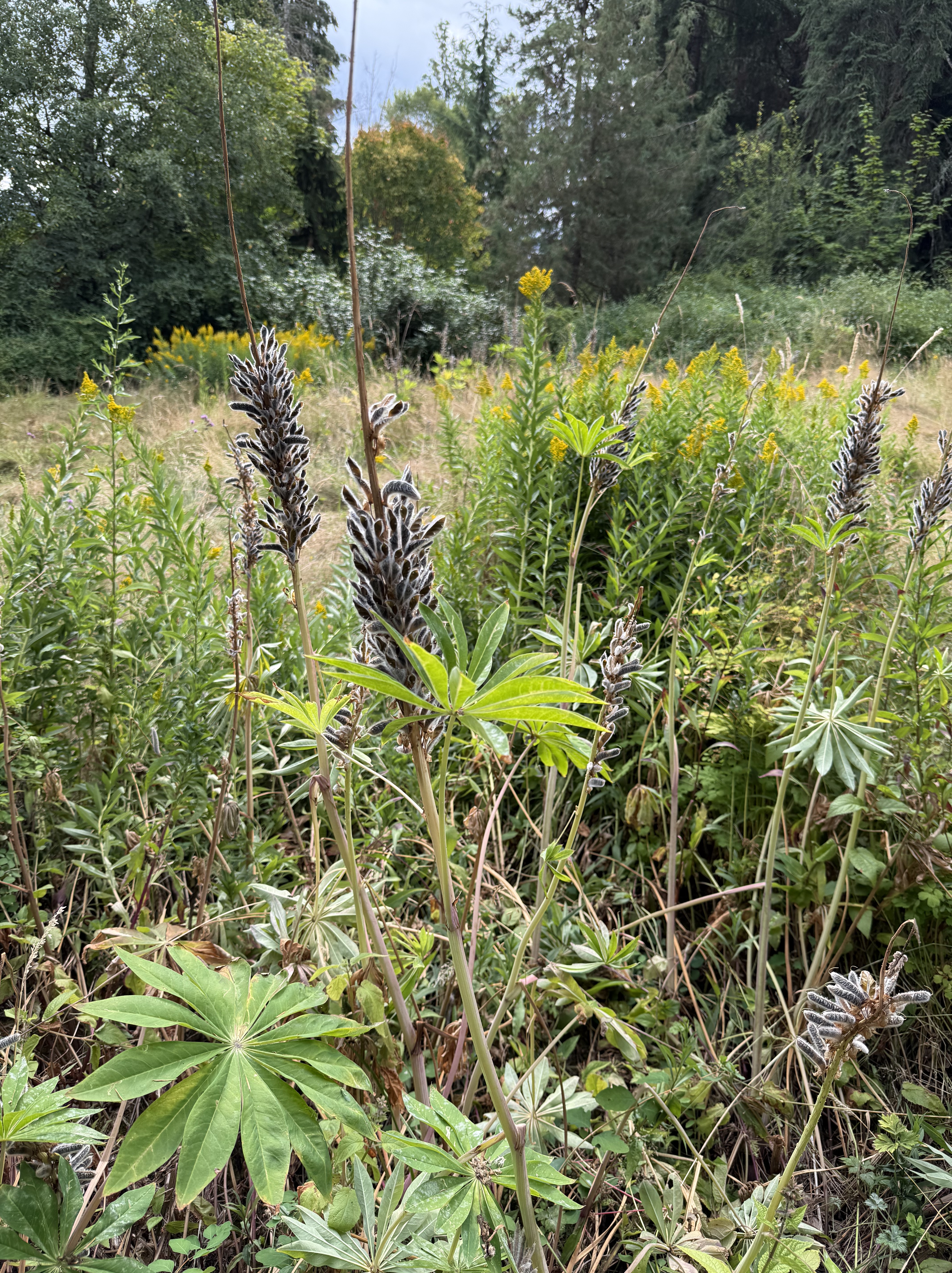
This distinctive plant is Bigleaf Lupine (Lupinus polphyllus). It thrives at the edges of meadows in a full-sun environment with moist to dry soil. Those lovely appendages are seed pods, so I don’t know what the flowers look like. This plant thrives in prairie/oak woodland habitats.
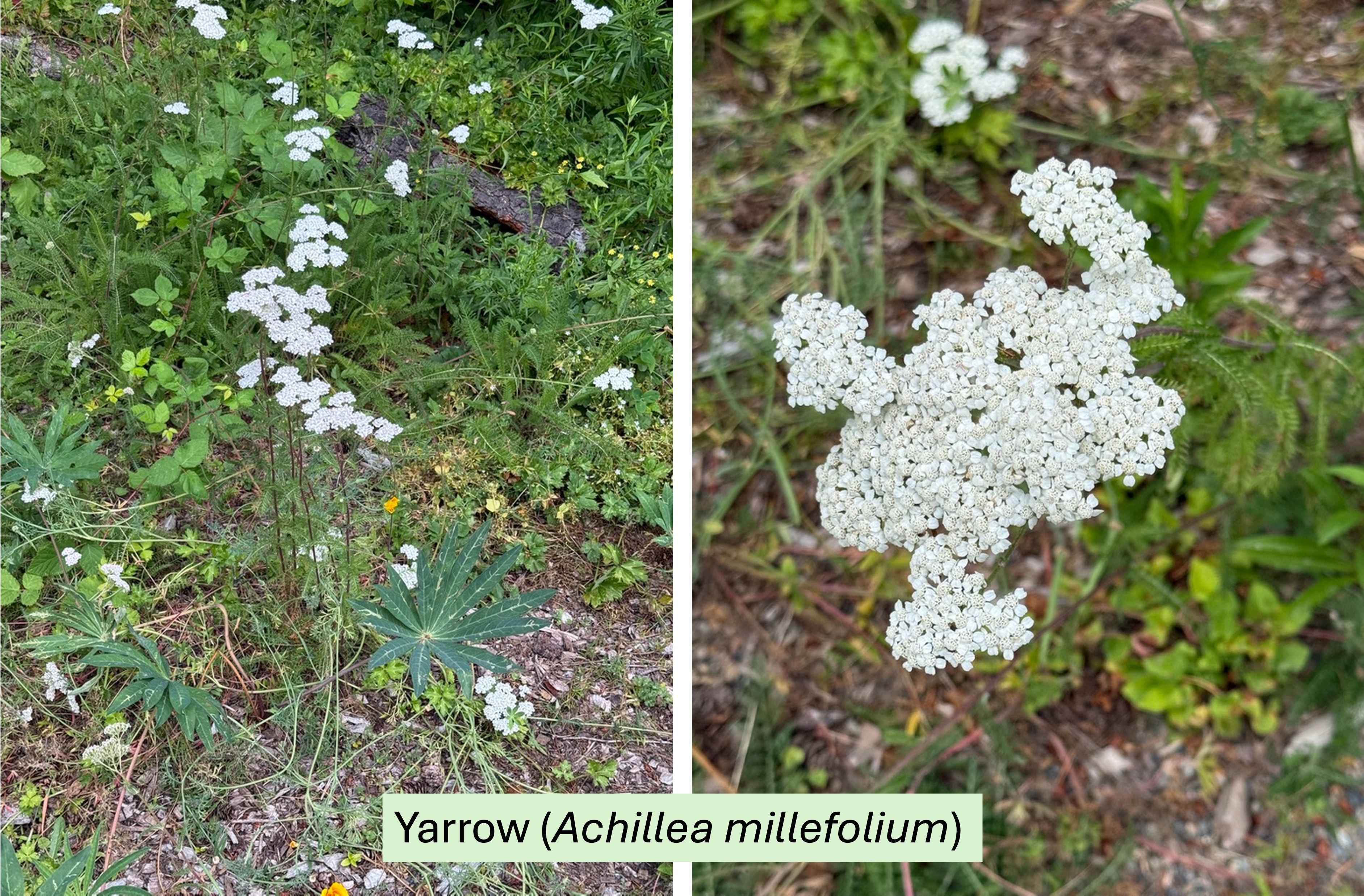
This slender, flowering plant is thriving in the prairie section of the garden. Prairie/oak woodland environments.
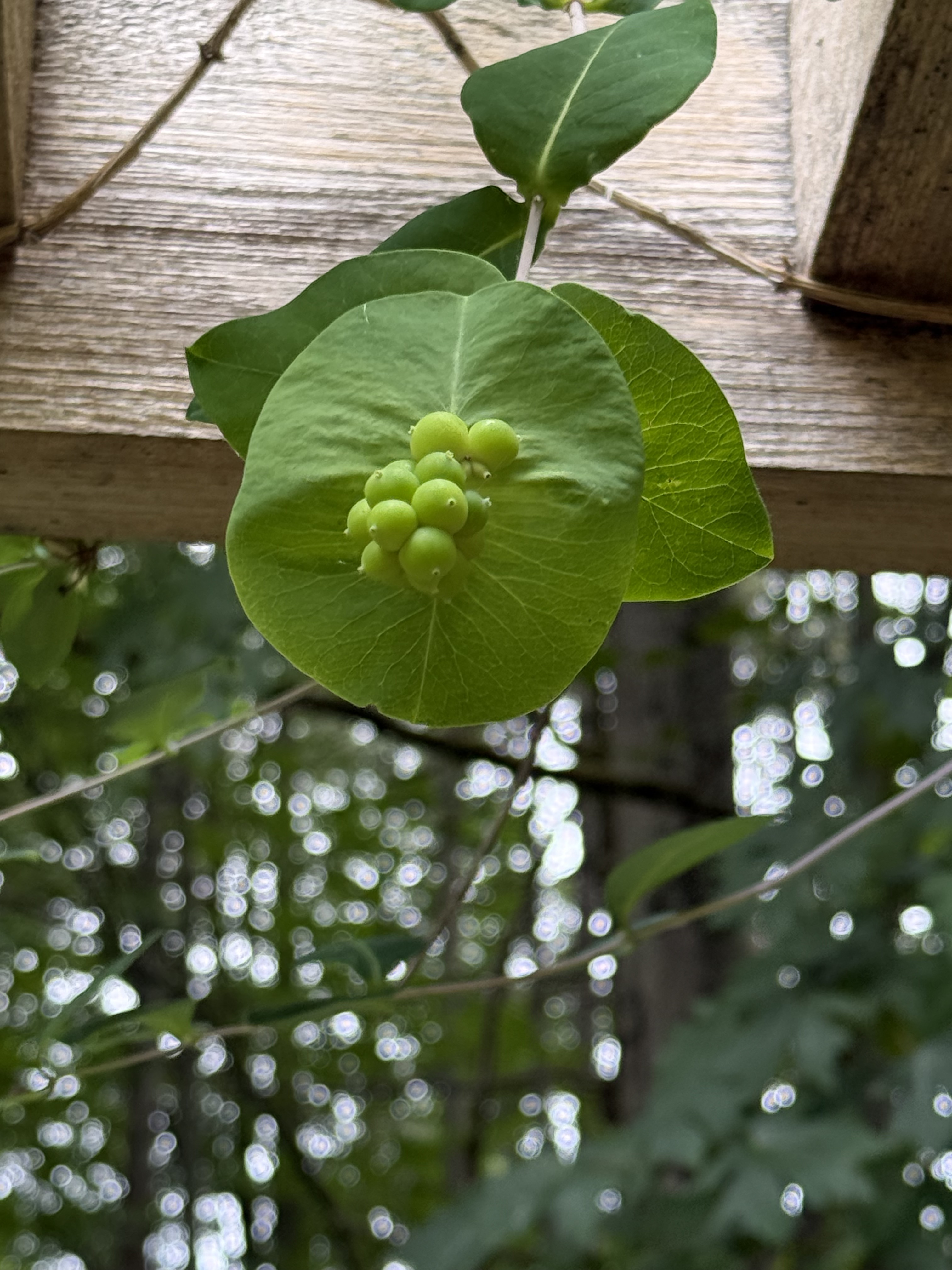
This vine is Perfoliate Honeysuckle (Lonicera caprifolium). It is a non-native variety that is commonly planted on trellises and fences. This one was hard to identify; CoPilot failed completely but, with help from Claude (Anthropic’s AI), we finally figured it out. We could still be wrong, however.
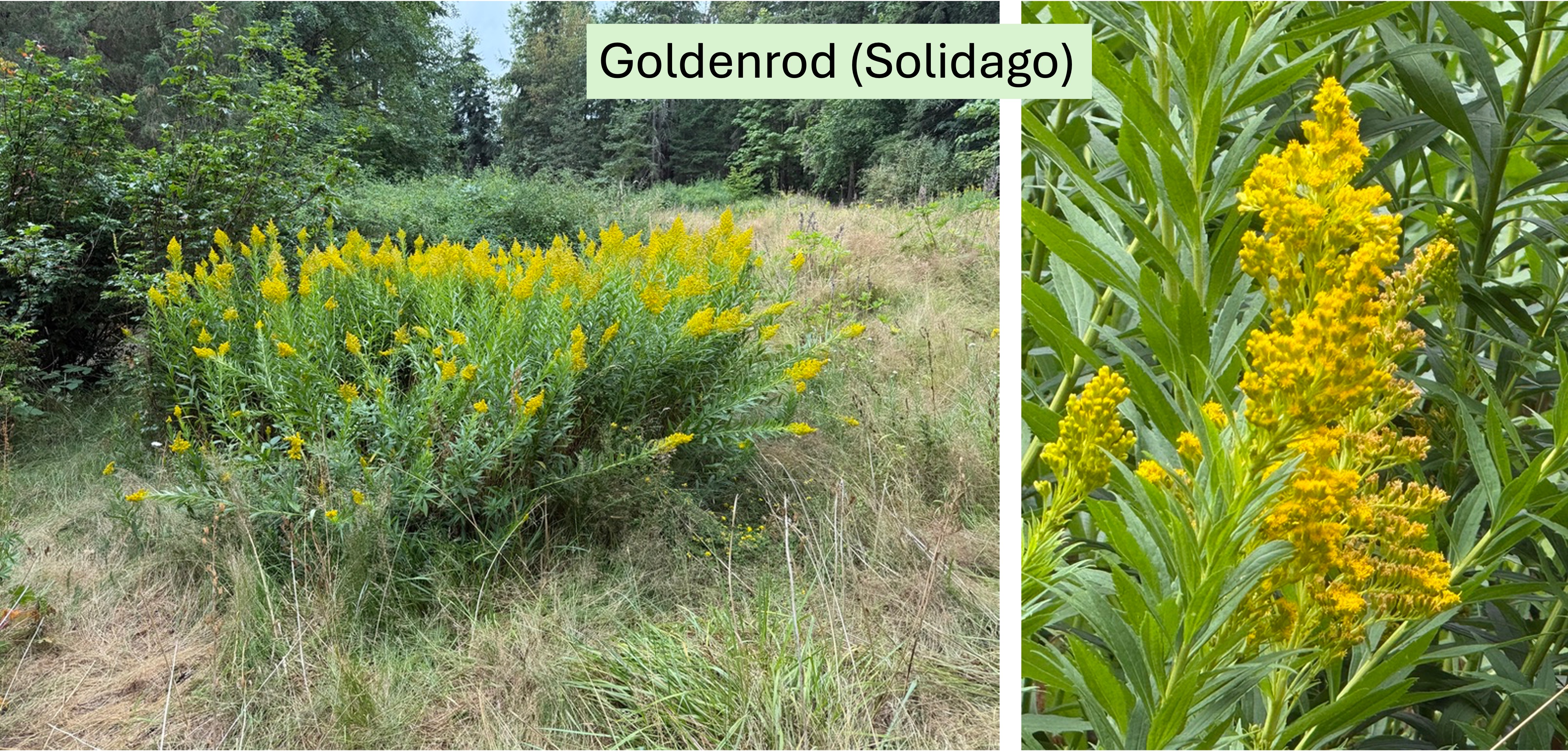
This flowery shrub grows in meadows like the micro-environment at the Northwest Native Garden. Prairie/oak woodland habitats.
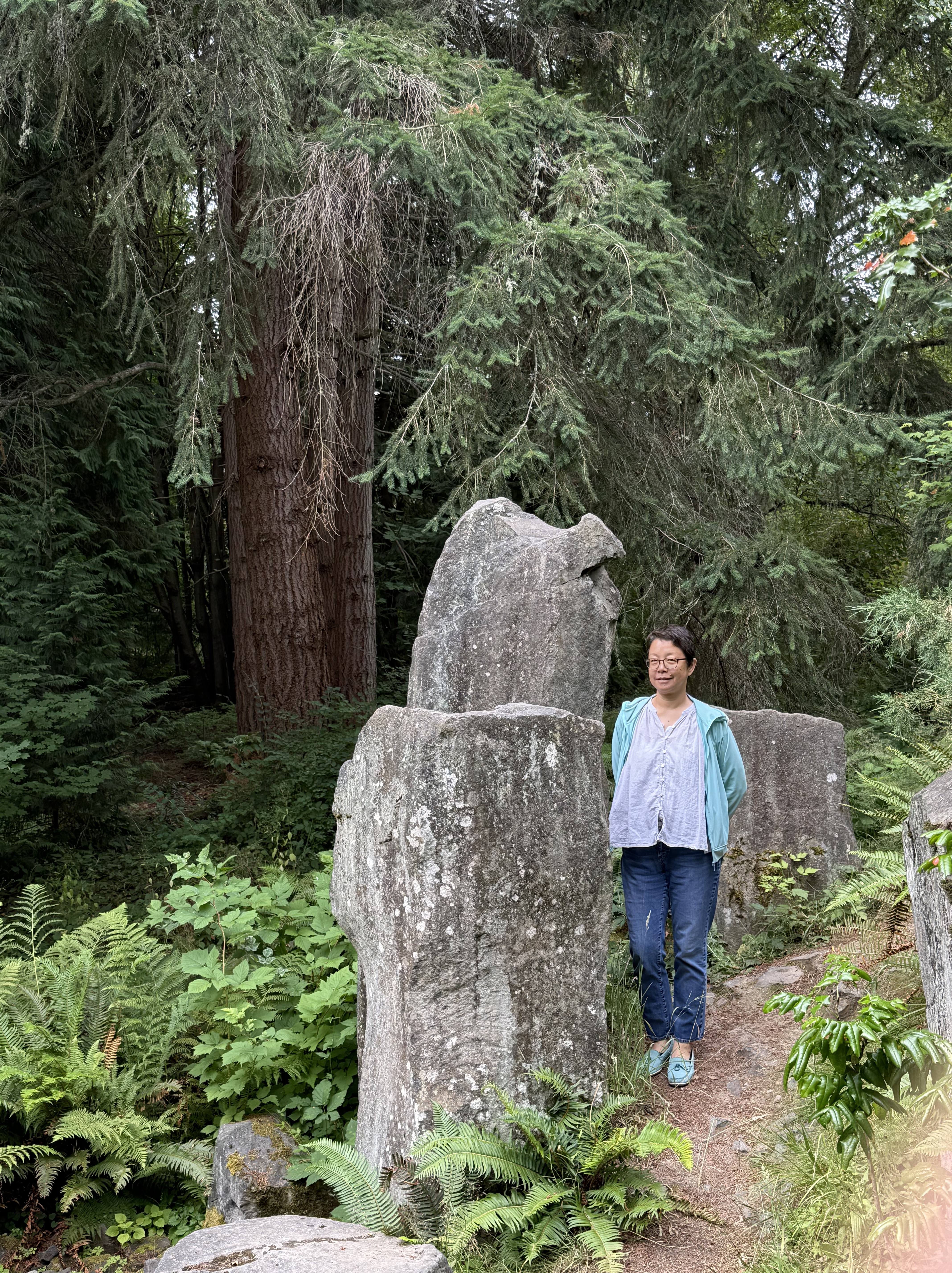
These non-native (to Tacoma) columns of volcanic rock show up everywhere in the PNW. They originate within the Cascades Range, near volcanic vents and volcanoes.
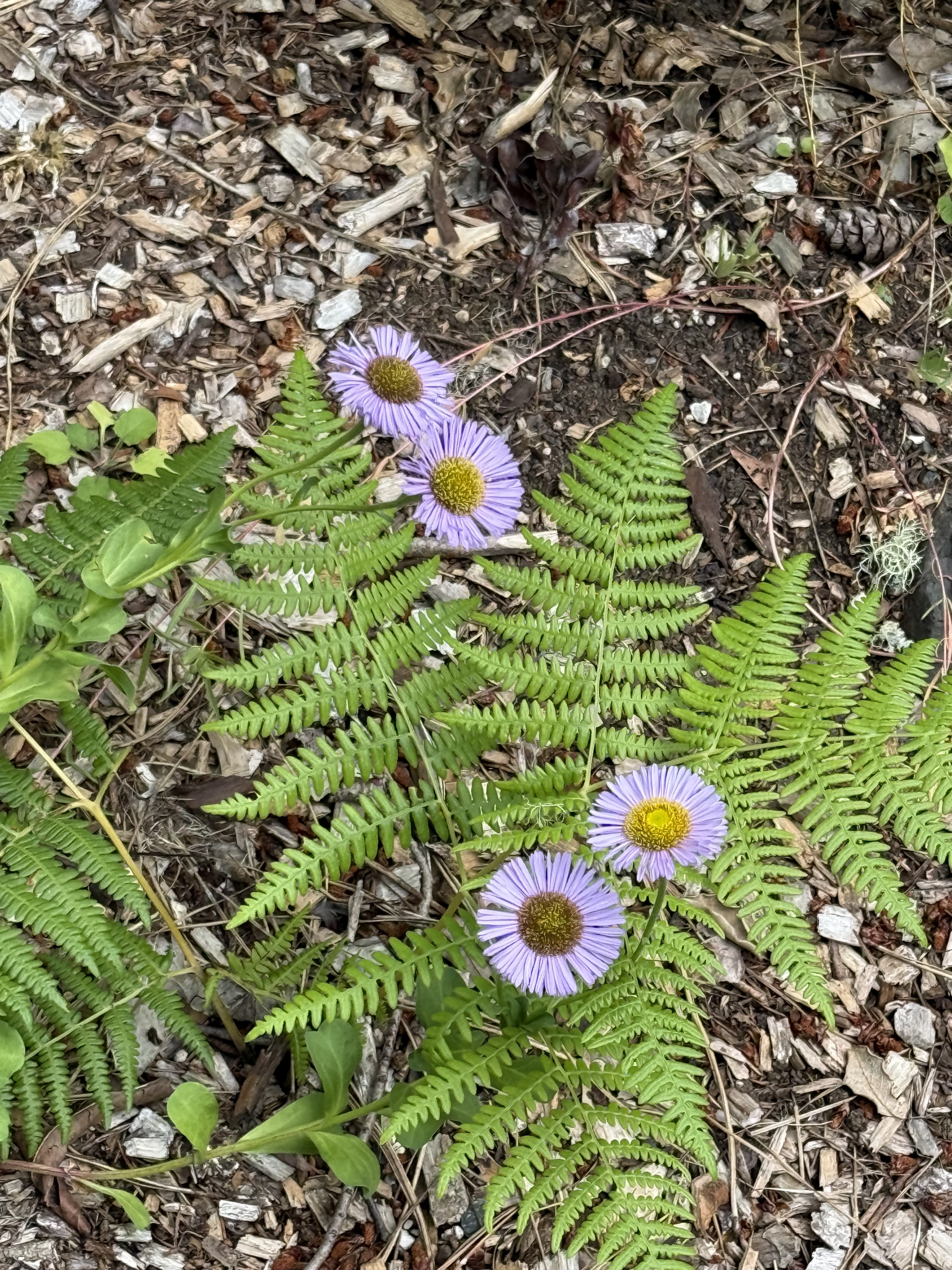
This lovely flower, growing through some ferns, is Douglas Aster (Symphyotrichum subspicatum). It is common in moist meadows and forest edges. I verified the identification from CoPilot. Common in moist woodland/forest edge habitats.
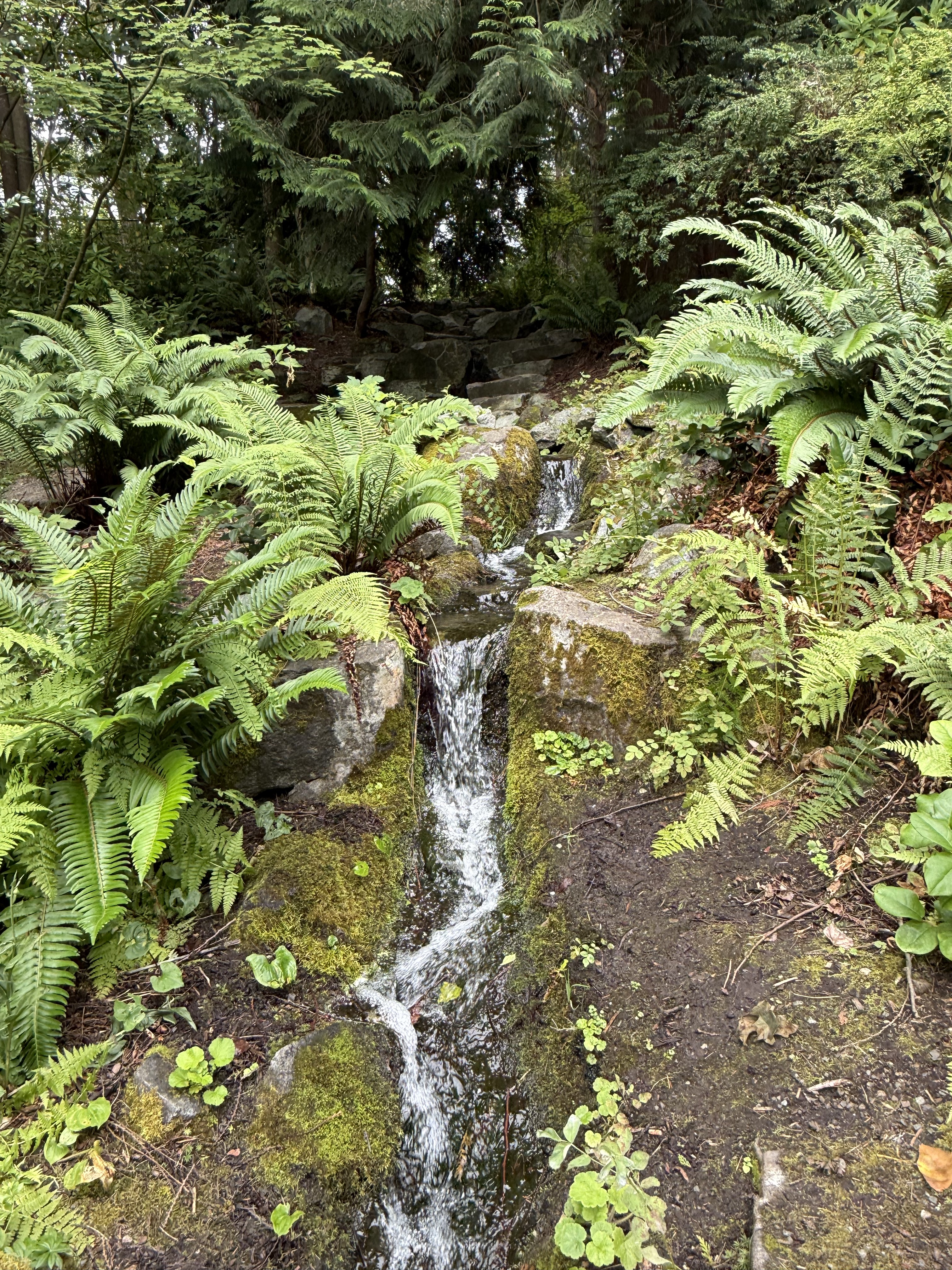
There is a small, articficial stream flowing through the garden and feeding a small pond. I don’t know where the water comes from … is it natural or recycled? No idea.
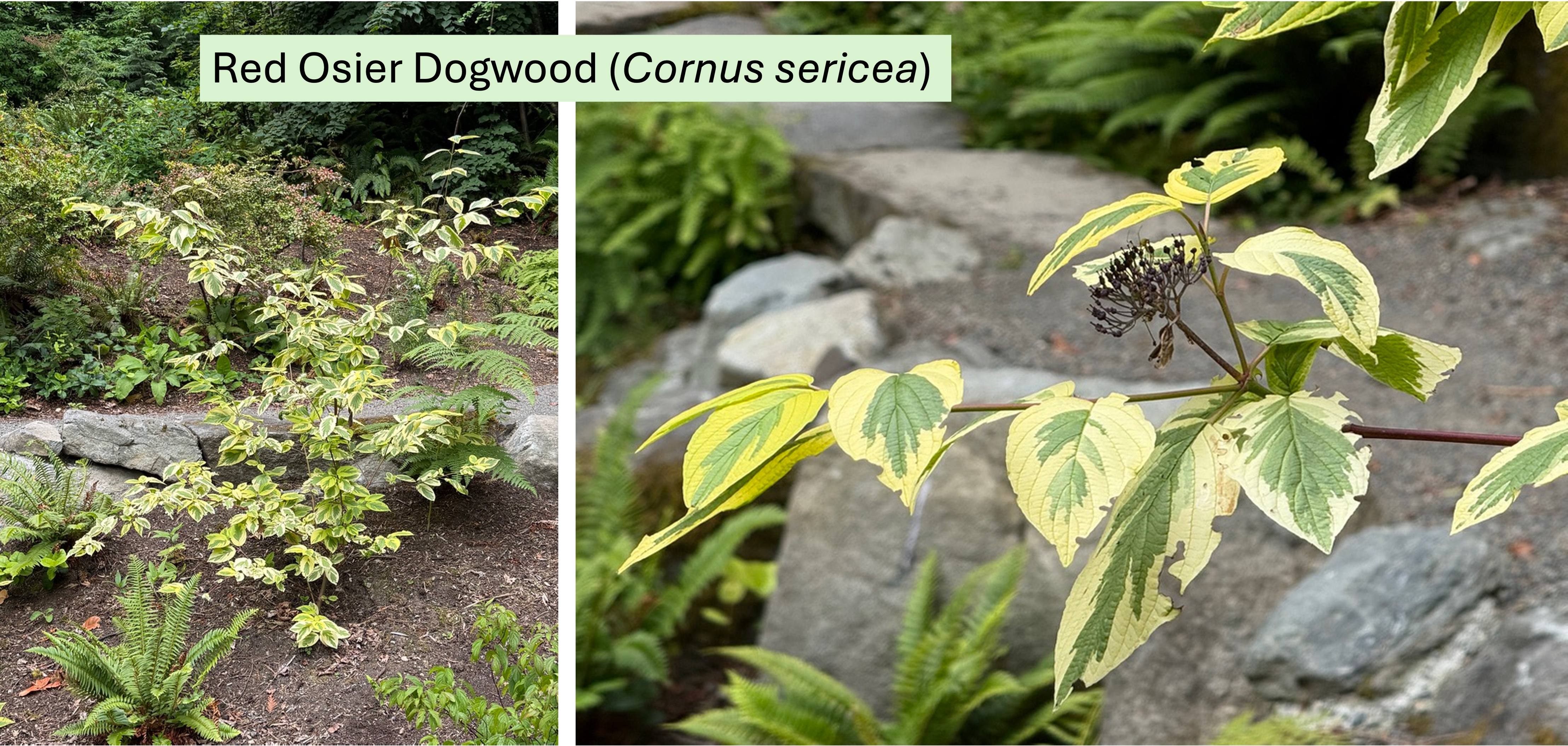
This is a rare non-native species planted in the garden for contrast. I checked this myself, and this variety is variegated.
Final Thoughts
The Northwest Native Garden is a great place to see many of the ecosystems in the PNW in one place. However, the lack of identification is a problem, which I addressed using CoPilot. But I had to check it a lot because it is a Large Language Model, not a specific plant-identification model. Nevertheless, it always got me into the ballpark; and it is easy to work with, like collaborating with a human who knows a lot but tends to jump the gun sometimes.
We spent about an hour strolling through four PNW environments, which was a lot easier than driving around. It reminded me of a Japanese garden, like the one in Portland. Very peaceful and colorful.
I hope that anyone who got this far enjoyed my trip through the Northwest Native Garden as much as I did. I plan to revisit it and learn about some more native PNW flora.
The Foothills Trail along Carbon River, Pierce County, Washington
This post is a humorous (I hope) addendum to my posts on the geology and flora of Carbon River. I have noticed a lot of quirky, regional trends, both in decoration and signage, here in the Pacific Northwest (PNW) during our nature walks. The Foothills Trail was no exception.
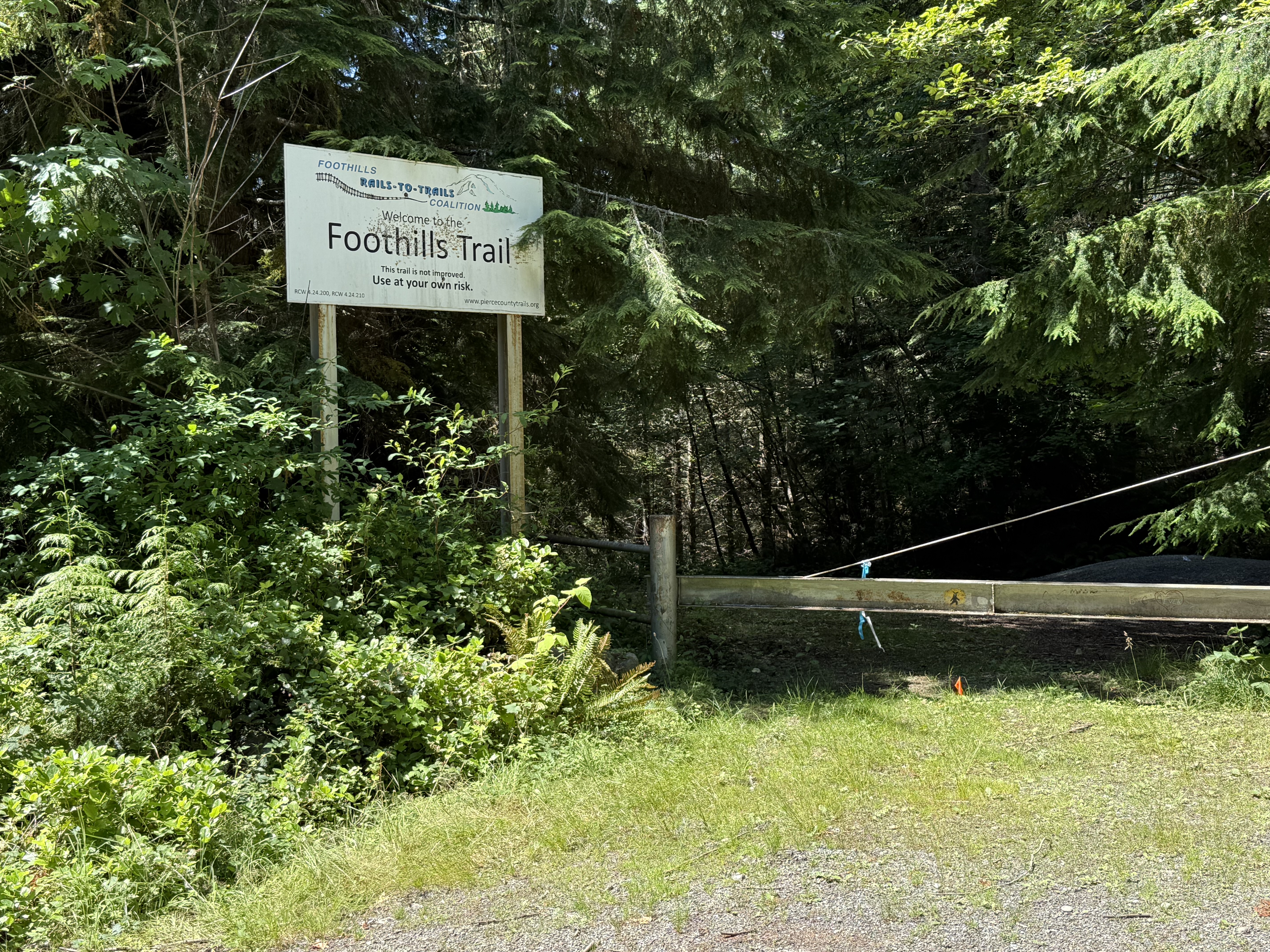
There are several access points to the trail, but this was the only sign. It ends with a serious warning: Use at your own risk. What lies ahead in that darkness?
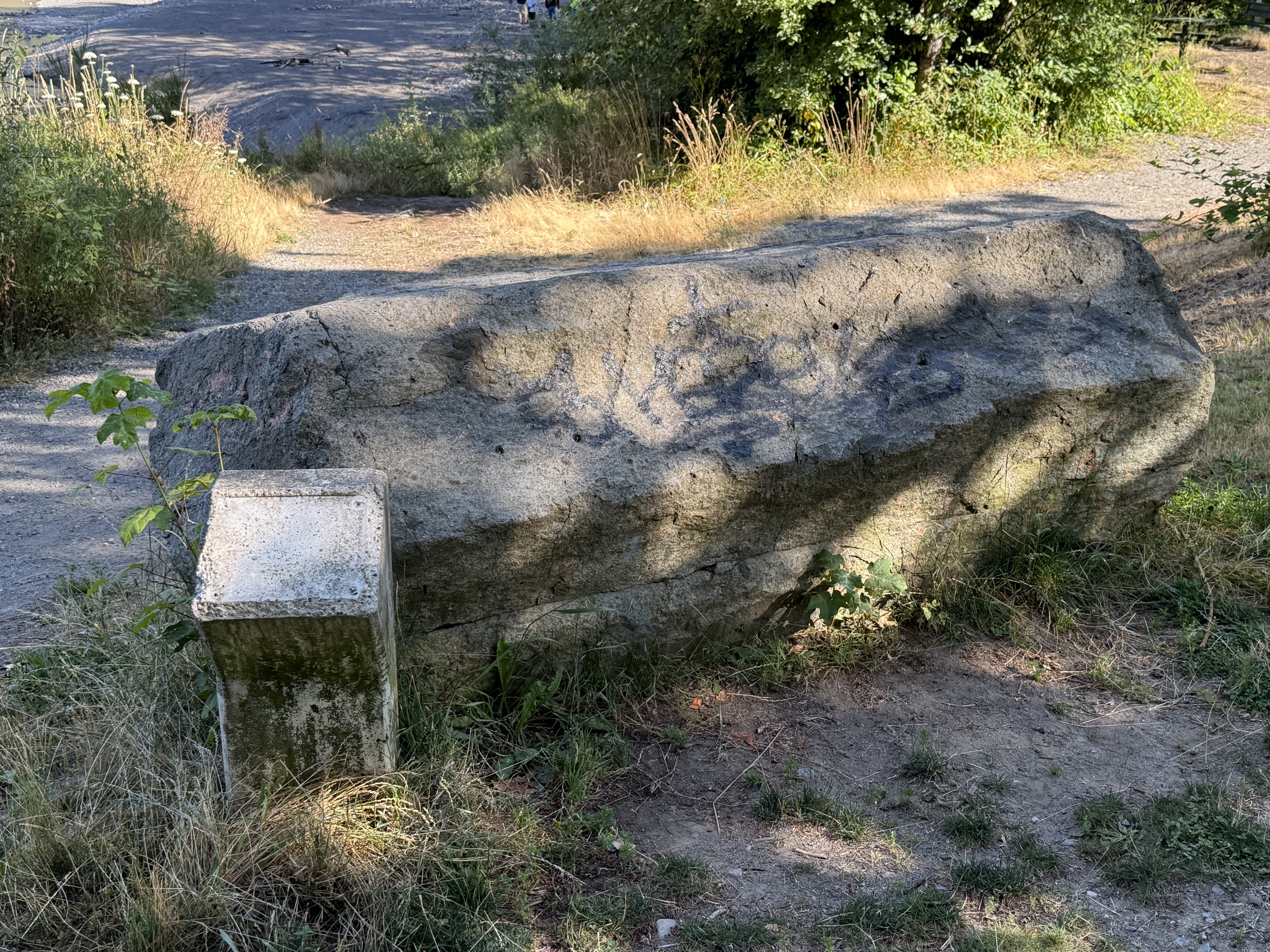
A couple miles downstream from the “official” trailhead, we stopped along the Carbon River. This is a piece of ubiquitous columnar andesite that was apparently placed here as a decorative piece. Unfortunately the sign is long gone.
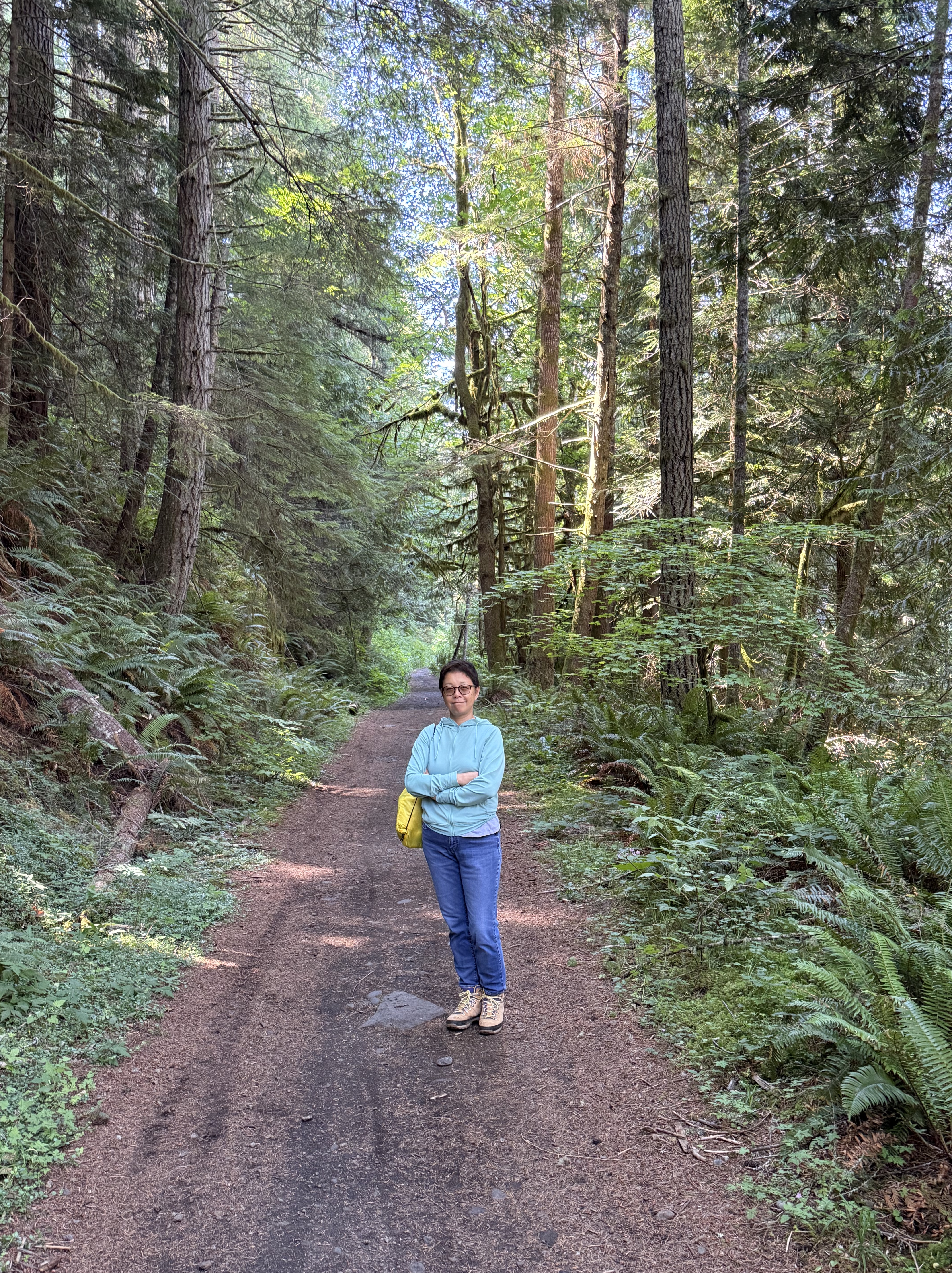
The trail is wide and easy to access on foot. I don’t know about a wheel chair although it is flat all the way.
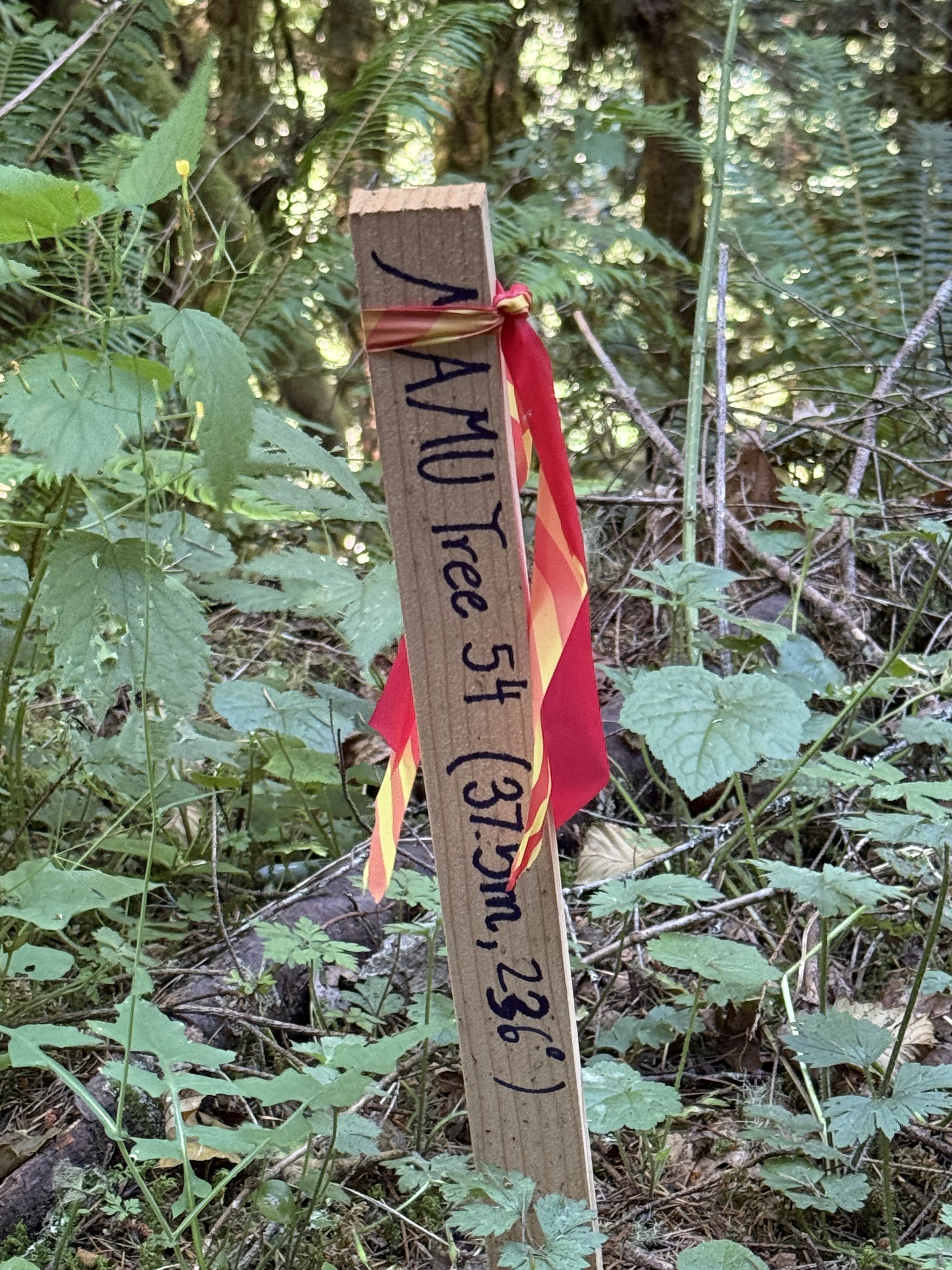
We saw several of these marker stakes along the trail. I looked it up and, to the best of my knowledge, this is indicating a tree where a pair of Marbled Murrelets are nesting. They are an endangered species and extremely difficult to locate, but there is an ongoing survey program. That sounds reasonable to me; the sign gives both a distance and compass heading to the tree.
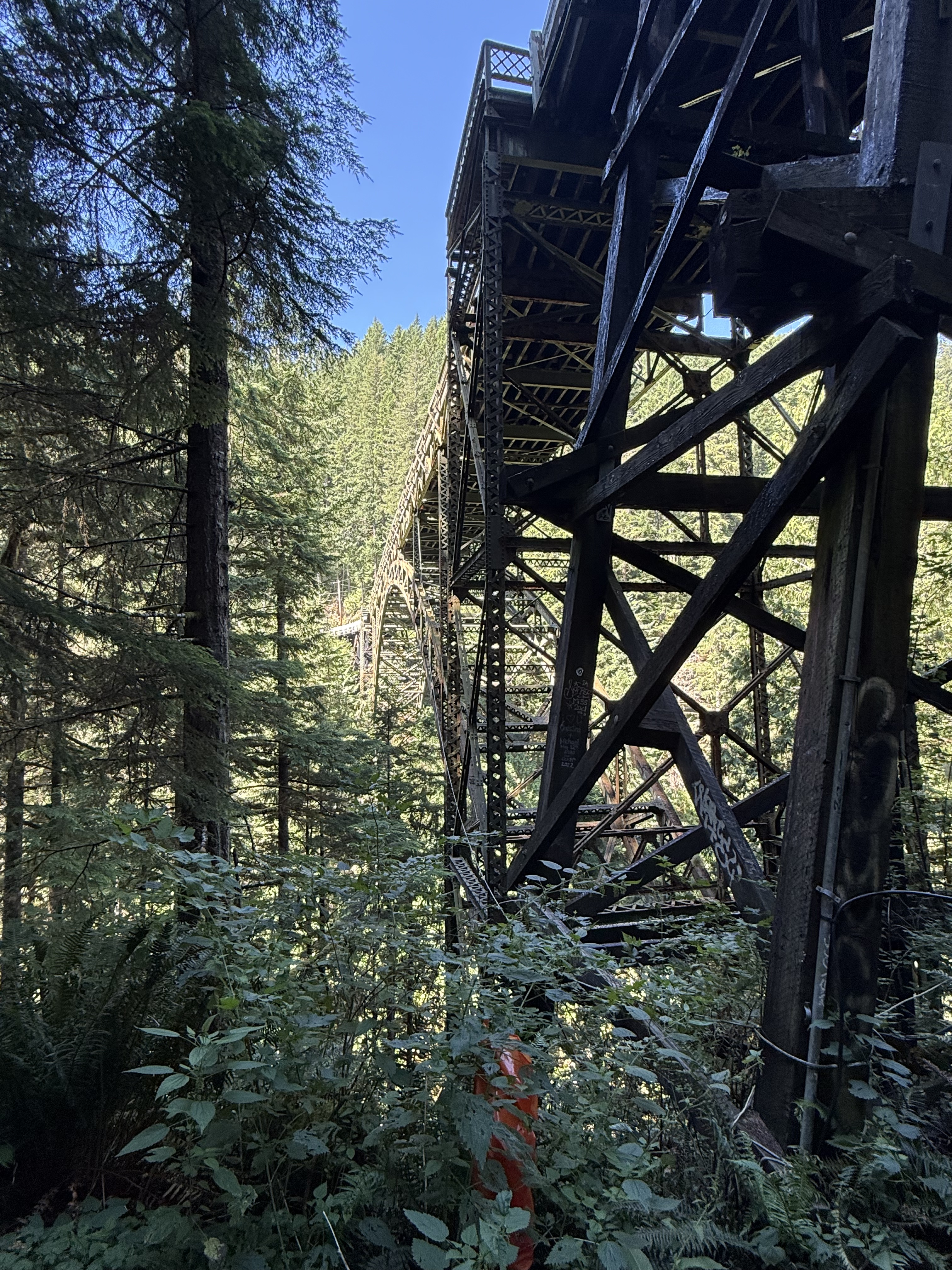
The trail intersected the Franklin Bridge, which is indefinitely closed to traffic.
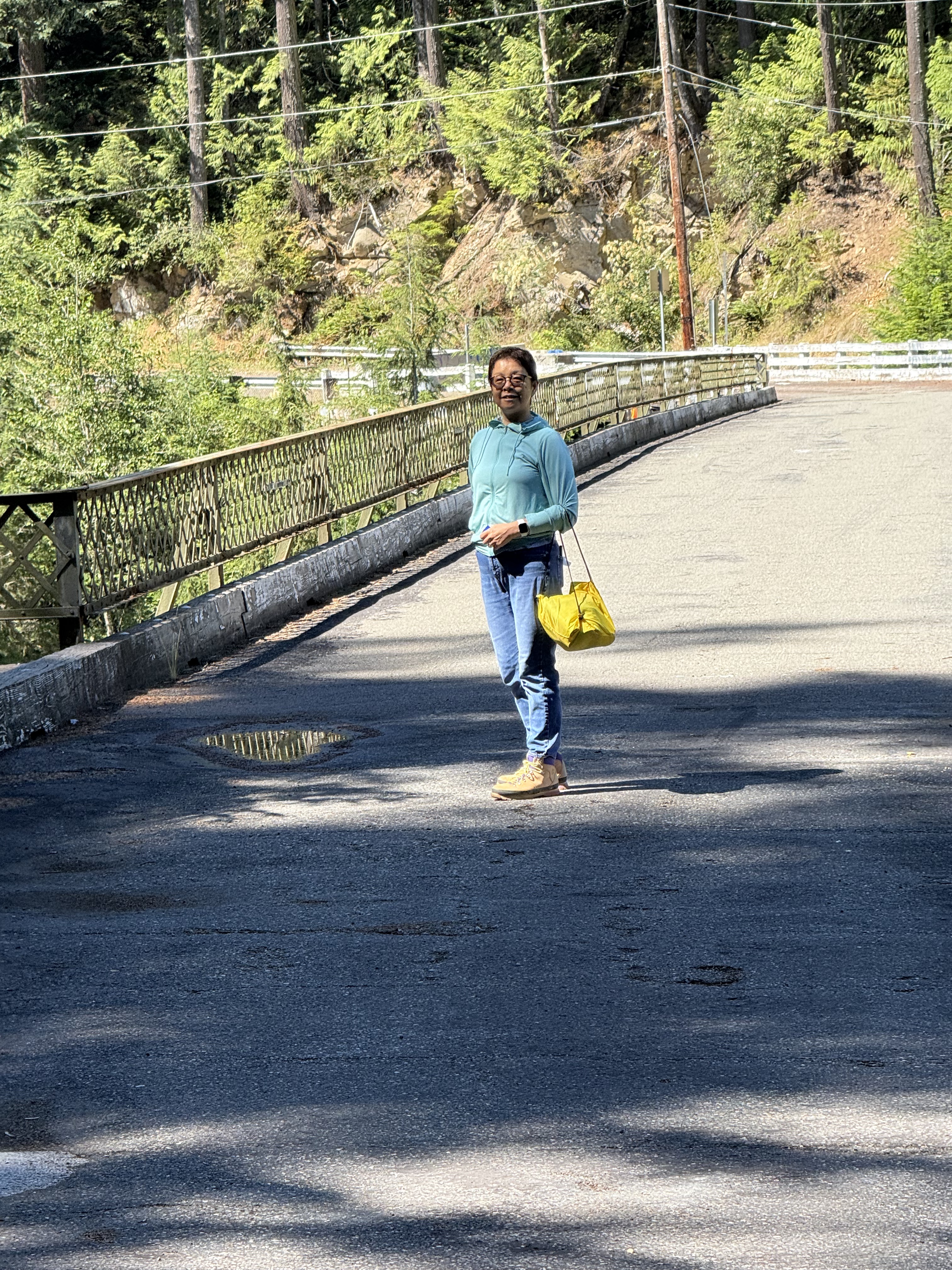
We climbed a steep slope, with the help of sturdy handles attached to wire rope, and took some photos on the bridge.
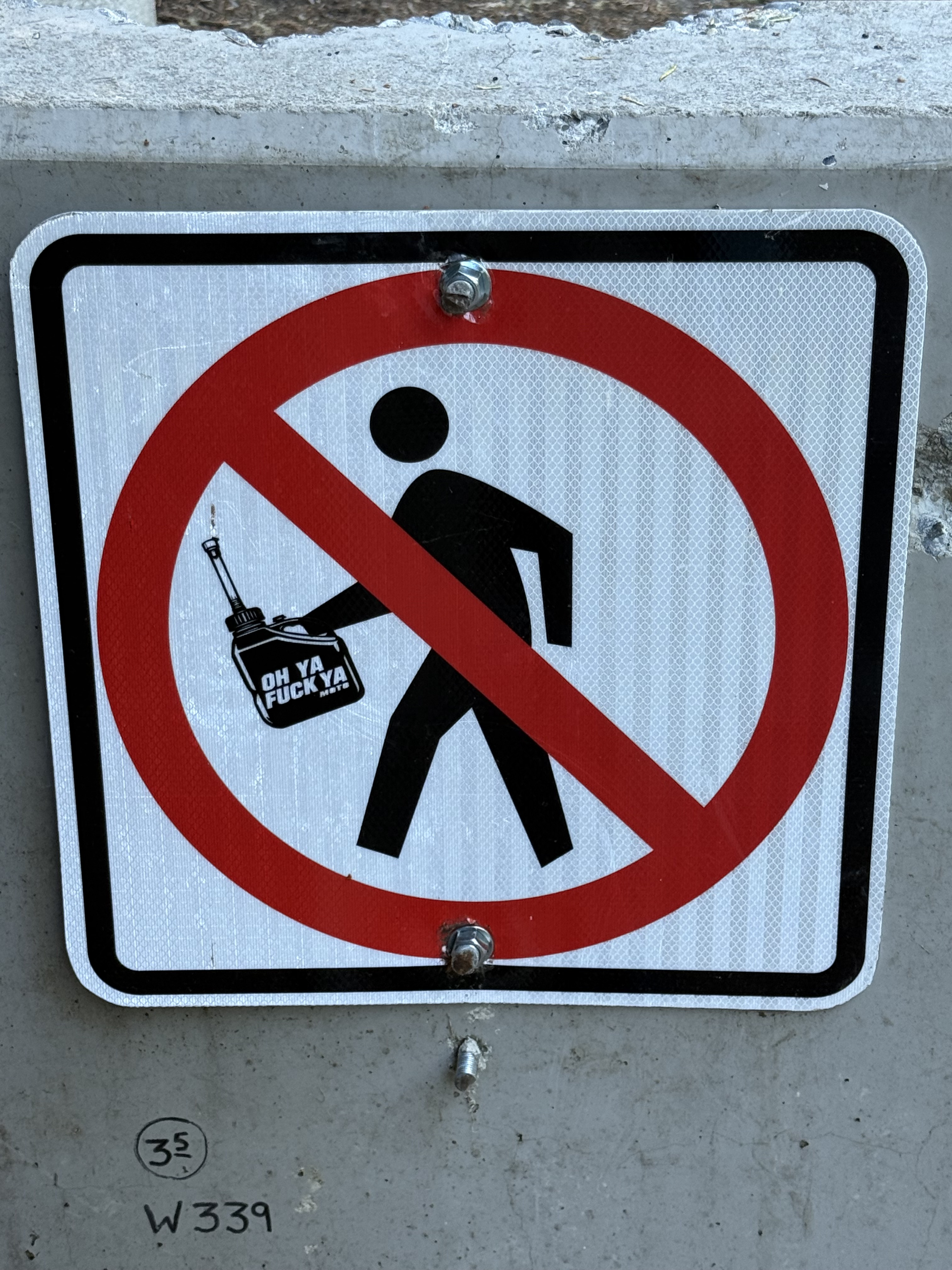
After we finished on the bridge, we passed the concrete blocks obstructing the road. Several signs made it clear that the bridge is closed to cars, bicycles, and pedestrians. Apparently someone disagreed with the DOT restrictions, and modified the sign. Don’t ask me why the figure is carrying a gas can that says, “Oh ya fuck ya.” I guess they’re thumbing their nose at anyone who would dare condemn what looks like a perfectly useful bridge — at least for people and wild animals.
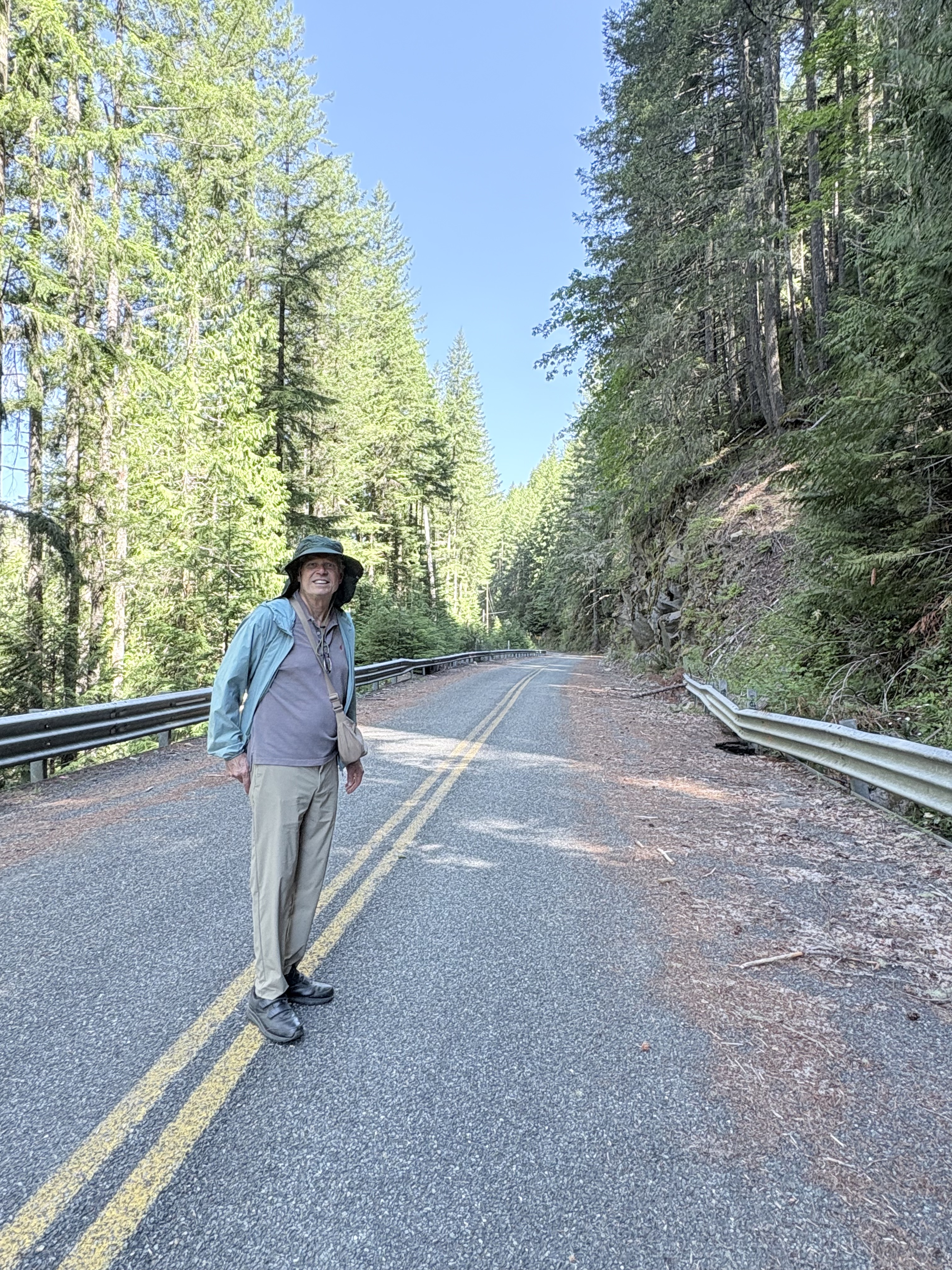
We walked the three miles back to our car along the abandoned road. There were several rock falls and damage to the guardrails. In this image, a large boulder smashed through the eroded roadbed. It was like a post-apocalypse movie. Pretty cool … and quiet.
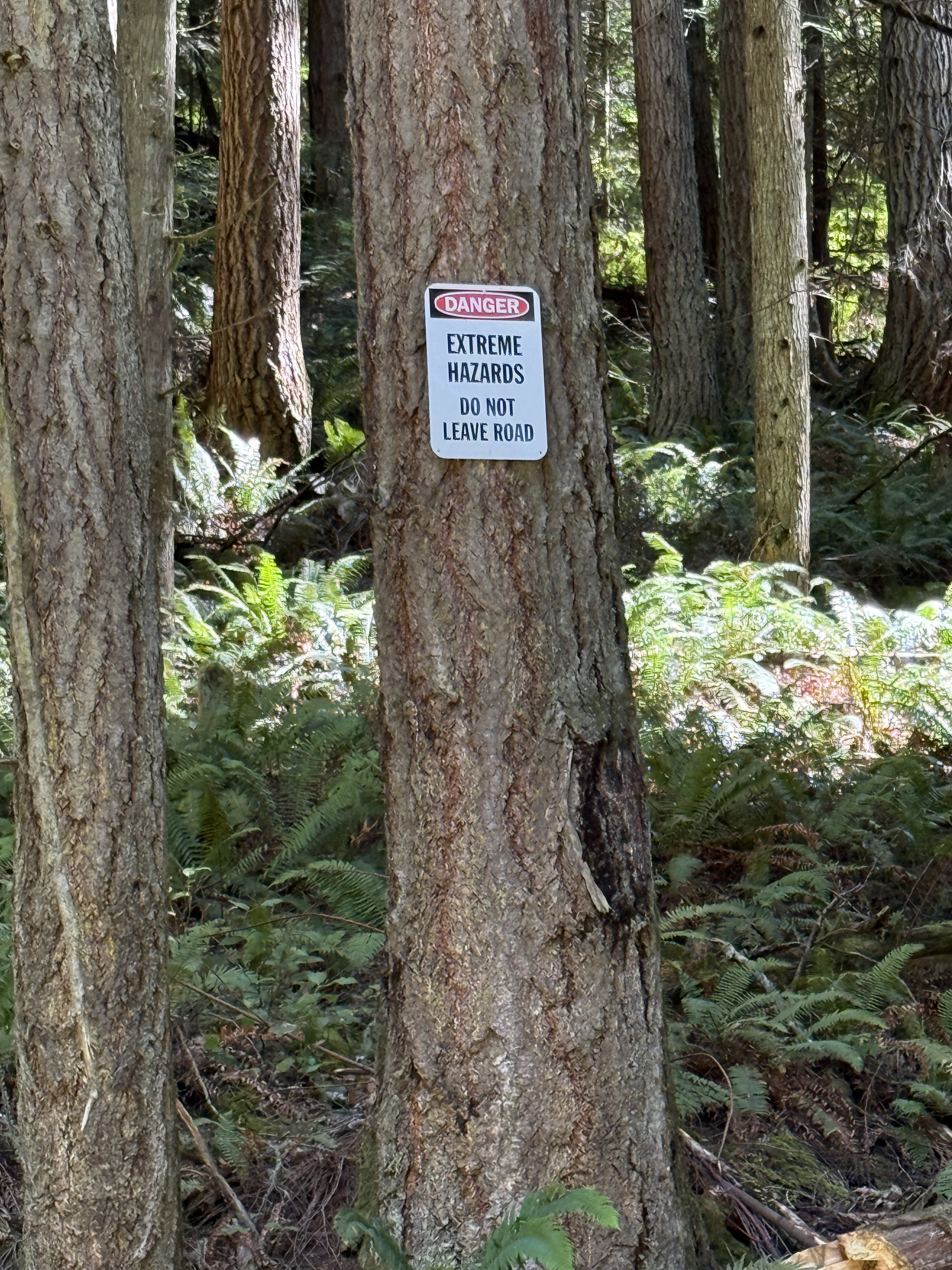
These relatively new signs were posted randomly on trees on the hill of the road. Hazards. Not hazard. Maybe Western Rattlesnakes, poison ivy or … dare I say it? Bigfoot. Stay out of the woods. But we just walked three miles through the woods. Damn!
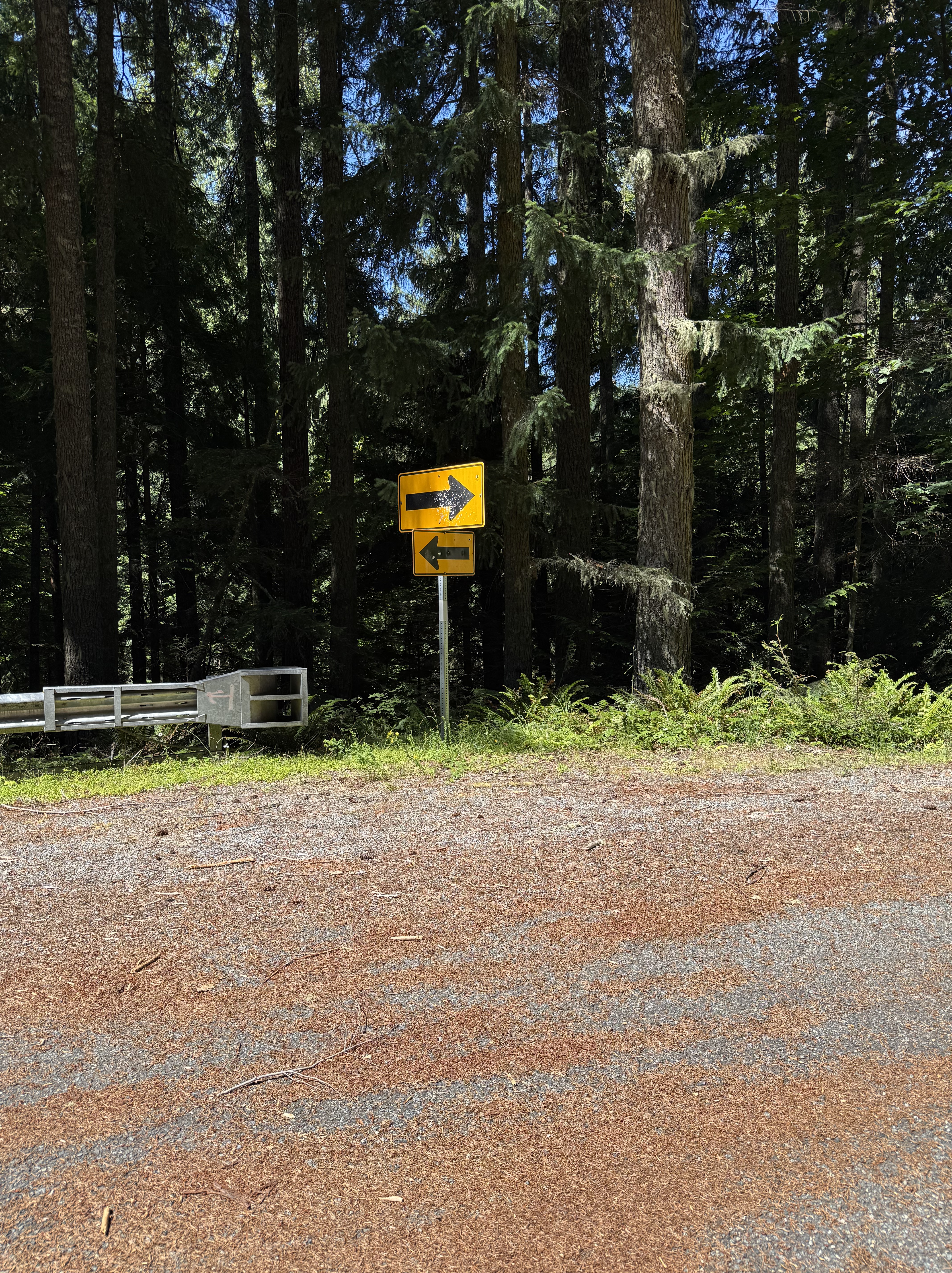
These opposite-pointing signs were on a curve. Nevertheless, I have to wonder why the guardrail stops in the middle of the curve, but reflective signs were felt necessary. Short sightedness? Budget constraints? Stupidity?
The Flora of Carbon River, Pierce County, Washington
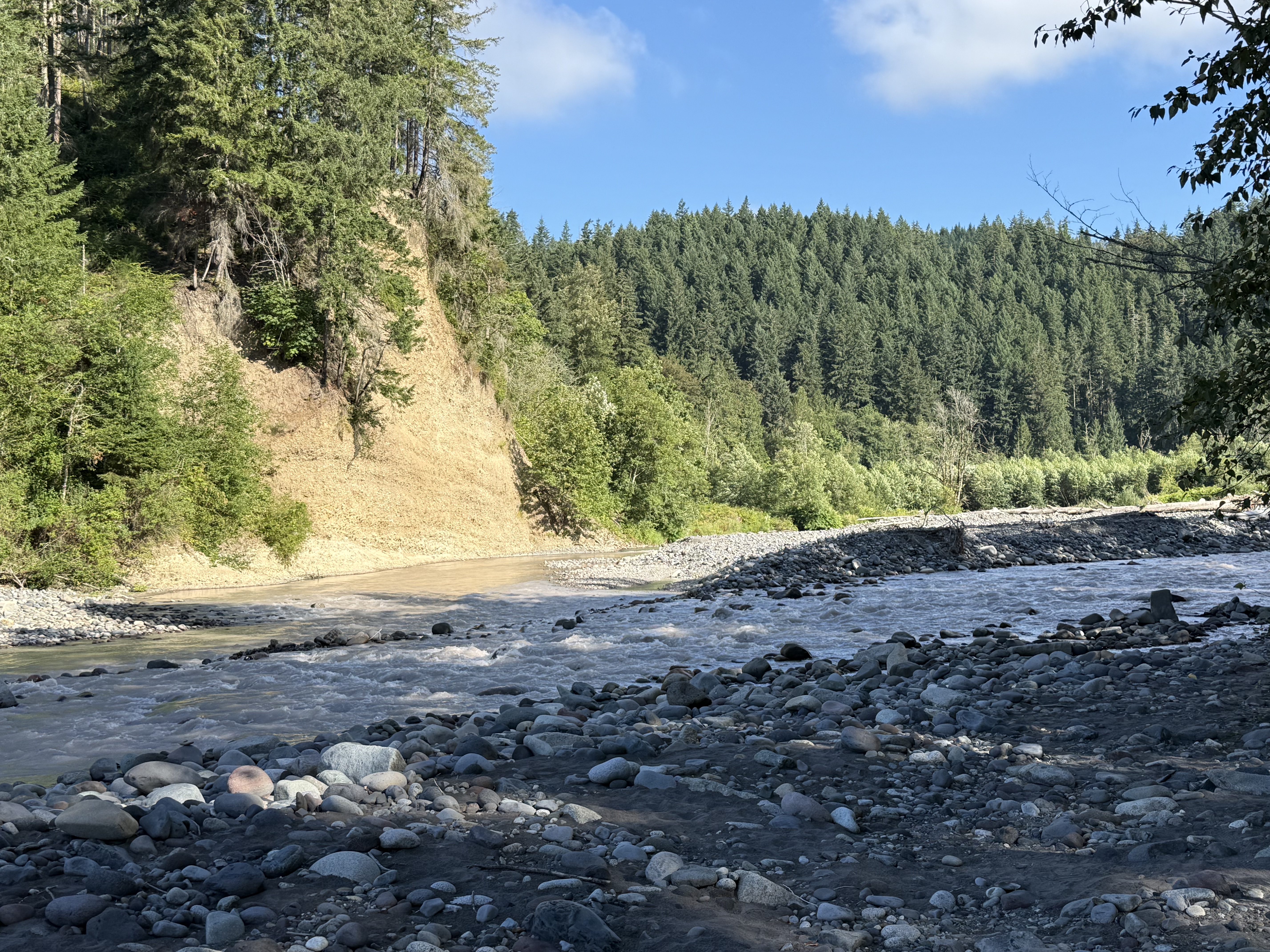
Plate 1. Our first stop was at Carbonado, where the Carbon River exits the canyon that has constrained it from its origin on Mt. Rainier. It immediately forms multiple channels as it cuts through glacial till on its circuitous path to Commencement Bay.
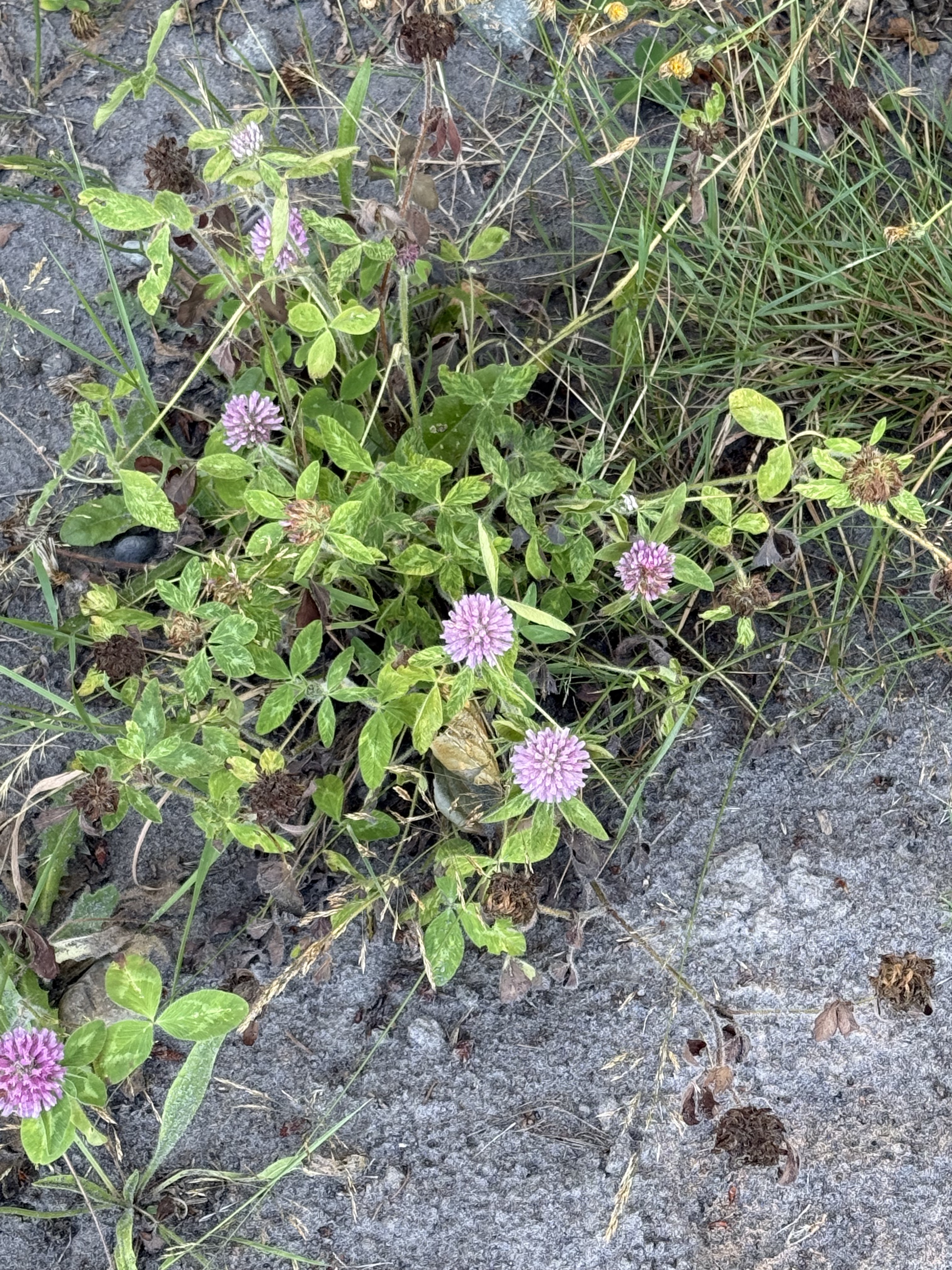
Plate 2. This lovely flower is red clover (Trifolium pratense), a common wildflower along rivers.
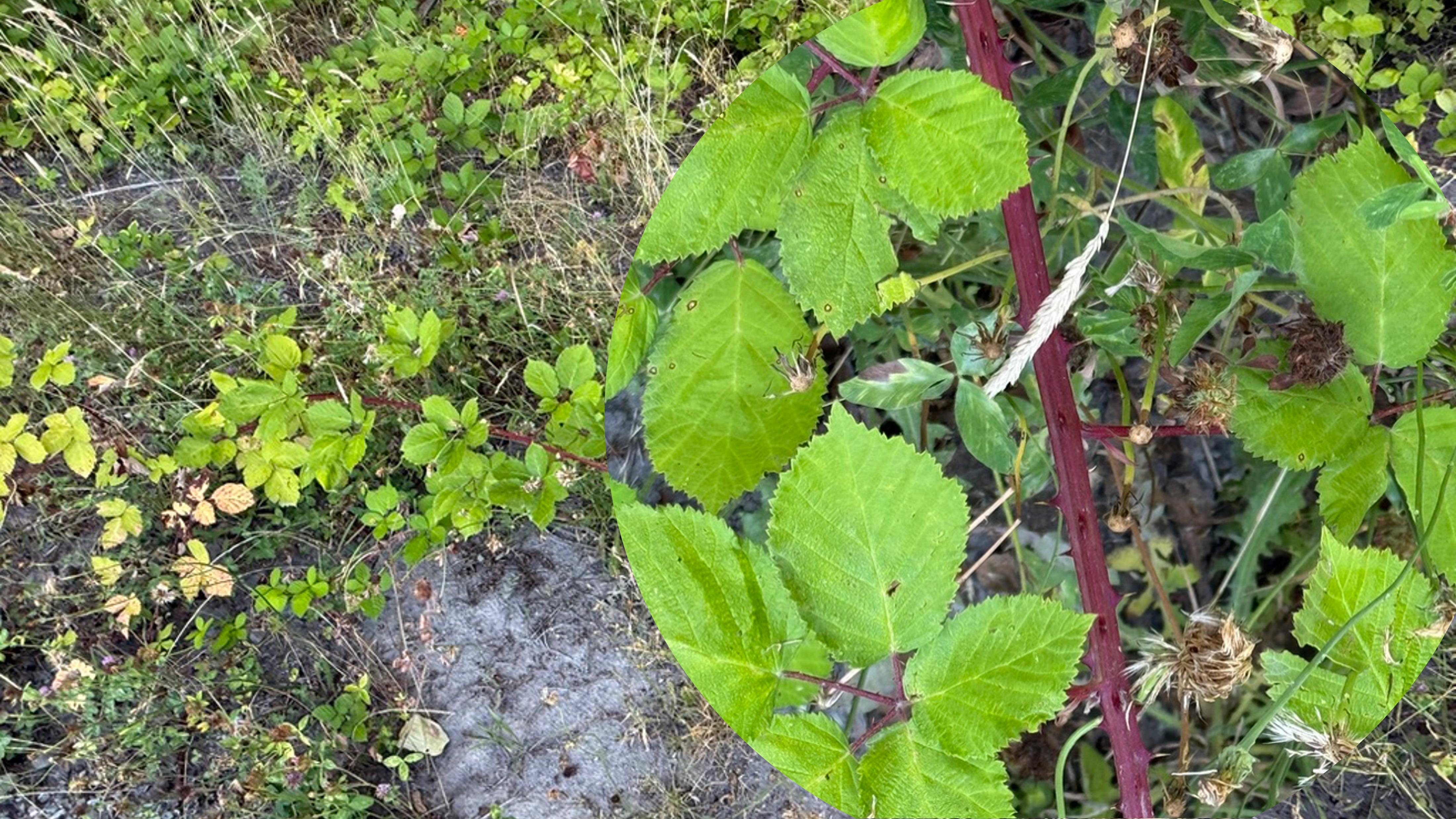
Plate 3. CoPilot and I argued too long about this one, but, after some back and forth, I decided it might be a genus of Spiraea. They are another common shrub in this ecosystem, but they aren’t in flower in July. Note the shriveled flowers in the right image. Too late to be sure. That’s why I’ve always ignored these bushes.
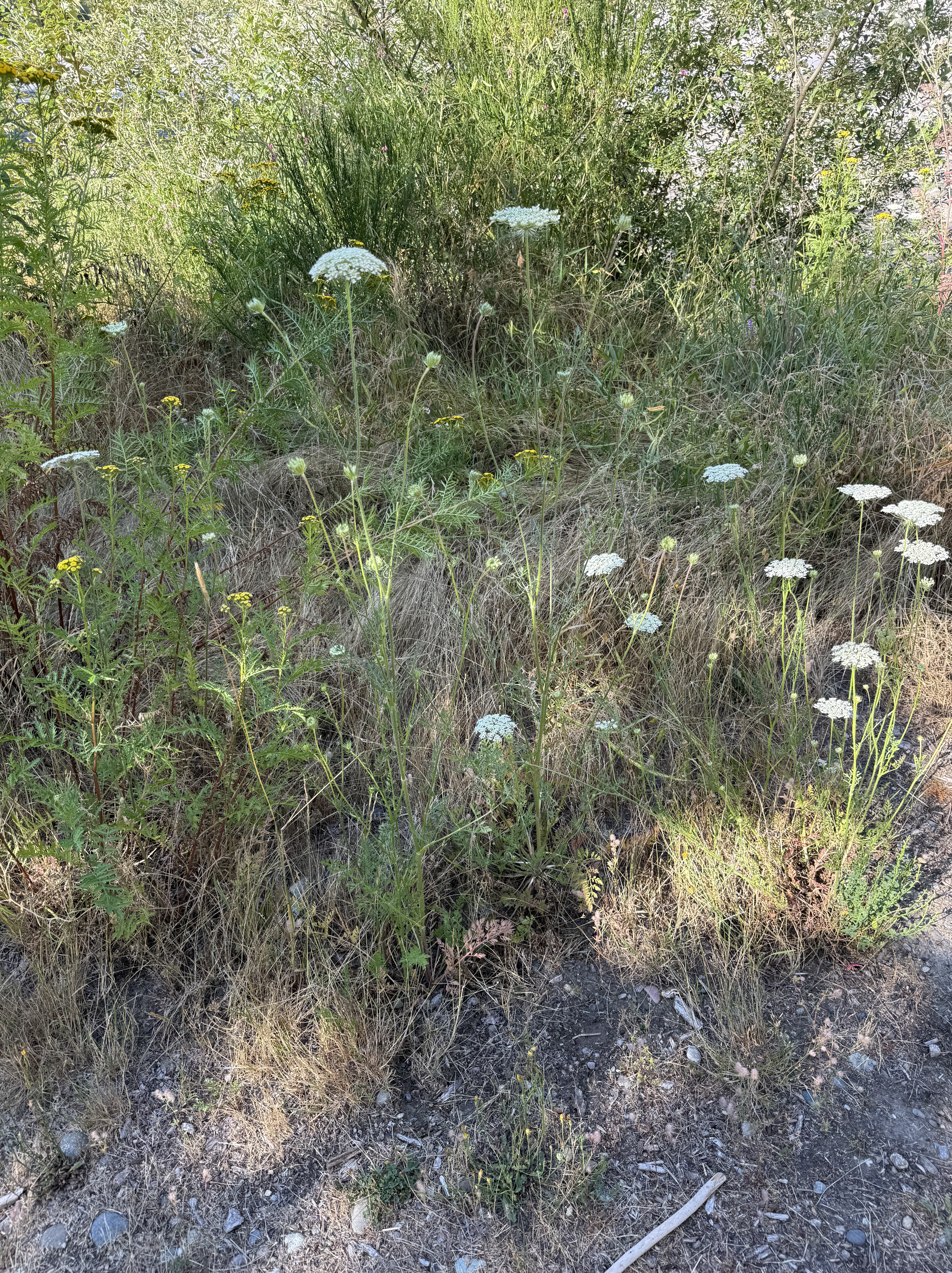
Plate 4. Cow parsnip (Heracleum maximus) is a common wildflower in meadows and roadsides in Washington.
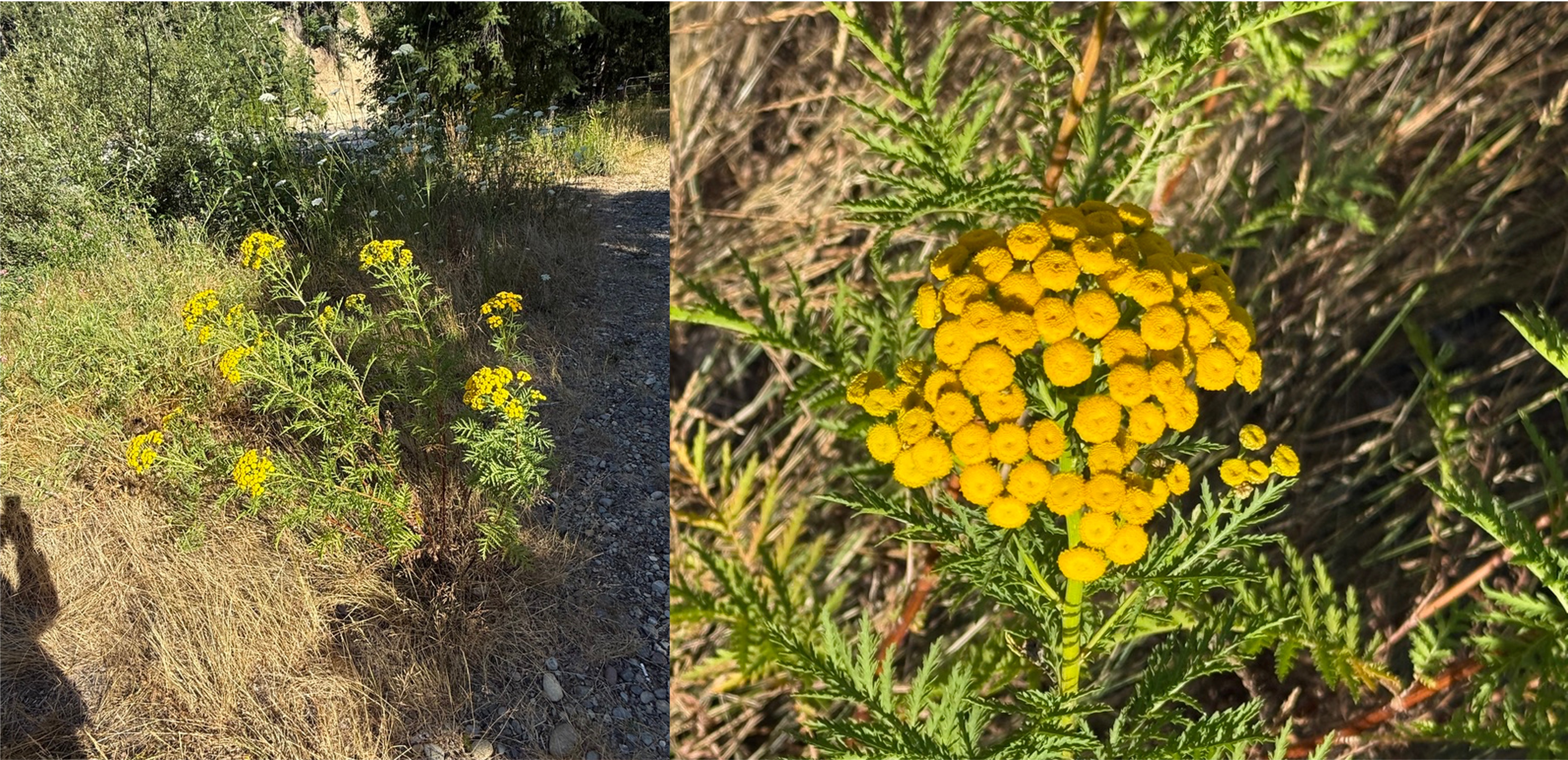
Plate 5. Tansy (Tanacetum vulgare) is a common wildflower along the Carbon River corridor.
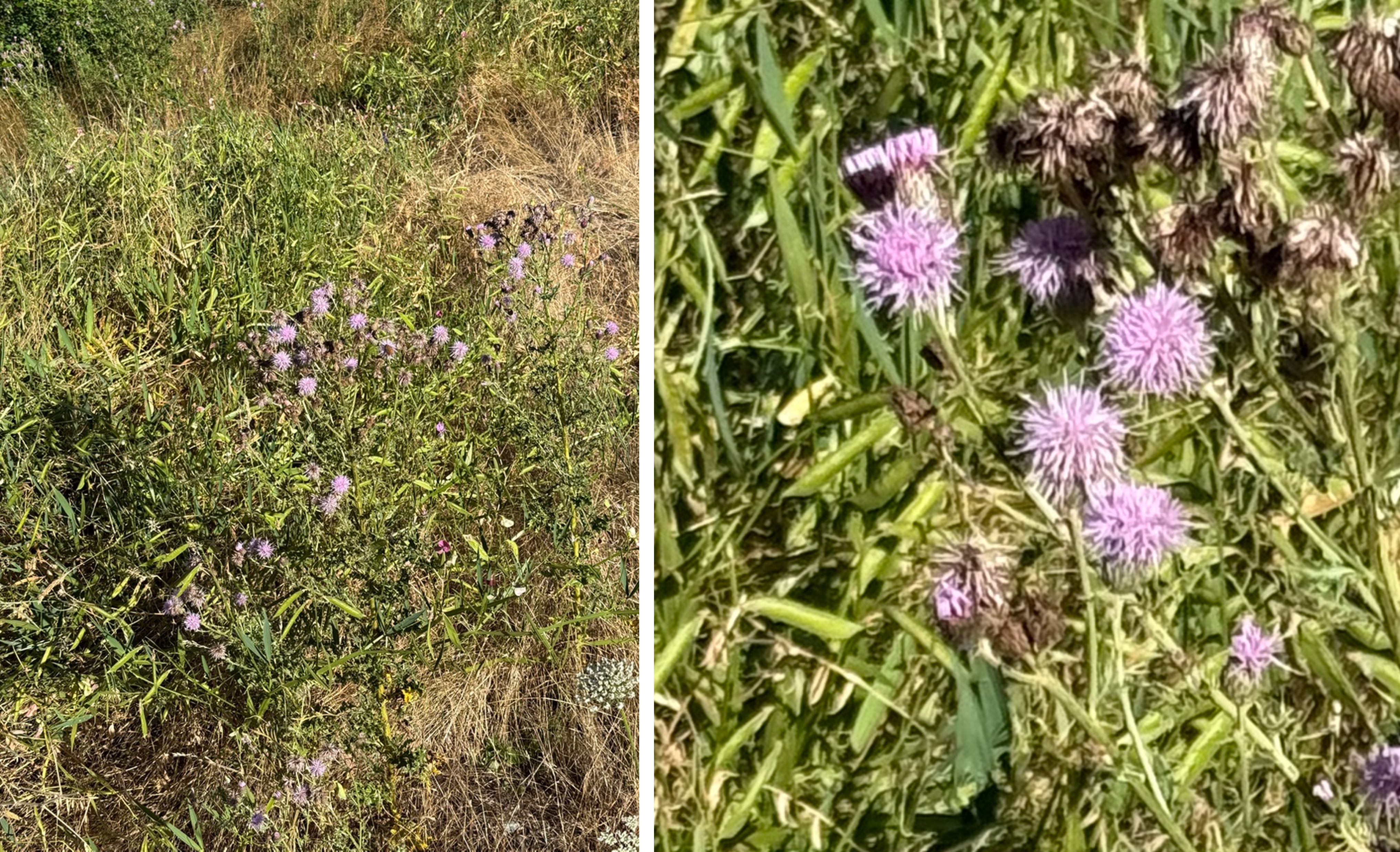
Plate 6. I thought, when putting this post together, that this was red clover (Plate 2), but CoPilot identified it as Canada thistle (Cirsium arvense). It loves disturbed areas like river edges. I did detect some spines when I zoomed in on the second photo. Why am I not surprised? If it’s pretty it will have spikes ready to draw blood from any inquisitive passers by.
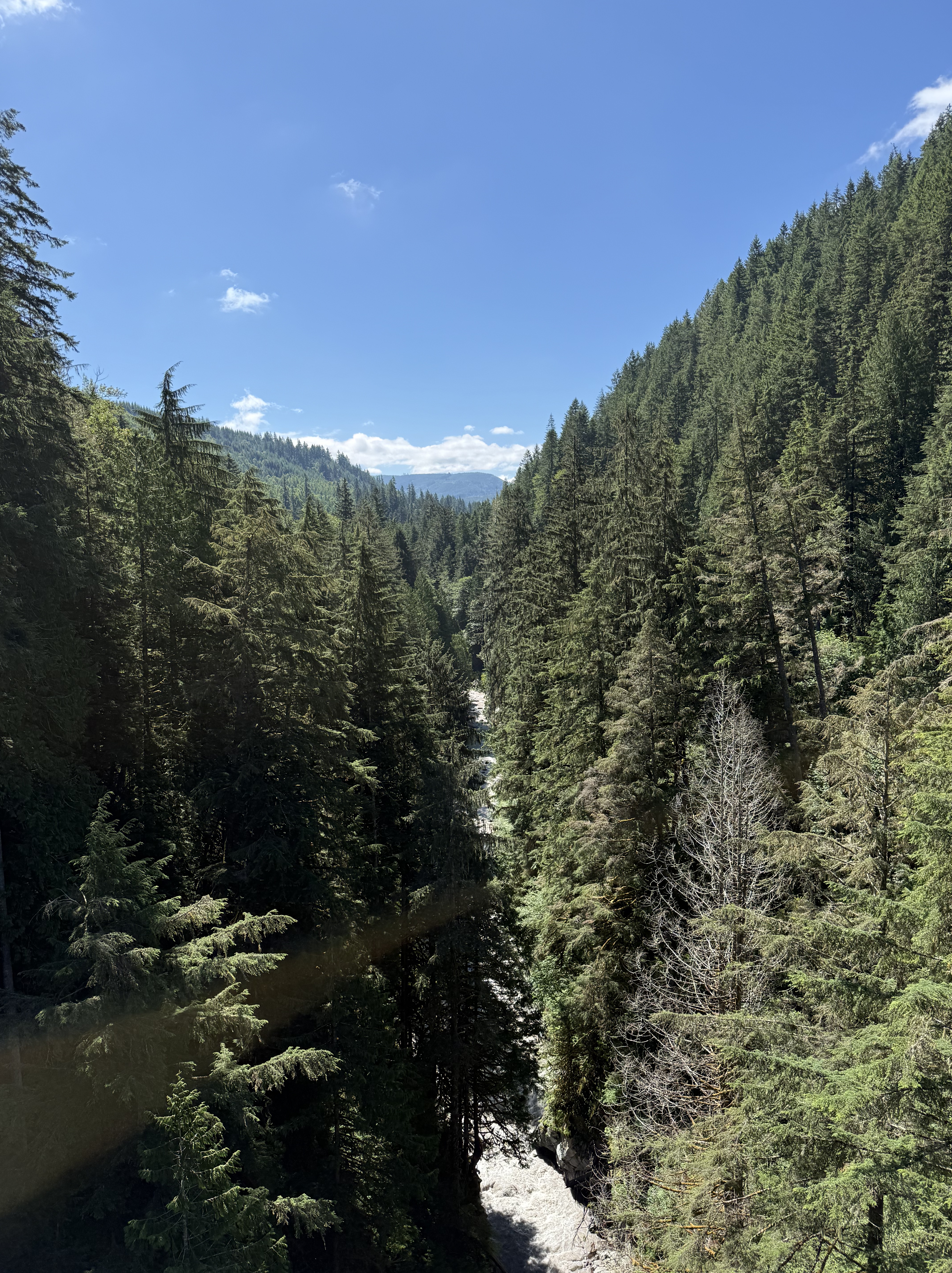
Plate 7. This view is looking downriver from Franklin bridge, which is permanently closed. I’ll now describe some of the flora we encountered as we followed the river along a steep slope.
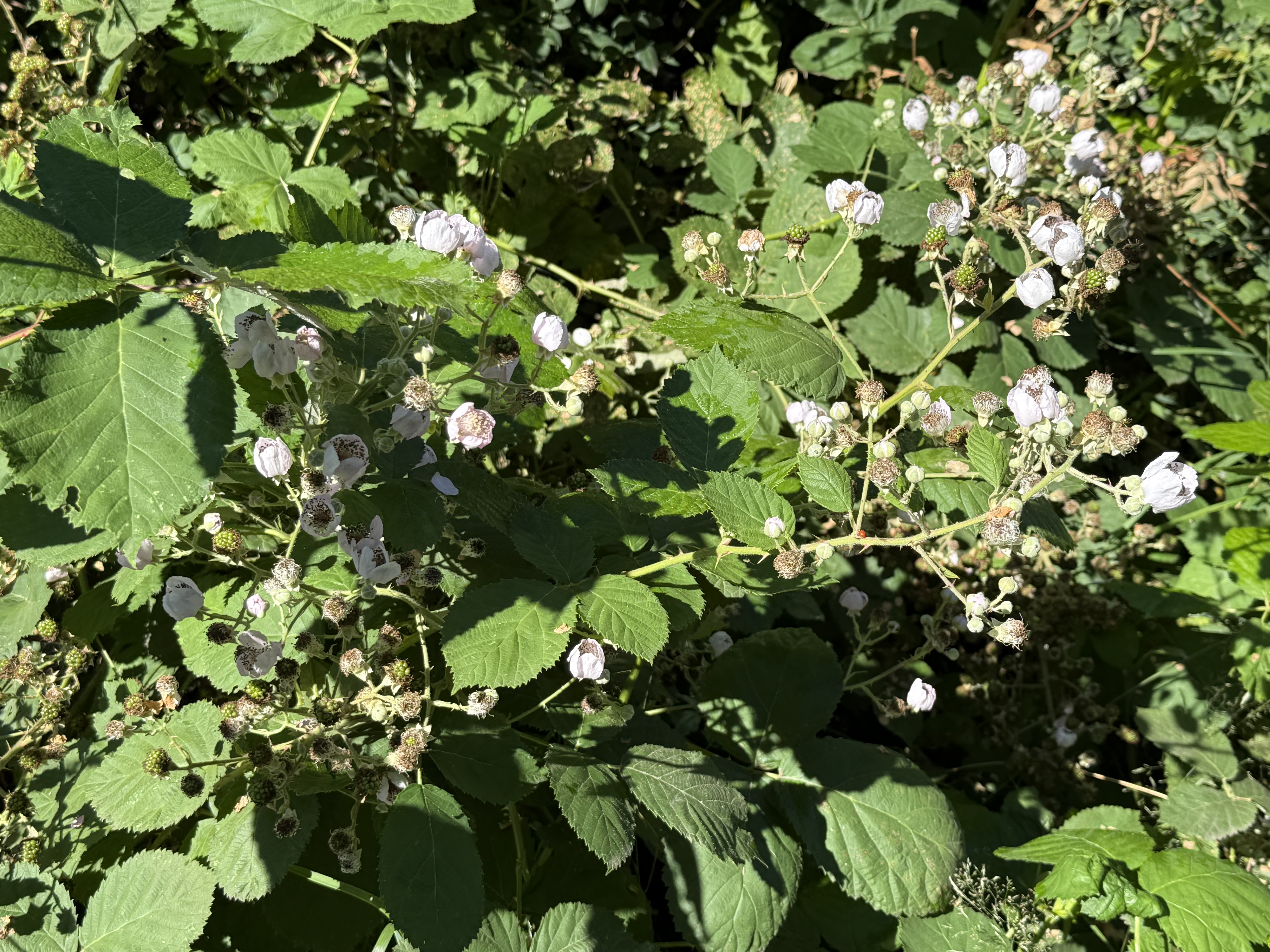
Plate 8. I (kinda) got this one right. This is a wild rose, Nootka rose (Rosa nutkana). This is another plant that waits for an opening in the forest canopy to grow, and then it colonizes like crazy — until the forest canopy catches up with it. Moist but well-drained soil pretty much sums up Carbon River canyon.
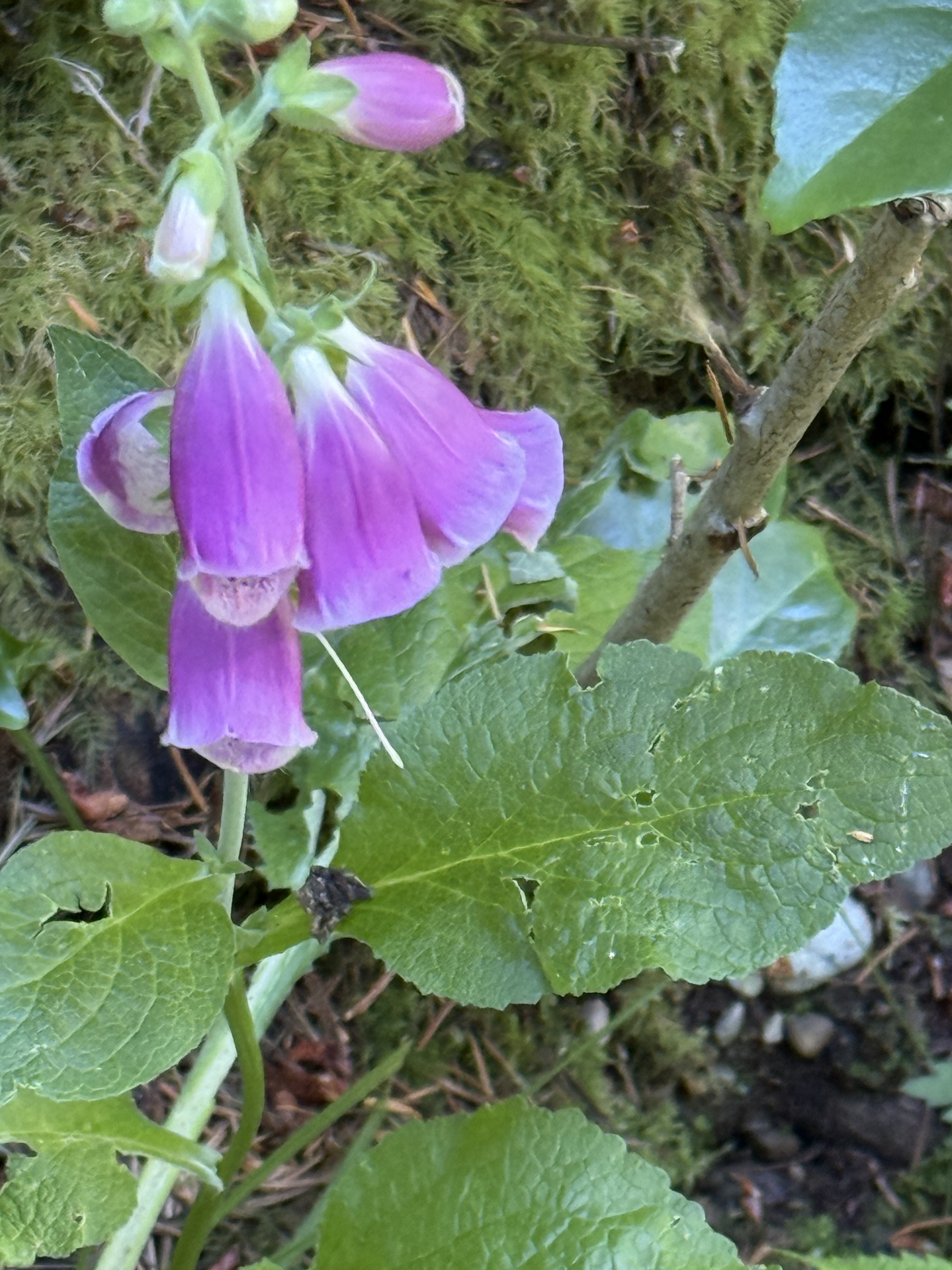
Plate 9. This familiar flower is foxglove (Digitalis purpurea), introduced from Europe; but it is so naturalized that it behaves like a native plant, similar to Cascade penstemon (see Plate 11), thriving in disturbed ground at the edge of conifer forests and in temporarily sunny areas.
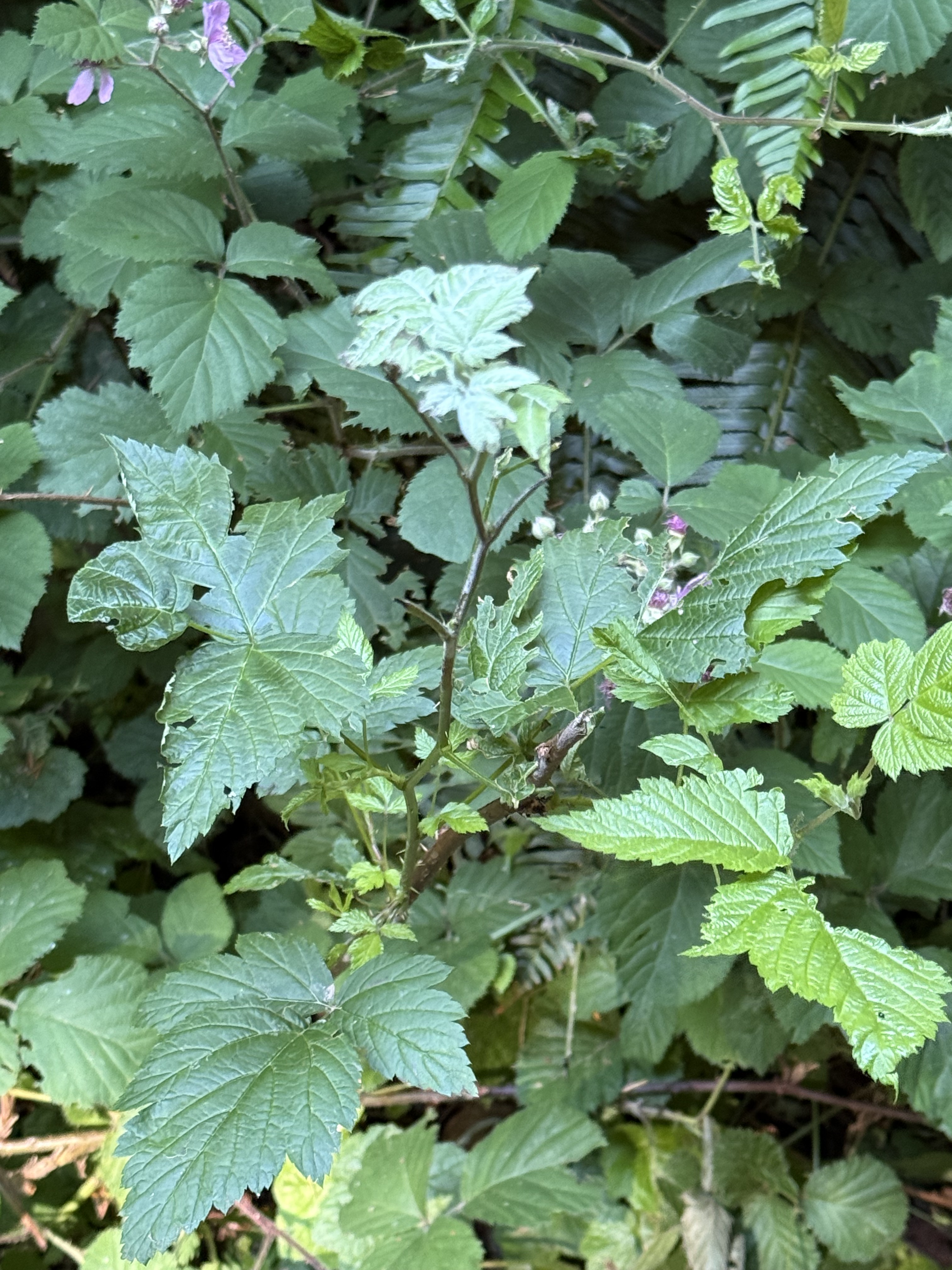
Plate 10. Besides white flowers, I am also fixated on thorns; however, I don’t know anything about thorns except that roses have them, as well as many of the shrubs I’ve encountered on my nature walks. This is probably Himalayan blackberry (Rubus armeniacus), an invasive species to Pierce County. I guess that’s why it isn’t called Washington blackberry, or some such. I checked a previous post from Point Defiance, and there it was! Invasion of the forest snatchers.
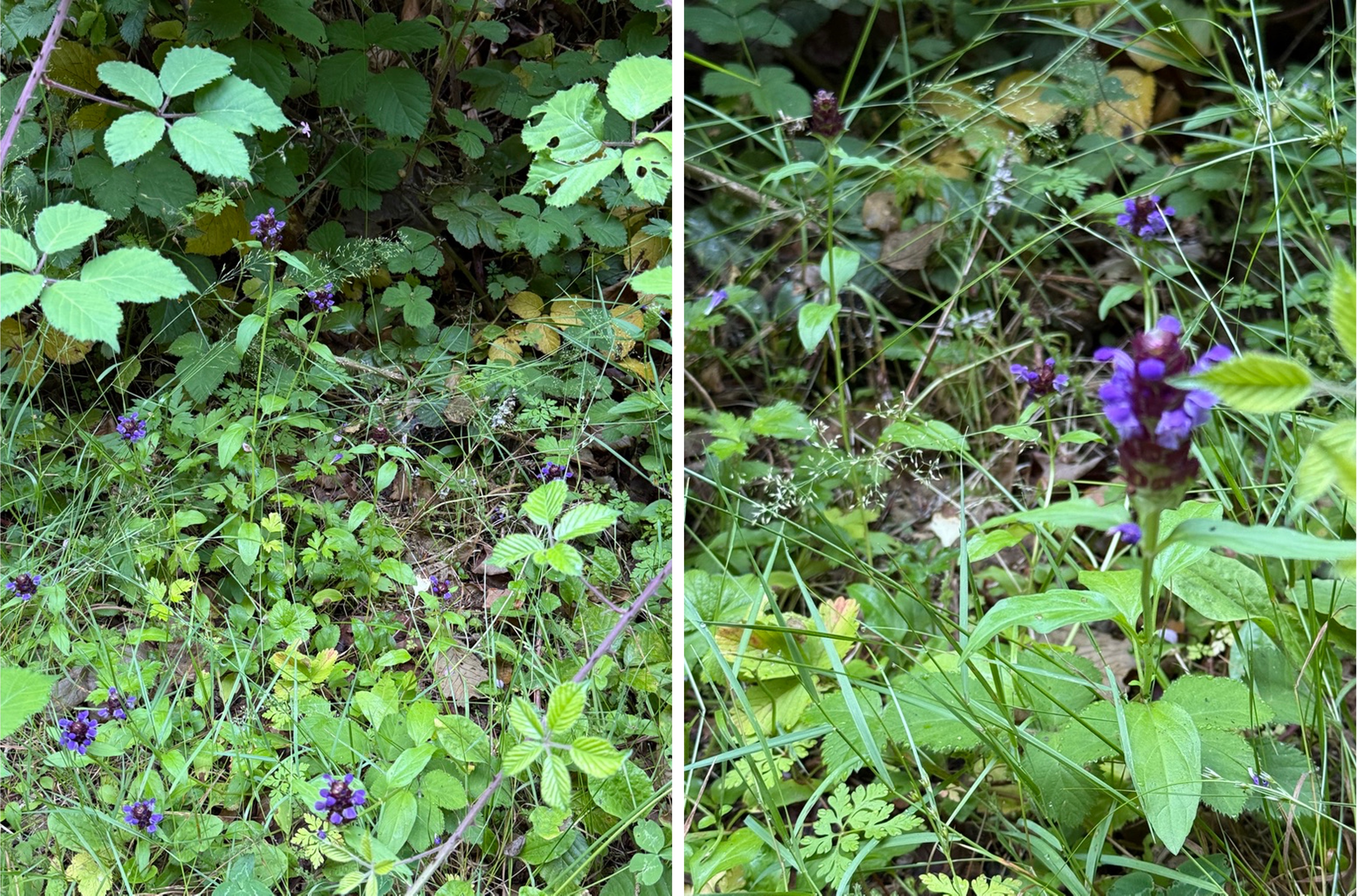
Plate 11. This purple wildflower is probably Cascade penstemon (Penstemon serrulatus), a native to the PNW. It is what CoPilot calls an ecotone plant — one that thrives where a conifer forest is encroaching on a prairie environment. We encountered it where the conifers hadn’t yet blocked out the sun along the trail.
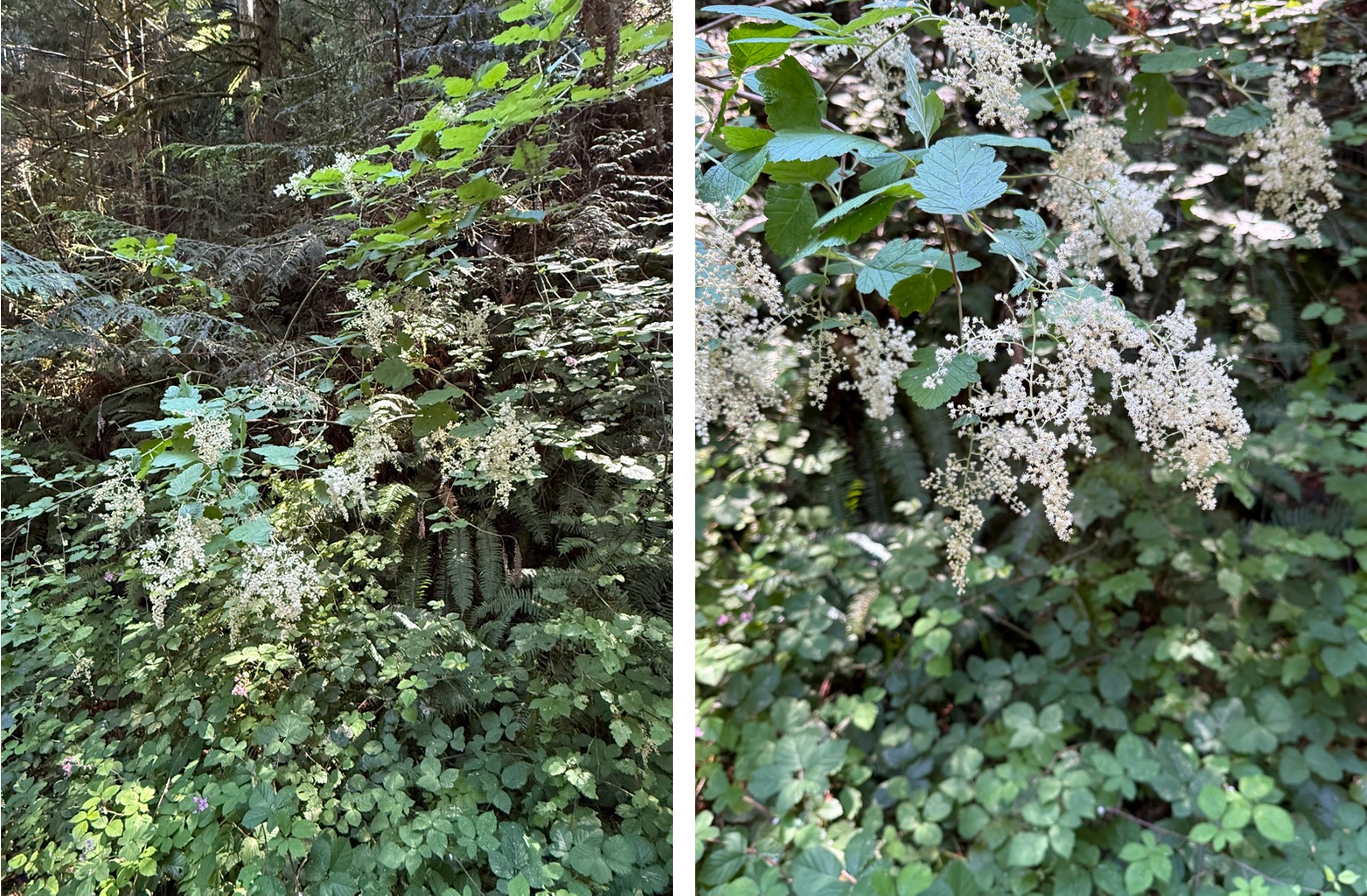
Plate 12. I’m easily fooled by white flowers. This non-woody shrub is False Solomon’s seal (Maianthemum racemosum). It grows in the understory of a conifer forest, which is a good description of Carbon River canyon.
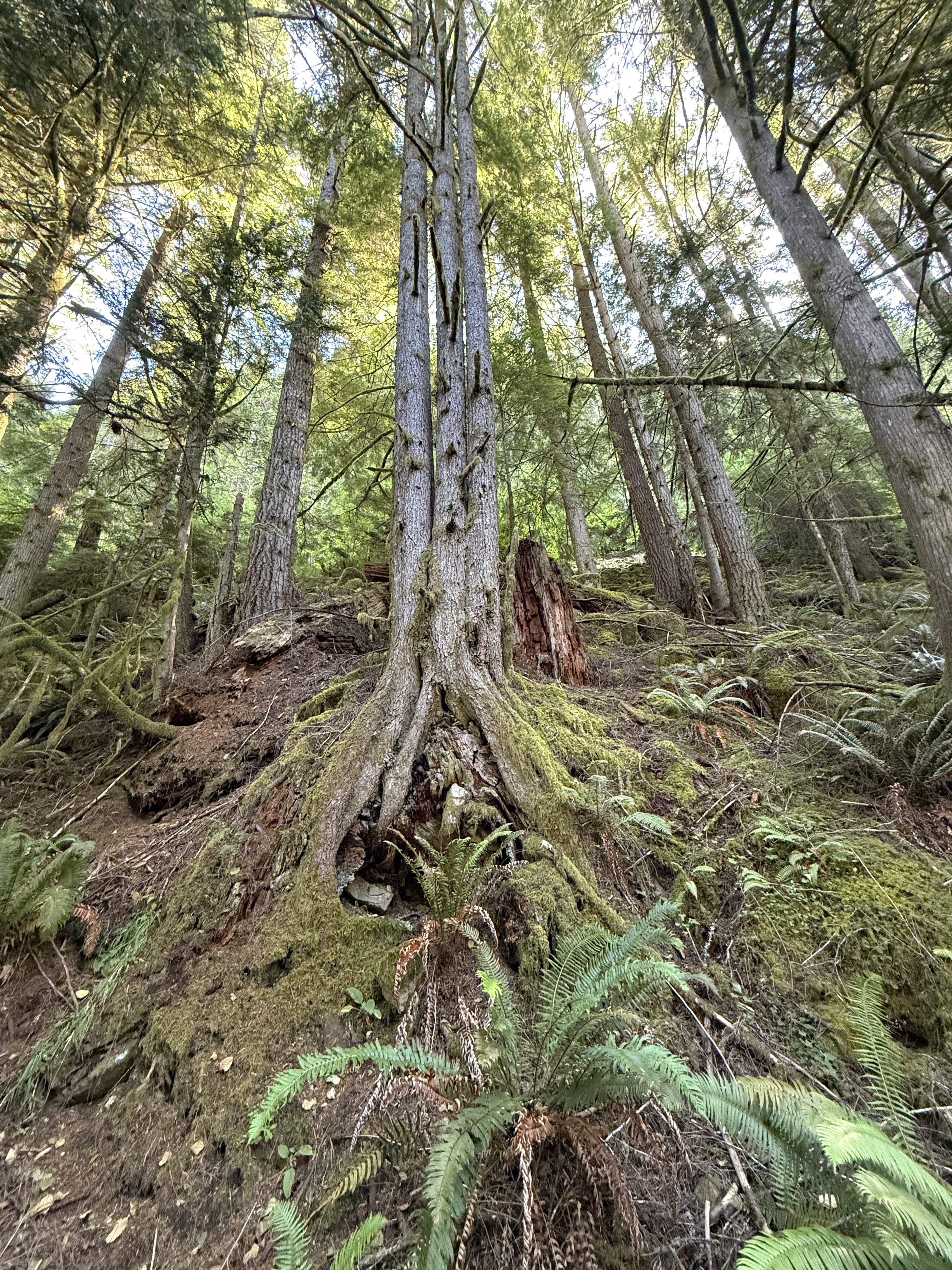
Plate 13. This is the first triplet I’ve seen from a nurse log. These young hemlocks will certainly compete for sun and nutrients. There can be only one survivor.
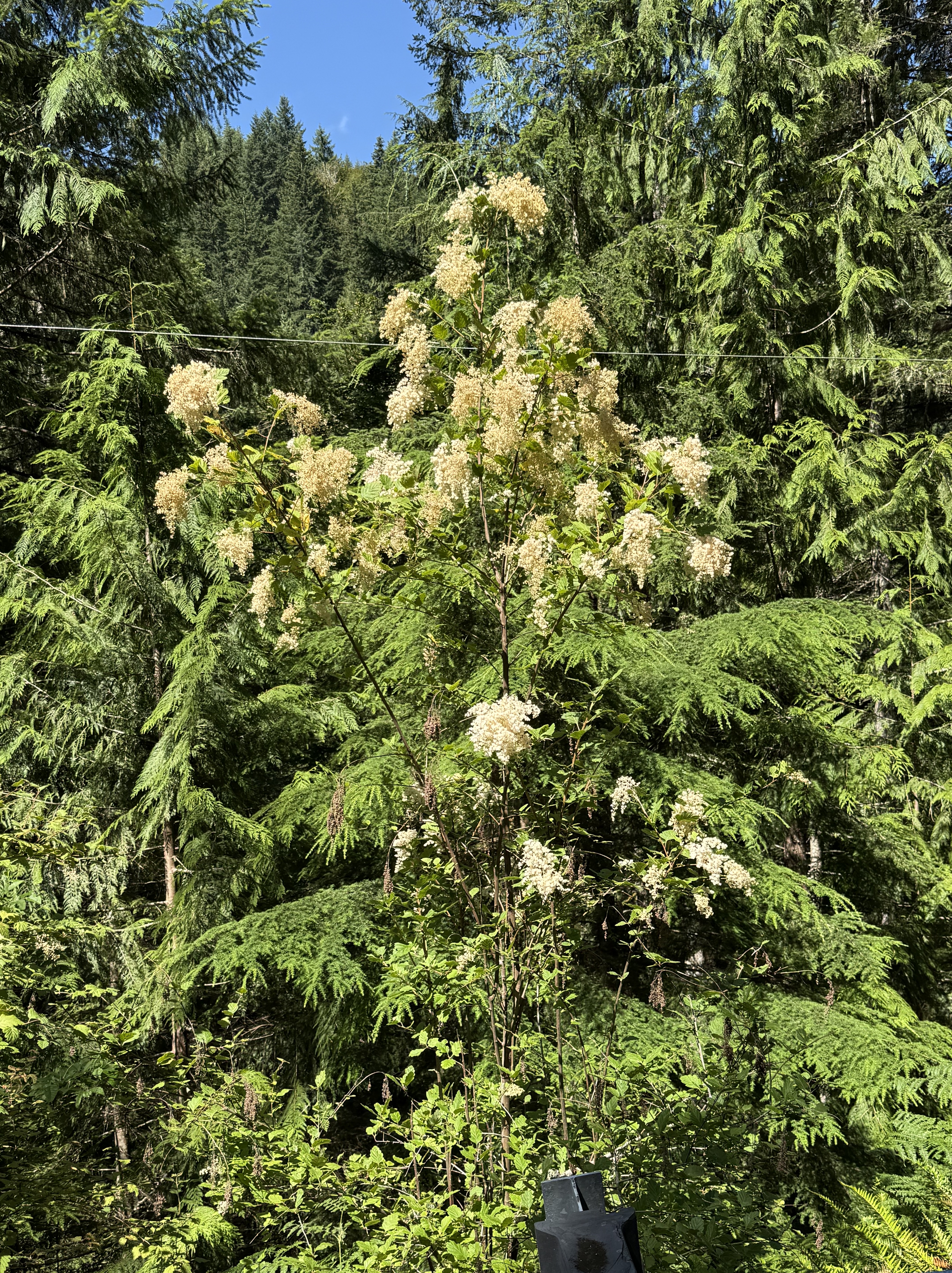
Plate 14. I thought this was cow parsnip, but CoPilot identified it as ocean spray (Holodiscus discolor). The white flowers were all I needed to see, but this tall, woody shrub (6-12 feet) is completely different from the weed in Plate 4.
Final Thoughts
The only thing I can add to the photos is that Carbon River is part of a transitional ecosystem, not unlike Mima Mounds. I Imagine this borderland environment is also alternating between a lowland/prairie and an upland/conifer forest, depending on conditions. However, much to my disappointment, the plants here were different from those we saw before. Furthermore, there were far more species along the Carbon River corridor. We were fortunate to visit when many of the flowers were in bloom.
I enjoy taking pictures of flora and learning about the ecosystem, but this is too complex for me. I’m only a simple geologist.
Geology of Carbon River Canyon, Pierce County, Washington
Today’s post reports on a brief survey of various geological features and processes that are revealed in a river that originates on the NW flank of Mt. Rainier. We’ll look at the types of rock found along its course, morphologic features, and discuss the processes that have created this natural area. We’ll also see some unintended consequences of deforestation.
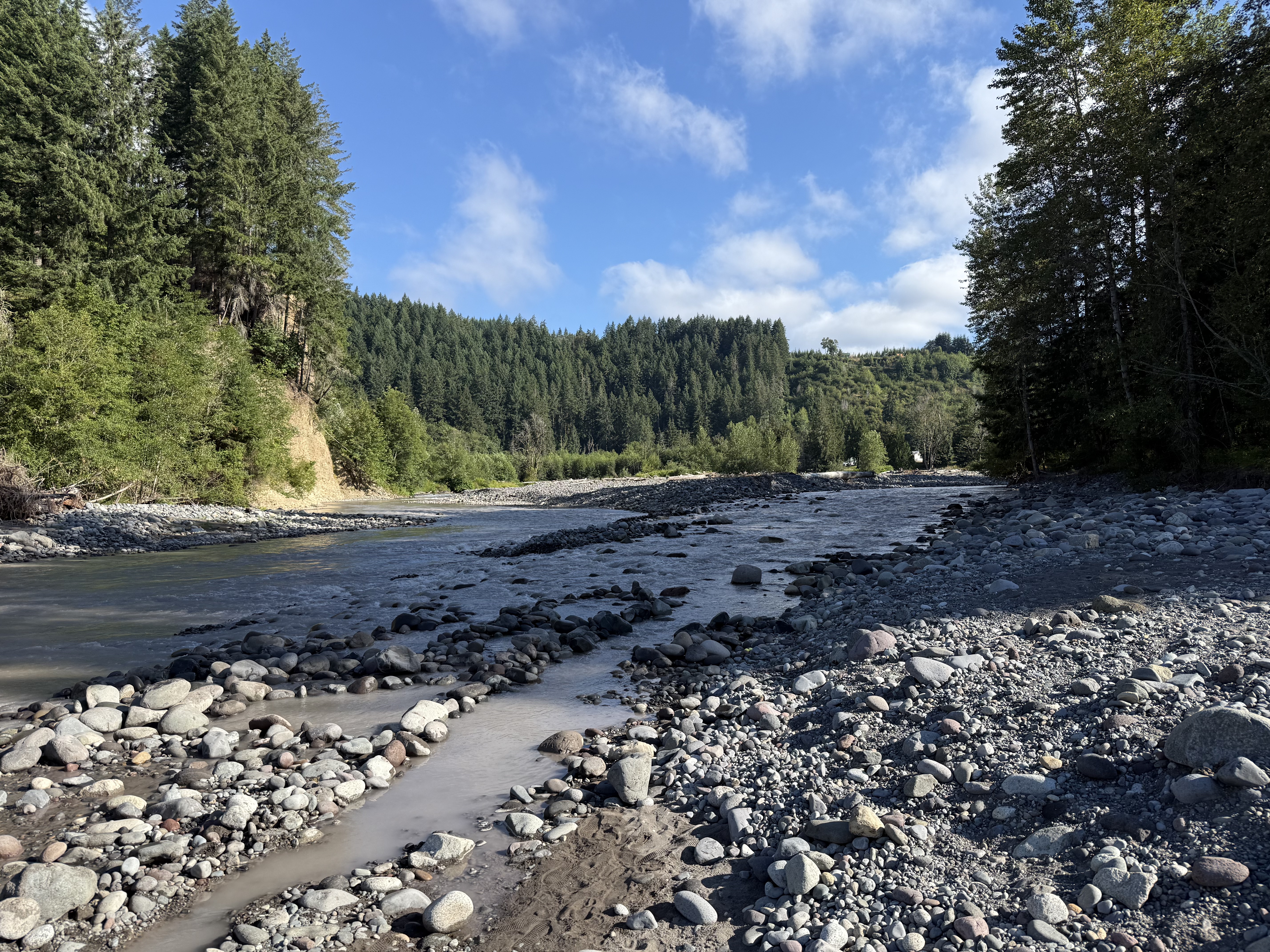
Figure 1. Carbon River flows northerly before joining the Puyallup River and emptying into Commencement Bay, in Tacoma. This stretch is dominated by boulders up to a foot in diameter. However, the water is unusually muddy; we’ll find out why during our walk three-miles up the canyon that contains the stream.
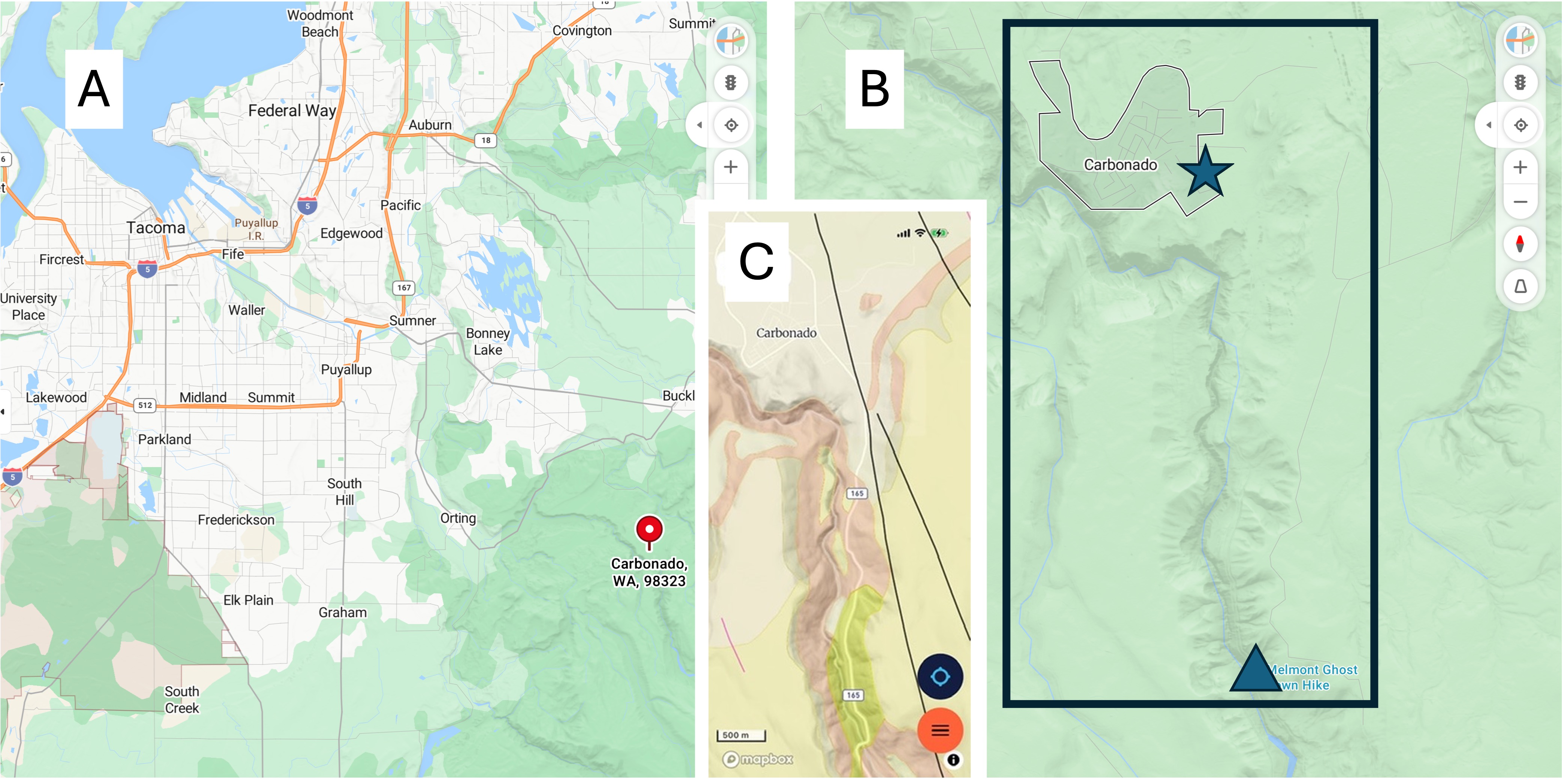
Figure 2. (A) Regional map, showing Carbonado (pinned), a forty-five minute drive from North Tacoma. (B) Local map showing the Carbon River, which we followed for three miles. The river has cut a gorge that begins at Carbonado (star) and deepens to 250-300 feet at Fairfax bridge (triangle). (C) The geologic map from RockD reveals four major rock formations: the tan, which dominates around Carbonado is glacial drift, mostly sand and gravel; The pink outlining the river is Eocene (56-33.9 Ma) sedimentary rocks of terrestrial origin – rivers, lakes, etc; the yellow is Miocene-Oligocene (~23 Ma) fine-grained andesite. Additionally, the yellowish unit on both sides of the river is Pleistocene (2.5 Ma to 12 Ka) glacial drift. We didn’t see any of that today.
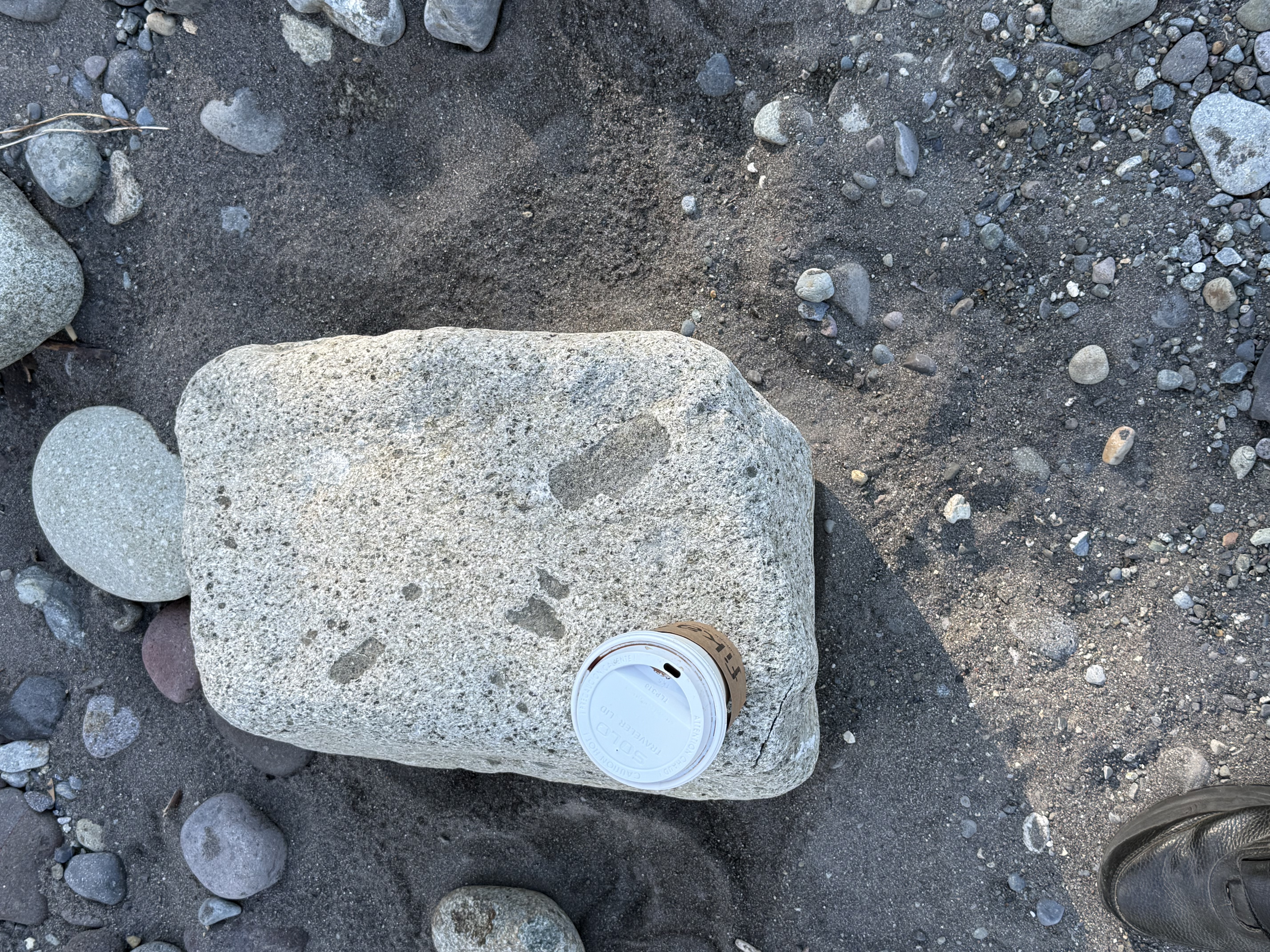
Figure 2. Our first stop was along the Carbon River near Orting (see Fig. 1A for location). River beds can be an excellent source of regional geology if they contain cobbles or boulders, which are good samples of source rock that may not be exposed.
This sample is of an intrusive igneous rock that contains lithic fragments (xenocrysts) of what looks like a darker, fine-grained rock. As magma moves upward through the crust, pieces of country rock are entrained, sometimes partially melting, but more often simple being captured by the cooling magma. This sample contains pieces of what I think is andesite. The host rock itself is probably also andesite, but its surface has been chemically weathered to form a white layer; this is a chemical process that involves the alteration of dark minerals like pyroxene and plagioclase into clays like kaolinite, which are light colored. Surface weathering also leeches out iron and magnesium, which darken a rock. This surface layer is usually only a few millimeters thick.
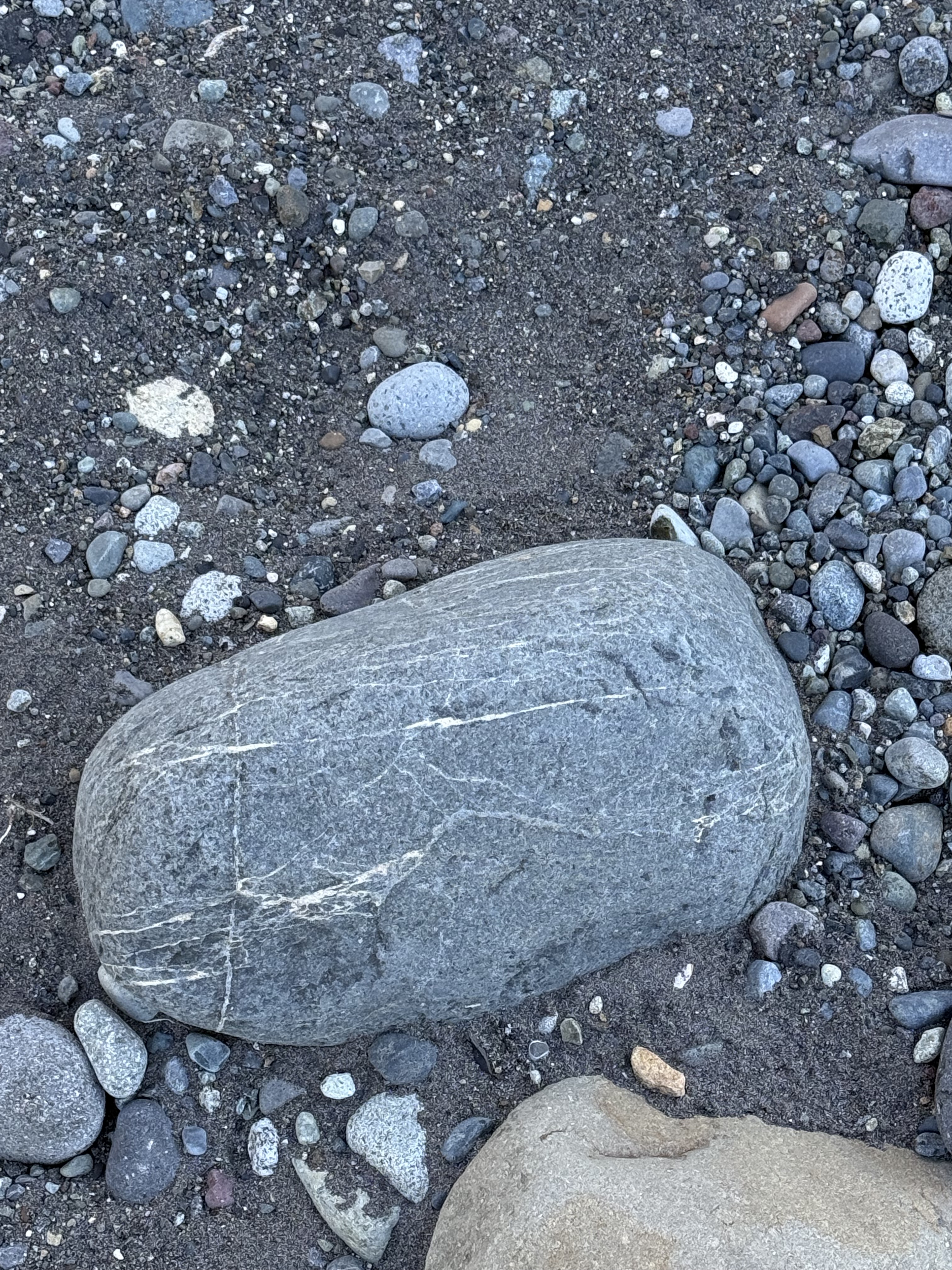
Figure 3. This sample tells a complex story. This is andesite (extrusive rock common to subduction zones), but any fractures within it were filled with magmatic fluids rich in Na, Ca and silica, by a later eruption. The result of this hydrothermal circulation is rocks that are neither extrusive nor intrusive; they are chemically altered by subsequent injections of magma at depths less than 1 mile, often even shallower.
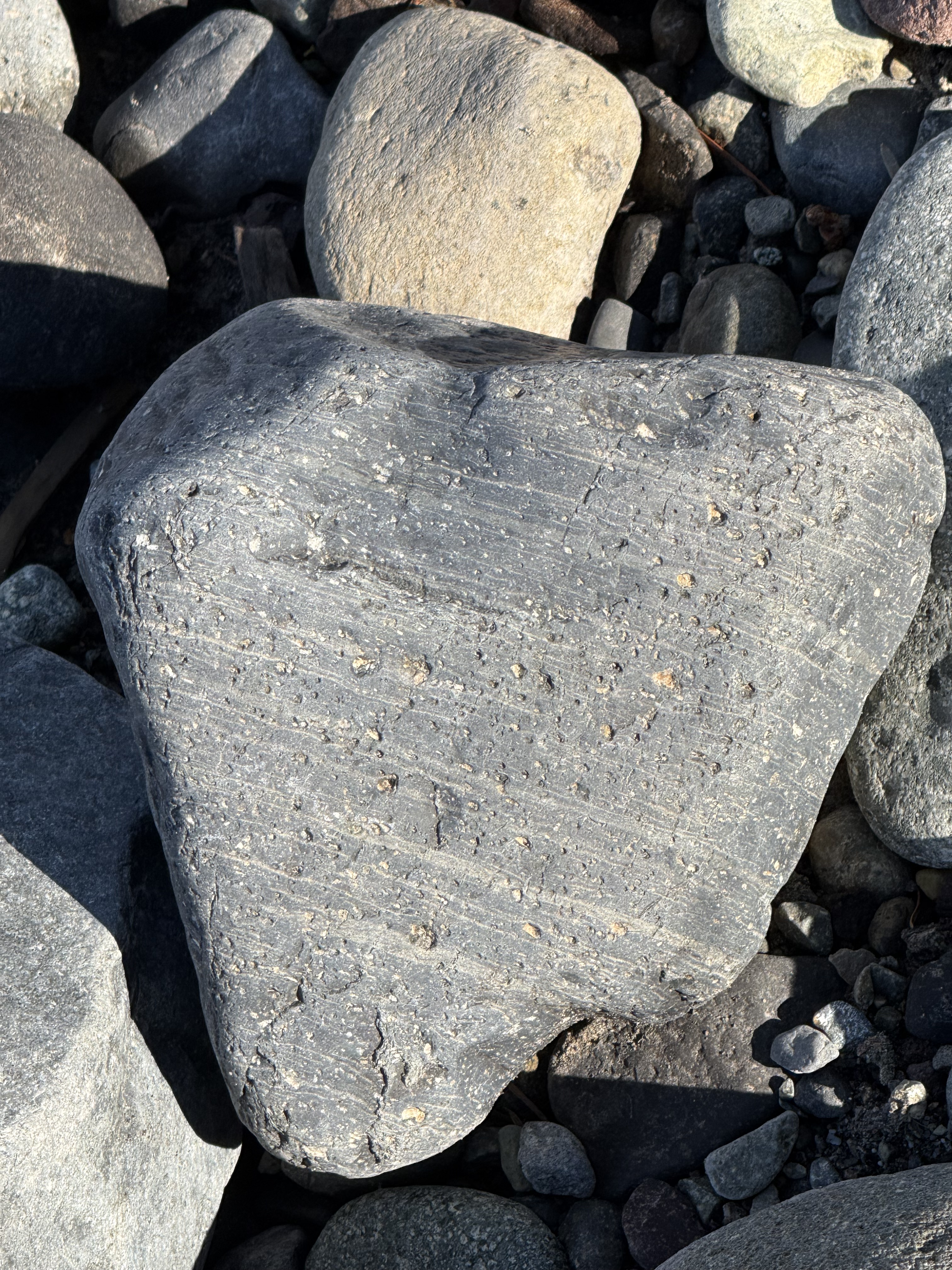
Figure 4. Another fascinating example, which tells a different tale. This andesite block wasn’t injected with magmatic fluids beneath the surface; this sample is the result of gaseous magma erupting within a few hundred yards of a vent. The laminae tell us that the composition was changing subtly on short time scales; this was the top of the boiling magma, and thus there was a lot of trapped gas (e.g. CO2, H2S) that formed the vesicles after the lava had settled–but not yet solidified.
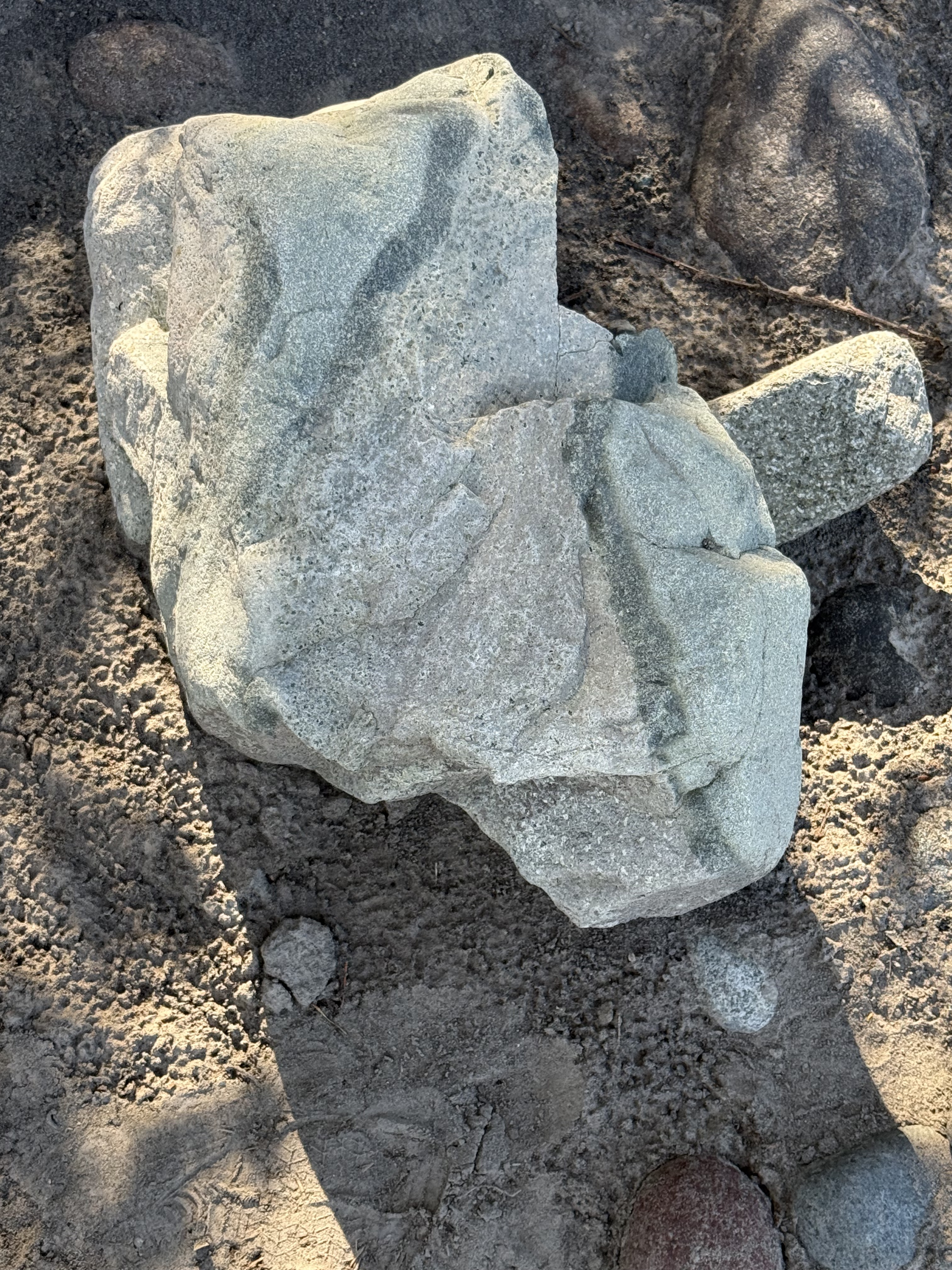
Figure 5. This irregular sample of andesite tells two stories: 1) The presence of phenocrysts (small white blebs at the bottom of the sample) implies slow cooling whereas the dark streaks imply a later stage of fast cooling, so that magmatic fluids with slightly different composition intermingled with the already hardening earlier stage. Imagine making taffy. 2) This sample wasn’t transported in the Carbon River more than a few miles. It would have broken along internal planes of weakness and become more like those we saw above. We aren’t far from the source.
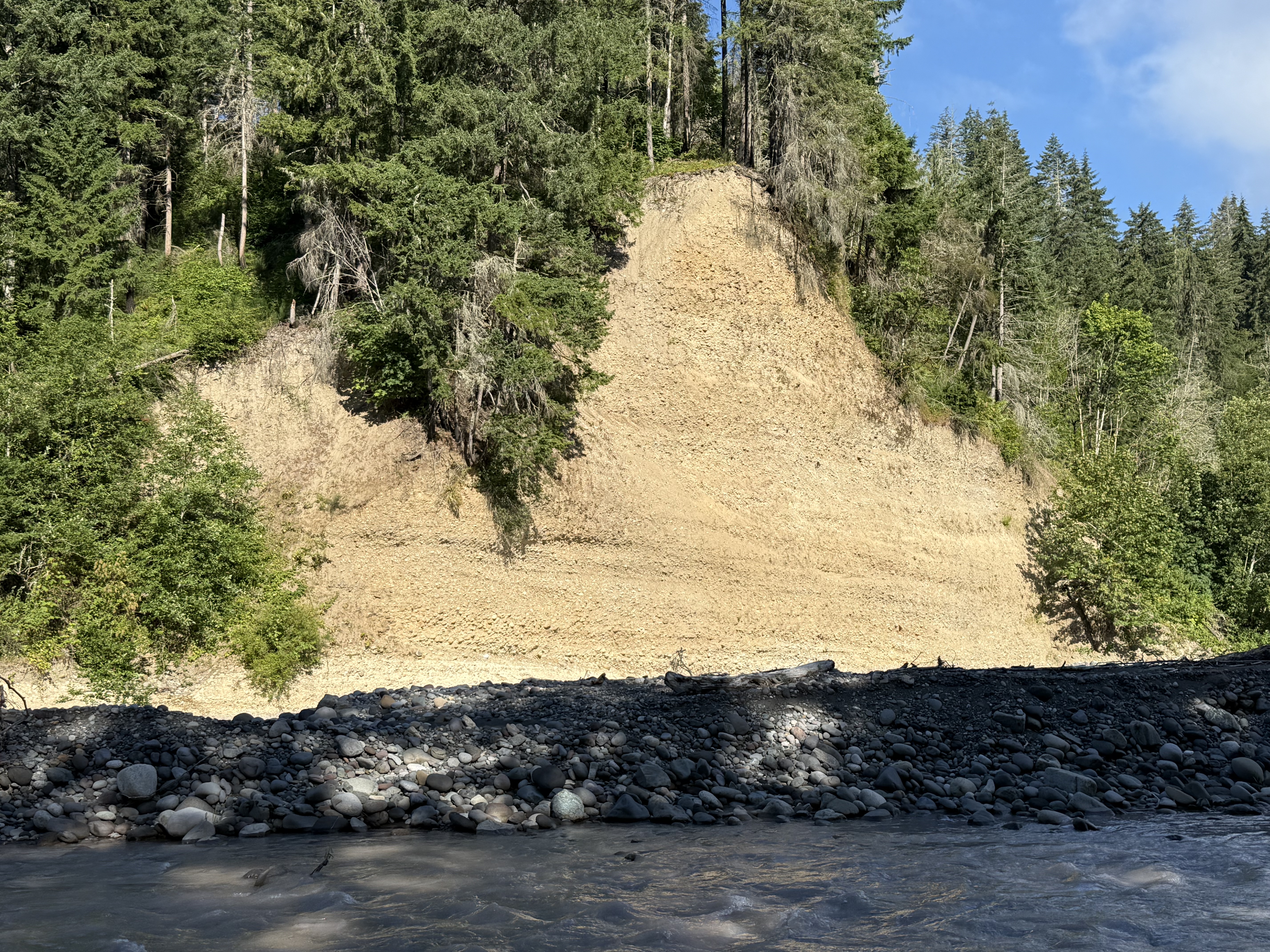
Figure 6. This is an excellent exposure in a cliff cut by the Carbon River. It could be dismissed as undifferentiated glacial till, but I’d like to give it a second thought: What if this location records the movement of continental glaciers through Puget Sound (i.e. the Vashon till), in addition to alpine glaciers moving down from the Cascades? Could we even tell the difference?
The bottom of this section contains cobbles in a sandy matrix deposited horizontally. The middle part is finer, as seen in the absence of large cobbles, but a channel containing larger clasts is visible in the center of the photo, forming a “V” that points towards the bright spot in the modern channel, slightly right of the center of the photo. The depositional environment must have changed quickly to produce such a contrast in lithology.
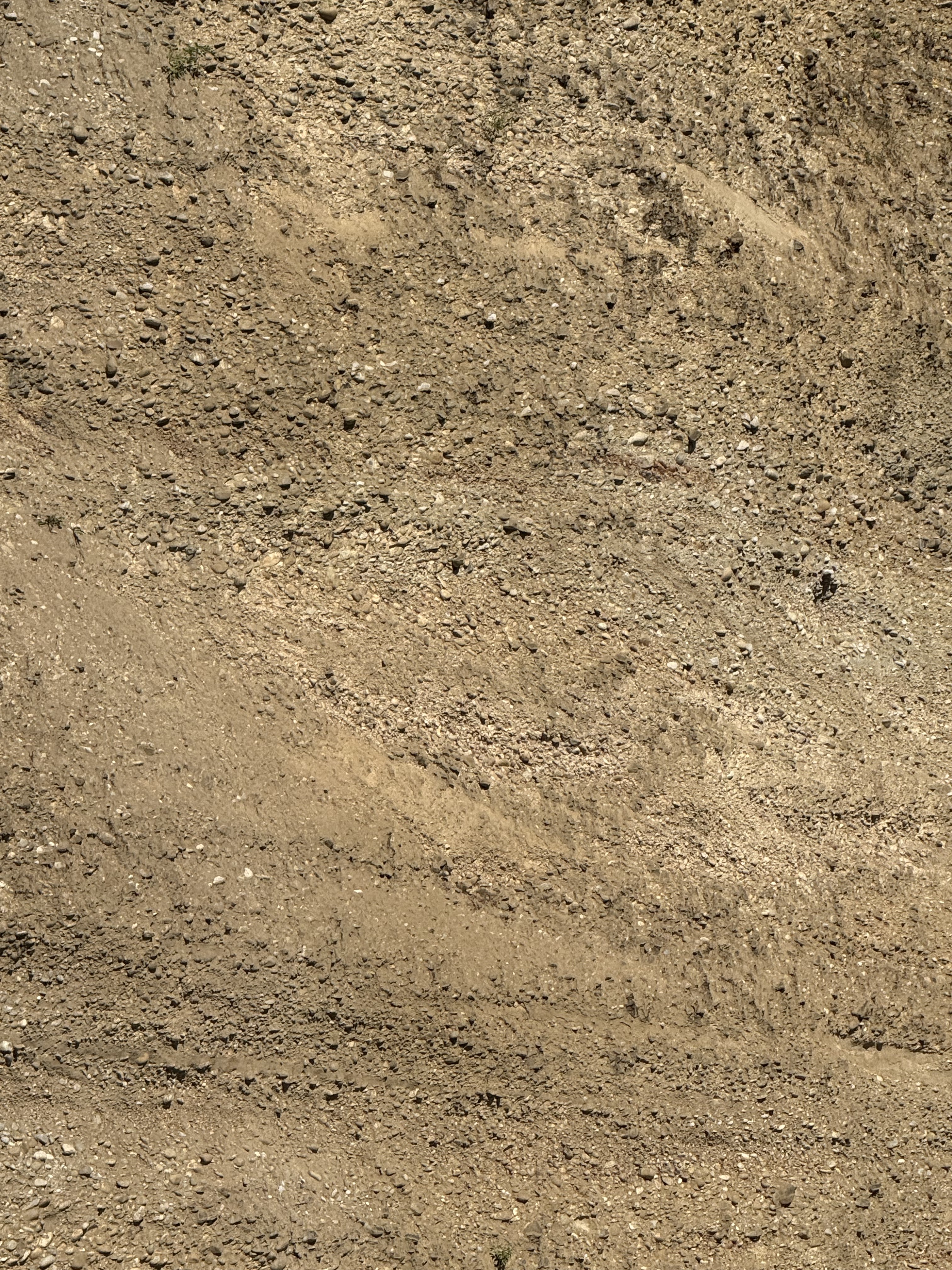
Figure 7. This is a close-up of the center of the cliff in Fig. 6, focusing on the contact between finer, sandier sediment to the left, and coarse material in the upper right. The unconformity contact between them was created by erosion, either by a glacier or a river like the modern Carbon River. Note the change in bedding between the lower part of the exposure and the irregular layers above the unconformity. The lower section reveals a fining-upward sequence; but this was partially removed and the entire upper part of the section is dominated by conglomerate.
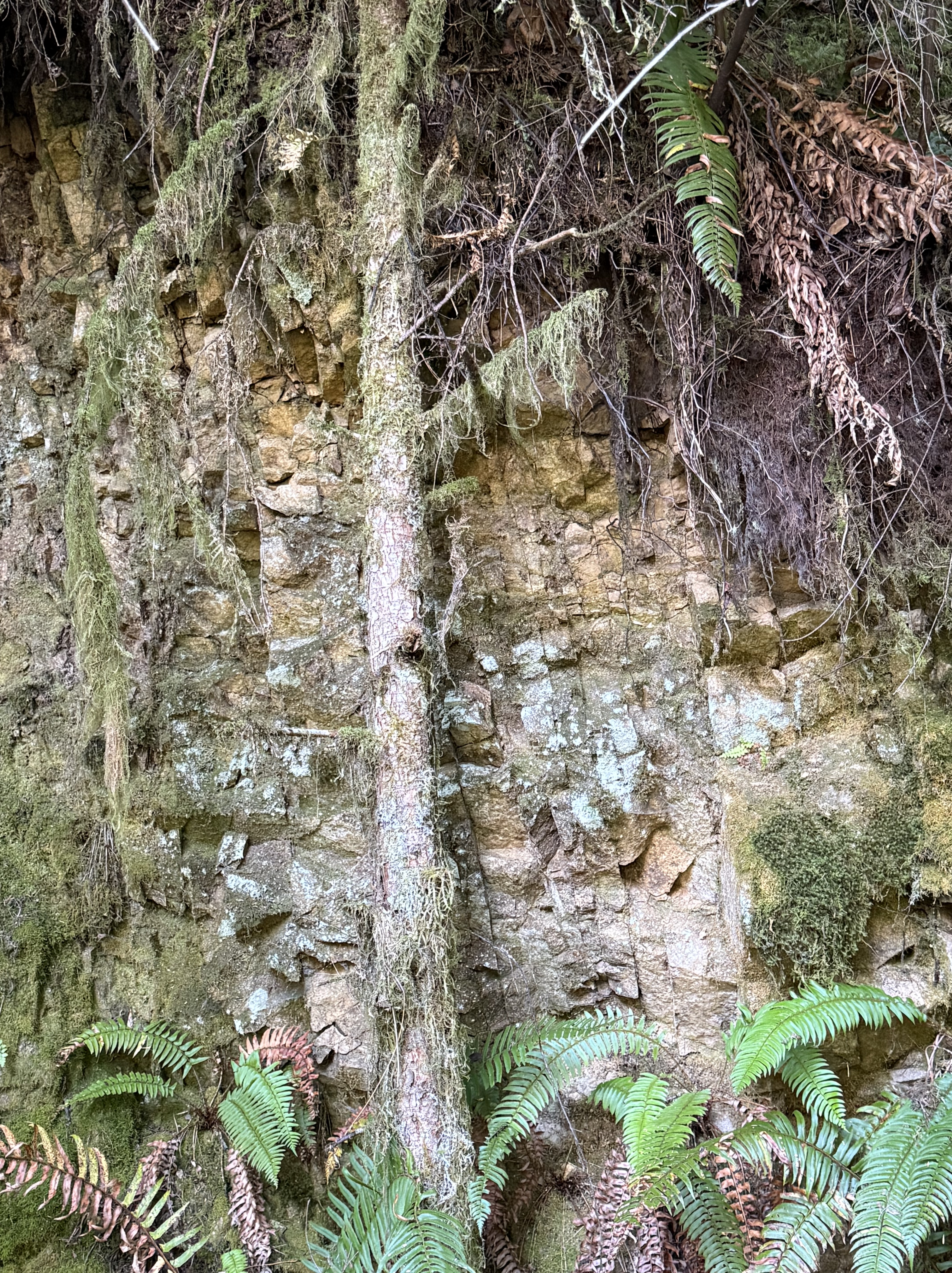
Figure 8. This photo was taken about halfway between Carbonado and the bridge (the star and triangle in Fig. 2B, respectively). The river was about 100 feet lower than the trail at this point. These bedded rocks are nearly vertical, as indicated by the dark, nearly vertical lines. They are Eocene terrestrial sediments that have been faulted and folded into their current orientation. They were probably deformed when the faults seen in Fig. 2C (thin lines on the geological map) were active.
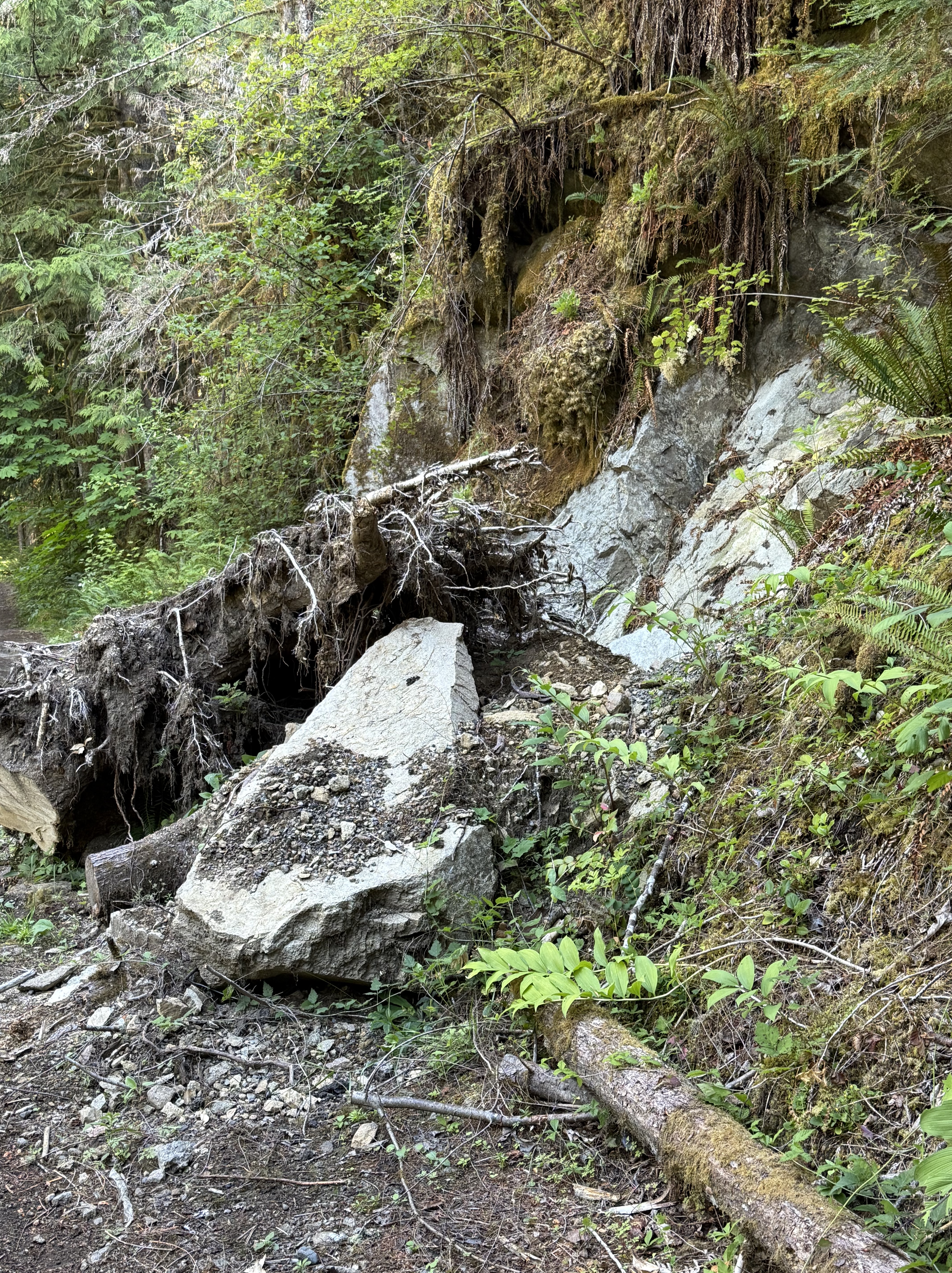
Figure 9. Further along the trail we encountered this small landslide. A tree that had rooted in cracks within the sedimentary rocks fell along with a piece (about 10 feet long) of rock. This is a great example of how erosion is a continuous process that never rests, inexorably removing mountains and transporting them to the sea.
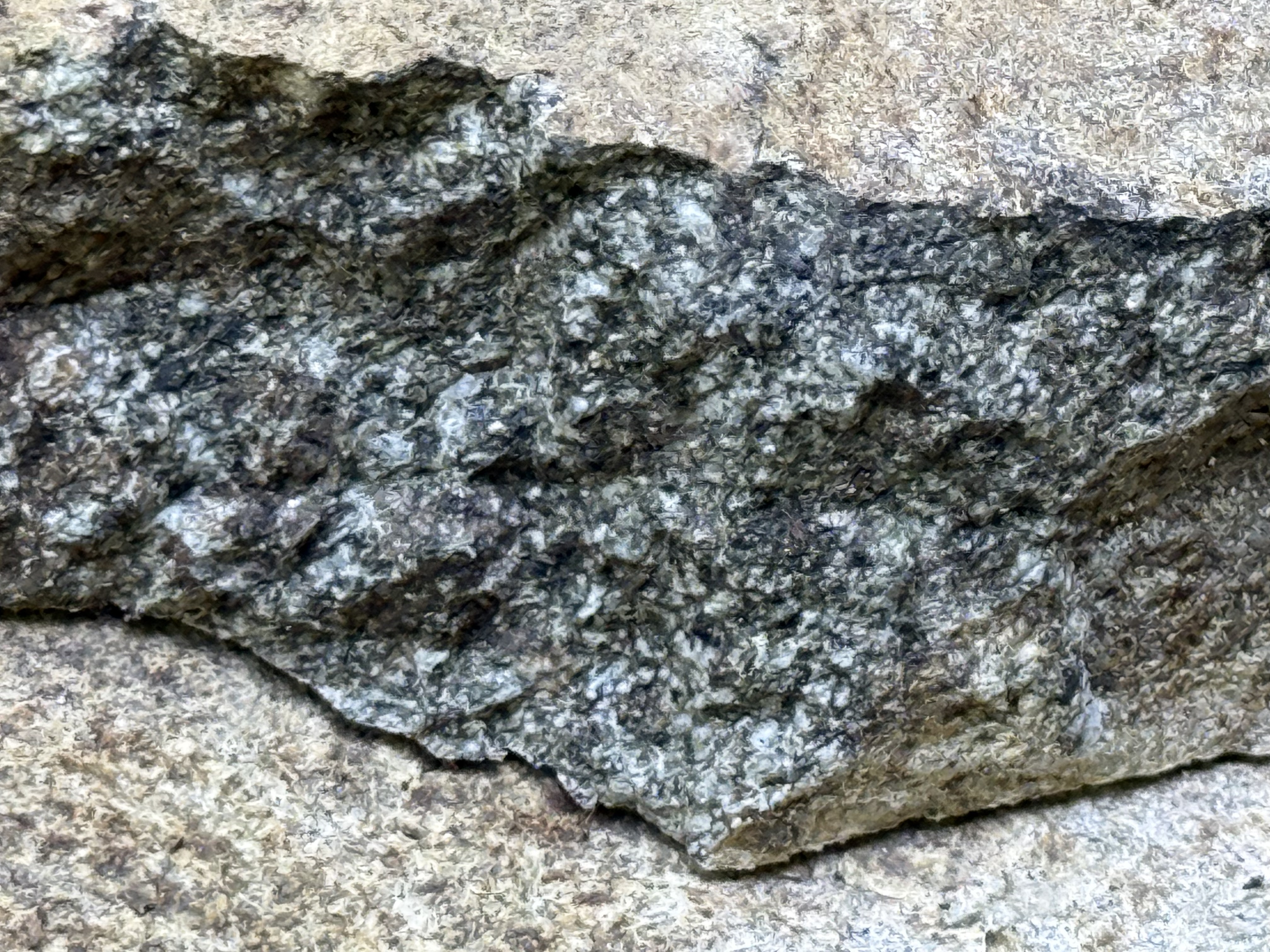
Figure 10. To the naked eye, this close-up of a recently broken piece of the slab in Fig. 9 looks like an intrusive, igneous rock, but it absolutely is not! Ignoring the dark coloration, which is either an organic stain or weathering product, I would say this is probably a coarse sandstone, possibly even a breccia or conglomerate. Breaking it with a rock hammer, to produce a fresh surface, would make identification easy; but we don’t do that in Rocks and (no) Roads. We use the geologic map instead.
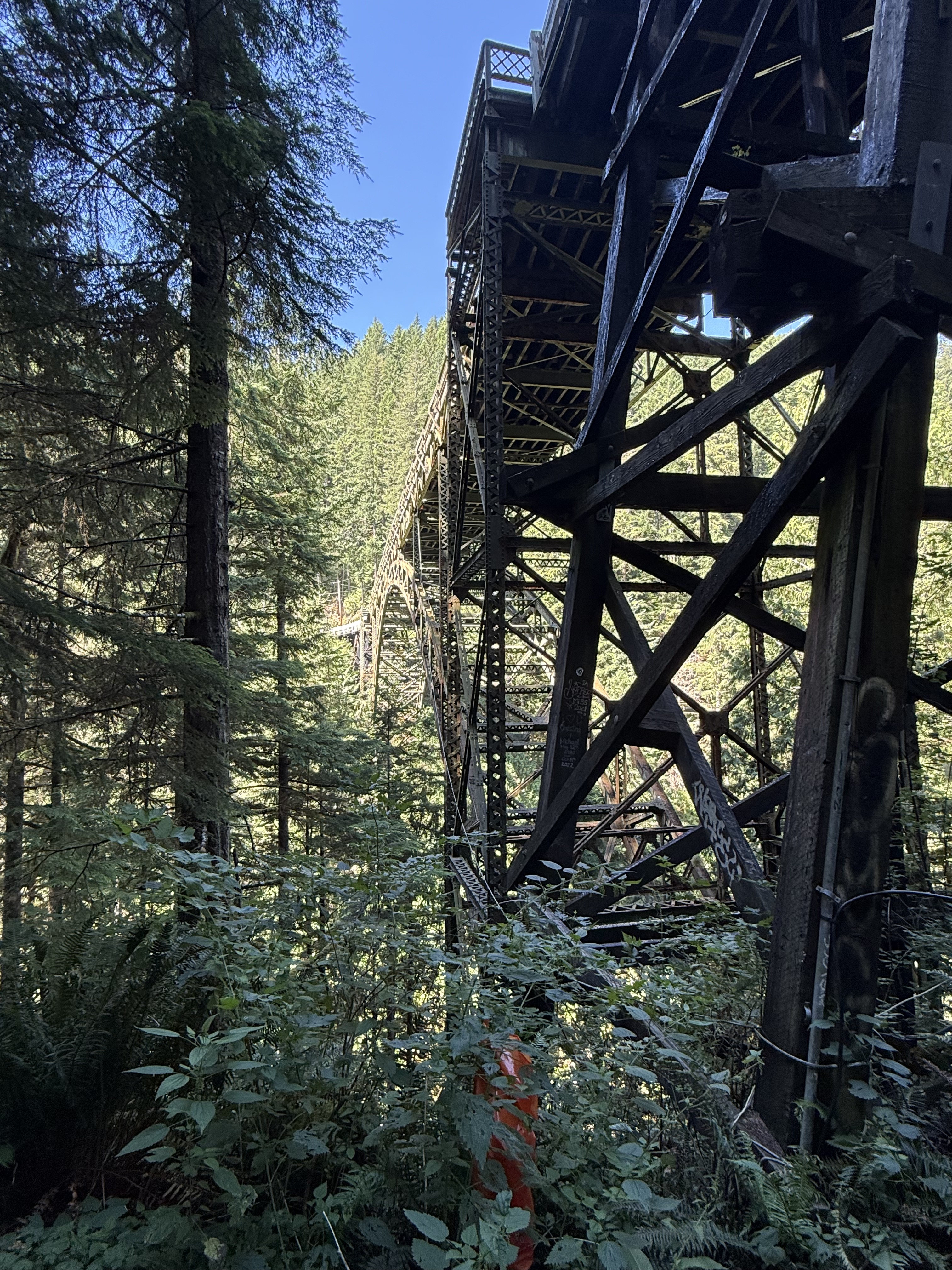
Figure 11. This is the end of the trail, where the road crosses Carbon River across the condemned Fairfax Bridge — closed even to pedestrian traffic. The canyon is 250-300 feet deep here. We climbed a trail to the bridge before we saw the signs on the highway declaring it unsafe for men or beasts.
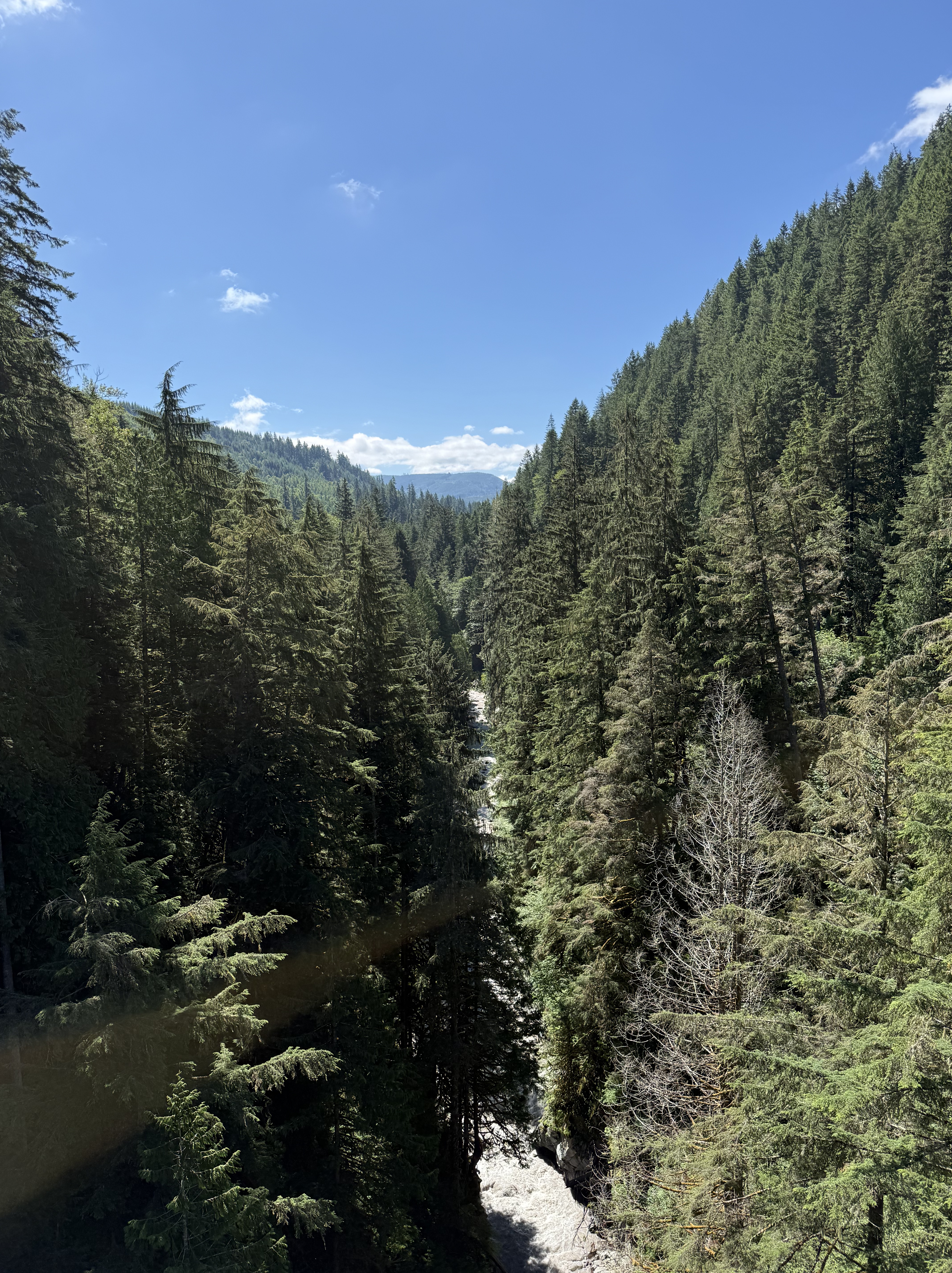
Figure 12. The canyon is very narrow at Fairfax Bridge, and Carbon River is forced into a bottleneck where it drops precipitously from the core of the Cascades. This entire canyon would have been filled with ice during the most recent glacial period. Compare this image, looking upstream, to those from the Nisqually glacier on Mount Rainier. That ice would have melted and advanced, pushing its way downstream, where it would have met the continental glacier covering Puget Sound.
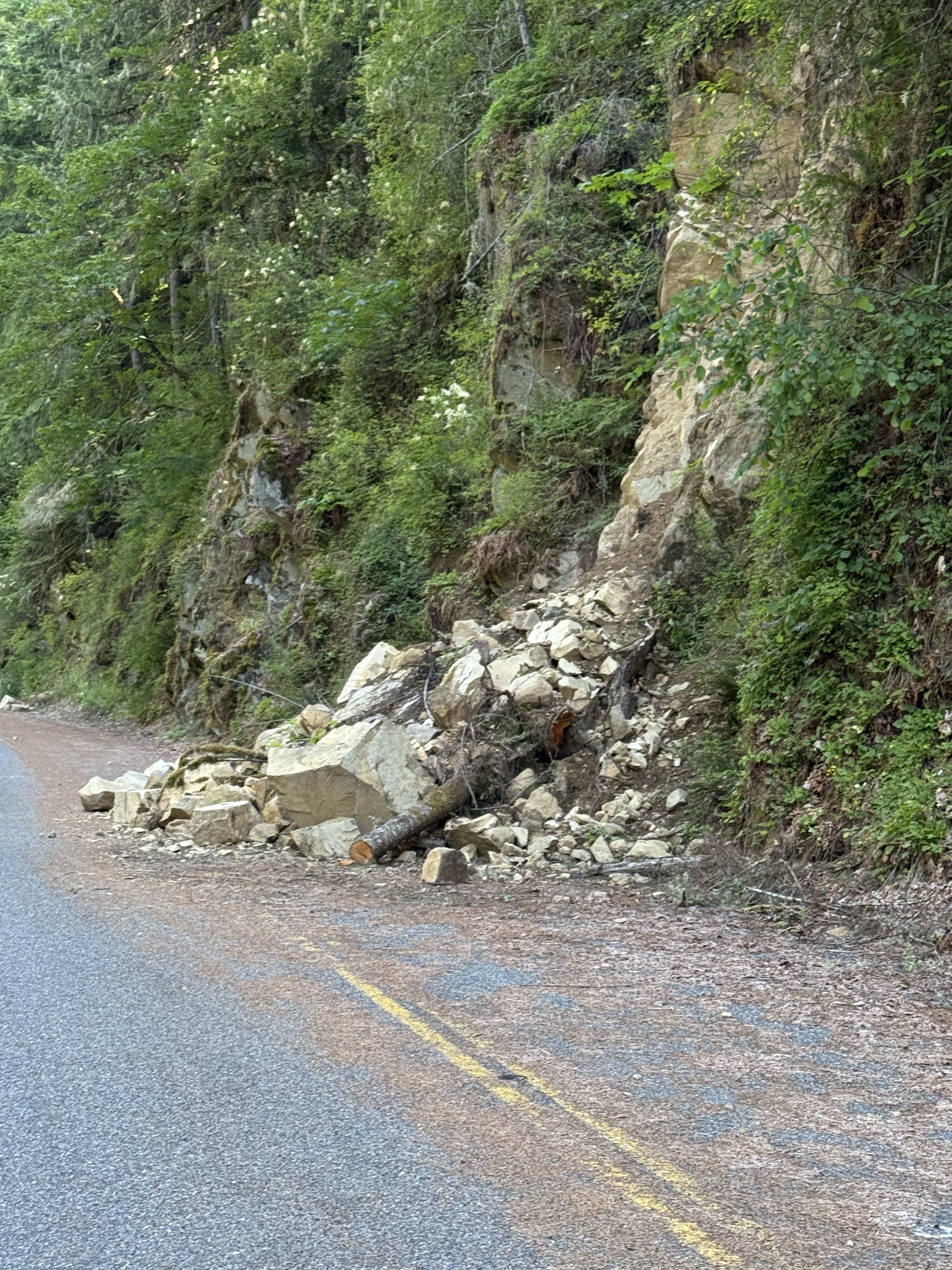
Figure 13. We took the highway back to Carbondale. However, Route 165 is closed and the highway department isn’t maintaining it, so slides like this one are left for geologists to examine. This block is, according to RockD’s geologic map, sedimentary; it looks like sandstone and I didn’t examine it at the time. Note the reddish face on the large block facing the camera; red means this rock was deposited with a lot of oxygen, which means it was in a river and not the ocean, which has a much lower concentration of oxygen.
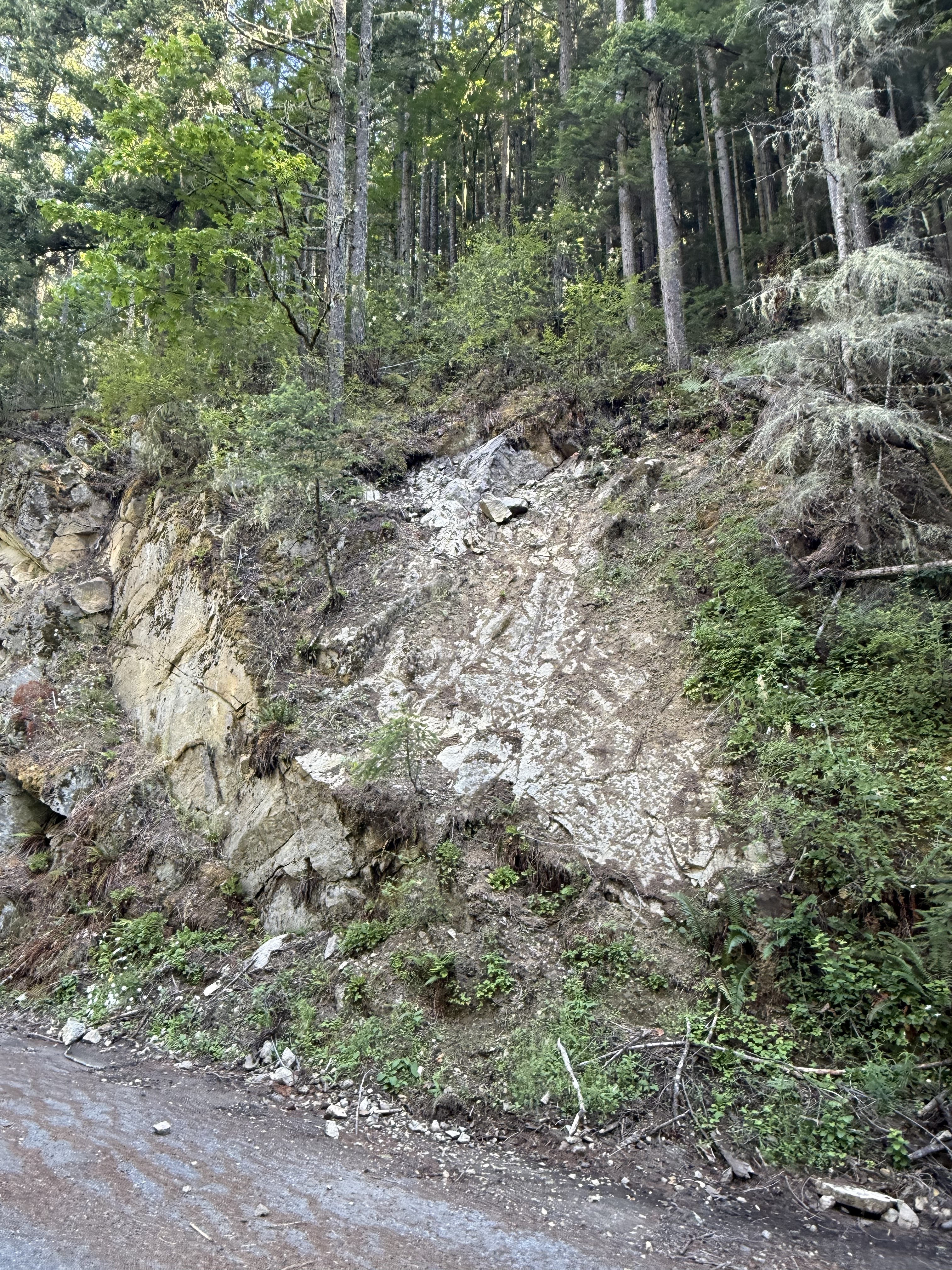
Figure 14. This photo presents a bizarre juxtaposition of geologic features. It was taken a few hundred yards downstream of Fairfax Bridge. The thick layer of sandstone to the left represents the unaltered strata, which has been tilted towards the NE, but not as much as the strata seen in Fig. 8. Such a sudden (spatially) change in orientation is probably why the geologic map (Fig. 2C) shows a fault along the river canyon.
Another interesting feature is the white patch in the center of the photo. I had several hypotheses about this but, after discussing it with CoPilot (aka ChatGPT), I’m going to go with the most plausible scenario: I think this is a layer of shale within the Carbonado Formation, which is both more easily weathered than sandstone, and a surface that can accommodate slippage on a fault more readily. The apparent bedding plane (i.e. the white surface) is an illusion, created by uneven weathering and the constant flow of water down an established channel.
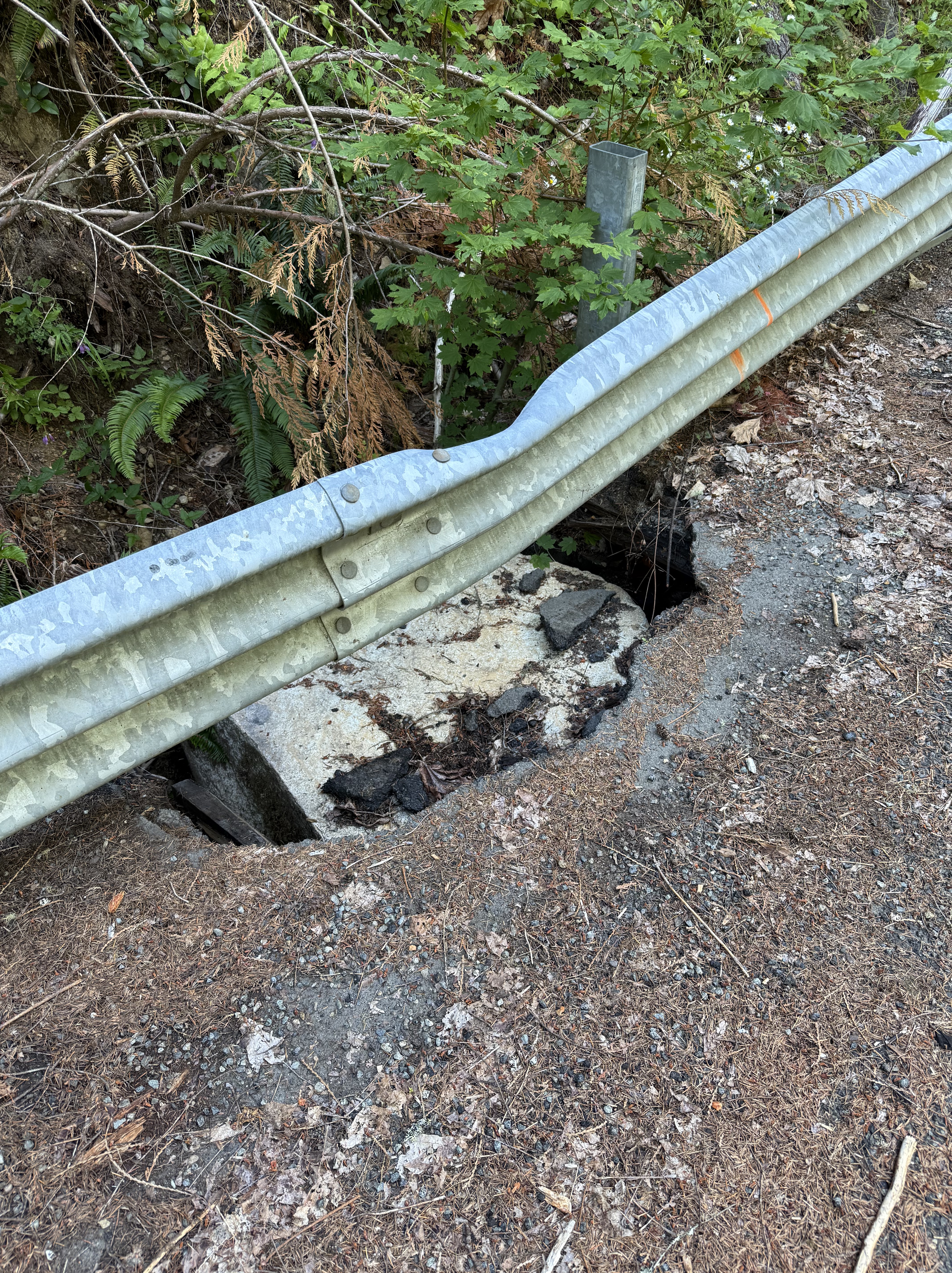
Figure 15. I had to include this image. A block of sandstone, weighing more than a ton, rolled down the steep slope, hit the guardrail, bending it, before slamming into the asphalt road that was weakened by erosion, and smashing into the underlying, water-saturated ground. We noticed several spots where the culverts draining the road were insufficient, allowing water to collect and weaken the roadbed.
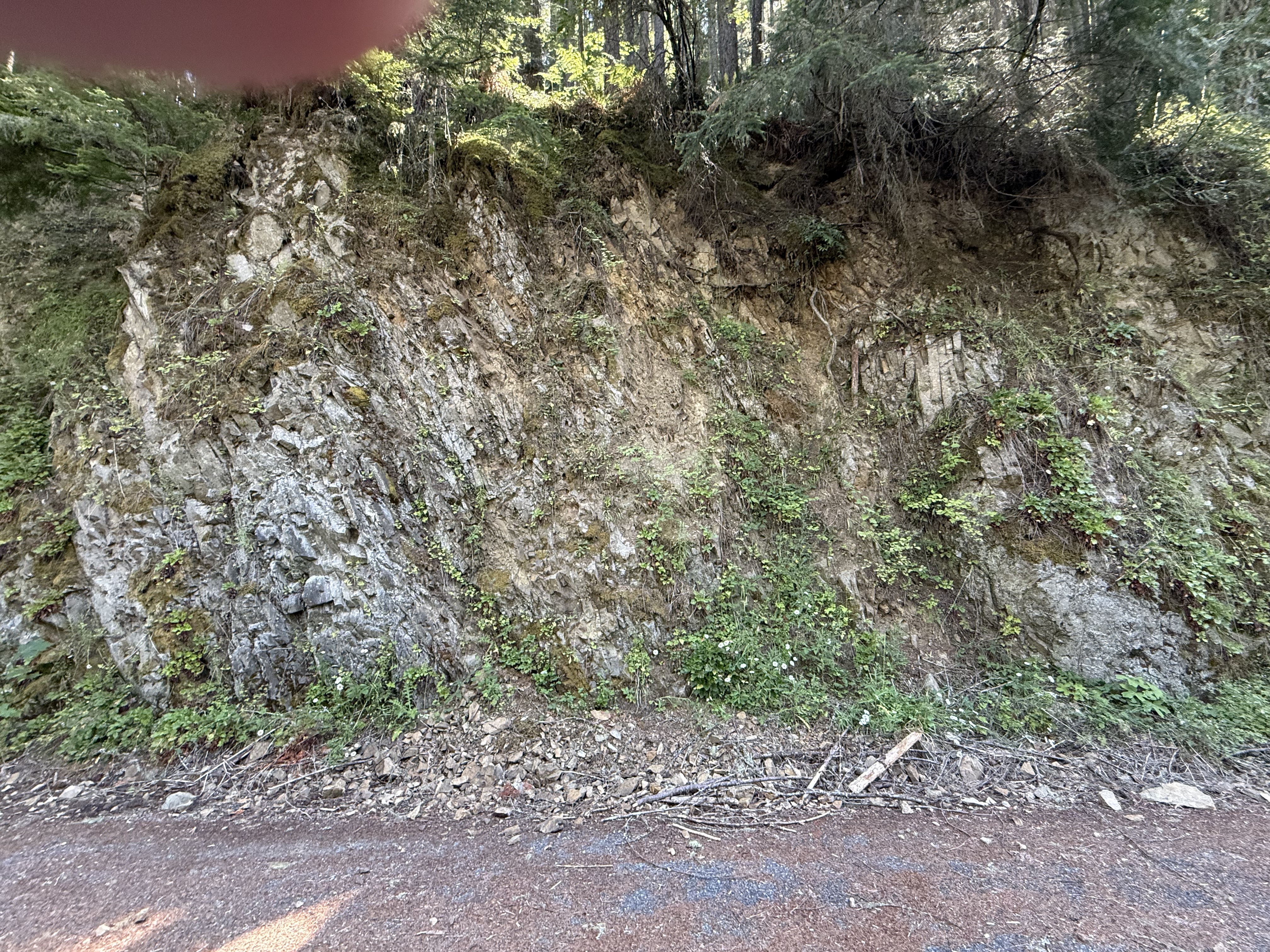
Figure 16. Another couple hundred yards further downstream (towards Carbonado in Fig. 2B), and we find thin layers of shale/sandstone nearly vertical, just like in Fig. 8. I didn’t measure my location precisely, but I wouldn’t be surprised if this is just above (uphill) the earlier observation. Note the layers of mud that resulted from differential weathering of clay layers within the Carbonado Formation.
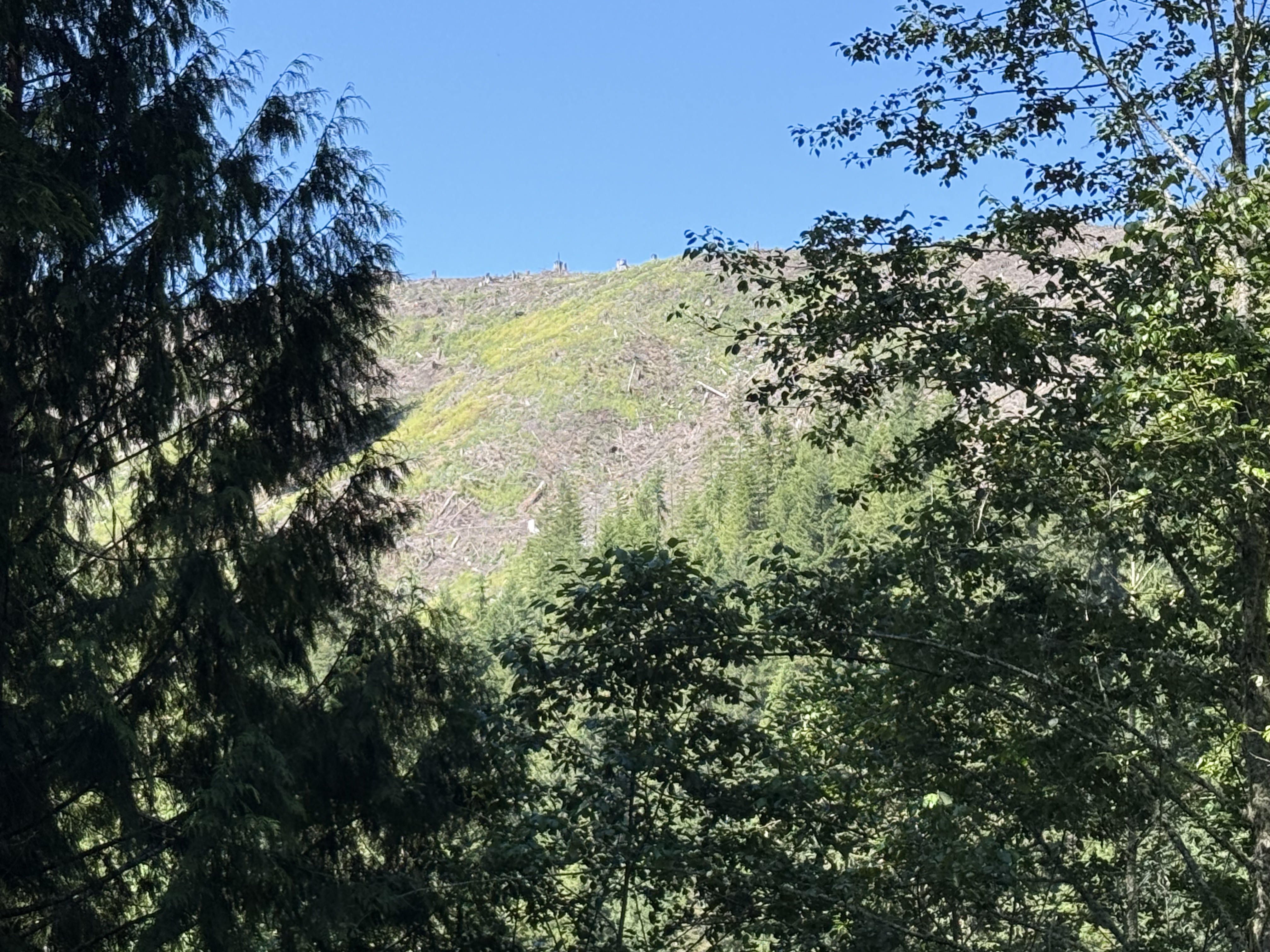
Figure 17. I included this image to explain why the Carbon River was so muddy a few miles downstream (Fig. 1). The canyon wall to the west has been clear cut recently, allowing massive erosion of soil into the Carbon River. This is an ongoing practice in Washington with no attempts to rein in such destructive deforestation — all for the sake of profits. It just pisses me off!
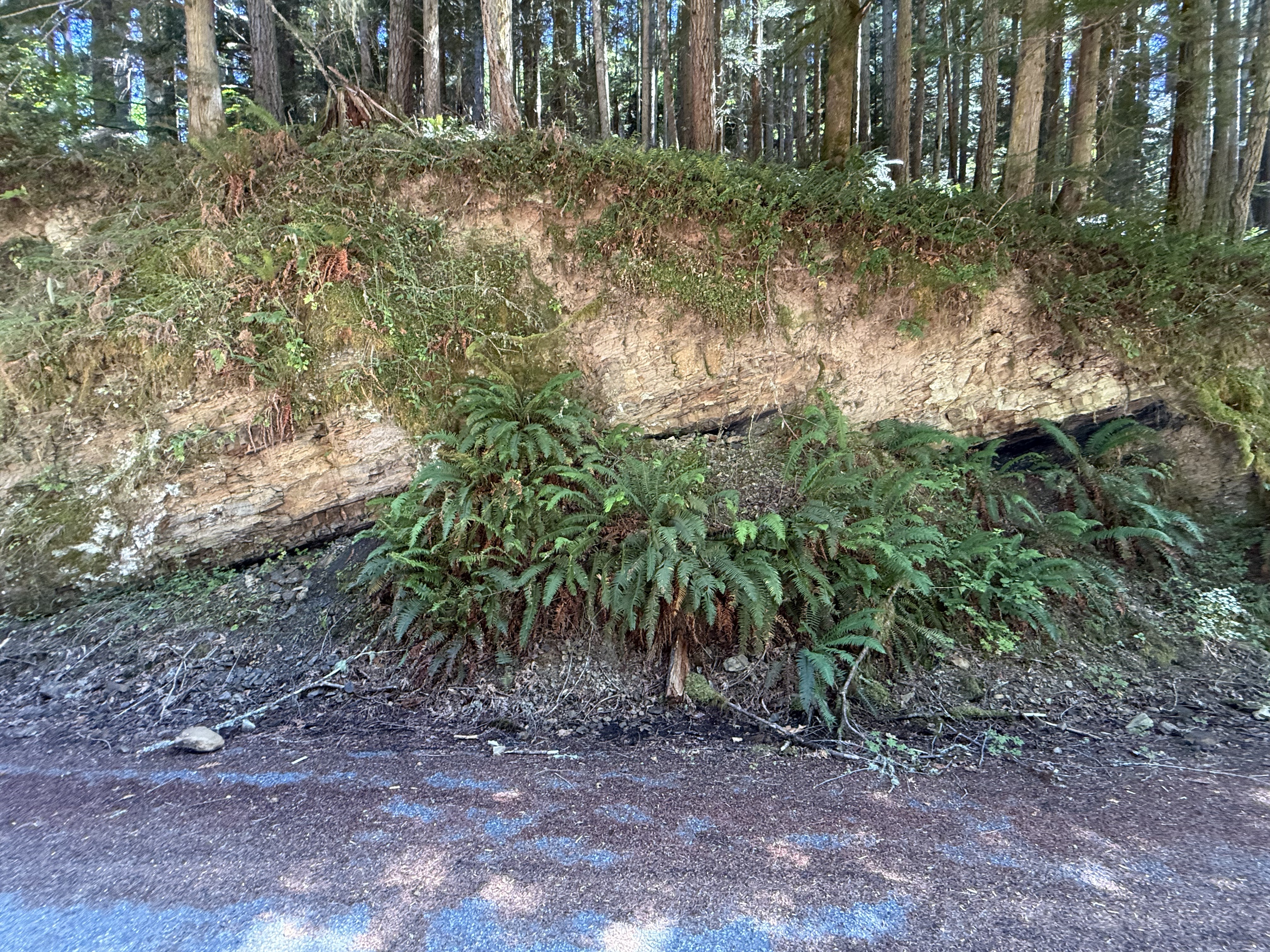
Figure 18. The main point of interest in this photo is that the Eocene sedimentary rocks are oriented differently from those in Figs. 14 and 16; these rock strata are dipping WNW(I didn’t measure strike and dip), rather than vertical or ENE. Faults don’t occur at the surface, but only shallow enough for the rock layers to break rather than bend. Identifying and mapping crustal faults is as much an art as a science because we don’t have the remote-sensing tools to see what lies beneath the surface, whether it is glacial till or bedrock.
Summary
We saw a lot more on this trip than I’d imagined during the 45 minute drive to Carbonado. I’ll put it all together into a chronology and try to relate it to other nearby locations we’ve visited. Let’s start as far back as the rocks will take us.
During the Eocene epoch, about 50 million-years ago, this area was covered with streams, lakes, and, presumably, forests. There were no rivers like the Carbon back then — the sediment consisted primarily of sand and silt, with a smattering of clay. These sediments were eroded from an active volcanic complex. Further west, along the Pacific coast of the Olympic Peninsula, contemporary rocks include turbidites deposited in deep water, probably submarine fans, and tectonic breccias. This tectonic environment has persisted to the present day. We examined one of these volcanoes, from the Miocene (~23-5 Ma), at Pinnacle Peak. We didn’t see any evidence of a nearby volcano today; instead, we saw several boulders that revealed what was going on within the magma chambers beneath the Cascades volcanoes.
Subduction didn’t end during the ensuing millions of years, but the earth changed. Ice sheets appeared during the Pleistocene (~2.4 Ma), covering the PNW while alpine glaciers formed in the valleys dissecting the volcanoes. Finally, about 500 thousand years ago, a really big magma chamber constructed Mt. Rainier; and Carbon River began to wind its way from the flanks of this monstrous volcano to the Puget Sound trough during interglacial periods. This entire canyon would have been filled with ice during cold periods. It was during this period that Carbon River would have emerged from the eroding, ice-covered terrain. It didn’t cut its canyon but inherited it, and transported the remnants of a permanently altered terrain.
During glacial retreat, thick blankets of sediment were deposited by rapidly flowing rivers fed by the glaciers. This occurred repeatedly for two million years, culminating in the most recent glacial deposits seen in Fig. 6. However, this process of glacial advance and retreat occurred within both the vast continental glacier and the alpine glaciers, resulting in overlapping layers of poorly sorted sediment.
One final word: the muddy water we saw in the Carbon River is probably caused by the clear-cutting of the steep slopes defining its canyon; however, glacial melt during the summer transports a lot of fine material from beneath the glaciers covering Mt. Rainier. When we visited the Nisqually glacier and viewed the headwaters of Nisqually River in December, the water was crystal clear. Maybe the water turns opaque every summer.
It has been a wild ride through the last 50 million years along the modern Carbon River.


Recent Comments