Review of “You Don’t Want to Know” by Lisa Jackson

The title says it all.
I bought this book because the back cover suggested that this is a story about a woman who had a mental breakdown and finds herself doubting her own sanity after attempting suicide and hallucinating her missing son’s presence after two years. The author does a great job on the character arc. I had to keep reminding myself that the central character’s self-destructive behavior was due to her mental condition. That’s where my interest ended.
I don’t read mysteries in general because they are formulaic. The reader can’t help trying to figure who did what, which is a waste of time because the author can do anything they want to spice up the story and maintain interest. One of the comments read, “Multiple red herrings and a host of sinister characters help keep the pages turning.” I guess I don’t know what makes a good red herring because I was tabulating points for/against each character’s likelihood of being the bad guy, rather than jumping at every insult and personal snub.
I don’t think a 604-page book can be a page turner. More than 200 pages passed in boredom before anything happened, partly because the author kept repeating the biographies of the many characters. Things sped up after that, but I’d already lost interest. I truly didn’t want to know who did what to Ava Garrison.
The author used a technique I’ve used myself, which unfortunately paints the narrative into a corner. Many of the chapters begin in a scene and then summarize an event from the past, which requires use of the past perfect tense (e.g., she had gone to work). This is great until it isn’t. This book abuses it, often relating pages of past events and overusing the past perfect, sometimes with two phrases like the example above in one sentence. I don’t know if there are any rules about this, but I use readability as my guide; the author pushes this well past that point.
There were some well-written scenes with “nail-biter” tension. I guess that’s what Jackson is known for. Overall the book is okay, but way too long and repetitive. It’s too long to be a quick read and the subject isn’t worth 600 pages–maybe 350.
I think that authors/editors don’t read books from the reader’s perspective.
A Tour of the USS Turner Joy in Bremerton, Washington
Introduction
I’ve visited a lot of vintage, military ship museums all over the country, from Revolutionary War frigates to WWII aircraft carriers, but this is the newest vessel I’ve ever seen up close. The amount of information on how the complex propulsion, weapons, and personnel systems operated was overwhelming. This is undoubtedly the most complete ship museum in my memory.
The Turner Joy (DD-951) was commissioned in 1959 and serves as a transition between the relatively simple warships of the 40s and the digital, guided-missile destroyers of the 70s. Radar is integrated into the fire-control system. Analog computers are used to aim the 5-inch main guns using target data from a web of analog inputs. Nevertheless, this class was obsolete after twenty years of service; DD-951 was selected as a memorial in 1988 and is being constantly restored to its original condition.
This post follows the self-guided tour, which includes maps of the ship’s layout and the tour stops. The systems aren’t presented as such, but instead the visitor follows a reasonable path through the ship from stern to bow. This keeps tourists from running into each other. There were several groups with children when we visited; and I can say that the visitor flow is smooth and results in few bottlenecks.
Let’s take a look.
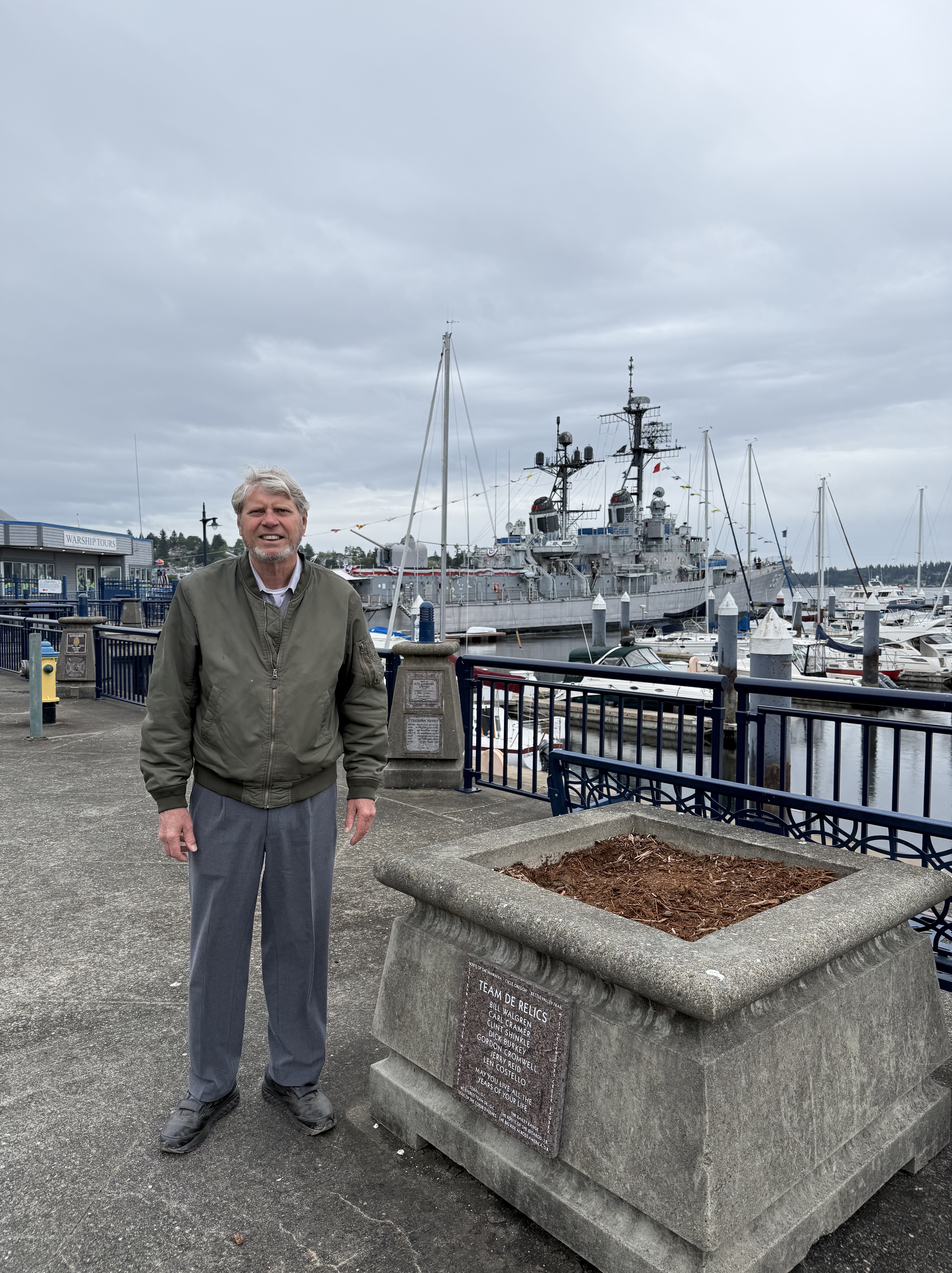
It was a day defined by intermittent drizzle and sprinkles of rain, so we didn’t spend a lot of time in the open. That’s the Turner Joy behind me as we prepare to buy our tickets. I got a senior discount that cost $20.
1. Aft five-inch gun mount
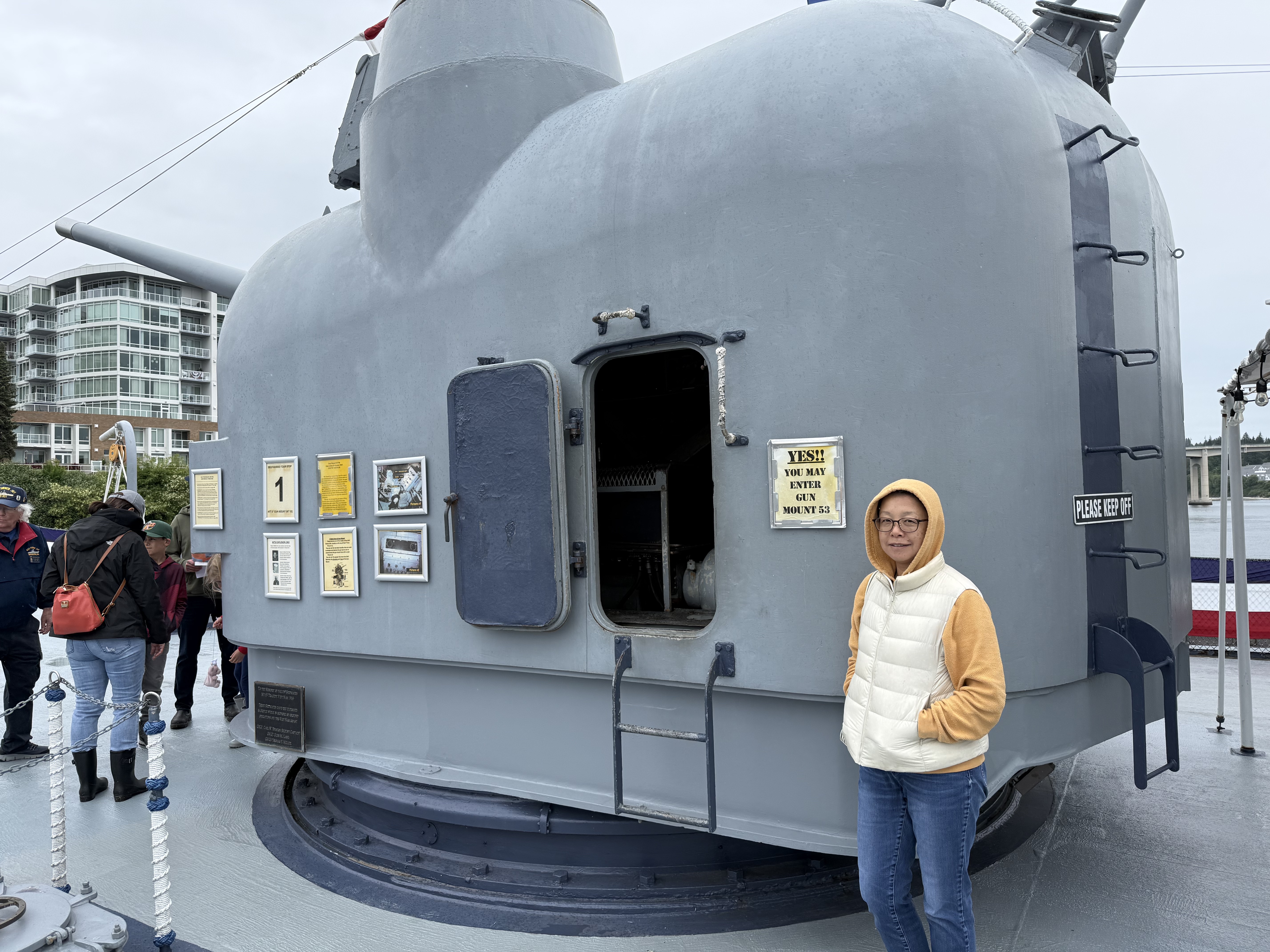
This is one of three turrets housing a five-inch, autoloading cannon. The turret is only the tip of the iceberg…
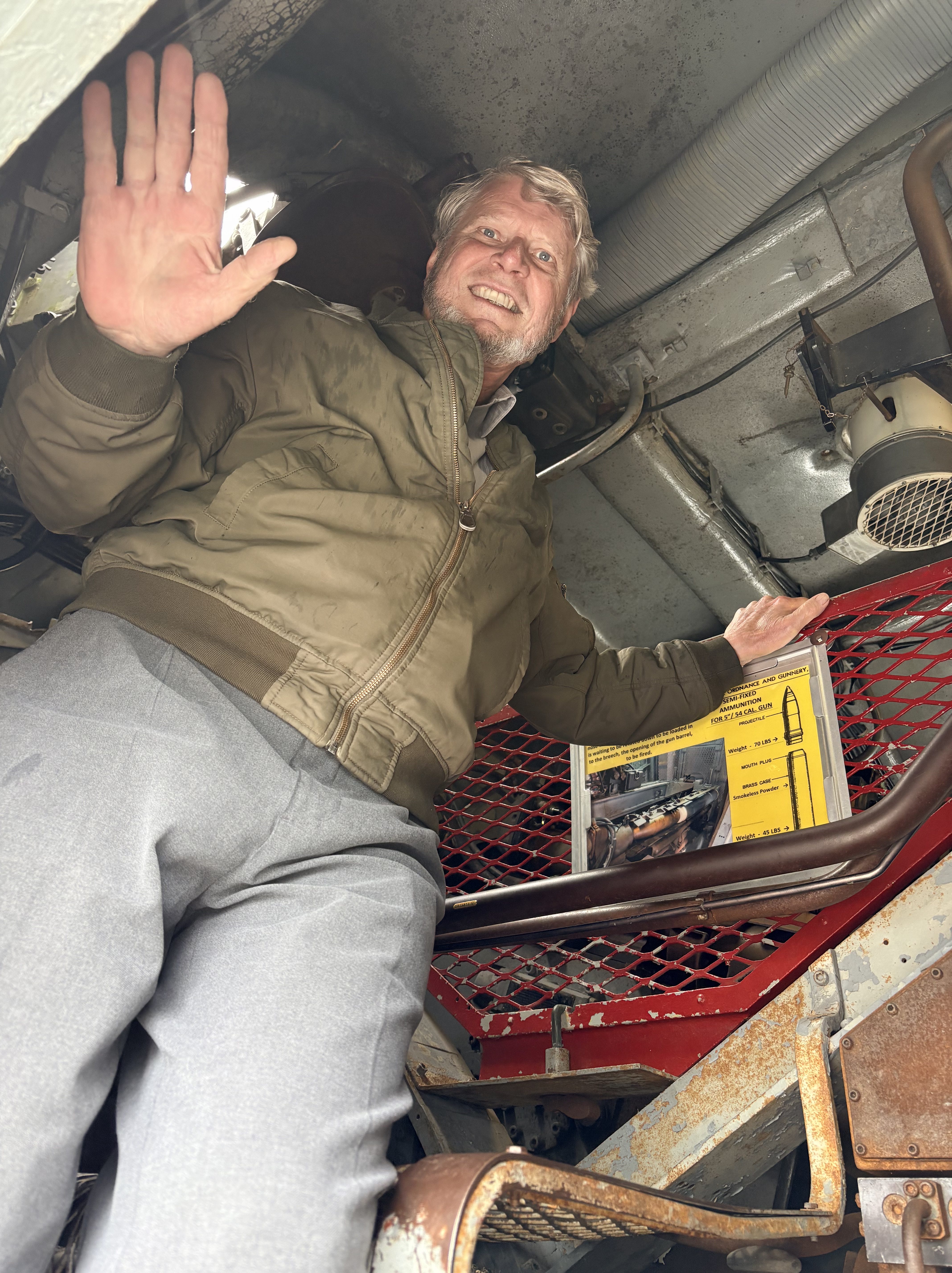
I crawled through the hatch in the side of the turret to discover this is an unmanned space, filled with a single gun. Where I’m standing is the only open space in the turret.
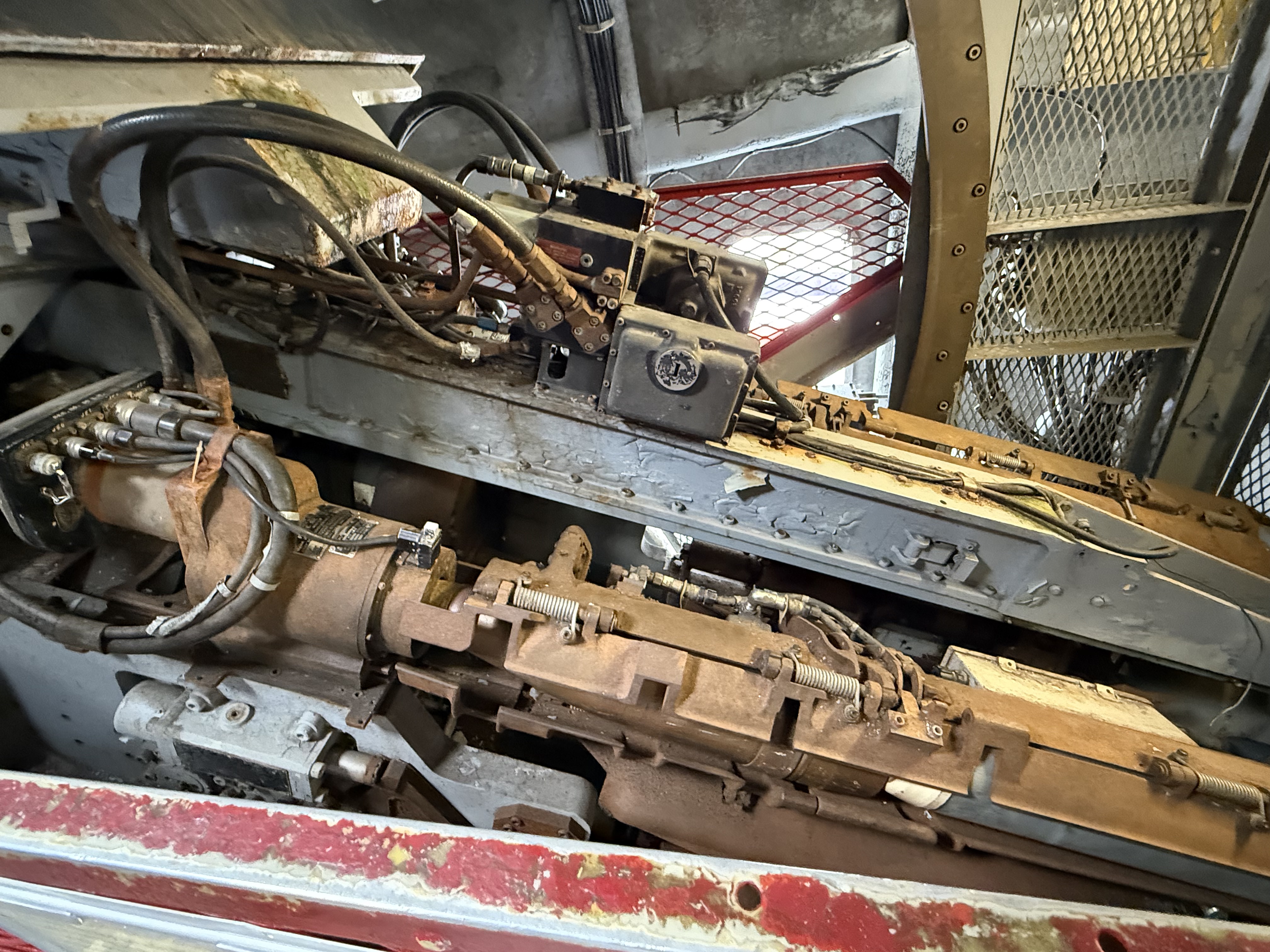
The rusty steel “tube” in the lower part of this image arms the projectile just before it is loaded. This is part of a fully automated loading system that transfers the projectile from the loading tray to the breech. This can’t be operated manually under any circumstances. Fully automated but 100% analog, using hydraulic and electrical power.
2. Aft berthing area
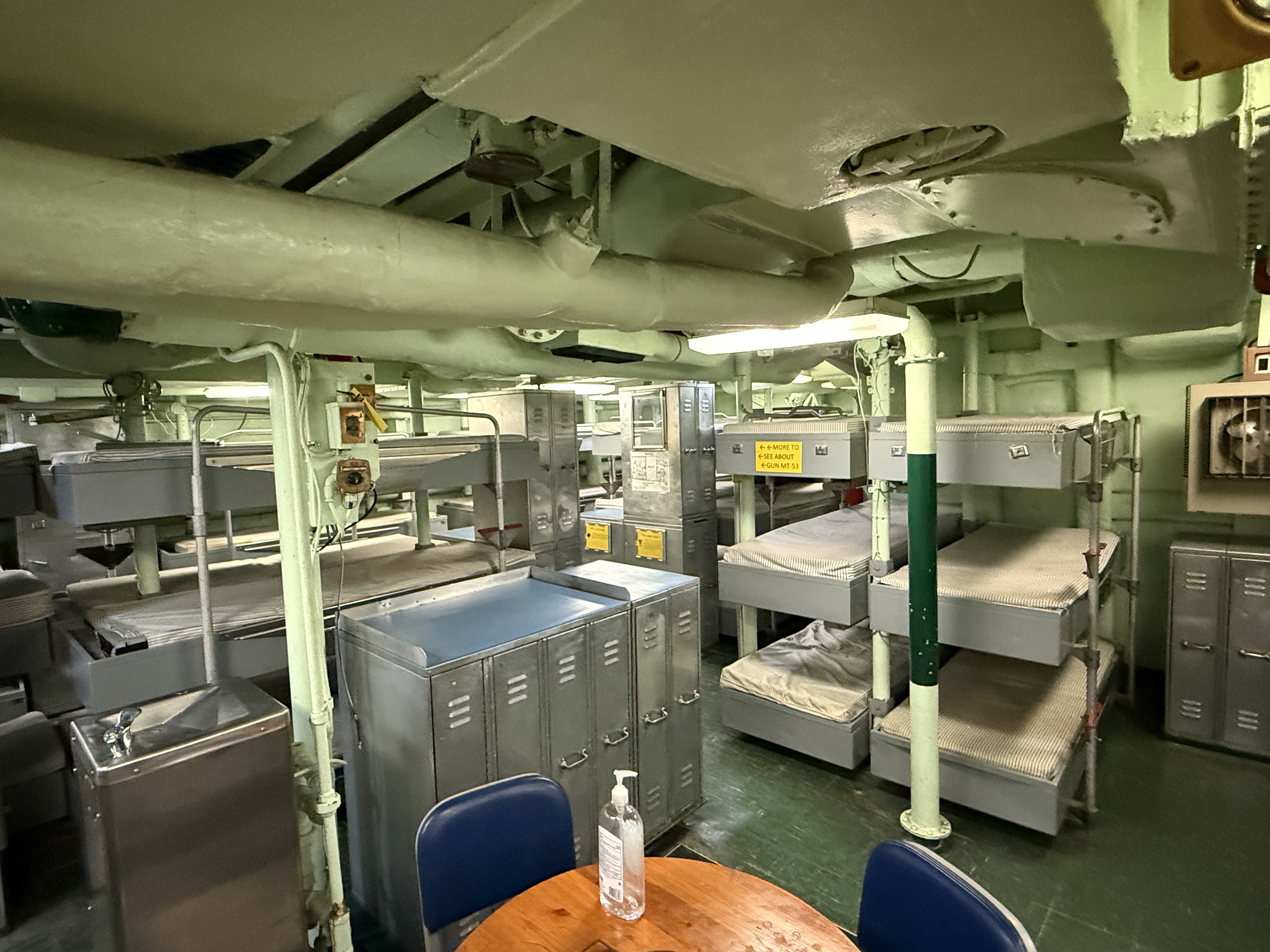
Spaces filled with triple-bunks were scattered throughout the hull, filling every nook and cranny with sailors, and there were over 300 of them. I think they each had their own bunk and locker. By the way, they got paid in cash while at sea and could purchase items like cigarettes, candy, and soda from the ship’s store. Higher ranking enlisted men could even buy better food!
3. Five-inch gun carrier room
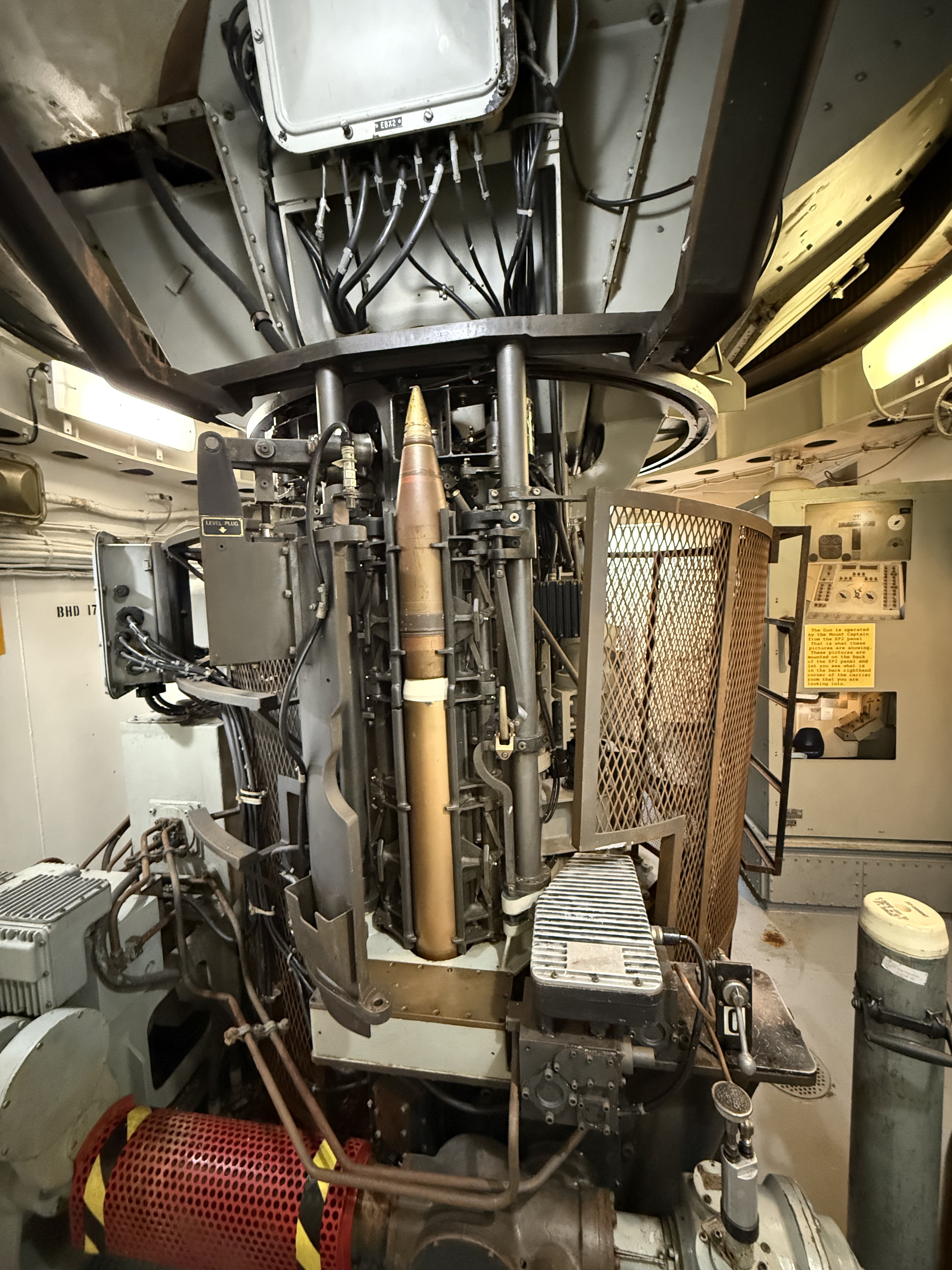
Sailors passed these 70-pound explosive projectiles (the upper part of the vertical tube in the center of the image) through the ship’s passageways and loaded them into a revolving storage system like the cylinder of a revolver. Everything after that was automated. There was one on display that you could try to lift. It was pretty heavy. I didn’t have time to read all of the placards, so they might have explained how the propellant was loaded–perhaps the lower part of the loaded round in the photo? The entire assembly rotated with the turret on the deck above.
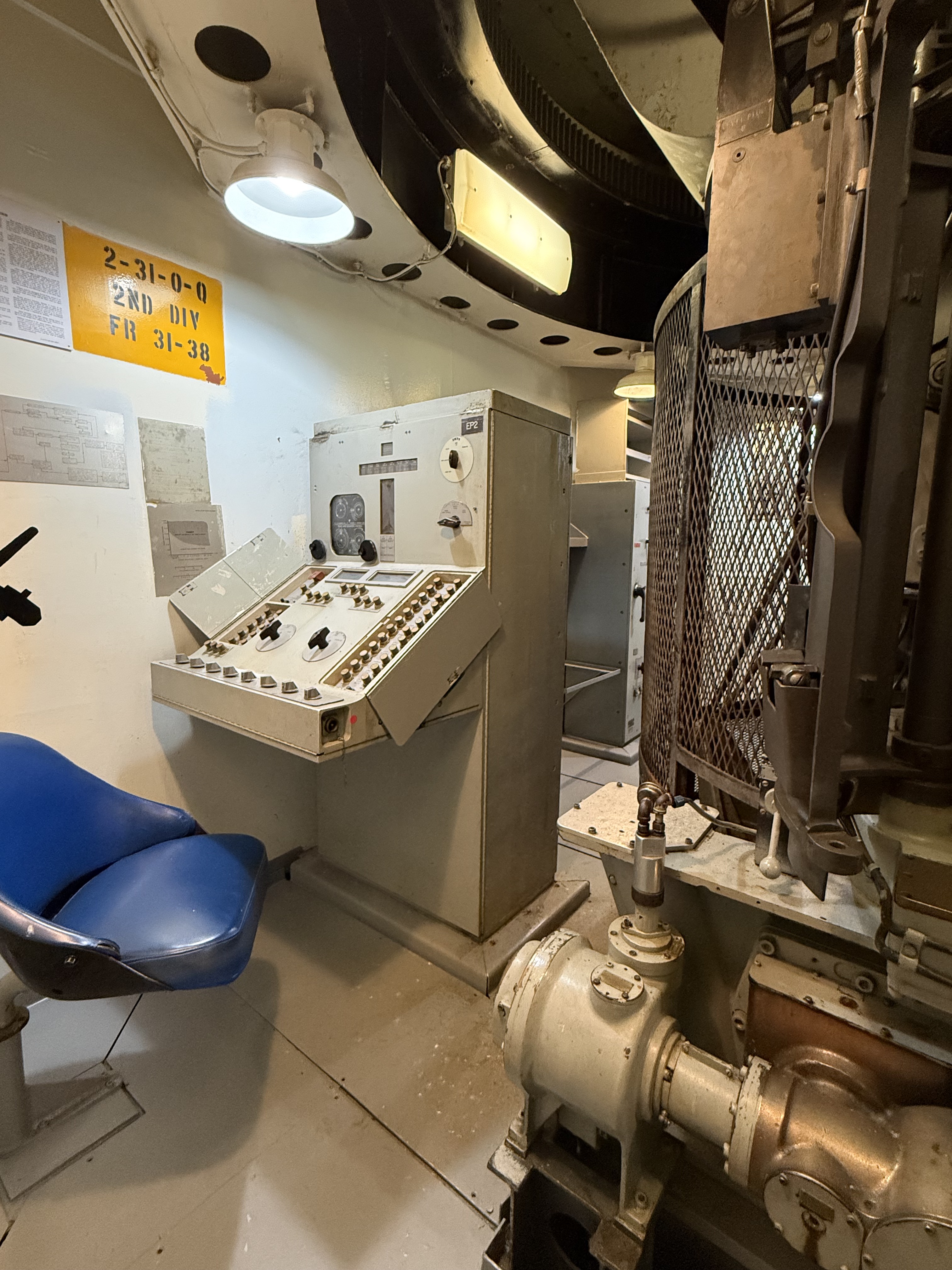
The Mark 56 system broke down the problem of acquiring a target, calculating the trajectory, and aiming the weapon into a sequence of tasks. The final job was pointing the gun precisely where required to deliver the shell on target; that crucial step was completed by the gun aimer who sat in the blue chair. Imagine what it would have been like during battle operations: the gun overhead is firing every few seconds with a deafening retort while sailors are passing shells in and loading them, all the time with new firing data coming from somewhere else within the ship. That’s the analog world.
4. After steering
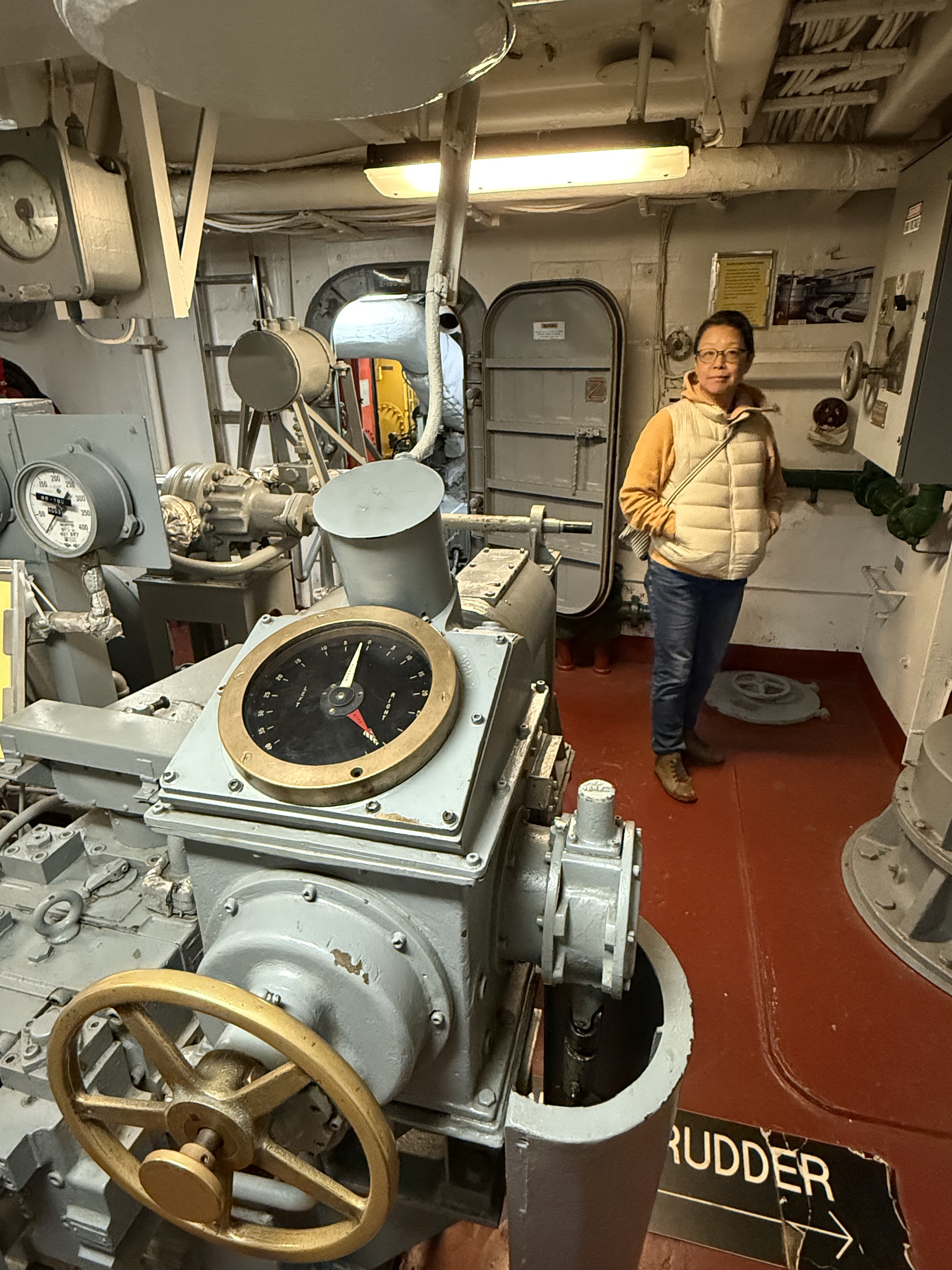
Here we are deep within the hull at the absolute rear of the ship. The steering wheel in this photo is for the right rudder; there is a mirror image on the other side of the room. This is where a sailor actually steered the ship, or at least his half of it. The steering system is a masterpiece of energy inefficiency. Steam/diesel power was turned into electricity, then into hydraulic pressure by a pump just visible in the center of the photo; all so that there was constant pressure available to turn the rudders; and there were analog backups. The circular housing at the right is the actual rudder, operated by that constant hydraulic pressure, controlled by that little wheel. Amazing!
5. Aft engine room
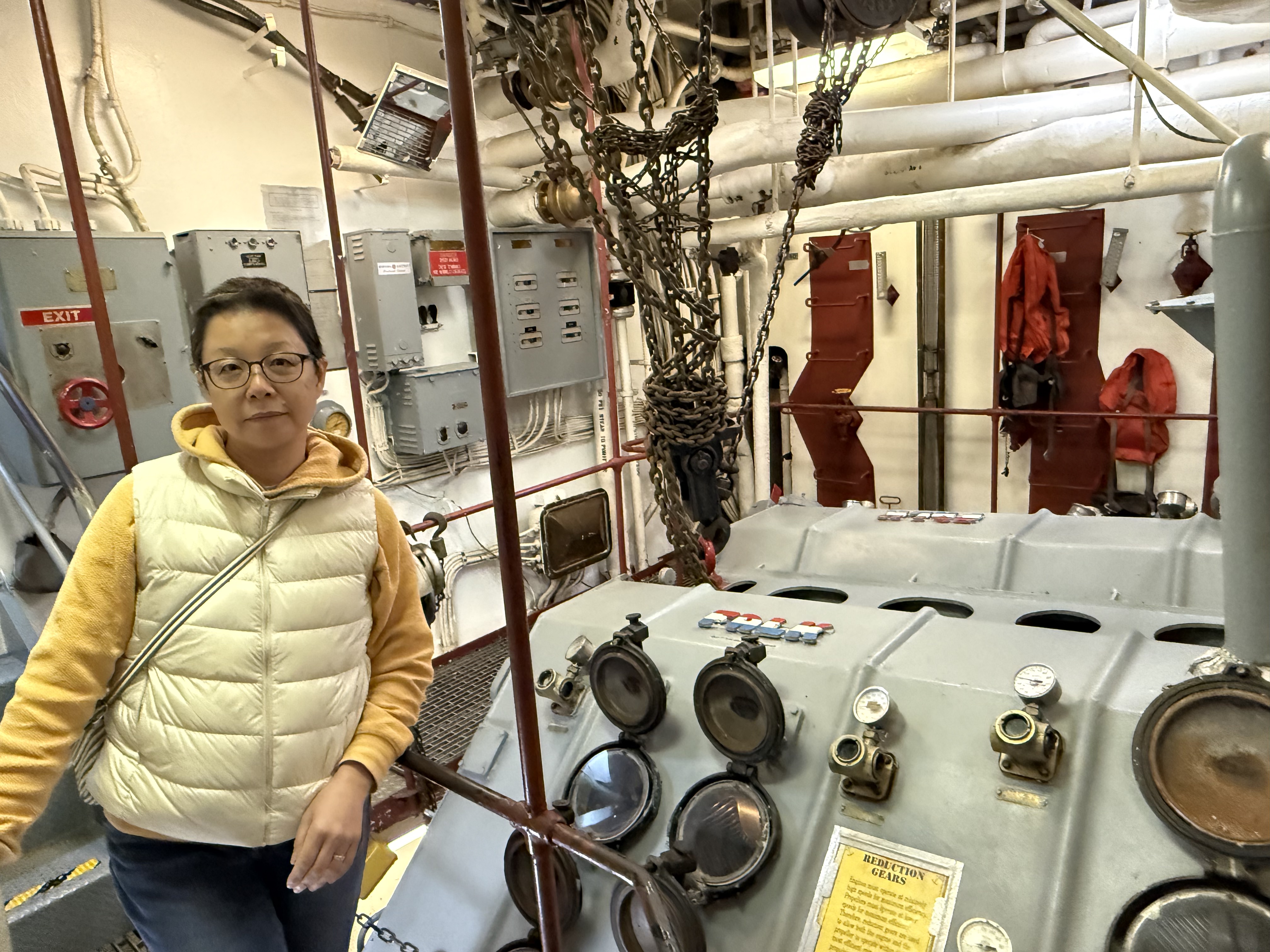
This is the gearbox that reduces the high-rpm steam turbine’s shaft speed (3000-6000 rpm) to something that will turn a propeller without cavitation (250-300 rpm at full speed of 32 knots) and thus achieve the maximum efficiency. Those open viewports (center lower) reveal a toothed gear that must be three-feet in diameter. The noise must have been incredible.
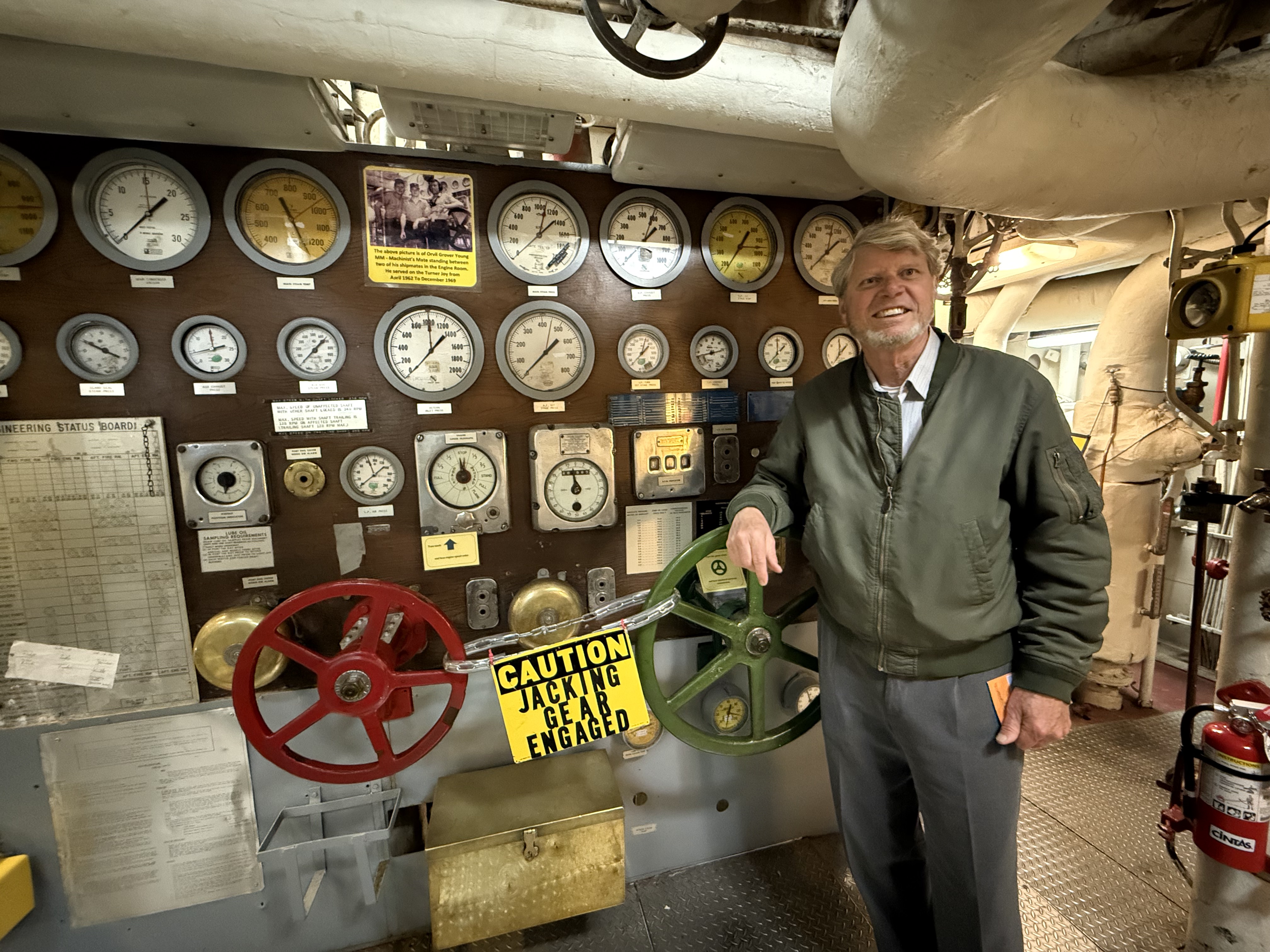
This is the control panel for the steam turbine. I’m sure that most of those gauges could be ignored most of the time, but the engineer in charge couldn’t let their guard down for a minute or all hell would break loose. Each turbine produced about 35K shaft horsepower at 3000-6000 rpm, which means they could make a mess of the engine room and its occupants if not monitored.
6. Aft fire room
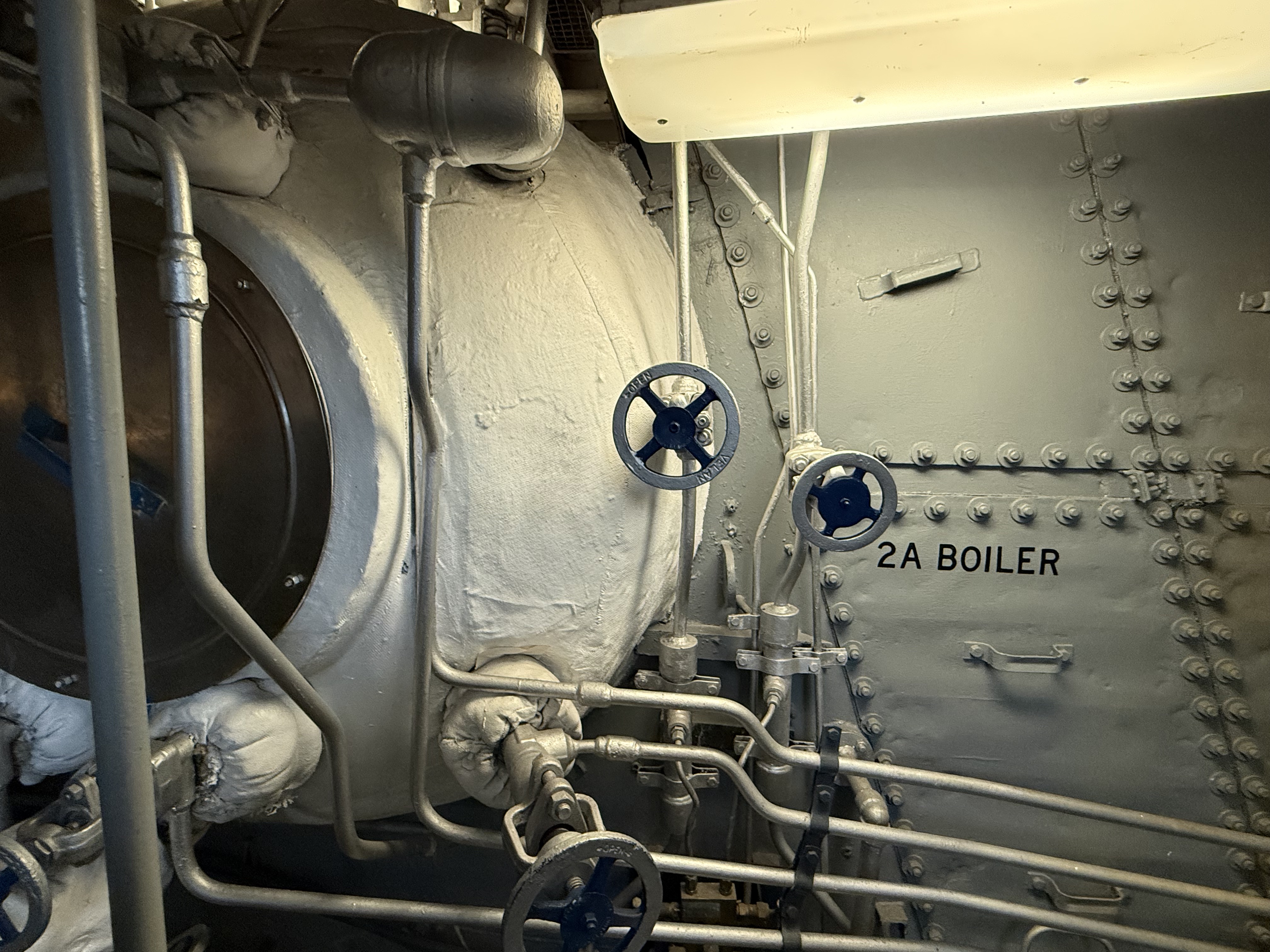
This is a limited view of one of the four boilers on the Turner Joy. There were four of these behemoths to drive two steam turbines. They extended beneath the deck grating floor to the bottom of the hull.
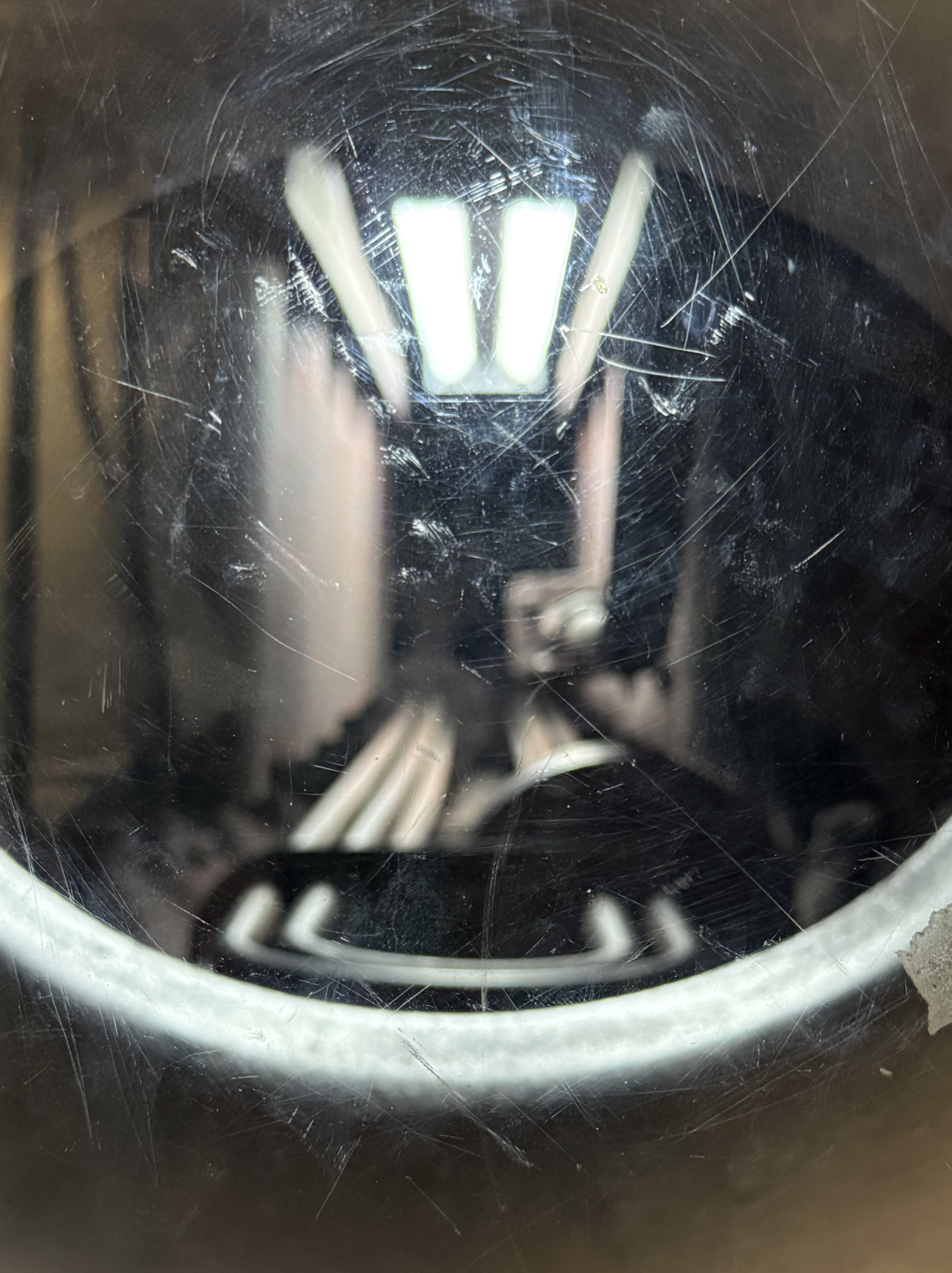
One of the boilers had a viewing window installed to allow visitors to see the heating element for the water. The bright lights at the top of the photo are fluorescent lights installed to make it easier to see inside. I don’t know how many heating coils there were, but I’m sure this is only the tip of the iceberg.
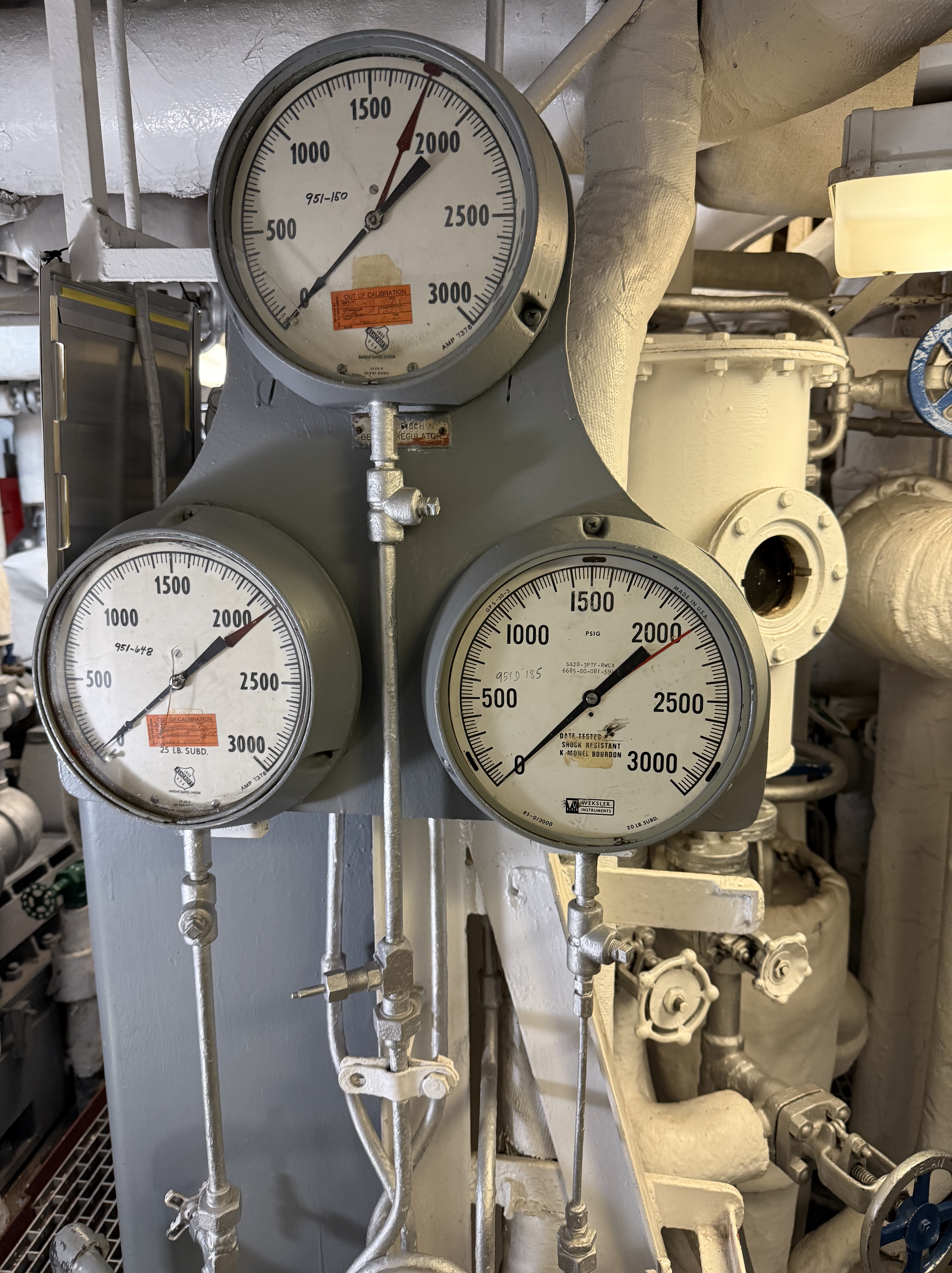
I wish the steam pressure gauges showed nominal pressures, which I think were about 600 psi. The temperature would have been over 700 F. That would explain why all of the pipes were wrapped in several inches of insulation. In fact, I wanted to take pictures of the 3D propulsion system, which extended twenty feet down to the keel, but it was impossible. This entire area is filled to the brim with pipes and large electrical cables going in every direction. God help anyone who wanted to troubleshoot this system! I guess that’s why it was built with so many analog redundancies and safety protocols. I’ll bet these guys checked these gauges in their sleep!
7. POW memorial
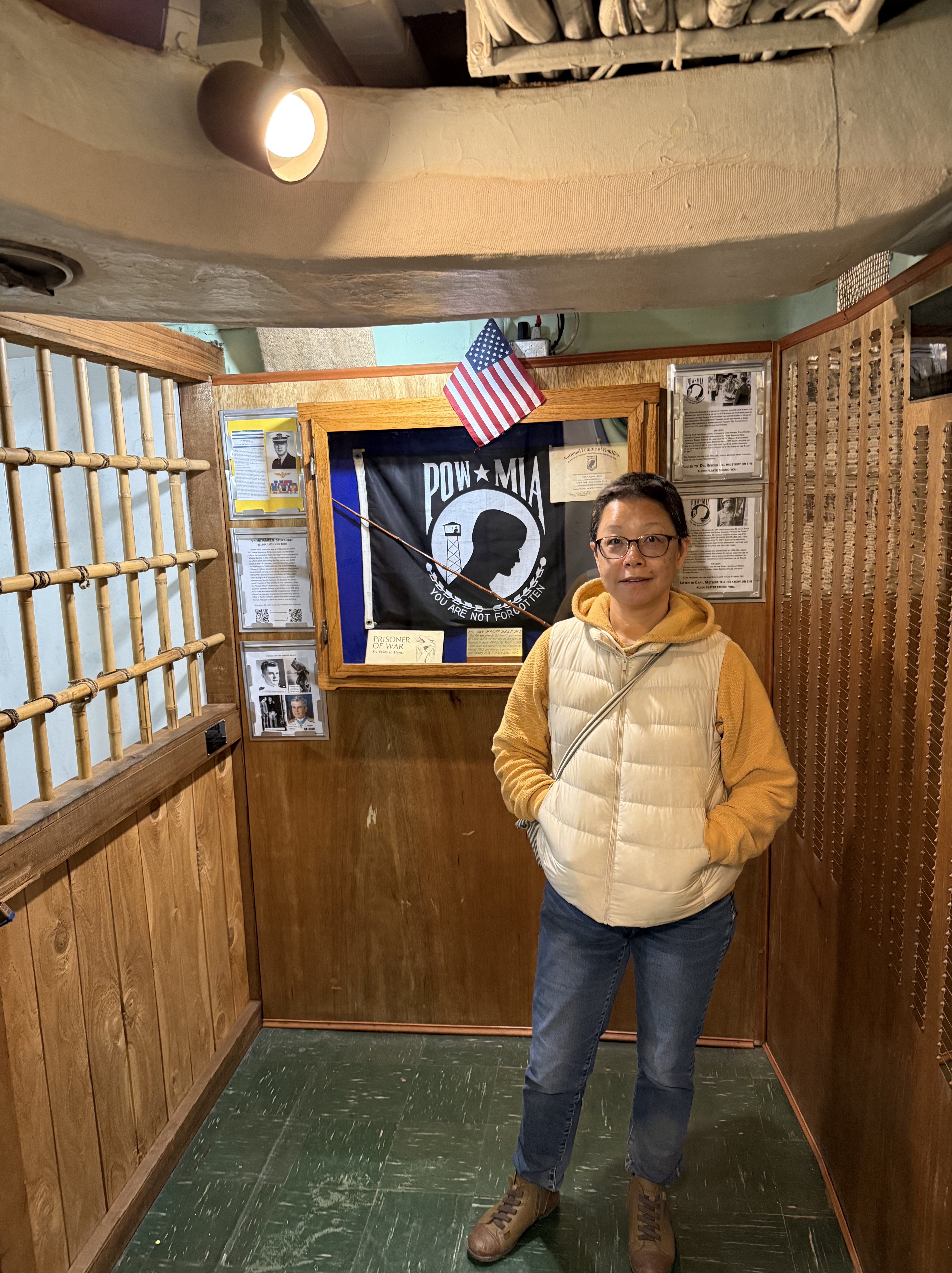
I fell asleep at the wheel. The bamboo grate to the left revealed a mannequin sitting on the floor with their feet manacled to the floor. There is a list of the POWs that were finally returned after the Viet Nam war ended. A historical note is that the USS Turner Joy was hit by artillery fire from shore while on patrol off the coast of Viet Nam; it returned fire and thus officially started the ensuing quagmire that resulted in humiliation of the US in Southeast Asia. It served throughout the conflict, supplying artillery support for military action in the littoral zone.
8. Gunfire control room one
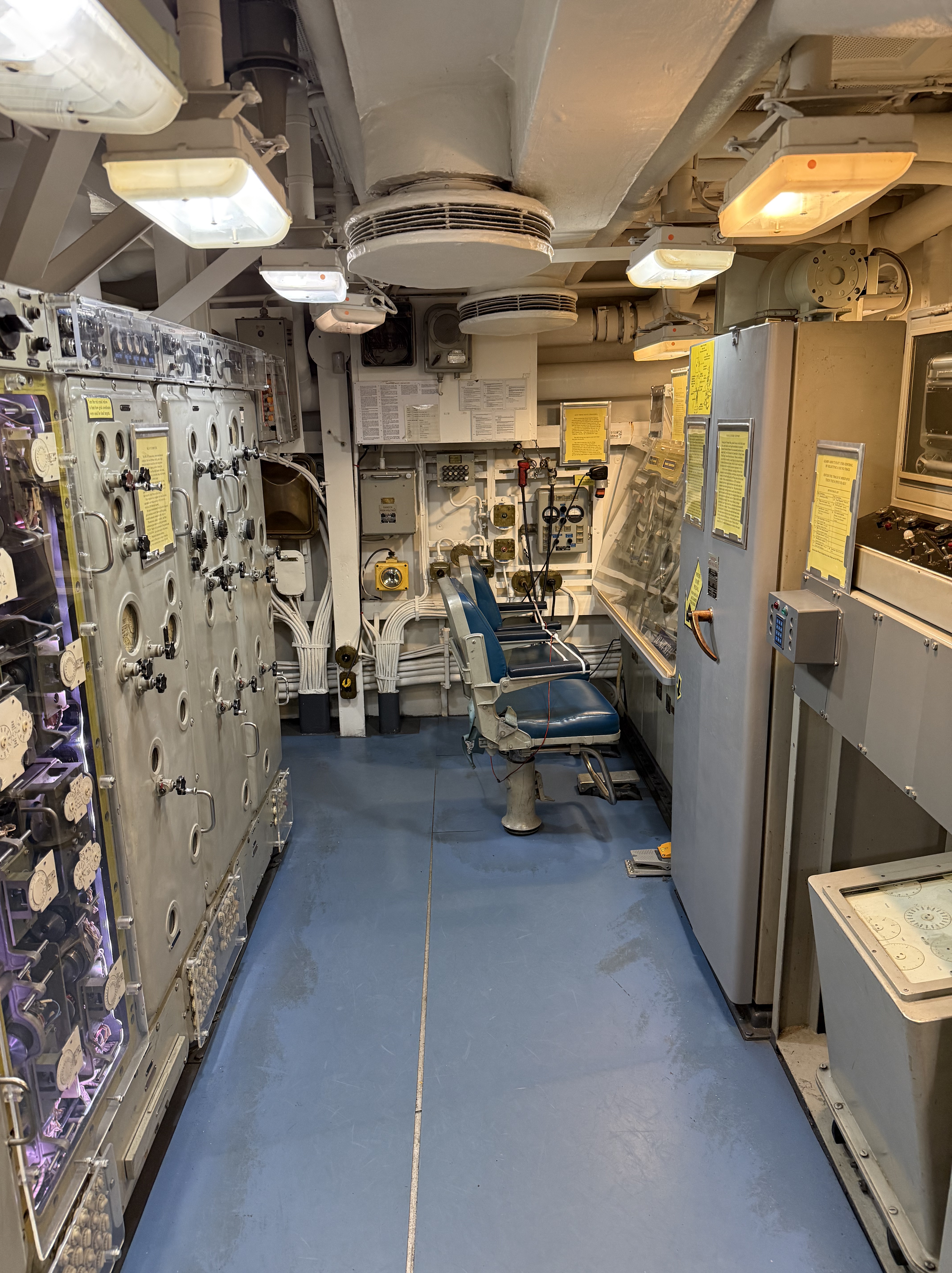
This is where the Mark 56 fire-control system gets a little complicated. There’s a lot going on in this room. The left side of the room is filled with analog, fire-control computers. The two chairs are for the sailors who use the ship’s radar to locate a potential target and find a solution to hit it, using Newtonian physics. What goes up must come down.
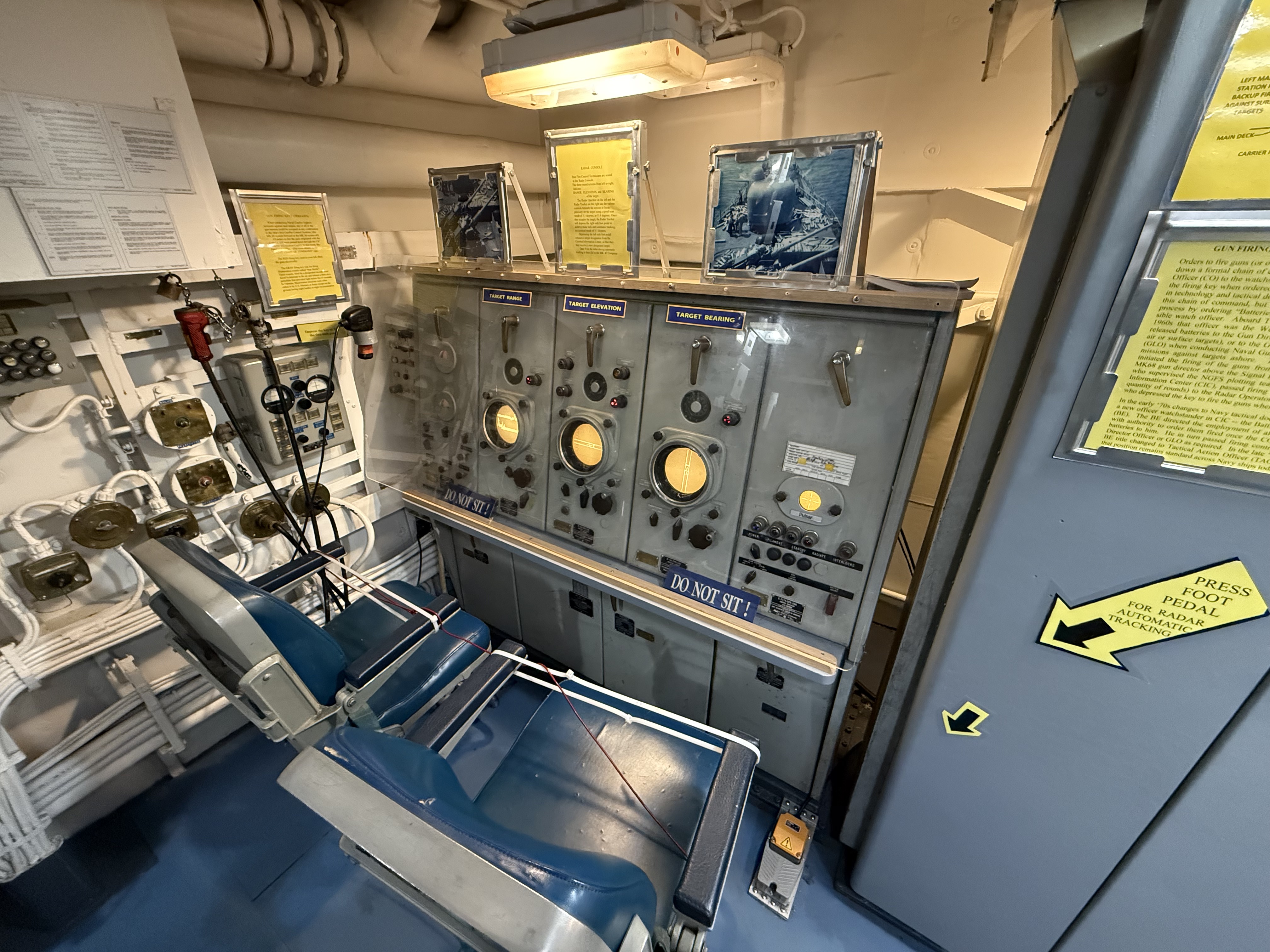
The arrows point to a foot pedal that started an audio/visual simulation of how the targeting system works. The three circular screens represent range, distance, and elevation to the target. The operators turn dials to align the signal with the Mark 56 system, in order to get a bead on the target.
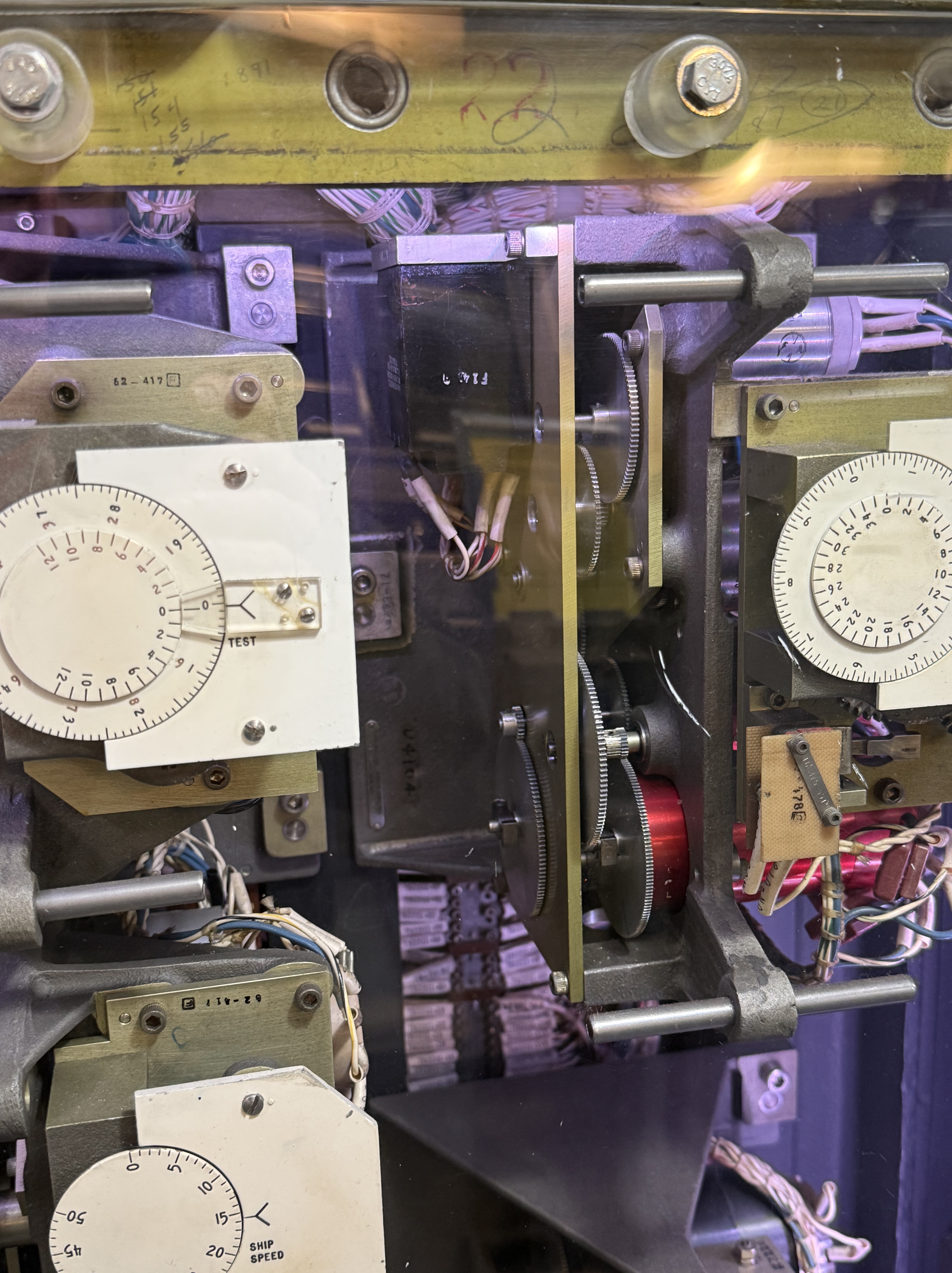
The computers look like the inside of a watch. I counted eight of these “CPUs” in one cabinet. I don’t know what they actually do, but they adjust for wind, distance, target’s speed, etc and tell the Mark 56 system where to point the gun.
9. Mess decks
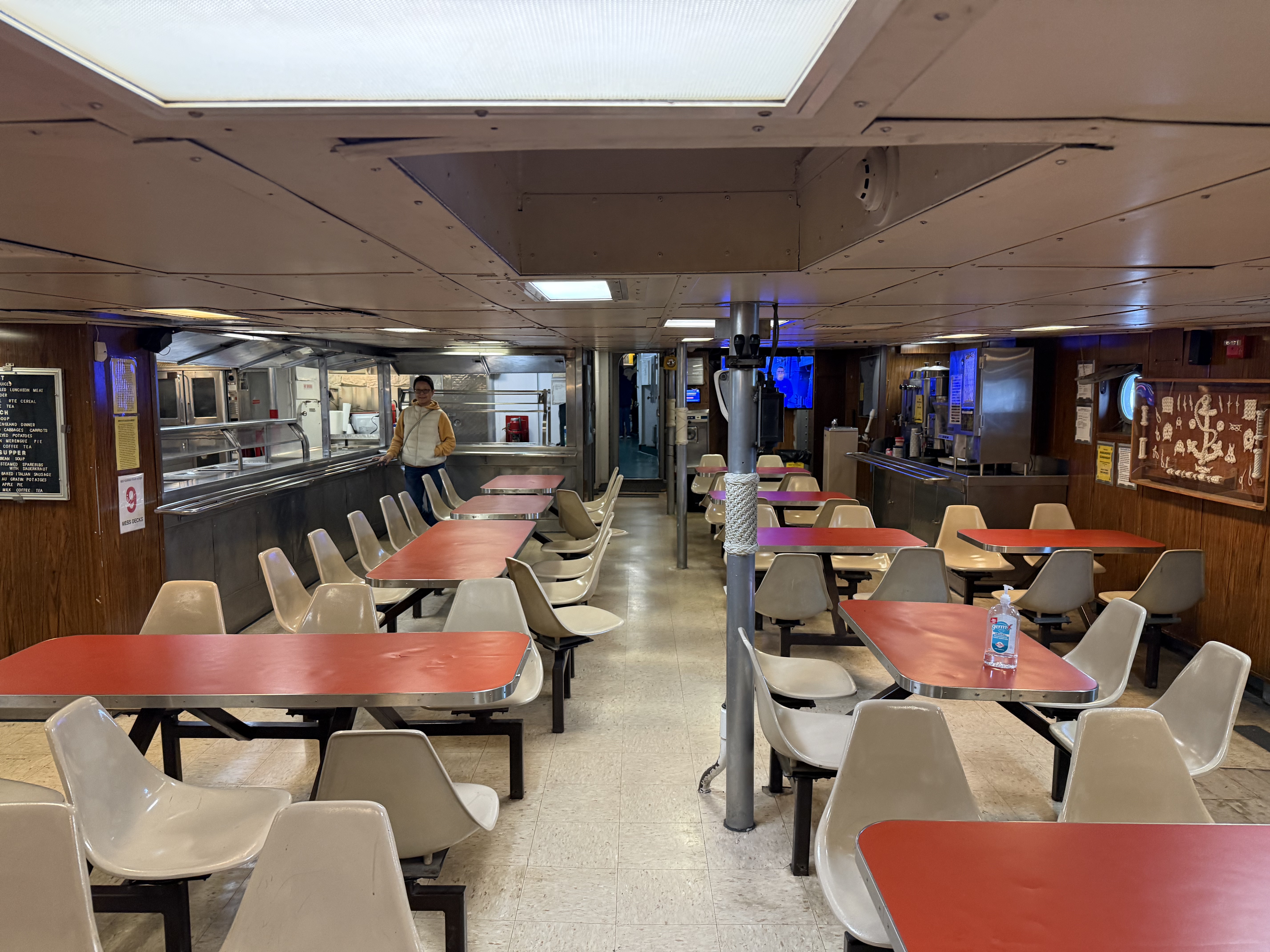
I loved the chow hall (mess to the Navy) because they had free, self-serve coffee! Obviously, 300 sailors couldn’t fit into the room at the same time; so I guess they had three meal shifts per day because a navy ship runs 24/7. But the food couldn’t have been that good because NCOs could buy custom-made meals (e.g. hamburgers) from the kitchen. I never would have guessed that in a million years.
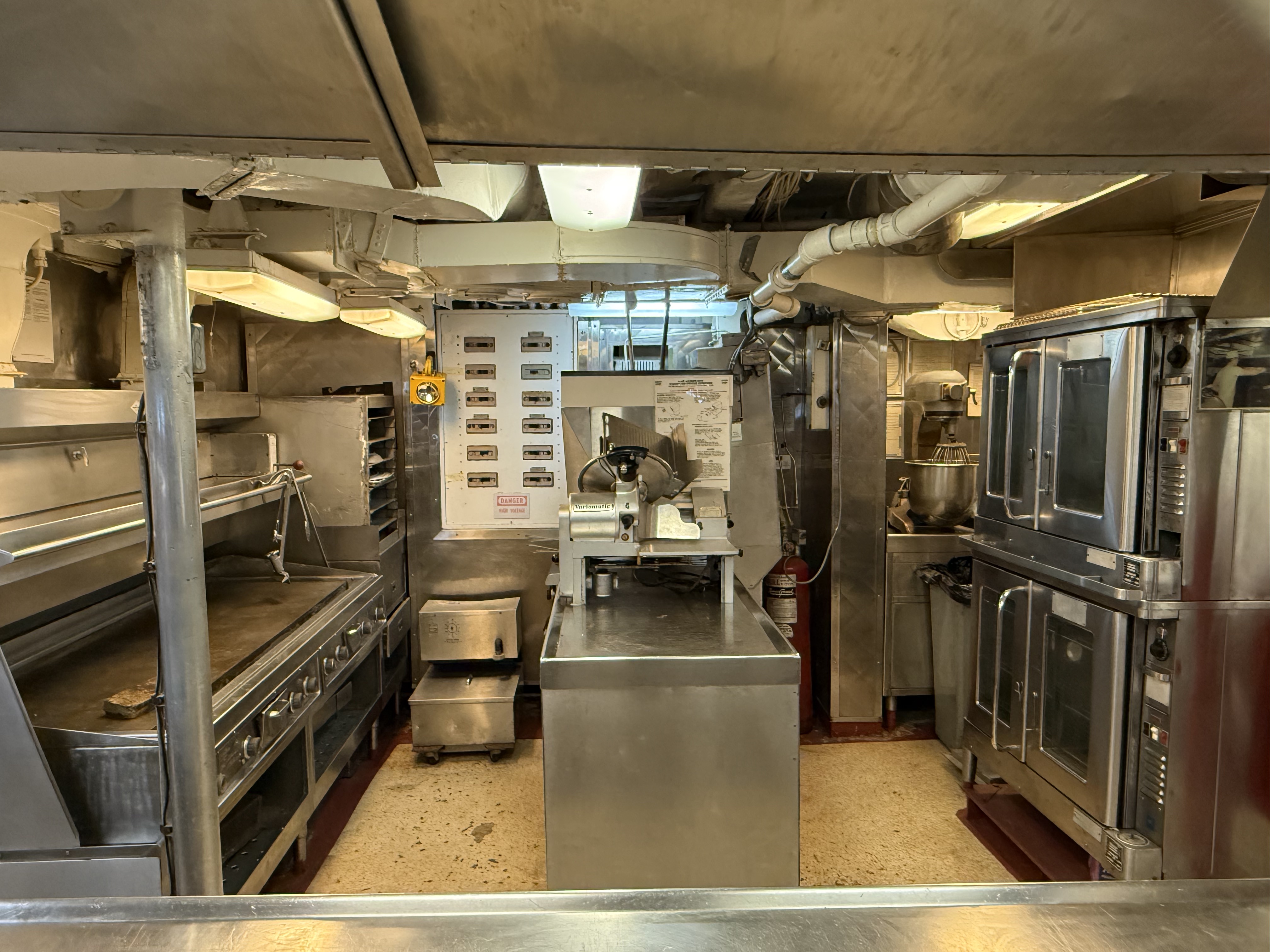
The fully equipped kitchen was visible from the serving line. Total transparency.
10. Wardroom
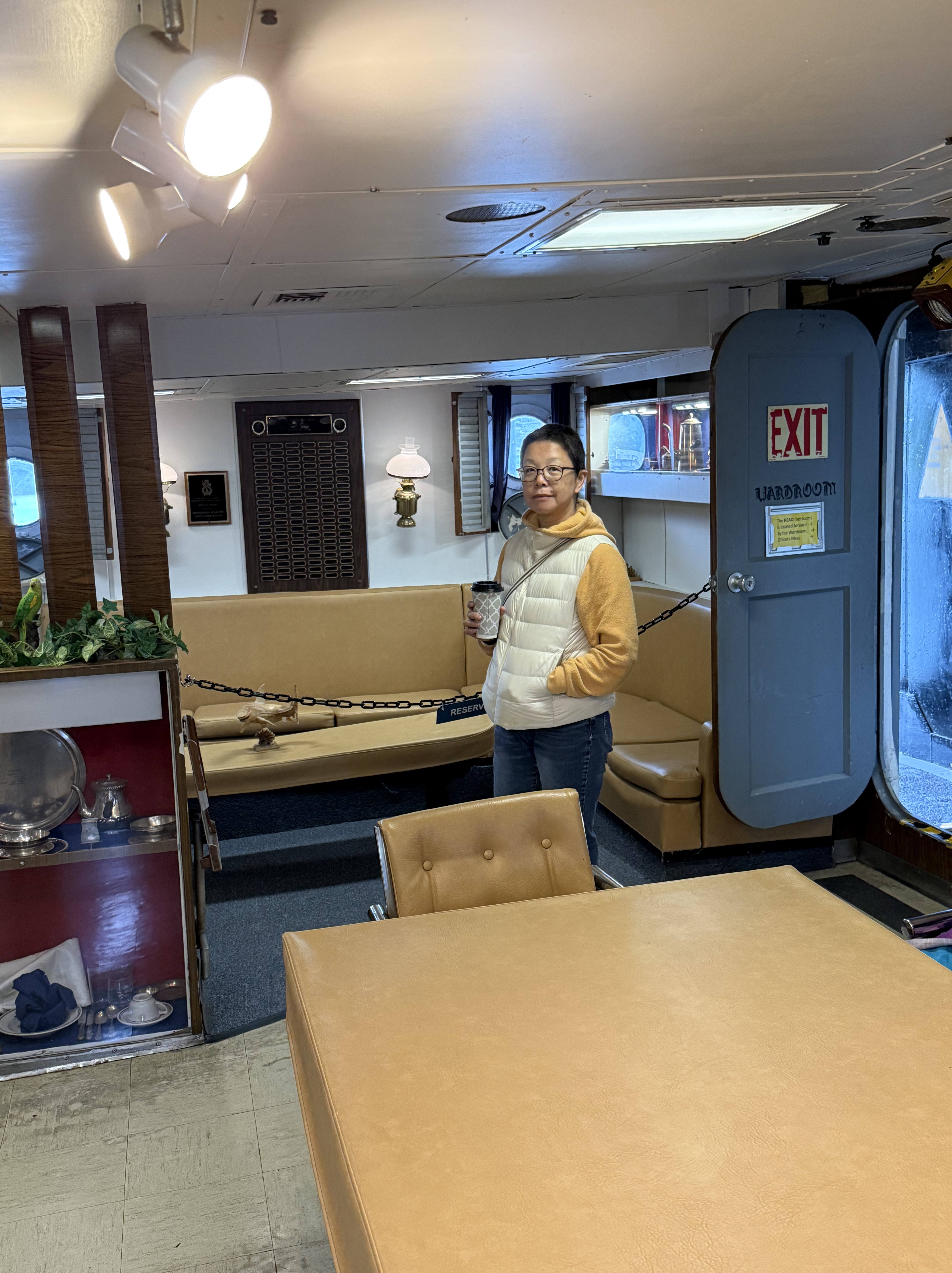
This is where the officers ate their meals and strategized. The table is about 12 feet long with the captain in the chair we see here. The sofa in the background was used during discussions. This room is like the boardroom of a corporation where the ship’s captain is the CEO.
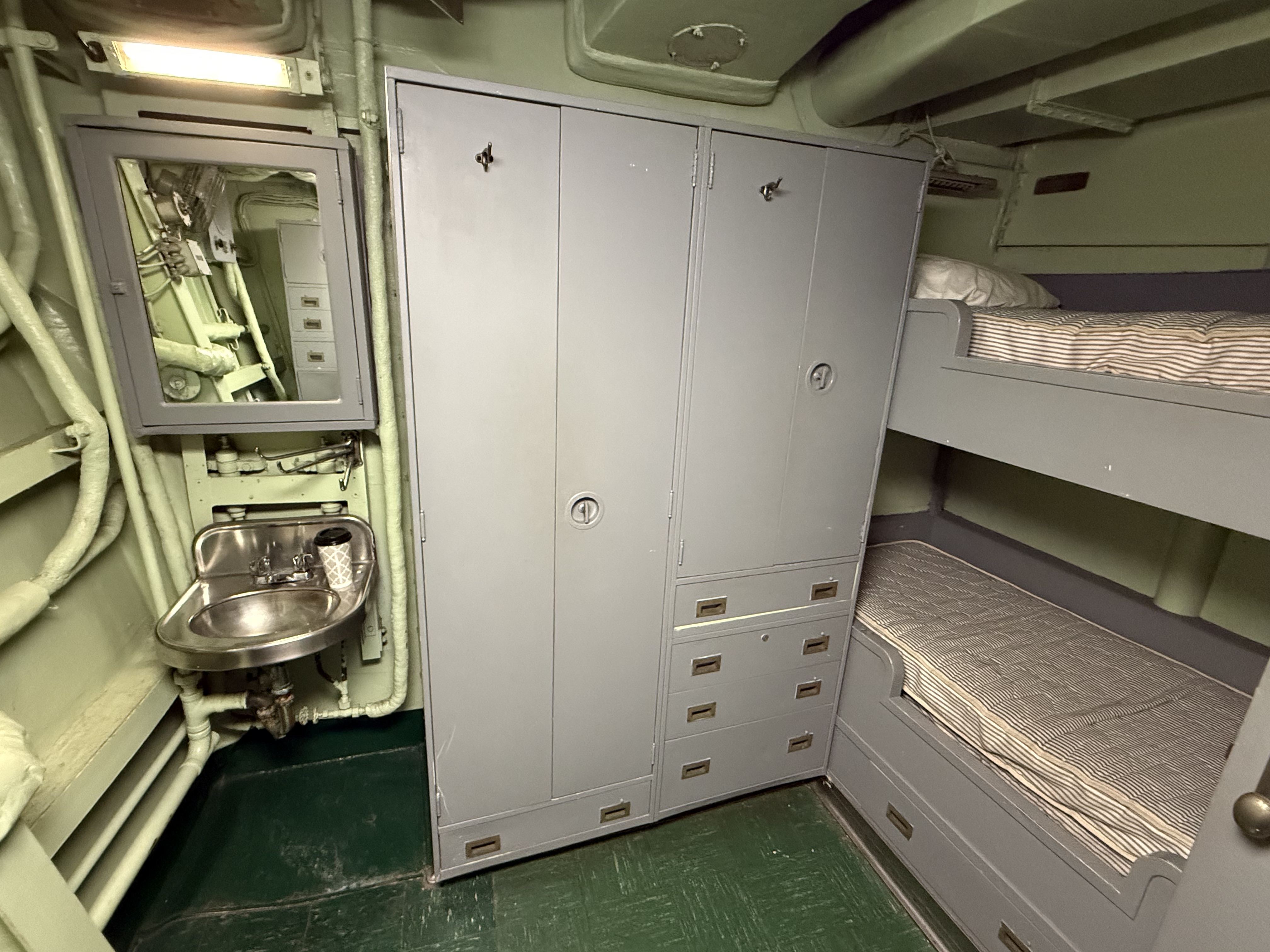
A typical officer’s room (there were many scattered throughout the ship) housed two men. I saw two officer’s heads (restrooms) on my tour, so they weren’t living in privacy. But they worked on a 24/7 schedule and probably had no problem adjusting to the bath schedule.
11. Anchor windlass room
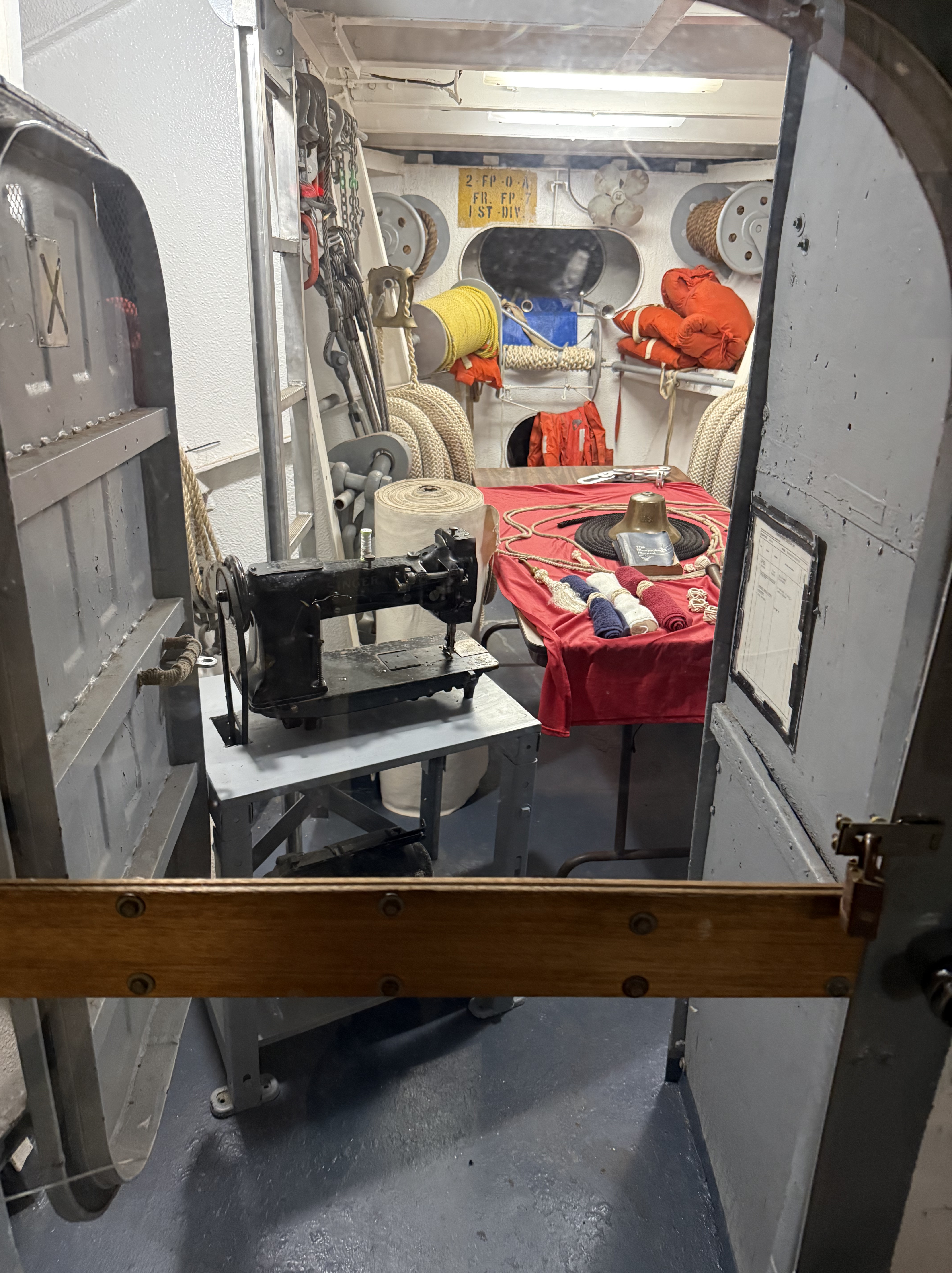
I failed to take a picture of the anchor windlass, which was a six-foot in diameter steel structure in the middle of the room. I don’t know if it was powered by electrical or hydraulic systems. Boring. But it had a hatch (full size for a tall man like me) that revealed the prow of the ship. This is the boatswain’s storage room, which is filled with rope of different kinds; however, I didn’t understand why there was a sewing machine located in this nondescript corner–until I read a plaque that explained that there was a sewing room on a lower deck that constructed/repaired tarps and awnings with this heavy-duty sewing machine. Ships use tarps all the time, and their flags decay rapidly under the constant bombardment of sea spray. There was a tailor on board, but we didn’t see their workspace.
12. Sonar control
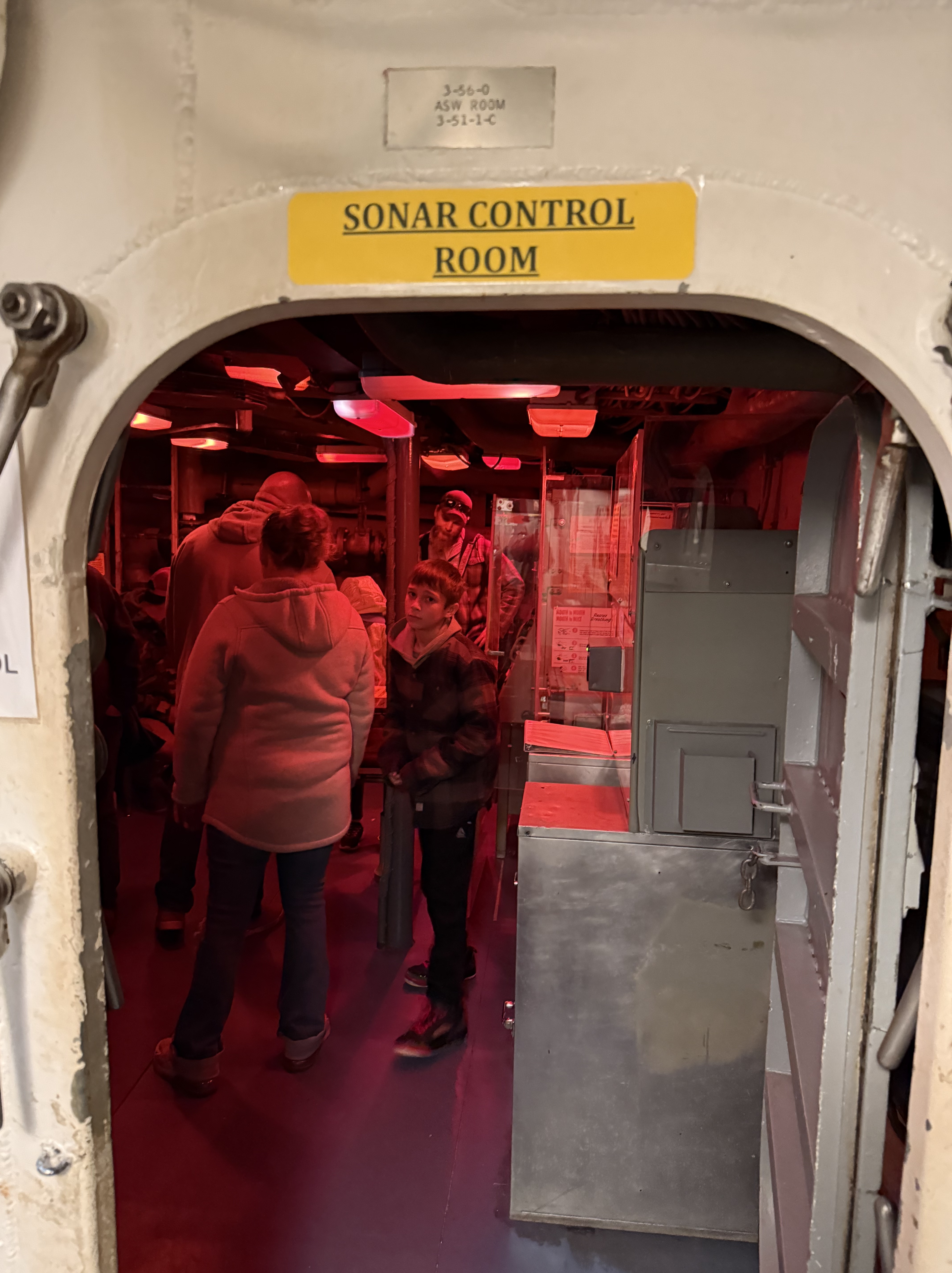
One of the myriad tasks of the Forrest Sherman class destroyers was ASW (anti-submarine warfare), so they were equipped with the latest sonar technology.
13. Radio central
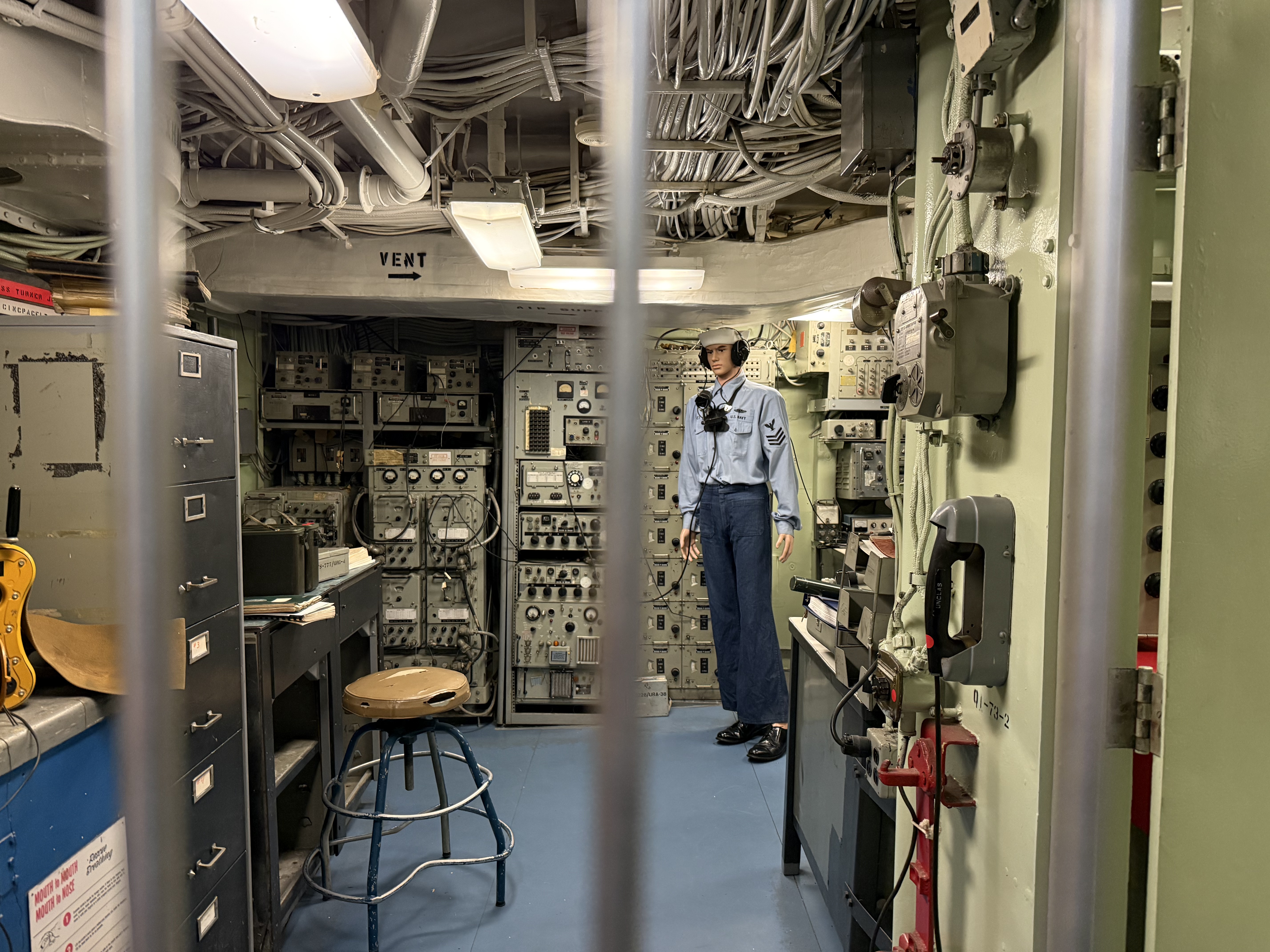
Any communications with the Turner Joy used radio, which was received and transmitted through a central facility. This area required a top-secret clearance to enter and was additionally secured with railings at the door. WTF? This isn’t a public bathroom. However, it also served as the ship’s secure facility, and thus there was a large room to the right of the photo where the ship’s officers could meet to discuss secret information.
14. Captain’s stateroom
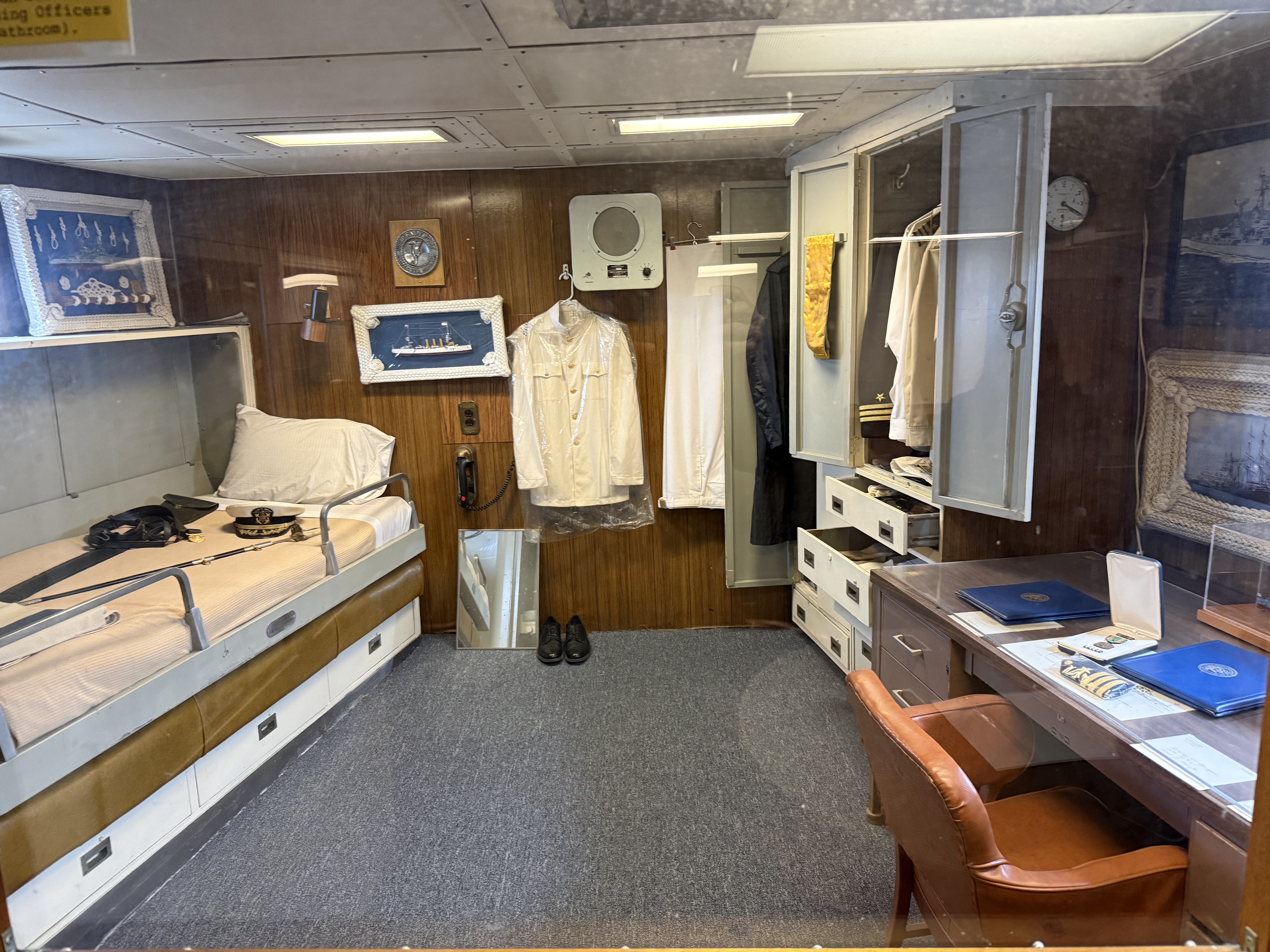
A list of the ship’s previous captains revealed that they all held the rank of Commander, with one Lieutenant Commander. These are pretty nice digs and only a couple of steps away from the bridge. The single bed suggests that wives weren’t allowed onboard, even when in port.
15. CIC and pilot house
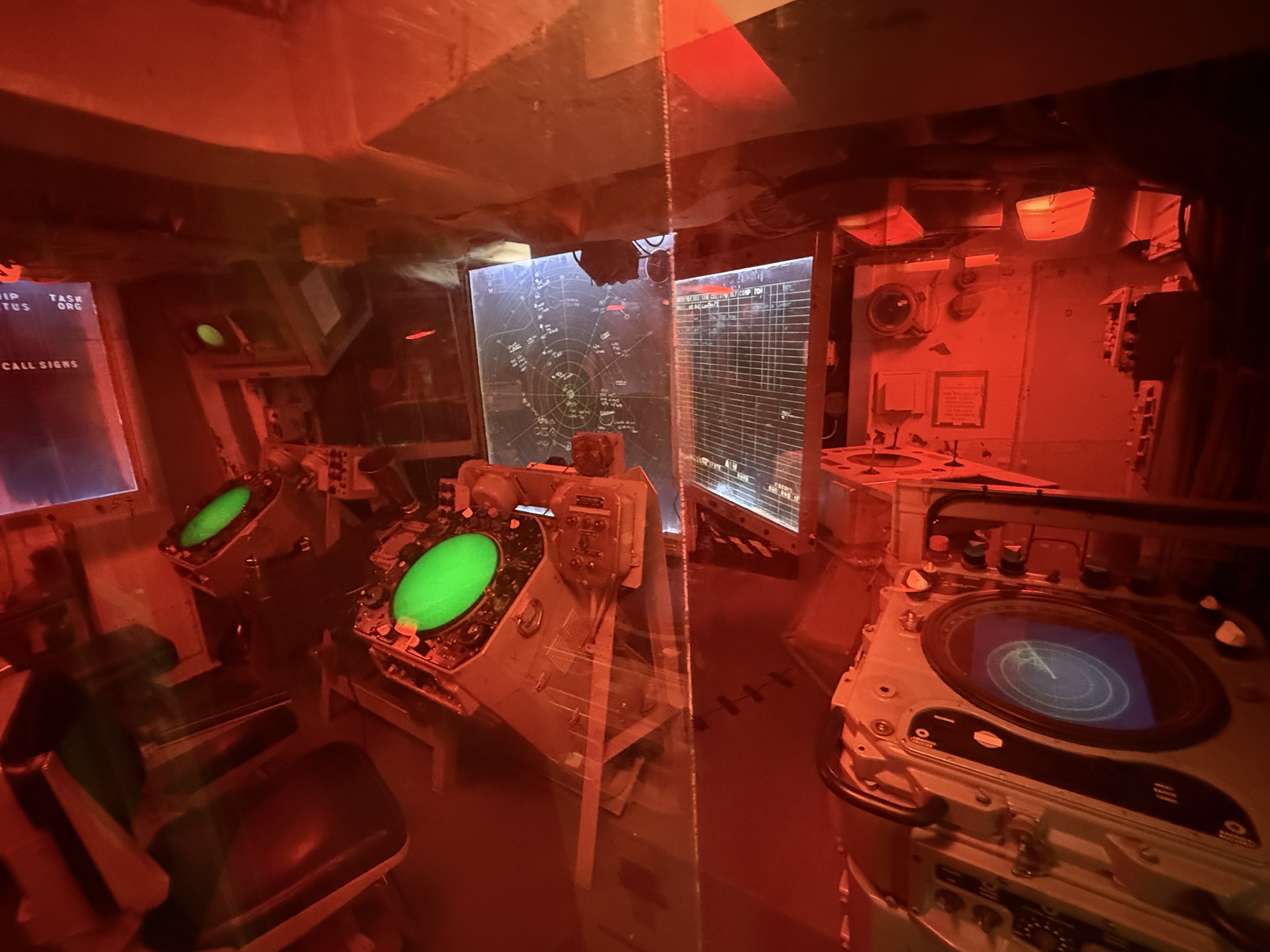
The Combat Information Center is what its name suggests: data from radar, sonar, other vessels, etc. are merged into a coherent picture of the ship’s environment and passed on to the captain and other relevant officers. There’s no separation of tasks here: the large, green screens are radar; the small screen to the right is sonar; tactical information is displayed on screens.
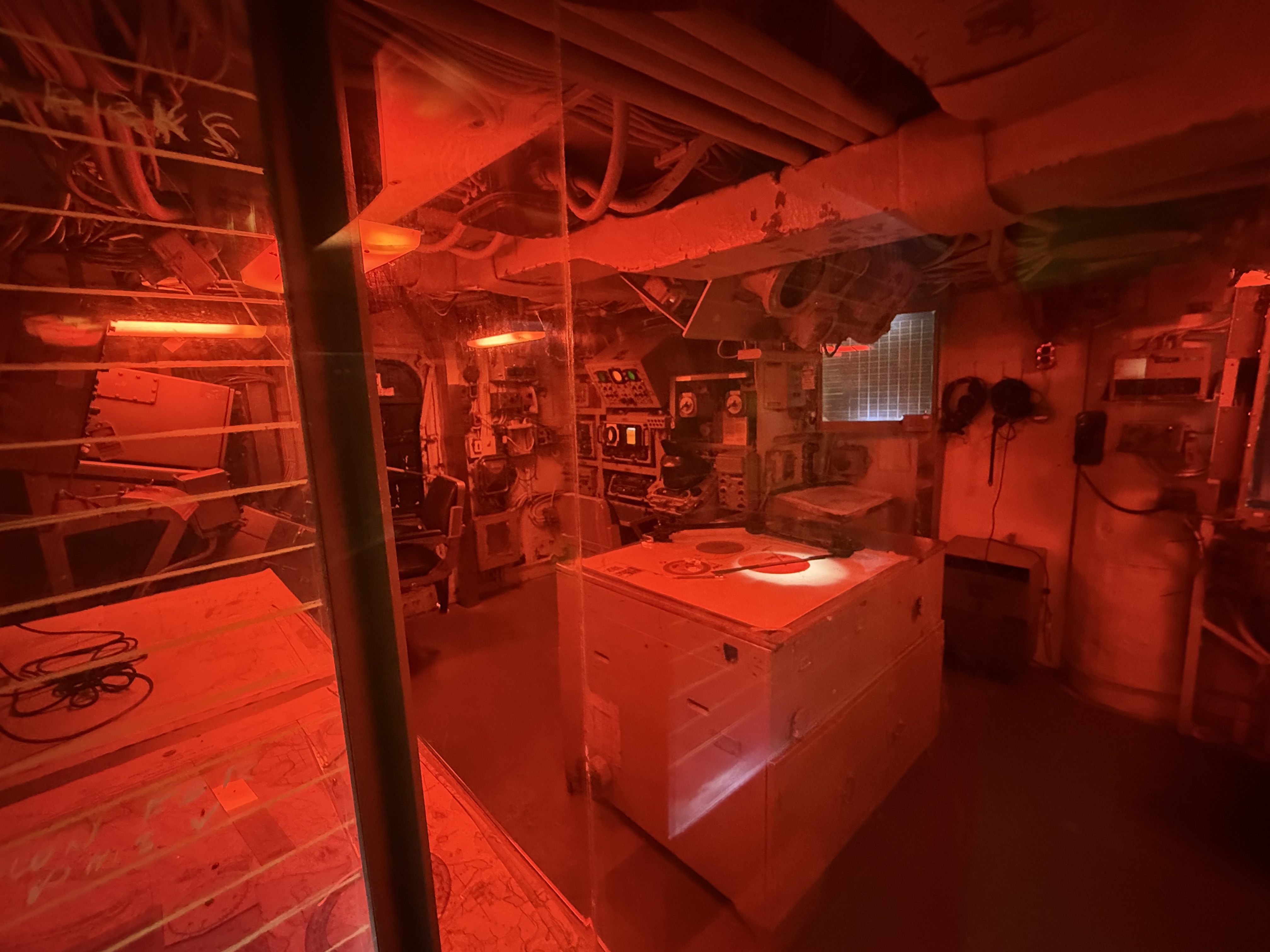
There is lots of room for the CIC officer to keep up with everything going on and get the big picture. Targets are identified and recommendations made to the captain. You could say this room is the brains of the Turner Joy.
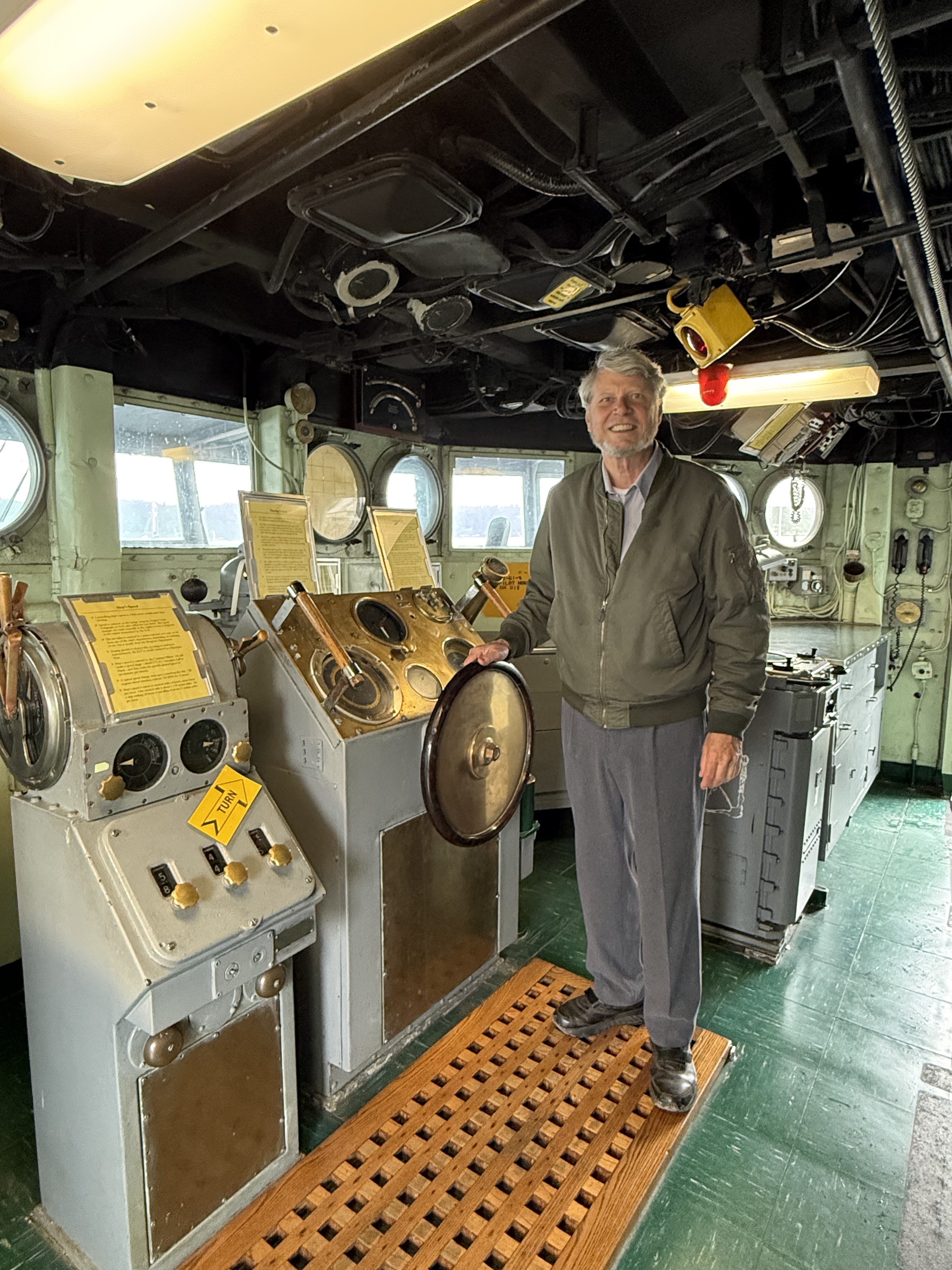
The pilot house is usually called the bridge by civilians. That’s the rudder wheel I’m standing in front of. After my tour, I knew better than to think any of those controls did anything except ask a sailor somewhere else to do something. You could call the pilot house the prefrontal cortex; their orders are usually followed, but only on a voluntary basis. I didn’t have time to read all the data plaques, but we can guess their functions–throttles, firing, targeting, etc. The captain has to pretend like they’re running the show in order to make good decisions.
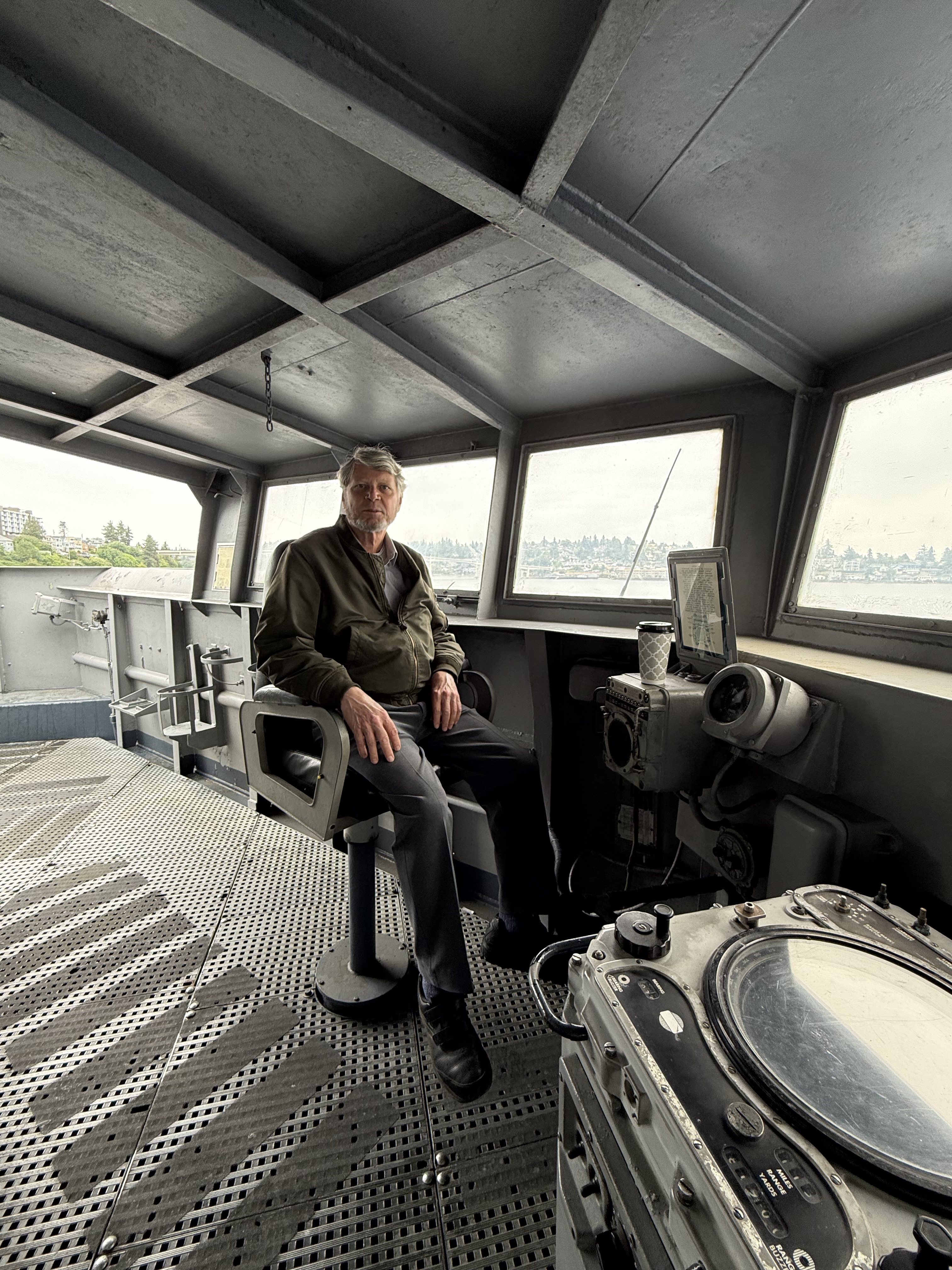
I presume this is where the captain sat on what I call the flying bridge, an exposed area in front of the pilot house with minimal controls. I don’t know why the seat was so high, unless it was to give a good view of what’s ahead; but why didn’t they put a step below it? There was no data sheet for the electrical device in the foreground, but my guess is that it has something to do with targeting or the ship’s local environment (other ships, obstacles, etc.).
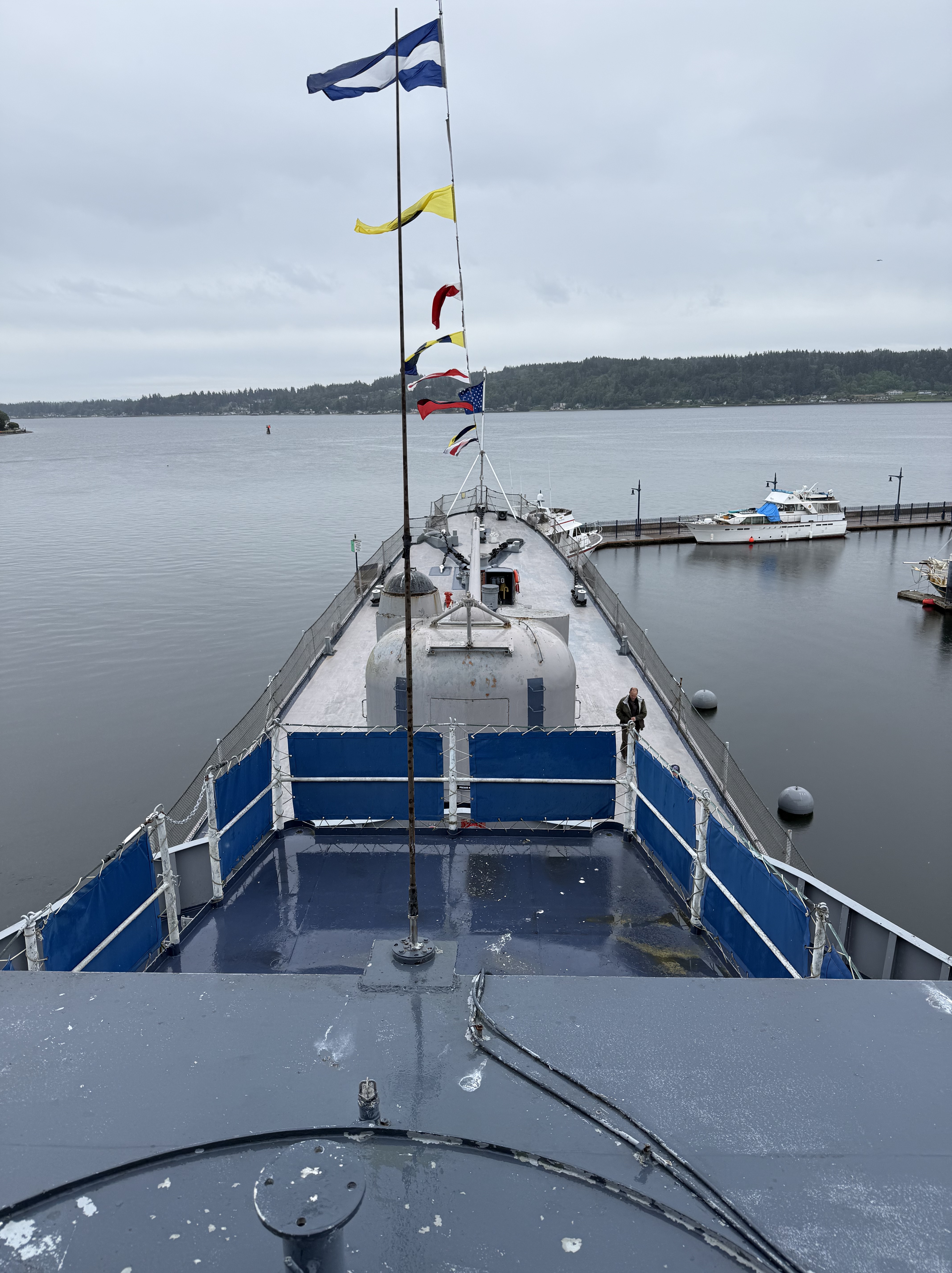
The view forward from the flying bridge. Destroyers have very narrow hulls for high speed; but they are unstable in heavy seas.
16. Torpedo launchers
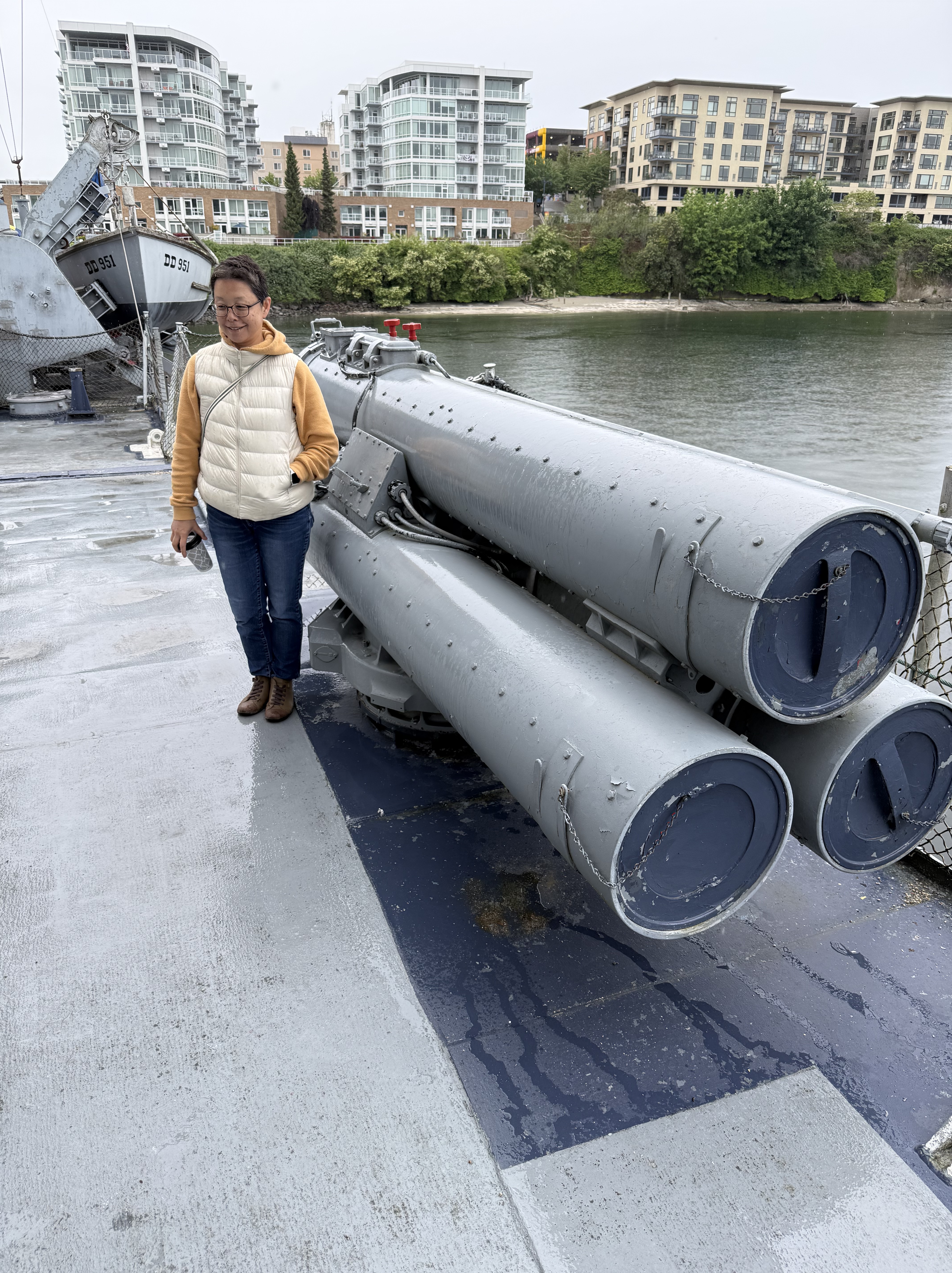
The torpedo launchers are mounted on swiveling pads. The torpedoes are smaller than I’ve seen before, I guess because they are specifically designed for ASW. Maybe the charge doesn’t have to be as big to sink a submarine, immersed in seawater, compared to a surface ship that weighs ten times as much and has heavy armored plating. There were no information sheets available…
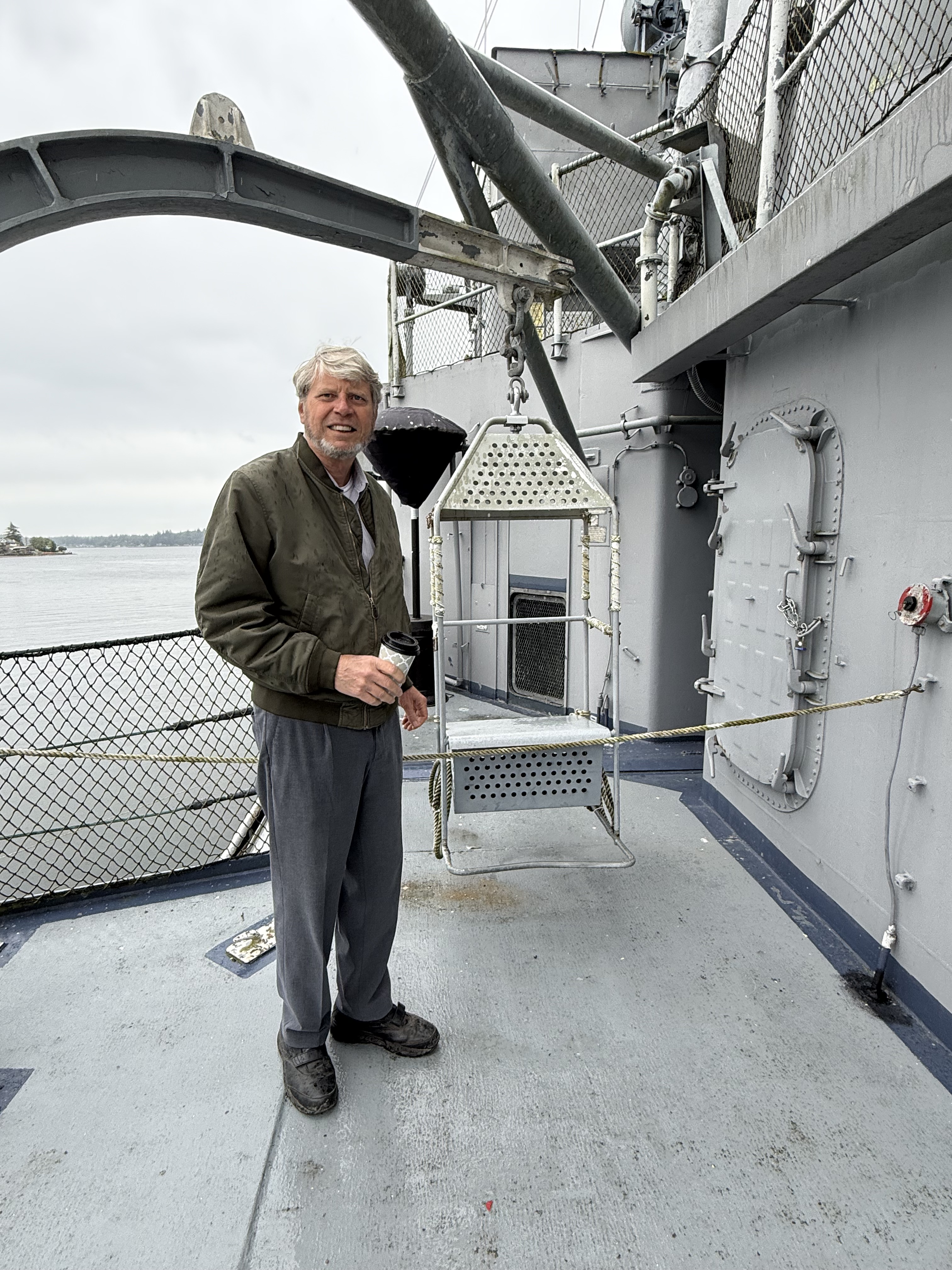
I threw in this photo of a bosun’s chair. These are used to transfer people over the side, even to other ships. That would be a frightening ride, even in calm seas.
17. Gunfire control room two
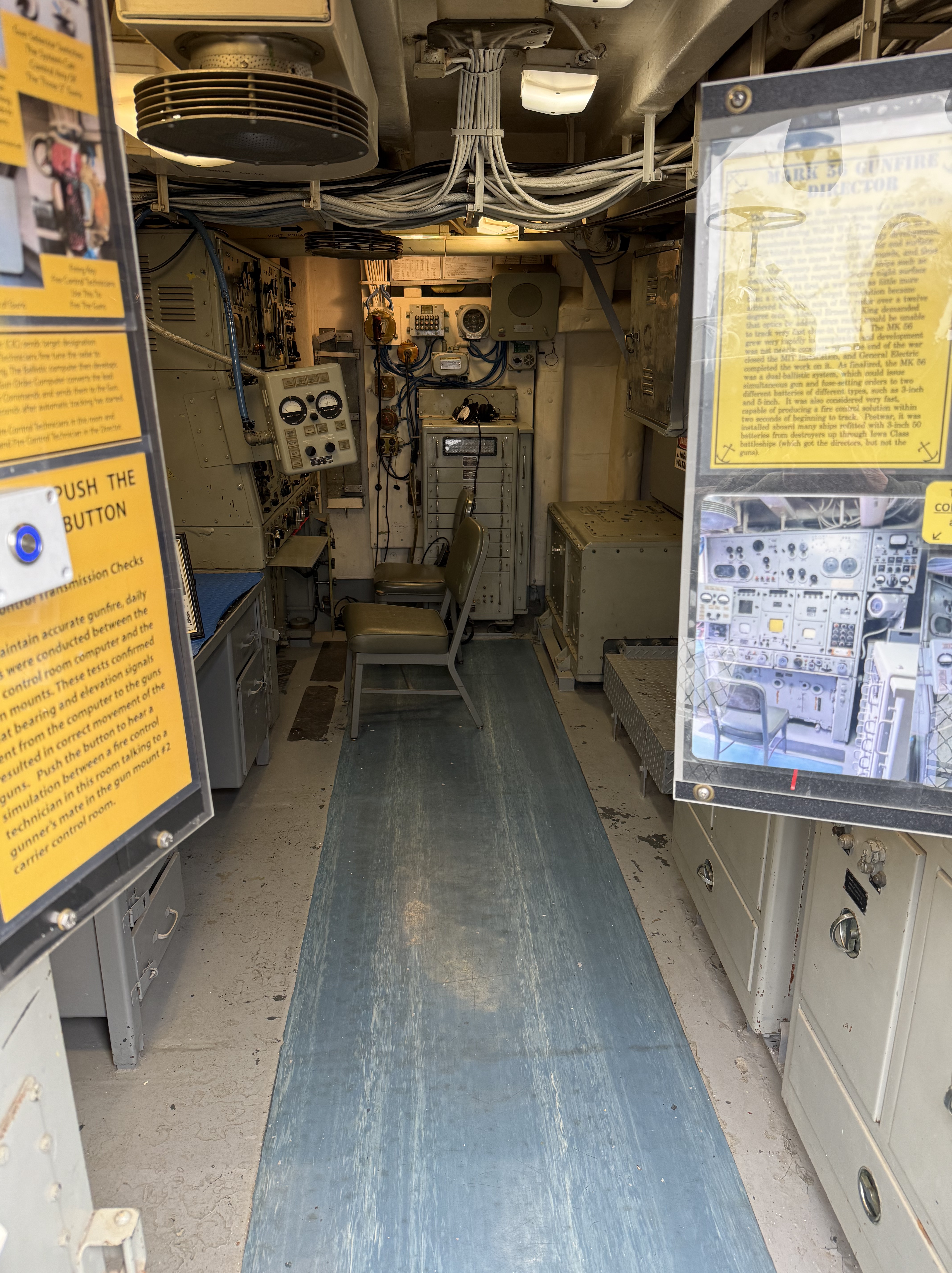
I didn’t read these detailed panels, but I read about it on the internet. I think this center was used for constantly calibrating the computers and other equipment in Fire Control Room One. Note the absence of computers or a radar station. It has a desk instead of radar/sonar stations! The photo on the poster shows a panel with many controls, but no screens. I think I got accurate information from the internet, but oversimplified because this isn’t the exciting part of the ship. I think the operators here were like the Administrator on a computer system: they upgraded software and tested it–continuously.
18. Foc’sle
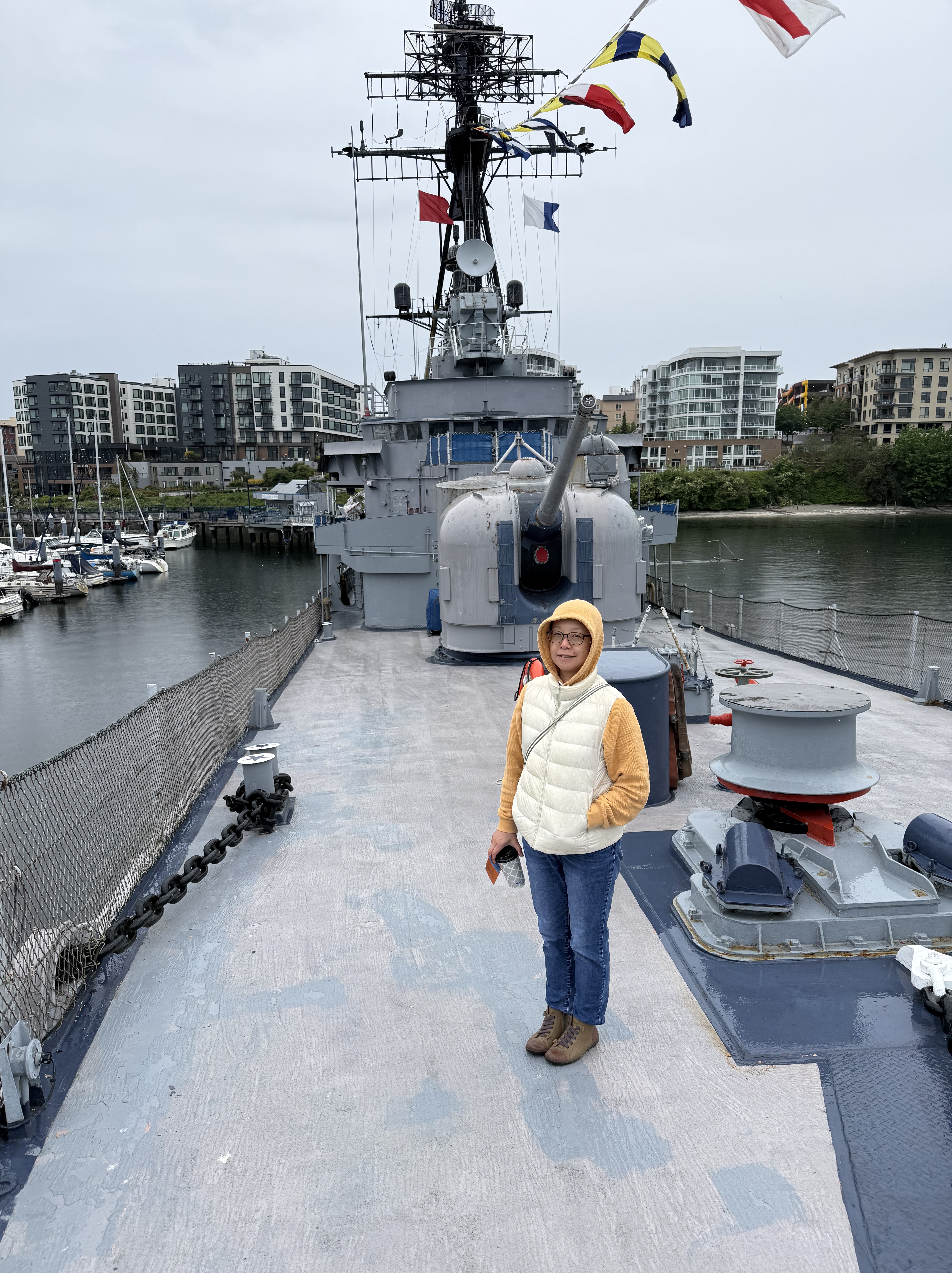
You can see how narrow the hull is at the prow, which is steeply raked to handle heavy seas better.
Summary
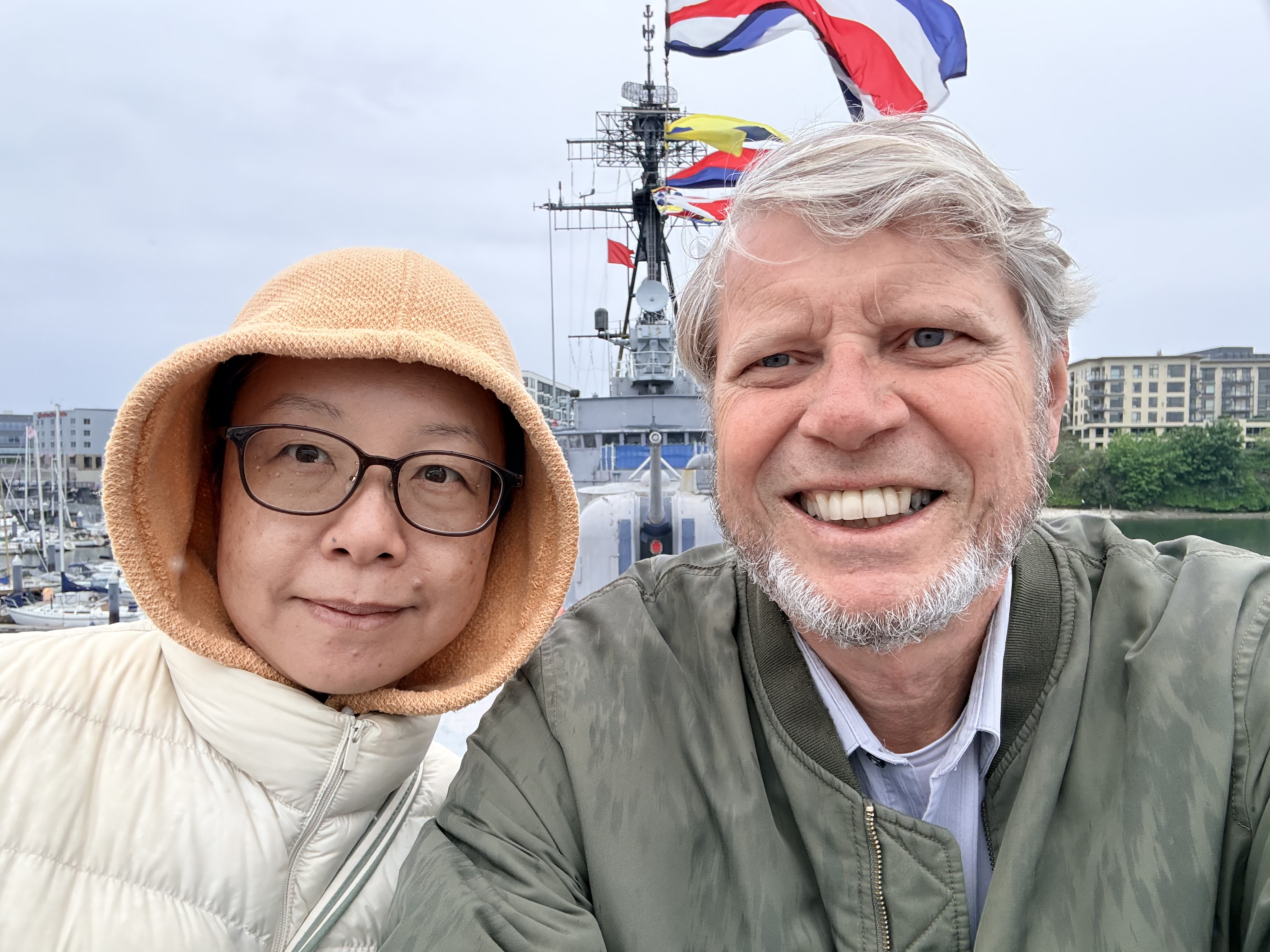
The Turner Joy is a work in progress. I appreciate that the restoration/public outreach effort has focused on a single system–the Mark 56 fire control system. It is presented in enough detail to allow the visitor to grasp how much effort is required to hit a target up to 20 miles away with a 70 pound warhead, and a theoretical accuracy of 10 yards.
I wanted to add something I just thought of: there were no keyboards anywhere on the Turner Joy, not in CIC, fire control (rooms one and two), sonar, the gun turret, not even in the radio room. This warship is a product of Cold War paranoia. It served no purpose other than supporting the Military Industrial Complex; frigates used the same weapons system to protect task forces, but the navy convinced Congress that they needed a multi-purpose vessel that couldn’t shoot its way out of a paper bag (that last is my opinion).
We didn’t get to see the rest of the marina because of the bad weather, but I’m itching to get a closer look at the navy ships moored a short distance from the museum. Also, there’s a WA state off-road-vehicle park a short drive away; so there are plenty of reasons to revisit Bremerton besides seeing how the restoration is progressing. Overall, I was pleasantly surprised at how enjoyable it was to visit a sleepy, navy town on Puget Sound.
I hope you enjoyed the tour as much as I…
A Visit to the Pacific Bonsai Museum

Small, carefully pruned trees are fascinating. I went to the National Arboretum when I lived in the Washington DC area, so I had to see what was on display here in Tacoma. The Pacific Bonsai Museum is mostly open air, with a few sensitive examples in a greenhouse. They leave the trees out year-round and have skilled bonsai arborists trim them according to their creators’ expectations.
I learned that there are different schools of thought on bonsai, from growing trees and shrubs from seeds, to working with dying plants, even stumps, and painstakingly reviving them. Then there’s cultural differences that vary between nations. However, bonsai began in China where it’s called “penjing”. It means tray scenery. The museum had their displays arranged by country of origin. I didn’t take notes and my photography is spotty. Still, here are some beautiful examples of bonsai.
The Bonsai Museum is in Federal Way, Washington, and is supported by Weyerhaeuser, the lumber company; it’s located on a large campus they built and then sold to someone. It is free and there is no apparent security, except from the Rhododendron Garden next door. I guess vandalism hasn’t been a problem; who would want to destroy such beautiful antiques?
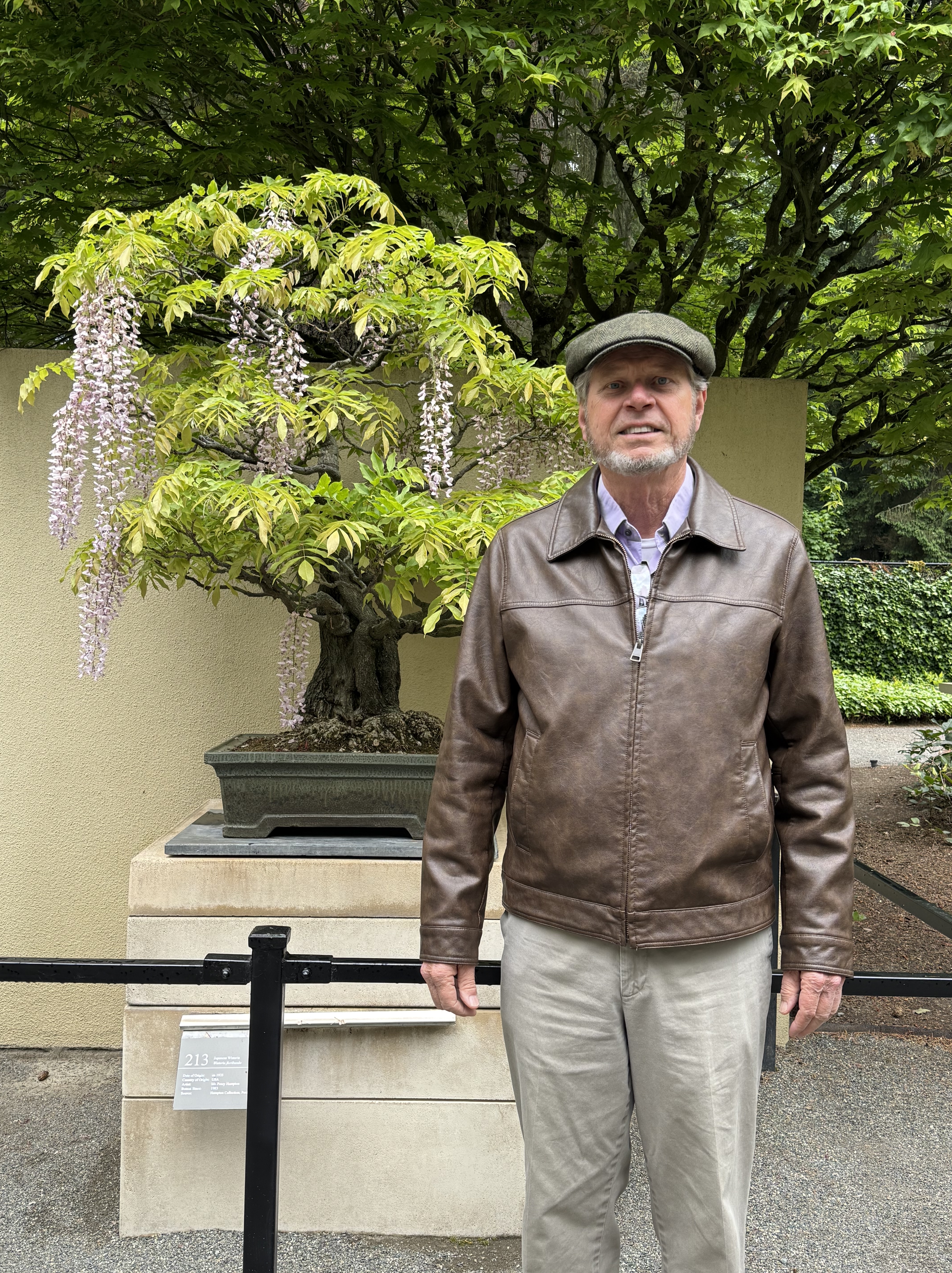
This is a wisteria. If you’ve ever dealt with this out-of-control vine (I have), you will be amazed that this old example (note the size of the trunk) is so tidy yet produces the distinctive flowers. The specimens on display ranged in age from the late nineteenth century to the seventies.
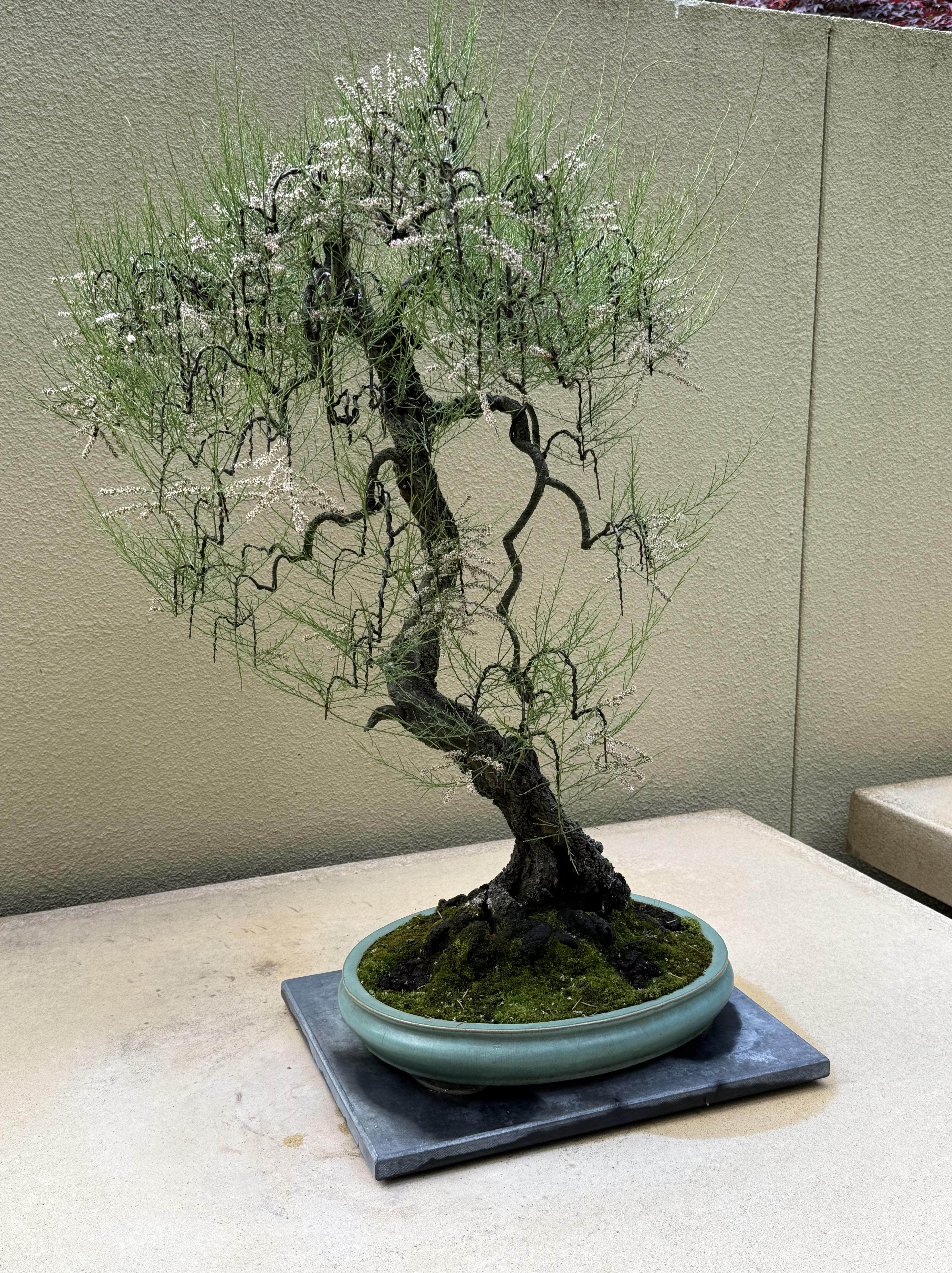
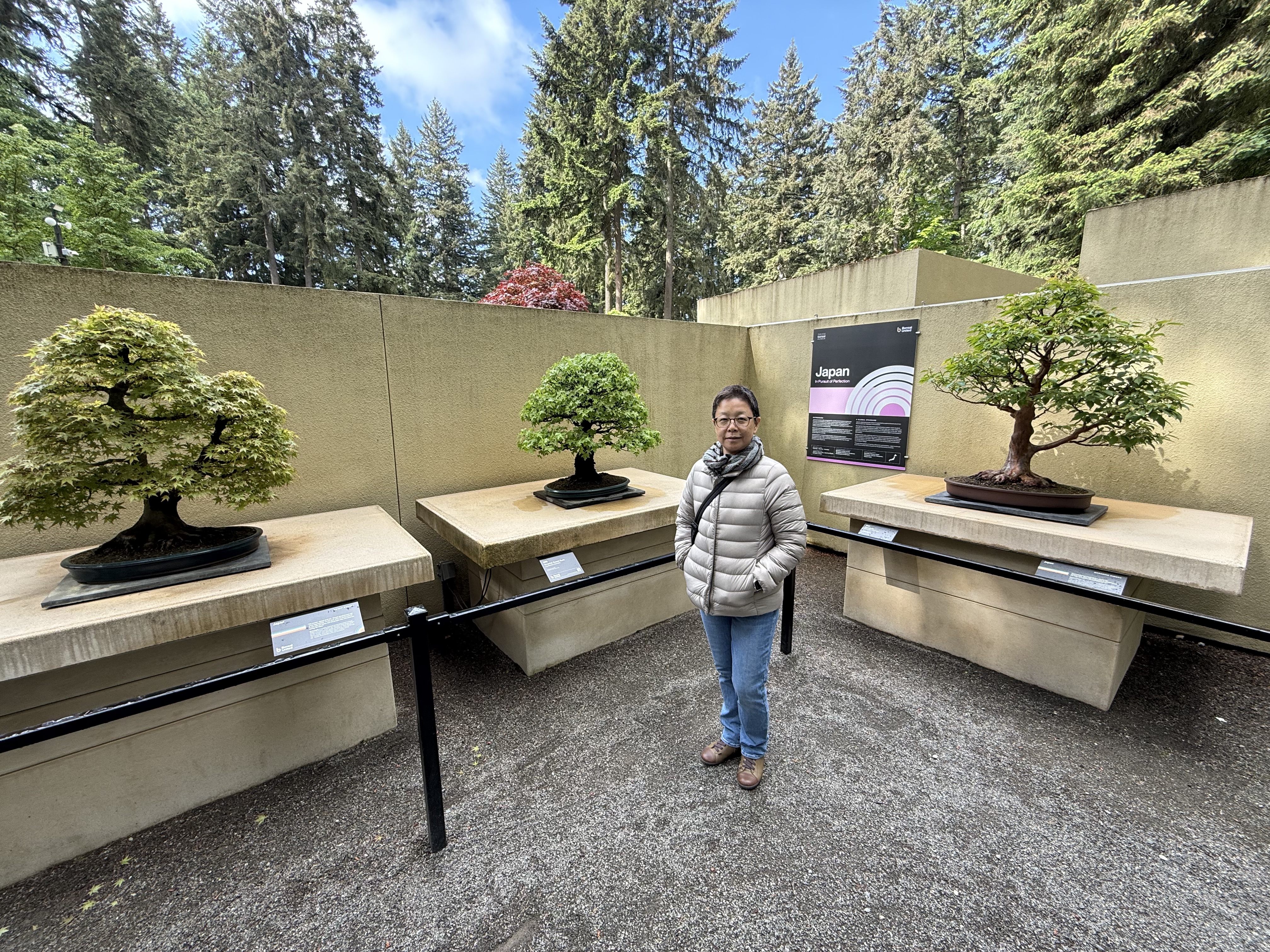
This is part of the Japan exhibit. I think these are all trees, probably juniper–a favorite among bonsai artists.
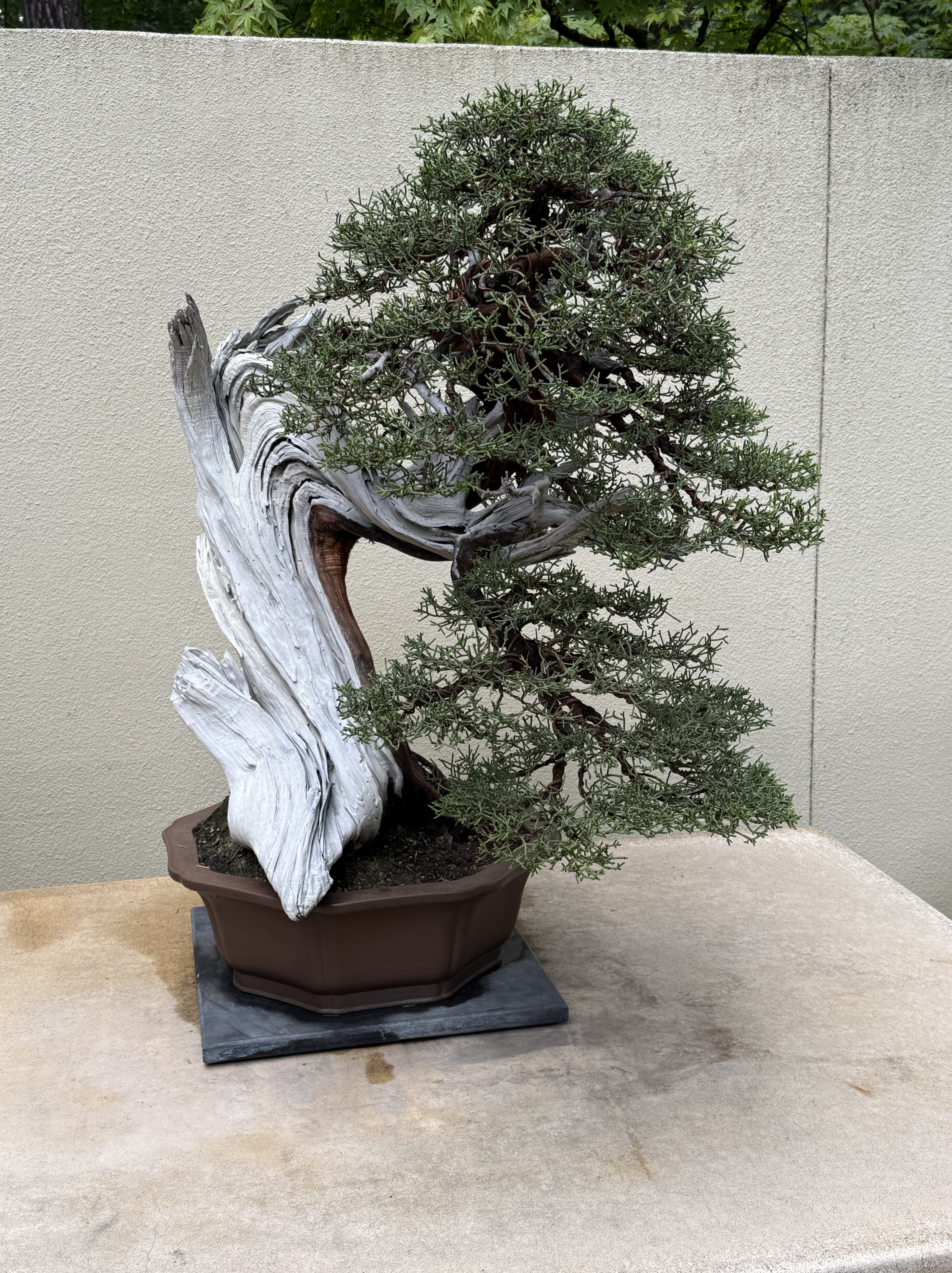
As an example of what good hands these fragile trees are in, this specimen was created by a past director of the museum. It was my favorite. I like the idea of rejuvenation from near death.
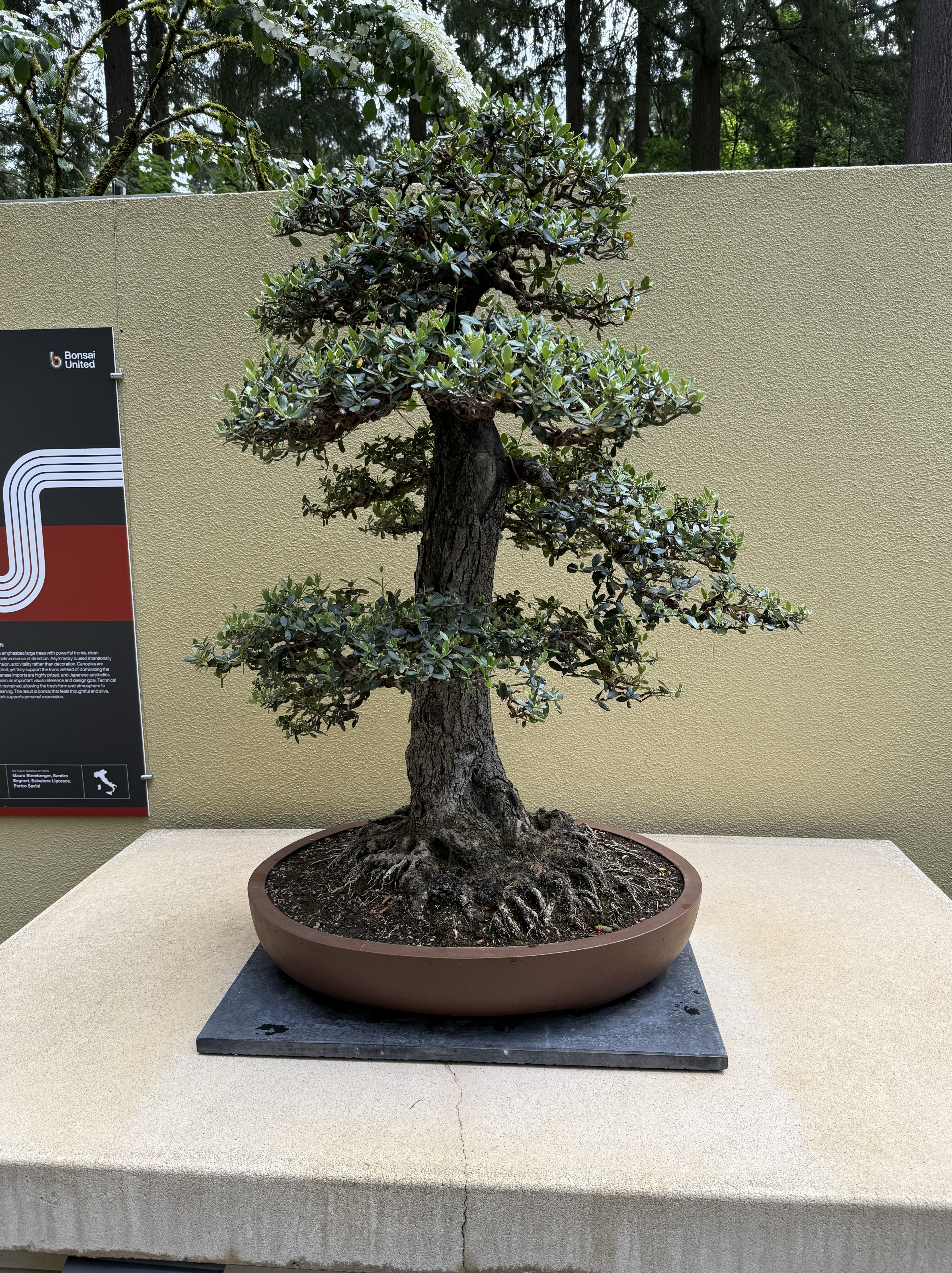
European Olive, in training since 1969, from Italy.
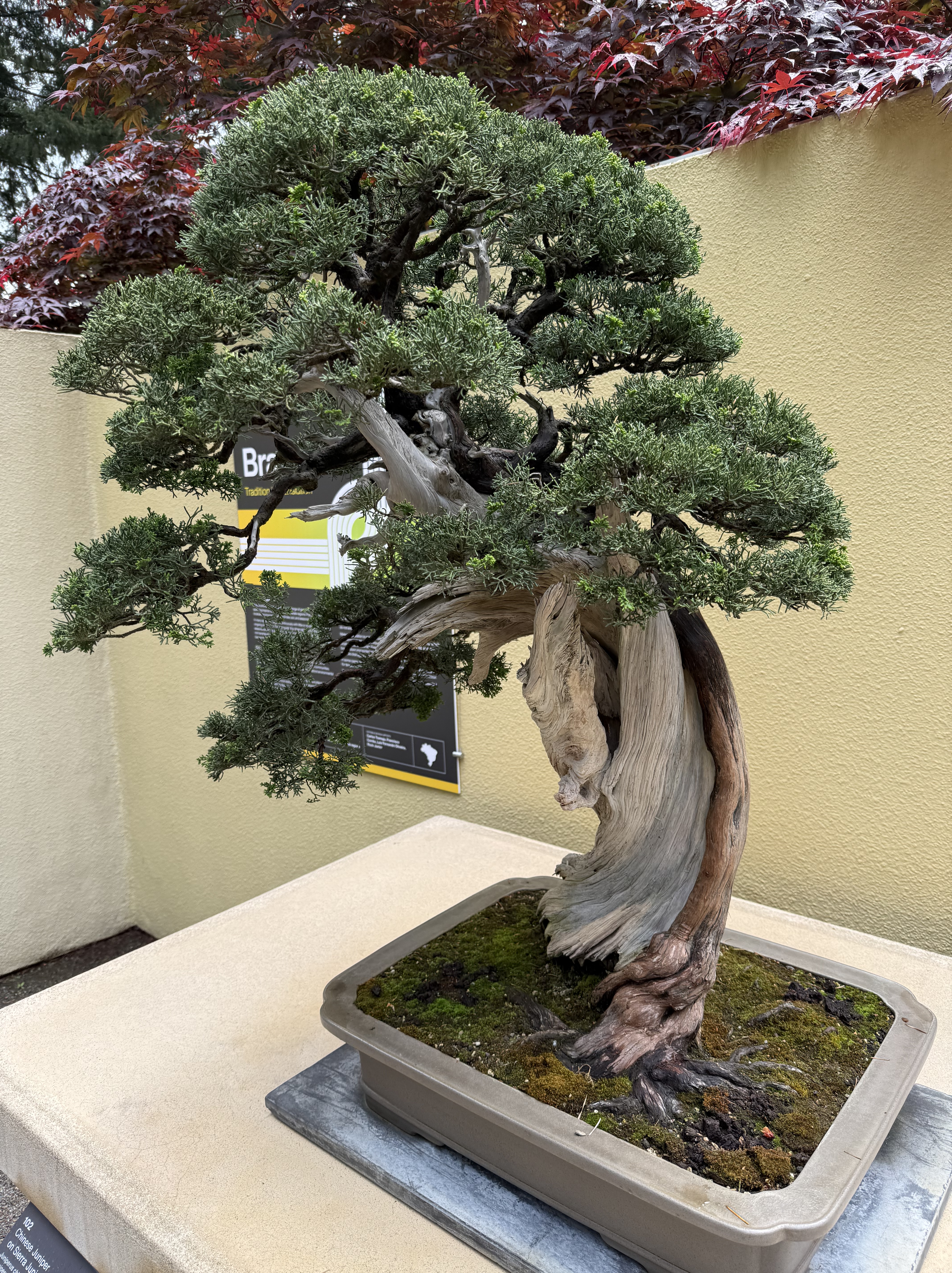
You can see the difference between the trees/shrubs grown from seeds or youth (and those that are saved from the dust heap) in this recovered specimen. I love the intermingling of dead (white) wood and living tissue.
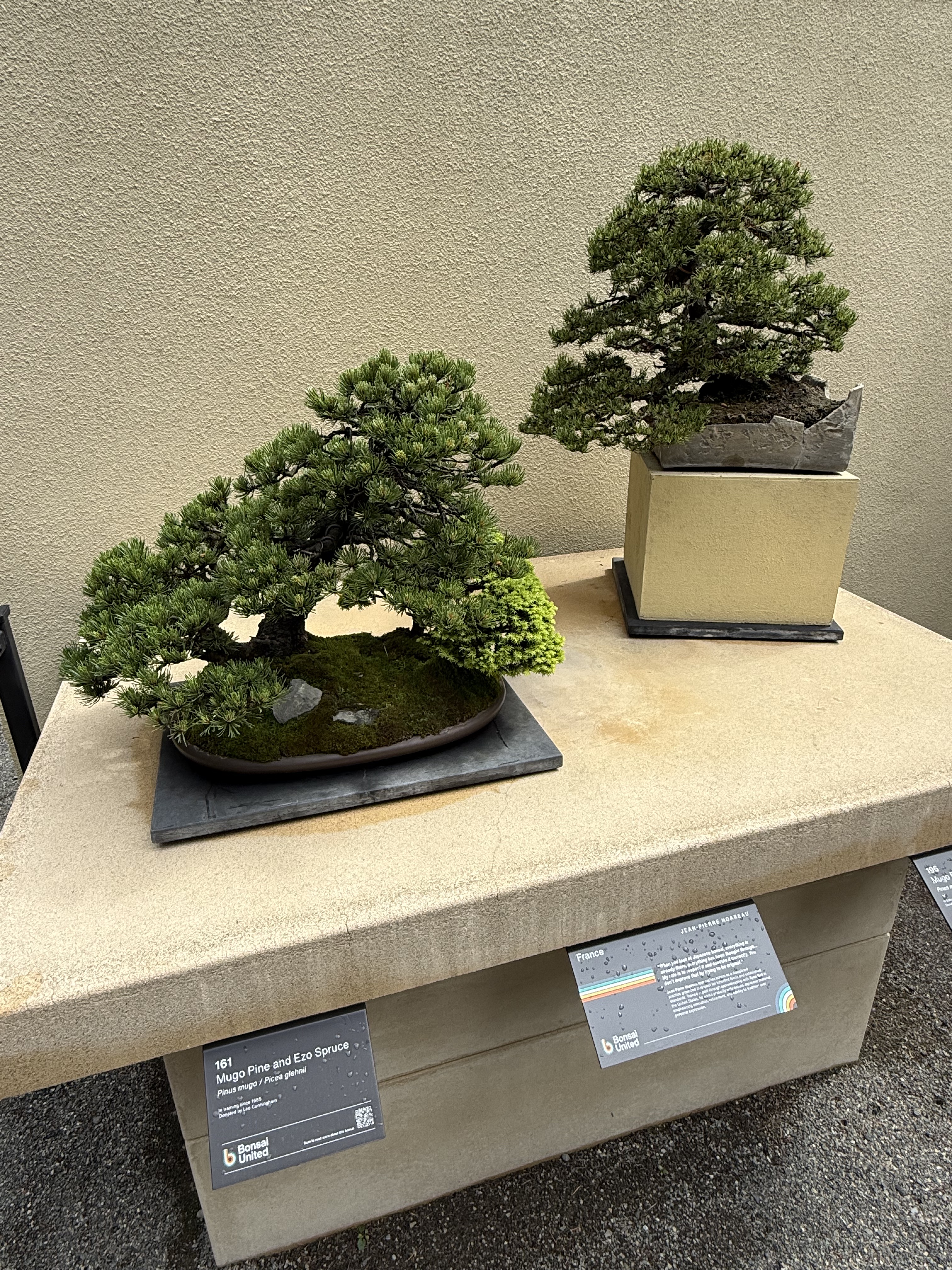
This German artist created a forest, but the individual “trees” were falling over so there are wires holding it together. I imagine there are a lot of failures in practicing bonsai.
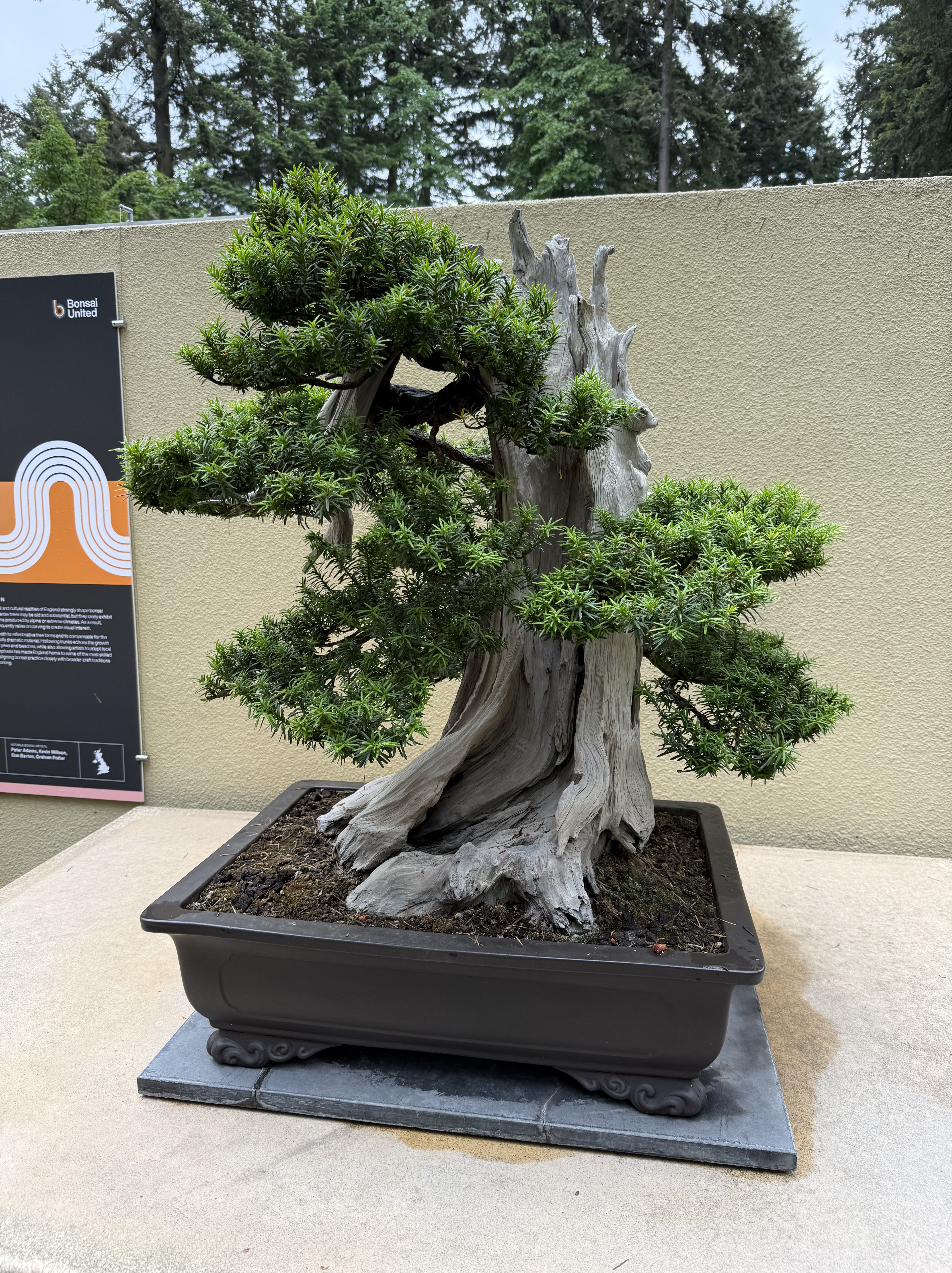
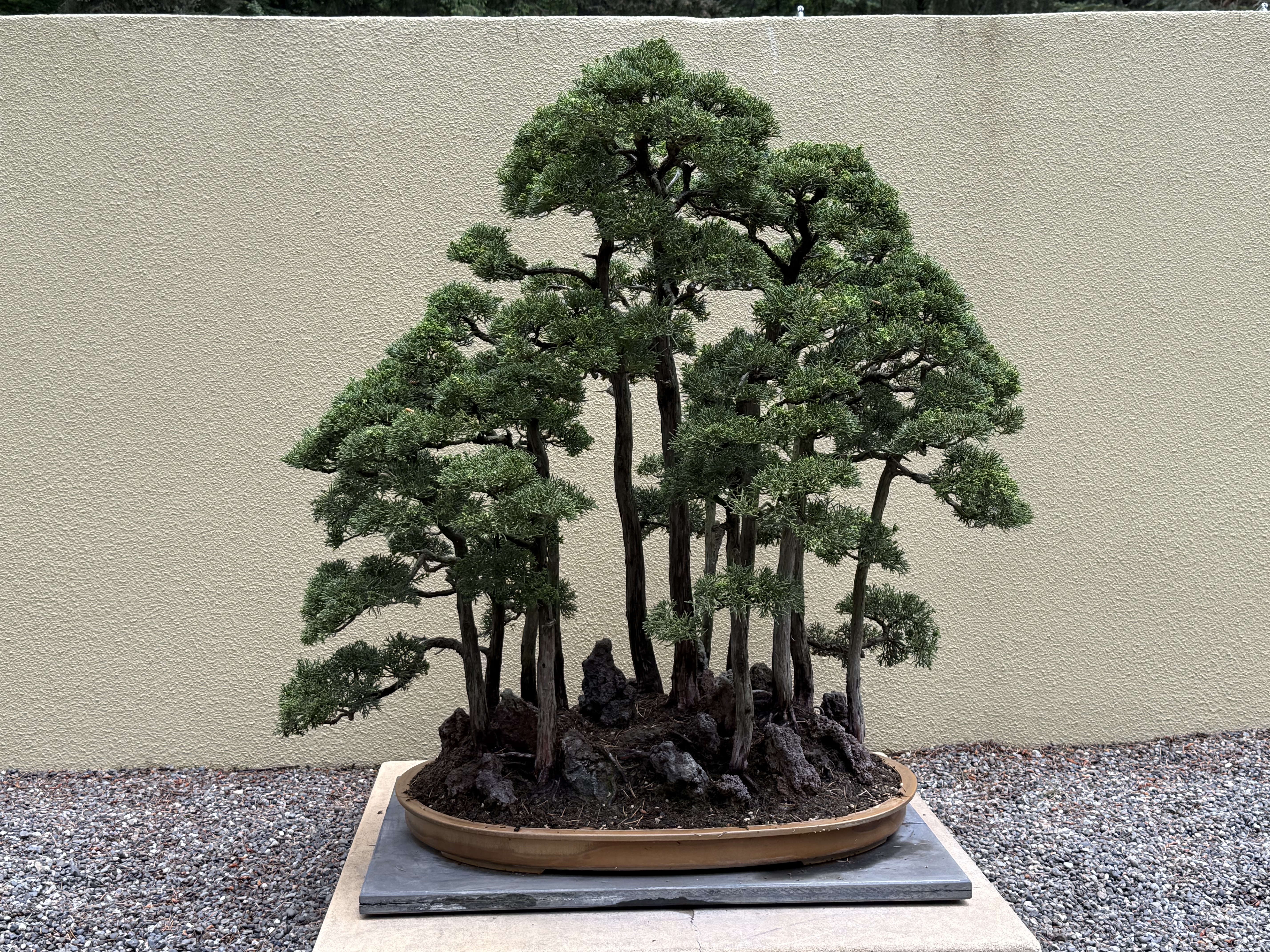
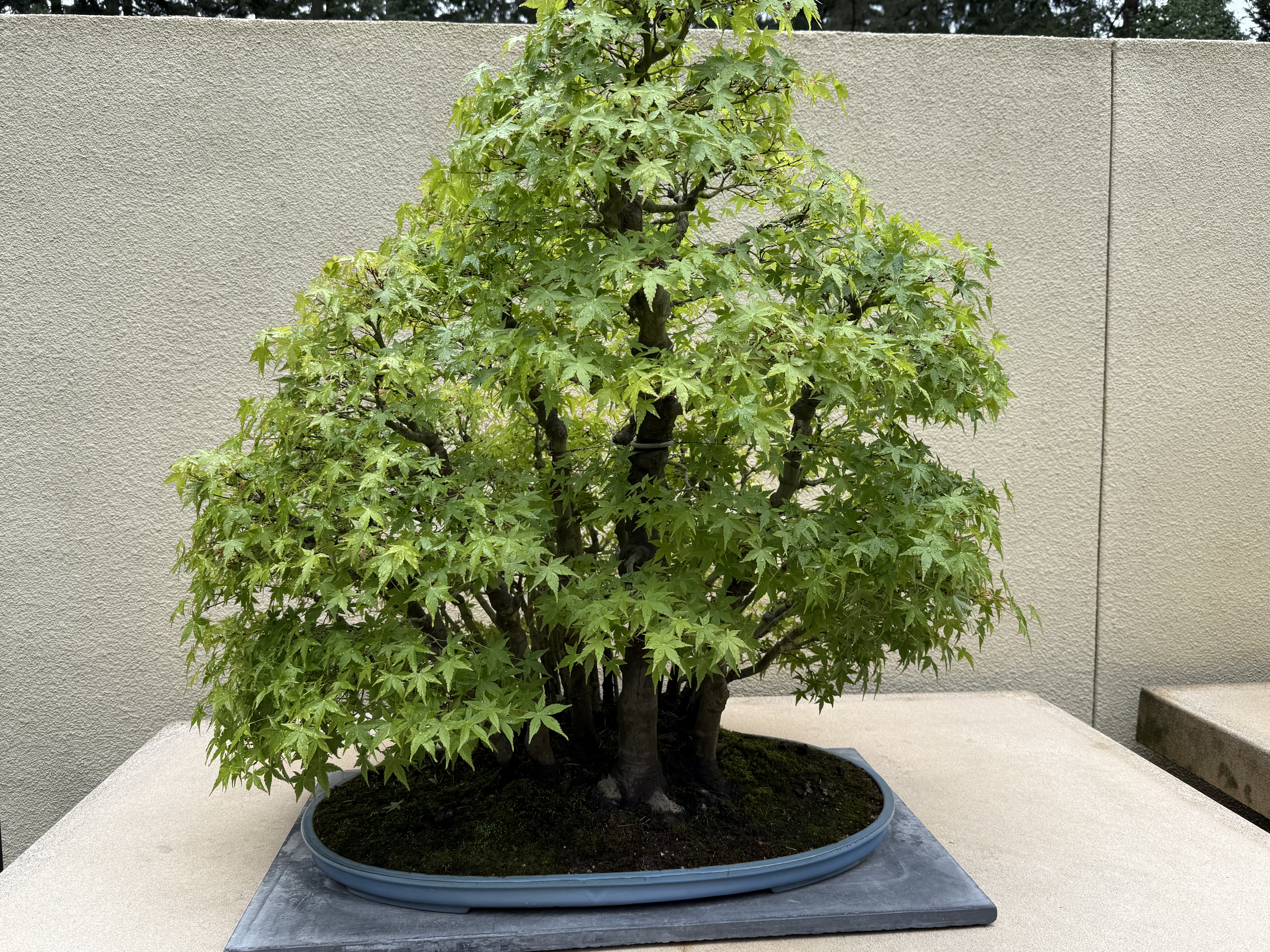
This successful “forest” is by an Australian. Note the “rocks” at the base; they are actually dead knobs from a large stump. Also note the very shallow pan: this is truly penjing–tray scenery–and not a potted plant.
The Rhododendron Garden
We crossed the gravel plaza and paid a visit to the Rhododendron Garden. The casual stroll through every imaginable color flower was worth the price of admission, even on a chilly spring day in the Pacific Northwest.

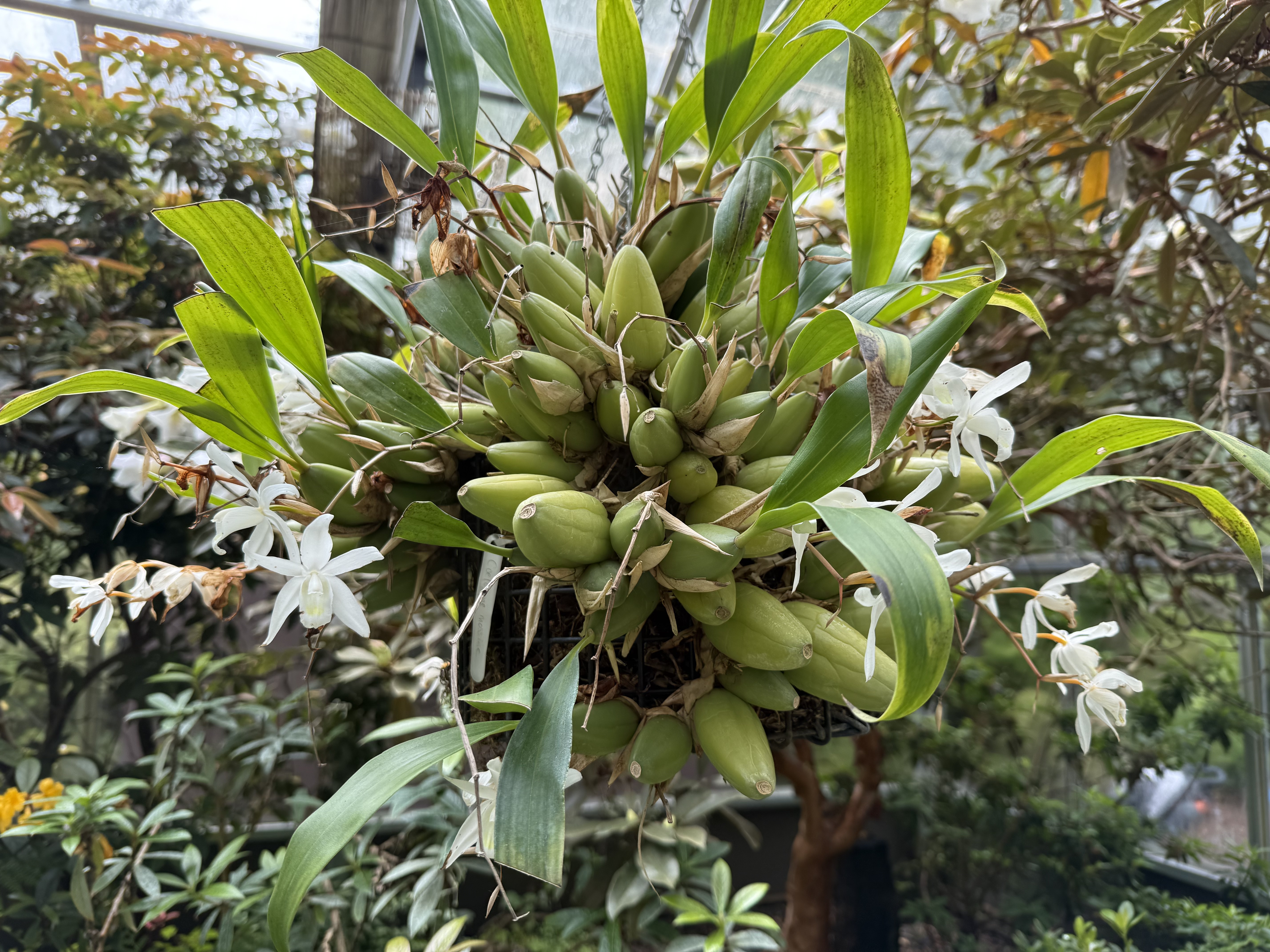

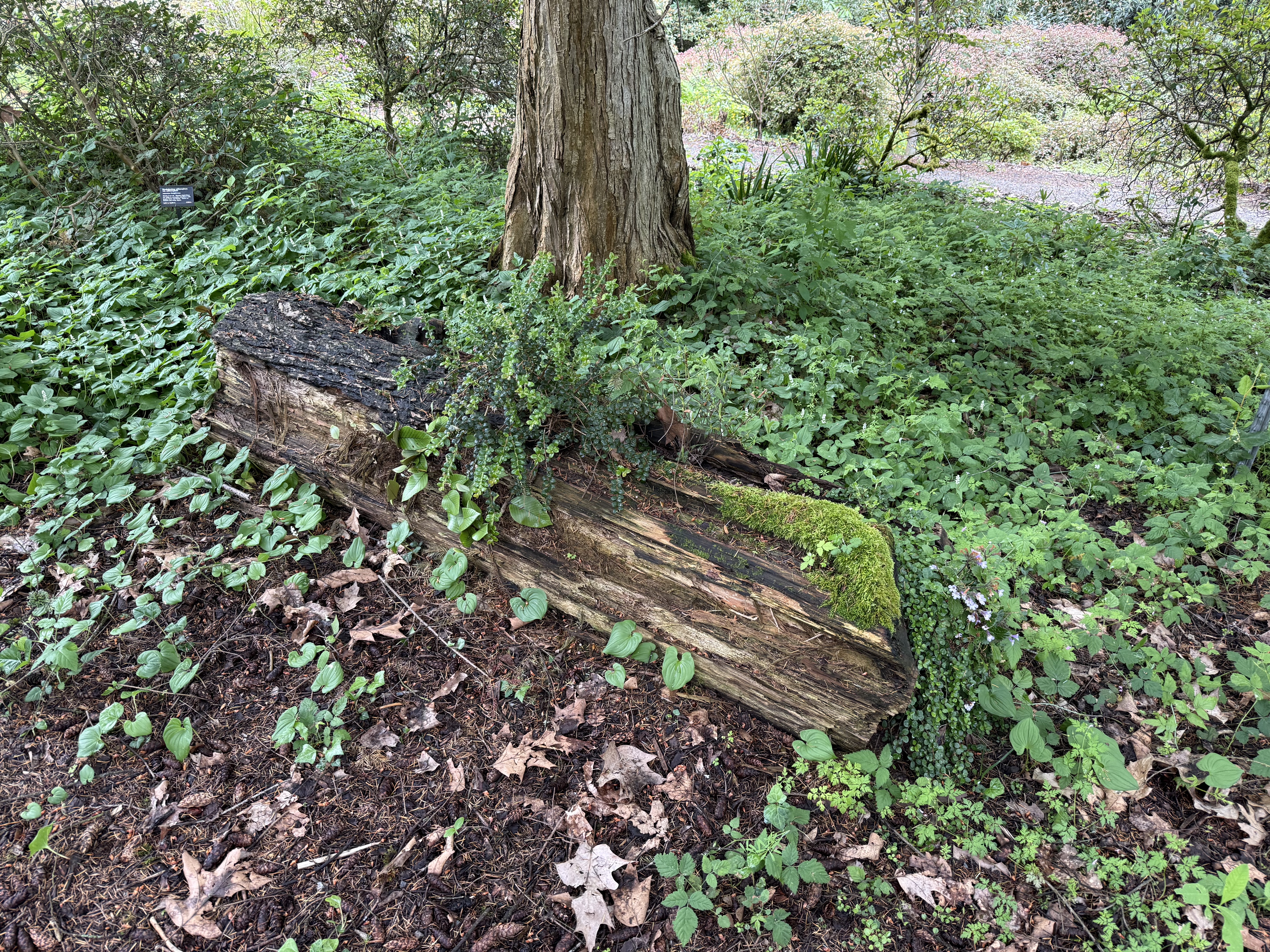
I’ve commented about “nurse logs” before. Here they are part of the landscaping.

I love the flowers peaking out of one end of this log while a bush is struggling to escape from the other end.

Rhododendron is one of the most common groups of plants, native to every continent although most of them originate from SE Asia. They do well in the Himalayas–not so much here in the PNW.

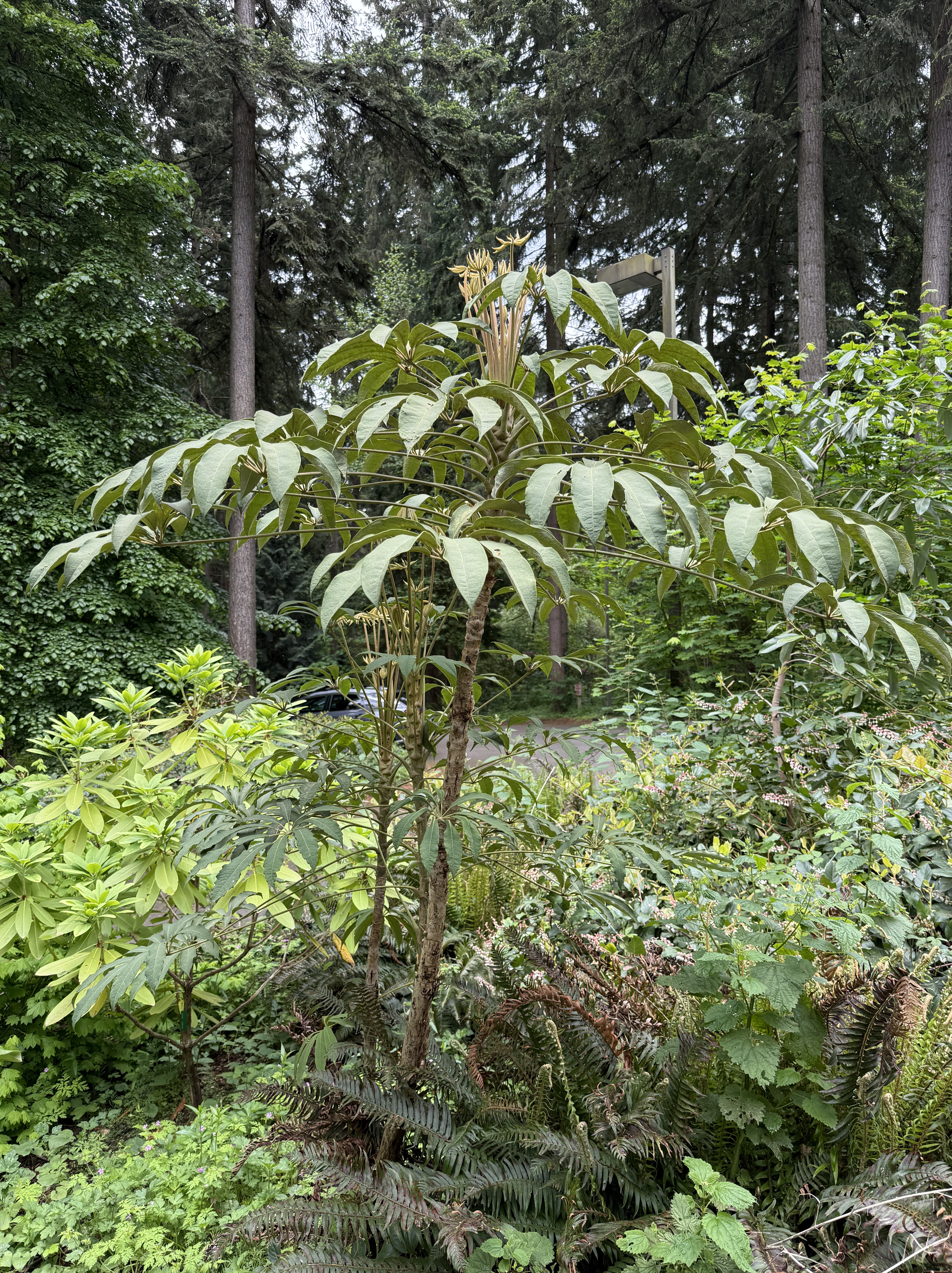
This caught my eye as we left the museum/garden…
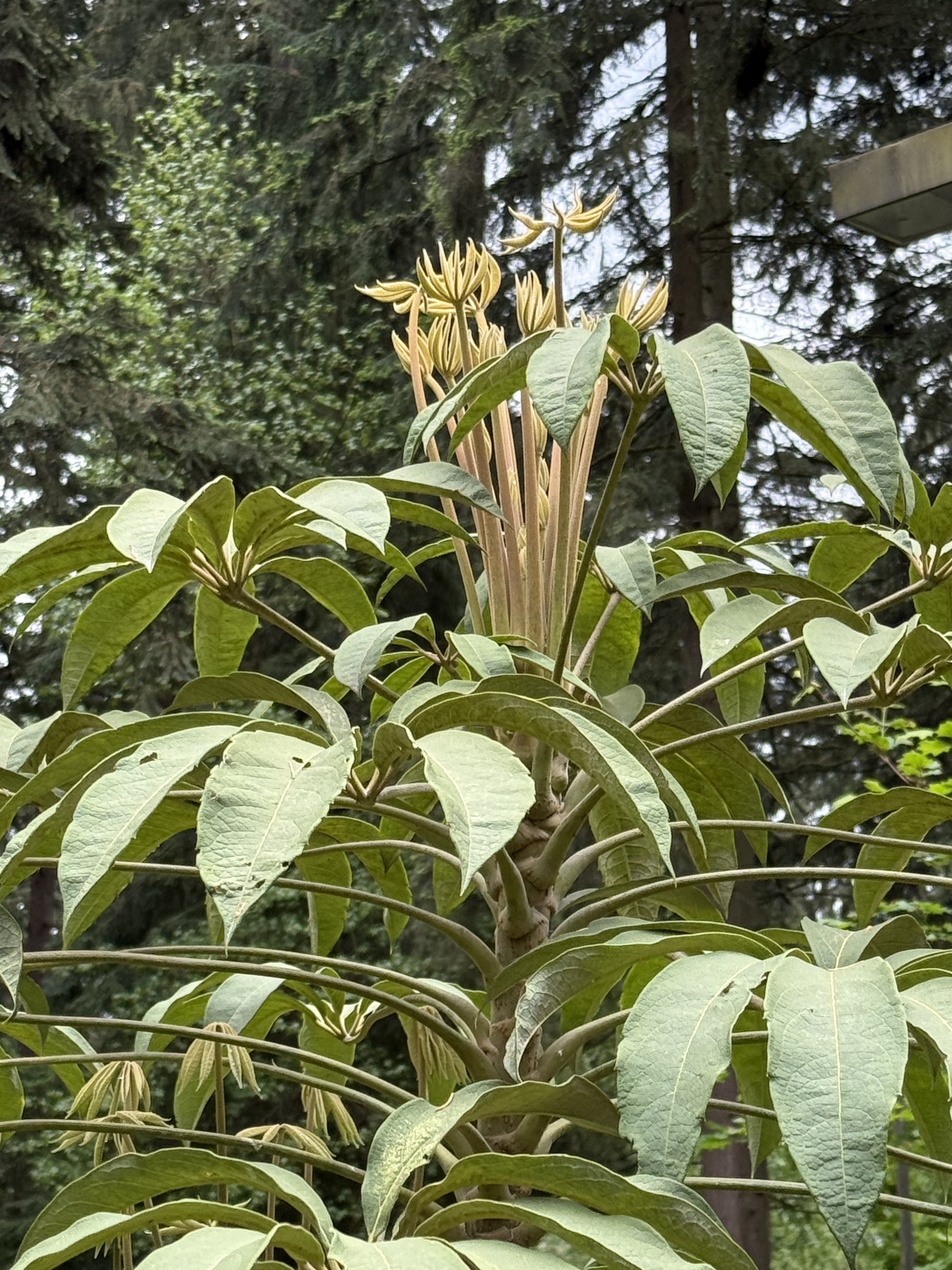
What the hell is growing out of the top? I’d love to see what kind of flowers this tall shrub will produce later this spring…


Recent Comments