
Ecological Notes from Cowiche Canyon
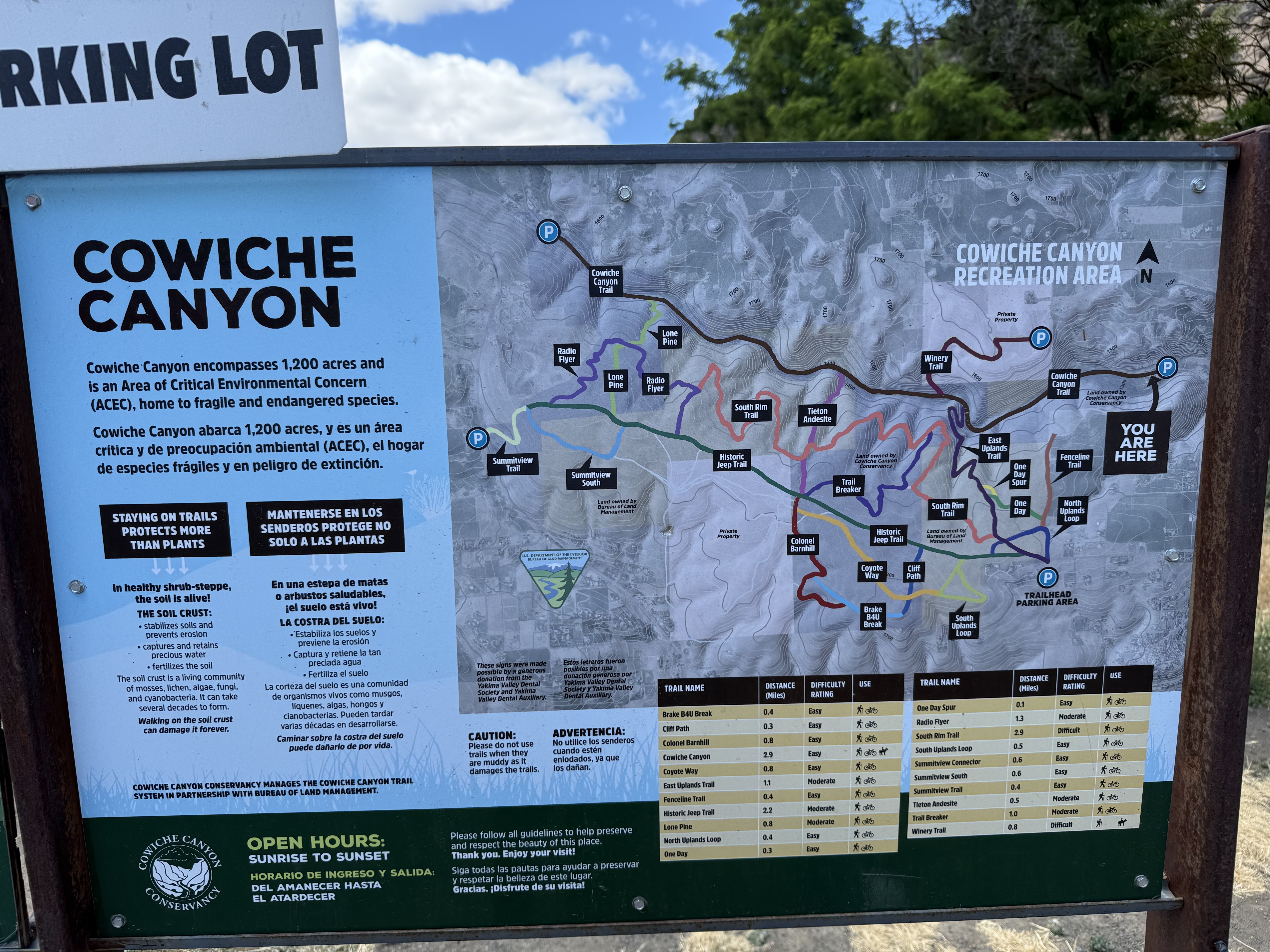
Cowiche Canyon Recreation Area is located on US12 just west of Yakima, Washington. The region receives 9-14 inches of rain per year, making it a dry area; thus, the trail system includes both shrub steppe (uplands) and riparian (along Cowiche Creek) habitats. We followed the main trail along the path of a rail line that was in use between 1913 and 1984 along the creek; however, the wetland is very narrow, in places constricted to less than 100 yards. Thus, I encountered plants from both environments.
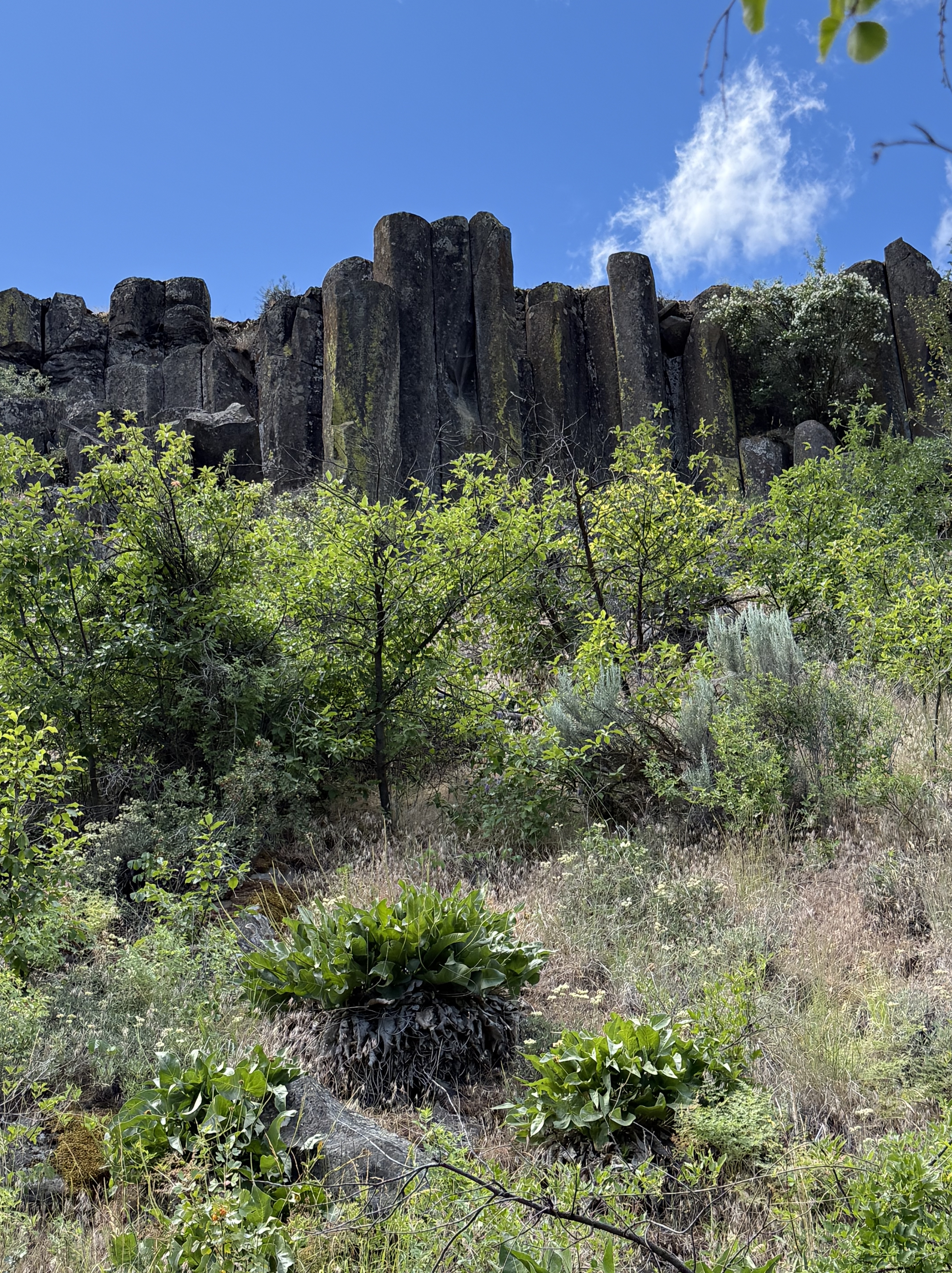
The canyon walls are composed of a series of basalt ledges with intervening slopes covered by talus and colluvium, which are part of the shrub-steppe habitat. I discussed the geology of the area in another post.
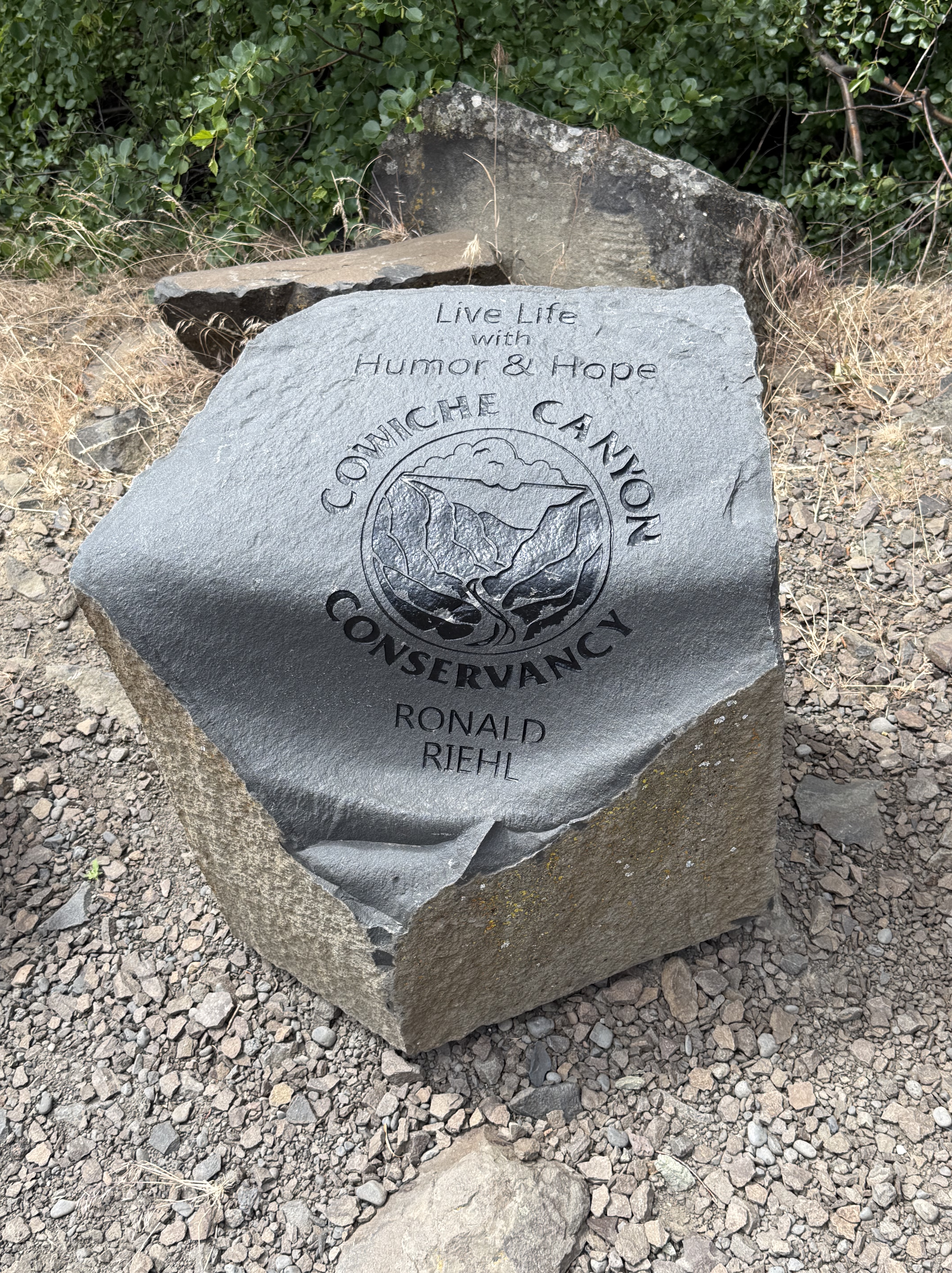
The recreation area is maintained by the Cowiche Canyon Conservancy in partnership with Bureau of Land Management. This stone is a piece of the columnar basalt that lines the canyon.
It’s fortunate that I visited this area during spring, which lasts a little longer here in the Pacific Northwest. As always, I used CoPilot (AKA ChatGPT) for identification while I try to remember scraps of the huge amount of information presented in this mixed environment.
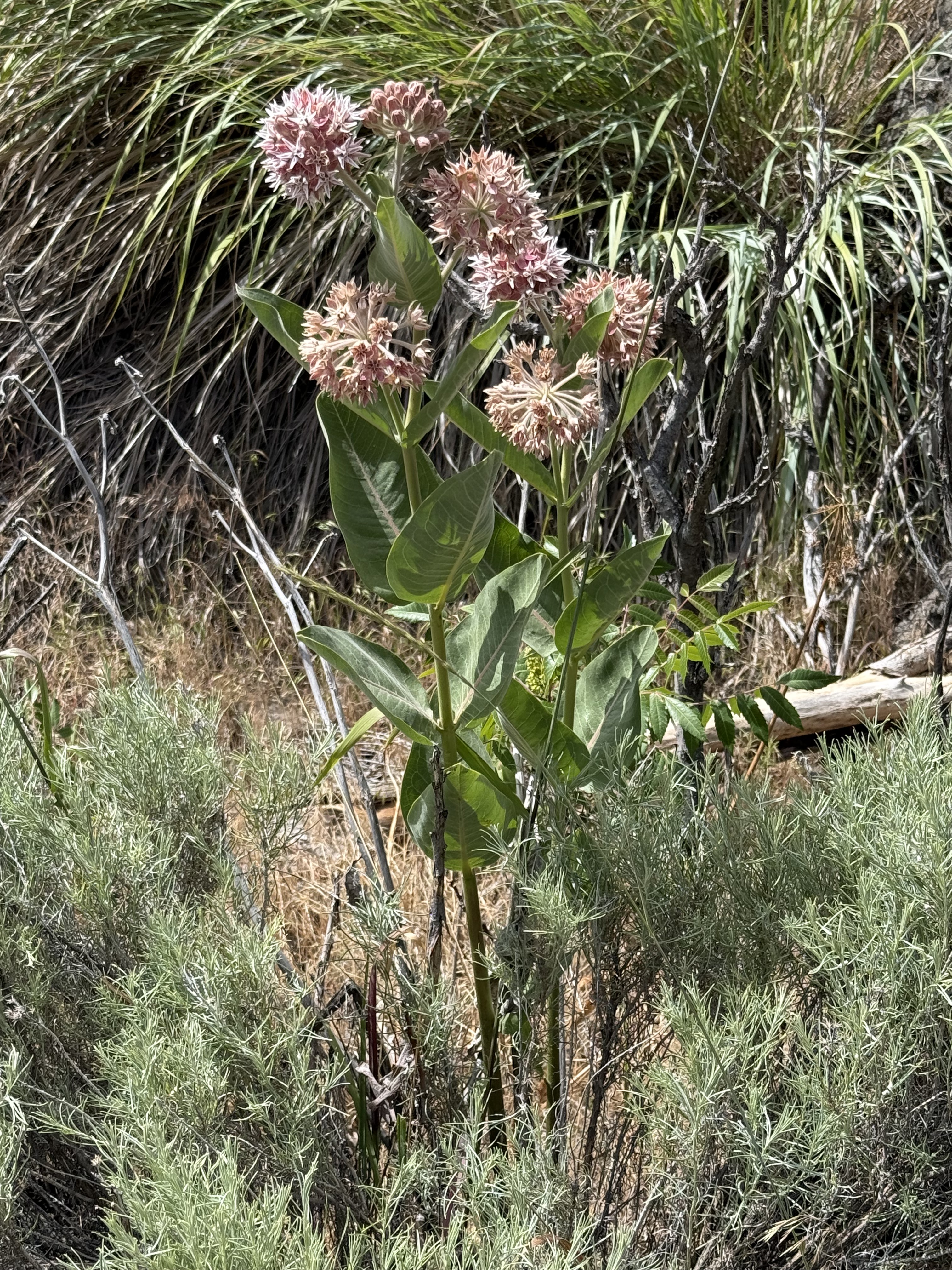
This is Asclepias speciosa, also known as showy milkweed. It is native to Yakima county and is a host species for Monarch butterflies.
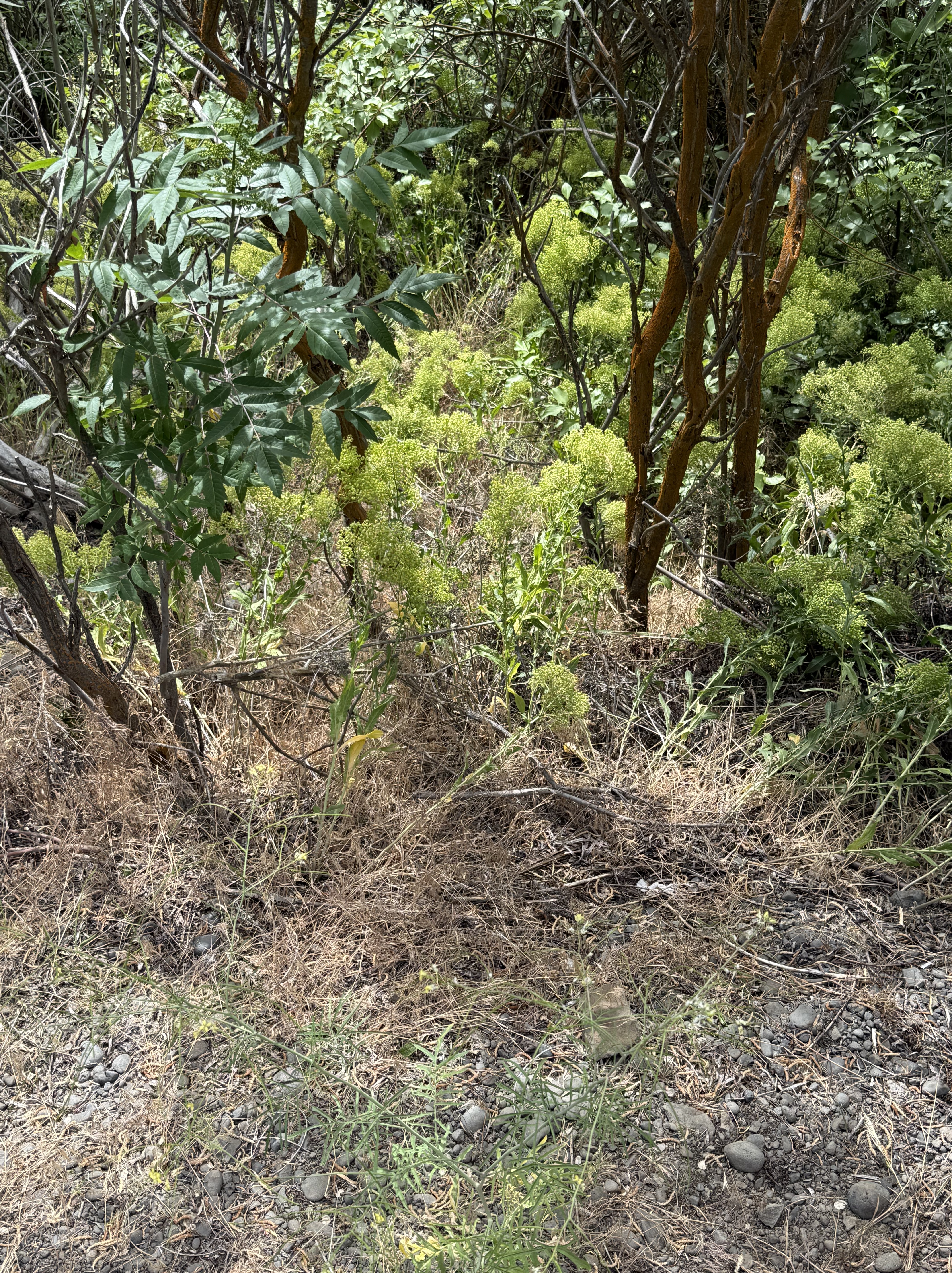
The leafy shrub with dark leaves is snowberry–Symphoricarpos albus (or possibly S. oreophilus, which also occurs around Yakima).
The low, brightly colored shrub with straight stalks is probably wax currant (Ribes cereum). The bright green is small leaves and the small patches of pink–barely visible in the photo–are the flowers. These are both native plants.
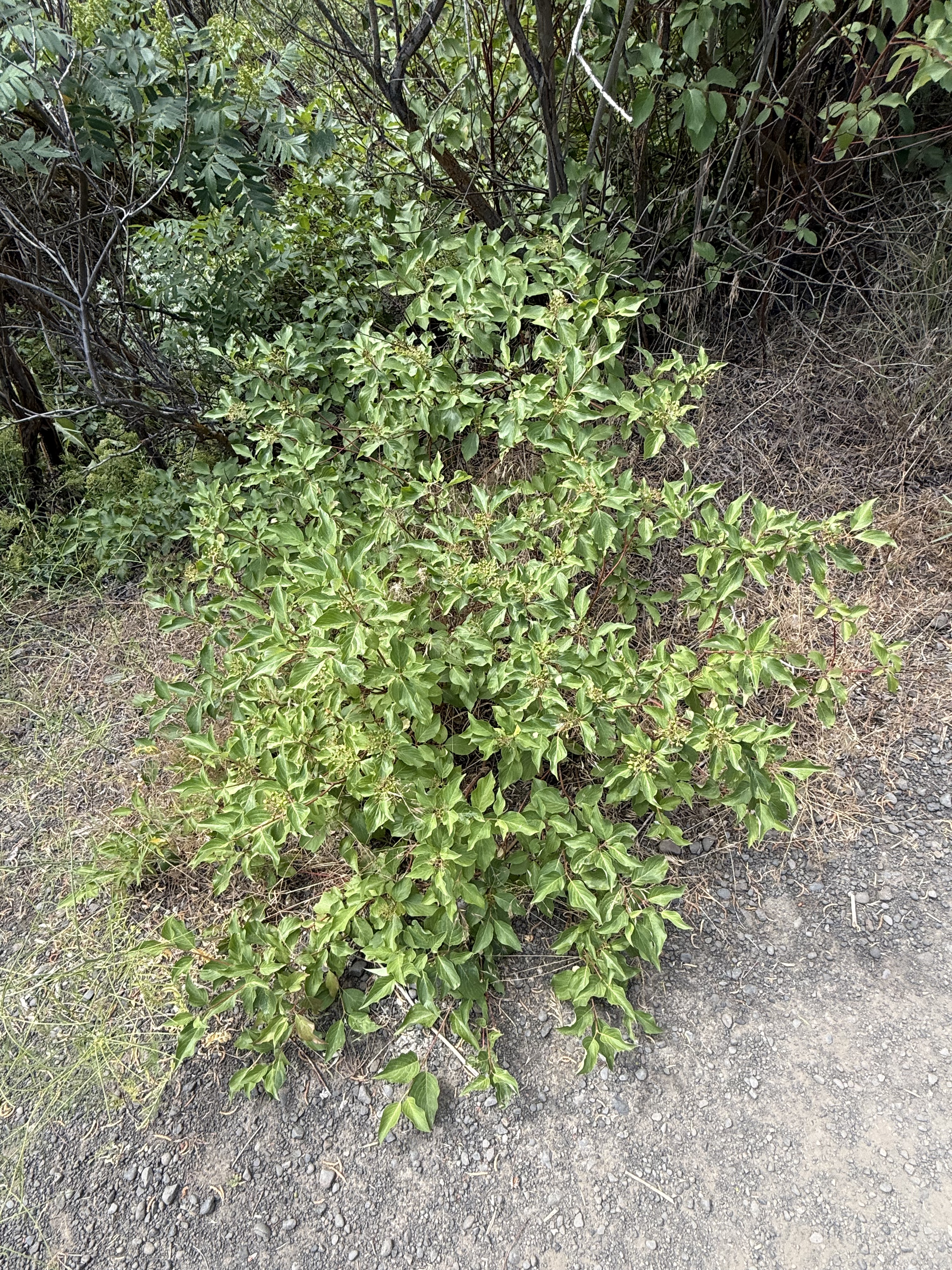
CoPilot wasn’t so sure about this, but it might be Creek or Red-osier Dogwood (Cornus sericea). This specimen was growing in the bottom of the canyon, not far from Cowiche Creek, which is a natural location for this native riparian species. It will probably become a small tree.
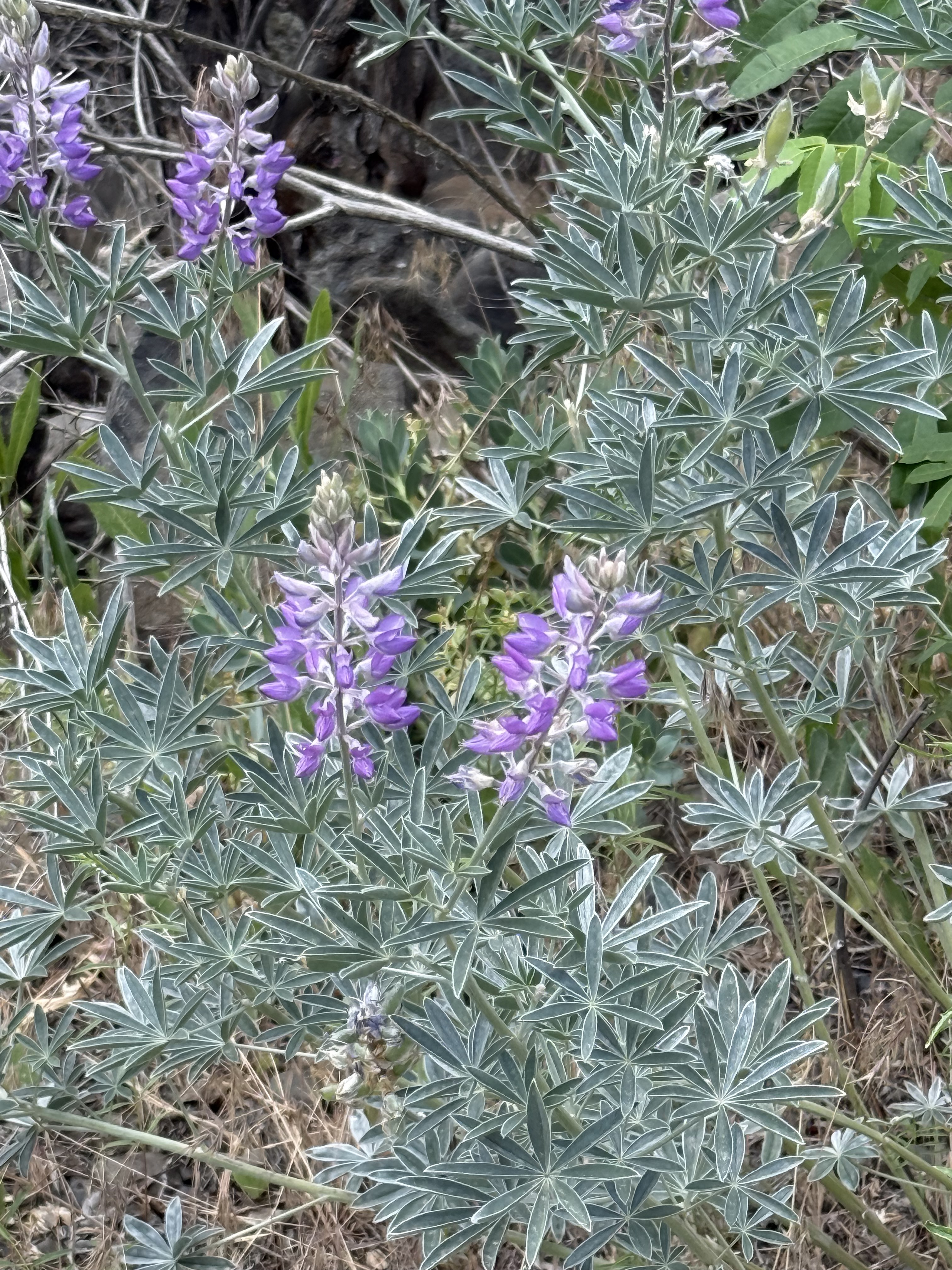
This is my favorite from the walk. Silky lupine (Lupinus sericeus) is one of the signature wildflowers of eastern Washington. I sure am glad we caught them in bloom.
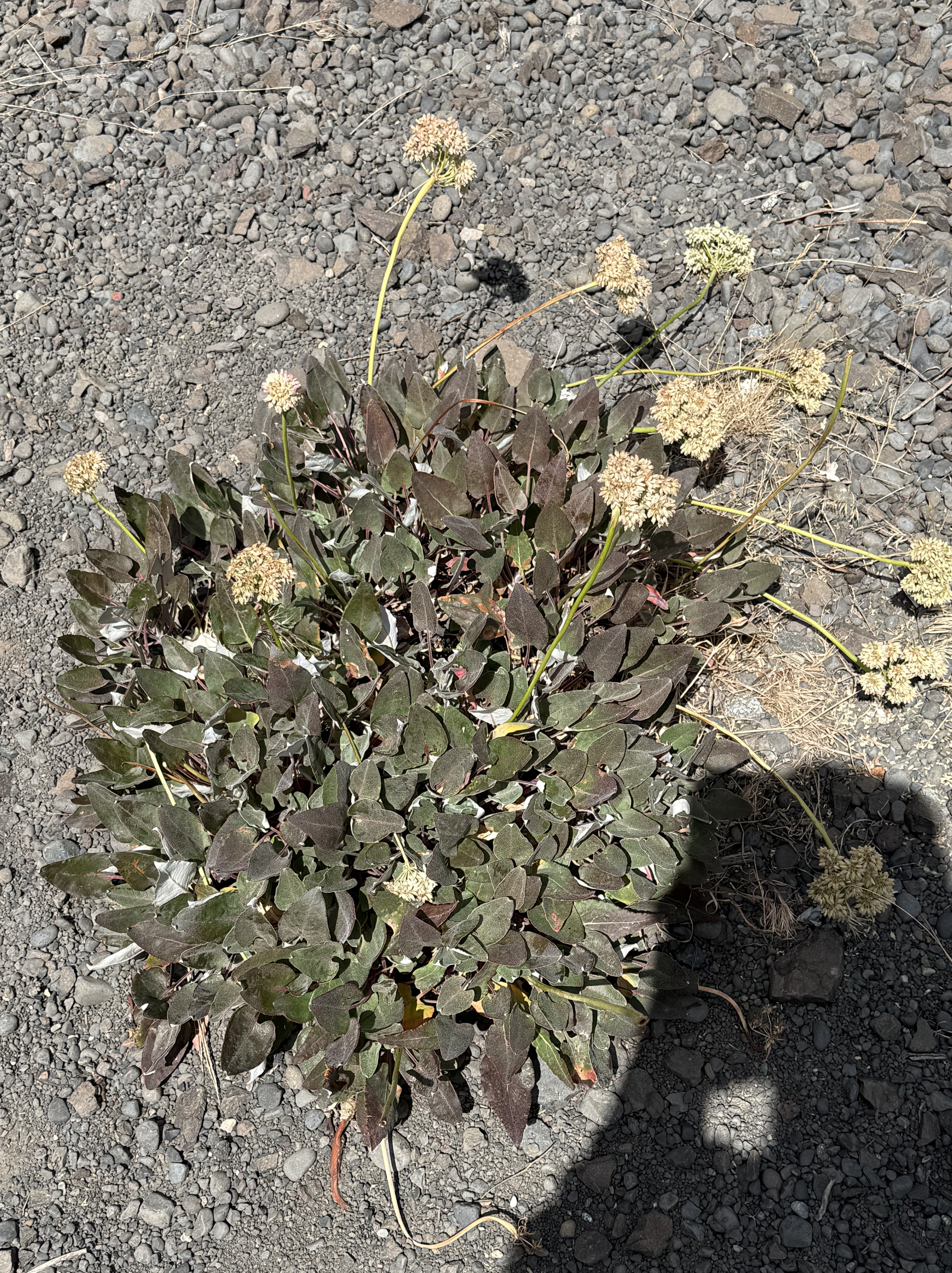
This looks like Pale‑stem buckwheat (Eriogonum heracleoides), another native wildflower to the shrub-steppe habitat.
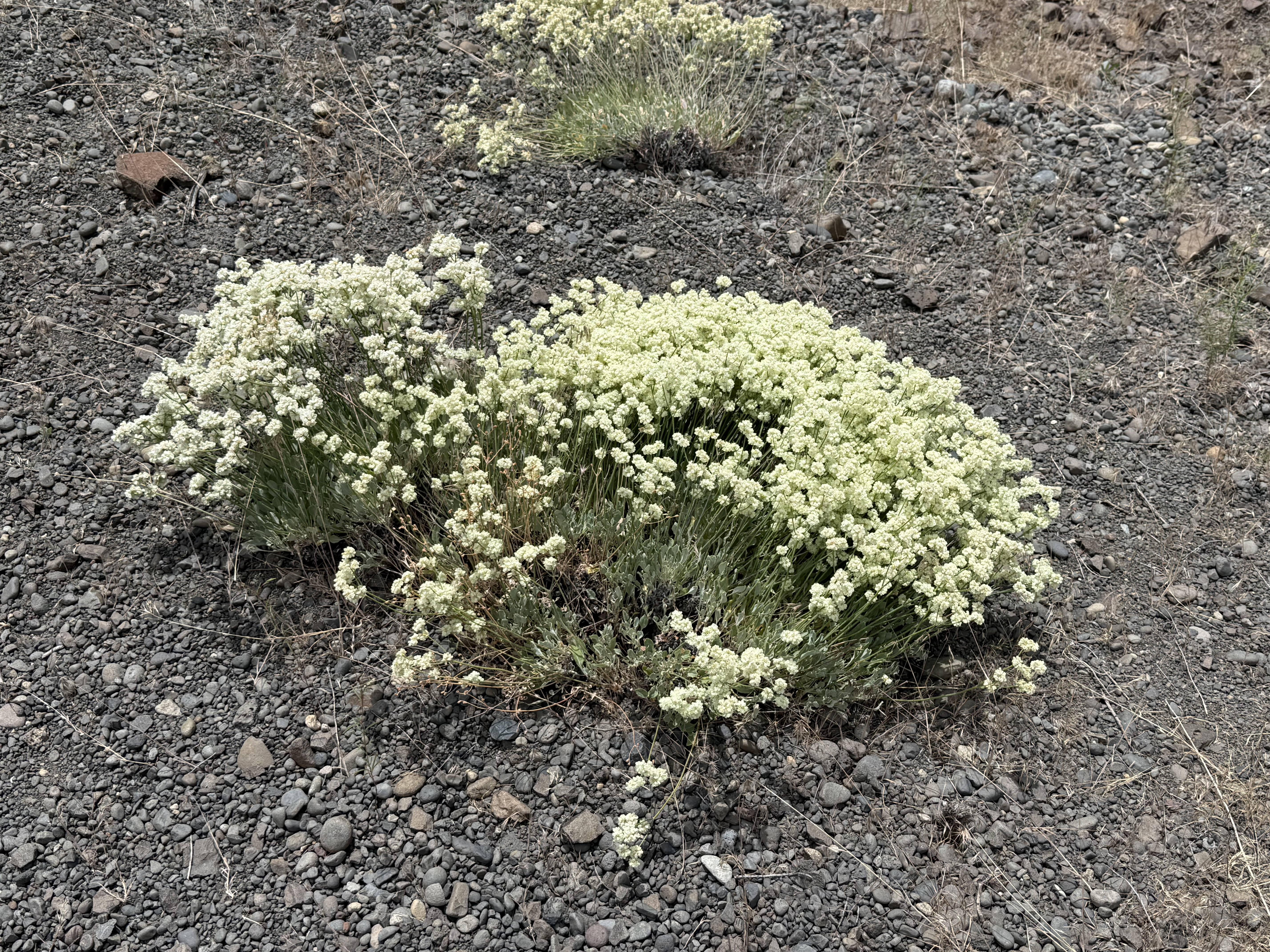
My untrained eye thought this was Pale-stem buckwheat, but CoPilot pointed out the different leaf pattern and color. This is (probably) Sulphur Buckwheat (Eriogonum umbellatum), another common wildflower to Yakima County’s uplands.
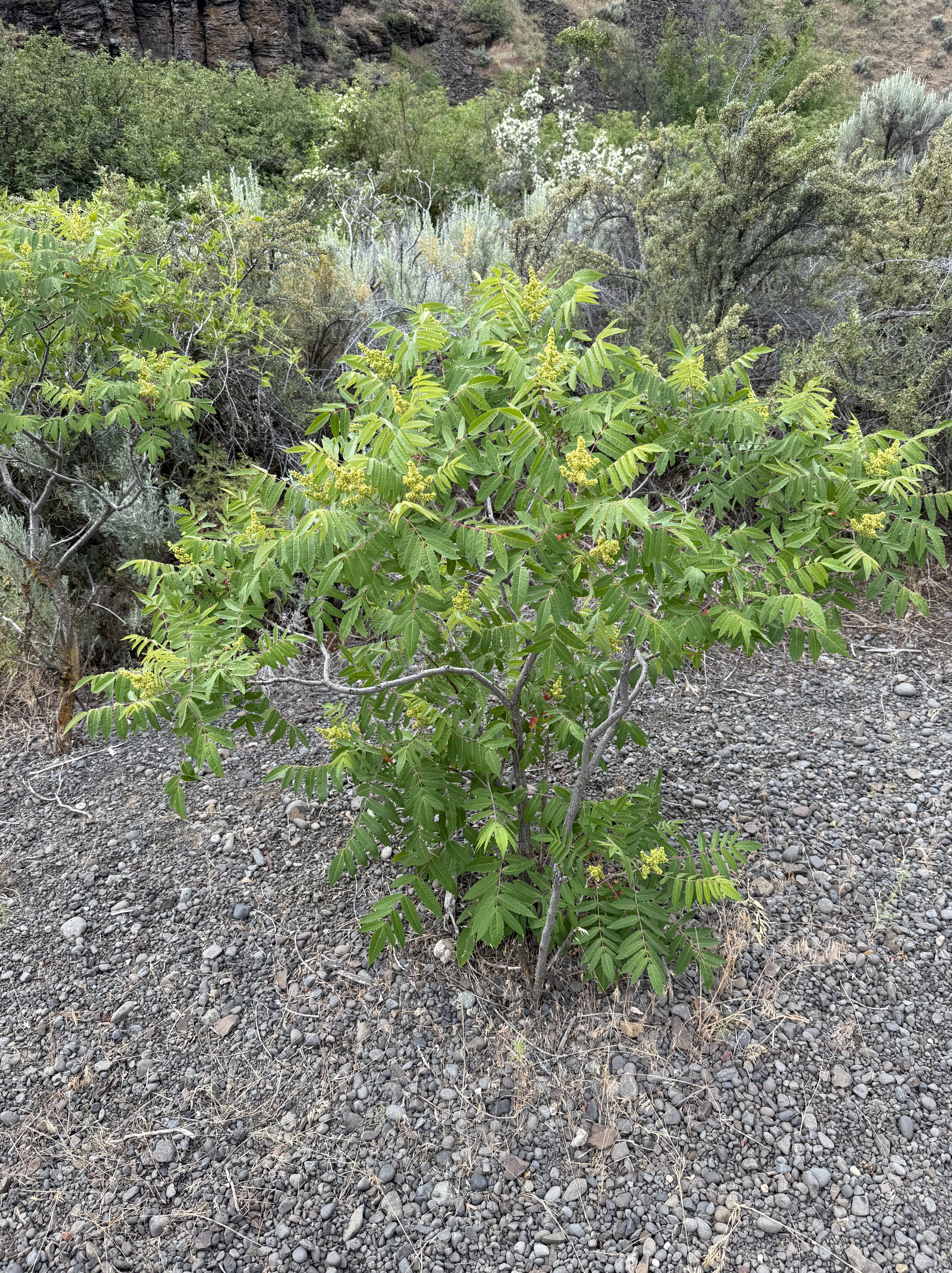
Antelope bitterbrush (Purshia tridentata) is a foundation species of the steppe. This young one had lots of flowers, but the old ones have bare branches; and groups of them grow and die together in cohorts after a disturbance like a wildfire. Yet another native plant.
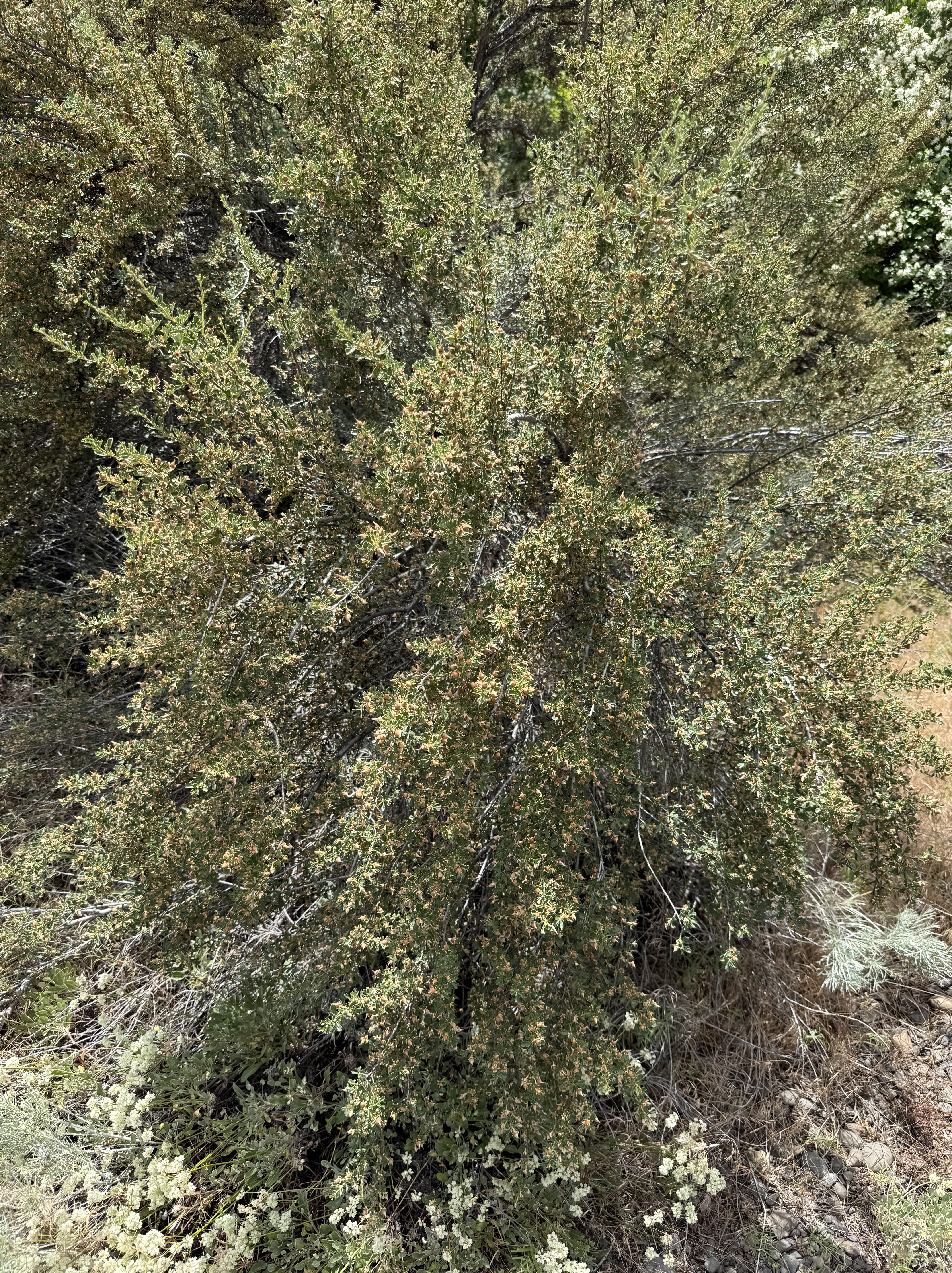
After some discussion, and sharing a close-up, CoPilot swears (hahaha) this is Woods’ rose (Rosa woodsii). However, its justification fits what I see with my own, somewhat confused eyes.
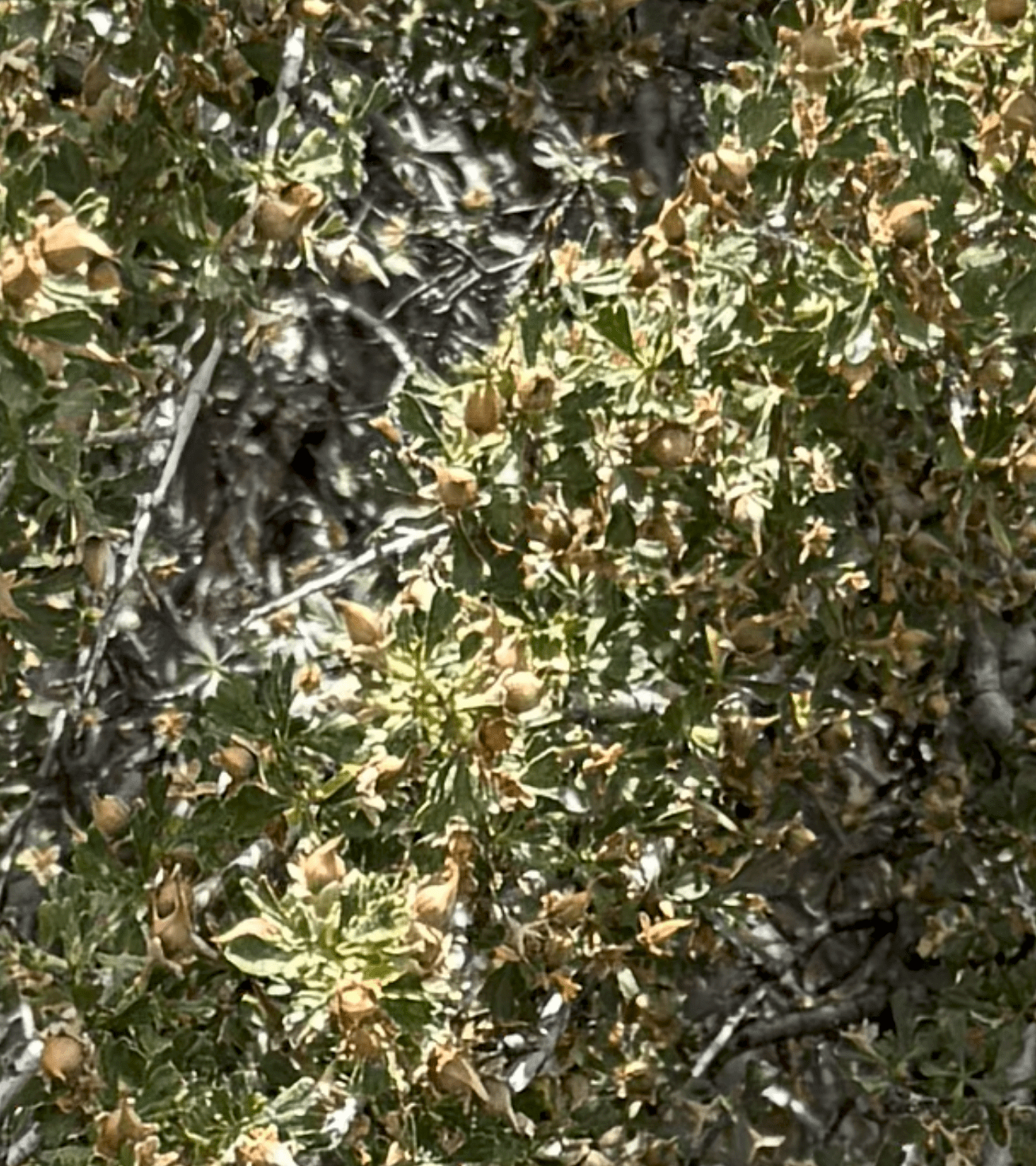
Here’s a close-up of the fruit. The shrub is covered with small nuts that have a distinctive shape, and are definitive for a wild rose. This is another native species to the steppe habitat of Eastern Washington.
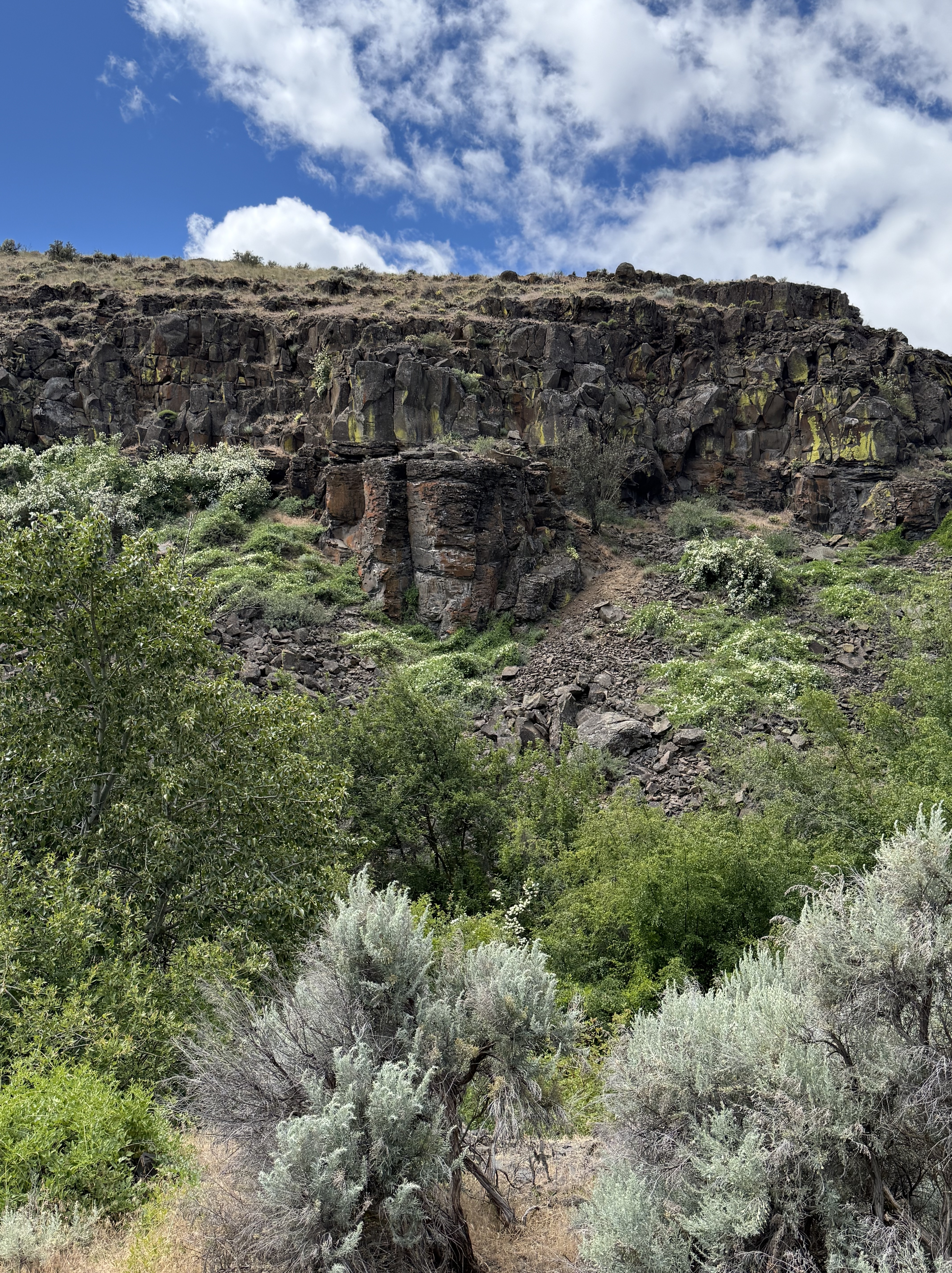
This photo, looking across Cowiche Creek, puts it all together for me. On the other side of the canyon we see columnar jointed basalt, several plant species similar to snowberry, bitterbrush, and buckwheat. Along the creek are dogwood and wild rose; and in the foreground is (maybe) big sagebrush (Artemisia tridentata).
When I took this picture, all I saw was a bunch of plants. After carefully examining them with CoPilot, it has become a mixed riparian-shrub-steppe habitat. However, I didn’t see/hear any birds or other animals, even though it was a cool day with temperatures in the mid-sixties.
CoPilot was a great help, but it is not infallible–more like working with someone who has studied some biology/ecology. After all, it is only a Large Language Model, not an AI system trained on recognizing plant species. Nevertheless, it was a great collaborator and I learned a lot from our collaboration.
Point Defiance Rose Garden
Spring is a great time to be outdoors in the Pacific Northwest, so we visited the rose garden at Point Defiance park, which is more than 130 years old. It had a full-time gardener until the 70s, who lived in a house on the grounds. I forgot to take a photo of it. Not very exciting, but I found myself drawn to the amazing colors and shapes of so many flowers in bloom at the same time.
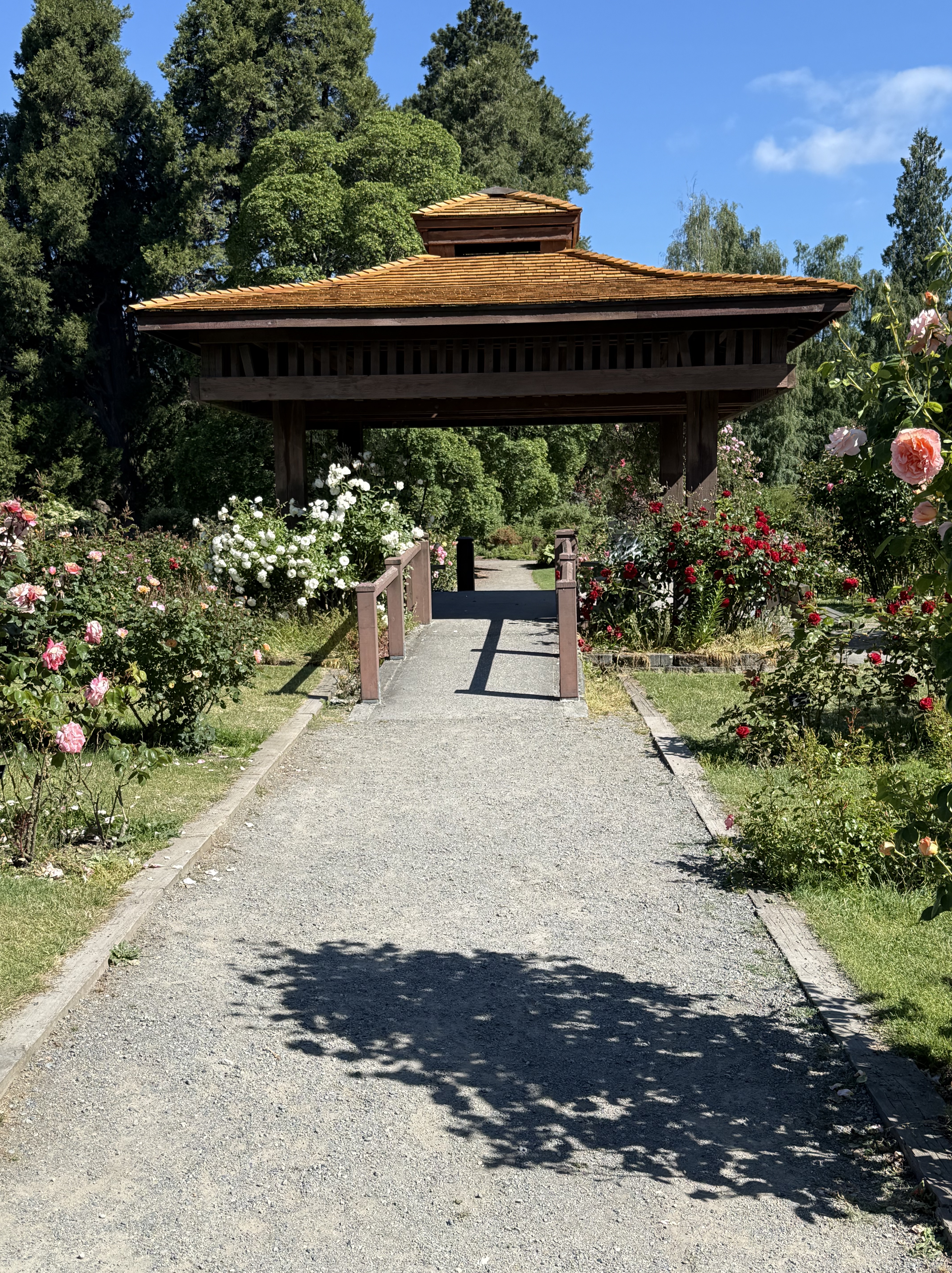
This is the central pagoda of the rose garden, which is arranged in concentric rows around it. The design philosophy of the first master gardener (Ebenezer Roberts) was more natural rather than highly organized, and that’s how the garden has remained through time.
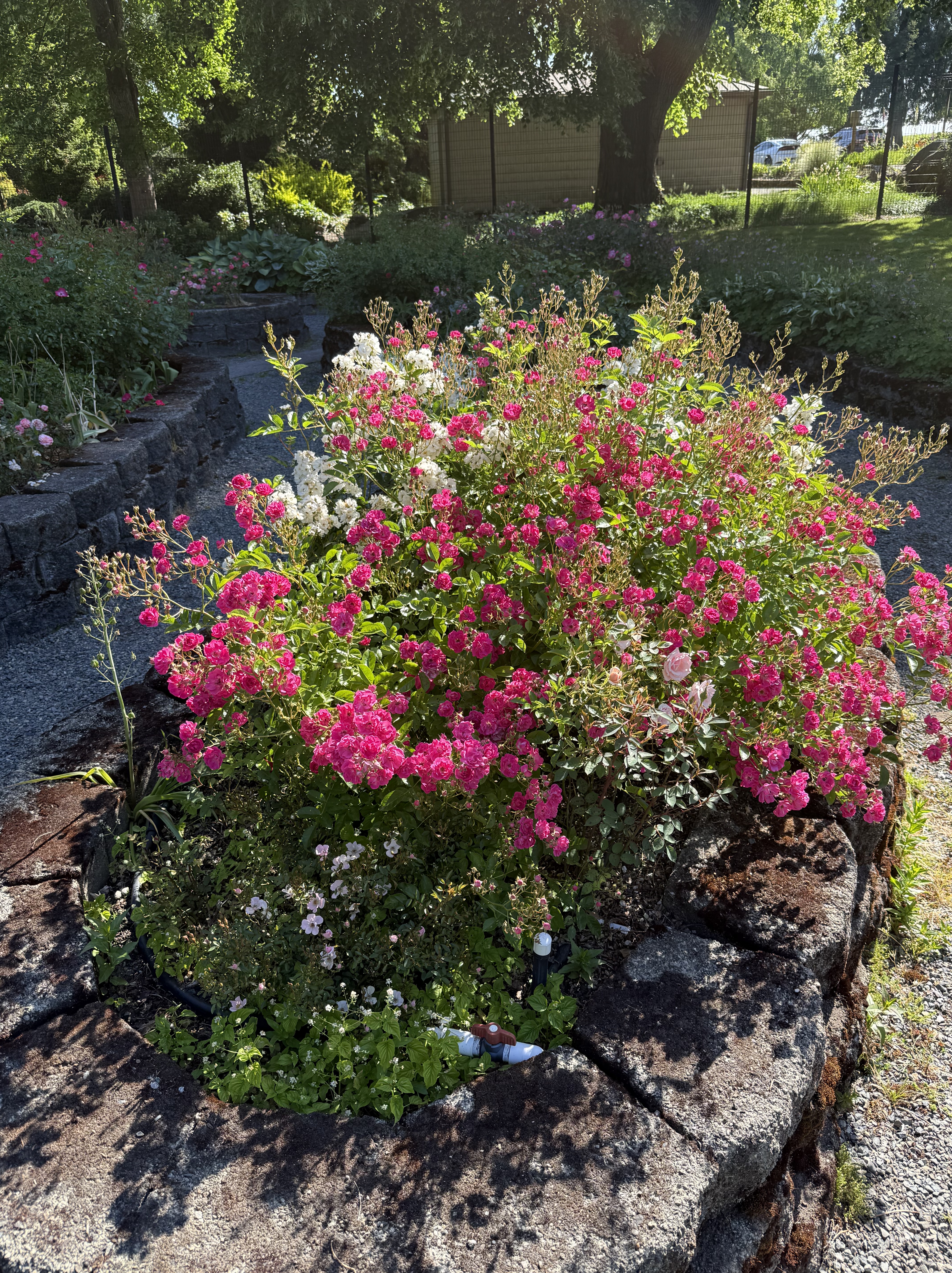
This jumble of color is typical of the rose garden on a spring day.
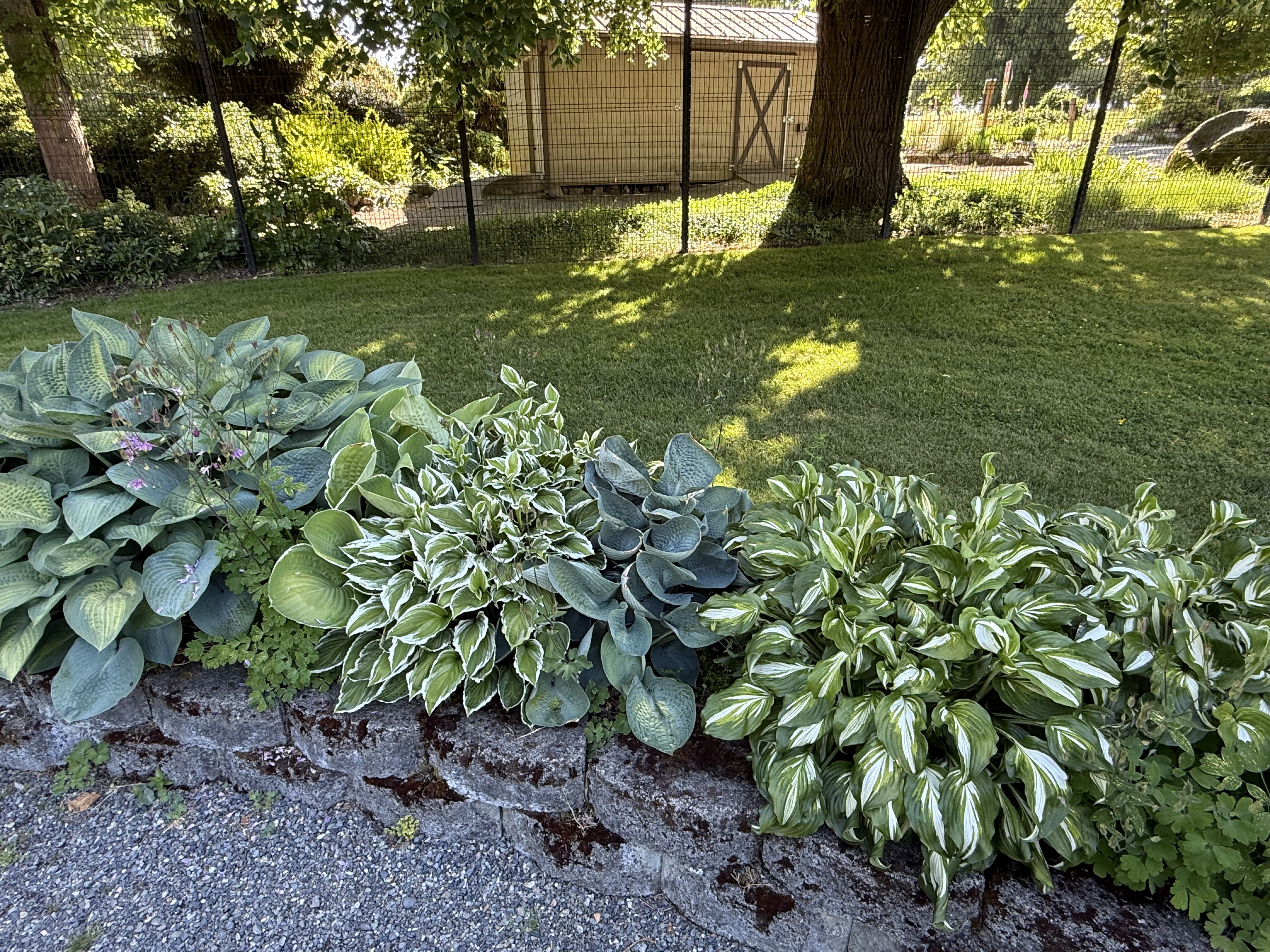
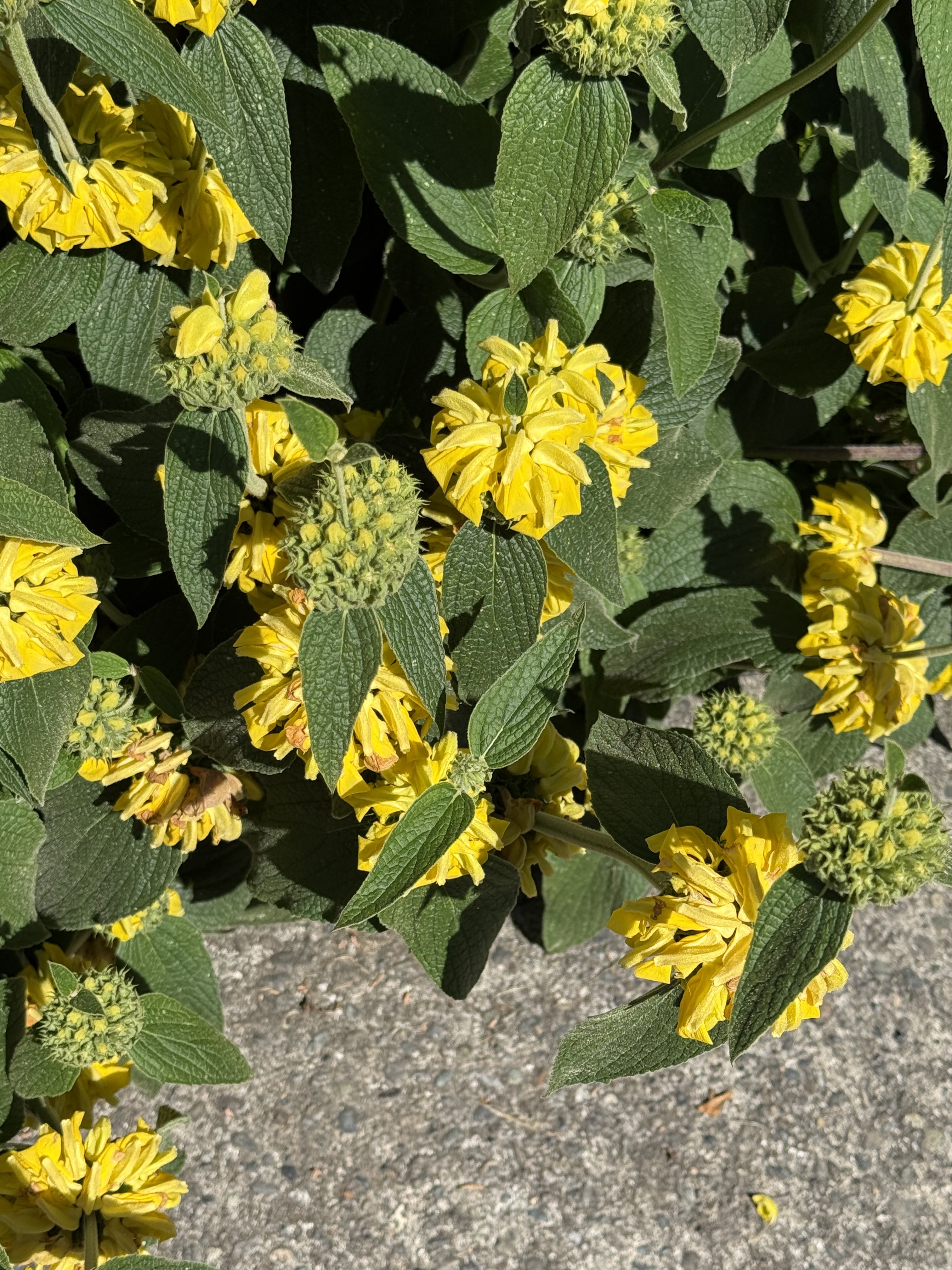
They had more than roses in the rose garden. This is Jerusalem Sage or Phlomis fruticosa,. It appears to be in full bloom.

I never suspected there was a state society for a flower, but they had planted rows of numbered plants in a portion of the rose garden. The fence is to keep out the deer, which devour, stomp, and basically destroy flowering plants.
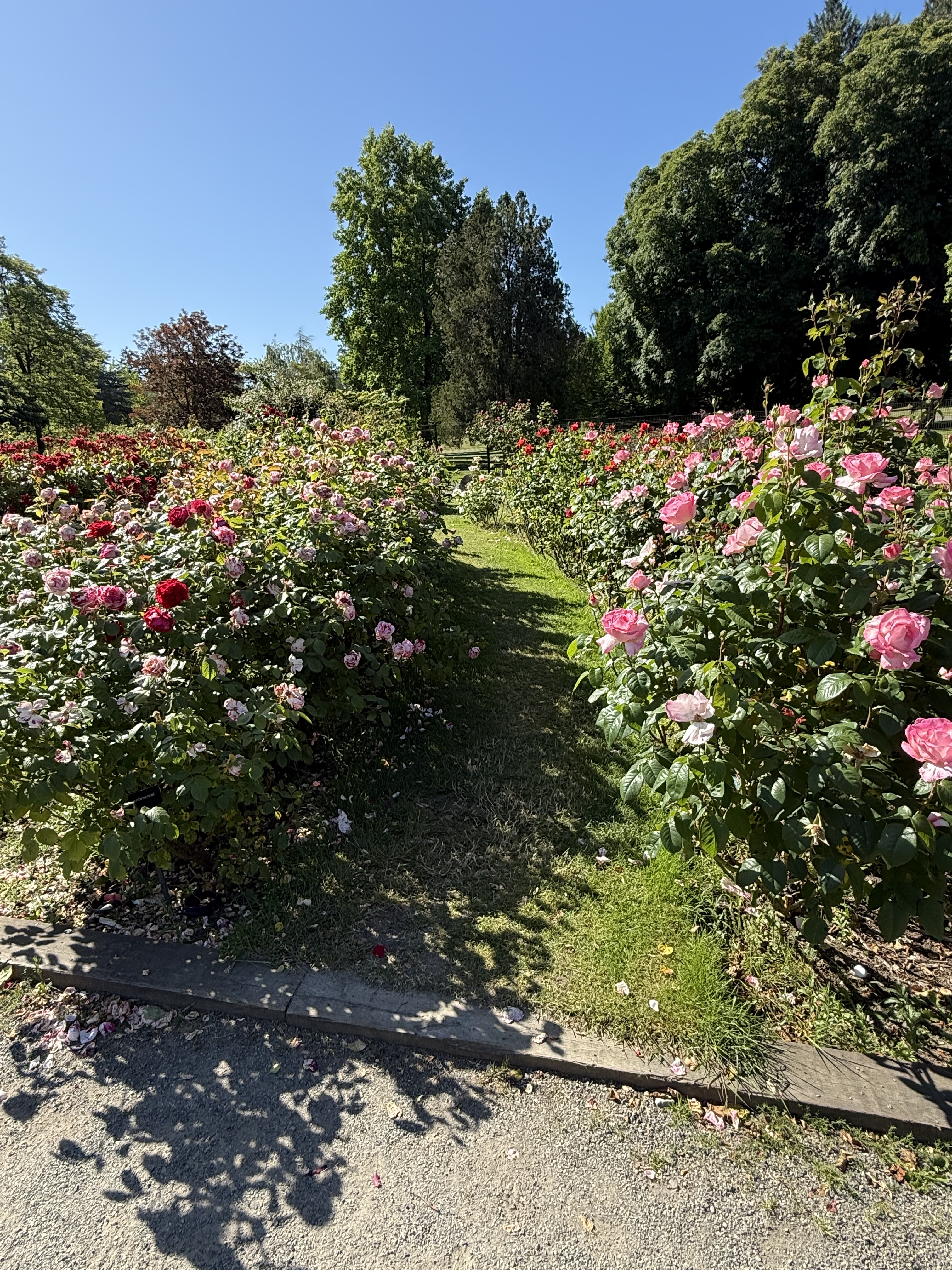
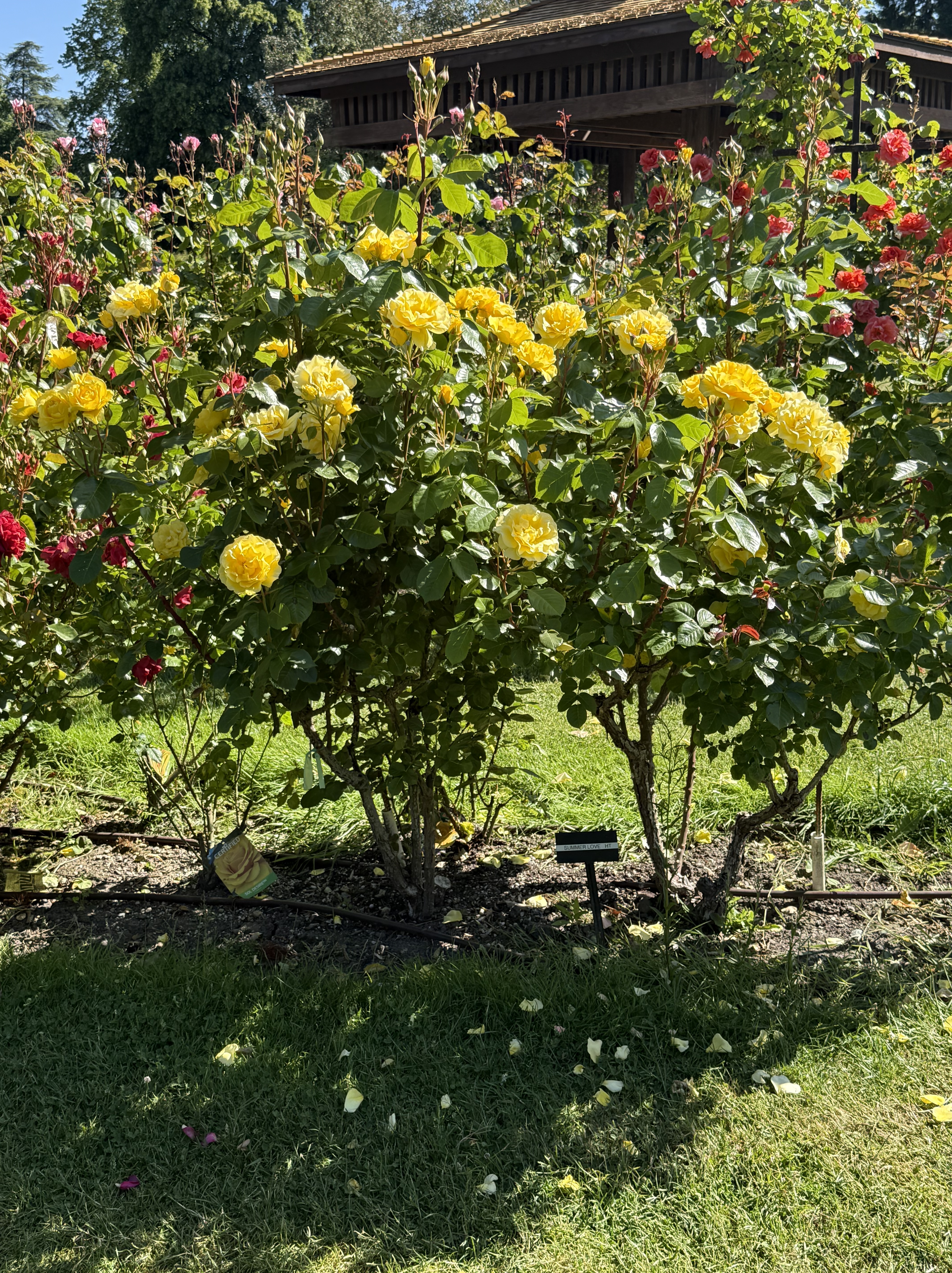
The rose beds are arranged concentrically around the center, but they are mixed up by variety. I’ll just show some photos of the gorgeous blooms we saw.
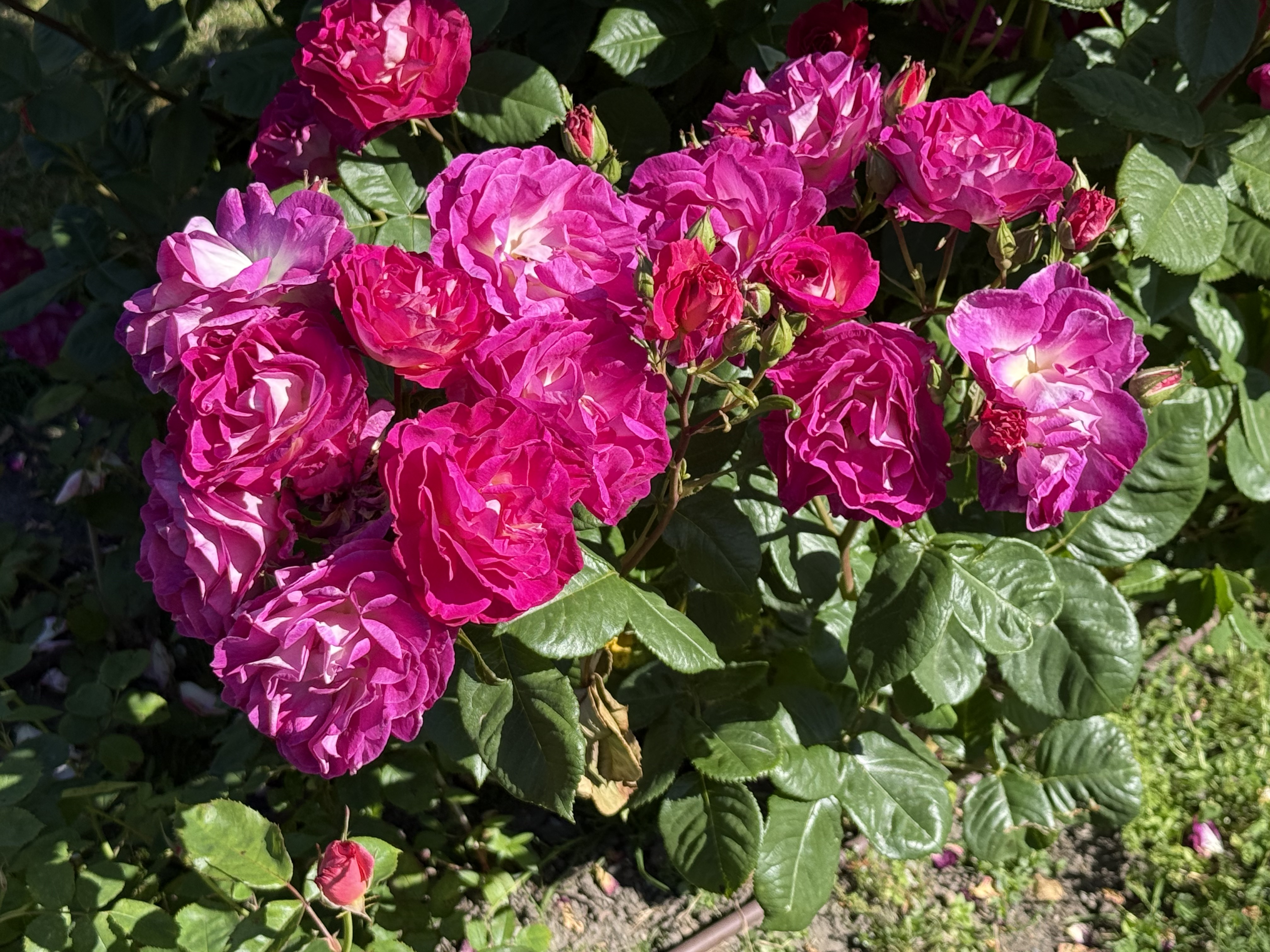
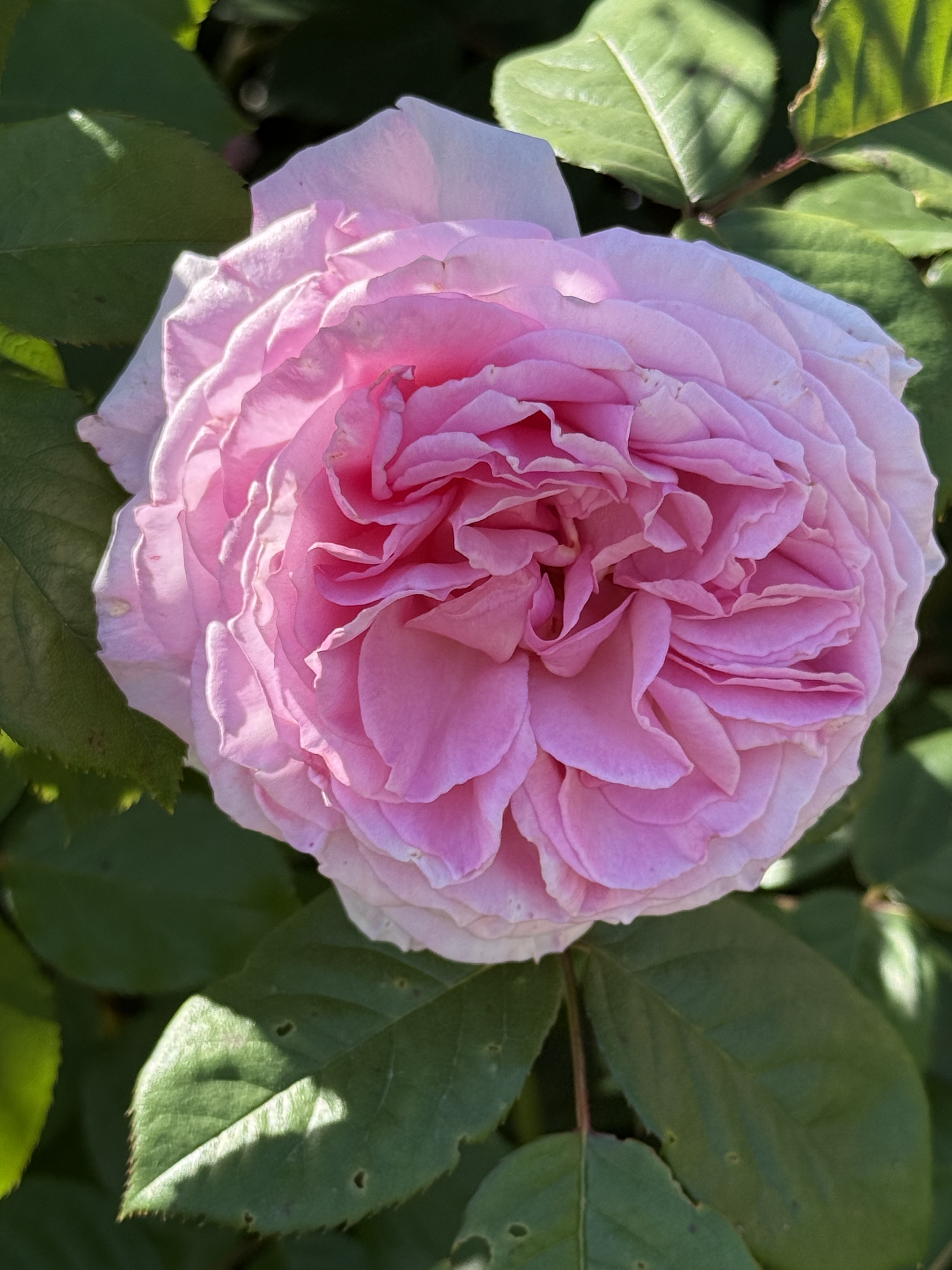
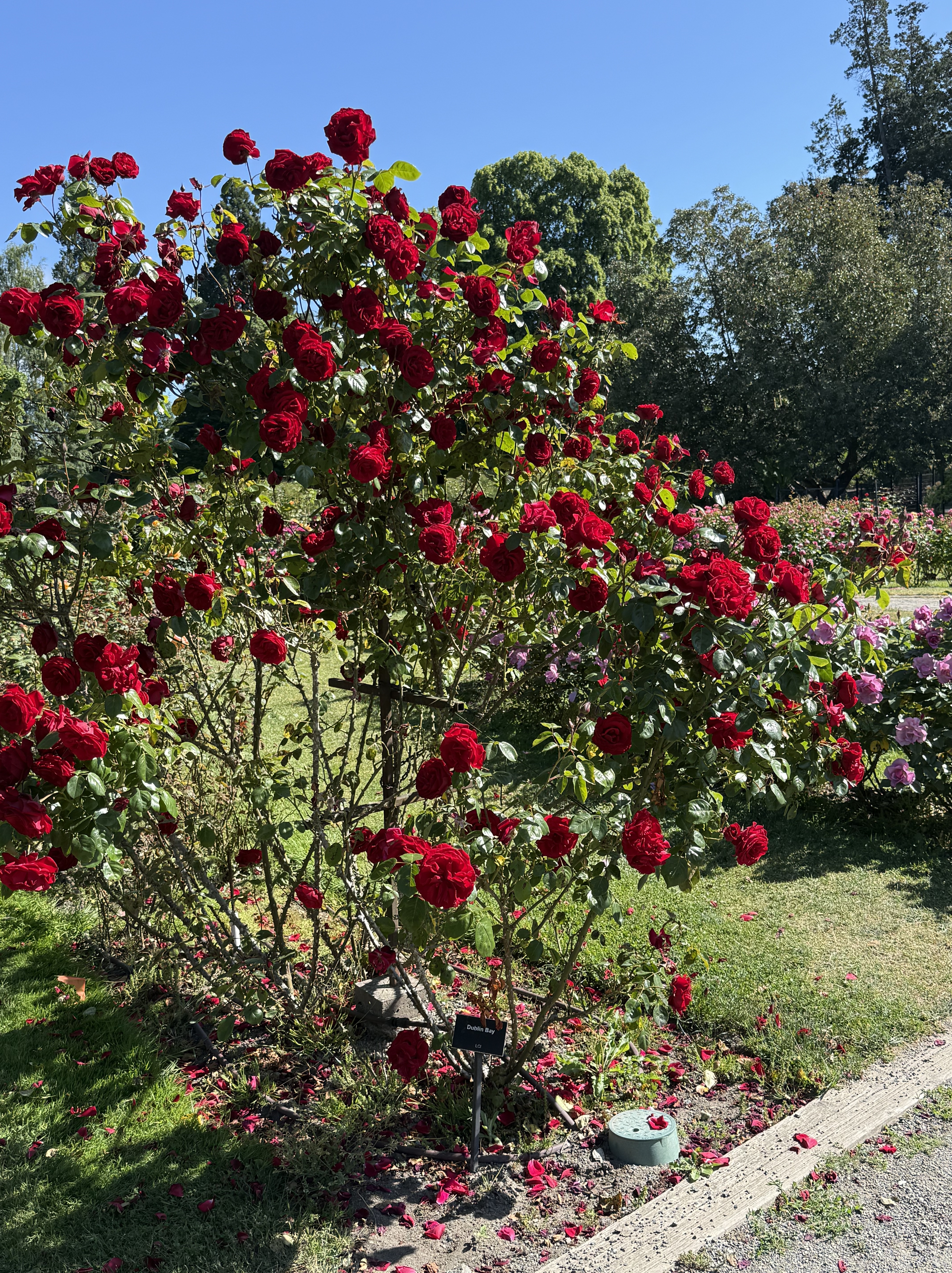
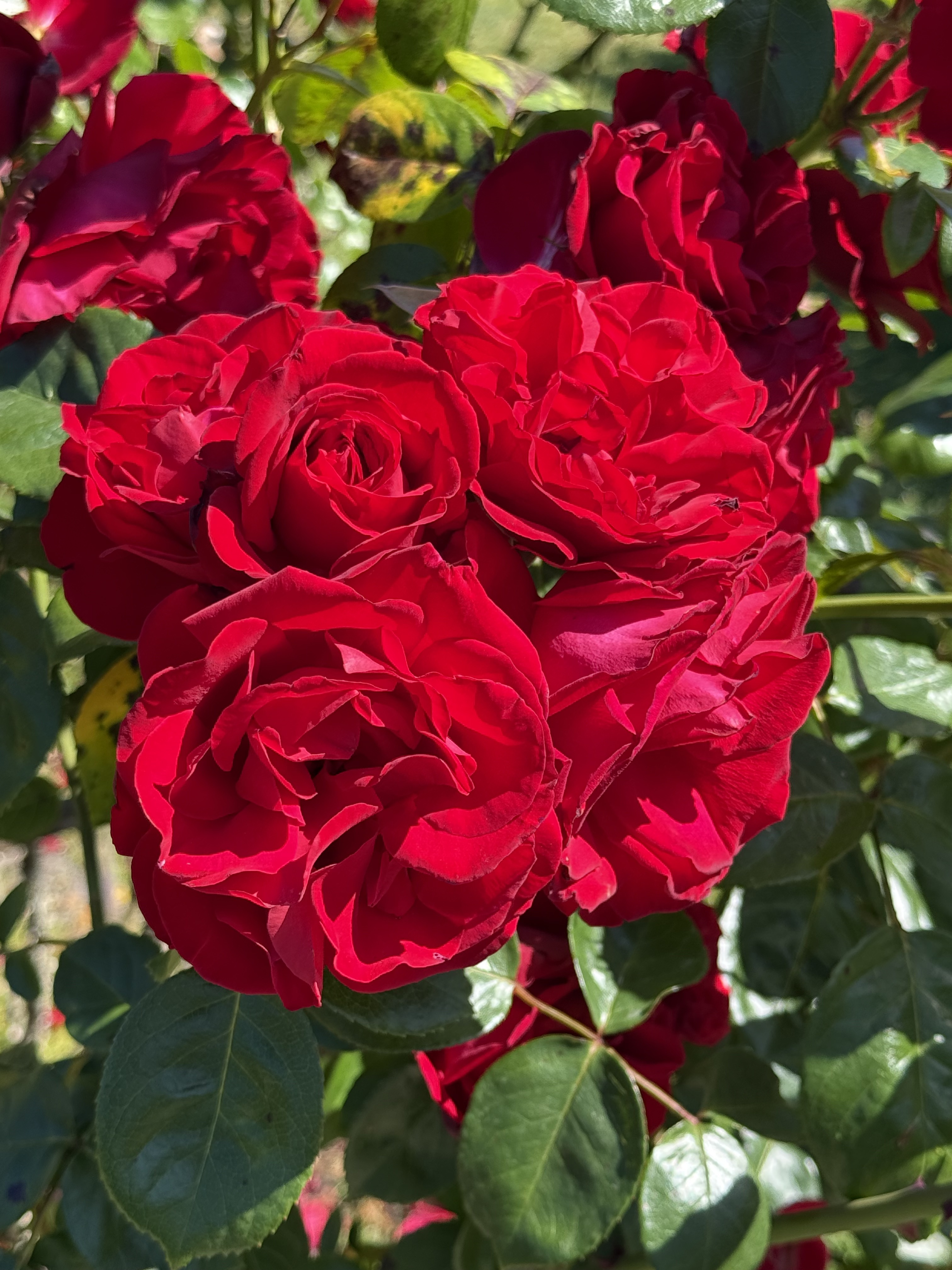
This Dublin Bay variety is distinctive because it has strong stalks and grows high, concentrating growth on the ends of very thorny branches.
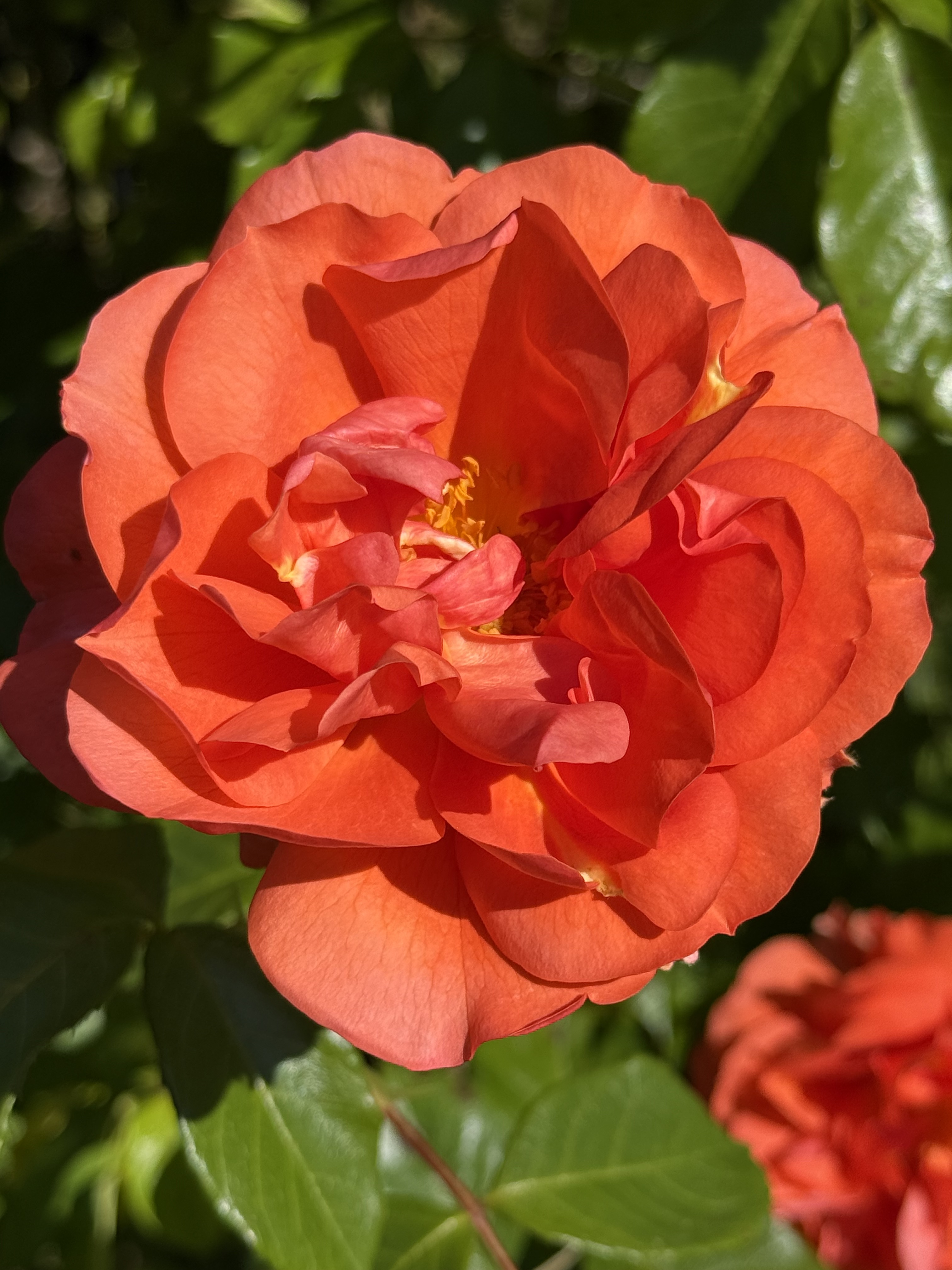
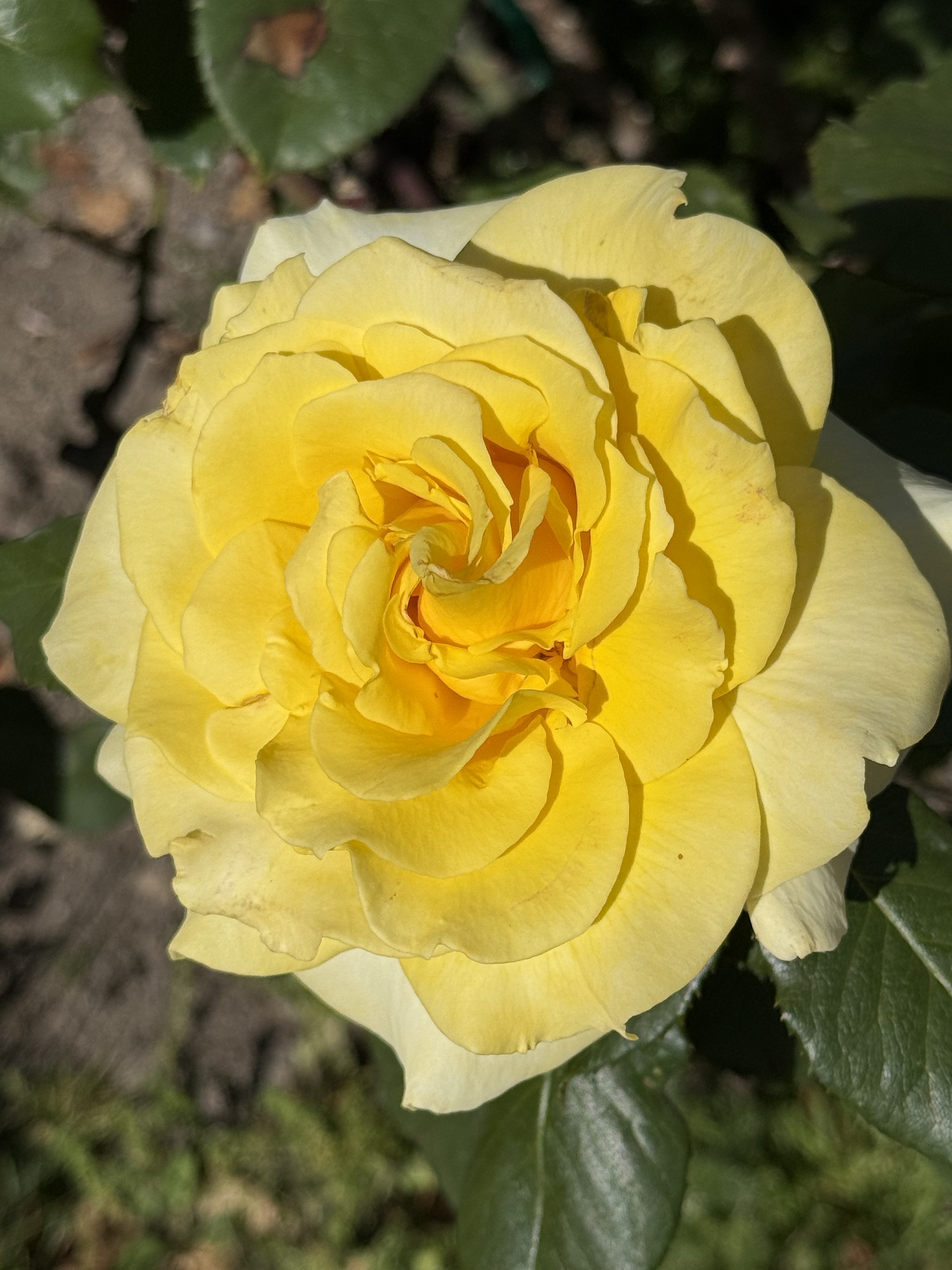
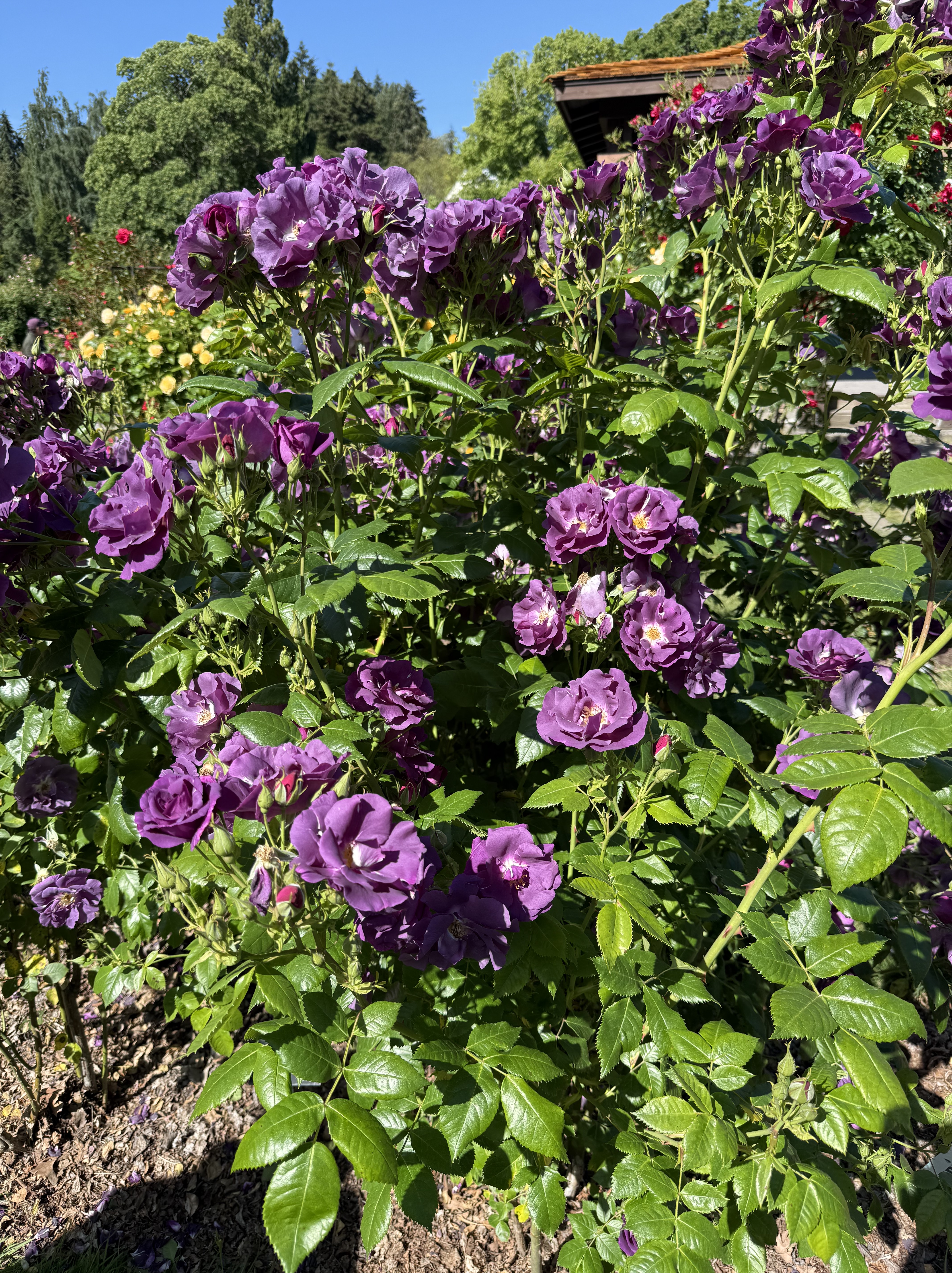
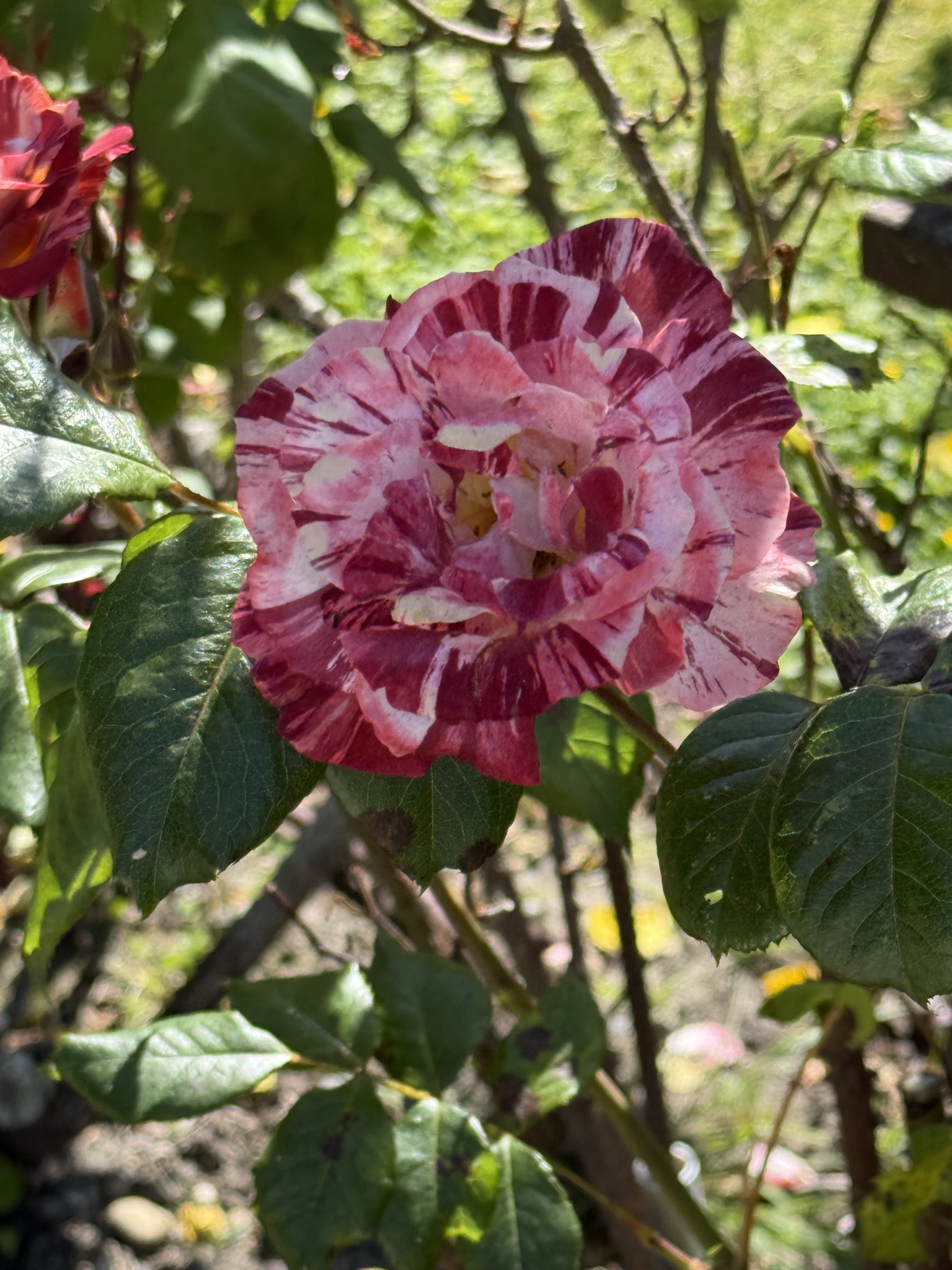
I didn’t take a photo of the sign identifying this remarkable rose, but CoPilot thinks it is Scentimental (1997, floribunda).
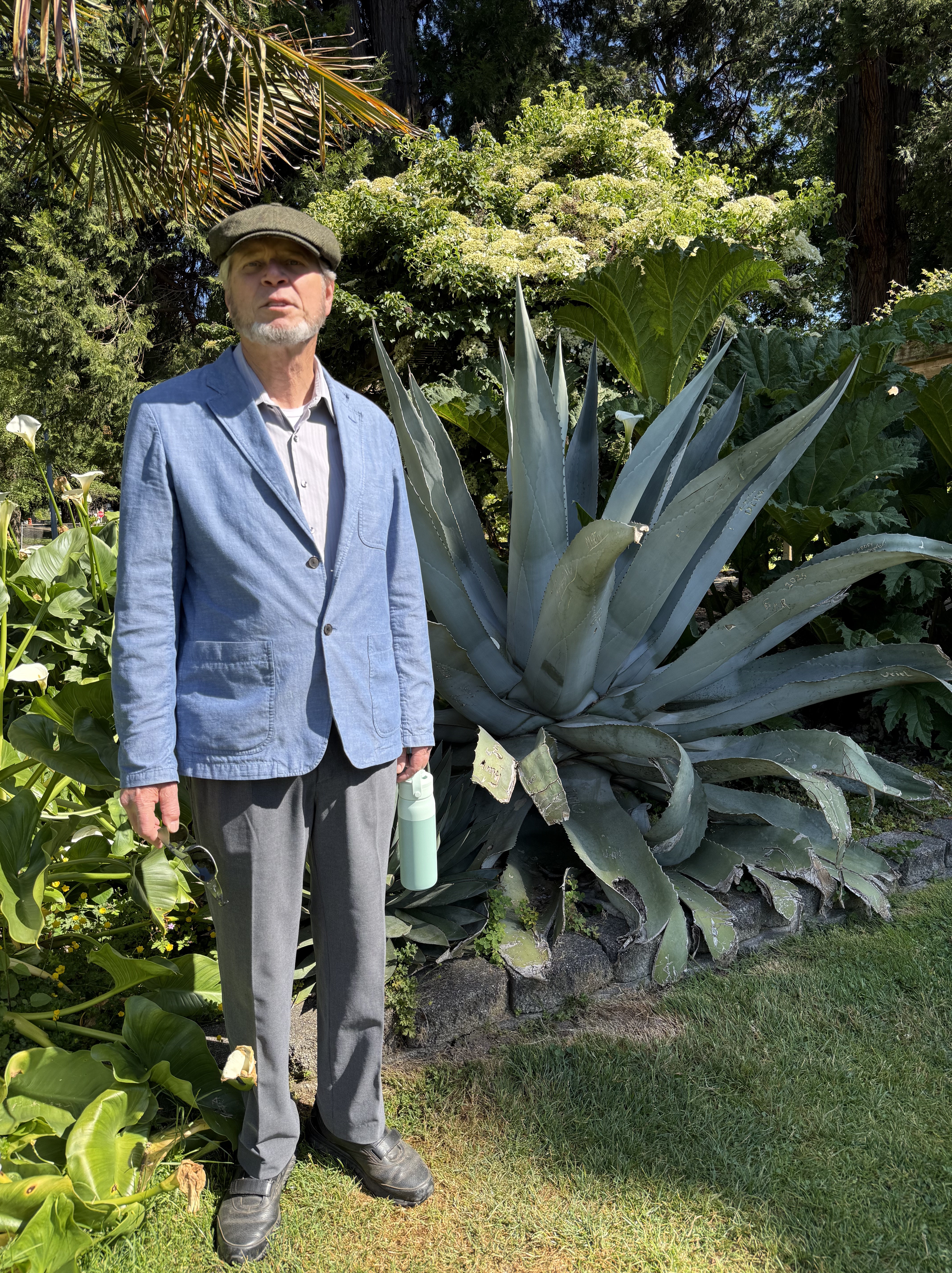
They even had agave doing very well in the PNW. We want some of this for our yard.
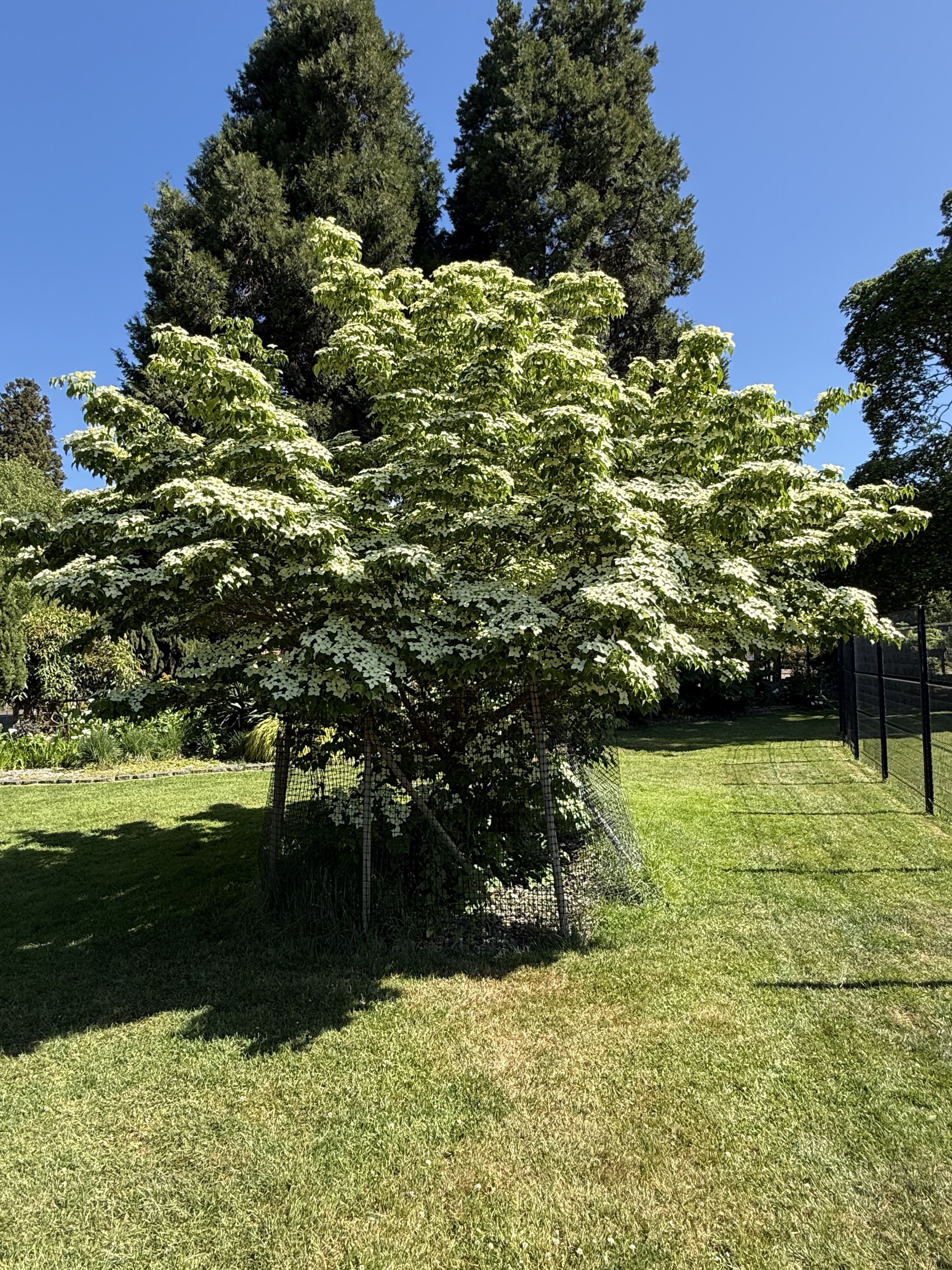
This is a Korean dogwood (according to CoPilot). Note the deer-protection installed around the base. Deer are very destructive to new growth and weak trunks, based on my personal experience.
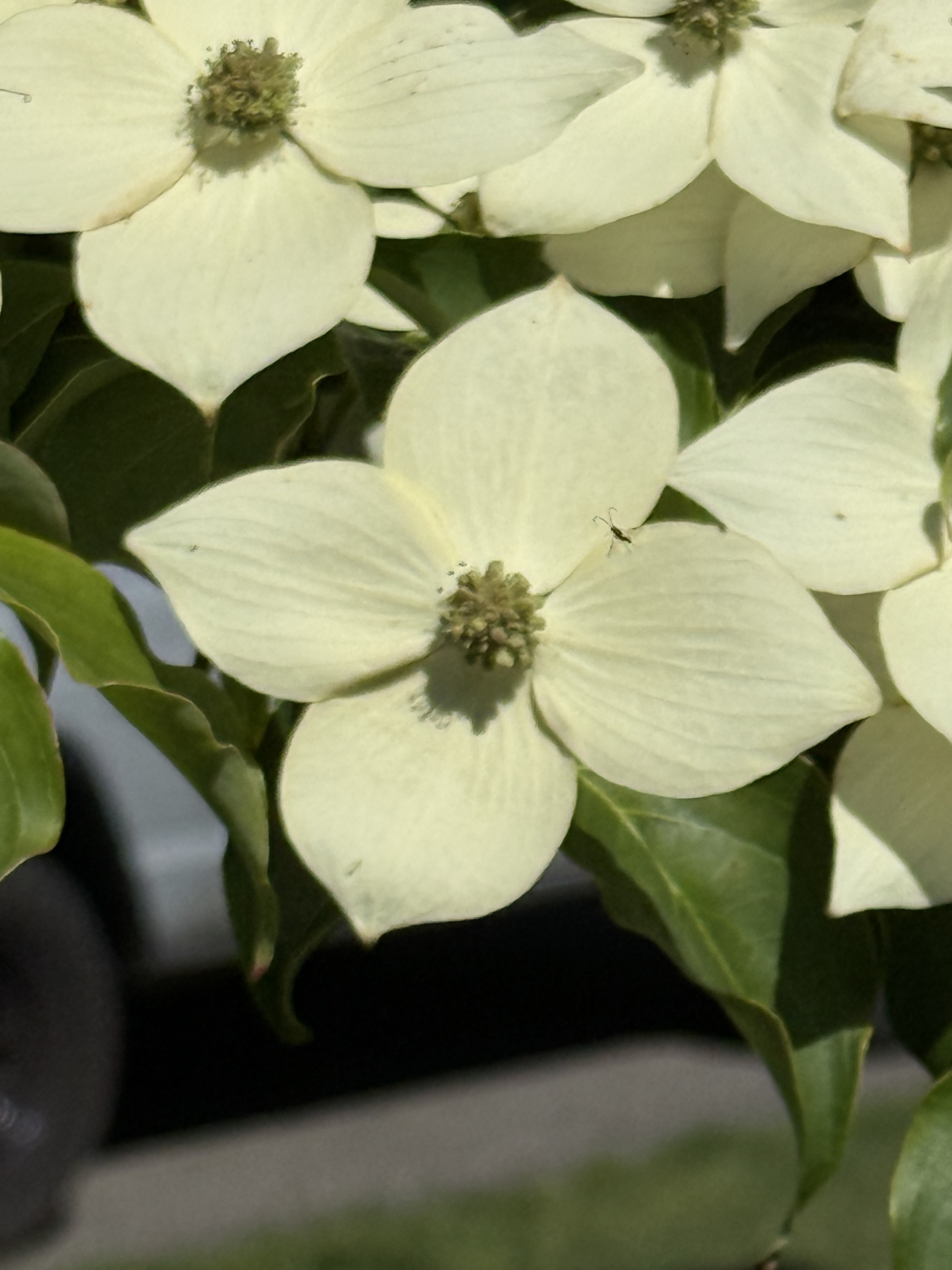
And those aren’t flower petals, they are bracts. The tiny flowers are in the center.
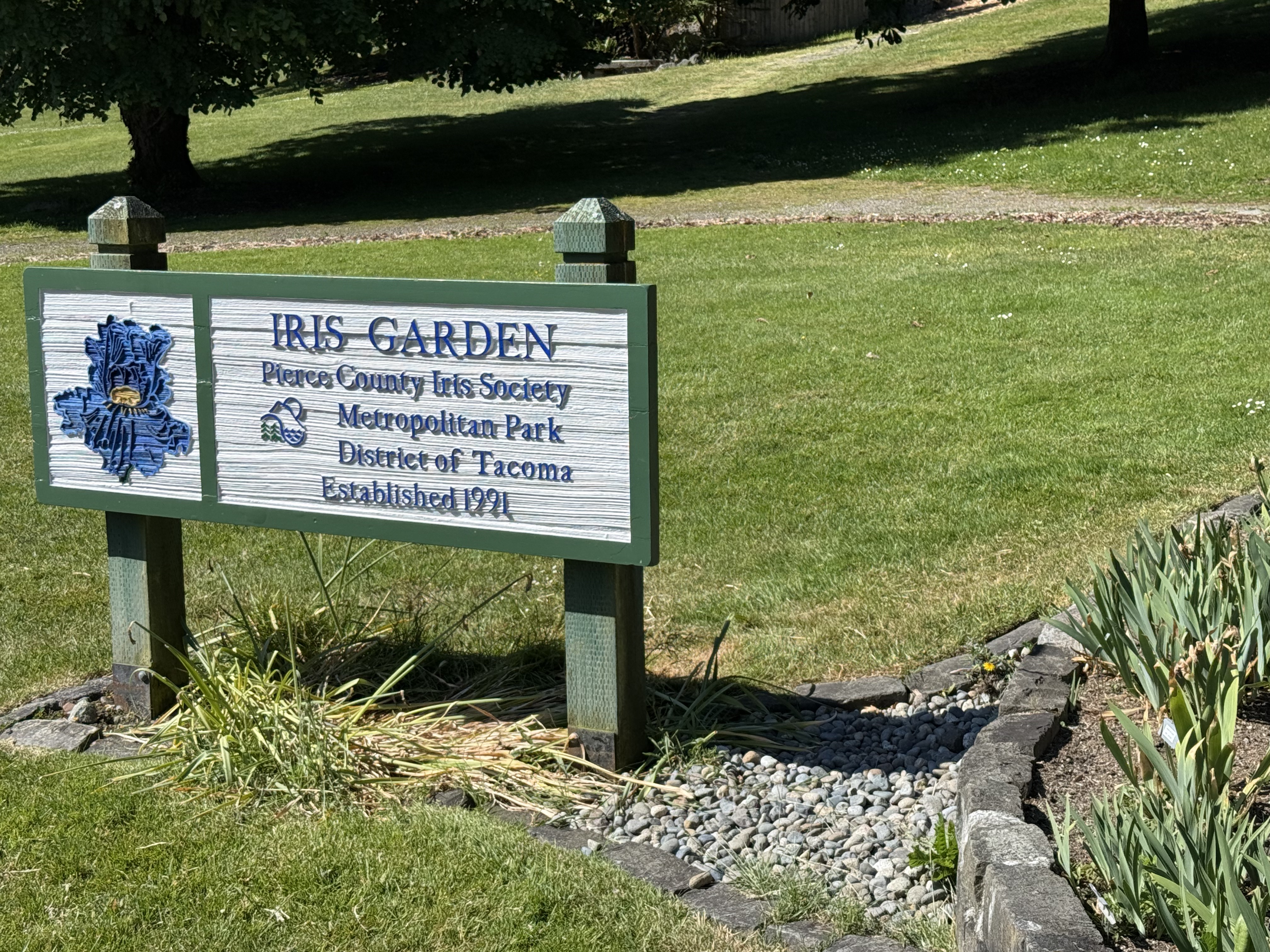
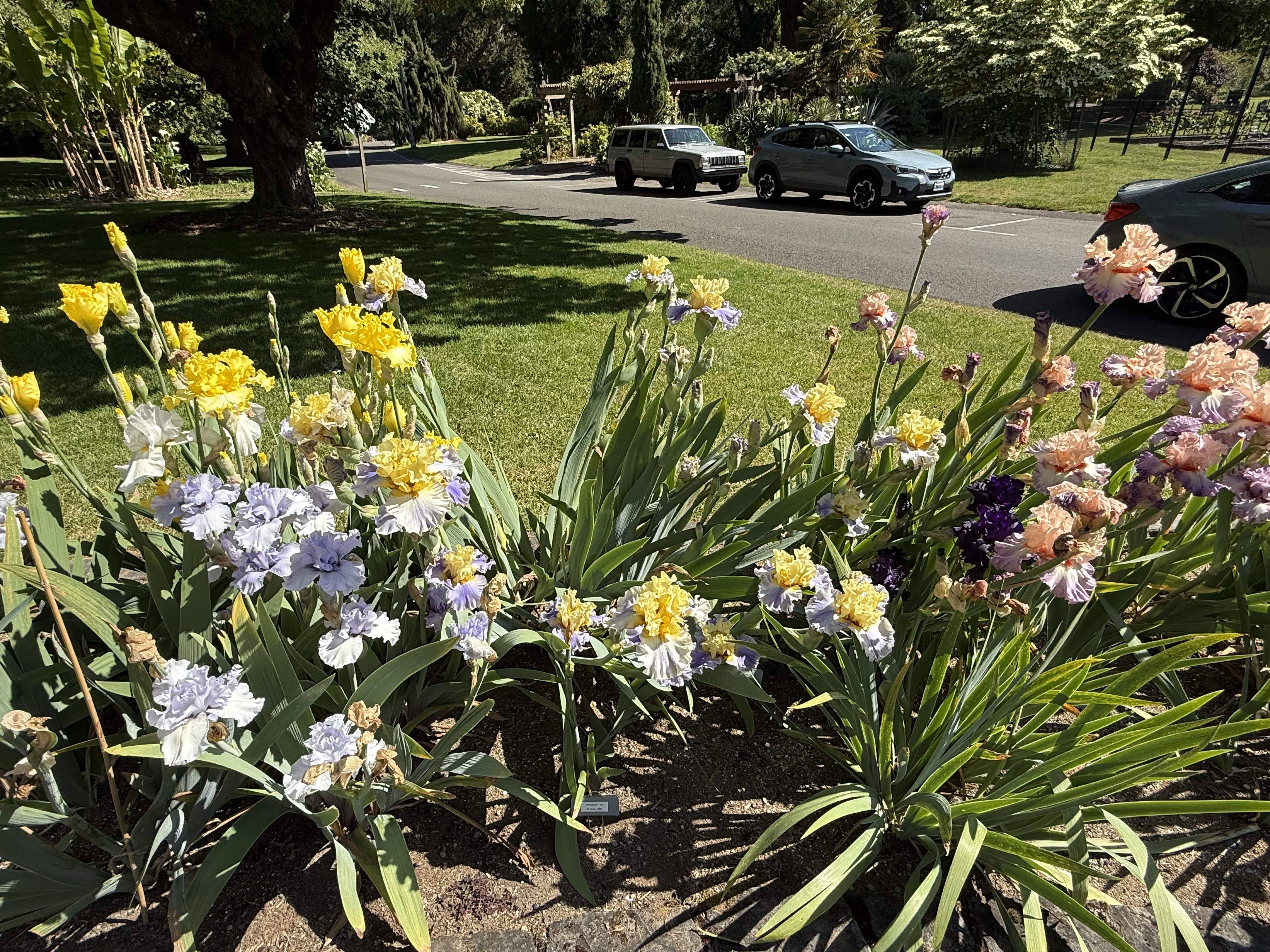
Note the dark purple, almost black, flowers growing from the same plant as the orange flowers.
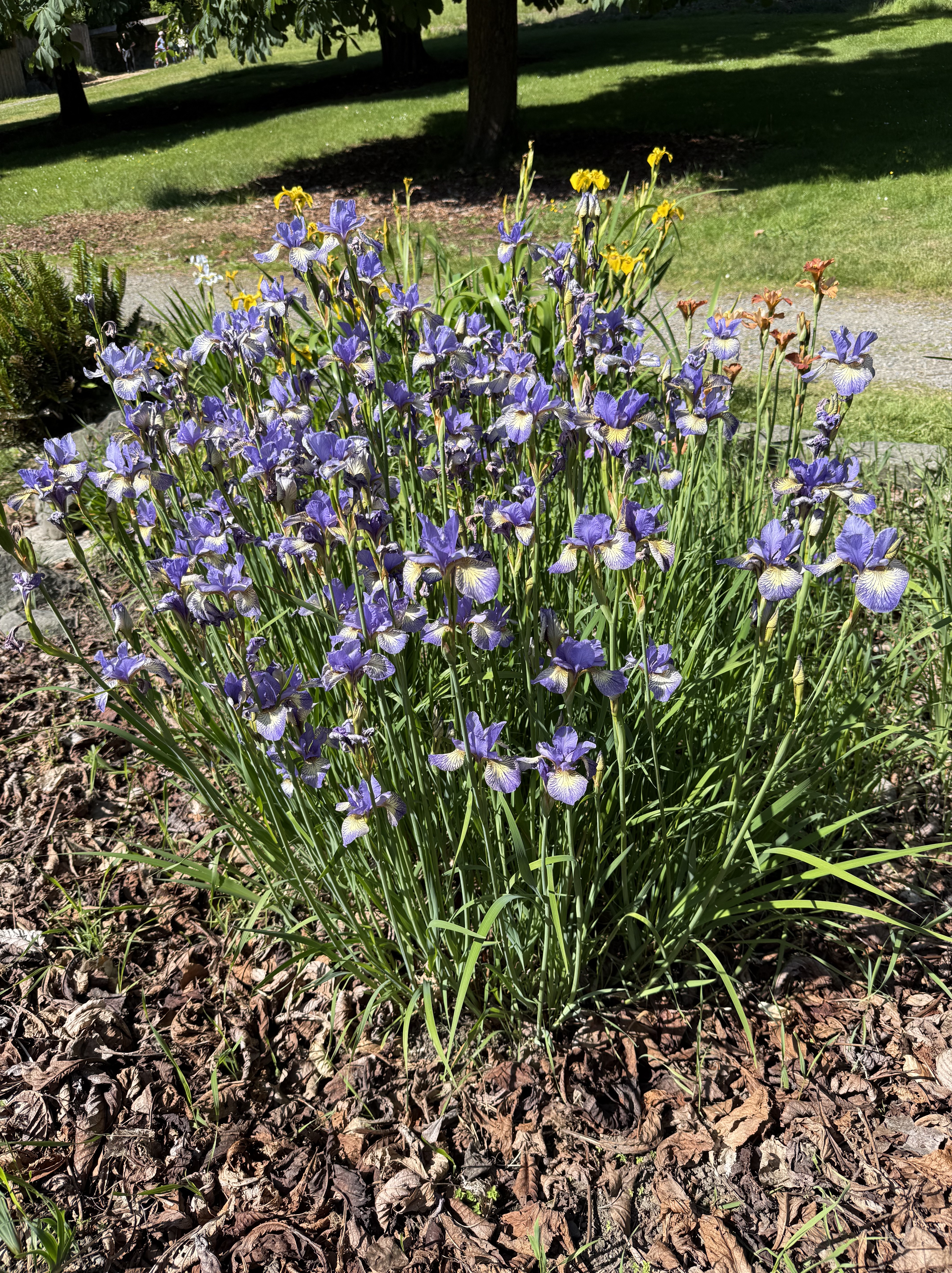
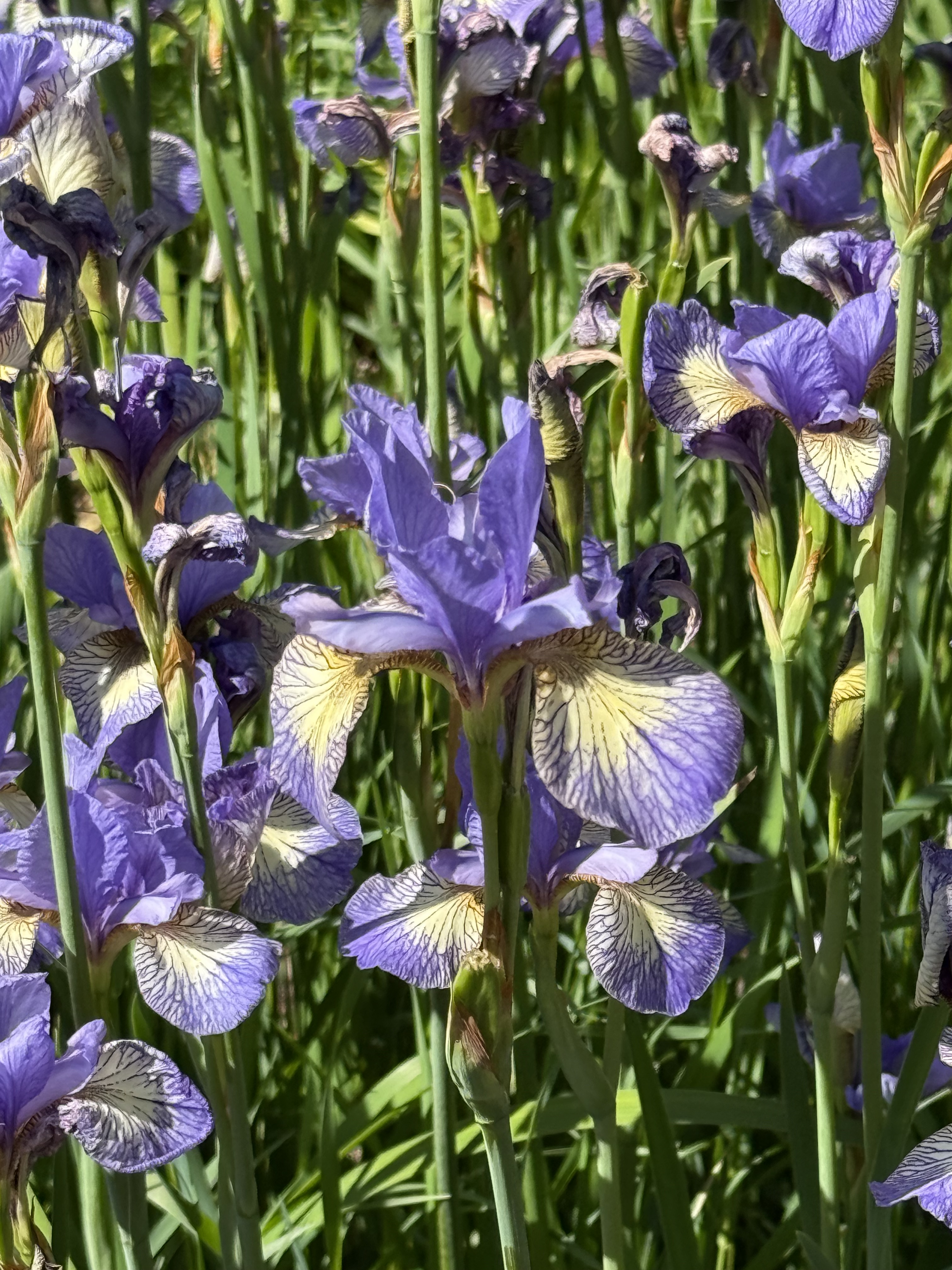
Amazing!
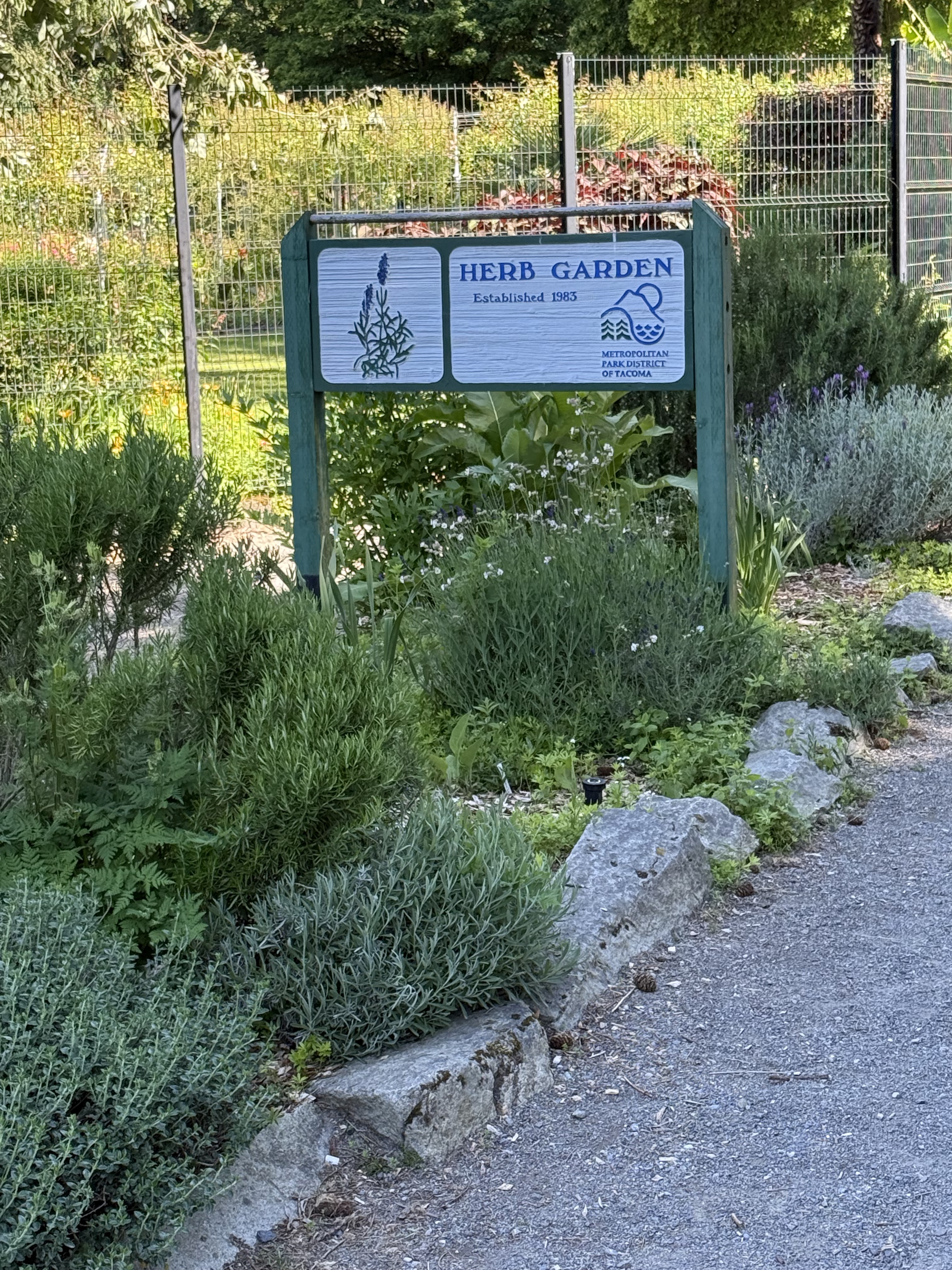
These are the plants that don’t require deer protection. They are outside the defensive fence, and they are thriving.
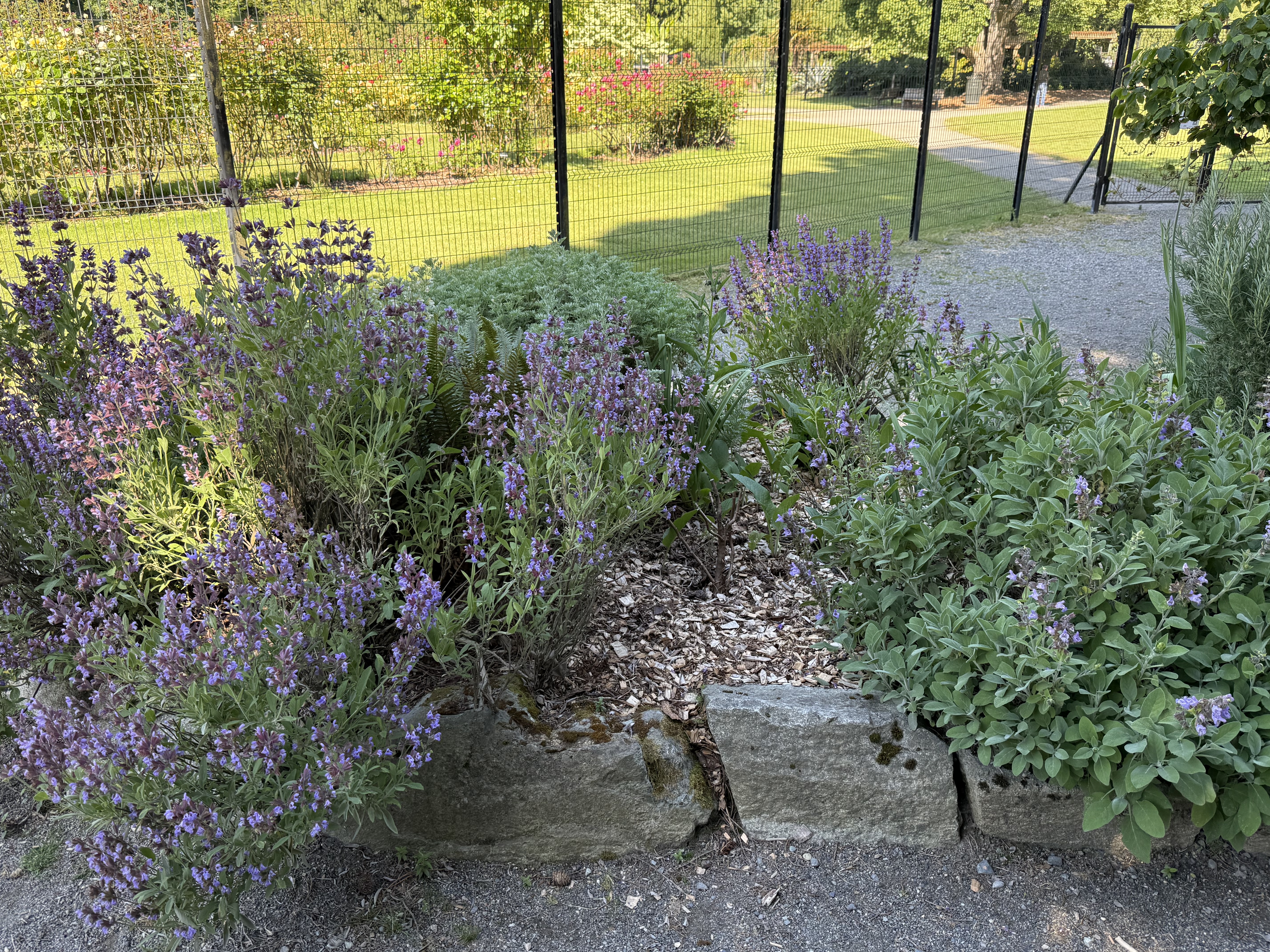
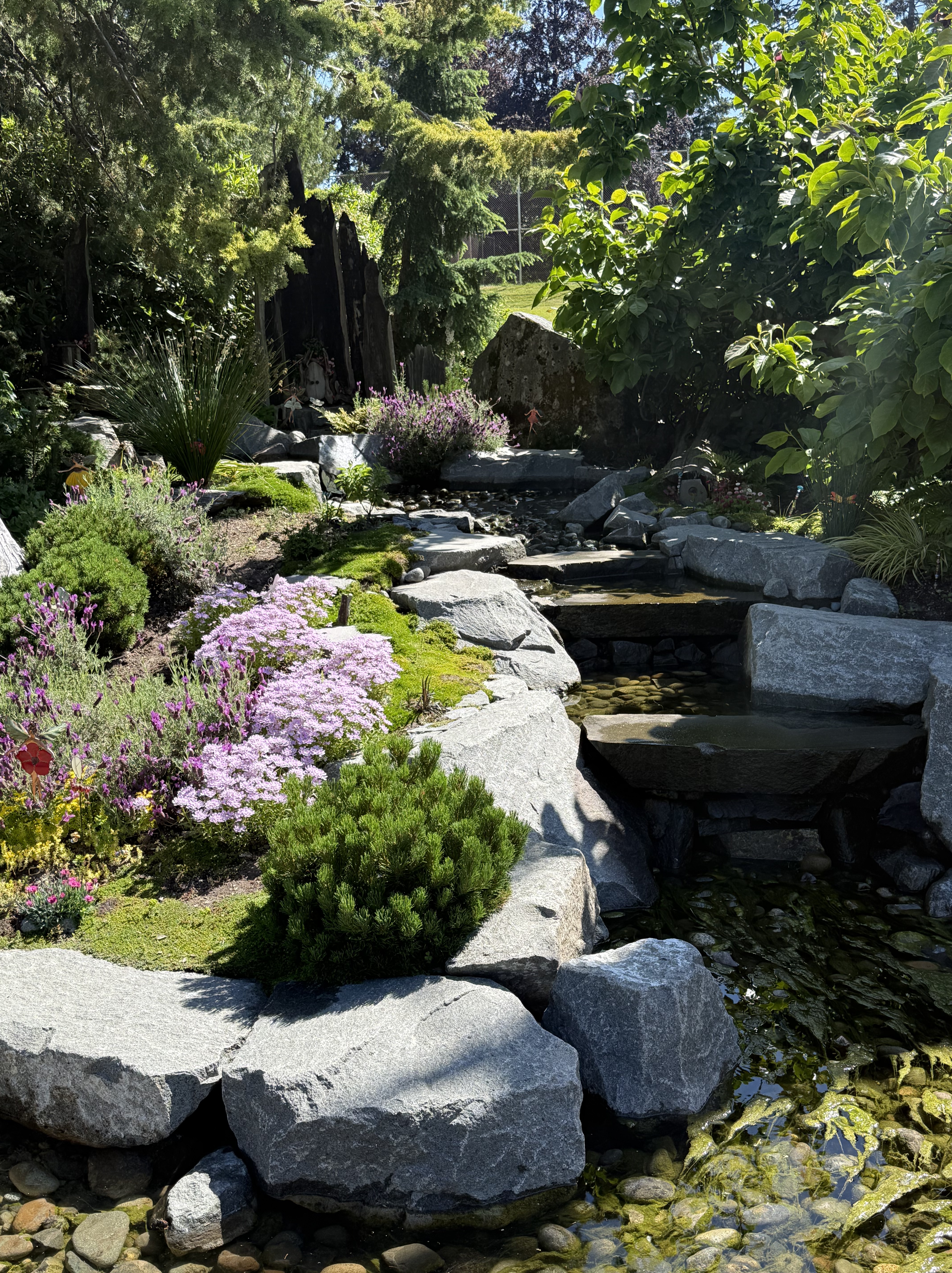
I thought this was a Japanese garden until…
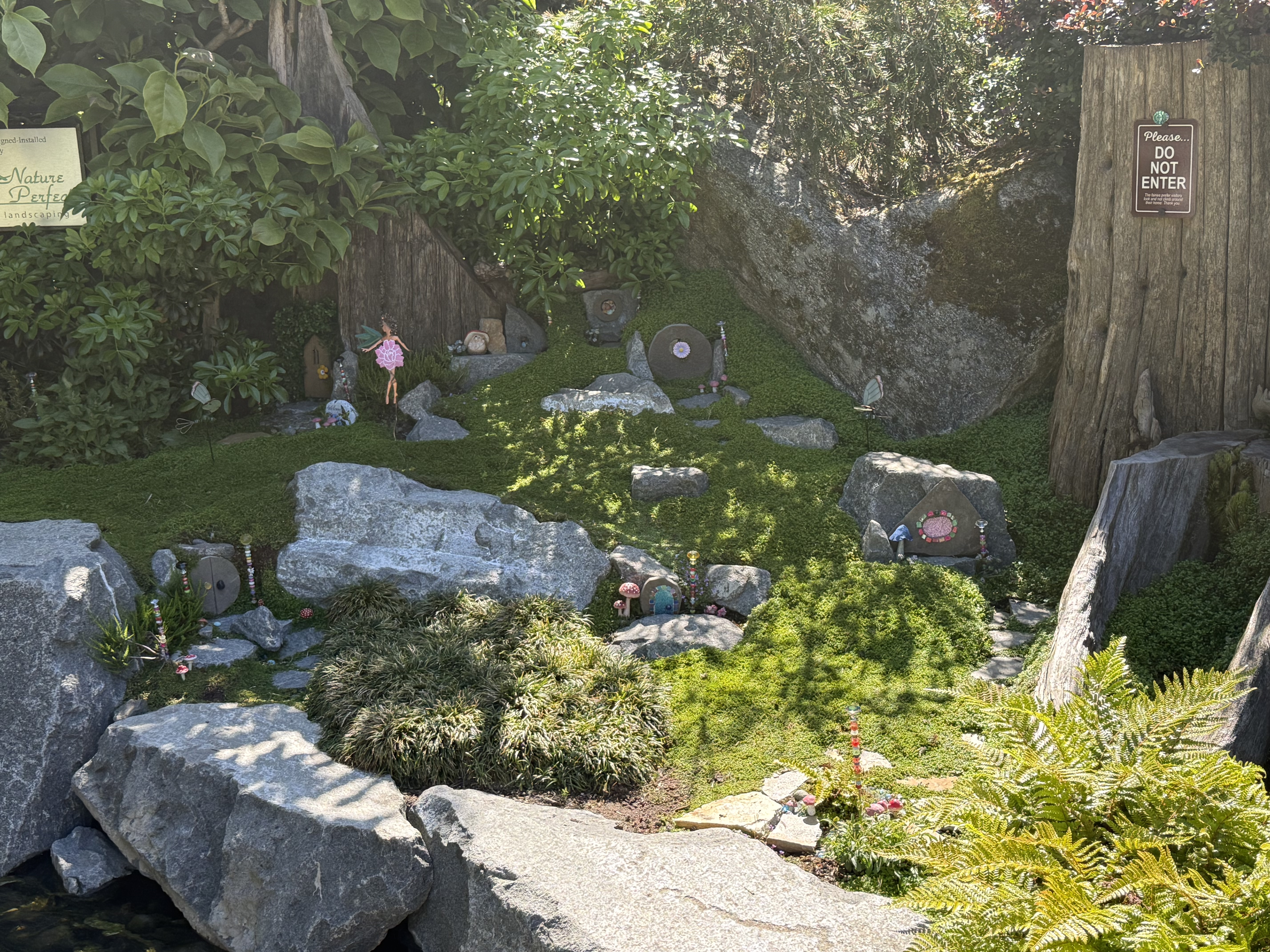
I noticed dolls arranged throughout the area. It reminded me of the horrifying Disney World ride, It’s a Small World. Now that song has returned to haunt me. Creepy … if you want my opinion.
I wasn’t very excited about going to the rose garden at first, but the combination of perfect weather and all these treasures of nature on display won me over. This is yet another reason to love living in the Pacific Northwest–especially Tacoma.
A Visit to the Pacific Bonsai Museum
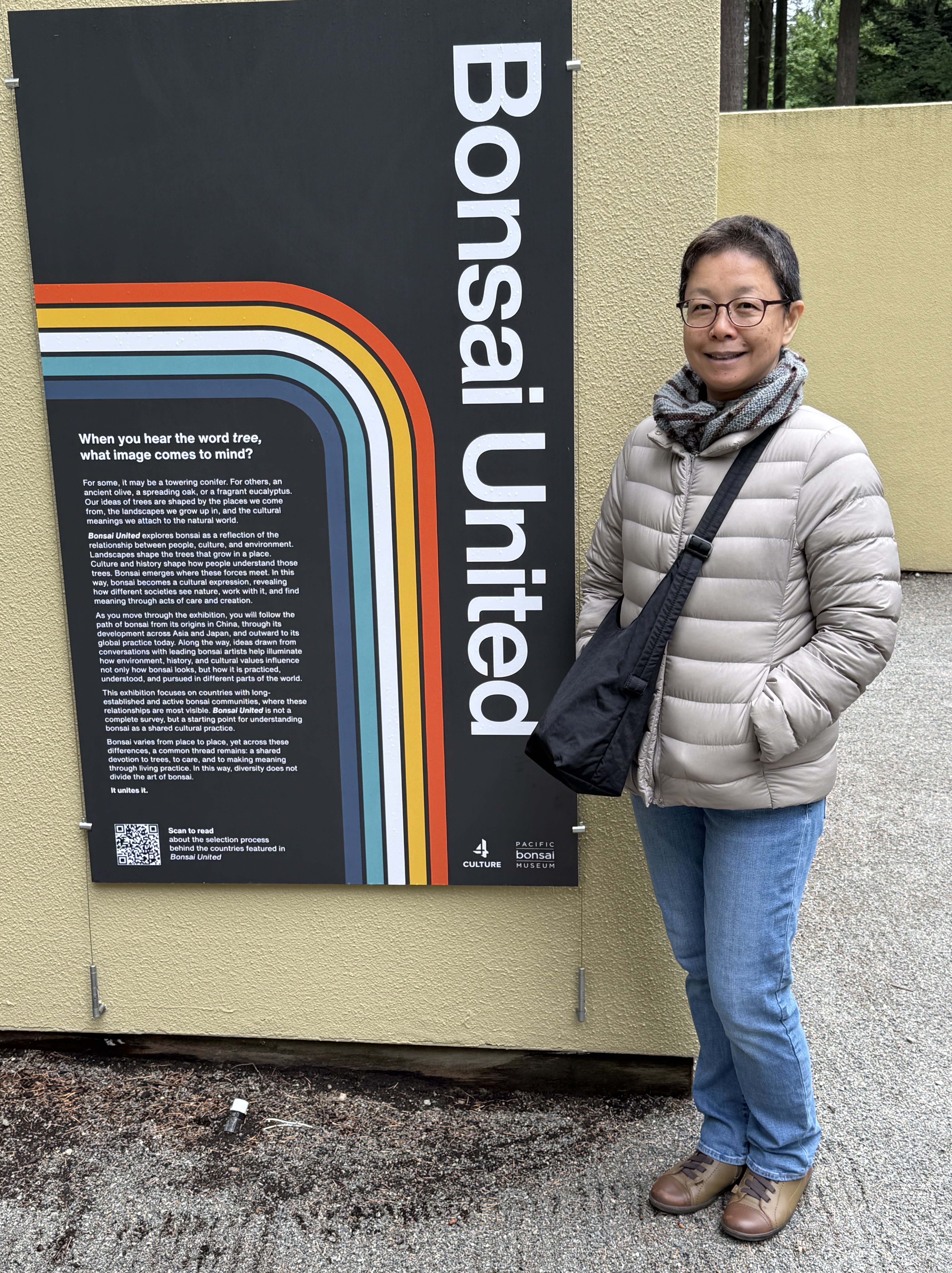
Small, carefully pruned trees are fascinating. I went to the National Arboretum when I lived in the Washington DC area, so I had to see what was on display here in Tacoma. The Pacific Bonsai Museum is mostly open air, with a few sensitive examples in a greenhouse. They leave the trees out year-round and have skilled bonsai arborists trim them according to their creators’ expectations.
I learned that there are different schools of thought on bonsai, from growing trees and shrubs from seeds, to working with dying plants, even stumps, and painstakingly reviving them. Then there’s cultural differences that vary between nations. However, bonsai began in China where it’s called “penjing”. It means tray scenery. The museum had their displays arranged by country of origin. I didn’t take notes and my photography is spotty. Still, here are some beautiful examples of bonsai.
The Bonsai Museum is in Federal Way, Washington, and is supported by Weyerhaeuser, the lumber company; it’s located on a large campus they built and then sold to someone. It is free and there is no apparent security, except from the Rhododendron Garden next door. I guess vandalism hasn’t been a problem; who would want to destroy such beautiful antiques?
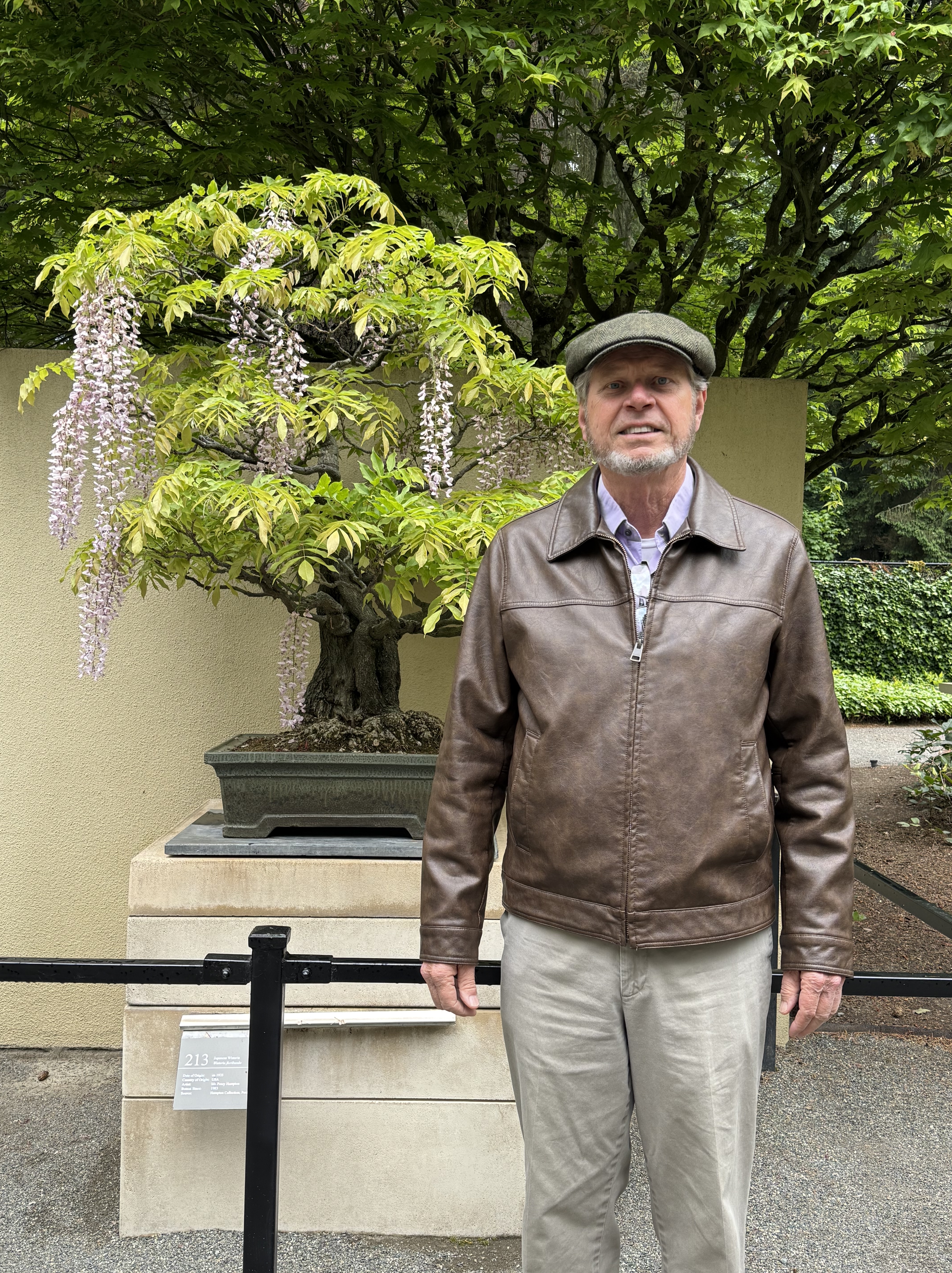
This is a wisteria. If you’ve ever dealt with this out-of-control vine (I have), you will be amazed that this old example (note the size of the trunk) is so tidy yet produces the distinctive flowers. The specimens on display ranged in age from the late nineteenth century to the seventies.
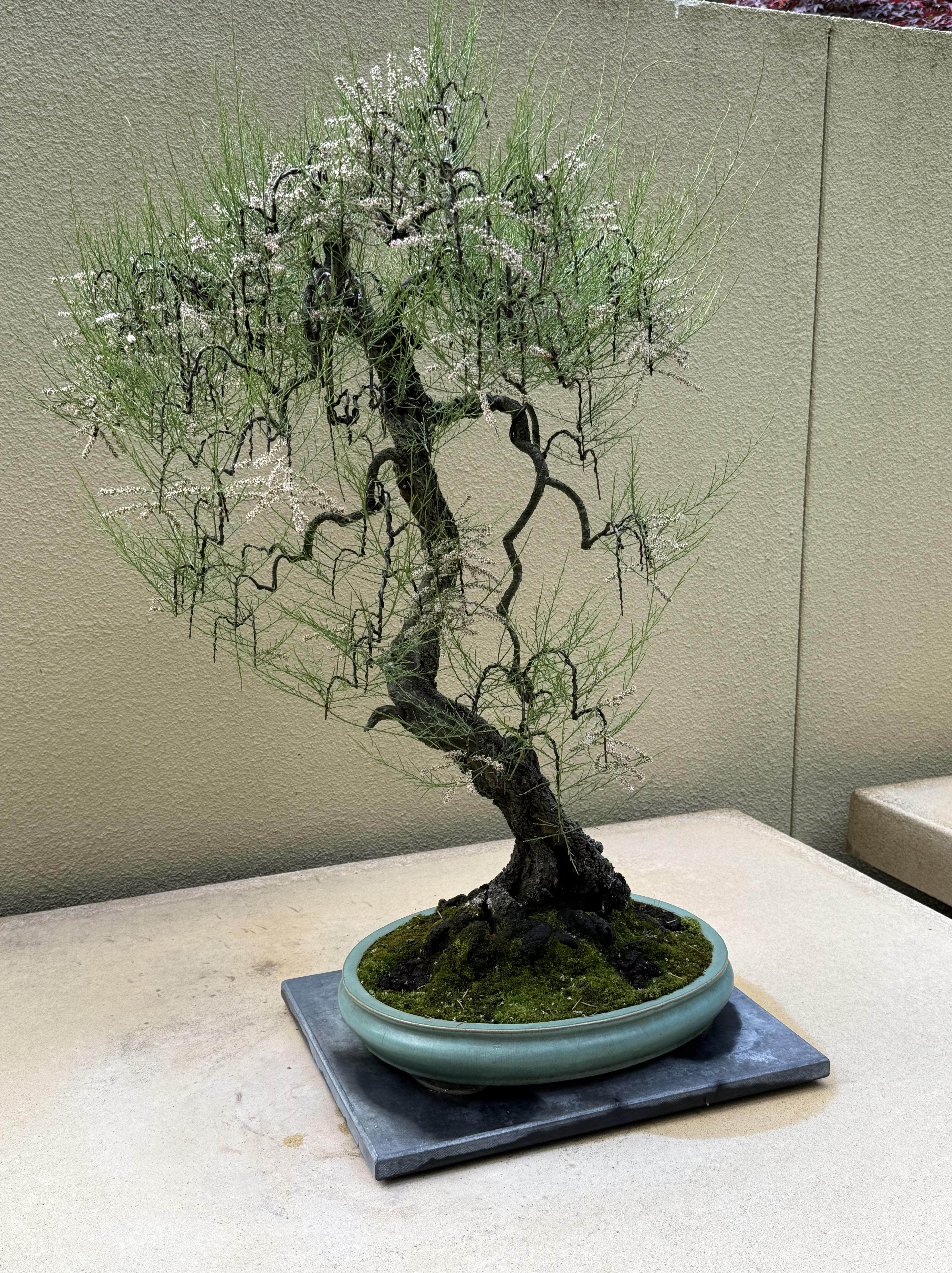
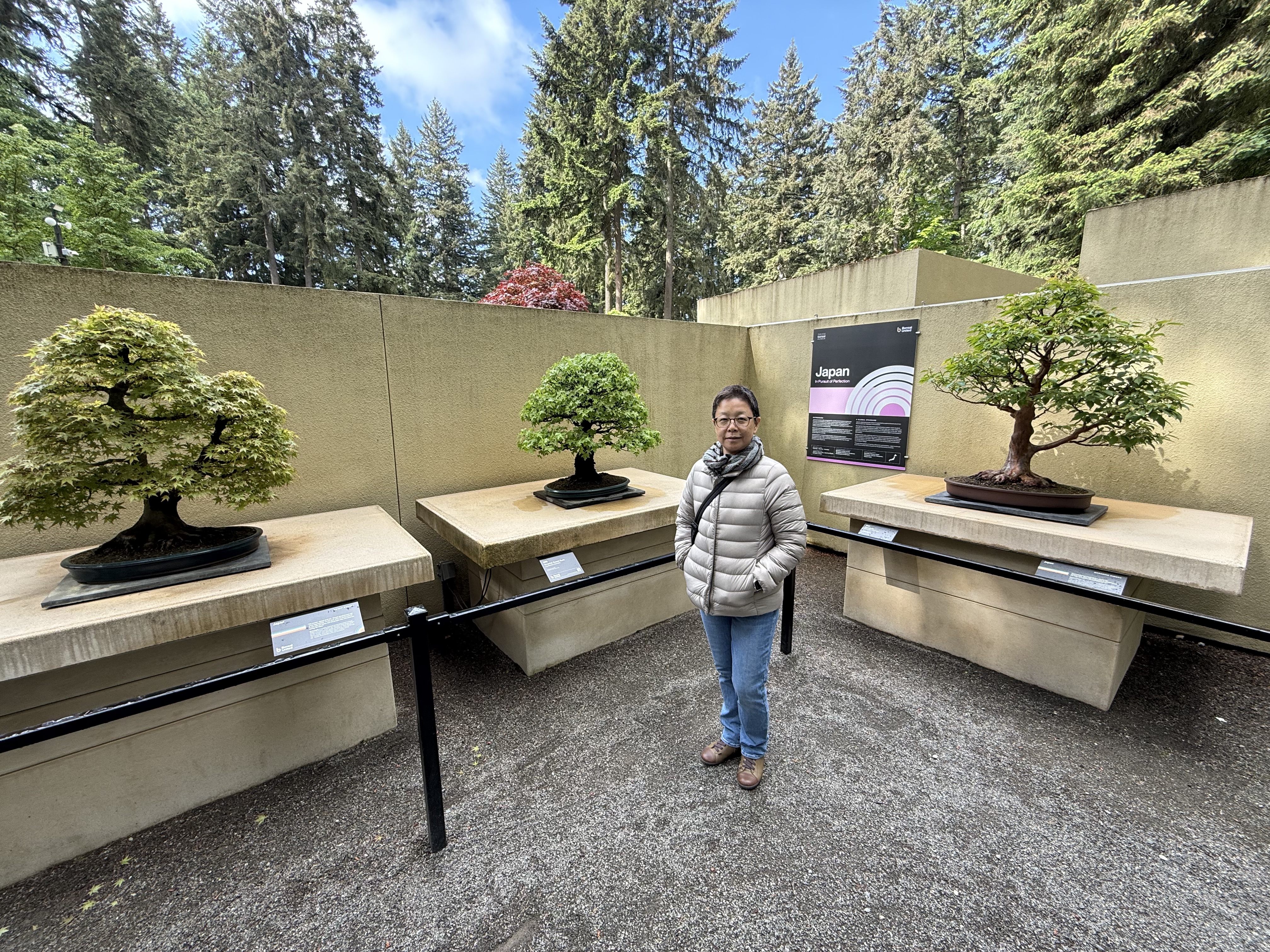
This is part of the Japan exhibit. I think these are all trees, probably juniper–a favorite among bonsai artists.
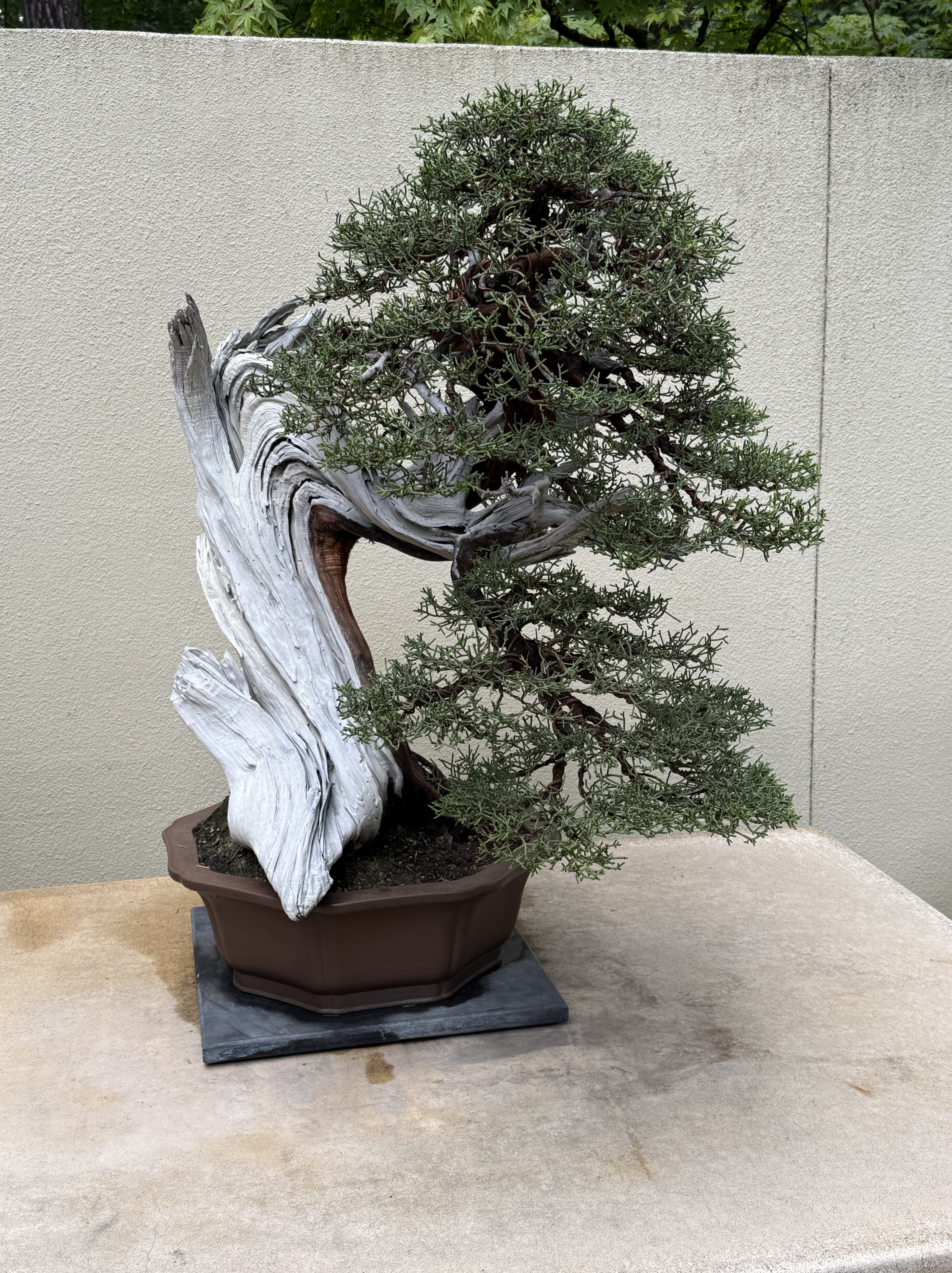
As an example of what good hands these fragile trees are in, this specimen was created by a past director of the museum. It was my favorite. I like the idea of rejuvenation from near death.
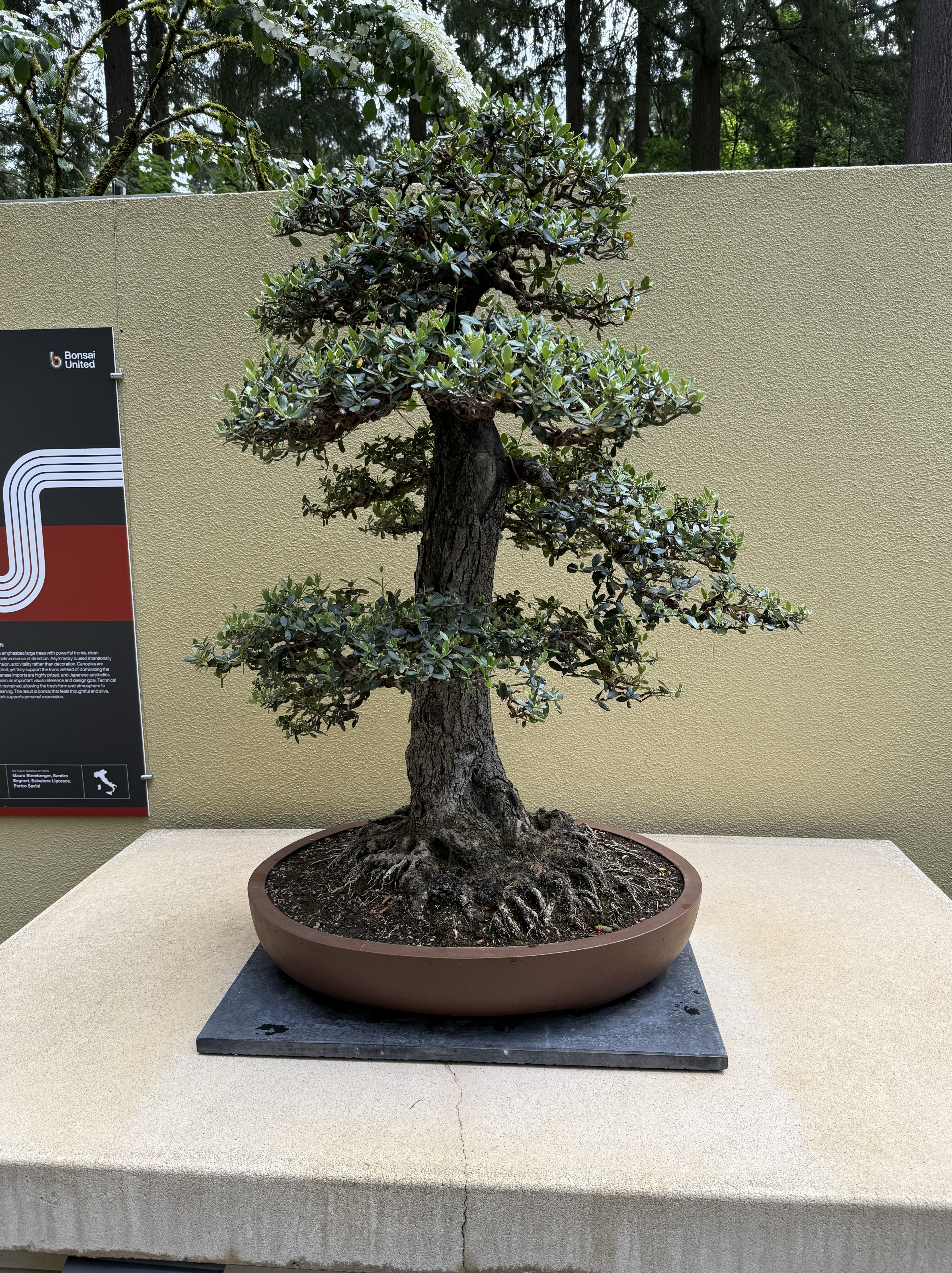
European Olive, in training since 1969, from Italy.
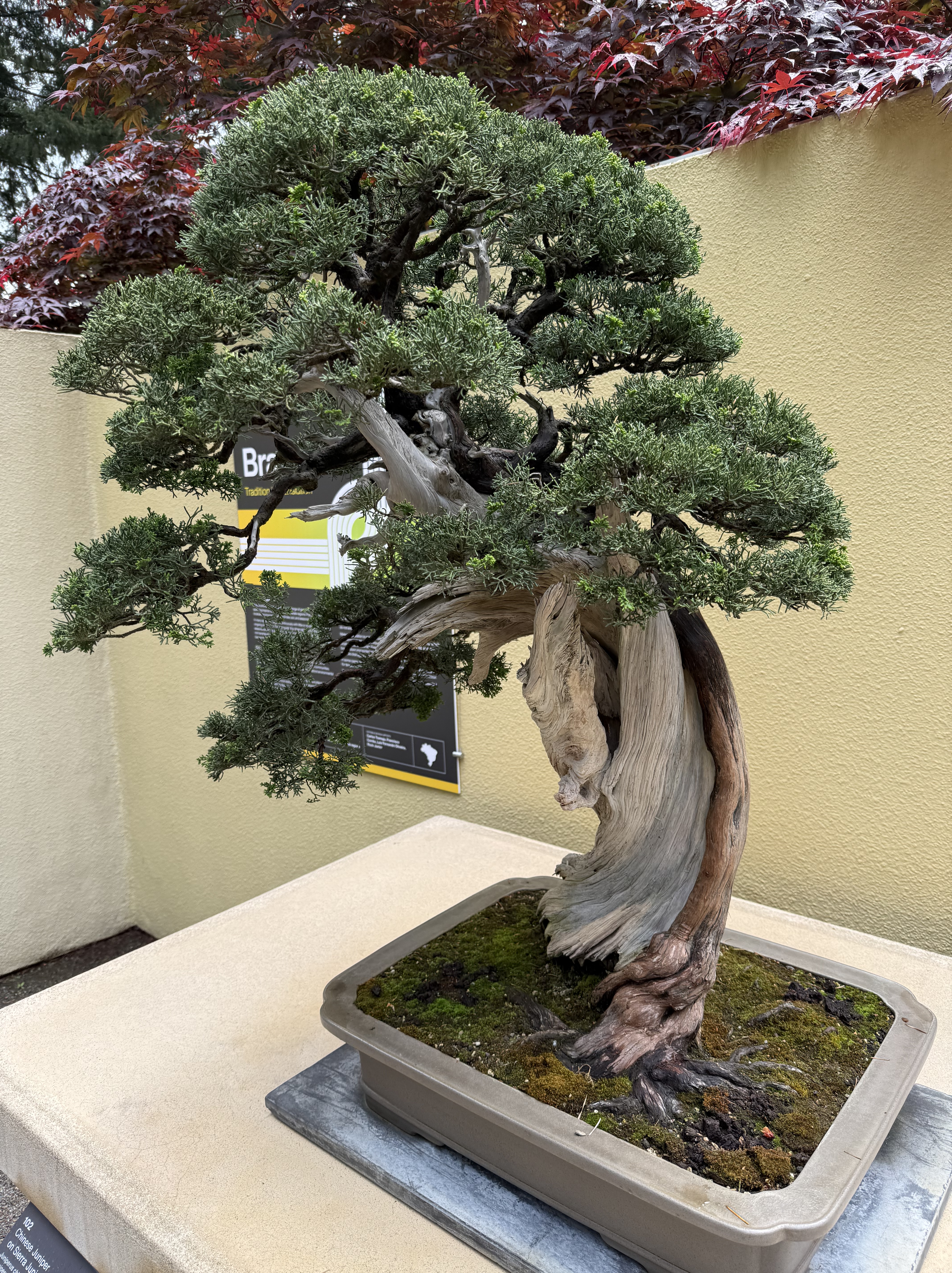
You can see the difference between the trees/shrubs grown from seeds or youth (and those that are saved from the dust heap) in this recovered specimen. I love the intermingling of dead (white) wood and living tissue.
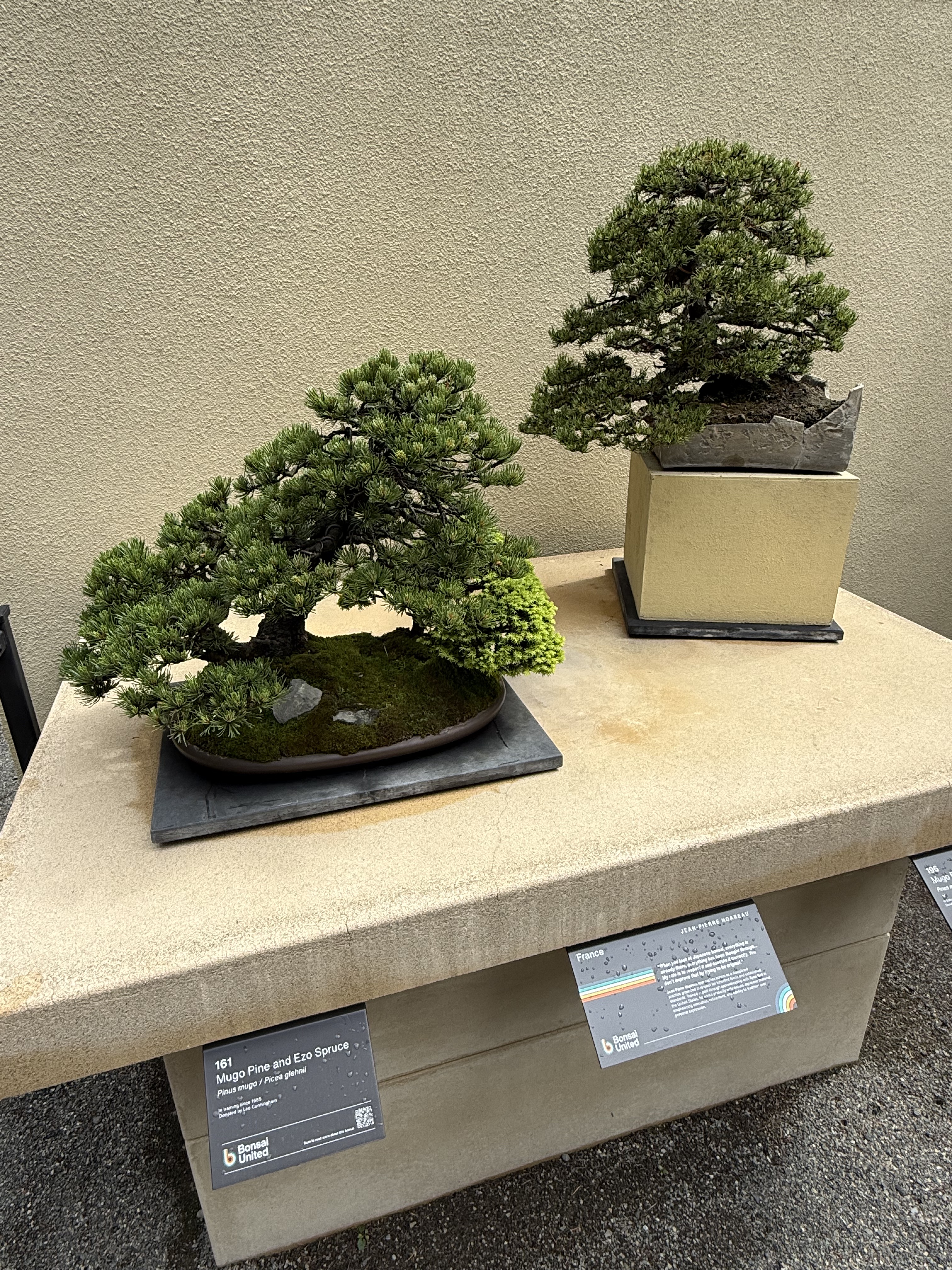
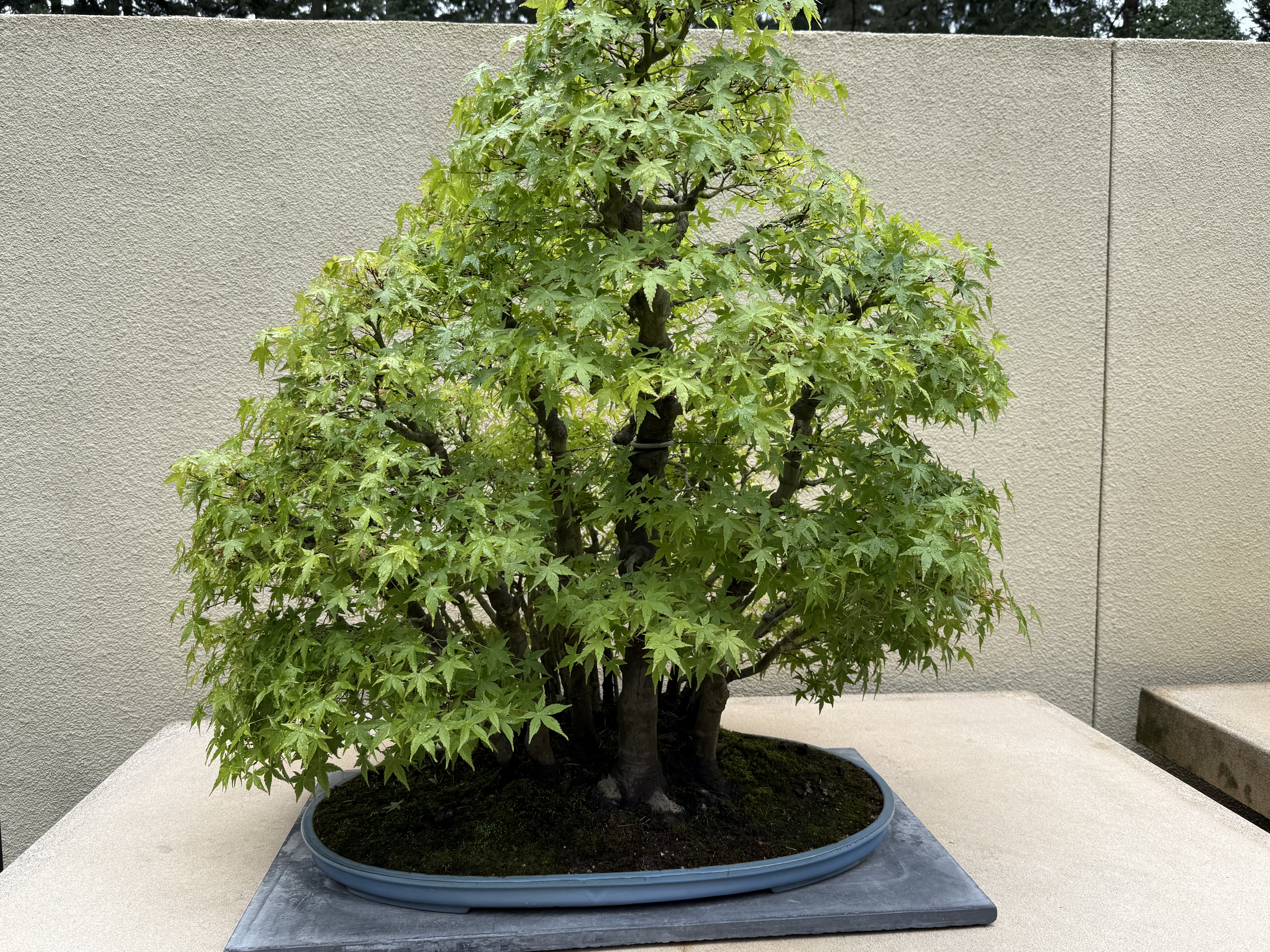
This German artist created a forest, but the individual “trees” were falling over so there are wires holding it together. I imagine there are a lot of failures in practicing bonsai.
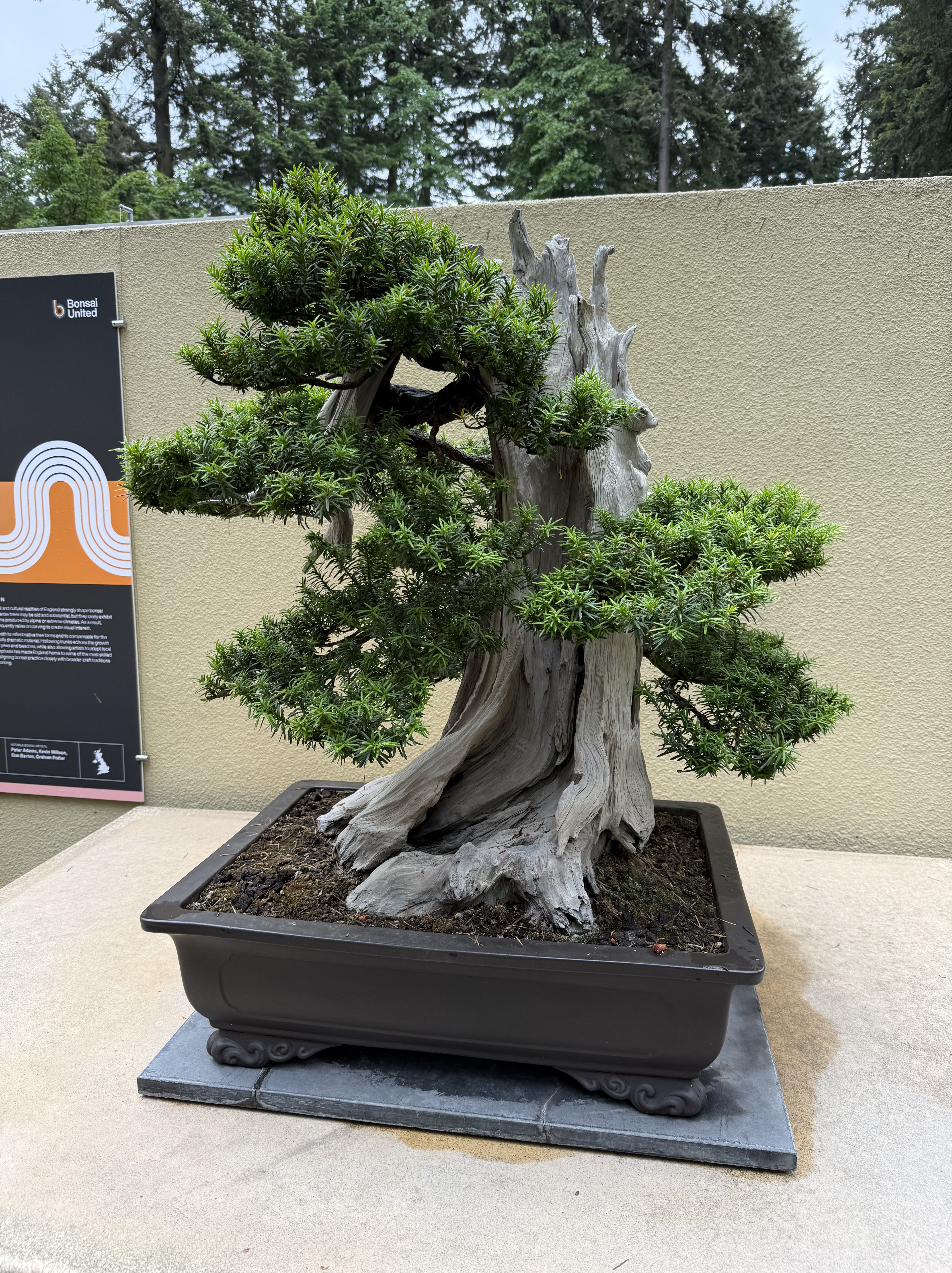
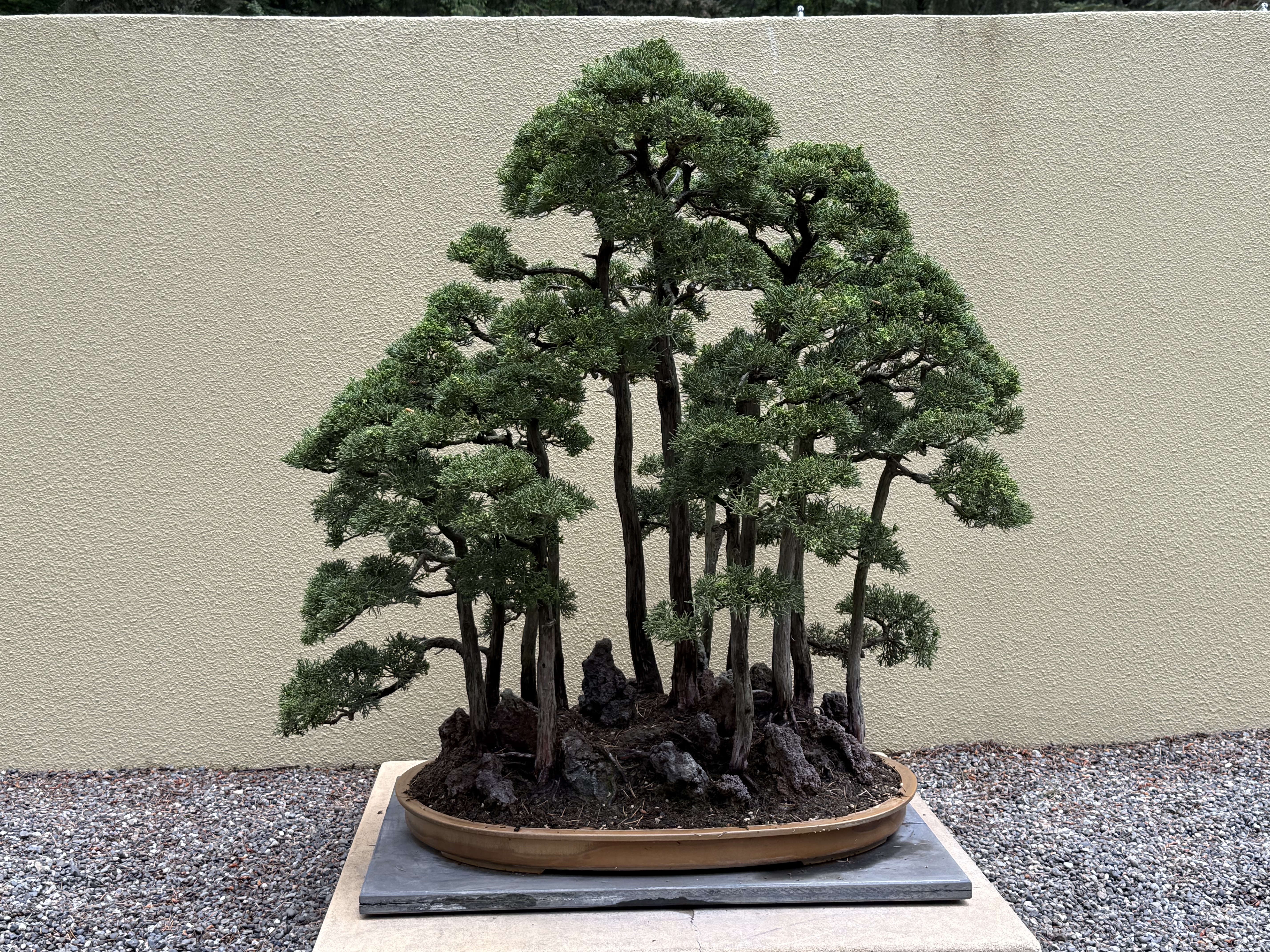
This successful “forest” is by an Australian. Note the “rocks” at the base; they are actually dead knobs from a large stump. Also note the very shallow pan: this is truly penjing–tray scenery–and not a potted plant.
The Rhododendron Garden
We crossed the gravel plaza and paid a visit to the Rhododendron Garden. The casual stroll through every imaginable color flower was worth the price of admission, even on a chilly spring day in the Pacific Northwest.
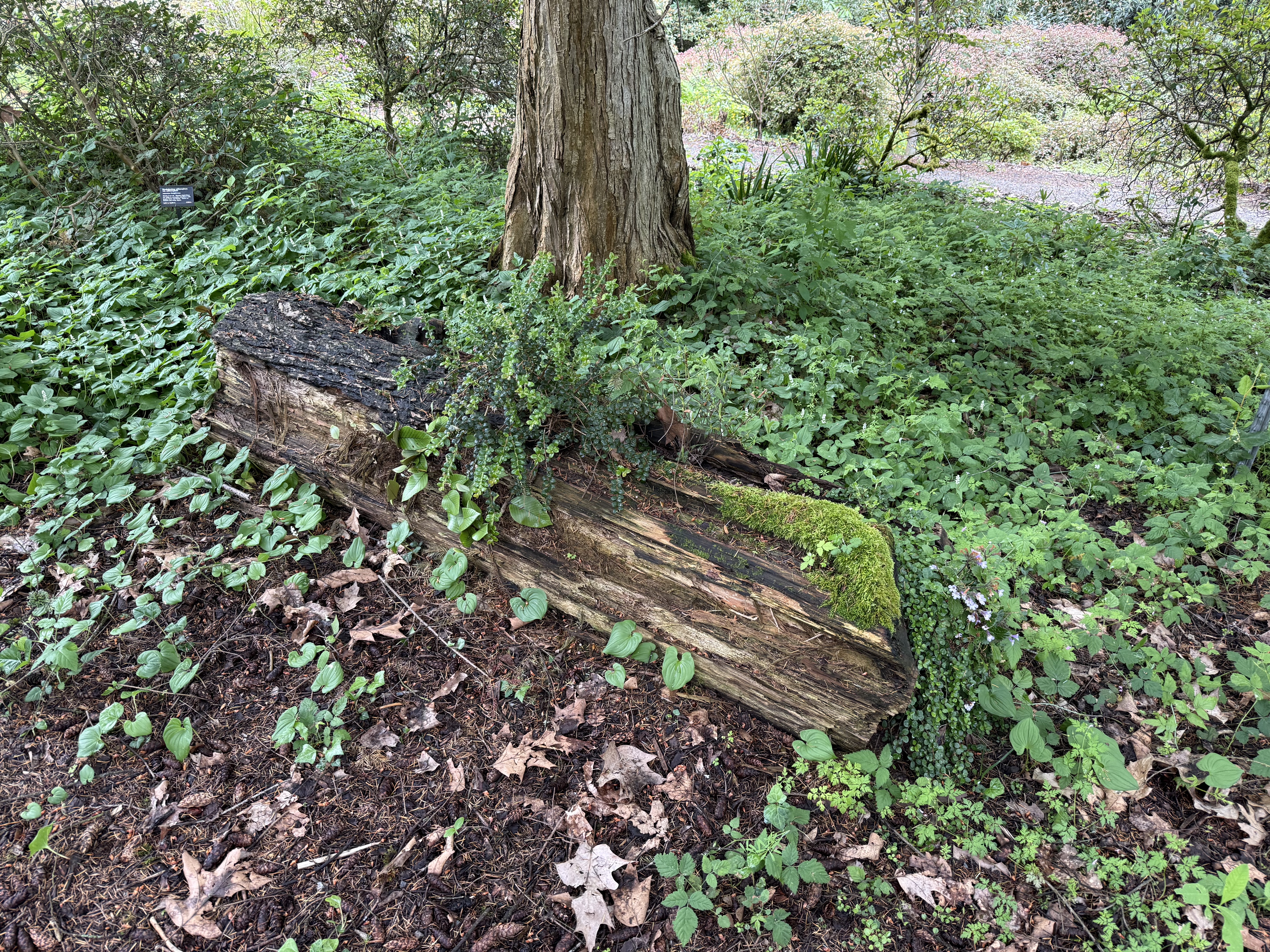
I’ve commented about “nurse logs” before. Here they are part of the landscaping.
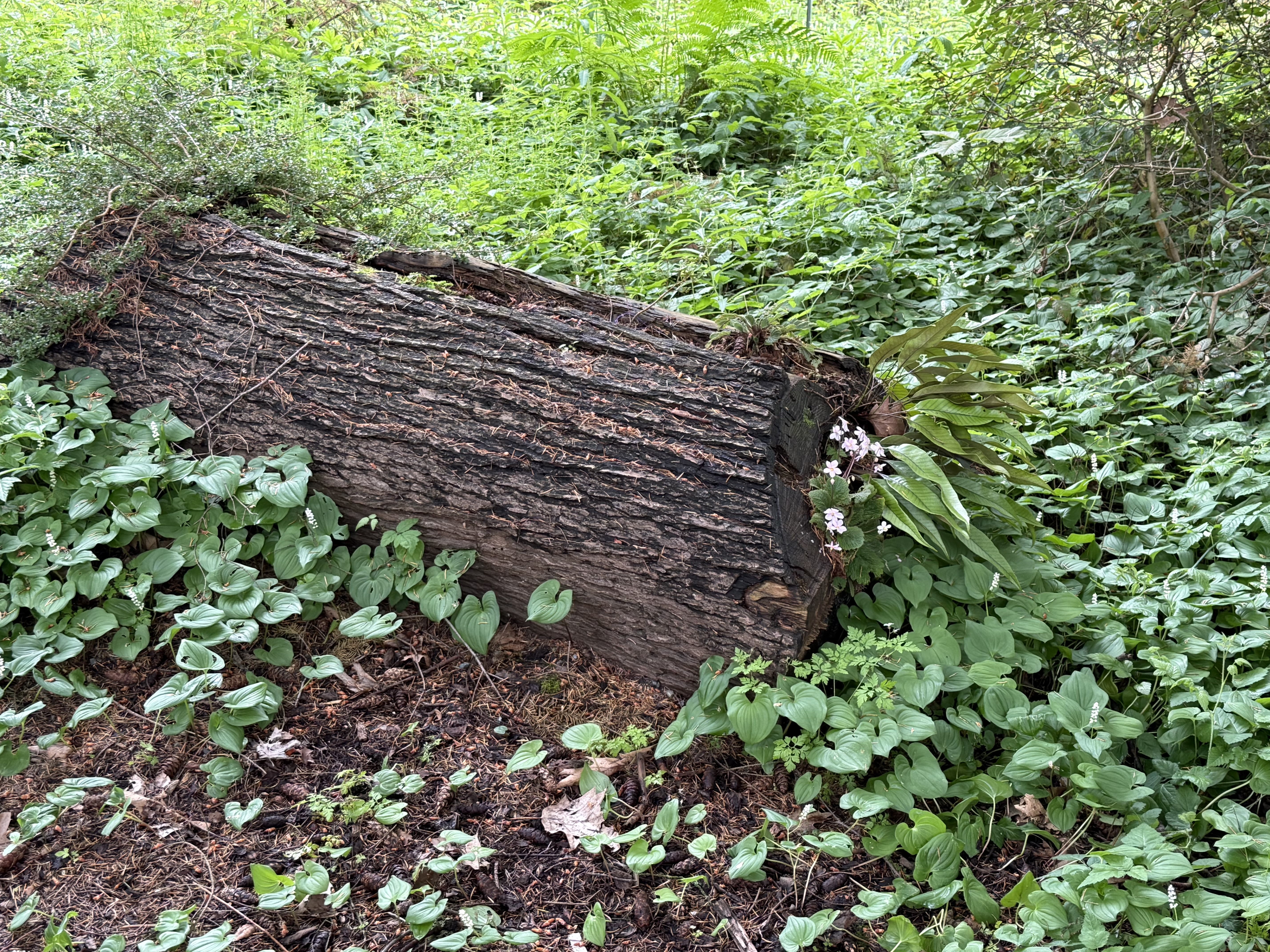
I love the flowers peaking out of one end of this log while a bush is struggling to escape from the other end.
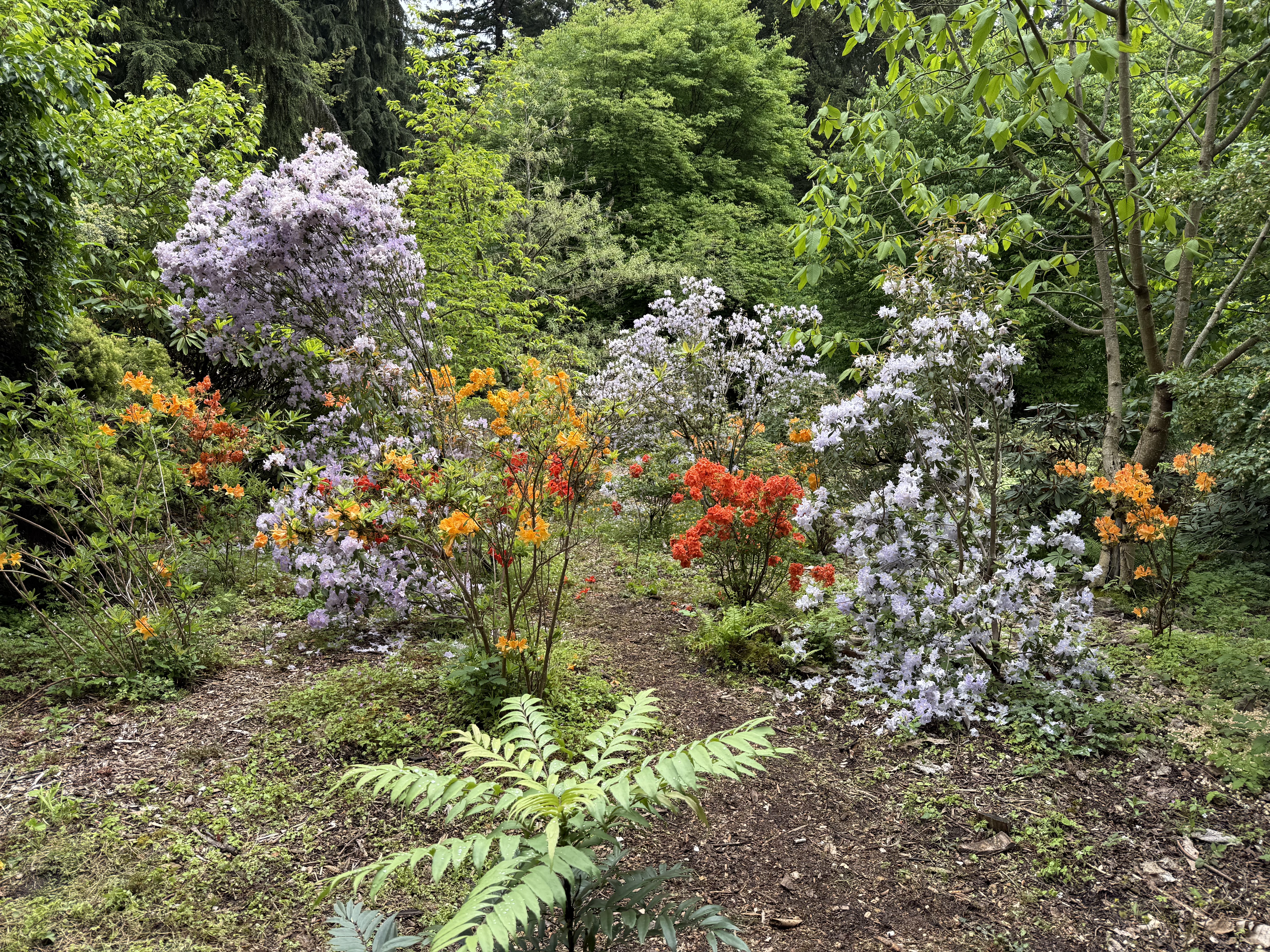
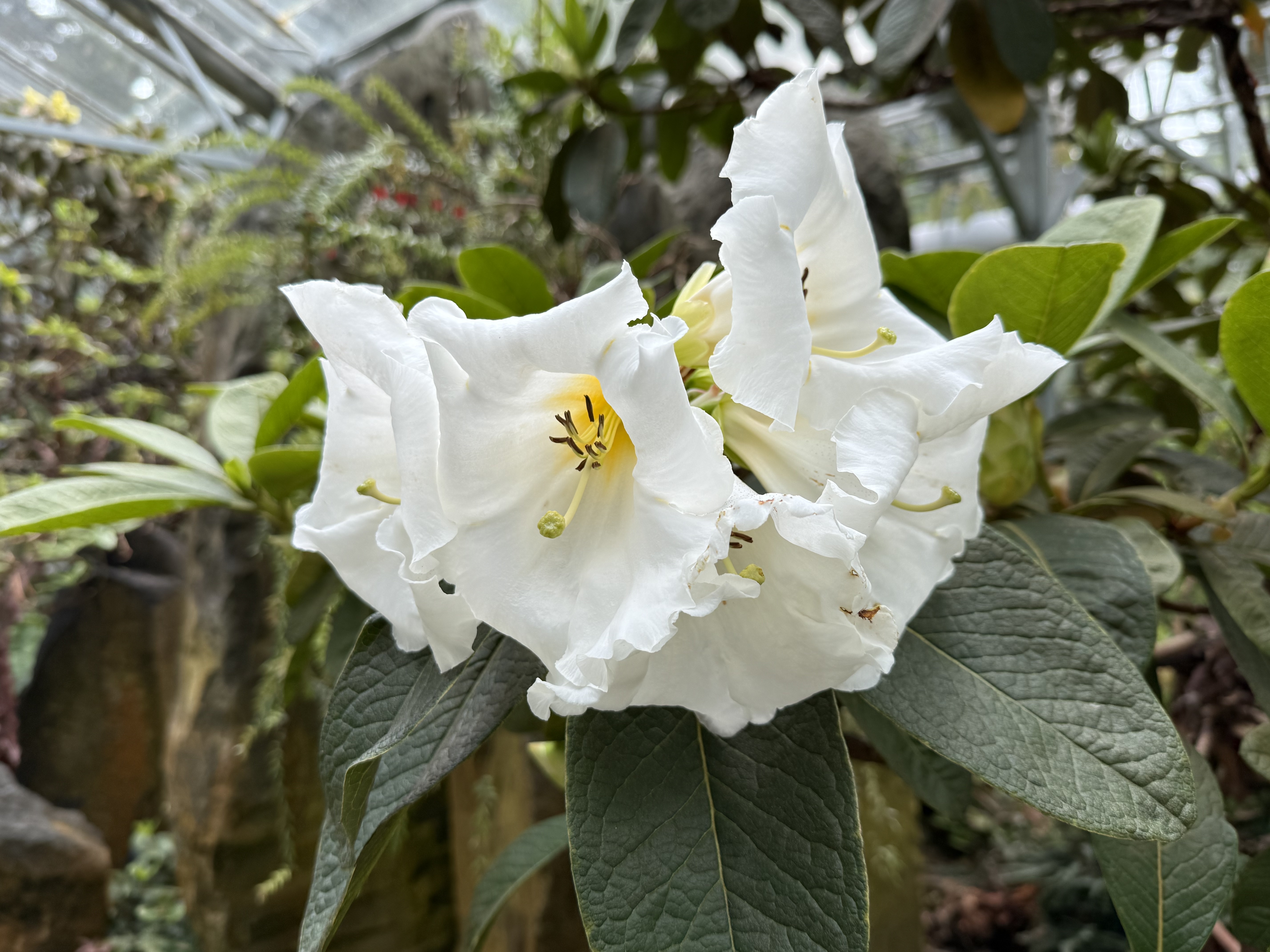
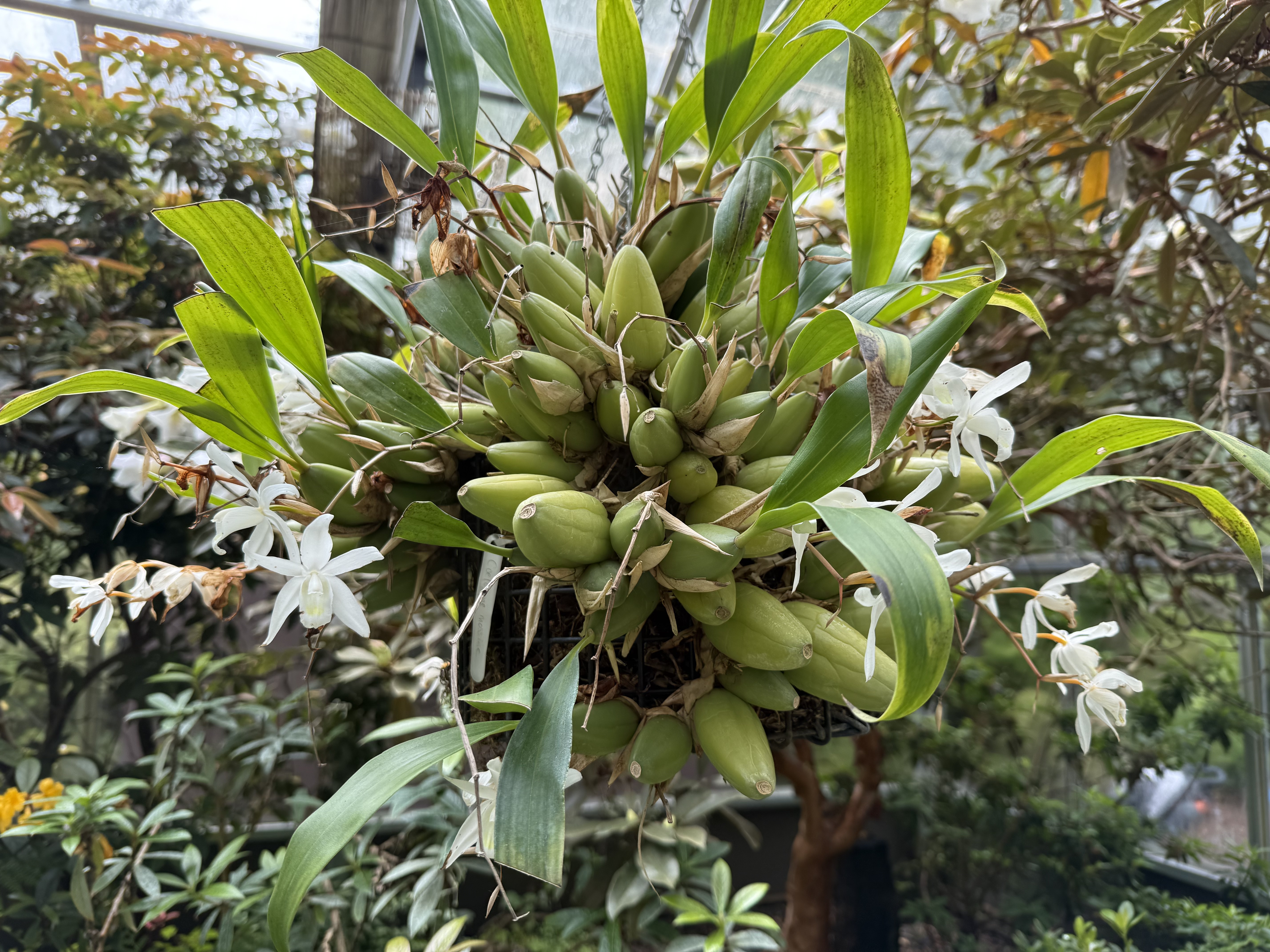
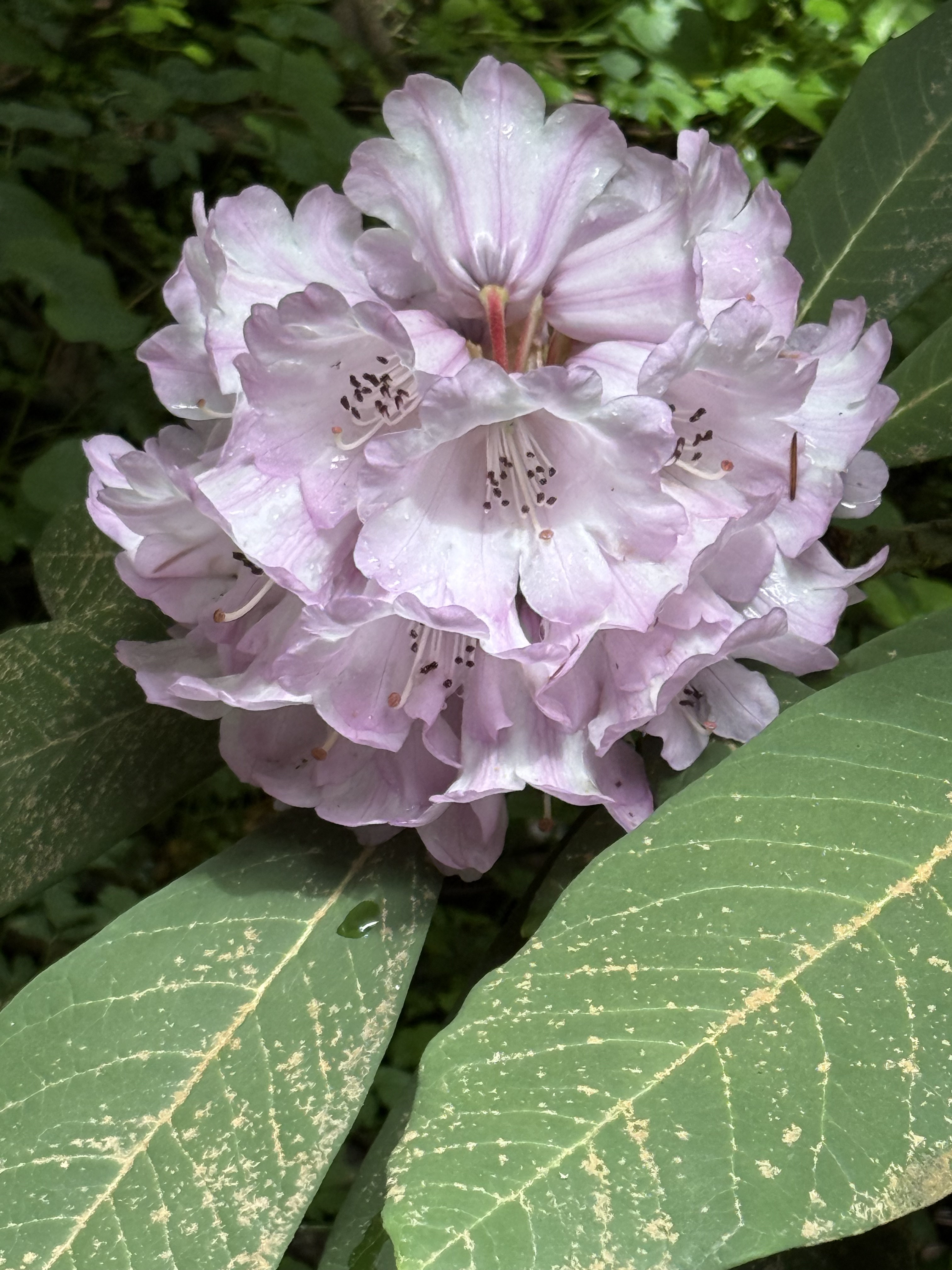
Rhododendron is one of the most common groups of plants, native to every continent although most of them originate from SE Asia. They do well in the Himalayas–not so much here in the PNW.
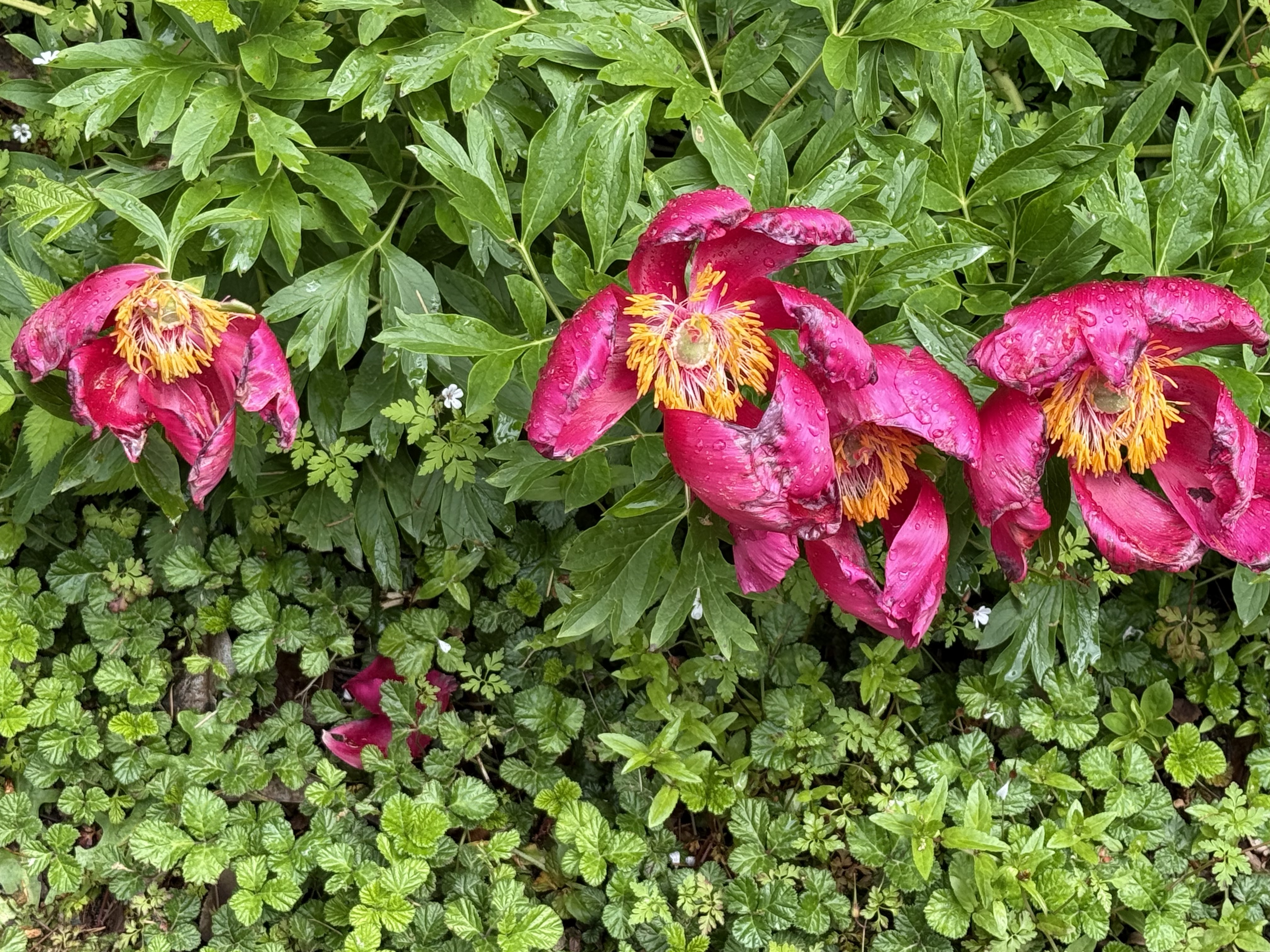
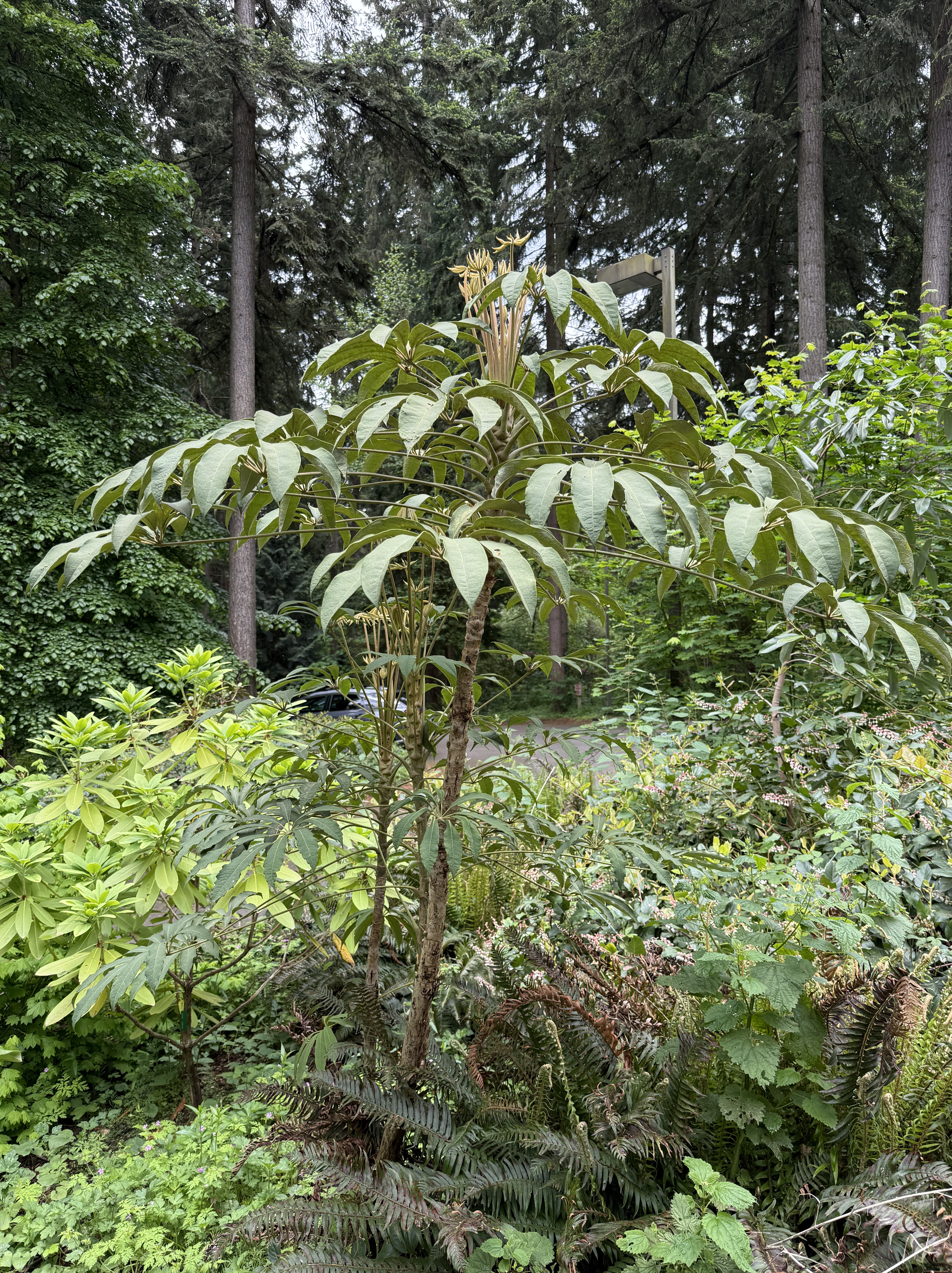
This caught my eye as we left the museum/garden…
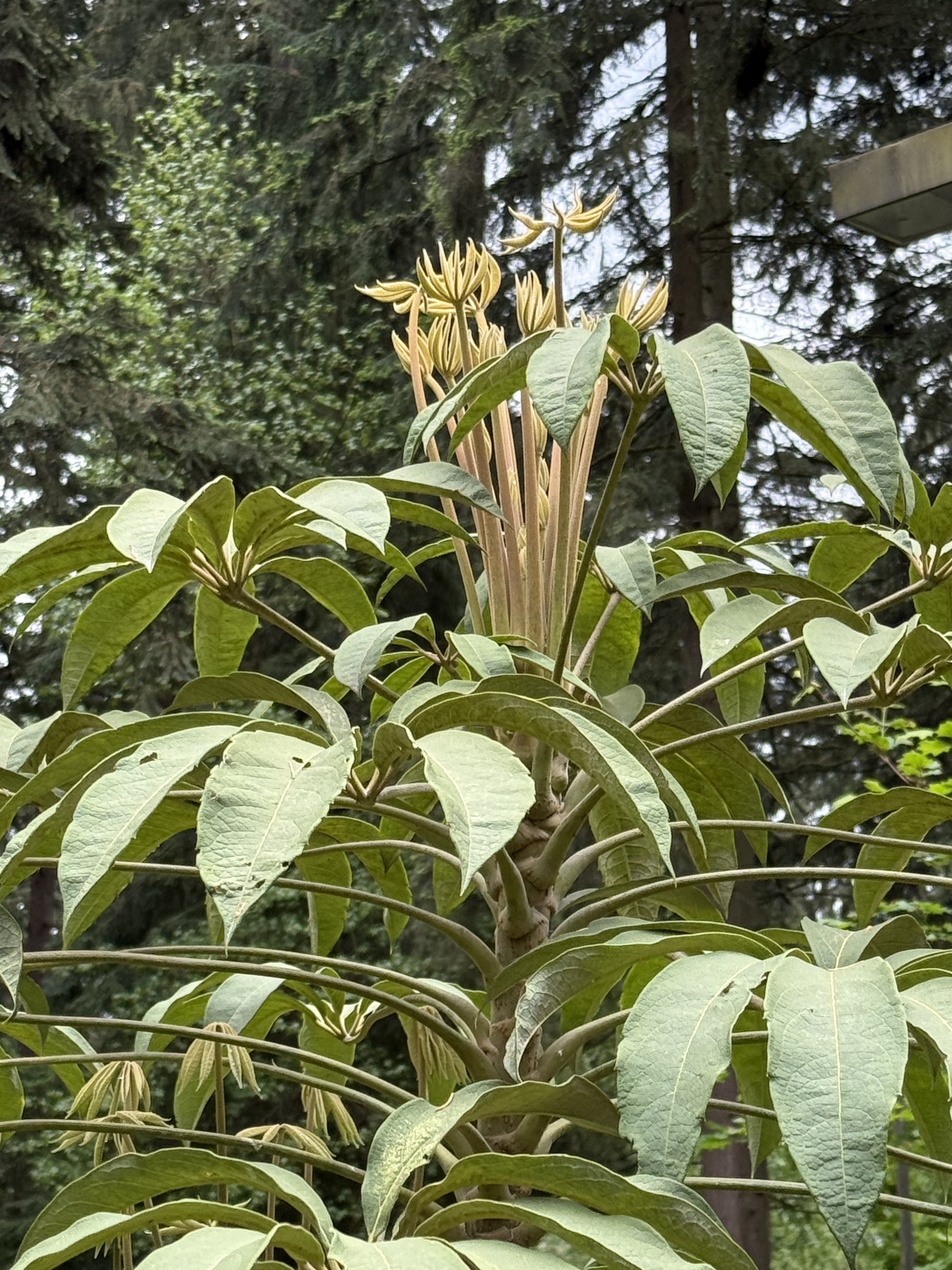
What the hell is growing out of the top? I’d love to see what kind of flowers this tall shrub will produce later this spring…


Recent Comments