
Ecology Notes on Flaming Geyser State Park
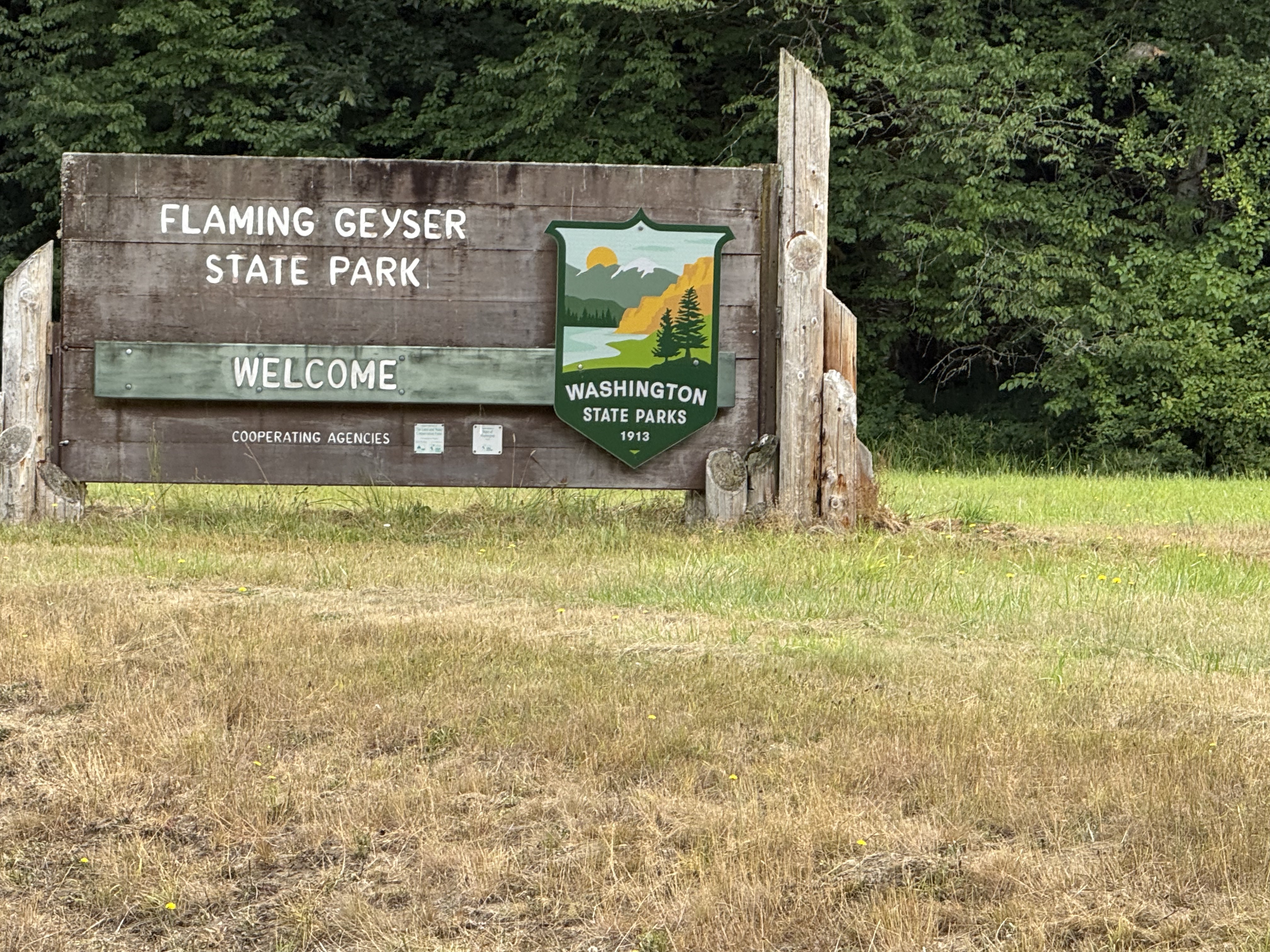
This is my last post from Flaming Geyser State Park. I discussed the geology and the sights in previous posts. Today I’m going to look at some of the highlights in a riparian ecosystem that seems to be recovering from excessive logging; however, the area has been in private hands for more than a century, which allowed the maturing forest we find today to develop.

This paper birch (or red alder) caught my eye because of the bunches of small branches growing from the bark at different heights. ChatGPT says these are epicormic sprouts, areas where dormant stems wait for more sun or, possibly, stress to the tree.
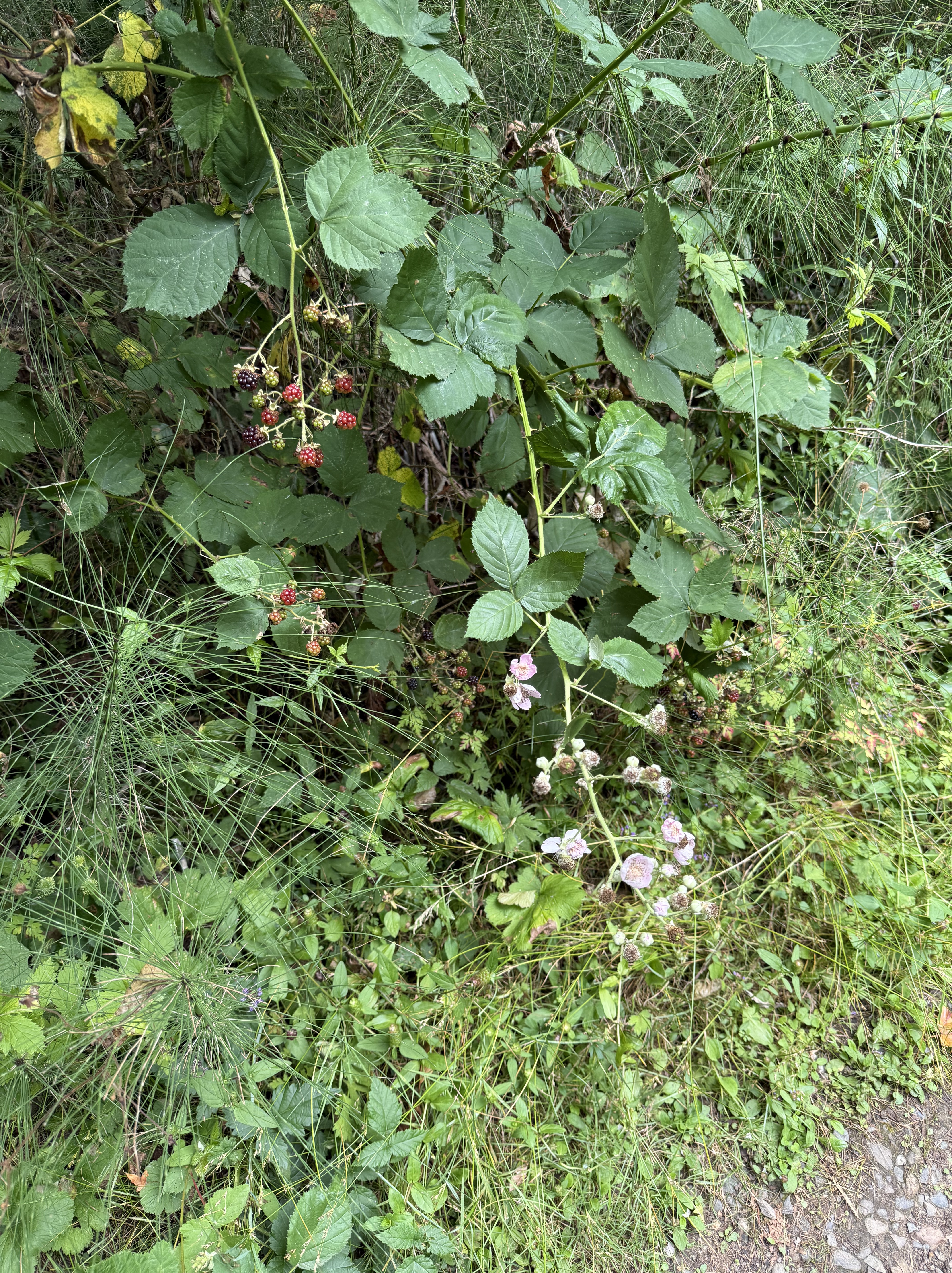
Himalayan Blackberry and Trailing Blackberry (with flowers) along the trail.
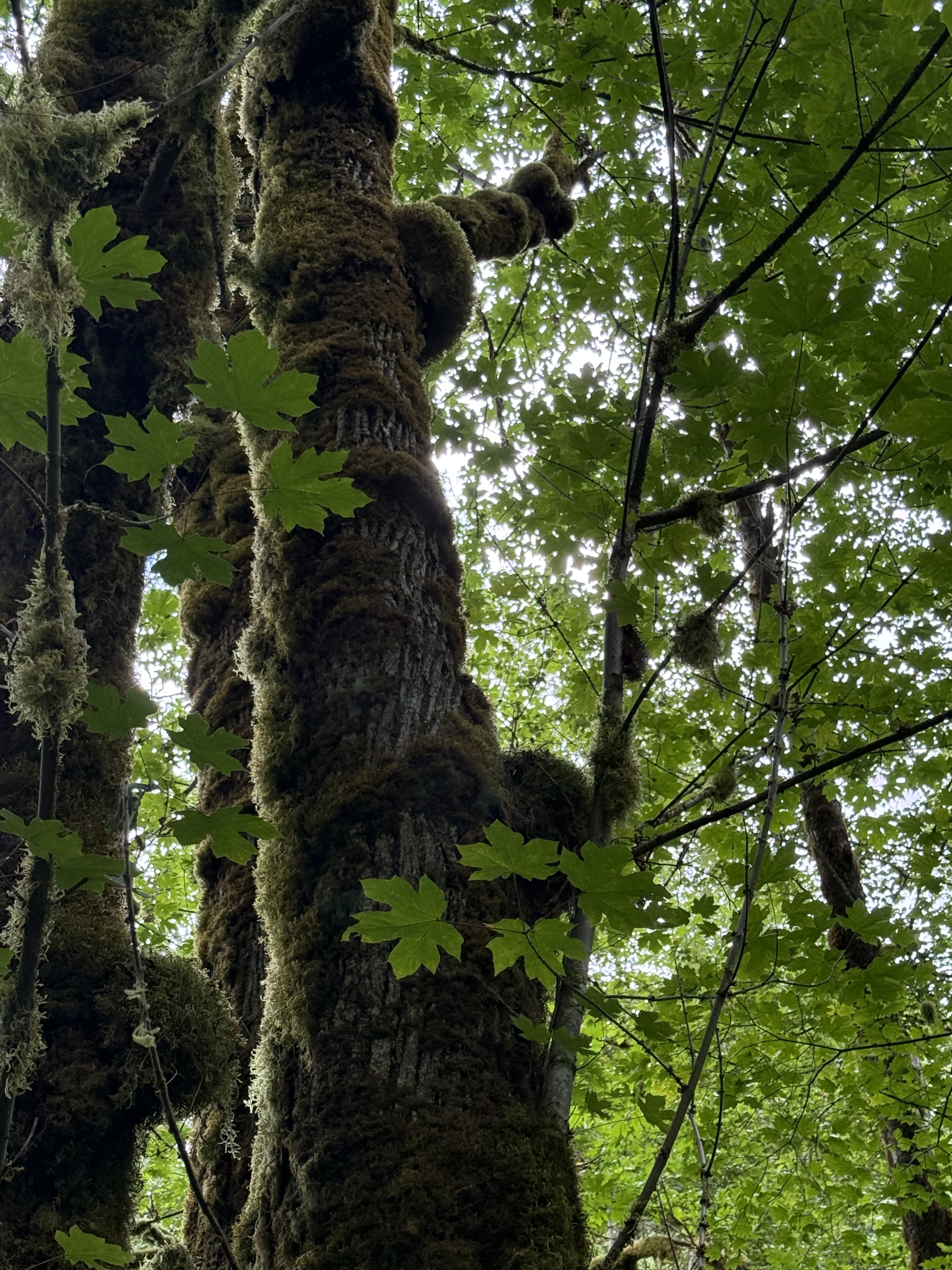
Big leaf maple covered with moss mounds on (probably) epicormic mounds, which have collected over the years but weren’t active; or else the new growth has died back.
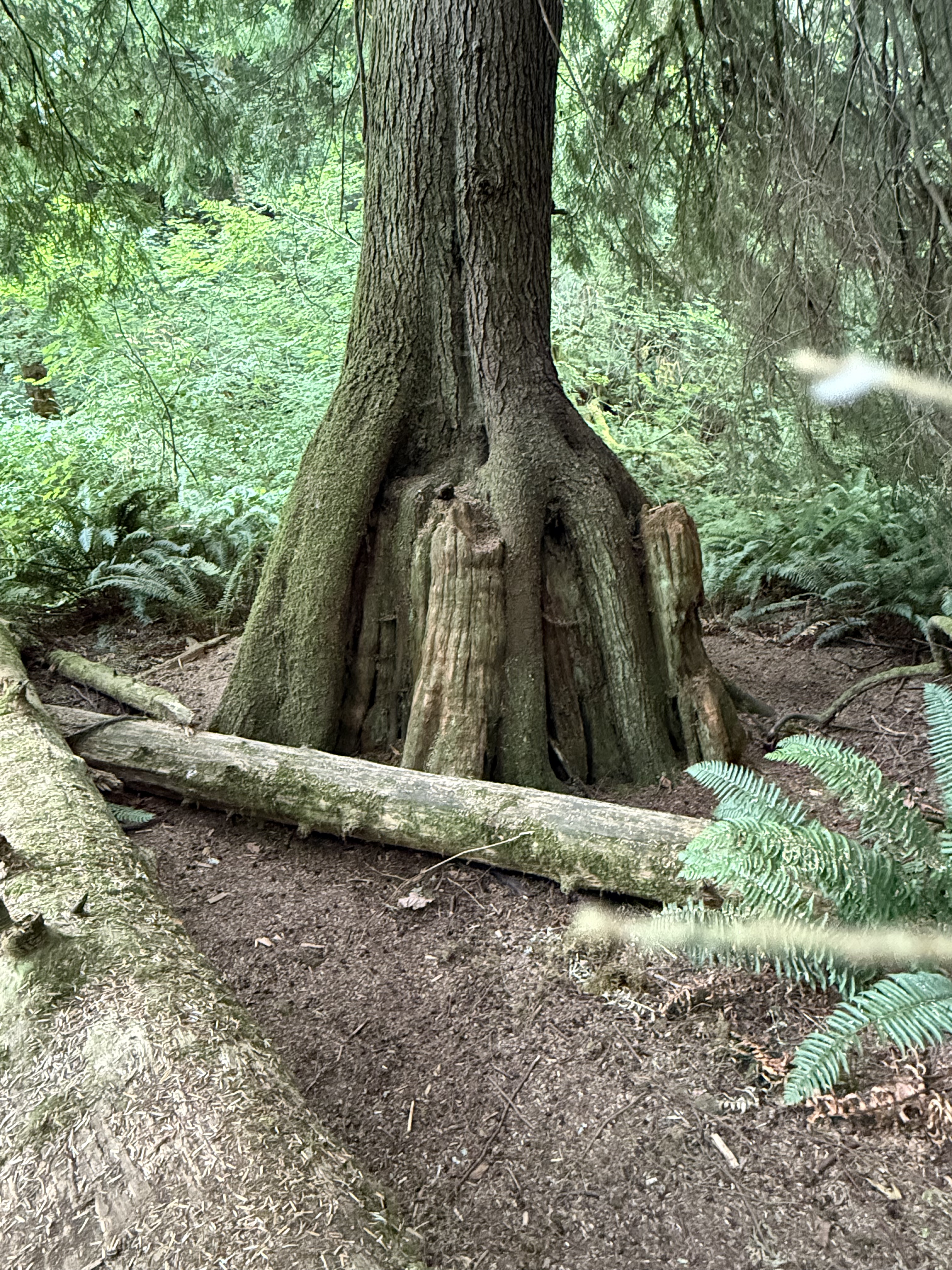
Douglas fir resting on the nurse stump where it grew from a seed. I’ve often seen examples of this phenomenon with roots projecting every which way, but this fir seems to have timed its growth perfectly with decay of the host.
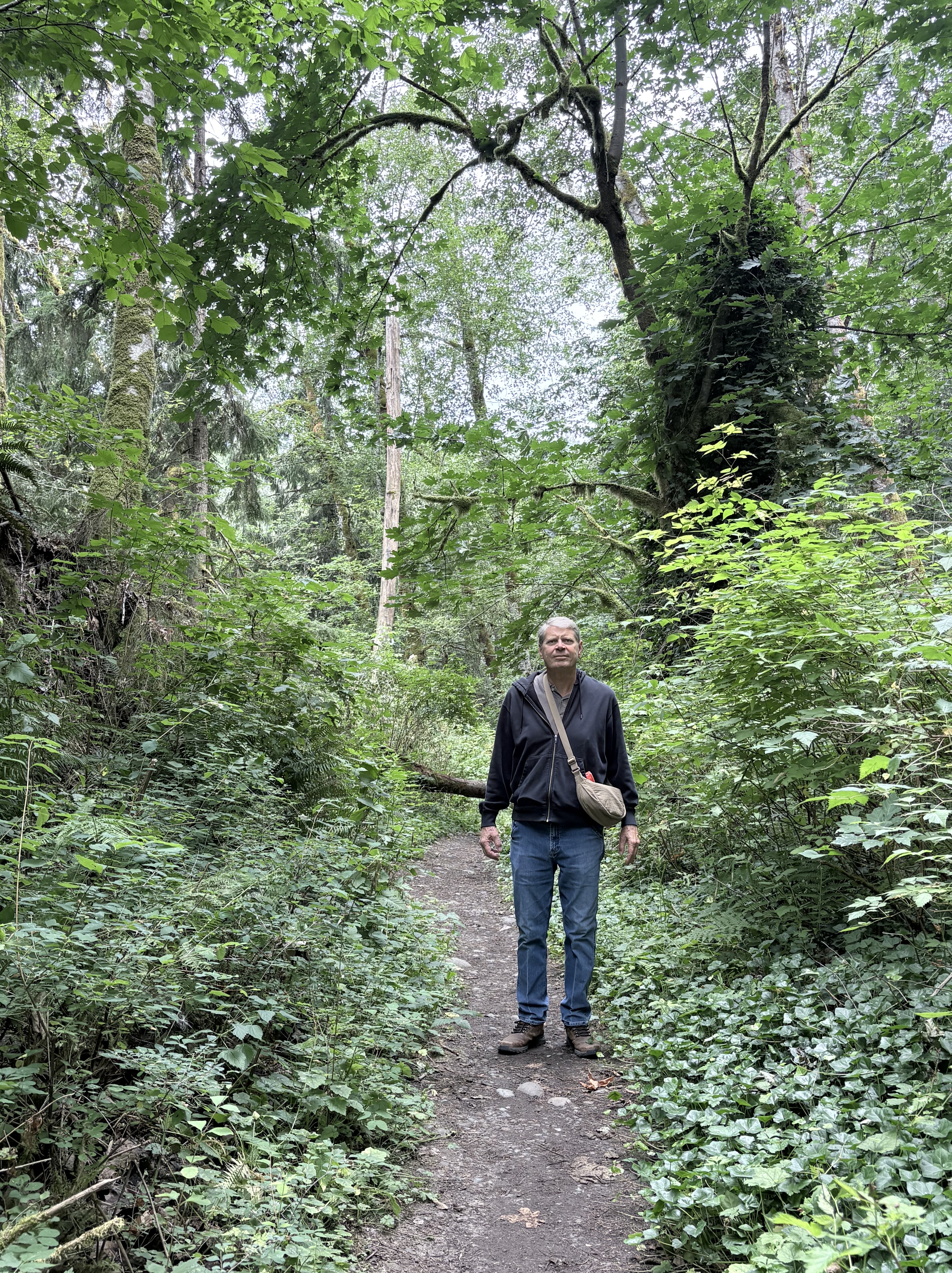
This photo shows me standing among a bunch of bushes. That’s how much I know about botany. So I asked ChatGPT what plants it could identify. It came up with a long list: Douglas fir and Bigleaf maple; Salmonberry, elderberry, and maple seedlings; English ivy, Sword fern, stinging nettle, and a variety of mosses. It pointed out that this stretch of the trail doesn’t reveal any Himalayan blackberry, which means that this is a natural ecosystem for the PNW.
Final Thoughts
Flaming Geyser State Park represents a classic riparian ecosystem in the PNW. It has been invaded by Himalayan blackberry, but the native plants seem to be holding their own…for now.


 Timothy R. Keen
Recent Comments