
Review of “In Cold Blood” by Truman Capote

This is a true story written in a masterful dramatic style. It is told by an impersonal narrator but, because so much information was available to the author, the characters carry the story. I didn’t know the details of the grisly murder of the Clutter family in 1959, so reading this book was a surprise; I found it a real page turner, especially the scenes describing the murderers’ actions after the fact.
This could easily have been a fictional crime drama. Apparently the perpetrators were willing to share their experience, probably because they knew how it would end. Maybe their fifteen minutes of fame.
The writing is excellent; in fact, I just ordered the author’s first novel to see how he writes fiction, being constrained as he was by the facts in this book.
One last note, I didn’t notice any writer fatigue at the halfway point; the author never lost focus, and it shows in the final product.
I recommend this book both as a true crime novel and as simply a good read …
Review of “Hard-Boiled Wonderland and the End of The World” by Haruki Murakami
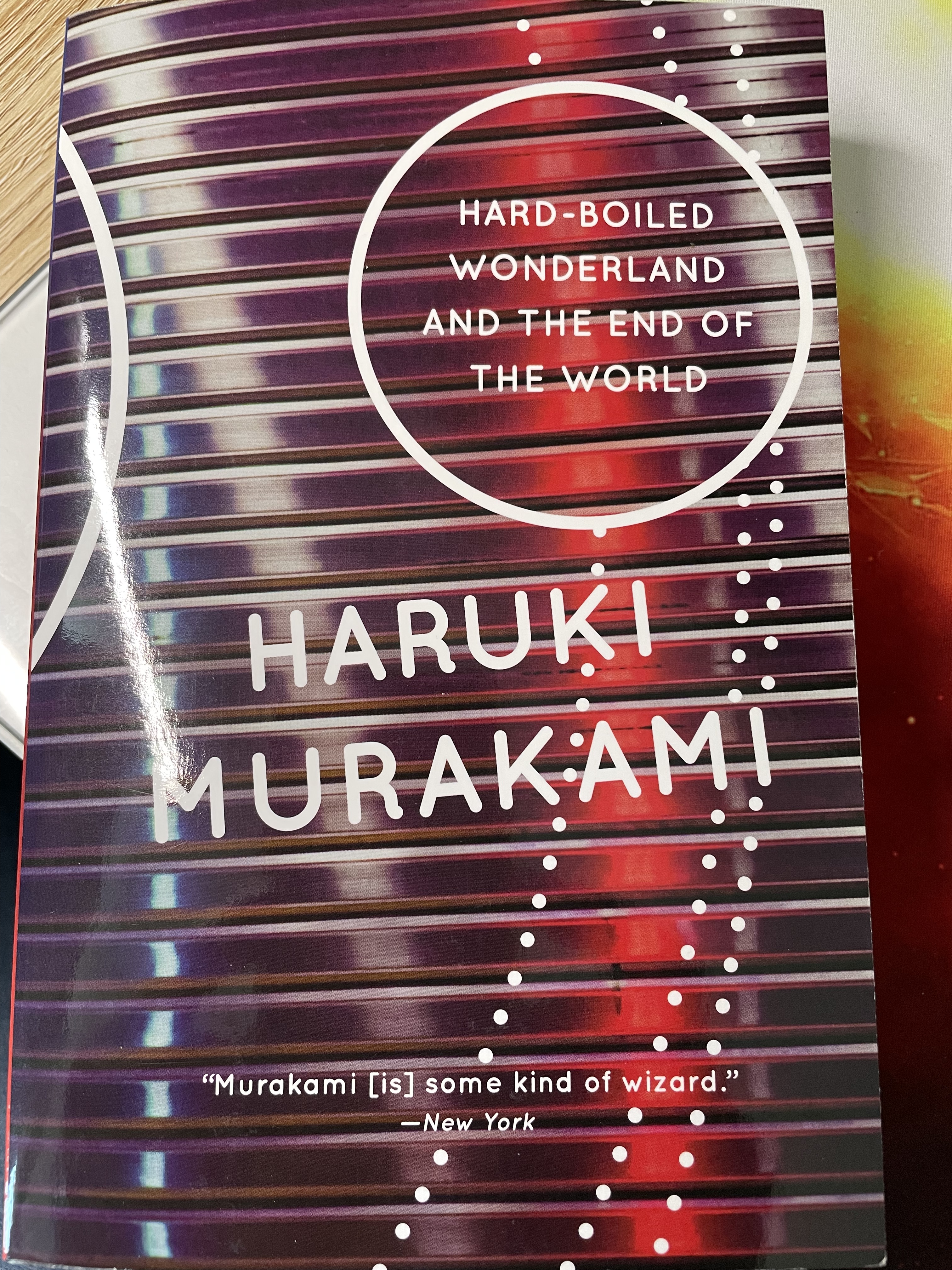
The title of this science fiction novel is a bit off-putting, but you can’t judge a book by its cover. This book was written in Japanese, so the English translation has a little of Alfred Birnbaum (the translator) in it as well. Between them they created a very good story. There are some loose ends and irrelevant additions, but I’ve seen those errata in every book I’ve read. And, as with other novels, there is some deterioration after the half-way point, but nothing distracting.
The style is interesting. The first-person narrator alternates between present and past tense in a deliberate manner, a clue to what’s really happening. The book is filled with clues that got my attention but which I was unable to connect. I don’t want to say too much about the plot because, on face value, it’s a story about parallel worlds and a man caught between them. The story reminded me of The Matrix (1999) and Inception (2010), but the truth is that those films were probably inspired by this book, which was published in 1991.
With dozens of clues presented to the reader, Murakami leaves the most important question unanswered, allowing the reader to add their own ending. I have my story and I’m sticking to it.
I recommend this book because it is readable and fun. And when you finish it, you have gained insight into …
Review of “Dava Shastri’s Last Day” by Kirthana Ramisetti

This is a story about a wealthy woman’s assisted suicide, but she had her death announced several days early because she wants to see what people say about her. I was expecting a lot of drama and disappointment. However, I was disappointed rather than the main character. The big surprises are presented early and discussed repetitively throughout the rest of the book. There is a lot of repetition as her adult life is presented in a series of flashbacks, which often occur without warning.
The author sticks to multiple point-of-view narration for most of the book but, confusingly, the narrator begins hopping between perspectives, even within a paragraph. That’s called “head hopping” and it is very confusing to read. No matter whose POV is used, the narration reads like a technical report. That’s too bad because the story is weak and needs some good writing to prop it up.
The characters are mostly undifferentiated, with a few exceptions. Thus, the dialogue is confusing because there aren’t enough “dialogue tags” to keep up. I had to reread a lot of the dialogue.
The central character likes music, so the author uses a nice trick of having songs from different periods of her life appear to represent her dying memories. I don’t think it was done well because I found myself annoyed at not knowing if real and fictional songs and artists were mixed up; you see, the story takes place in 2044. Usually, I would have checked out some of them, but it wasn’t worth the effort. Of course, I recognized Pink Floyd and a few others from more recent decades.
The reader is supposed to have mixed feelings about Dava Shastri, but I just couldn’t get involved with the story enough to care. To ruin an already poorly written book, the epilogue explains what happens to Dava’s children (all adults) over the next months to years.
Talk about beating a dead horse …
Review of “Rabbit, Run” by John Updike
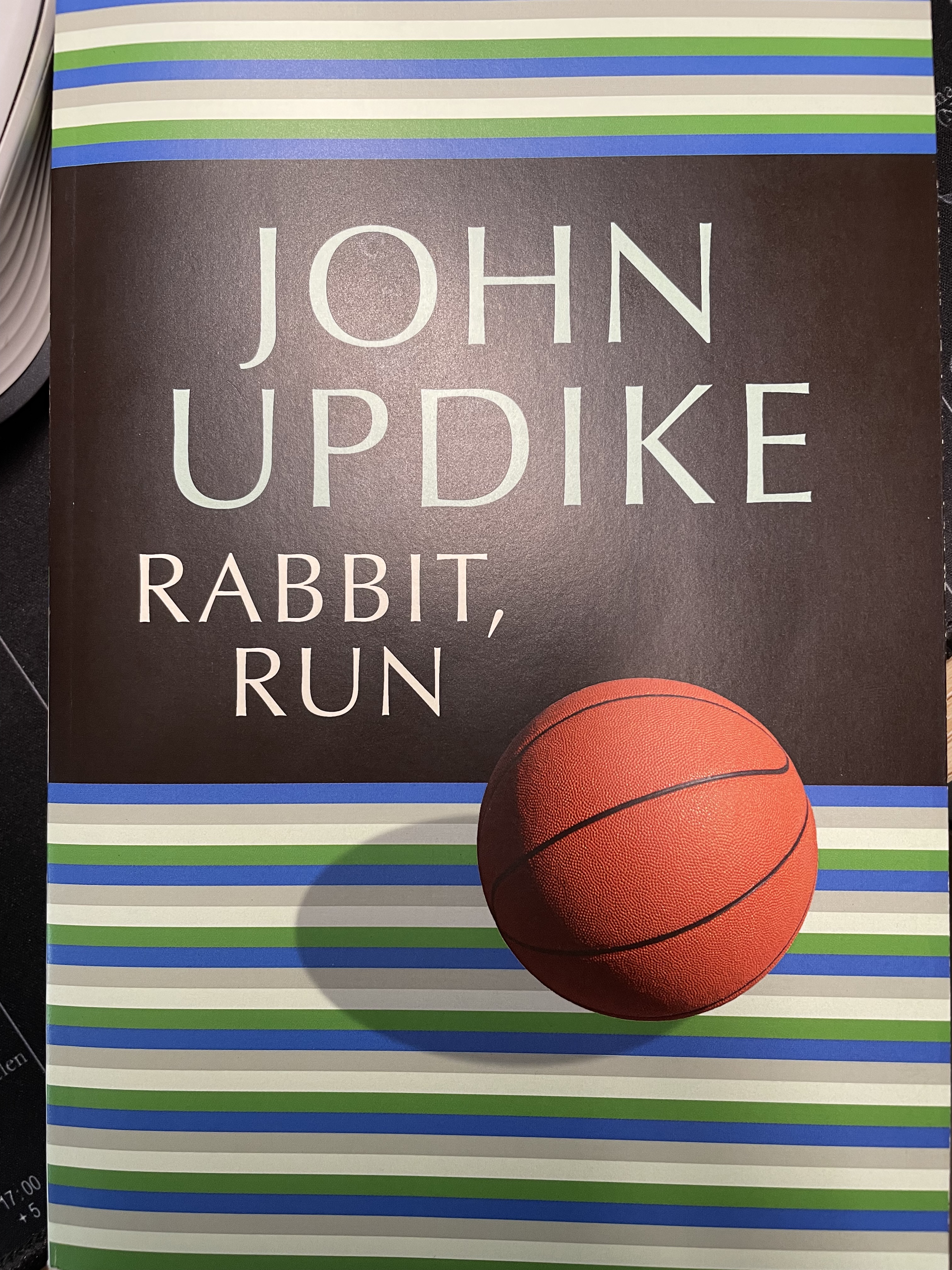
The author of this literary fiction must have been a student of James Joyce (Ulysses) because it is primarily a stream-of-consciousness portrayal of several months in the life of a young man who is trying to escape his pregnant wife and young boy. The plot is secondary to the writing style, which really placed me in the mind of a character I despised throughout, although several of the other characters found him charming and wanted to be around him. I thought about writing this review the way the book is written but decided that would be too much work. I can’t imagine keeping this up for 325 pages and, apparently, it was difficult for this iconic American writer too; like most of the books I’ve reviewed, it starts unravelling about halfway through.
The plot is as much based on the thoughts of the characters as their actions. This is a tragic story about a young man (Harry Angstrom) who dwells on the good old days, when he was a basketball star in a small Pennsylvania town, while selling vegetable peelers at a department store. After abandoning his family, he ignores the advice of everyone around him, even his beloved coach, who turns out to be mortal when viewed through Harry’s cynical eyes. Indecision and feelings of duty lead Harry to reversing course several times, ultimately leading to personal tragedy and humiliation.
Part of the book (there are no chapters) applies the close point-of-view method to several characters and this is where Updike’s skill as a writer shines. While maintaining the stream-of-consciousness style, he eloquently presents several characters’ perspectives on Harry’s predicament.
No detail in any scene is too small to warrant description, but this is where the story gets a little sketchy, especially towards the end. I think the author was running out of metaphors. Nevertheless, I was impressed with how he brought inanimate objects like streets to life, making them characters rather than backdrops. His detailed descriptions of the town where Harry lived are probably excessive, except that some of these paths were followed more than once, each time from a different spatiotemporal perspective, as Harry’s mental gymnastics evolved.
I don’t like tragedies personally because I hear them all the time in the news, but this book was published in 1960. I enjoyed reading about anachronistic devices, e.g. rotary phones with handheld receivers, from a time when I was a young child. Like I said, nothing is overlooked, not even a meal eaten with chopsticks in a Chinese restaurant in a small Pennsylvania town.
I am currently writing a science fiction novel, and I can already see Updike’s influence on my writing; however, I won’t be describing dappled shade as “…a darkness in defiance of the broad daylight whose sky leaps in jagged patches from treetop to treetop above him like a silent monkey.”
That is damn good writing, but maybe it’s meant for writers rather than the average reader.
This is excellent literary fiction.
Repaso de “Cajas de cartón” por Francisco Jiménez
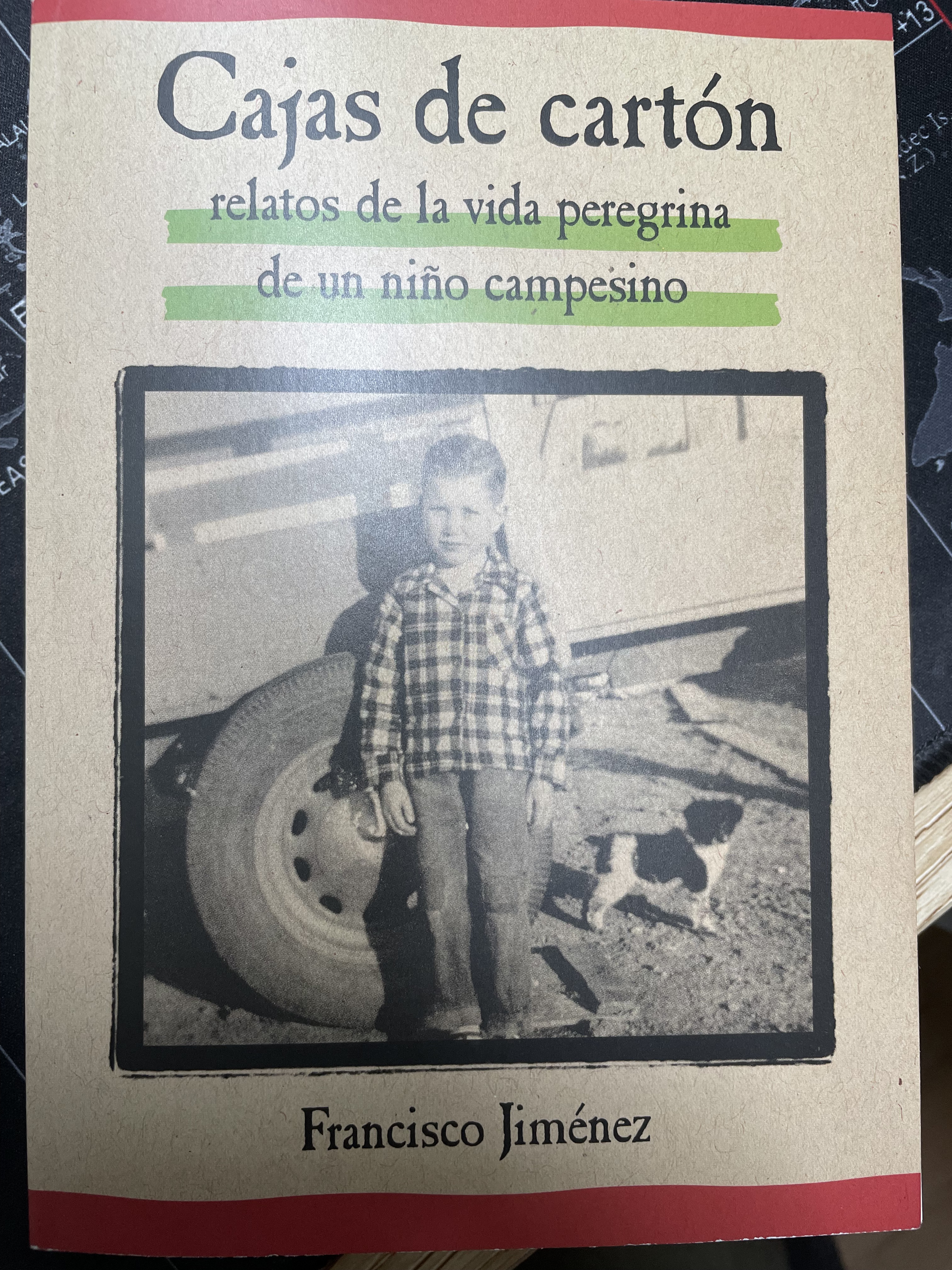
Este libro es colección de cuentos sobre la miserable vida de las trabajadores migrantes en California durante los cuarenta. Es ficción pero basado en historias reales. Se cuenta a través los ojos de un nińo mexicano de que tiene solo cuatro años después su familia cruza la frontera ilegalmente.
Ellos viven en tiendas de campañas y chozas y cocheras mientras trabajan desde el amanecer hasta el anochecer siguiendo la cosecha de uva y lechuga y algodón. El autor asiste la escuela en muchos pueblos mientras creciendo. Sus hermanos menores son americanos pero su hermano mayor y él mismo son indocumentados pero su padre tiene tarjeta verde.
El final es angustioso pero demasiado cierto. Es un buen libro tanto para adultos como para niños.
Review of “Trashlands” by Alison Stine

This is a post-apocalypse book about people who are living lives not that different from poor people anywhere. They dig through trash looking for something to sell, except the only thing they seem to find is plastic. That is the premise that requires the reader to suspend disbelief. They live in old cars but don’t collect metals. Their world is filled with plastic, periodically replenished by floods that bring this bounty from undisclosed locations. The world is covered in plastic. The central character’s son was even kidnapped and forced to work in a factory sorting plastic and making plastic bricks. For some reason, it cheaper and easier to make bricks from recycled plastic than the way people have been making them for thousands of years.
It sounds like centuries after the collapse of modern civilization, right? Nope. Many of the older people were alive shortly after the apocalypse, so it’s been maybe fifty years since the collapse; but no one seems to recall what happened or at least they aren’t sharing it with the reader. However, the cataclysm seemed to involve fire, flood, earthquakes — but no nukes. Oh and plastic. The author really has a fixation with plastic, which I can understand, but the story fails to explain why it is the only material of interest.
The writing style is typical for post-apocalyptic authors these days: short sentences with questionable grammar and mostly simple nouns and adjectives; however, the characters seem to know more than they profess to know repeatedly. (It is hard to keep an ensemble cast in line.)
As with so many novels I’ve reviewed, the writing deteriorated after the half-way point, finishing as if the author realized she wasn’t writing War and Peace. In other words, there isn’t much of a plot the way it is written; the elements are all there but they don’t come together to form a cogent story. I found myself dreading my daily reading most days, although there were a few good points.
In my opinion (humble and semiliterate), the author’s fascination with plastic ruined the story. She spends too much time telling the reader how much plastic there is in Scrappalachia, and how hard life is for the people who live there, told from every character’s perspective (they’re all the same), and not enough telling the story described on the back cover.
Her dream fizzles along with everything else. To give the author the benefit of the doubt, maybe that’s the point — there is no escaping destiny.
Perhaps American writers have become as cynical as nineteenth century Russian authors …
Review of “No Somos de Aquí” by Jenny Torres Sanchez

This is another review of a Spanish novel. This book tells the story of three friends who must flee their small town in Guatemala when a criminal gang moves in and they come to the attention of its leader. Their backgrounds are pretty miserable. Pulga, a thirteen-year-old boy who longs to follow his father to America, plans their escape to the United States. They leave in the middle of the night, leaving notes for their mothers.
They avoid human traffickers, corrupt police, and kidnappers, while riding on top of railway cars. They walk through the jungle and are assaulted by local criminals, and finally cross the desert with a “coyote”. Tragedy finds them during their journey and the survivors are split up when they encounter the U.S. Border Patrol.
This is a heartbreaking story of desperation, hope, and perseverance against overwhelming odds. However, the author spends too much time on their emotional states, shared through their thoughts . Furthermore, it is apparent from the beginning who is not going to make it because their story isn’t told in the first person.
The action sequences are exciting but the long train ride across Mexico is repetitive. The main protagonists spend too much time thinking about their parents and their desperate situation. This is important but redundant to the reader.
I don’t know if the events depicted are realistic or not, but they certainly sound plausible, maybe not all during a single journey. Despite my criticism of the repeated mental anguish of the protagonists, they come across as age-appropriate children, not adults in children’s bodies. There are no heroic scenes or unbelievable stunts.
This is a story of hope and perseverance against incredible odds.
SPANISH TRANSLATION
Yo estoy escribiendo esta reseña sobre una novella español que leí recientemente. Este libro cuenta la historia de tres amigos que tienen que huir de sus pueblo pequeño en Guatemala porque una banda criminal llega y ellos son notados por el jefe. Pulga, un niño de trece años que tiene esperanza de que le seguir a su padre hacia los Estados Unidos, planifica su escape. Ellos se van en medio de la noche, dejando las notas por sus madres.
Ellos evitan a los traficantes de personas, policías corruptas y secuestradores mientras se sienten encima de vagones de tren. Ellos andan por la selva, son asaltadas por criminales locales, y finalmente se cruzan el desierto siguiendo un coyote. La tragedia los encuentra durante el viaje y los sobrevivientes se están separado donde les encuentran la patrulla fronteriza.
Esto es historia corazón roto de desesperación, esperanza y perseverancia en la cara de increíbles posibilidades. Sin embargo el autor pasa demasiado tiempo sobre las emociones de los caracteres por sus pensamientos en lugar de sus palabras. Además es claro de lo comienzo de quien no lo va a lograr porque la victima no habla en sus propias palabras.
Las escenas acciones son muy emocionantes pero el viaje largo por México es repetitivo. Los dos caracteres principales se preocupan demasiado sobre their situación mal. Por supuesto es importante para ellos pero muy borrado por los lectores.
No supo si los eventos representan en este libro son realistas o no pero ellos suenan plausibles pero tal vez no durante un solo viaje. A pesar de mi critica sobre los pensamientos desesperados estresado por los dos caracteres principios ellos se presentan como edad apropiada jovenes en lugar de adultos pequeños. La historia no contiene acciones superhéroes.
Esto es historia sobre esperanza y perseverancia contra probabilidades imposibles.
Review of “Time for Socialism” by Thomas Piketty
The title of this book is a little misleading because it doesn’t have a central theme. This is a collection of essays published in Le Monde, a leading French periodical. If there is a theme, it is a call for expanding the European Union to be more democratic fiscally, and socially responsible.
Piketty is involved with a group that recently published a Manifesto for the Democratization of Europe. These essays support that cause, reflecting his developing ideas, from wealth inequality to investment in education. Unlike so many other writers, he proposes concrete solutions or at least starting points for a democratic conversation. He doesn’t see a world filled with bad guys and good guys, but only people who are trying to get ahead, some with the assistance of democratically elected governments. His proposals are mostly focused on Europe and France, but the ideas behind them are equally applicable to the United States.
As expected, the book is filled with charts that support what he’s saying, so he can’t be dismissed out of hand. Wealth and opportunity inequality in the advanced countries are approaching those of pre-industrial societies, which isn’t good for anyone in the long run. I hope someone with influence is listening here in the U.S. but I’m not betting on it.
The takeaway message is meant for Europeans, however; the E.U. is in crisis and something has to be done or it will splinter and Europe will return to a condition no one wants to see.
Nevertheless, Americans should be paying attention because it can happen here … recall the ominous future predicted in The Nine Nations of North America, written by Joel Gardena in 1981 …
Review of “The Collapsing Empire” by John Scalzi

I read this novel to see what kind of science fiction is being written today; it could have been written fifty years ago, except for the use of modern technology like notebook computers. The technology even included sheets of paper stapled together and handed out at a meeting. No kidding. The language, behavior, physical culture, was all from today, apparently frozen in time for at least 1000 years.
A collection of galaxy-spanning human colonies, connected by a network of cosmological features that sound like naturally occurring worm holes, has been cut off from Earth and formed an empire based on a hereditary emperor and monopolistic, hereditary corporations. The fun begins when the cosmic strands that connect these planets become unstable because they are too far apart to communicate with each other, even at light-speed.
The action focuses on two planets, one earth-like but at the far end of the network of worm holes, the other a nexus where most of the network segments lead — called End and Hub, respectively. Great names whose significance is stressed repeatedly. There are a lot of action scenes which, unfortunately, are so far removed in space (and time) that they aren’t integrated well into the story. The author is trying to write a political thriller and an action story at the same time, spanning thousands of light years. To satisfy his expectant readers (a previous novel was a NYT bestseller), he balances these opposing objectives; to be honest, it is done as well as can be hoped for. However, it is an impossible task which he acknowledges by ending the story inconclusively — a cliffhanger, season finale comes to mind.
The story of human perfidy, bad luck, and failure is plausible, especially in a story that takes place only a few thousand years from now (just look at how little we’ve changed since the earliest known empires). This book probably didn’t take long to write because the dialogue and technology (not counting the ambiguous “flow” and the spacecraft that traverse it) are unchanged from today. I mean literally. They have cars and trucks, but of course there are shuttles like in Star Trek. Because of all this familiar background, I didn’t spend much time trying to understand the story. I only had to backtrack to remember some of the strange names the characters had, although profanity (i.e. “fuck”) will apparently be favored by some people even in the distant future.
There were too many dead ends to tell the story in one novel. Because of the distances and communication delays involved in the story, there are several scenes described in detail — giving the reader a new cast of characters to become familiar with — which could have been glossed over by the narrator. This attention to detail left me expecting the reappearance of these characters, but I was disappointed.
I haven’t read any previous books by Scalzi, and I won’t read the inevitable sequel to this one. I wouldn’t be surprised to learn that it is a sequel itself, although the back cover made no such suggestion.
This falls in the category of “Summer Reading” — undemanding, read on the beach, stained by sun screen and salt, each chapter forgotten as quickly as it’s finished; as such, I would recommend it, but don’t plan on closure …
Review of “Empire of Illusion” by Chris Hedges

As you can see from the book cover, the title is longer than my post title. I think the author could have omitted the subtitle, which almost acts as a table of contents. There weren’t very many chapters and the book isn’t long, but it seemed longer than it was because the author ranted on the subjects he covered. I was especially tired of hearing details from porn stars about what goes into a modern shock-porn movie. I don’t think the author had much to say on the other topics (e.g. higher education, politics, finance) either because they were repetitive and filled with vague references to a conspiracy by the “elite.”
Most of the examples of collusion he discusses are public knowledge and not conspiracies, but Hedges frames them for emotional impact; I suppose that is what investigative reporters do to make a living. I prefer facts to be presented in a logical order so that I can come to my own conclusions, rather than being told on every page that it’s a conspiracy.
If you remove about half the text, the part telling the reader what they already know, this book does present evidence for what the title claims. However, it is incomplete and only focuses on a few topics of interest to the author. Anyone could have written this by reading several newspapers and a few books, skimming social media, and taking the time to connect the dots. That introduces the problem of how the dots are connected and not everyone is going to see a conspiracy behind every social and economic trend.
That leads to my final point about this book: Hedges never connects the dots to complete the picture, not even speculatively. Each category he examines is presented in a standalone chapter and the only big picture he paints is ambiguous, more references to vague conspiracies. Who is conspiring and why is this something I don’t already know? How are the pornography and educational sectors connected? He doesn’t say.
Failing to justify the grandiose title, and possibly with a publisher’s deadline looming, Hedges throws in a couple of pages of optimistic encouragement for us idiots who are completely deceived by the web of conspiracies he’s woven. I do feel deceived — by Hedges, not the porn industry, educators, politicians, or any of the other groups he derides. I know they’re full of shit …


Recent Comments