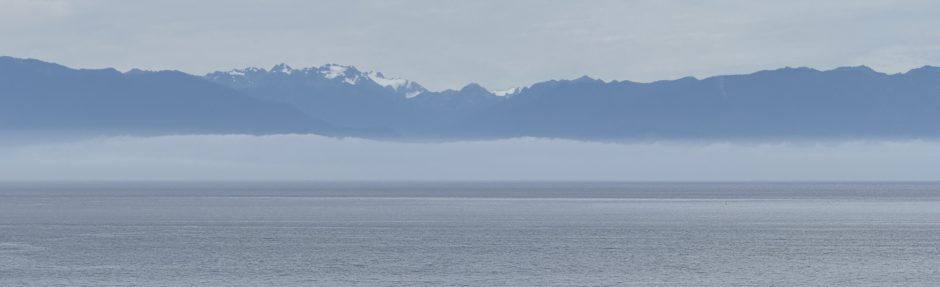
Industrial Archeology in the Northern Cascades
I’ve noticed a lot of abandoned industrial buildings and equipment molded into the landscape since I moved to Tacoma. For example, old sawmills and a smelter have become waterfront parks; pieces of railroad machinery have been transformed into artwork all over town; a gravel quarry was renovated into a golf course that includes several large structures; rusted valves and other maritime equipment adorn the marina; the list goes on. There are even abandoned and partially demolished structures that were once bars and fishing stores in nonindustrial areas.
Therefore I wasn’t surprised at what I found when we took a drive along Hwy 20 to explore the Northern Cascades before it closes for the winter.
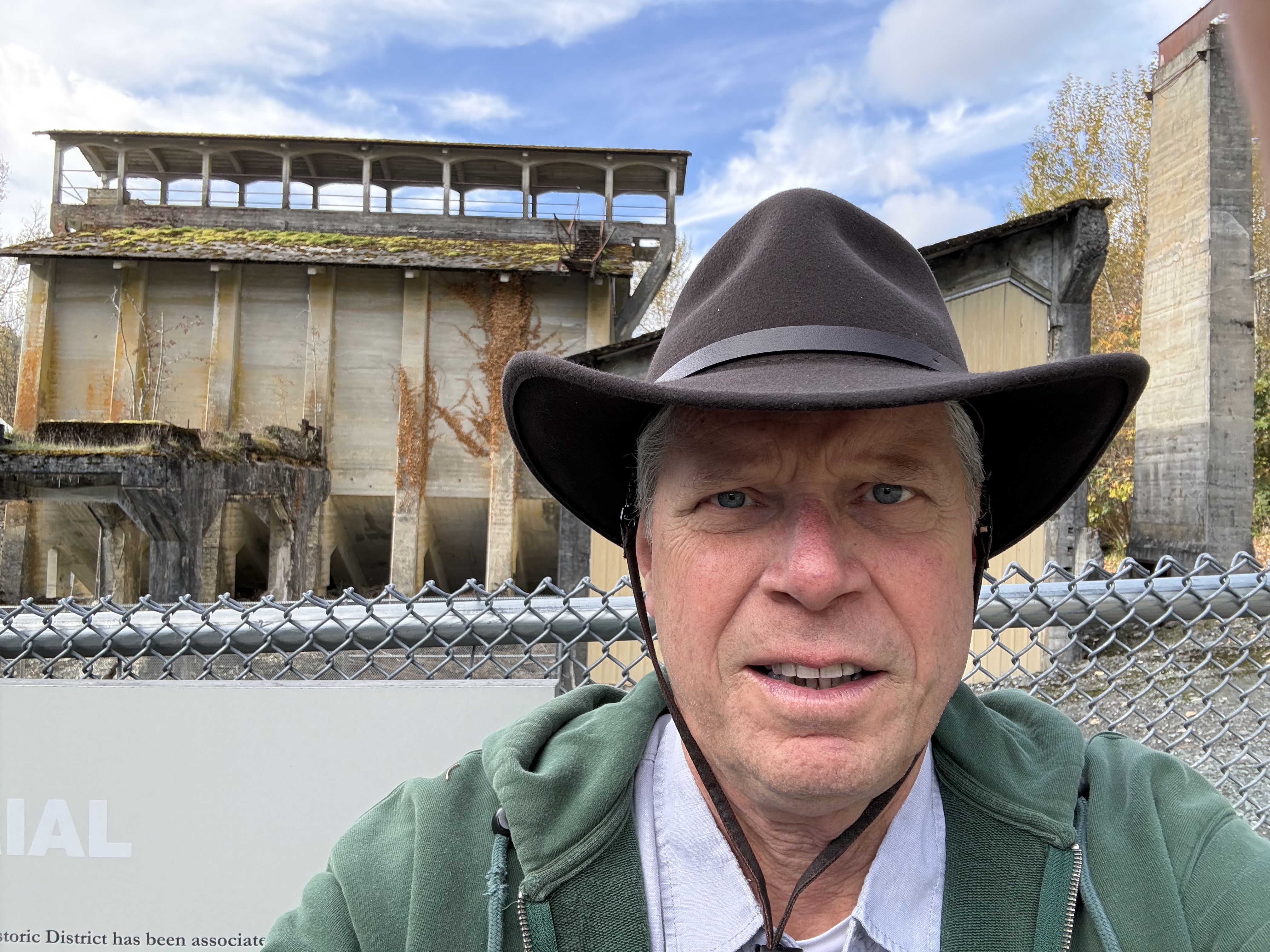
A guidebook led us to a small town named Concrete. You can guess what its main industry was.
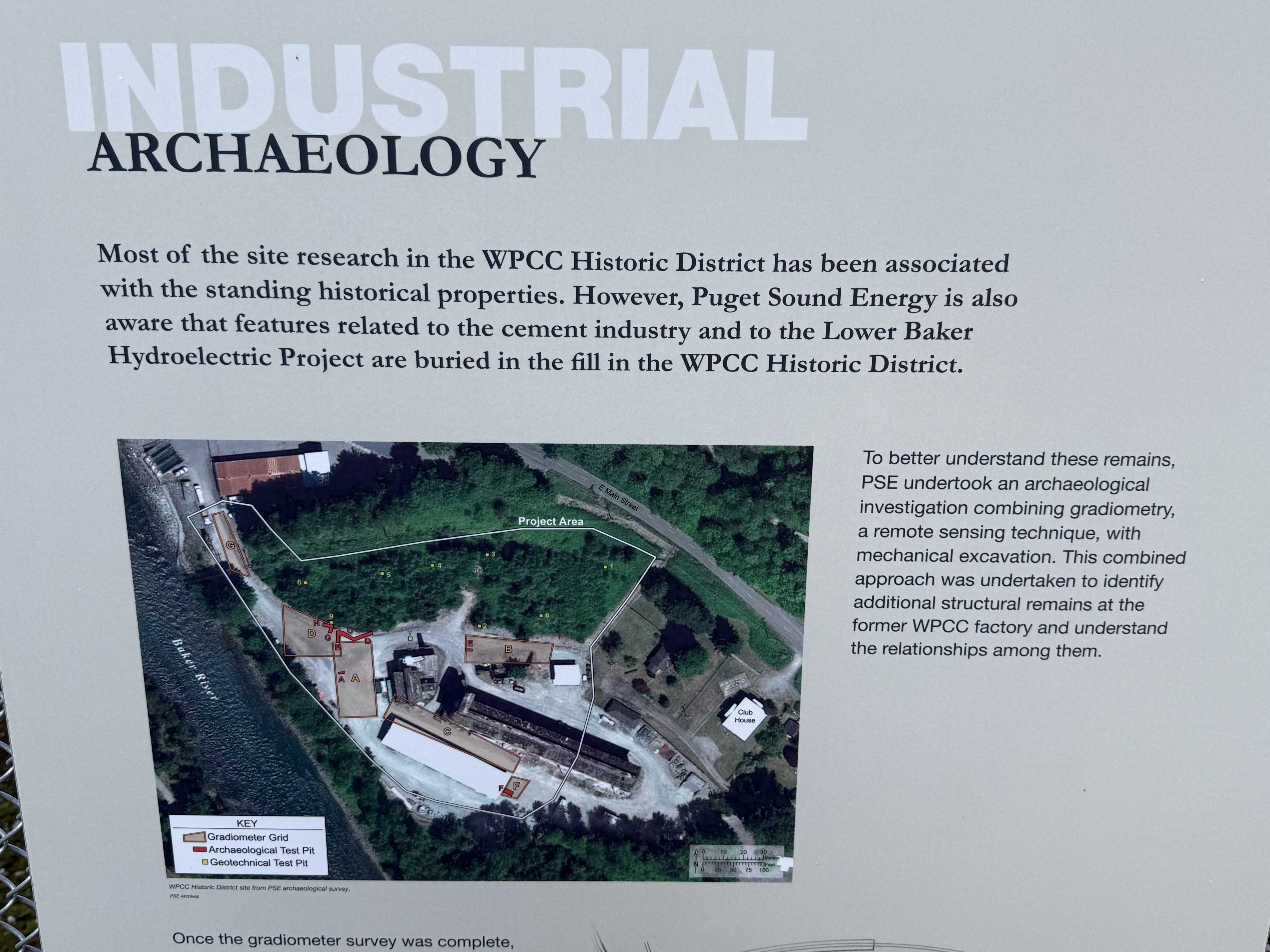
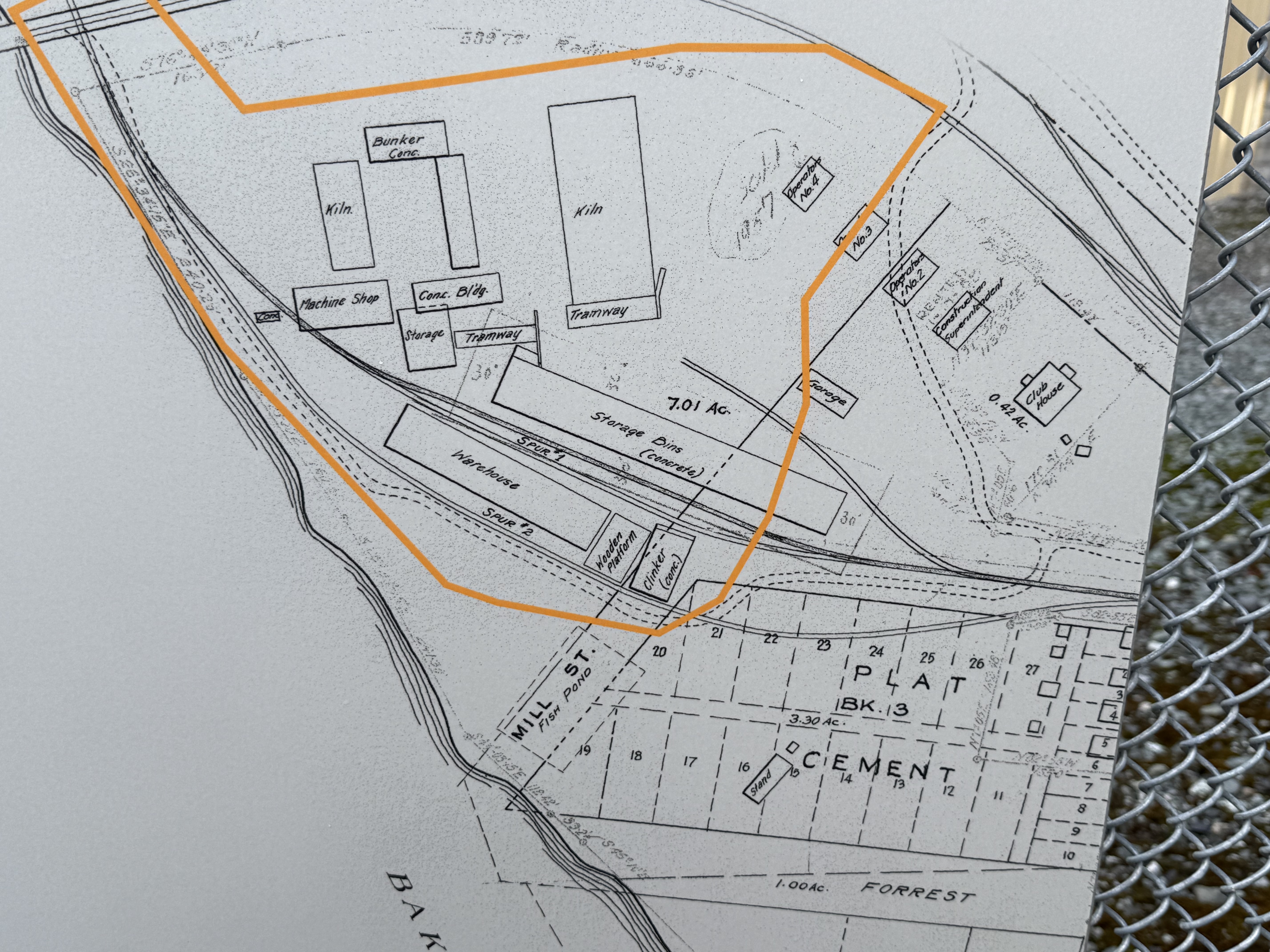
This was a concrete manufacturing plant built by the Washington Portland Cement Company (WPCC) in 1914. The company built a town to house the workers and stayed in business for ten years. The property was then purchased by Puget Sound Energy (PSE) and converted to a hydroelectric power generation facility.
The new owners recently began the archeological work.
Industrial archeologists have begun field work to reconstruct life in a company town more than a century ago.
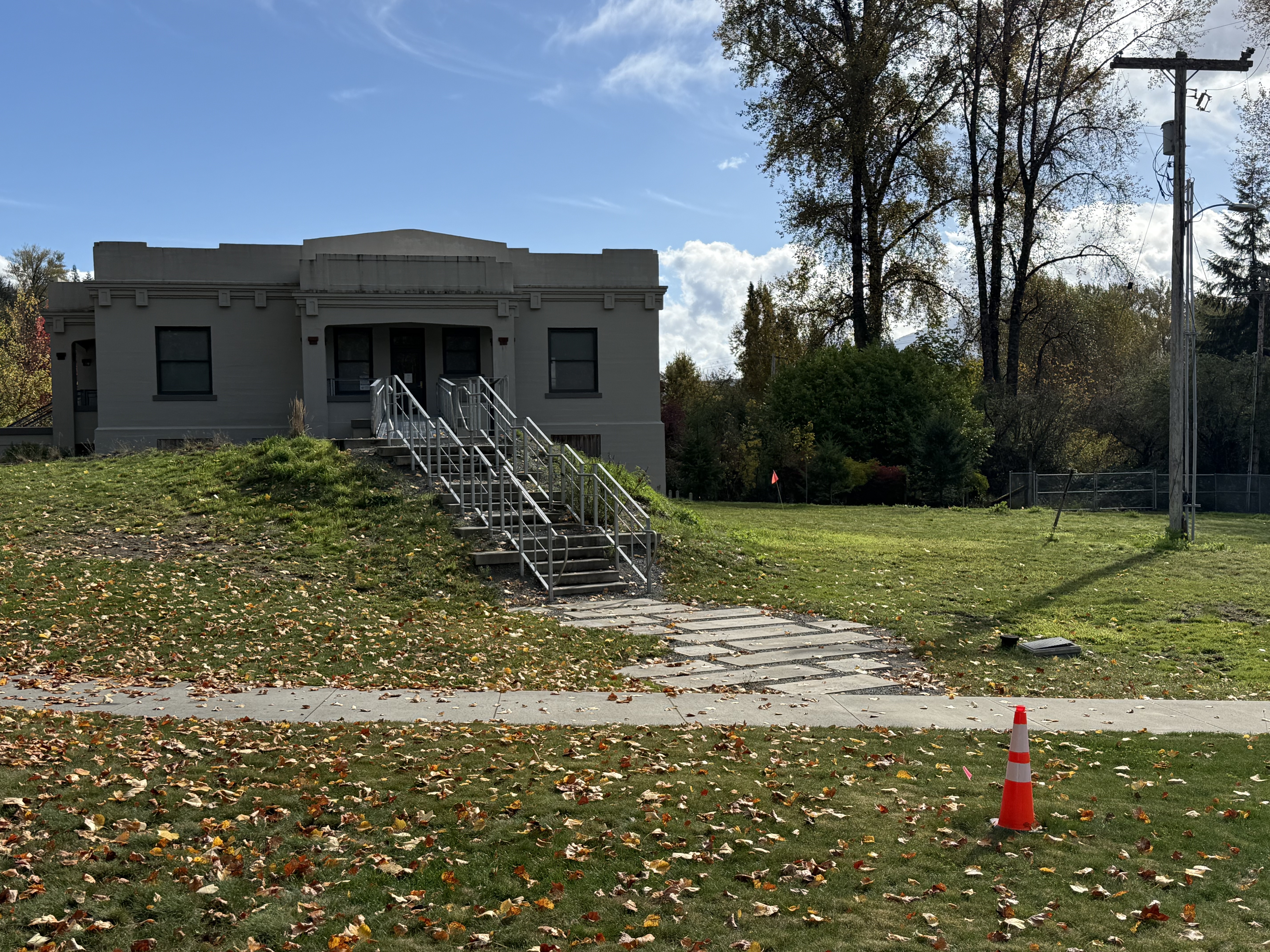
The site has rest rooms and picnic tables, and a small visitor center housed in what was once a lab of some kind. However, the museum and rest rooms were closed for winter.
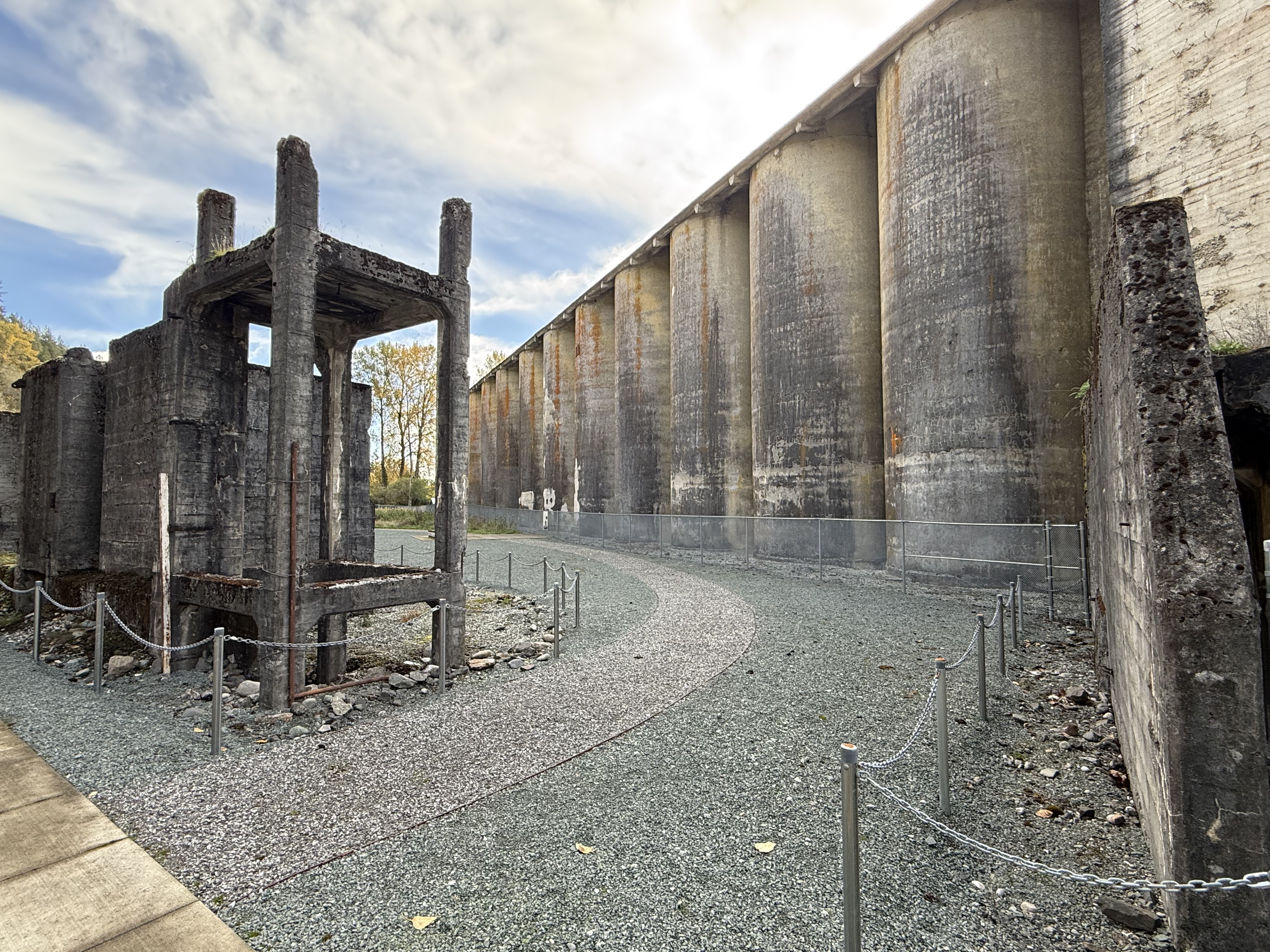
This view shows part of the tramway used to move hot concrete pellets from the kiln, which is gone but was to the left of the concrete structure to the left of the photo. The concrete silos were filled with–you guessed it–Portland cement by a screw device on top of them, which is apparently still installed but not open to the public.
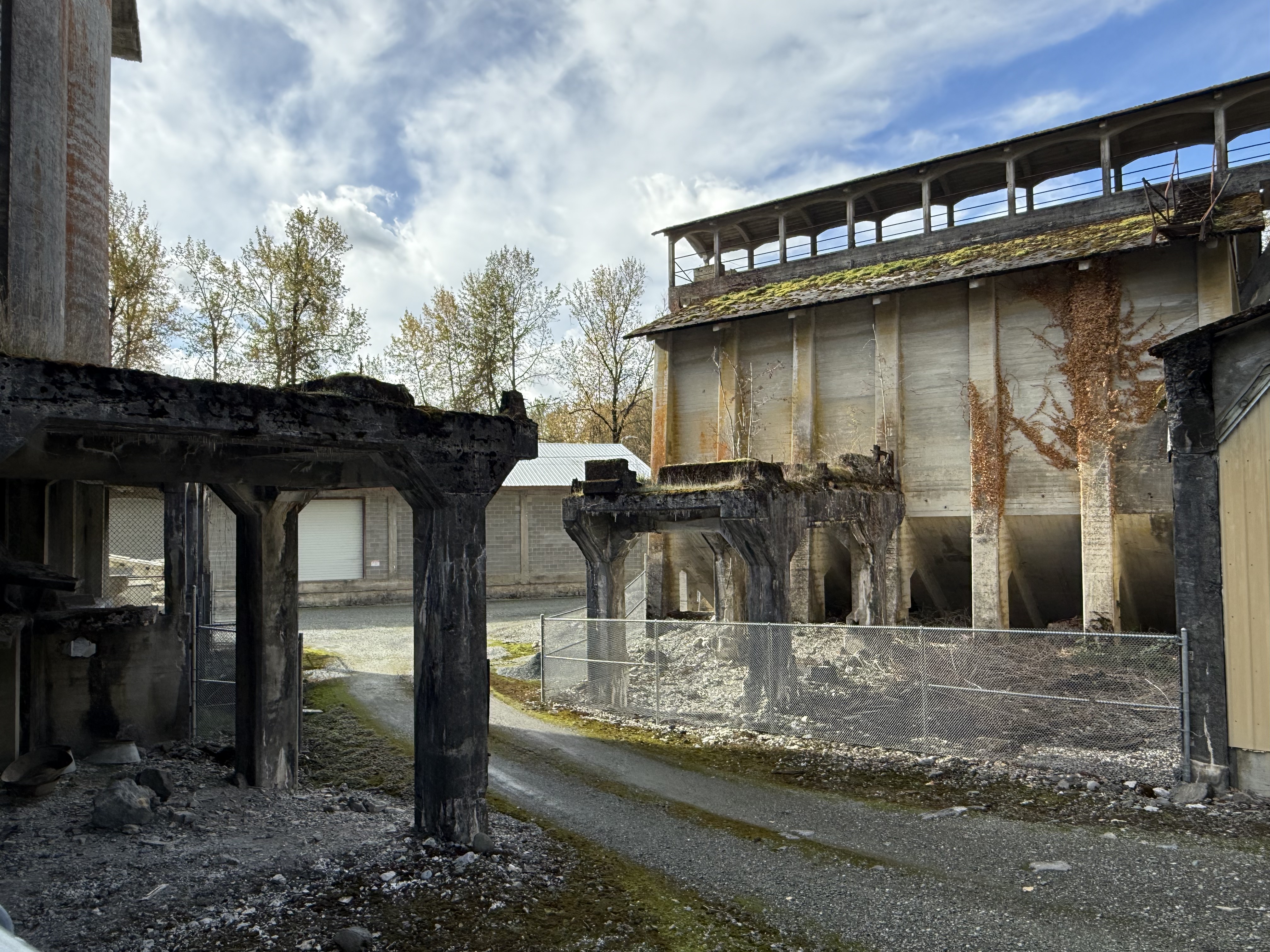
This building was connected by the tramway but the signage doesn’t explain everything yet; this is a scientific investigation in progress. After what I’ve seen around the area, I am not surprised at all by PSE taking an interest in such a humble project.
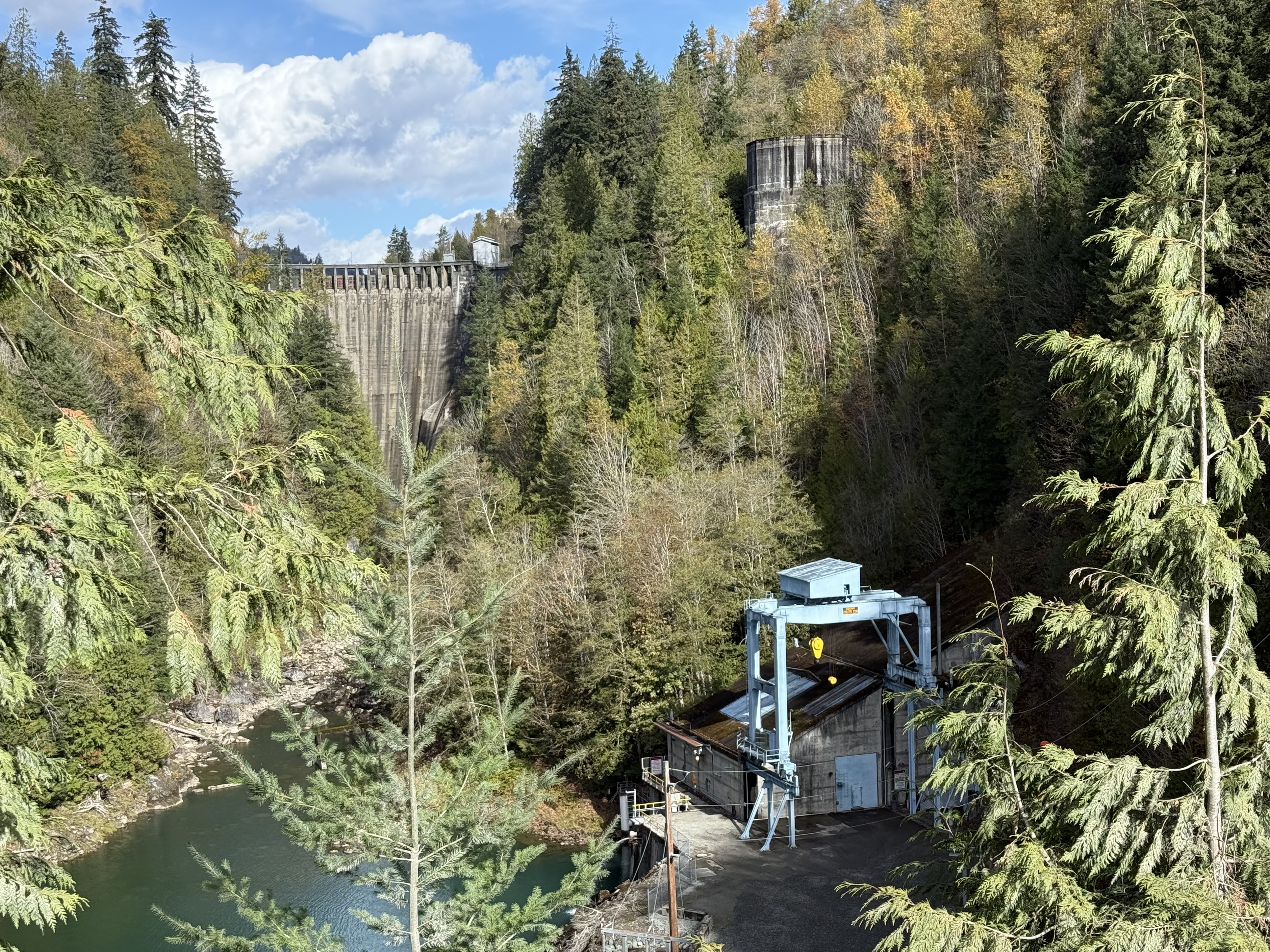
PSE constructed this dam on Baker River. I think the building is the original generator house, but they haven’t installed detailed signs yet. There is a new facility just downstream that appears to be using the original plumbing. The transmission lines are on top of the hill, where this photo was taken, but I don’t know if this antique is still operating; there were several power lines leading down to it however. Hydroelectric generators last for decades, but this one would have been inefficient and probably not very useful today.
But you never know…
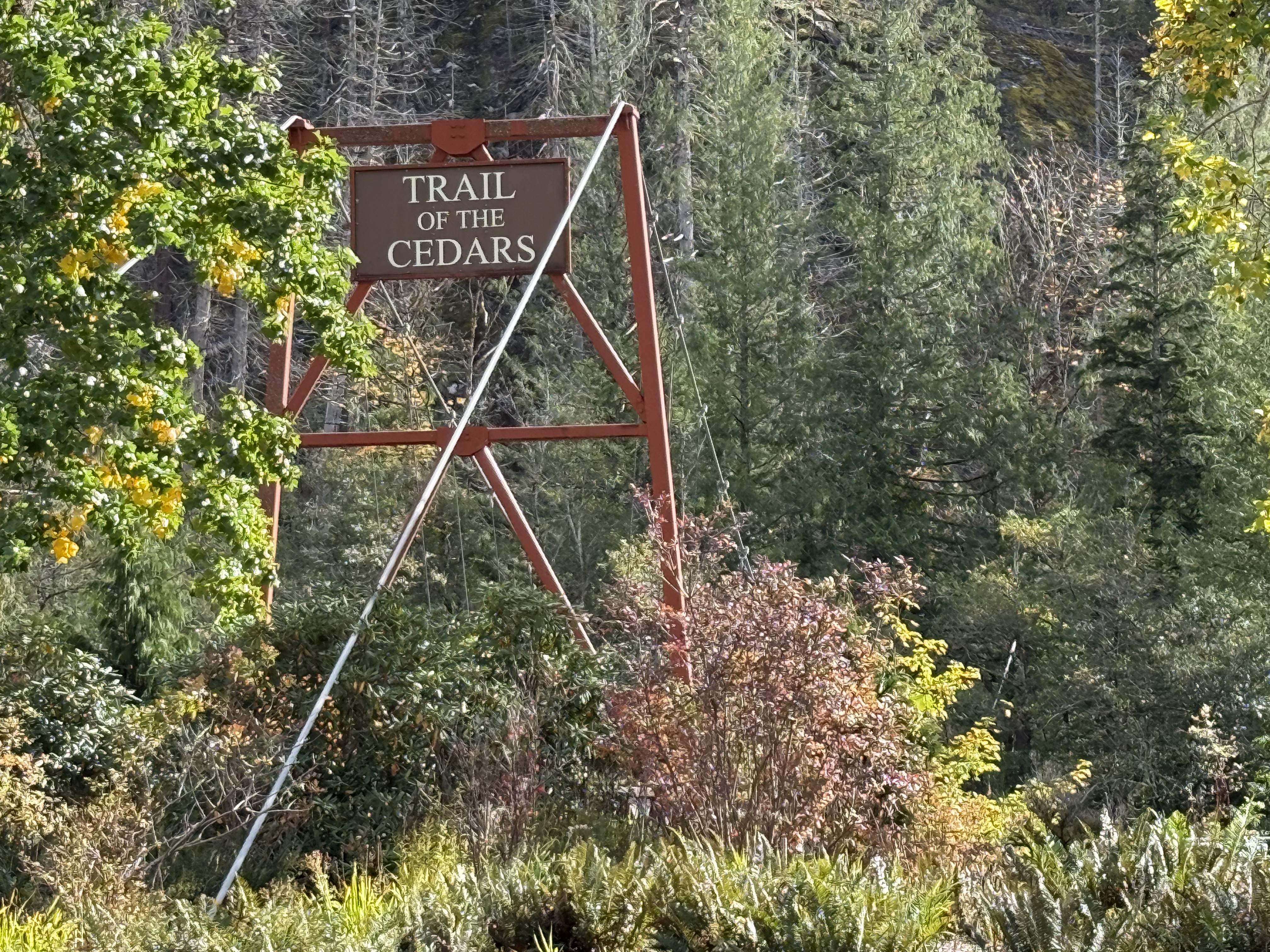
The National Park Service visitor center was closed for winter, but PSE had a small facility located a few miles further up Hwy 20. We stopped to stretch our legs and discovered a pedestrian suspension bridge crossing the Skagit River … and guess where the trail led.
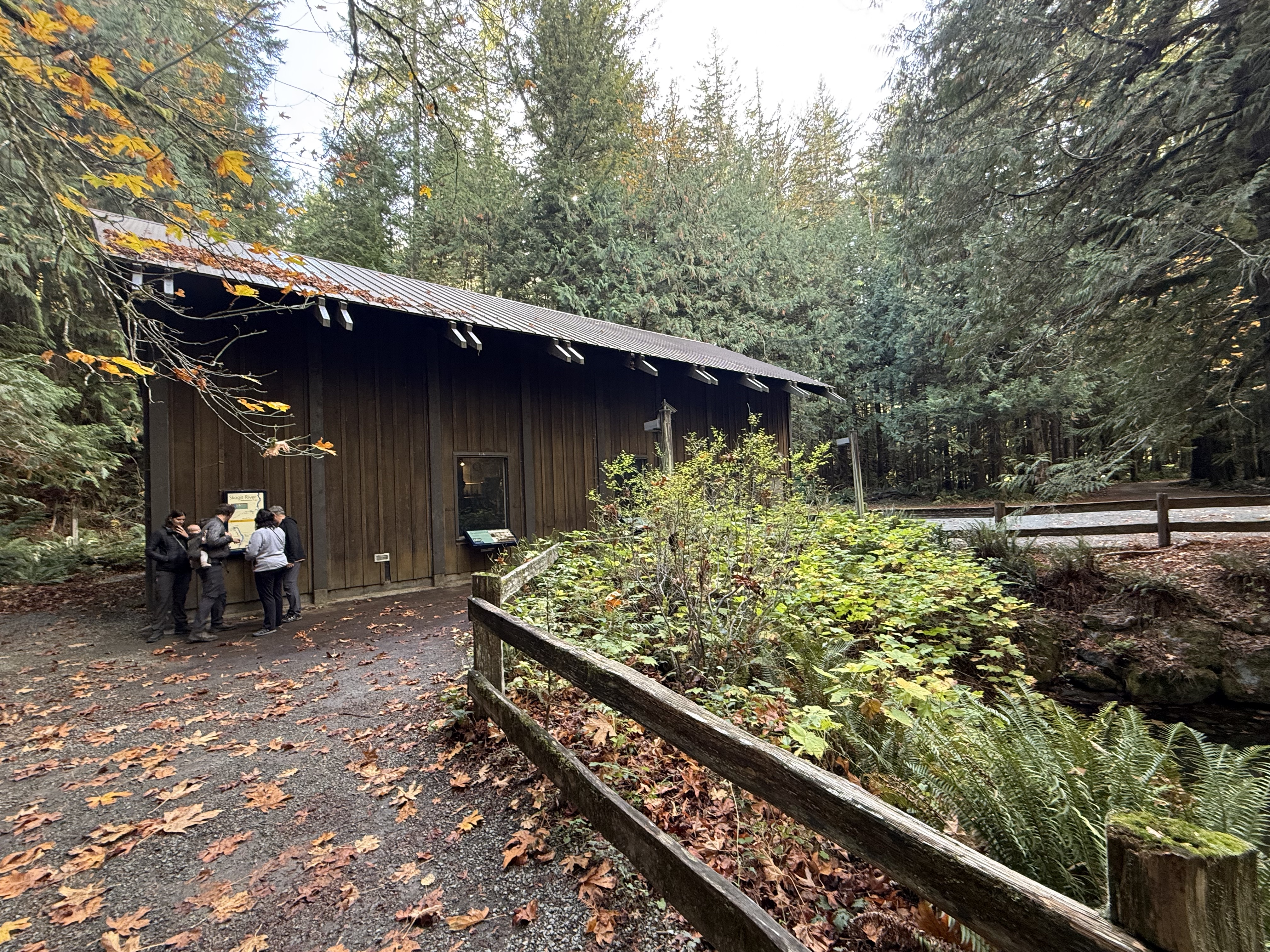
About a half-mile walk led to a hydroelectric generation facility that was in use until recently. It was used to power a sawmill. Two water turbines/generators can be viewed through the window in the middle of the building, but they weren’t spinning and no water was flowing through the output spillway to the right.
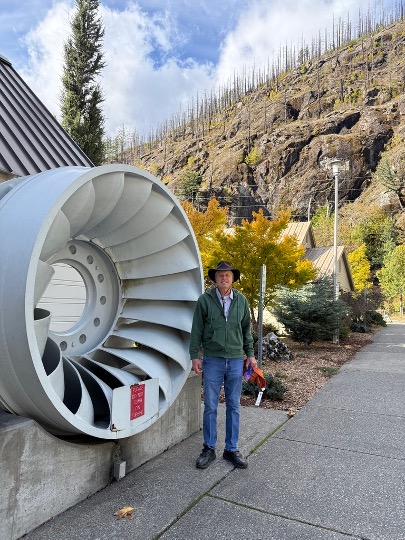
This is one of the turbines that ran the generator.
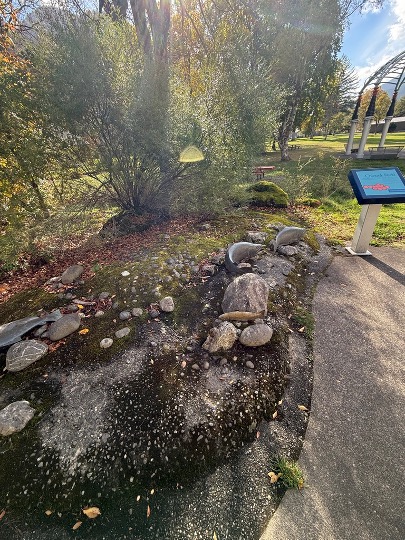
PSE maintains a small sculpture garden that includes this representation of a salmon nest in a stream bed. In the background, you can see the edge of an arch built of electric insulators from the power station.
Final Thoughts
Industrial archeology wasn’t the principal reason for our journey through the Northern Cascades, but it was a welcome and rewarding addition to a great fall weekend in the Pacific Northwest.
Wing Luke Museum: A Guided Tour of an Immigrant Hotel
Wing Luke was a pioneering Chinese American lawyer, civil rights advocate, and the first Asian American elected to public office in Washington State. When he died in a small aircraft accident in 1965, the community formed the Wing Luke Museum in his honor. It celebrates Asian-American history and culture, and owns a hotel it purchased to display the lives of early immigrants.
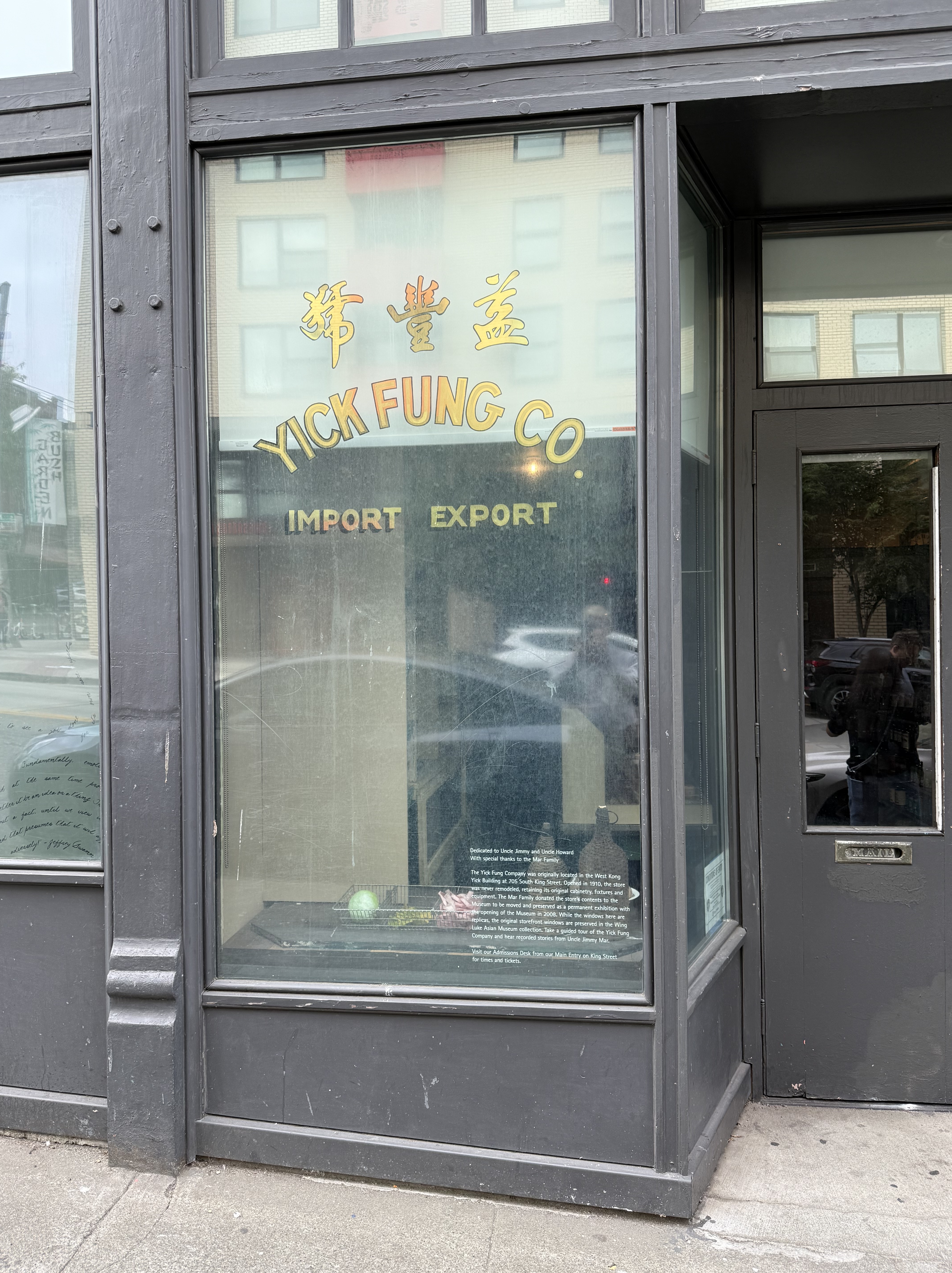
The Yick Fung Corporation was formed by a group of Chinese immigrants because they were legally forbidden from owning property in Washington. This store served as a supplier to restaurants throughout Washington.
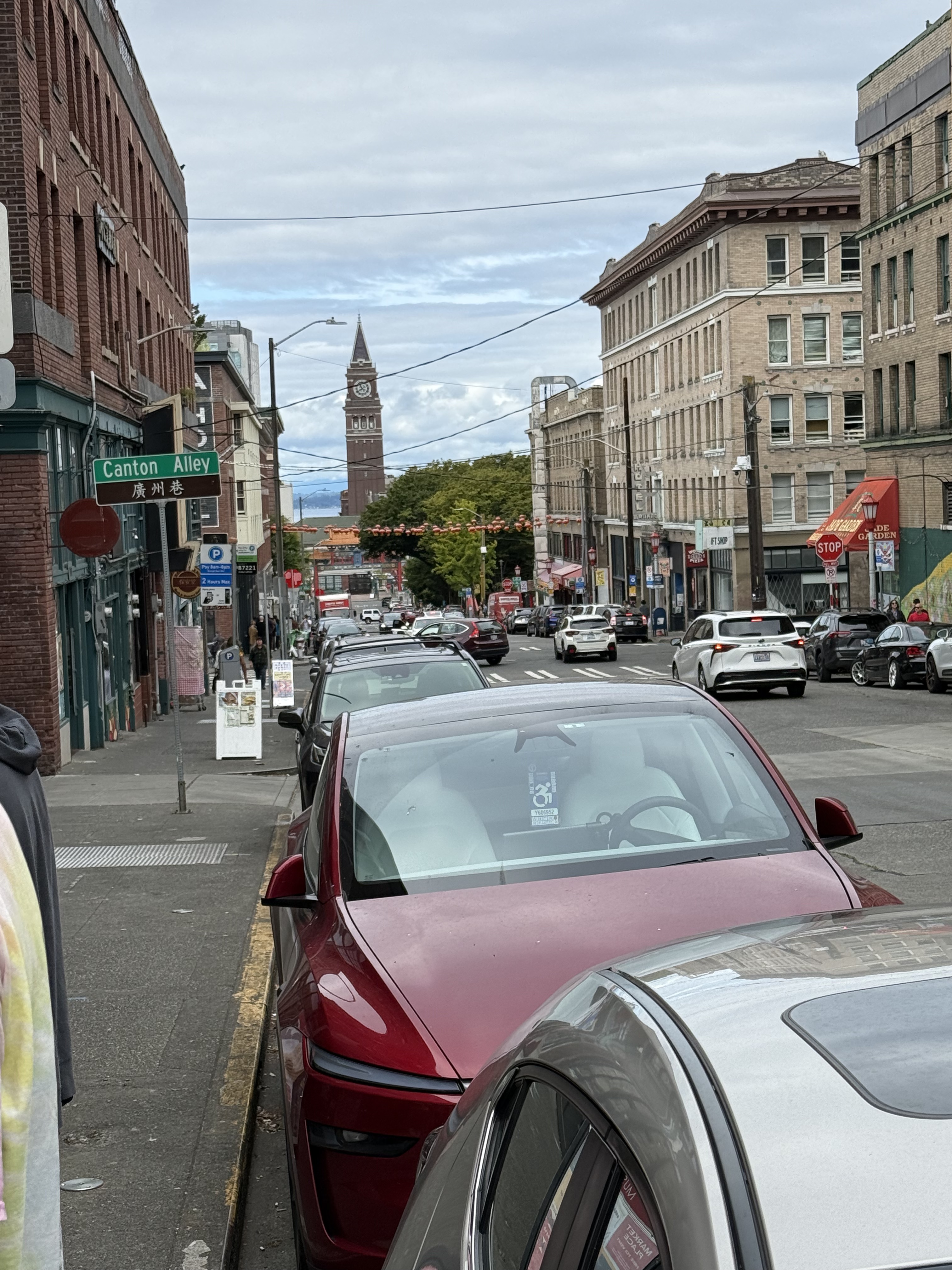
South Weller Street led directly to the tidal flats where the church steeple stands today. As part of a downtown reshaping, several hills were flattened and the soil used to fill in the nearshore area.
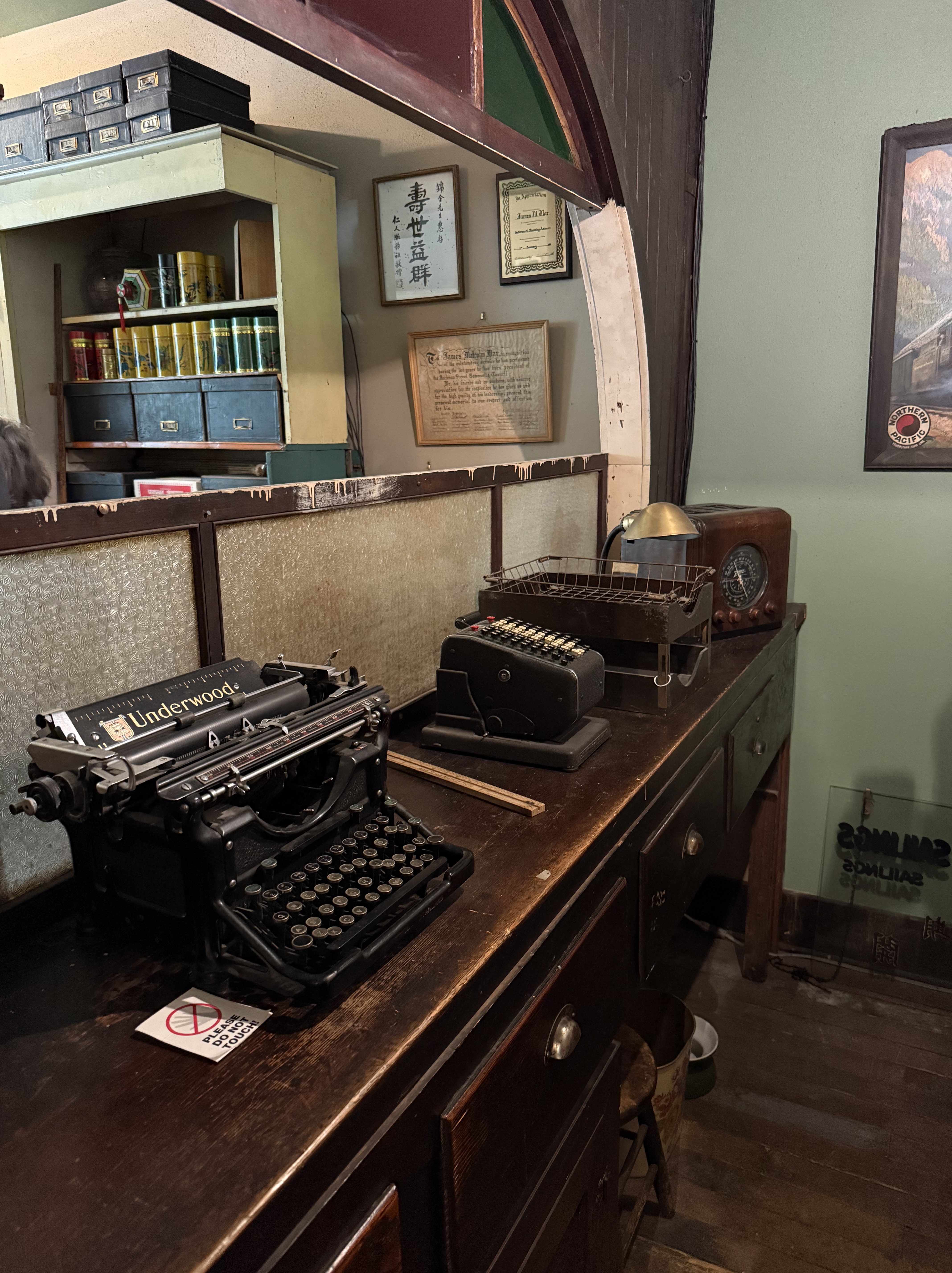
In addition to supplying regional restaurants, you could buy a third-class ticket to Hong Kong (or maybe Shanghai) for $1500 in today’s money. The store remained open until 2008.
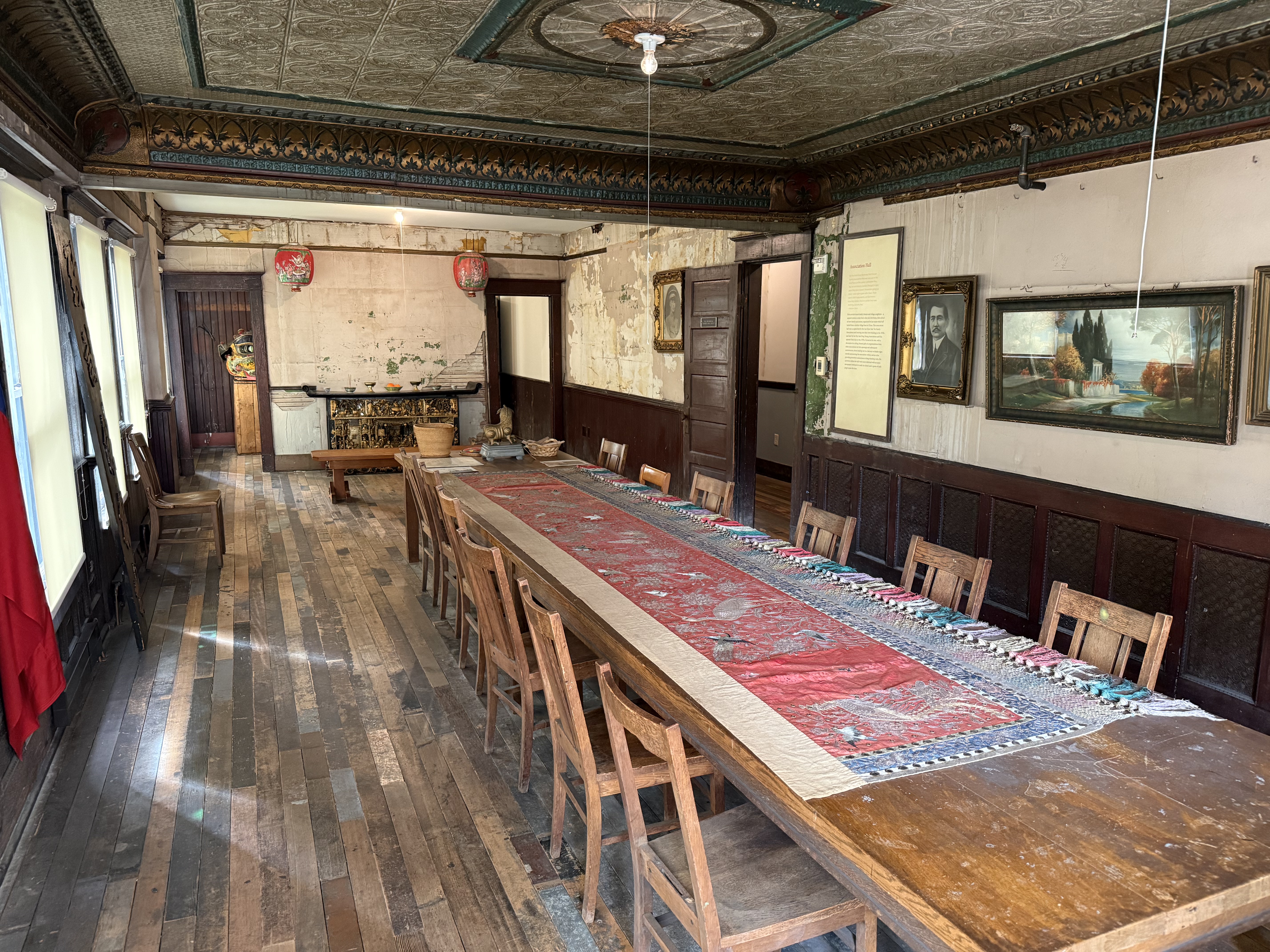
To circumvent some of the financial restrictions, the Chinese immigrants formed associations of people from the same villages back in China. This is the meeting room of one such group. They assisted newcomers and planned civic activities. It was kind of like the YMCA.
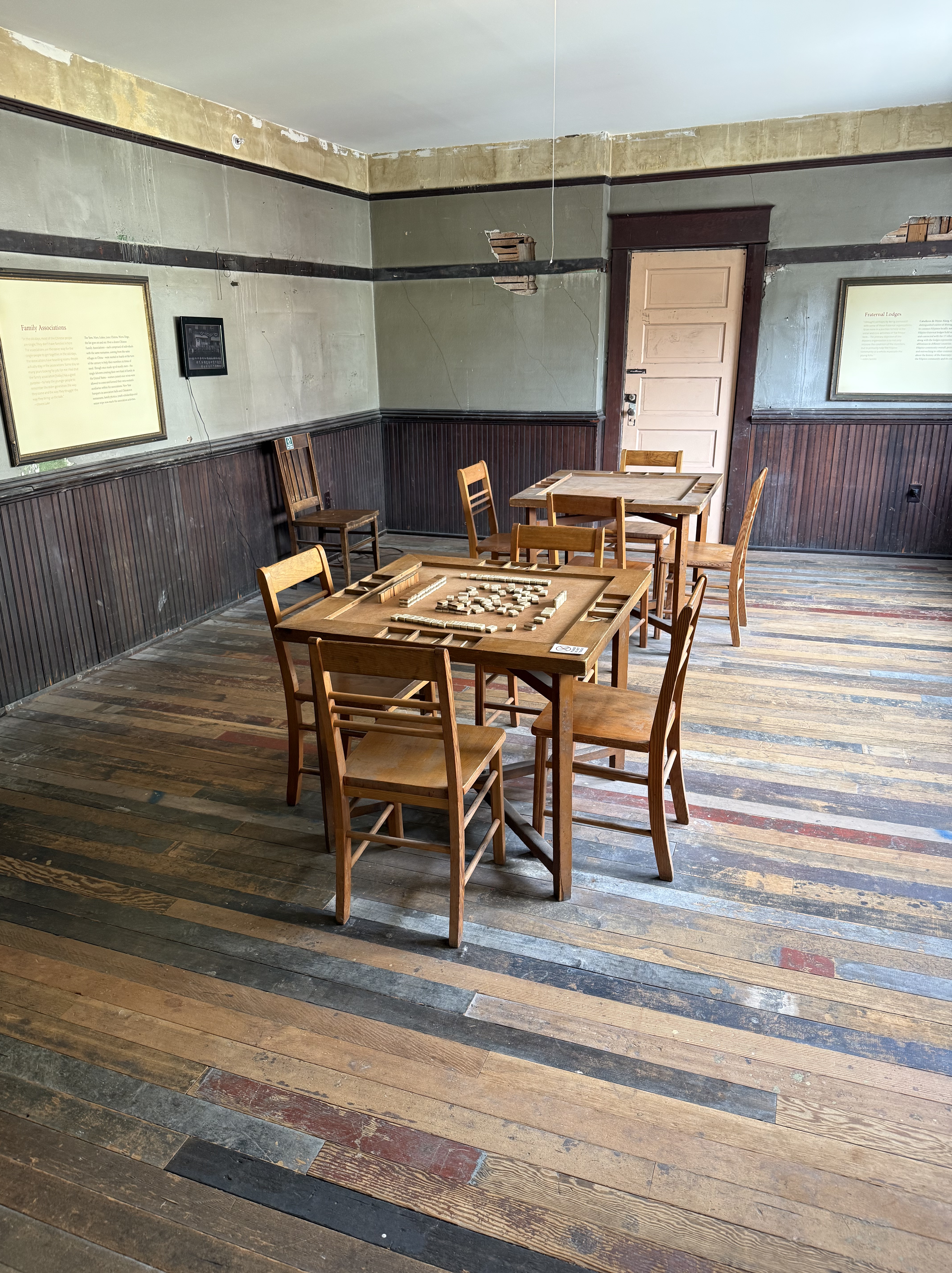
This is the game room, where people played mahjong and other games.
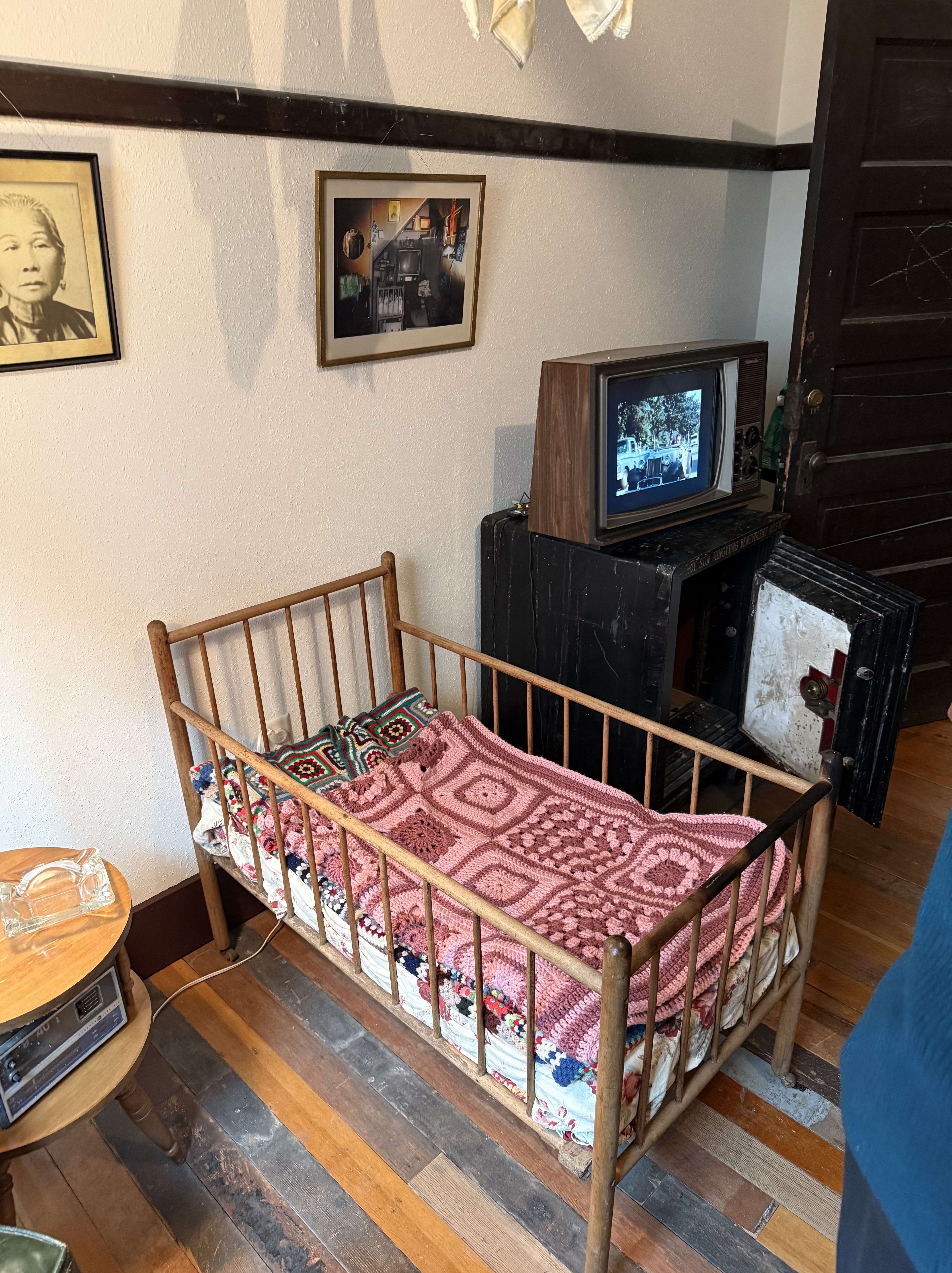
The hotel contained about 180 apartments, but some of them had up to three rooms. This was the home of a family with eight children. The hotel remained a center of immigrants until it was closed in 1974 because of updated fire codes (after the deaths of twenty or so inhabitants in about 1972). The Wing Luke Museum purchased it and is renovating it as part of the display.
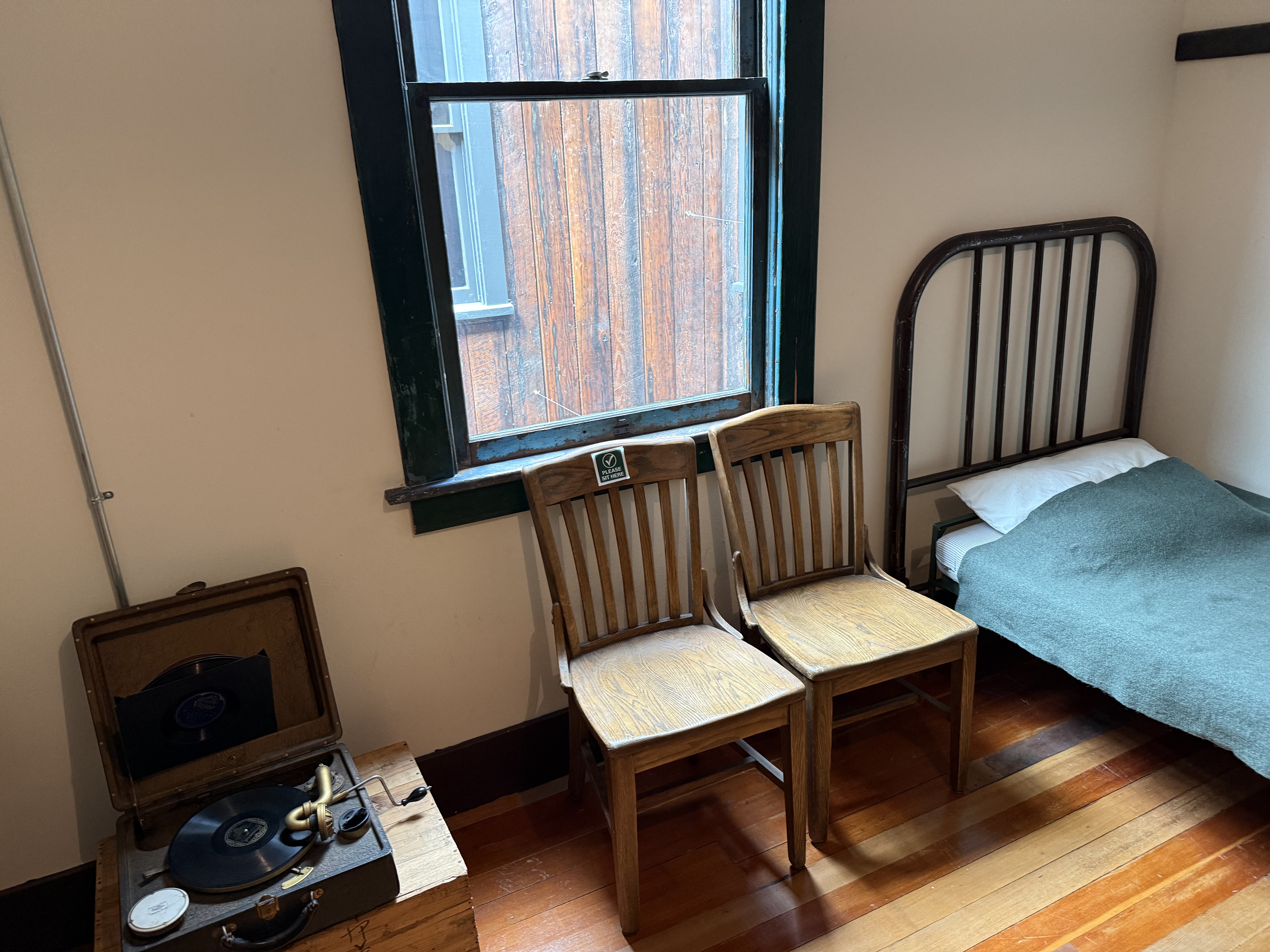
Every room was required to have a door and window. Most of the rooms were small. That is the light shaft out the window; it didn’t lead anywhere and only extended to the second floor, just for light and air.
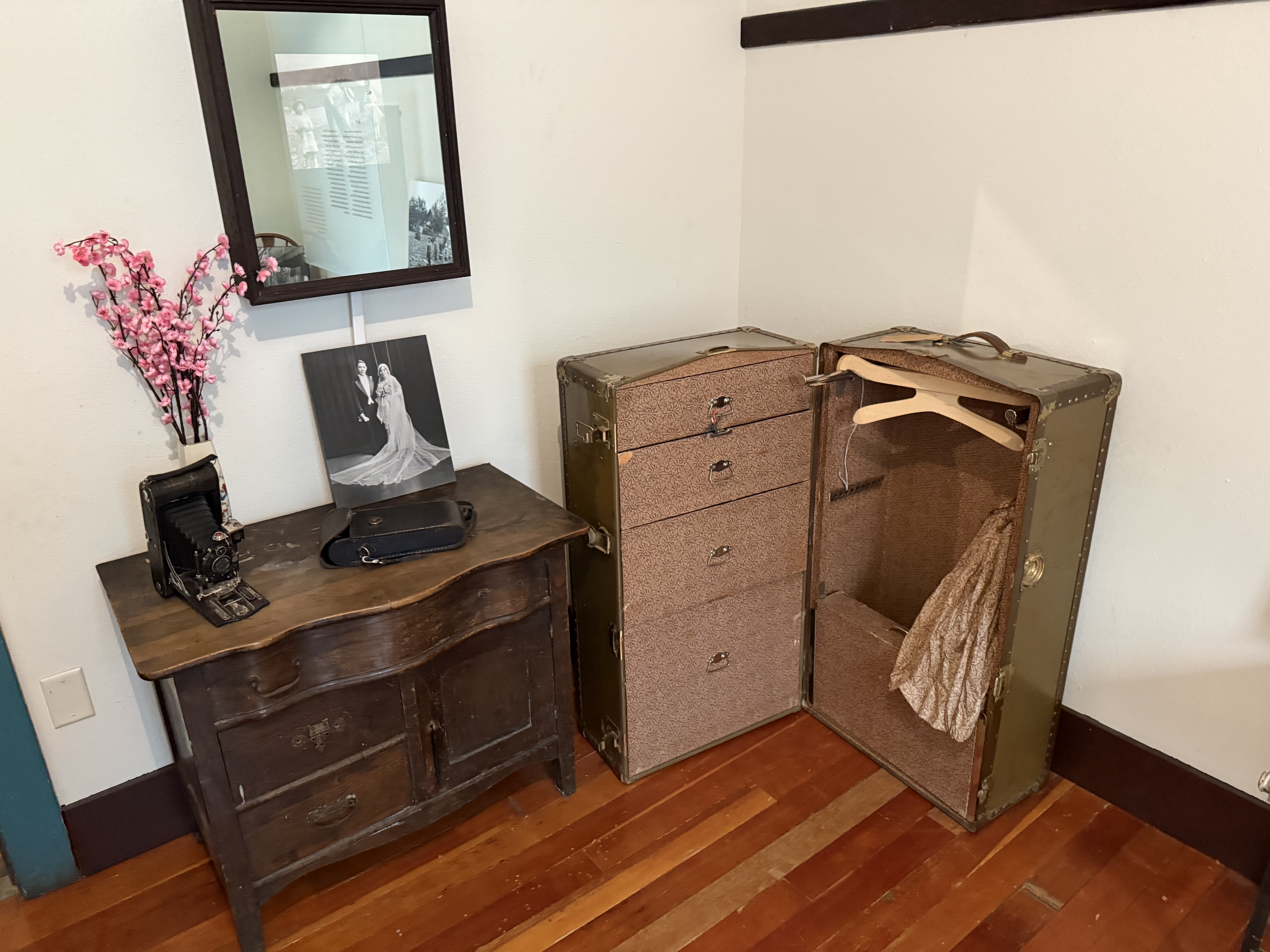
Living out of your suitcase?
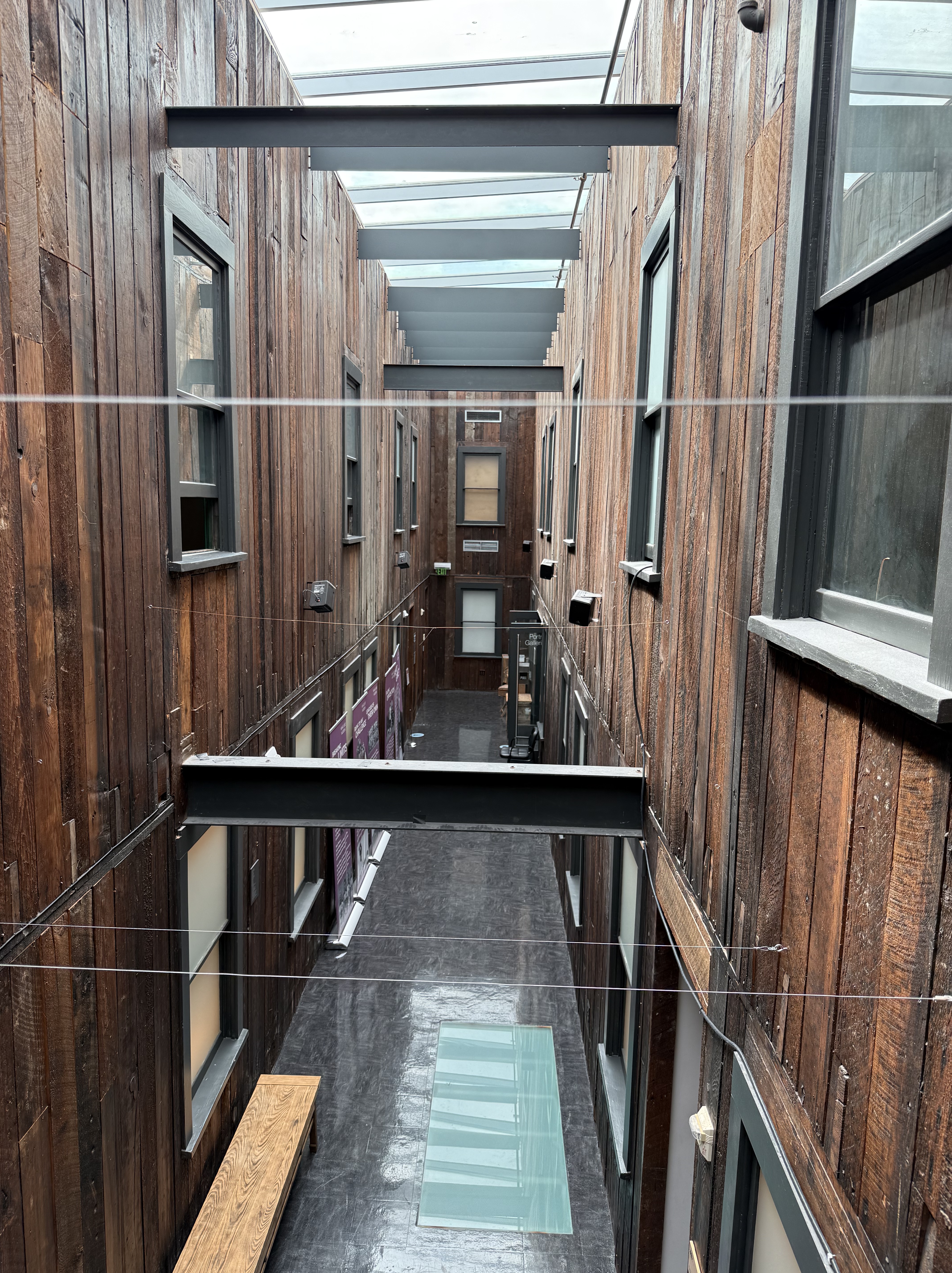
Here’s the light shaft. During reconstruction the building was modified and reinforced.
The museum also had exhibits displaying artwork and pictorial histories of many Asian immigrants, including Hawaiians. Overall, it was very interesting and worth the price of admission. I think it was $22 for a senior like me.
Sights around Lake Washington
It promised to be a beautiful day, so we decided to take a look at Lake Washington, just east of Seattle. This elongate water body was carved by glaciers between 19 and 16 thousand years ago. It was part of Puget Sound until about 5700 years ago, when river sediment isolated it from the sea, allowing it to become fresh water. The original outlet at the southern end wasn’t good enough for early American settlers, so they got approval from Congress to construct a canal with locks to connect Lake Washington to Puget Sound, a drop of 20 feet in elevation. As fans of technological progress, we wanted to see this for ourselves.
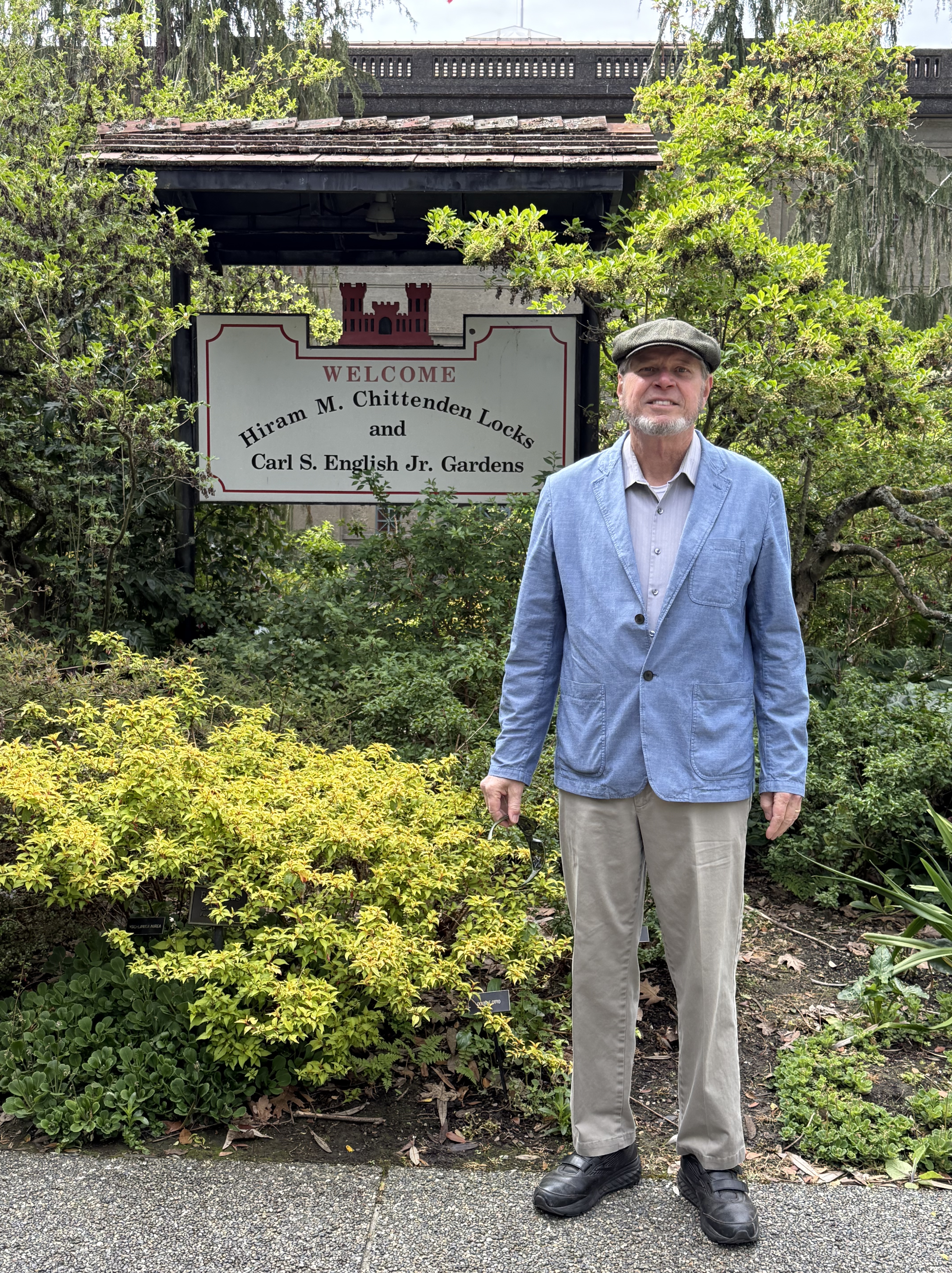
The Army Corps of Engineers began construction of a set of locks in 1911, under the supervision of Hiram M. Chittenden. As the sign proclaims, his name remains associated with them; however, they are more commonly known as the Ballard Locks after the city where they were built. The site includes a number of stone-faced buildings and has since come to include a botanical garden.
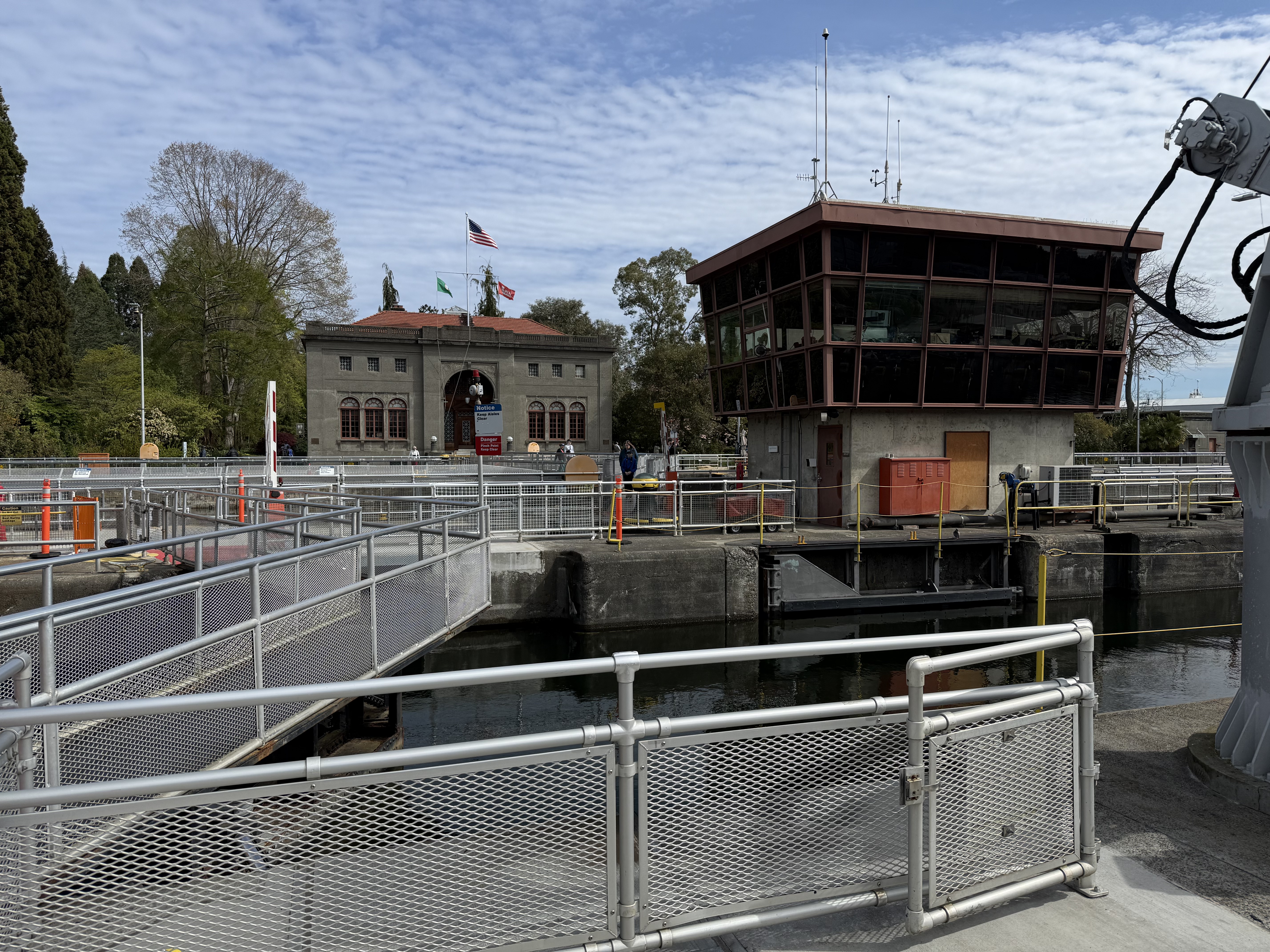
There are two locks, one for larger, commercial vessels (on the other side of the control building) and a smaller lock. The larger one has two sets of gates to accommodate barges.
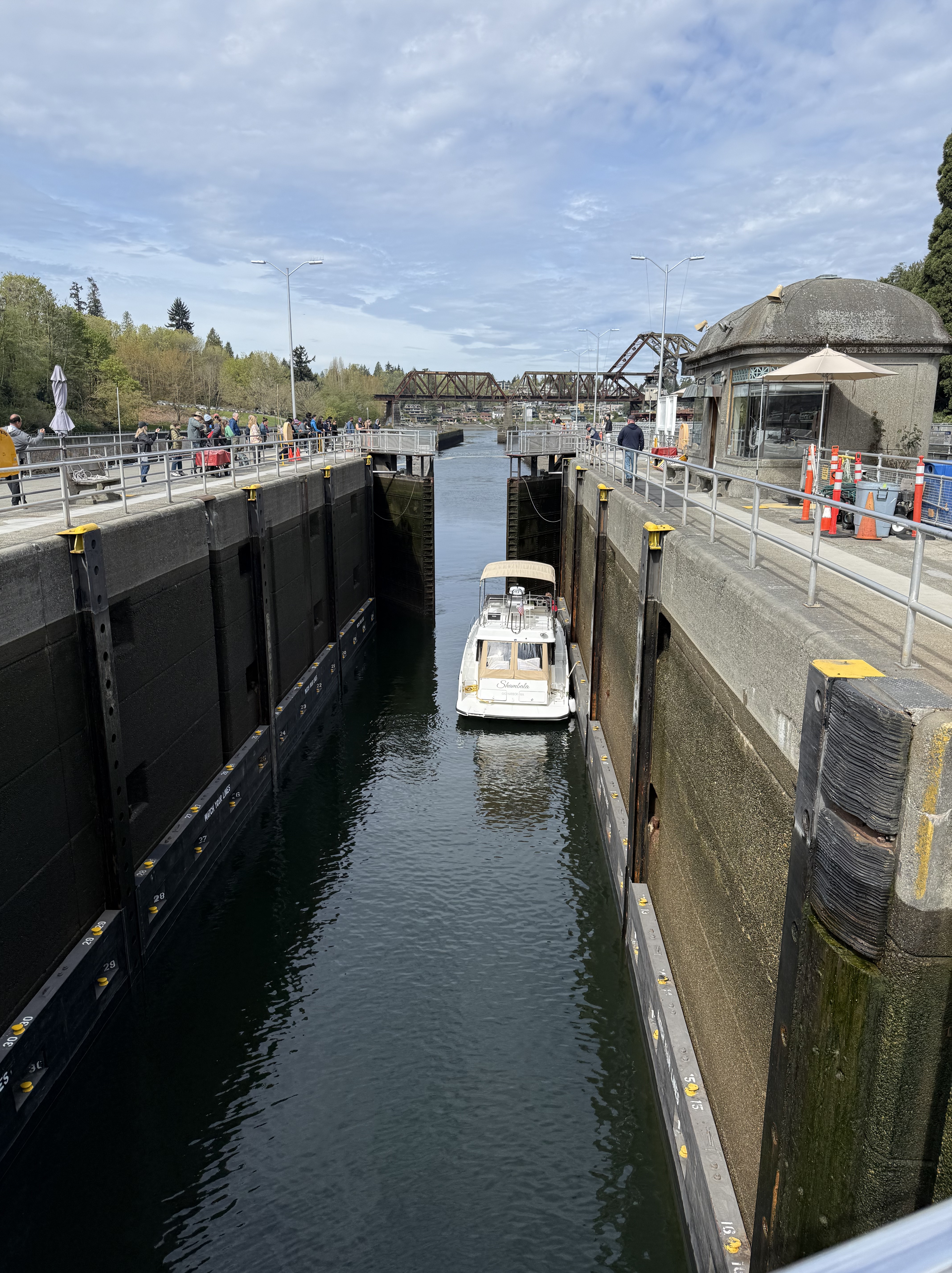
Several private boats used the lock while we were there. It takes maybe 15 minutes for the water level to equilibrate whether going upstream or downstream (towards Puget Sound).
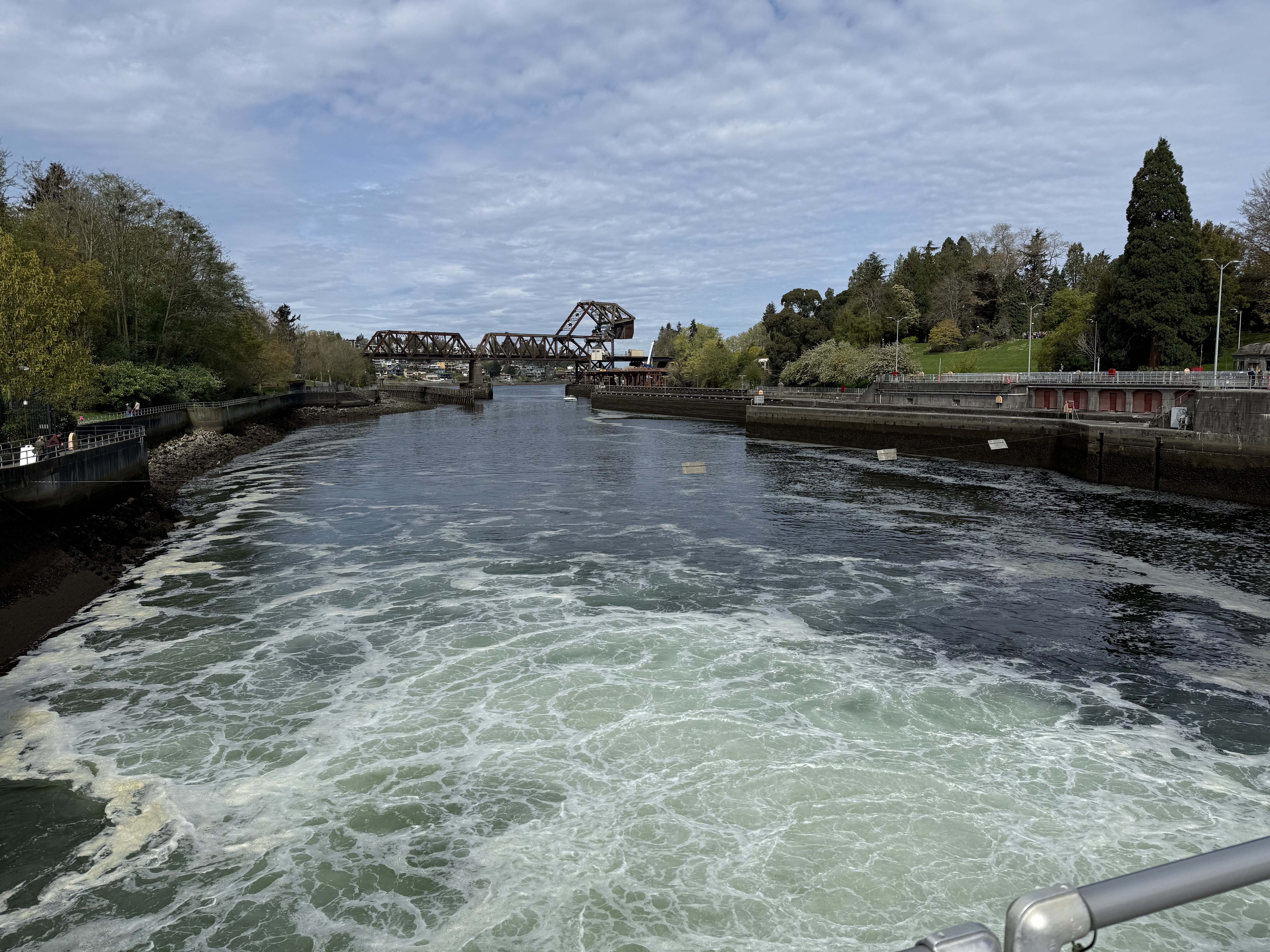
The spillway was partially open and the turbulent flow created a very dangerous scene. I wouldn’t want to fall into that water.
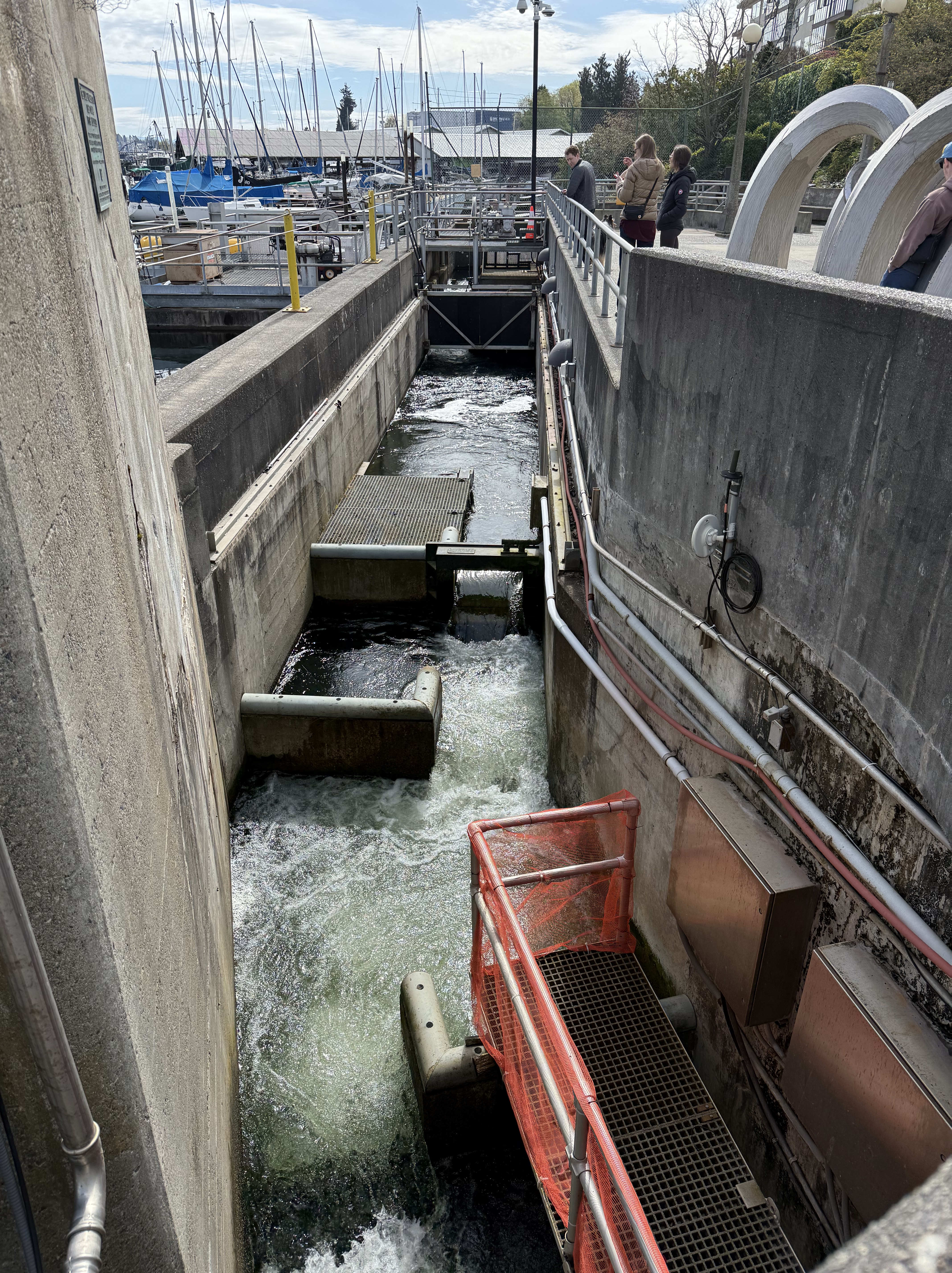
Salmon have historically swam into Lake Washington to spawn through the small river (Black River) that drained it before the ship canal was constructed. That outlet is apparently filled with sediment now and the area completely covered with development, including Boeing Aircraft’s main plant, where the Museum of Flight is located. The lock design includes a series of pools called a fish ladder that allows the salmon to get to their spawning areas. I guess they figured out the new route. There’s a viewing room to the right where the fish can be seen making their way up the ladder, but there were no fish on this day; and I forgot to take a picture.
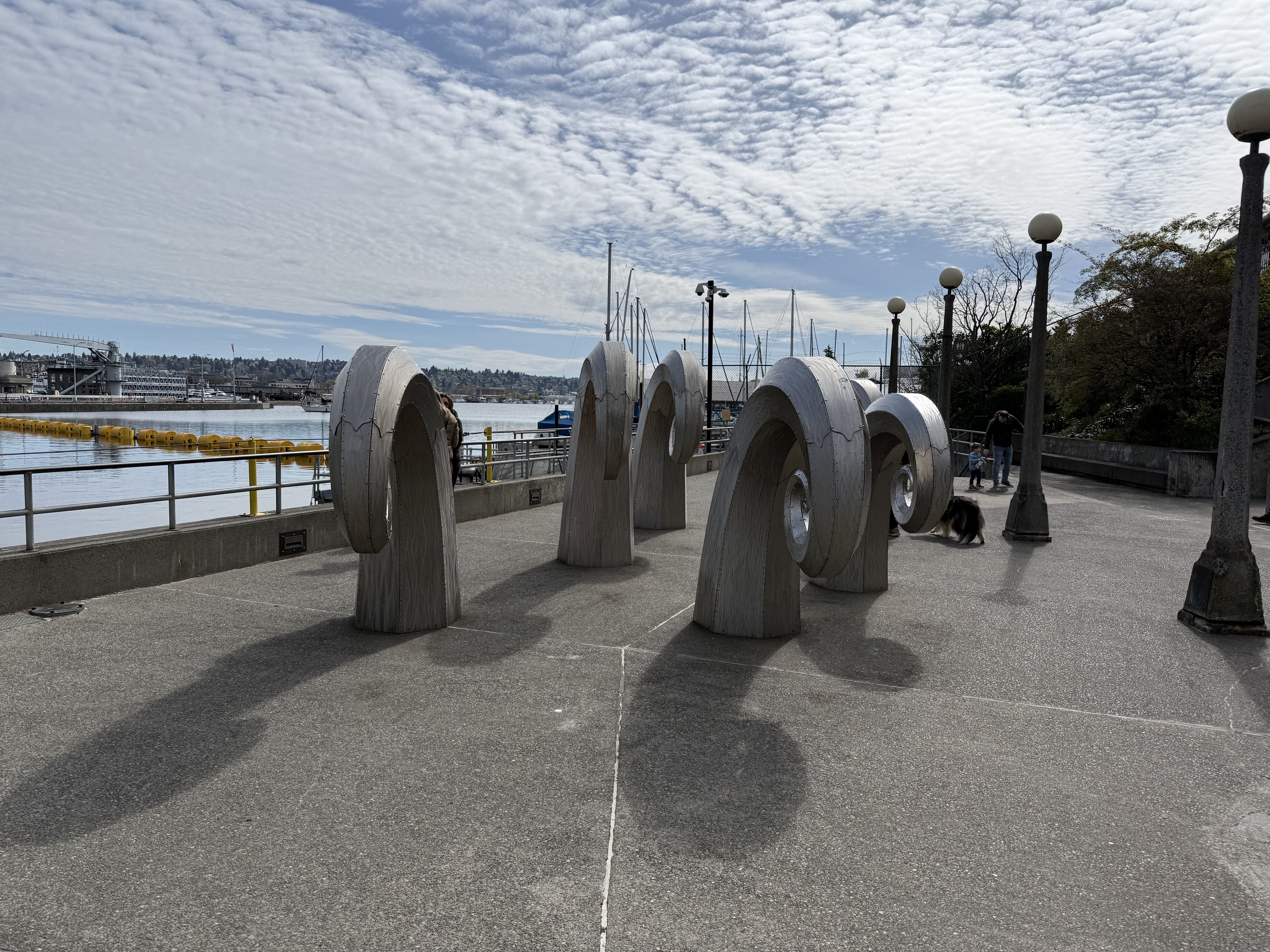
The roof of the fish ladder observation room is decorated with this unlabeled artwork.
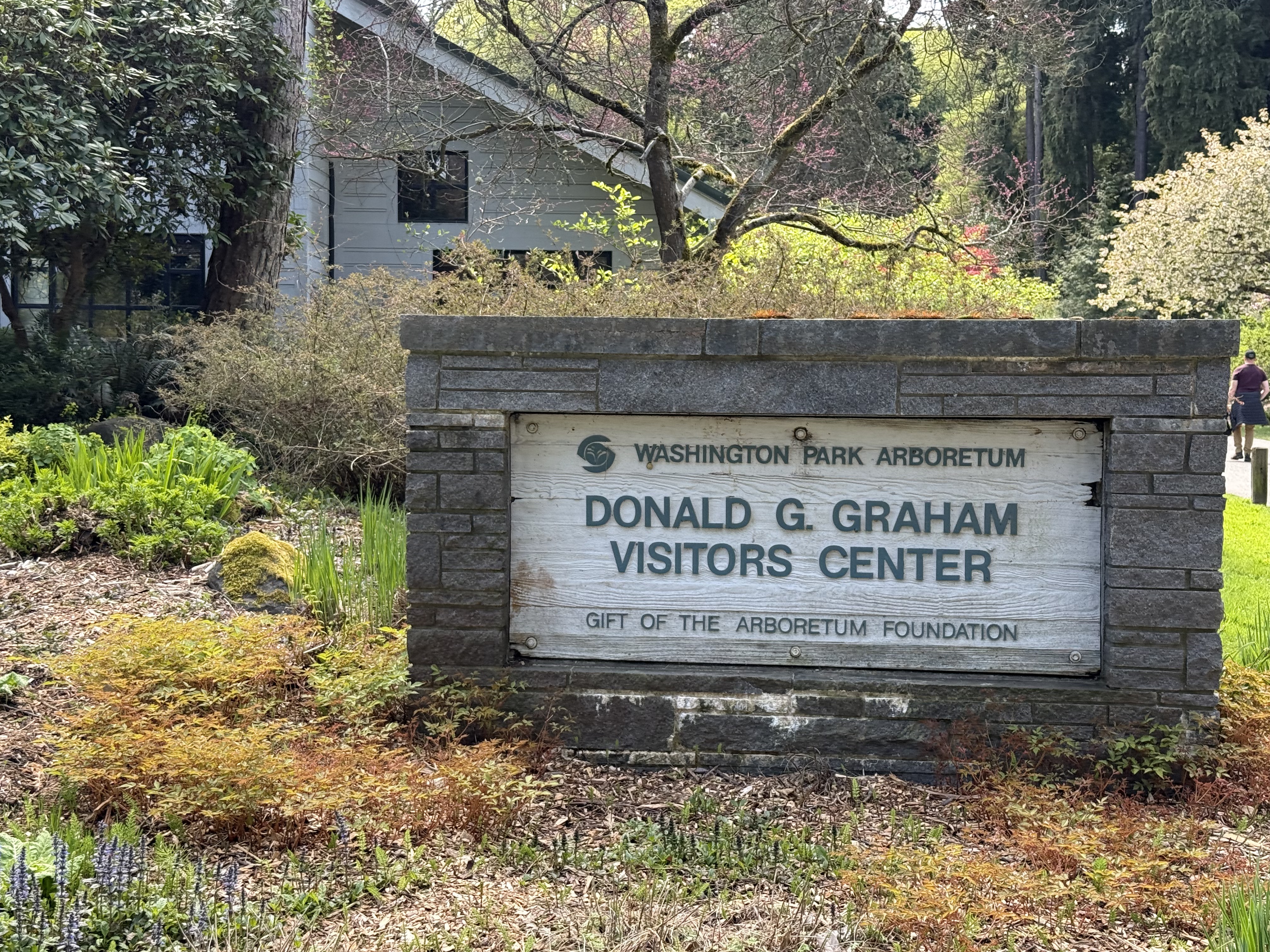
Just a short drive from Ballard Locks is Washington Park, which includes an arboretum and Japanese Garden. We took a long walk around the park but didn’t make it to the Garden, which has its own parking area.
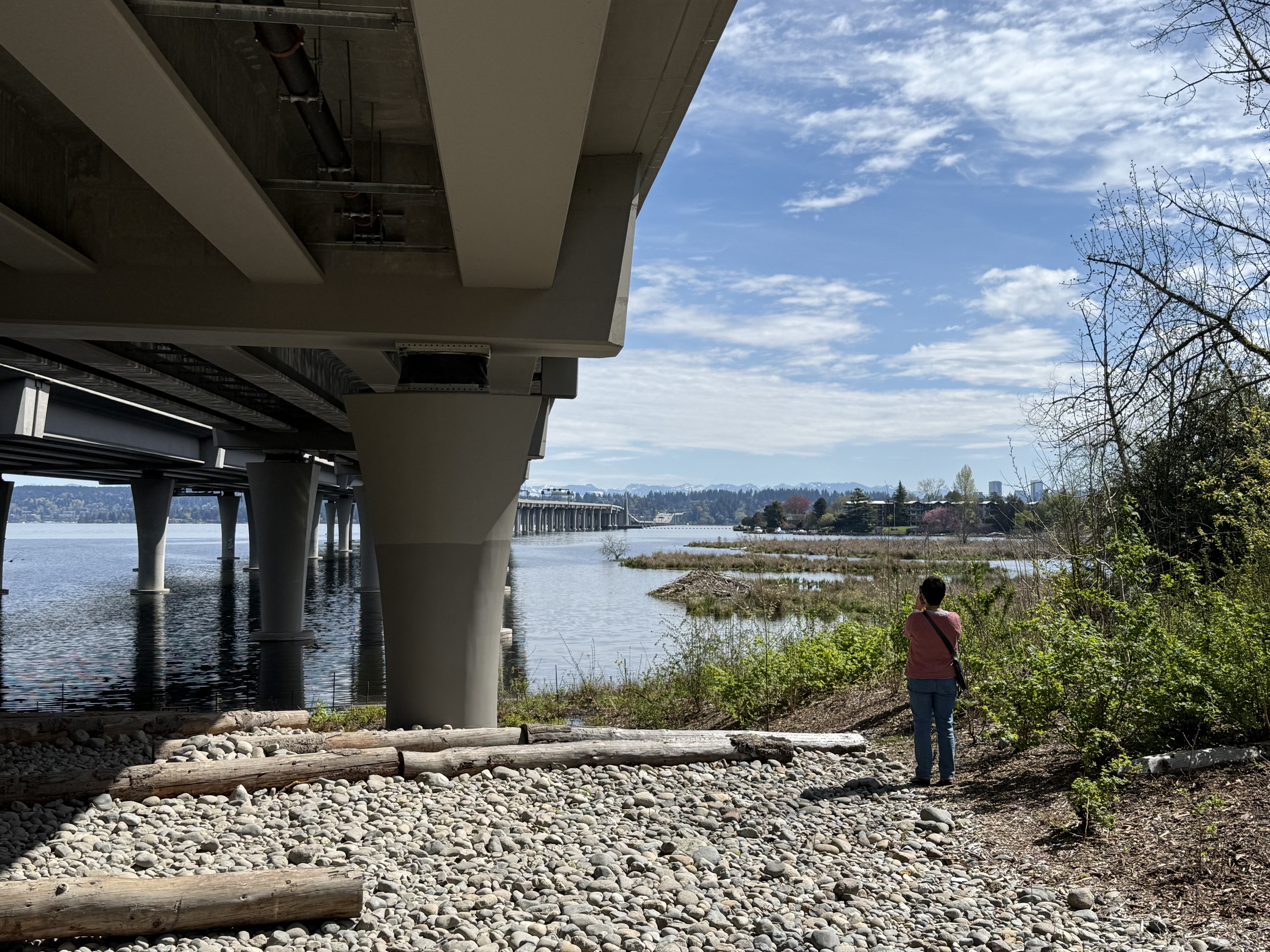
The walking paths go out to an island, where State Route 520 crosses Lake Washington, partly using a unique floating bridge construction. Traffic was pretty loud out there. I wouldn’t enjoy having lunch on one of the picnic tables.
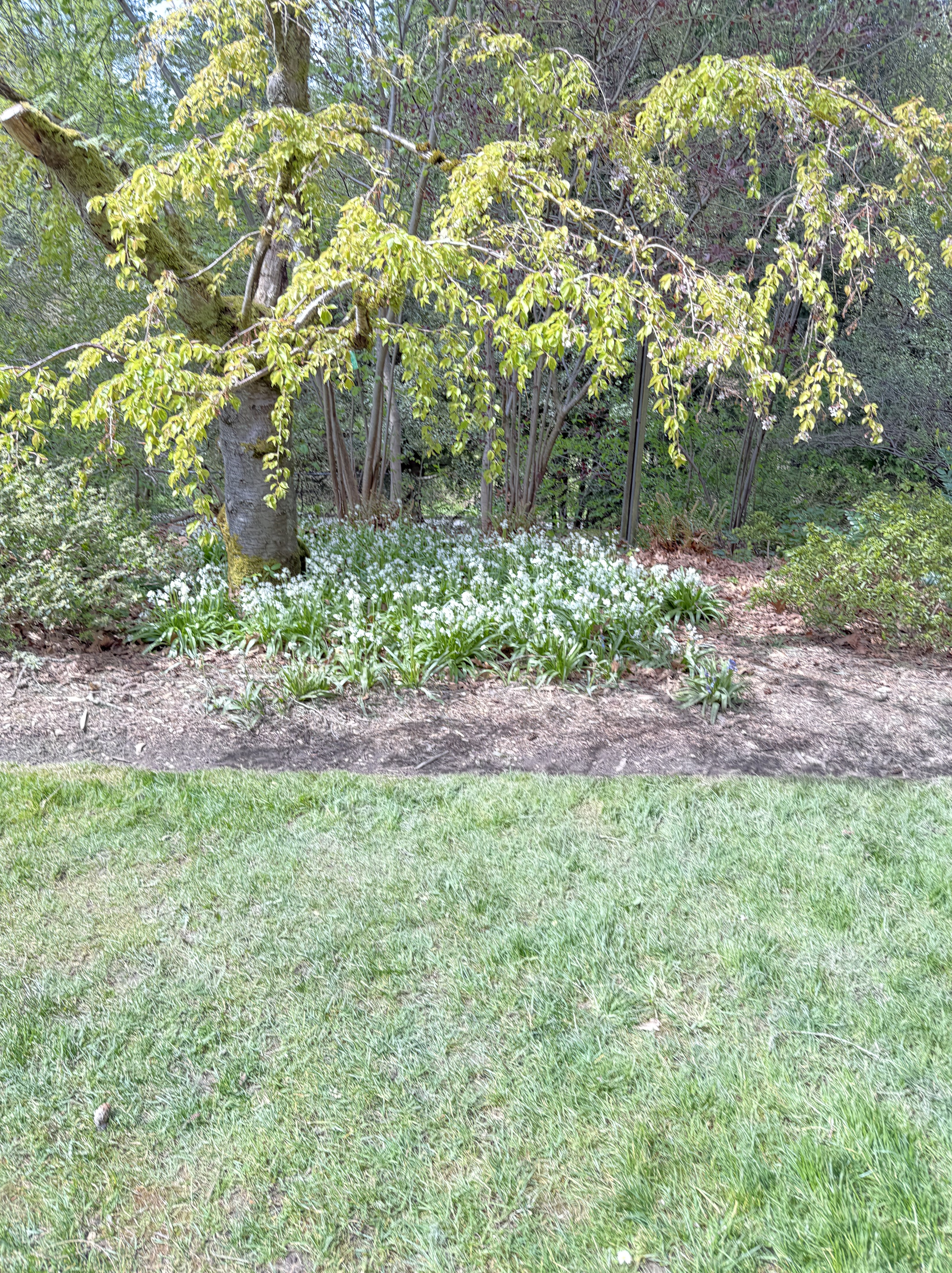
These are typical plantings along the paths in the arboretum. I don’t know anything about plants, so I asked CoPilot (giving it the location): the low, flowering shrub is probably Pieris japonica (aka Lily of the Valley shrub); and the tree may be Stewartia.
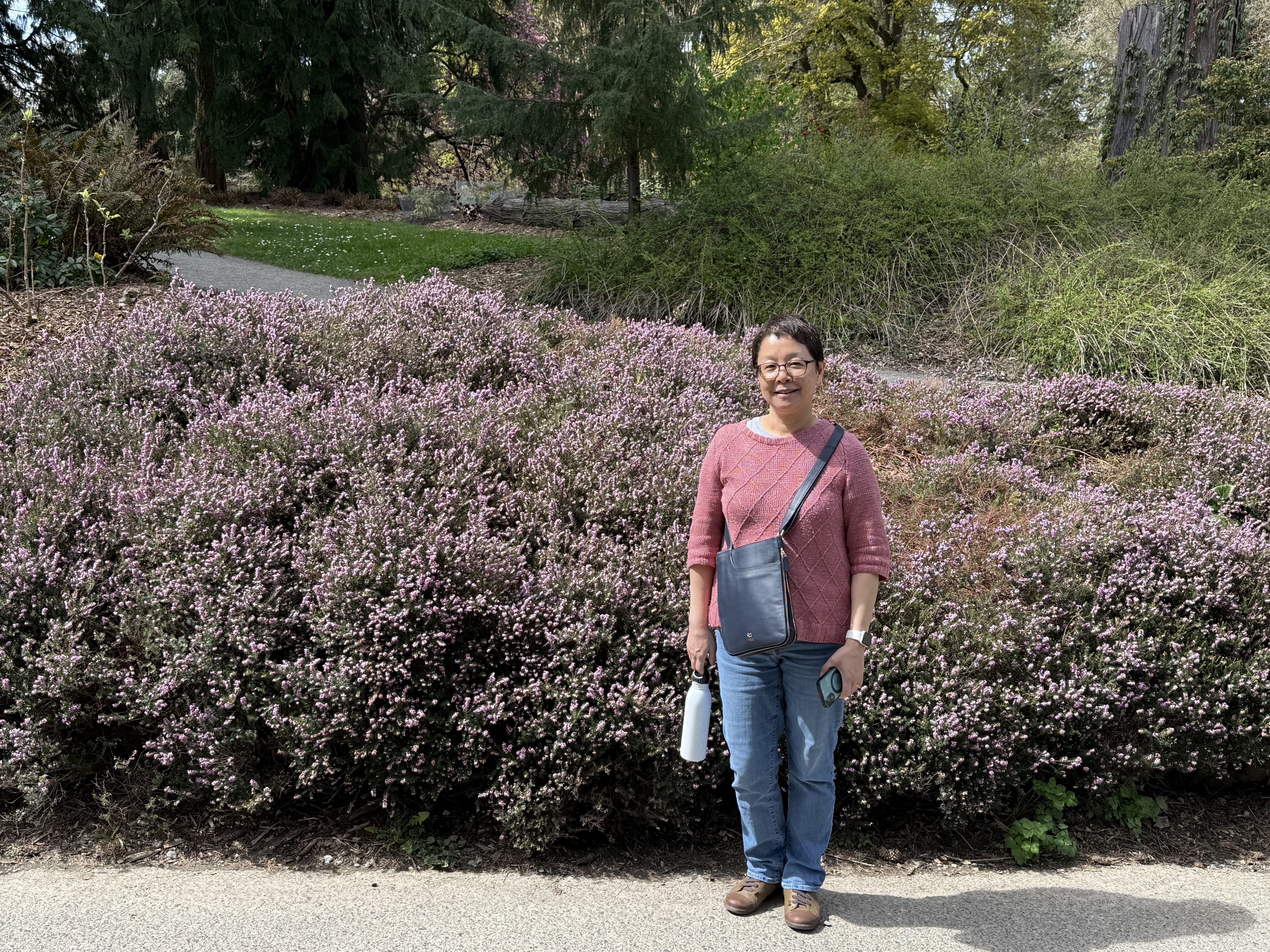
There were numerous masses of flowering shrubs like this, which is probably a dwarf Rhododendron (according to CoPilot). There were a lot of plants within a group, which didn’t look anything like each other; however, the signs explained that the arboretum had large collections of Rhododendrons and Magnolias, for example.
It was a beautiful spring day, and Lake Washington was the perfect place to spend it. I won’t post a photo of the excellent, home-made hamburger and cold beer I enjoyed at Skillet and Vine after a tiring morning of basking in a warm sun.


Recent Comments