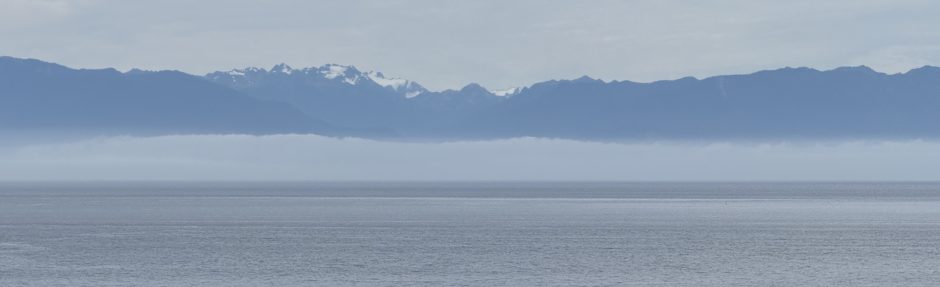
The Geology of Franklin Falls
Washington has more than 3000 catalogued waterfalls, so we stumble onto them regularly. Waterfalls form wherever there is a change in the lithology of the crustal rocks: along crustal faults, which naturally create vertical planes; where weaker rocks lie beneath strong ones and are reached by a downcutting river; and of course where glaciers have sculpted the land. These natural features create spectacular views as well as revealing glimpses of deep time.

Plate 1. Franklin Falls is about 70 feet high. The reddish rocks forming the cliff are Eocene sandstones and volcanic rocks (56 – 34 Ma). The park follows the South Fork of the Snoqualmie River along I-90. The parking lot is quite large and we found a parking space, even though it was great weather; more than one million people visited the site in June.
The rocks in this photo don’t reveal well-defined bedding although there is a suggestion of bedding to the right side of the image. However, I think the bedding marker is the vertical, dark streak that is slightly wavy. This curvature suggests that these rocks were deformed while ductile (buried deep enough to bend rather than break). The geologic map identifies an anticline in the area, and I think I found it.

Plate 2. Franklin Falls is located just west of Snoqualmie Pass, at an elevation of about 3000 feet. The Northern Cascades are very rugged and access is limited, especially in the winter. The topography shown in this map reveals steep slopes, especially through this pass, which I assume is the easiest route through this rugged terrain.

Plate 3. The geologic map from Rock D shows three distinct rock units, which reveal the general geological history of this area. The oldest rocks are part of the Jurassic melange belt (201 Ma), comprising metasedimentary and metavolcanic rocks that were originally deposited in deep water, possibly on a submarine fan. These sediments were buried and then scraped off the subducting ocean plate. This process deformed them as if they were put in a blender; hence the name, melange.
Almost 150 million years are missing before Eocene volcanic and sedimentary rocks were deposited in a continental setting, possibly a river or lake not too close to mountains; the rocks seen in Plate 1 don’t contain any large boulders like we see in the modern river bed below them.
Granodiorite is an intrusive igneous rock containing light-colored feldspars like albite, and slightly less quartz than granite. This batholith was emplaced during the Miocene (23-5.3 Ma) into rocks much like the Eocene rocks exposed along the river (Plate 1). However, granodiorite magma does not produce andesite, which is the most common volcanic rock in the Cascades. All those plutons being shoved into the upper crust exhibit a lot of chemical variety because the magma mixes with continental crust as it rises.
The final piece of the puzzle is the normal fault shown on the geologic map. The NW block of melange is labeled with a “U” to indicate that it moved upwards relative to the SE block of sandstone/volcanics. This displacement brought the older (Jurassic) rocks upward, eroding the rocks that were deposited above them. The fault isn’t shown as extending into the granodiorite, however; it is very difficult to identify a fault (usually by displaced stratigraphic units) in relatively uniform intrusive rocks, which contain no layering. If the field geologist saw evidence of this fault extending into the granodiorite, they would have used a dash line to indicate uncertainty. This line stops cold…

Plate 4. This photo is looking NW, across the fault, towards the melange. This peak is a block of Jurassic rock that was once tumbled in the accretionary wedge after it was scraped off the subducting ocean crust. The peak further back is Denny Mountain, Oligocene (34-23 Ma) volcaniclastic deposits. They are older than the granodiorite. We couldn’t hike around these mountains to see the rocks up close, but fortunately, gravity has made our job easier.

Plate 5. These are small boulders of the Jurassic Melange that rolled down the steep slope (i.e. face of the fault) and landed in the river bed (see Plate 1). (A) Mud deposited in the deep-sea trench was buried deeply enough to squeeze quartz and feldspar into veins (thin white lines in the image). However, it is probable that the thick layer of light-colored minerals were injected along weak points when the Miocene granodiorite was emplaced. Note that the vein becomes more orange to the right of the sample; this is probably a local concentration of K-feldspar (e.g. sanidine). (B) This sample looks like it was spun in a blender because the thin layers of light-colored minerals are twisted rather than approximately following original bedding (which has been obliterated).

Plate 6. This rounded boulder of granodiorite is about 18 inches in diameter. The large, white phenocrysts are plagioclase feldspar with a low Ca content whereas the darker ones with blurred sides are hornblende. The matrix is fine-grained plagioclase with a higher Ca content (feldspar composition varies with potassium-sodium-calcium). Calcium is associated with dark, potassium with pink, and sodium with white-colored crystals.
Summary
Today’s field trip was a unique opportunity to integrate the large scale observations (Plates 1 and 4) with hand samples (Plates 5 and 6) using a geologic map (Plate 3) as a guide to understanding the geologic history of the Cascades Range. Let’s try to create a simple, plausible geological history from what we know.
I’m going to list a series of geologic events because I don’t feel like finding/creating schematic cross-sections to pictorially demonstrate what I’m saying. I’ll start from oldest and proceed to the youngest.
- About 200 Ma: Muddy sediments were deposited in a subduction trench, which was approximately aligned N-S along the axis of the later Cascades range. Over the next 10-20 Ma these sediments were buried miles beneath younger erosional debris, until they were snagged by the overlying NA tectonic plate and deformed like putty.
- Between 120 and 60 Ma: It is unclear exactly what occurred, but subduction ceased, probably because several large crustal blocks slid to the NW along a series of transform faults. The melange we see in Plates 4 and 5 missed the boat and remained buried, slowly inching their way to the surface.
- About 60 Ma: Subduction resumed and a series of volcanoes produced lava, which mixed with sandy sediments in a continental environment. Volcanism continued for 30 Ma, creating a mixture of fresh lava and sandy sediments, which were buried while erosion continued — a delicate balance of tectonic uplift and isostatic sinking.
- Between ~30 and 23 Ma: Tectonic uplift increased, bringing the Jurassic melange and Eocene rocks (Plate 3) into the crust’s brittle fracture zone, driven by a combination of subducting plate dynamics and upwelling magma, as the ocean plate melted. This agglomeration of different rock types began to fracture along contacts, while still deforming plastically internally. The normal fault seen in Plate 3 would have occurred along such a seam during this complex exhumation process.
- A series of hot, rising plumes of magma originating at the top of the subducting ocean slab eventually reached these rocks, possibly within a few miles of the surface, between 23 and 5 Ma. The granodiorite filled every fracture and fault, creating the complex pattern seen in Plate 3. The thick veins of quartz/feldspar seen in Plate 5A would have been injected during this interval.
- Exhumation has continued, from 5 Ma to the present, modified by glacial scouring of the ancestral Snoqualmie River canyon. Today we see these rocks conveniently frozen in time, from our perspective.
Identifying the contacts between these many rock facies is a laborious task that will take decades, if not centuries, to complete. Nevertheless, it is obvious that a lot has occurred in the last few million years. The earth’s surface is a conveyor belt on which the pile of soil/rock is constantly removed by wind/rain/snow/ice…
That’s my story…
Geological Survey of the Columbia River Gorge
The popular route east from Portland, Oregon, is I84 following the Columbia River, which cuts across the Cascades range. There are plenty of scenic views and geology to examine, but few safe places to stop. Thus we followed the Washington shoreline along state route 14.
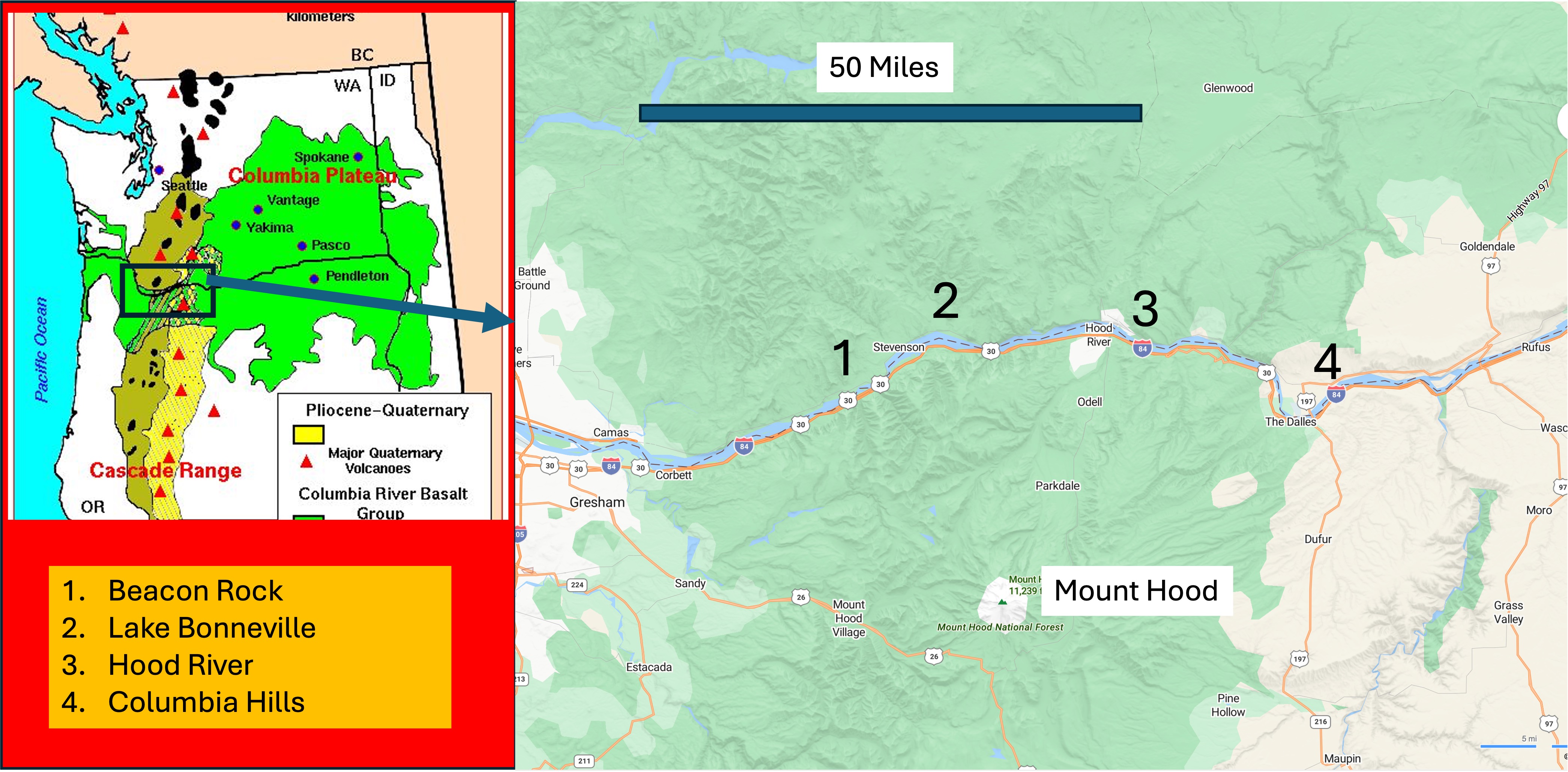
The inset map shows the distribution of volcanic rocks within Washington and Oregon. The oldest are predominantly andesites erupted from volcanoes (triangles) within the Cascades between about fifty and five million years ago (Ma), shown in light brown. The bright green represents the Columbia River Basalt Group, which flowed from fissures between seventeen and five Ma. The youngest rocks are primarily andesite erupted from volcanoes within the last million years (e.g. Rainier, St. Helens, Hood, Baker). The rectangle shows the area we are traversing, which contains a mixture of these rocks.
We stopped frequently, but I’ve lumped the photographs into four areas: 1) Beacon Rock is near the beginning of Columbia River Gorge; 2) Lake Bonneville and 3) Hood River give a good picture of the central canyon; and 4) Columbia Hills is where the river enters the gorge before cutting through the thickest section of volcanic rocks.
1. Beacon Rock
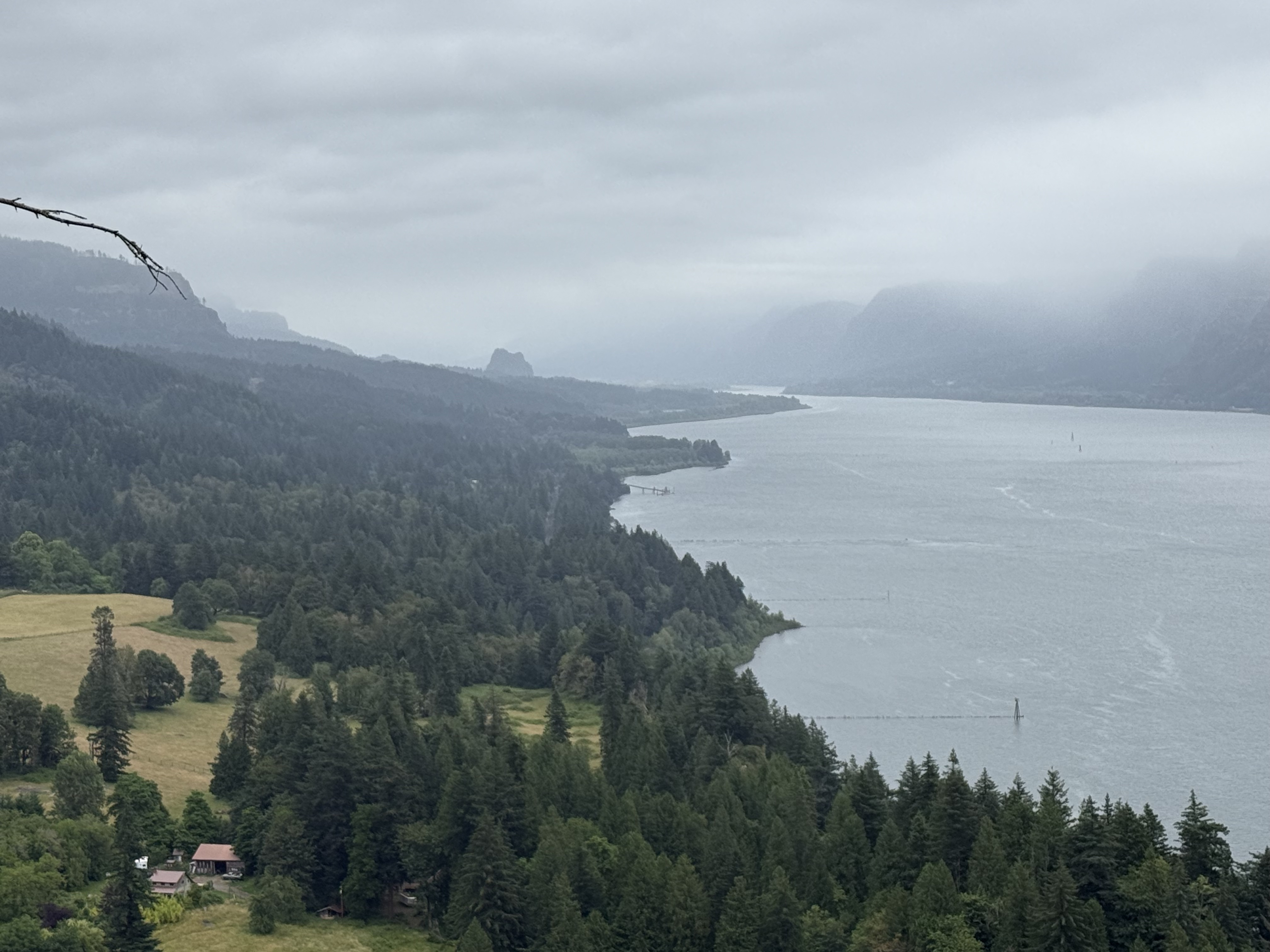
This photograph looks east towards Beacon Rock, which has an interesting origin. It was originally injected into a cinder cone volcano about 60 thousand years ago (Ka). Subsequent, multiple glacial floods eroded the loose material away, leaving the core, which is called a neck. This region was never covered by continental glaciers, although there is evidence of alpine glaciers like those still existing on the high volcanoes (e.g. Rainier or Hood). During numerous advances and retreats of continental glaciers into Canada, large lakes formed and periodically drained catastrophically. These floods, which were as deep as 1000 feet, naturally followed the Columbia River to the Pacific Ocean.
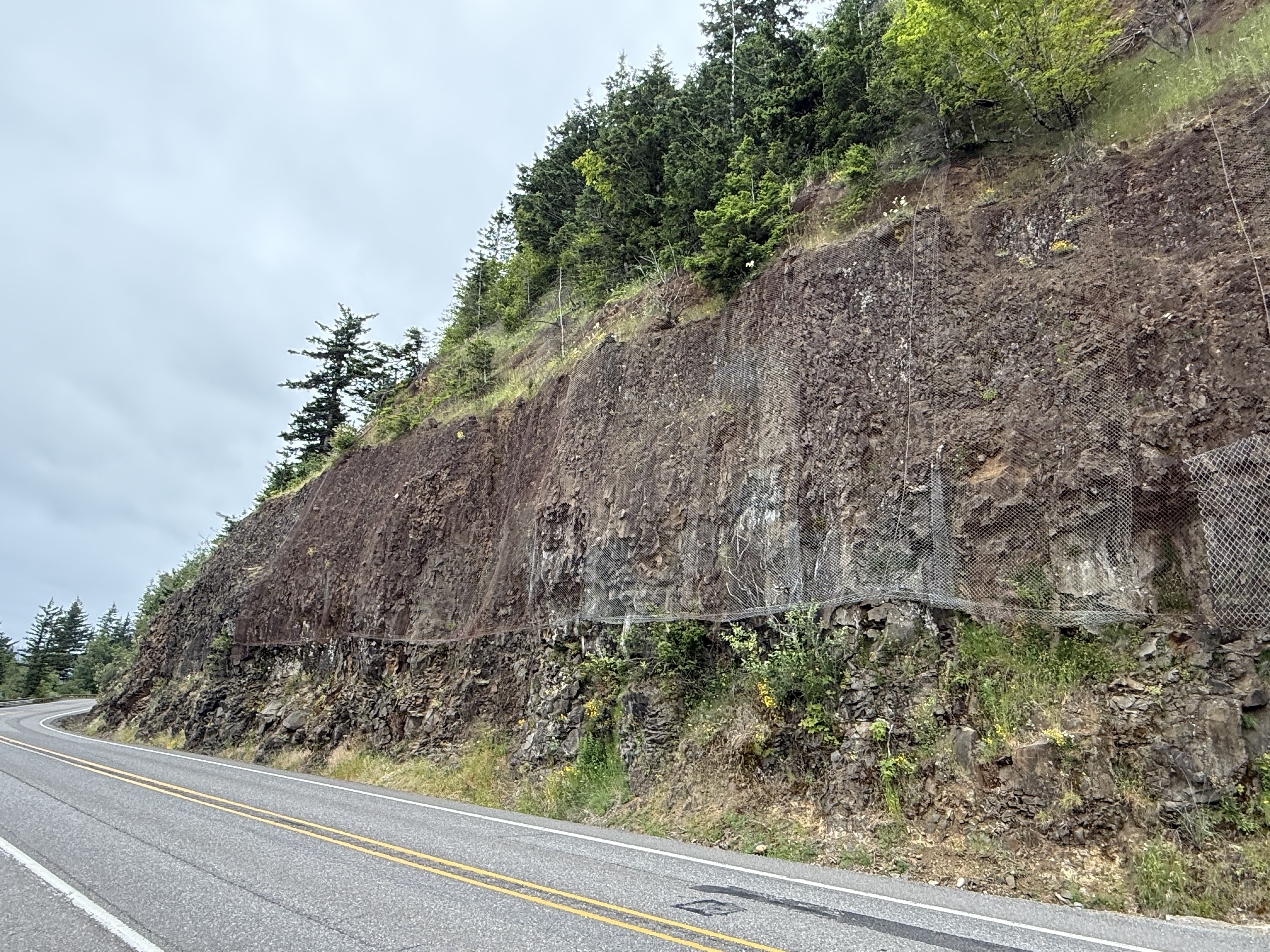
This low road cut reveals a thick layer of volcanic rock (basalt, according to Wikipedia) overlain by volcaniclastic rocks, which are loosely cemented. That’s why the DOT placed netting over the friable layer. These are sedimentary rocks consisting of volcanic ejecta as well as material transported by water.
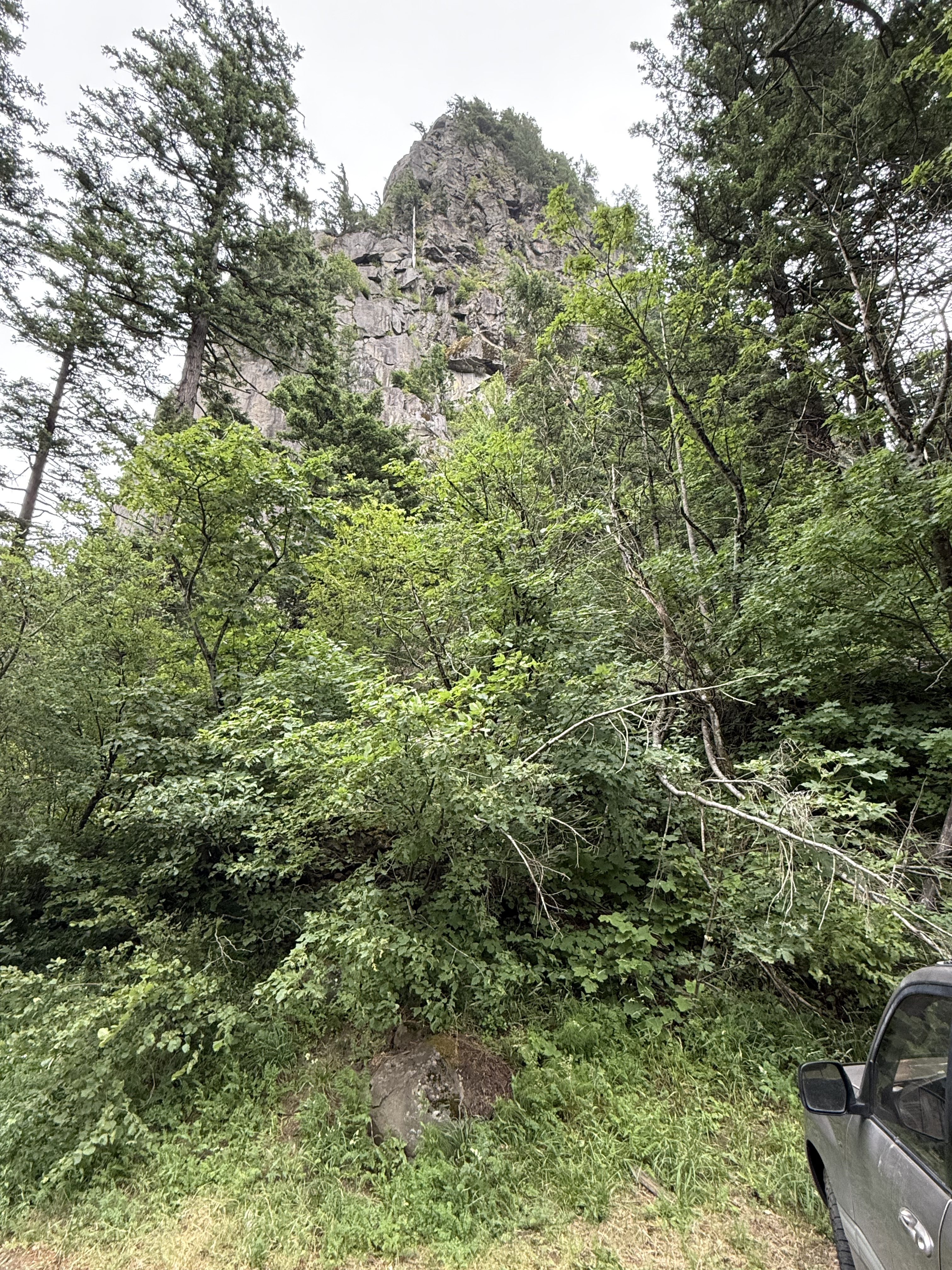
According to Wikipedia, Beacon Rock is 848 feet tall and there is a trail to the top that is popular with hikers. It doesn’t look that high from the bottom, but I’m glad I didn’t trust my first impression and climb it; as stubborn as I am, I would have made it–and wished I hadn’t for the next week. It looks a little pale to be basalt, including the boulder visible at the bottom of the image; in a terrain with continuous volcanism, spanning the gamut from rhyolite to basalt, for 50 Ma, you just can’t tell from surface features. Some basalt is a little lighter colored and some andesite is darker–it’s a spectrum based on mineralogy, not color.
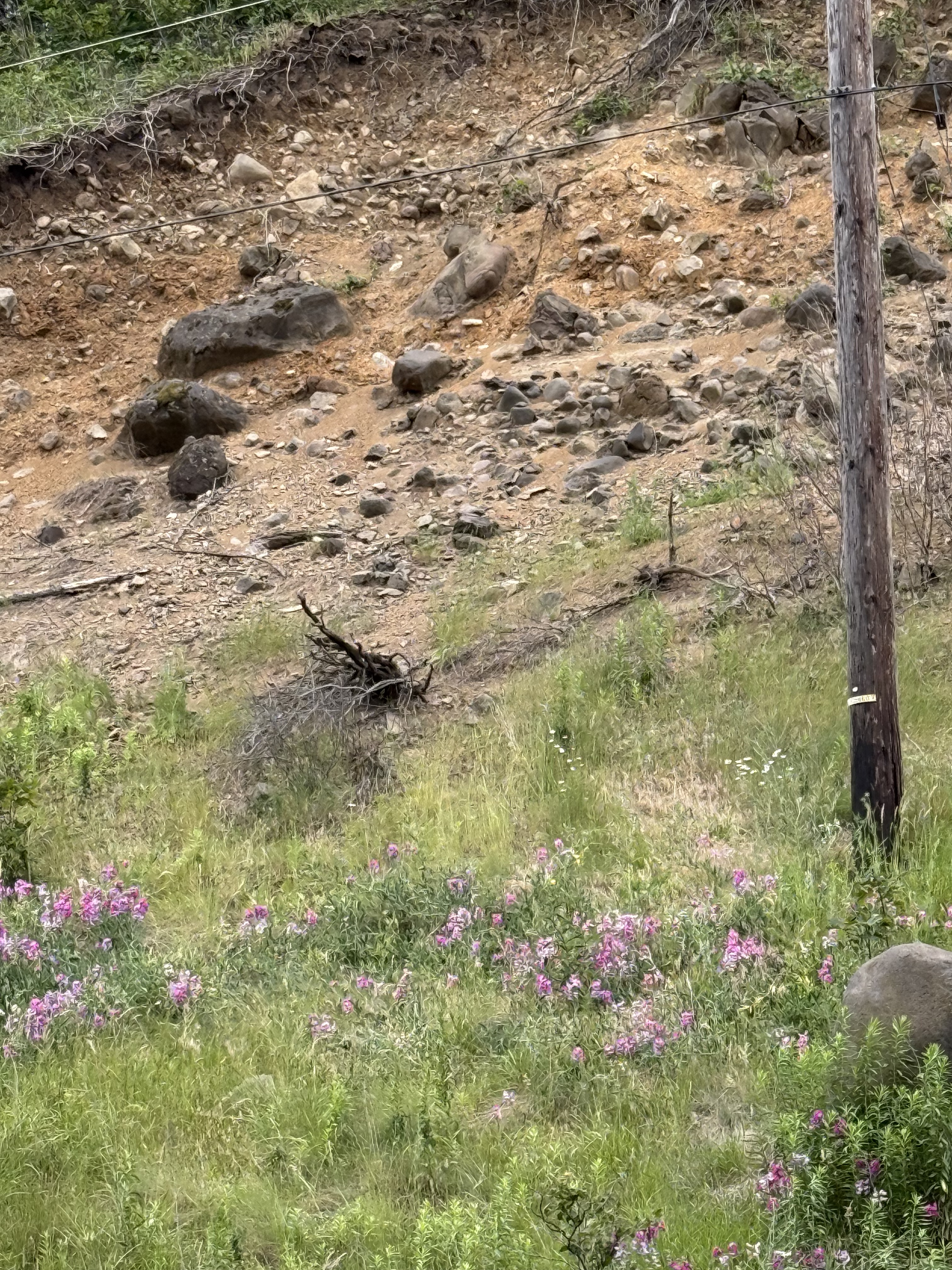
This eroded slope got my attention because it reveals an interesting juxtaposition of an exposed basalt outcrop that is rounded (unlike the earlier exposures we saw) and light-colored boulders of much smaller size (less than three feet). These rocks are too uniformly light in color to be weathering of basalt or andesite. There is some rhyolite (a leucocratic extrusive rock found within the Cascades) in the region, but an alternative explanation is that these are flood deposits from the aforementioned glacial lakes. There are many deposits from these mega floods within the gorge, but I couldn’t (easily) find a map of them. Anyway, this is what I would expect to find in such a sedimentary deposit–mixed rock types that are rounded by transport tens, if not hundreds, of miles during flooding episode. The bedrock would be rounded by collisions with these boulders. If the shoe fits…
2. Lake Bonneville
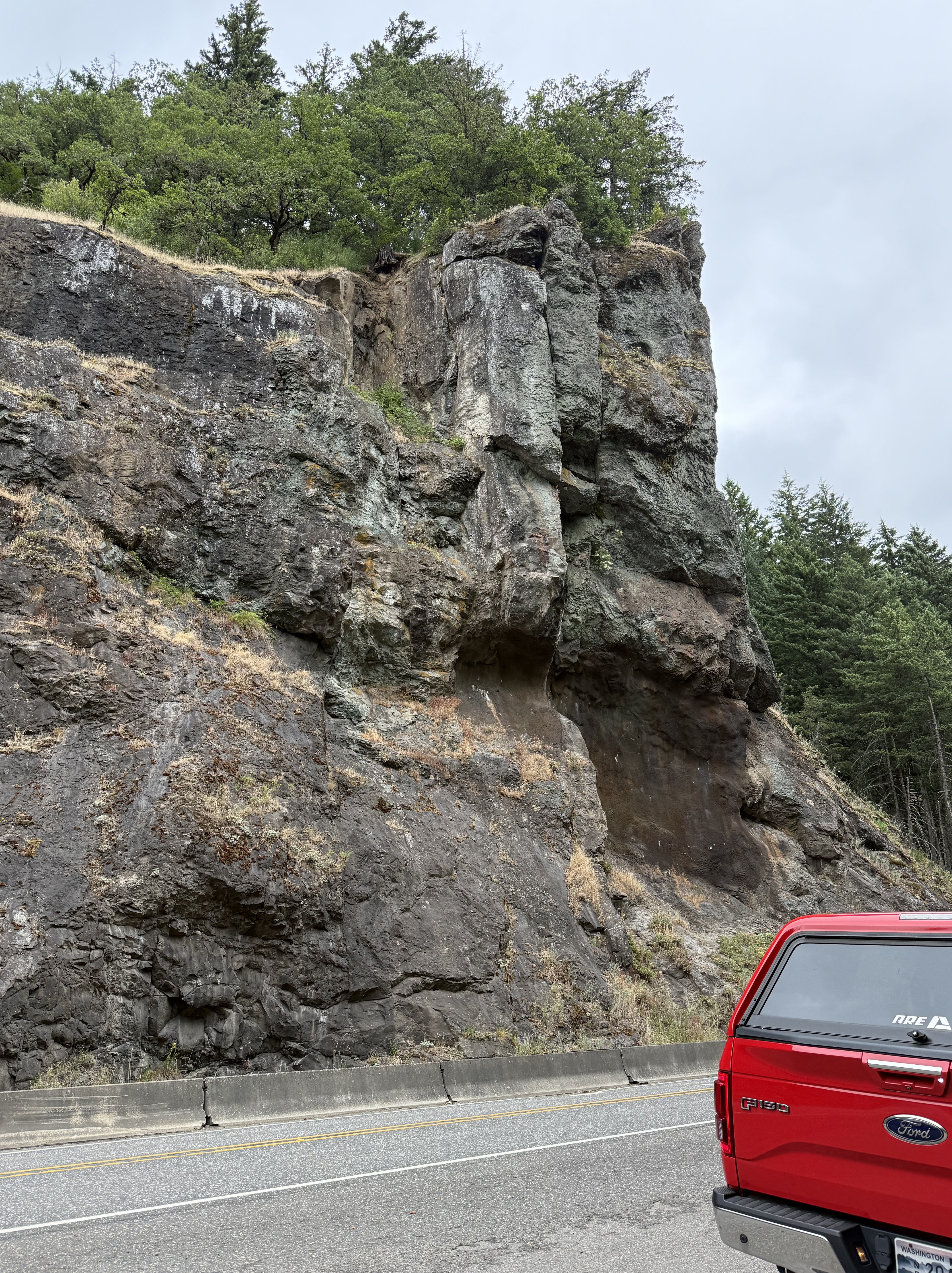
The central part of Columbia River Gorge is characterized by several broad valleys with sediments filling the margins of the canyon. This is a typical exposure from this area. The rock looks like basalt to me; the map (see first plate) shows a mingling of volcanic rocks along the river, which would have been a low point for lava to flow towards. However, this is not a volcaniclastic deposit as we saw before; instead, there are several, heavily weathered (i.e. smooth) flows of lava (3-10 feet thick). The lowest layer seems to be dipping towards the camera as if flowing down a steep slope. Maybe…
3. Hood River
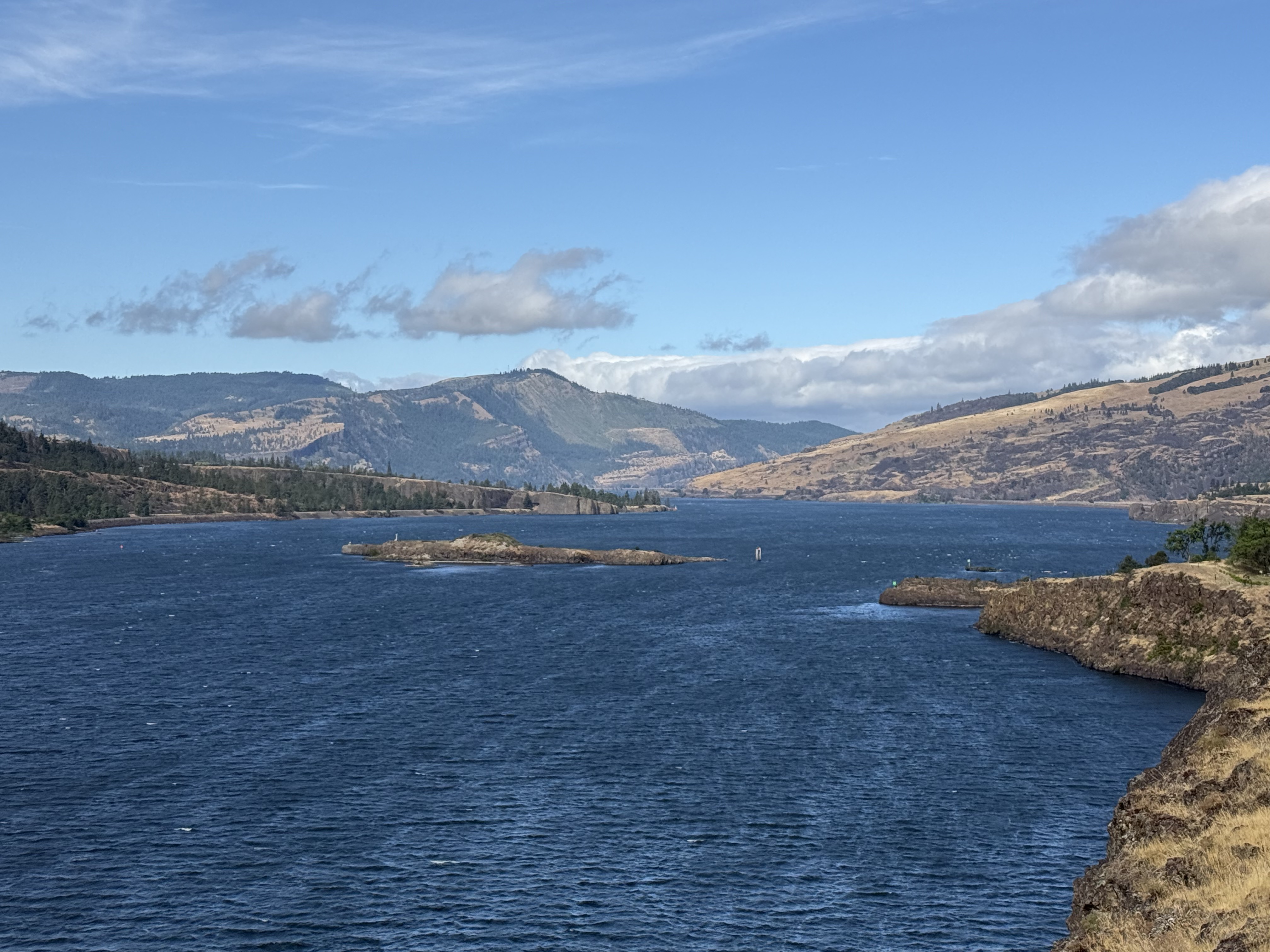
This location is close to the eastern entrance to Columbia River Gorge, where flood basalts erupted from multiple fissures in the crust. In other words, there are no nearby volcanoes and steep slopes; thus, the basalt flowed over a relatively flat landscape, forming rolling hills. This photo reveals basalt flows that gently slope to the left, as seen in the middle-right and background of the image. These massive flows partially blocked the river many times–long before glaciers dominated the landscape. The island in the center of the channel is a remnant of one. I haven’t heard of any glacial lakes in this area, however, so the blockage must have been partial–these thick sequences of basalt didn’t occur at one time, but over millions of years, giving the ancient Columbia River time to erode passages through them.
4. Columbia Hills
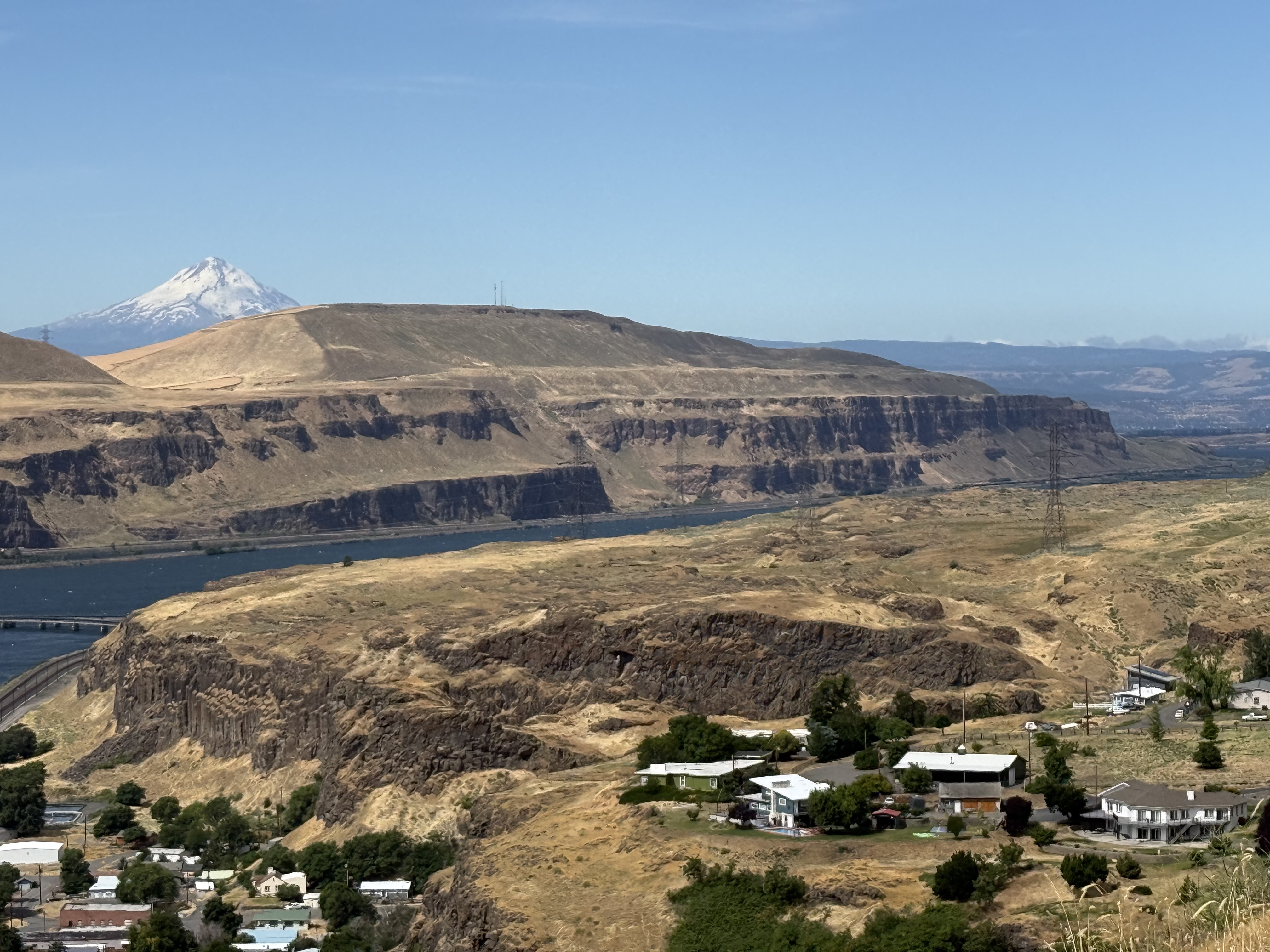
Columbia Hills is the eastern end of the gorge, where the Columbia River ends its meandering path to the Pacific. The rocks are basalts erupted from many fissures between 17 and 5 Ma. According to the latest interpretation, these rocks were ejected from the same mantle plume that now underlies the Yellowstone caldera in NW Wyoming. They have nothing to do with subduction or the Cascades volcanic belt, even though the much younger Mt. Hood (in the background) towers over them.
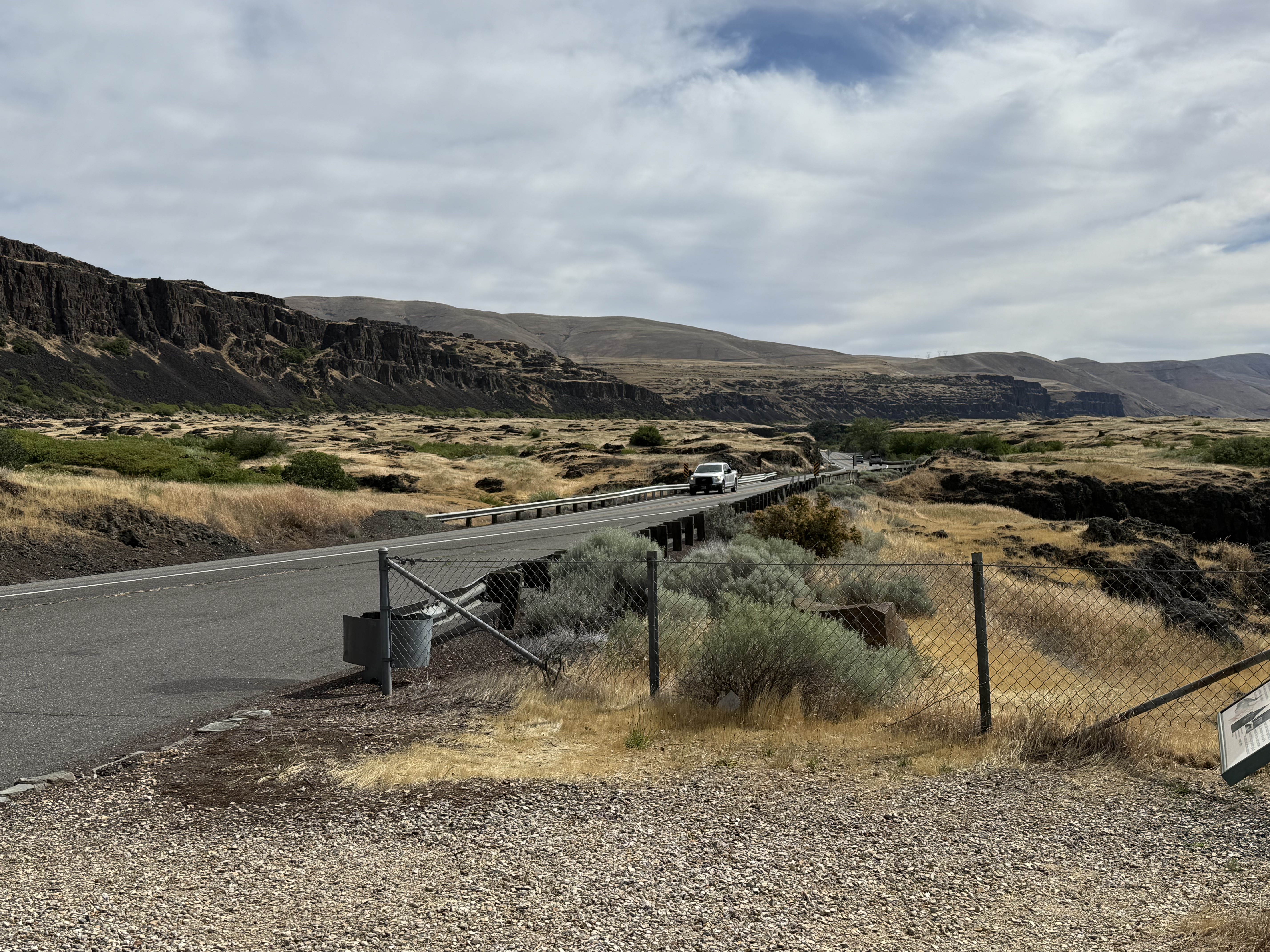
We are now in Eastern Washington, a climatic zone with completely different characteristics than west of the Cascades. This volcanic range creates a rain shadow and resulting precipitation is less than 20 inches here; and it shows in the scrubland ecosystem. These extensive basalt flows are no longer covered by younger andesites from the high Cascades (the young volcanoes like Mt. Hood).
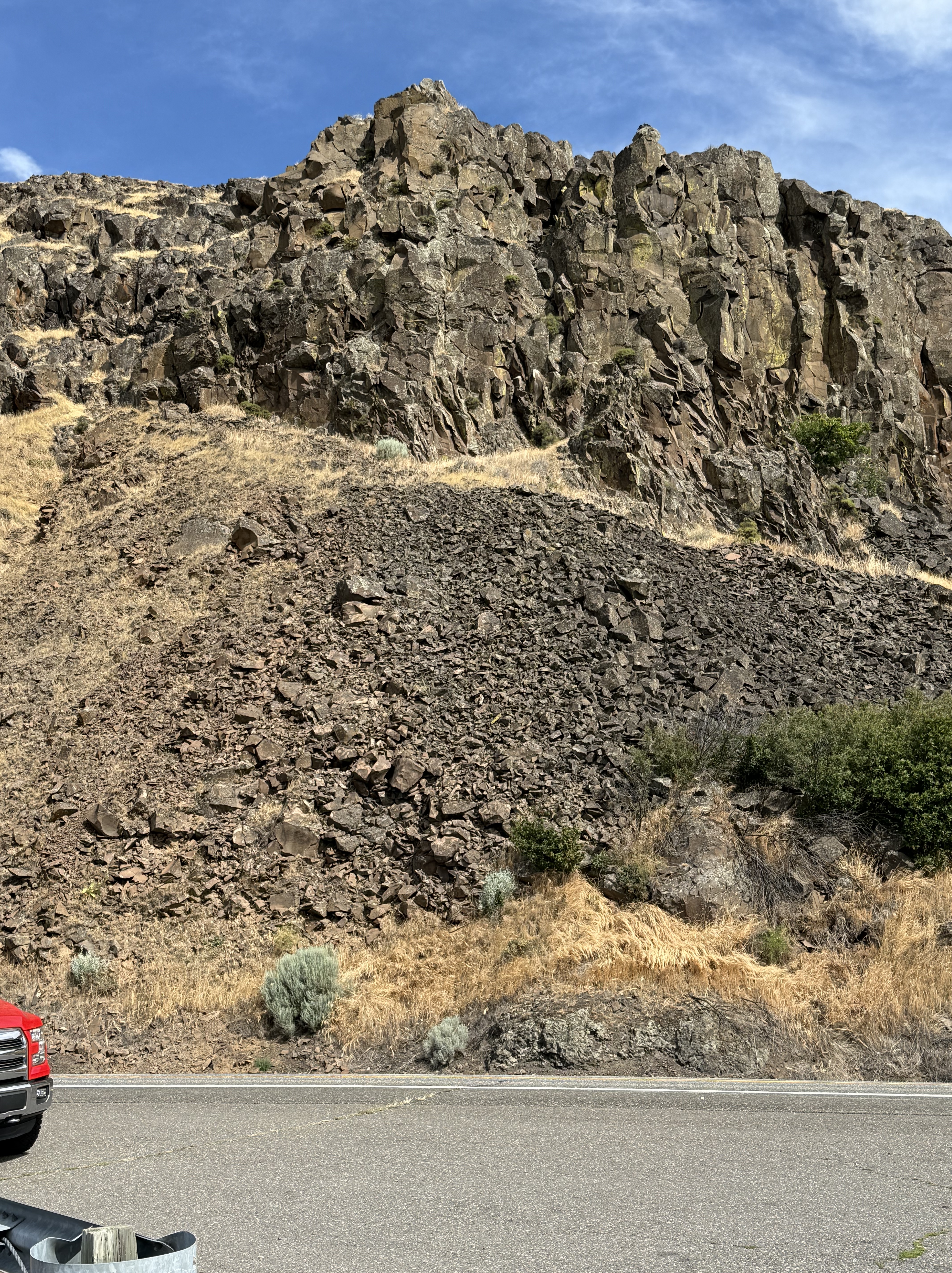
The volcanic layers are thin and extensive (see the map at the beginning of this post). They include columnar joints as I described in a previous post. The textures seen in this photo reveal the variability of lava coming from a single source; for example, individual, blocky layers cap this exposure whereas the rock presents a ropy texture lower down (middle-right of the photo).
Summary
The Pacific Northwest (PNW) didn’t exist before the Tertiary period, which began at 65.5 Ma. However, Pangea began to split apart at about 200 Ma, which should have created plate collisions here because the N American plate would have necessarily overrun the plates comprising the ancient Pacific Ocean. The west coast of N America was located approximately at the WA-ID boundary. So why don’t we see Jurassic and Cretaceous volcanoes and their associated volcanic deposits in the PNW?
This question has perplexed geologists for decades. After carefully collecting data from far and wide, a still-controversial theory has evolved: For more than 100 million years, this tectonic collision was accommodated by transform faults (e.g. the San Andreas fault system in California). A tectonic plate collision is not a conveyer belt as shown in schematic representations.
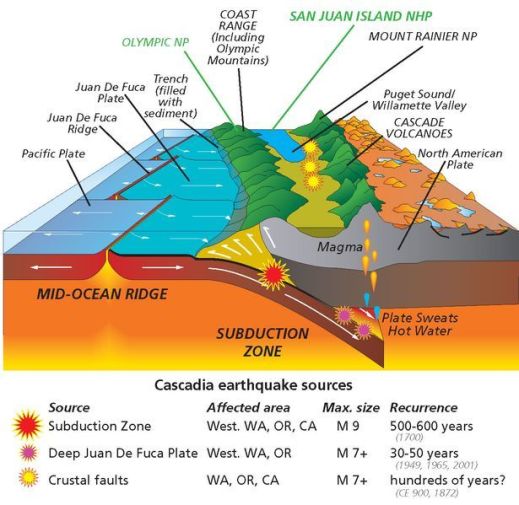
This schematic profile of the PNW shows several transform faults, which misalign the Pacific mid-ocean ridge (note the misalignment of the dark, Juan De Fuca Ridge. This tectonic scenario didn’t develop until those transform faults, which were not perpendicular to the mid-ocean ridge, could no longer accommodate the displacement of these microplates with N America. That apparently happened about sixty-million years ago. Some of these slivers of volcanic terrain have probably become exotic terranes that are now part of Alaska.
That is probably why we didn’t encounter any Mesozoic ((251-65.5 Ma) volcanic rocks within the Columbia River Gorge. Instead, we discovered a Tertiary volcanic landscape dominated by andesite/basalt lava flows, preserved because the transform faults had stopped absorbing the collisional, crustal tectonics. A real subduction zone emerged from this chaos and created the Cacades.
Superimposed on this was the unexpected (tectonically speaking) effusion of basalts as the westward-propagating N American plate rode over a mantle plume, which buried the evidence for this slipping history beneath miles of volcanic rocks. I can’t say anything else about this because I’m not actively researching the PNW’s geologic history.
My last word is that I can’t wait to see what new discoveries the PNW holds for me.
A Day Trip to Yakima
We wanted to see what was on the other side of the mountain, so we headed east from Tacoma and crested the Cascades at Chinook Pass. It was snowing at the pass and fog/clouds obscured what were probably majestic views. We pushed on to Yakima and found the Cowiche Canyon recreation and conservancy area.
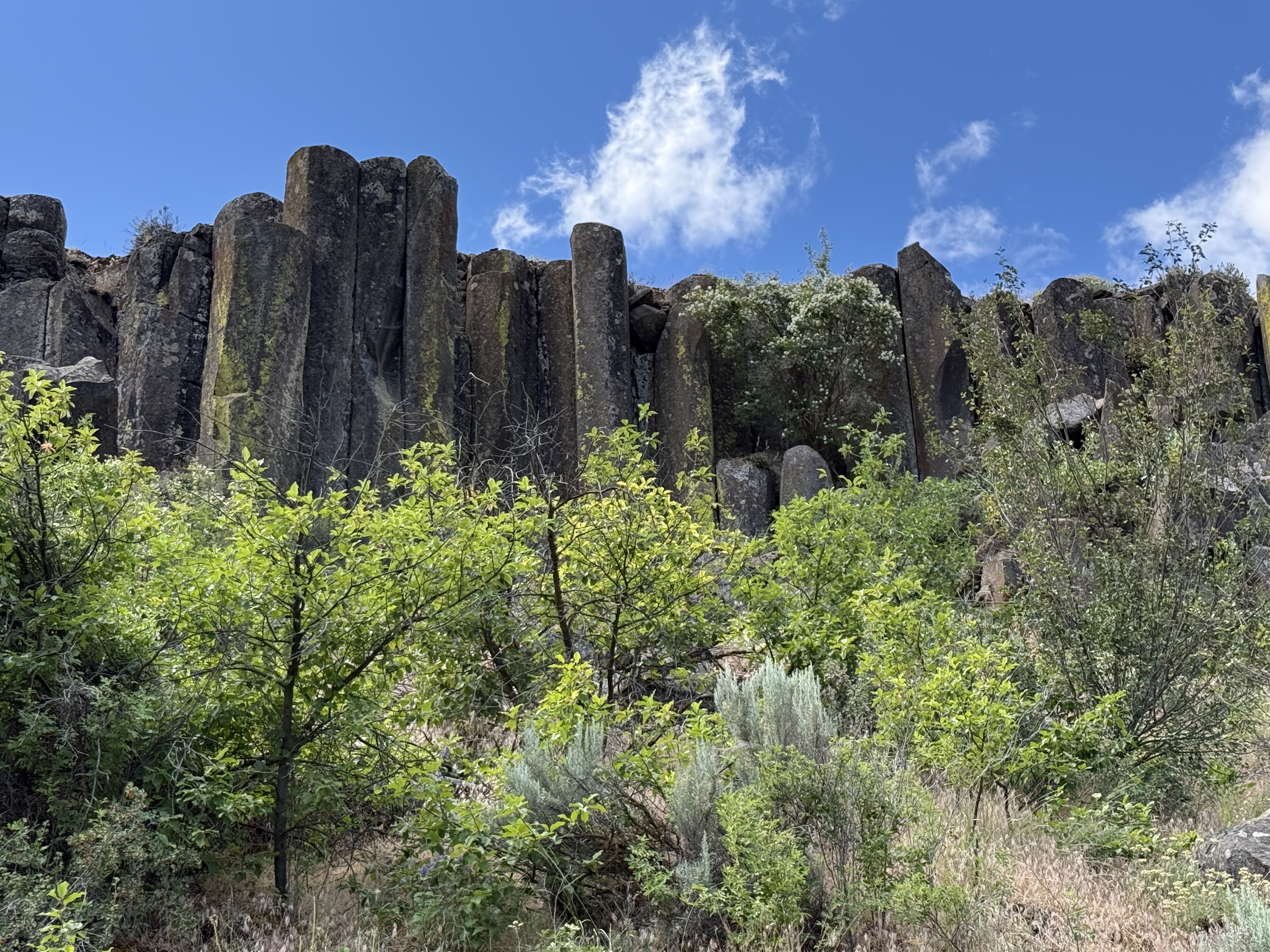
This is a typical view from the trail, which follows an old rail line that was used for seventy years to haul apples out of the area. I have discussed the columnar basalts and vegetation in previous posts. It was late spring and all of the plants were showing their color while water rushed past in the creek at the bottom of the canyon.
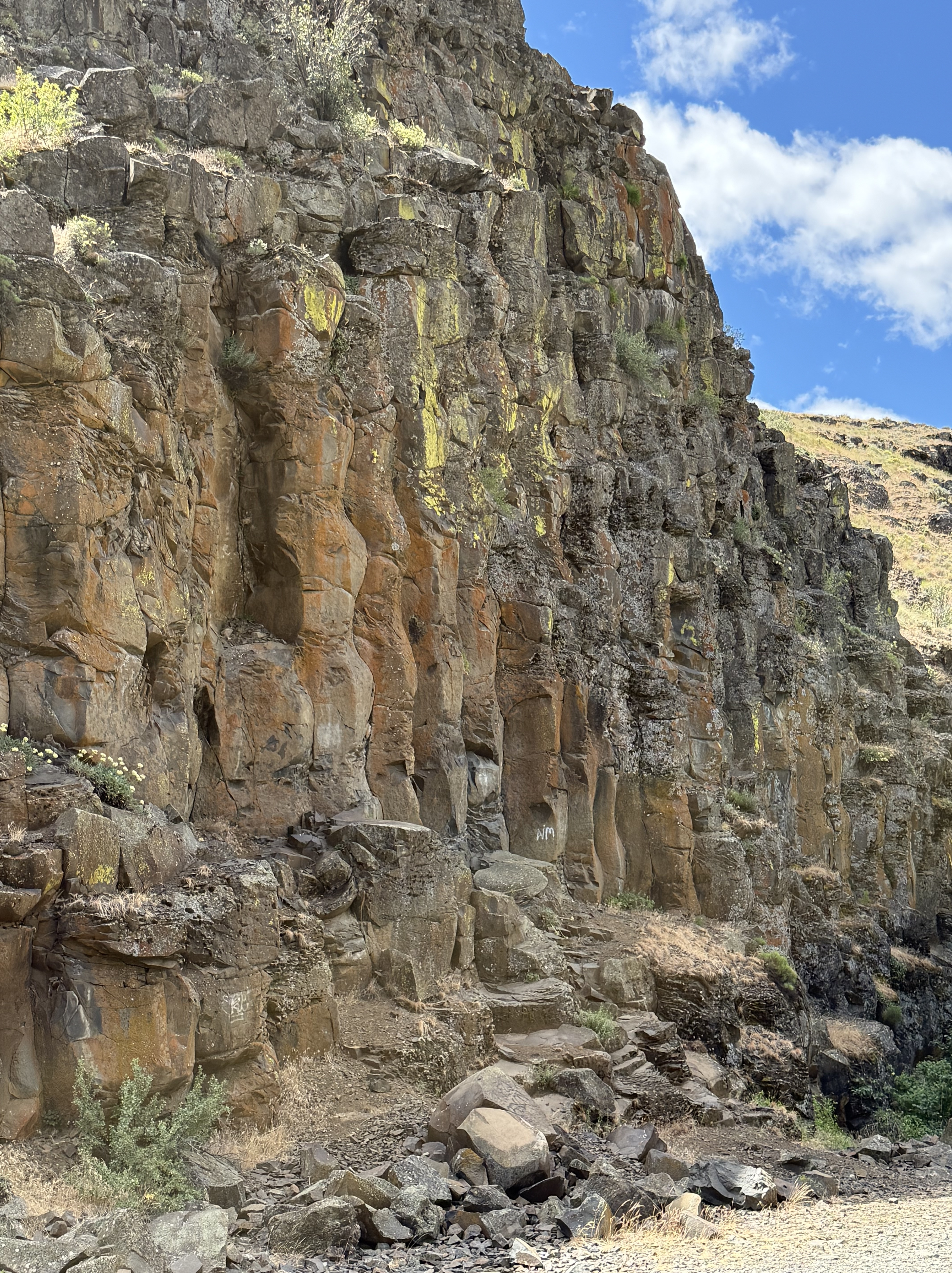
This undulating columnar basalt caught my eye because of the color and its wavy appearance.
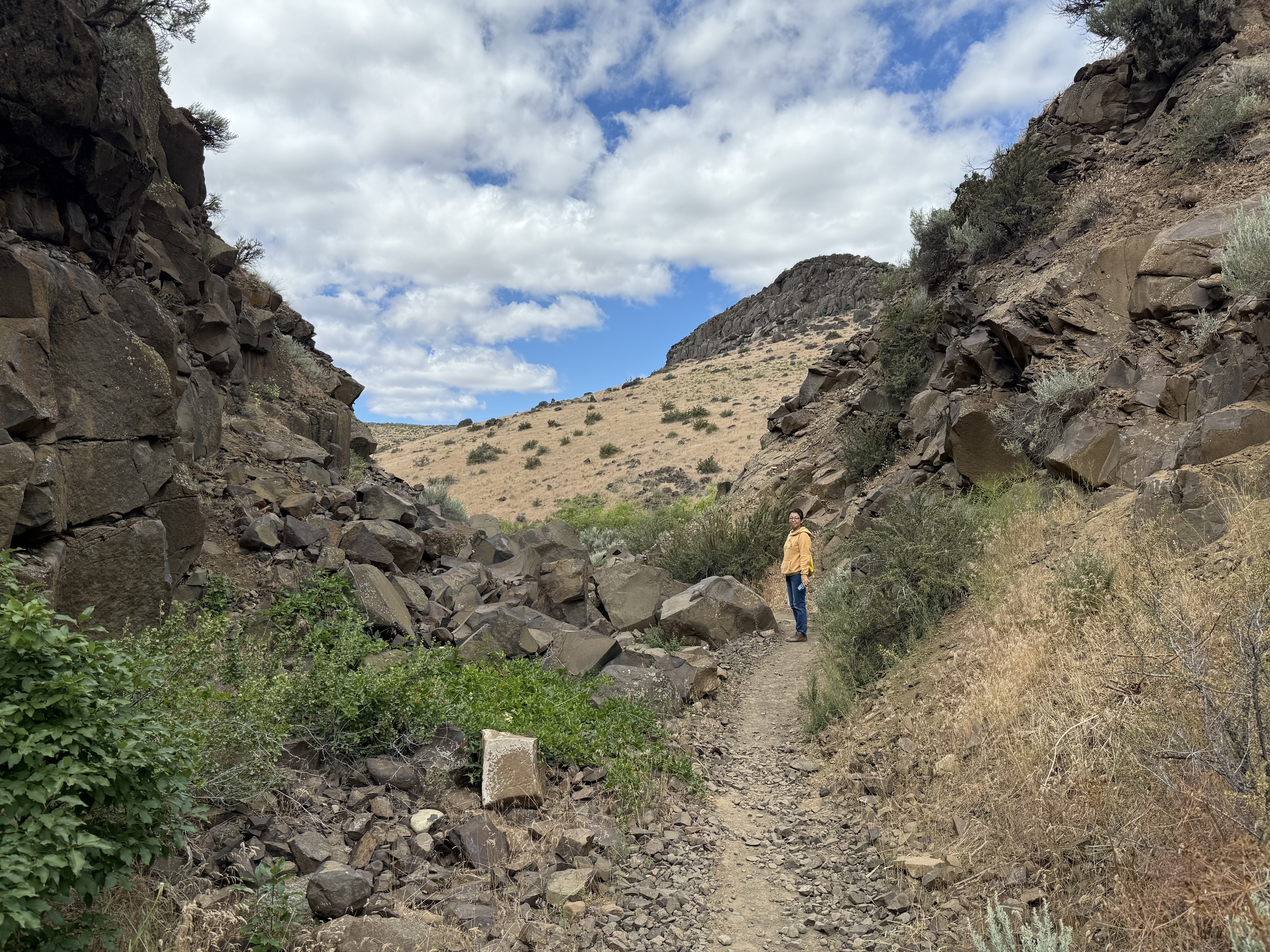
The Burlington Northern railroad wasn’t afraid to use explosives to create a path through what was described at the time as, “A dry, rocky canyon good for nothing except a railroad.” The rails have been removed, but the eleven bridges required to construct a rail line to cover the 3 miles of the trail system are mostly still in place.
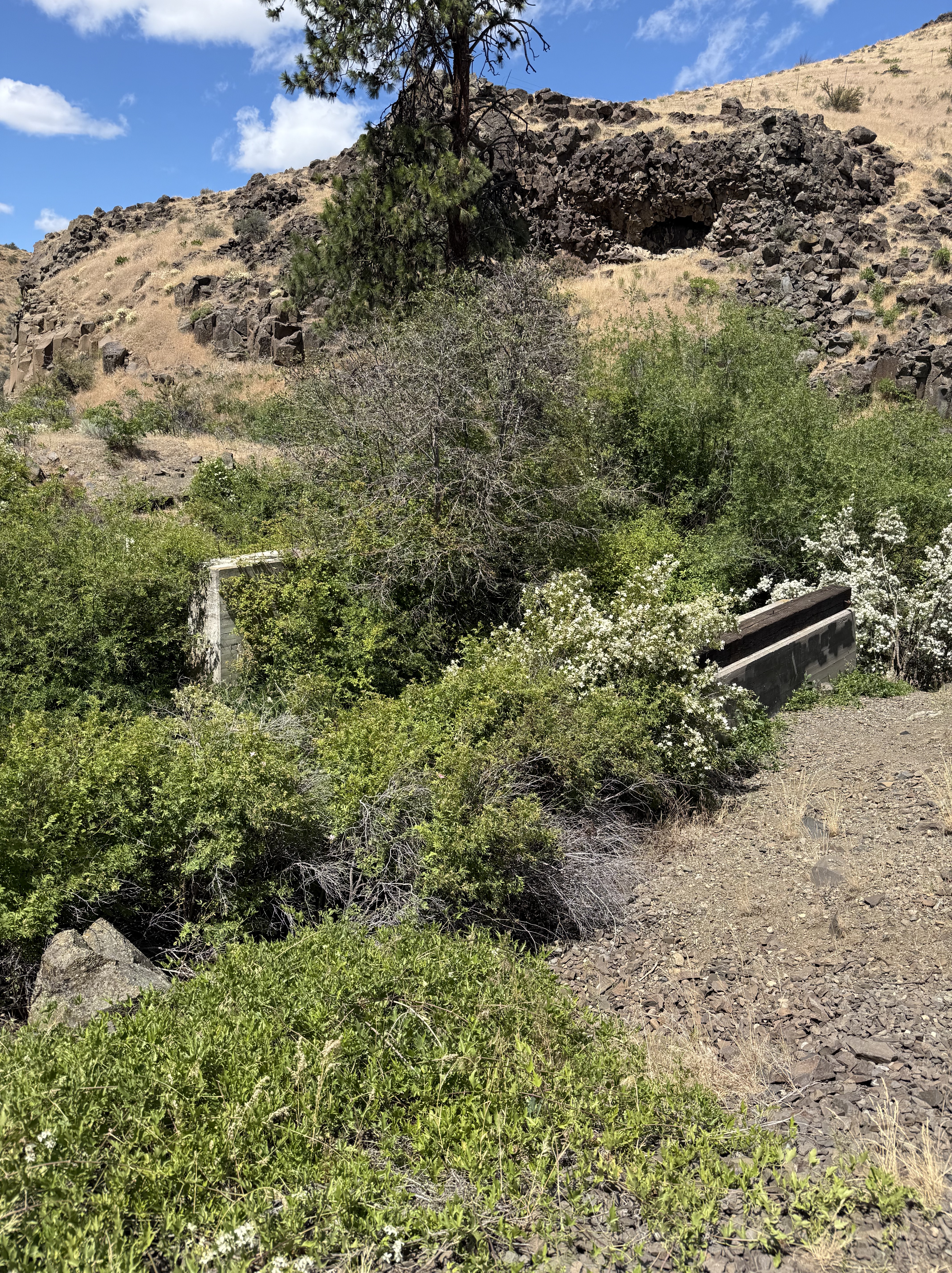
Here’s one that didn’t last. It was replaced by a pedestrian bridge constructed by the Cowiche Canyon Conservancy and the Bureau of Land Management.
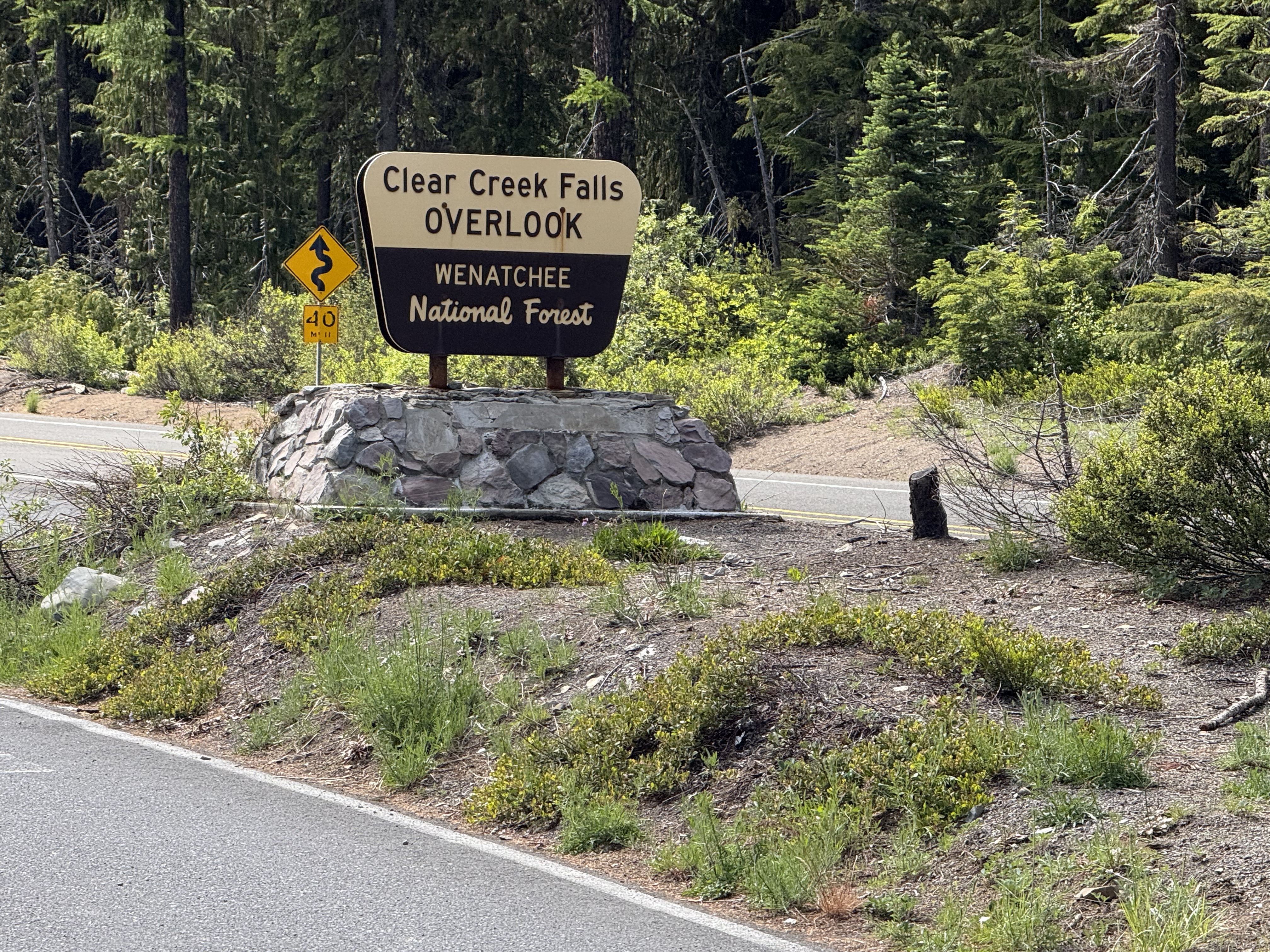
We took a more circuitous route back to Tacoma using US12 through White Pass. It didn’t snow, and we got a look of one of the many water falls in Washington.
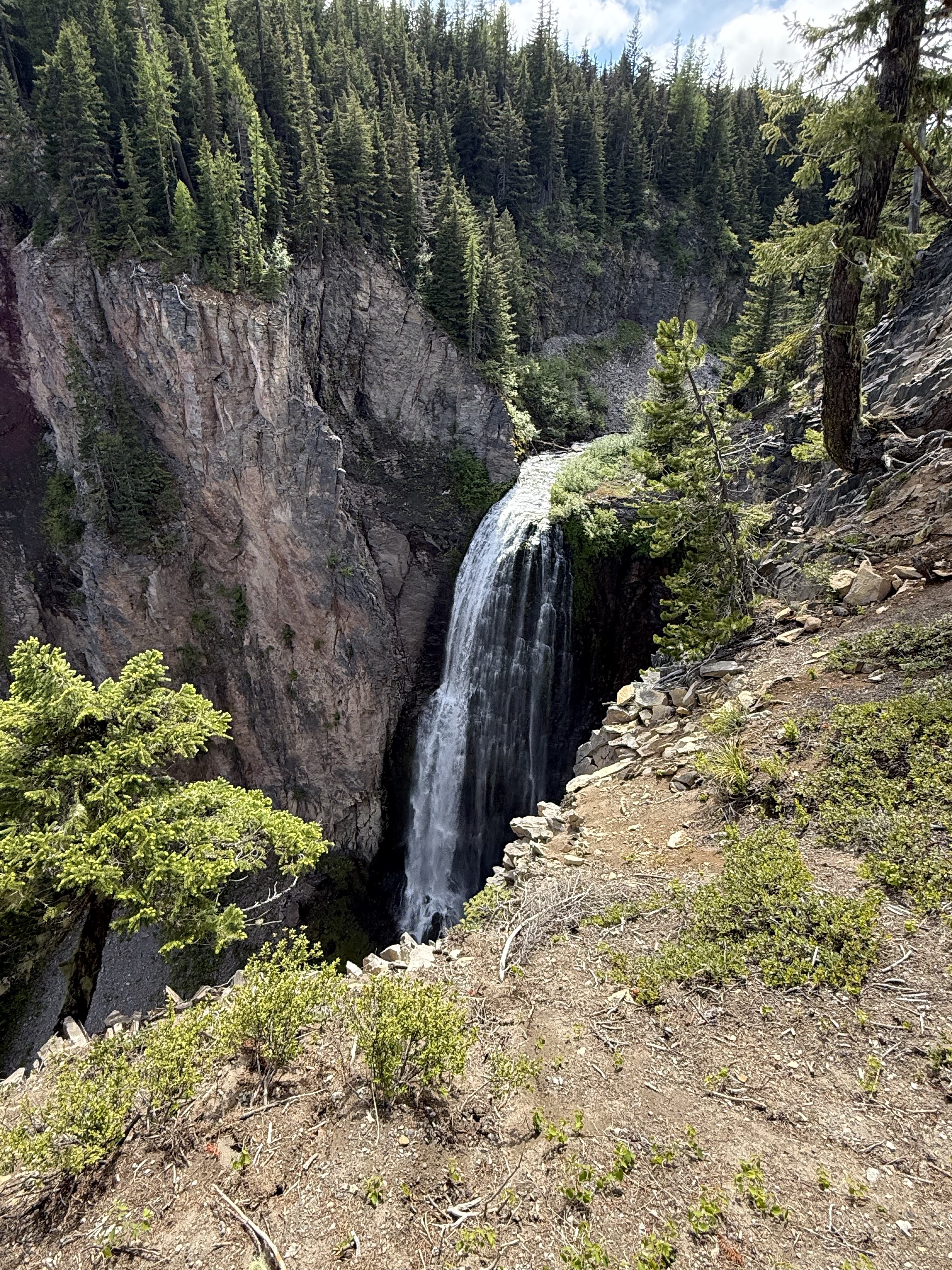
This was the best angle I could get, and I still couldn’t see the bottom! It turns out that Washington has more than 3000 catalogued water falls, more than any other U.S. state. Clear Creek is rather small at only 300 feet, so I guess there is some more air down there.
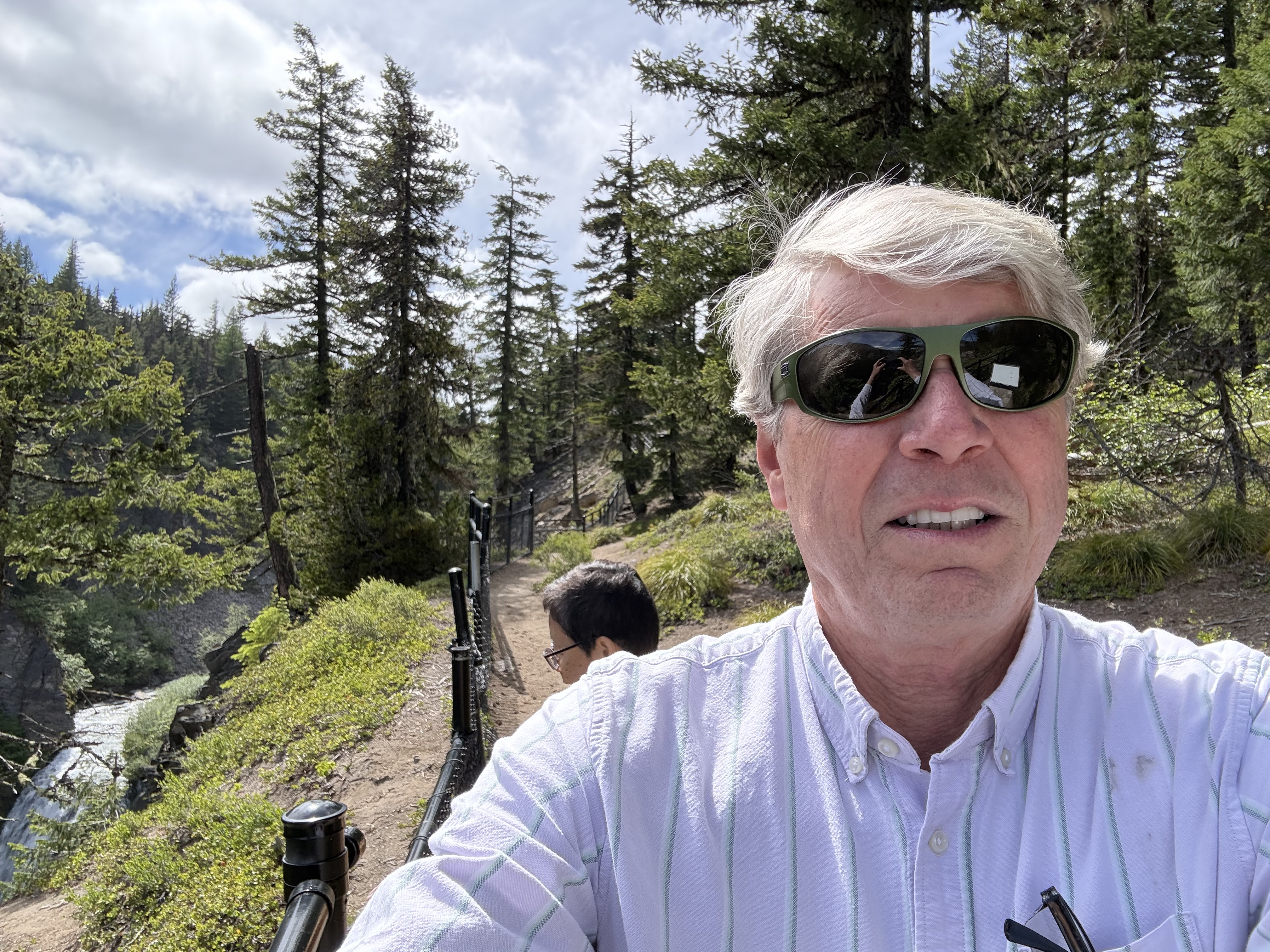
It was a beautiful day in the Pacific Northwest, including the snow flurries. A ten-hour day trip took us from coastal Washington, over a 6000 foot pass, into dry eastern Washington, where we hiked through a canyon filled with native plants and rocks (hahaha), and back over the Cascades past a magnificent water fall in Wenatchee National Forest.
This is undoubtedly the most beautiful place I have ever lived…
Ecological Notes from Cowiche Canyon
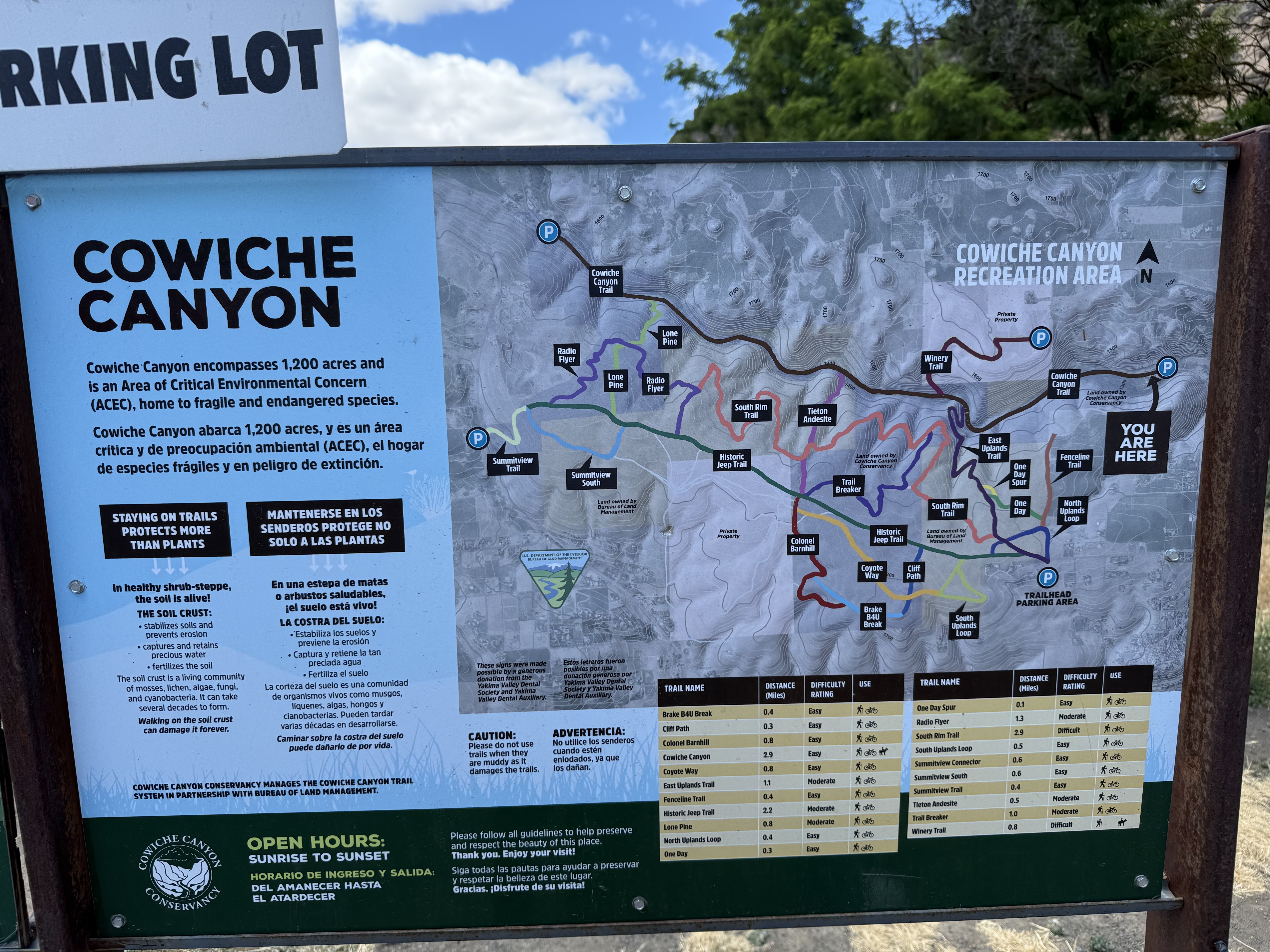
Cowiche Canyon Recreation Area is located on US12 just west of Yakima, Washington. The region receives 9-14 inches of rain per year, making it a dry area; thus, the trail system includes both shrub steppe (uplands) and riparian (along Cowiche Creek) habitats. We followed the main trail along the path of a rail line that was in use between 1913 and 1984 along the creek; however, the wetland is very narrow, in places constricted to less than 100 yards. Thus, I encountered plants from both environments.
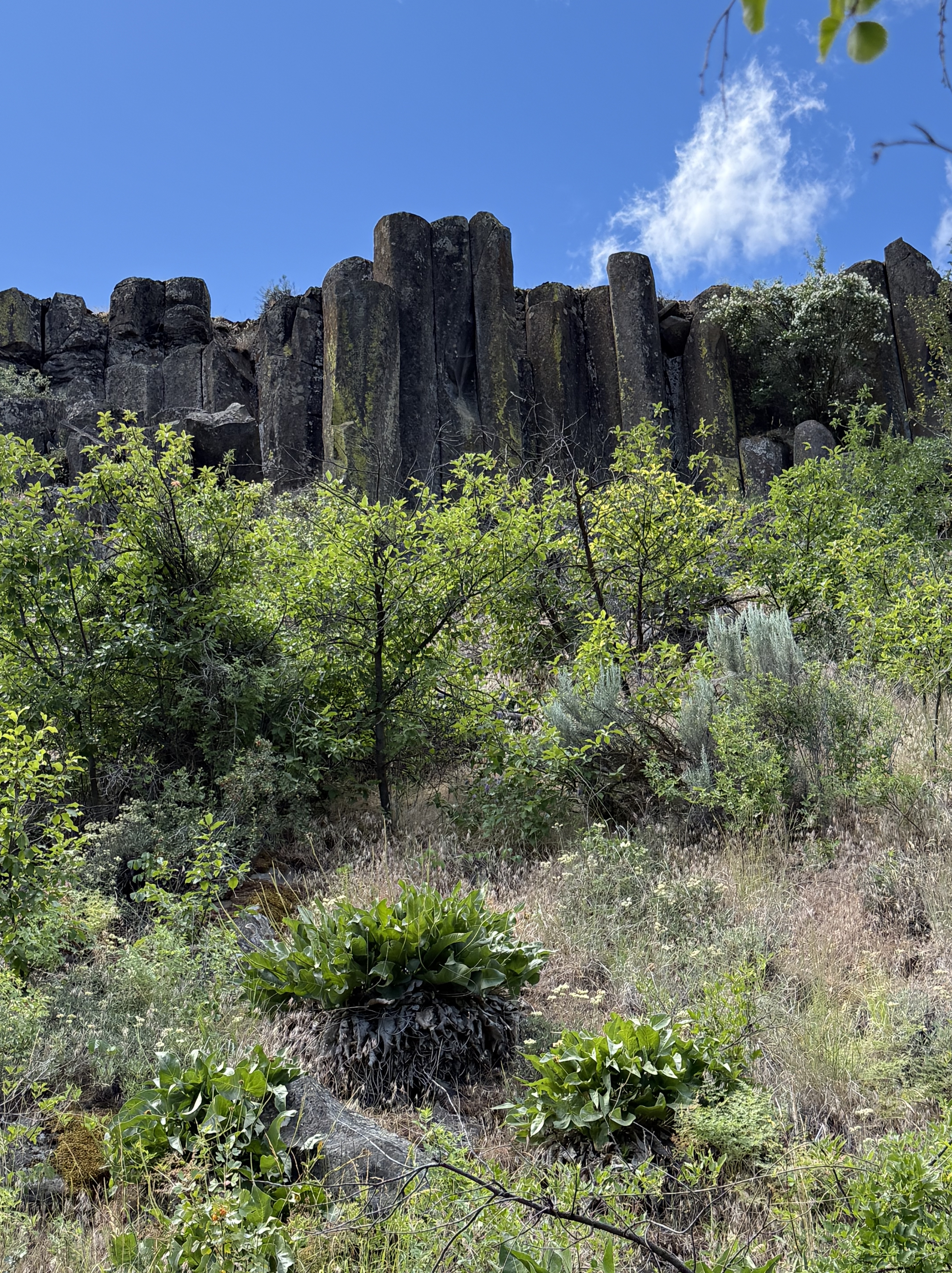
The canyon walls are composed of a series of basalt ledges with intervening slopes covered by talus and colluvium, which are part of the shrub-steppe habitat. I discussed the geology of the area in another post.
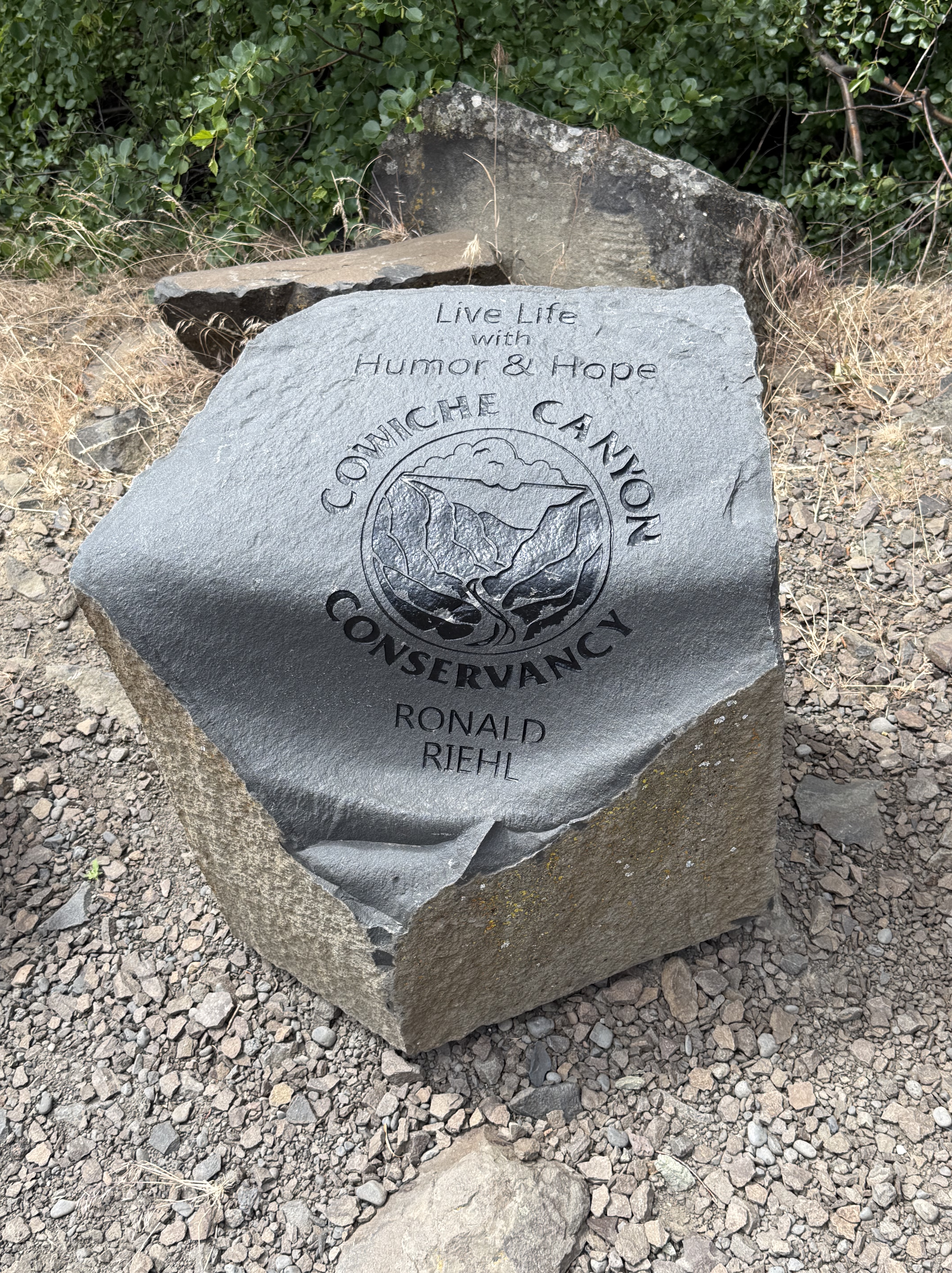
The recreation area is maintained by the Cowiche Canyon Conservancy in partnership with Bureau of Land Management. This stone is a piece of the columnar basalt that lines the canyon.
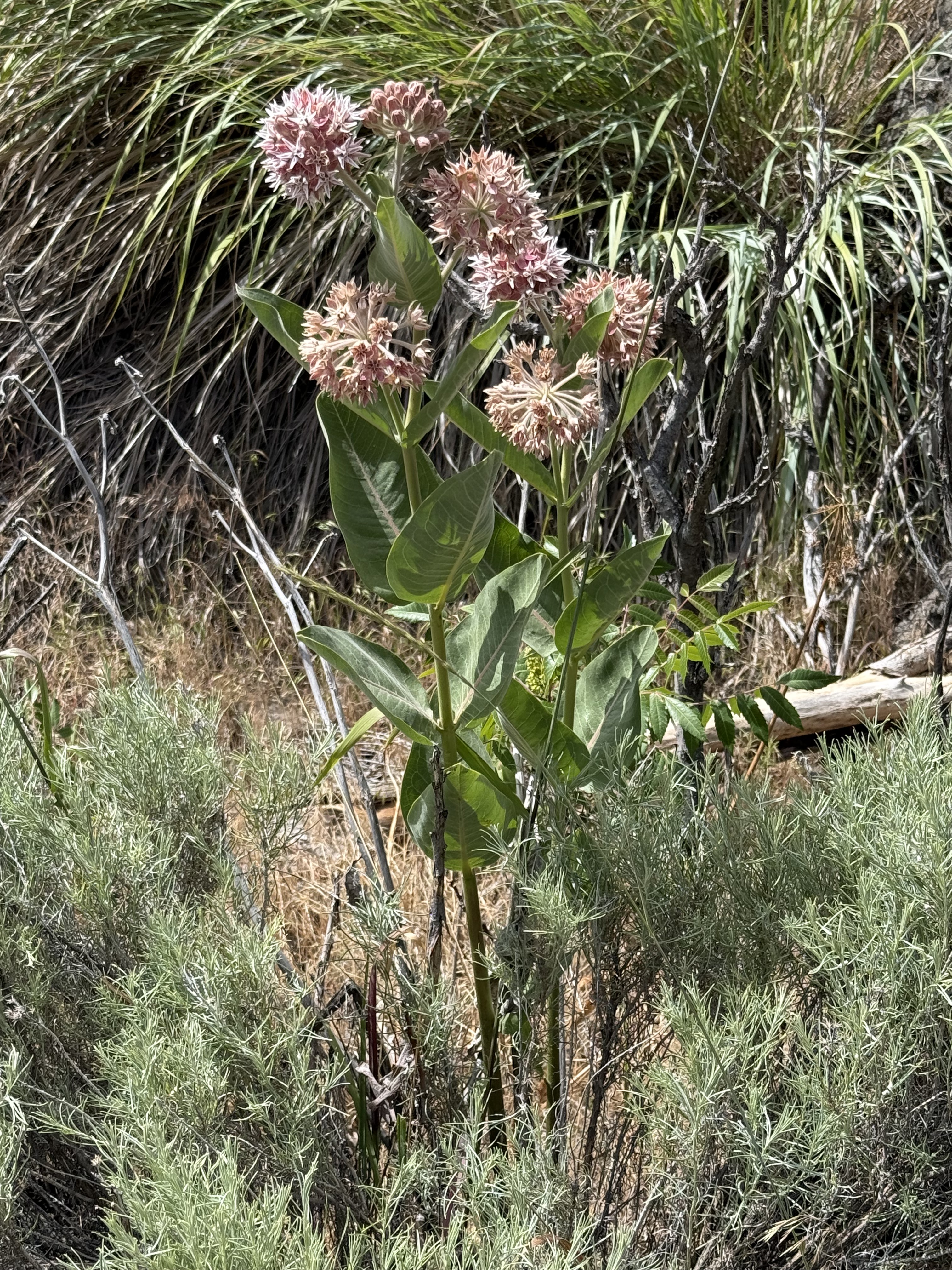
It’s fortunate that I visited this area during spring, which lasts a little longer here in the Pacific Northwest. As always, I used CoPilot (AKA ChatGPT) for identification while I try to remember scraps of the huge amount of information presented in this mixed environment.
This is Asclepias speciosa, also known as showy milkweed. It is native to Yakima county and is a host species for Monarch butterflies.
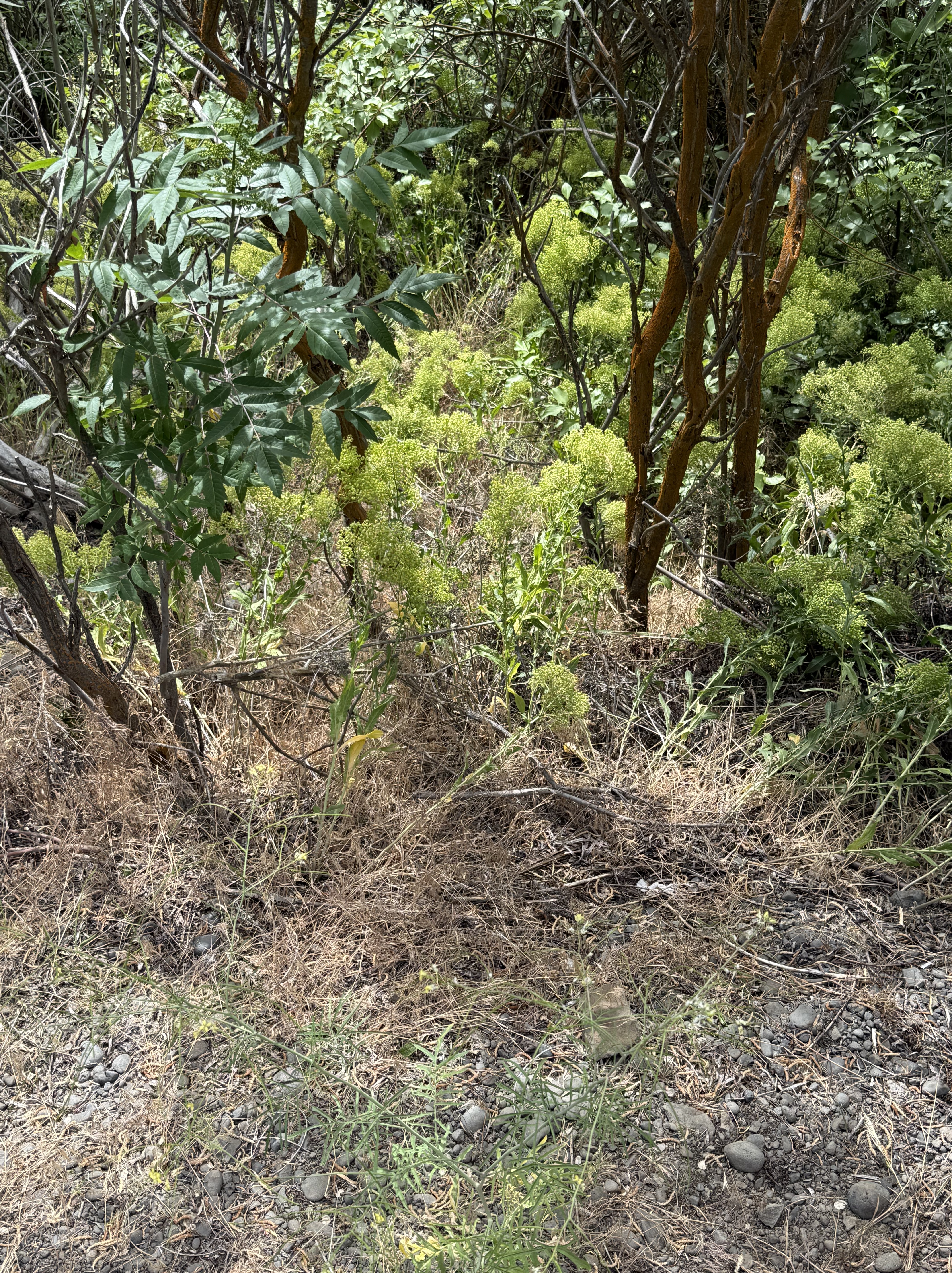
The leafy shrub with dark leaves is snowberry–Symphoricarpos albus (or possibly S. oreophilus, which also occurs around Yakima).
The low, brightly colored shrub with straight stalks is probably wax currant (Ribes cereum). The bright green is small leaves and the small patches of pink–barely visible in the photo–are the flowers. These are both native plants.
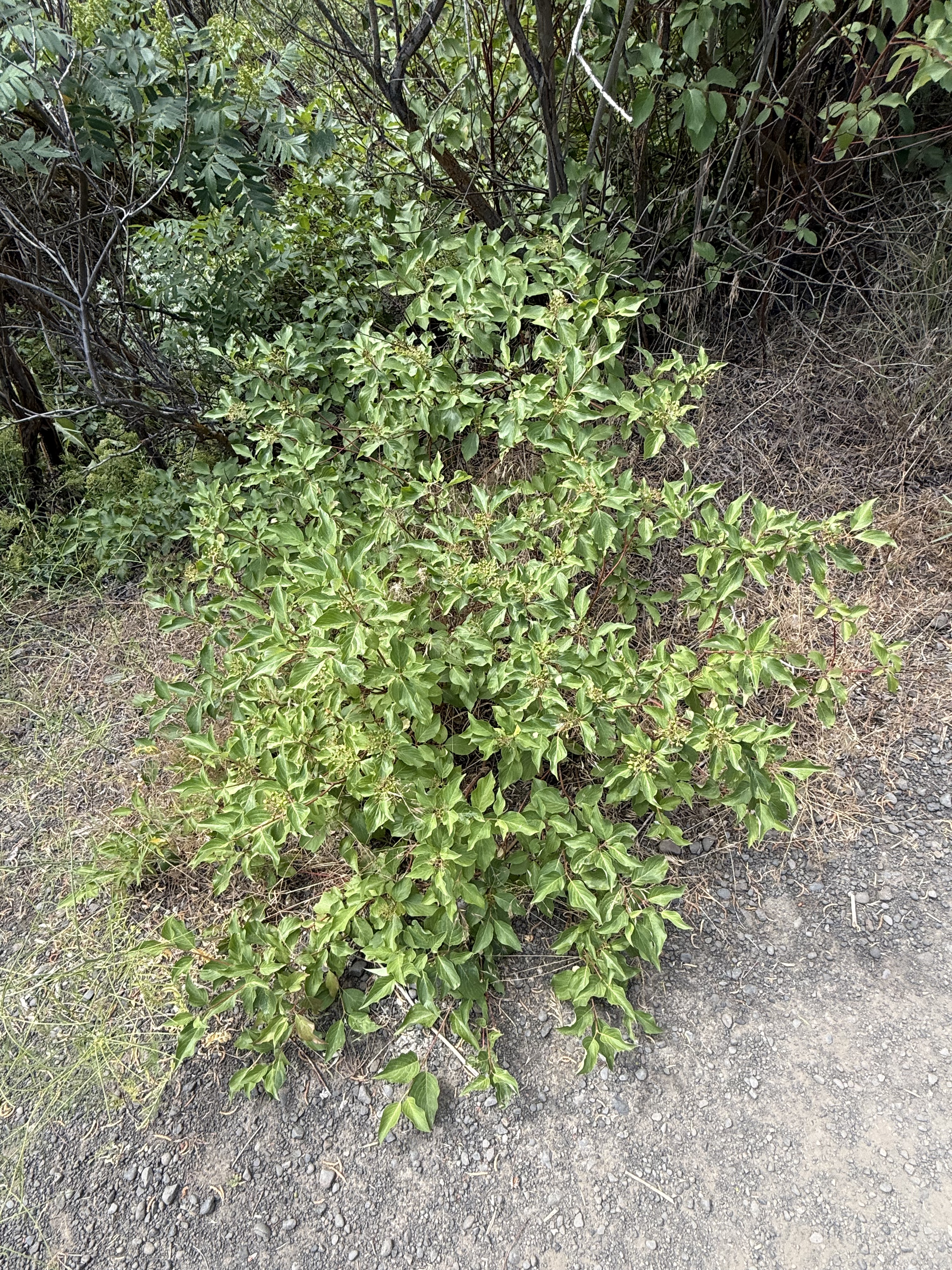
CoPilot wasn’t so sure about this, but it might be Creek or Red-osier Dogwood (Cornus sericea). This specimen was growing in the bottom of the canyon, not far from Cowiche Creek, which is a natural location for this native riparian species. It will probably become a small tree.
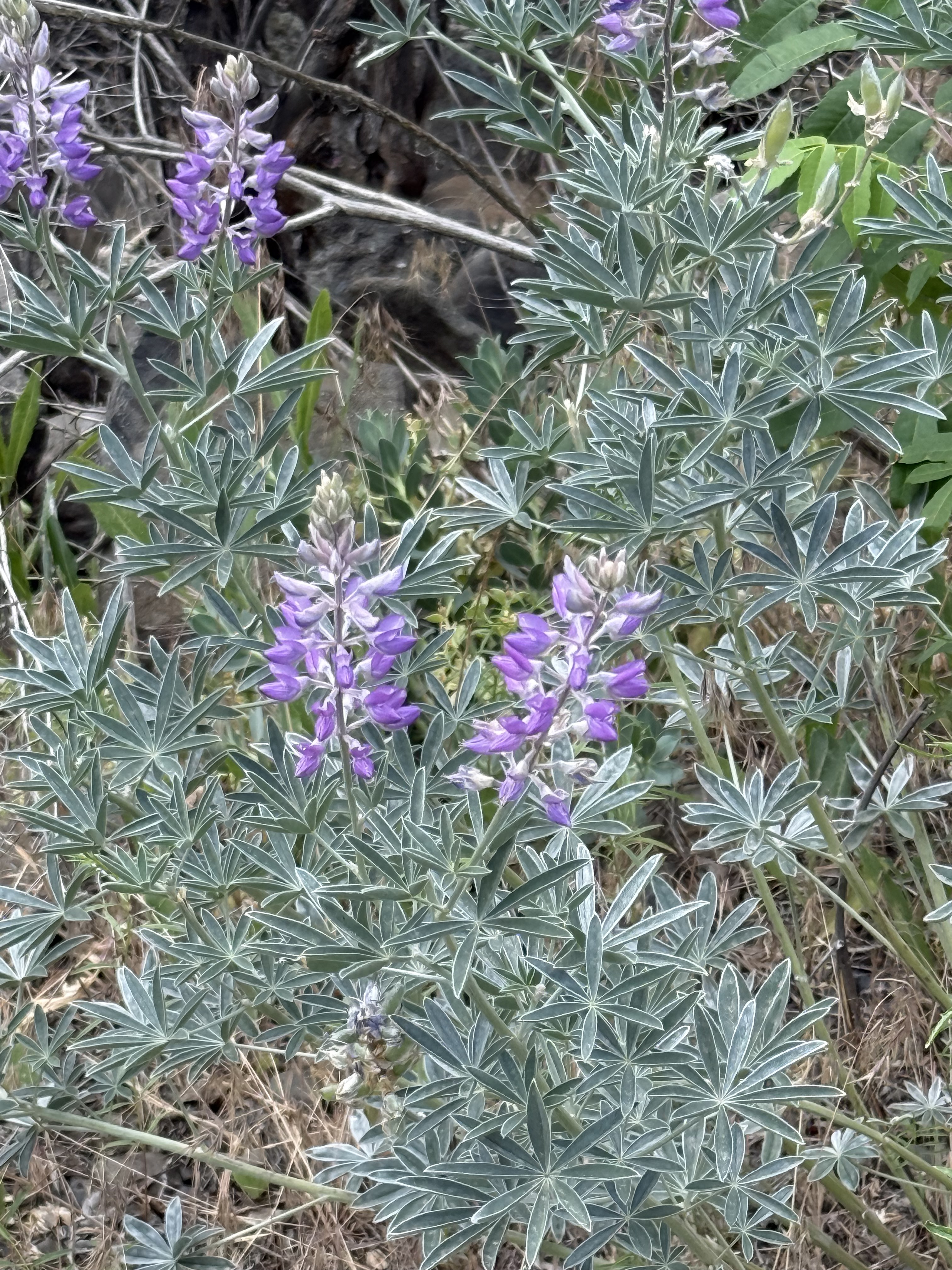
This is my favorite from the walk. Silky lupine (Lupinus sericeus) is one of the signature wildflowers of eastern Washington. I sure am glad we caught them in bloom.
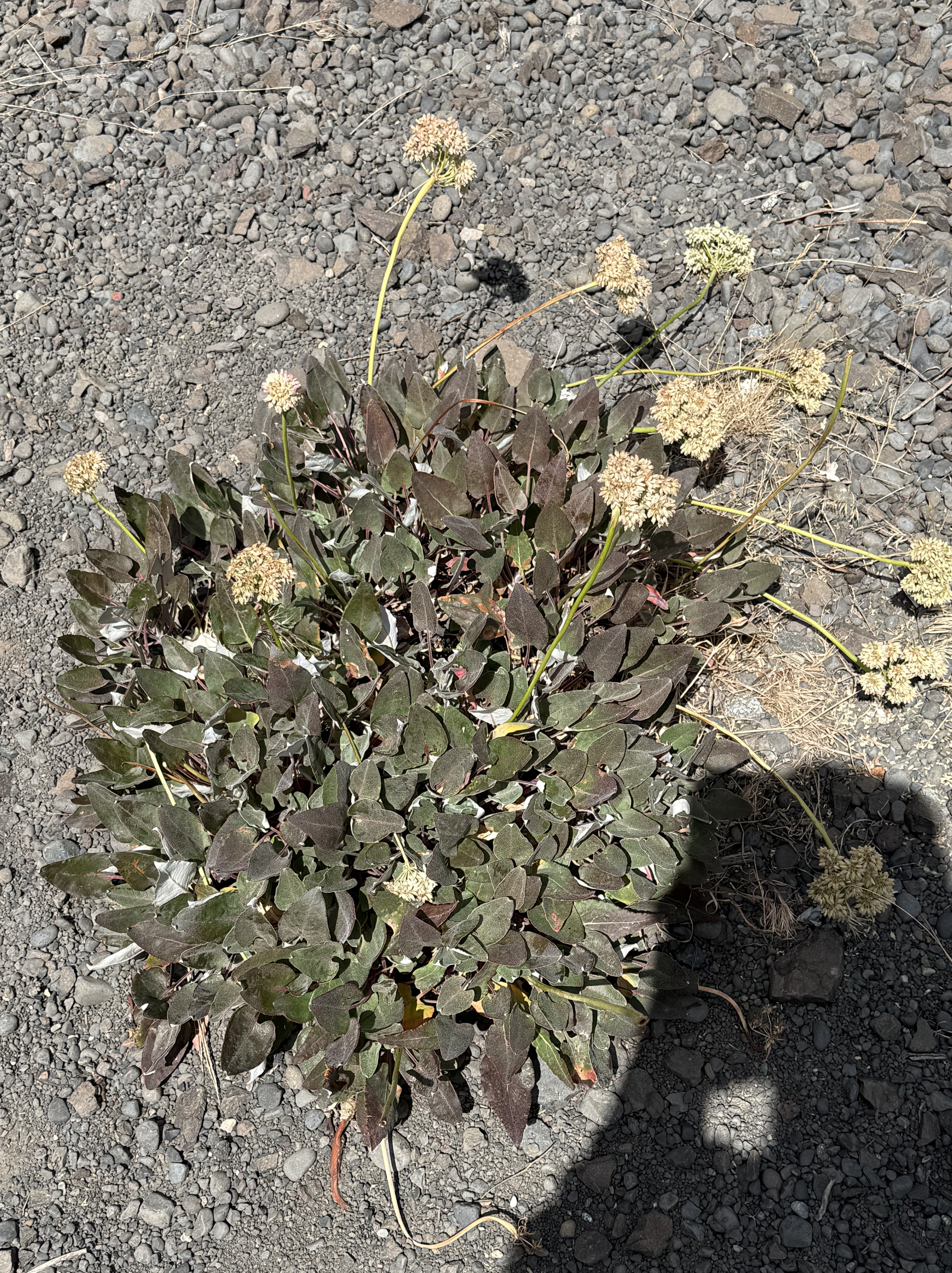
This looks like Pale‑stem buckwheat (Eriogonum heracleoides), another native wildflower to the shrub-steppe habitat.
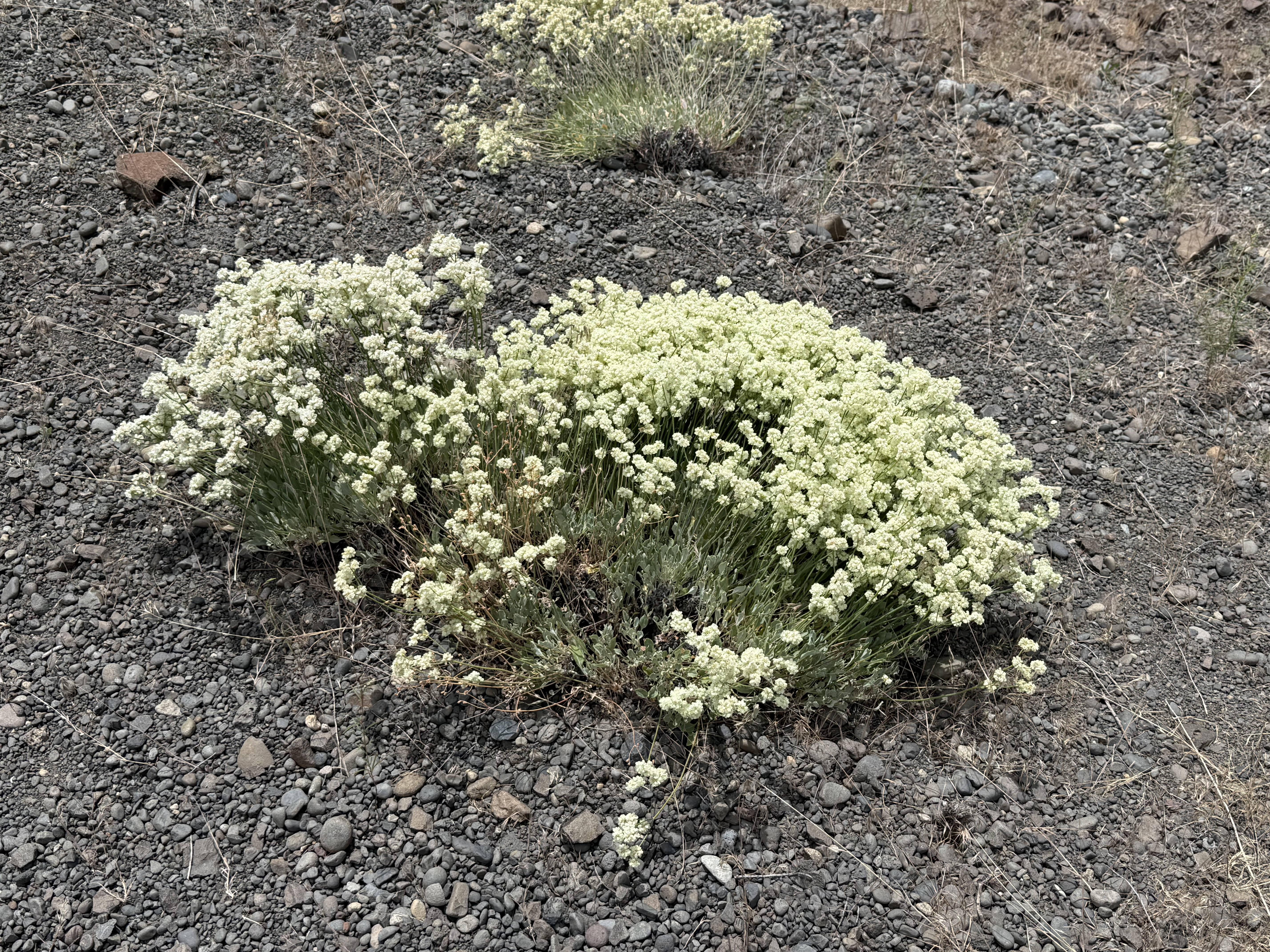
My untrained eye thought this was Pale-stem buckwheat, but CoPilot pointed out the different leaf pattern and color. This is (probably) Sulphur Buckwheat (Eriogonum umbellatum), another common wildflower to Yakima County’s uplands.
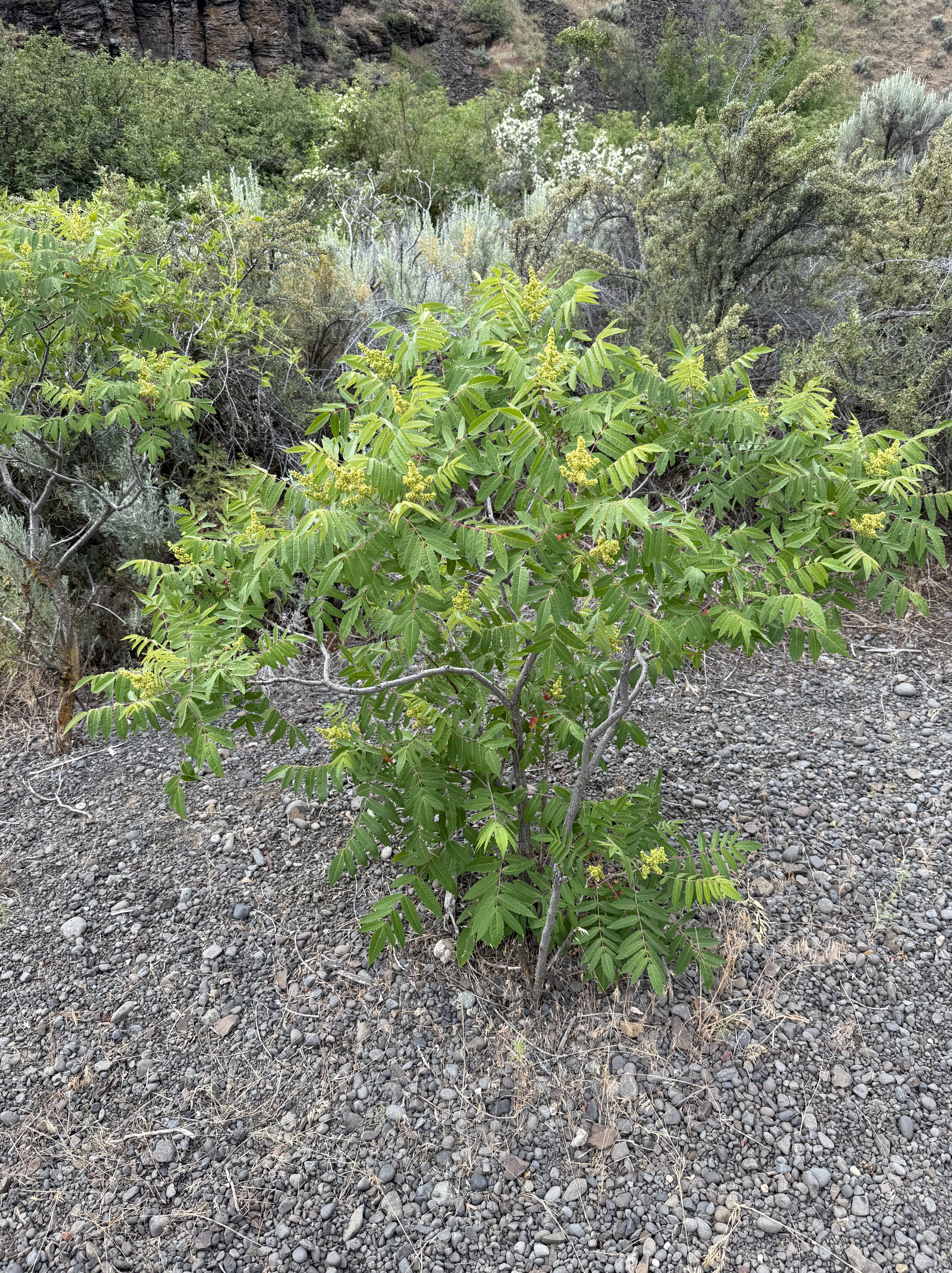
Antelope bitterbrush (Purshia tridentata) is a foundation species of the steppe. This young one had lots of flowers, but the old ones have bare branches; and groups of them grow and die together in cohorts after a disturbance like a wildfire. Yet another native plant.
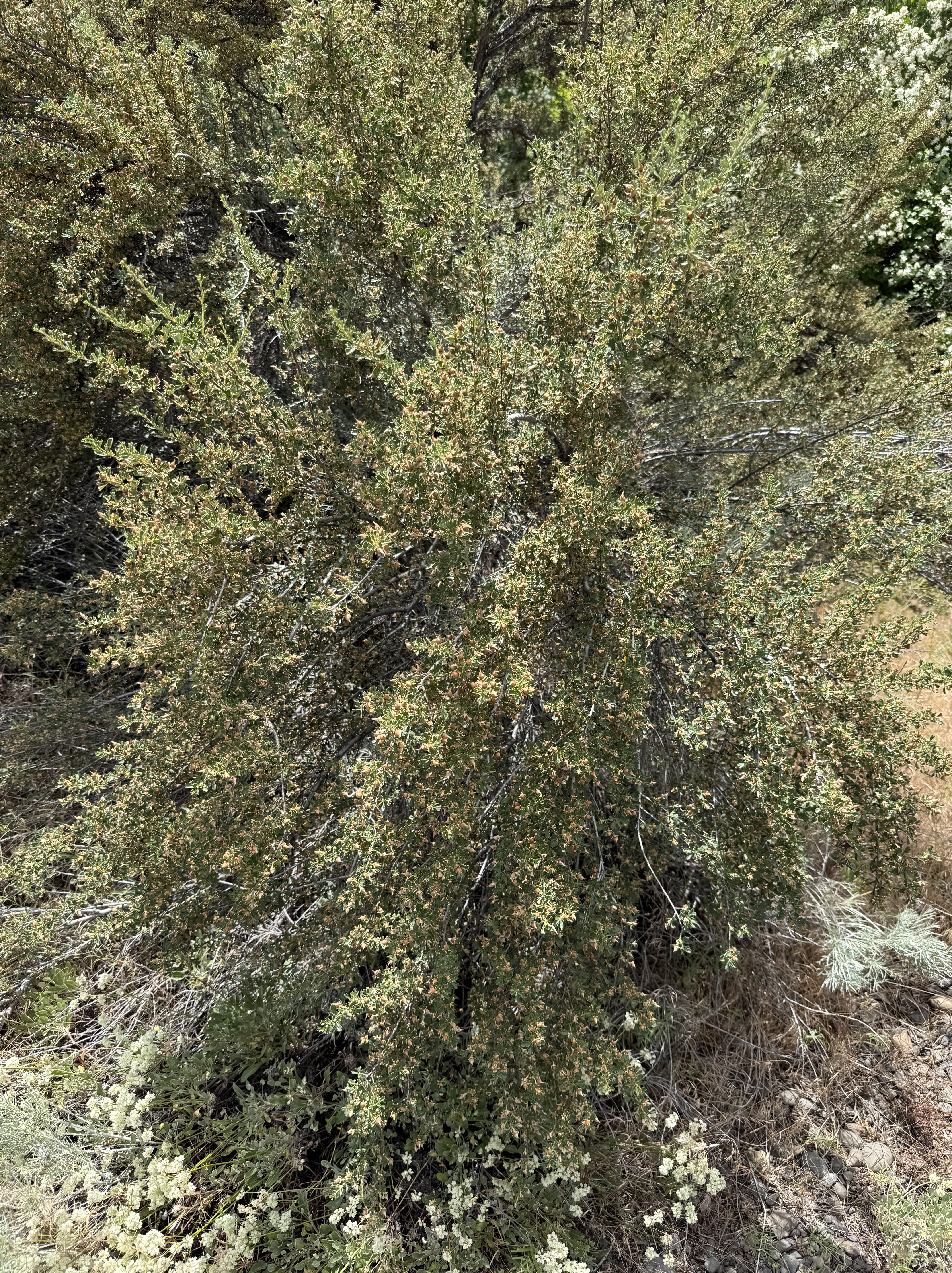
After some discussion, and sharing a close-up, CoPilot swears (hahaha) this is Woods’ rose (Rosa woodsii). However, its justification fits what I see with my own, somewhat confused eyes.
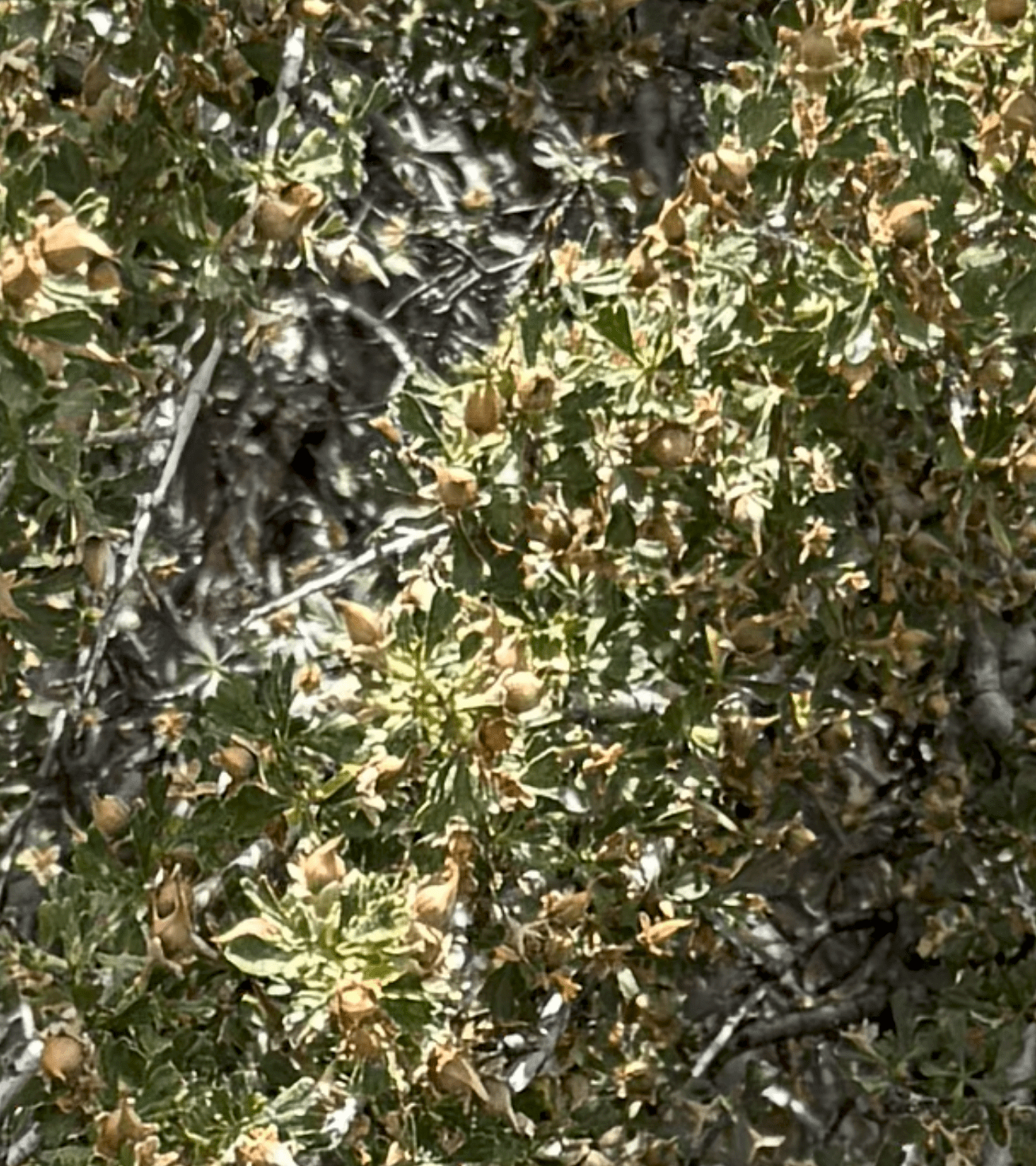
Here’s a close-up of the fruit. The shrub is covered with small nuts that have a distinctive shape, and are definitive for a wild rose. This is another native species to the steppe habitat of Eastern Washington.
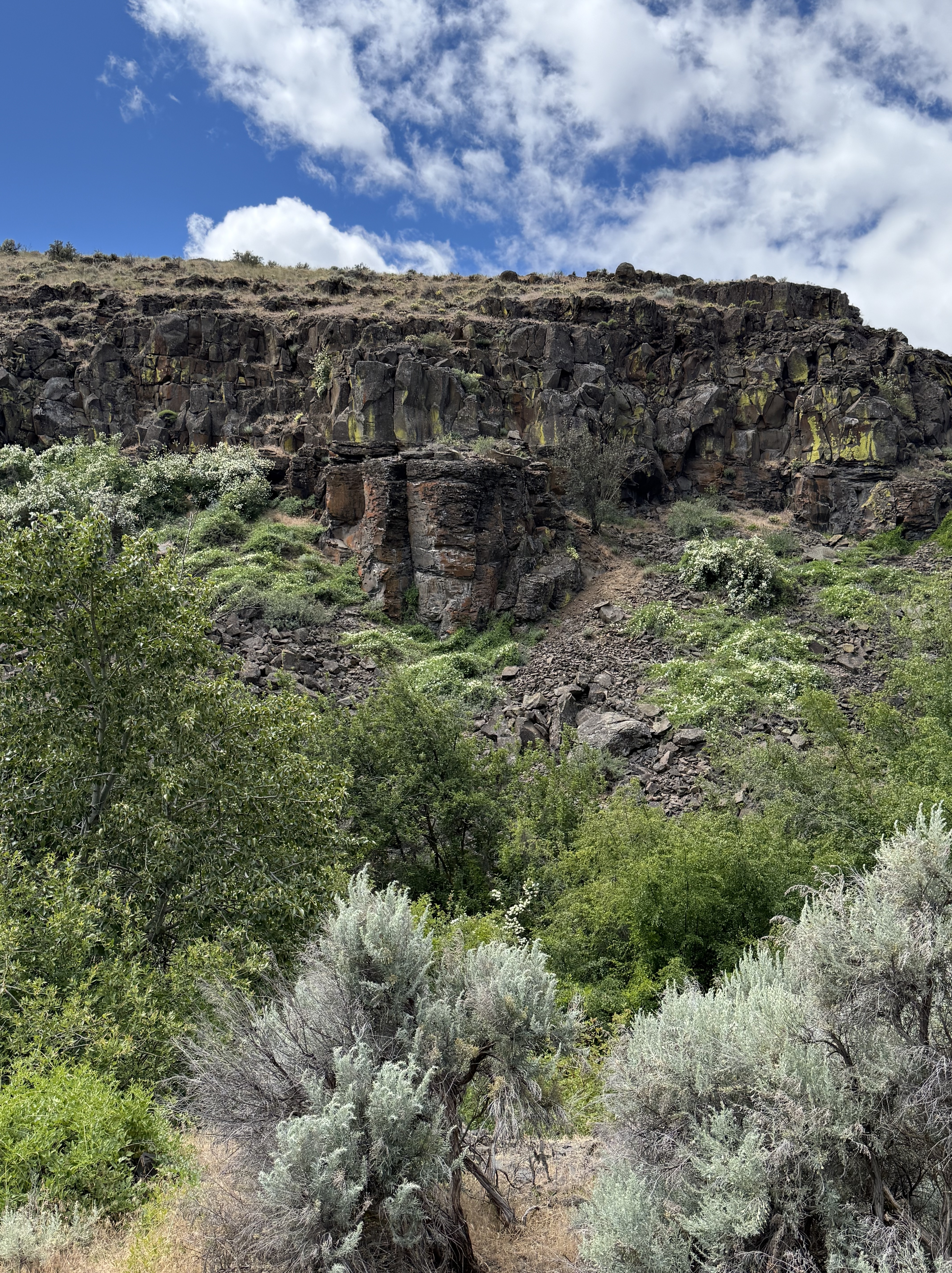
This photo, looking across Cowiche Creek, puts it all together for me. On the other side of the canyon we see columnar jointed basalt, several plant species similar to snowberry, bitterbrush, and buckwheat. Along the creek are dogwood and wild rose; and in the foreground is (maybe) big sagebrush (Artemisia tridentata).
When I took this picture, all I saw was a bunch of plants. After carefully examining them with CoPilot, it has become a mixed riparian-shrub-steppe habitat. However, I didn’t see/hear any birds or other animals, even though it was a cool day with temperatures in the mid-sixties.
CoPilot was a great help, but it is not infallible–more like working with someone who has studied some biology/ecology. After all, it is only a Large Language Model, not an AI system trained on recognizing plant species. Nevertheless, it was a great collaborator and I learned a lot from our collaboration.
Volcanic Rocks at Cowiche Canyon
Introduction
Burlington-Northern Railroad built a line through Cowiche Canyon in 1913 to transport apples, but it was abandoned in 1984 and the land was acquired by the Cowiche Canyon Conservancy for a non-motorized vehicle trail system. The main trail extends 2.9 miles along the South Fork Cowiche Creek, crossing the 11 bridges constructed for the railroad line.
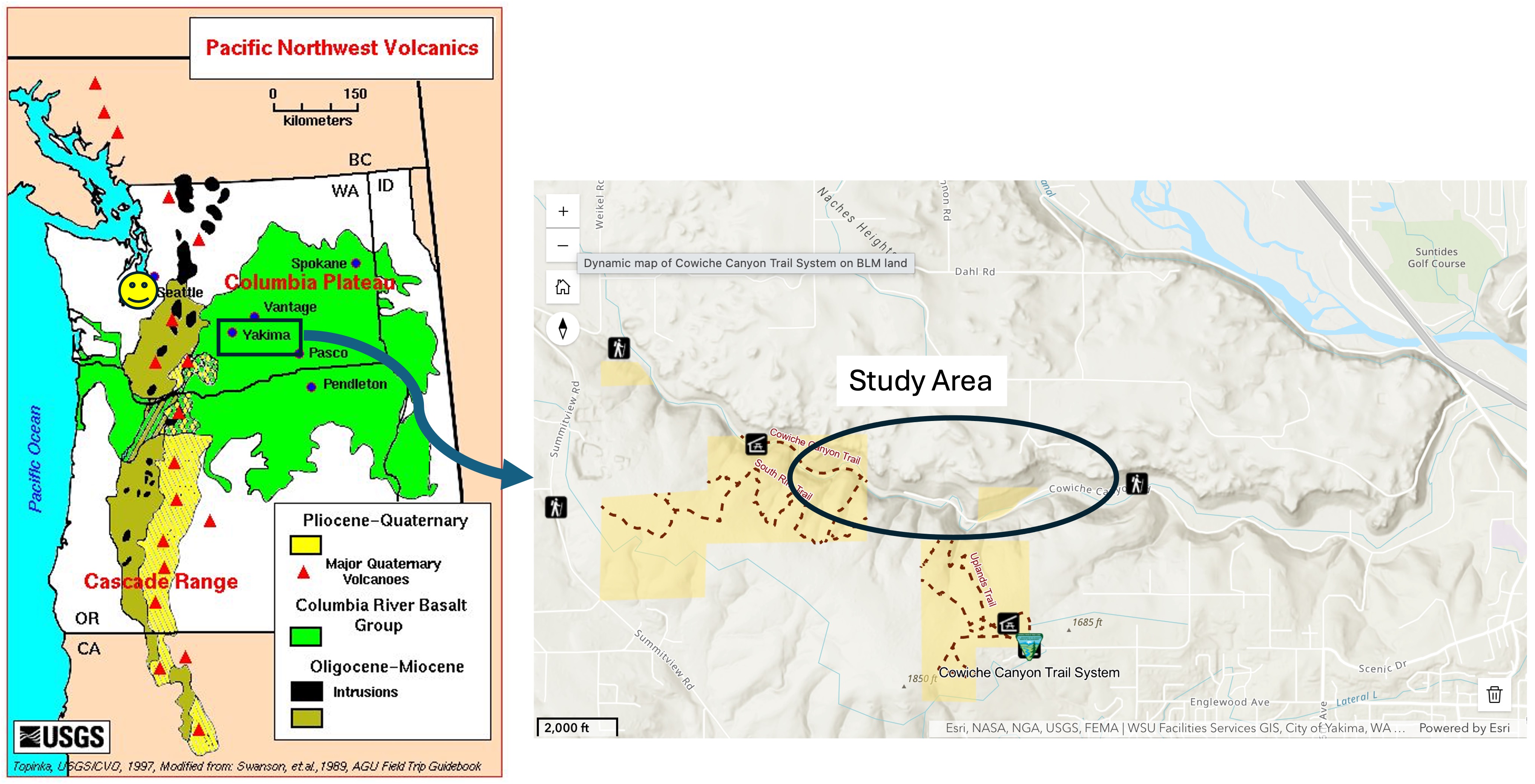
The left panel shows the distribution of Columbia River flood basalts, deposited between 16 and 6 Ma. Yakima and Cowiche Canyon are outlined by a rectangle. These volcanic rocks were erupted in overlapping flows with erosion and landslides occurring between individual layers, which are irregular and not shown in this map. The ages from the USGS national geologic map are Tertiary (66-2.6 Ma). Tacoma is marked by a smiley face.
The right panel shows the Cowiche Canyon trail system and the specific area discussed in this post. The stream itself hosts a riparian habitat whereas the uplands comprise a shrub-steppe environment.
Observations
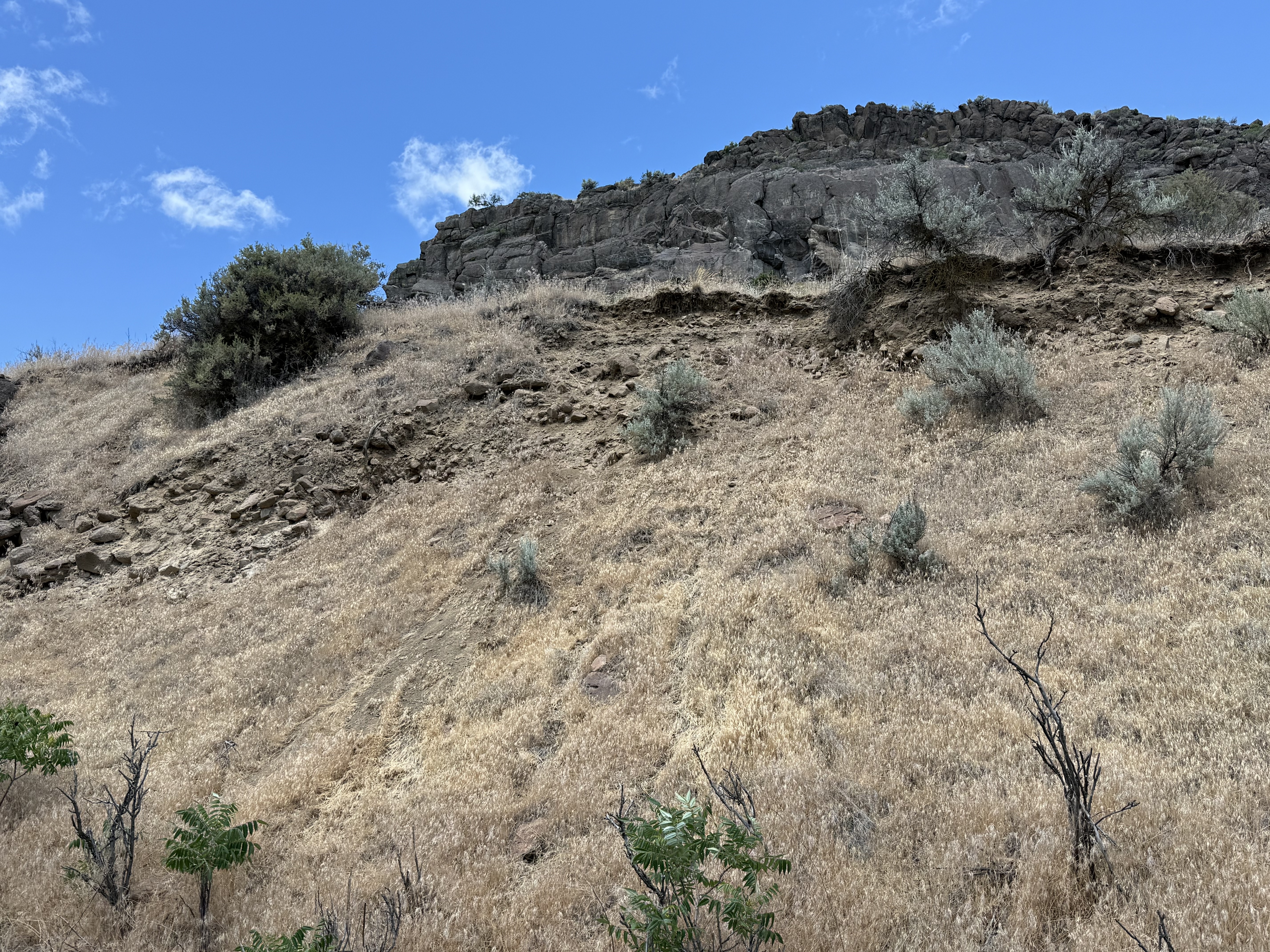
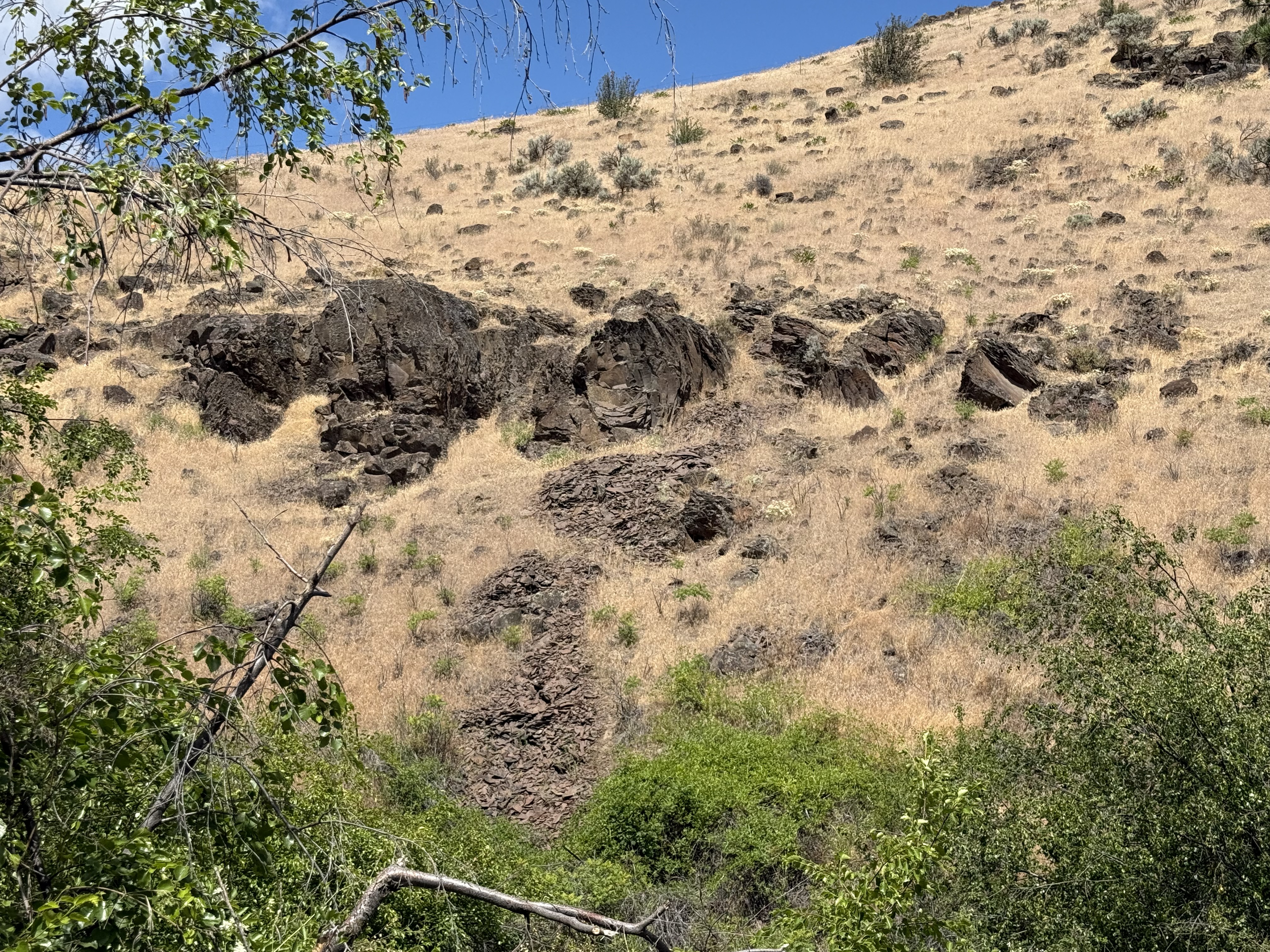
The canyon walls consist of a series of ledges like this with eroded slopes between them. The ledges are erosional margins of basalt flows and the slopes consist of talus and fine sediments weathered from the mafic rocks.
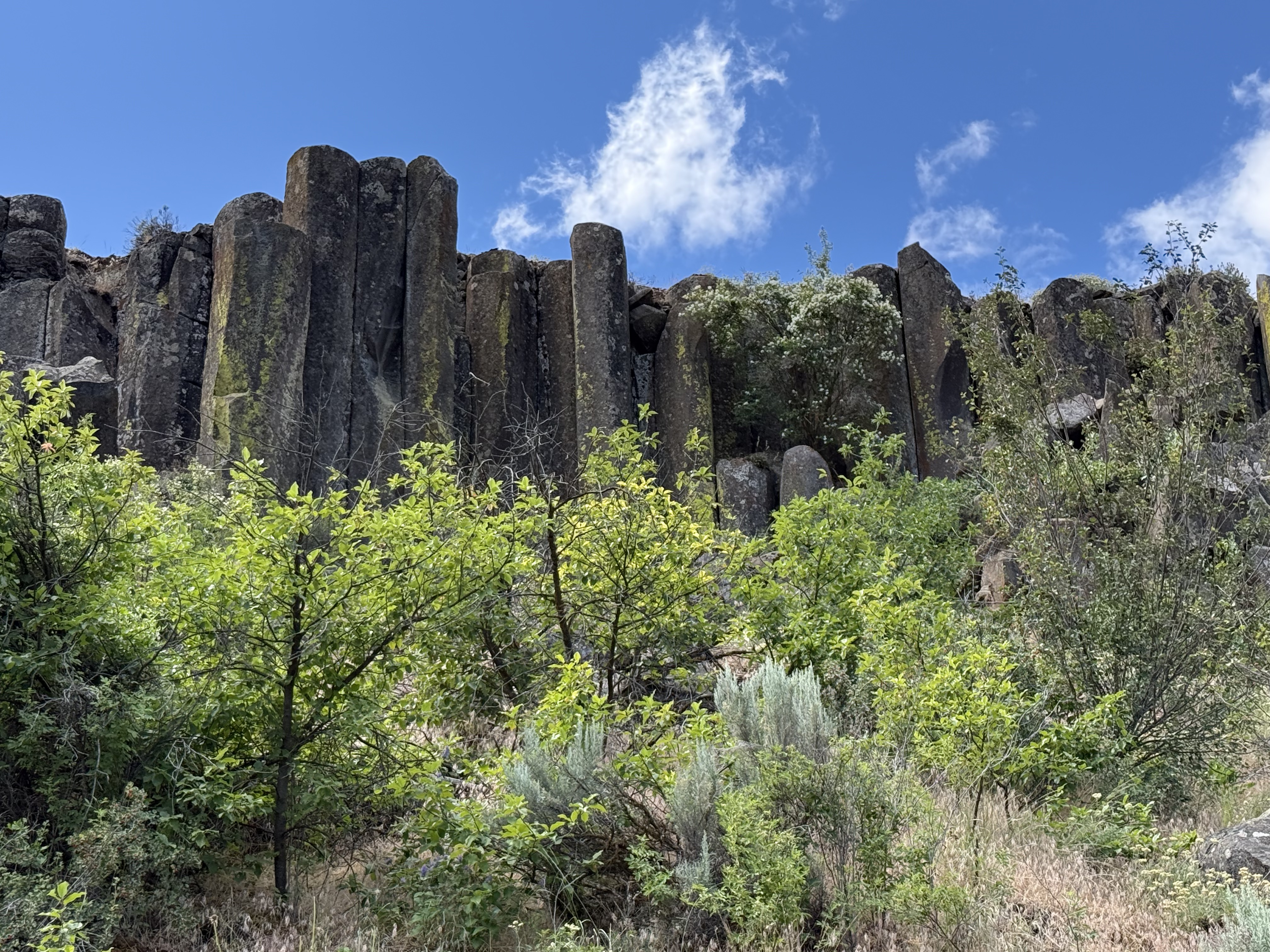
As we traveled west up the canyon, columnar-jointed basalt began to appear in the ledges overlooking the trail. Several pieces had rolled down the slope into the stream bed; these were about three-feet in diameter. Columnar jointing results from slow cooling of a uniform basalt flow, which causes joints to form hexagonal blocks like these because of thermo-mechanical failure during a decrease in volume.
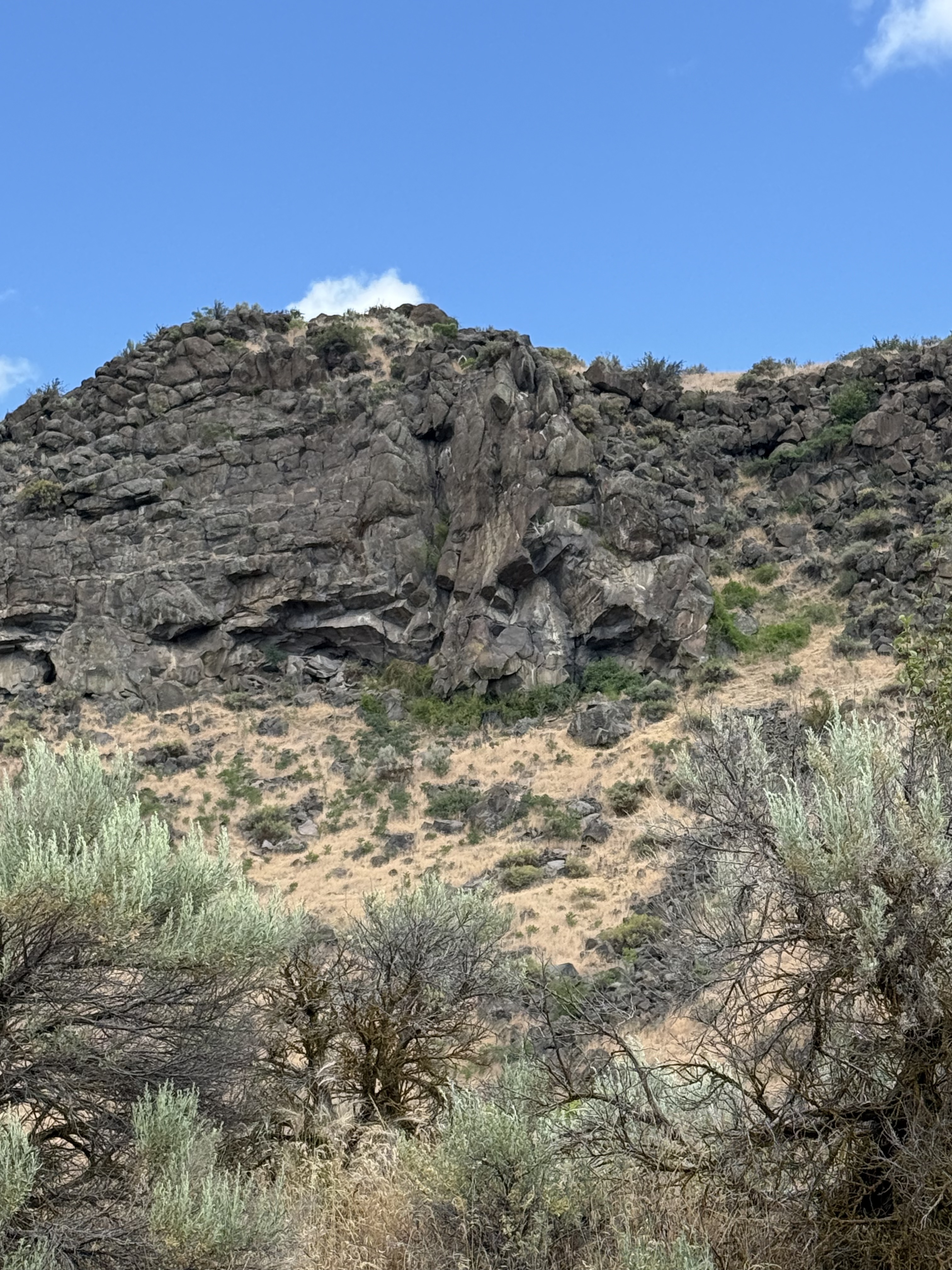
These semi-circular blocks got my attention because, if you look closely, they appear to be eroded hexagons I estimate to be more than six feet in diameter. These are very large basalt columns that have either toppled or…
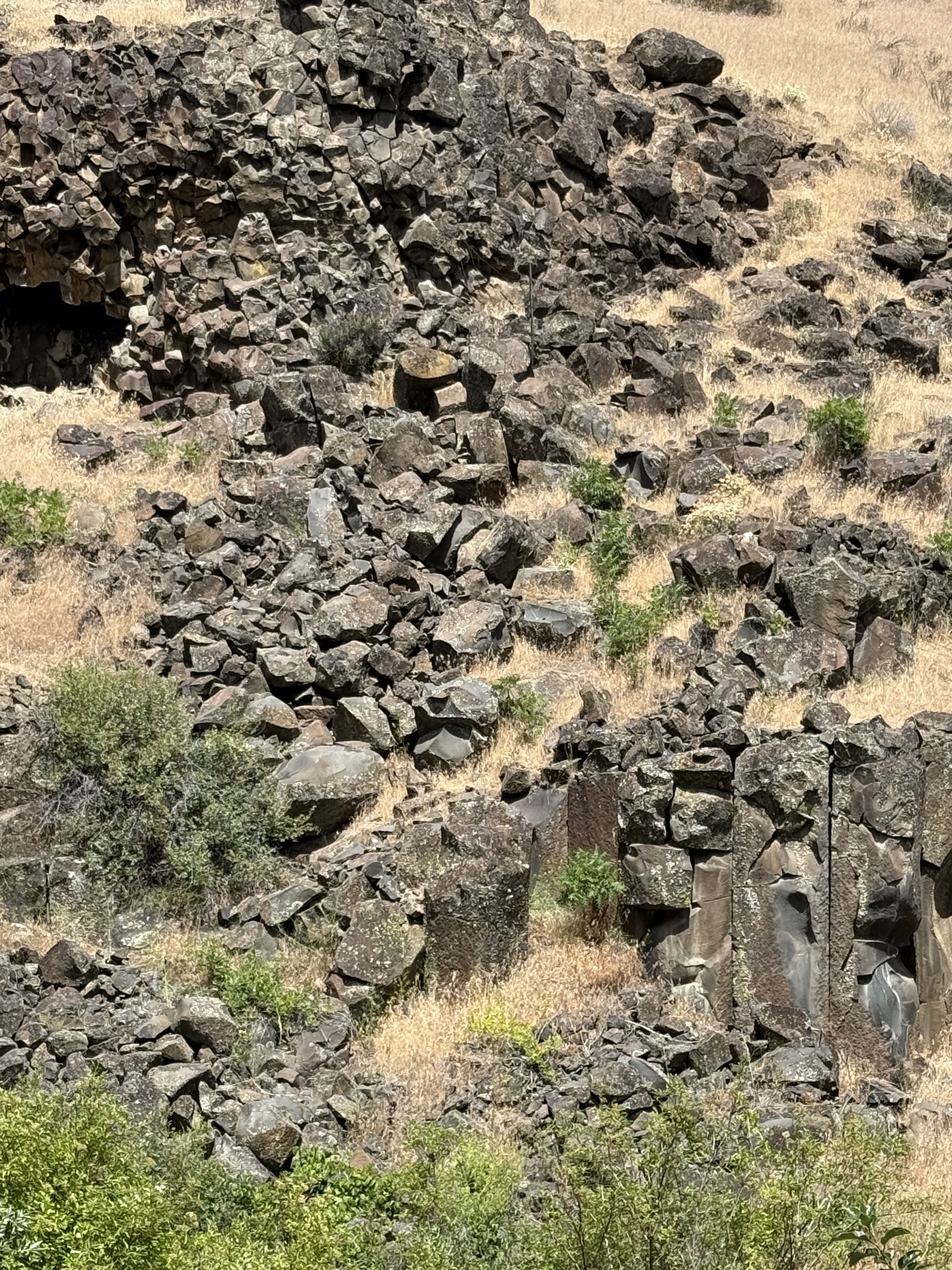
The top of this photo shows a birds-eye view of columnar basalt blocks because of their horizontal position. The size varies from smallest on the left to the largest blocks on the right. I reported on similar, horizontal columnar joints in a previous post and proposed that the lava flowed down a slope before solidifying.
The lower-right part reveals columnar basalt in a vertical position. This juxtaposition suggests (if my model is correct) that the lava from multiple flows covered an irregular landscape–sometimes flowing into canyons like Cowiche Canyon, and somtimes over fairly level ground.
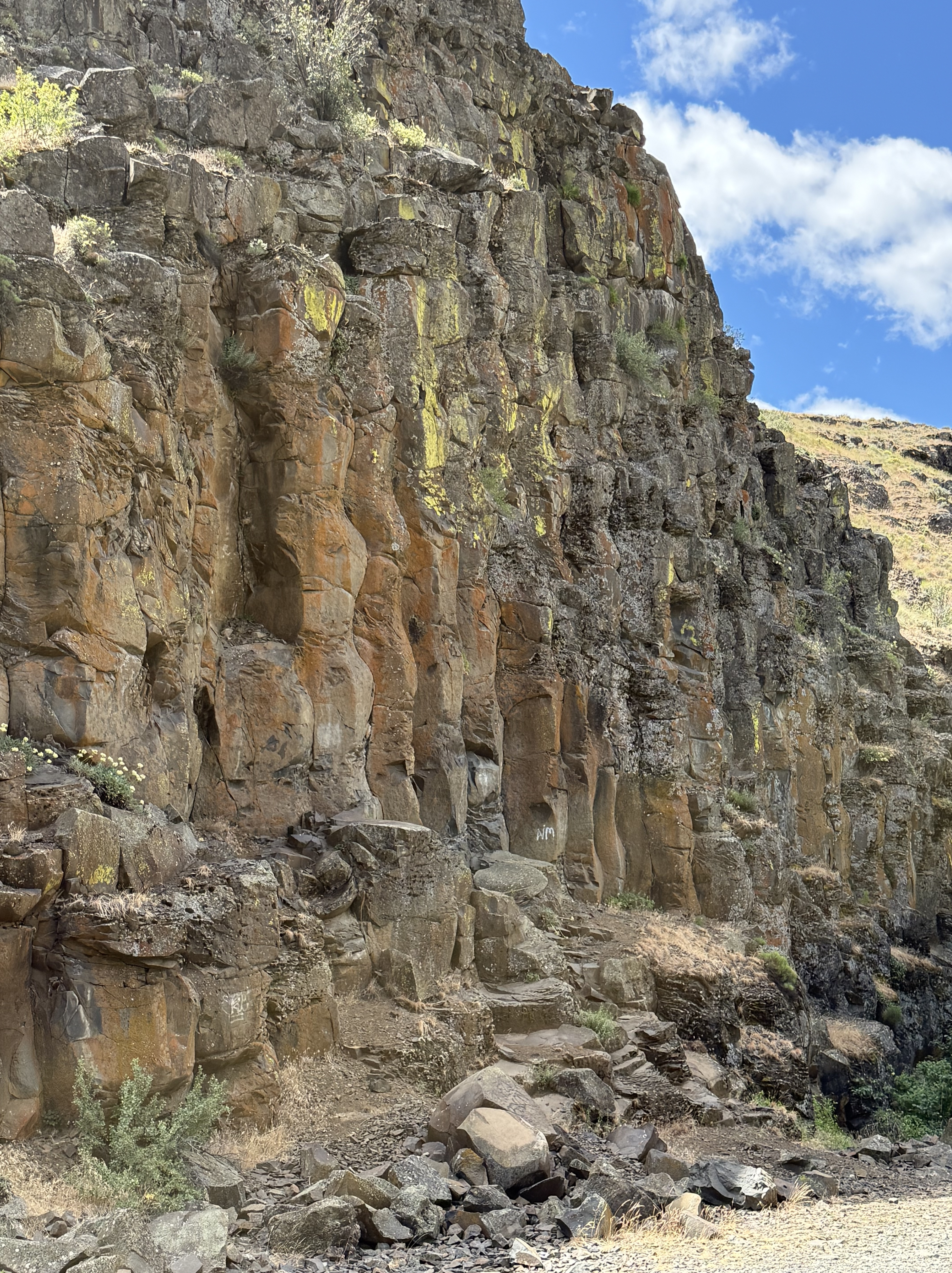
This remarkable set of columnar joints got my attention because of their undulating form. I’ve never seen anything like this before. This style of jointing (supposedly) results from uneven cooling and weathering; for example, a heavy load on the layer during cooling leads to pinching and swelling at fairly uniform spacing. That sounds reasonable to me.
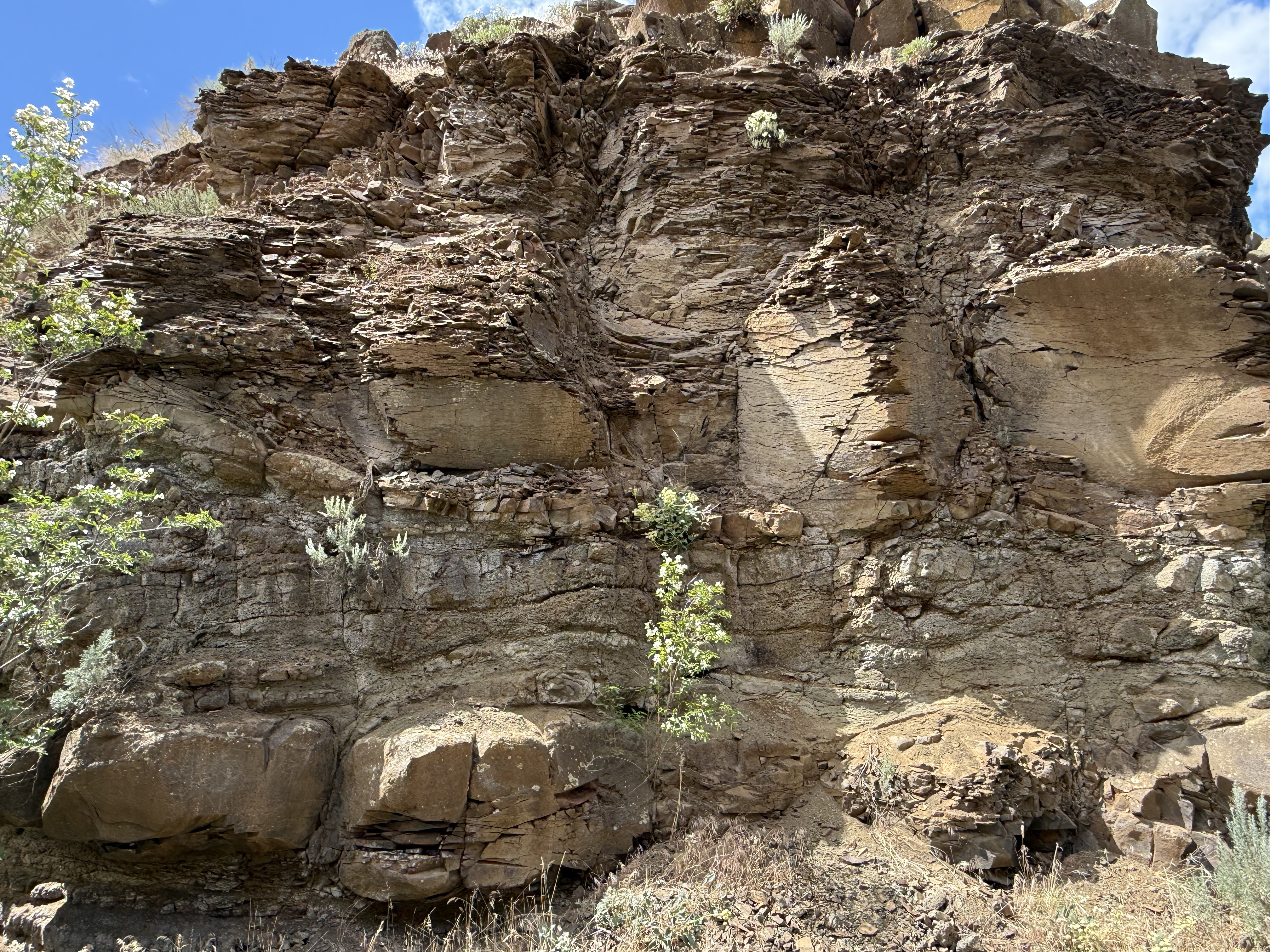
Another weathering feature of these rocks is the fissile structure revealed in this image. More solid blocks are interspersed with flaky layers, possibly (I’m speculating here) associated with necked and wider segments of an individual column. For example, the wider sections might undergo shear during stretching, resulting in microscopic shear layers within the minerals comprising the original lava. These weak layers would permit water to penetrate and weather the mafic minerals of which basalt is made.
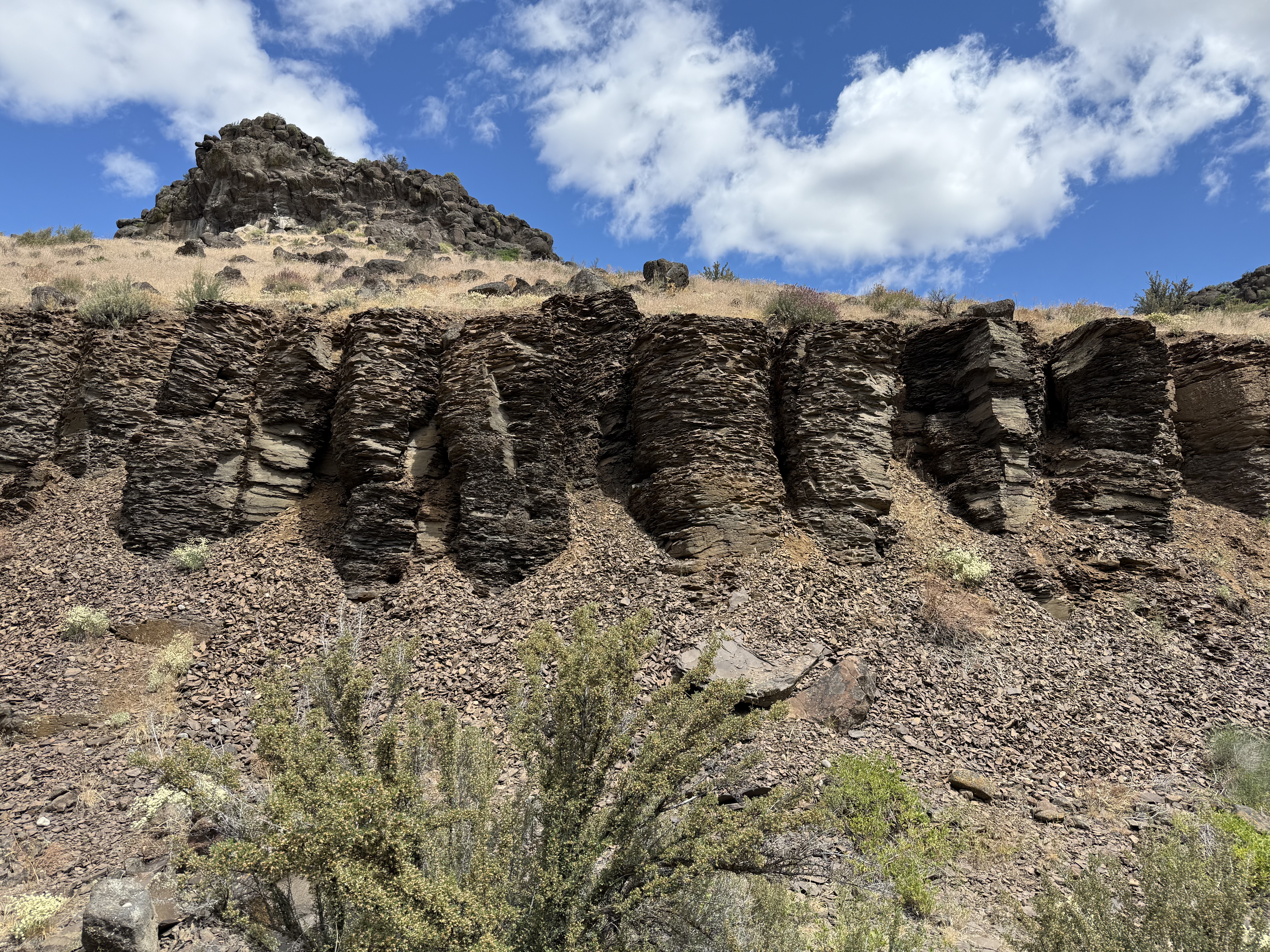
These highly weathered columns are more than six-feet in height. They suggests an alternative mechanism, shear from flowing as the basalt cooled; this might disrupt the microscopic structure without interrupting the macroscopic jointing process. Maybe…
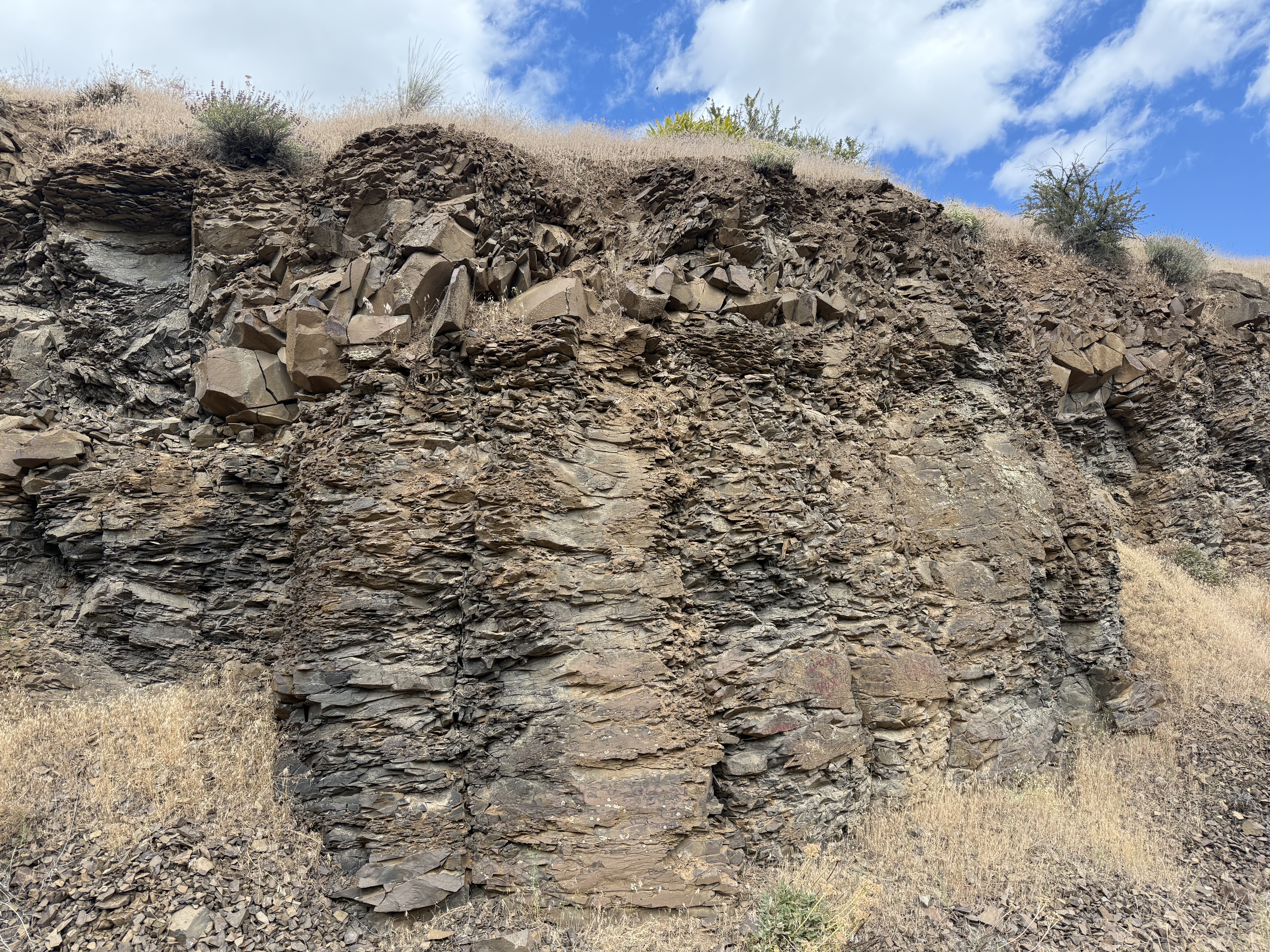
This photo really got my attention. It reveals horizontal columnar joints abutting vertical ones in the upper-center of the image. There’s a lot going on as hot lava flows over an irregular landscape, but I think this is a vent where more magma flowed out; not a large eruption, but enough to have a separate cooling history from the rock it penetrated. I should note that the Columbia River basalts flowed from fissures rather than point sources like volcanoes. The entire area shown in the map above was cut by fissures that led to a shallow magma chamber, which is still down there although it has probably solidified by now. Or not…
I like this picture because it reveals how much weathering can change the appearance of what was once molten lava in only a few million years. Note the layer of angular blocks sandwiched between weathered columns.
Conclusions
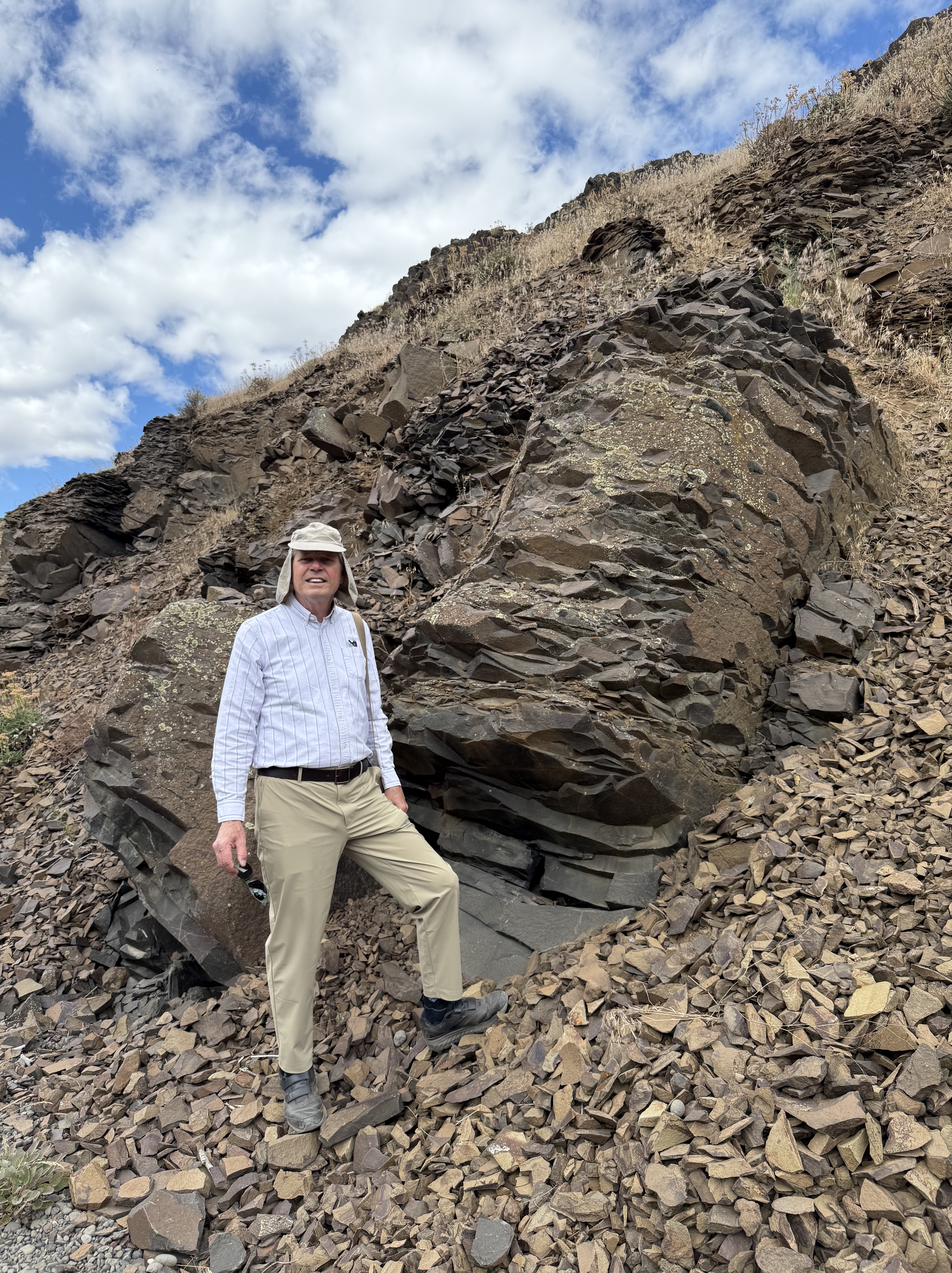
This is a typical basalt column that isn’t as weathered as some of the others. All those shards I’m standing on resulted from the breakdown of the rock by water seeping into its internal structure, where it altered the mafic minerals (e.g. pyroxene, plagioclase feldspar, biotite), which are susceptible to chemical weathering. This is where all the mud in the world comes from.
It was a great day to drive over the Cascades at Chinook Pass, where it snowed on us (in June), and explore the Columbia plateau. I’ve never seen so much variability in basalts before. The magma chamber underlying central Washington was a giant chemical reactor that released pressure by erupting a mix of fluids that cooled to form minerals and then these magnificent rocks. These rocks tell us how the magma chamber evolved over several million years; and once they were exposed to the atmosphere, they began to record the slow process of being reduced back to their basic constituents (fine-grained minerals like clay), which can remain suspended in water and begin their long and perilous journey to their final resting place–sometimes a lake but, ultimately, the ocean.
Everything eventually returns to the sea…
Point Defiance Rose Garden
Spring is a great time to be outdoors in the Pacific Northwest, so we visited the rose garden at Point Defiance park, which is more than 130 years old. It had a full-time gardener until the 70s, who lived in a house on the grounds. I forgot to take a photo of it. Not very exciting, but I found myself drawn to the amazing colors and shapes of so many flowers in bloom at the same time.
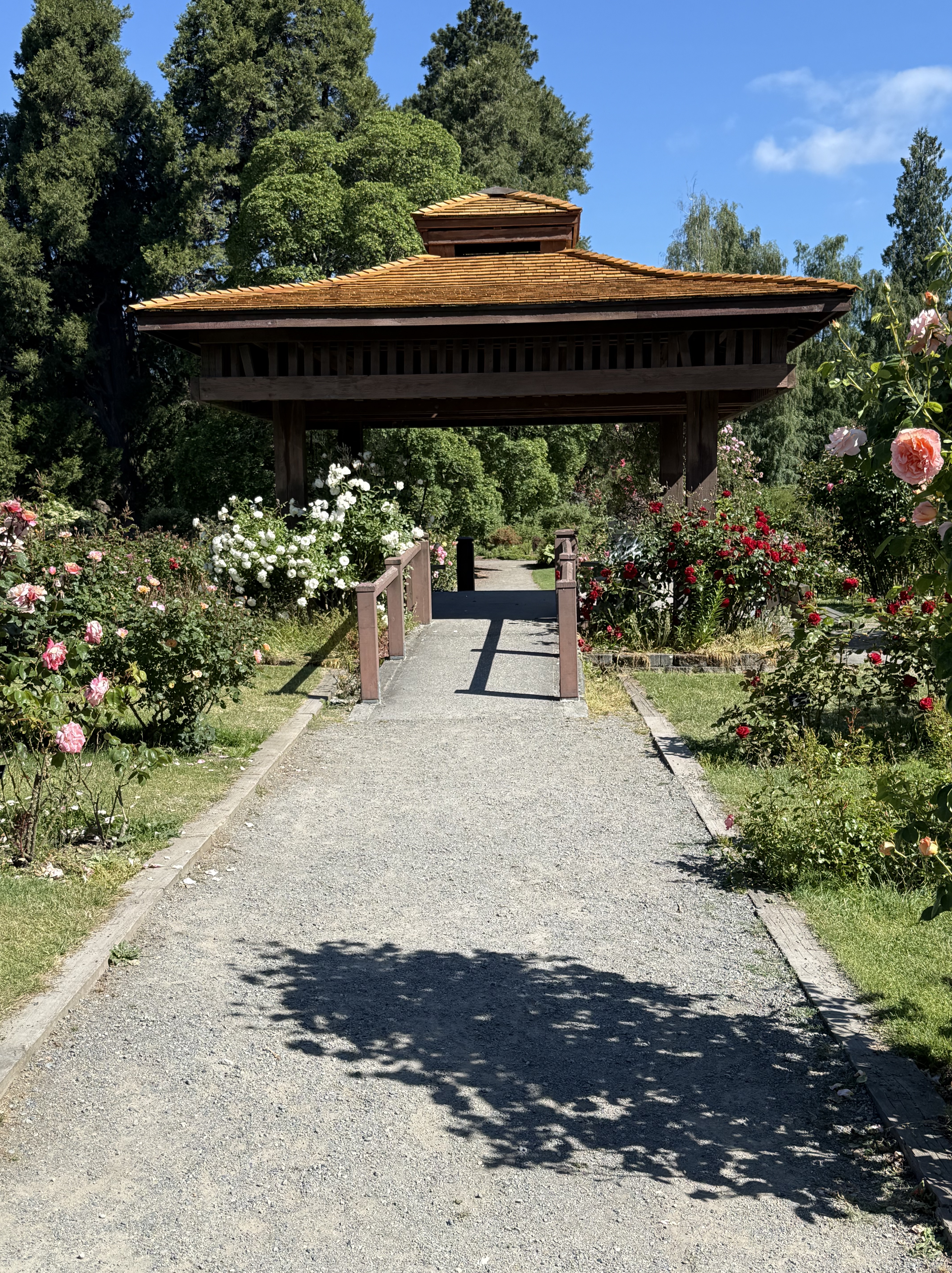
This is the central pagoda of the rose garden, which is arranged in concentric rows around it. The design philosophy of the first master gardener (Ebenezer Roberts) was more natural rather than highly organized, and that’s how the garden has remained through time.
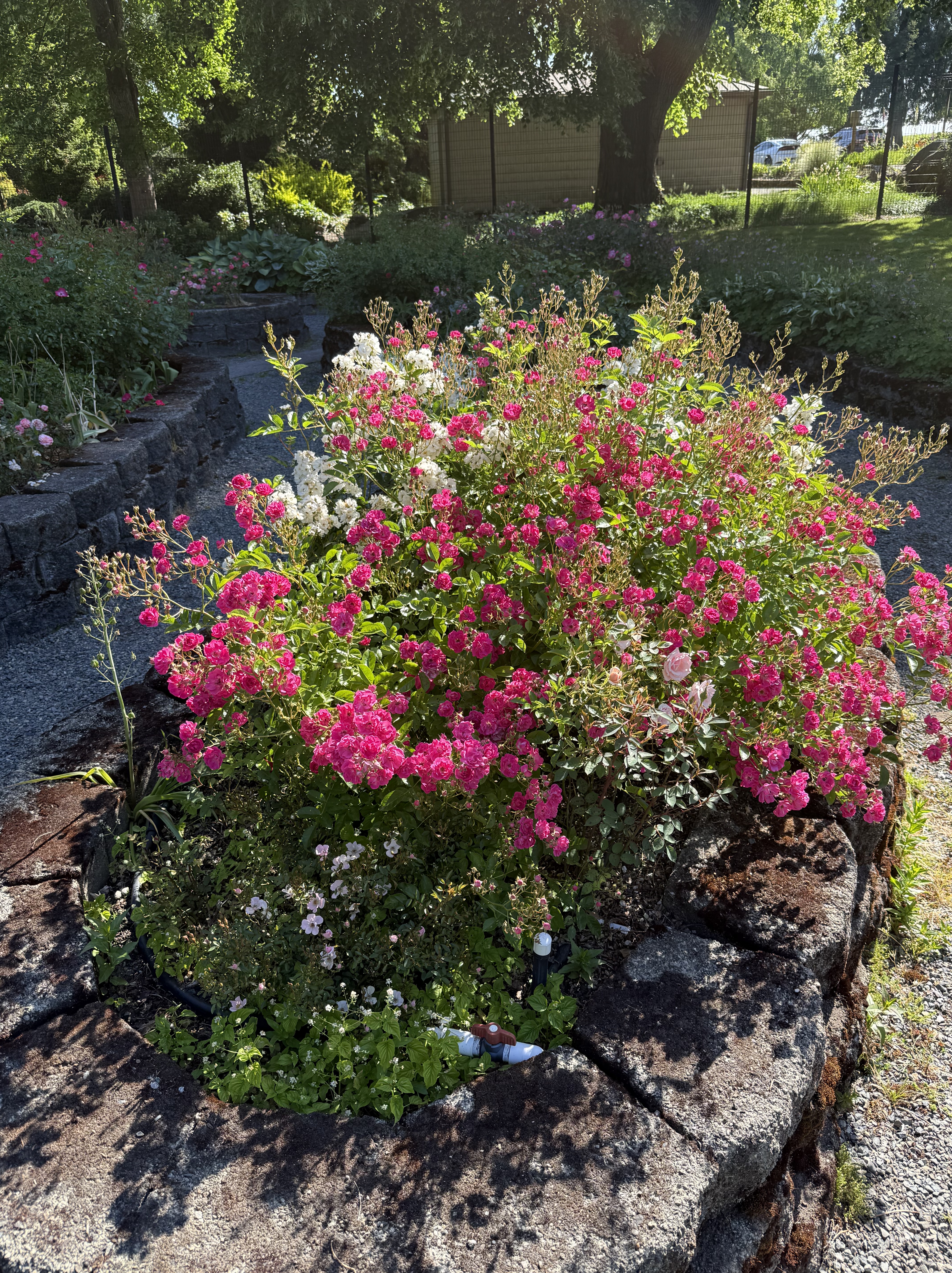
This jumble of color is typical of the rose garden on a spring day.
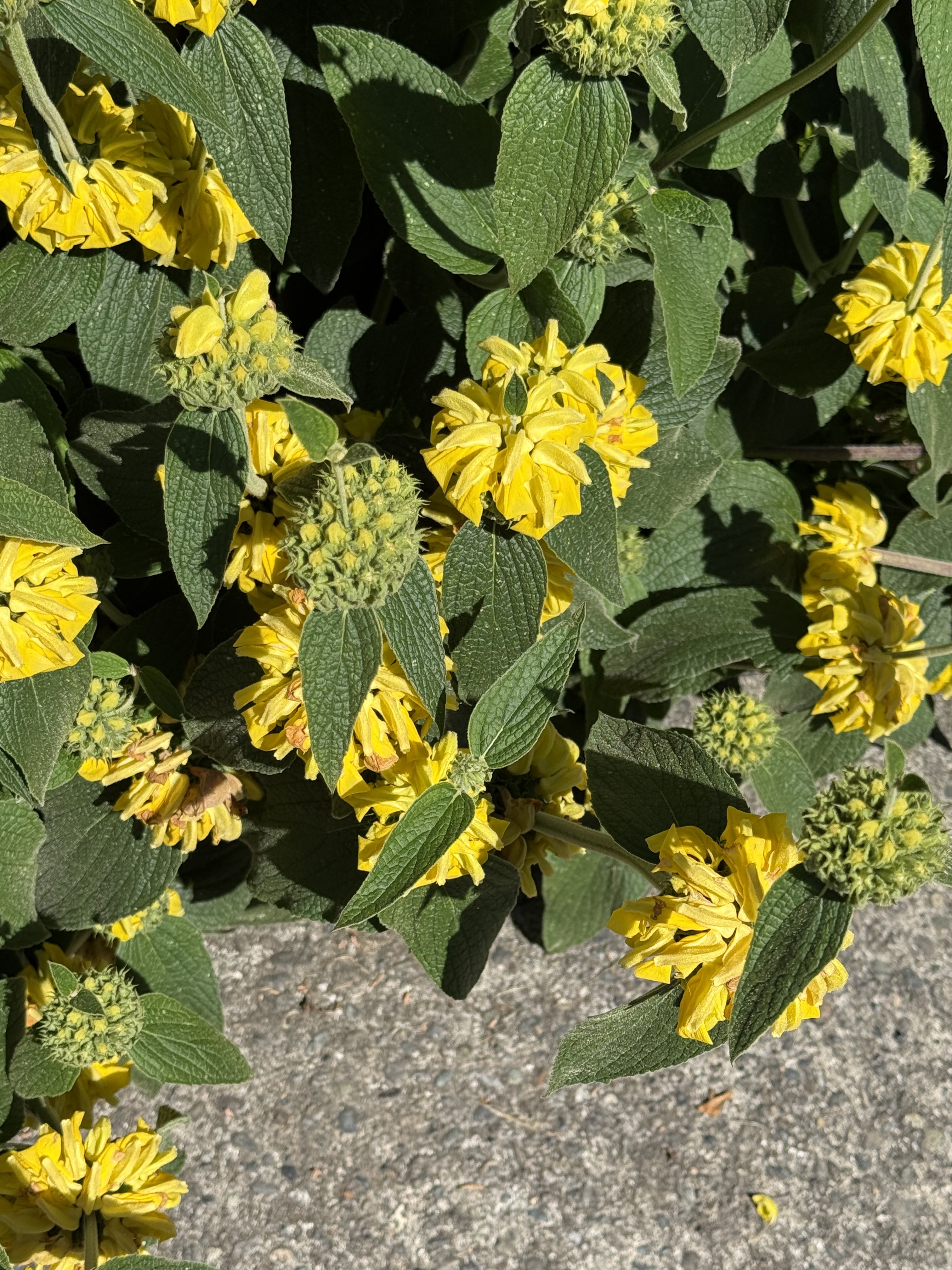
They had more than roses in the rose garden. This is Jerusalem Sage or Phlomis fruticosa,. It appears to be in full bloom.
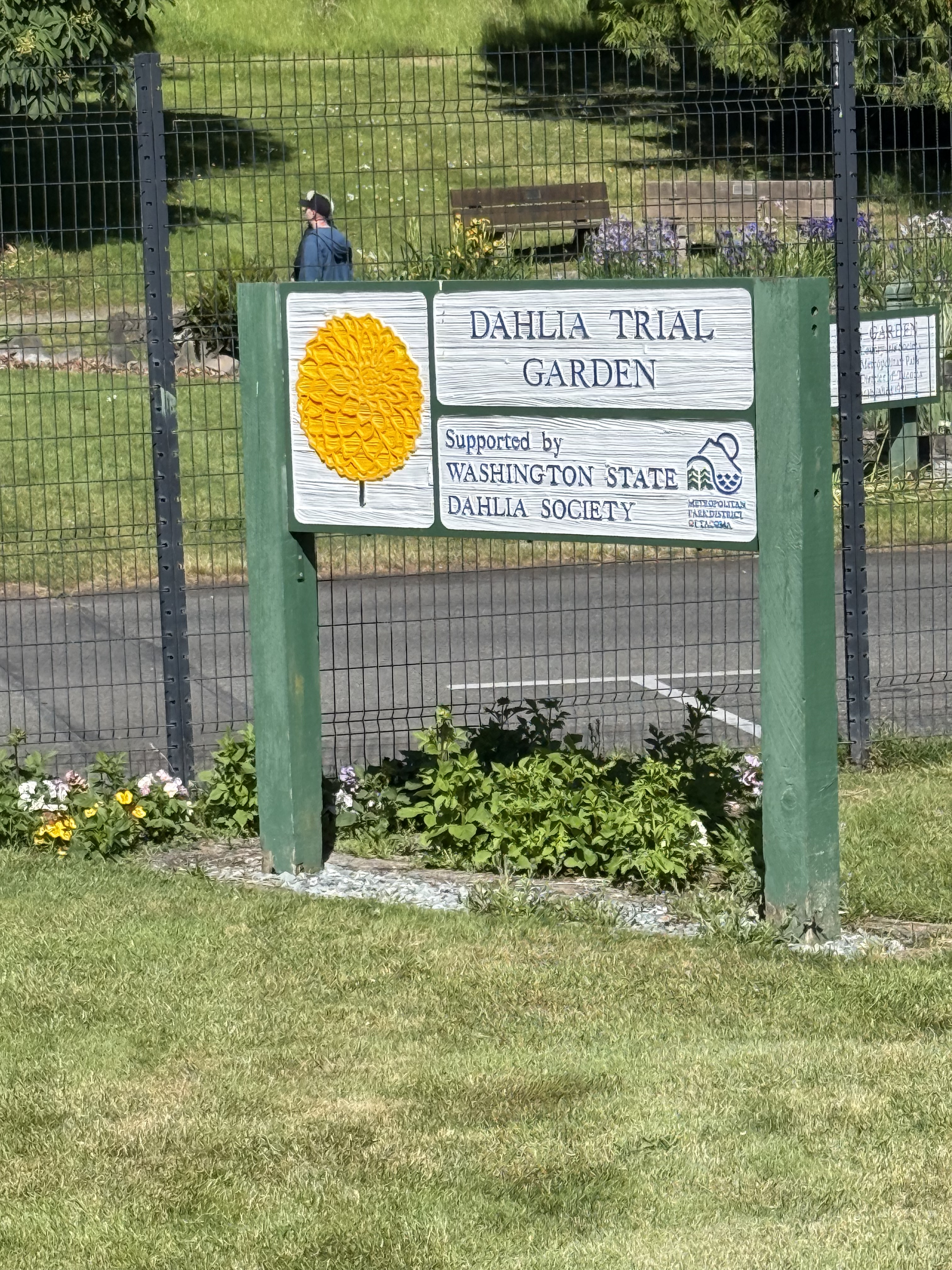
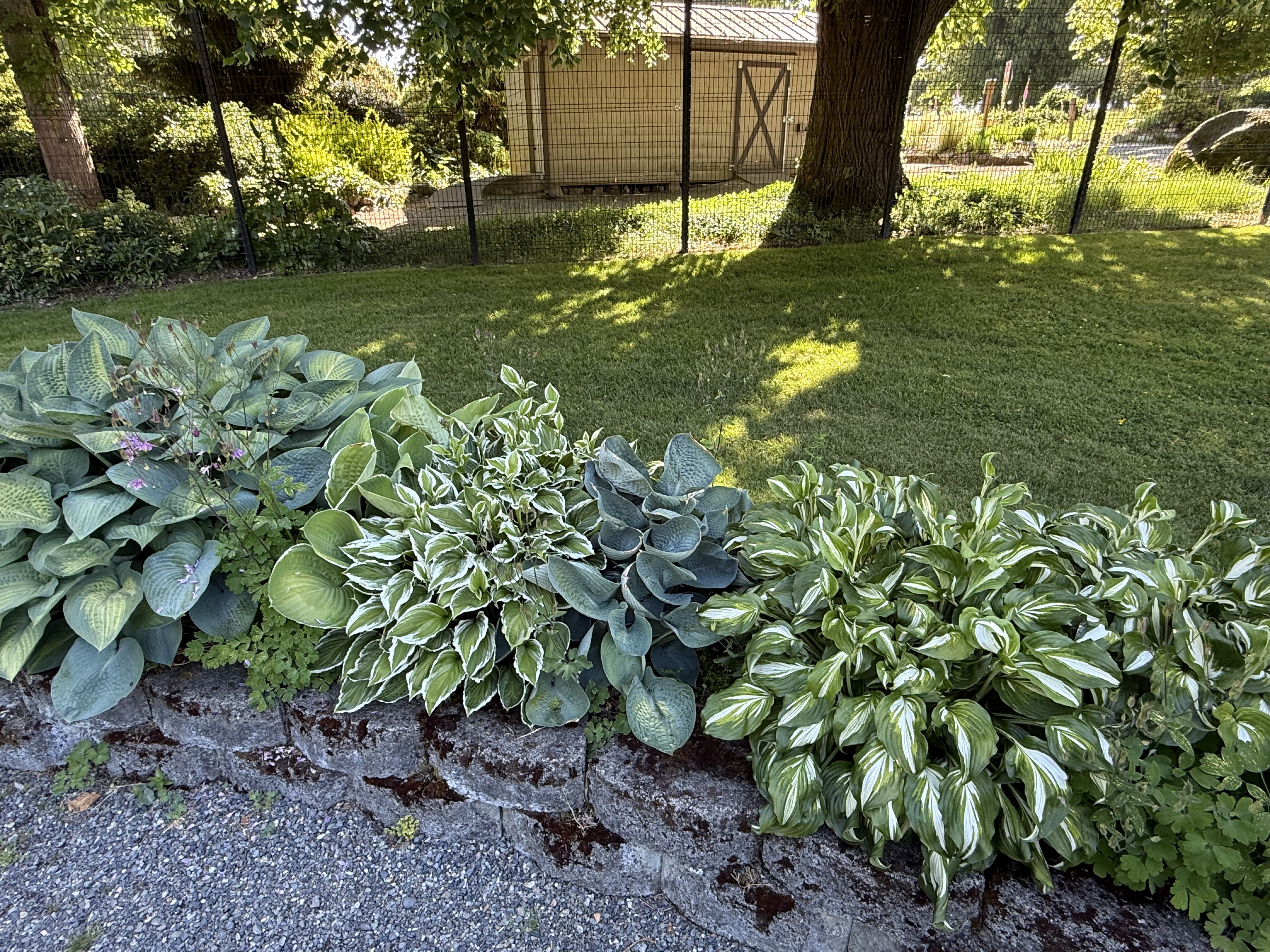
I never suspected there was a state society for a flower, but they had planted rows of numbered plants in a portion of the rose garden. The fence is to keep out the deer, which devour, stomp, and basically destroy flowering plants.
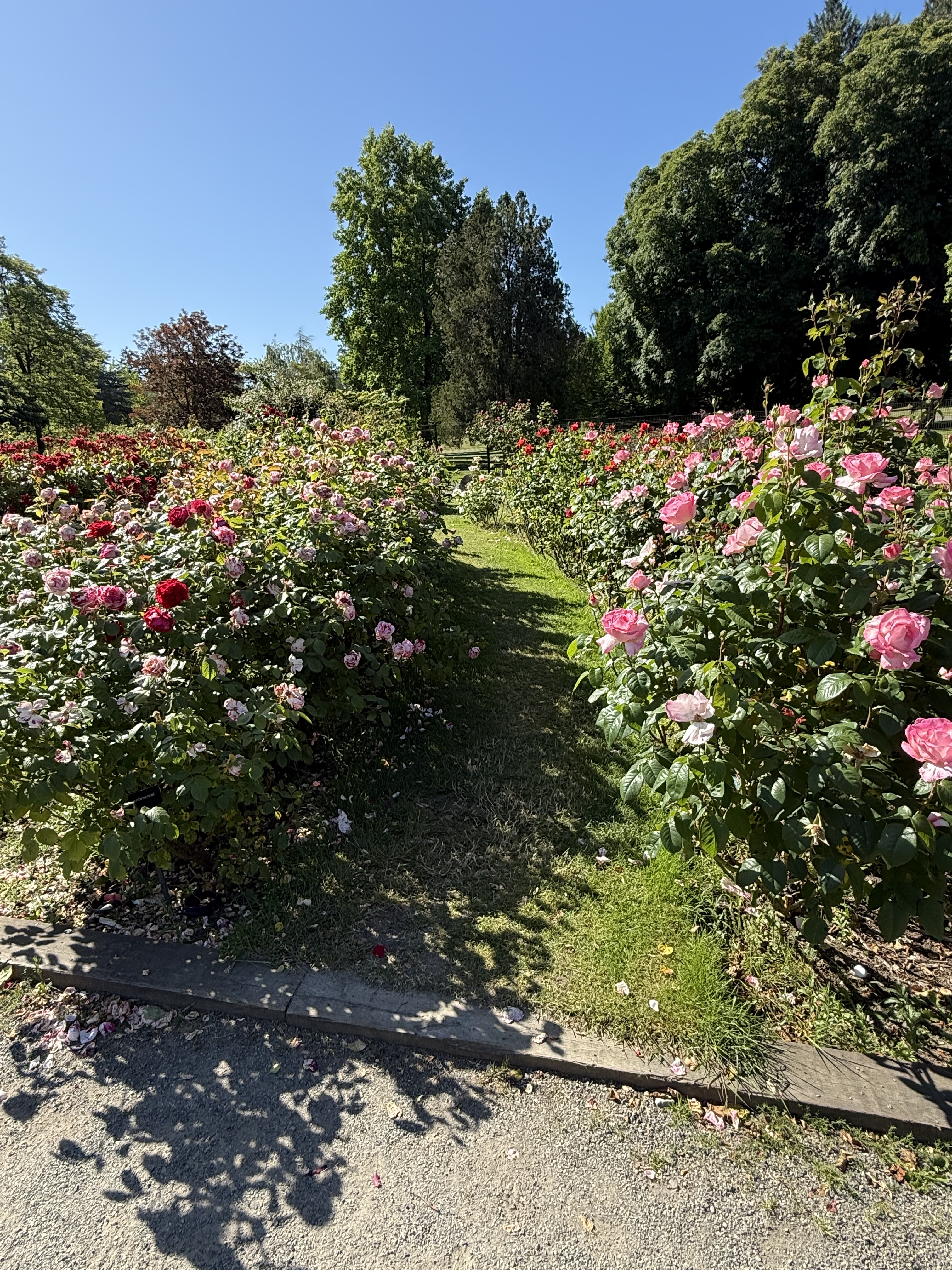
The rose beds are arranged concentrically around the center, but they are mixed up by variety. I’ll just show some photos of the gorgeous blooms we saw.
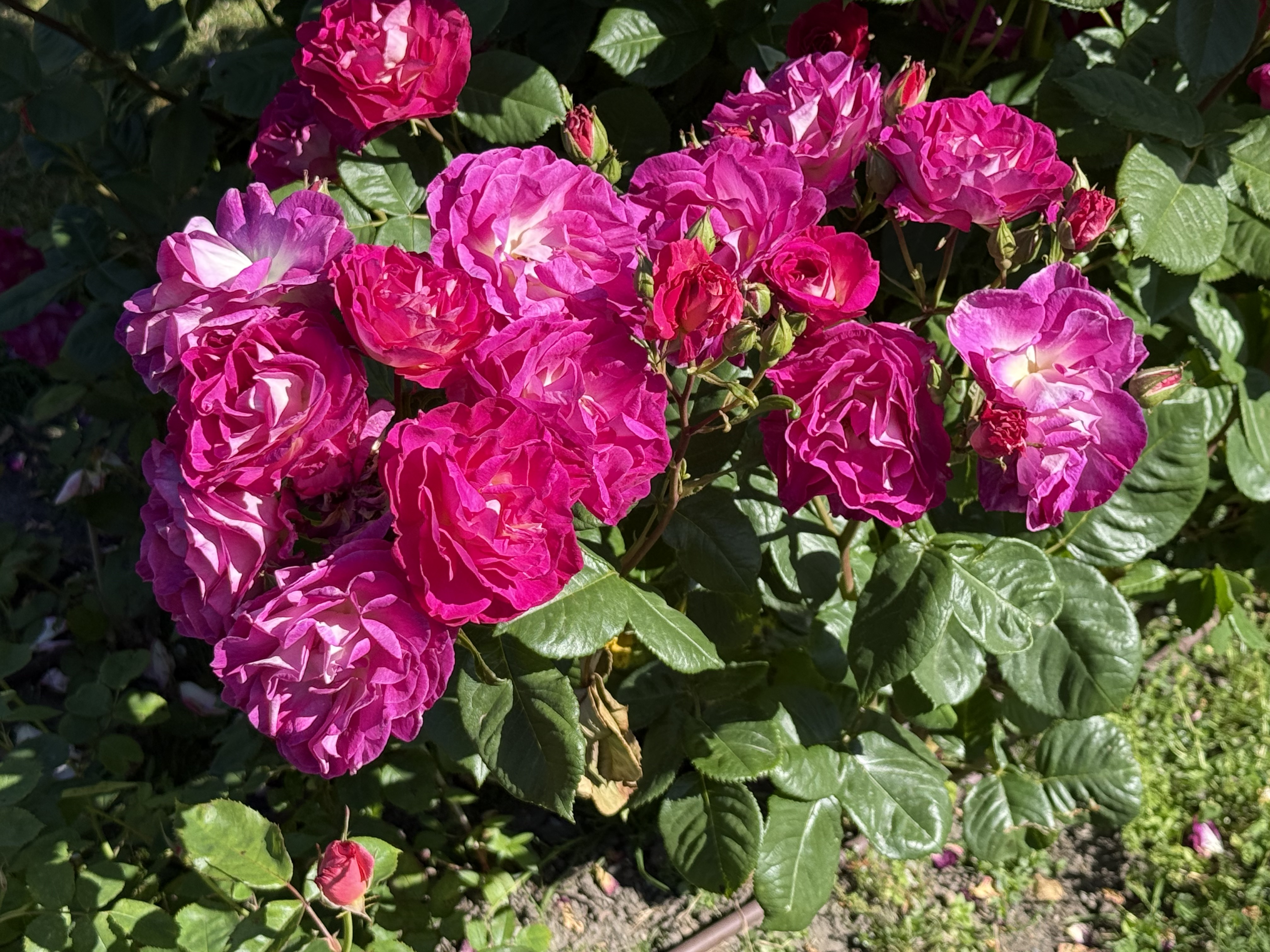
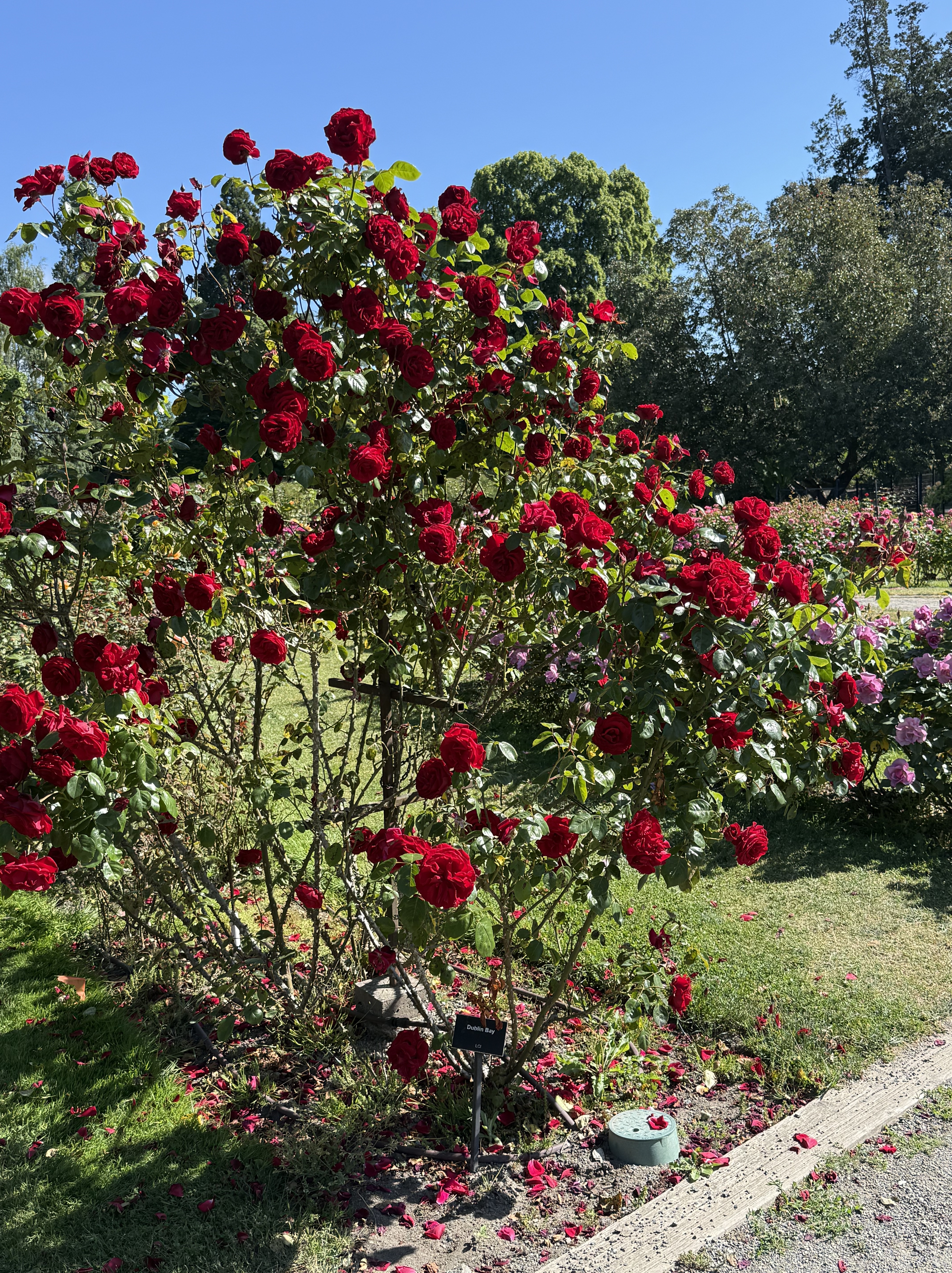
This Dublin Bay variety is distinctive because it has strong stalks and grows high, concentrating growth on the ends of very thorny branches.
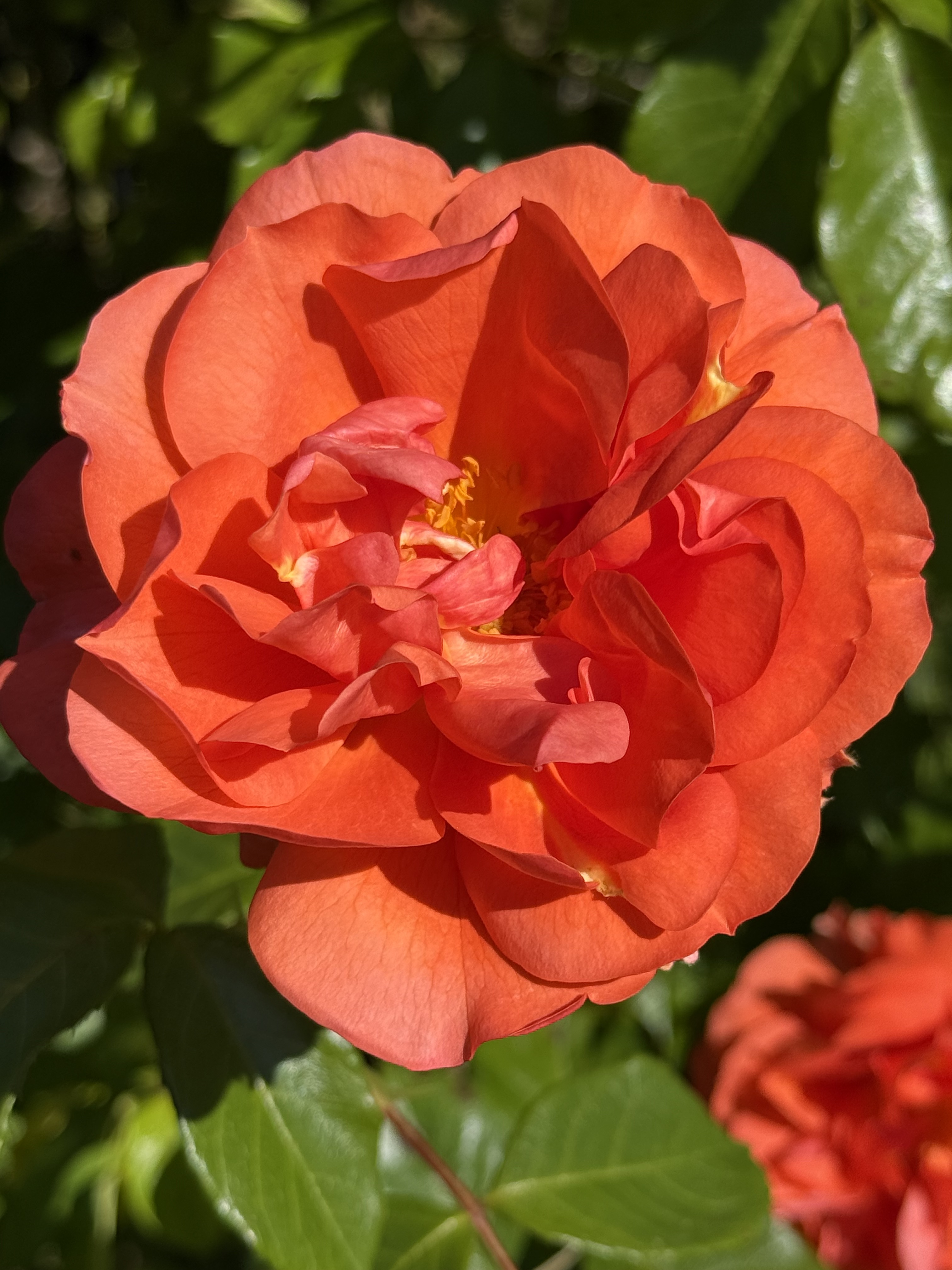
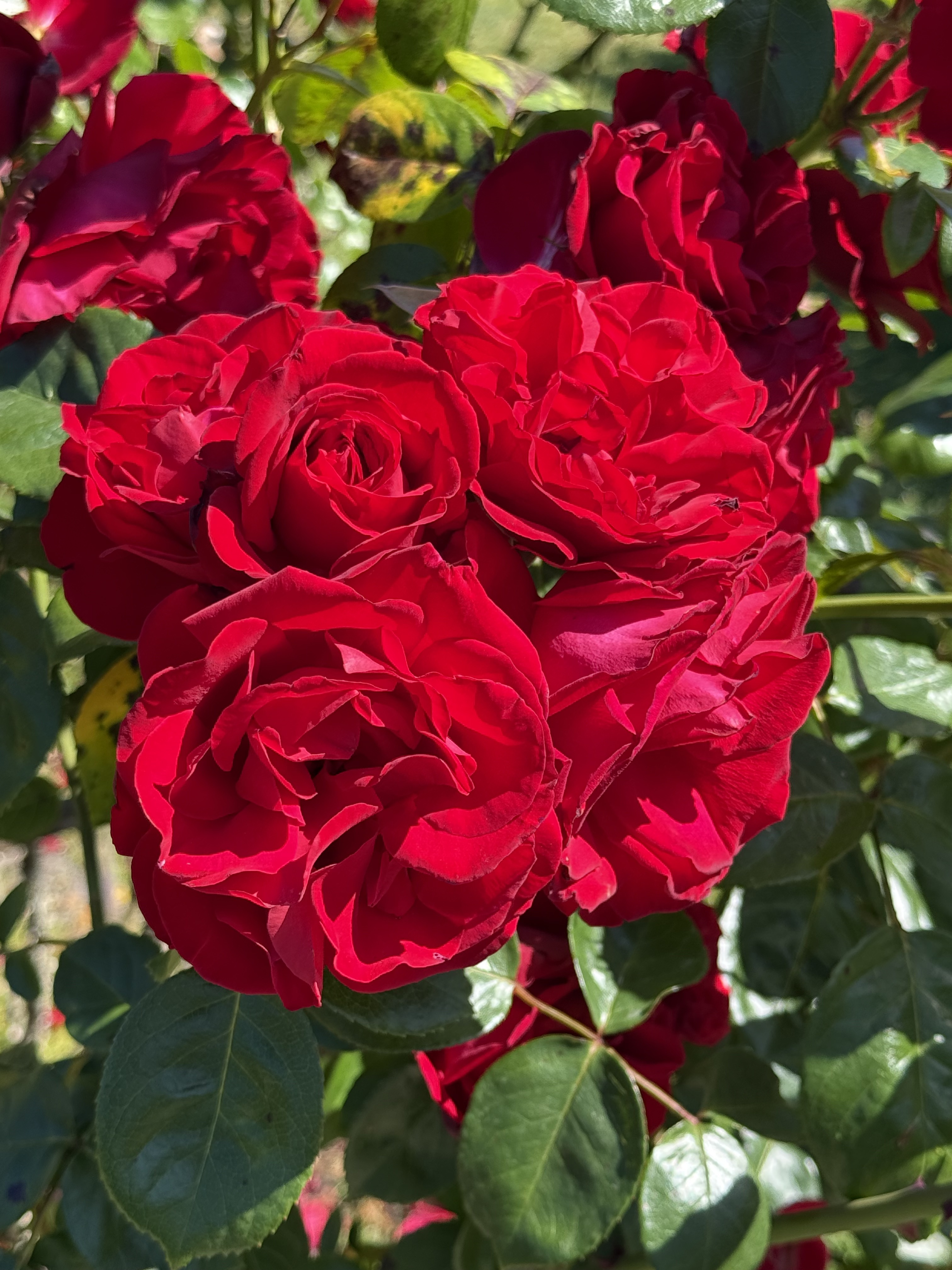
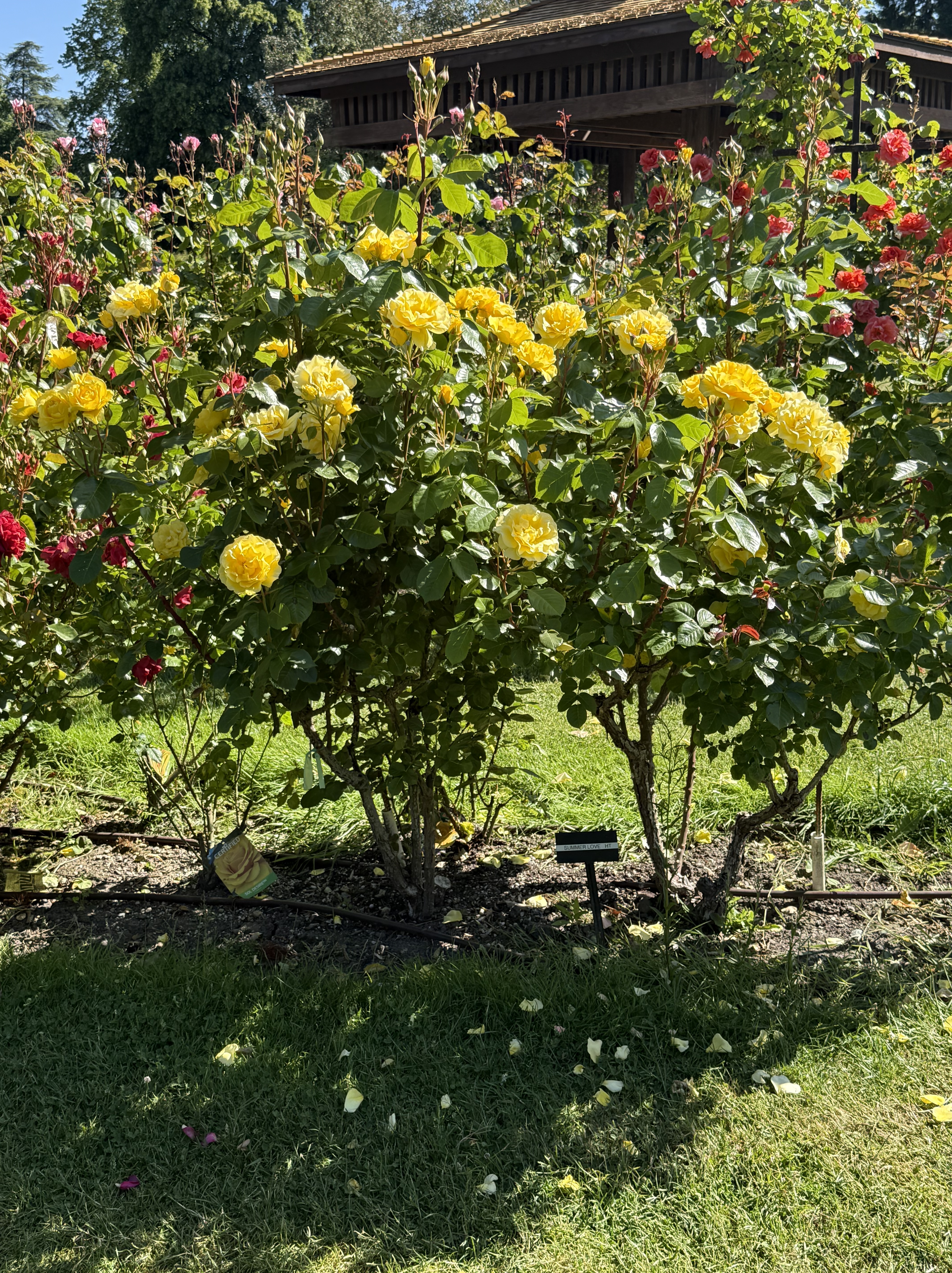
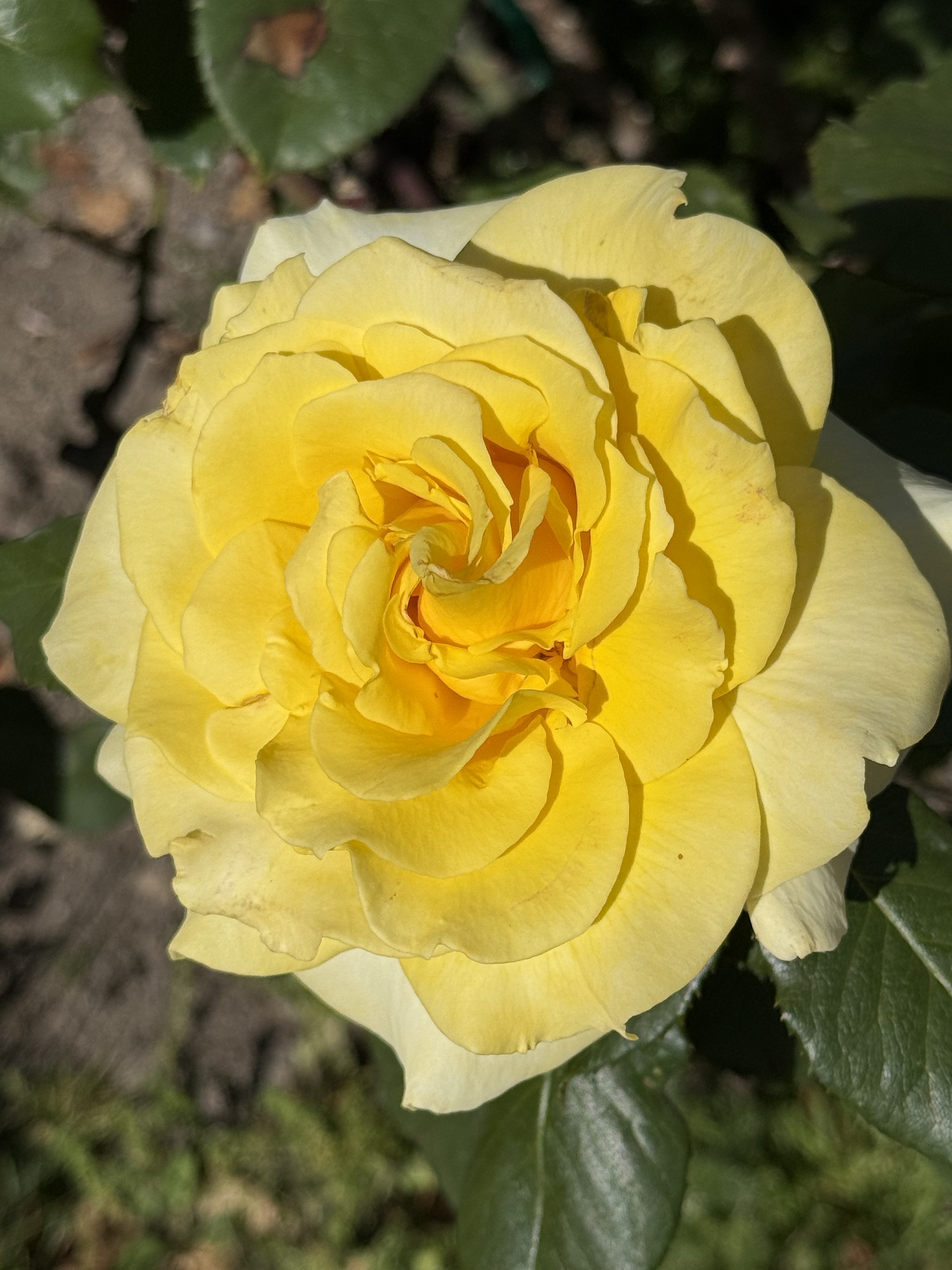
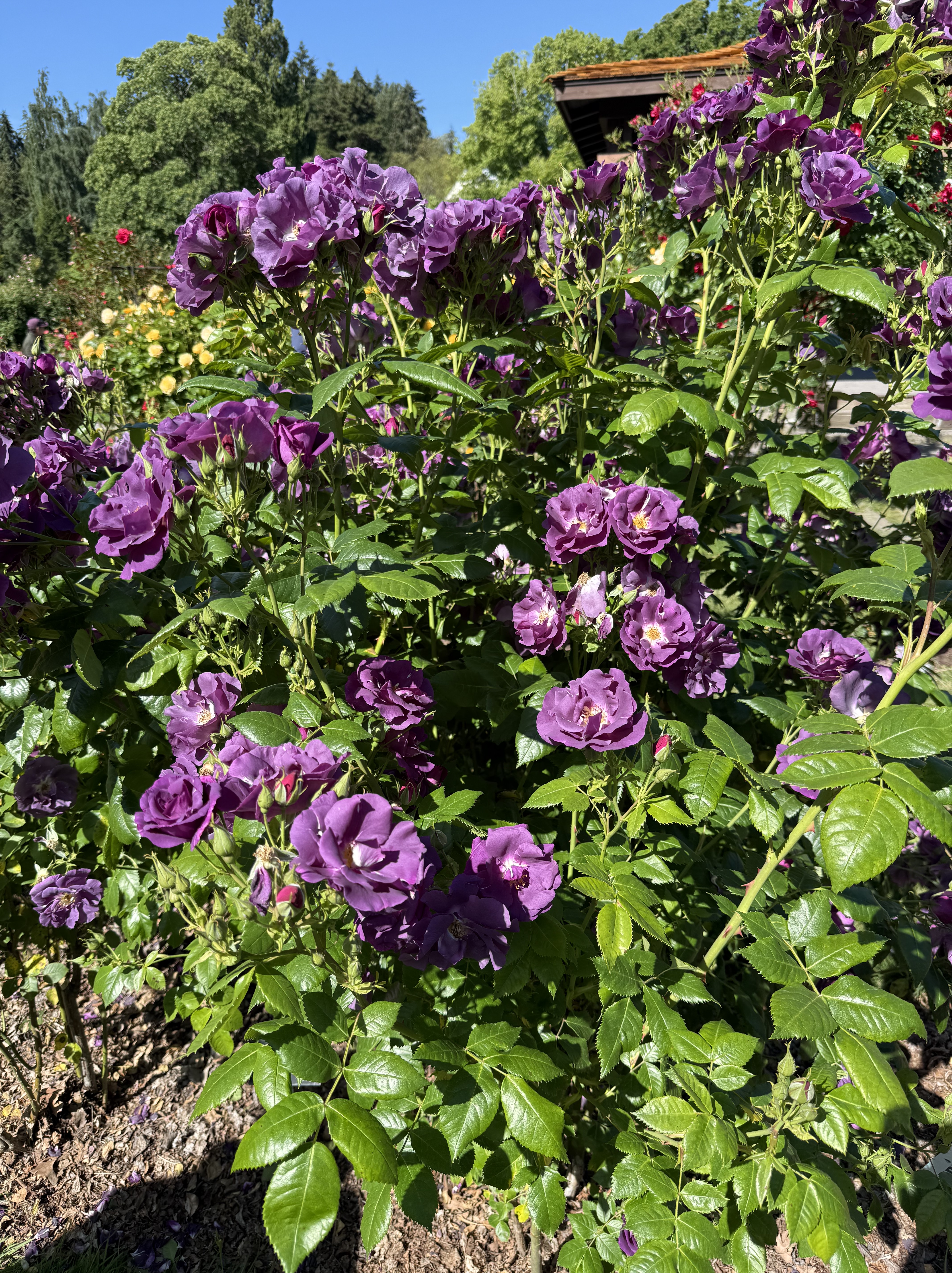
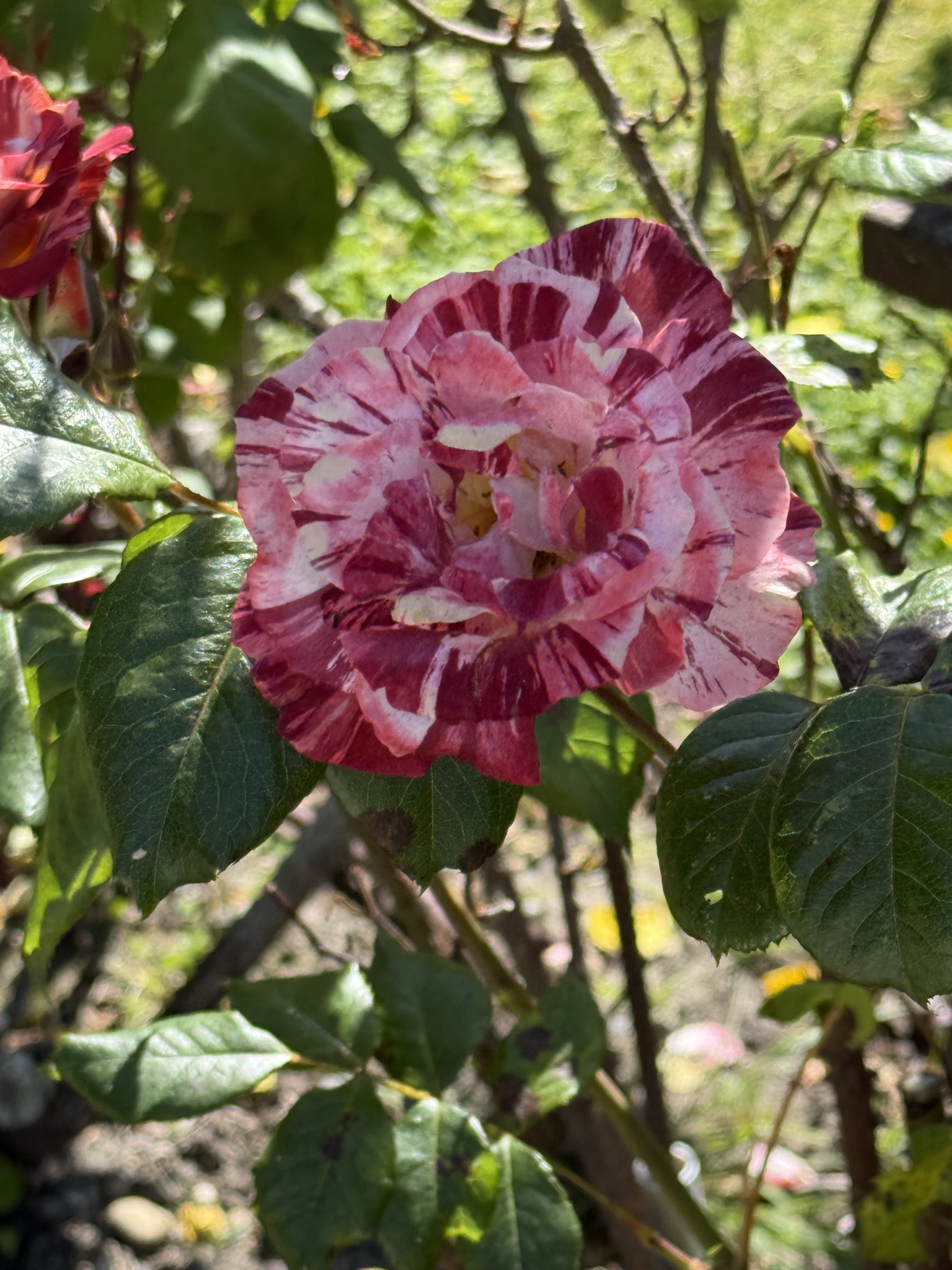
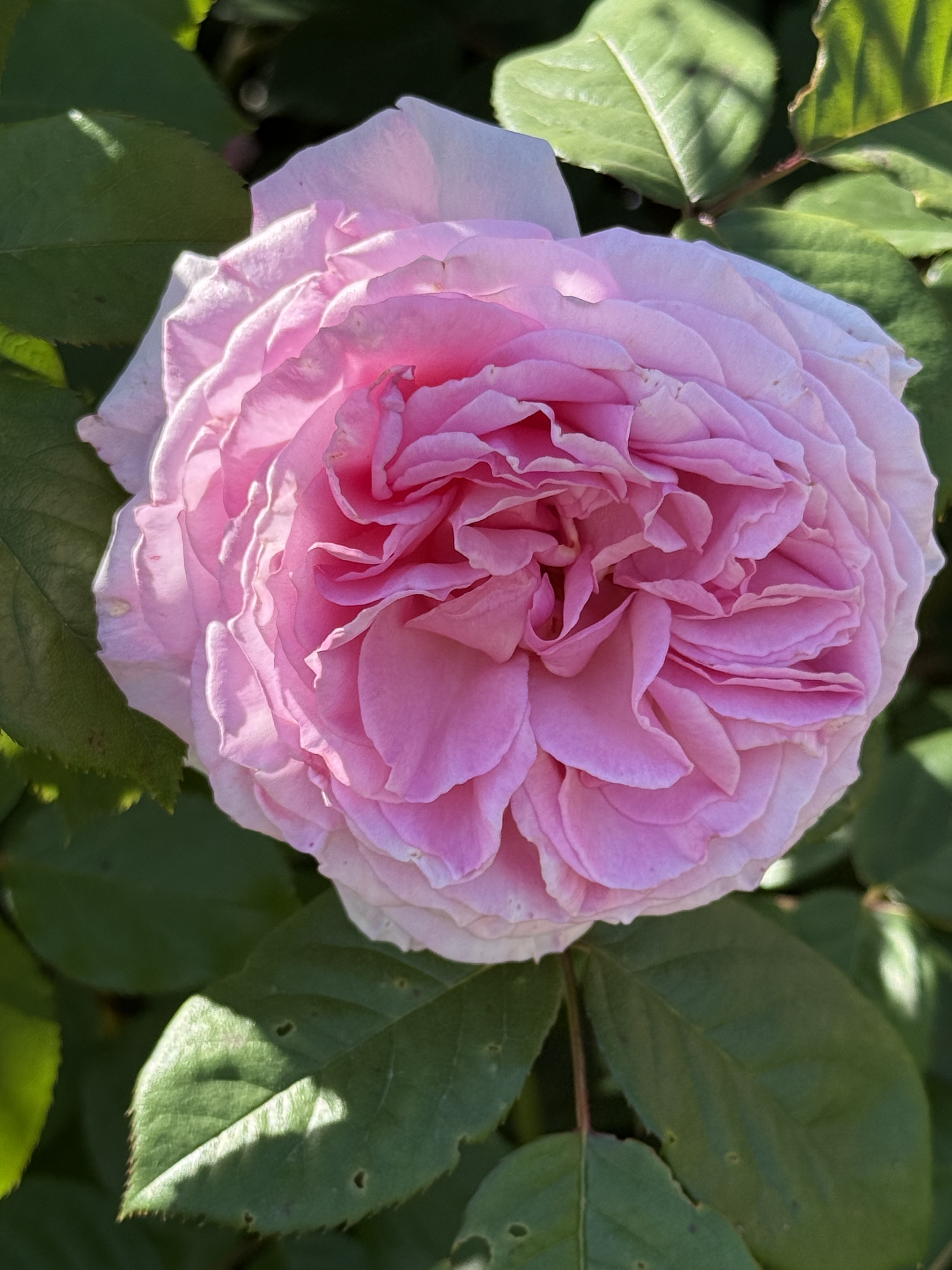
I didn’t take a photo of the sign identifying this remarkable rose, but CoPilot thinks it is Scentimental (1997, floribunda).
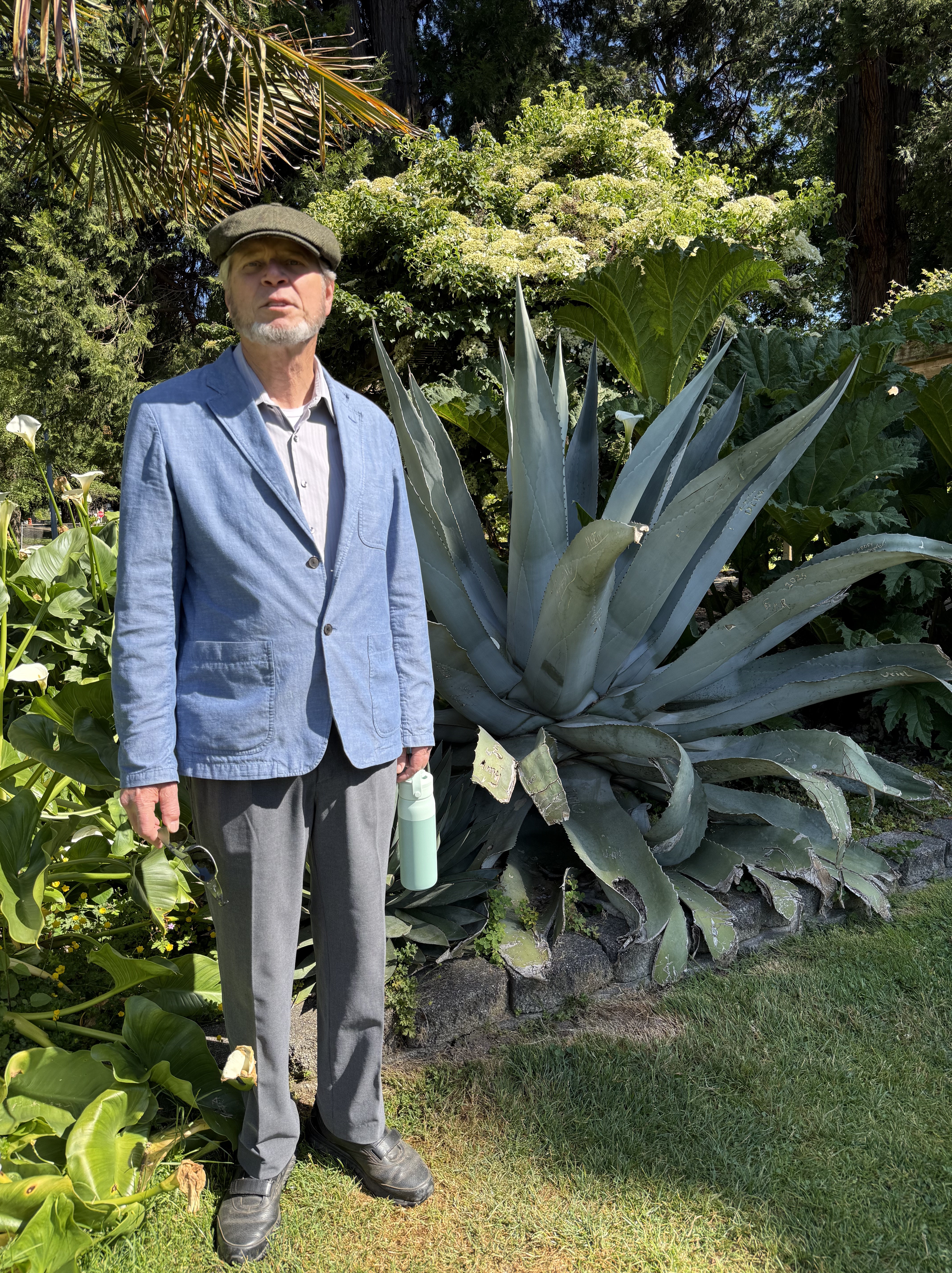
They even had agave doing very well in the PNW. We want some of this for our yard.
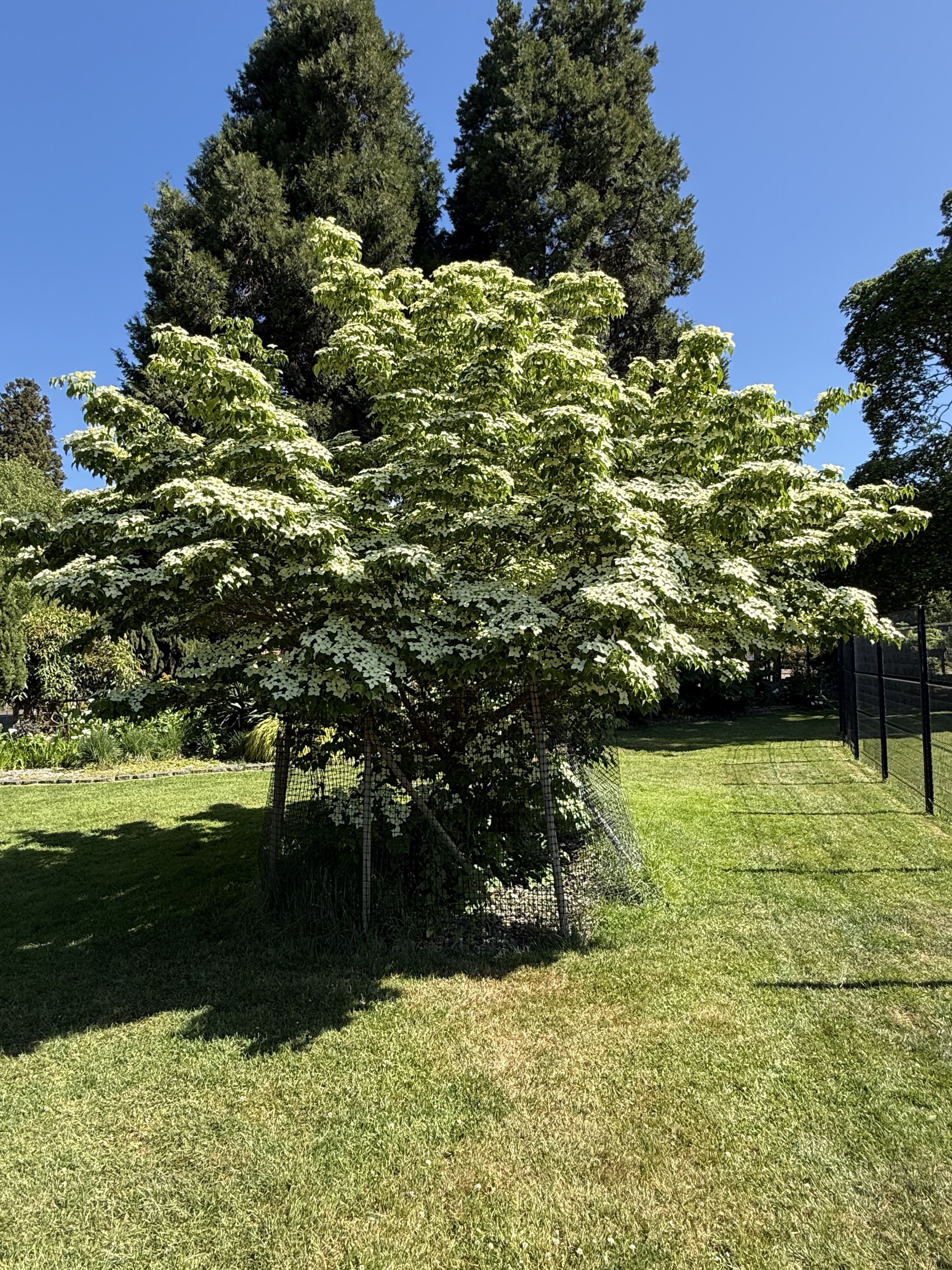
This is a Korean dogwood (according to CoPilot). Note the deer-protection installed around the base. Deer are very destructive to new growth and weak trunks, based on my personal experience.
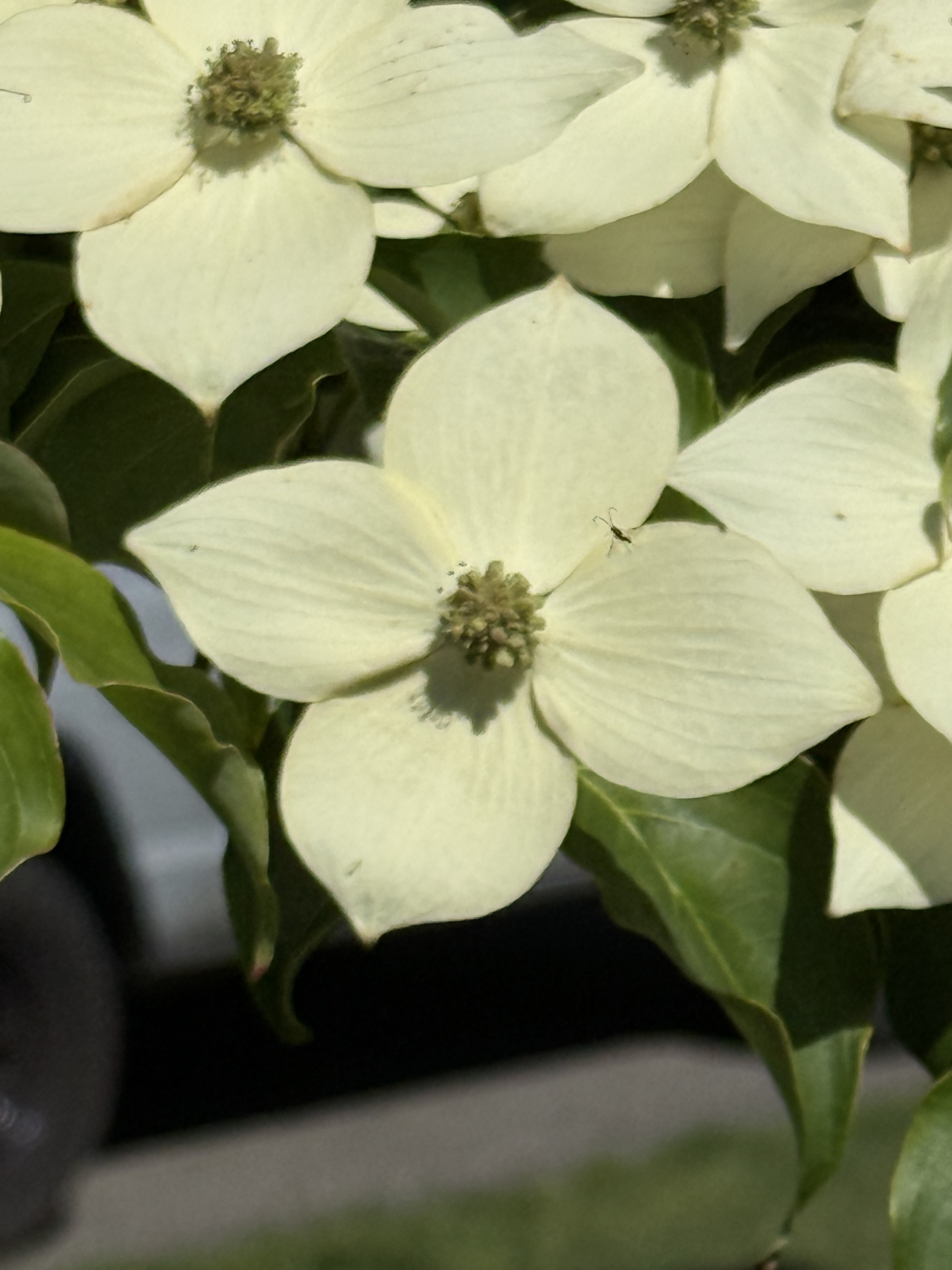
And those aren’t flower petals, they are bracts. The tiny flowers are in the center.
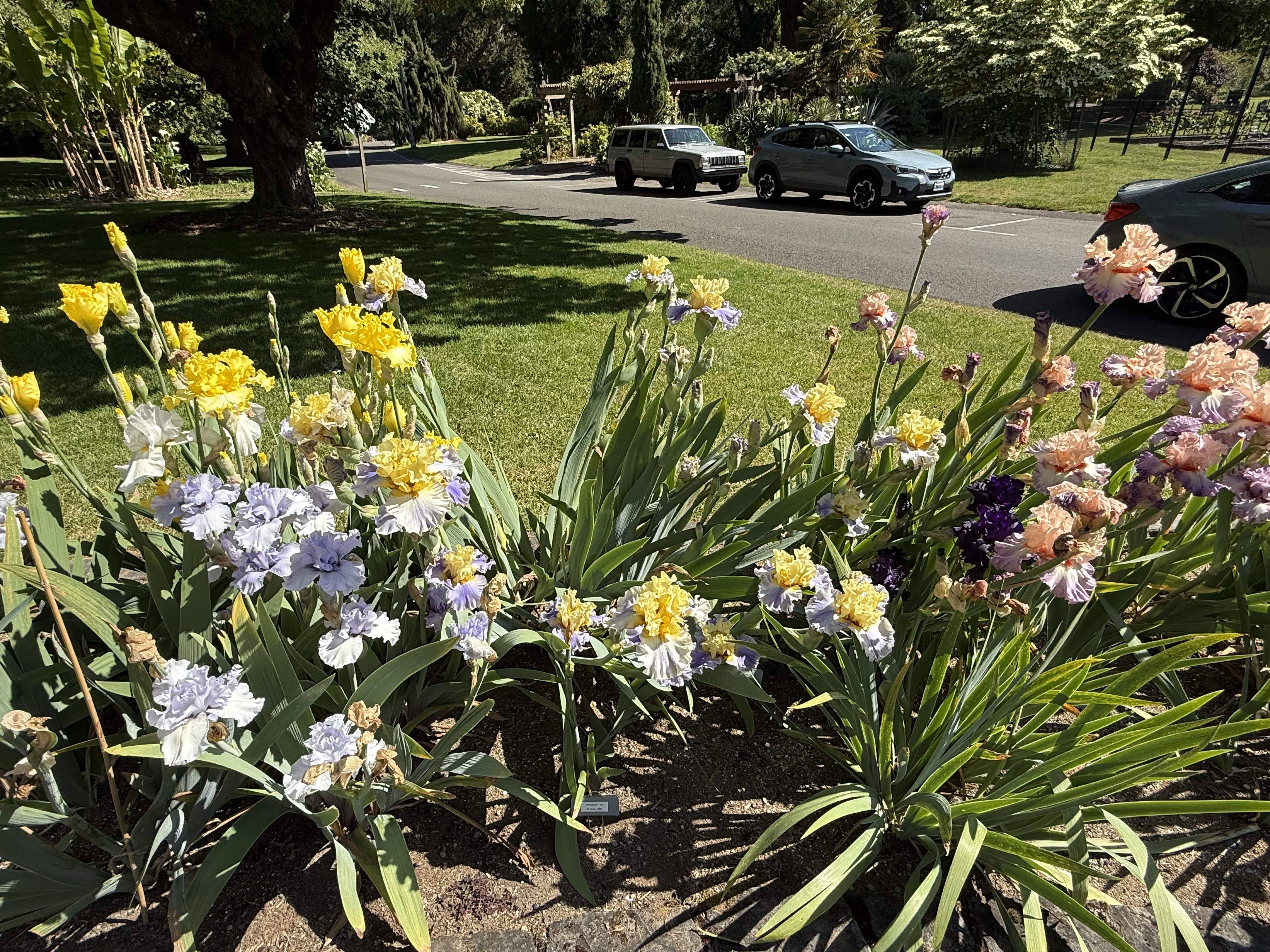
Note the dark purple, almost black, flowers growing from the same plant as the orange flowers.
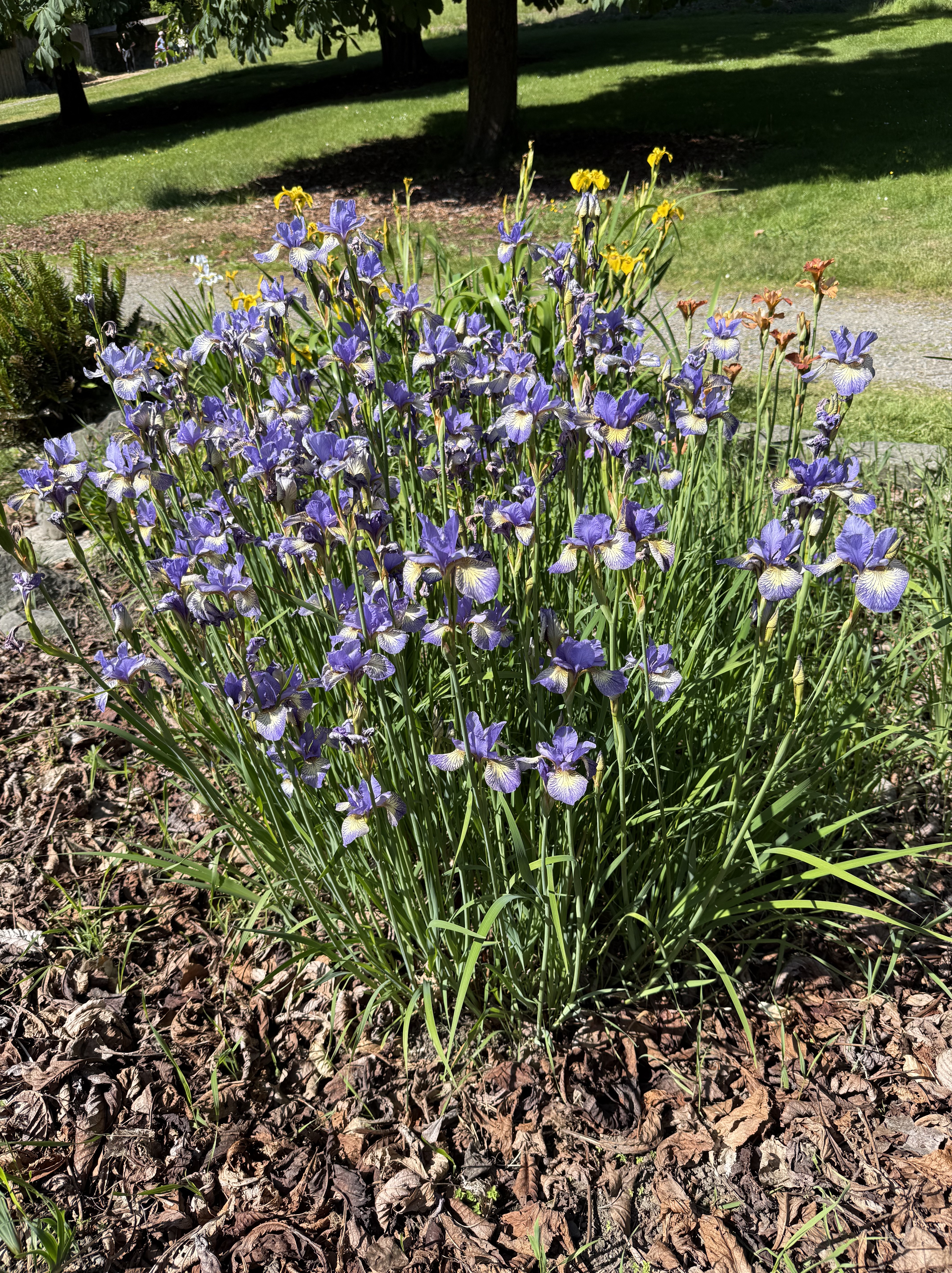
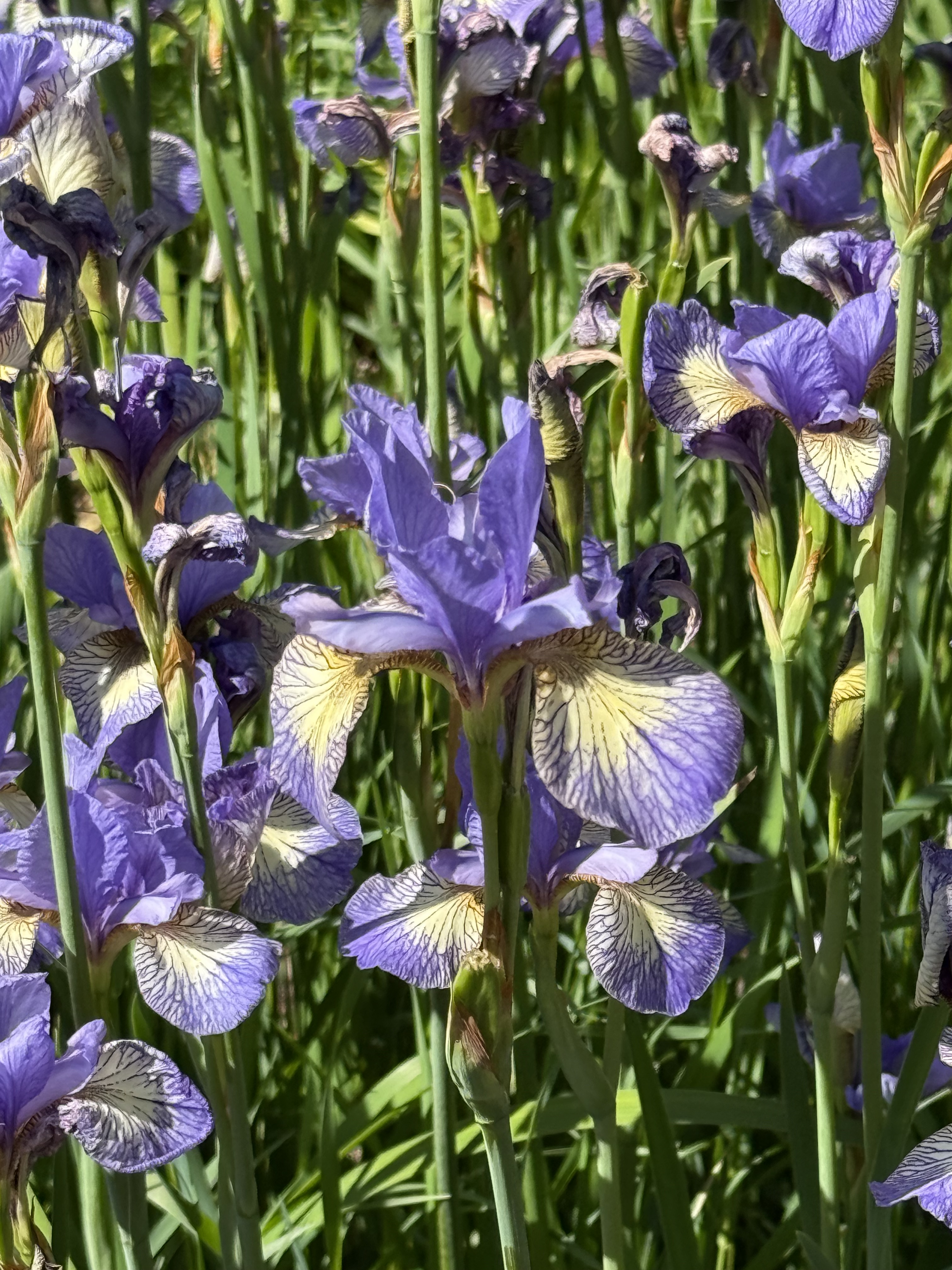
Amazing!
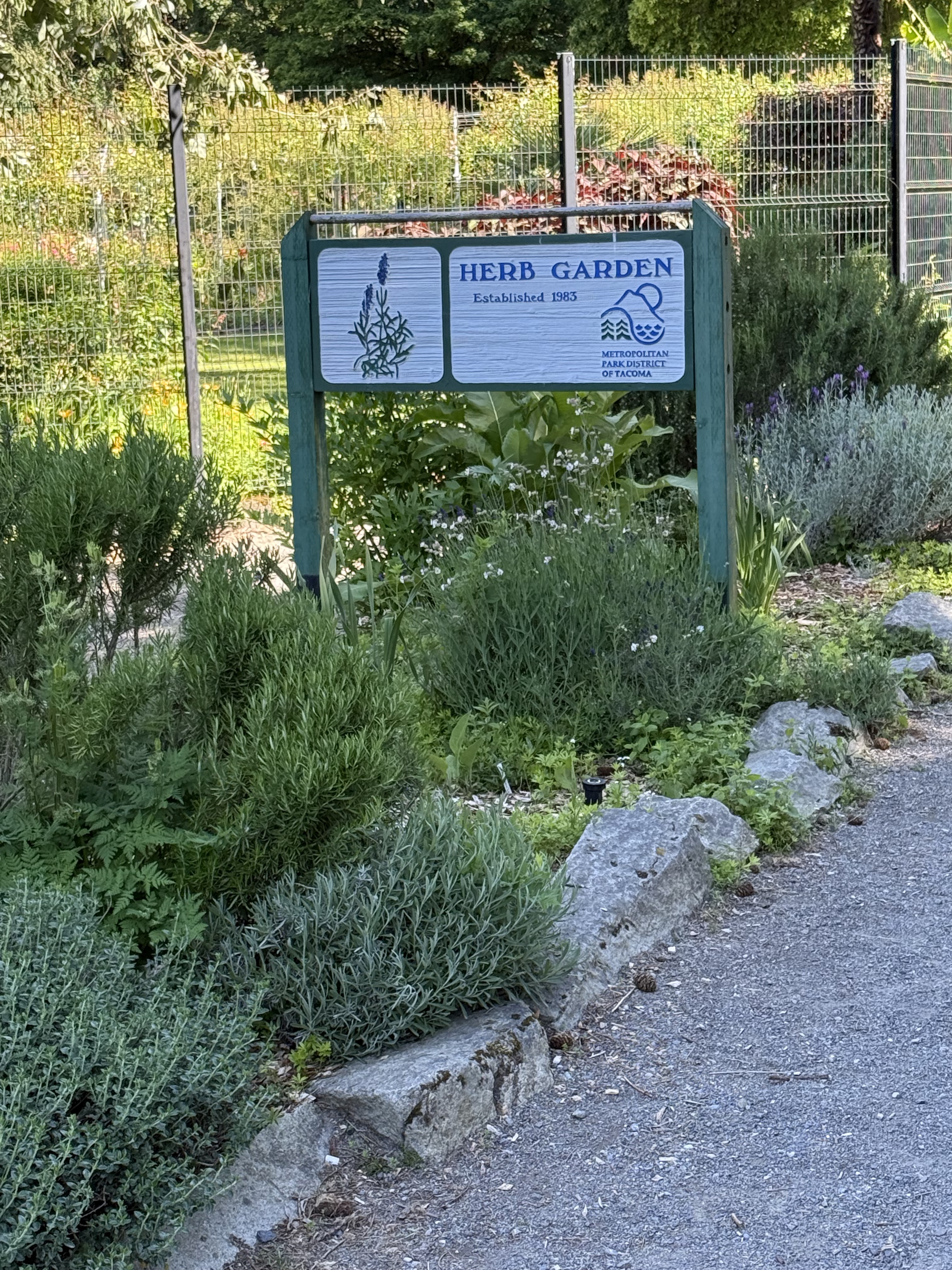
These are the plants that don’t require deer protection. They are outside the defensive fence, and they are thriving.
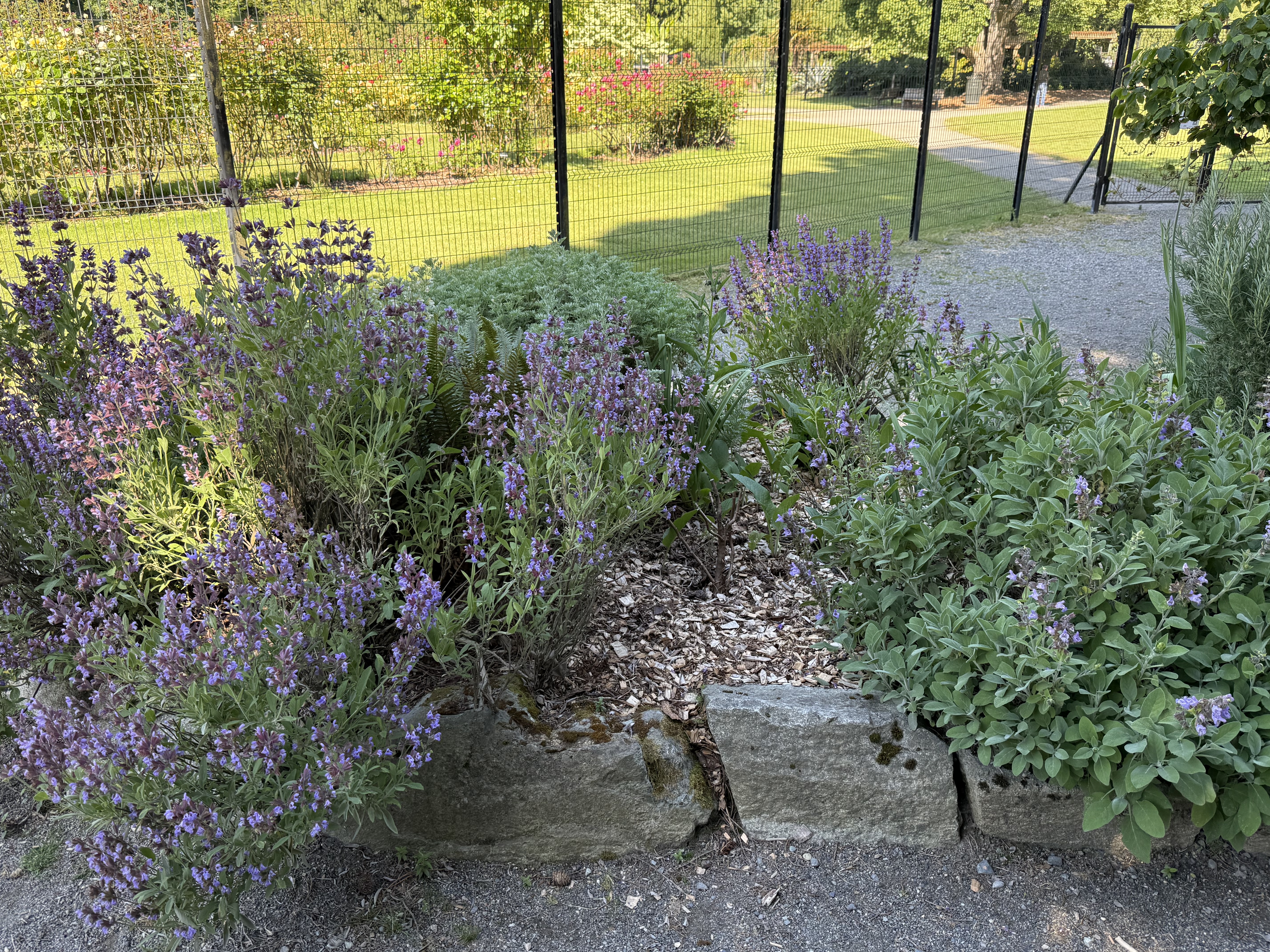
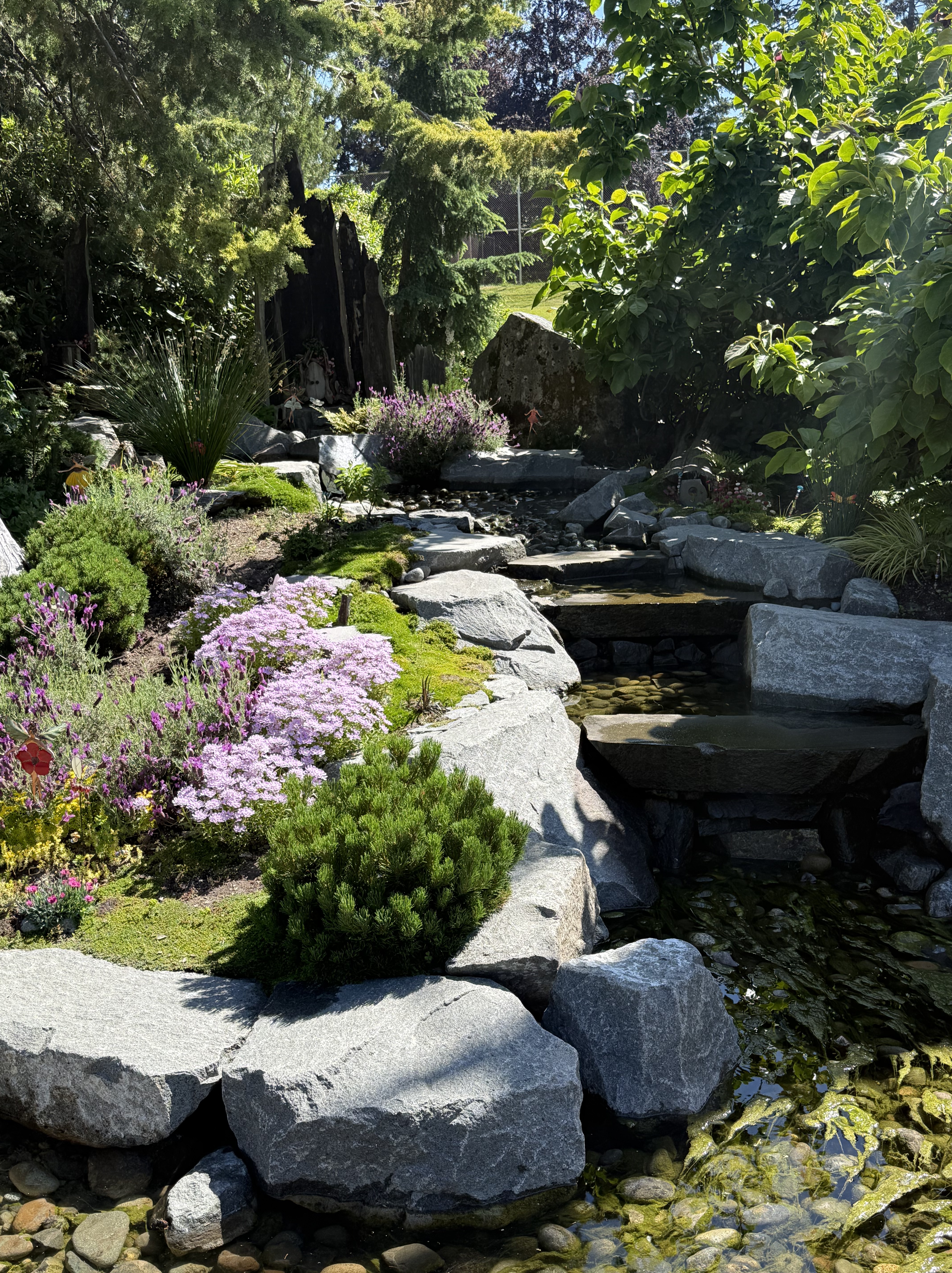
I thought this was a Japanese garden until…
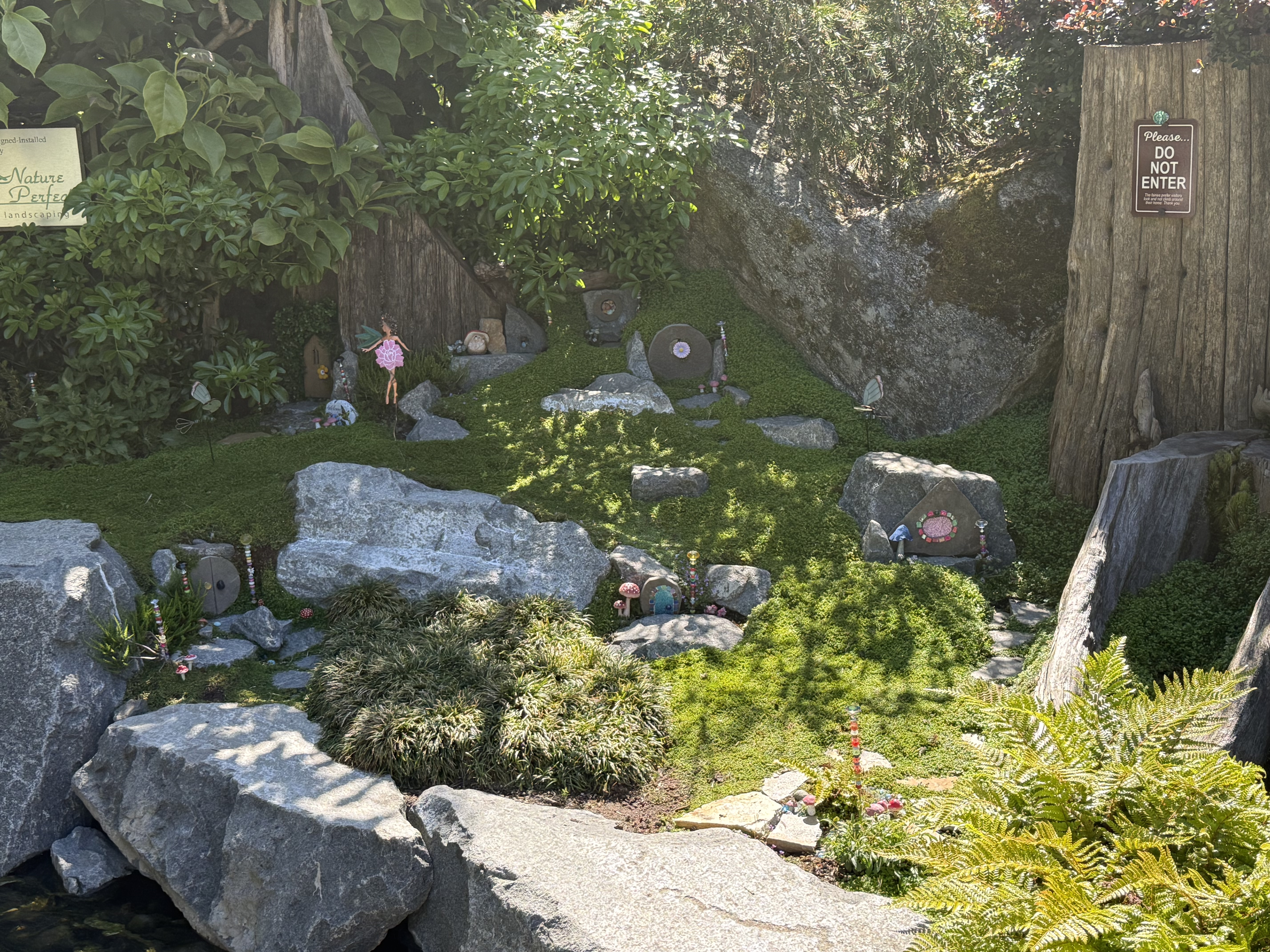
I noticed dolls arranged throughout the area. It reminded me of the horrifying Disney World ride, It’s a Small World. Now that song has returned to haunt me. Creepy … if you want my opinion.
I wasn’t very excited about going to the rose garden at first, but the combination of perfect weather and all these treasures of nature on display won me over. This is yet another reason to love living in the Pacific Northwest–especially Tacoma.
A Visit to the Pacific Bonsai Museum
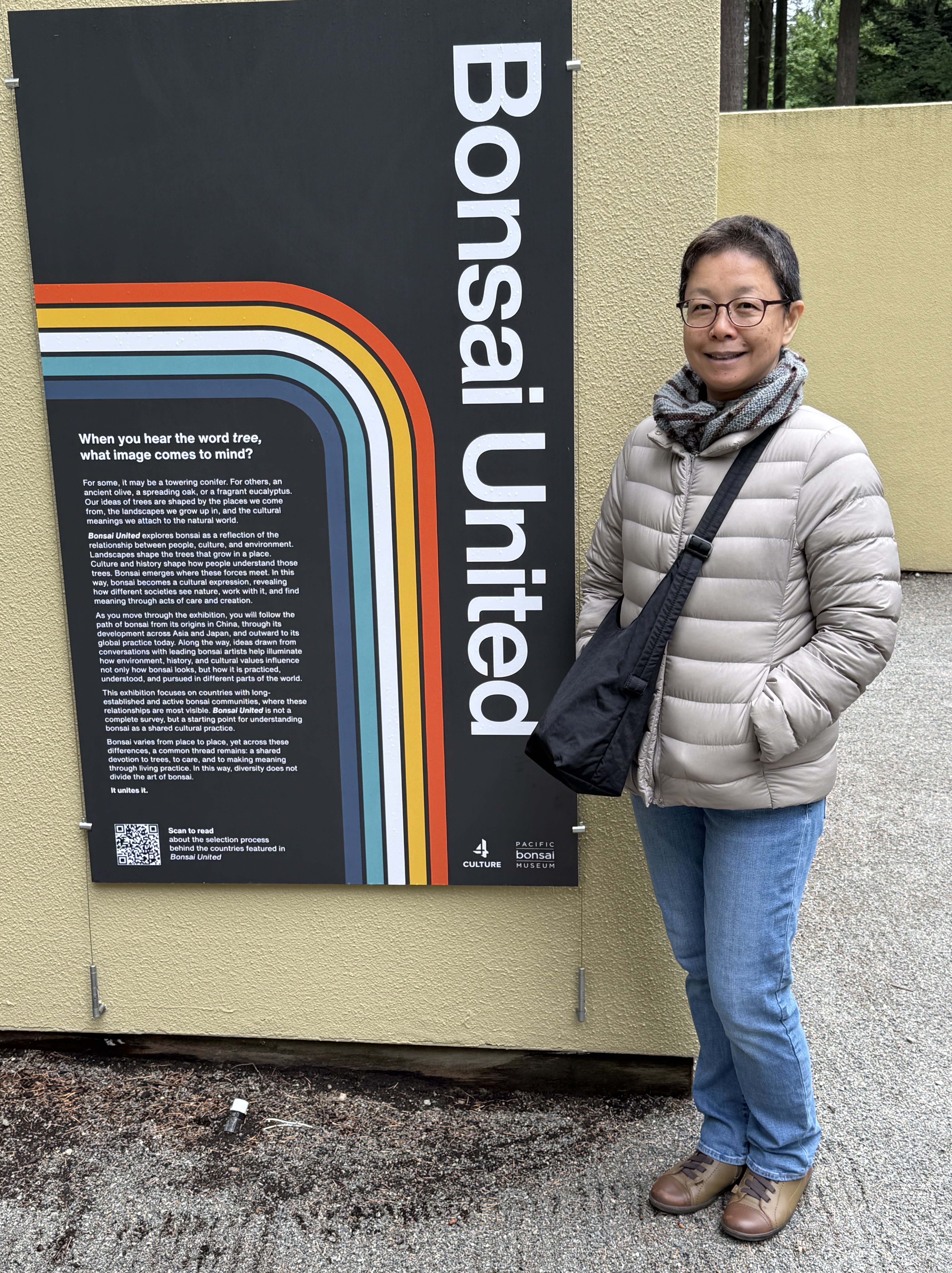
Small, carefully pruned trees are fascinating. I went to the National Arboretum when I lived in the Washington DC area, so I had to see what was on display here in Tacoma. The Pacific Bonsai Museum is mostly open air, with a few sensitive examples in a greenhouse. They leave the trees out year-round and have skilled bonsai arborists trim them according to their creators’ expectations.
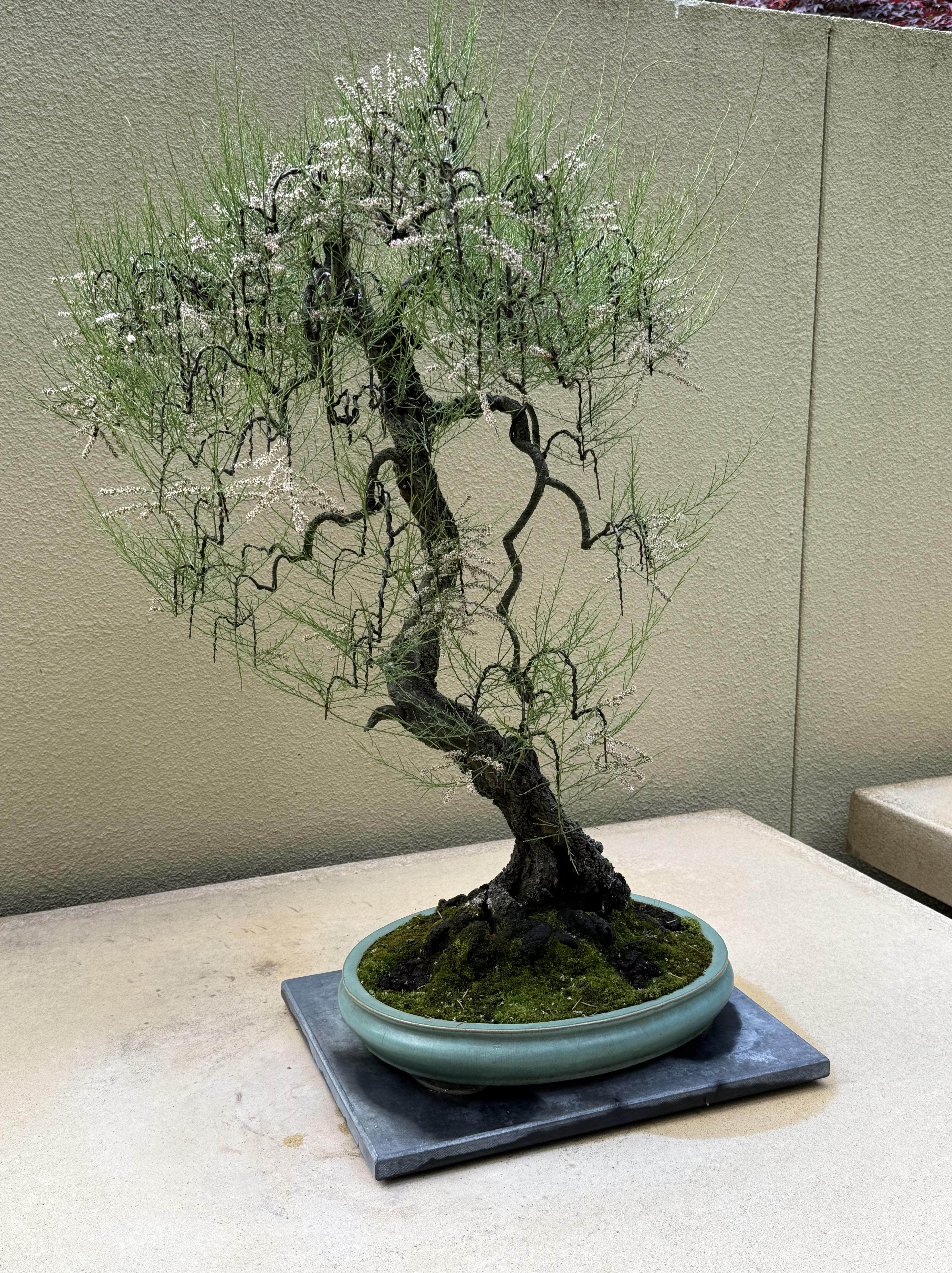
I learned that there are different schools of thought on bonsai, from growing trees and shrubs from seeds, to working with dying plants, even stumps, and painstakingly reviving them. Then there’s cultural differences that vary between nations. However, bonsai began in China where it’s called “penjing”. It means tray scenery. The museum had their displays arranged by country of origin. I didn’t take notes and my photography is spotty. Still, here are some beautiful examples of bonsai.
The Bonsai Museum is in Federal Way, Washington, and is supported by Weyerhaeuser, the lumber company; it’s located on a large campus they built and then sold to someone. It is free and there is no apparent security, except from the Rhododendron Garden next door. I guess vandalism hasn’t been a problem; who would want to destroy such beautiful antiques?
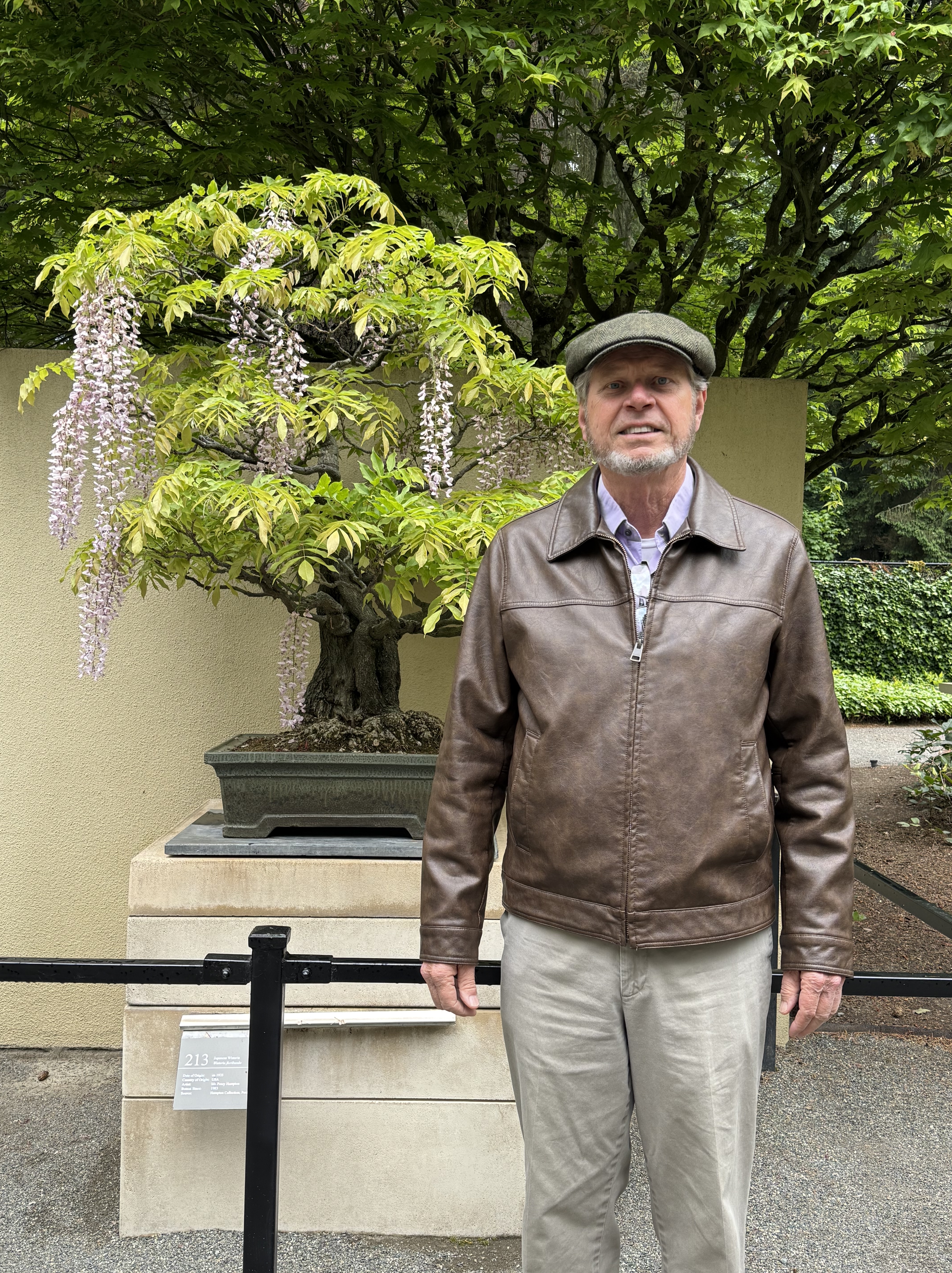
This is a wisteria. If you’ve ever dealt with this out-of-control vine (I have), you will be amazed that this old example (note the size of the trunk) is so tidy yet produces the distinctive flowers. The specimens on display ranged in age from the late nineteenth century to the seventies.
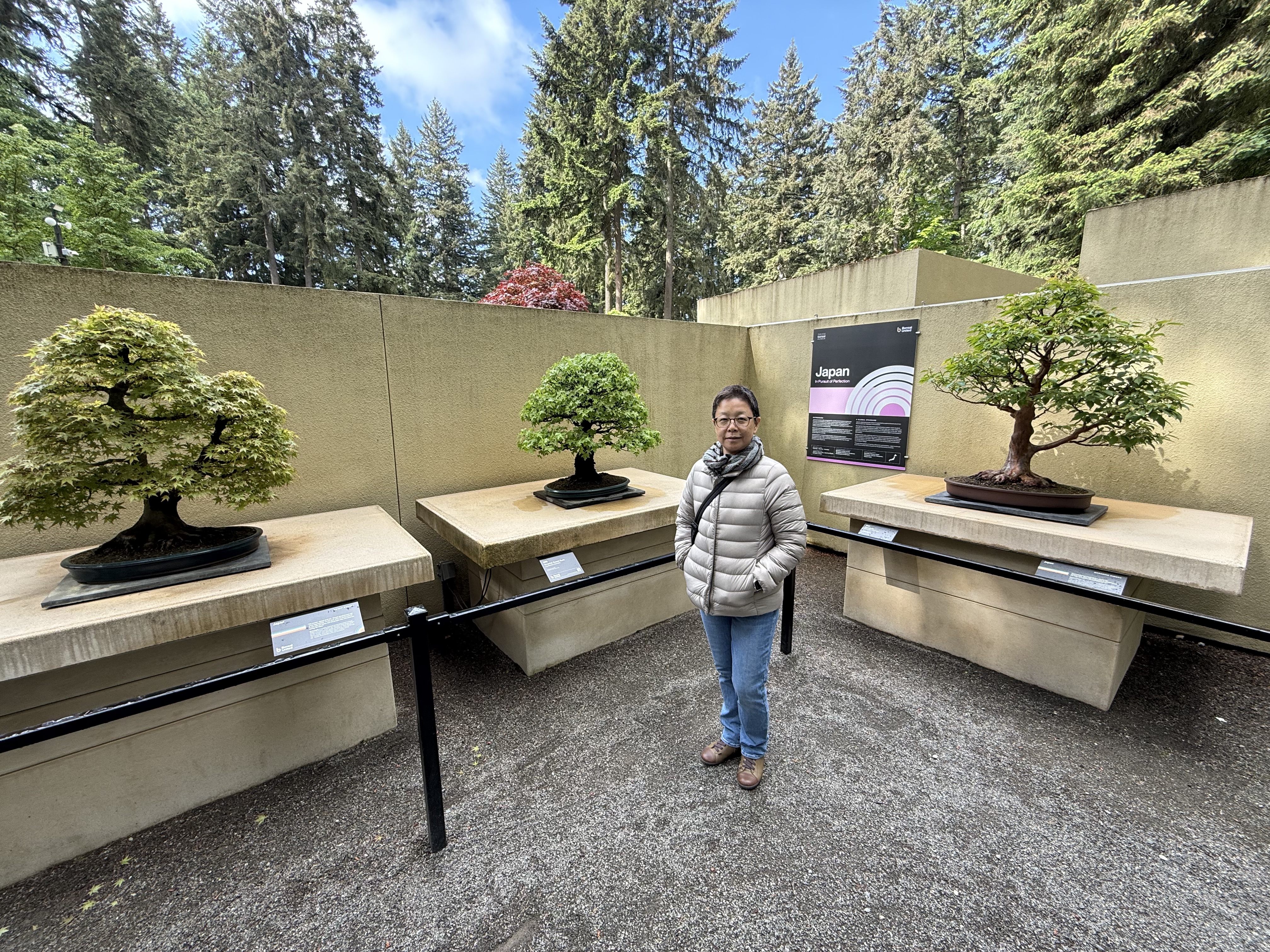
This is part of the Japan exhibit. I think these are all trees, probably juniper–a favorite among bonsai artists.
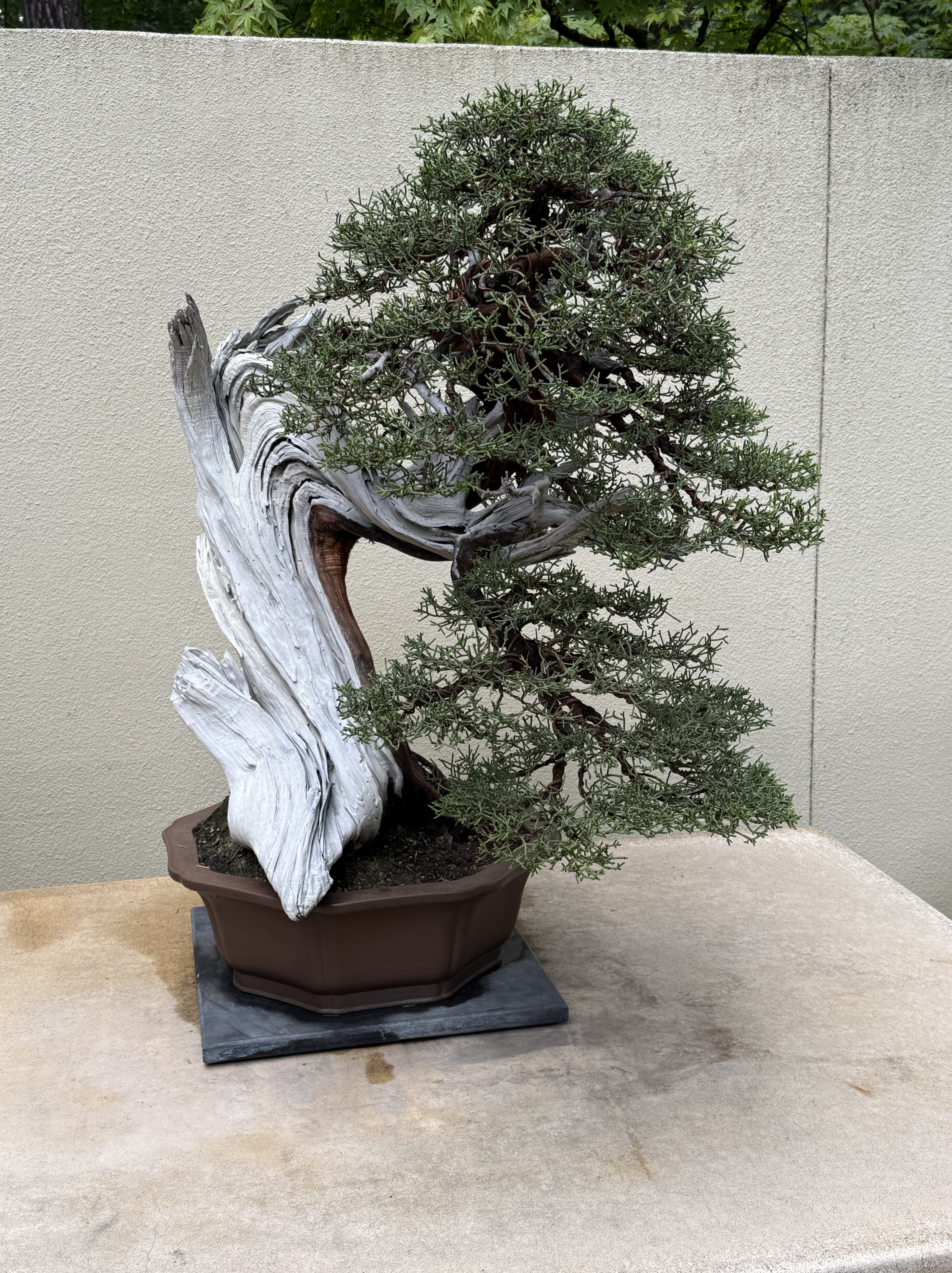
As an example of what good hands these fragile trees are in, this specimen was created by a past director of the museum. It was my favorite. I like the idea of rejuvenation from near death.
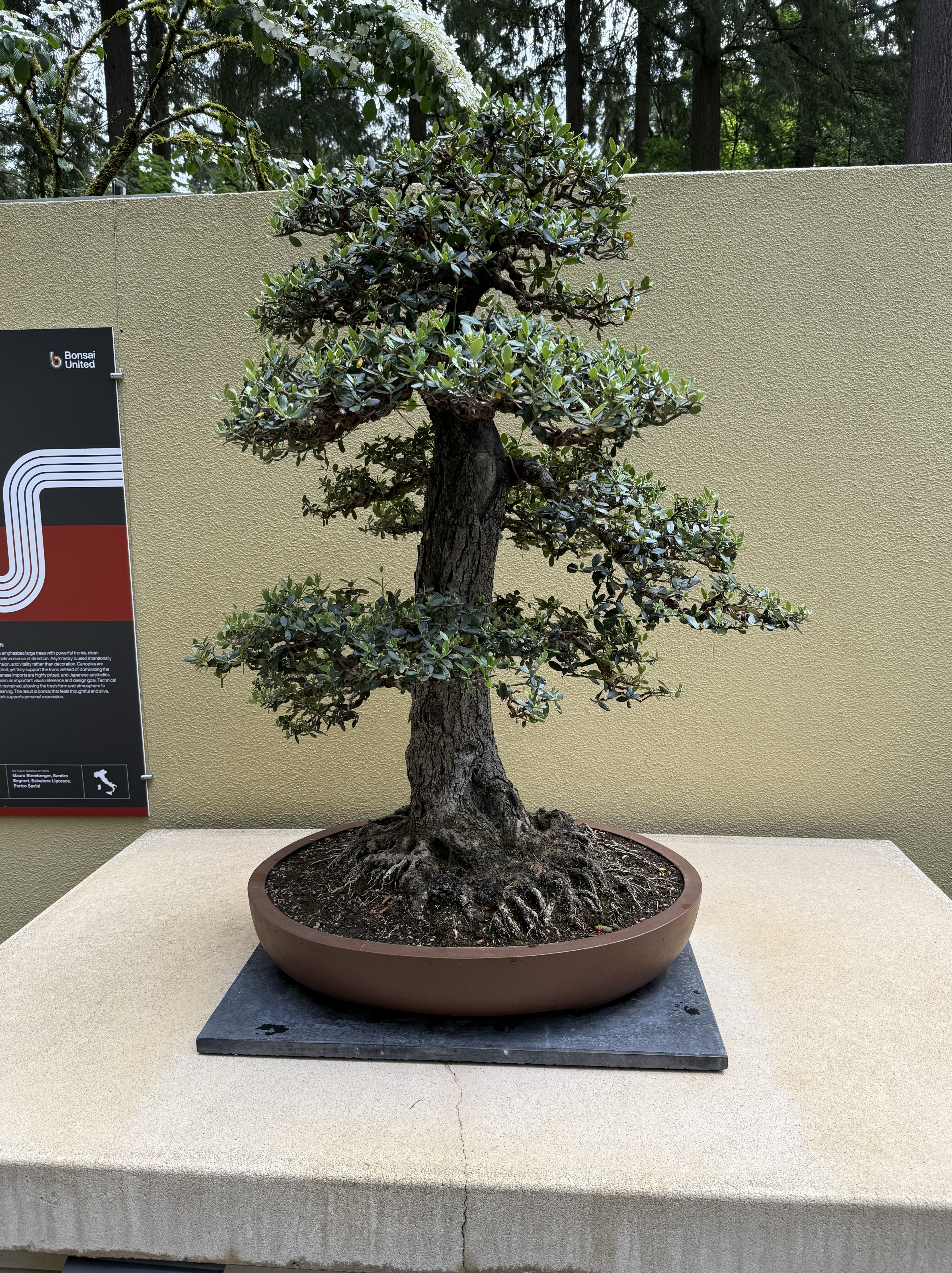
European Olive, in training since 1969, from Italy.
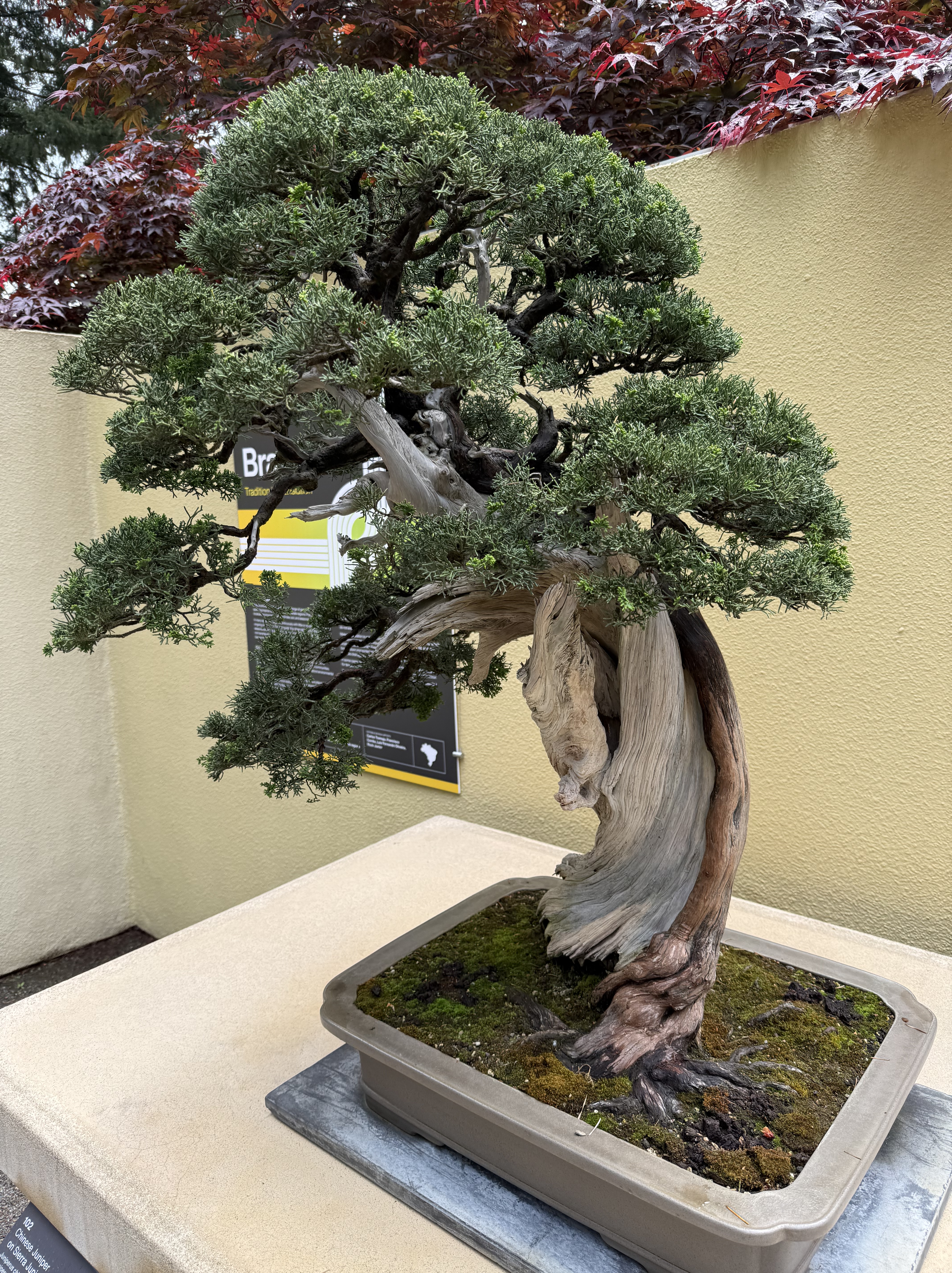
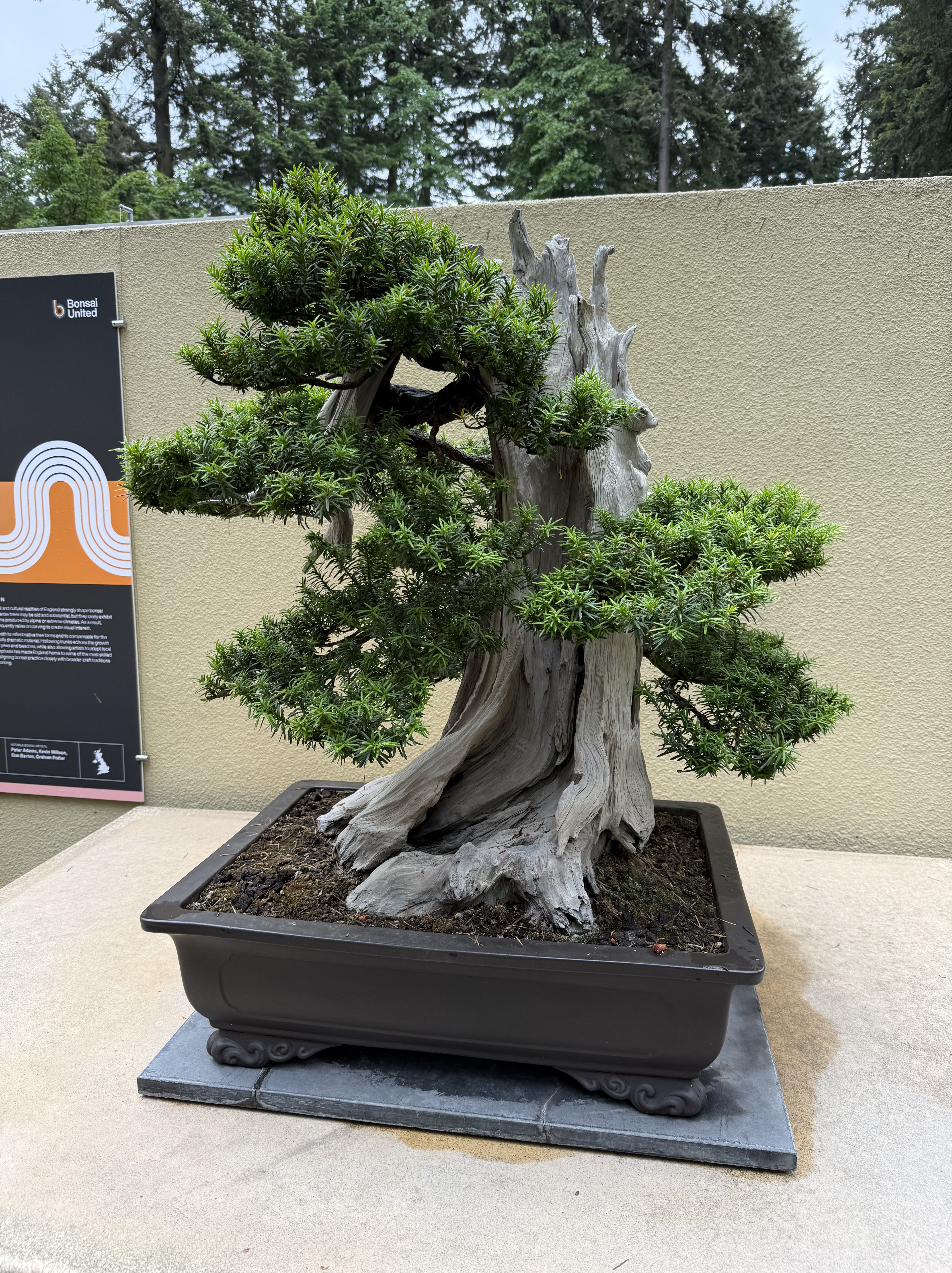
You can see the difference between the trees/shrubs grown from seeds or youth (and those that are saved from the dust heap) in this recovered specimen. I love the intermingling of dead (white) wood and living tissue.
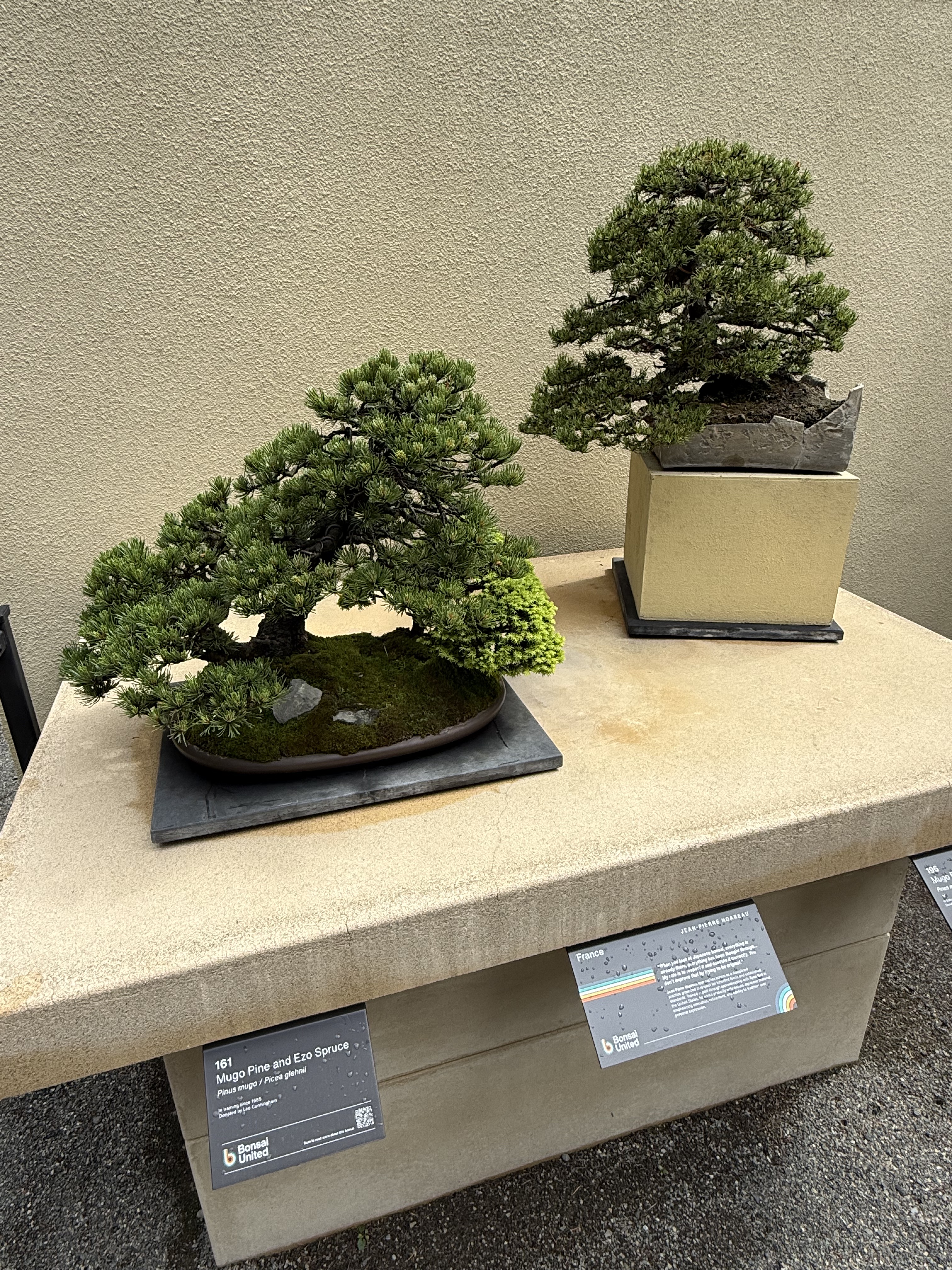
This German artist created a forest, but the individual “trees” were falling over so there are wires holding it together. I imagine there are a lot of failures in practicing bonsai.
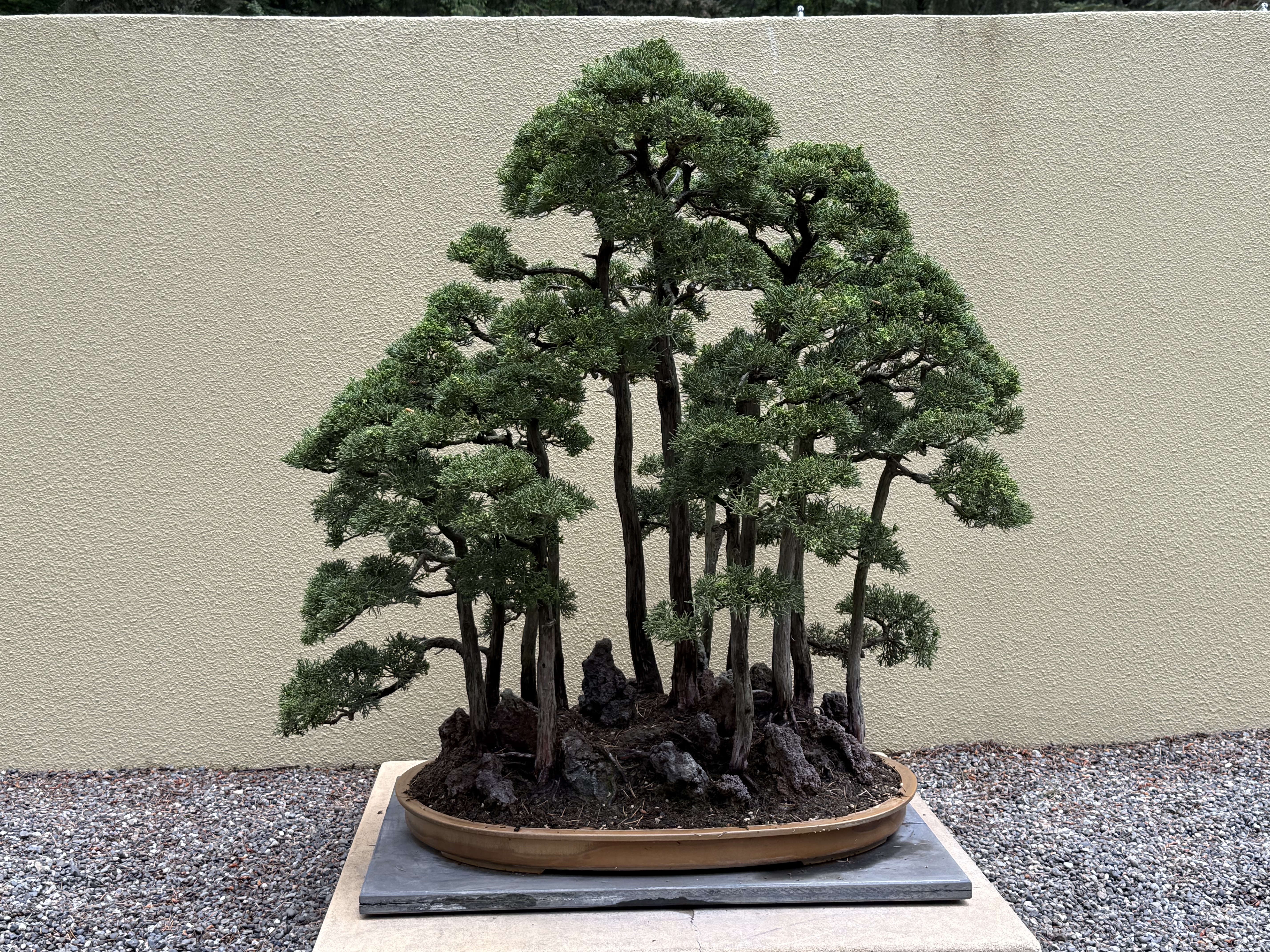
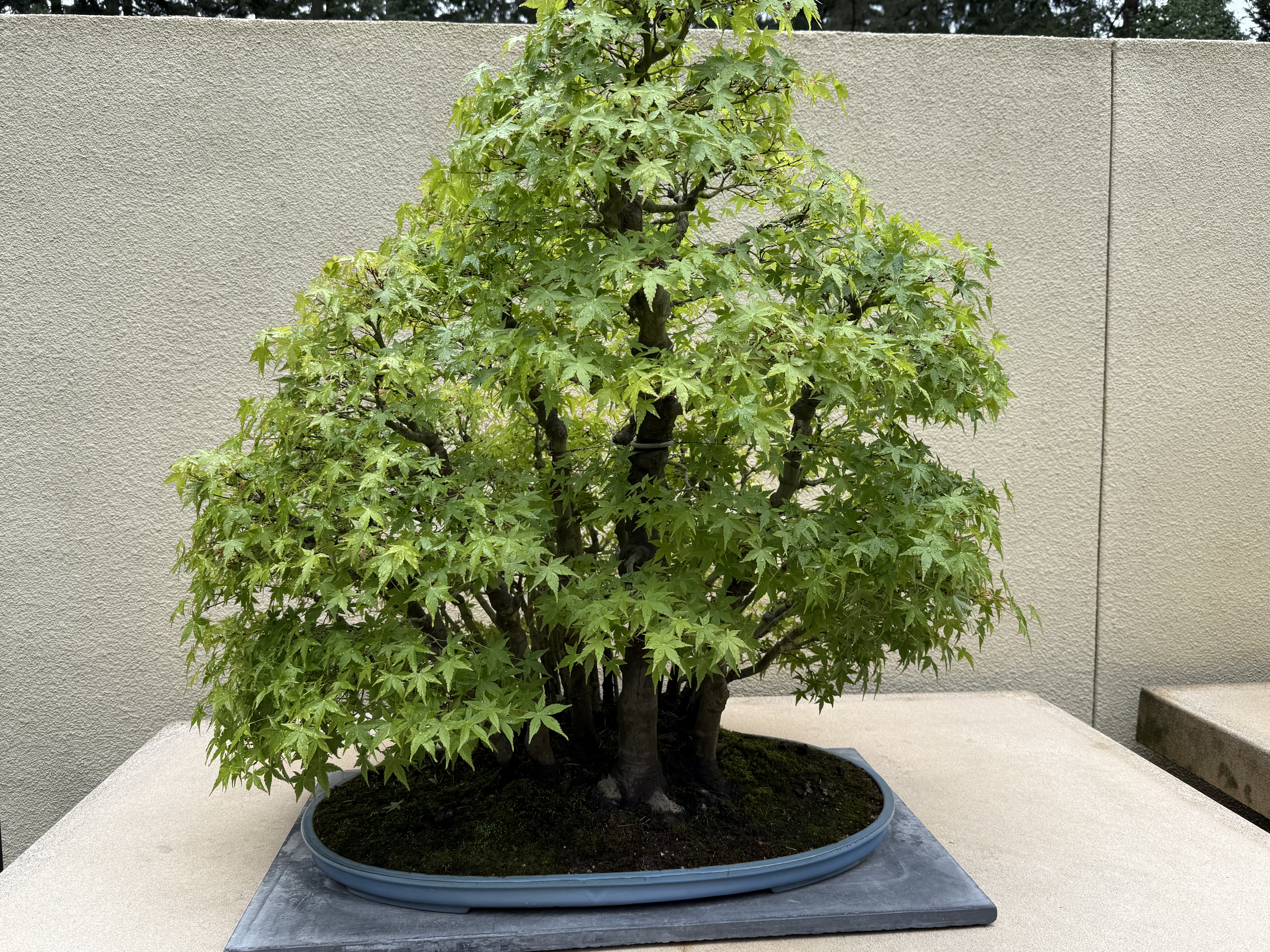
This successful “forest” is by an Australian. Note the “rocks” at the base; they are actually dead knobs from a large stump. Also note the very shallow pan: this is truly penjing–tray scenery–and not a potted plant.
The Rhododendron Garden
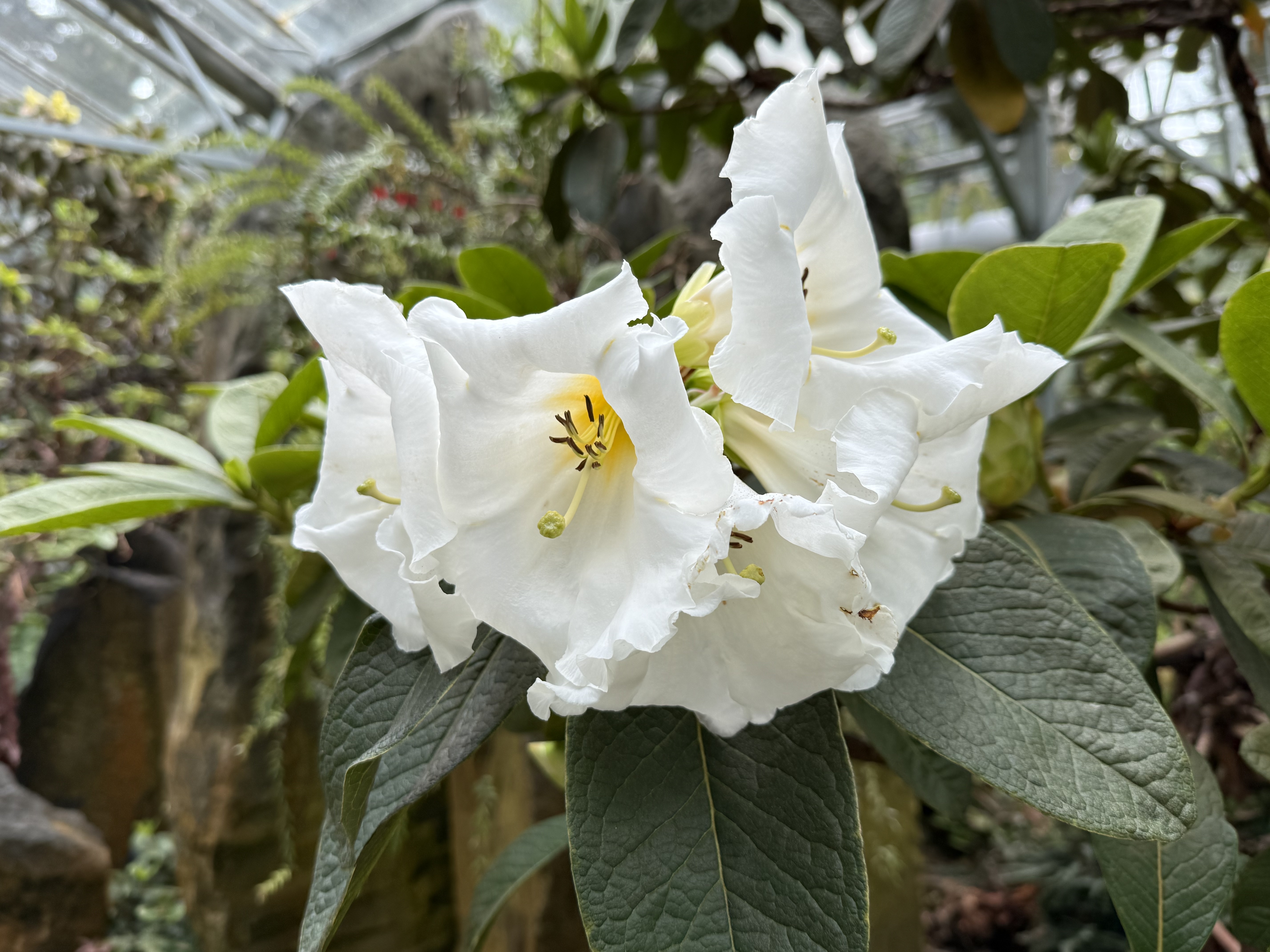
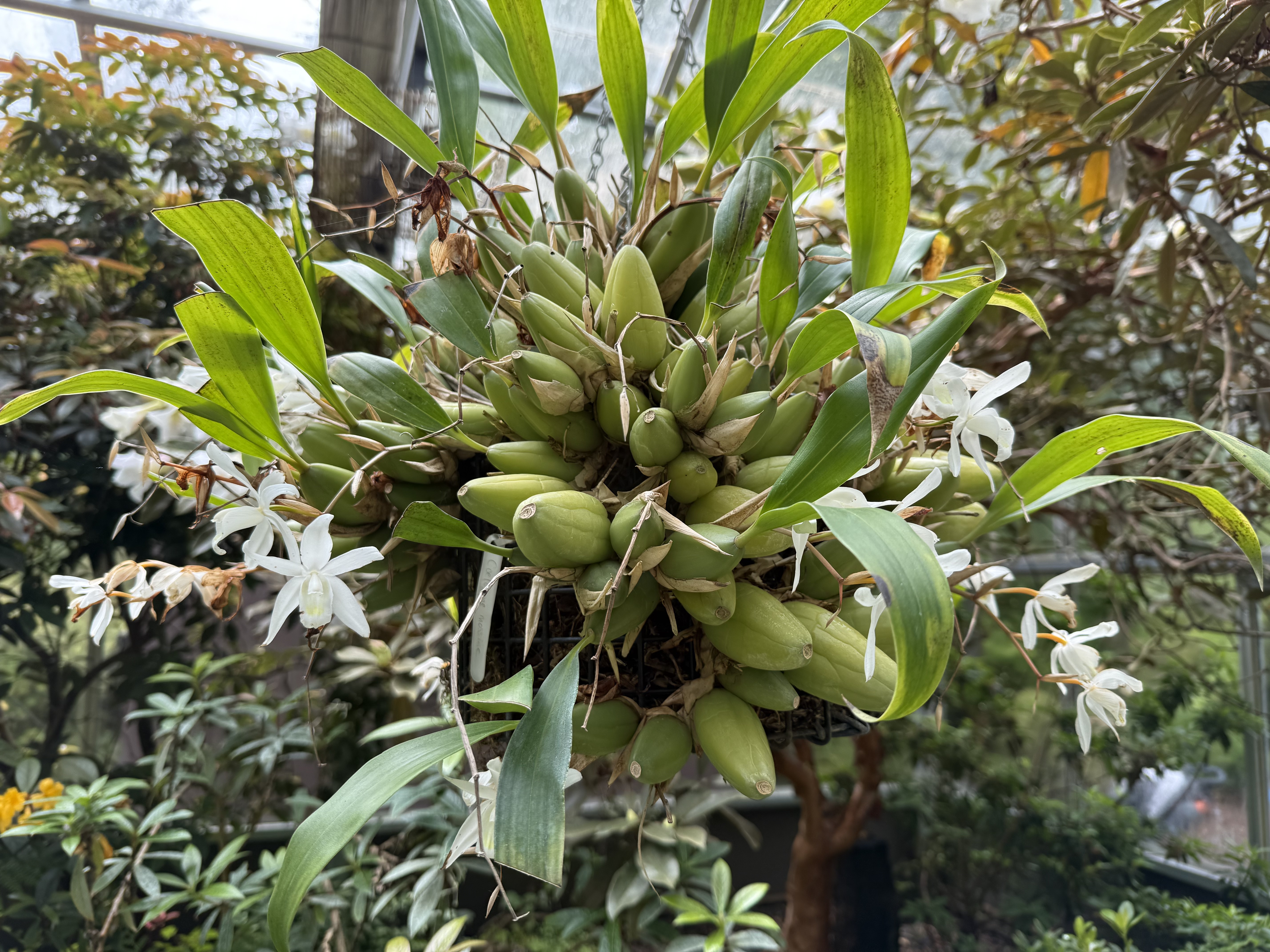
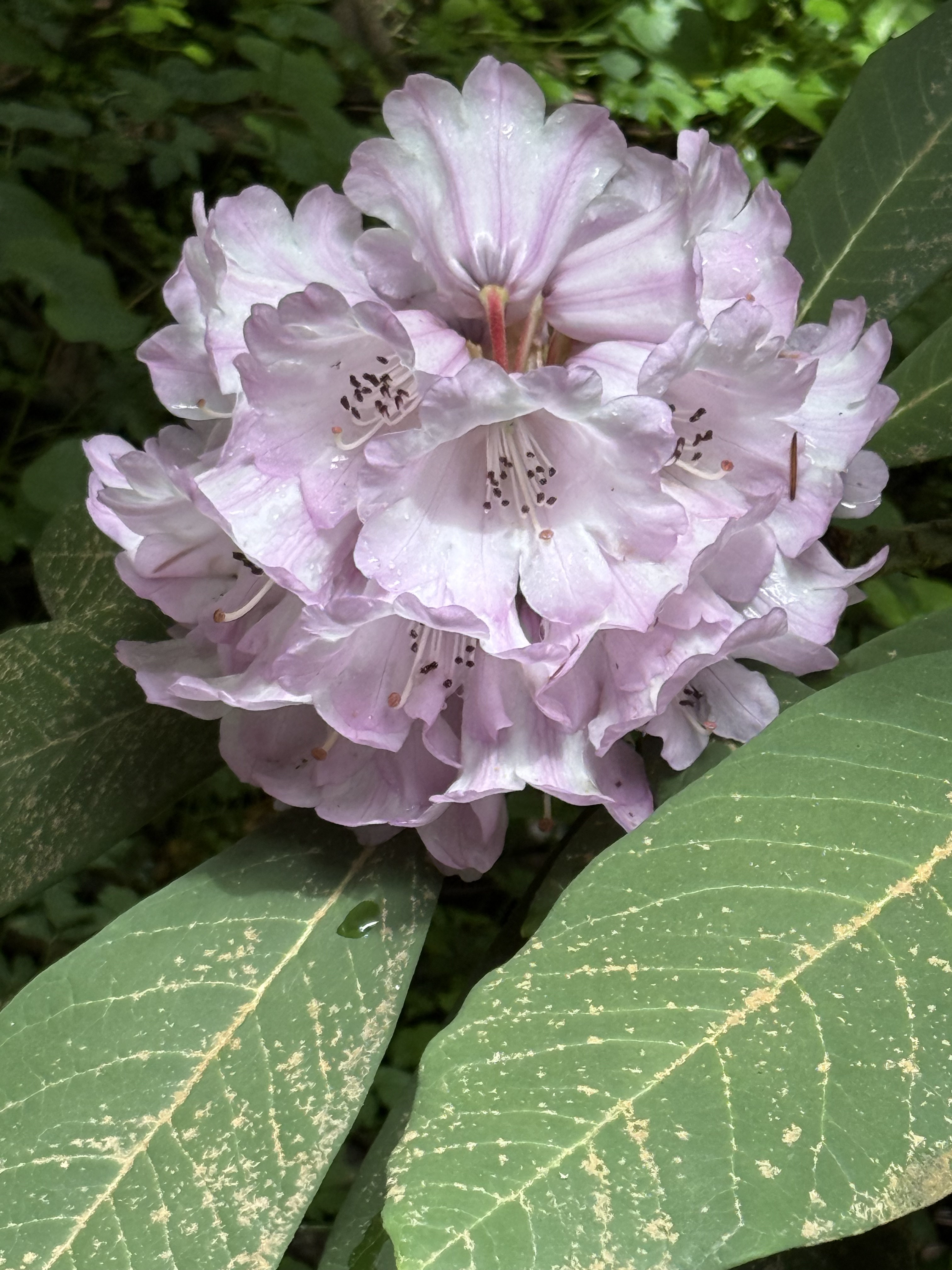
We crossed the gravel plaza and paid a visit to the Rhododendron Garden. The casual stroll through every imaginable color flower was worth the price of admission, even on a chilly spring day in the Pacific Northwest.
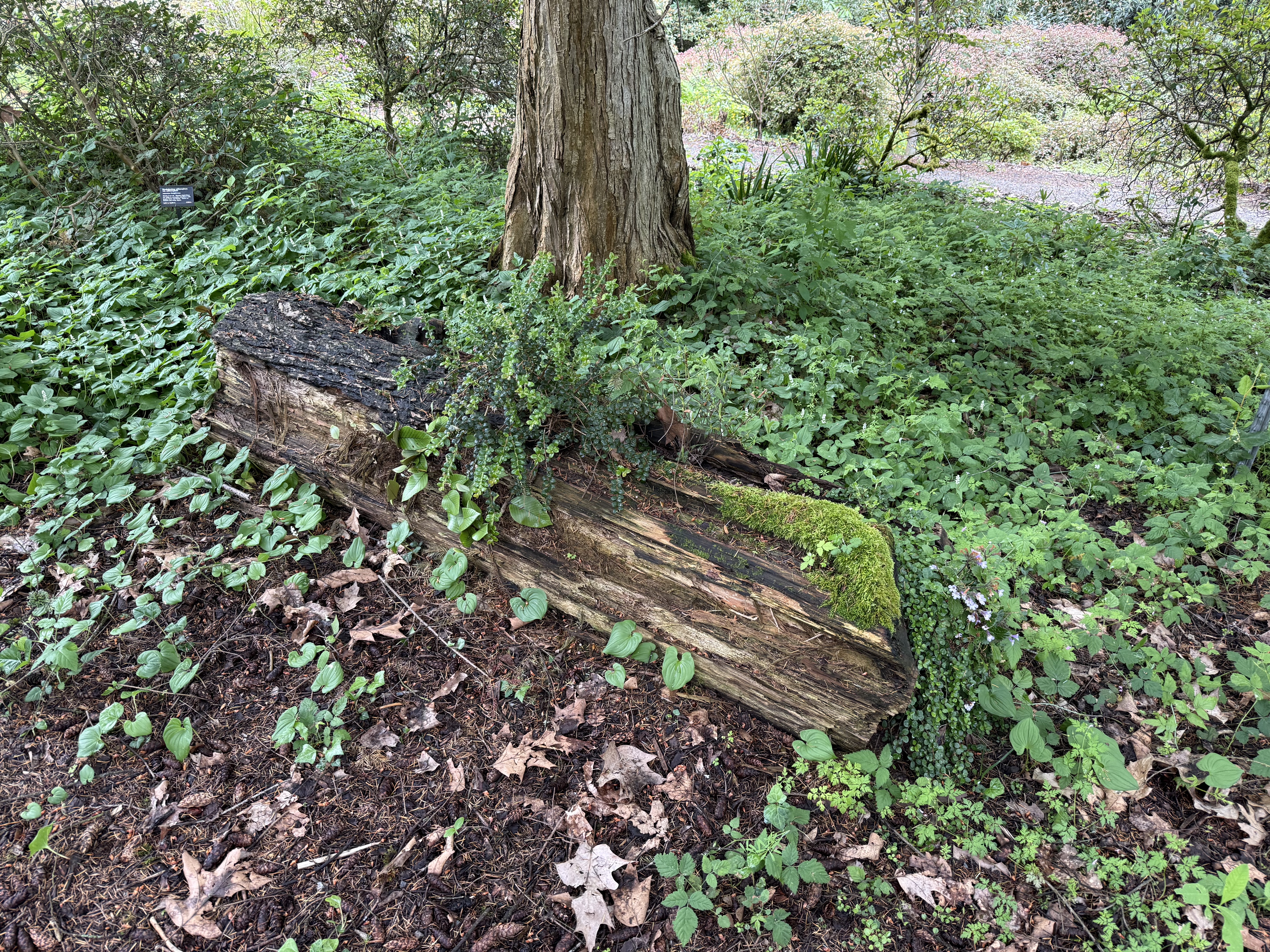
I’ve commented about “nurse logs” before. Here they are part of the landscaping.
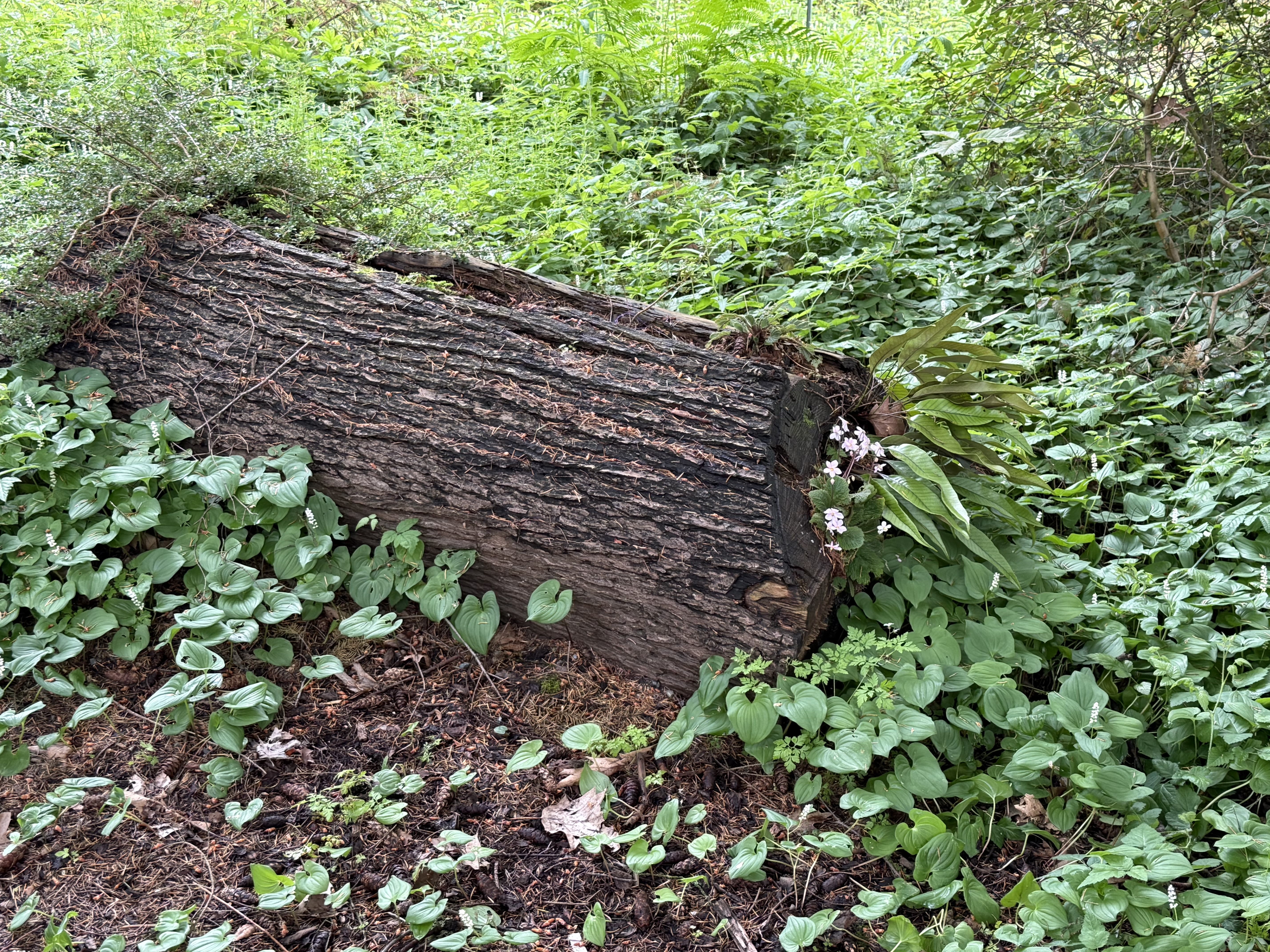
I love the flowers peaking out of one end of this log while a bush is struggling to escape from the other end.
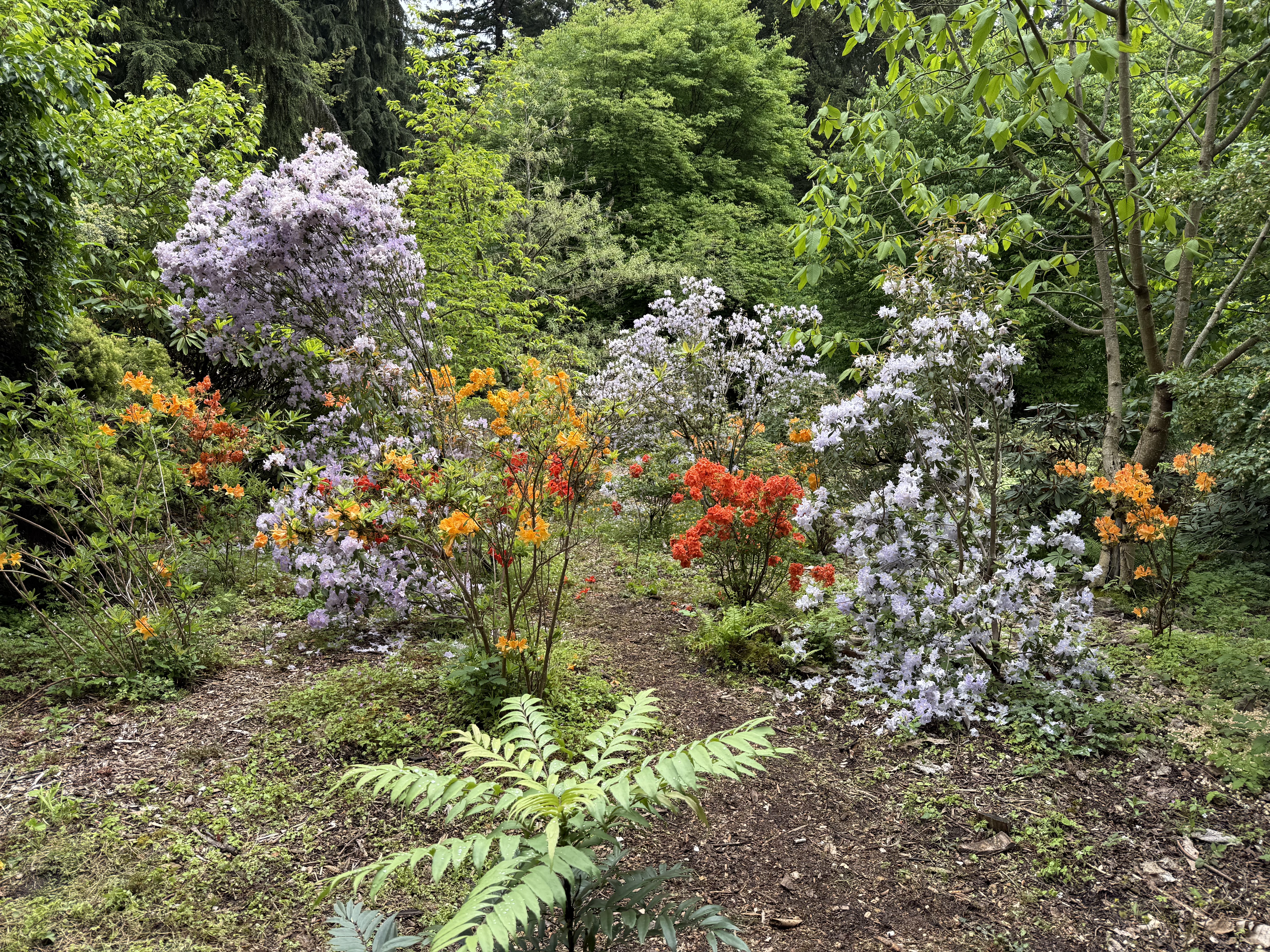
Rhododendron is one of the most common groups of plants, native to every continent although most of them originate from SE Asia. They do well in the Himalayas–not so much here in the PNW.
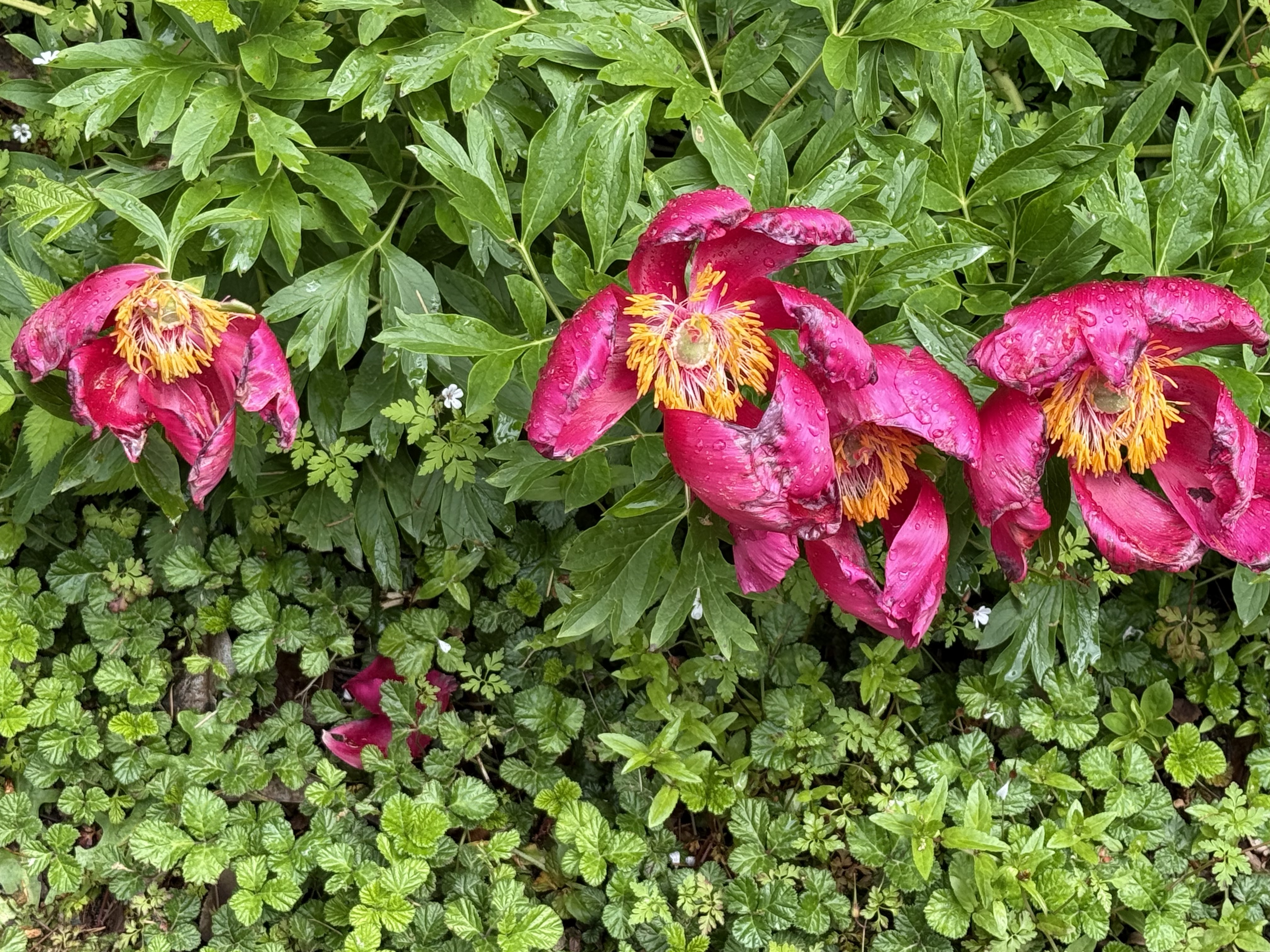
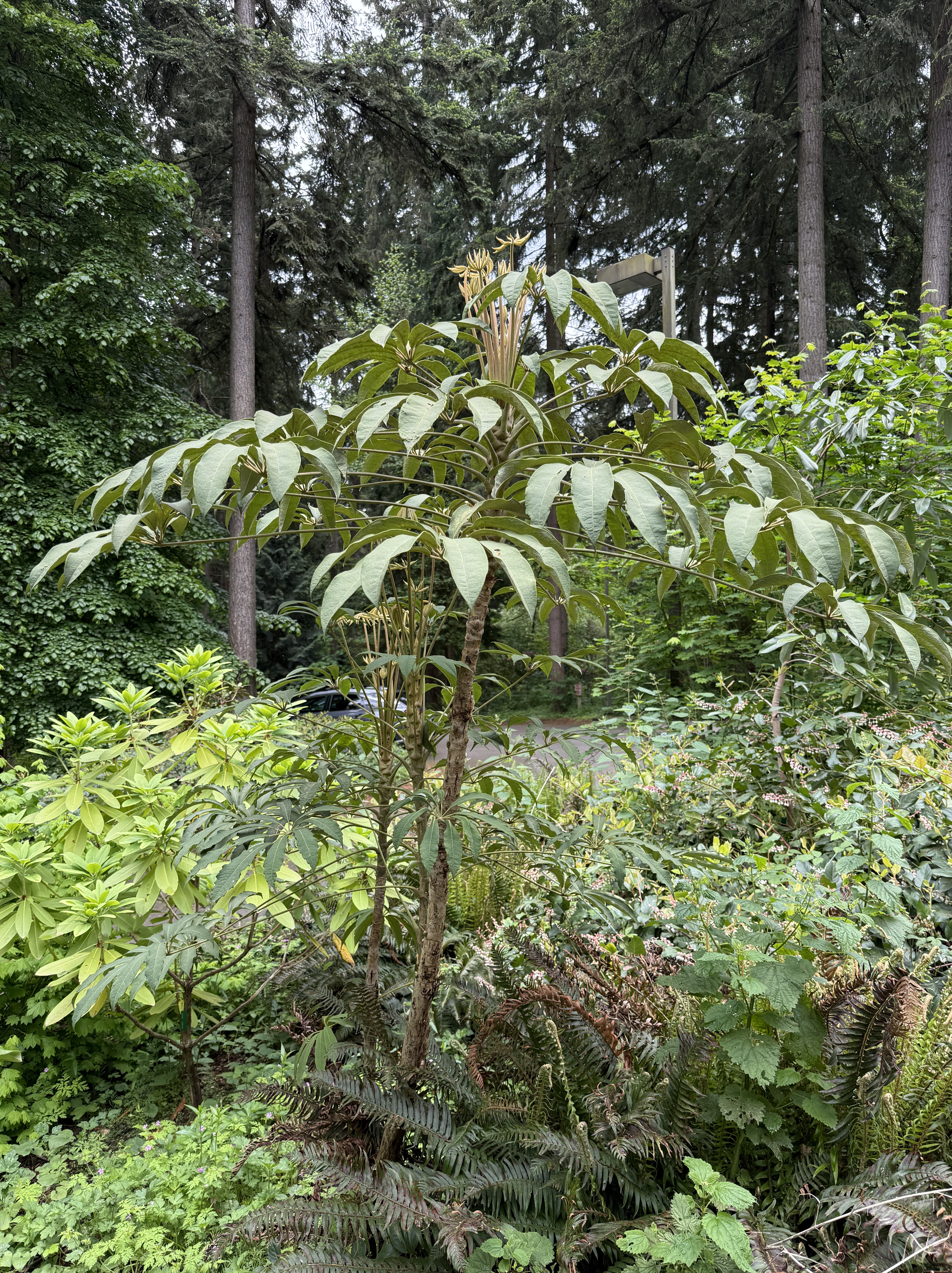
This caught my eye as we left the museum/garden…
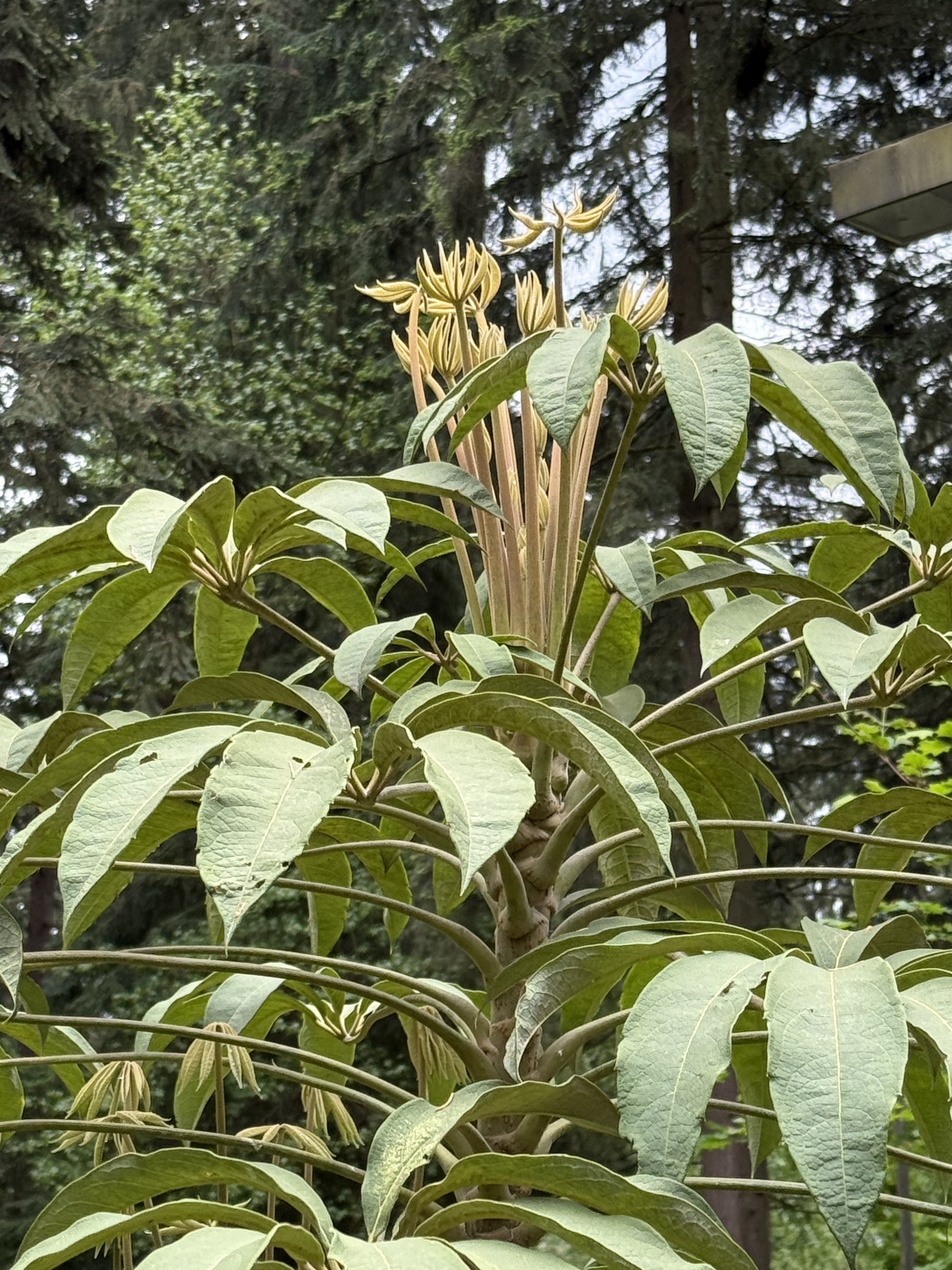
What the hell is growing out of the top? I’d love to see what kind of flowers this tall shrub will produce later this spring…
Ecology Notes from Vancouver, British Columbia
Every time I go outside here in the Pacific Northwest I find something new and mysterious, so I’ll keep posting these notes on my discoveries. This time I crossed the border and entered our northern neighbor, Canada. It’s only a three-hour drive, not counting the time spent at the border patrol station.
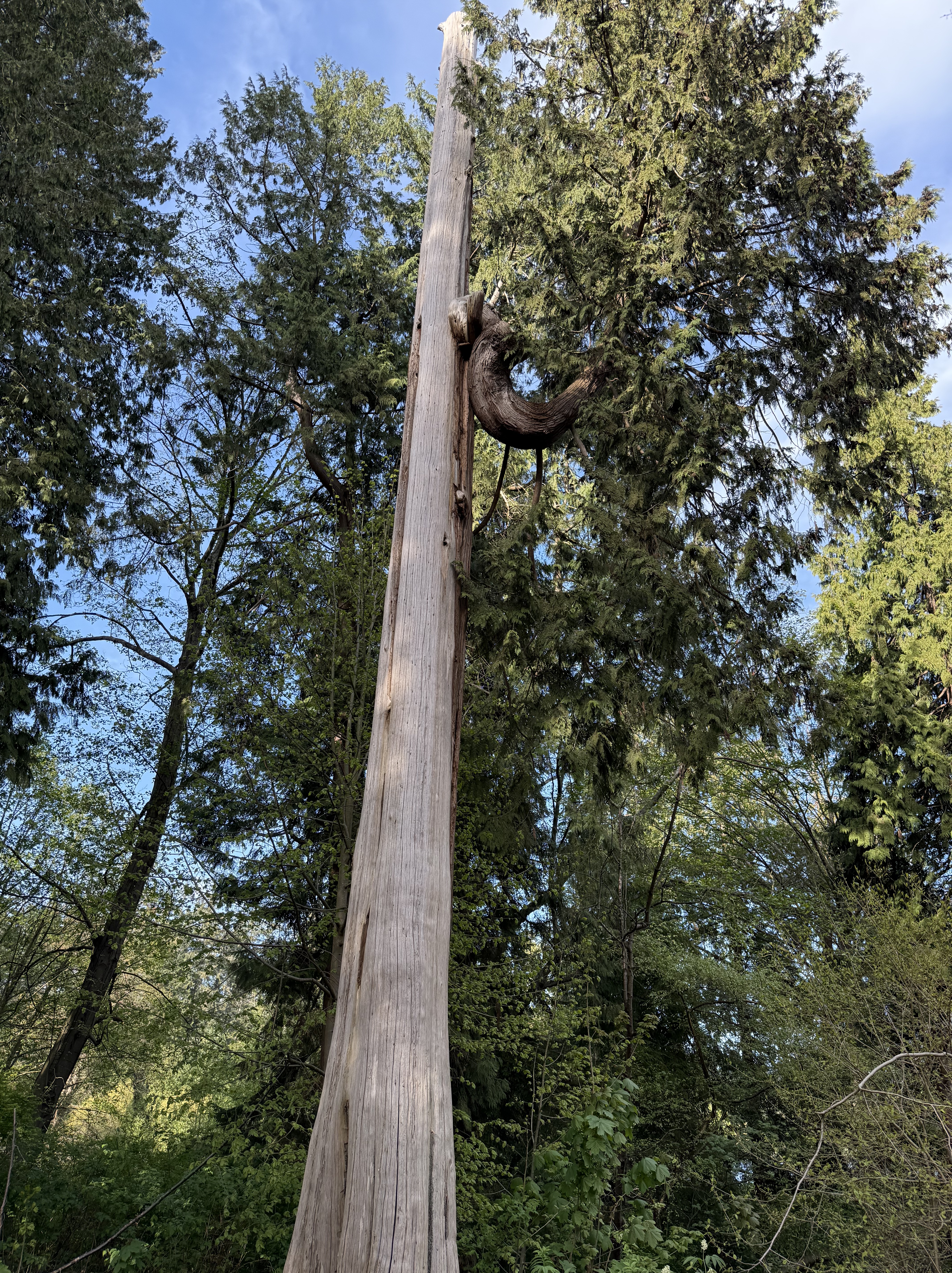
There is no old-growth forest in this part of British Columbia but that doesn’t mean the forest has died. It is regrowing and adapting to a more urban environment. We were strolling through Stanley Park, on the waterfront of Vancouver, when this bizarre tree caught my eye. The tree looks dead, including no crown and a trunk that appears ready to fall over; but near the top a curved branch has appeared. It is almost as large as the trunk and has a thick canopy. Unbelievable!
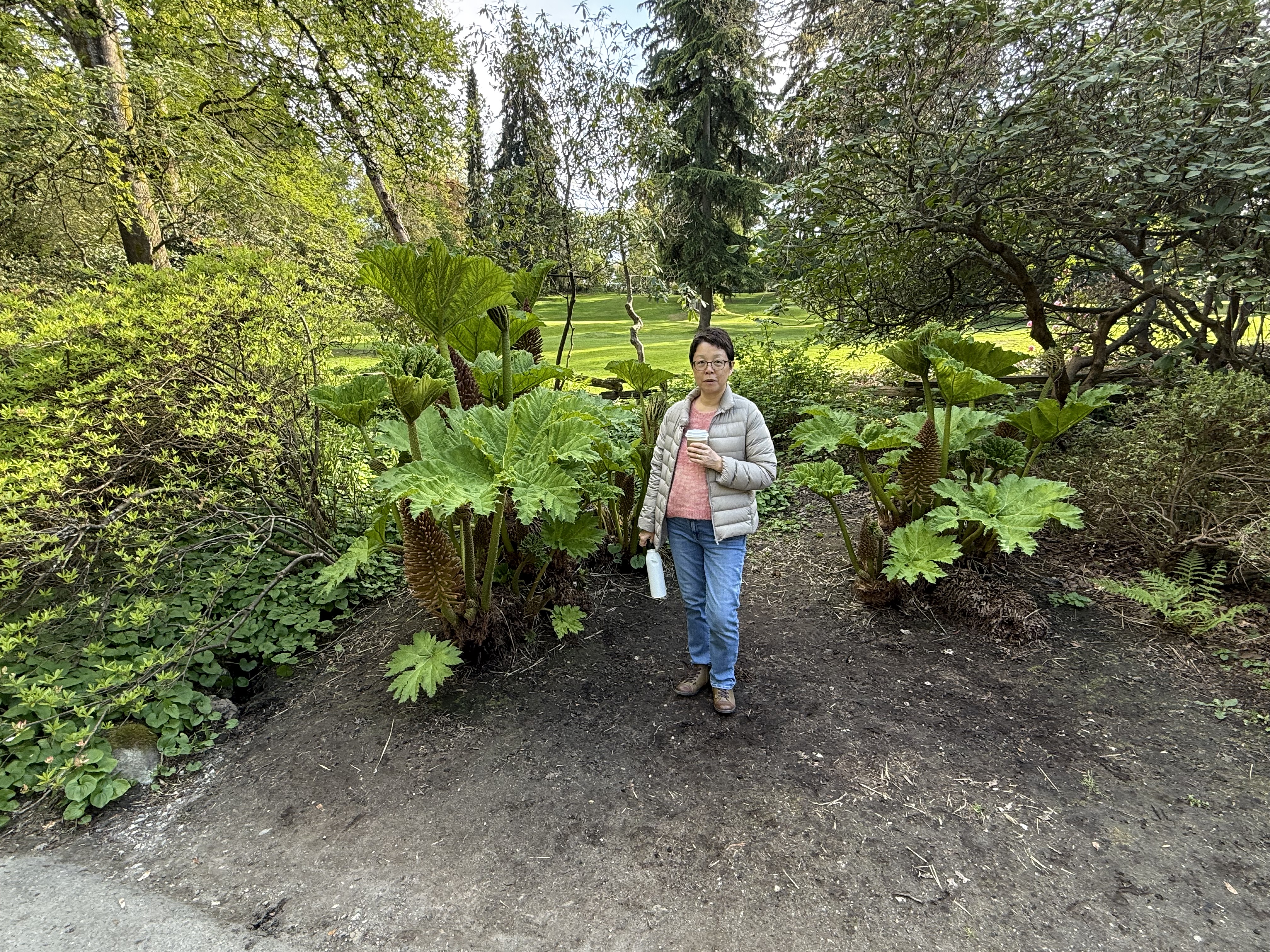
This tropical appearing plant is Gunnera manicata, also known as giant rhubarb (according to CoPilot). It is originally from Brazil, but it does well in the PNW because of the wet climate and mild winters.
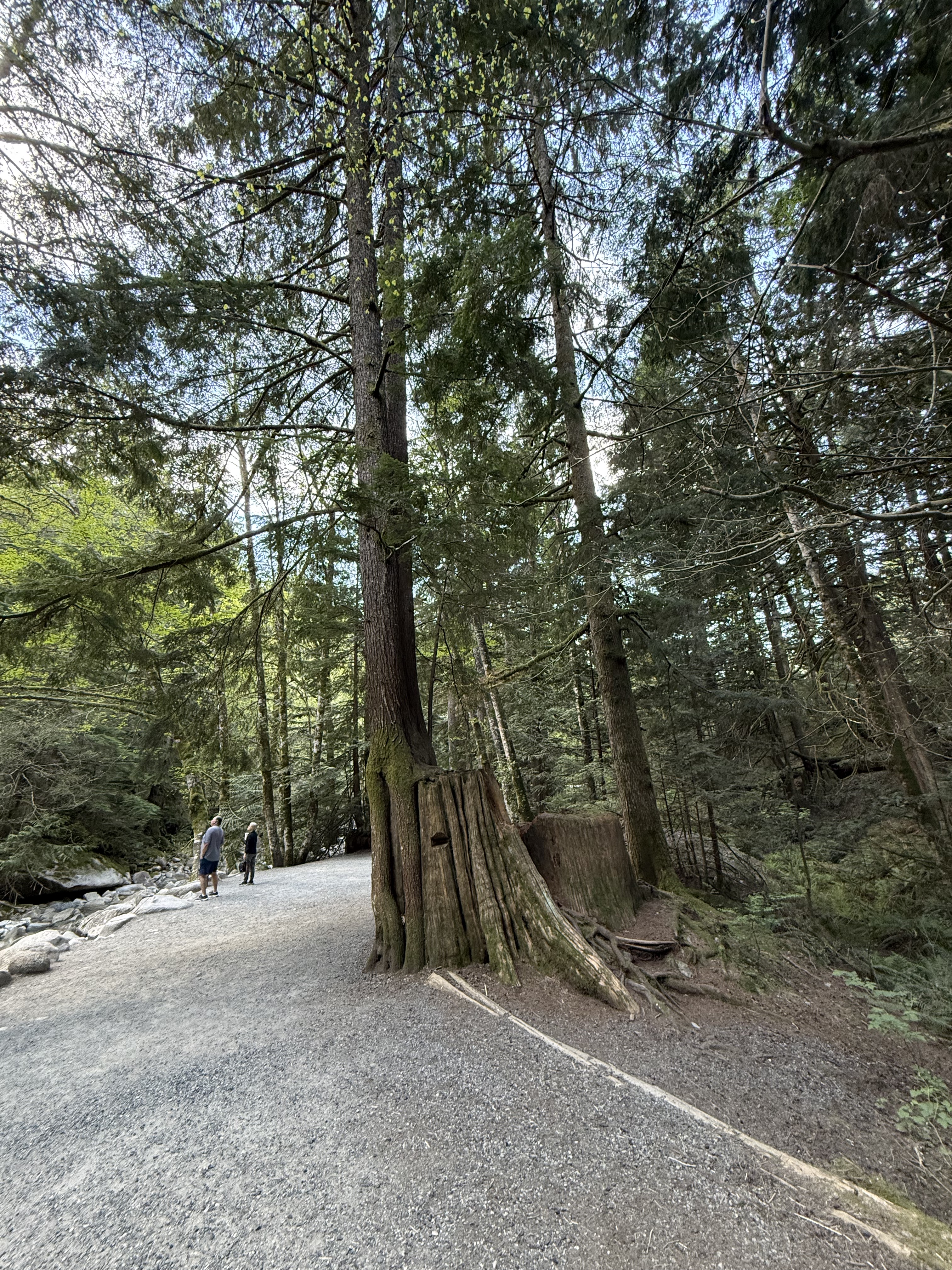
We drove a little up a fjord to Shannon Falls and discovered that nurse-log trees occur here as well as in Washington. This one is probably a Western Hemlock growing from a stump comprising multiple roots from clumped trees that merged into one. That’s why it looks like a bamboo thicket.
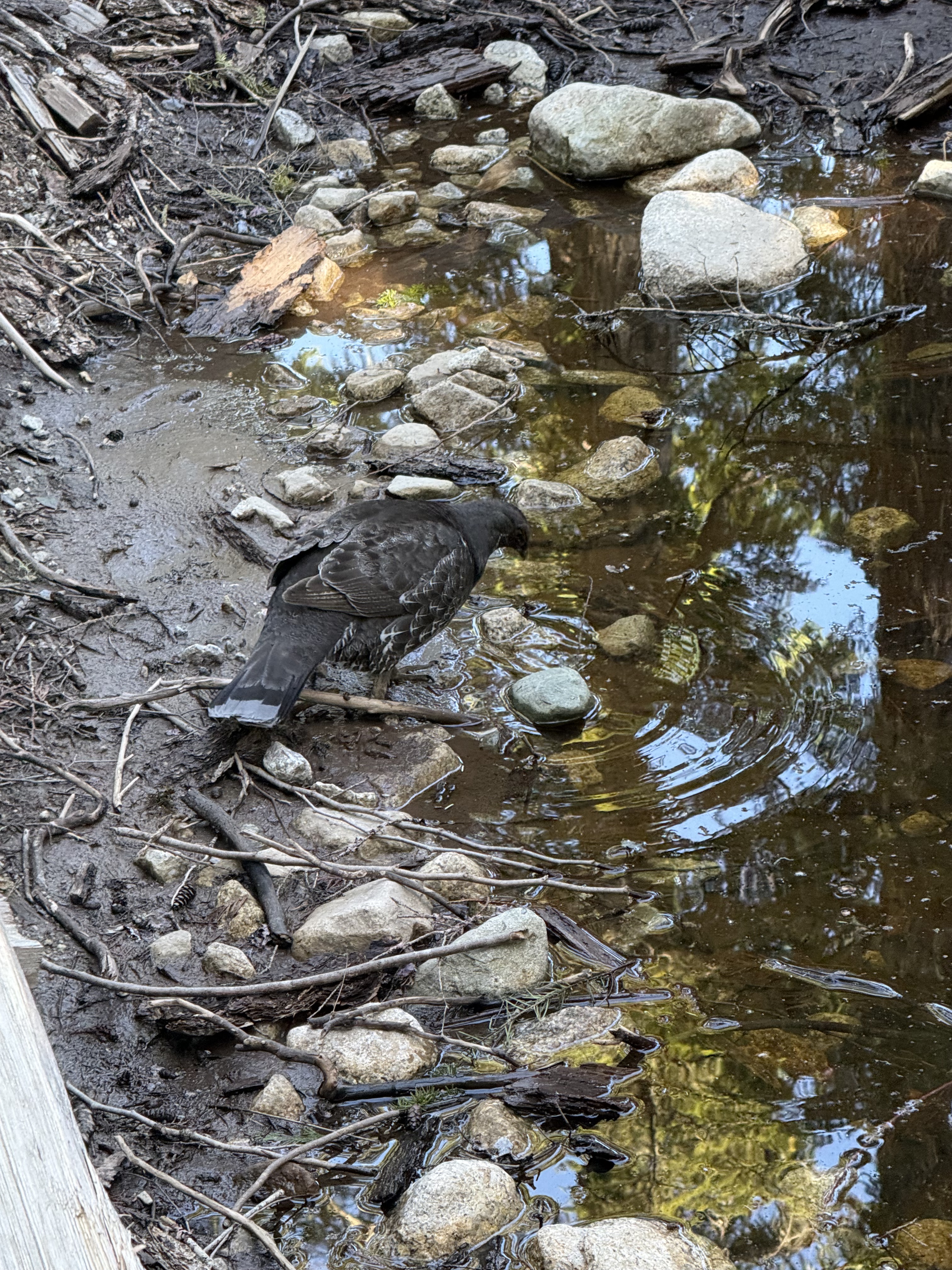
This Sooty Grouse didn’t seem to mind being photographed as it poked around this water hole in Squamish and Chief Viewpoint park.
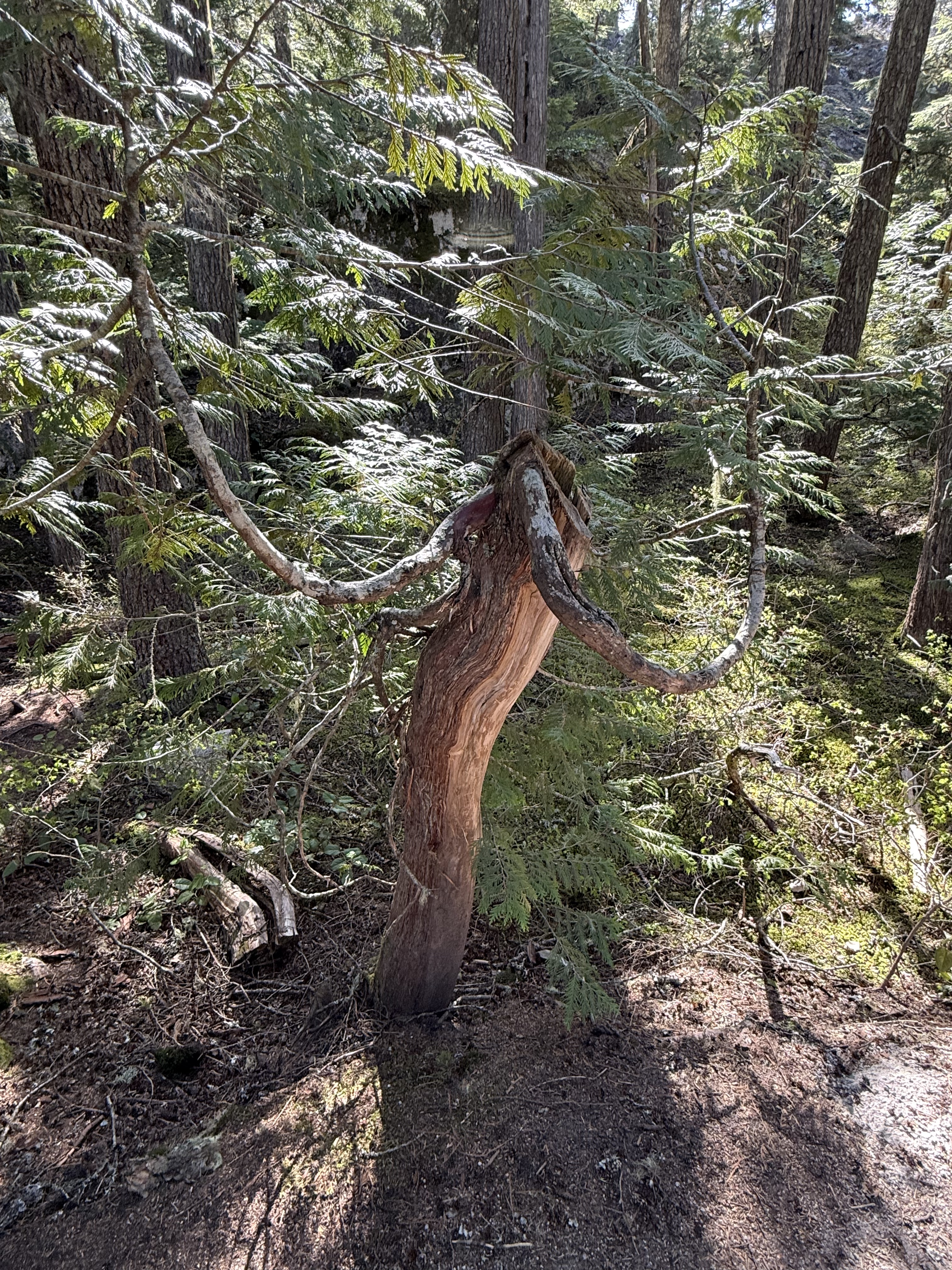
This reminded me of the tree I saw in Stanley Park, a dead stump with curved growth full of foliage. I asked CoPilot about it and, surprisingly, it had a plausible explanation. It is so damp in the coastal PNW that trees don’t just grow out of stumps, they can actually grow from dead trees well above the ground. Apparently, the young tree has sent roots down through the decaying stump to reach the ground…another biological wonder. Simply awesome!
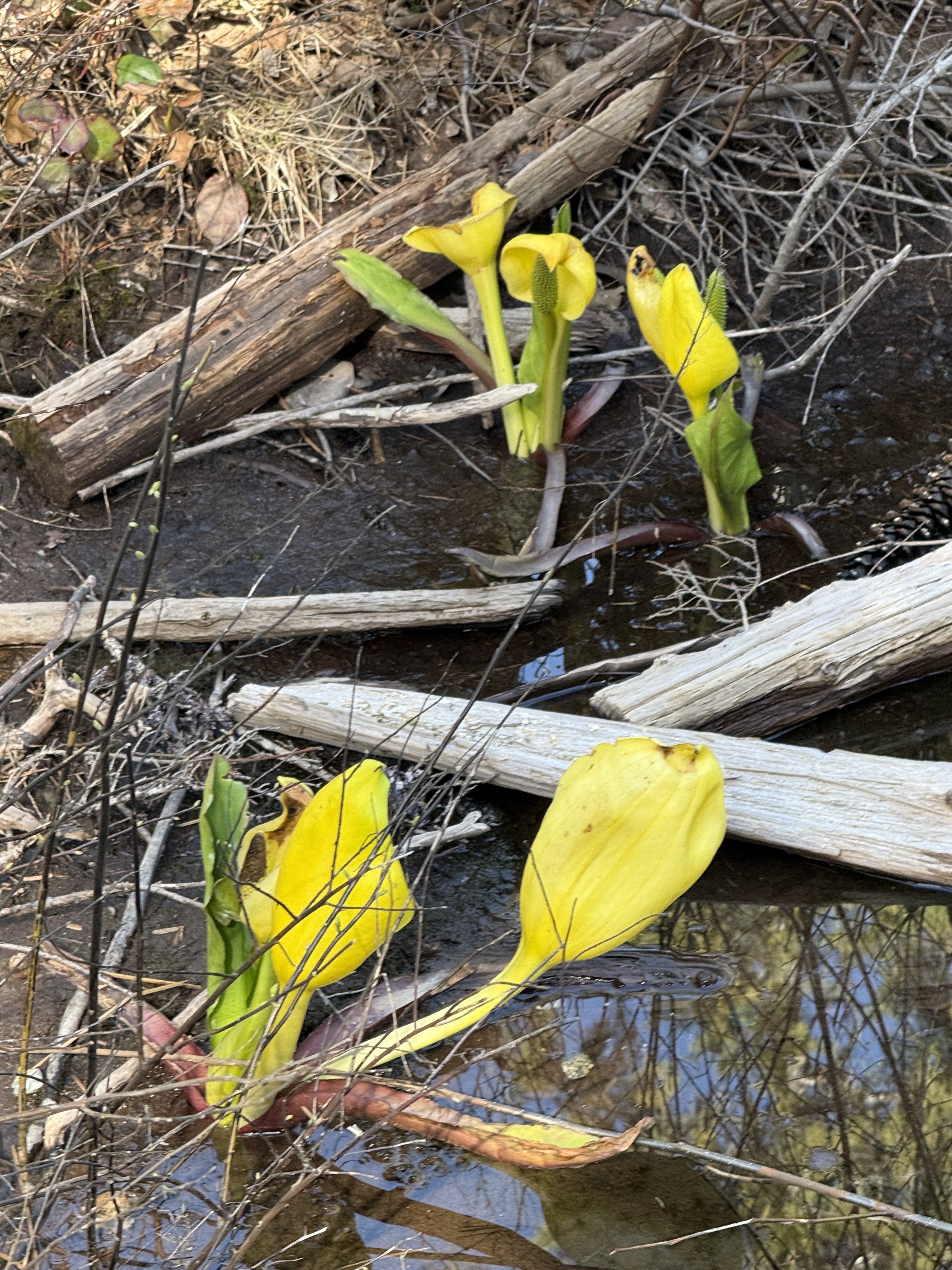
I thought these bright flowers looked familiar, but I don’t trust my intuition on biological matters (all yellow flowers are the same); as it turns out, according to CoPilot these are Western Skunk Cabbage–the same plant I saw in a wetland along the Olympic Peninsula. I was right…but I had forgotten the name. LOL!
I enjoyed this trip and writing this post, thanks to CoPilot. Its identifications may be wrong but they are better than mine. I think of its comments as those of someone who took a biology class in college.
I hope you enjoyed it too.
Sights around Lake Washington
It promised to be a beautiful day, so we decided to take a look at Lake Washington, just east of Seattle. This elongate water body was carved by glaciers between 19 and 16 thousand years ago. It was part of Puget Sound until about 5700 years ago, when river sediment isolated it from the sea, allowing it to become fresh water. The original outlet at the southern end wasn’t good enough for early American settlers, so they got approval from Congress to construct a canal with locks to connect Lake Washington to Puget Sound, a drop of 20 feet in elevation. As fans of technological progress, we wanted to see this for ourselves.
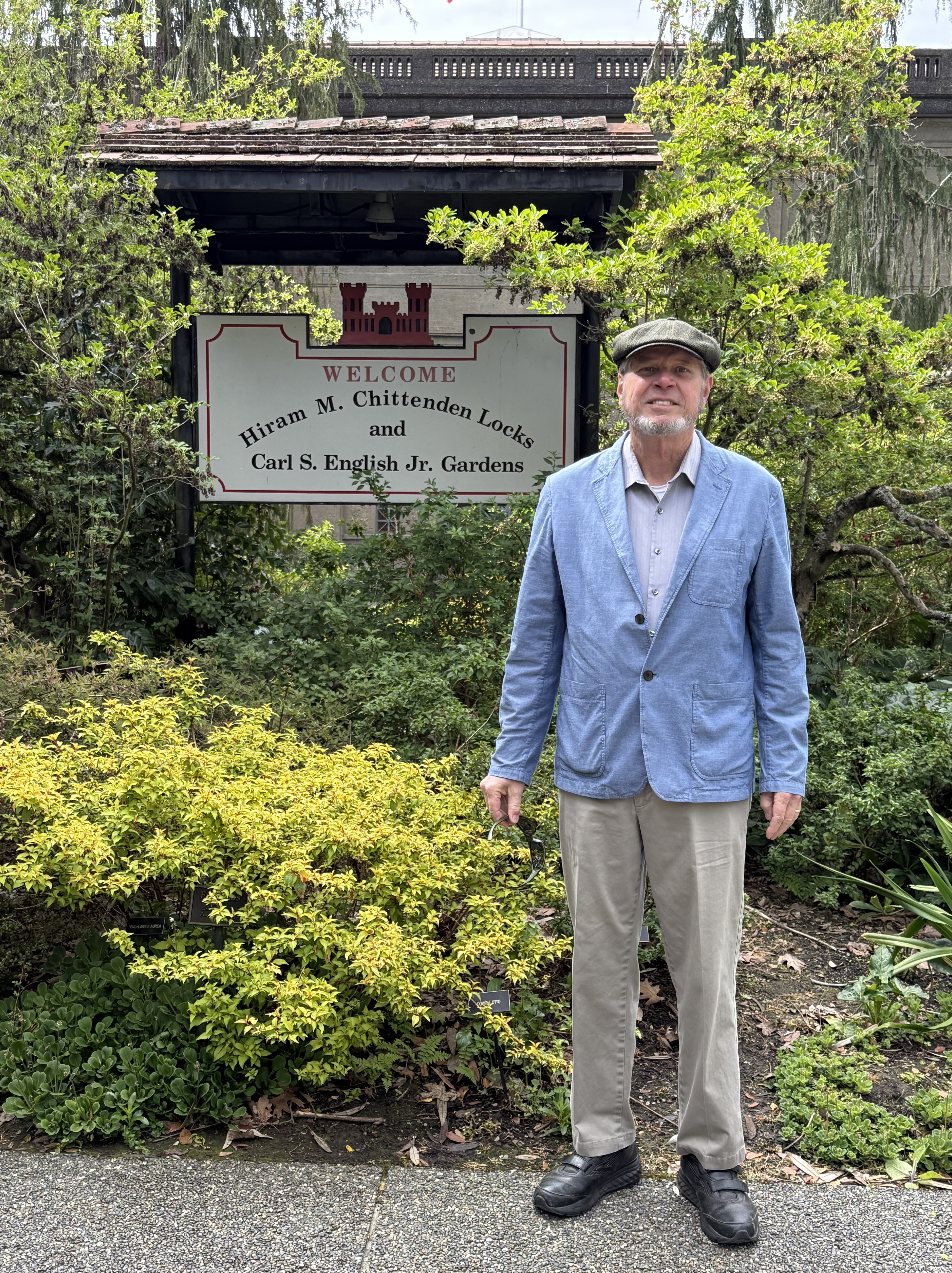
The Army Corps of Engineers began construction of a set of locks in 1911, under the supervision of Hiram M. Chittenden. As the sign proclaims, his name remains associated with them; however, they are more commonly known as the Ballard Locks after the city where they were built. The site includes a number of stone-faced buildings and has since come to include a botanical garden.
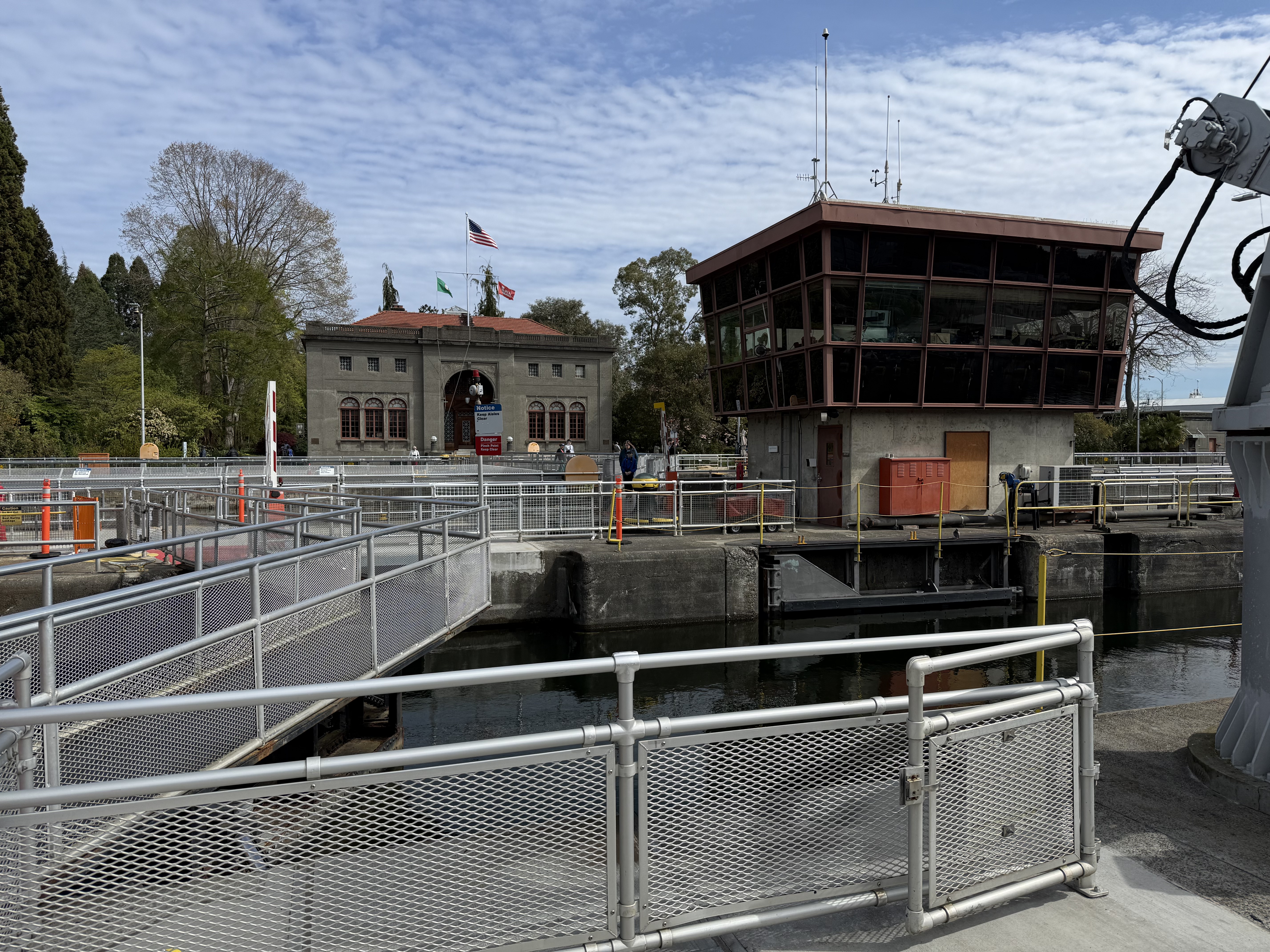
There are two locks, one for larger, commercial vessels (on the other side of the control building) and a smaller lock. The larger one has two sets of gates to accommodate barges.
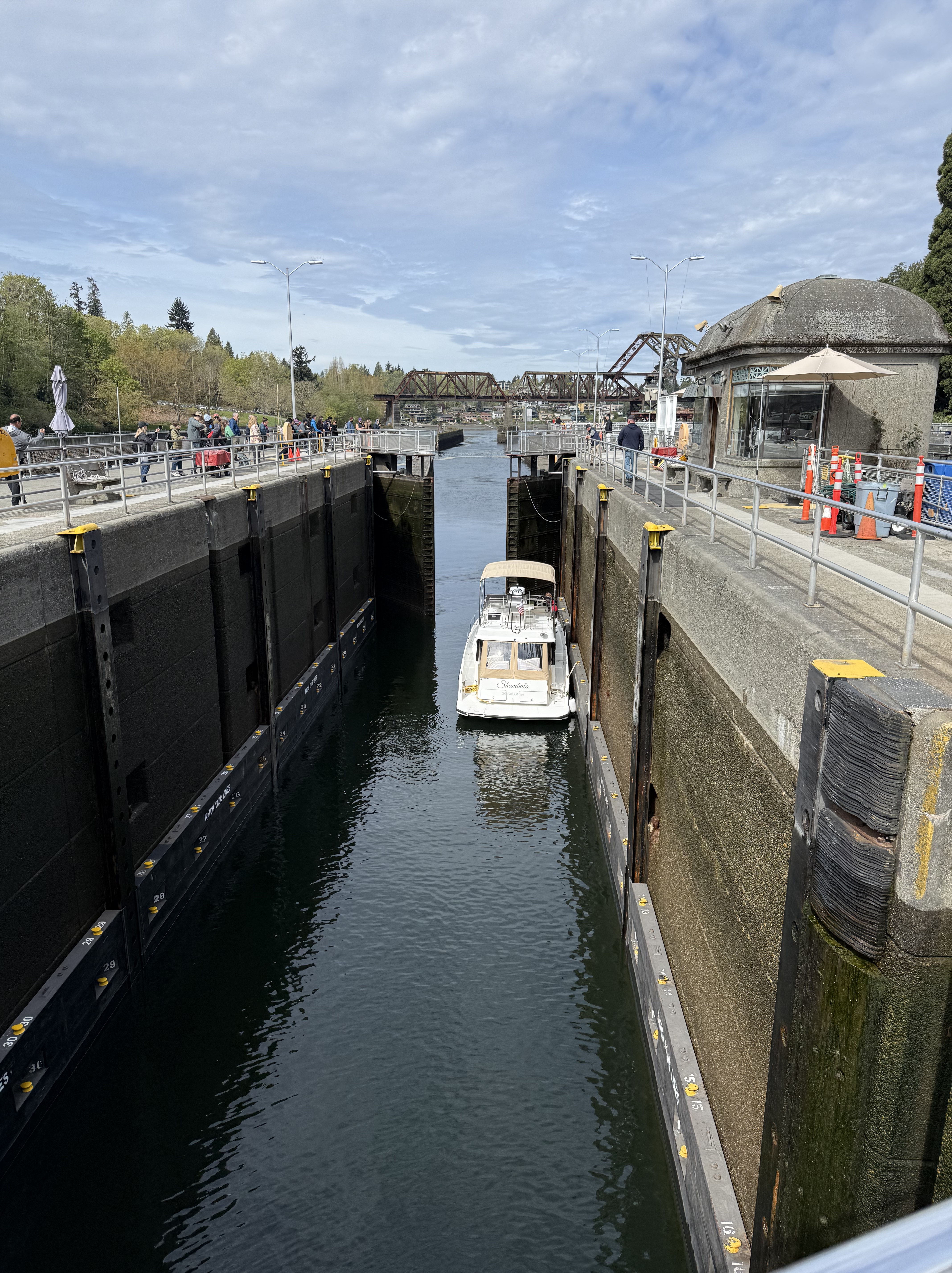
Several private boats used the lock while we were there. It takes maybe 15 minutes for the water level to equilibrate whether going upstream or downstream (towards Puget Sound).
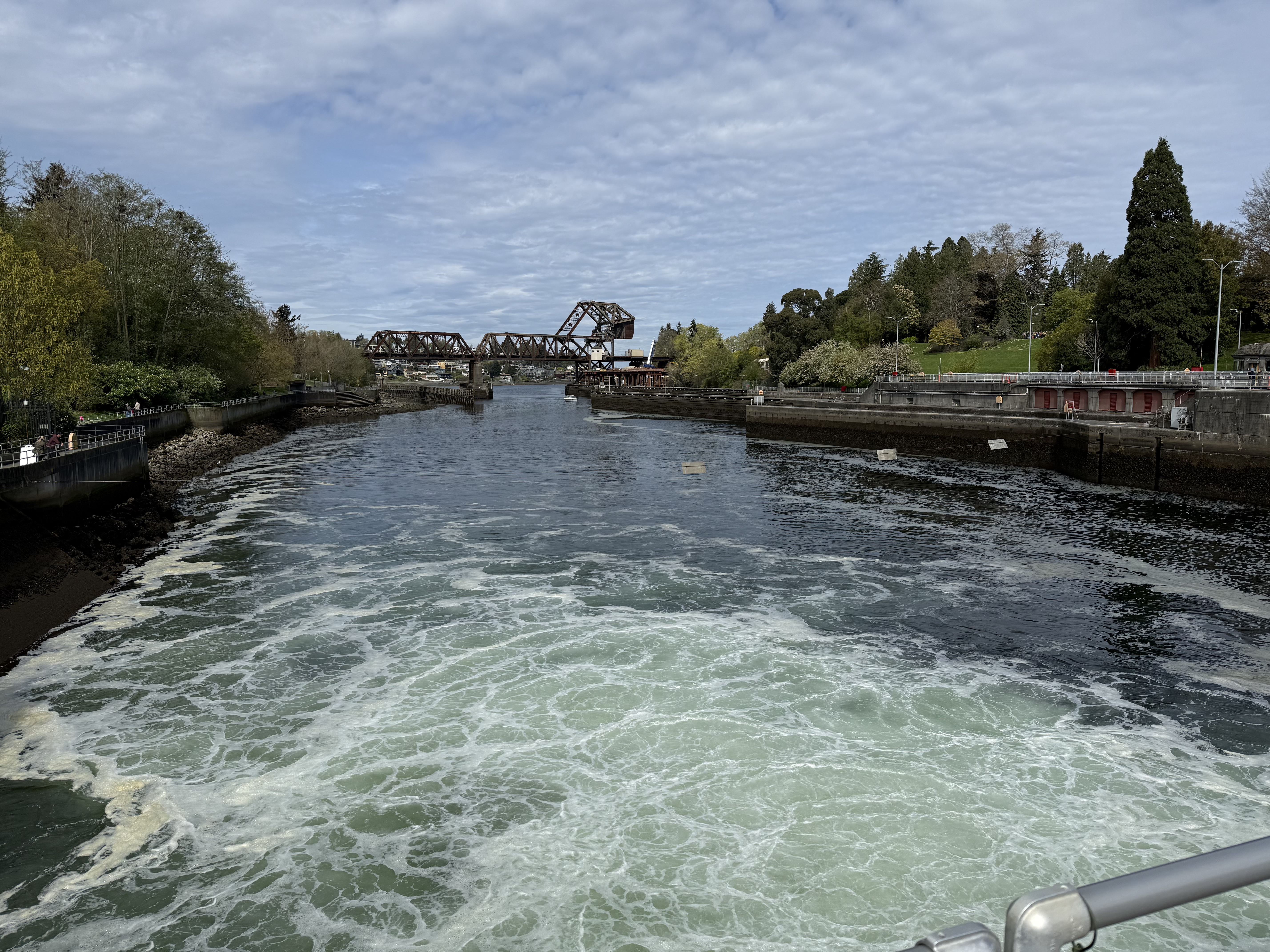
The spillway was partially open and the turbulent flow created a very dangerous scene. I wouldn’t want to fall into that water.
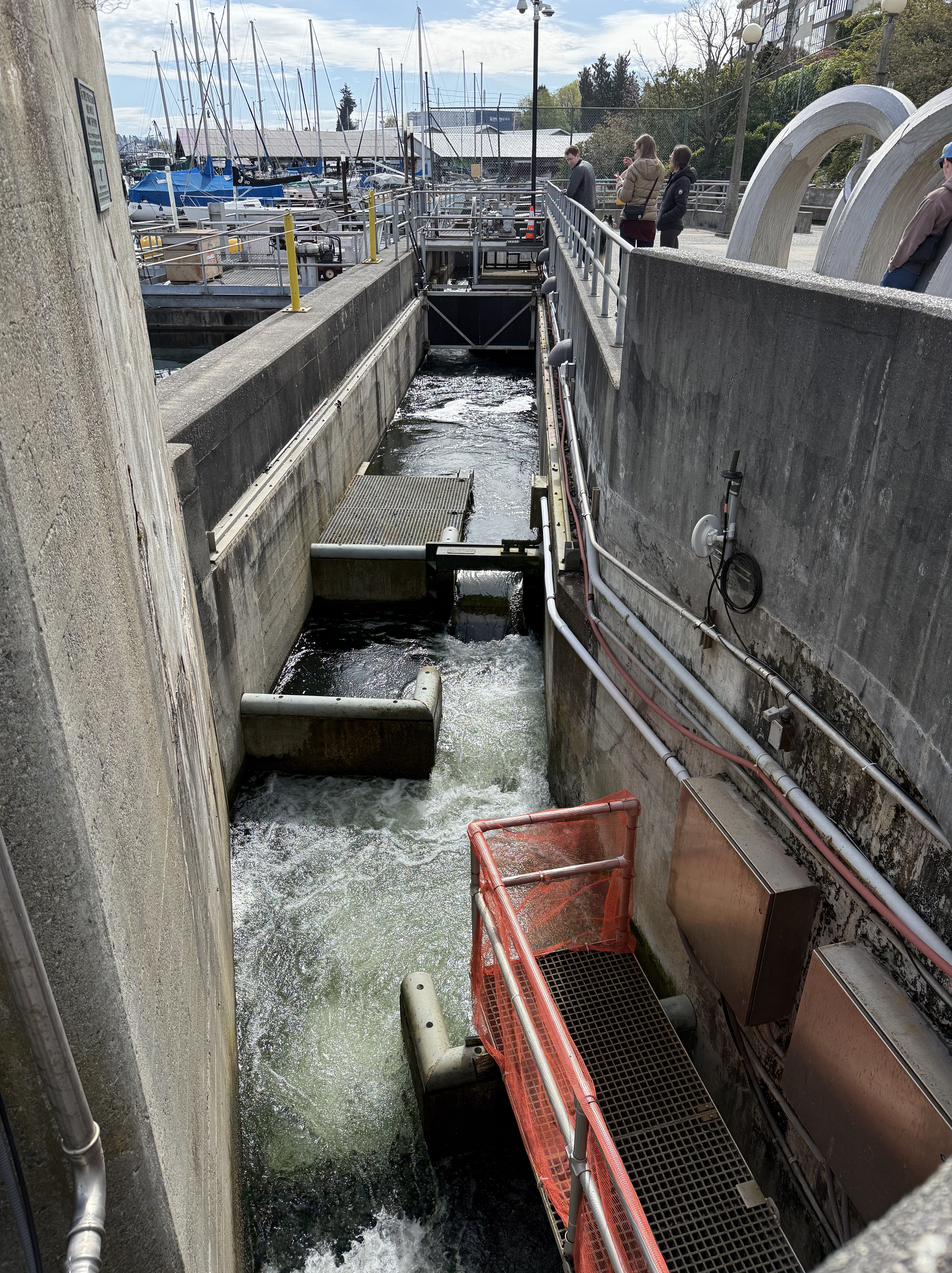
Salmon have historically swam into Lake Washington to spawn through the small river (Black River) that drained it before the ship canal was constructed. That outlet is apparently filled with sediment now and the area completely covered with development, including Boeing Aircraft’s main plant, where the Museum of Flight is located. The lock design includes a series of pools called a fish ladder that allows the salmon to get to their spawning areas. I guess they figured out the new route. There’s a viewing room to the right where the fish can be seen making their way up the ladder, but there were no fish on this day; and I forgot to take a picture.
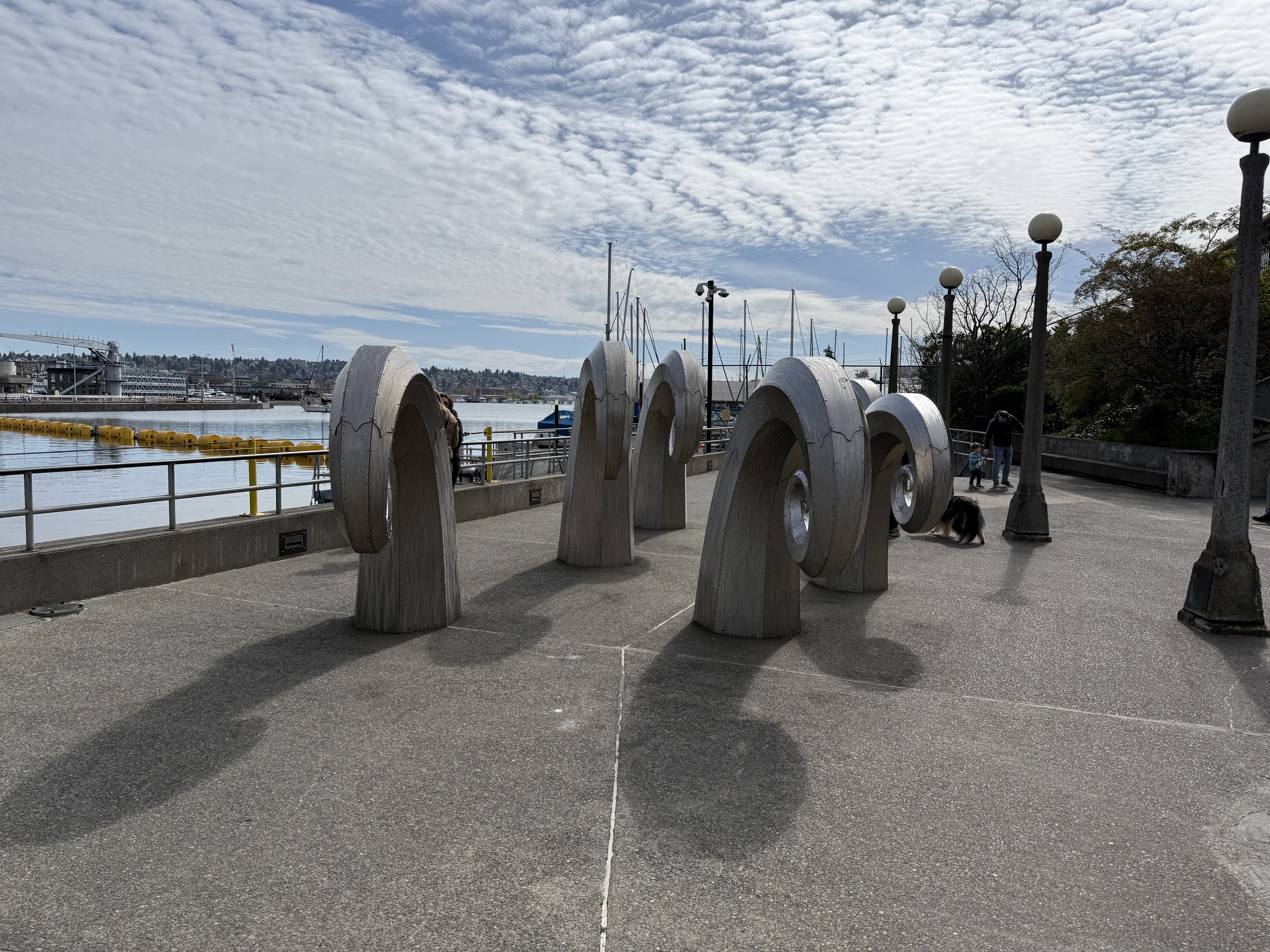
The roof of the fish ladder observation room is decorated with this unlabeled artwork.
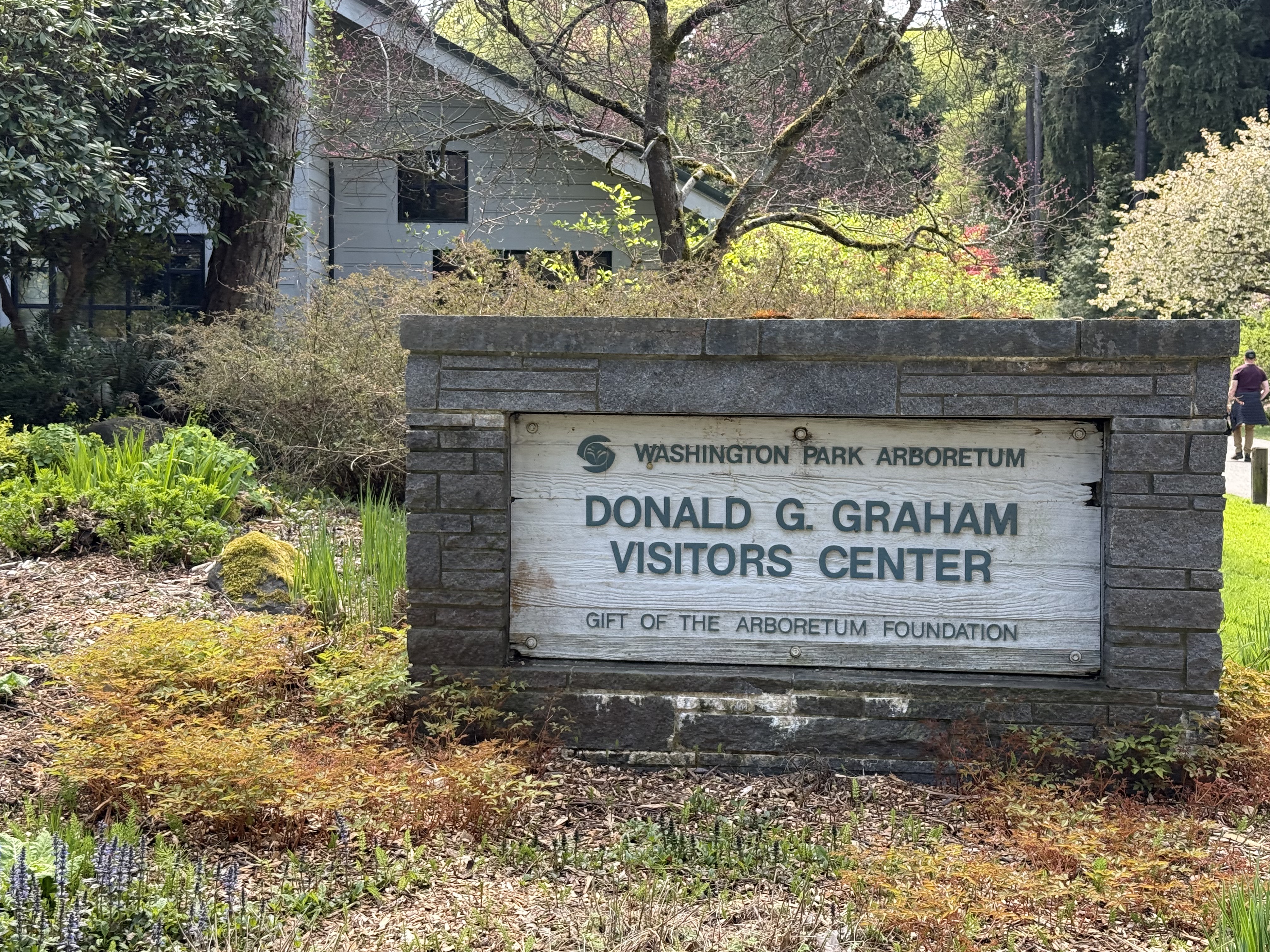
Just a short drive from Ballard Locks is Washington Park, which includes an arboretum and Japanese Garden. We took a long walk around the park but didn’t make it to the Garden, which has its own parking area.
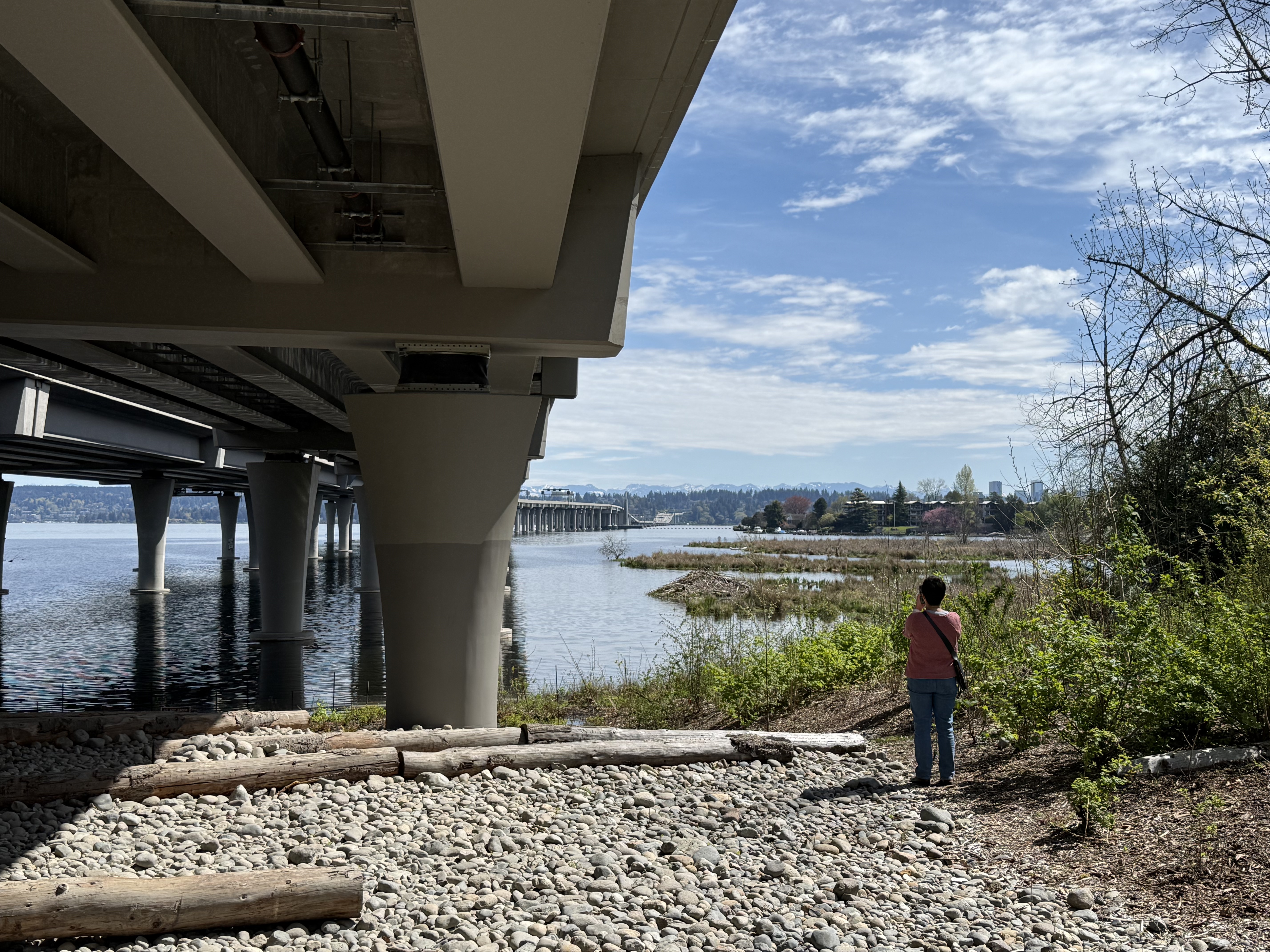
The walking paths go out to an island, where State Route 520 crosses Lake Washington, partly using a unique floating bridge construction. Traffic was pretty loud out there. I wouldn’t enjoy having lunch on one of the picnic tables.
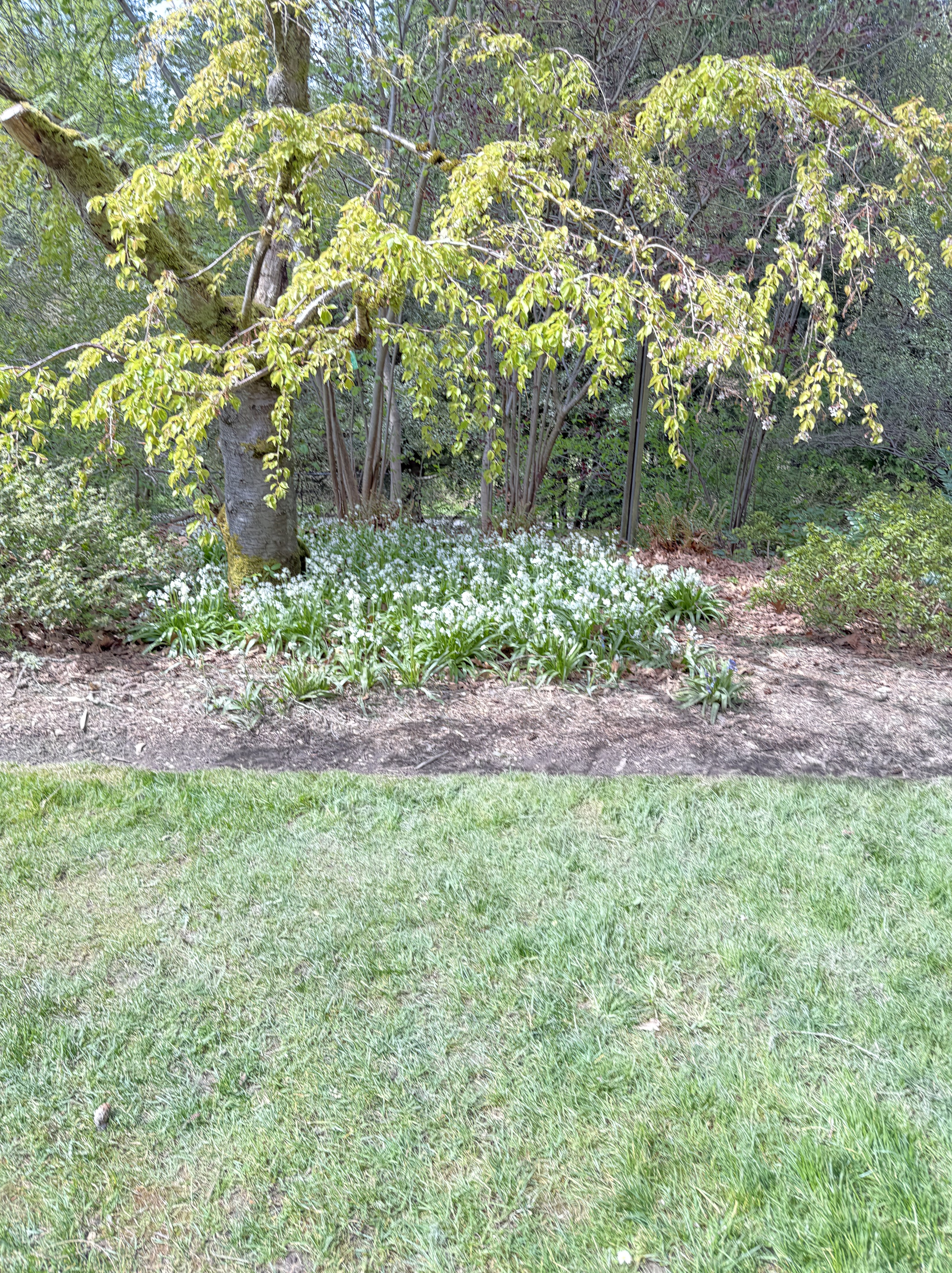
These are typical plantings along the paths in the arboretum. I don’t know anything about plants, so I asked CoPilot (giving it the location): the low, flowering shrub is probably Pieris japonica (aka Lily of the Valley shrub); and the tree may be Stewartia.
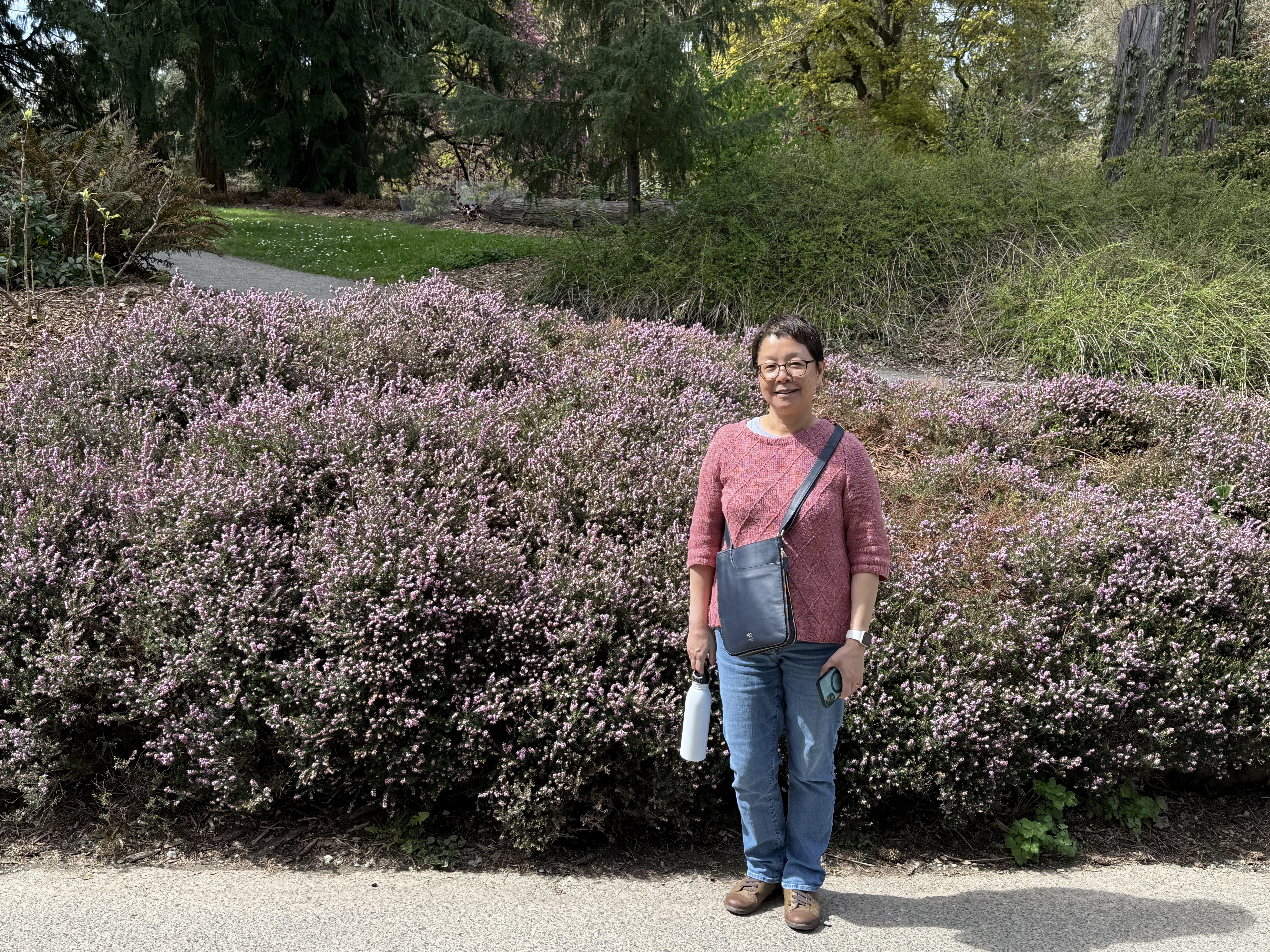
There were numerous masses of flowering shrubs like this, which is probably a dwarf Rhododendron (according to CoPilot). There were a lot of plants within a group, which didn’t look anything like each other; however, the signs explained that the arboretum had large collections of Rhododendrons and Magnolias, for example.
It was a beautiful spring day, and Lake Washington was the perfect place to spend it. I won’t post a photo of the excellent, home-made hamburger and cold beer I enjoyed at Skillet and Vine after a tiring morning of basking in a warm sun.
Mount St Helens After Forty-Five Years
Introduction
I was a geology student at Arizona State University in May, 1980, when Mount St. Helens made the headlines. It is the largest volcanic eruption in North America, and when one-cubic-mile of mountain collapsed, it became, and remains, the largest landslide in human history. I followed the progress of geological investigation into the eruption with interest as I pursued my education, but progress was slow. It isn’t easy to reconstruct an event that occurred in a few minutes. The area was too dangerous to approach for more than a year because of gas explosions from within the pile of debris, which reached 600 feet in thickness.
Mount St. Helens faded from memory for decades, eventually becoming just another geologic event in a long chain of cataclysms covering billions of years. I never thought about it until I found myself living less than 100 miles from ground zero. I had to check it out. This post is a brief summary of what I found when I visited Mount St. Helens National Volcanic Monument. I hope I can convey some of the excitement I felt at stepping on ground that was literally on fire less than fifty years ago.
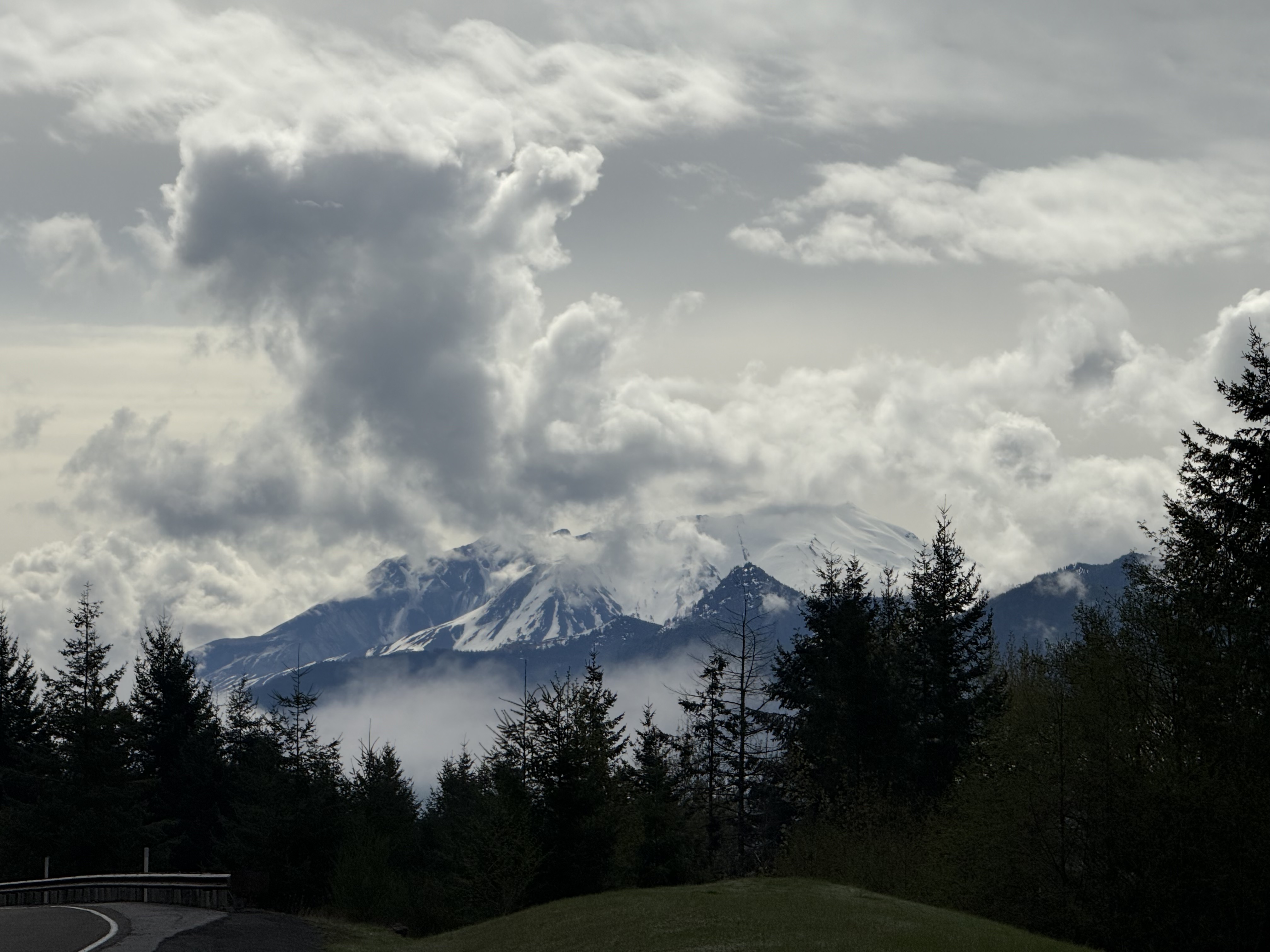
Figure 1. I arrived at about 10:30 in the morning and got this image before low clouds settled in, accompanied by fog later in the day. The characteristic volcanic cone is missing; the top of the mountain slants slightly upward to the right in the center of this image. That isn’t a lake in front of St. Helens, just fog collecting in the valley that feeds the Toutle River.
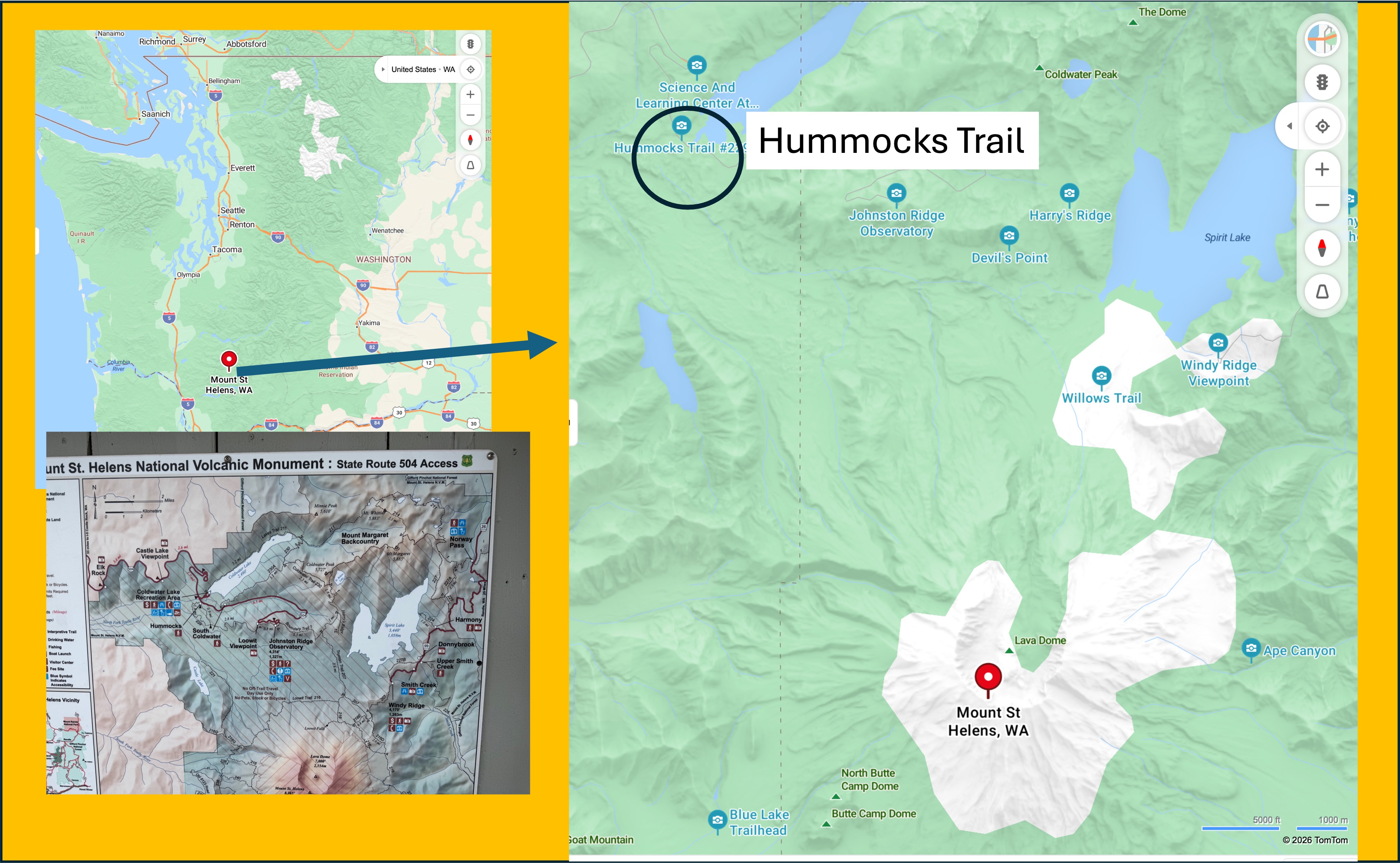
Figure 2. Mount St. Helens is about 2.5 hours from Tacoma. The closest you can drive is Hummocks Trail, but a four-mile hike will take you to the rim of the caldera. Maybe another time.
Older Volcaniclastic Rocks
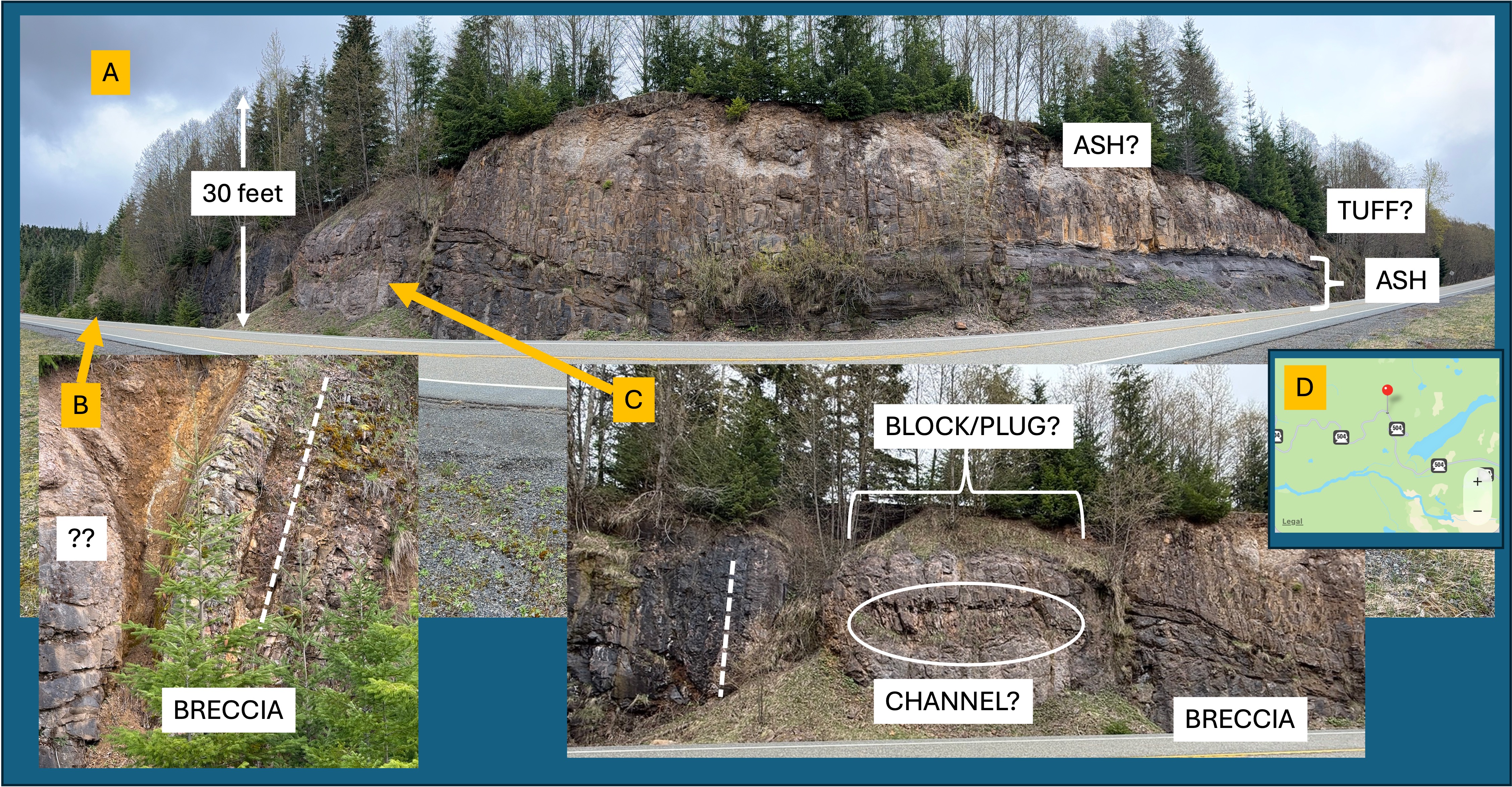
Figure 3. Mount St. Helens is less than forty-thousand years old, but it is constructed on a thick sequence (~2 miles thick) of volcanic rocks as old as 300-thousand years. Beneath these Pleistocene volcaniclastic rocks mixed rocks of uncertain age that comprise “bed rock” in this area; however, these igneous and sedimentary rocks are much older–spanning the Oligocene epoch (~34-23 Ma). I stopped to look at several road cuts along the new Highway 504 (the original is buried under debris).
A. Exposure of andesite volcanic rocks showing a complex eruption history, which includes ash layers and what looks like tuff (ash so hot it melted together to form a glass-like volcanic rock).
B. Close-up from the left side of (A) showing a layer of volcanic breccia that is now vertical. Individual clasts are visible but there is very little matrix. The dashed line indicates the approximate bedding plane of the layer. The rounded block labeled with ?? is about 12 feet in diameter. This is a puzzling structure. My guess is that there was a collapse of one or more volcaniclastic layers into a ravine after deposition. A jumble of material.
C. Photo of a complicated structure separating the left side of the exposure (tilted beds and blocks) from the right side (horizontal ash layers). The dash line is meant as a reference to the vertical beds in (B), but it was difficult to determine orientation. However, a clear change in texture suggests a depression, which may have been a conduit for volcanic material to erupt. The BLOCK/PLUG label reflects this interpretation. Within this “BLOCK” there is a discrete region of thin, irregular bedding that I’ve labeled (for convenience) as a CHANNEL? The question mark reflects my doubts about this identifier. Nevertheless, this road cut exposes a sequence of events: lava and ash being erupted onto an irregular volcanic landscape; probable surface erosion for some period of time; physical disruption and collapse, probably while still hot, of some part of later volcanic material. I don’t have enough experience with volcaniclastic sediments to say anymore than that.
D. The pushpin shows the location of this road cut. The blue ribbon is Coldwater Lake, where Hummocks Trail is located (see Fig. 2); this exposure is more than ten miles from the caldera, and hundreds of feet above the valley floor.
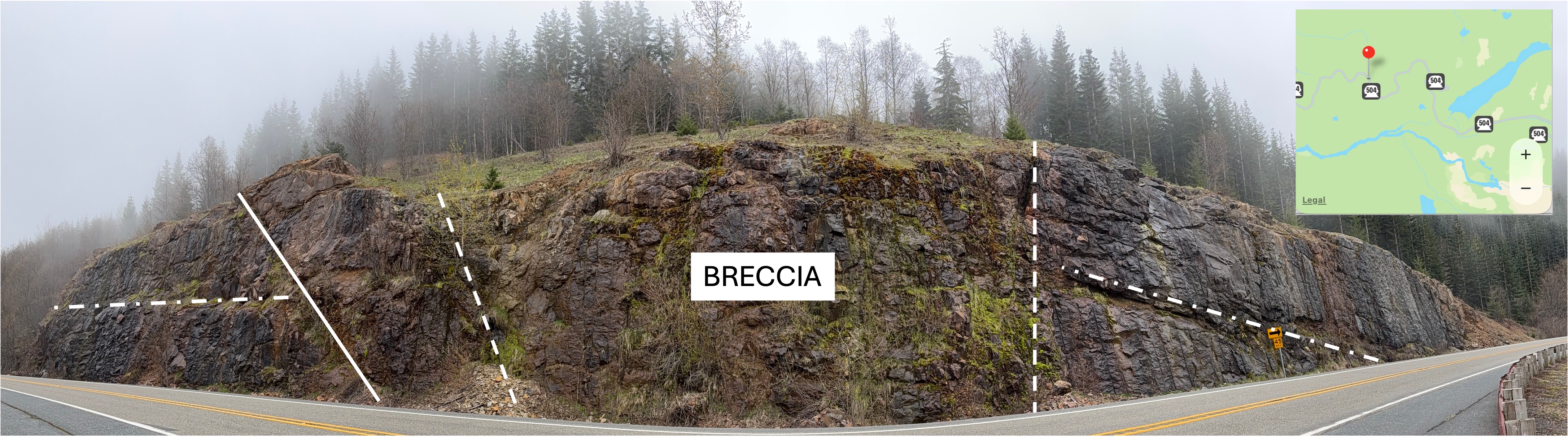
Figure 4. This post-eruption road cut is a mile or more further from the caldera. The solid line was a striking lineation that could be a fracture or possibly a contact between eruption beds. The dash-dot lines are apparent bedding planes between andesite flows. There is no ash present at this location. The dash lines delineate what I’m calling a BRECCIA because there is no evidence of bedding and the overall appearance is irregular; also, some large blocks were evident, although they could be a result of differential weathering. Lava flows are notoriously difficult to trace any distance laterally. Nevertheless, this exposure is similar in appearance to Fig. 3 with respect to the discontinuity between identifiable volcaniclastic deposits.
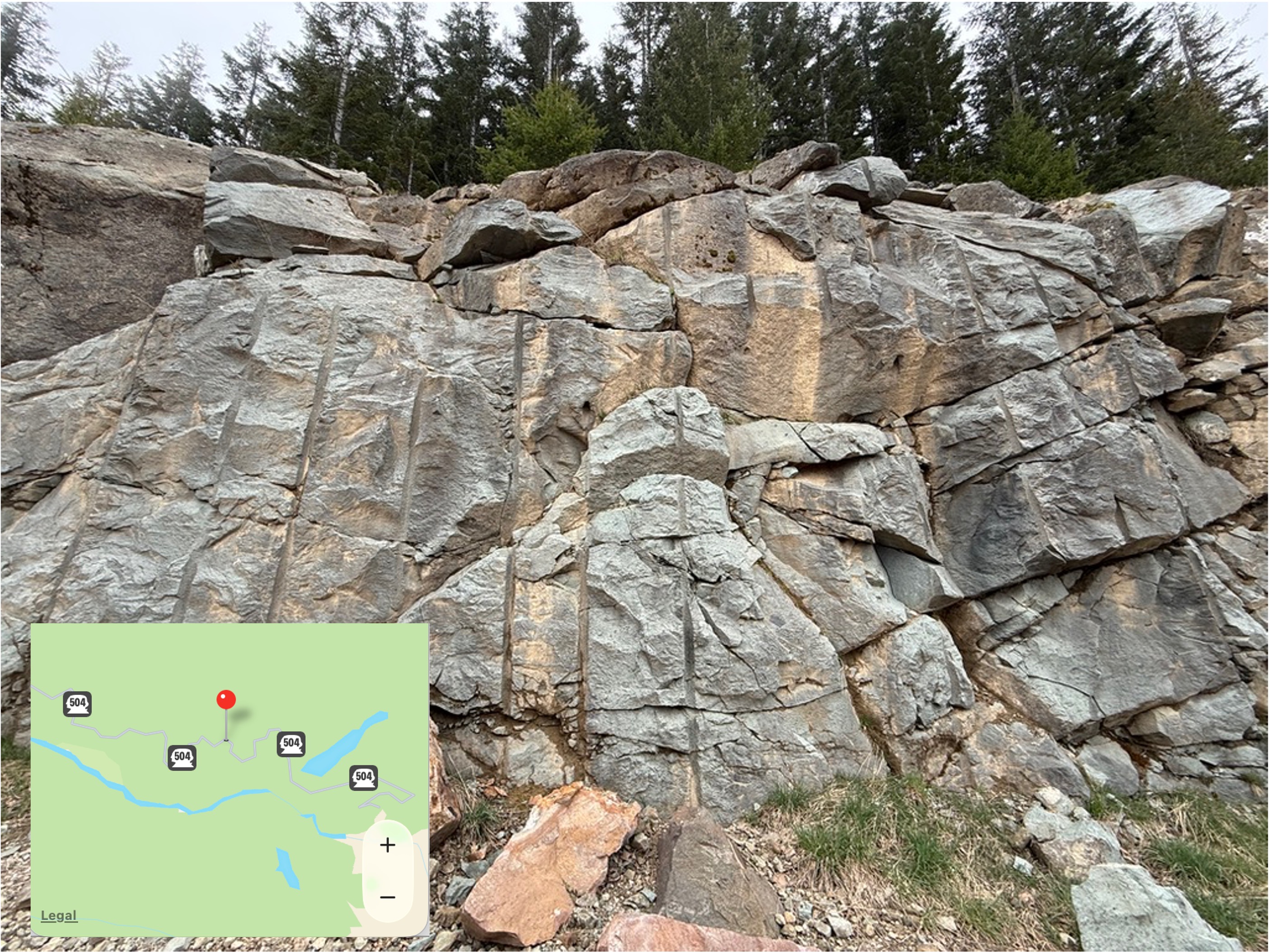
Figure 5. This road cut is located (see inset map) in an area the geologic map (Rock D) identifies as volcaniclastic rocks of Oligocene age (33.9-23.04 Ma). This is a smaller exposure than seen in Figs. 3 and 4, but it is also very different in appearance. That could be an optical illusion; close examination of the photo (I took it from my vehicle stopped in the middle of the road) suggests to me that this is ash that was so hot it formed what is called a welded tuff when it fell, after being blown into the atmosphere by an eruption. The light color suggests a magmatic composition more like granite than gabbro, or even diorite. That wouldn’t be surprising in the complex magmatic environment of a subduction zone, where partially melted, oceanic crust (e.g. gabbro and basalt) chemically mixes with continental crust (e.g. granite and diorite).
This completes my survey of older volcanic rocks near Mount St. Helens. There are no rocks exposed that explain the apparent hiatus in volcanism between about 23 and 2 million years ago. That is a story for another day…
Volcaniclastic Deposits from May 1980 Eruption
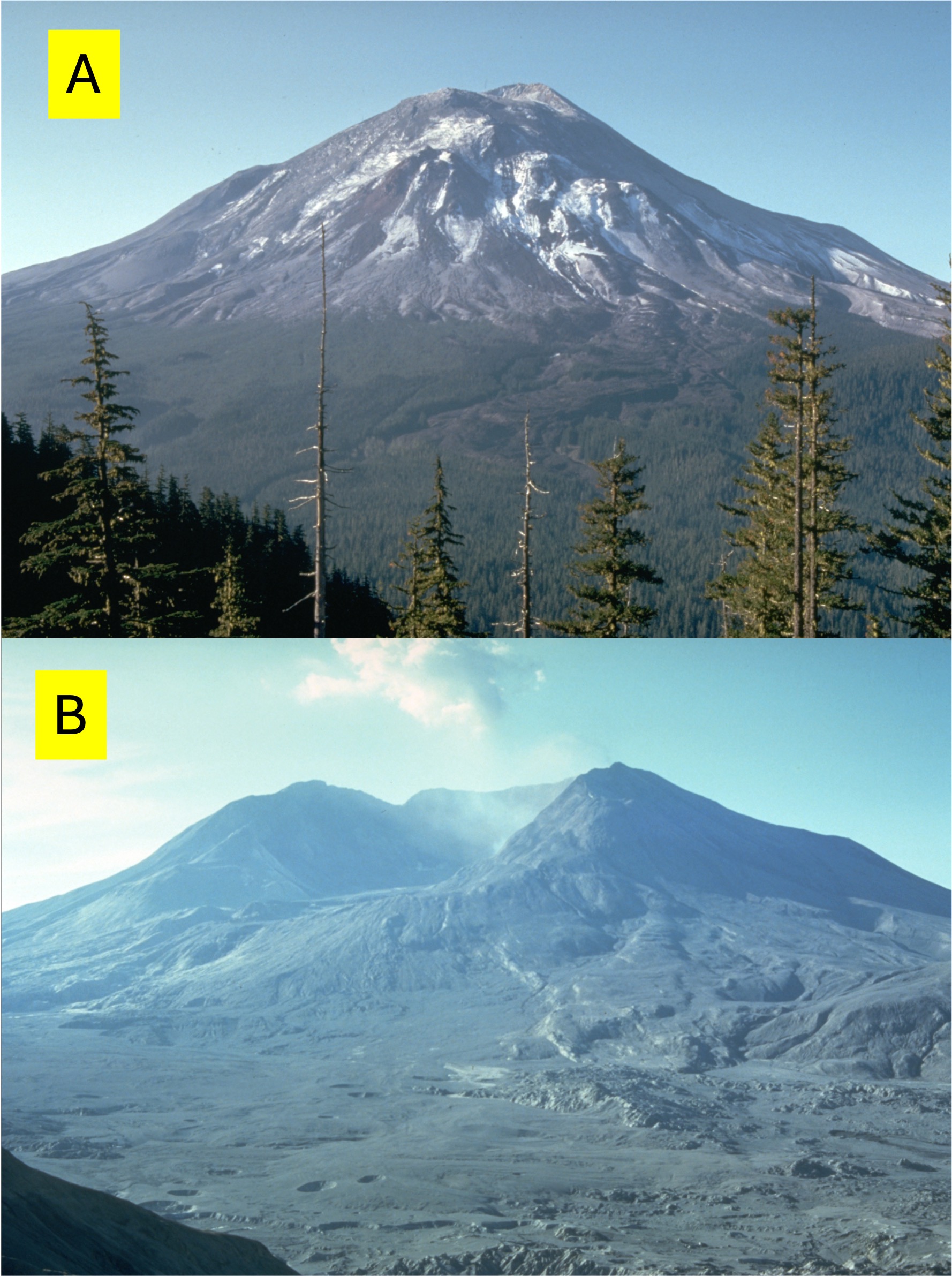
Figure 6. Photo A was taken a few days before the eruption in May, 1980. Image B was taken a few days afterward. The pre-eruption volcano was 9677 feet tall, but the obliterated peak is only 8365 feet. The total volume of material displaced exceeded one cubic mile, most of which was rock that collapsed during the rock slide preceding the actual eruption. The flat area fronting the volcano in (B) is a large fraction of the previous peak, which filled in several channels originating at the volcano. Note the holes in (B), which are probably blow-outs of gases trapped in the debris.
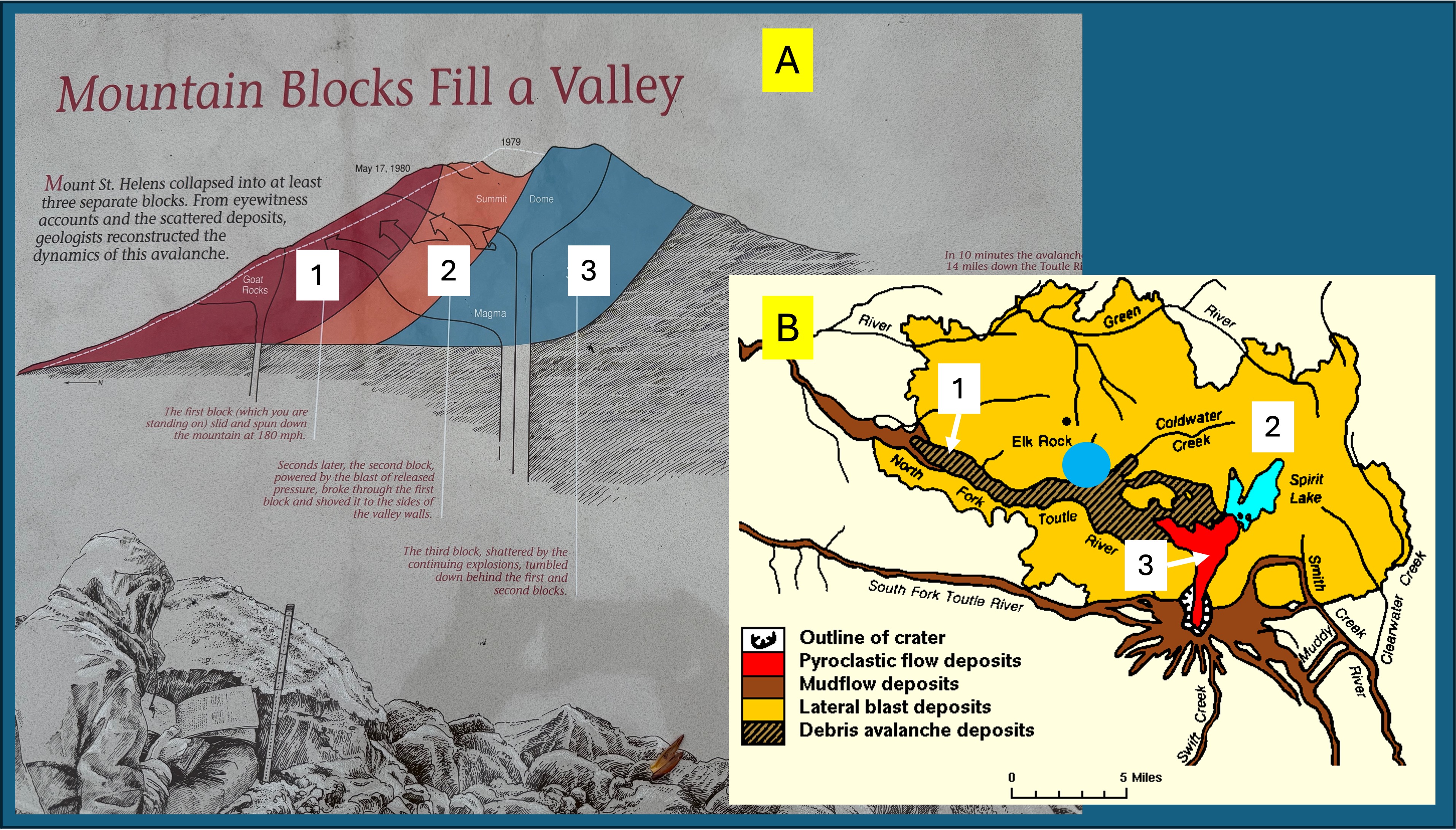
Figure 7. (A) This plaque was located along Hummocks Trail. I’ve supplemented it with the map of volcaniclastic deposits shown in (B). I will focus on the three major volcaniclastic deposits I encountered at Hummocks Trail (blue circle in B), which are numbered 1-3 in both figures.
The first stage was collapse of the north flank of Mount St. Helens (brown in A and cross-hatched in B). This was a run-of-the-mill massive landslide that followed existing drainage, until stage two occurred.
When the rock containing the highly pressurized magma was removed. The resulting release of pressure created an explosion equivalent to 10-50 megatons of TNT; although a volcanic eruption is not analogous to a nuclear explosion, the energy released was roughly 1600 times the energy of the Hiroshima atomic bomb. It moved a lot of rock. This blast occurred seconds after stage 1 began; the hot gases overtook the rock slide, driving rock and debris up the sides of the valley, removing everything, including top soil, within a few miles of the volcano. The orange area in B shows how widespread this explosion was.
Stage 3 was a pyroclastic flow (red in B), which was limited to the immediate vicinity of the caldera; however, what goes up must come down, so several inches of ash were deposited as far as Spokane, Washington–400 miles distant.
Video 1. This video shows debris from the landslide (Stage 1) that was pushed at least 300 feet from the original valley floor to the ridge by the unimaginable blast of Stage 2. The main slide followed Toutle River (North Fork), but with this impetus, debris was launched over the canyon walls. That’s what this video shows. It’s like the heavy stuff collected at the top of the ridge whereas the sand/gravel-sized debris was blown miles further.
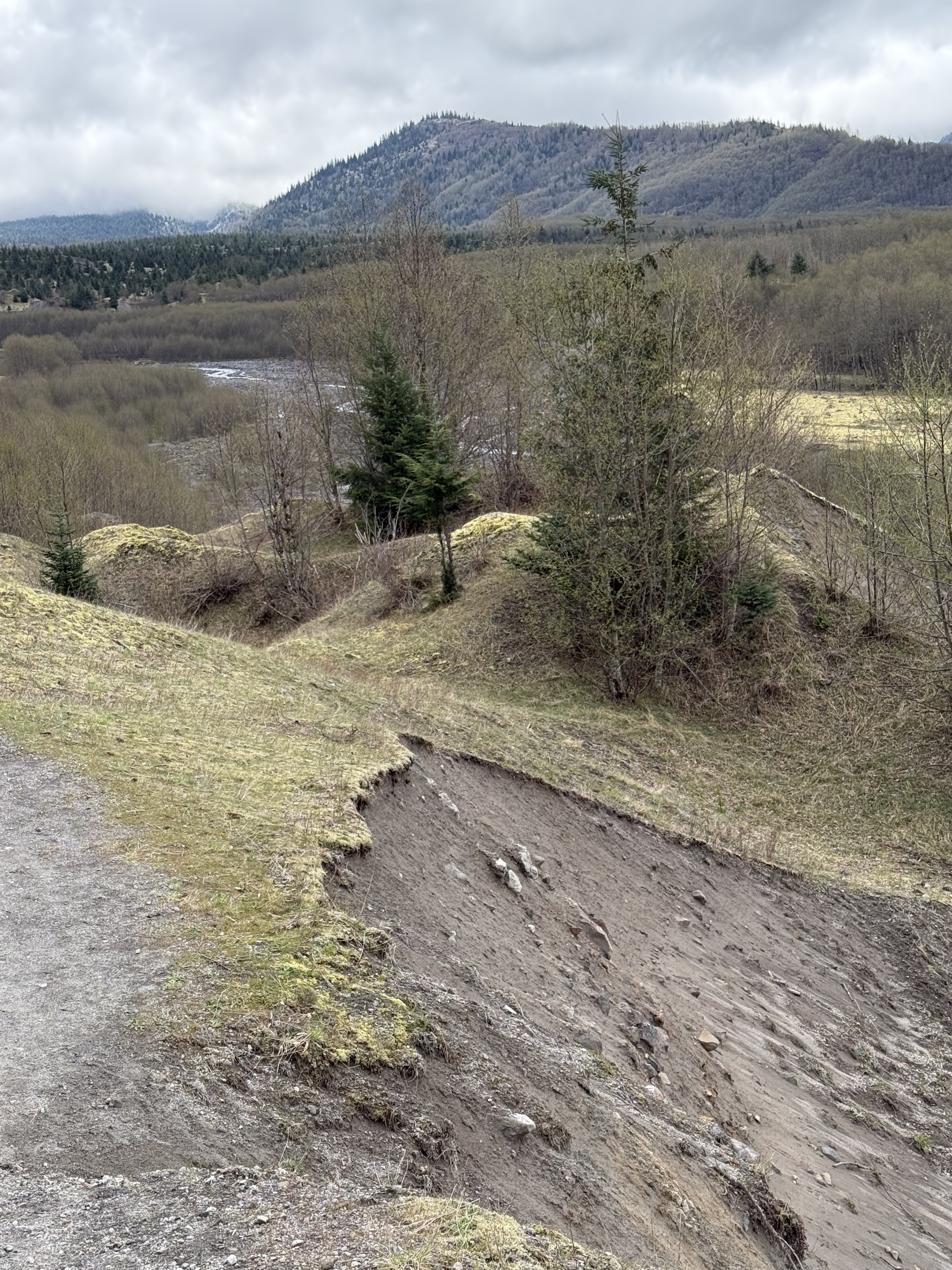
Figure 8. This photo is looking south towards Mount St. Helens from Hummocks Trail (see Figs. 2 and 7B for location) along the Toutle River (North Fork), which is more than a hundred feet lower, even after being filled with debris from the 1980 eruption. Note the difference between this scene and the deposit from Video 1. It’s difficult to comprehend the dynamics of a blast (Stage 2) capable of pushing rock (Stage 1) up this slope; when the explosion lost energy it simply dumped its load, creating a surreal landscape. The debris has very little clay and is thus non cohesive; thus slumps like this are common. Note the small hill and “ridge” in the middle of the photo. This terrain makes no sense, other than erosion has been etching it for 40 years.
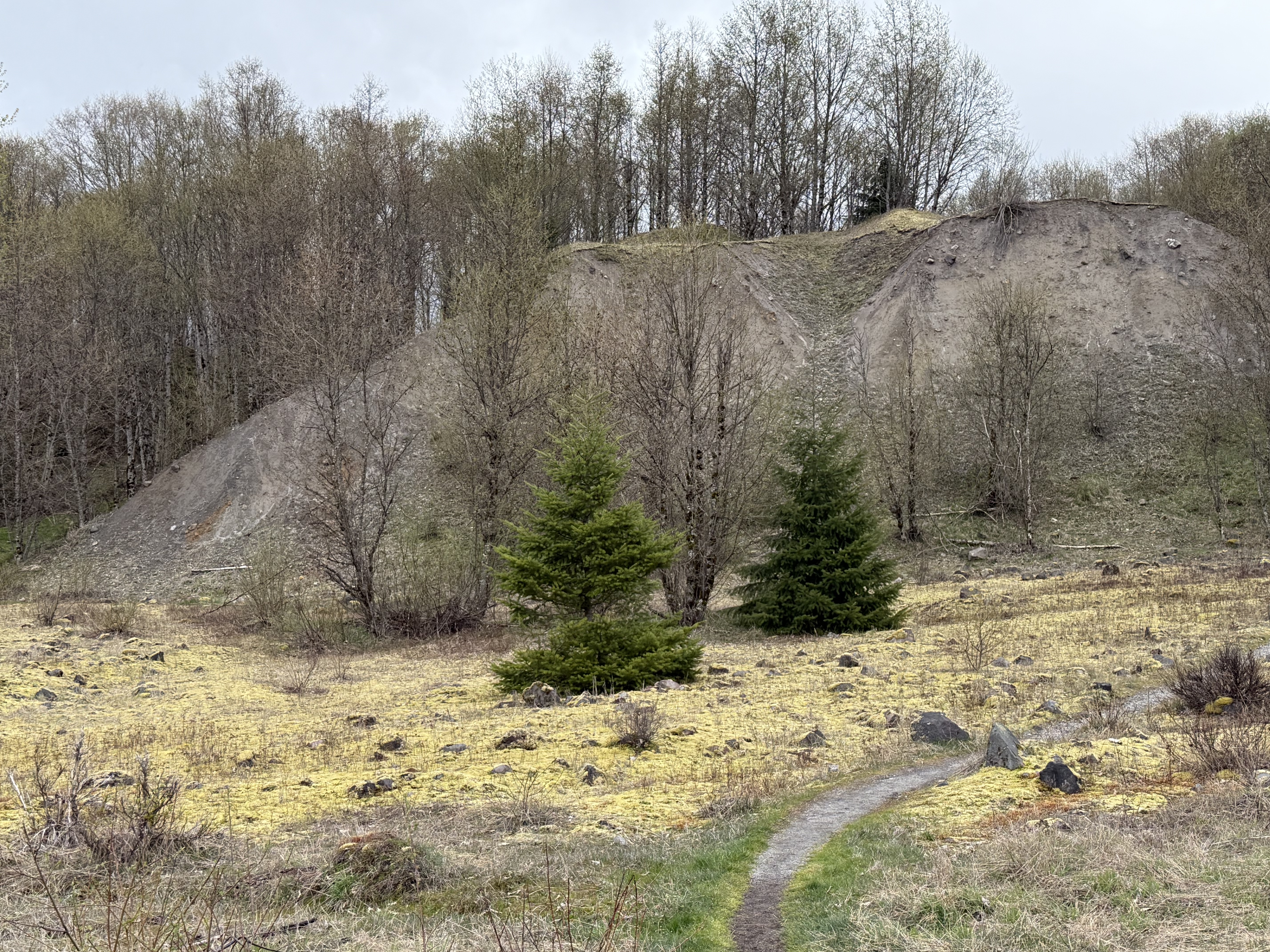
Figure 9. This layer of ash I encountered along the Hummocks Trail is a remnant of a vast sheet originally deposited during Stages 2/3–breaking such a continuous eruption sequence into stages is useful but not particularly elucidating. It all happened too fast to comprehend. You might call this an “over-bank” deposit, like when a river tops its natural levee and deposits fine-grained sediment on its floodplain.
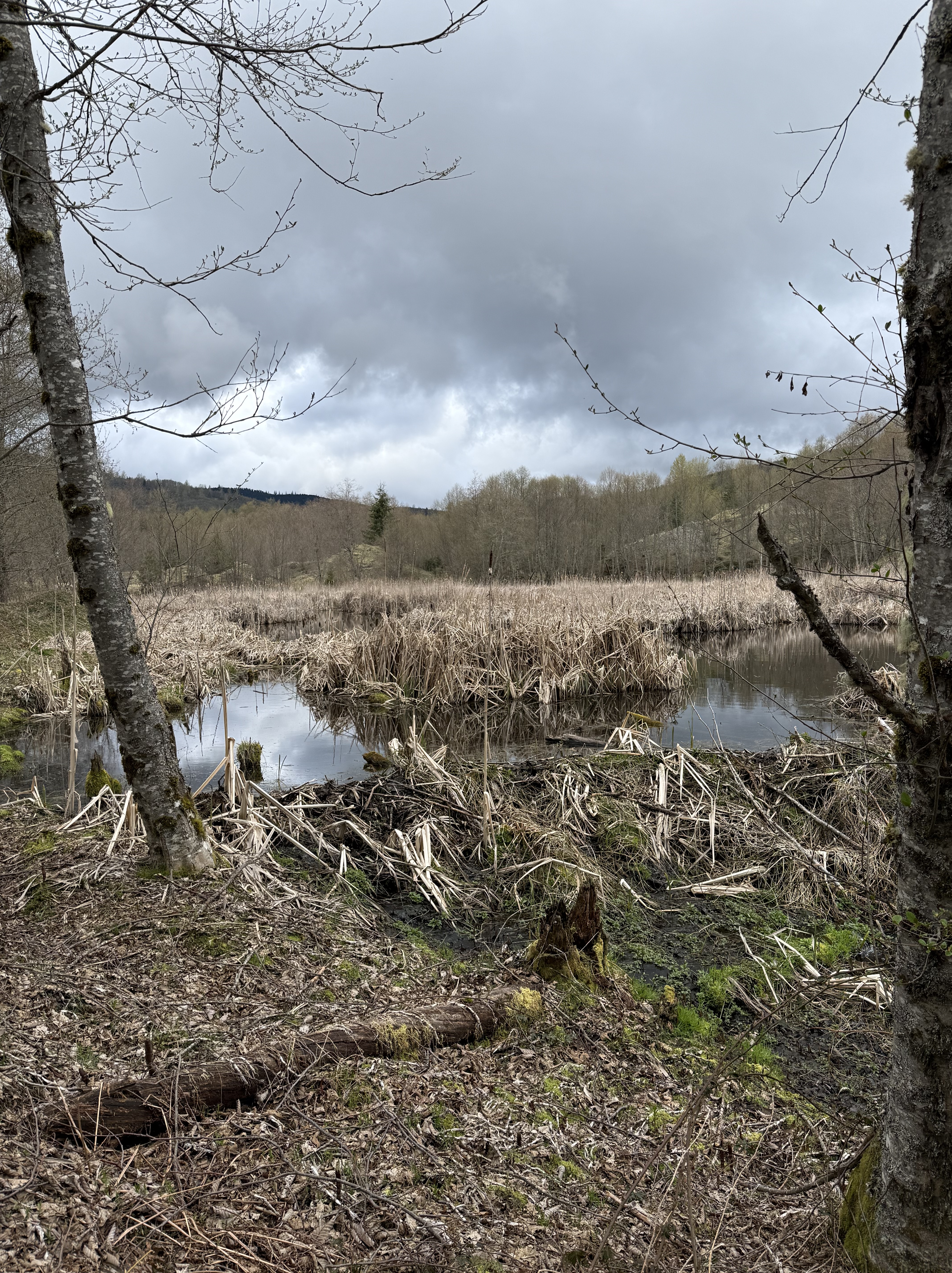
Figure 10. Hummocks Trail followed a small stream through a bizarre landscape comprising multiple small ponds like this one. A dam constructed of eruption debris (left-to-right in the center of the photo) has blocked the stream flow, creating a meandering channel during low-water conditions; but I can imagine all those dormant grasses erupting later this spring. I encountered several of these marshes, each one defined by water trying to find a way out of this labyrinth. According to Fig. 2, this is the outflow from Coldwater lake; the eruption partially blocked its path but nature is finding a way through this discombobulated landscape.
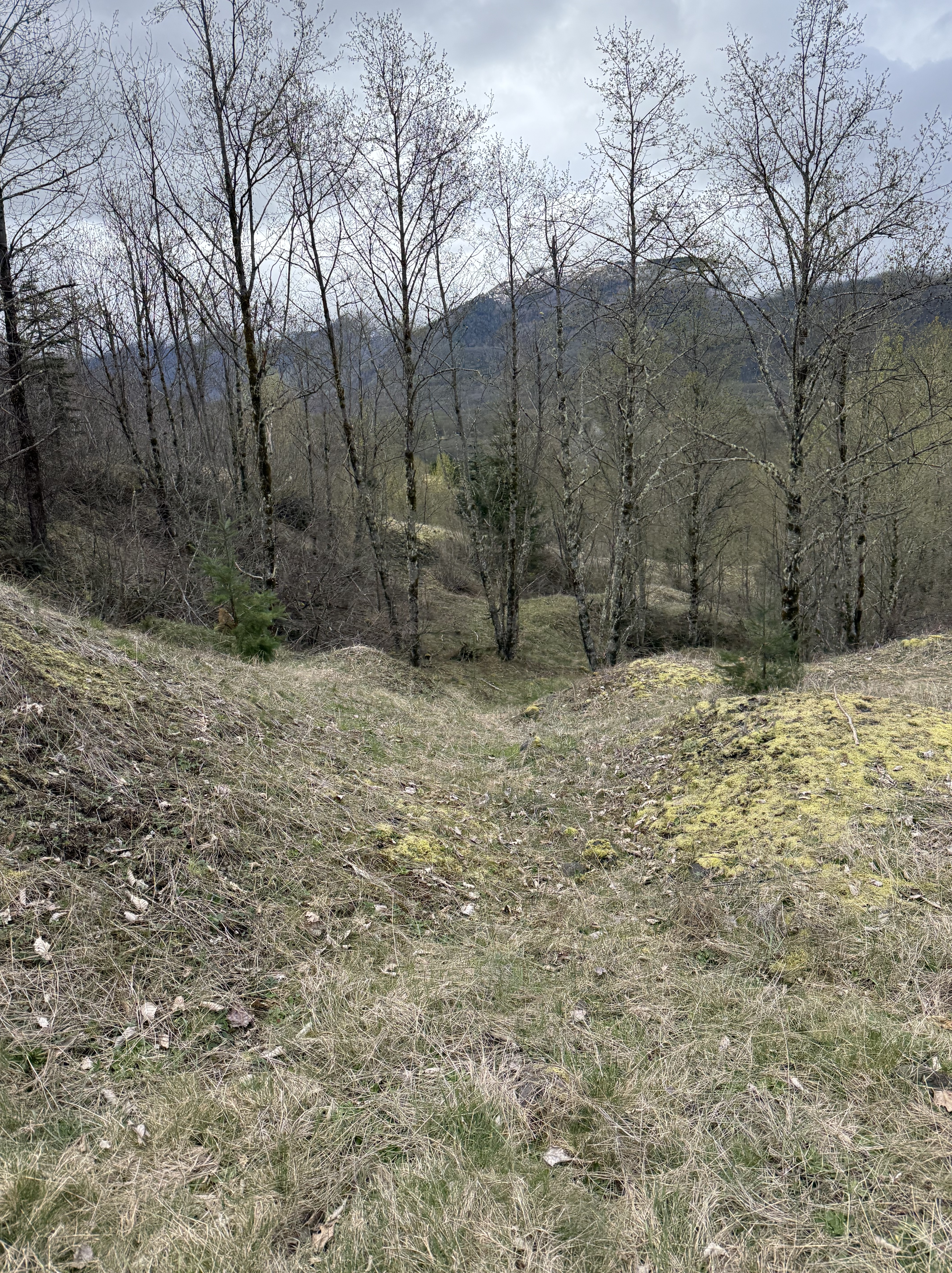
Figure 11. This photo perfectly captures the topography of Hummocks Trail. This is the northern end of the trail, which is a little higher; the Toutle River (North Fork) is more distant and the cliffs we saw in Fig. 8 have receded, replaced by moderate slope; however, note the fine-scale nature of the hummocks here. They are ubiquitous but contain only a few scattered boulders.
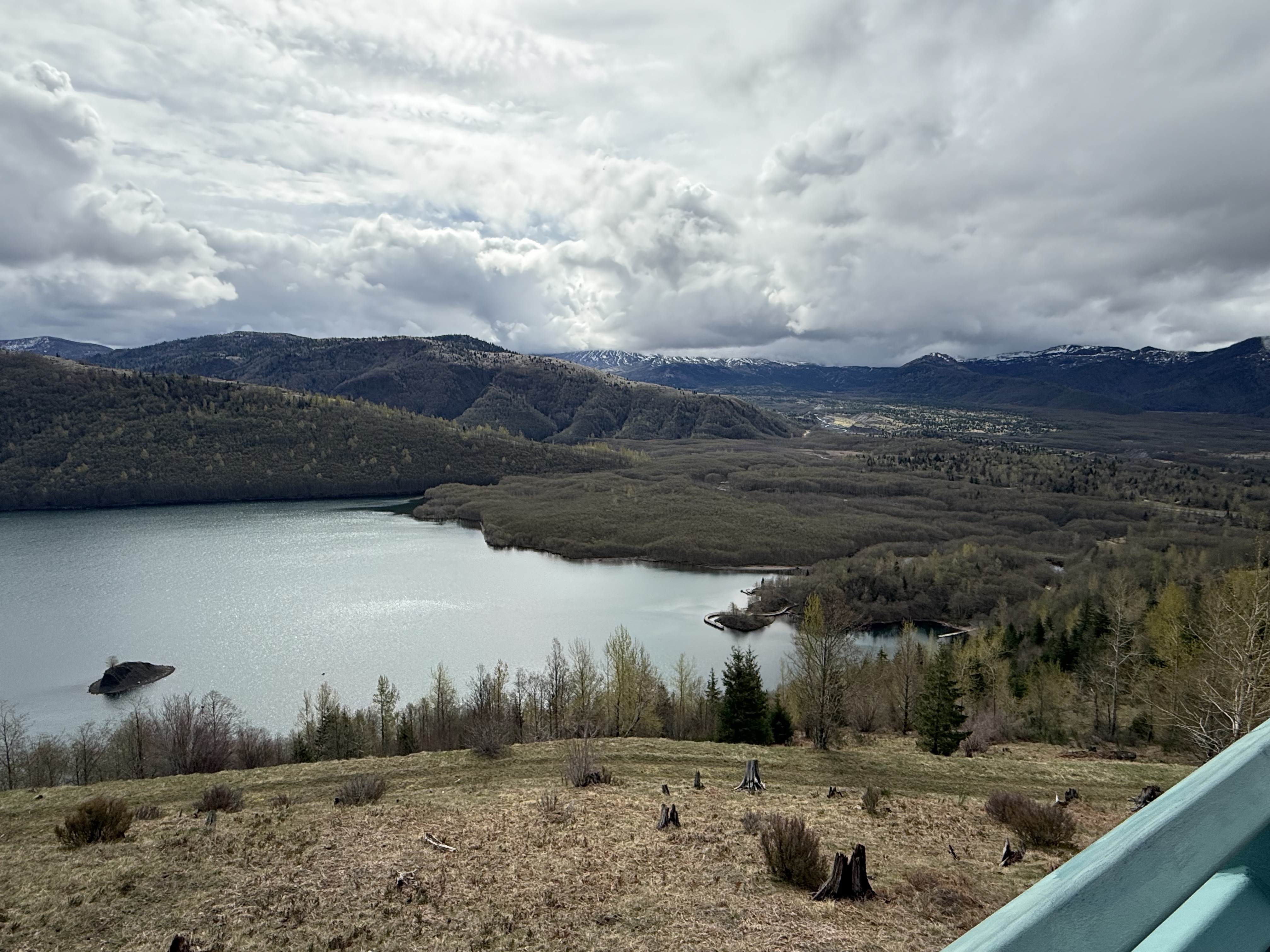
Figure 12. This is a view of Coldwater Lake from the visitor center, looking south towards Mount St. Helens. There are two things to note from this image: 1) the Toutle River valley is a broad, flat plain because it was filled with debris from Stage1; 2) the overflow deposits (e.g. Video 1) have blocked the lake and raised its level. The source of water we saw in Fig. 10 is evident in the center of the photo. This isn’t a sedimentary dam, created by flood deposits, or even a glacial dam produced from the debris scraped up by thick ice sheets. The shoreline was modified when Mount St. Helens collapsed and then exploded with unbelievable violence.
Final Thoughts
The eruption of Mount St. Helens in 1980 gave geologists a rare opportunity to see how Earth produces sausage. Let me explain my metaphor.
Ocean crust is denser than continental crust it encounters at a convergent plate boundary, and at a lower elevation. It is thus overridden by the continent, forcing it to dive into denser and hotter rocks at depths of hundreds of miles. This obviously displaces hot and ductile rocks, heating the subducting rocks even more; the sausage-making operation has begun. Still pushed from behind by the conveyor belt of oceanic crust being subducted, this basalt/gabbro mixture heats enough to boil off the water contained in its sedimentary cover as well as any constituents with a reduced melting point (e.g. silicon-rich minerals). This superheated material rises through tens-to-hundreds of miles of crust, heating it and producing a mixture of oceanic and continental crust.
Plate tectonics keeps turning the crank on the sausage machine for tens (even hundreds) of millions of years. The molten mass of magma keeps rising because it is less dense than the rocks through which it is passing, until the pressure has decreased enough for it to find cracks in the solid crust. The magma fills these cracks, which often lead to fissures in the surface; the magma erupts. The magma cools and begins to solidify, forming a pluton at depths of several miles to tens of miles.
This process keeps operating, in fits and starts, until the tectonic plates change direction. In the meantime, the upper crust has been filled with multiple plutons (solidified magma chambers), sometimes squeezed into the volcanic rocks from previous eruptions. Individual magma chambers/plutons are about one mile in diameter, although they take many shapes, and remain active for less than one-hundred-thousand years (often much less). These are injections of fluid rising through weak points in the crust, driven by pressure paths–not missiles launched from the mantle. They are like the sweat on your brow after a hard workout.
Mount St. Helens has released a lot of pressure, although it is still very dangerous at human scales. Chances are that this magma chamber will solidify within the next hundred-thousand years; but the unstoppable sausage machine will continue cranking out more mixed material in a molten form until it has filled every nook and cranny in the upper crust. That’s how mountain ranges like the Sierra Nevada were formed. It takes a really long time.
Mount St Helens probably won’t erupt again at the scale of the 1980 event, but that doesn’t mean much if you happen to be camping near the caldera when a smaller eruption occurs. After all, the magma chamber is still extruding lava in an unsteady process that is currently pretty slow. However, we humans can’t see fractures in bed rock; thus, the next and the next, etc, magma chamber could appear anywhere from Northern California to British Columbia. There are plenty of young volcanoes in the Cascades that haven’t blown their tops yet.
Who’s next?


Recent Comments