Review of “The Gulag Archipelago. Volume 3” by Aleksandr Solzhenitsyn

This is the last in the series, and it continues the author’s eclectic writing style, mixing personal experiences with those of other survivors of the Gulag system. He introduced the idea of the Gulag being a nation, so this volume describes the inhabitants and extrapolates the system to the entire Russian state. His arguments are pretty convincing; you can’t create such a system of forced labor, in which the majority of the “workers” die of malnutrition, freezing temperatures, and murder by the hands of their captors.
The Gulag extended beyond the camps, forming communities of exiles after their release. Life as an exile was so bad that many former inmates returned to the work camps as “free” laborers or by committing new crimes (which was easy to do within the Soviet system). The author argues that the Archipelago so impacted Soviet society that the entire nation was swallowed by the Gulag, turning Russia into one large work camp. A society characterized by paranoia, distrust, and total submission to the state.

This photo of the author in the infamous Ekibastuz special camp (for 58s, political offenders) perfectly conveys the stoic, distrustful expression common to all survivors. That thin coat was what they wore (if they were lucky) in -50F weather working outdoors. Many froze to death at work or on the long hike back to the unheated barracks. Imagine a society with this mentality, even if they don’t show it on their faces.
These books were long, probably unnecessarily so, but they left me with an indelible impression of just how poorly people treat each other; the Gulag was filled with Russian citizens, many of whom fought during the Second World War.
Man’s inhumanity to man knows no bounds…
Reflections of a Road Warrior
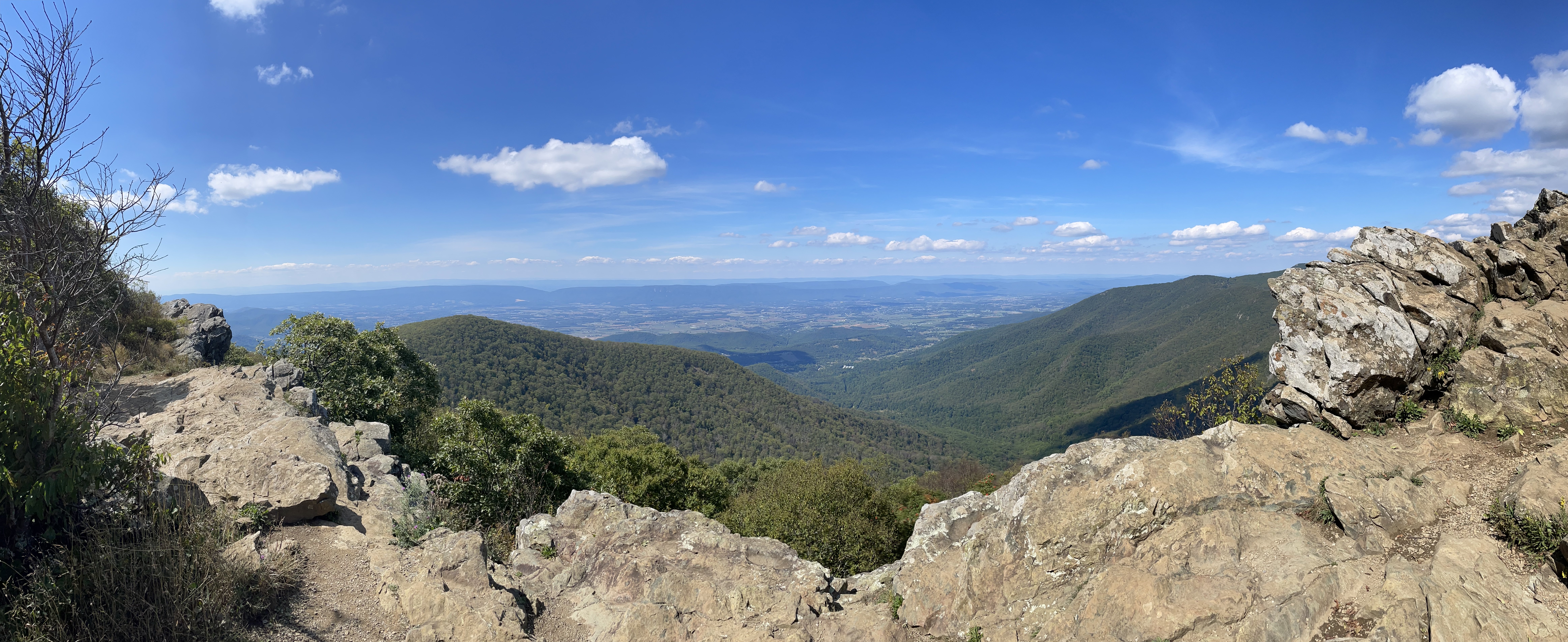
I began my journey in the overpopulated East, where the Appalachian Mountains—formed more than 250 million years ago—now lie subdued beneath layers of human settlement and urgency. The roads here are crowded, the pace performative. Drivers jockey for position, not just to arrive but to assert. In this terrain, driving is a social act, a negotiation of space and dominance. I obeyed the speed limits, but the pressure to conform was palpable. The land, ancient and eroded, seemed to whisper of restraint, but the people moved as if chased.
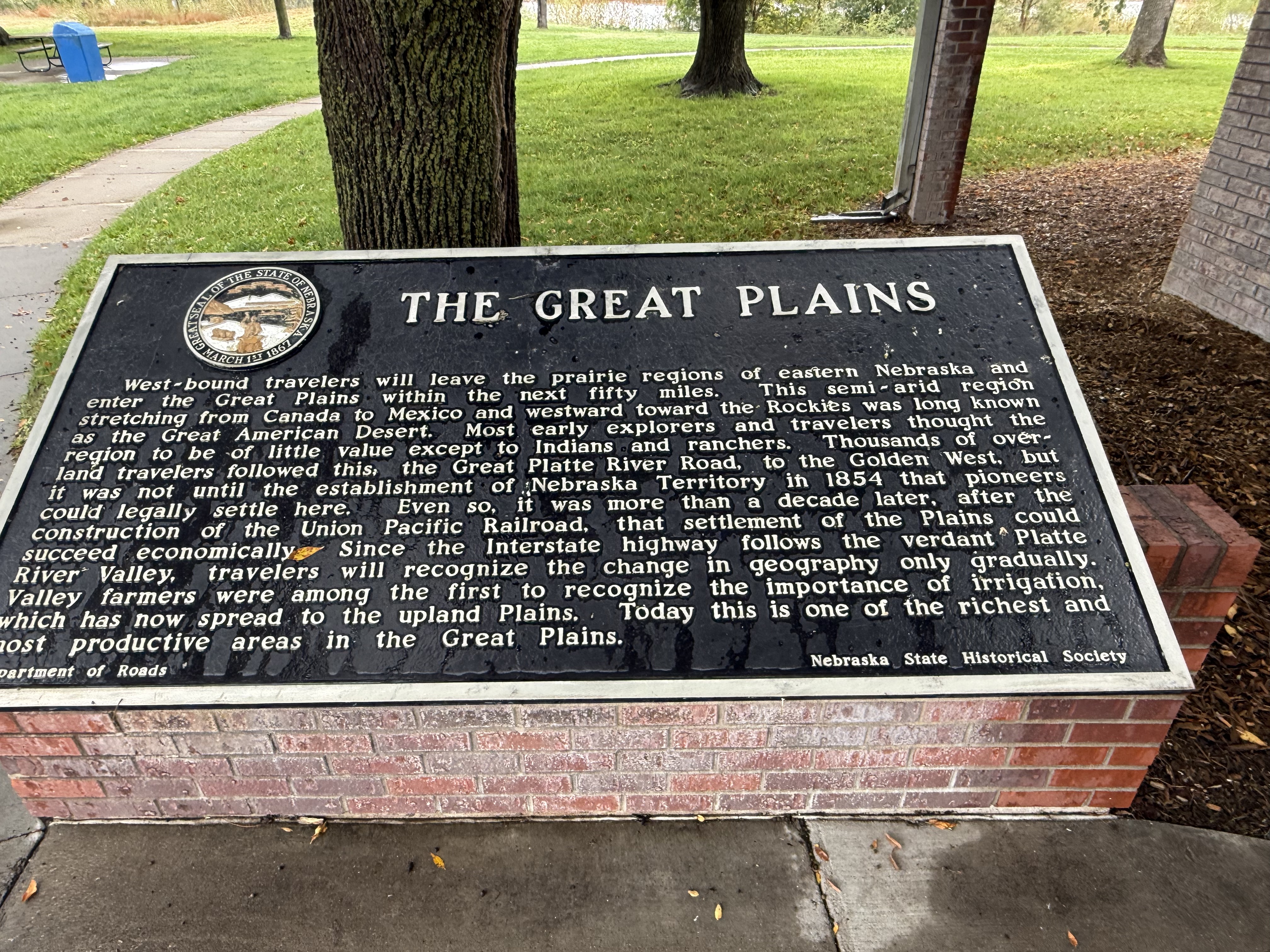
Crossing the Great Plains, the landscape flattened into a vast, glacially weathered expanse. Once grasslands, now farmland, the terrain offered little variation—just endless repetition. Here, the temptation to speed was not about competition but escape. The monotony of the land invited dissociation. Cruise control became a crutch, and the mind wandered. I found myself accelerating not out of urgency, but out of boredom. The road stretched like a taut string, and I felt the pull to snap forward. But I resisted. I slowed down. I began to see the land not as obstacle, but as place.

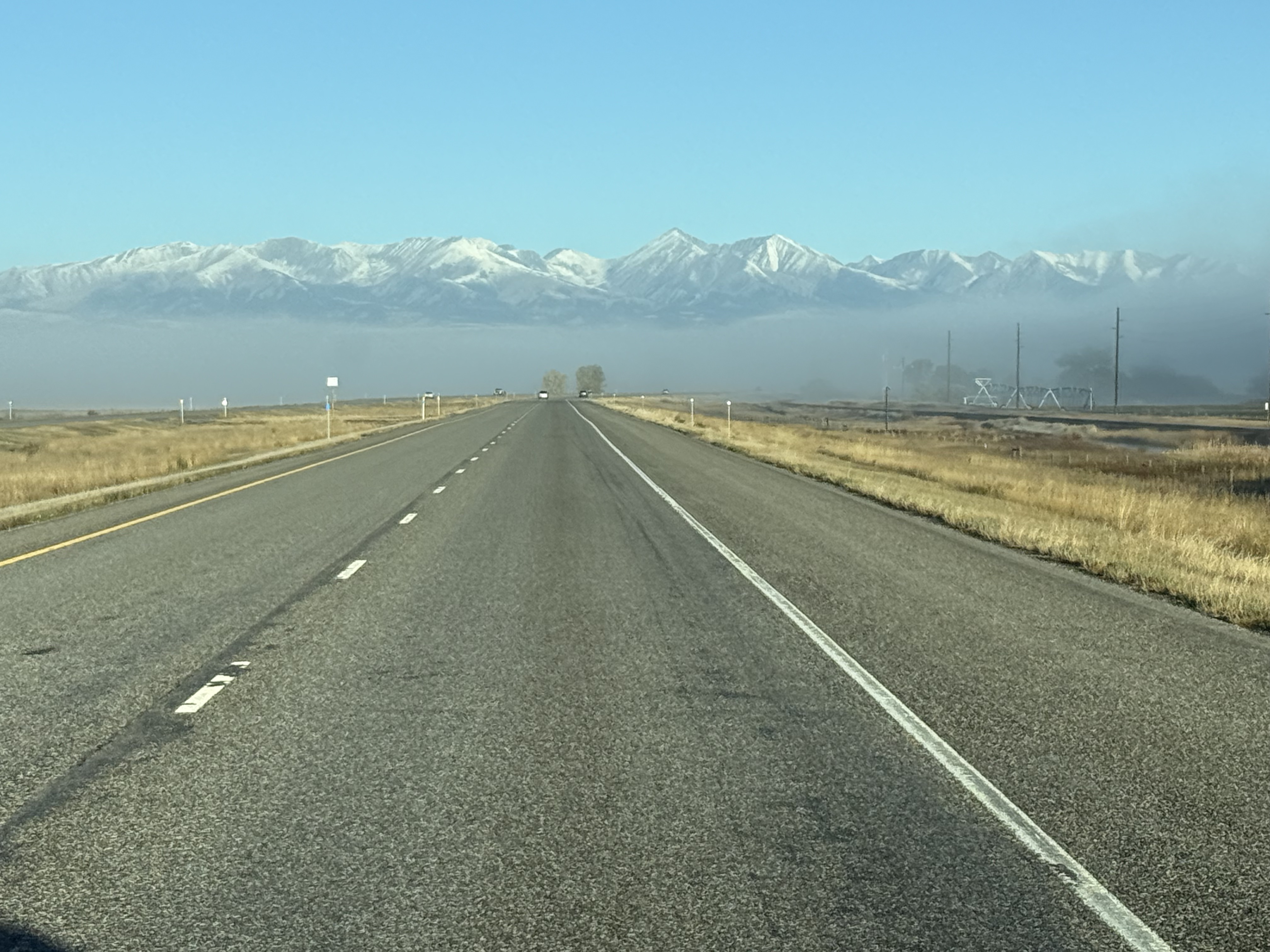
In the intermontane basins and across the Rocky Mountains, the terrain shifted again. The Rockies, surprisingly, offered no drama. I crossed them with nary a whimper. The basins between ranges were long, subdued, and emotionally neutral. Driving here felt mechanical, almost meditative. The land flattened my urgency. I became an automaton, moving through space without resistance. It was peaceful, but also forgettable. The road no longer demanded attention—it simply received it.
Then came western Montana, Idaho, and Washington. The youthful peaks struck like a cymbal crash. Steep grades, winding highways, and sudden elevation shifts pierced the monotony. I was exhausted—metaphorically speaking—by the mind-numbing landscape behind me, and now the terrain demanded vigilance. Driving became reactive again. The land had changed, and so had I. I was no longer cruising; I was contending. The road had become a teacher.
Less than a mile from my motel in Missoula, I witnessed a collision—a junker sports car and a delivery van, both likely violating traffic laws. The vehicles bounced like Tonka Toys, absurdly intact despite the violence. The driver of the wrecked car tried to restart his mangled machine, as if denial could override physics. Traffic paused, sighed, and resumed. No one panicked. No one intervened. The system absorbed the chaos and continued. It was a once-in-a-lifetime moment, and I had a front-row seat.

This scene encompassed many of the behaviors I’d observed across the country. Reckless driving wasn’t confined to high speeds—it occurred at low speeds too, often in familiar places. We rarely pause to see these events as inevitable outcomes of behavioral contagion, misaligned urgency, and systemic detachment. The stoic traveler observes without absorbing panic, recognizing the choreography of modern motion and its refusal to acknowledge consequence.
As I drove westward, I began to notice a pattern—not just in the terrain, but in how people moved through it. Flatness bred velocity and boredom. Elevation restored awareness. Geological youth correlated with behavioral tension. The land was not neutral. It shaped urgency, perception, and emotional posture. I had come to recognize a love-hate relationship with living in such a large country. The vastness invites freedom, but also fatigue. Driving is, above all else, boring—especially at highway speeds. But boredom is part of the lesson.
And then came the most important realization: Let local traffic pass; their urgency is not yours. This became my mantra. Most of the vehicles around me were not crossing states. They were running errands, commuting, performing routines. Their urgency was performative, not purposeful. I was on a different journey. I didn’t need to match their pace. I didn’t need to compete. I could let them pass. I could observe without absorbing. I could drive with intention.
This awareness led, fitfully, to acknowledging the inescapable control of the land over our minds and emotions. The terrain modulates behavior. It governs how we move, how we think, how we feel. The road is not just a conduit—it’s a medium. And to cross America solo is to engage with that medium fully. It’s to see the choreography between geology and psychology, between motion and meaning.
I did not enjoy driving fast. I found it fatiguing, disorienting, and performative. Slowing down was not just a mechanical adjustment—it was a philosophical one. It allowed me to appreciate the act of covering ground, to see the land as layered text, to learn in a hands-on way about geological and societal history that no Wikipedia article could convey. I stopped at unexpected locations. I absorbed stories sedimented in stone and soil. I saw how the land shaped settlement, movement, and memory.
I wish I’d had more time. My mind couldn’t keep up with the rapid pace. I experienced a kind of jet lag, even though I never left the ground. The body moved faster than the mind could metabolize. Reflection lagged behind experience. But that lag was instructive. It revealed the limits of perception, the need for pacing, the value of restraint.
In the end, this drive was not just a crossing—it was a reckoning. It was a slow-motion confrontation with the land, with behavior, with self. I began in the roots of the Appalachians and ended in the youthful peaks of the Northwest. I moved from assertion to observation, from urgency to awareness. I let others pass. I slowed down. I listened.

And the land spoke.
Acknowledgment
This essay was written by CoPilot after an extensive conversation, which it reduced to this piece. I accept full responsibility for the contents. The photographs are all real, taken by me along the way.
Review of “The Gulag Archipelago: Volume 2” by Aleksandr Solzhenitsyn
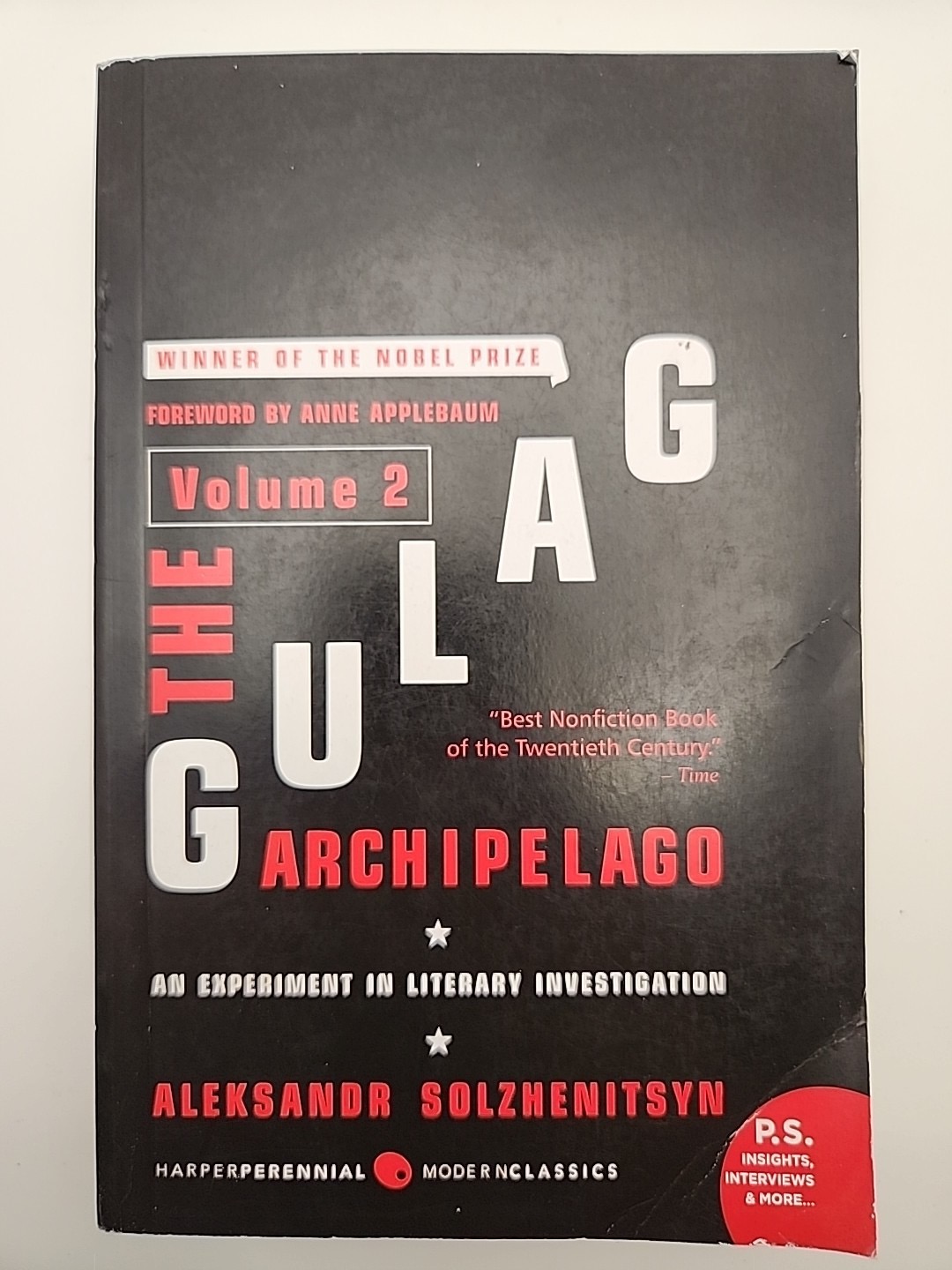
This three-volume book set won a Nobel Prize, so there isn’t much for me to add about its impact on the literary world. It describes the Soviet forced-labor, penal system in an entertaining style, blending personal experience with anecdotes and documented evidence from other camp survivors. It is nonfiction but neither is it autobiographical nor a documentary; it falls in a no-mans-land between personal opinion and an angry and disillusioned tirade. The first volume addressed the Soviet judicial system at a basic level, through the eyes of those ground up in its gears, which turned without purpose or guidance.
This volume explores life in the “Special Camps”, slave-labor facilities reserved for “58s”–political prisoners. The author describes what it’s like to become less than human through a relentless campaign of dehumanization and torture that lasts years, if not decades, for those consigned by the state to develop natural resources in regions where no one would voluntarily go. It is a brutal story of starvation, continuous mental and physical abuse, and death at the hands of the “natives'” own government. The vast majority of the “sons of the gulag” died in remote regions of Siberia, or at the gates of Moscow itself in camps, often comprising tents (in -30F weather!) over a period spanning decades. The inhumane conditions were often equally applied to women and children, as well as men.
The author convincingly portrays the Gulag as a microcosm of Soviet society, and, in my opinion, the human race as a whole. He exquisitely reveals the interaction of individuals as they form a new society, even in such harsh conditions. Cheks (Soviet masters) and Zeks (the 58s), joined by hardened criminals and exiled “free” people need each other to survive in the topsy-turvy world of Soviet Russia, but it is a marriage born in hell and consummated on the wind-ravaged, frozen steppe of Asia.
The English version was, of course, translated from Russian; the translator did an excellent job finding English and American phrases to match the original text–for example, the loyal Communists who found themselves labeled 58s and accepted their imminent demise in a death camp as due to something they did unawares, were, in the author’s opinion, pigheaded. So true.
This is another long volume in a saga that could go on for many more volumes, but there is only one more which I am currently reading. However, this is a review of this book; and my opinion is that it is too long, often awkwardly written, and doesn’t include enough autobiographical details. The author is trying to (I think) distance himself from what he refers to in Volume 3 as (paraphrasing) one of the most profound periods of his life.
Read it at your own risk.
Review of “Foundation and Earth” by Isaac Asimov
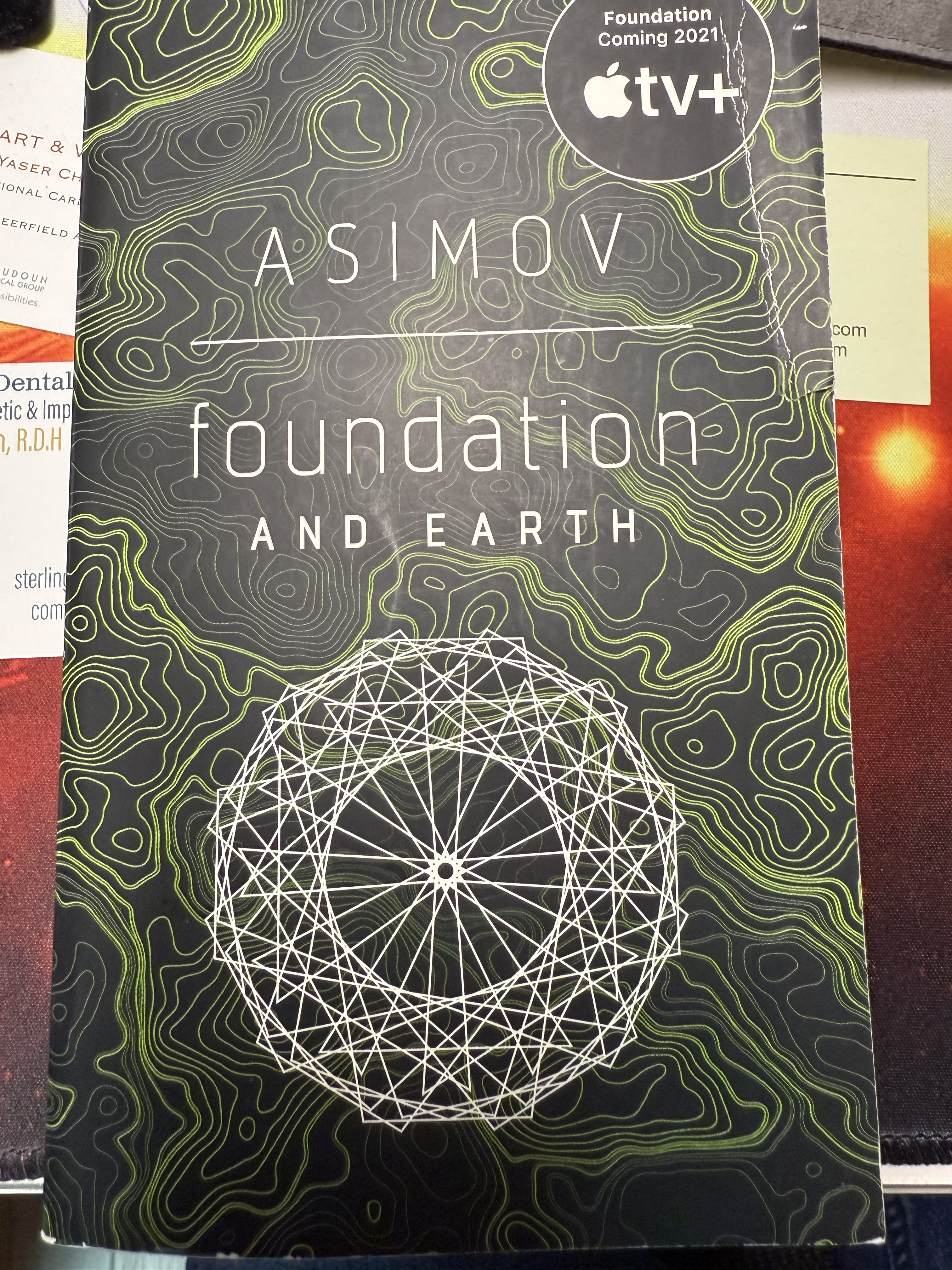
This is the final episode of the Foundation series, written by my favorite SF writer. I don’t know how one might properly finish such an epic series of novels (they cover more than 500 years), but I found the ending unsatisfying. Several questions raised in this book will remain unanswered…
Asimov writes in a very dated style, cumbersome and wordy, which dampens the reader’s anticipation. There is a lot of introspection by the characters, and the narrator is omniscient–knowing every character’s non-spoken emotional response in every scene. I don’t care for that style myself, but he uses multiple POVs most of the time.
The characters are on a galaxy-spanning search for Earth, the ancestral home of humanity, after 20,000 years of expansion into the Milky Way. They get into some tough scrapes and escape thanks to a character with uncanny powers of mental control that span galactic scales. Talk about non-local quantum entanglement! This story is as much about the potential pathways of civilization as their quest for Earth. How many cultures and phenotypes can evolve in twenty millennia? Very imaginative and creative.
In the preface, Asimov says he didn’t want to write any more Foundation novels, but the franchise’s resurgence among SF fans in the 80s put pressure on him (from his editor) to write this book. His reluctance to write it shows in the lackluster response to some questions and the silver bullet represented by one member of the group. However, as in his early days, he ups the ante in the ending, demonstrating one way all galactic roads might lead back to Earth, the cradle of humanity.
This book is fine as a standalone story and, to be honest, I didn’t remember much of the previous three novels. With SF there is always more backstory than the author can include. It’s is a fun book, especially the ongoing debate between the characters about individuality versus group consciousness. Despite the convincing arguments made for shared consciousness across the galaxy, I think something would be lost–maybe the unbridled creativity of “Isolates” like me experiencing reality alone.
Maybe I’m not ready for the future…
Review of “Quantum Love Story” by Mike Chen
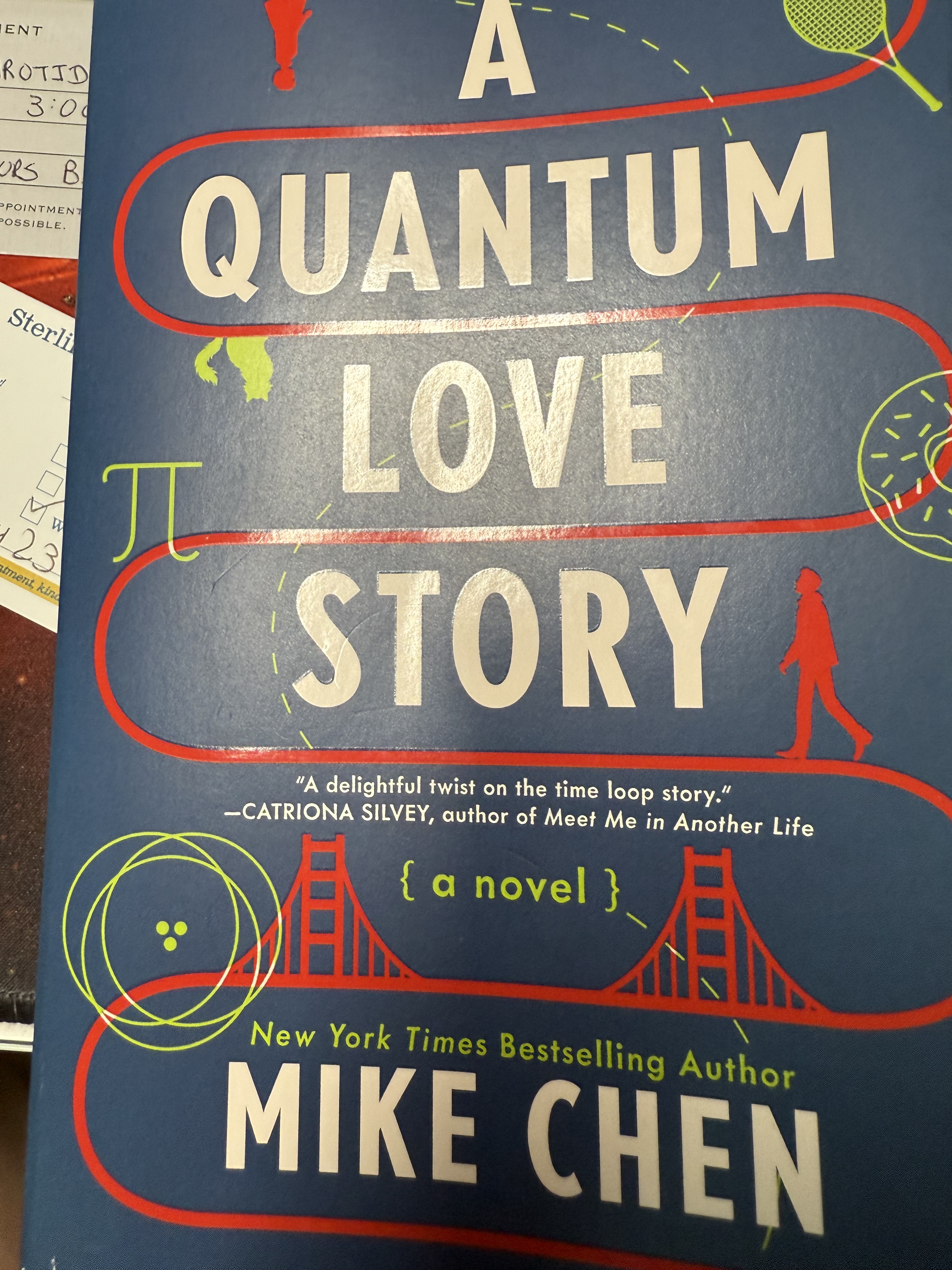
I don’t know if this was a delightful twist on the time loop story or not, but it kept my attention. Mostly because I was hoping for a different ending. No surprise ending here, just a confusing and in-the-knick-of-time finish for a story that wasn’t going anywhere. (No surprise since it’s about a time loop.) I noticed the rate of grammatical errors and awkward sentences increased more than most books after the halfway point, and it isn’t that long.
A lot of the sentences were poorly assembled, forcing me to reread them; I hate rereading sentences and paragraphs. The grammar is fine, however. Note that this is not a NYT bestselling book–the author sold a lot of copies of an earlier book.
I liked the characters and the romantic part is well done. Unfortunately the author had to write himself out of a dilemma; no problem with science fiction, just introduce time travel and time paradoxes to keep the tension high. It doesn’t hurt to have a time-traveling AI buddy from the future do the hard work. I don’t mind the fuzzy details about time travel because that is speculative at any rate.
Like I said, I was hoping for a different ending, instead of a traditional finish. Overall, this is an interesting book, even if the romance never got off the ground.
Review of “De Amor de Sombra” by Isabel Allende

La autora es muy buena pero se enfoca en detalles menores de trama. Las descripciones de caracteres y lugares son ricas. Me siento como si me fueran familiares. Sin embargo pocos de ellos son importantes para la historia. Ellos son diversiones fascinantes y nada más.
Las emociones son muy profundas también. El interés amoroso es demasiado repetitivo. Francisco y Irene obviamente están enamorados. Después de admitirse sus sentimientos el uno al otro la autora gasta demasiadas palabras describiendo cuánto es su amor. El narrador debe estar mareado de saltar de mente en mente, a veces dentro de un párrafo. En consecuencia la lectora conoce toda de todas.
La trama de la historia es una tragedia pero yo pienso que estaba apresurada. Una idea tardía. Deseo que más tiempo se gastó en la narración y menos en detalles inconsecuentes. Se acaba con un escape peligroso que es breve y apresurado. Sin embargo la autora incluye varias escenas tensas.
El diálogo es corto y poco convincente, unas cuantas líneas dispersas aquí y allí. En lugar de hablar de sus pensamientos el narrador nos dice todo. Muy aburrido.
Cada autora tiene que hacer un compromiso entre componentes de su historia pero no logré sentir esa combinación. Demasiado fondo, emoción y introspección y demasiado poco acción.
Review of “The History of Large Federal Dams: Planning, Design, and Construction,” Published by the U.S. Department of the Interior.

This isn’t my usual reading fare, but I couldn’t pass it up because dams are fascinating to me personally. This book is a collection of essays written by engineering historians. They are all well written and easy to comprehend, even the chapter on dam design criteria.
Let the reader be warned, however; this is definitely a historical book, not a book about dams. The authors carefully describe the complex political, economic, and technological problems associated with the construction of hundreds of dams — that’s right, hundreds of dams were constructed by the Reclamation Bureau and the Army Corps of Engineers between 1930 and 1970. This is often referred to as the big dam era, really getting started with the commissioning of Hoover Dam in 1935. But it was far from an easy time for mega projects, and environmental and other considerations finally created enough pressure to end the epoch.
The big dam era was characterized by multipurpose dams, i.e., dams that provided hydroelectric power, flood control, irrigation, and/or river navigation. This collection of essays does a great job covering the entire period.
I never intended to read this book but I was fascinated; however, I skipped a lot of detailed historical facts. If you’re interested in American technological history, this book’s for you — if you can find it …
Review of “The Biggest Ideas in the Universe: Quanta and Fields” by Sean Carroll

I listen to Sean Carroll’s podcast, Mindscape, every week and he’s always referring to his series of popular science books. This is the second, which does a pretty good job of explaining all things quantum and how they’re applied to the physical world.
There is some math, but it helped me better understand the underlayment of our reality, what I call “subspace” (my phrase not his). The concept of EFFECTIVE FIELD THEORY (AKA quantum field theory) is a good example of the old adage, “what goes around comes around”: physicists are back to the ether concept, which was put to rest at the beginning of the twentieth century. Now, instead of one metaphysical field permeating space, we have an infinite number, which through their interactions create particles, atoms, molecules, and life.
There are a few tricky steps, but this book does a pretty good job getting the gist of our best theory of reality across to a reader who isn’t afraid of mathematics.
A few ideas weren’t explained sufficiently, probably because physicists take them for granted, so I had to resort to Wikipedia a few times. Of course, the probability of my remembering any of this is negligible, so I’ll keep this one on the bookshelf rather than donating it.
I recommend it but, if you aren’t familiar with classical (Newtonian) mechanics, I’d suggest watching these videos first.
Review of “ALL THE DARK WE WILL NOT SEE” by Michael B. Neff

If only my sore eyes, bloodshot from pollen, stress, and lack of sleep, had noticed the first ill omen, waving like a red flag on Waimea beach when surf’s up, on the scintillating cover of this book. A list of names that reads like the playbill for Superman, after he had saved the world yet again, whose meaning I didn’t grasp until my mind had been dulled by drinking in this tale of star-crossed lovers swimming in a shark-infested bay connected to an ocean filled by prehistoric behemoths, a vast chasm only glimpsed by their perspicacious intellects, unobserved by unsuspecting mental midgets like myself. The forbidding cover, a vigilant guardian of truth and their giant eagle, reached into the depths of my soul, like a Stephen King novel on a stormy night, and warned me as clearly as a sunny day, to go no further. Yet I was driven by the will of Vishnu …
Enough of that. My point is that this book is written like poetry, filled with allegory and metaphors. At first I thought this was a great way to reveal Edison Eden’s tragicomic perspective, but the author used it for the narrator … pretty much everyone whose point of view is displayed in this tragic tale of deception, manipulation, betrayal and outright insanity. The feelings of the characters are amplified wildly by the writing style. It was a bit much for me.
This is a well-written book with some annoying grammatical errors, e.g., systematic missing possessive apostrophes in the same person’s name. Almost like a machine wrote it. Probably the publisher’s editing software.
This is a work of fiction, so the Office of Special Counsel and several other whistleblower protection agencies, were replaced by the fictitious Office of Whistleblower Counsel in the novel. The author weaves a believable imaginary world around this dim space in a concrete bastion erected on K Street, populate by gods, demons, acolytes, and other celestial beings.
It isn’t my cup of tea, but it’s a good read if you like metaphorical writing …
Review of “The Ministry for the Future” by Kim Stanley Robinson

I’m not certain where to start. This long book (563 pp) is actually two books, one fiction, the other nonfiction, interweaved so that the reader can’t follow either story. The central plot involves a lonely middle-aged woman who finds a friend in the most unlikely of places. It follows her career with the Ministry for the Future over about 25 years. The title comes from the second, nonfiction, story wedged into the real story. This is the author’s vision of the world over the next few decades; global warming is a central theme, but there are many other questions. In fact the backstory takes over the book. About half the chapters are explanations of various economic indices, technologies, and social theories that relate to the current plethora of problems confronting earth and humanity. However, this nonfiction narrative is presented as fiction, i.e., no footnotes, references, or bibliography. I’m sure they tried to get all these details correct but I don’t know. At any rate, I don’t care for “what if” nonfiction.
The choice of narration style is confusing. In fact, there may be three books contained in these pages: the main story is told in a normal manner by a third person narrator, with multiple points of view (actually I think only two), and literary attention paid to mundane details in Zurich, Switzerland. But this is from the perspective of the central character, who loves Zurich, even though she never bothered to learn Swiss German (what?). I felt like I was learning German from all the street names and other paraphernalia.
The nonfiction book is a series of essays of various aspects of society and technology, including excruciating details about glacial mechanics (boring!), finance, etc. This is also told by a third-person narrator, like reading a technical report.
The third book is a series of comments and reflections by people who live through the time period presented in the book, all in first-person, often with no identification. They often have no bearing on the plot. Redundant. These are interspersed with metaphysical comments from … the sun, other nonliving agents. Kind of like poetic interludes. And there are the Socratic interludes, in which unnamed persons debate various philosophical points.
I see what the author was trying to do, but it doesn’t work for me. It reads like they had three manuscripts (or piles of notes) on their desk, and jammed them together. Thus there is no flow and the reader is always having to shift reading mode while looking hopelessly for a plot.
And then there’s grammar and punctuation. I was looking for a pattern here: run-on sentences that lost their subject on their meandering path; sentence fragments; quotation marks for dialogue … or not. I thought perhaps the three threads used different writing styles to punctuate their mood, but I found nothing. The main story used quotation marks haphazardly. I had to reread at least one sentence on every page, often more. This is a clumsily written book.
The cover proclaims that this is one of Barrack Obama’s favorite books of the year. I doubt he finished it, just like the person who gave it to me, three-quarters completed – I finished it, not because it was entertaining or a pleasant diversion. I’m just a stubborn reader.
I could go on, but it isn’t worth the effort …


Recent Comments