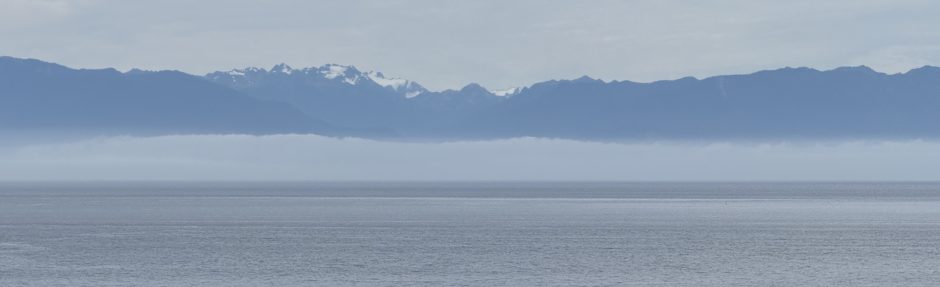
Stormwater Retention Project
I always heard that the Pacific Northwest gets a lot of rain. Having lived in southern Louisiana for 25 years, I was a little skeptical. So when I moved here last year, to discover that all of the yards were brown, but the flowers and trees were flourishing, I became interested in the annual rain pattern. It doesn’t rain here in the summer. No thunderstorms twice a week. Nothing.
Water isn’t particularly expensive here, but I don’t like using clean tap water on plants. It turns out that most of Tacoma’s water comes from glaciers on Mount Rainier (Tahoma to natives). They melt naturally in the summer, so we aren’t using groundwater and have no control over their rate of melting.

We inherited a number of young fruit trees, which need a lot of water. Seeing how nice many of our neighbor’s yards were, we decided to collect plants. I watched water flowing out of the downspout during spring rains, flowing down the driveway into the street, and directly into Puget Sound. We installed a couple of rain barrels to collect some of it; you would be surprised how fast they fill during the light rains (compared to the Gulf coast) I’ve experienced here in Tacoma.
It turns out that Pierce County has a stormwater retention program, to prevent pollution of Puget Sound, and one can get free consultation on home projects that reduce storm runoff. There is even a competitive proposal system to get limited financial assistance. We jumped at the opportunity to contribute to the continued health of the place we’ve already fallen in love with.

The back yard was a basketball court at some point, complete with 3-4 inches of concrete. The previous owners removed the concrete (thank god!), but left some irregularly cut tree trunks. We were thinking about planting a garden in this area, but now we were part of something bigger than our back yard. We could get assistance on the whole project, from collecting rainwater to distributing it, and keeping it out of the pristine waters of Puget Sound.
But there were some engineering hurdles to clear…
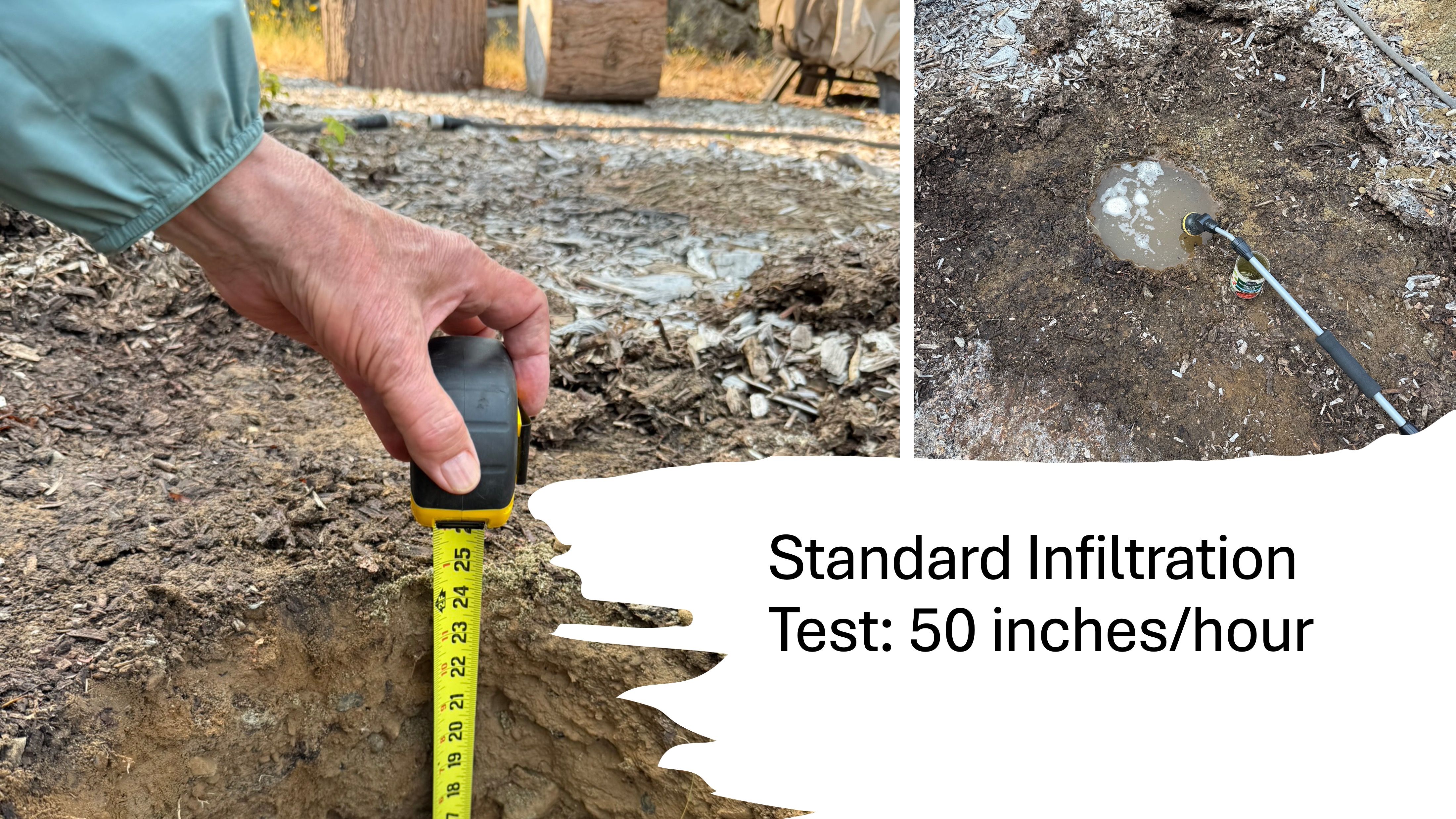
We had to demonstrate that the soil under our back yard would absorb a reasonable amount of rainwater, which necessitated digging a hole and filling it with water. That sounds easy enough. The catch is that the soil in the hole has to be saturated before the test can be conducted. To assure saturation for all soil types, this means keeping a two-foot deep hole full of water for three hours. I had to keep the garden hose running at half-volume, tweaking it constantly, to meet this standard.
I spent the morning babysitting a one-foot-diameter hole with a hose running constantly.
But I kept the hole full for three hours. Finally, I could conduct the test. I filled the saturated soil to 12 inches and waited, but not for long! As I already knew, it drained in 17 minutes, as measured by a stopwatch. We have well-drained soil (mostly sand with some clay and rock cobbles).
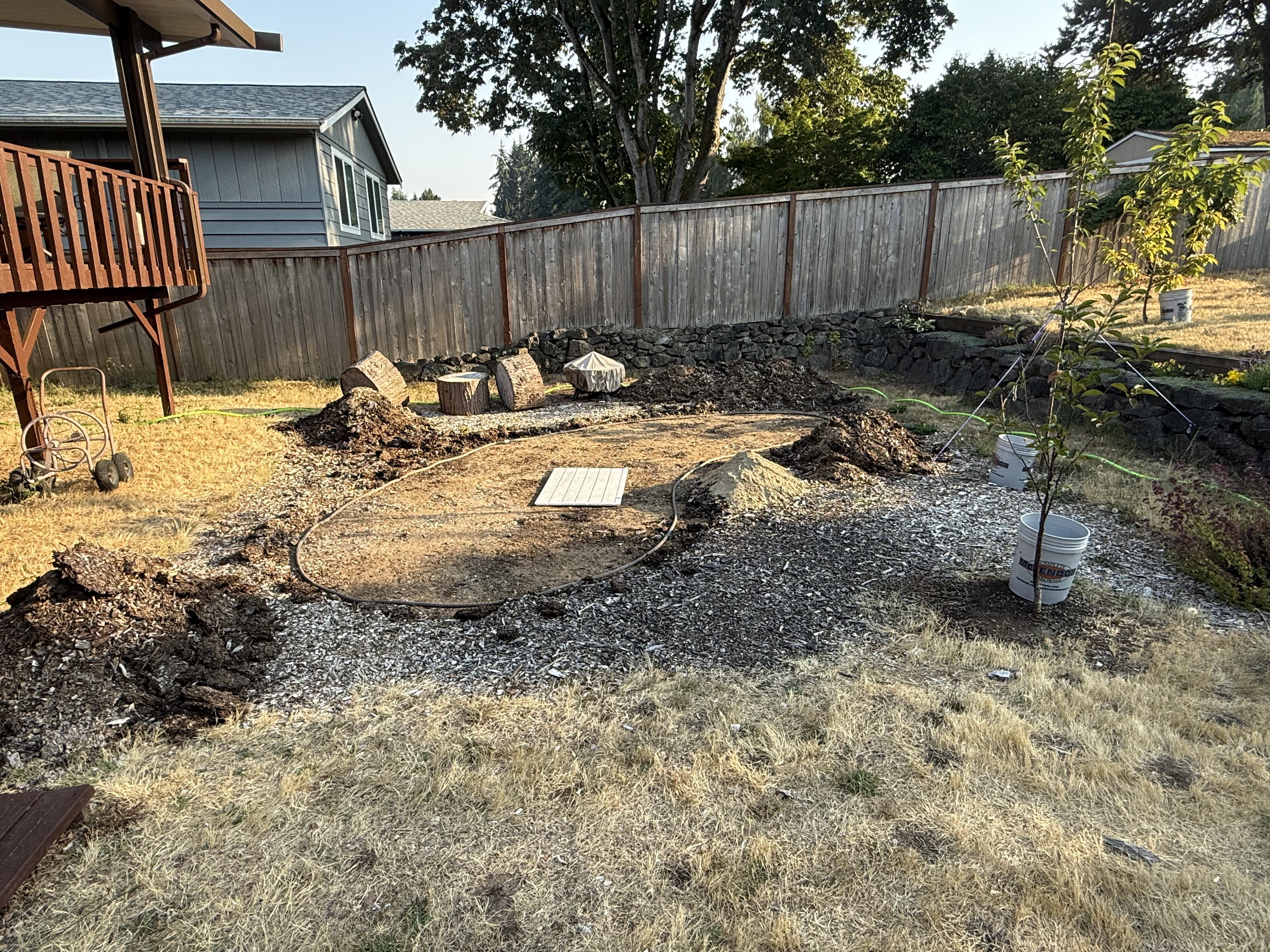
While my garden hose kept the ground saturated, I kept myself busy, removing 4 inches of mulch filling the 4-inch deep depression left by the basketball court. I’m going to keep the material on-site as much as possible, to avoid hauling it up the slope seen to the right in this photo, where it would (please, god, no!) be spread to form a slight hump in my back yard.
You would be surprised how fast soil is used to fill a 4-inch deep area the size of the remaining mulch seen in this photo.
I can’t wait to begin digging the pond. I’ll see you then.
The Northwest Native Garden
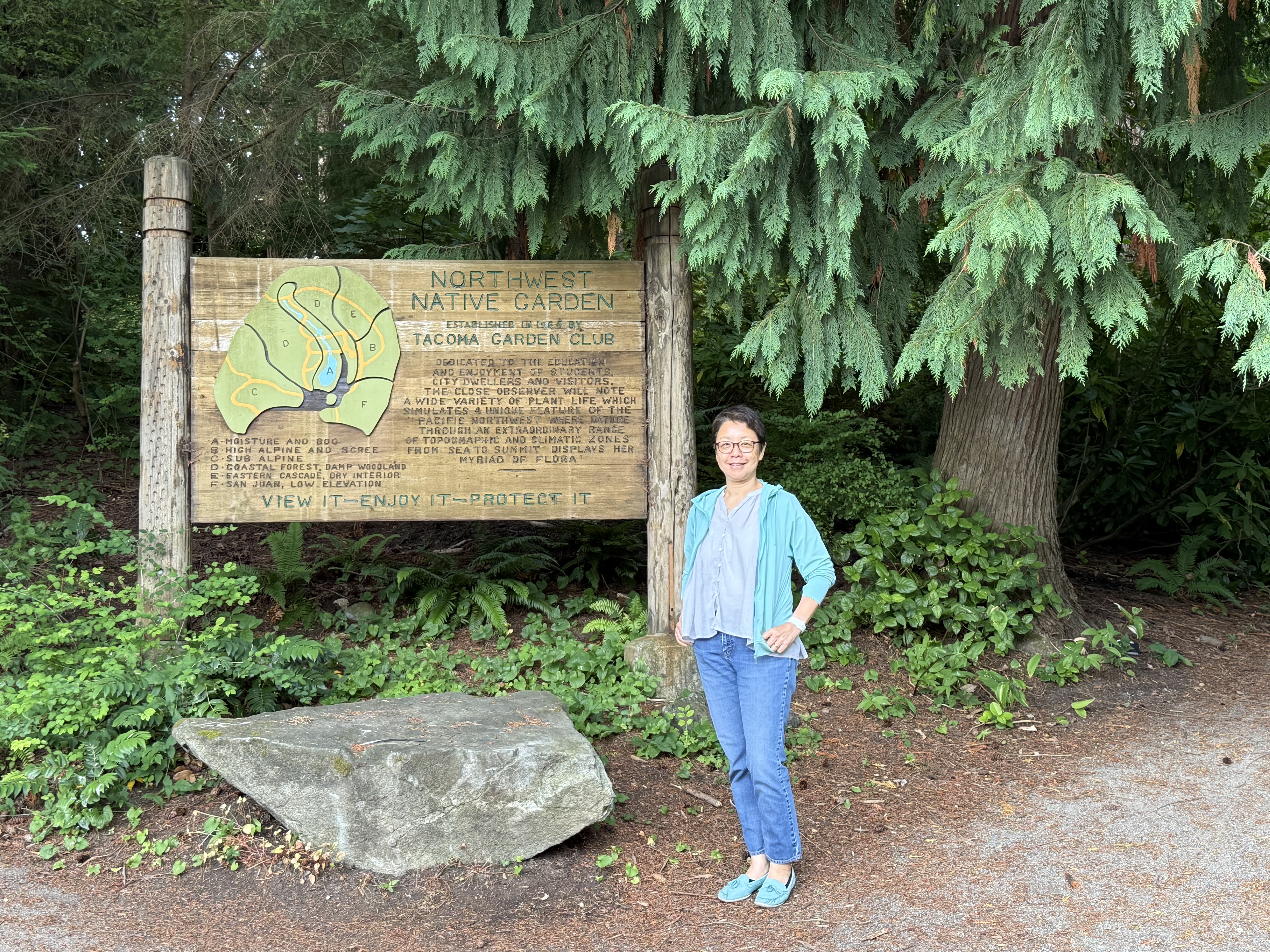
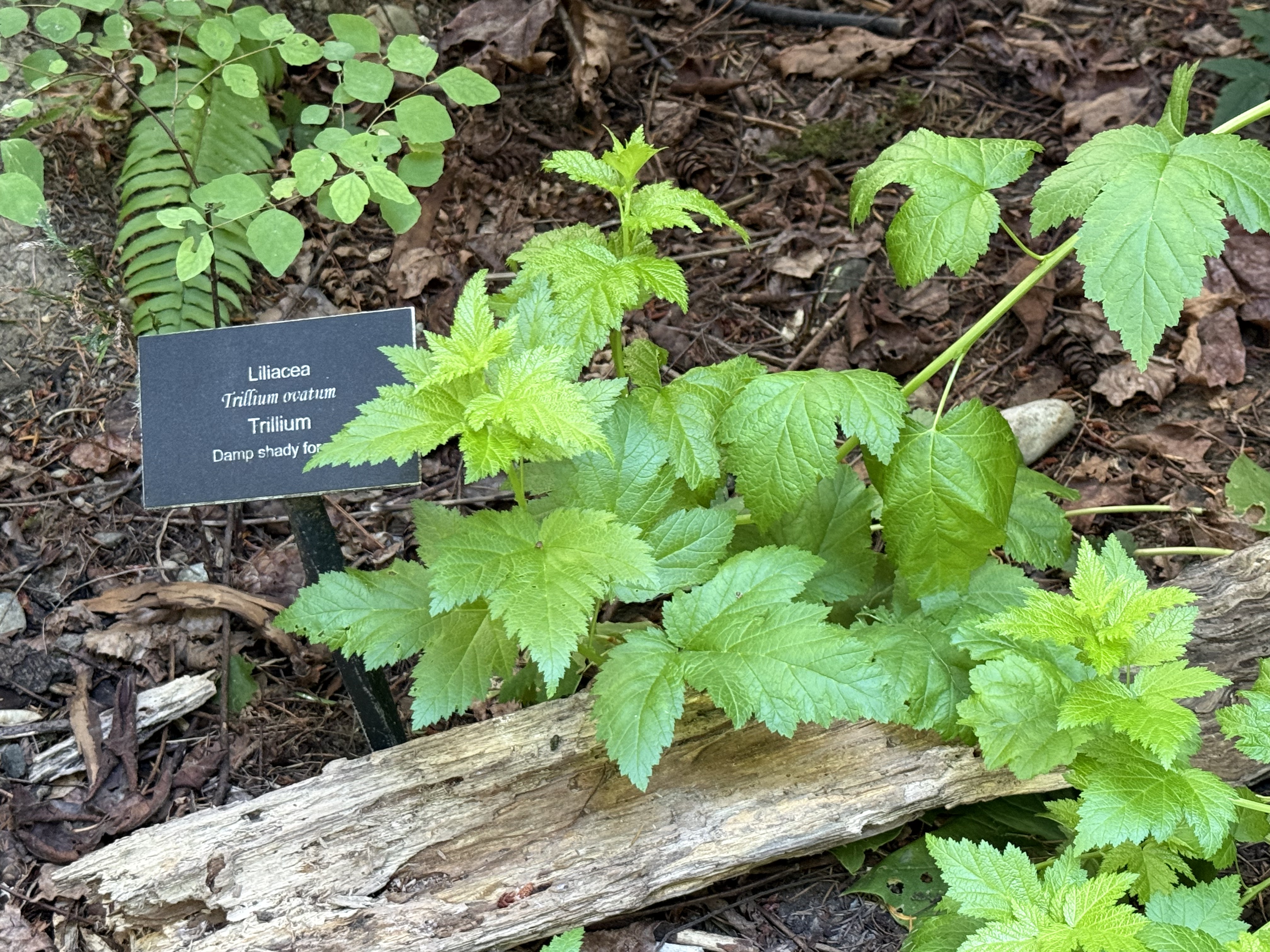
Like the (rare) sign says: Trillium likes moist coastal forests.
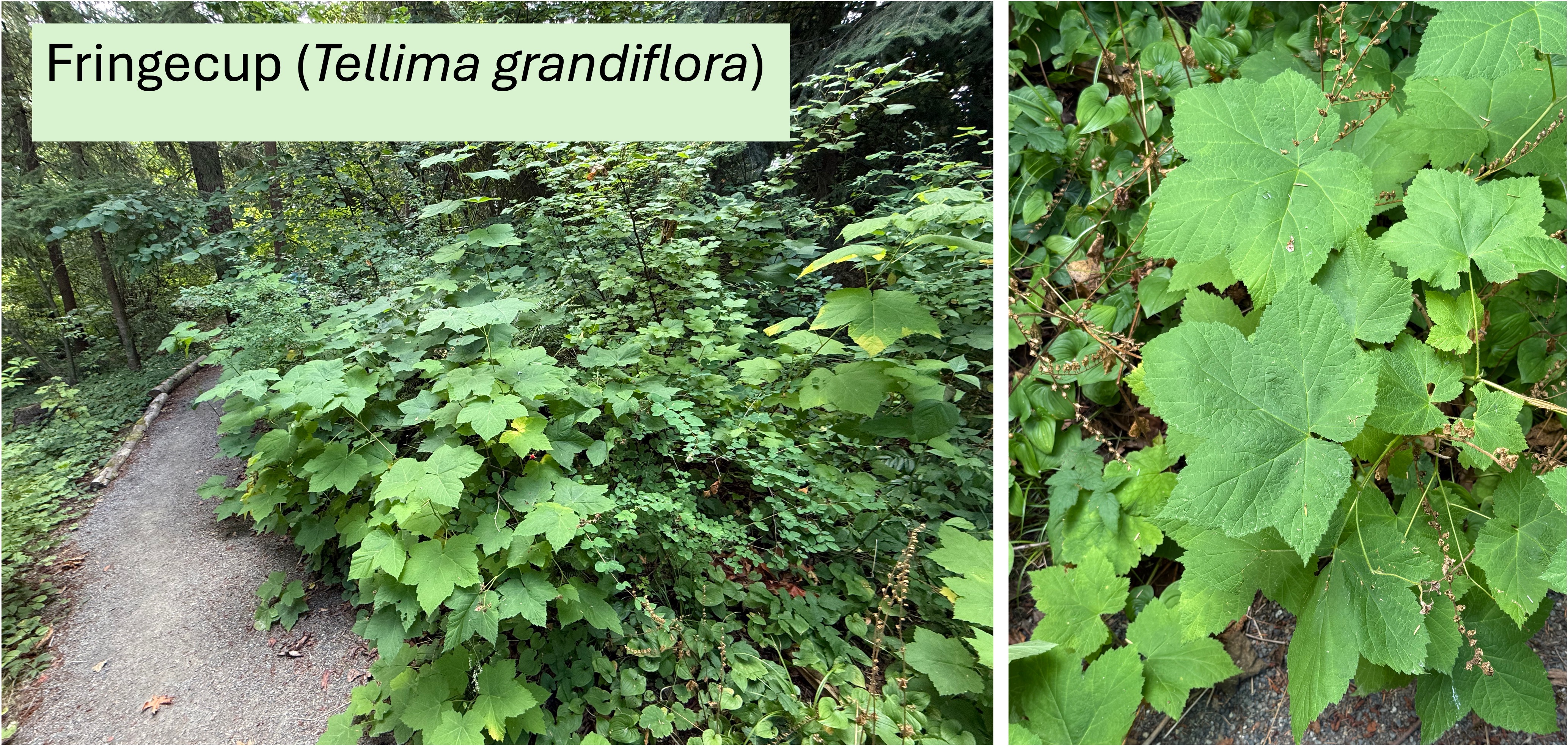
This common PNW shrub thrives in moist coastal forest environments.
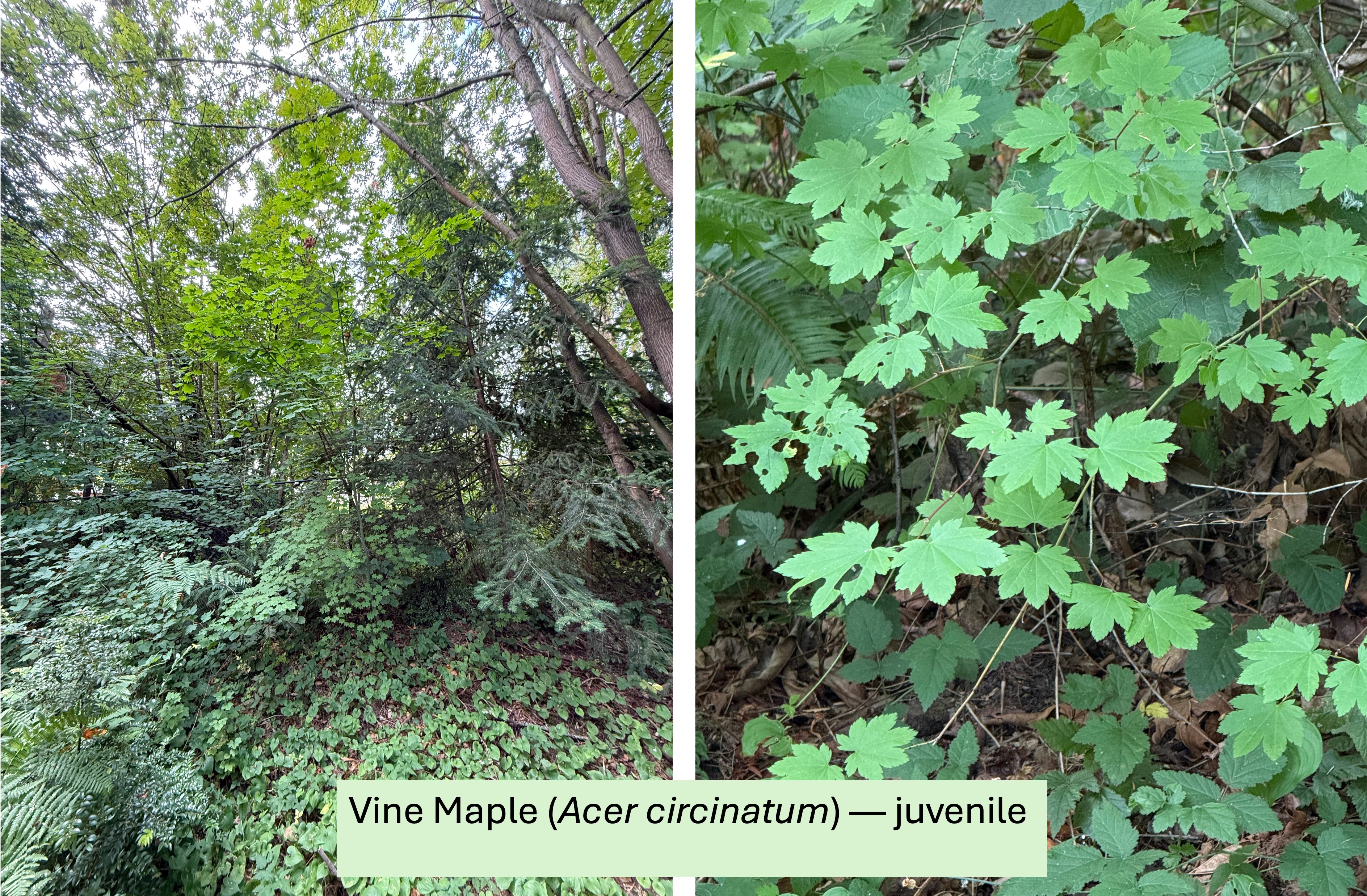
Vine Maple is an understory tree, which doesn’t grow high enough to compete for full sun; instead, it grows beneath the conifers and gives even more shade to the shrubs. This sapling is just starting to get some height. Moist coastal forest.
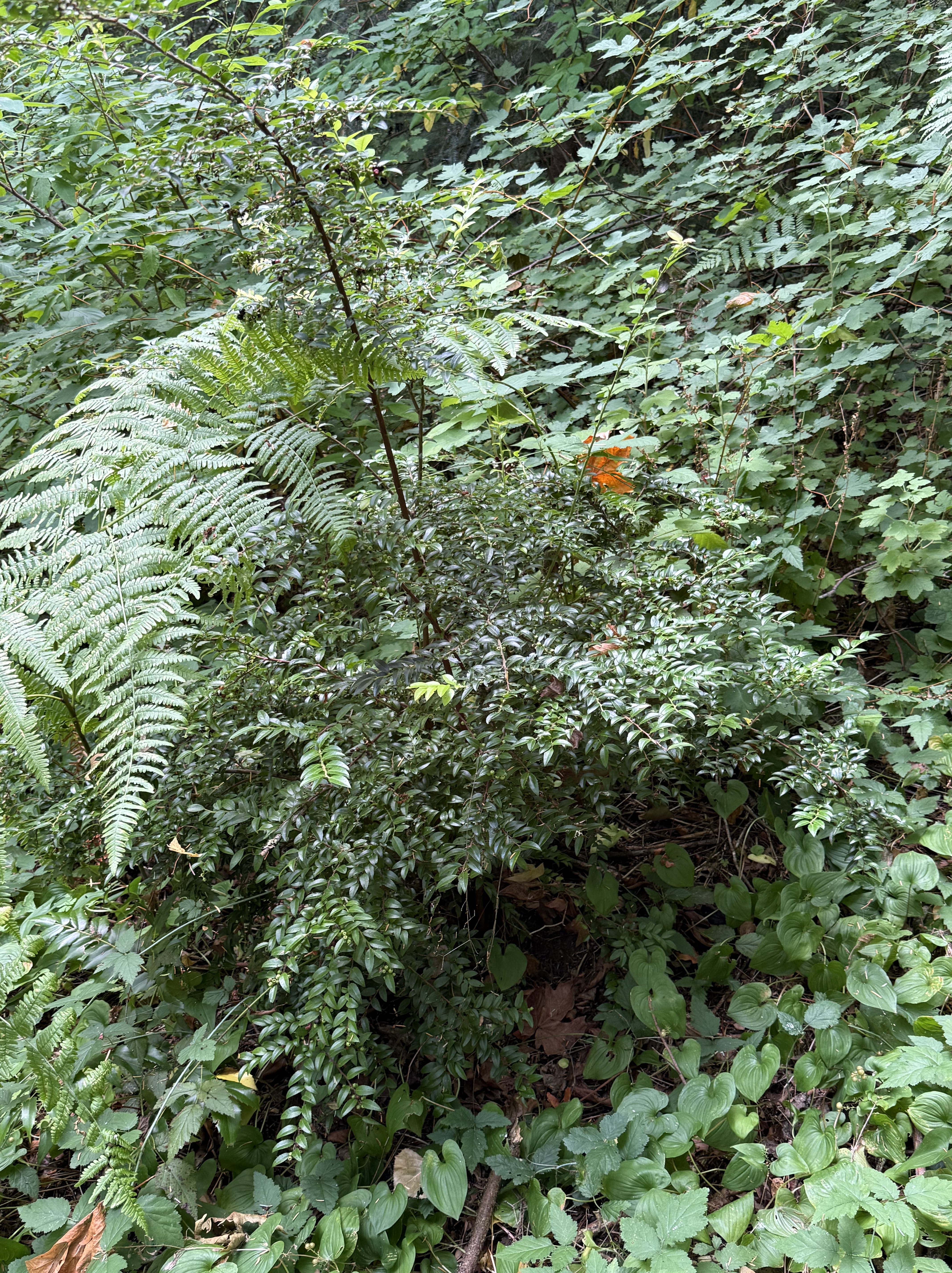
This is Salal (Gaultheria shallon). It grows in an environment similar to Vine Maple, in nutrient-rich, well-drained soils, often near water. Moist coastal forest.
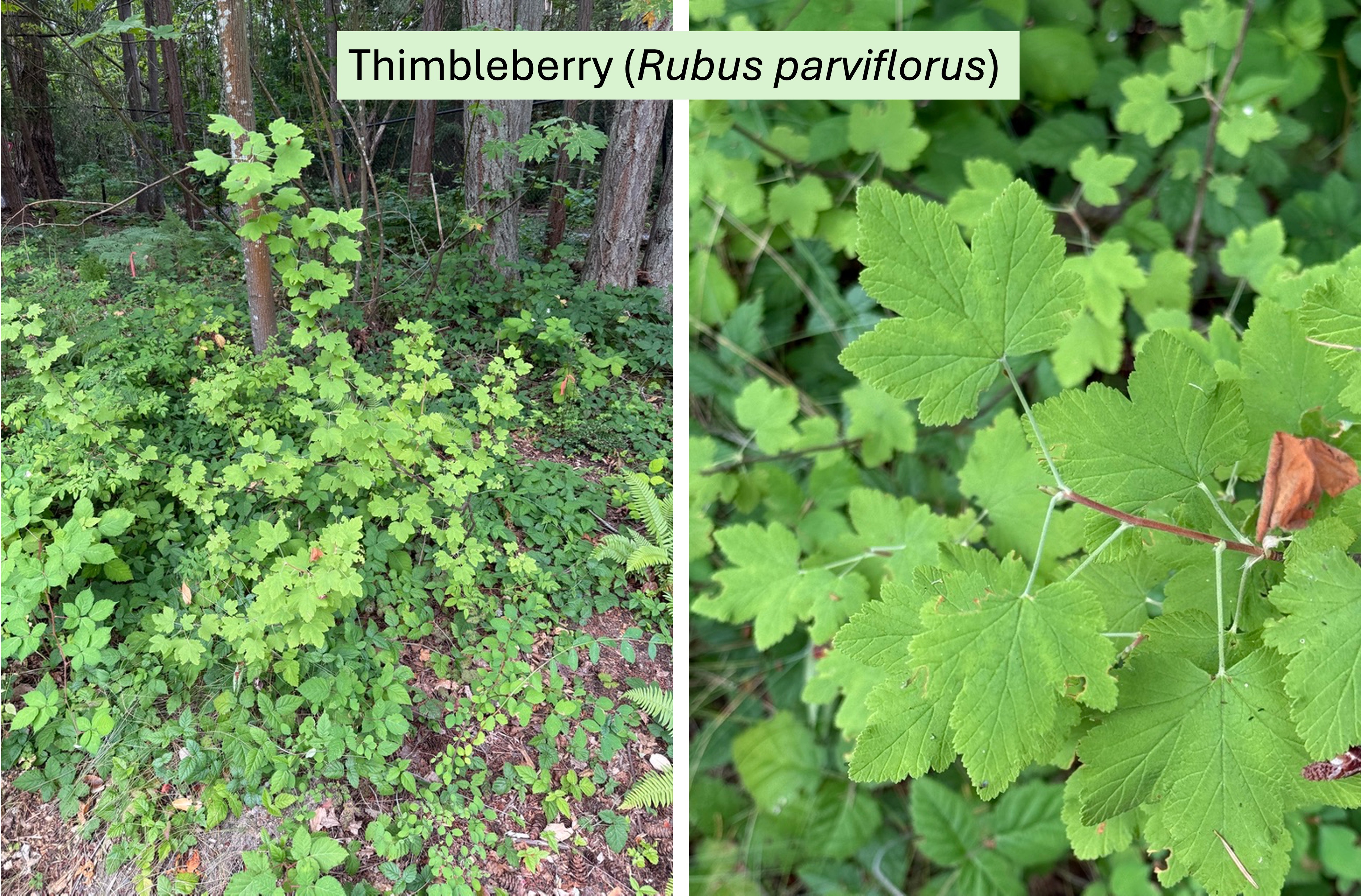
This shrub forms colonies in mesic forest patches, where partial sun is available although it is shade tolerant. The identification is difficult because of so many plants with similar leaf shapes, but I agree with CoPilot. A denizen of moist coastal forests.
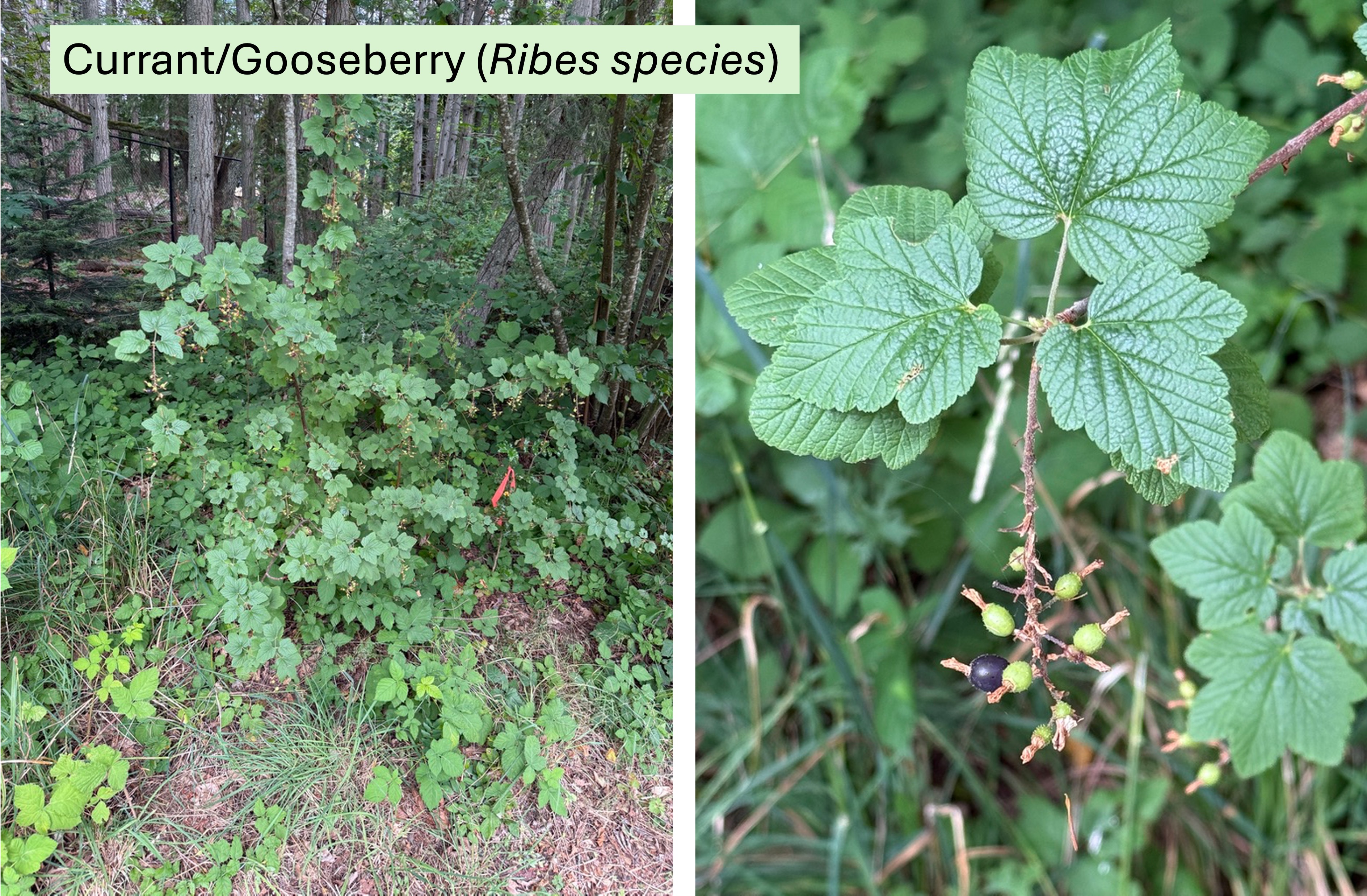
This plant is common to shrub thickets and riparian edge habitats.
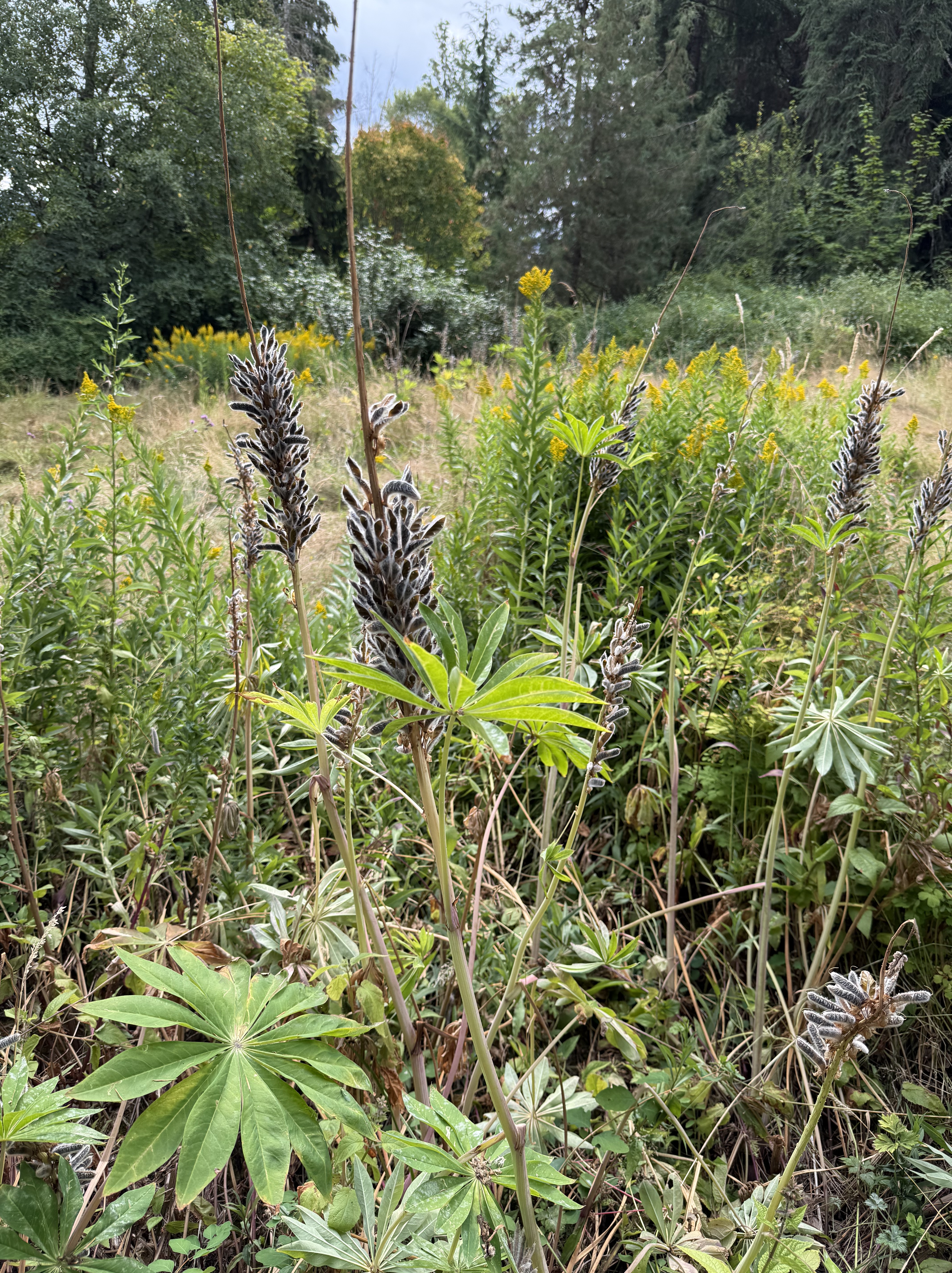
This distinctive plant is Bigleaf Lupine (Lupinus polphyllus). It thrives at the edges of meadows in a full-sun environment with moist to dry soil. Those lovely appendages are seed pods, so I don’t know what the flowers look like. This plant thrives in prairie/oak woodland habitats.
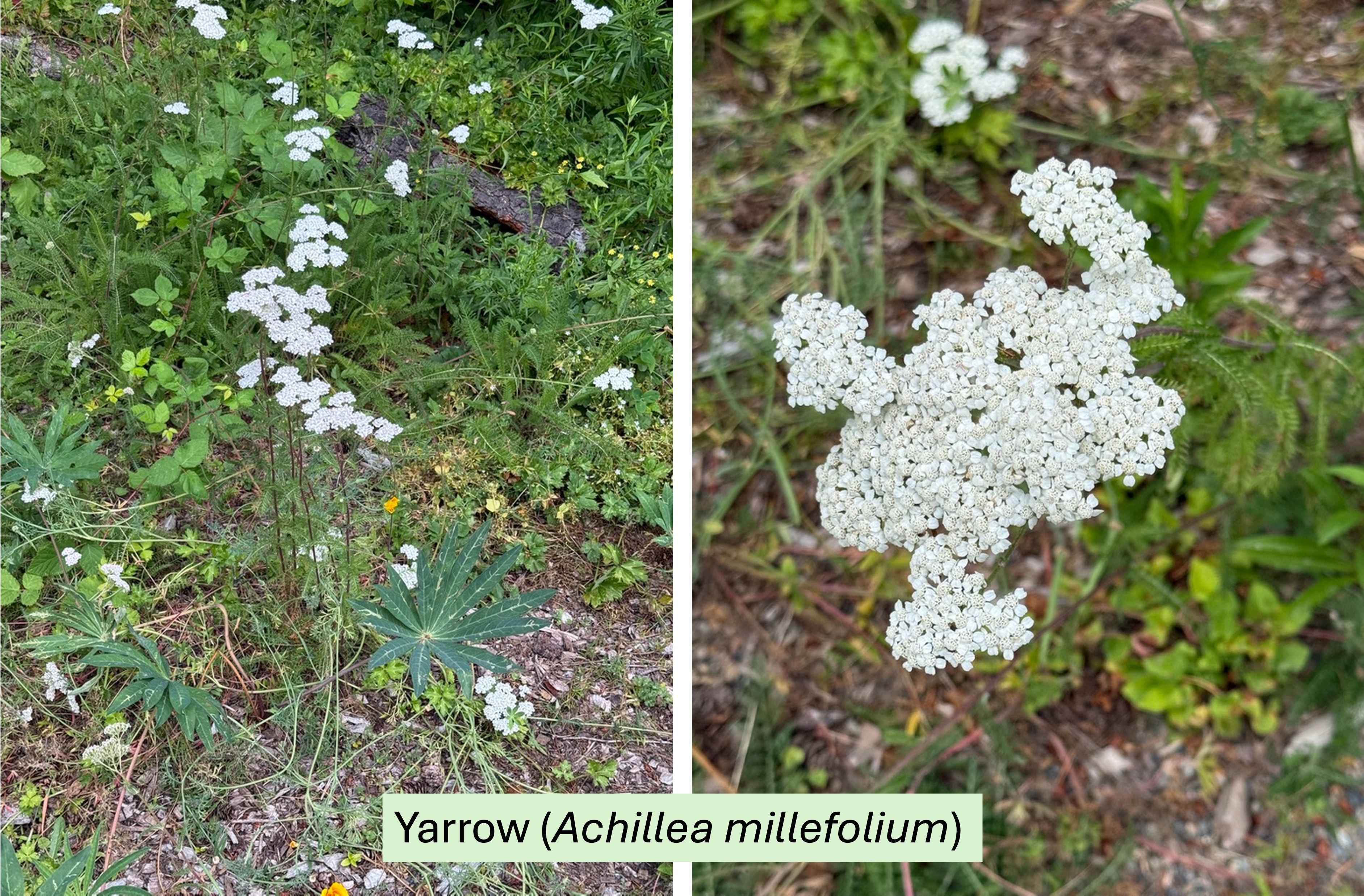
This slender, flowering plant is thriving in the prairie section of the garden. Prairie/oak woodland environments.
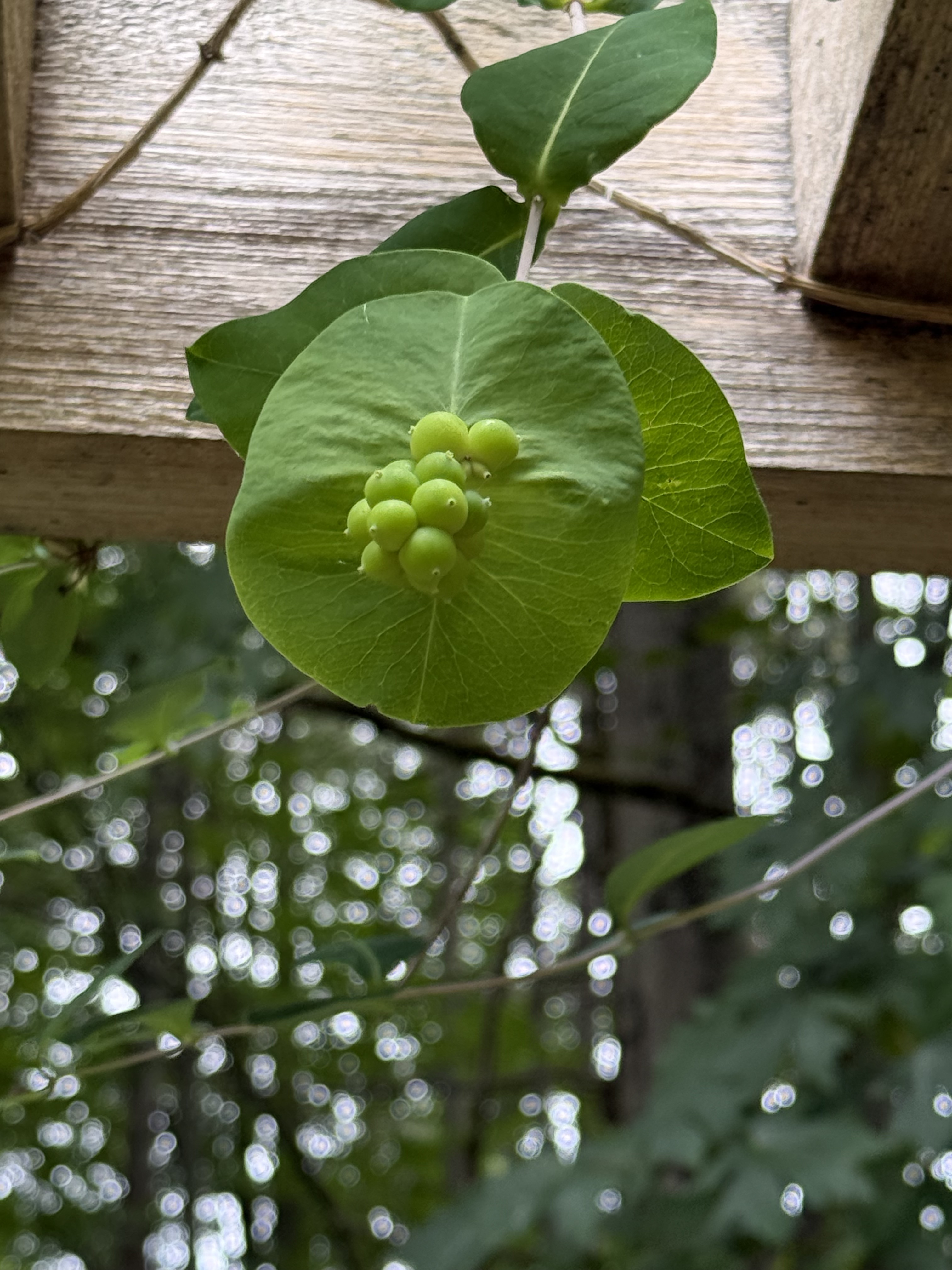
This vine is Perfoliate Honeysuckle (Lonicera caprifolium). It is a non-native variety that is commonly planted on trellises and fences. This one was hard to identify; CoPilot failed completely but, with help from Claude (Anthropic’s AI), we finally figured it out. We could still be wrong, however.
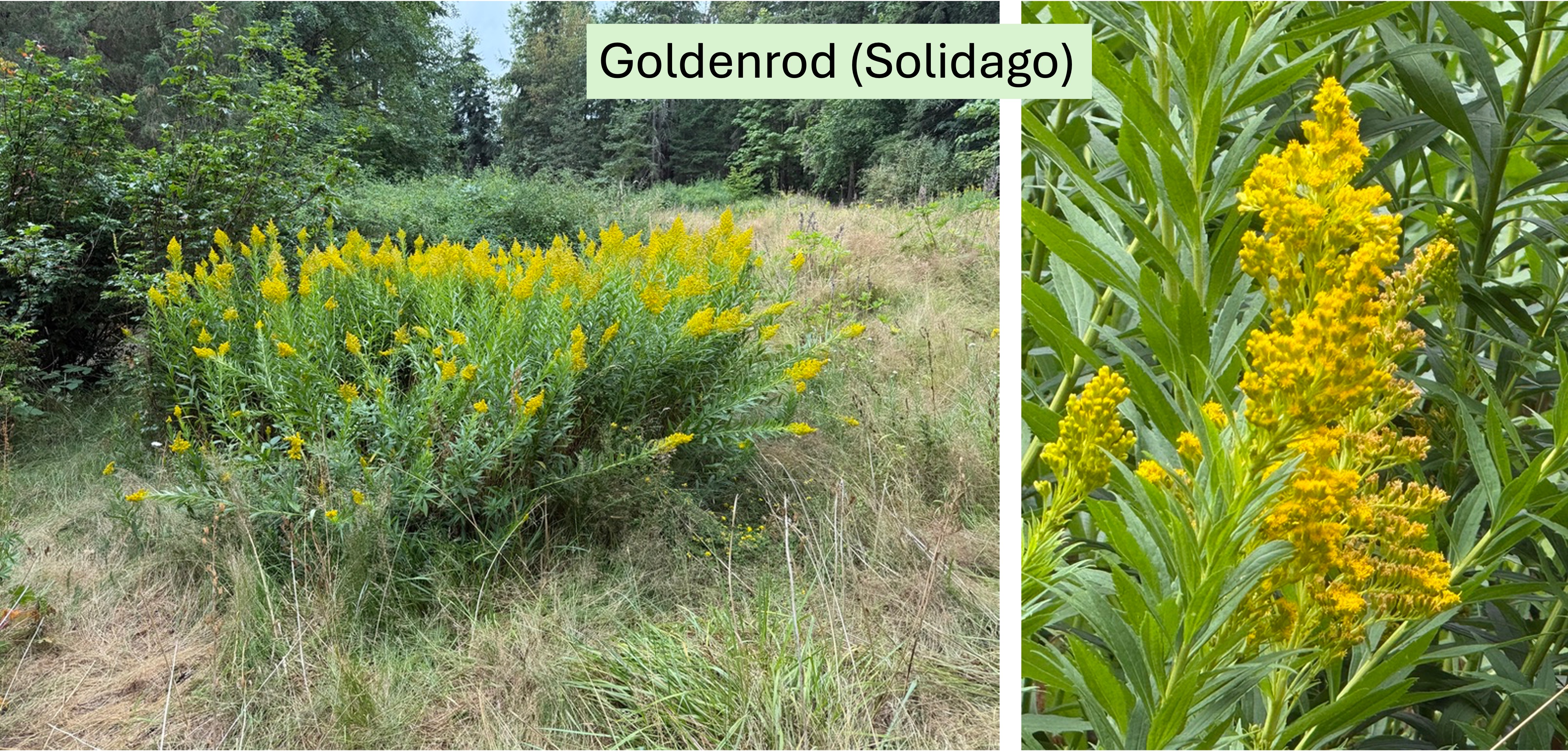
This flowery shrub grows in meadows like the micro-environment at the Northwest Native Garden. Prairie/oak woodland habitats.
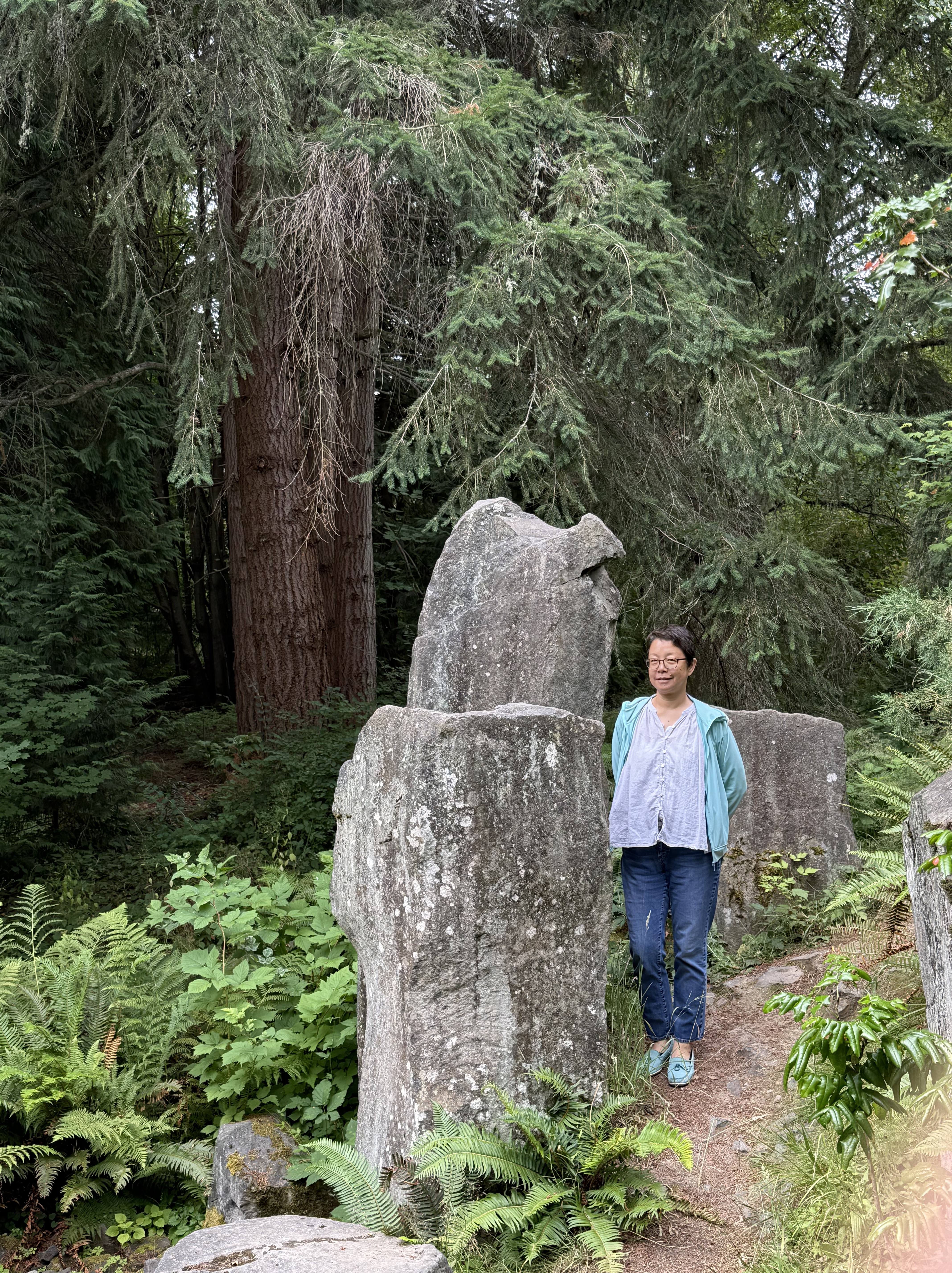
These non-native (to Tacoma) columns of volcanic rock show up everywhere in the PNW. They originate within the Cascades Range, near volcanic vents and volcanoes.
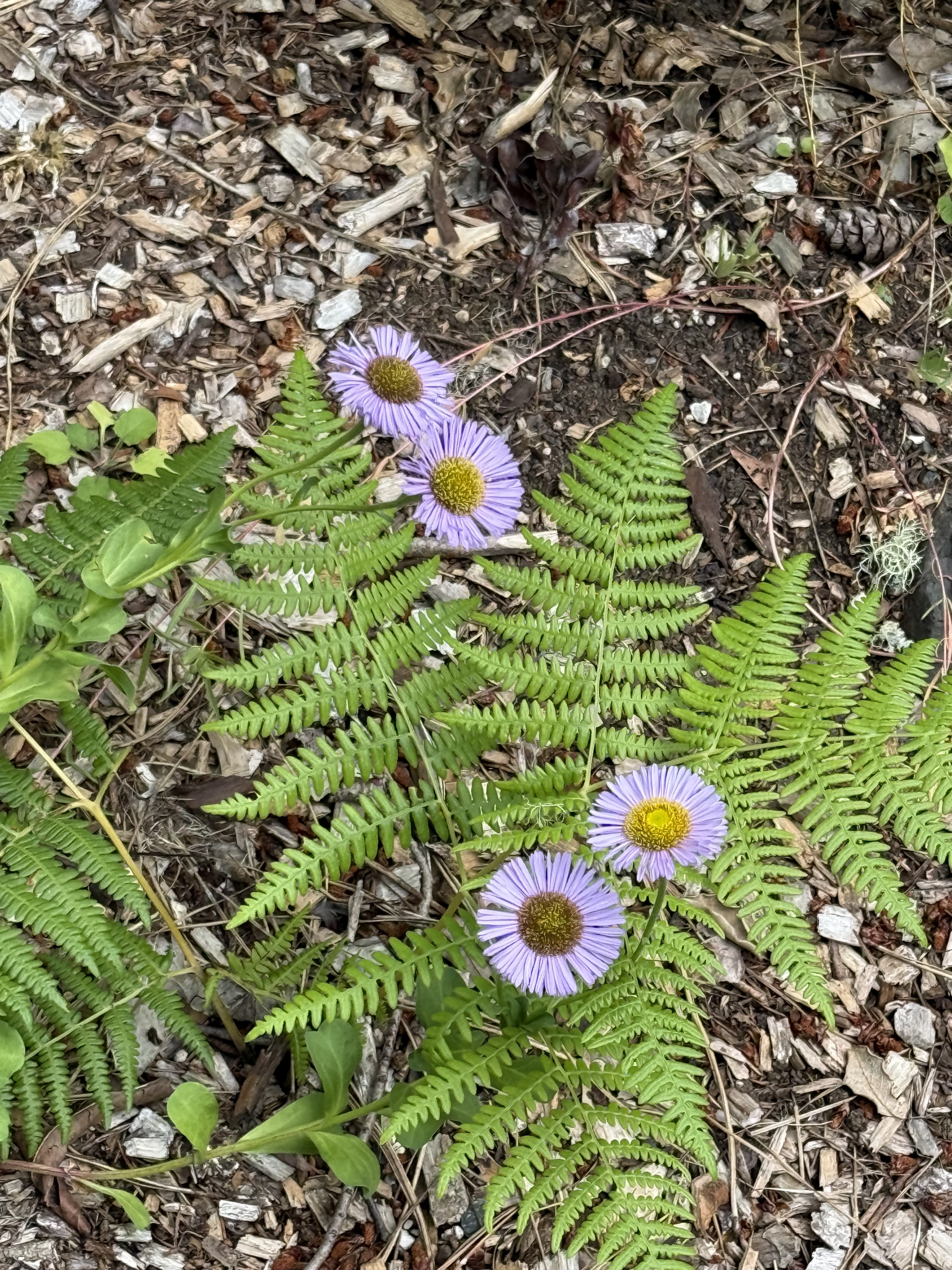
This lovely flower, growing through some ferns, is Douglas Aster (Symphyotrichum subspicatum). It is common in moist meadows and forest edges. I verified the identification from CoPilot. Common in moist woodland/forest edge habitats.
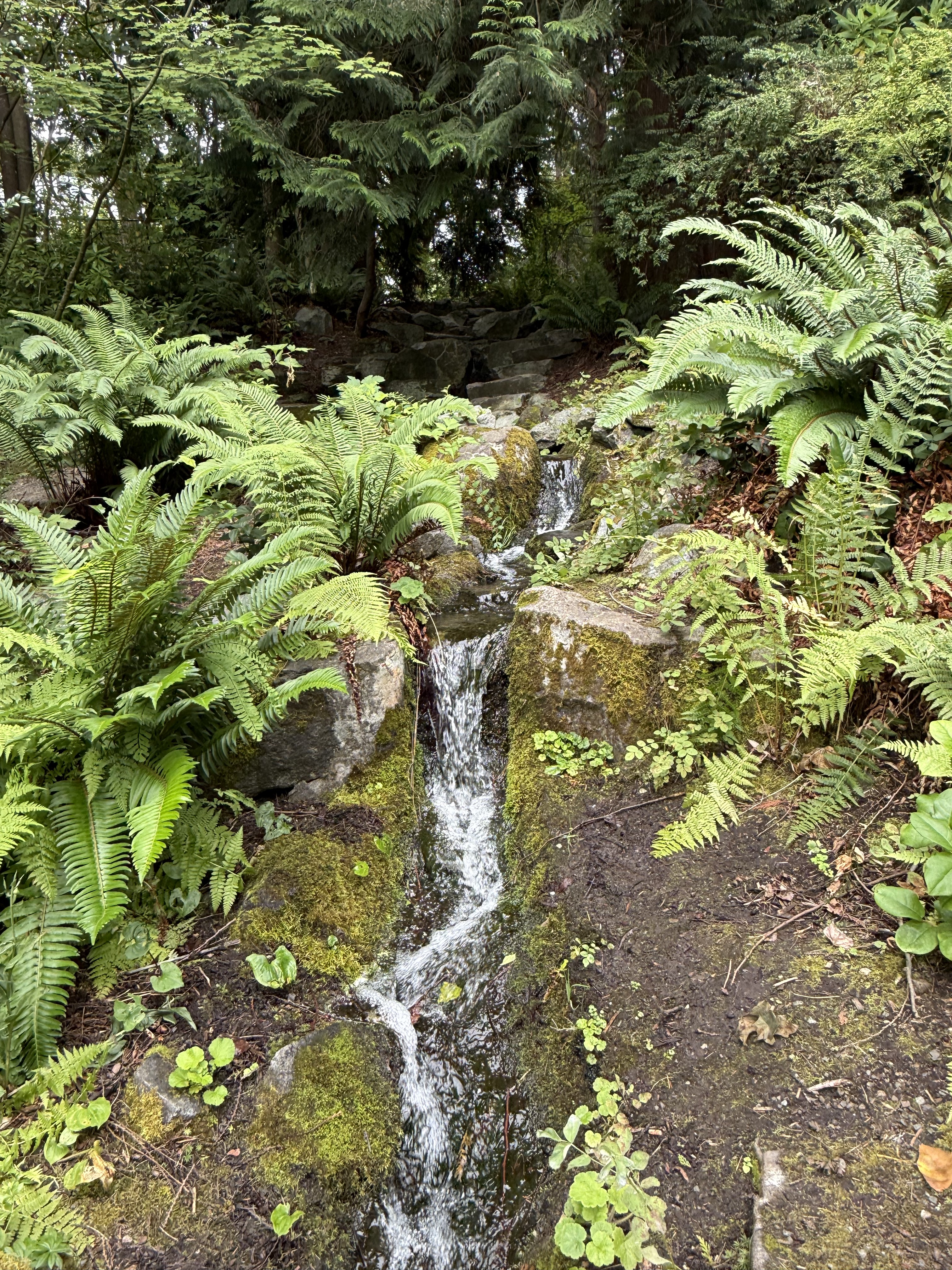
There is a small, articficial stream flowing through the garden and feeding a small pond. I don’t know where the water comes from … is it natural or recycled? No idea.
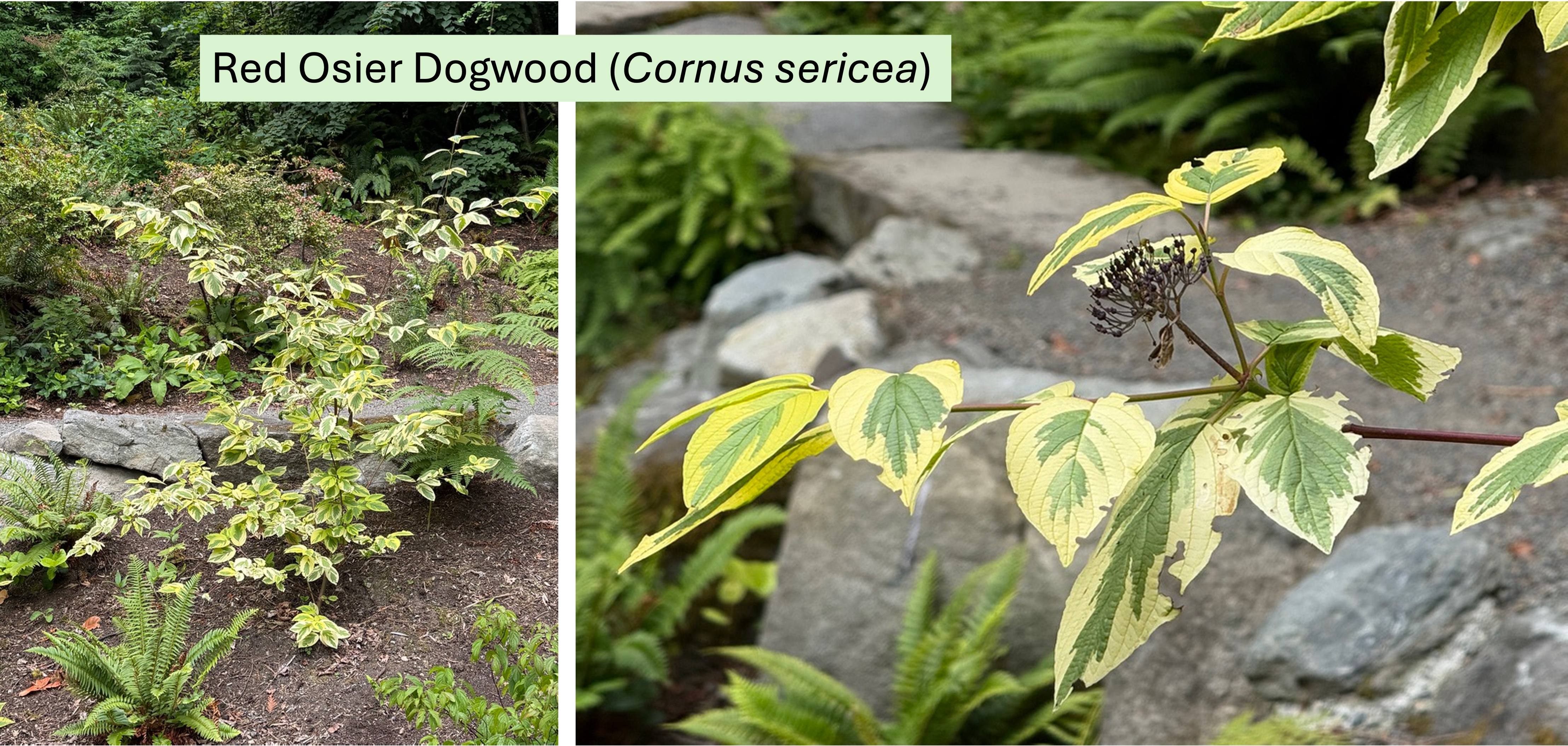
This is a rare non-native species planted in the garden for contrast. I checked this myself, and this variety is variegated.
Final Thoughts
The Northwest Native Garden is a great place to see many of the ecosystems in the PNW in one place. However, the lack of identification is a problem, which I addressed using CoPilot. But I had to check it a lot because it is a Large Language Model, not a specific plant-identification model. Nevertheless, it always got me into the ballpark; and it is easy to work with, like collaborating with a human who knows a lot but tends to jump the gun sometimes.
We spent about an hour strolling through four PNW environments, which was a lot easier than driving around. It reminded me of a Japanese garden, like the one in Portland. Very peaceful and colorful.
I hope that anyone who got this far enjoyed my trip through the Northwest Native Garden as much as I did. I plan to revisit it and learn about some more native PNW flora.


Recent Comments