
Autumn at Kubota Garden
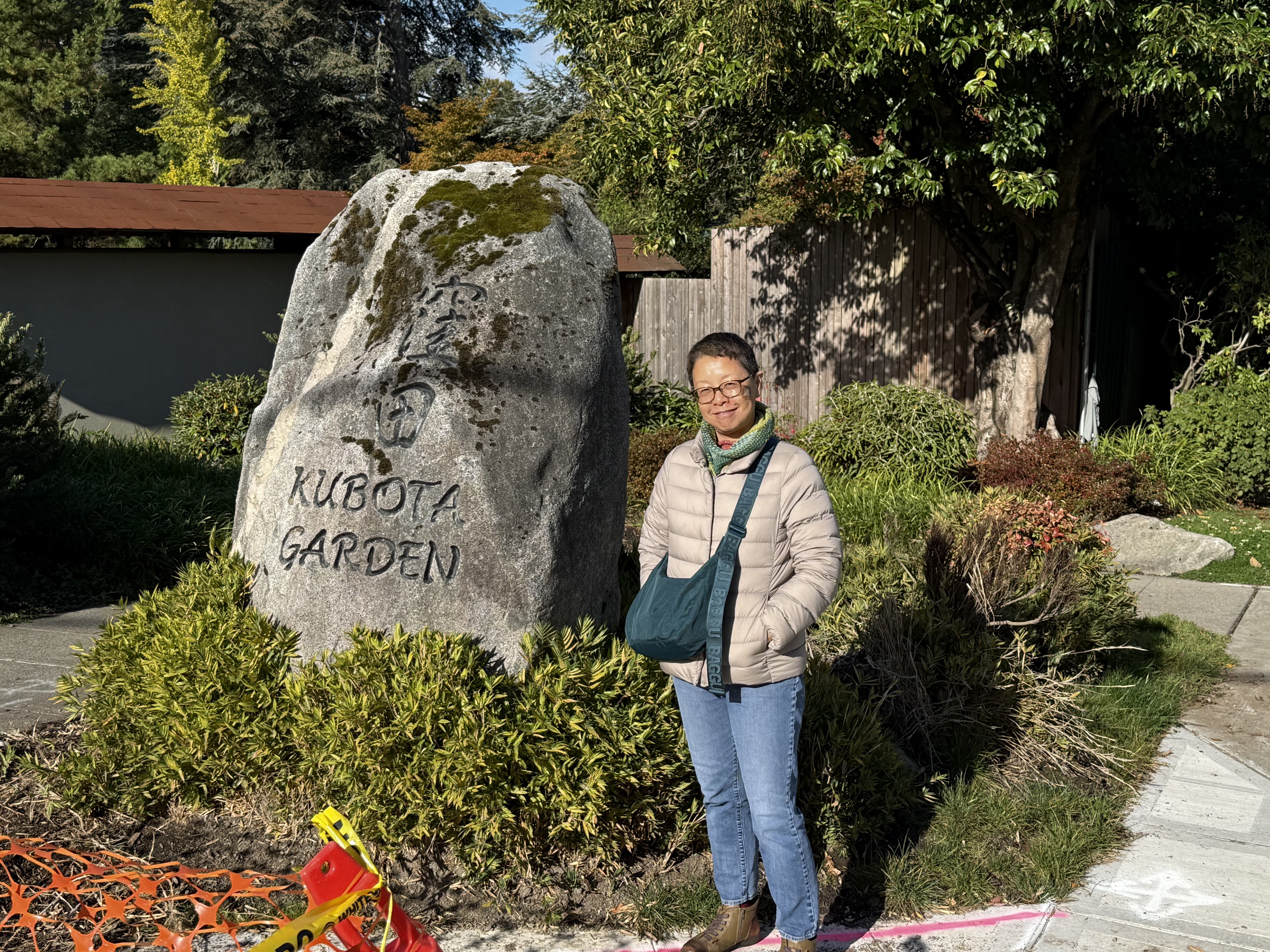
It was a beautiful fall morning that brought us to Kubota Garden in Seattle (https://www.kubotagarden.org; https://en.wikipedia.org/wiki/Kubota_Garden). Links aren’t working on WordPress so I inserted those two as references. The garden is 100 years old next year, but it has been a public park since 1987.
We wandered around the 20 acre area on meandering paths lined with every kind of shrub you would expect in a classic Japanese garden. I used ChatGPT to tentatively identify some of the plants.
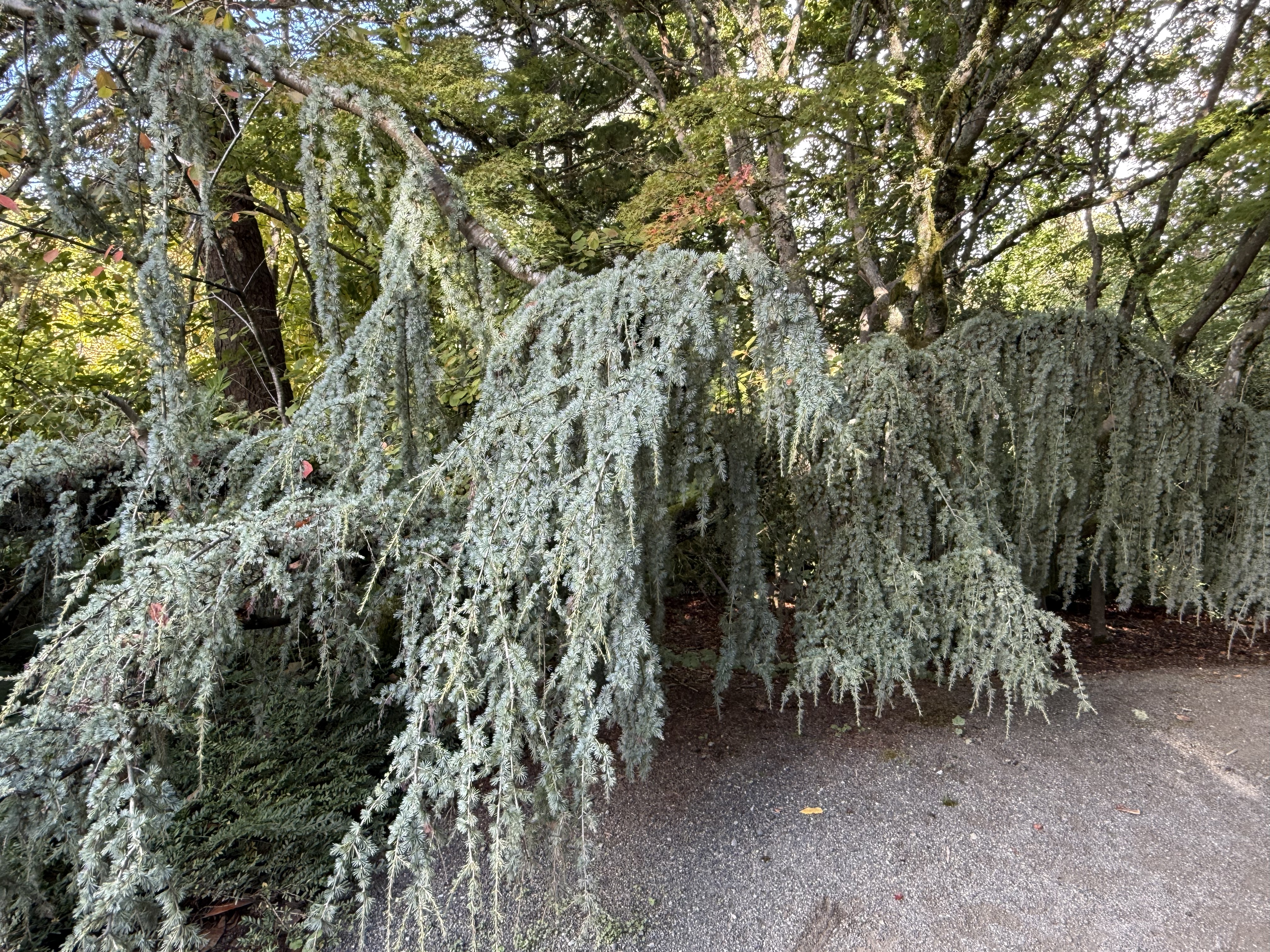
ChatGPT had high confidence that this is Weeping Blue Atlas Cedar (Cedrus atlantica ‘Glauca Pendula’).
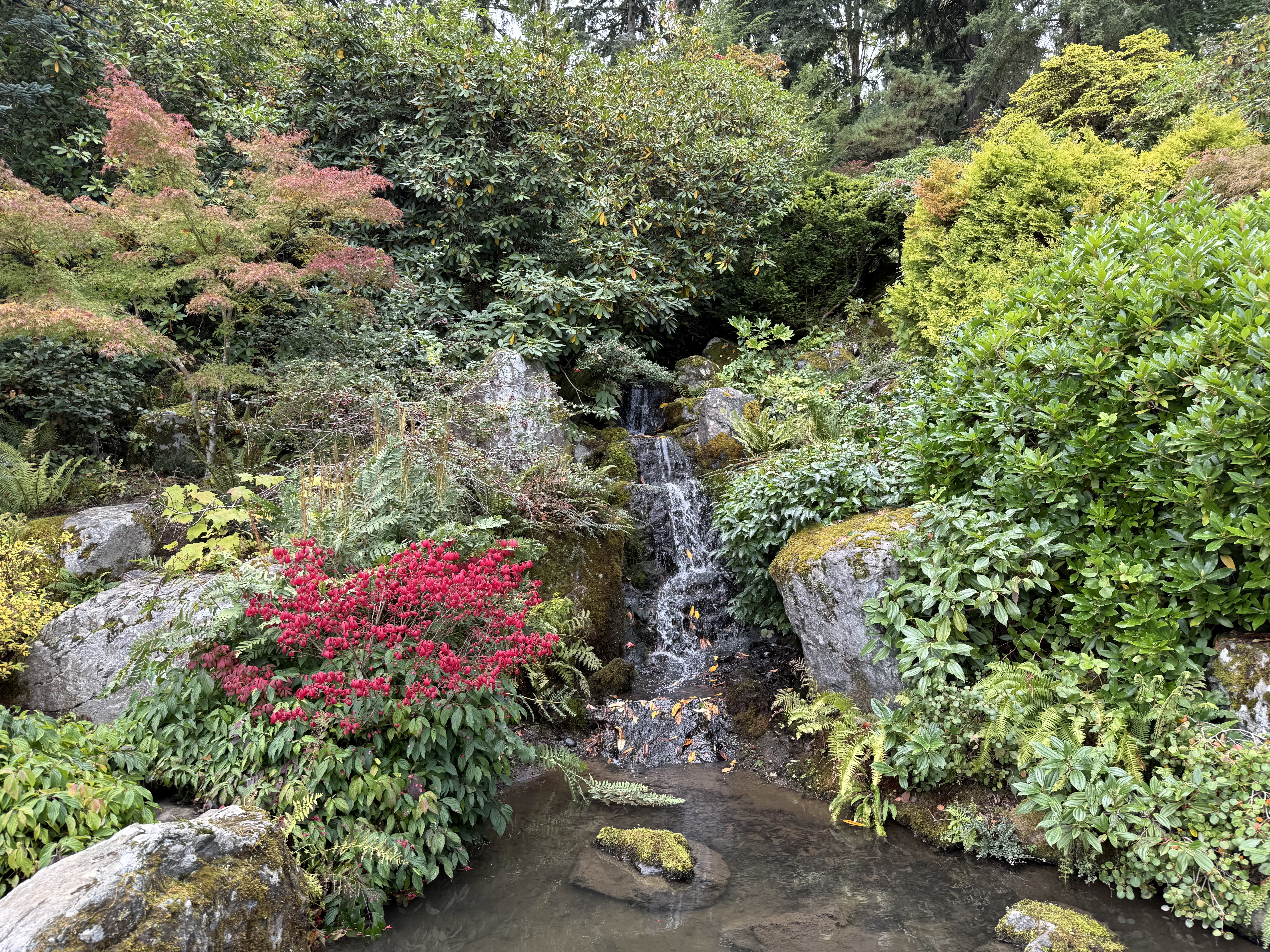
The park has a central pumping facility that recirculates water through several waterfalls and a dozen ponds, making for a very serene environment.
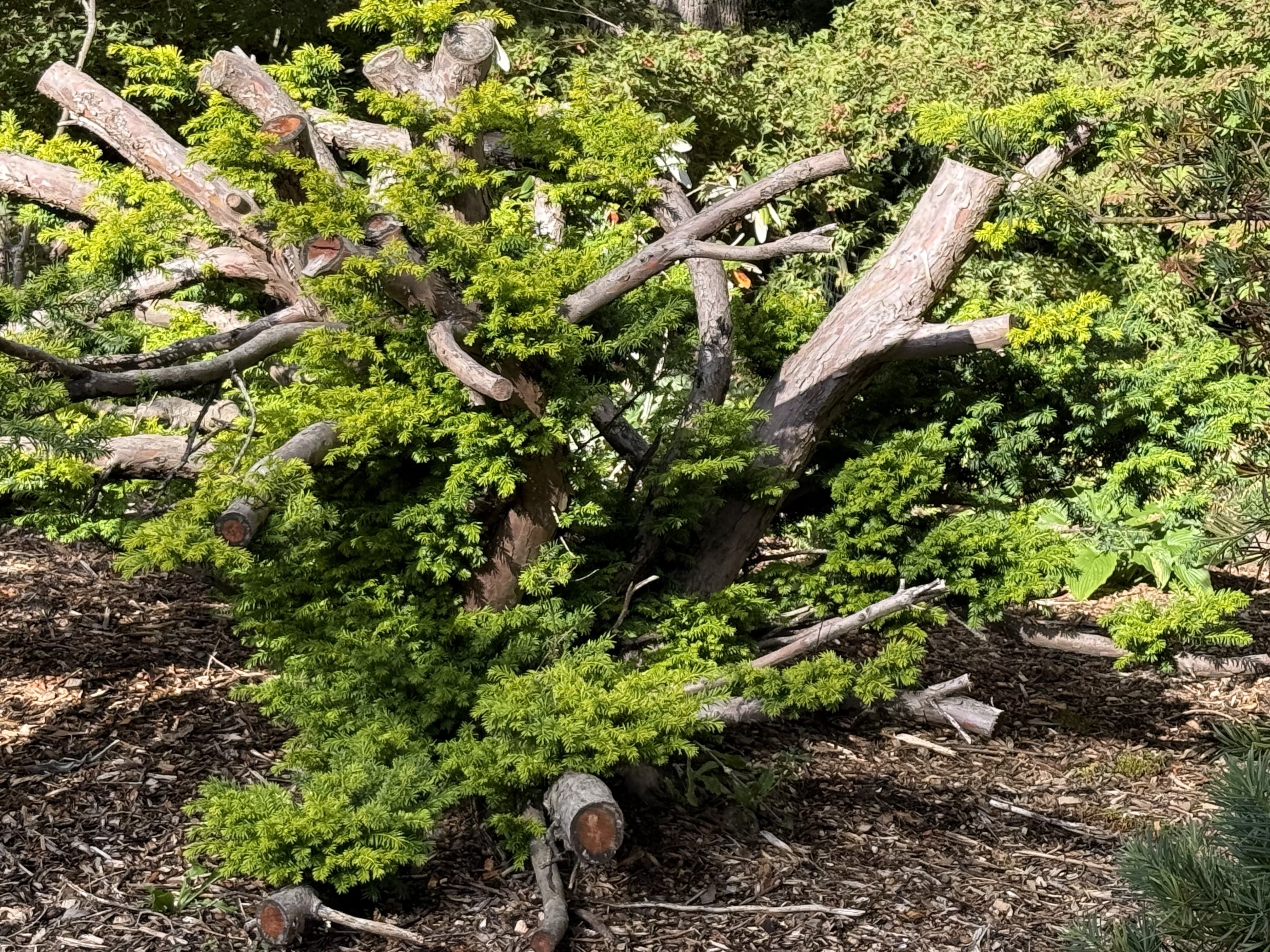
ChatGPT tentatively identified this reborn, small tree as Japanese Plum Yew (Cephalotaxus harringtonia). It was recently cut back, but it is growing vigorously now.
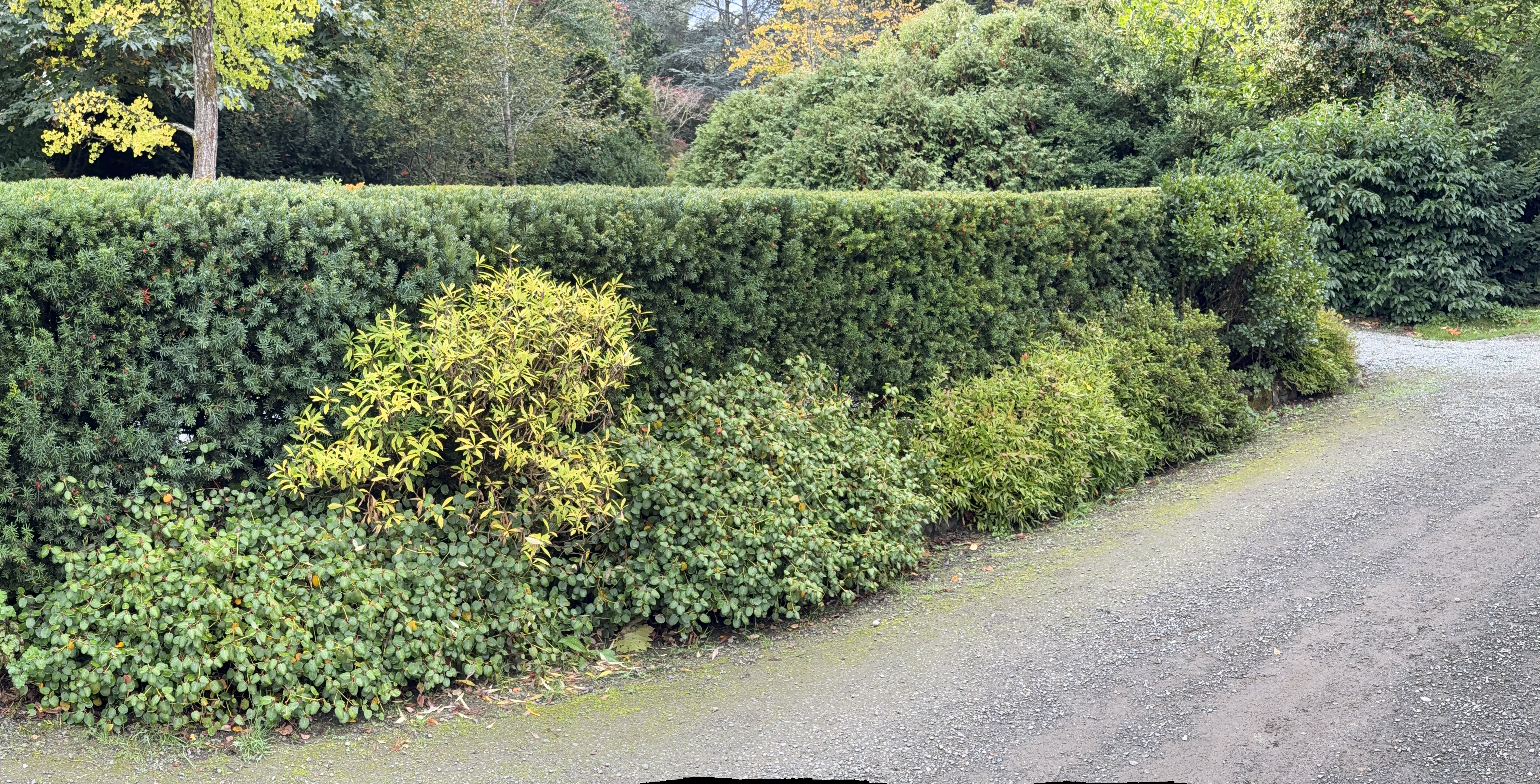
This is a fascinating hedge because only one of the bushes is being trimmed while the others protrude, almost like sculpture.
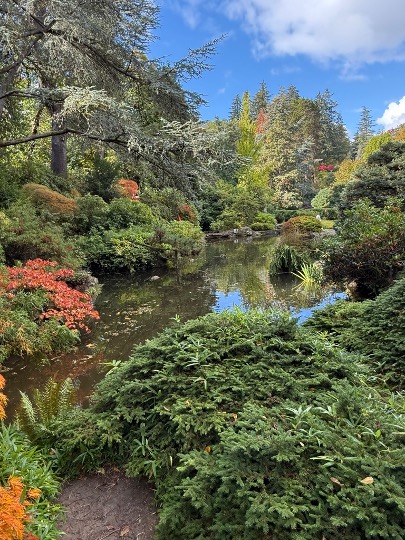
There were many pagodas and ponds with stone bridges and private spots, creating a sense of privacy in a public space.
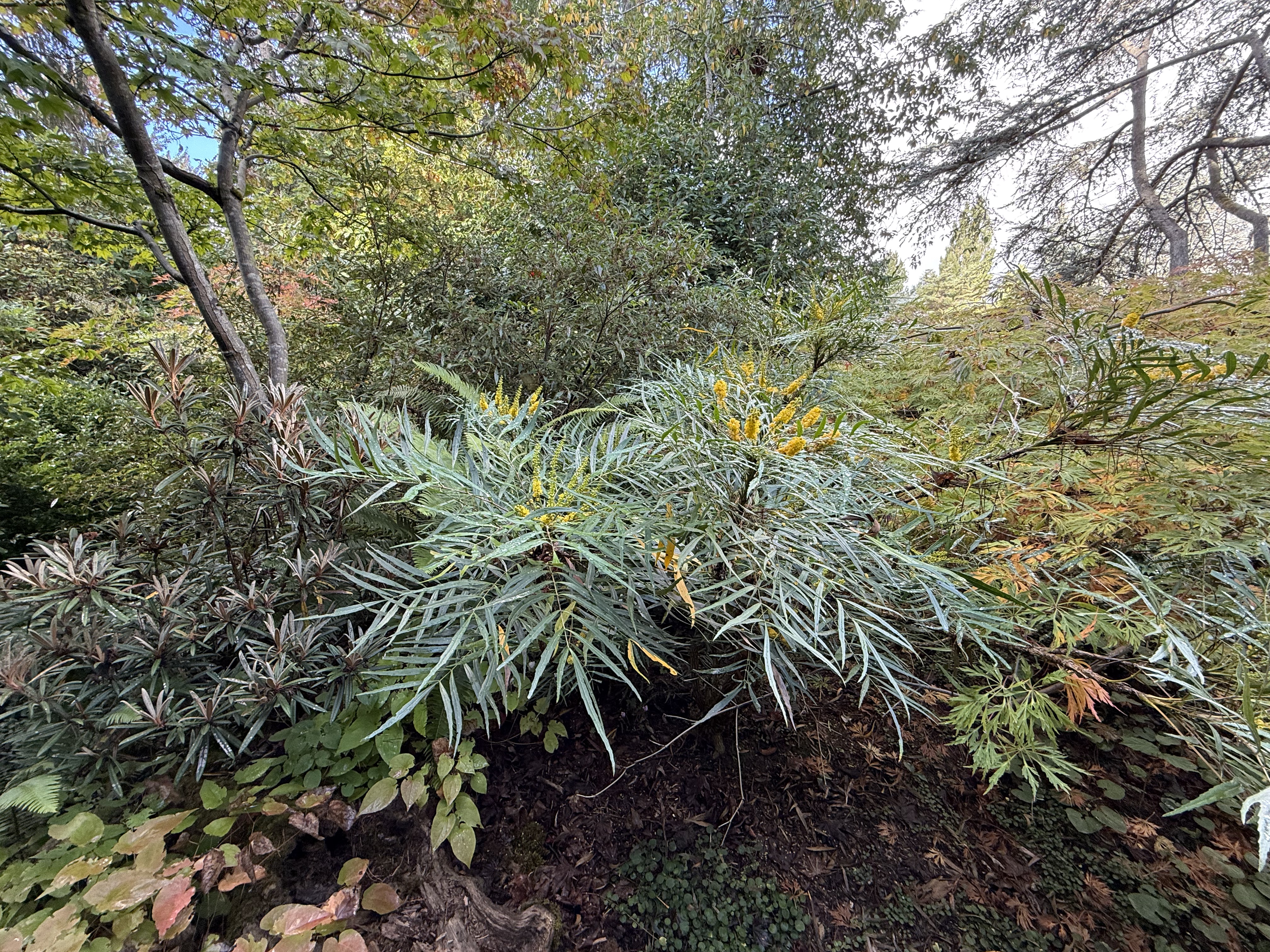
Mahonia eurybracteata subsp. ganpinensis ‘Soft Caress’ is a fall-flowering plant.

Lacecap Hydrangea (Hydrangea serrata or a lacecap cultivar of Hydrangea macrophylla) has two sets of flowers; the typical hydrangea flowers, and an outer layer of decorative petals to attract pollinators.
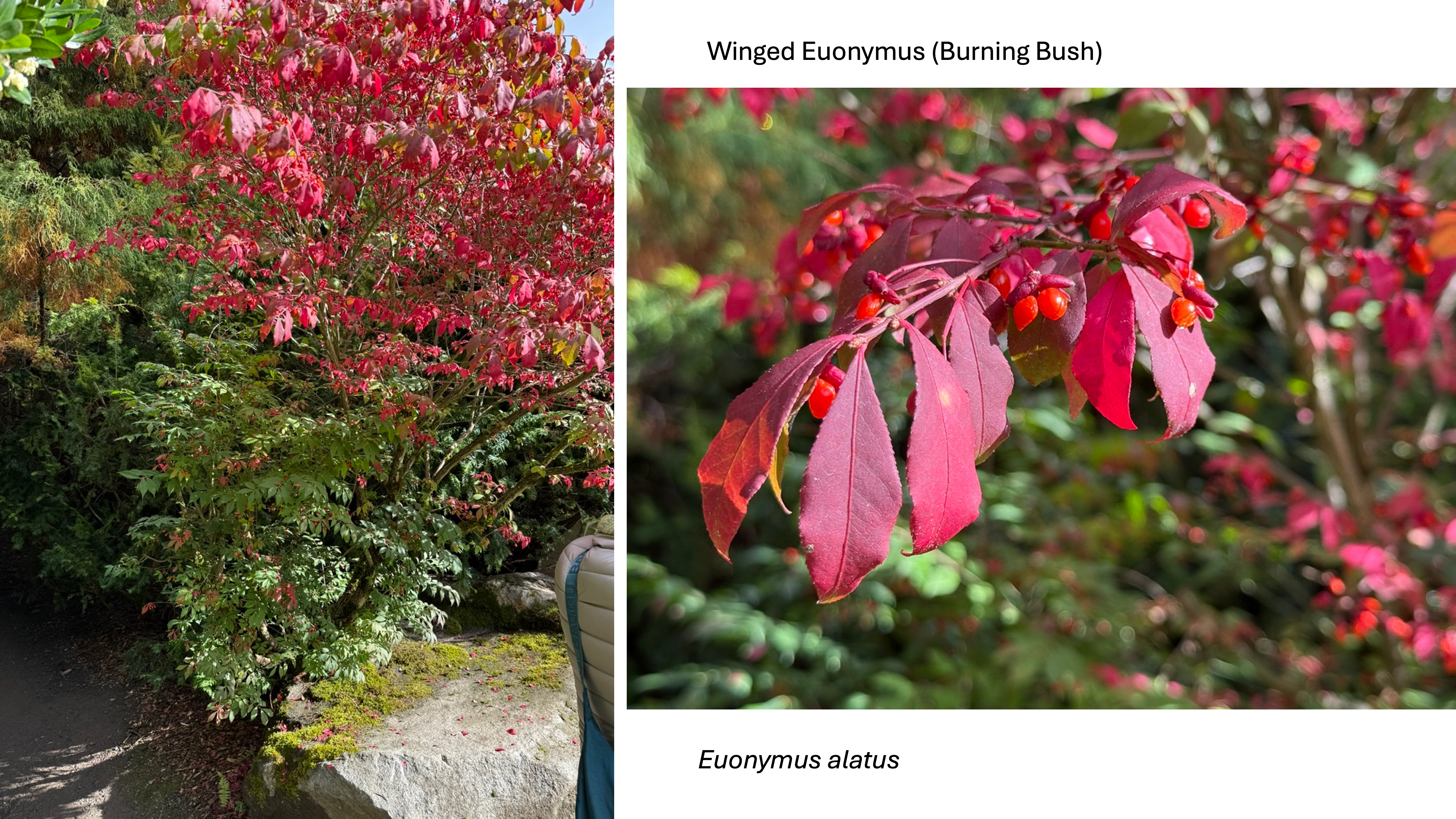
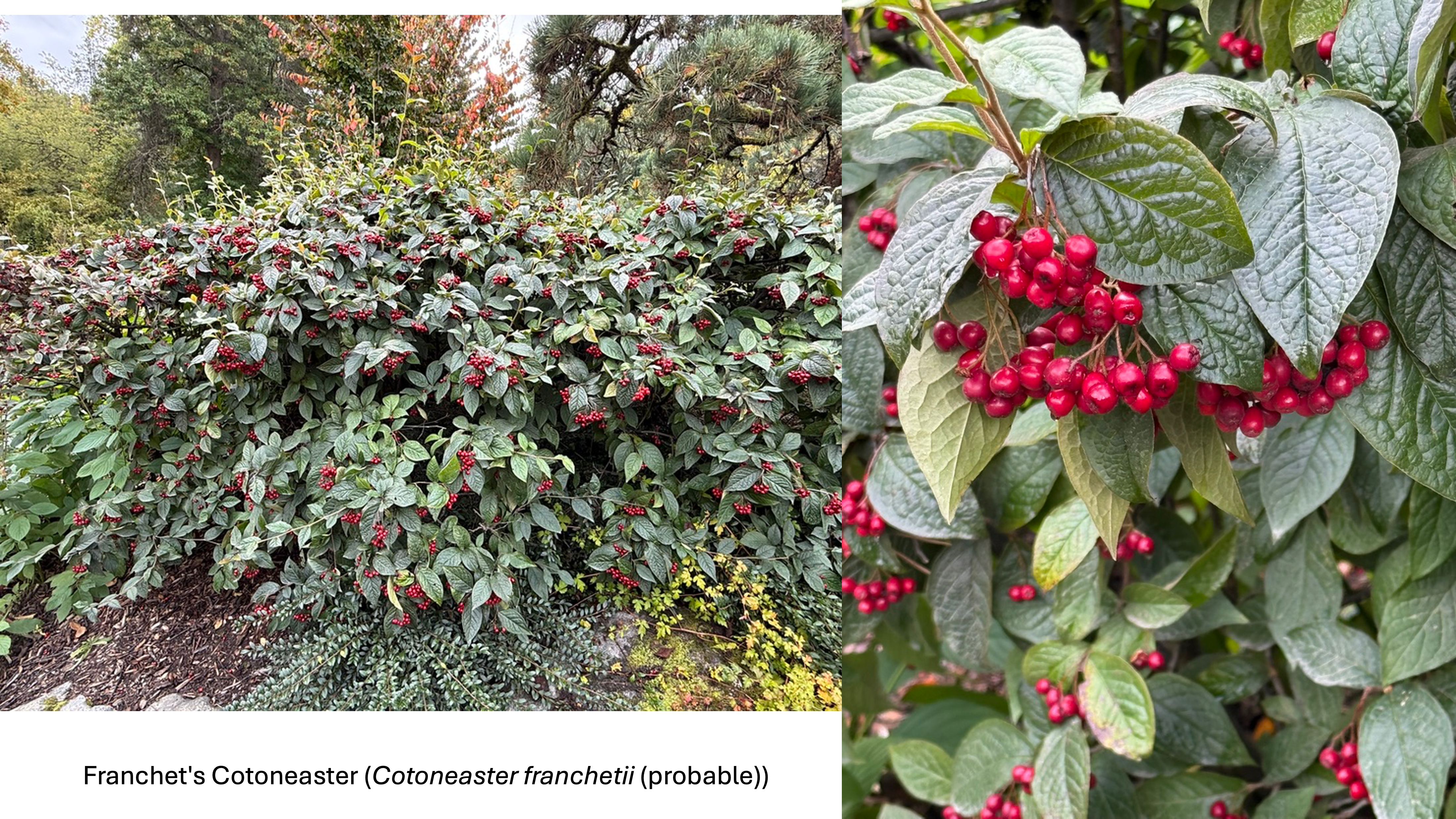
There were red berries everywhere. I’ve had Euonymus several times over the years, but they were never as colorful as Burning Bush.
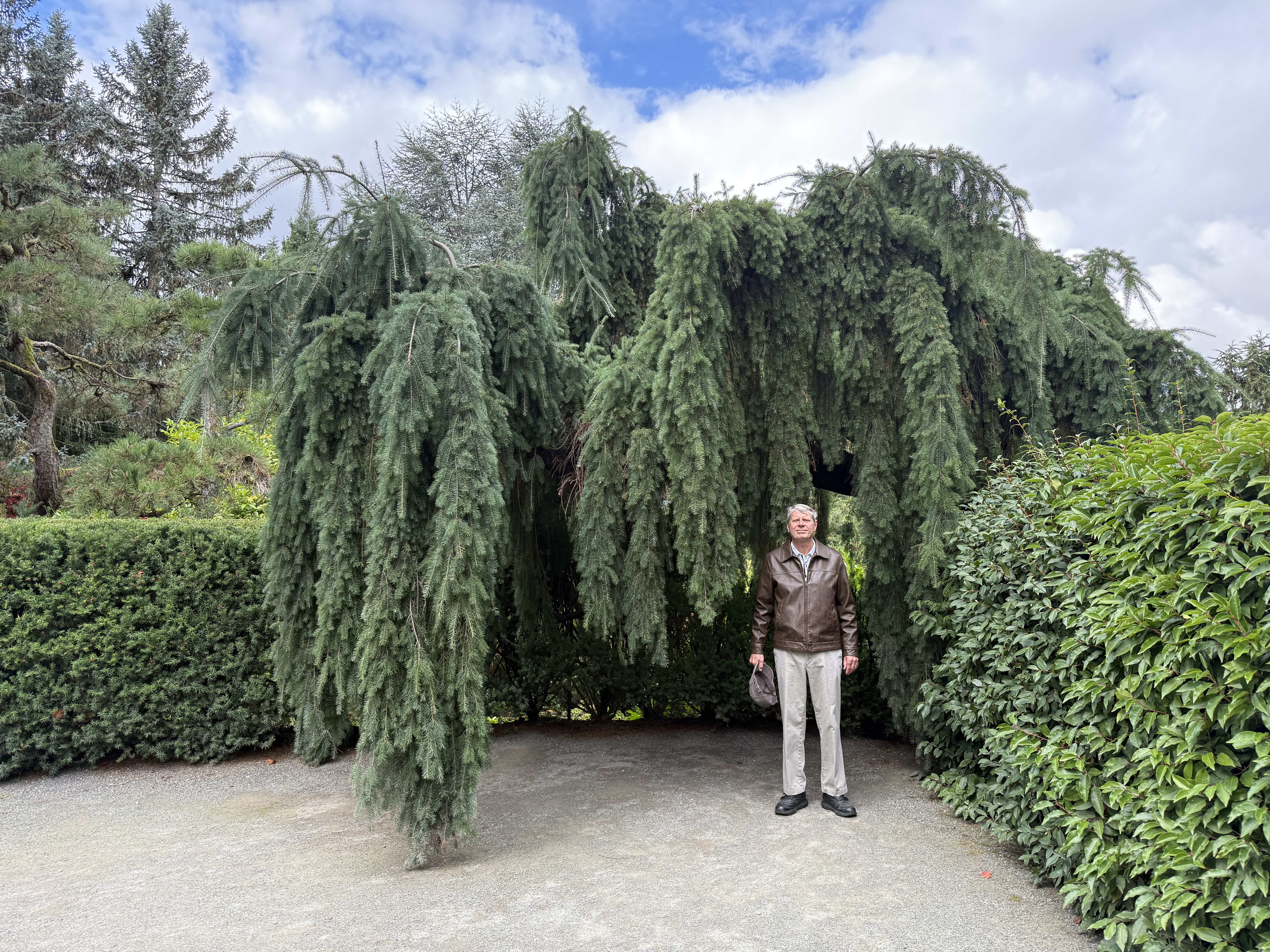
Weeping Conifer (likely a Weeping Hemlock) said goodbye at the exit, just as a Weeping Cedar greeted us. The aura of evergreen was overwhelming beneath its boughs.
Final Thoughts
Kubota Garden is a great place to spend a couple hours. There were a lot of visitors, and even a youth naturalist activity, but it didn’t feel crowded; however, the parking lot was full and we had to park a couple hundred yards up the street.
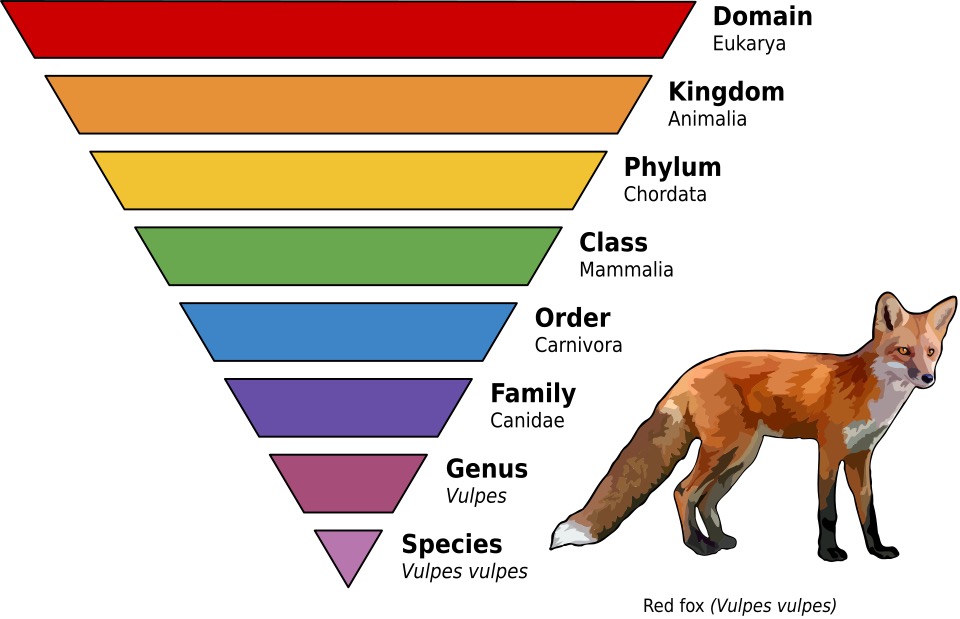
As part of my expanded interest in local sights here in the Pacific Northwest, I’m learning about plants. ChatGPT is an excellent assistant in this endeavor, but I can’t memorize a thousand species names. It referred to taxonomic FAMILY several times today, so I included this photo from Wikipedia as a memory helper. I will try to remember this when I report on ecology in the future. I will go as far up the plant family tree as I can in the future.
The only thing missing from this gorgeous fall morning in the park was a fresh cup of coffee. Alas, Kubota Garden is in a residential area and there isn’t even a Seven-Eleven nearby.
Later…
A Visit to the Pacific Bonsai Museum
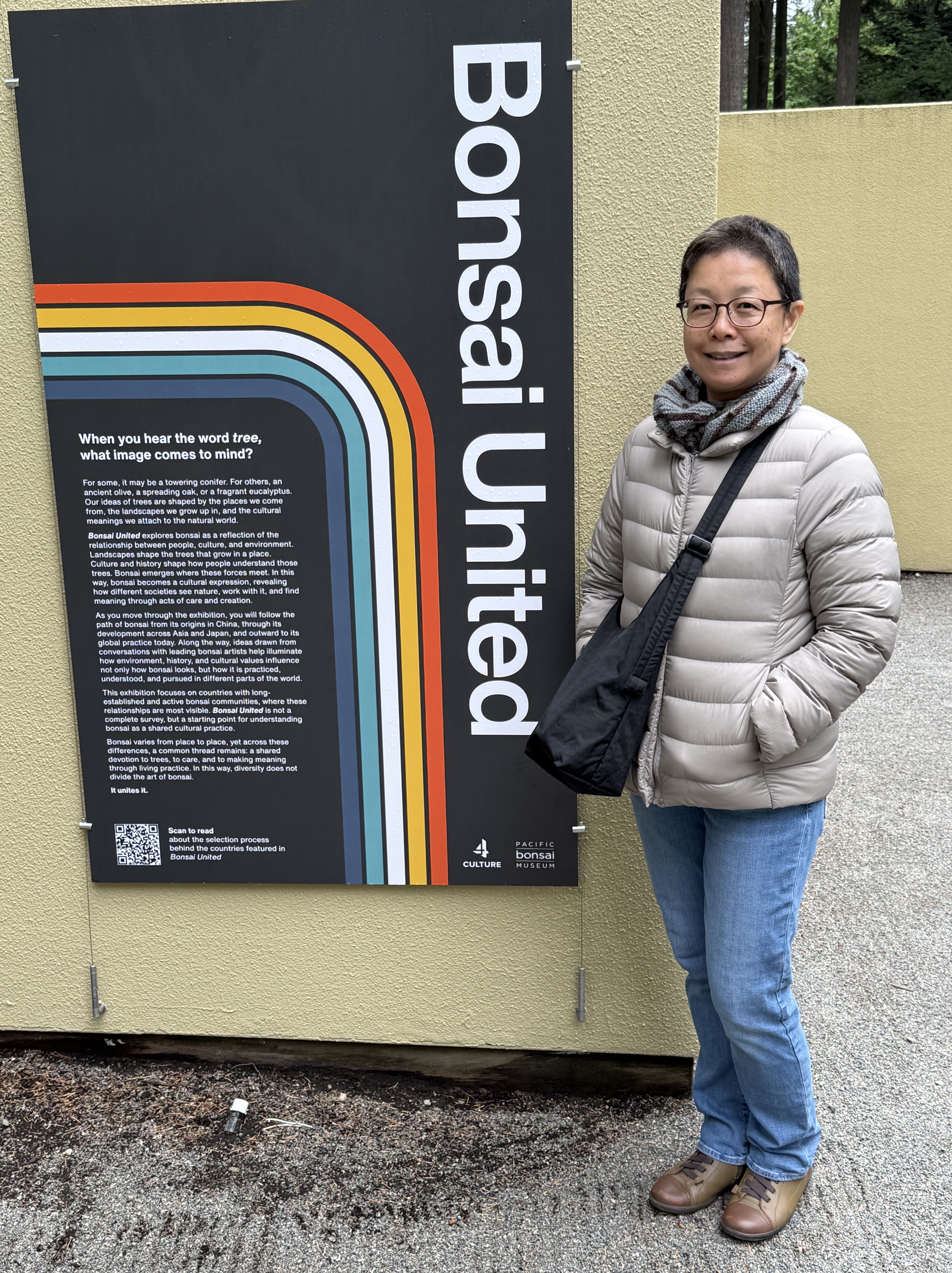
Small, carefully pruned trees are fascinating. I went to the National Arboretum when I lived in the Washington DC area, so I had to see what was on display here in Tacoma. The Pacific Bonsai Museum is mostly open air, with a few sensitive examples in a greenhouse. They leave the trees out year-round and have skilled bonsai arborists trim them according to their creators’ expectations.
I learned that there are different schools of thought on bonsai, from growing trees and shrubs from seeds, to working with dying plants, even stumps, and painstakingly reviving them. Then there’s cultural differences that vary between nations. However, bonsai began in China where it’s called “penjing”. It means tray scenery. The museum had their displays arranged by country of origin. I didn’t take notes and my photography is spotty. Still, here are some beautiful examples of bonsai.
The Bonsai Museum is in Federal Way, Washington, and is supported by Weyerhaeuser, the lumber company; it’s located on a large campus they built and then sold to someone. It is free and there is no apparent security, except from the Rhododendron Garden next door. I guess vandalism hasn’t been a problem; who would want to destroy such beautiful antiques?
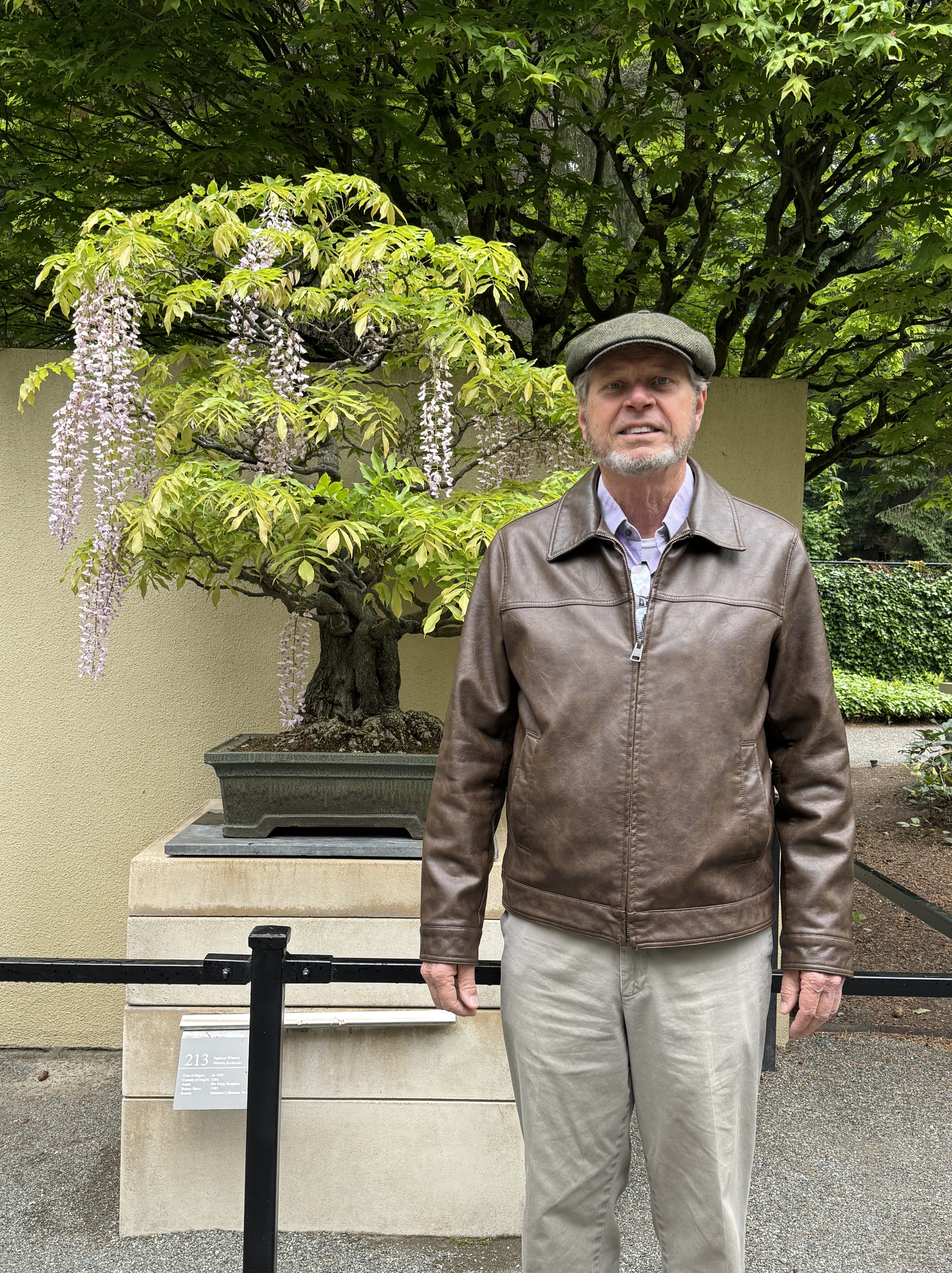
This is a wisteria. If you’ve ever dealt with this out-of-control vine (I have), you will be amazed that this old example (note the size of the trunk) is so tidy yet produces the distinctive flowers. The specimens on display ranged in age from the late nineteenth century to the seventies.
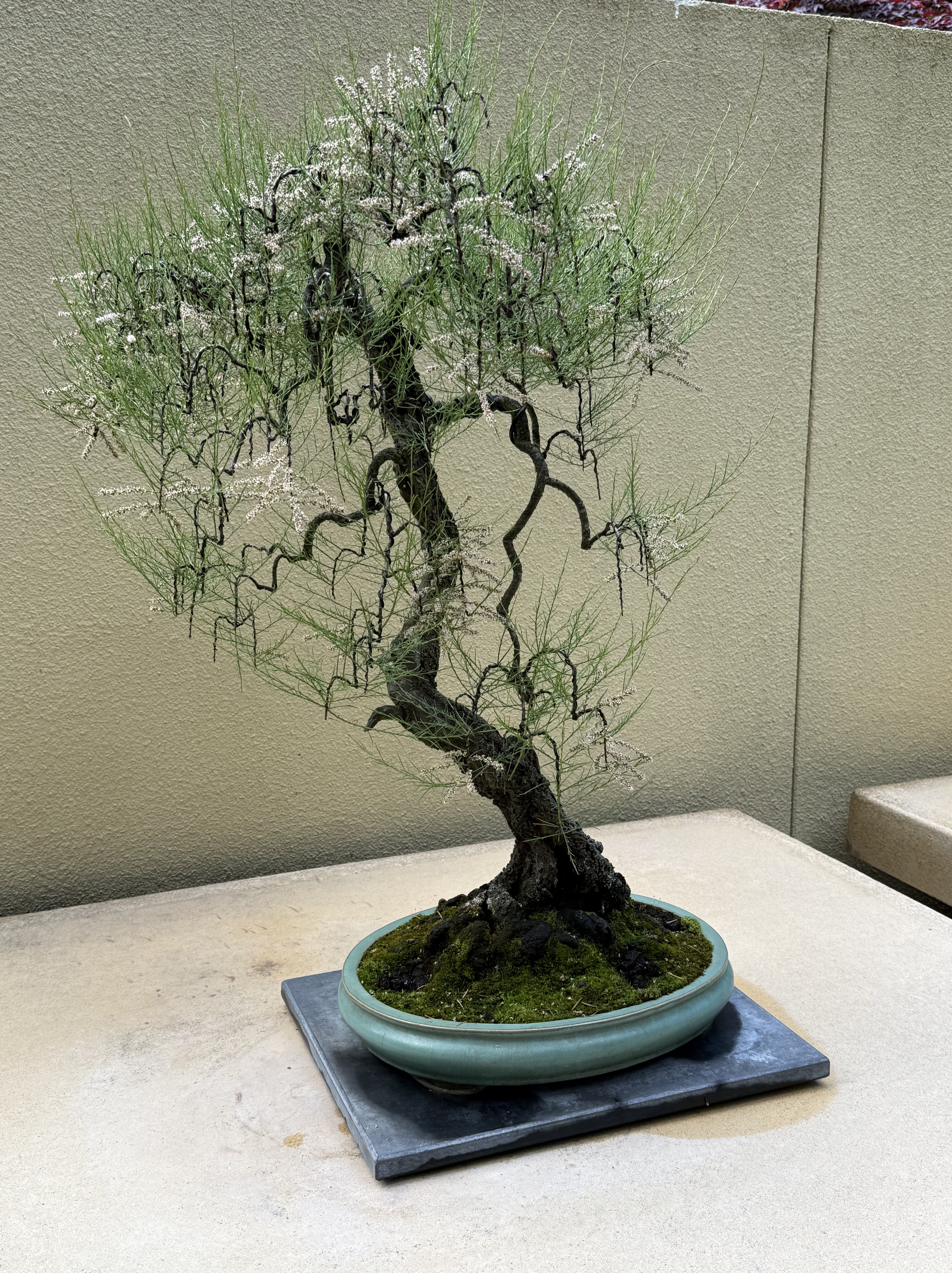
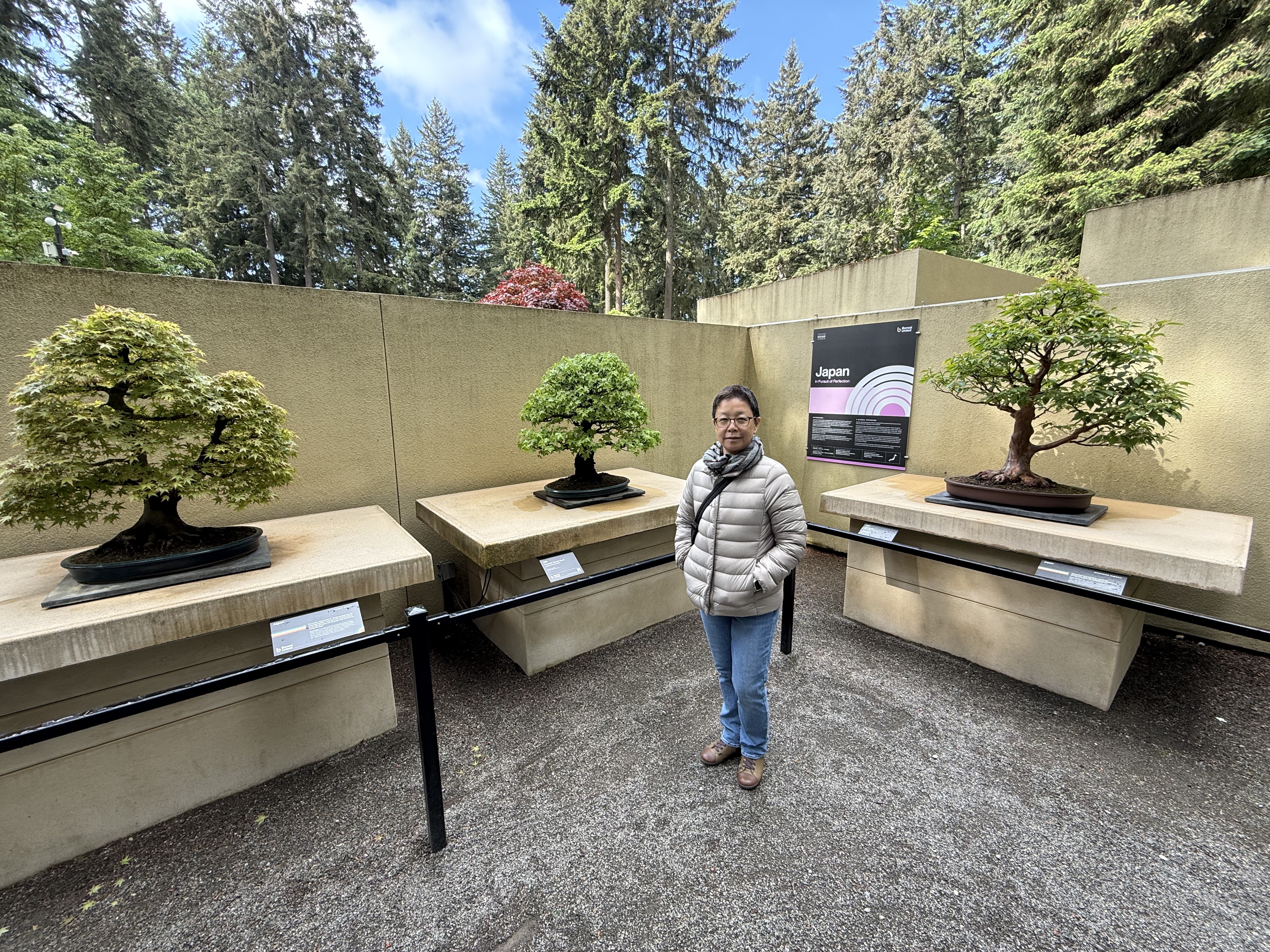
This is part of the Japan exhibit. I think these are all trees, probably juniper–a favorite among bonsai artists.
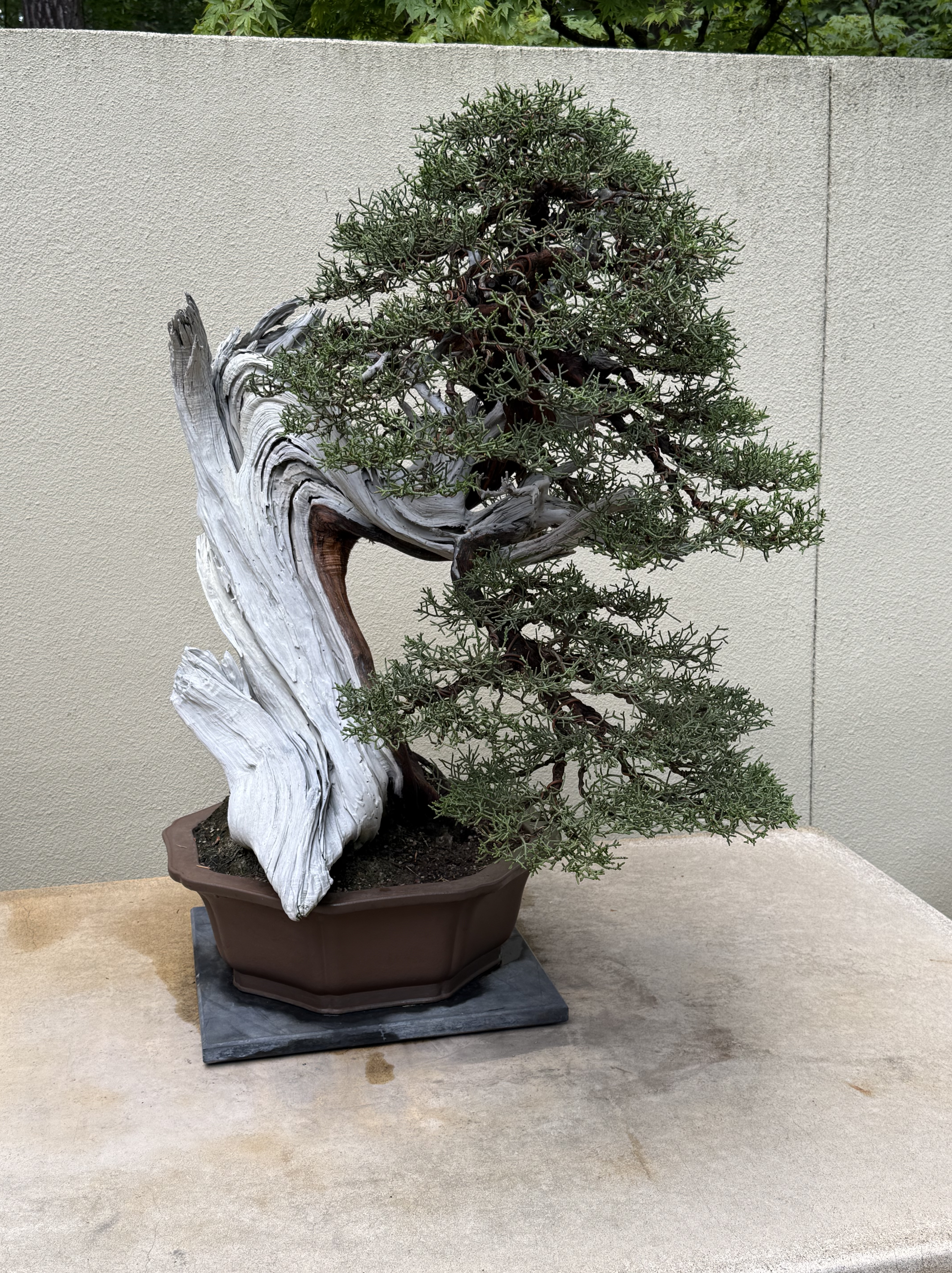
As an example of what good hands these fragile trees are in, this specimen was created by a past director of the museum. It was my favorite. I like the idea of rejuvenation from near death.
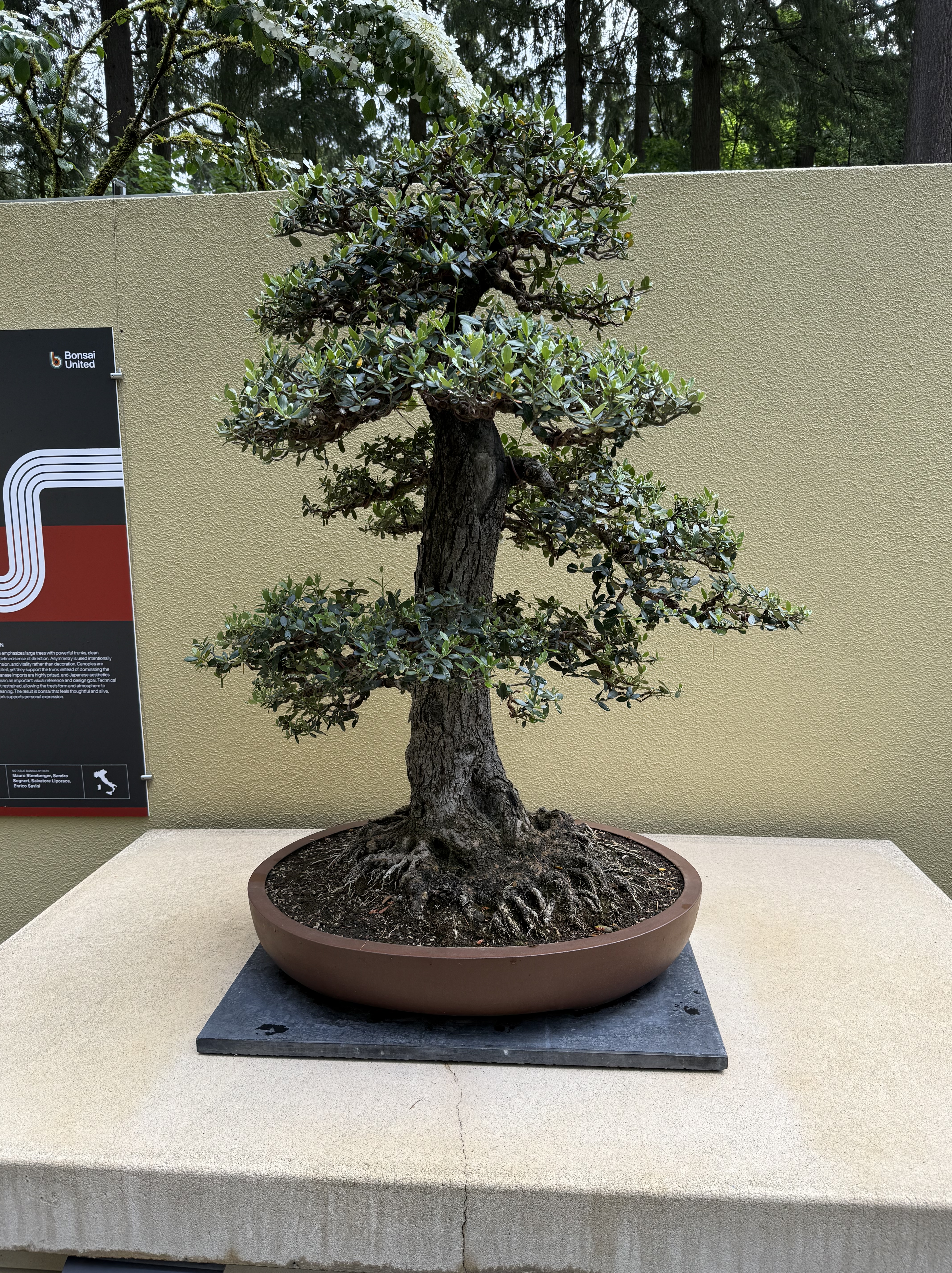
European Olive, in training since 1969, from Italy.
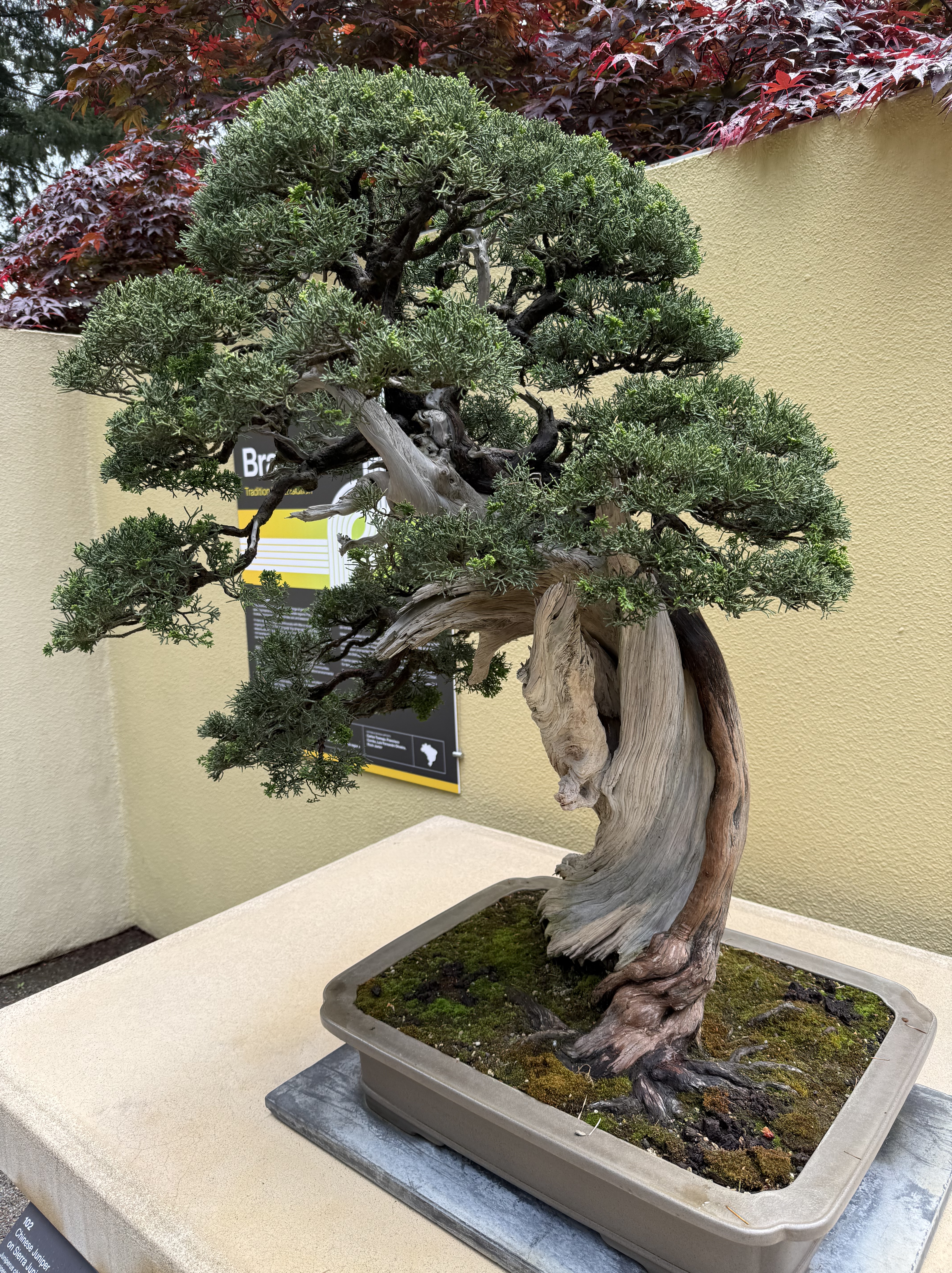
You can see the difference between the trees/shrubs grown from seeds or youth (and those that are saved from the dust heap) in this recovered specimen. I love the intermingling of dead (white) wood and living tissue.
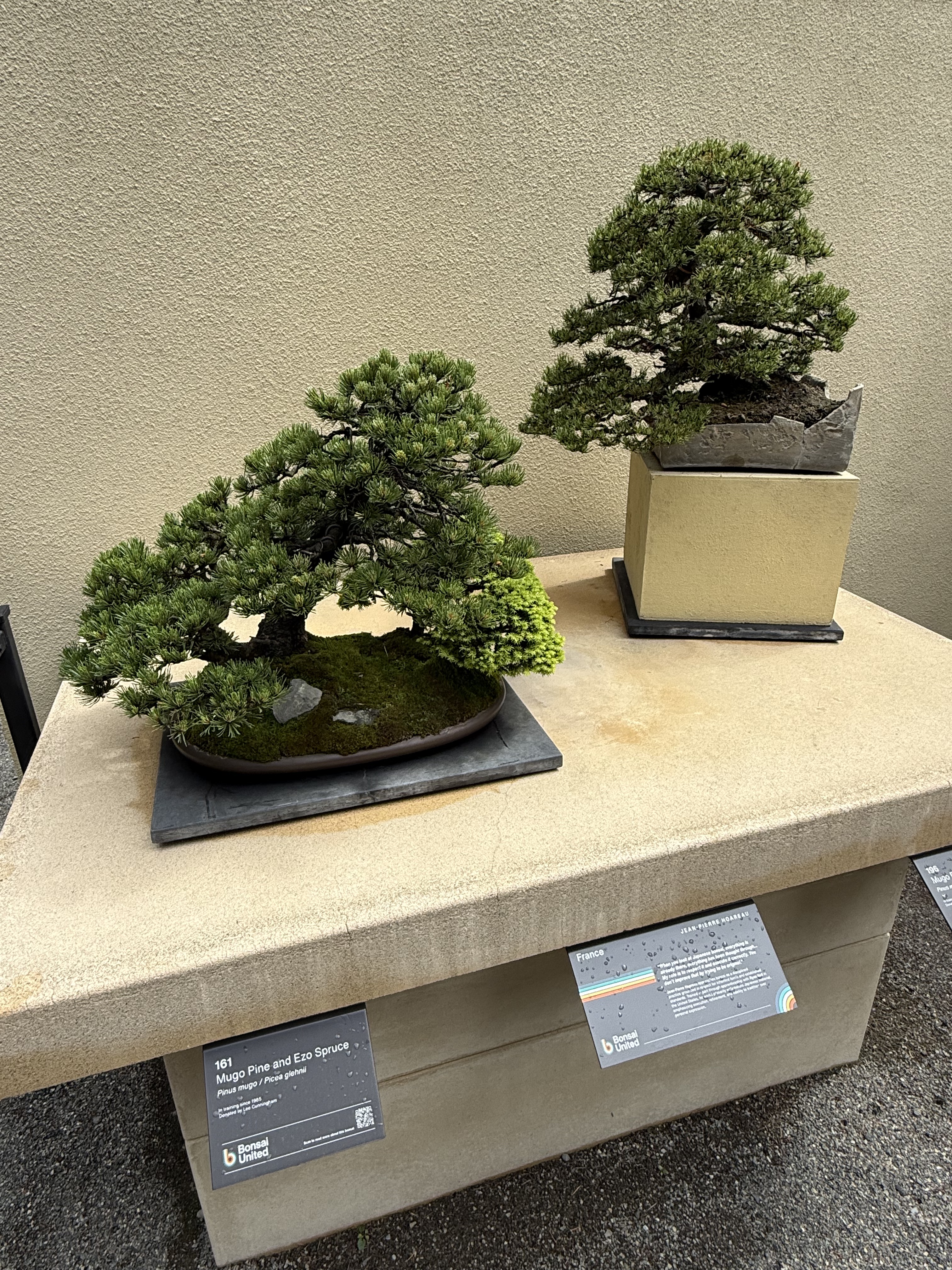
This German artist created a forest, but the individual “trees” were falling over so there are wires holding it together. I imagine there are a lot of failures in practicing bonsai.
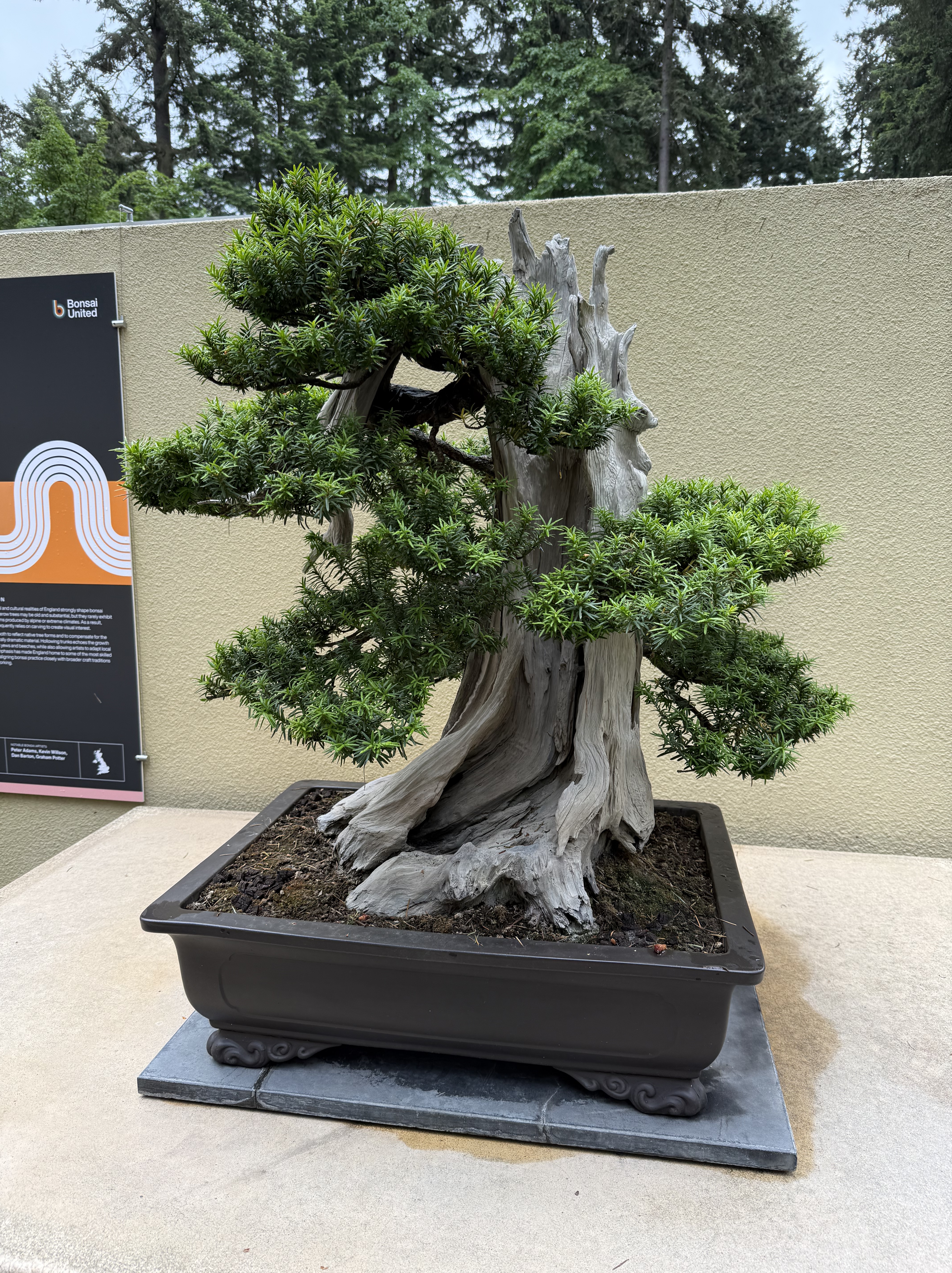
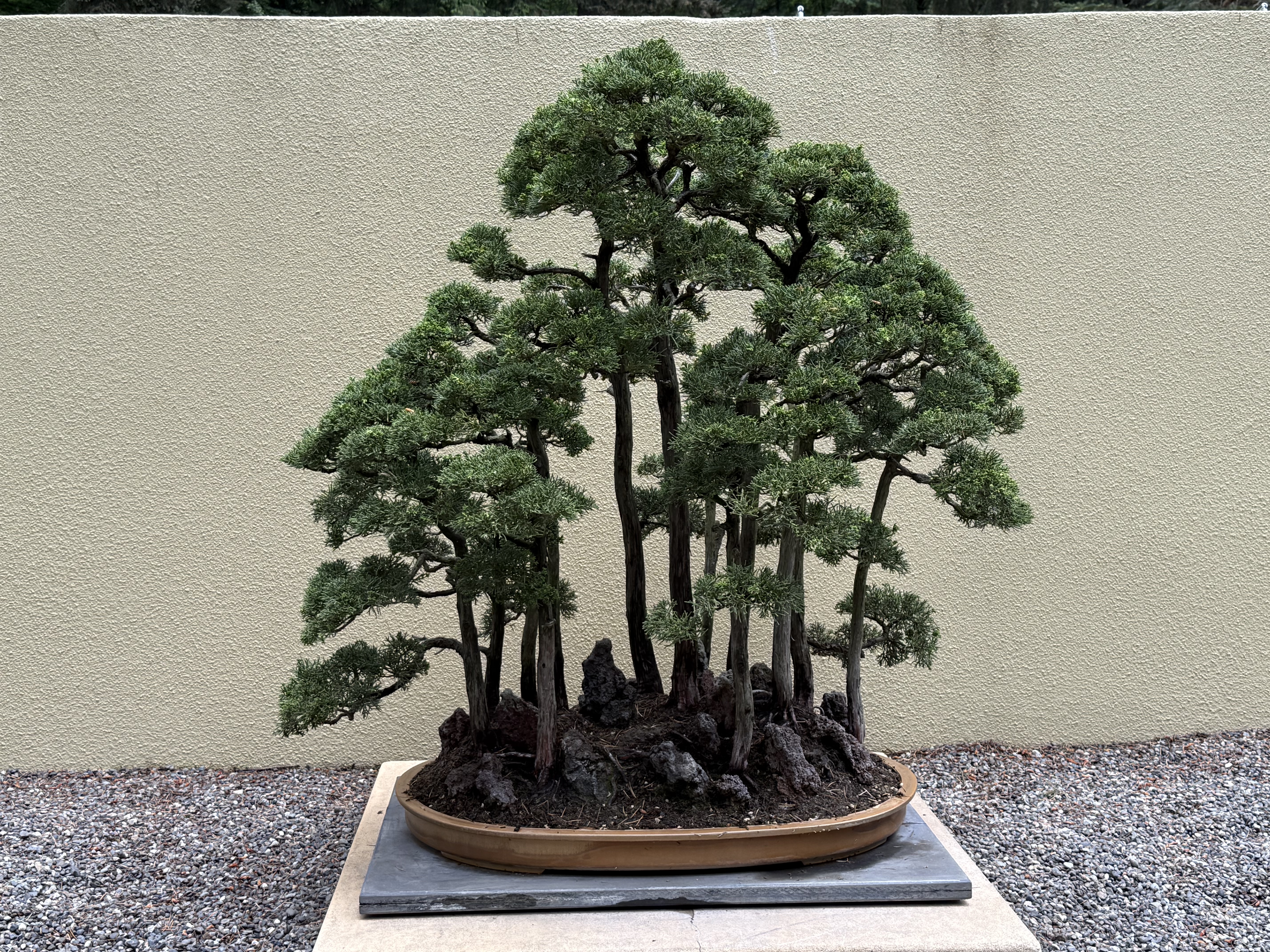
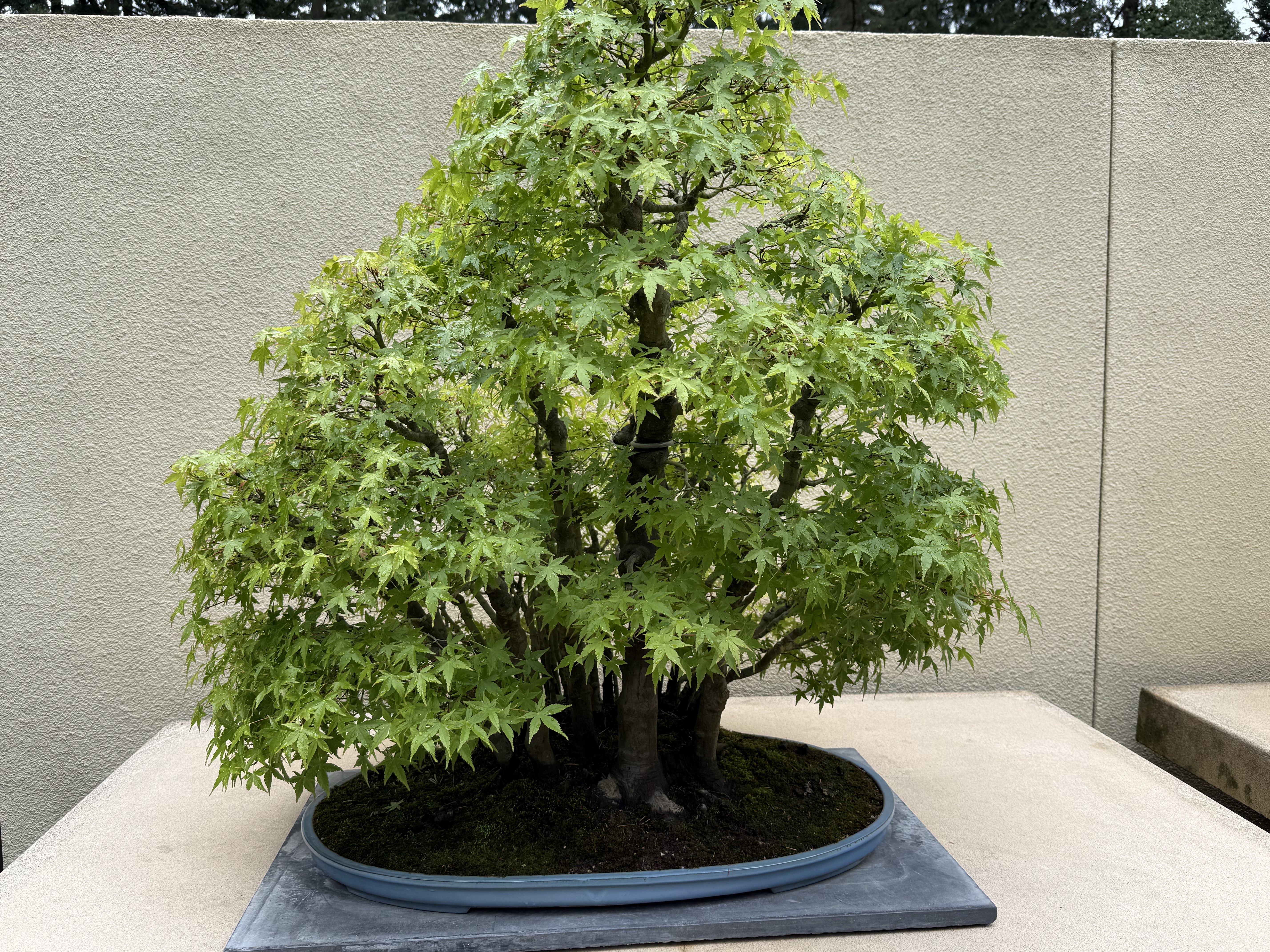
This successful “forest” is by an Australian. Note the “rocks” at the base; they are actually dead knobs from a large stump. Also note the very shallow pan: this is truly penjing–tray scenery–and not a potted plant.
The Rhododendron Garden
We crossed the gravel plaza and paid a visit to the Rhododendron Garden. The casual stroll through every imaginable color flower was worth the price of admission, even on a chilly spring day in the Pacific Northwest.
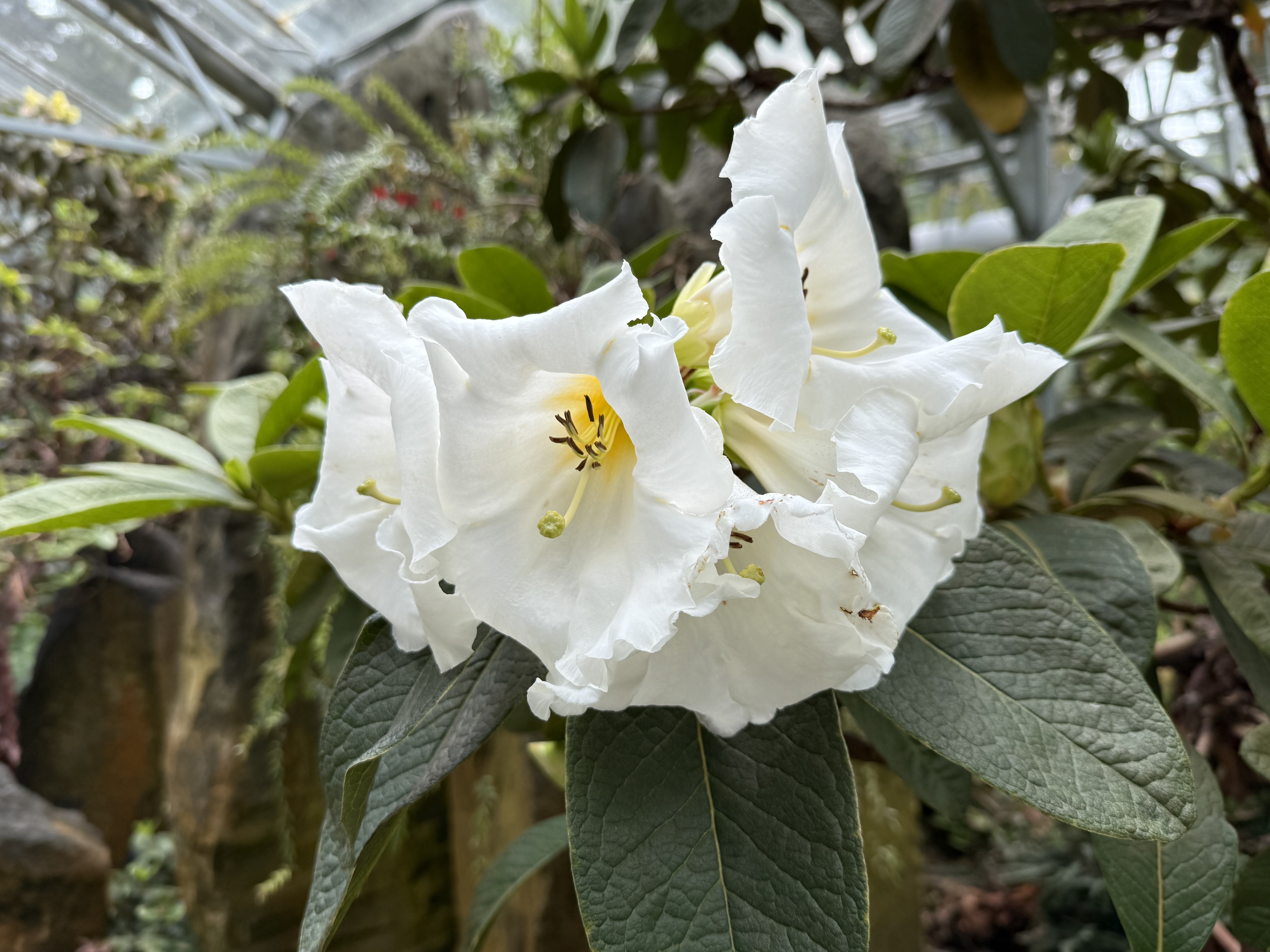
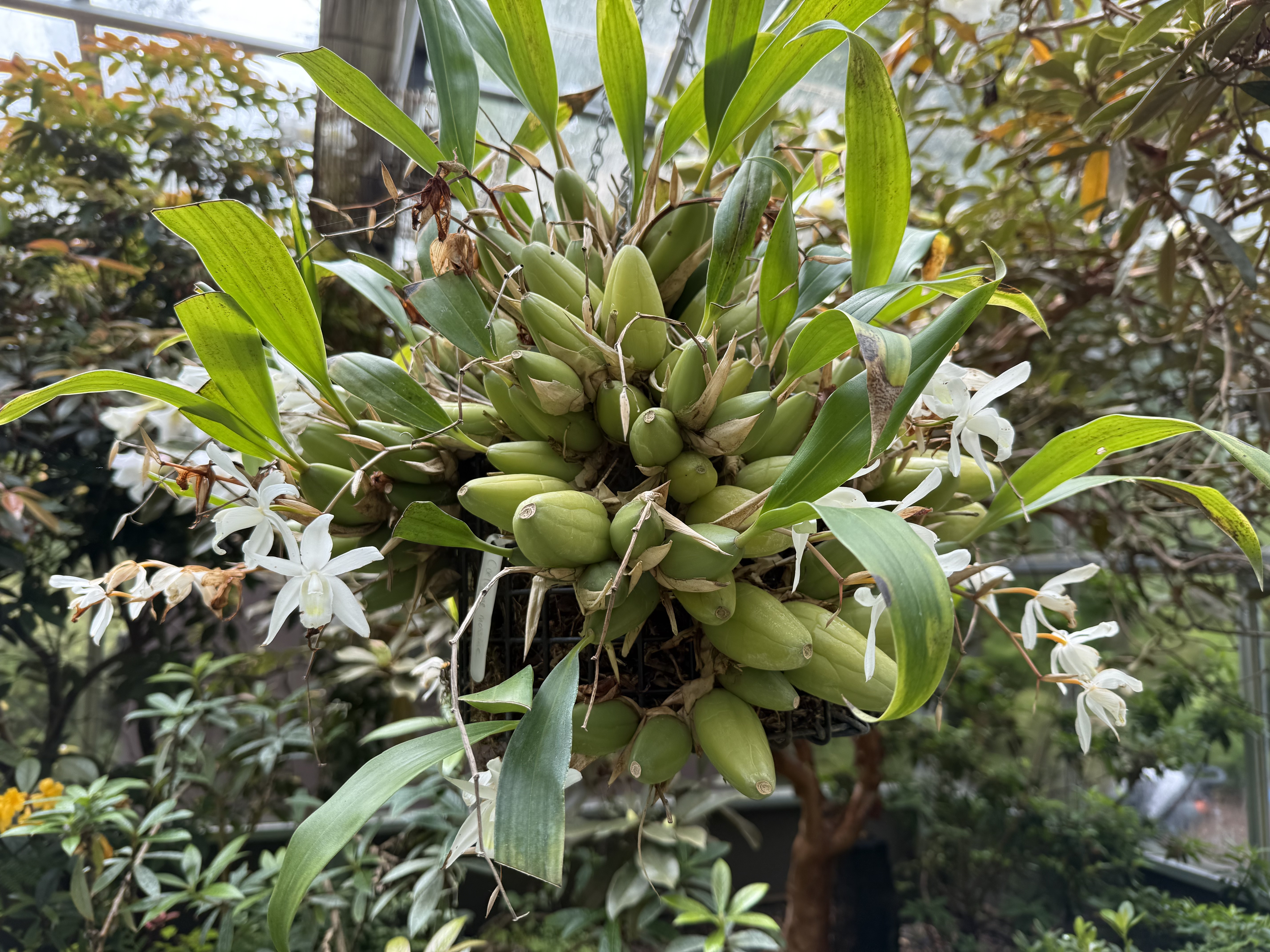
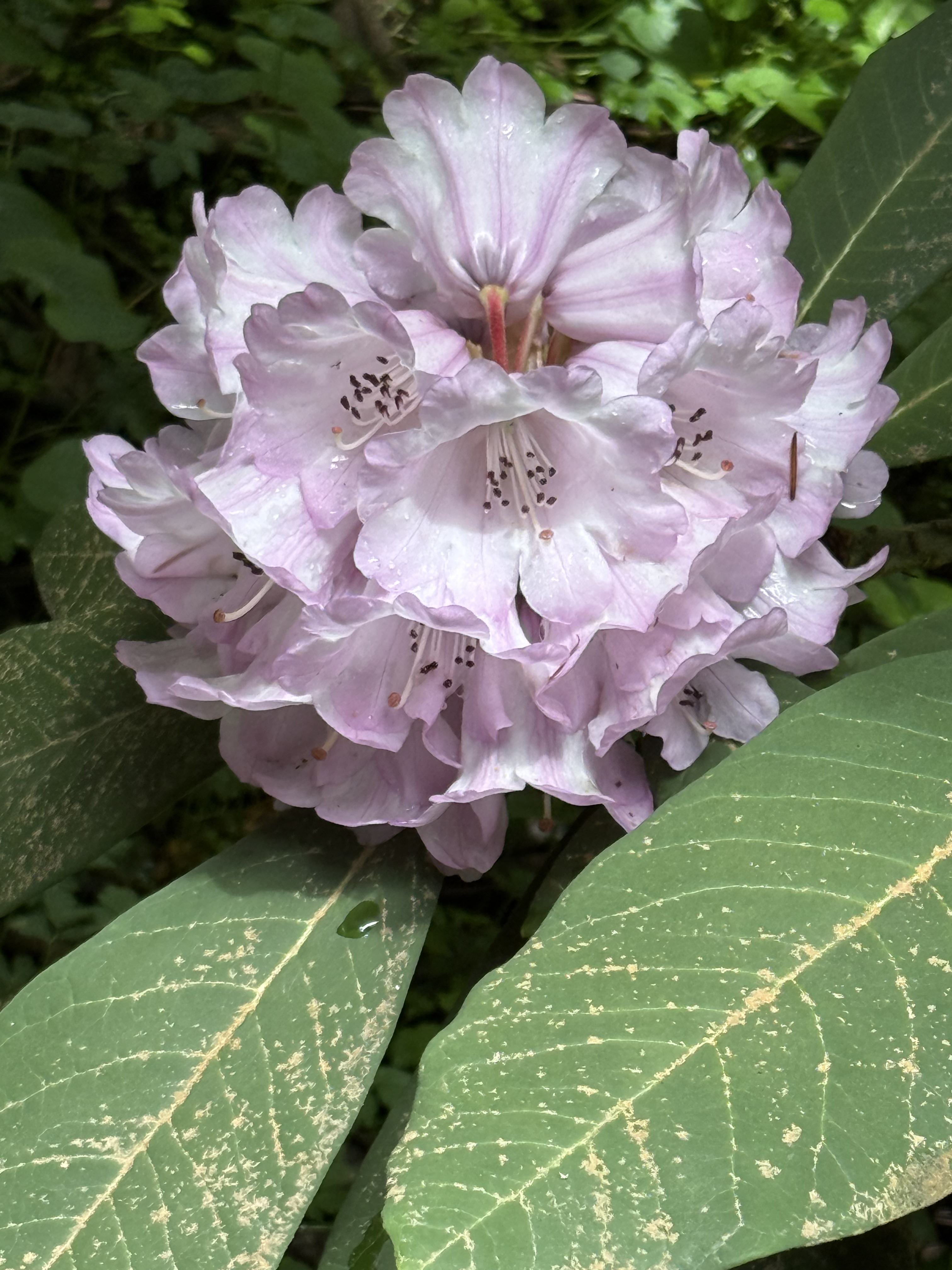
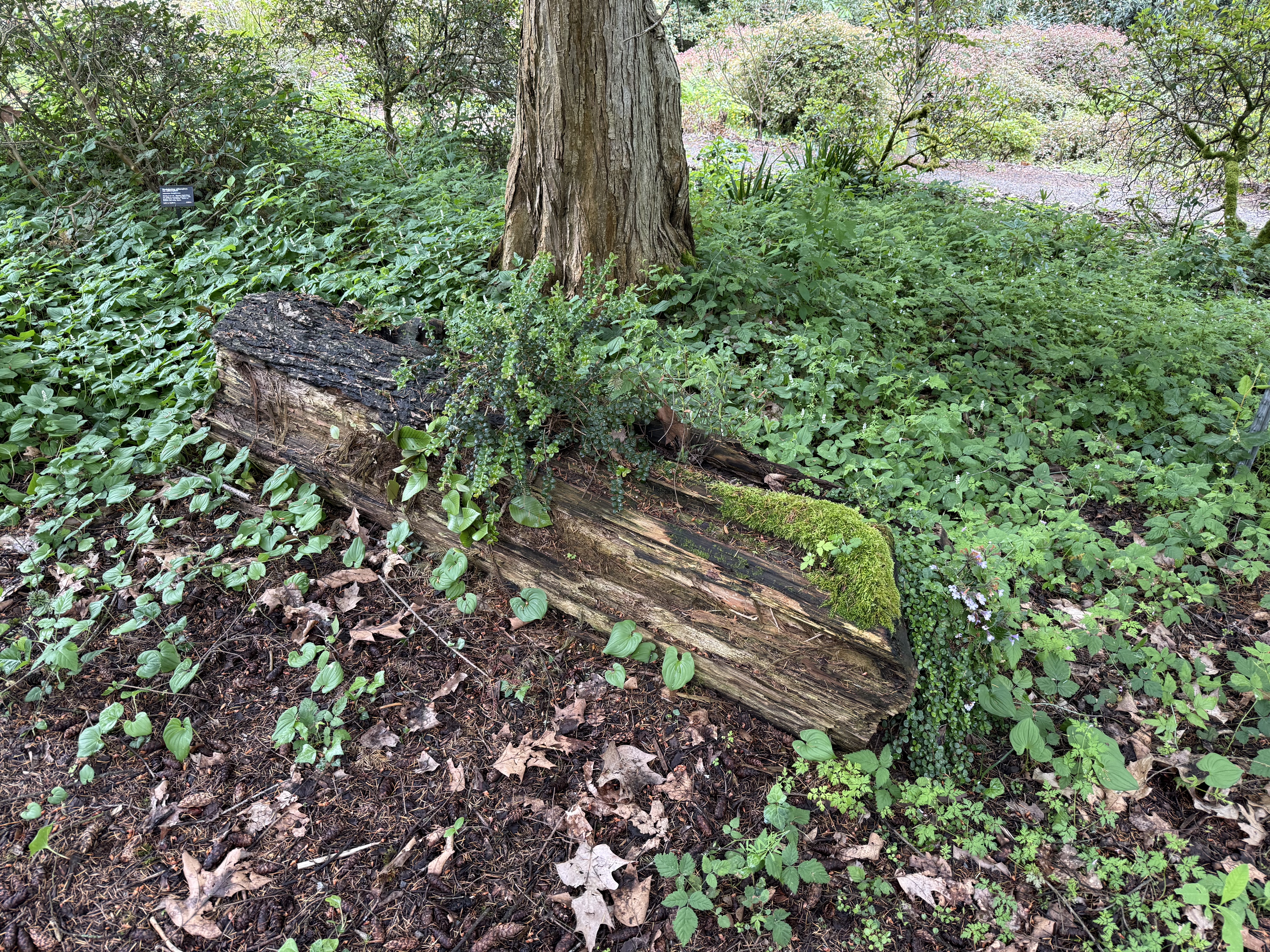
I’ve commented about “nurse logs” before. Here they are part of the landscaping.
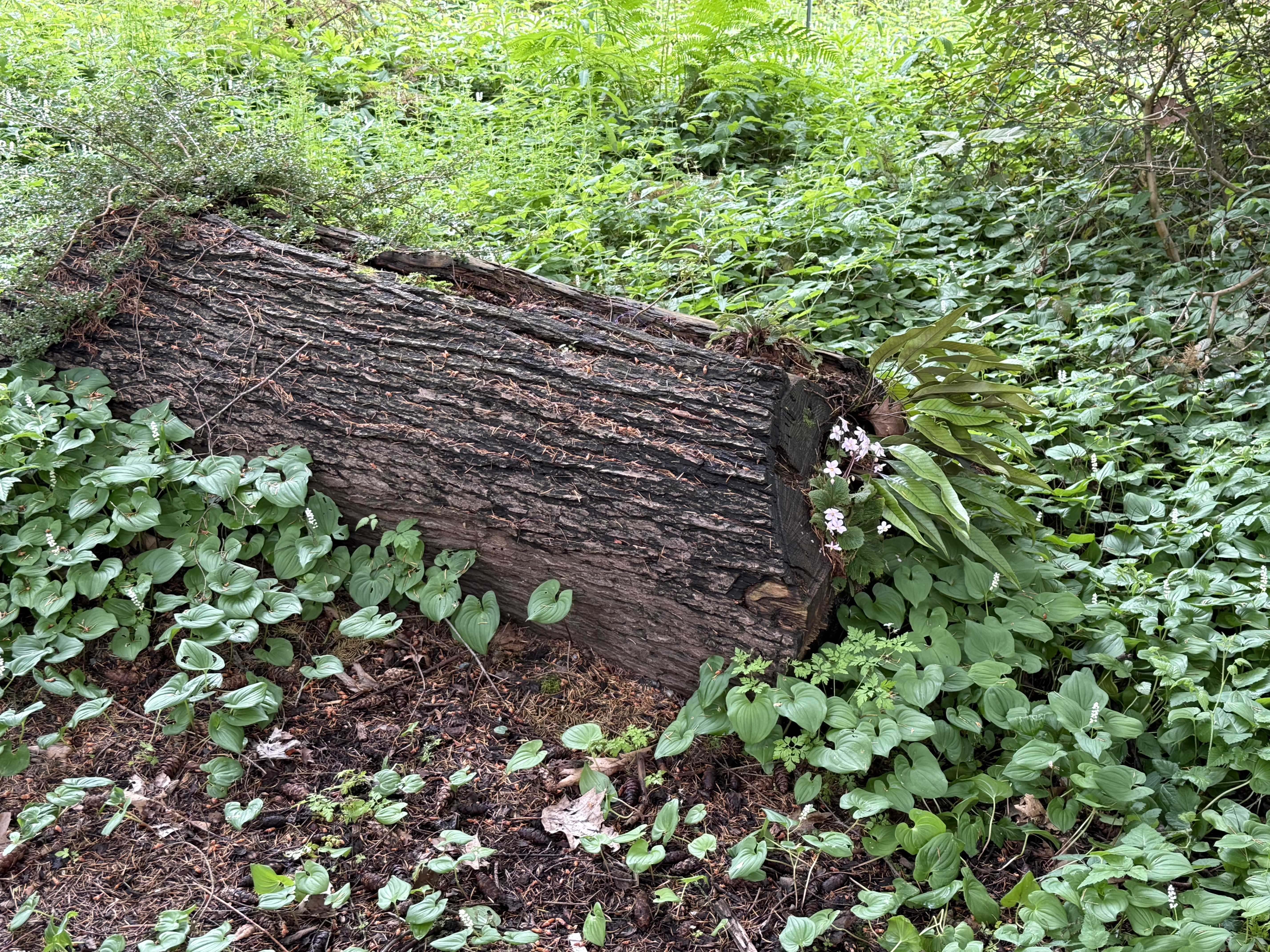
I love the flowers peaking out of one end of this log while a bush is struggling to escape from the other end.
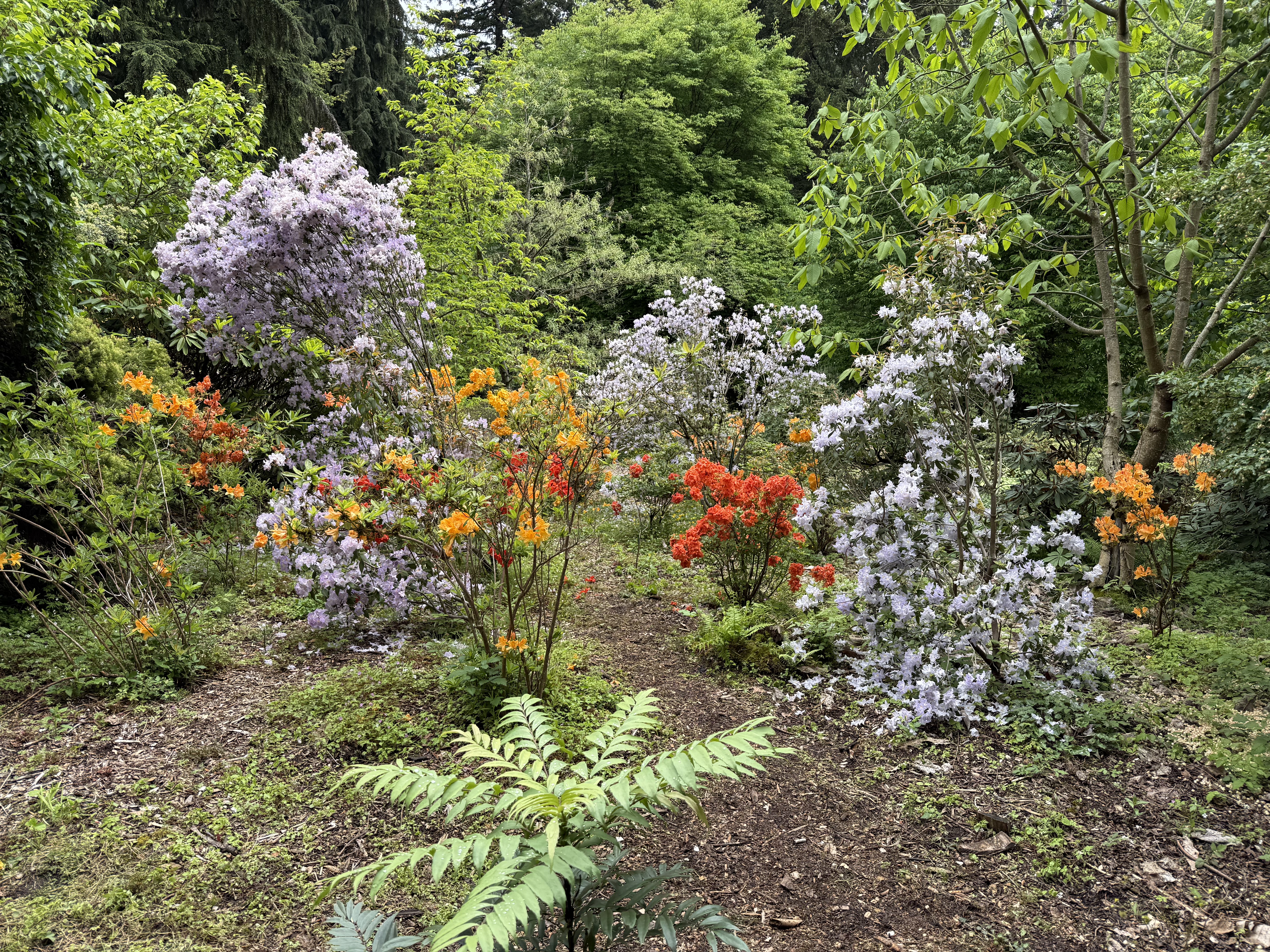
Rhododendron is one of the most common groups of plants, native to every continent although most of them originate from SE Asia. They do well in the Himalayas–not so much here in the PNW.
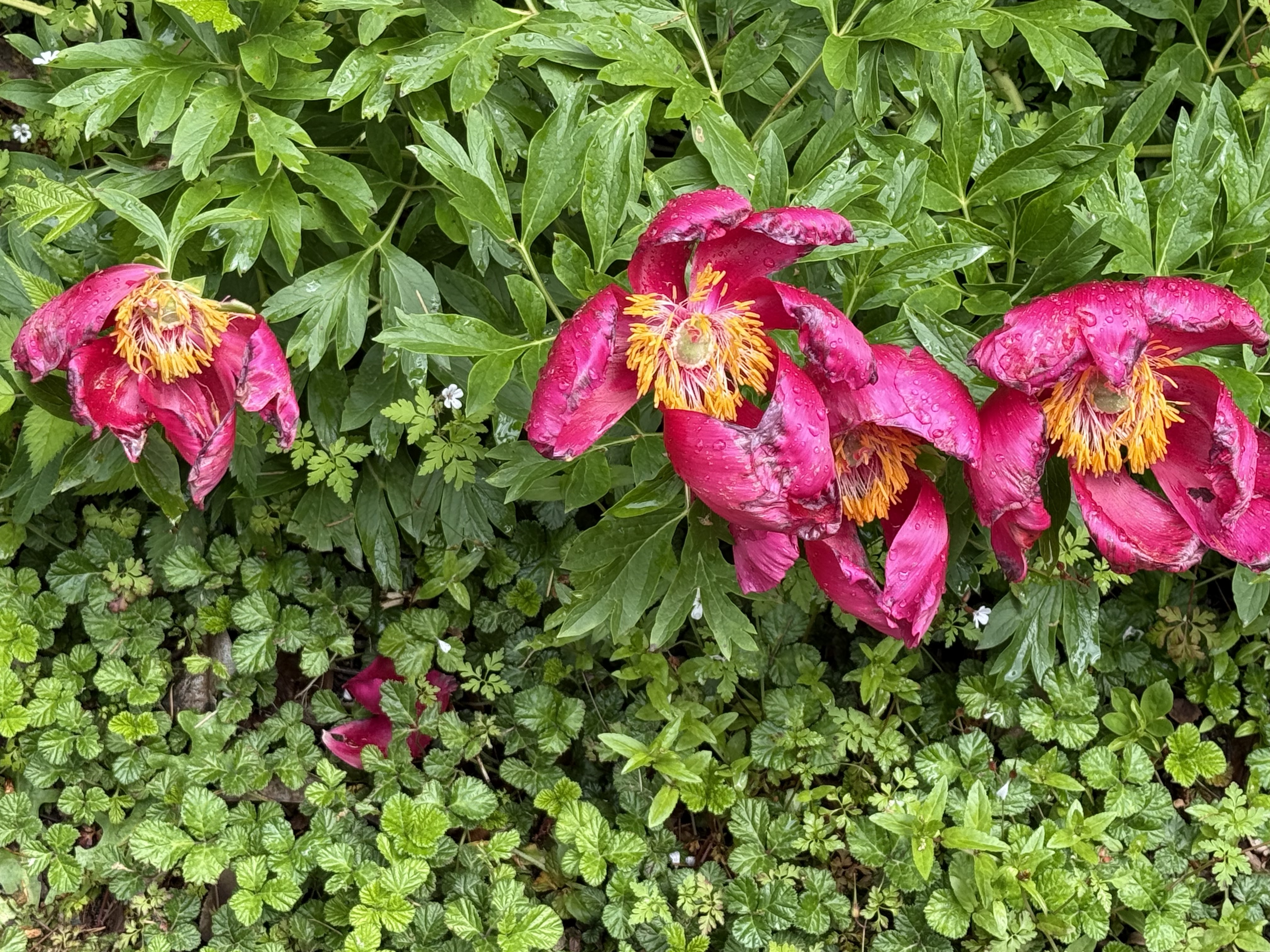
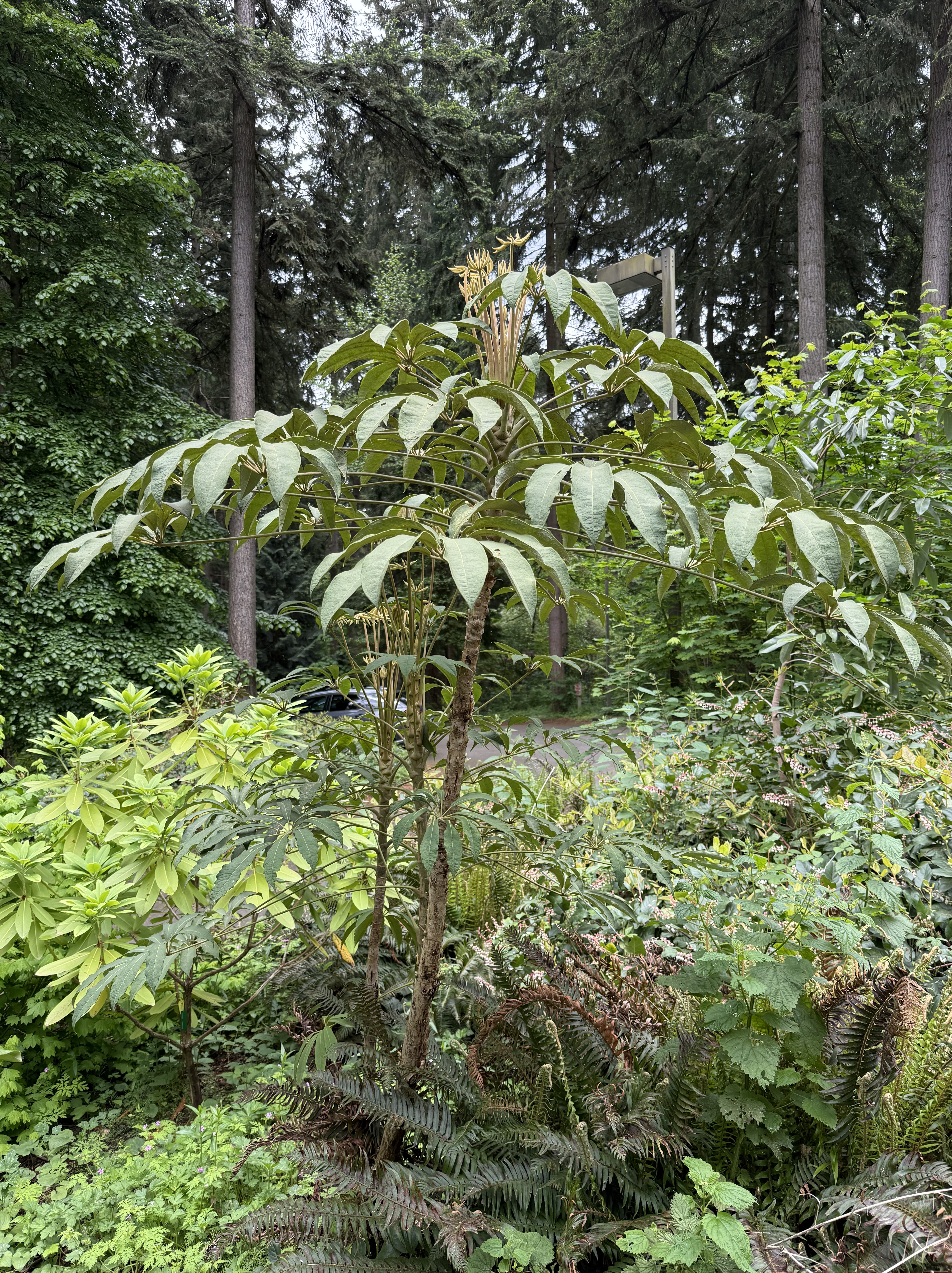
This caught my eye as we left the museum/garden…
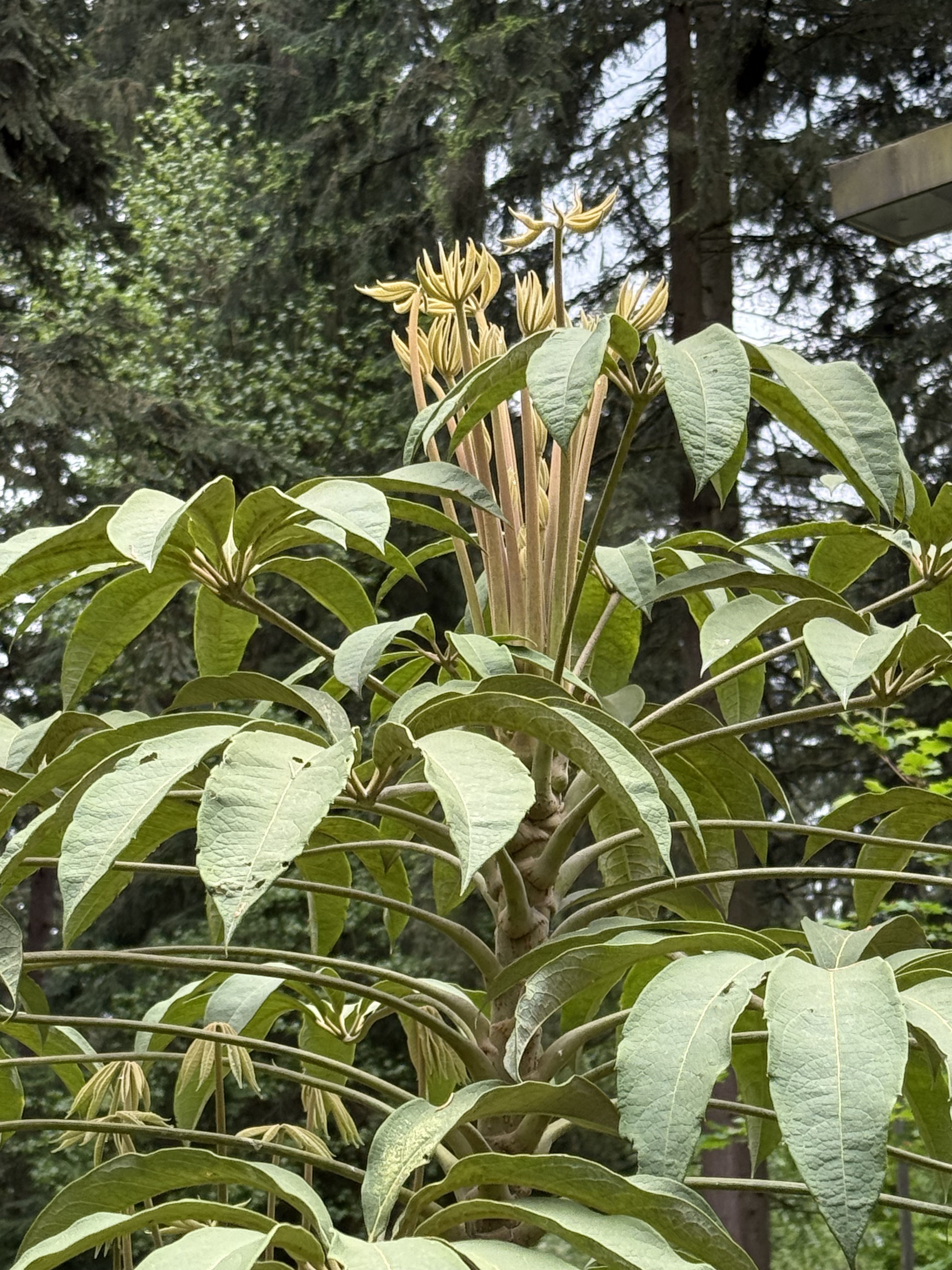
What the hell is growing out of the top? I’d love to see what kind of flowers this tall shrub will produce later this spring…


Recent Comments