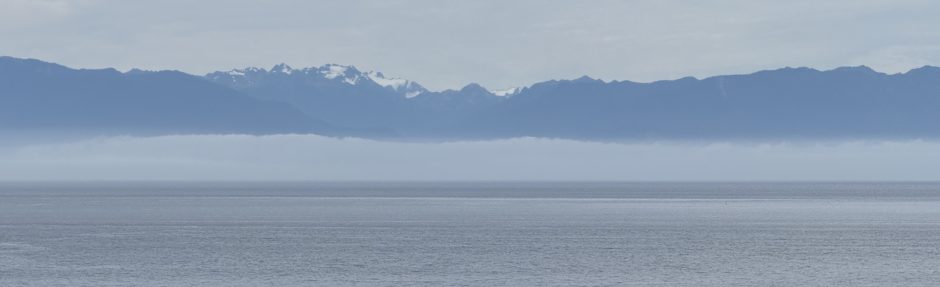
The Oregon Zoo in Portland
We drove a couple of hours to visit The Oregon Zoo. I don’t like zoos much, lately, because they house imprisoned animals, but I am aware that they do a lot of good work towards saving endangered animals from extinction. So I was ambivalent about this trip; nevertheless, I was pleasantly surprised at the quality of this particular zoo.
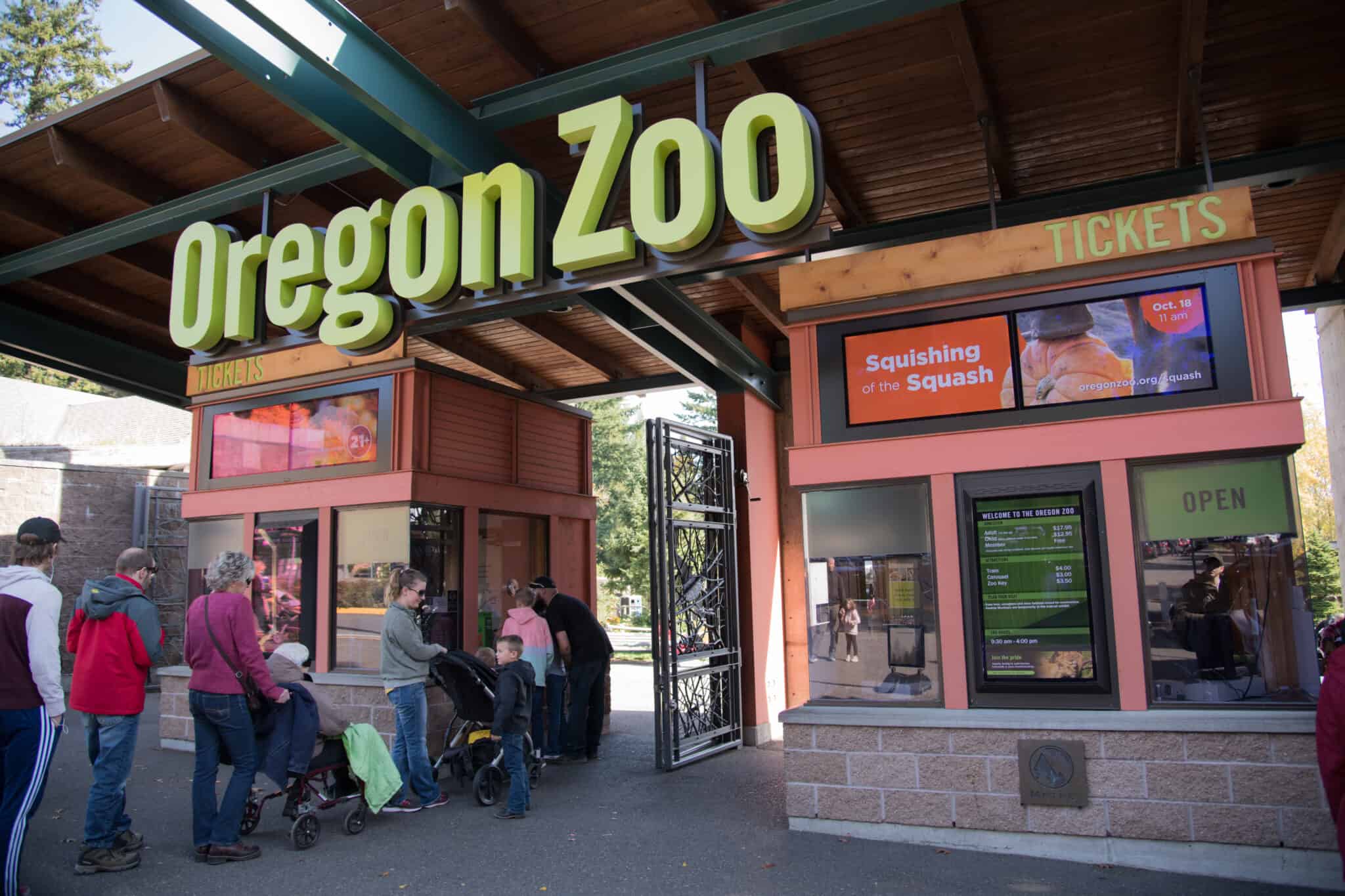
I bought a ticket for the 11:00 a.m. window from a kiosk, which printed my bar code–all without a hitch and no line.
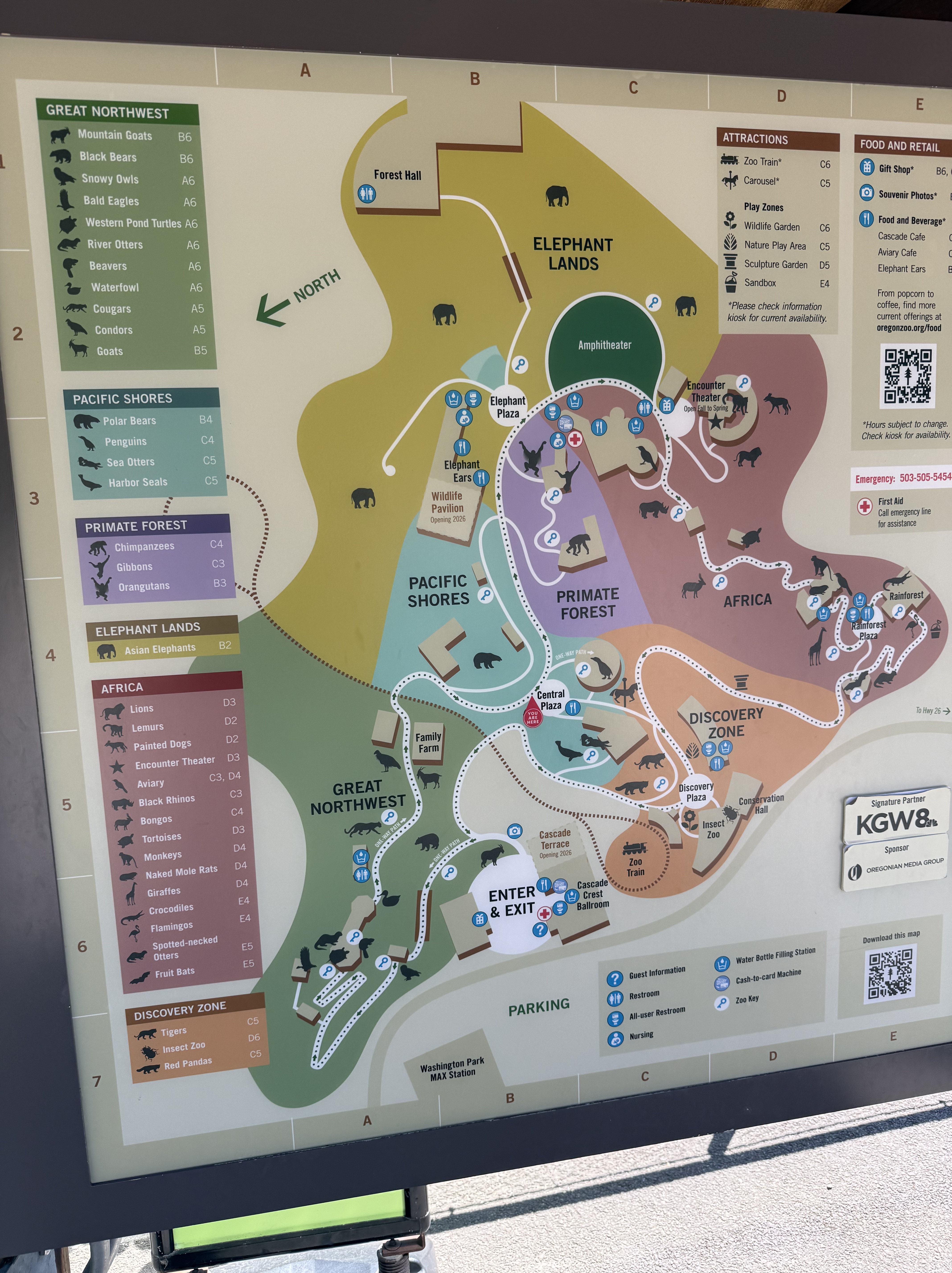
It was a beautiful day, so the parking lot was full; but we parked at the overflow parking lot and rode a free school bus for a quick trip to the entrance. It was better than parking in the regular lots. The arrows show the one-directional flow of people that is encouraged by the layout. It’s about two miles and takes 2-3 hours.
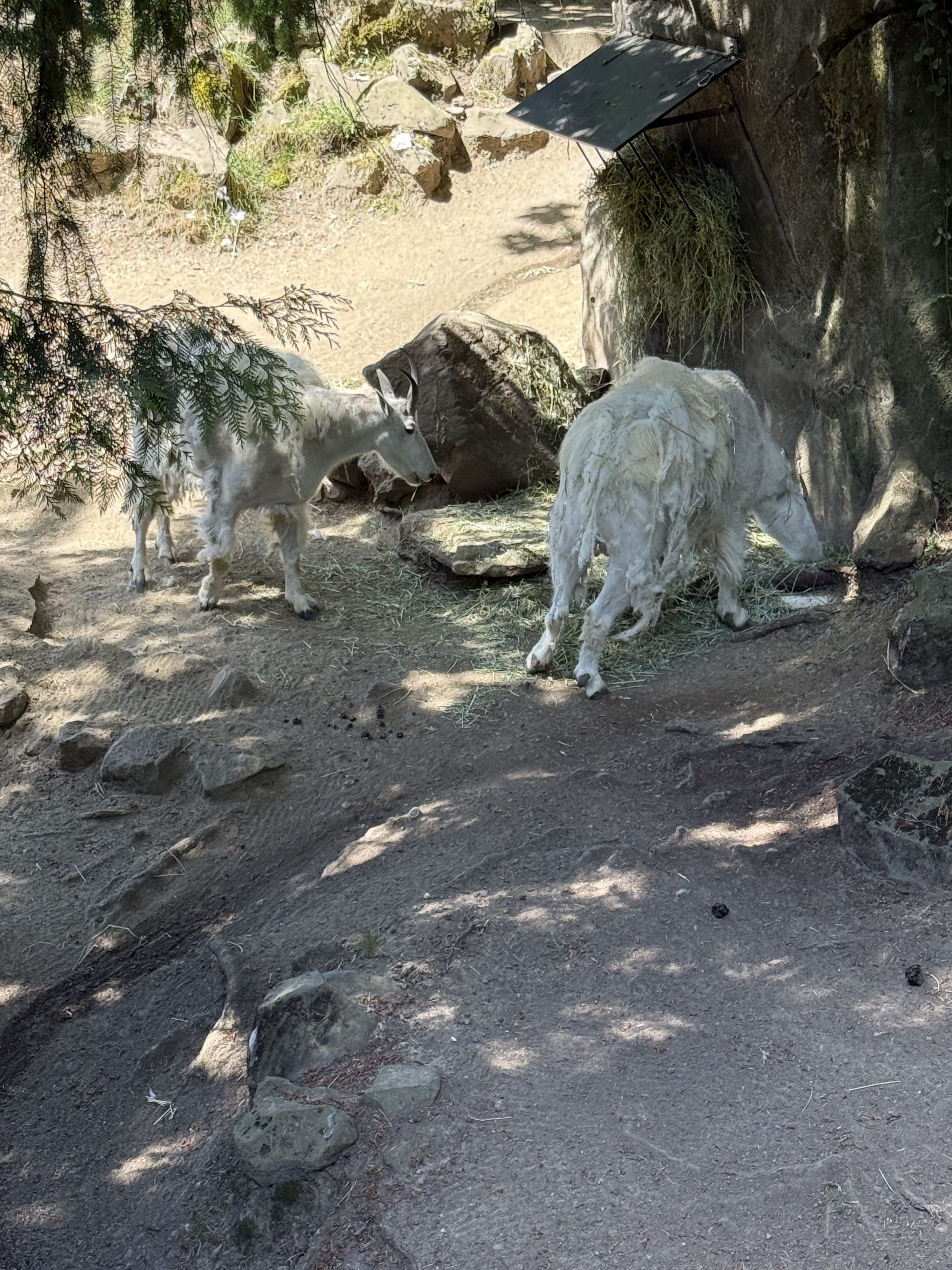
There is a mountain goat exhibit at the entrance with artificial rock piles, but its inhabitants were having lunch. They look pretty ragged, I guess because they’re losing their winter hair (or is it fur?).
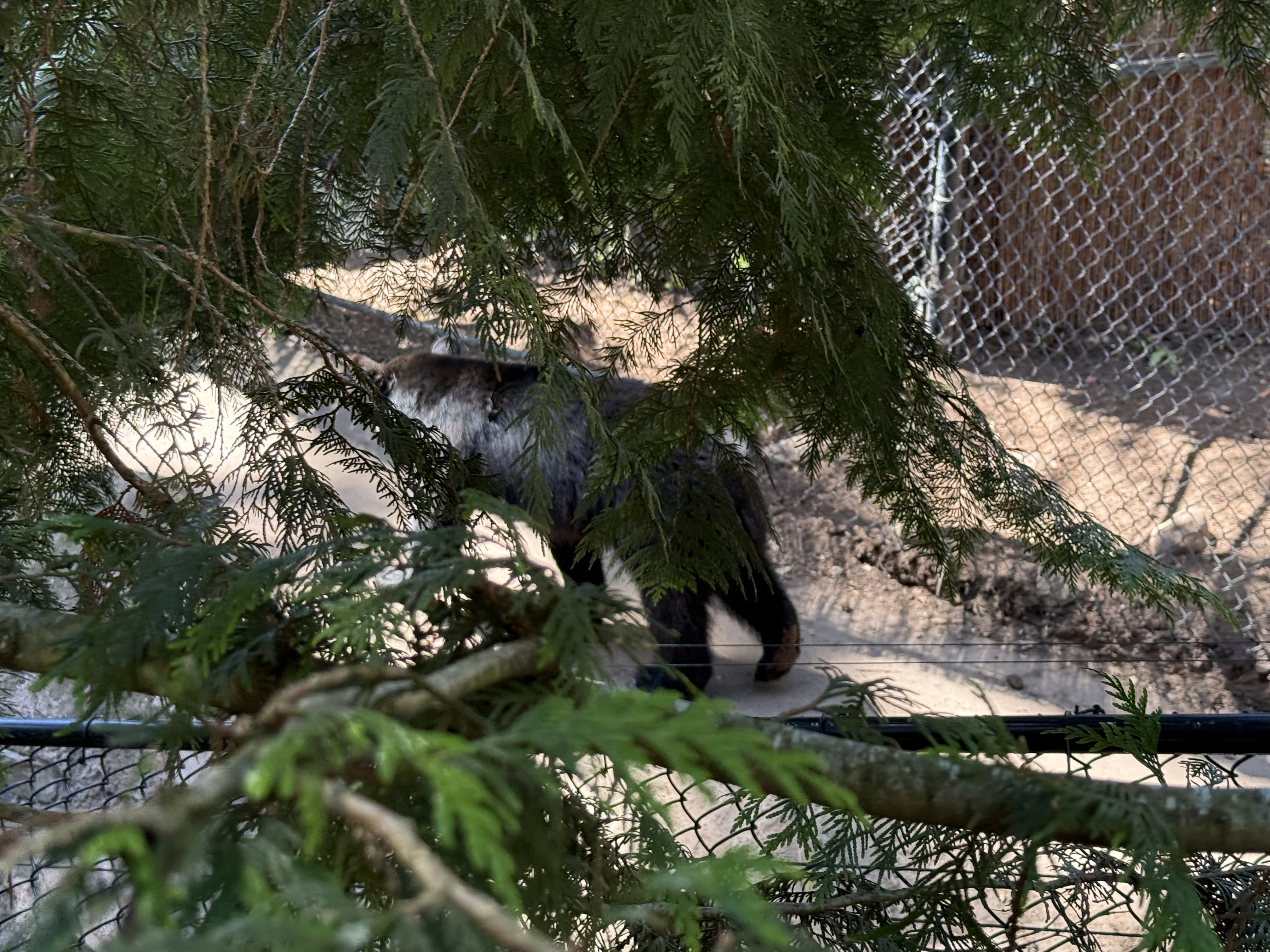
The Pacific Northwest was a grouping of regional species, including three black bears. I missed a lot of opportunities to photograph them interacting because I was confused by their enclosure, which was very large. It covers the side of a hill and includes several personal areas in addition to available shared “dens” where they could get some privacy from prying eyes.
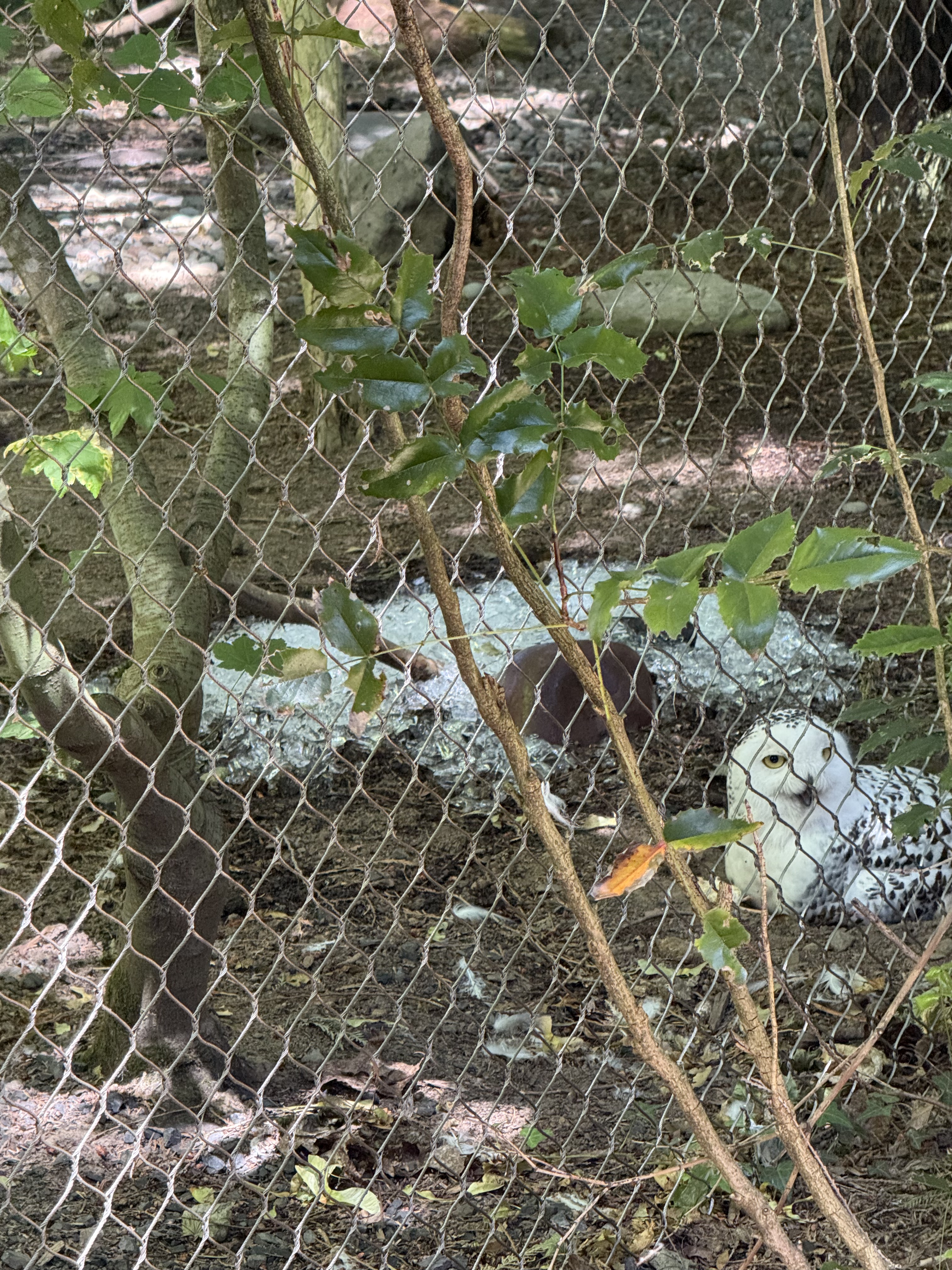
The owls seemed to enjoy sitting on the ground, even on a pile of ice, even though they had plenty of branches to hang out on.
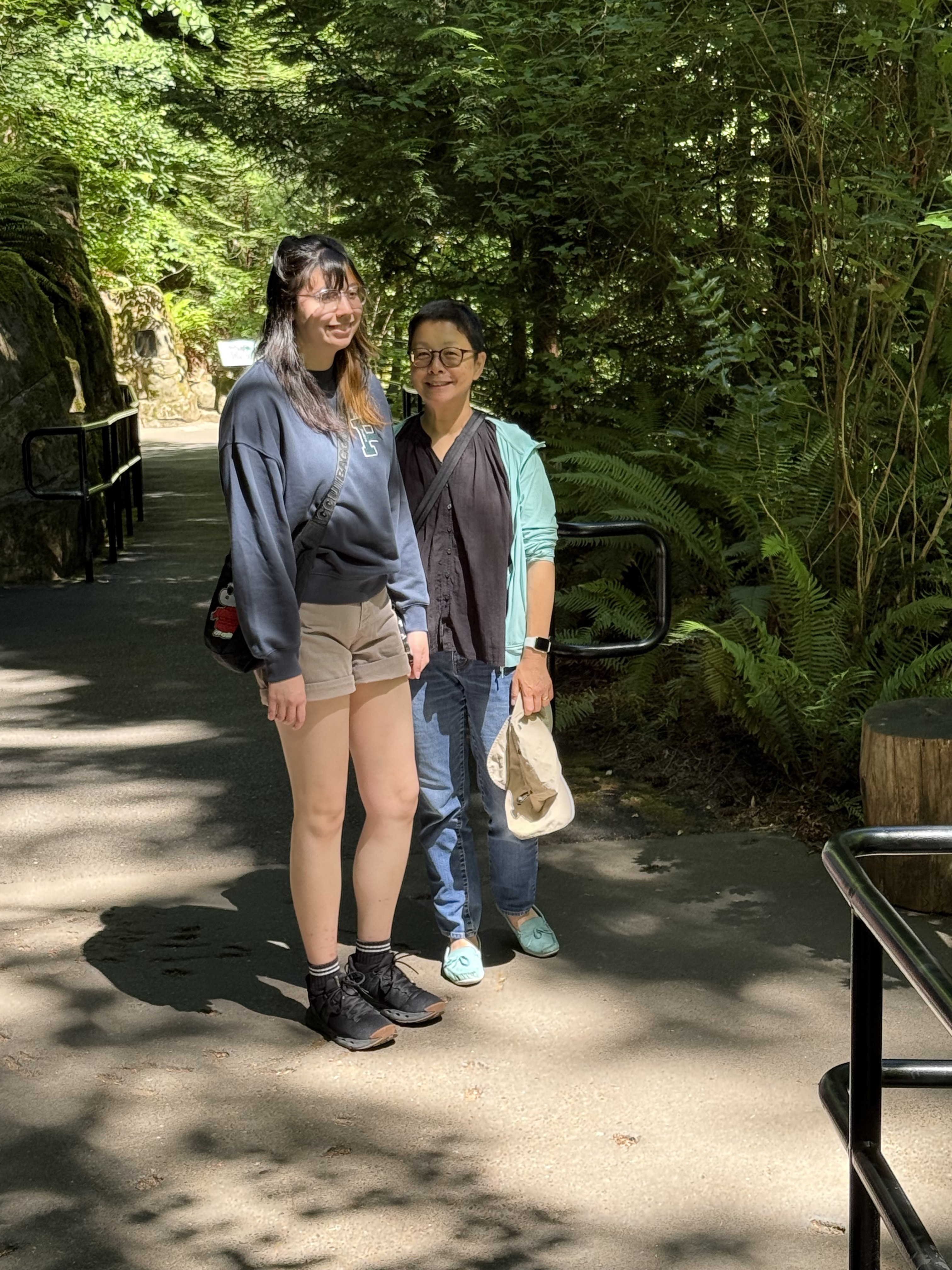
There was plenty of shade available for the inhabitants as well as the visitors.
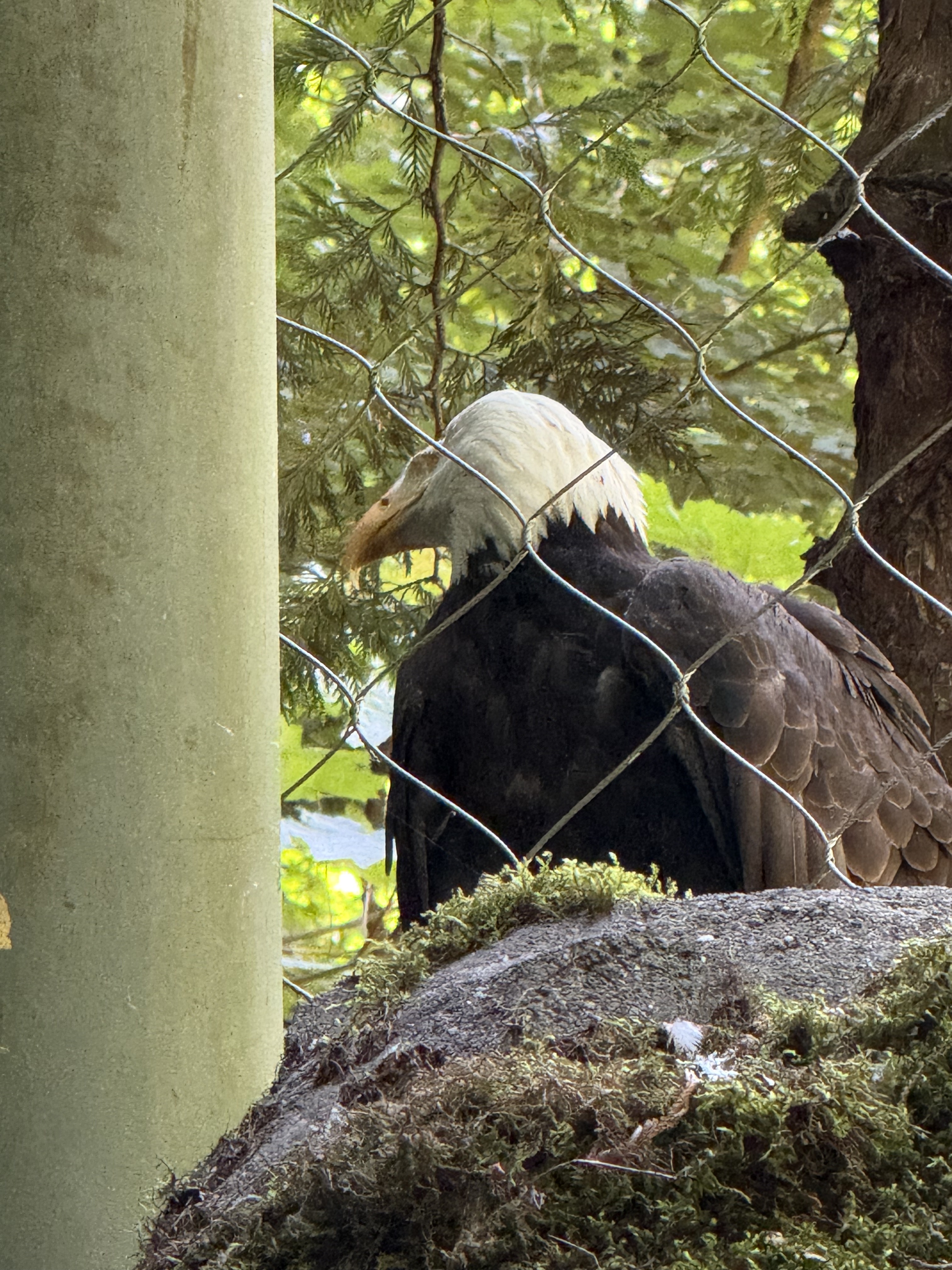
The bald eagles were rescued and are unable to fly properly, so I guess this is an “assisted living” facility.
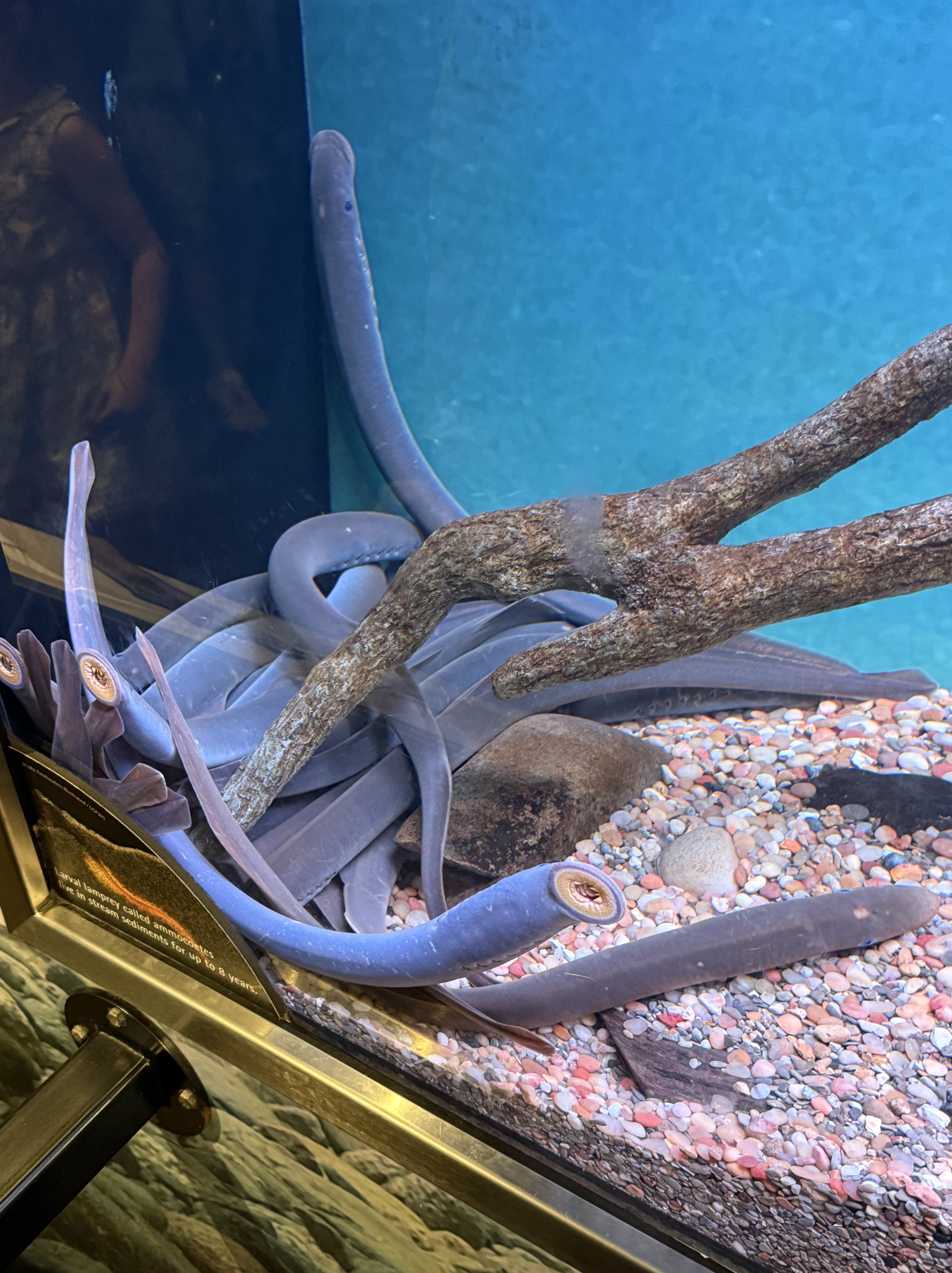
The lampreys were lying together in one end of a smallish tank. I guess it’s difficult to know whether they care about their surrounding or not. This is one strange fish.
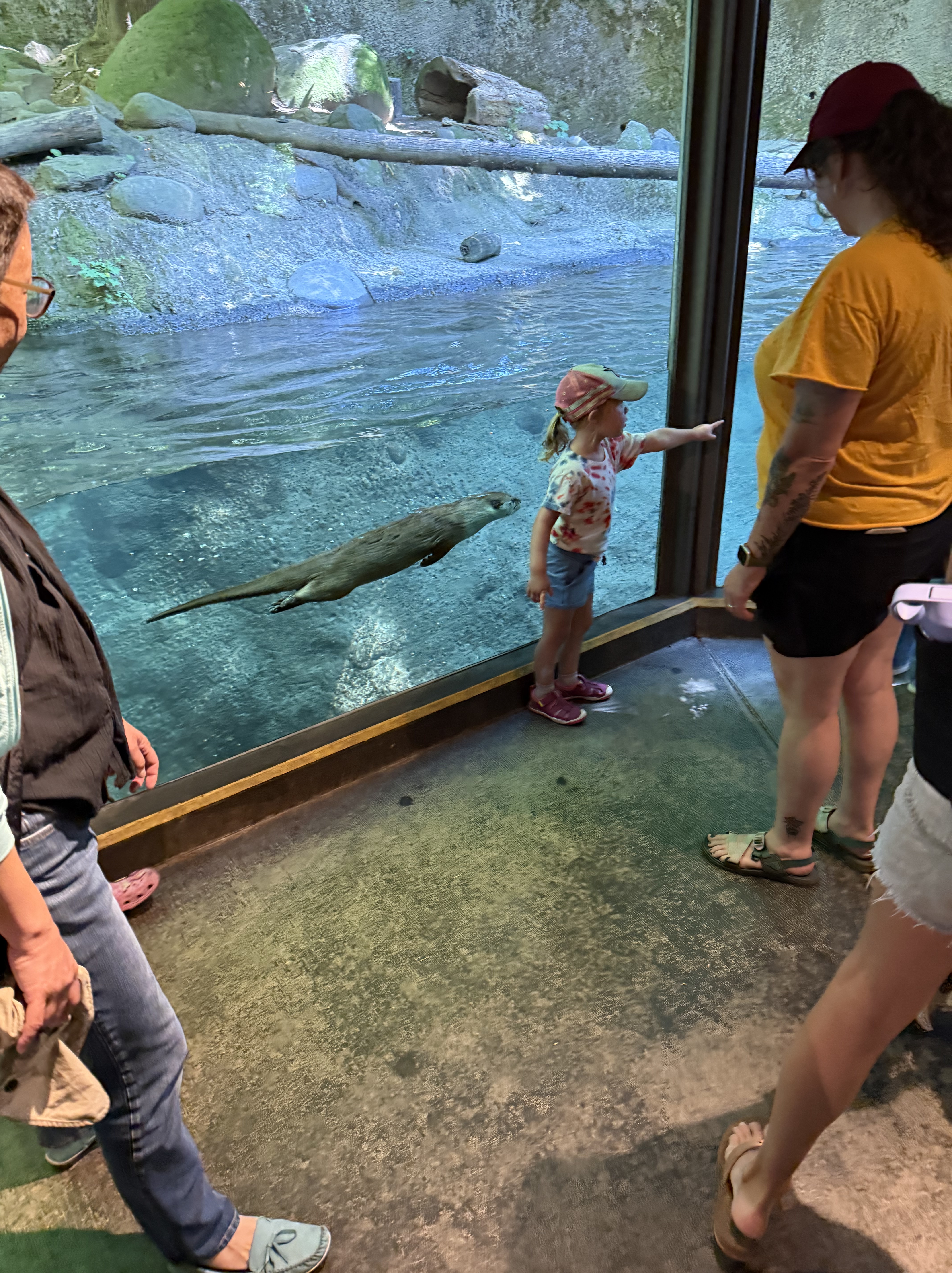
I never like to see free-wheeling animals like otters in captivity, even if they have cooled water to swim in. And I didn’t see any fish swimming around for them to catch. The phrase “feeding time” really bothers me, but I suppose we primates need to see the animals we share the world with in person to recognize them as being living beings. No one knows what an otter thinks…
This video shows a couple of otters cavorting in a viewing room. They had private places available, so I guess they don’t care if we reading monkeys watch them; but I wish that woman hadn’t kept her fat head so close to the window.
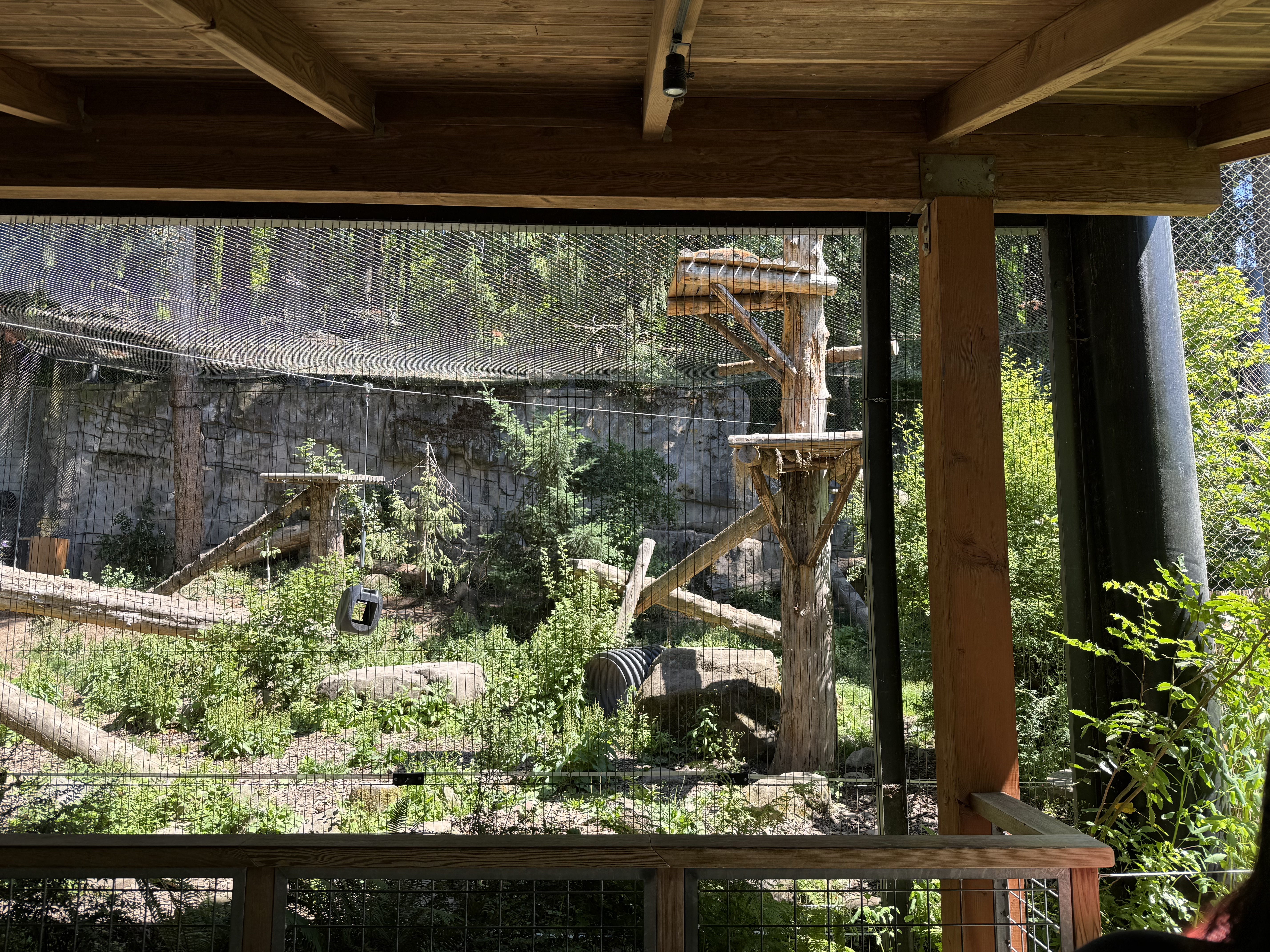
The mountain lion/cougar/etc is on the highest platform taking a nap, so I guess they’ve gotten used to life in a cage with a net ceiling. These big cats, native to all of N. America, aren’t endangered, but, obviously, we can’t see them this close. They are pretty dangerous.
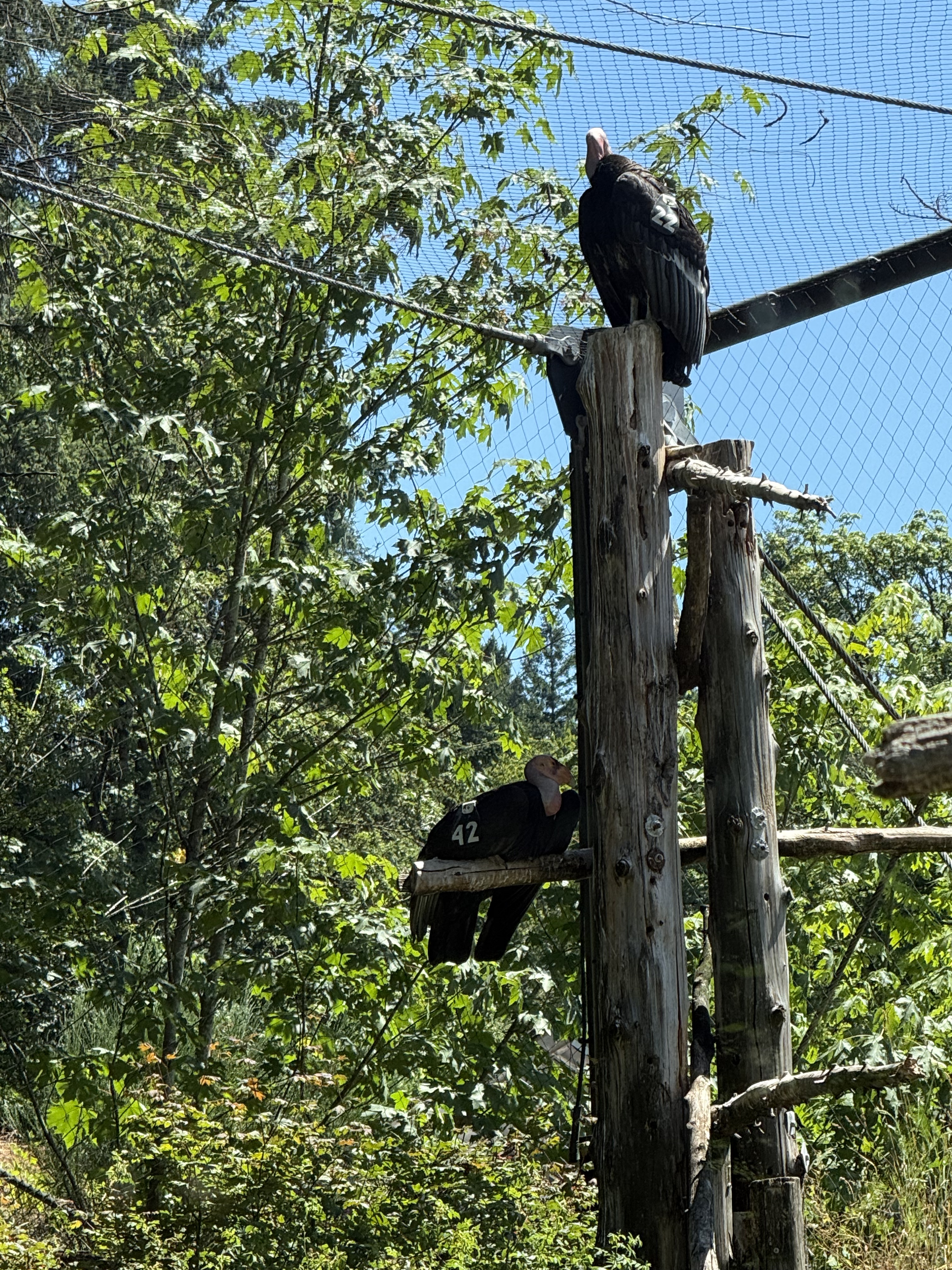
I was feeling pretty bleak about the whole zoo concept until I saw the condors. They were actually EXTINCT in the wild until the efforts of zoos reintroduced them; now they are coming back, each one wearing a team number and a radio transmitter. I guess this is their “halfway house” before winning their freedom.
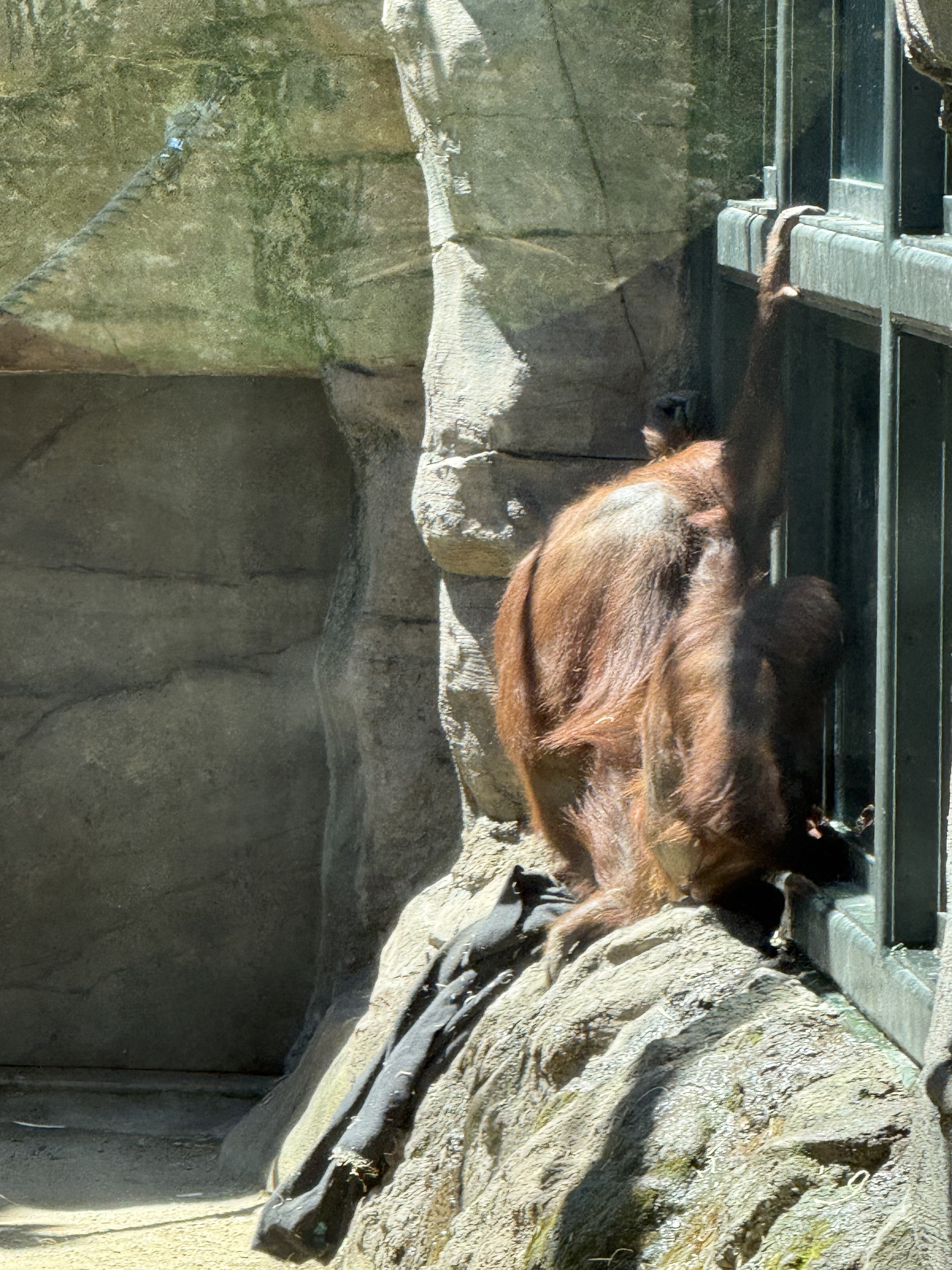
The primates have a series of habitats. Unlike some of the other prisoners, they take an interest in their captors’ antics; these orangutans are watching their human helper clean their bedding (airing and replacing straw). The looking glass works both ways…
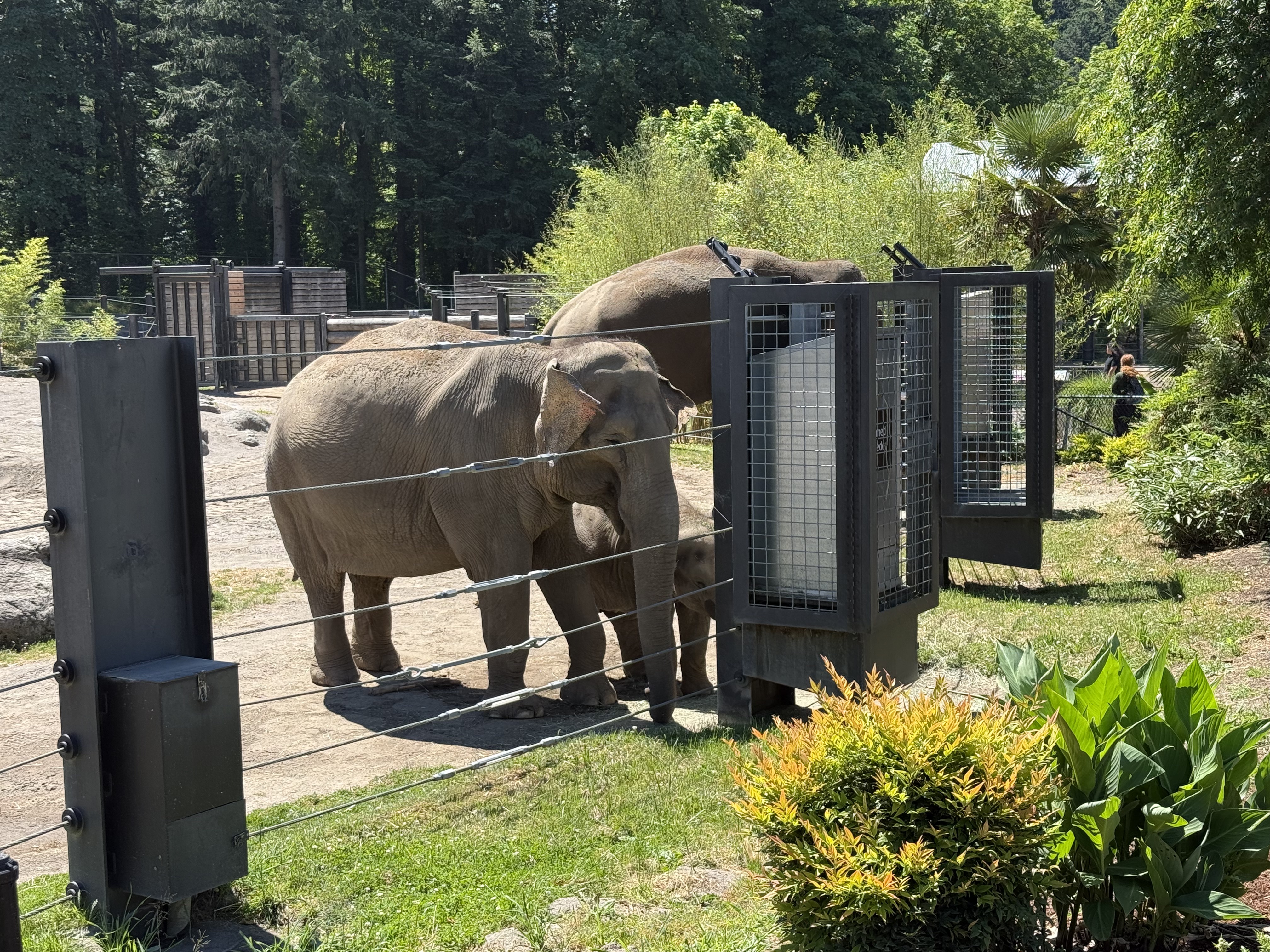
The zoo has named their “guests” because they are trying to support social systems like these elephants would have in the wild. Thus they have family groups (even in animals that don’t have “nuclear” families). For example, one of the males was in a sexually provocative state and isolated in the enclosure seen in the background so that he couldn’t fight with the other males, or injure the young one; but another who was considered “safe” was mixing with the “herd” while feeding in a separate “males only” trough until…
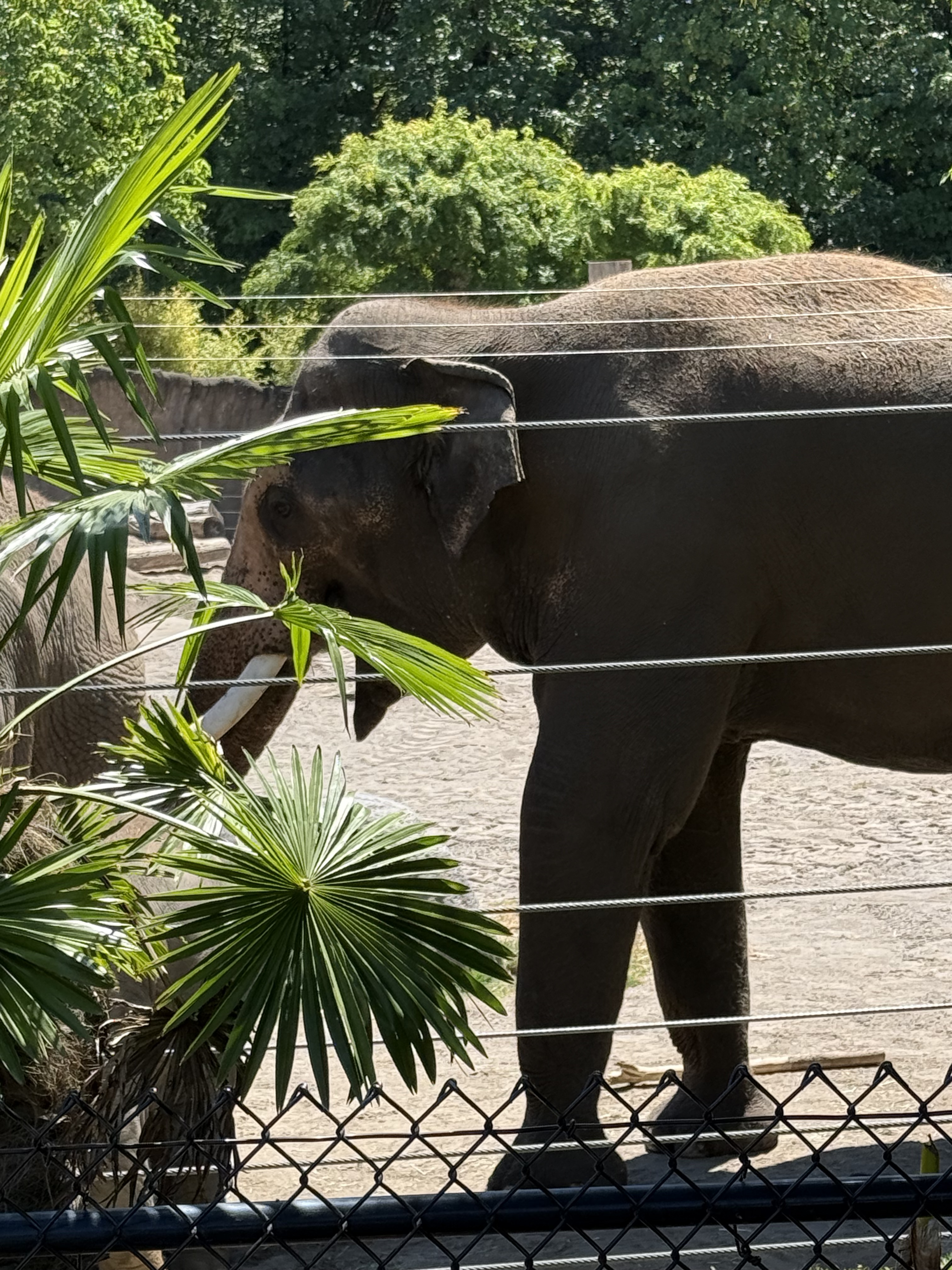
He finished his plate and pushed the others, including the young one, aside to eat their food. These large animals really need many square miles to live. This situation is like having your entire family living in a studio apartment, which people do in some parts of the world; nevertheless, elephants are at the top of my list for animals that will be eradicated by humans because they simply require so much SPACE to live, and they consume massive amounts of resources. I hope they don’t follow the path of the condors, and I applaud efforts like these–hope for the best but prepare for the worst-case scenario…
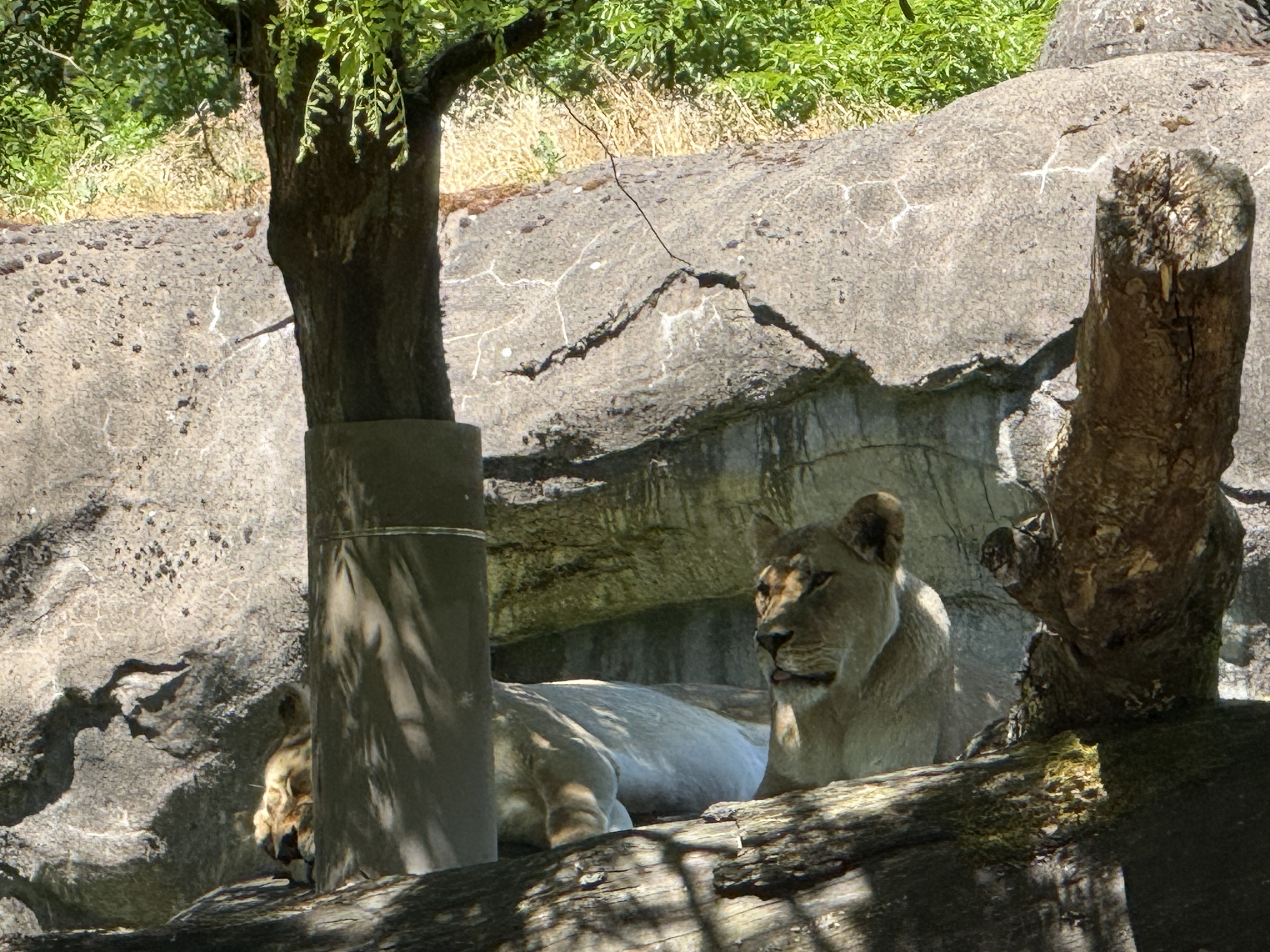
I could barely see these lions, but my phone’s camera caught this image. Words fail me to describe what might be going through this loin’s mind…
These lemurs don’t seem to care that a bunch of primates are watching them as they wake from a nap…
This monitor’s tail is half as long as its enclosure. A photo can’t convey its situation as well as a video, even thought it isn’t doing anything dramatic, but–what is it thinking? I have no idea; maybe it is perfectly happy–well fed, as cool or warm as it desires…
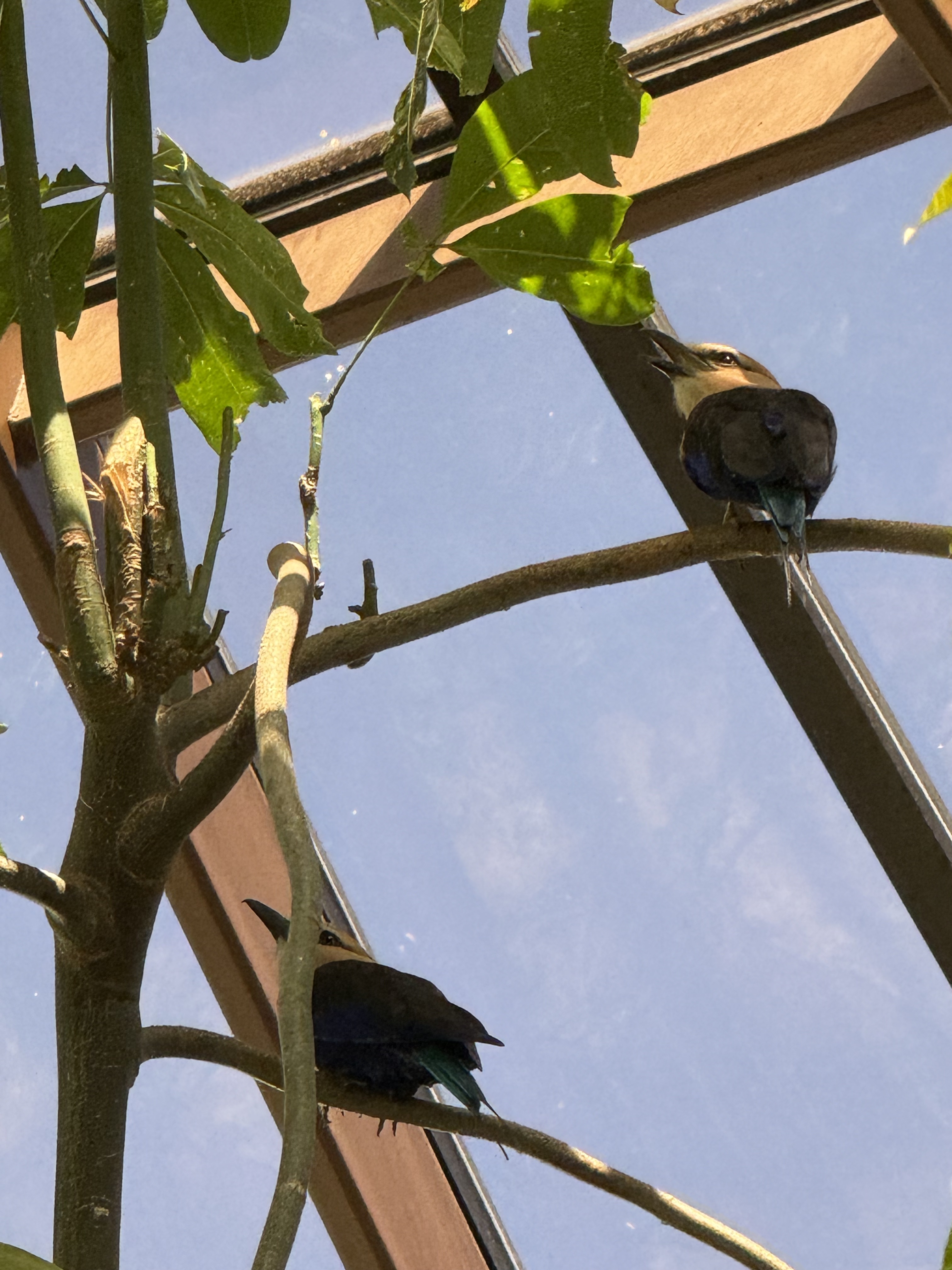
There were a lot of birds in the bird enclosure–small ones that could fly around, larger, flightless ones that hung around the door as if waiting for a chance to escape.
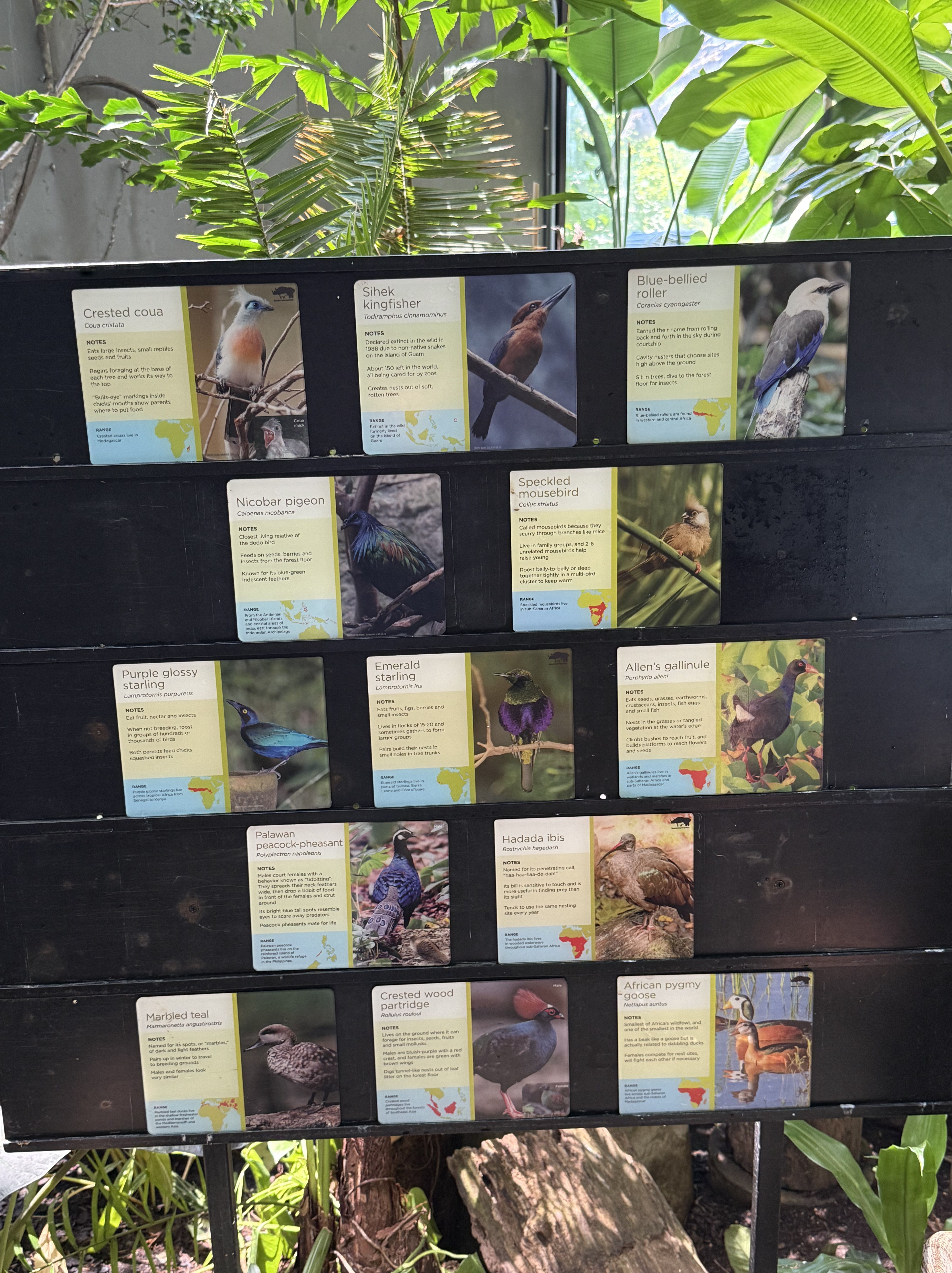
I saw several of these, but they didn’t pose for photos. None of them looks like the birds from the previous photo, but I don’t know anything about birds. Maybe the listing is out of date…or maybe I’m a typical modern Homo sapiens, who is so unaware of the physical world that…
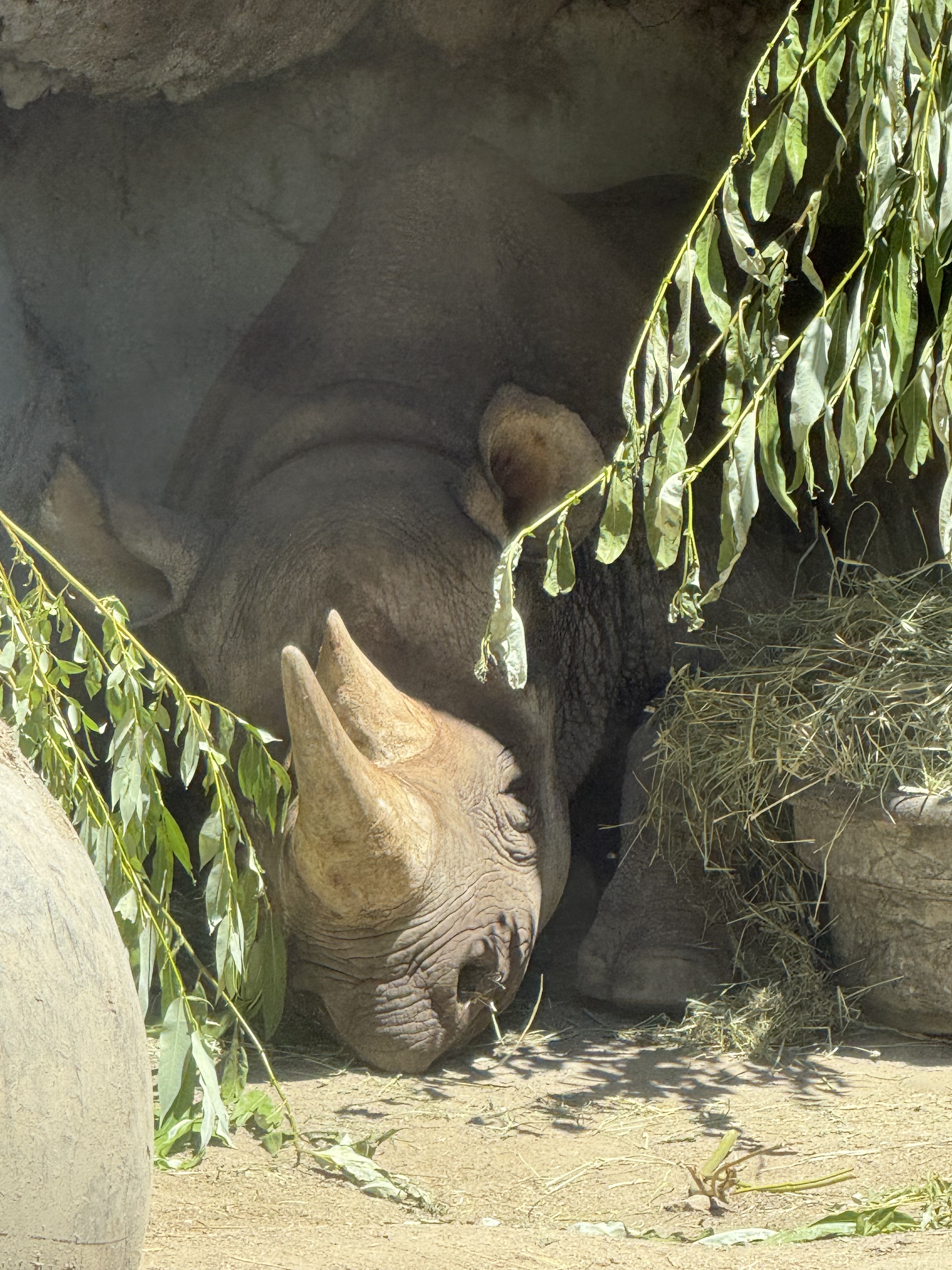
Thank god my phone could see in extreme contrast. I never saw this rhinoceros lying in the shade, apparently listening to every word we primates were saying. This is another example of an animal that requires a lot of SPACE to live; the Oregon Zoo did its best with what was available, even creating a “family” environment with several animals living together.
This tiger doesn’t say much, but their stately demeanor says more than words…
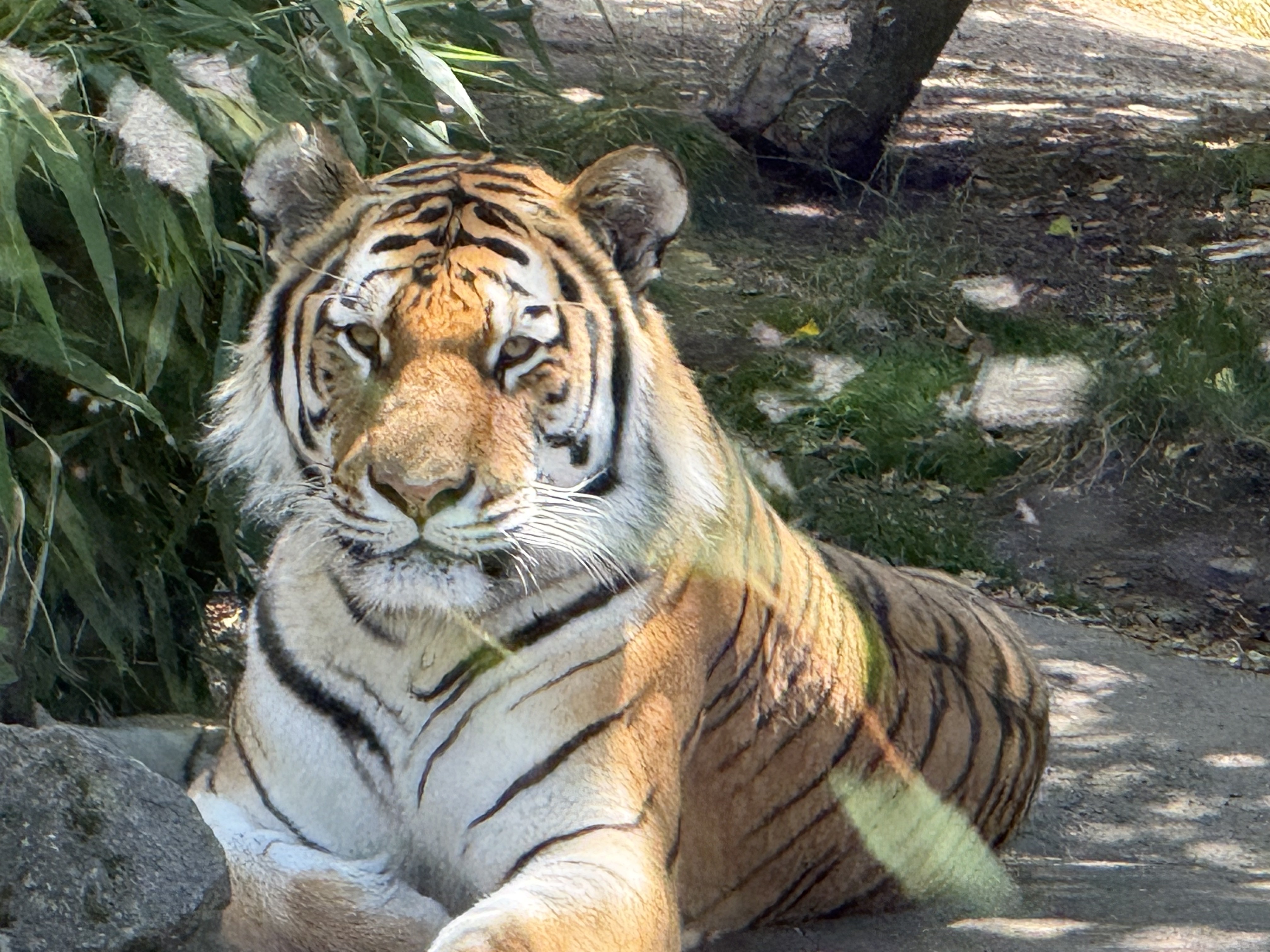
I got this image without seeing what I was photographing. With the light/shade contrast, I was blind but my camera wasn’t. What is this magnificent creature’s expression conveying?
I try not to anthropomorphize because none of the animals held captive in the Oregon Zoo are human. They aren’t stupid, intelligent, emotional, sociopathic, or anything else we sapiens self-classify ourselves as. They are simply not in a position to influence the physical world as dramatically as we. Lions and tigers don’t create cages to hold their prey before they become a meal. They hunt when they are hungry and eat what they can catch.
I don’t think my feelings about zoos have changed after my visit to this excellent repository of the animal world. Nevertheless I understand the conflict between humanity’s claim to dominance, as the top global predator, and the responsibility that comes with this natural order; what I mean is that we are the children of Earth, just as is the tiger and the bacteria. However, with great power comes great responsibility, and it is incumbent on us to accept the difficult challenge of preserving life to the extent of our abilities.
Every animal I saw in the Oregon Zoo is, or will soon be, threatened by humans. Maybe we are the cause of the next great extinction–if so, such an ominous responsibility should be treated with great circumspection. This is no light matter.
Whether we like it or not, we are responsible for the fate of life on Earth…


Recent Comments