Review of “Little Women,” by Louisa May Alcott

Read whatever you find. That’s my motto. I always heard about this book but I managed to never read it or see any of the movies based on it. It wasn’t my “thing” even though I had no idea what it was about. The title says it all.
It turns out that this is a short novel (probably even a short novella) written for teenage girls. It is also a literary study in character development — introducing, challenging, revealing the inner thoughts and emotions of four sisters during a tumultuous personal and family period as it does. Nevertheless, Jo is the central character and most of the action focuses on her growing friendship with the boy next door, but this line is dropped suddenly when the narrator’s attention turns to her older sister, who has a potential suitor. The whole story is like that. The focus jumps around a lot because of so many protagonists in such a short story. No subplot is pursued. Everything is in the air at the end, which leapt on my like a hidden tiger. Boy was I surprised…
As an adult fiction, it would have needed a lot more explanation of convenient gaps in the action, not to mention a better ending, but adolescents don’t have time for that.
Who is an Anarchist?

Anarchy: a state of disorder due to absence or nonrecognition of authority.
Wow!
Democracy is fragile whereas autocracy is a time-proven form of government. Anarchy is a theoretical political system, like Communism, that has never been applied. Look at the definition. Nature follows the Second Law of Thermodynamics, that everything seeks the least common denominator.
Given that we are struggling to get along, on our best day, denying outright the results of elections, which have been conducted in as open a manner as possible in what remains an analog world (despite fantasies about digitizing humanity), filled with human error, is paramount to Anarchy. (I hesitate to append that this even applies to Russia.)
“I don’t give a fuck. I want to run the world. I’ve got the guns to prove it.”
I admit that’s a little over the top, but my point is valid. If you don’t trust an elected government which has as much oversight as possible, and follow whatever antiauthoritarian conspiracy dogmas suit your fancy, you are…
Anarchist…
As much as it pains me to say, “If you aren’t willing to die for Democracy in your homeland, you are…”
“Anarchist…”
Don’t Say a Word
This flash fiction is something I wrote as a practice piece in the writing group I’m in. It is in response to three prompts: 1) A character needs to display at least three clearly identifiable emotions; 2) Two characters are engaging in conversation, but one never speaks; and 3) Only 5 sentences can be longer than 10 words. And it has to be less than 500 words. (Note that I used italics on the longer sentences.)

I was having a bad day, one episode in a bad week. Thank god for Freddie. We met at our usual place, for a few beers. It was Friday. He was waiting for me, sipping a Bud. He didn’t look up as I sat across from him. Something was wrong. I let it go and ordered a Bud Light. I knew what was wrong, why the silent treatment. Marital issues. I kept my mouth shut until my beer arrived.
“Was it about last weekend? Did Lisa go ballistic because we got drunk?”
He nodded but didn’t look up. White knuckles said that this was worse than I thought. Freddie wasn’t a violent man, but Lisa was a handful. “Did she…like…you know…?”
His dark eyes met mine in confirmation. His fist suddenly slammed the mug into the table. Beer splashed. The server came quickly to clean up. The young woman knew Freddie.
I finished my Bud Light. “Another round. He’s cool…”
A nod from Freddie, acknowledgment, a moment to reconnect with my best friend since high school. We had always used subvocal communications to share our feelings. “You don’t have to say a word. We’ve been through this before. Lisa is really hot, right?”
He nodded, started to speak, but I interjected, “You hate each other, right?”
Another nod.
“But you both like the sex, am I right?”
His face lit up, illuminated by memories of his and Lisa’s sexual activity, which wasn’t limited to the bedroom. His brow furrowed in deep thought. I knew what he was thinking, so I added, “I don’t get it, Dude! You and Lisa are like wolves, the way you fuck and fight. But it works for you… Did she throw you out?”
A shake of his blonde head confirmed my suspicions.
“It was that Mexican chick, wasn’t it? Did you fuck her?”
He nodded. I threw my hands up in exasperation. “I can’t believe you fucked her for those big tits!”
Freddie shrugged, wanting to say something he couldn’t form into a sentence. He’s like that. The strong, silent type. I’m not like that, so I let him have it. “You are an asshole! Do you understand that simple fact?”
He nodded and his gaze focused on his beer.
I hadn’t finished. “I would kill you to fuck Lisa, she’s that hot. Well…you know what? Your most-recent extramarital affair isn’t such big news. I have a bulletin for you. I lost my job today. I’m out of work.”
Tears appeared at the corners of Freddie’s blue eyes. His marital concerns morphed into empathy. He does that naturally. He hugged me, offering to do whatever he could to help. His sofa was at my disposal.
The Potomac River Floodplain
This post is going to talk about fluvial processes during the last few millennia, with the Potomac River as an example. A previous post discussed the geology of the Potomac’s fall line, where it drops out of the foothills of the ancestral Appalachian Mountains to the coastal plain before entering Chesapeake Bay. I’m going to keep this simple because, to be honest, fluvial geomorphology is not a straightforward topic. Rivers are constantly changing at time scales from years to millions of years. We won’t be walking back billions of years today, only a few hundred thousand, maybe a couple of million.

The lower Potomac River is braided, with multiple channels defining wooded islands (e.g. Van Deventer Island in Fig. 1). I won’t be talking about them but instead focus on what I saw, what the rocks (river sediment is unlithified rock to a geologist) tell me. The river flood plain extends to the Pleistocene terrace (yellow line in Fig. 1), which is about 80 feet higher in elevation than the river surface. No permanent structures have been constructed on the flood plain.
Some of the features we will examine are shown schematically in Figure 2. Note however, that the image shows a meandering stream whereas the Potomac is braided, which means that its channel doesn’t take those big loops shown in Fig. 2. That’s because the lower Potomac drops rapidly from Great Falls just upstream of the study area, to Washington D.C. in this area.

We started out on the area labeled “Bluffs” in Fig. 2 and traversed the flood plain, following a tributary called Horsepen Run (see Fig. 1 for location). Note that Horsepen Run is a meandering stream, so we’ll see several features that scale downward from Fig. 2 as we cross the Potomac flood plain.

Horsepen Run (aka creek) drops quickly from the Pleistocene terrace (Fig. 1) but then crosses the Potomac flood plain and begins to meander. The photo in Fig. 3 is from a location just before this change in stream topography occurred.

The changes in stream morphology seen between Figs. 3 and 4 occur in larger streams (like the Potomac) but on much longer spatial scales.
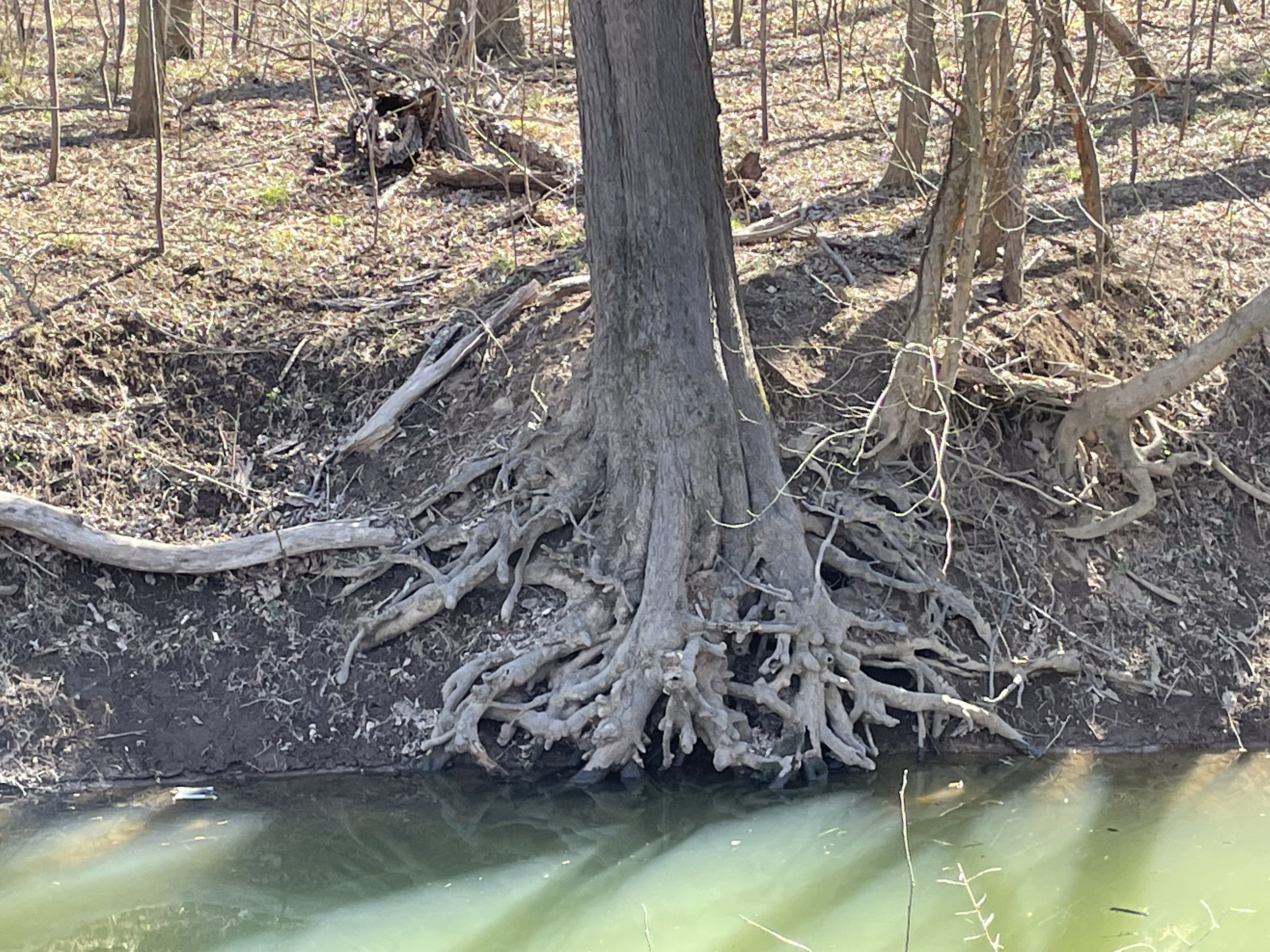


Figure 1 indicates the presence of natural levees (lower center of Fig. 1) near the main river channel. There is no “Yazoo Tributary” (see Fig. 2) at this location, so Horsepen Run cut across the Potomac’s natural levee. This can be seen beautifully in Fig. 8.
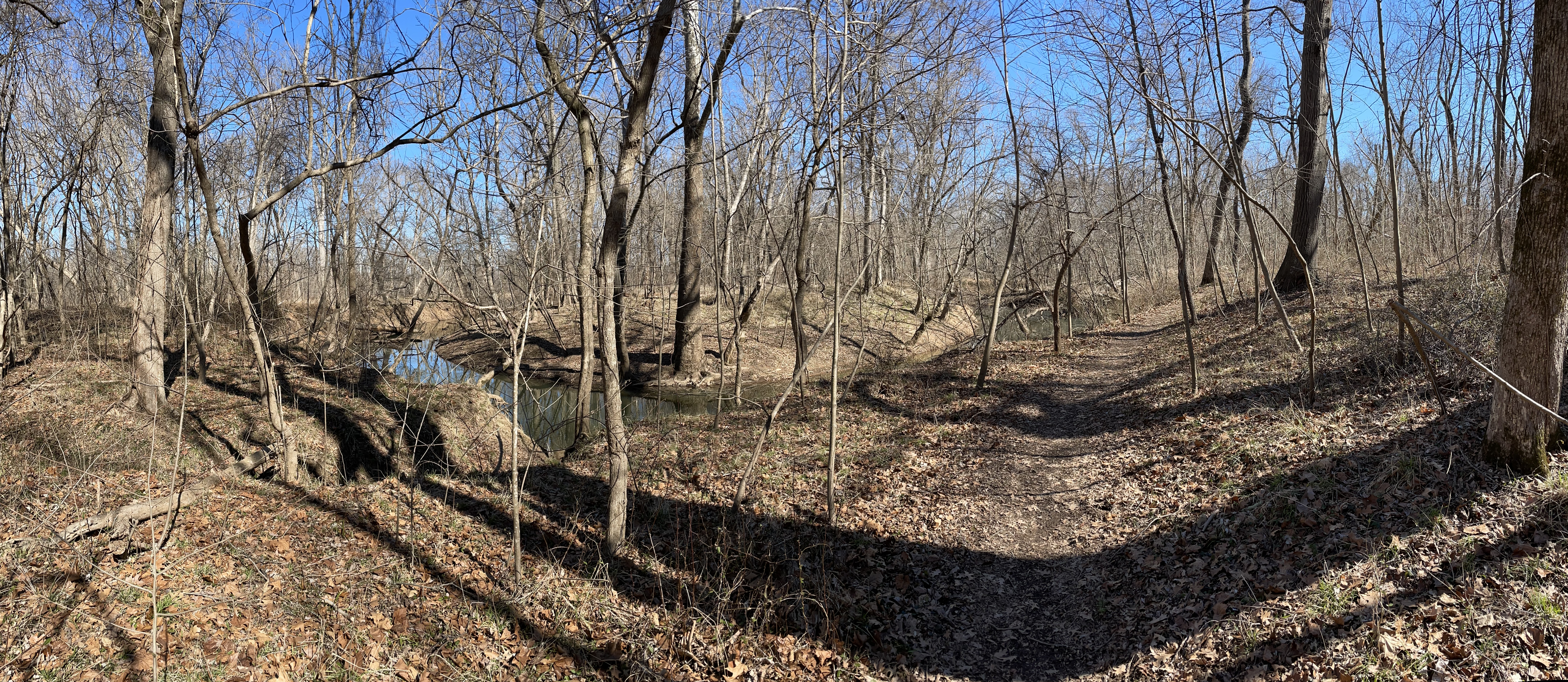

It was a beautiful February day to hike to across the Potomac River flood plain. I hadn’t expected to find so much dynamic geology so close to my new home, but there it was. The historic Potomac River transitions from its rocky confluence with the Shenandoah River at Harper’s Ferry, to the tidal river that defines Washington D.C., right here and, like America, it is not in equilibrium. The cut banks of the Potomac and its tributary, Horsepen Run, portend of rapid changes in the relative elevation of the land and the sea.
We are in for a wild ride…
Review of “Gods and Beasts” by Denise Mina
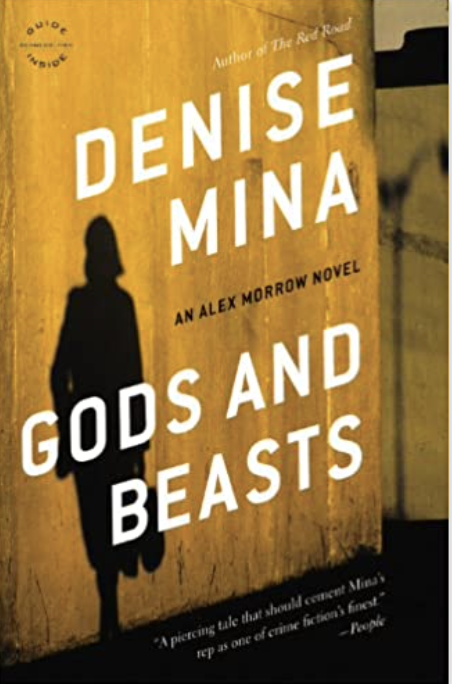
Another random read, another crime drama, but this time an incomplete part of a series, starting nowhere and leading to a dead end, and best of all, based in Glasgow, Scotland. The dialogue may have been accurate but how am I to know? Even the narrator (the story is told in threads based on close-in POV characters) uses slang, which meant northing to me. I looked a lot of it up.
Grammar and punctuation followed the usual paradigm, deteriorating at the halfway point but, because of the slang used by the narrator I don’t know if it was intentional or not. This book should not have been released outside of Scotland, or maybe the U.K. Maybe it should have been translated to American English.
I am certain there is a plot, but it’s a lot bigger than this novel, which I was not told was incomplete when I started reading it. This piece of the story had no plot to speak of. It was like a narrative of a…actually it wasn’t even a good episode of a police drama. The solution of the crime graphically described on the back cover was only in the minds of the characters, with no actual evidence. Pretty cheap.
The cast of characters promised a lot but the plot (such as it was) failed to bring their stories together in anything close to a coherent picture. The author had a great idea but utterly failed to deliver an interesting and rewarding, not to mention entertaining, piece of imaginative fiction. This novel isn’t worth the time it takes to read the back cover.
Thank god I borrowed it from the library and didn’t waste my own money…
Review of “A Consumer’s Republic” by Lizabeth Cohen

This is an older nonfiction book that has recently been rediscovered by the media. I heard an interview with the author on NPR and immediately purchased the Kindle version. Overall, I found it very entertaining and informative, despite a few issues. By the way, the subtitle is incorrect; the book is definitely not limited to “Postwar America,” assuming that is a reference to the Second World War. It actually starts at the turn of the twentieth century. It was first published in 2003, so it covers a tempestuous century of changes in how and why we buy stuff.
The grammar and punctuation are good, but the sentences get a little long, sometimes losing their train of thought and morphing into a new sentence before they end. I did a lot of rereading. At its core, this book is the culmination of an in-depth study of economic growth in New Jersey, extrapolated to the entire nation using reasonable assumptions, usually demonstrated to be legitimate. The Garden State is a good prototype because apparently that’s where the suburbs and mass marketing began, a response to the cost of living and lack of space in the New York City metropolitan area.
The author does a good job presenting the lighter side of consumerism while describing the struggle of disenfranchised groups (e.g., women and African Americans) to gain access to the market, which was seen as just as important as political rights. The entanglement of economic and political development is complex but presented pretty well in this book.
The author proves the existence of the “Consumer Republic” using many quotes from social leaders from the era that demonstrate the intentional development of the modern segmented, mass-market political economy called America. I had never heard any of this before, even though I lived through it and was one of the consumers that made it tick.
Everyone should at least be aware of their part in the evolution of identity politics in the segmentation of the mass market, which occurred over the last third of the twentieth century. It is a humorous and frightening story.
Unfortunately, I don’t think very many Americans will read this book (it is 800 pages long); at least, try to find a summary or, better yet, an interview with Lizabeth Cohen.
Home World
“Excuse me sir, but could you tell me where I am?”
The young man’s eyes were glazed when his stumbling progress stopped and he faced me. His countenance exploded in delight as he responded, “Oh, man, you are not from this world, it’s like I needed to meet an alien…”
“What?”
“I never met a blue man in person. Awesome!”
“Could you tell me where I am…on earth I mean?”
The young man wrapped his arm around my shoulder and said, “The more important question is where did you come from?”
I understood. He wouldn’t accept me without knowing my origins, as awkward as that might be. “I came here from another galaxy, a long way from here.” I realized that my ability to speak with this stranger, enabled by my universal translator, couldn’t bridge the gap in our life experiences.
The young man lit a cigarette and said, “Bring it on, dude!”
“What?”
“Tell me about your home planet. What’s it called?”
I had to think a moment before responding. “Eclectic. I come from another galaxy, a planet where everyone does whatever they wish at any moment. Is that how it is here?”
The young man took a drag from his cigarette and said, “It can be pretty crazy, but I don’t know if it’s like Eclectic…I mean, that’s wild. Tell me more.”
“Let me see…on Eclectic people don’t have physical bodies so we don’t have houses to live in, or offices where we go to work, no freeways or metros—”
My companion stepped back and asked, “Are you like ghosts? Did you come from the afterlife? That is way cool!”
“Not at all. What I mean is that it isn’t like…this. I don’t have to walk to get around, so we don’t have roads or highways, no cars. We move between places by…hmmm…I just have to think about where I want to be.”
“I get it, like in Star Trek, with the transporter and all. Cool. What about trees and shit like that?”
“We don’t have any trees or plants on Eclectic. No wild animals either. What I mean is that life didn’t evolve like here, with bacteria and plants and animals and intelligence. We just skipped straight to the top of the evolutionary ladder, and became virtual beings, but grounded in reality–not ghosts…”
“Is Eclectic a planet, you know, like earth?”
“As far as our scientists can tell, we live in a subset of dimensions from the eleven that define the multiverse we share with you. There are no planets.”
“Do you have a family?”
“Yes. I have a partner and two children. We live in a beautiful sphere surrounded by a sea of blue methane, sparkling with effervescent bursts of red.”
“Why are you here?”
“I am an explorer.”
“So, you guys have like a NASA or some shit?”
I had been briefed on this universe, so I answered, “Yes, exactly the same.”He threw the cigarette into the street. “Cincinnati, Ohio.”
Review of “Neighbors” by Danielle Steel
I’ve seen paperbacks by this author all my life, in airport book shops and bookstores. I never read one of her more than 100 books (I guessed at the total but they’re listed on the frontispiece), so I figured I might as well. If you’ve read any of my reviews, you know I don’t have very high standards. Still, for Danielle Steel to still be on the shelves, her books must be pretty popular. The back cover claims that she’s sold almost a billion copies of her novels. That’s quite a feat.

I’m not sure how to begin. I didn’t find a single cut-and-paste error or misspelled word. Commas weren’t randomly distributed and the grammar and punctuation were textbook correct. Either the author is extremely careful or she has an outstanding copy editor. For all I know, she may write on an old Remington typewriter, like I started out on as a child (from the photo on the back, she looks old enough).
This novel reads as if it were written by a third-grader, for a third-grade audience. Most of the sentences consisted of a main clause, followed by a “comma” and “and,” followed by an often-unrelated clause that had nothing to do with the original topic of the sentence. A few “buts” were thrown in, possibly as afterthoughts.
I have never read a book as repetitive as this one. Material from chapter one was still being repeated (for the tenth or twentieth time) in the last chapter; sometimes a detail about a character’s background or personality was repeated in the same paragraph! And I thought the Qur’an was repetitive (actually, it wins the prize…so far).
This is an outstanding example of why it is a really bad idea to use an omniscient narrator, especially with a lot of characters. The narrator was head-hopping (sharing the thoughts and motivations of different characters within a short span of words) so much I got dizzy, going so far as starting a sentence in one mind and ending it in another. And there were a lot of minds to invade, at least ten, probably a dozen if you count late-comers.
Because of the omniscient narrator, there was no surprise in what passed as a plot. The reader knows all about everyone, long before they can show their true colors. What a sham! I found myself wondering what meaningless scenes would fill the remainder of the book long before I reached the half-way point.

Needless to say, every one of the ensemble cast of characters was sorted out and either sent to Heaven or Hell by the end. If you like simple stories with no suspense and happy endings, this novel is for you. And there are so many others to enjoy, as listed in the frontispiece photo above. For me, I’d rather read a poorly written novel with some surprises and (hopefully) a plot rather than third-grade prose.
Have fun…
Heaven or Hell?
I’ll keep this short.
Most Americans believe in hell and heaven.
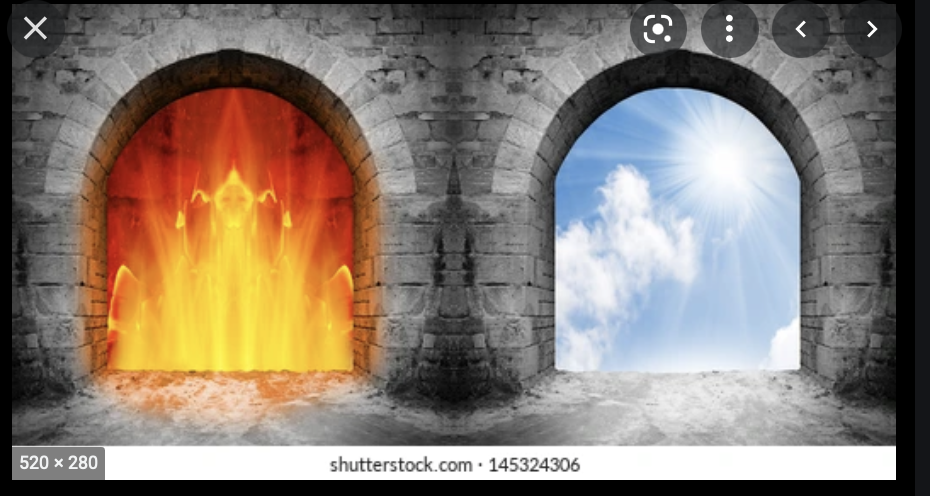
I don’t blame them because they are living it, just not in the afterlife, but right now. They aren’t alone, as evidenced by the billion people who live below the United Nations’ poverty level. Being hungry every FUCKING day is living in hell.
I would argue that being so afraid of the world that you reach out to anyone who promises redemption, even if through extreme ideologies, is the same as starving to death, one day at a time. The only difference between these two extremes is the physical pain suffered by those in a “physical” HELL.
The pain suffered by those in psychological HELL is no different, even if it doesn’t entail as much physical discomfort and even pain. They suffer, but they are in a position to share their pain with those less fortunate, creating the HELL we all share.
Let’s stop this BULLSHIT drivel about some kind of afterlife. We are all in HELL, from the day we were born until the day we die. Some think they are in HEAVEN because they are reaping the rewards of temporary success in HELL, at the expense of other conscious beings, but they will join us all in oblivion.
That is their choice of HELL.
HEAVEN is more difficult to comprehend, because the complex ideas of pleasure, joy, satisfaction, and even spiritualism cannot be defined. I suppose that the wealthy sometimes say to each other, that they are living a heavenly life. It makes sense. A few percent of the population is in HEAVEN while the vast majority is living in HELL.
This is it. Right here, right now. History tells us that life is what it is…there is no afterlife, a myth invented by the elites in past millennia…
My positive message is that life can be HEAVEN or HELL and it’s up to us to choose where to spend our time, which will seem like an eternity no matter which choice you make…
A Typical Basin and Range

My last post examined some structures and petrology of a Metamorphic Core Complex (MCC), whereas the previous one discussed the geology of the Central Highlands of Arizona. I mentioned several times that these geologic provinces were but two manifestations of the profound tectonic change associated with uplift of the the Colorado Plateau.
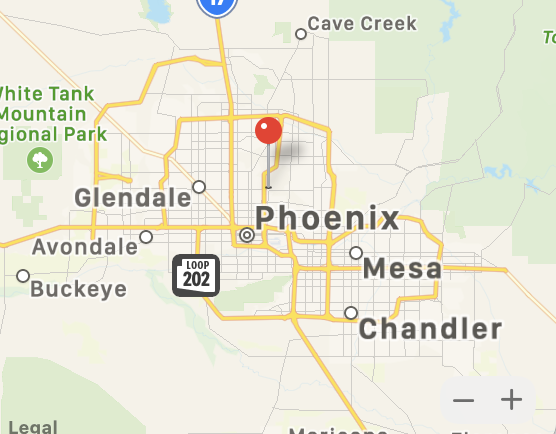
Today’s post is from the Phoenix Mountains, a municipal park inside the city limits (Fig. 2). My geological interpretations and dates, etc, come from a report by the Arizona State Geological Survey.

To the west (left of Squaw Peak in Fig. 3), a deep fault has been identified, which thrust the metasedimentary rocks comprising the eastern part of the range into juxtaposition with the metavolcanic rocks of Stoney Mtn and other outcrops to the west (Fig. 4).
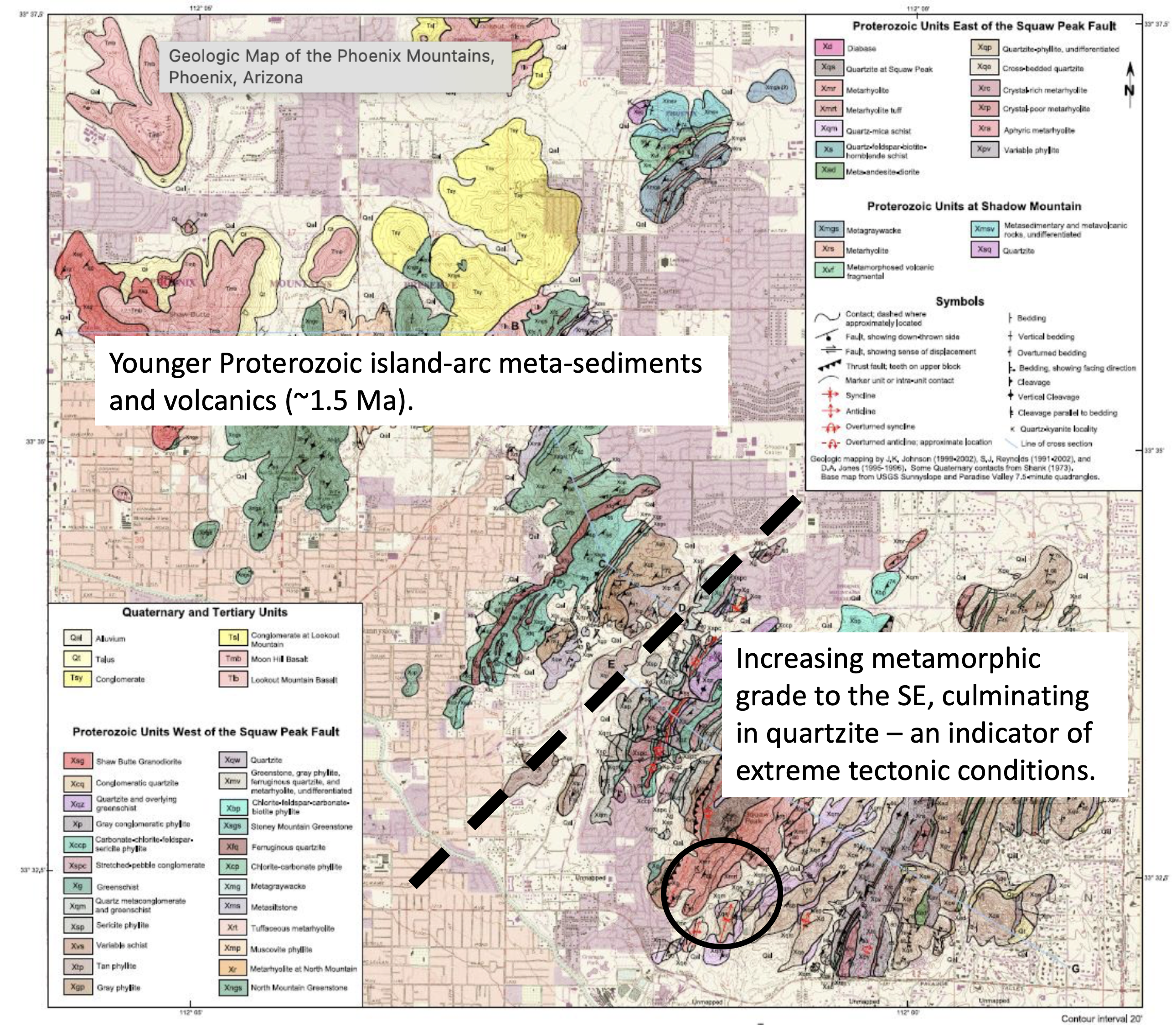
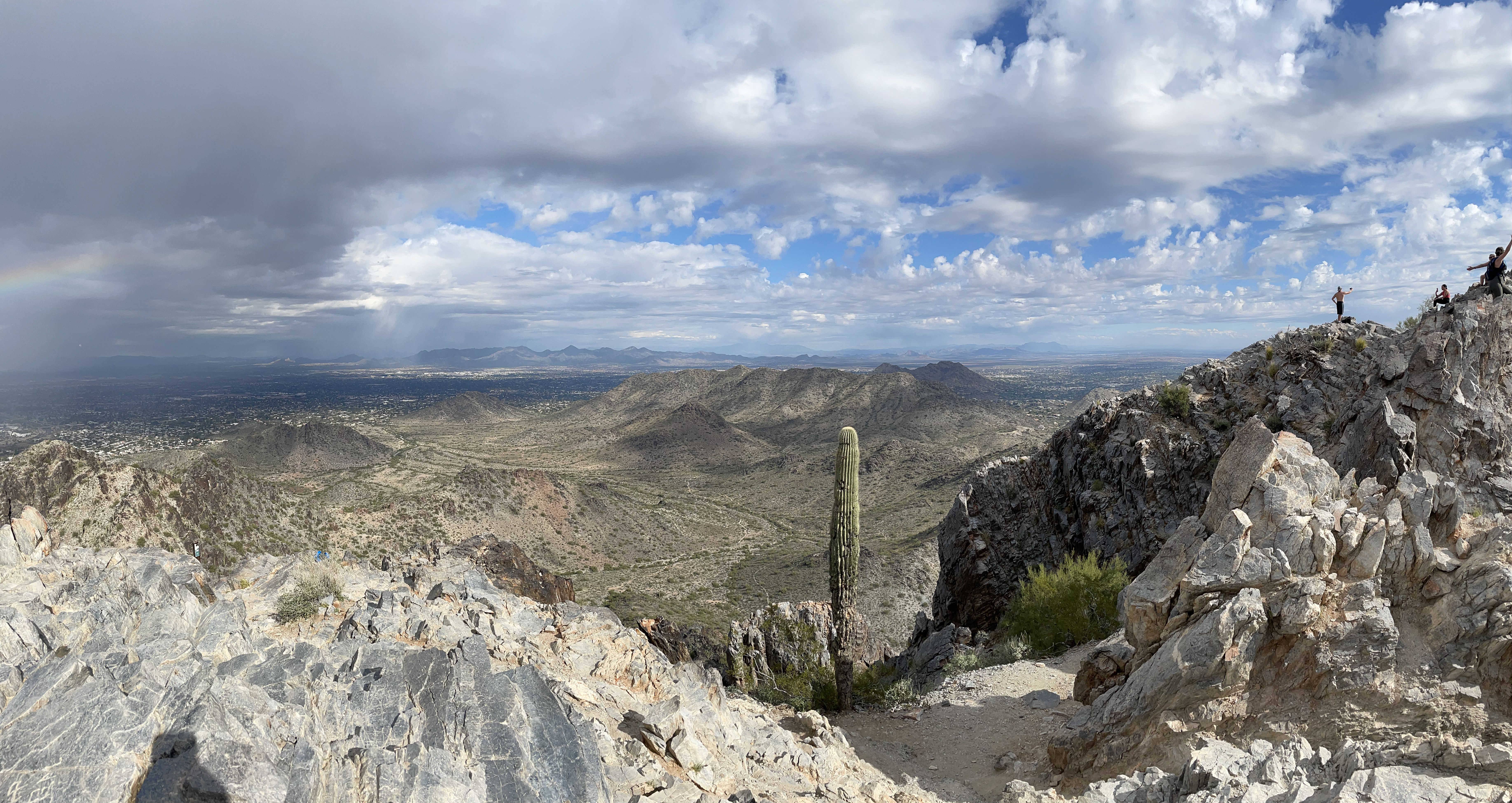
Today’s post is focused on the circled area in Fig. 4 which, if we look back to Fig. 3, is the highest peak within the Phoenix Mountains. I was intrigued by the view from the parking lot (Fig. 1), and compelled to explore this fault-block in person. Note that the area discussed in this post in contained within the circle in Fig. 4.
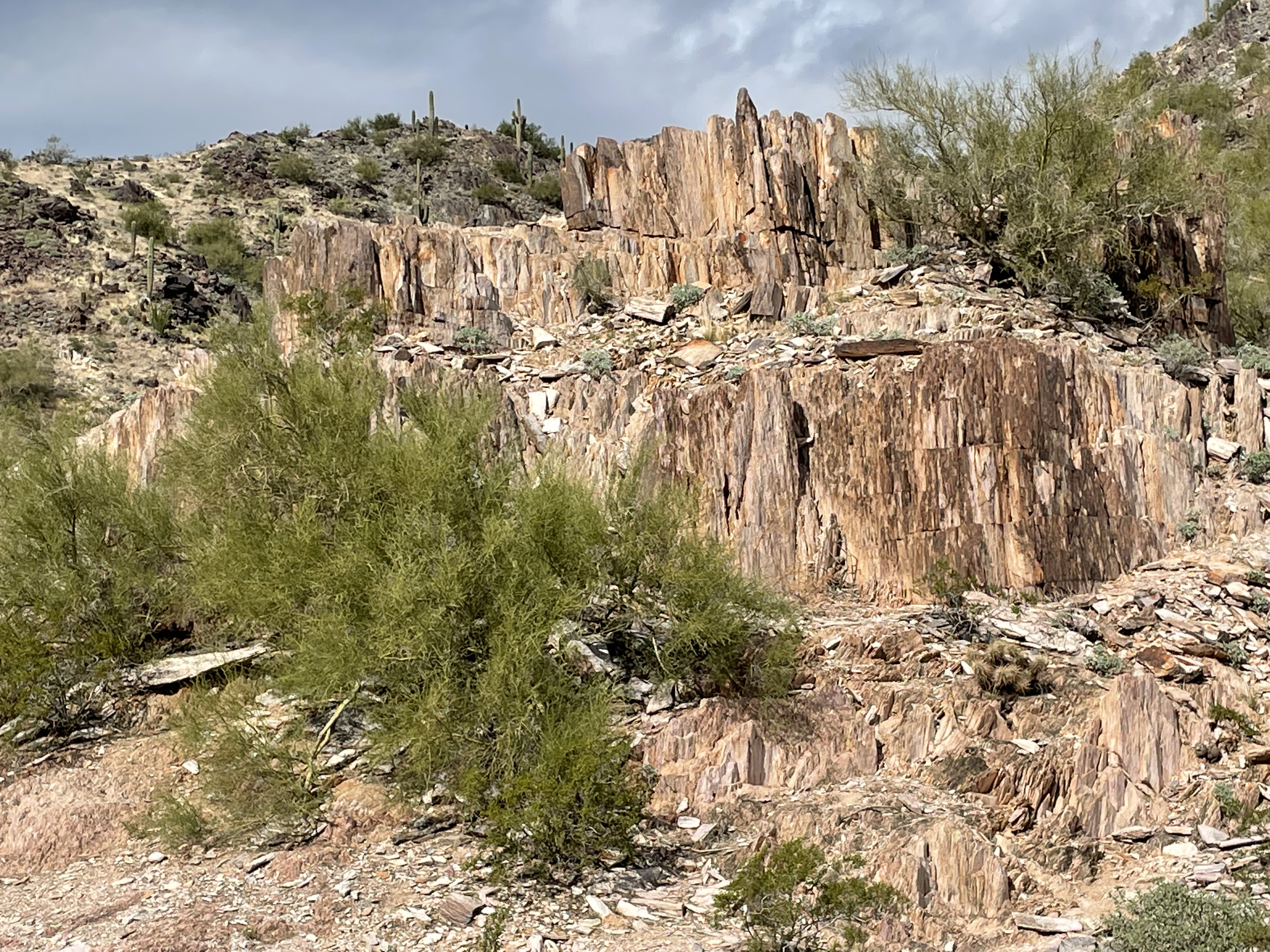
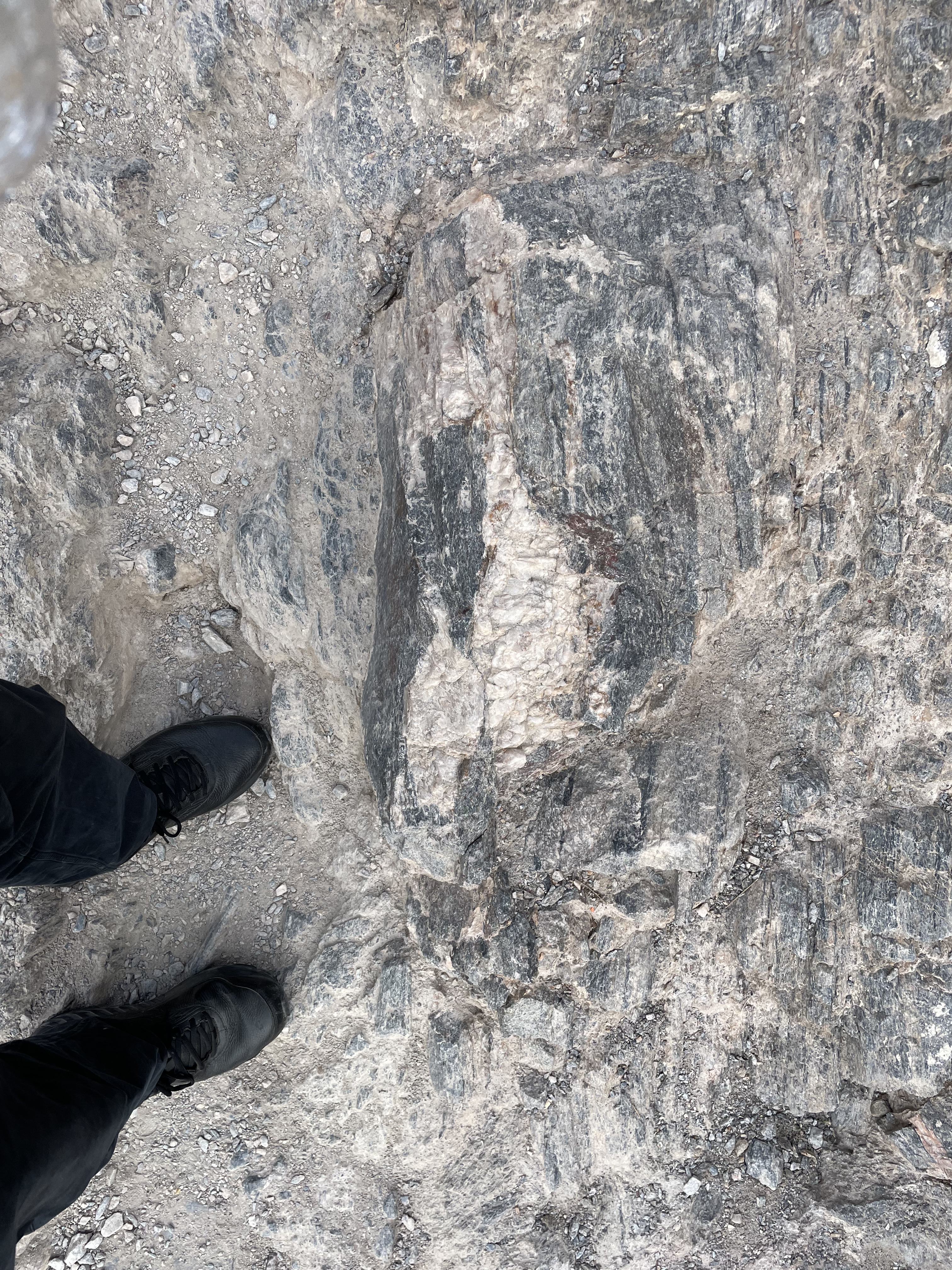
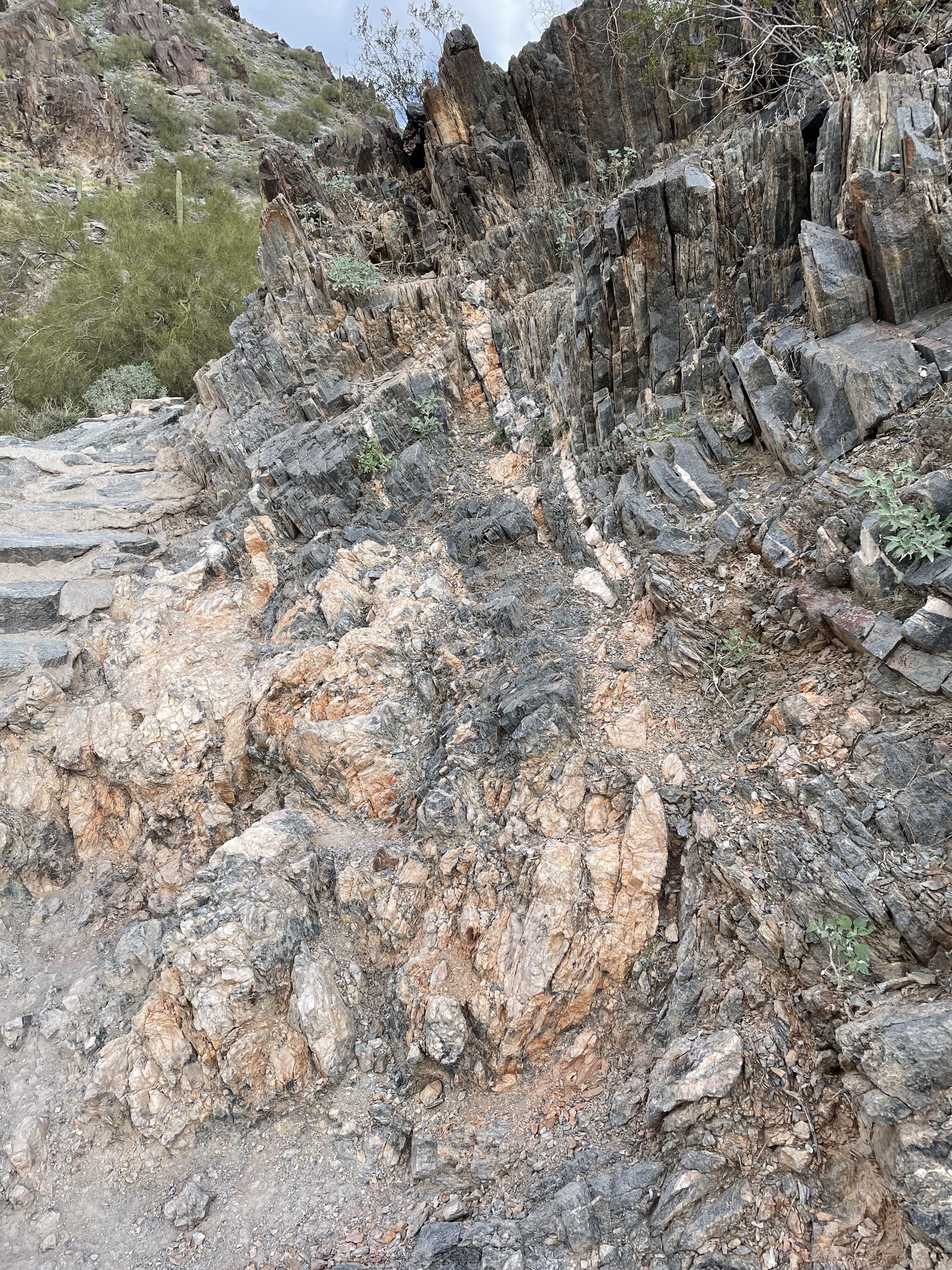
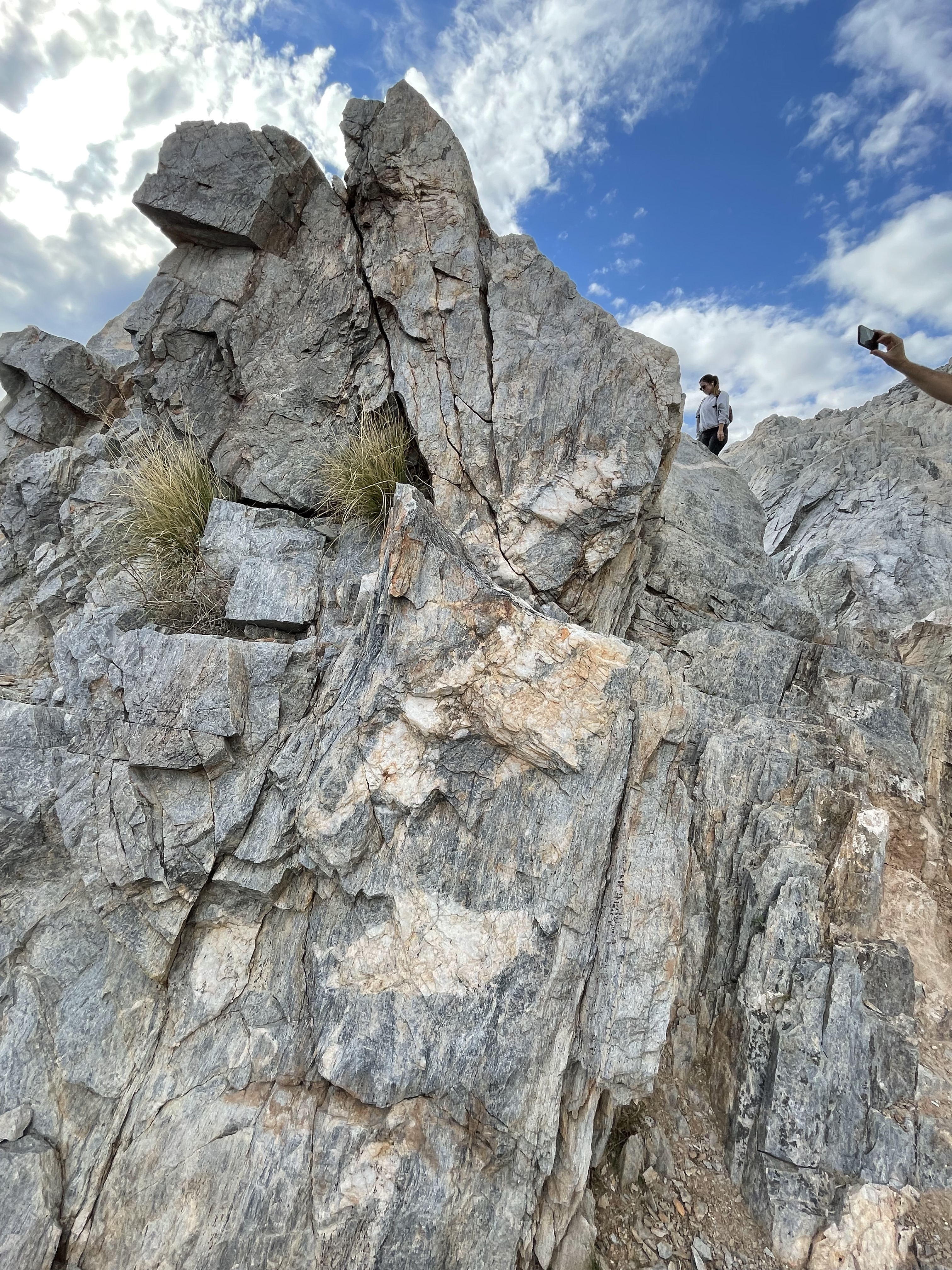
The geology of Piestewa Peak is relatively simple. Schist. In this case, the metamorphic grade isn’t too high and the rocks preserve much of their original thin-bedded layering. However, they are standing on end (Fig. 5).


Summary
There isn’t much to say about this post after my road trip to Prescott, and then a hike in the White Tank mountains. The first thing I can say with confidence, however, is that Squaw Peak (aka Piestewa Peak) is squarely located within the Basin and Range, defined by faults that have brought disparate rocks into juxtaposition, but only in a small area. The Phoenix Mountains are nothing like the vast, overlapping fault-bounded mountains of the Central Highlands, but instead they are isolated in a sea of sand and gravel, sediment eroded from the long-gone rocks that encased them for eons. There was no superimposed shear evident in these rocks as in the White Tank mountains. They just rose from the earth’s bowels along nearly vertical faults.
These rocks aren’t as old as those we encountered in the Central Highlands — by about a billion years. Nevertheless, they suggest that plate tectonics determined the history of central Arizona, even so long ago. Because of the lack of suitable rocks, no plate reconstruction can be attempted for the Precambrian (neither a geologic period, era, or eon); thus, we can only assume that things were the same but different — upper mantle processes dragging crustal plates around, but without plants, oxygen, or animals to intervene in surface erosion.
We don’t know what happened that long ago, not to mention the billion years between the creation of these sedimentary/metamorphic rocks and the emergence of multicellular life. We can only view the rocks we’ve seen in Arizona through a glass darkly…

 Timothy R. Keen
Recent Comments