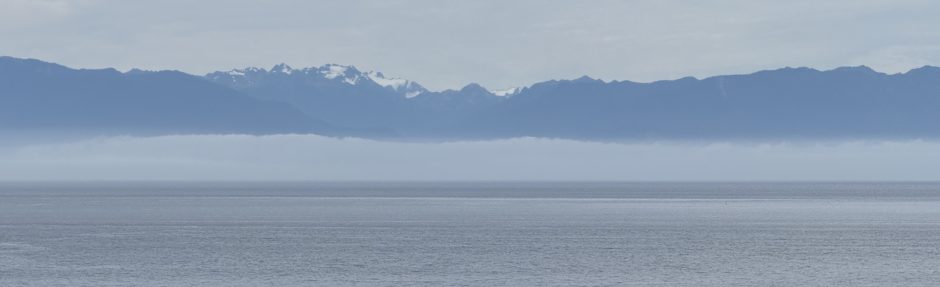
Mount Saint Helens Revisited: Ape Cave
We made it to our destination (Fig. 2) and explored a rare lava tube at Mount Saint Helens. This lava was erupted 1900 years ago as part of the same sequence that destroyed the forest a short distance away.
A full discussion of this fascinating natural feature is available from Washington Department of Natural Resources.
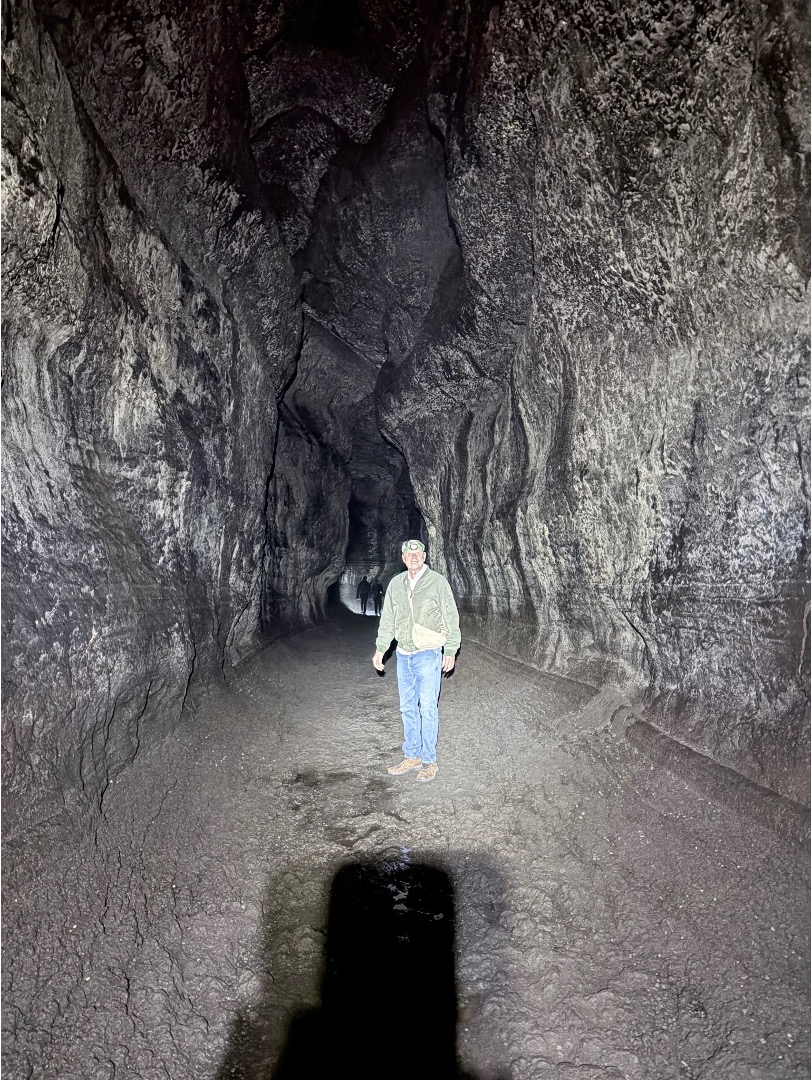
Figure 1. This lava tube is a lot larger than the tree casts we described in the last post. This immense cavern, which is more than 2.5 miles long, was created when a single basaltic lava finger flowed over the landscape. The outer material cooled in the air and insulated the interior, like an oven, allowing the remaining lava to exit the end of the tube. This left a void to be filled by subsequent lava flows. According to the information displayed at the site, the entire eruption lasted about 100 days.
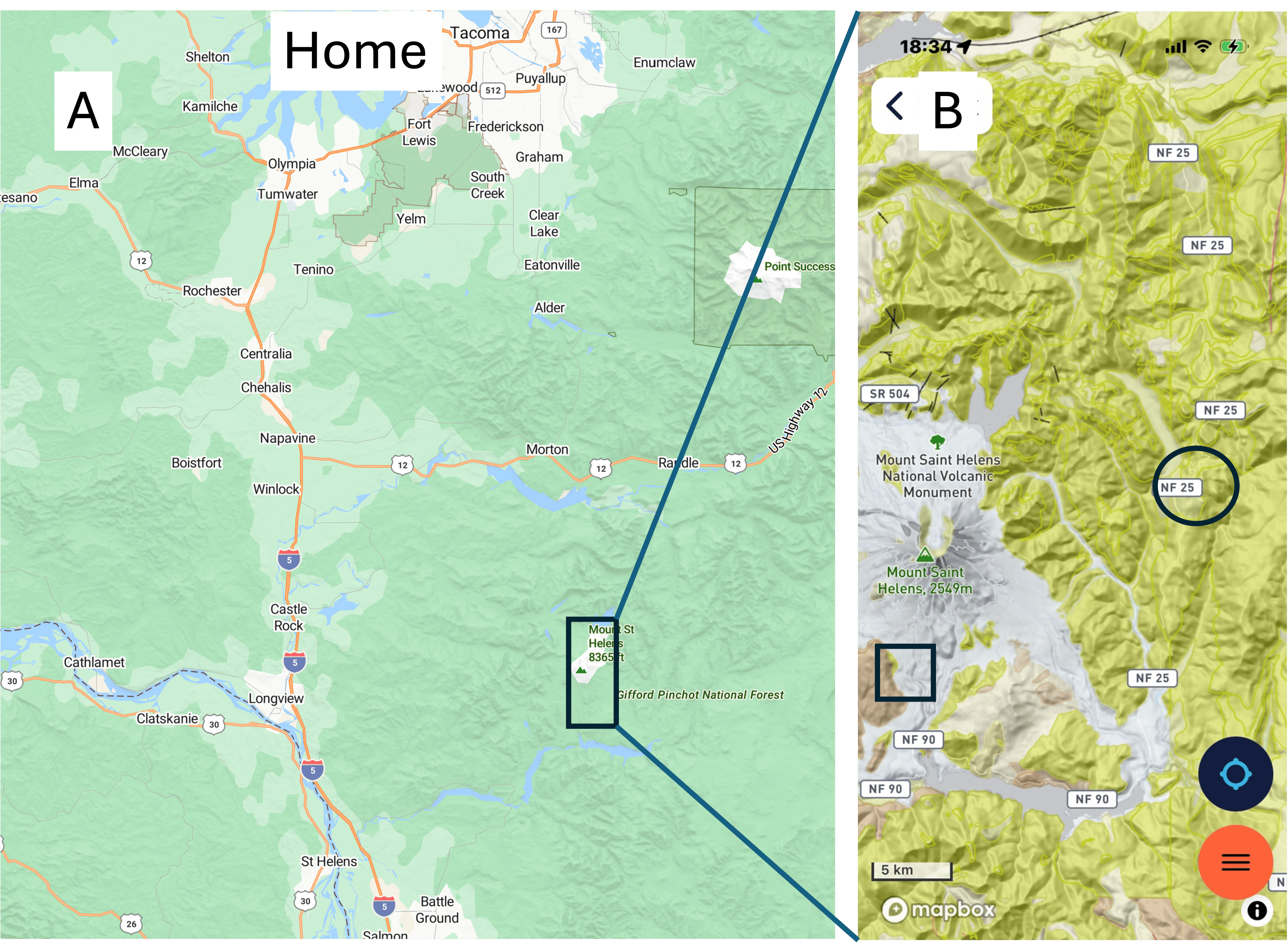
Figure 2. Ape Cave is presumably named after the first eruption sequence of Mount Saint Helens, dated about 40 Ka. I didn’t find an explanation for this confusion, but it might have something to do with the Bigfoot legend associated with Ape Canyon, not far away. At any rate, the lava tube is indicated by the square in (B).
This video captures the scale of one of the many chambers better than any image. My narration isn’t very technical.
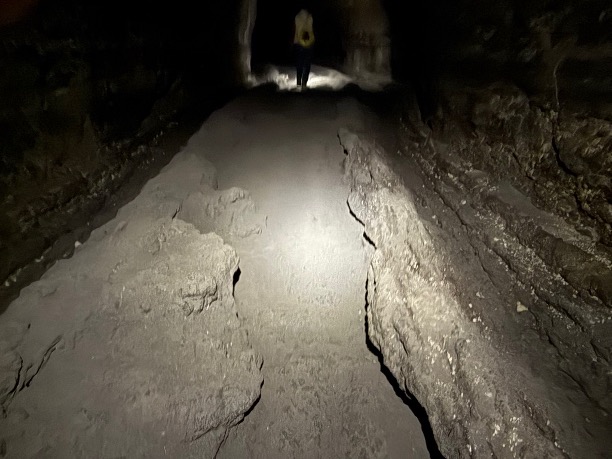
Figure 3. These parallel ridges running along the bottom of the cave near its terminus are the remnant of the last flow to use this conduit to reach open air.
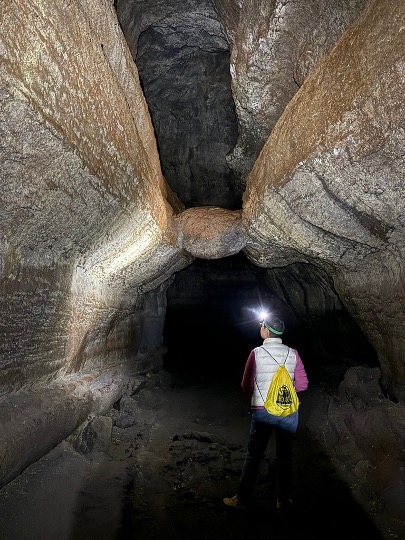
Figure 4. A block of basalt transported through this narrow passage became stuck where the walls of a previous flow almost meet, leaving it stranded. It looks like it partially melted into the walls, however.
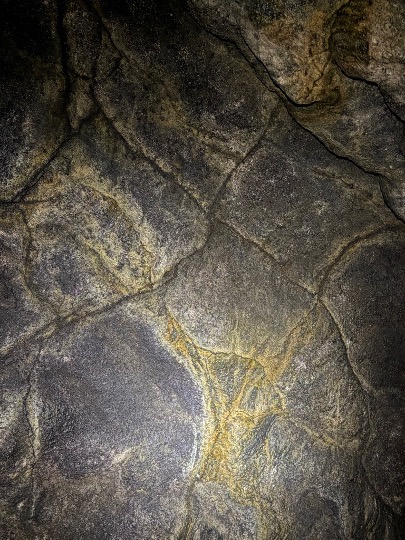
Figure 5. This view of the ceiling reveals a joint pattern caused by cooling of the outer layer of lava. Several generations of fractures occur throughout the cave, created as individual flows cooled differentially.
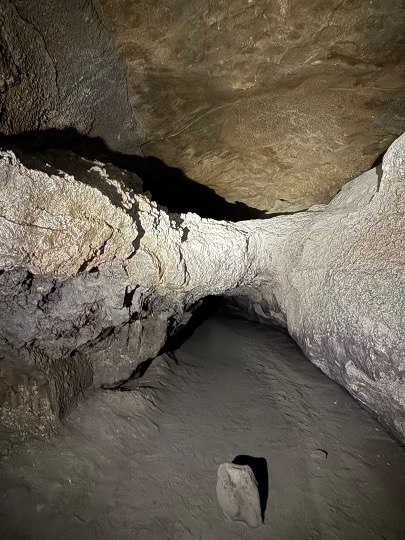
Figure 6. This is the end of the tube as it exists today. Apparently, there is no modern opening; it probably collapsed during the last 1900 years.
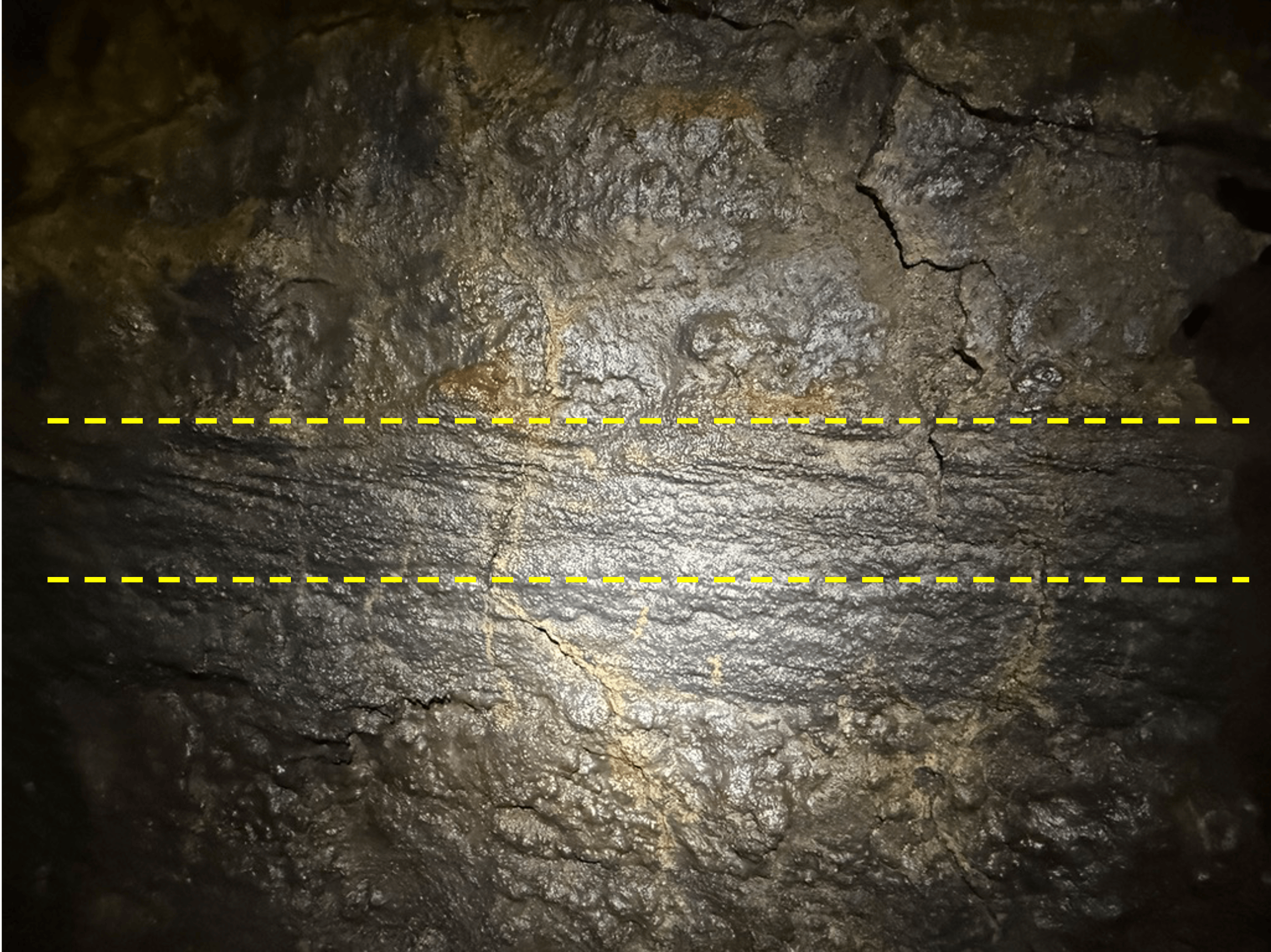
Figure 7. As a retired sedimentologist, I immediately noticed the layer outlined by the dash lines. This looks like cross-bedding; the layer fills a depression below the line, and is truncated by an overlying flow. This is interesting because cross-bedding is associated with particles being transported by wind or water; how it appears in a lava flow is an intriguing problem–perhaps heavy minerals like pyroxenes and lighter plagioclase feldspar?
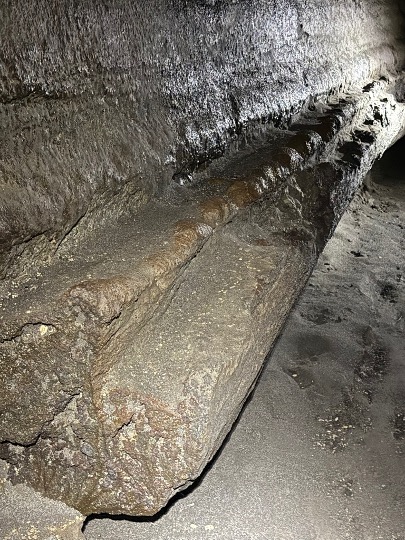
Figure 8. This is a good time to briefly explain how the ledges seen in Figs 1, 4, and 6, and the video, were formed.
Once the lava tube was created by cooling of the surface of the original flow, subsequent flows ran through, but didn’t fill, an insulated tube. Their surface was usually below the original ceiling. The coolest parts of this conduit would have been the sides (heat dissipates more quickly through older, cooler basalt than the superheated air above the lava river). Thus, ridges like these formed where the molten basalt hardened. Of course, these subsequent flows were of different volumes and the rules of stratigraphy cannot be applied. Geologists have worked out these relationships but that is beyond the scope of this report.
Let’s just say that many rivers of magma flowed through this channel, like stormwater through a sewer pipe–some larger than others.
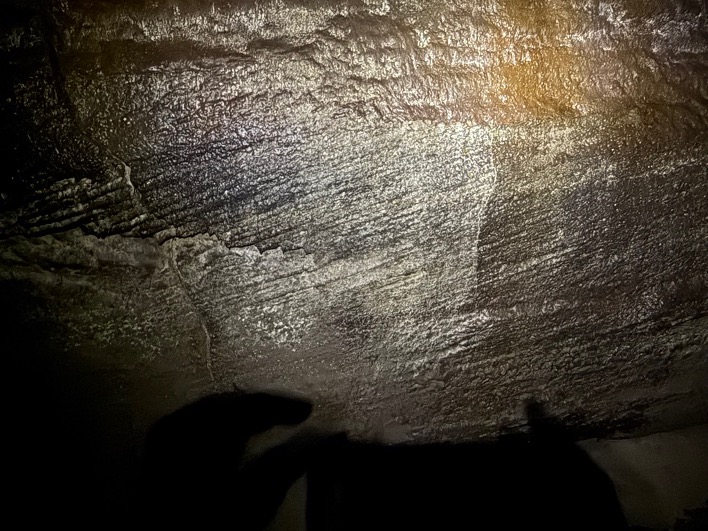
Figure 9. This is an enigmatic photograph because I don’t remember which wall it was on. I didn’t notice the detail when I took the photo, and now I can’t say if this is an excellent example of cross-bedding (always tilts downstream) as in Fig. 7. or a total mystery. My only excuse is that it was TOTALLY BLACK in the cave and I was disoriented the entire time.
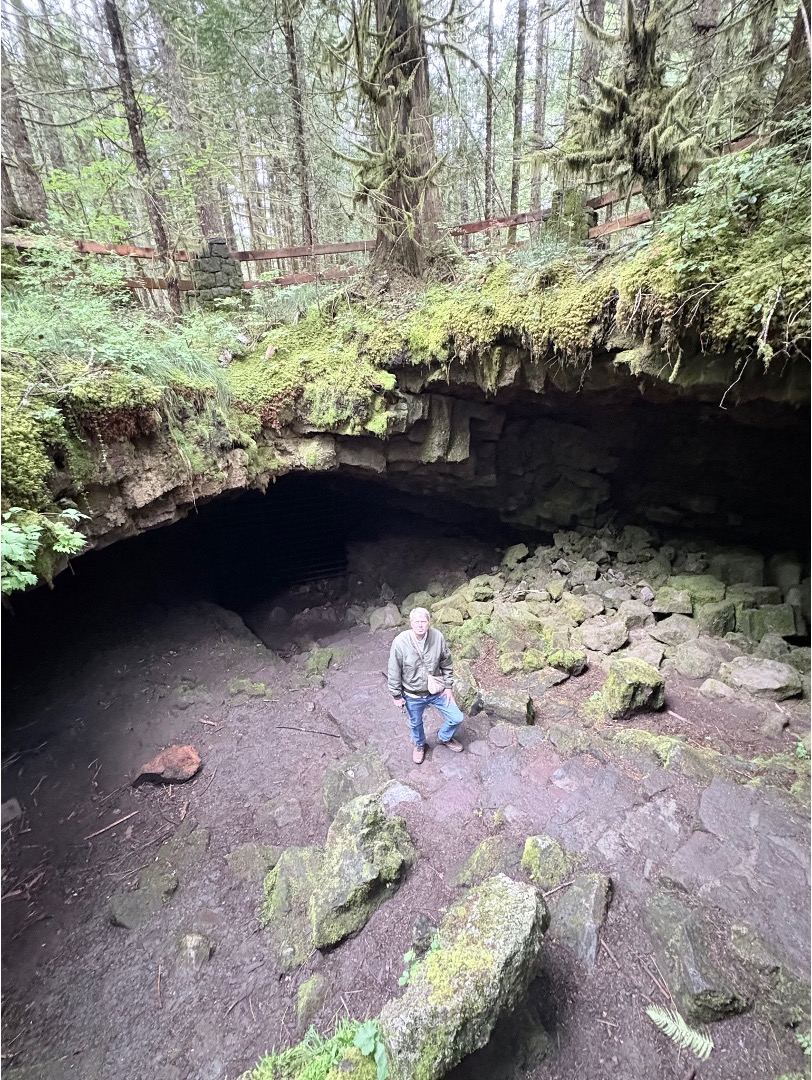
Figure 10. We made it out without spraining an ankle or hitting our heads. This cave-in is the only entrance/exit for the downstream part of the tube. There is another one 1.5 miles upstream, but that route is difficult (according to the park information).
Final Thoughts
The Ape Cave lava tube, and the missing forest from my previous post, are part of the Spirit Lake eruption phase of Mount Saint Helens, which began about 1900 years ago and continues to this day. The magma chamber didn’t erupt at the center of the stratovolcano, but instead found an opening along one of the many cracks in the thick pile of volcanic rock that had accumulated during at least 50 million years.
Lava tubes present a unique eruption environment. Ground water that finds its way into the magma chamber cannot escape, thus pressurizing the conduit and altering the lava’s behavior. Imagine lava as thin as water surging through this passage, sloshing around, encountering obstacles, rushing headlong downhill towards what apparently was a small opening, if Fig. 6 is any indication of the narrowing channel.
It was a great drive through a wild terrain to reach Mount Saint Helens, and the destination was worth the effort.


Recent Comments