Immigrants
Inyo looked into a dark sky illuminated by the same stars he’d grown up with and asked himself why he’d volunteered for this futile endeavor, traveling to a world known only through uncorrelated images and brief videos collected by autonomous vehicles. Despite the identical night sky and—according to the data returned by the unmanned probes—expected similarity in the physical environment and its human inhabitants, this was not Earth.
The Explorer program had been explained to him only minutes before his trip across quantum space to this world. He’d been conscripted into the project at the moment of conception along with thousands of other zygotes, unknown to the parents of these potential quantum travelers. His zygote had been quantum entangled with another zygote, randomly chosen in a blind selection process, known only to the computer algorithm making the decision. The unfortunate machine had been destroyed immediately in an effort to keep the quantum coherent zygotes entangled with a universe identified by random probes sent in previous years. The only record of events was the identity of the mothers. Inyo and the other unknowing participants had been tracked, given whatever resources were required to fulfill their potential, and contacted when enough data had been collected to justify the risk of decoherence. He would meet his traveling companion upon arrival at his destination. The middle-aged man who’d briefed him hadn’t known the name, age, ethnicity, gender, or even dress of this person; but Inyo had been told that he would recognize them immediately.
He turned to the young woman standing next to him, dressed in form-fitting jeans and a black, leather jacket. Her backpack was the twin of his, delivered prepacked with an assurance that it contained everything he needed. The very attractive blonde woman looked at him curiously, as if unsure how to treat him, before breaking the awkward silence. “I’m Nadera-Ten. You must be my assistant.”
Inyo met her steady gaze. “I don’t think so, Nadera. My name is Inyo…”
The corners of her mouth turned up ever so little in a half-smile Inyo had seen too often during his life. “Inyo what?”
He couldn’t believe that bullshit had followed him to another universe. Better to deal with it up front rather than let her think she was his superior. He was so tired of Tens assuming they were smarter than everyone else.
“One. Do you have a problem with that?” he asked a little too strongly.
She shrugged, her smile now condescending. “No, do you?” He was dismissed just like that, as she added, “We should get out of this open space, find lodgings, and familiarize ourselves with the local environment.”
Inyo’s eyes swept the heavens again, avoiding eye contact. “What do you suggest, Nadera-Ten?” He emphasized the numeric appendix to her name, expressing his disdain for an educational system that assigned an intellectual potential to preschool children and permanently displayed it as a sign of their inadequacy. She had the highest potential whereas his designation—his full name was Inyo-One—didn’t bode well for their future cooperation.
“We are in an open stadium used for athletic events. There will be portals, probably secured at this time of night, but I foresee no problem exiting. Let’s go.” She started towards the nearest end of the huge amphitheater, unhindered by the heavy backpack.
Inyo picked his up and struggled to get his right arm through the heavy pack’s strap, noting ironically that she would probably be Nadera-Ten if her appellation was an index of physical strength. He hurried to catch up and matched her purposeful stride step for step, wondering why she was in a hurry. This was an excellent opportunity to get used to this new world, let their minds and bodies adapt to the unfamiliarity of being disentangled from their universe, the real Earth. Maybe that thought hadn’t occurred to her yet? That was the problem with A-type personalities like Nadera and most Tens; they were overconfident, which was probably why a lowly One had been assigned as her companion, someone to remind her that this wasn’t a simulation or video game.
They entered a tunnel dimly lit by incandescent bulbs, separated into enclosures by waist-high, steel fences that converged on a series of openings blocked by turnstiles. They could have easily surmounted the barricade but instead tried several of the barriers before Inyo found one that rotated outward, an exit. He got through before Nadera could cut him off, feeling childish at his sense of accomplishment. The next barricade wasn’t as easy to elude.
“Open it,” Nadera said, her body language saying that Inyo should figure out a way to pick or break the padlock securing the gate, hanging from a hasp on the other side of the floor-to-ceiling steel bars.
Her arrogance infuriated him. What was he, her servant? They were equals, and he had no more experience with mechanical devices than she; in fact, he was a psychologist and computer scientist whereas she was at least an engineer and physicist…she should open the damn gate, not him.
“Go ahead,” he replied, struggling to replicate her authoritarian tone.
Her full lips turned into a thoughtful frown. Finally, she smiled, pointed at his backpack and said, “I believe the cutting device is in your bag,” smiling triumphantly.
Not wanting to admit defeat or struggle with the heavy pack while she watched victoriously, he turned away and quipped, “Left side, upper pocket. Be a dear, would you?” He threw that in, knowing she wouldn’t get the sexual jibe he’d learned about in a historical psychology class in college.
The frown returned as she reluctantly removed the short, cylindrical laser cutting tool, presenting it with a satisfied smile. “Here you go.”
There was no escaping her victory without being childish, so he took it from her a little too quickly, causing her lips to curve up smugly, and cut the lock’s shackle. He kicked the gate open a little too hard, causing it to slam against the fence with a loud bang. Her eyes opened in mock surprise, her mouth forming a perfect ellipse, her words mocking.
“Oh my, Inyo-One, I didn’t know you were so excited about the mission, what with your constant whining and complaining about this and that…”
Inyo replaced the cutting tool in his backpack without looking, to make the point that he’d outwitted her, and said, “Ladies first.” She wouldn’t understand the sexist slight, being the unlearned barbarian that she was.
As Nadera strode past him, he couldn’t avoid one last dig, one she would certainly notice. He placed his hand in the small of her back…and gently pushed her. She spun as if on ball bearings, her clenched fist inches from his nose. “If you ever touch me again, I’ll break something that won’t heal.” She wasn’t smiling.
Inyo refrained from expressing his satisfaction at having bested a Ten, especially one as perfect as Nadera, and said, “Sorry, I’ve been studying the remote data and focusing on blending. I guess I should have informed you of the customs we might expect here, but there wasn’t time…”
Doubt flickered, warping her lovely features for a microsecond, before she responded. “You will need to brief me on any trivial social behaviors we may encounter, as soon as we have established a base camp.” She turned to lead Inyo into the unknown, but her advance was interrupted.
“What’re you guys doing here?” The brunette had appeared out of the darkness. Several other young men and women materialized from the shapeless shadows, dressed in tight clothing reminiscent of a previous fashion trend on Earth.
A guy with raven hair and an ashen face emerged, dressed in black and wearing a matching fedora, a large mechanical cutting tool in his hand. He held it out and said with some disappointment, “I guess you guys got here first. I really wanted to cut that fucking lock with this big-ass bolt cutter…”
Inyo ducked and picked up the pieces of the lock, displaying them for the newcomers. “Sorry, dude, but we gotta study now, burn the midnight oil, all that bullshit.” He tossed the broken device on the concrete and with a flourish of his hand towards the open gate, added, “It’s all yours. The night is young…”
Fists were held up expectantly, so Inyo held his up and learned a local custom not reported by the probes—fist bumping. As the guy with the bolt cutter headed through the gate, Inyo took a chance on interrogative dialogue. “I know this sounds stupid and all, but we…” he began and put his arm around Nadera’s waist, resistance tightening her lower back muscles. “We’re a little stoned, going to study together in a private room, we both have roommates and, well, we didn’t think to make a reservation…Jesus, we’re so stupid—”
Nadera giggled and interjected, “We’re lost, uh, can you direct us to the nearest motel?”
The young man scoffed and replied, “The Sonesta is about ten-minutes up Nicholson.” He pointed over his shoulder and, grinning, added, “Whatever you guys sampled, I hope ours is as good.” With that he turned and hurried to rejoin his companions.
Nadera wasn’t acting so confident as she matched Inyo’s pace, brushing against him as he slowed to a stroll, heading toward distant bright lights. “How did you know what to do? Those people are from an alien world, but you communicated with them as if you’d lived here all your life.”
Inyo relished the moment, certain that she would get her footing and confidence too soon. His response was subdued. “We’re a team, Nadera. I was told that we’ve been entangled since conception, and from what I’ve heard about this mission, probably will be for the rest of our lives, so we have complementary knowledge—no one can know everything—and skills. By the way, you’re a fast learner, the way you backed me up…and didn’t freak out when the social situation called for physical contact. I think we’ll make a good team.”
She stopped and her gentle touch on Inyo’s arm arrested his footsteps. He turned and met her uncertain gaze as she said, “I have to remember that. We are a team. But we don’t know anything about each other, which I assume is intentional, some kind of failsafe because, having been entangled from conception we are theoretically in a quantum coherent state, which is only theory, so we don’t want to perturb our initial quantum state any more than is necessary to complete our mission.”
“What are you saying?”
She sighed, her expression generating an ambience that was rapidly becoming familiar to Inyo, brushed a stray hair out of her eyes, took his hand, and continued their slow pace. “Tell me about yourself. I can’t wait to hear your story.”
She wasn’t in a hurry anymore.
*
“Do you mind if I use the bath first?”
Inyo looked up from his mobile comset. Nadera was half undressed, her shirt and pants tossed haphazardly on the queen-sized bed, blue eyes expecting confirmation.
“Sure, I’m connecting to the local wireless network system identified by the probes. I should have communications up by the time you finish. Take your time.”
She retreated to the bathroom, leaving an unfamiliar scent in the small room they had rented using some of the cash they’d brought with them: “This note is legal tender for all debts, public and private” was written on the stiff bills. Cash had been eliminated on Earth before he was born. His first act after they were linked would be to create a financial account because they would run out of legal tender pretty fast. The internet wasn’t that different from the Gateway used back on Earth. Although primitive and slow, it would suffice, at least until they got a prototype Quantum Entanglement Device operating. He wasn’t going to worry about that because the technical side of their mission was Nadera’s responsibility. She would earn her Ten status if she pulled that off.
Nadera appeared from the bathroom, short blonde hair wet from the shower, wearing a loose-fitting, black undershirt displaying a big “10” in pink. Baggy pink gym shorts peaked from underneath. Surprised, Inyo grinned, imagining what her bed clothes were concealing. A shower seemed to have washed the last of her arrogance away, after their friendly chat on the walk to the motel.
She faced the mirror and laughed. “I am proud of my IQ rating, but I never expected anyone else to see me in my bed clothes. I didn’t pack my bag, it was ready to go. I’m sorry if it offends you…”
Just like that, she’d turned the tables on him, but she hadn’t really because he loved it. He just didn’t want to give her the wrong impression. They were a team, not a couple of teenagers on an overnight date. “Not at all. After our conversation, I think your choice of sleepwear is perfect. I usually dress the same but with a different color combination—red over gray. We’ll see if my wardrobe was chosen as thoughtfully.” He smiled warmly and was relieved when she responded in kind.
“I can’t wait to see. So, what’s our status?”
Inyo explained the situation to an attentive but fragrantly distracting Nadera. He’d already created a bank account but, not having had an opportunity to plan ahead, he’d used different surnames for them; she was Nadera Petrov and he was Inyo Semenov. This gave them the option of traveling as friends, collaborators, or a couple. He’d selected Russian because they were both fluent in what was a dying language on Earth, another fluke in a cascade of coincidences. Apparently, it was still spoken by Russians in this universe.
“What year is it?”
“Two-thousand-twenty-two, and I know how strange that must seem to you because—what’s curious is that I don’t feel like a stranger here.” He hurried to add, “I know that quantum entanglement isn’t responsible for my sense of familiarity, it’s probably nothing more than the classes I took in college, those old novels, all kinds of—”
She shook her head, a thoughtful frown warping her well-proportioned mouth, as she interjected, “Quantum Gravity and the Revised Standard Model don’t make predictions about the behavior of macroscopic systems like our bodies and minds, when entangled with other worlds. Your affinity with this world is perfectly reasonable and not a delusion. In fact, I feel the same way, and I never took those college classes or read any of the books you did. I’m certain this is real, an emergent phenomenon we should document. Finally, I have something to do, after all the work you’ve done getting us out of the stadium, to the motel, connected…”
She smiled at Inyo and added, “Thanks,” before giving him a quick peck on the cheek.
All he could think of was, “Are you hungry?”
After examining the menus available from several restaurants that would deliver to the motel, they settled on a “hot pot,” a mix of rice, meat, and vegetables. While they waited for the meal, paid for using a short-term loan secured by their fictitious economic lives, the anticipation of facing their mission prompted Nadera to share her own dissatisfaction with their fate.
“I wanted to be a research physicist before I started preschool. I worked so hard to be the smartest person in my classes, knowing I was going to win a Nobel Prize one day. I dreamt of standing on a stage and giving an acceptance speech when I was five years old. I was in all the advanced science classes and on track to…” Her voice faded, her eyes downcast, lips frowning hopelessly.
“You were asked to participate in an exploration program you had been chosen for before you were born, unknown to you or your parents. An enterprise so farseeing that it connected embryos in different parts of the world to another world in an entirely different universe. You couldn’t say no, could you?”
Blonde hair quivered as her head shook ever so slightly.
Inyo breathed deeply and began, “I didn’t know what I wanted to be, despite drifting into social and computer sciences. I never dreamed of receiving any prizes. I didn’t try to be the best at anything, not even—I wasn’t even a good Inyo-One. I was on a dead-end track. What I mean is that I was going to have a mundane job, maybe in the healthcare industry, but then something happened when I was in high school. I don’t know if it was me or…well, you know, them, or something else.” He shrugged, Nadera’s attentive eyes watching him approvingly as he continued, “It all clicked. I hadn’t been taking college classes in middle school like you, but I jumped ahead, caught up with my more-advanced peers, and got my Ph.D. when I graduated high school.”
“How old are you?”
“Twenty-six.”
Nadera’s eyes opened in surprise. “Me too. What’s your birthday?”
“June twenty-first and since you asked, I can tell you my birth time as well. I was born at 7:09 a.m. on a Tuesday. You?”
She jumped up, her hands clasping her face in surprise. “Oh my god, Inyo! That is exactly when I was born. This is completely beyond coincidence or Quantum Entanglement theory. It worked! We have been in a coherent state since we were single-celled zygotes, locked together despite being separated by thousands of miles. Whatever unique combination of subatomic particles comprises our individual persons, they are dancing together, have been all our lives—”
She suddenly became silent.
“What’s wrong, Nadera?”
She faced him, no longer excited, and continued, “We aren’t in control of our lives. I didn’t get my dream job as a research physicist. I was sent to a special college by—like you said, by them. I was turned loose in a physics lab, like a kid in a candy store; all the real physicists treated me as a new grad student, explaining whatever they were doing at any moment I entered their lab. I learned so much.” She scoffed regretfully.
“I’ve been observing physics while others practiced it while teaching me how to construct a Quantum Entanglement Device. Perhaps that’s all my life was ever meant to be, Plan B, a contingency in case others—”
Seeing the tears waiting to erupt from her eyes, Inyo interrupted, “I don’t think so. You and who-knows how many others became experts, capable of recreating the greatest invention of all time, a way to travel to other worlds. No, Nadera…you aren’t a backup plan, but instead the first string; we aren’t the only team, however.”
“What do you mean?”
Inyo paused a moment to collect his thoughts before replying, “Our mission wasn’t deterministic but instead opportunistic. They had to guess that we—all of their unknowing conscripts— would agree to participate in what was at best a desperate gamble, if our zygotes were even viable. A plan like that, so many degrees of freedom, doesn’t have a backup; there is no Plan B.”
“How can you be so sure?” The tears had dried from Nadera’s eyes, emboldening Inyo.
He scoffed and pointed his spread fingers at his chest. “I am disposable. Sure, I have critical skills for survival on an alien, earthlike world, but I’m not going to get us and whatever data we collect home. You are not…” Inyo swallowed his pride and continued, “You were right, back in the stadium. I am your assistant, even if my skills are indispensable for the moment, to establish our presence here and collect data, because nothing we learn from this world will be shared with Earth unless you accomplish our task—you are the surgeon and I am the surgical assiastant.” He was certain that such a condescending monologue would restore Nadera’s confidence.
Her response wasn’t exactly what he’d expected.
“Nice speech, Inyo, but I’m not buying it. Like you said, we’re a team. I apologize for my self-indulgent and egoistic passive-aggressive behavior. Thank you for bringing me back to reality.”
Her response was encouraging and her eyes were no longer clouded with tears; she was focused on the problem, regaining her confidence. Wanting to downplay the emergent comparison between their roles in the mission, he shared his story. “My post-graduate experience was a lot like yours. I bounced from one internship to another until I was contacted by them. But they had a name or at least an acronym, UEA, the Universal Exploration Agency.” He paused and looked at Nadera.
Her head was nodding as she continued his story. “I could have said no and fulfilled my childhood dream. They weren’t going to punish me for not cooperating, but I felt that I couldn’t let them down after so many years planning, taking a chance on me, my mother, my family, investing in me for decades. I let my dream go. Now here I am.”
Before she could sink into a deeper pit of despair, Inyo stood up and held his arms wide, inviting her to physically share their common experience. She accepted his invitation and they held each other close for several minutes, finally separating. Inyo held her cool hands and said, “I’m here because, despite my intellectual late-blooming, I’d never had a dream like you. I figured, ‘What the hell?’ and said yes.”
Nadera scoffed. “The first chance I get in this strangely familiar world, I’m going to get you a red undershirt with ‘Ten’ emblazoned in pink, a reminder that you are just as capable as me.”
Inyo pulled his eyes away from the bright numeral emblazoned across her athletic breasts and stammered, “Why pink?”
“That’s my favorite color.” She jumped up and twirled, lifting her sleeping shirt to reveal her gym shorts.
Inyo glimpsed abdominal muscles standing out in sharp relief during the exhibition and decided that he would accept Nadera’s color choice and learn to live with it. Nevertheless, he couldn’t comprehend, much less grasp, what was going through her mind—a brilliant physicist acting like a teenager at a sleepover with her girlfriends.
Without thinking, he blurted, “You are definitely a ten!”
The shirt fell back into place, covering flesh and shorts alike, generating a wave of regret in Inyo’s stomach that expanded into a tsunami by the time it reached his chest, overwhelming his senses, shattering his cognition when it broke on the shoals of his prefrontal cortex. “I’m…I didn’t mean—” he began, stammering like a school boy.
“I know. I’ve tried all my life to be the best I could. I’ll never have a perfect body because that isn’t what was encoded in my DNA, but I’m satisfied. I hope you aren’t disappointed?”
She’d done it again, instantly turning an uncomfortable social situation into a win for her ego and sense of empowerment. The painful part was that she was correct. Inyo tried to match her confidence with his response.
“I didn’t mean to make you uncomfortable, Nadera, but you are…well, you are beautiful to a heterosexual male like me, and now and then I’ll probably slip up despite my best efforts, and make a stupid comment like that—”
“Thank you, Inyo. It is a compliment to have someone—an attractive young man like yourself, my age no less—acknowledge the result of my lifelong effort. Since we are quantum entangled with each other and this world, it’s important that we integrate our experiences to the fullest extent possible.” She stood up and indicated that he should do the same.
Nadera’s hands massaged his abdomen uncomfortably, his buttocks, her slim fingers probing, pressing against his pectoral muscles, painfully squeezing his latissimus dorsi muscles. She finally released him and said, “I am a certified physical therapist and dietician, as well as several other—”
“Why am I not surprised?”
She scoffed and replied, “We’ll get you in shape in no time. You won’t be twenty-six forever…”
Before he could respond, a rap came from the door.
Nadera rushed to the door, spoke a moment, and returned with a large, brown paper bag held up like a trophy of war. “I’m starving, Inyo, so let’s eat!”
*
Inyo’s eyes opened in confusion, his mind grasping for a reference point and finding nothing but darkness, rays of light slanting through the unfamiliar space. A few desperate breaths later, he turned to his right to see a familiar form lying next to him; Nadera’s steady, slow breathing quieted his heart’s palpitations, a sense of intimacy granting his mind the freedom to recall his surroundings. He was in a motel in Baton Rouge, a city he had passed through on a road trip with a girlfriend during a forgotten summer years before, crossing the Mississippi River to explore the undiscovered western lands. Awakened by the memory, he examined his current traveling companion resting in peaceful repose. Nadera was a quiet sleeper; not a whimper, snore, gasp, sudden movement, or flailing limb had disturbed his rest.
He gazed at her profile centered on a perfectly upturned nose and full lips. He imagined neurons firing within that sculpted cranium, electrical pulses broadcast through the jumble of brain cells comprising the entity called Nadera-Ten. What was she dreaming? He would give anything for the answer to that question. One thing was certain, however; she was critical to their mission and he would do whatever the situation demanded to keep her focused, sharp as a scalpel, because they weren’t going home unless she could create a new scientific field in this world. His thoughts were interrupted when her feathery eyelashes fluttered, portending her return to wakefulness.
Nadera’s eyelids opened, flickered briefly, before her blue eyes focused on Inyo. A relieved smile crept over her face before she said, “Thank god, Inyo. I thought it was all a dream. Thank you for being the first thing I saw when I woke up.” She didn’t seem upset or confused, so he spoke from his heart.
“You are the girl from my dreams.”
She sat up, turned to face him in a crossed-legged Yoga pose, before saying, “I know you aren’t in love with me so please explain your unorthodox greeting.” She was smiling, which he took as encouragement to be forthcoming.
Inyo retrieved his mobile device from the nightstand, opened the photo app and searched through archived images, finally finding an eclectic collection that he’d never shown to anyone before. He found his favorite photo and held it for Nadera to view.
Her eyes opened wide, hands reaching for her own mobile device. An image was thrust in front of Inyo’s retinas, a young girl with long, blonde hair wearing a flowered dress with the exact same pattern as the girl in his sketch. The Christmas tree, wrapping paper littering the carpet, presents held up by family members, were present in both versions of the scene.
“When did you sketch this?”
Inyo breathed deeply and told the story of his best friend and later dream lover, the girl who was his first memory, at maybe four-years-old. He’d spent every Christmas with her family since he was eight, exchanging gifts, eating with them, playing in the snow. But he couldn’t remember her name. The dreams had been more concrete to him than reality, contributing to his indifference to school or even life, until he’d decided that she existed somewhere and he would find her, but not by sitting on his ass. He had to work hard to succeed at this task because this girl wouldn’t be waiting for him. He would have to search for her. His story finished on an upbeat note.
“For the first time in my life, I didn’t spend the night with my dream lover last night. I don’t really recall my new dreams but I think they were nothing more than random admixtures of real memories, emotions, stuff like that…”
Her hand covered her mouth in surprise. “Every night?”
He nodded.
“I can’t imagine… I really can’t wrap my head around that, for more than twenty years. Every night?”
“Until last night. Don’t misunderstand, but I guess I found the girl of my dreams. I worked hard and…well, it paid off because here we are. That sounded wrong. Let me explain—”
She held her hand out and interjected, “Do you have more pictures?”
He handed his mobile device to her and she studied his photos for several minutes, her face expressing the gamut of emotions from thoughtful to joyful, her self-consciousness fading as she flipped through Inyo’s gallery. She finally handed the device back and shared her feelings. “I’m overwhelmed. Considering the intimacy reflected in your memories, you’ve been a perfect gentleman since we met. As far as I can remember, every one of your sketches portrays a real event, even the very familiar scenes although those were with other guys…”
Inyo cleared his suddenly dry throat, his words coming out in a coarse rasp. “My dreams must have been a side-effect of being quantum entangled with you my entire life. I simply recorded the experience. It was as real as my waking hours, if you can imagine that…”
“I can now,” she responded flatly.
Inyo scoffed to break the awkwardness of the situation and said, “I feel better, knowing I wasn’t losing my mind. It was just a side effect of a scientific experiment. It would have been nice if I’d known before, but that wasn’t possible because of the risk of decoherence which by the way, I think has occurred. Wouldn’t you agree?”
“That is the most-probable explanation for why you didn’t dream about me last night.” She met his steady gaze, smiled uncertainly, and added, “We have a lot of work to do, collecting data and constructing a QE device in a world that only recently discovered gravity waves.”
Inyo wanted to make one thing perfectly clear. “I can delete all those images now. I sketched them to stay sane but, now that I know what was really happening, I don’t need them. I really don’t. And not because I’ve found the girl of my dream, although I guess I have—you know what I mean. It is kind of cool, to actually meet you in the flesh, to be doing something important with you.” He scoffed and tossed out, “It’s like, well, I made something of my life because of the mission—”
Her finger touched his lips as she finished his sentence. “It almost ruined your life, your dreams haunted by a phantom, driven to near-madness, but you were strong and persevered. I don’t think I would have become a Ten if I’d had to bear your burden as an infant. At any rate, you will always be Inyo-Ten to me.” She jumped out of the bed and stood in front of the bathroom as she added, “If you want to use the toilet, I suggest you do it before I take my shower. Today I start to earn my paycheck.”
Inyo couldn’t help asking, as he slipped past her, “Since I’ve already seen you in the shower, I don’t know why there’s such a need for privacy… My drawings were anatomically accurate, weren’t they?”
She was grinning as she pushed him through the door. “You’re going to have to rely on your memories on that question. Oh and, by the way, please don’t delete your sketches. I may want to look at them again because your gallery of quantum dreams is far more complete than my memories or my photo album. And besides, your artistic talent allowed you to record very important data, unforeseen by theory and probably—”
Inyo turned and, with his hand on the door handle, quipped, “We haven’t verified my data yet…”
She yanked the door out of what he’d thought was a tight grip and pulled it closed, her silent retort a haughty smile glimpsed through the narrowing aperture.
*
Peeling, off-white paint failed to cover decades-old water stains adorning the walls of Professor Susan Amarion’s office in Nicholson Hall. Foot-high stacks of research papers, copied months earlier and forgotten by a mind that only thought about the future, contributed to the illusion of southern decay. Curly, shoulder-length brown hair framed a plain face mounted on an oversized jaw and centered on a broad, flat nose. Inyo swallowed a grin, certain that the false image created by Dr. Amarion was unintentional, the inevitable result of a fierce intellect trapped in a decaying society, her physique the inevitable result of the disjunction between mind and body. His intuition was confirmed by the narrowed hazel eyes through which she observed the Russian scientists who’d suddenly appeared in her world, centered as it was on ground-breaking research into gravity waves.
Nadera’s plan was to pose as Russian immigrants, prove their intellectual worth, and collaborate with a respected researcher in this world. If all went well, they would begin work on a Quantum Entanglement Device within a year. Inyo had studied the early twentieth century. The Great War hadn’t been the result of rational thinking, cost-benefit analysis, or even common sense. From what he’d seen so far, this earth was a lot more like the Earth that had exploded in war than the one he’d left behind. This was Nadera’s show, however, so he nodded supportively as she introduced herself as Nadera Petrov and he as Inyo Semenov. They had recently earned their doctorates in Russia and granted O-1 visas because of their contributions in physics and computer science. Nadera did a good job presenting their case, but Professor Amarion wasn’t buying.
She’d been typing on her computer keyboard while Nadera described her and Inyo’s research and now faced them with the result of her search. “I can’t find anything published by you and Inyo, not even in Russian. I know there’s a lot published by Russia’s active research community and I get limited editions of English translations, but you don’t show up. Why is that?”
Nadera didn’t have an answer but Inyo did, having planned for this contingency. “Nadera was never one to hold her tongue. Search for her name in political news from Russia. She has made the man who rules from the Kremlin unhappy, so she—and me by association—has been blacklisted from publishing. Our doctoral research has even been purged from the records by the not-so-democratic Russian state.
Professor Amarion typed some more and then skimmed several of the news reports Inyo had planted on international web pages that covered politics inside Russia. Nadera’s picture was prominently displayed with his face discreetly present in the background.
Nadera looked at Inyo with open admiration and then supplemented the fantasy he’d created. She stood up and approached a white, writing board attached to an otherwise empty wall in the office. It was covered with scribbling which she skimmed before picking up an eraser pad and turning to Professor Amarion. “Do you mind if I solve this for you? Proving the Yang-Mills Existence hypothesis is no more a part of your research than it was mine, but I was fascinated by the mathematical purity of the solution, which was buried by Vladimir Putin along with my thesis.”
“Sure, let’s see your approach.”
Their host watched in awe as Nadera swiftly and implacably reproduced the proof that had won a Nobel prize for its creator, making macroscopic Quantum Entanglement possible, leading inexorably to Inyo and Nadera presence in this office, trying to get home, back to Earth. The black felt pen wrote “Q.E.D.” and Nadera retook her seat.
Inyo could see that Professor Amarion hadn’t followed Nadera’s clear and concise summary of the well-known proof, but she wasn’t going to admit it. She was struggling with her desire to defend her domain, including her intellectual and authoritarian kingdom; and mentoring this prodigy who’d appeared without formal notice didn’t fit into the plan. Inyo recognized the moment when the decision was made, the eyes slitting further, the heavy jaw closing, yellow teeth hidden behind thin lips.
“Interesting approach but there are a few problems—”
Nadera revealed that she would have been a Russian dissident if she actually was from Russia in this world, when she stood up and curtly said, “I thank you for your time, Professor Amarion. Inyo and I have better things to do than teach undergraduate mathematics to closed-minded authoritarian educators, so we’ll be leaving now.” She nodded towards Inyo, who leapt to his feet. She picked up the eraser, waved it threateningly over the whiteboard, and continued, “Just to show that there are no hard feelings, I’ll leave this for you to study. I won’t complain if you figure it out and collect the million-dollar prize. Remember that when we meet again.”
She marched out the door. Inyo thanked their host and rushed to catch up with a young woman who was no longer a figment of his imagination.
*
“It’s so much better to be living with you in the real world—even if it isn’t Earth—than dreaming about you every goddamn night…even if we are sleeping together but not having sex, because at least you aren’t a dream anymore.” Inyo ended his tirade and waited for Nadera’s response.
After their stillborn collaboration with Professor Amarion, Nadera and Inyo had implemented Plan B, and thus they had applied for, and gotten, positions at the University of Chicago; Inyo was a research assistant in the Department of Computer Science whereas Nadera had won a prestigious assistant professor position in the Physics Department. She had kissed him on the lips upon learning of her new position.
Nadera stopped applying her makeup and turned to Inyo. “I’ve never heard you use that word before. Are you nervous about your presentation at the social sciences colloquium this evening?”
Inyo looked at her in disbelief, unable to comprehend how the woman who had shared his dreams, accepted their mission without a second thought, followed him to Chicago, and was now carefully applying lip gloss to accompany him to a social function of no personal interest to her, could be oblivious of their personal relationship. He was infatuated with Nadera (probably head-over-hills in love with her to use a literary phrase), and to discover that she had no interest in him was baffling. They had been sleeping in the same bed for months. He knew she wasn’t a virgin and was in fact very accomplished in foreplay and sexual activities of every kind, a supposition she had neither confirmed nor denied when confronted with the evidence supplied by his sketches. To make matters worse, she hadn’t shown the slightest discomfort in her bed clothes, even granting him glimpses of her nude form appearing from the bath to retrieve a forgotten item of clothing. The pressure had become so intense that he’d resorted to masturbating in the shower. He wasn’t sure how long he could keep up the pretense.
“No,” he responded curtly, standing in front of the mirror redoing his narrow, herringbone tie for the third time. It was impossible to concentrate with her getting dressed in front of him. He hadn’t complained because watching her unintentional performances was mildly erotic.
Seeing his frustration but either not knowing or admitting its source, she stepped in front of him and pushed his hands aside. “I’ve never seen you so nervous, Inyo,” she began as her deft fingers wove his tie into a perfect half-Windsor knot. She stepped back and smiled with satisfaction, giving Inyo a full view of her unclothed torso, a bralette struggling to contain her breasts.
He tore his eyes away and addressed her comment with a story he’d used so many times he had committed it to memory. “Everything we do in Chicago is critical to getting the resources needed to construct a Quantum Entanglement Device, even something as mundane as a faculty colloquium and happy hour—everything.”
“Humph,” she snorted and turned back to cover herself with a flowered, long-sleeved blouse. “Unless one of your faculty members has a Swiss bank account filled with hidden research dollars, this looks like just another social event organized by the Political Sciences Department.”
Inyo didn’t understand Nadera’s ambivalence since the move to Chicago. It was as if she’d lost interest in their objective, to collect data for future missions and, if possible, make contact with someone who could form a bridge between their worlds, someone willing to become entangled with Earth. Her purpose in being on this alternate world. This was probably her response to the shock of decohering from both this place and him; instead of dreaming of him or this reality for years, she was becoming drawn into it like a star into a black hole. No problem. She wasn’t becoming obstructionist, only disinterested, following his guidance without complaint. So far, so good, but he would keep his fingers crossed.
The ten-minute walk from their one-bedroom apartment to Harper Hall passed too quickly under a cloudless, late-summer sky lit by a setting sun the same shade of red as on Earth. Nadera talked confidently about her plan to introduce decades of research as radically new theories that would garner funding for their mission. Encouraged by her renewed commitment to the mission but disappointed that she didn’t feel the same about their personal relationship, he stopped in front of the ivy-covered brick facade of Harper Hall. Her warm hand slipping into his wasn’t as big a surprise as her comment.
“Here we are, Inyo, entering the halls of academia.” She turned a proud look toward him and continued, “I know I’ve been distant and ambivalent, which I think was a delayed response to…you know what I mean, but I’m with you now, ready to do my part for our mission.” Her suddenly upbeat tone confused him, uncertainty morphing into suspicion when she added, “I’m going to keep an open mind and be more like you from now on.”
That worried him but it was too late to inquire about the meaning of her ominous words because several other couples arrived, forming a group jostled Inyo and Nadera through the heavy wooden doors. He was quickly recognized as the evening’s speaker by a member of the impromptu group, and Nadera’s hand was torn from his by societal pressure. A glance revealed her confident smile. She had been recognized as the newest member of the university’s faculty, another celebrity.
Inyo took his place behind the podium, nervously searching the dozen or so faces before him for Nadera’s. She was talking animatedly to an older man sitting, her hands uncharacteristically waving as if she were treading water, patting his arm excitedly. Her antics were encouraged by her audience of one, his aging brown eyes oblivious of Inyo preparing to summarize an economic model he’d studied on Earth that scaled individual human behavior to national and global scales. Inyo hid his revulsion at Nadera’s private performance of an enthralled and enthusiastic economics follower—she was playing this guy, doing her part; this old man must have said or done something to make her so attentive. She had been oblivious of Inyo’s amorous innuendo for months. Avoiding eye contact, he finished his presentation in twenty minutes. The few questions suggested that it was well received, until the old guy Nadera was clinging to stood up and asked a question he’d been spoon-fed by the stone-faced physicist from Earth.
“How do you expect to collect the microeconomic data required by your model? This sounds like a proposal for another government program to interfere with our economic freedom. Where does it end?”
Inyo would have to thank Nadera later for whatever she’d done to motivate this antiquarian. For the moment, he answered the question honestly while the girl of his dreams watched expectantly. “The data already exist but are unavailable because of logistical issues. For example, there aren’t enough computers to process the purchase data and for another, why do you assume the federal government would spearhead such an effort? The data reside in the hands of financial institutions. The anonymized records from private corporations could be shared between themselves and possibly private-government entities like the FNMA or FHLMC, colloquially known as Fannie Mae and Freddie Mac. Congressional oversight could assure transparency.”
The colloquium morphed into happy hour, with imported beer and inexpensive white wine supplied by the Department of Economics. Nadera ignored Inyo and remained at the side of the old guy, both of them talking animatedly, despite having nothing in common because they were from different worlds, but they just kept talking, distracting Inyo from the conversations flowing around him. Finally overcome by concern for Nadera’s safety, aware of how vulnerable she was in this violent world, he cut short a discussion about Daniel Kahneman’s latest book, and joined her.
“Well, Nadera, perhaps you can introduce me to your friend?”
Before she could respond, the interloper extended his hand with a warm smile. “I’m Brian Chamberlain. I’m so glad to make your acquaintance. I’m sorry if I was distracted during your presentation but Nadera was explaining your thesis while you spoke.” He looked at her appreciatively and added, “I should have guessed that you two were together, the way she spoke as if coached…” His words trailed off but his thought was interruped by Nadera.
Without the slightest sign of discomfort, she said, “I’m going to spend the night with Brian, Inyo, so don’t expect me back until tomorrow. We have a lot to talk about.” She smiled at the old guy and added, “Isn’t that right?”
His eyes shot open as he struggled to close his gaping jaw. “Aww…well I…what…?” He turned to Inyo in desperation, his voice pleading as he continued, “I thought you two were…together? What’s going on?”
Inyo couldn’t find a response, but the girl of his dreams shattered his illusion of solidarity with well-chosen words. “Inyo Semenov and I met in graduate school and, being of similar dispositions and sharing a dream, came to America to cast our lot along with everyone else, in a land that wasn’t corrupted by latent Communism or nascent Hypercaptialism. We live together but our relationship is purely platonic, born of a common interest in living in a free country, so we compromised. I love him like a brother.”
Inyo’s pulse pounded on his skull from the inside, despite his heart being frozen in his chest, as he stammered, “Of course. Nadera and I have been together so long…uh, been through so much…she is closer to me than my real sister, who lives in Moscow. I hope that one day she can join us here in Chicago.” Those few words had exhausted his vocabulary and he was speechless when Brian responded.
“That explains why she watches you so closely, Inyo. I thought you were together, as a couple like…” He paused, glanced at Nadera and then focused his attention on Inyo before adding, “She may have gotten carried away there. I mean I haven’t invited her to my home—”
Inyo interrupted, “She’s like that.” His attention was focused on Nadera as he added, “When something gets into her head, she pursues it, which is why she’s such a phenomenal physicist.”
He faced Brian Chamberlain, the man who had become his nemesis, and finished with, “Don’t worry about taking advantage of my dear sister Nadera. It is you who should be concerned because I think she is going to open your eyes to a reality you’ve never imagined.”
“What?” escaped from Brian’s mouth before Nadera finished Inyo’s thought.
“You want to be the first man to speak to aliens. Right?”
He nodded dumbly and she continued, “Inyo and I can make that a reality, but you have to be willing to go down the rabbit hole. Are you up for that?”
*
“Where have you been?”
It had been more than a week since Nadera had gone home with Brian Chamberlain to spend the night. Inyo had seen her around campus a couple of times, but their paths hadn’t crossed and he’d respected her desire to be left alone. Seeing her, dressed in designer clothes and attending to her academic business, had reassured him of her wellbeing. Her reappearance at their apartment, dressed in the same clothes she’d worn to the colloquium, elicited a sigh of relief from Inyo, until she stumbled past him without responding to his question.
Eyes staring blankly, she disrobed, littering the floor with clothing purchased at Target, before crawling between the sheets, naked. Without looking at Inyo, she said between clinched teeth suddenly chattering, “I’m so…cold, I don’t know what’s happening, what happened…help me…”
Shocked into action, Inyo slipped between the sheets and pressed against Nadera. She was shivering uncontrollably, arms flailing, legs jerked by muscle spasms, eyes rolling wildly as her head snapped back and forth. This wasn’t a response to the mild fall temperature, so he desperately wrapped his arms around her, trapping her gesticulating arms, pinning her writhing legs, his mind groping for something, anything that would restore the connection they’d shared before arriving in this strange world. Her skin felt unnaturally cold to the touch, as if she’d been immersed in ice water, so he rubbed her vigorously. The intensity of her paroxysms decreased as twilight settled over Chicago and her eyes opened to the intermittent light of a full moon peeking between scattered clouds.
“What happened?”
Inyo released his hold and rolled onto his back, pushing the blanket aside to expose his sweat-soaked clothes to the coolness of their apartment. He was bone tired and it was all he could do to roll out of the bed. She was looking at him expectantly as he stumbled to the table and fell back into a chair.
“I was hoping you would tell me. You arrived this morning without your key—I had to let you in—then you stripped naked and got in bed before being overcome with muscle spasms so violent I thought you would injure yourself.” He glanced at the digital alarm clock and added, “I just spent eight hours wrestling a tiger…”
Her eyes opened wide as the blanket was pushed down to reveal her unclothed body and the damp sheet where Inyo had been lying. “I was delirious?”
He nodded confidently. “Absolutely out of your mind. How do you feel now? Can you remember what happened, what you and Brian Chamberlain did for the last week? Anything at all?”
“Who?” She sat up and swung her legs out of the bed to face Inyo, unconcerned by her lack of clothing. “A week? I was gone for a week and you didn’t do anything about it?”
Inyo scoffed. “I saw you around the campus and you didn’t look like you’d been brainwashed or mistreated. In fact, you were wearing designer labels and acting…well, normal. You smiled at me a couple of times so I assumed you were enjoying—freedom I guess, with Brian, and maybe working an angle to support the mission. I got the impression he was more than a curious neighbor with a penchant for macroeconomics, especially after seeing your new wardrobe.”
She looked at the clothing strewn across the floor and then at her naked body, confusion and disbelief fighting for control of her features. She stood up uncertainly, not trying to cover herself, and staggered towards the bathroom as she said, “I can’t think right now. I’m going to take a bath. Can you order something to eat?”
She didn’t bother closing the bathroom door, so Inyo didn’t see any reason to express his concern about the possibility of her drowning in the bathtub. He used the primitive mobile communication device he’d acquired in Chicago to order a hamburger with onion rings for himself, and Kung Pao Chicken with spring rolls for Nadera, her request conveyed from the bathtub. Fragments of the past week were shared with Inyo from the bathroom. She and Brian had fallen in love, knowing it was only for a few days, a week at most; they’d spent the time well, each day being a gift from god. She couldn’t remember the details but one fact was clear in her mind: She had told Brian Chamberlain, a wealthy inhabitant of this earth, everything about her and Inyo’s mission, including the need to find a contact in this universe willing to risk quantum entanglement with their Earth. Her final words were delivered directly as she appeared in the bathroom door, wearing only a smile.
“Are you angry with me? Something felt right with Brian, about his being our contact in this world, but I’m not certain because…I don’t actually remember anything…just guesses…”
Inyo answered her question before getting to what was really on his mind. “Of course not. How could I be upset? You had expressed your support for our mission just before meeting Brian Chamberlain and, being the brilliant scientist that you are, you recognized an opportunity when it presented itself and acted. I’m sure that your missing week has sown seeds that will produce a partial solution to our problem—I’m putting my money on your new friend and…and lover becoming a critical component of our mission.”
Rather than getting dressed, Nadera went to the mirror and turned around, examining herself carefully with Inyo trying not to watch. “Do you think I’ve gained weight?” she asked, facing him unabashedly before turning away to display her derriere, looking over her shoulder expectantly.
Inyo leapt to his feet in frustration. “What’s going on, Nadera? Are you making a point, that you can get any man you want, like this Brian Chamberlain? But I’m…I don’t know what I am to you. Why are you behaving this way?”
Rather than apologizing, she approached uncomfortably close and gently placed her hands on the back of Inyo’s neck, a beguiling smile transforming her visage as she began her explanation. “Quantum entanglement is only possible by integrating the equations. It can only be accomplished using the summation of the quantum states of the particles comprising a person or object, so the theory expressed in our technology makes no predictions about details. The theory could no more predict your dreams about me than it could foresee my response to suddenly being decohered from you…”
“What are you saying?” Inyo’s arms slipped around her waist.
She sighed and pulled closer. “Our becoming entangled at conception destined us to be together. It can’t be undone, at least not without causing permanent and probably fatal injury to both of us. I’ve been working on a differential solution to the equations—I think that was last week—and I’m hopeful, but that’s not my point.” She pulled back and interjected, “You smell. Take a shower and then I’ll explain.”
Nadera helped him undress and stood outside the shower as the sweaty residue was washed down the drain, leaving Inyo feeling like a new man.
“Like I was saying, your individual response to becoming entangled with me was expressed when you were asleep. Your prefrontal cortex wasn’t paying attention and blocking discordant memories, which didn’t go away. They were real.” She grinned and interjected, “By the way, your memories are totally accurate. I was self-conscious about it until today, which brings me back to my point—”
Inyo placed an index finger to her mouth and said, “Our dinner should arrive any minute, so let’s get dressed or at least cover ourselves.”
She laughed and slipped into her shorts, just as a rap came at the door, leaving Inyo in the bathroom feeling naked and defenseless. She threw on her nightshirt and answered the door, returning with a plastic bag.
“My dinner has arrived but I’ll wait for yours before we eat. I want to savor our first meal together.”
“What does that mean?” Inyo complained while donning his t-shirt.
Instead of answering, Nadera wrapped her arms around his waist, inviting him to do the same, and kissed him passionately. Inyo’s knees buckled under the force of her assault. She finally allowed him to breathe, before answering, “We are like the two poles of a battery. You are a quantum anode. A positive charge—for lack of a proper vocabulary—has been accumulating in the quantum space associated with your existence since we were first entangled, at conception. That’s why you shared my life, unknown to either of us. This is some weird science Inyo, so I’m speculating, but hear me out.”
He guided her to the small table and sat down because he was feeling very tired. “I love hearing you talk,” he said, feeling no shame at such an admission.
Her hand grasped his as she continued, “I am your paired quantum cathode, the receiver of whatever unimagined forces are at play, but I stored this…charge…unaware of its existence. But then it was released when we became decohered, when I subconsciously became aware of this excess of quantum energy—I don’t have a better name for it. This pent-up energy was released without warning, throwing me into a tailspin.”
“Is that why you had a blackout?”
She nodded but quickly responded, “But we’re in equilibrium now, I think. I don’t know if it was being with Brian—I don’t remember if we had sex or not—or something beyond the scope of Quantum Entanglement Theory, but I have the same memories as you.”
A knock at the door interrupted her explanation. She heated her meal while Inyo accepted his from the delivery person. Nadera was grinning from ear to ear as they sat down at the small table. Inyo risked taking a hungry bite from his double cheeseburger as she continued her story between nibbles of her chicken and noodles.
“I know what you’re thinking, Inyo. The answer is, yes! I remember you as my childhood friend, the boy who came to my house for holidays. I have even more memories than your sketches. You have always been in my life. You are the only man I’ve ever made love to… God! I love you so much I can’t find words to describe my feelings. That’s why I blacked out last week. Conflicting realities were juxtaposed when I went home with Brian Chamberlain, fully intending to do whatever it took to either find a point of contact or secure funding for our mission. I didn’t want to be with him, not at the quantum level, so I…”
Inyo swallowed a mouthful of cheeseburger and said, “Are you saying that my sketches of my dream—my dream girlfriend and lover—these are now your memories? Doesn’t that seem like you’ve been robbed of your real life? I mean, Jesus, that’s a terrifying idea—”
Nadera’s head was shaking vehemently as she said, “You don’t understand, Inyo. First, I don’t know why I remember life without you, but it is definitely nothing more than a distant fantasy, not even real memories. Don’t ask me to explain it. The bottom line is that I am the girl of your dreams and you are now the boy of my dreams. I have loved you all of my life. Get used to it.”
It wasn’t that easy for Inyo. “Why don’t I feel the same?”
Nadera laughed and choked on a piece of chicken, before regaining her poise and saying, “Are you kidding? You’ve been expressing your recognition of our quantum relationship from the day we met. You don’t have to make any adjustments because you’ve been living in this reality from our conception. I’m very proud and definitely excited—not to mention overjoyed and madly in love with you—to finally share this reality with you, but I hope I didn’t have sex with Brian Chamberlain. That would be like cheating on you.”
*
Inyo was skeptical of Nadera’s acceptance of her new reality, unable to shake the feeling that he’d somehow stolen her life despite her wholehearted commitment. The reason for his distress finally occurred to him during lunch on campus one cool autumn day the week after her return. He wasn’t sure how to bring it up without sounding ungrateful or, worse yet, egotistical and self-centered, and the last thing he wanted was to hurt her any more than he already had. He cleared his throat to get her attention.
“What is it, Inyo? You’ve never done that in the years we’ve been together. This must be important.” Her warm, inviting smile gave him second thoughts. She was right. His memories of their shared life were filled with ideas and concerns blurted without preamble.
He smiled sheepishly and began, “I accept that there has been some kind of cosmic, quantum shift that brought our realities into alignment. In fact, what used to be dreams I recalled vividly have become memories that I accept as tokens of past events supported by the photos in my gallery of our life. But I remember that those images were once sketches drawn by me…now they’re real, why do I remember the other reality, the one in which you were only the girl in my dreams? I want to commit to our shared reality but I’m lost…”
The concern that had crept over Nadera’s features evaporated as she reached across the table and took Inyo’s hand. “My previous reality is fading fast, nothing more than a few dreams now, like your previous dreams of a life with me. You just admitted that the same thing is happening to you. The reason is the same as for me, not that I know what it is, but I’d speculate that the Explorer program was premature and based on an incomplete theory of Quantum Entanglement. Because the way in which decoherence occurred for us—being suddenly thrust together in another universe—the neural networks comprising our brains retained physical evidence of other realities, struggling to remain in the timeline or maybe the worldline we were thrown into, this world. If I had to guess, I’d say that neither one of us will recall anything except the past in which we fell in love as children and, unknown to us, had been quantum entangled from conception. It was our destiny to be together and in this place.”
“But don’t you feel that you’ve lost something?” Inyo muttered, unable to shake the sense of being a charlatan, a fake person who had never been alive, not even born, just popped into existence.
Nadera’s head wagged mischievously. “You and I were simply unexpected partial observers of quantum processes that occur continuously: new worlds and realities created every time a decision is made, an electron moves along a neuron, a butterfly flaps its wings. Nature is correcting this glitch and soon we will be perfectly equilibrated with the new world we inhabit. Trust me, sweetheart.”
He had to add, “Are you sure you like it in this reality, being in love with me…?”
Her answer was to get up, step around the table and sit in his lap with everyone watching them, before kissing him passionately for a long time, her arms wrapped around his neck. She released him and stood up, her expression beaming. “I’m pretty certain there is no reality in which I could be happier than I am right here, right now, feeling the way I do about you, even with your self-doubt and second-guessing nature. I love that about you, Inyo.”
Before he could respond, a familiar voice interrupted. “A little voice told me to tread lightly and—oh boy am I glad I listened to it.”
Brian Chamberlain stood there with a wide grin on his ruggedly handsome face. “May I join you?”
Inyo nodded dumbly.
Nadera’s eyes were deflected downward as she meekly replied, “Please do, Brian. This is as good a time as any to talk about what happened…”
Brian set his tray down and Inyo suddenly felt hungry. He would focus on his sandwich while the drama played out. Something told him that this was a good omen, even if it made Nadera a little more than uncomfortable. There was nothing wrong with Brian’s appetite because he immediately set about preparing his chef salad, apparently enjoying himself immensely as Nadera glanced around and poked at her Caesar salad.
She cleared her throat, eliciting a raised eyebrow from Inyo, acknowledged by a self-conscious smile, and said, “Well, Brian…I don’t know how to begin—”
A cherry tomato impaled on his fork hovered before his mouth as he interjected, “Let me help if I may. The week we spent together was the most enlightening time of my life and I can’t thank you enough for sharing it with me. Thank you so very much!”
That didn’t appear to be what she wanted to hear. “That’s what I wanted to speak to you about. You see, well…I don’t remember anything except that I definitely told you about Inyo and me, where we came from and why we’re here…I think. Did I?”
Brian made her wait while he swallowed a mouthful of salad. His head was nodding emphatically when he finally answered, “Absolutely, and you convinced me of the truth of your wild story. That’s why were together so long. I was skeptical at first, but you more than proved yourself.” He was grinning and Inyo was sure that he was teasing Nadera, taking advantage of her missing memory. Their time together must have been interesting.
She finally looked Brian in the eyes, self-doubt and guilt written all over her face. Her voice was hard as steel when she asked, “Did we have sex?”
Inyo worked to conceal a grin at Brian’s response, straight out of a Marx Brothers film. He imagined a cigar replacing the fork as the older man’s eyebrows lifted in surprise. “Gentlemen don’t kiss and tell my dear, especially with the young lady in question’s paramour sitting at the table.”
A desperate sigh escaped Nadera’s pursed lips.
Brian relented and filled his mouth with salad, making her wait again, before amending his comment. “You threw yourself at me arduously, in an obvious attempt to use your considerable sensuality as a tool to gain access to my fortune and even my person, even going so far as presenting yourself in the nude, pretending to be intoxicated and susceptible to my wanton desires. I would have succumbed to your advances except that there was something about you and Inyo that alerted my Spidey-Sense.” He tossed a glance at Inyo and quipped, “You get it, don’t you?”
Inyo smiled and nodded but didn’t say a word, his mouth full.
Brian faced Nadera and continued, “I don’t honestly know what happened to you, but your behavior changed over the course of the week. You insisted on sleeping in my bed the first night and…well that was difficult, but I resisted your advances. In the morning you were a different person, apologizing for your action, then behaving as if we were collaborators. That’s when you told me about you and Inyo coming from another quantum world. You explained that you were suffering from quantum decoherence and I shouldn’t believe anything you said because reality was changing with every second. You were very convincing…but it got better.”
“I went to work. Inyo saw me on campus. He said that I was aloof.” She glared at Inyo and added, “He didn’t interrupt because he had what he called proof of life.”
Brian laughed aloud before responding. “You proved a lot more than that to me. Using some equipment borrowed from your lab on campus, you constructed a communications device that was quantum entangled with your universe—specifically, with an automated system constructed as part of your Explorer program. This was verified by several physicists who happen to be friends of mine, pragmatic scientists who understand the need for discretion in matters of such importance.”
“Is that all?” Nadera was visibly relieved at Brian’s story of her missing week.
Brian finished his salad, wiped his mouth with a napkin, finished his bottle of water, and said, “Of course not, Nadera. Seeing that your condition was deteriorating and certain that the only person who could possibly save you was Inyo, I sent you home in a limousine. I guess you made it. I’ve been busy since then…” He was beaming, obviously keeping the best for last.
Nadera ventured to ask, “So, will you help us? I could understand any concerns you might have about some kind of invasion…this is a very serious question that must be examined. Maybe you know some political leaders?”
Brian laughed out loud and Inyo joined him, to Nadera’s dismay.
“What’s so funny about that? Inyo and I don’t have any specific objective per se, just that we should attempt to establish some kind of…I don’t know, maybe diplomatic relations.”
Brian threw Inyo a knowing glance and said, “It is your world that should be concerned. Making contact with a violent place like this Earth is a major risk, a world that shoots first and asks questions later. The week we spent together was…it was like a Jew hearing that they had just missed the last train out of Budapest in 1944 with the Red Army closing in. I cried at hearing about your world, an Earth that can only be imagined in science fiction in this universe. We missed the last train and we are doomed. You wanted to broadcast your arrival from the rooftops, not a very good idea considering the geopolitical situation here. Thank god that, before you could take precipitous action, your cognitive state deteriorated and…”
Inyo had finished his sandwich and chips and now shared his opinion about recent events. “I assume that the communication device Nadera constructed is in a safe place?”
Brian answered in a lowered voice. “I’ll be a lot happier when you guys take responsibility for it. I don’t trust anyone here, if you know what I mean?”
Nadera interjected, “Did I at least make a record of my work?”
Brian’s head nodded emphatically. “You insisted on a complete record, so that’s what we have, pretty much a continuous video of the entire week, stored on secure servers. Also, a lot of written notes, including photos of white boards. You were possessed and we struggled to keep up, but I don’t think we missed anything.”
Inyo added, “You’re right to be cautious Brian. Nadera and I didn’t come here to establish diplomatic relations, only to make contact. We’ve done that, thanks to your perspicuity. Let’s keep it low key. You have the final word Brian, in how we proceed, keeping in mind that contact between our worlds will be voluntary and completely egalitarian. Despite your understandable response to discovering the existence of a sister world, nothing is as it seems
Brian laughed again. “The best advice I can give you two young idealists is to disappear and forget you ever met me because, trust me, your world doesn’t want anything to do with mine.”
Nadera finally smiled. “It works both ways, Brian. If we are able to establish a quantum bridge, someone from this world will have to be the first ambassador to Earth.”
“I’m all in.”
Review of “Constance” by Matthew Fitzsimmons

Another random ebook review, but this time I have good news (sort of). I enjoyed this story, especially because I didn’t like the central character but nevertheless sympathized with their situation. It was easy to turn the pages. I even read extra every day to finish it. There was no stalling, dreading the day’s reading chore, not with this story. There’s a reason for that, which is why I refer to “sort of” good news.
The story uses every standard technique I’ve ever seen to keep the reader interested. The protagonist has no choice but to do what they do, no matter how stupid the act is. The narrator even comments on the character’s wishing she had another choice repeatedly. One bad choice after another is a classic technique, all the while the protagonists is learning something that will save them in the end. There were so many potential antagonists that I thought I was reading an Agatha Christie novel. All of it plausible in terms of the story line, which ends with the big reveal of the true bad guy, who explains the entire complex scheme before…
I loved it.
The central character is believable most of the time although I questioned her attitude towards one of the people who’d actually helped her. But it was plausible because she was presented as emotional, stubborn, and not a little irrational (a musician). The author made the protagonist come alive through her interest in “golden oldies,” rock stars from the 70s to the 2000s. I enjoyed looking up some of these groups and listening to the songs referred to in the book. It was a multimedia experience!
The author had to work hard to get all this to happen, so the story twists and turns with one improbable escape after another. Can’t be helped (I shrug helplessly) to get all these adrenaline-pumping scenes in an average-length novel. Corners were cut. The basic premise is weak, but then there are only so many ideas; for example, the science part of this speculative science fiction story has been discussed frequently, as in the 2000 movie The Sixth Day, starring Arnold Schwarzenegger no less. Despite the popularity of the concept, “Constance” is a well-done treatment of the subject from a very personal perspective.
On a technical note, I was impressed with the author’s writing style…until I wasn’t. First my usual observation: grammatical errors increased after a little more than halfway through (better than most), but within 15 pages of the end, incomplete sentences reared up, thoughts that diverged significantly from actions, inconsistencies in the background and with action only a few pages previous. I figured it all out because these weren’t plot issues; but as I’ve said before, when I have to reread several pages back to figure out what I missed…well, I don’t like doing that.
Now I get to the “sort of” designation. Simple stories like “Old Yeller” tend to be well written because they are, well, simple. Fred Gipson probably wrote that heartwarming and heartbreaking story in an afternoon. Fitzsimmons has written a very complex story that addresses scientific and social issues that are already creating dissent throughout society, and it isn’t even 2038 yet. Still, a few more weeks could have gotten this novel another star from me.
I gave it three stars, which is actually a good rating from someone like me (I don’t care what anyone else thinks) and, besides, if I give four or five stars to a formulaic novel with a predictable ending, what do I do when I read something truly great? This isn’t creative writing class, so 10% of the books I read don’t get an “A.” No curve here, no matter what the critics say.
I recommend this book for a fun reading adventure that will also make you spend a few minutes wondering what it means to be human.
Review of “The Last Green Valley” by Mark Sullivan
I’m trying out “Kindle Unlimited” to read a range of novels by different authors. I don’t have a preference so don’t expect any excited reviews like, “I loved it!” Not gonna happen. I rank the books with stars on Amazon, but I don’t give them away; this isn’t kindergarten. A decent, readable book will get three stars (out of five). I’ve noticed something about the review system on Amazon: the more reviews, the higher the ranking. I think there’s a mad rush to outdo the other readers. Of course, I question how many of the reviewers finished the books they’re reviewing; you only have to buy it, not actually finish it to throw in your two-cents worth. These could be virtual ratings…

This is a story about a family of ethnic Germans fleeing from Ukraine in 1944 as the Soviet army is pushing the Wehrmacht back at the close of WW II. They are escorted by the German army to be repatriated to Poland, which was part of the new and improved Fatherland under Hitler. The story was retold to the author by one of the couple’s sons, who participated in the events recounted when he was about ten. Because a lot of details were unknown to the author, he has called this historical fiction rather than biographical. He’s very open about that, even describing which parts were made up in an appendix that was very interesting.
The boring part first. The grammar and punctuation are good, but deteriorate about half-way through (I’ve reported on this phenomenon before). Nothing egregious, however. It’s very readable but like most books nowadays, which aren’t proofread enough by the author, the text goes through phases; one part will be chock full of similes and metaphors, then another repeats common nouns and verbs (which have lots of synonyms), then a particularly emotional thought is repeated again and again and again in different chapters. I was tempted to skip these pages on the tenth go-round, but I didn’t. I read every second thought (or was it the tenth?) in slow motion, anticipating my revenge (this review).
The action scenes are well written, really getting me involved when tanks were rolling, Nazis murdering innocent people, disaster only a moment away, stuff like that. Very exciting. I swear my body temperature dropped several degrees from the visceral way the cold was described. Again, very exciting, and foreboding. Much of the book was like that; even when there was nothing threatening imminent death, I felt the sense of doom enveloping the protagonists.
There were a lot of flashbacks that turned out to be two different, converging threads from the past, recalled by the main characters. This was confusing because a flashback is usually a moment of reflection, dream, etc–a momentary event. These background threads even had dates and places in the chapter headings; later in the book the author started mixing them in with current action. It would have been confusing if the plot had been more complicated.
The characters were rather static as I would expect from a biographical story that only covers a year of two. However, the main character had a somewhat unbelievable return of his religious faith while incarcerated in a Soviet work camp. Nevertheless, I appreciated that the protagonists weren’t portrayed as clever or wise, but only incredibly fortunate.
The author obviously had to come up with a fictional narrative to get through several harrowing moments, not having the adults who lived through the ordeal available to explain. To be honest, I was flabbergasted at several such escapes that were glossed over or portrayed as miracles, another way of avoiding difficult explanations.
The main story covered less than two years. As related, this time period could have been summarized in a short story, but the author wanted to write a novel so they filled (with multiple threads disguised as flashbacks), added a summary at the end of the Martel’s life in America, and tacked on an explanatory appendix. In my opinion, they didn’t want to write a detailed fictional account of a truly harrowing story of persecution and escape because that would have been too difficult, so they copped out and wrote this historical novel instead.
I don’t buy it and I think they didn’t do justice to an experience shared by millions of people at the end of WW II, or millions today, who are going through similar ordeals. That’s a shame because the author has a gift for creating poignant scenes in the midst of danger. I guess they were in a hurry…
This book is an appetizer wrapped in plastic and plated as an unappetizing main course–filet mignon covered with ketchup.
Go ahead and read it but don’t expect too much.
Hand Mirror

It all began with my obsession for antiques, personal items held close by people I’d never met or even heard of, now random objects purchased at garage sales and antique stores. The treasured possessions of past generations, once a precious part of unknown lives, each curio had been eventually tossed into the garbage. I reveled in these leftover pieces. My apartment was filled with the cast-offs of forgotten people who had moved on, for better or worse. I made a point of touching each artifact every day, imagining their previous owners. My obsession was why my girlfriend, Shahadi hadn’t moved in with me; she found it all kind of creepy, my biggest weakness, an opinion she pointed out repeatedly. She didn’t mind my collection of antiques; rather, she objected to my obsession with them. She’s a very practical woman, who tests the water before diving in head first, the opposite of me.
Thus, it’s somewhat ironic that it was Shahadi, my practical, long-term girlfriend, who spotted the hand mirror at a garage sale. She had accompanied me on my relic-shopping trips for the two years we’d been together. I was examining some framed photographs of a beach scene when a gilded frame, containing a pastel image of a young woman wearing a feathered hat, was thrust in front of my eyes. I was captivated, both by the lackluster expression on the model’s face and the sense of pride reflected on Shahadi’s dark complexion. I instinctively kissed her expectant lips.
“It’s perfect.”
She flipped it and showed me the mirror, not a crack or even fraying of the silver coating marring its surface. It looked as if it had just been purchased from an importer in Boston, before the Civil War from its design. The seller knew the mirror’s value so it cost me a lot. The irony of the moment was lost on me; Shahadi held the mirror up and studied its perfect surface while I drove.
“Mirror, mirror, on the wall.”
* * *
Shahadi played with the mirror a minute before breaking the awkward silence filling my one-bedroom walk-up in Greenwich Village. “I’m not that excited about giving up my freedom, that’s all, and your creepy fascination with these antiques is all the excuse I need to not live with you. You’re going to have to do better than being a collector of eclectic stuff and being in love with me to get a commitment.” She smiled alluringly and added, “Do I make myself clear?”
She did that every time she came over, and every time I begged her to either move in with me or let me move into her two-bedroom apartment in Midtown East. It wasn’t my habit of talking to my artifacts that disturbed her, which is the same as talking to myself aloud, at least from my perspective. That was an excuse. Shahadi was afraid of making a commitment. I took the mirror and turned it towards her.
“Do you see this woman? This is the woman who makes me feel as if we had just met and fallen in love, every time I see her. Even if we don’t have a family, I want to fall asleep in your arms every single night and wake up next to you in the morning and I know you feel the same.”
She smiled uncertainly, swallowed nervously, turned the mirror to face me and said, “See that man? He is the love of my life and every day I anticipate his touch, even his smile. I love him so much that I don’t want to ruin what we have by making it a common, everyday experience. I don’t want to lose this feeling of passionate love, Mr. Nelson Whitmer, not even for the ecstasy of a few months or years of daily pleasure with you. I love you too much.”
I took her hand and led her to the bedroom as I replied, “So, your reluctance to living together isn’t really about my fascination with antiques, is it?”
She looked in the bedroom, poked her head in the bathroom, glanced towards the kitchen, nodded approvingly, and began unbuttoning my shirt. “That’s my excuse because, if it weren’t for your eccentric behavior, I wouldn’t be able to resist my desire to be with you. But let’s stop talking and make love in your immaculately clean apartment.” She pulled me towards the bed, pulling my shirt off.
In our haste, I was still holding the hand mirror, so I dropped it on the nightstand.
“Be careful with that,” she chastised. “You never know when you’ll want to look at yourself closely.”
* * *
Shahadi was naked in the kitchen making breakfast when I joined her, also undressed. We spent as much time as possible in the nude when in private because, as she put it, “That’s how God made us.” She wasn’t religious, at least not from what I’d seen or heard after a couple of years together, but she was spiritual. I don’t know what that means exactly but I think it’s equivalent to being superstitious. Her spirituality is probably why she accepted my attachment to relics of the past, but she was uncomfortable seeing her own metaphysical beliefs acted out by me; it gave her an excuse to keep up her pretense of being independent, an island of calm surrounded by a tumultuous emotional sea.
I approached her from behind while she was busy with food prep, wrapped my arms around her waist, and kissed her waiting lips. “What are we having for breakfast?”
Rather than answering my question, she pushed me to a chair in my tiny kitchen and placed bowls of fruit and yogurt on the table. A typical weekend breakfast; but I was a bit surprised when she set the antique mirror on the table.
“What’s that about?” I asked innocently. “I’m supposed to be the one with a creepy fascination for old stuff.”
Her eyes avoided mine, searching for a response, finally settling on a confession. “I felt something, that’s why I found the mirror to begin with, I don’t know what it is, maybe your obsession has rubbed off on me…”
I smiled confidently, took the mirror in my free hand, and gazed into it, prepared to gloat about how alike we really were. This could be my opportunity to finally convince Shahadi to let me move in. Our mutual spiritualities were aligned.
Instead of my smug countenance smiling back, I was looking at a young girl blowing out candles on a birthday cake—ten in all. She was wearing a high-waisted green dress with ruffled sleeves, her wavy, light-brown hair capped by a silver tiara set with gems. The camera’s view panned around the room as if following the young girl’s gaze. Being familiar with eighteenth and nineteenth century customs, I recognized the luxurious furnishings of the room to be those of an upper-class English manor from the Victorian Period. I even had a wall-mounted gaslight similar to those illuminating the scene. I watched in awe as a servant removed the cake to be sliced to the pantry as the birthday girl began opening presents wrapped in colorful paper, tied with elaborate bows. I was lost in the images of a gay birthday party from a previous century.
“What’s wrong, Nelson?”
Shahadi’s voice brought me back to the present. I couldn’t peel my eyes from the scene of the little girl unwrapping presents and shrieking with joy. I held the mirror so that we could both see.
“What’s going on? I thought this was a real mirror, not a gimmicky video player…”
“It is,” I replied. “It’s some kind of magic—a sixth sense sort of phenomena, a birthday party from the early nineteenth century.”
Shahadi jumped up and got her smartphone and started videotaping the scenes displayed in the mirror. “Get your tripod,” she commanded.
I fumbled around and finally found the small tripod I used sometimes to make experimental films, like for Tic Toc, and propped the mirror up with some pans and a roll of paper towels. We continued eating as the party unfolded, ending with the opening of the last present, from the little girl’s mother. The flat, rectangular package was wrapped in gold paper and tied with a silver bow. The birthday girl tore it open and removed an exact replica of the mirror that was replaying her birthday party, turning it to reveal the same woman dressed in lavender, the same knurling on the handle and engraving on the rim.
The children were shepherded out to play some games while the cake and ice cream were prepared. Then the film ended. The mirror was just a mirror again.
“Talia Porter,” Shahadi whispered.
“I’m going to do some investigating,” I responded.
“What do you mean by that? I found the mirror, I was the one who started whatever it just did, and I thought of recording it, so we’re going to look into this together.”
I stood to take the dishes to the sink, bent over to kiss her full lips, before teasing, “Are you an expert on the Victorian Period?”
She got to her feet and, taking my hand, started towards the bedroom. “That’s your assignment, Mr. Whitmer, after you’ve sated the passion that has suddenly come over me.”
* * *
The Porter family wasn’t famous but they were wealthy during the nineteenth century and well into the twentieth. They featured in a lot of articles in English newspapers and magazines from the Victorian Period, evenly divided between the gossip columns, financial and business news, even the police blotter. Talia’s grandfather, John Porter, had invested in the East India Company and made a huge profit before expanding his portfolio to include significant shares in the Royal African Company, the slave trade. Her father, Randolph Porter, had invested in foreign corporations like the Dutch West Indies Company and several French and German colonies in West Africa. By the time Talia Porter was born in 1825, her family was fabulously wealthy and her father had a seat in the House of Lords.
But there was a darker side to the Porter dynasty’s history. The gossip columns frequently contained references to police reports of both spousal and child abuse by Randolph Porter, but no charges were ever filed. Talia lived her life traveling between her family’s estates in England and Scotland. She died unmarried and childless in 1890. The Porter dynasty wasn’t threatened, however, thanks to a plethora of male heirs; Randolph was succeeded by Randolph II, Talia’s brother; who begat Randolph III.
It was Randolph Porter IV, born in 1874, who immigrated to America and invested in its burgeoning steel, petroleum, and manufacturing industries. However, the American gossip columns and business papers suggested that it was his sister, Dalia Porter, who was the financial genius behind their empire. There was no lack of reports of her outlandish behavior during the Roaring Twenties, consorting with titans of Hollywood and Wall Street, even a scandalous affair with a U.S. Senator, before leaping to her death under questionable circumstances after the Wall Street crash on 1929. No charges were ever filed against her brother, Randolph Porter IV, but speculation was rife in the tabloids.
* * *
“Did you verify any of this with the mirror?”
“It was silent on the subject. In fact, it’s nothing more than a mirror when I try to use it.”
She retrieved the gilded mirror from its stand, nestled between a Fortnum and Mason’s teacup set and a handwritten diary from the Gilded Age, and propped it up on the kitchen table.
“It only works for me, Nelson. I thought I explained that to you.” The corners of her mouth were curved upward sarcastically.
I set my smartphone on the miniature tripod and retorted, “I think it only works for the two of us. It’s some kind of resonator—or something like that—which senses our mutual love and total commitment to each other, and that’s what makes it work.”
“When did you become an expert on paranormal phenomena?” Her eyes were saying that she agreed with my theory.
Before I could respond to her taunt, the mirror came alive, showing young Talia in bed. A figure loomed in the semi-darkness and announced that she was old enough to fulfill her purpose. Shahadi and I held hands, grimacing, wanting to look away but unable to divert our eyes from the mirror as it showed Randolph Porter having anal and vaginal intercourse with his daughter. Her cries of pain and pleas for relief went unanswered in scene after scene as she grew older in the horrendous videos. She was still a young woman when it ended, not with her publicly denouncing her aging father’s incestuous abuse, but with his funeral. Shahadi and I were silent when the horrific video ended.
Released from the spell of the mirror, my stomach revolted and I ran to the bathroom to try and eradicate the images from my soul. I returned to the kitchen to find Shahadi reviewing the film my smartphone had recorded. She pointed to a scene I hadn’t noticed before, her countenance twisted in pain.
“She got an abortion from this doctor,” she began, pointing at the young man wearing a suit and tie. I hadn’t caught the change in the scenes, so many shadows lit by gas, intent on Talia’s genitalia. Apparently, Talia had had several abortions before her father’s death from pneumonia.
* * *
As the weeks passed, Talia’s story unfolded, revealed through images of events in her life, as well as monologues spoken to the mirror as if it were a close friend. She had accepted her role as Randolph Porter’s concubine and kept it a secret from her family but not from the mirror; she despised her father and prayed for his death every day. Her prayers were answered when he died at the relatively young age of fifty-five, leaving her oldest brother Randolph Porter II in charge of the family’s fortune. She confessed to the mirror that he was a fool who wasted his days hunting and drinking, his nights spent in the company of women of whom Talia strongly disapproved. Despite—or perhaps because of—his wanton ways, Randolph II followed her business advice and the family fortune increased; he also found time to marry a socialite and have three sons, the eldest given the appellation Randolph Porter III.
Talia bemoaned the stupidity of primogeniture, which handed the family’s fortune to her nephew when her brother died of a heart attack in 1869. Surrounded by men she deplored but from whom she couldn’t escape, Talia made the best of the situation by consoling her sister-in-law and influencing her nephew—Randolph Porter III—through his wife. Amelia was a rather plain young woman who became pregnant before the wedding and was thus sent to France, ostensibly to complete her education, until the pre-nuptial birth of their daughter, Dalia. Immediately after the wedding, the bride returned to Paris to care for her infant, before introducing her to the nobility of England. No one noticed that the infant, who Randolph III readily accepted as his daughter, was born a little early because appearances had to be maintained. Talia took responsibility for Dalia and raised her as if she were her own daughter.
Shahadi watched Talia’s story with me over several weeks, usually expressing her opinion after the video camera was turned off. (I had replaced my smartphone with a professional camera borrowed from a work colleague.)
She jumped up from the table and exclaimed, “We’ve got to make a film about this! I mean, Talia is sharing her innermost thoughts…from another century—”
I held my hand up to stop her and said, “That thought had crossed my mind, so I’ve been working on a script—nothing finished yet or anything but I have some ideas…and I’ve got some time because production has stopped on my current play due to Covid… so I’ve got some time on my hands. The truth is that I’ll probably be out of work soon and I’m ready for something new.”
Shahadi became my collaborator and, with her creative insight, my idea quickly congealed into a short film that we would submit to several film festivals. The central theme focused on the mirror as a window into the Victorian Period, showing the treatment of young women within high society. The original concept expanded substantially when the mirror revealed Talia’s bequest to her great-niece, Dalia Porter, made on her death bed.
* * *
“I want you to have this mirror, Dalia. My mother gave it to me on my tenth birthday and it has been with me every day of my life, the one friend I could trust through thick and thin.” She thrust the gilded mirror at the young girl with straight, dark-brown hair and continued, “I know what your father is doing to you because he has the same look in his eyes that my father, Randolph Porter, had when he came to my room in the darkness of night and—well, you know what I’m talking about, don’t you?”
The frightened child took the mirror and nodded uncertainly.
“It’s a disease that afflicts the Porter men. Fortunately, there haven’t been very many women in the family, just you and me.” Her wrinkled hand took Dalia’s small hand in hers and she added, “We have a special bond, that’s why I took it on myself to raise you, to teach you how to accept what I knew you would one day suffer. Do you understand, Dear?”
“Yes, Ma’am, I do. Thank you for taking care of me, Mother has been very busy and Father…well, Father has already come to my bed chamber and…well, he has touched me and…and made me touch him like you talked about.” The child took a deep breath, wiped a stray lock away from her face and looked in the mirror before adding, “I am going to be strong. I will not let him overcome me the way my great-grandfather defeated your spirit, Aunt Talia, because you have prepared me for the battle. I will not be his concubine. I don’t care if he kills me, I will not allow him in my bed again, and I will make certain that everyone knows what kind of animal he is!” Her nostrils flared, eyes slitted in anger, determination hardening her voice as she held the mirror up like a weapon, slashing the air with its gilded frame.
A wrinkled hand took her wrist, ending the wild flight of the mirror, and Talia said, “Just remember, my dear, that the path you have chosen will be more difficult than the one I chose. Your father may well take your life in anger when you refuse his advances…do you understand the danger?”
The mirror was lifted, facing the determined young face, as Dalia replied in a steely tone, “I know. I will remember what you’ve taught me, about being smarter than the Porter men, which isn’t very difficult, but I don’t think I’m as smart as you.” She took the withered hand in hers and held it to her lips.
The other ancient hand waved feebly and Talia’s weak voice said, “I’ve tried to prepare you for what lies ahead and you’ve been an attentive student. You’re a very smart young woman, Dalia, and I will go to God confident that you will make me proud…” She coughed quietly and mumbled something I couldn’t make out…maybe a good bye.
Dalia fell on the old woman, kissing her shrunken and unmoving cheeks, sobbing quietly, the mirror held tightly in her small hand.
* * *
Shahadi had the mirror in her hand as she leapt to her feet. “Oh my god, Nelson! Do you know what this means?”
“The mirror has a lot more to say. This is no longer just about Talia Porter and child sex abuse in Victorian England. We’ve only seen the tip of the iceberg.”
I stood up and took her hands, grinning. “Dalia and her brother, Randolph Porter IV, disappeared from the tabloids in England in 1912, less than a year after their father’s death. I don’t think she died or succumbed to her father’s incestuous advances. There’s a lot more to this story—”
Shahadi interjected, “They moved to America! Tired and disgusted with the English nobility and their misogynist ways, Dalia took her stupid but nevertheless primogenitor brother to the new world…”
I added, “He was her lifeline to the wealth Talia had accumulated for the family. She couldn’t afford to let go of him. They must have made a lot of money in America and probably—”
Shahadi finished my thought. “Dalia would have made a splash in the tabloids, probably in New York City. We have to look into that—”
“I’m on it.”
* * *
“The English have invaded!”
That was the headline in the New York Times when Randolph Porter IV and Dalia arrived in New York City, taking up residence in the most expensive penthouse in the city. Their wealth was speculated to exceed that of Andrew Carnegie or even John D. Rockefeller. Randolph Porter IV had brought his family to America, leaving their many estates in Great Britain occupied by members of the extended family, maintained by an extensive cadre of butlers, cooks, gardeners, maids, and an army of support staff. Their wealth was beyond belief, even in the Gilded Age.
“Ms. Dalia Porter is the Queen of New York,” was pronounced on the front page of the New York Post. Photos of her with celebrities and well-known politicians, accompanied by lurid descriptions of her late-night antics, filled the papers for years. She didn’t seem to age as the Roaring Twenties passed, the Porter family’s fortune doubling then quadrupling while her antics, displayed on the pages of every newspaper in the country, became more extravagant. She was the richest woman in the world when the stock market crashed on October 29, 1929.
She made the headlines one last time, when she leapt to her death from the balcony of the penthouse in the Woolworth Building. Both her fans and critics were shocked at her death because it was well known that she hadn’t had much faith in the stock market, railing against the foolishness of investing in an institution that was nothing more than a lottery, a tool to steal from the gullible.
* * *
Laid off from my job as an assistant production coordinator, I had plenty of time to work on the film and it was coming together. I also had time to watch Dalia’s life in America unfold because the mirror had started working for me when I was alone. I didn’t tell Shahadi. It was my secret.
The scenes portrayed in the mirror told a slightly different story from the newspapers, a tale of abuse by her brother Randolph Porter IV. He was not happy with the reputation she had engendered since coming to America.
“I will cut you off!” he shouted at a grinning Dalia. “And I’ll send you back to England where you might be taught some manners. That’s what I’ll do.”
Gin and vermouth erupted form her nose in an explosive display of humor. She set the glass on the bar, laughing hysterically as she went to make another.
“What’s so funny? You will do as I say, as head of the family. It’s your duty. What will you do when I cut your purse string? Get a job for Woolworths, possibly selling perfume…or liquor, which seems to be your only hobby. You are an embarrassment to the Porter name.”
Dalia regained control and shook the ice-filled shaker while her brother fumed. Finally pouring it into a glass, she responded, “Oh, I have other hobbies, dear Randolph, rather a few actually…” She paused, sipped her drink and looked around, her mouth twisted with uncertainty, before she nodded as if making a difficult decision.
“This is as good a time to tell you as any I suppose. I was going to wait, I don’t know why because I’ve plenty of money…let’s see, where do I start?” She sipped again with a thoughtful expression on her attractive face, framed by straight brown hair.
Concern skipped across her brother’s face.
“Do you know why I wanted to come to America? The real reason?” she asked.
“To be close to the hottest financial market in the world,” was his ready response.
She nodded before replying in a casual tone, “True enough, but that was only a cover story. I can’t believe you and your lawyers didn’t figure it out… I guess it’s true, what Aunt Talia always said about men and their clubs: You are incapable of thinking outside the box. The real reason we are living in New York City is that it isn’t England, or even Europe. They don’t play those silly games about the eldest son inheriting everything here, not in the New World, Randolph. I don’t need your money any more. I’ve outsmarted the titans of Wall Street and the barristers of The Temple. I made our family even wealthier than Aunt Talia, but I also took care of myself, although I’m not as well-off as you and the sycophants who depend on you for their luxurious lifestyles. Best of all, my wealth is out of your reach because, as I said, here in America it’s every man and woman for themselves. I was planning to resign from my position with Porter House Financial next year and open my own investment firm. The documents are awaiting my signature—”
Randolph jumped from his chair, nostrils flaring. “You can’t sign a legal document, not obligating our money. That’s theft and even in America they won’t stand for it!”
Dalia laughed out loud. “Oh you foolish boy. Did you actually think I would steal from my own family? I guess you don’t think much of me after all, just like Aunt Talia warned me. I have invested the very generous stipend you so graciously supplied, and now it’s time to cash in and go into business for myself. I’m finished with the lottery they call the stock market, which is bound to crash with all the unbridled greed controlling Wall Street. I suggest you do the same.”
Before he could respond, she held up her empty glass and said, “I hereby resign my post as the unpaid chief economic advisor for Porter House Financial, as well as my position as a dependent member of the Porter clan. I’m not going as far as disowning you and the rest of the family, and I’m sure we’ll all laugh about this one day.” She put the empty glass on the bar and walked out.
“You can’t do this!” he wailed at her back.
* * *
“Have you been keeping secrets from me?” Shahadi asked.
I avoided eye contact, my gaze on the bottle of wine resting on the table. “I just wanted to do something on my own,” I mumbled.
The concern dissipated from her countenance and she took my hand. “I understand. And you’ve done a great job with the screenplay and the preliminary filming. I know it’s hard losing your job, especially when it wasn’t your fault, and here I am still working, but don’t let that get to you. At least one of us has a paycheck.” She paused.
I didn’t meet her gaze.
“Look at me when I’m working so hard to be a better person,” she added tenderly.
I reluctantly met her concerned eyes and stammered, “I’m sorry for not telling you. I was just caught up in the moment, as if it were happening to me, I was there, I know this woman. Sometimes, I think I know her better than I know you because the mirror shows her private life, the one the tabloids didn’t know about, the thoughts she shared with the mirror that no one else witnessed, except me. It’s a view of another person that none of was ever meant to see. I feel like a stalker…”
“She’s been dead for almost a century, Nelson, but I understand how you feel. I think it’s because you were watching Dalia’s private moments alone, like a stalker would do, without a witness, a more historical approach, which is what we’re doing. You shouldn’t do that anymore. Just look how it’s affected you. It might even be dangerous because we don’t actually know what we’re dealing with—”
I interjected, “Are you worried that I may become possessed?” I rolled my eyes and raised my hands theatrically.
Her eyes were laughing as she retorted, “Yeh, you just might, after all you’re a very sensitive guy. That’s why I love you. I’ve read that evil spirits go after the nicest people first. You’re an easy target.”
Shahadi was only half right. After our conversation, I realized that I was being drawn into the emotional lives of the characters portrayed in the mirror. It was like a black hole pulling me inexorably towards its center and the oblivion of the past, joining people whose time had come and gone. But I wasn’t dead; that had been her point. I was a historian, not a voyeur, so I would continue my research but more carefully; nevertheless, I continued observing Dalia Porter’s life alone because there wasn’t time to wait for Shahadi to have a day off to assist. She was busy whereas I was… I was available, but I would be careful.
* * *
The mirror presented Dalia’s last years in excruciating detail. I watched enthralled as she had sexual encounters with one man after another, always confessing to the mirror afterward that she needed the stimulation—just like her appetite for martinis—to keep from losing her mind. I shouldn’t have known anything so personal about her, but I reminded myself that I was a historian recording her thoughts as completely as possible.
I was drinking martinis myself, made with cheap gin and a dash of vermouth, and no ice. I felt Dalia’s pain and shared her sense of nobility—the Queen of New York!
One thing worried me, besides knowing of her imminent death on Black Friday: Why had I witnessed her argument with Randolph out of chronological order? It had taken place just before the stock market crash, months if not weeks before her death. Besides this anomaly, the mirror was presenting events chronologically; in fact, I was transforming the mirror’s story into a short film with very little effort, mostly editing work.
There had been plenty of disagreements: Randolph accusing Dalia of behaving like a tramp; her reminding him of how he ignored his wife and children after bringing them to New York, running around with women and drinking, acting as shamelessly as her but avoiding the spotlight. That comment had elicited a scowl from him.
I knew what was coming, knowing as I did the Porter family and how women were treated, but I was still shocked when it happened. This was years before Dalia’s announcement of forming her own investment company, when she was still dependent on Randolph IV for her livelihood.
“Didn’t father teach you your place?”
Dalia laughed as she made a martini, sampling her work before retorting, “He tried but learned that I wasn’t as pliable as Aunt Talia; he probably heard that nonsense from Randolph Senior on his dying bed. I’ve spoken at length with Aunt Talia—she was the one who raised me—about the problem with you Porter men, and I applied what I’d learned. Our dear father only tried once to subjugate me sexually.” She laughed before adding, “I almost bit his cock off…”
Randolph lunged, taking her in his hands as if she were a ragdoll and tossing her onto the leather sofa, punching her several times in the stomach to soften her up. He lowered his trousers and stripped her undergarments. His hands remained busy as he forced himself on her, punching her, tearing away the remnant of her dress, wrapping his fingers around her throat until her breaths came in gasps. Dalia succumbed to his power, barely conscious and unable to resist, she fought weakly until he’d satisfied his animal lust, leaving her damaged but not broken.
When his hands released her throat, she gasped and spit out, “Do you feel better now?”
* * *
I didn’t tell Shahadi about Randolph raping Dalia. I was obsessed with how Dalia’s story ended, desperately needing closure on her ordeal before sharing my film with anyone. I identified with Dalia more than Talia, partly because the mirror was revealing her life in greater detail, partly because I knew she wasn’t going to die an old woman, surrounded by a loving family. Dalia’s isolation ate at me like a cancer, twisting my stomach into spaghetti; to make matters worse, Shahadi had been working late and thus stopped coming by to see how I was doing. Preoccupied, she hadn’t insisted on seeing what I was up to, instead trusting my reports to be complete and truthful.
That was a big mistake.
The mirror was silent for a few days, giving me time to edit the threads that were coalescing into a film. As if reading my mind, the mirror came to life when the film’s storyline caught up with Dalia’s unfolding tale, but the plot had gone off script.
* * *
“I suppose you don’t think much of me after what Dalia has told you?”
My bewildered gaze was intercepted by the dark eyes of Randolph Porter IV peering from beneath a lock of brown hair, his beard neatly trimmed to a three-day stubble. I struggled to find my voice.
“Cat got your tongue? Well, let me explain events from my perspective.” The view expanded to reveal the same room where he had raped Dalia earlier. He went behind the bar and began to make a drink.
“Let’s have a cocktail. I believe you’re fond of martinis, just like my dear sister, Dalia. I favor a gin and tonic myself…make yourself a drink and then we’ll talk, man to man.”
I did as instructed and sat down at the table. Randolph did the same in his exquisite salon. I was confused. The mirror had never shown the slightest awareness of my presence when presenting its tale. I mumbled, “How can I talk to you? You’re dead…”
“I assure you that I am not deceased in my time.” He sipped his drink thoughtfully and continued, “I’ll let the scientists figure out the physics of whatever has connected us across more than a century. I wanted to speak to you about what Dalia has been saying, get my two-cents in so to speak. Are you willing to hear the rest of the story?”
I felt obliged to say, “I’m just a historian, not a judge or even an interested observer. So, of course I want to collect as much data as I can, and you are right; your rape of Dalia put you in a very bad light…”
Randolph’s confident demeanor cracked but held. “You should know more about our relationship. We were close, very close, because of our overbearing father and indifferent mother. Aunt Talia was the center of the family but her attention was focused on Dalia, leaving me to find my way… Dalia is not a copy of Talia, but instead a young woman with her own expectations, and she has a very strong need for stimulation, which I supplied as her younger brother. Do you know what I mean, Nelson?”
His raised eyebrow said it all. I blurted, “You and Dalia had sex as teenagers—children…?”
He nodded. “Every day after I reached puberty.” He grimaced, finished his drink and stood up. “Let’s have another shall we? The story gets better.”
I made another martini in my kitchen while Randolph stepped behind the bar. He continued his monologue while pouring Bombay gin over the ice cubes. “My loving sister was brainwashing me, no doubt following the instructions of our dear Aunt Talia, addicting me to the amazing experience of an orgasm! So, what you saw in her version of the story was—I admit I misbehaved a bit, but it isn’t like I assaulted a woman I wasn’t intimate with; I mean, we had regular sex up until that moment, her way of controlling me. Do you understand, Nelson?”
“Regular sex?” I asked.
“Yes, Nelson. Dalia is a very good sexual partner, having learned from so many experts after coming to America. She has me for a light brunch most days. Despite knowing this, I crave her touch, the feel of her receptive flesh. She is in my brain, controlling me, directing my thoughts and actions. I would probably kill to have her. So, what you saw as rape was nothing more than a consensual sexual act with a twist because we were arguing about family history—always a sore subject—but I admit to getting carried away. However, she enjoyed it because dear Dalia likes rough sex. I put my hands around her neck for her benefit, if you know what I mean.”
My mind was reeling from Randolph’s revelation, but I was certain he was lying because of the look I’d seen on Dalia’s face with his hands throttling her. She had been afraid of dying. “I don’t believe you, but it’s important to hear both sides. By the way, are you implying that Dalia is somehow controlling what I see in the mirror?”
His head nodded slowly. “Now you’re catching on. It is her mirror, after all, given to her by Aunt Talia on her deathbed. I’m sure you know more about her twisted relationship with that cursed device than I. I have questioned her about it—why it is always in her purse, never far from hand.”
“Has she shown any interest in the occult, magic, anything like that?” I already knew the answer.
“You strike me as an intelligent and inquisitive man, Nelson, you must have looked in the old papers, read articles about Dalia attending seances and having her horoscope read by a quack she found among that crowd.”
Randolph’s story didn’t check out. “Then how are you contacting me? Have you ever used her mirror?”
He stepped behind the bar, as if to make another drink, and suddenly produced the mirror I was looking into, a sarcastic smile on his face. “I slipped it out of her purse to try it out. Apparently, it’s connected to you by some mysterious force scientists haven’t discovered yet. I’m sure that men like Professor Einstein will figure it out eventually. I can’t control it the way she does, but she must have left it…I don’t know…maybe turned on, like a light switch.” He made a drink and retook his seat before continuing, “Does she ever speak to you like I’m doing right now?”
I shook my head and started to answer but thought better of my response. “She has never addressed me but her face appears in the mirror while she’s talking to herself…maybe to the mirror…”
“Maybe to you? She’s working her psychological magic on you now, Nelson. You’ve fallen under her spell as certainly as I—” He was interrupted by the sound of the front door being slammed.
“I think my dear sister has noticed my crime. I doubt I’ll be able to speak to you again but I’ll try…” His image disappeared from the mirror.
* * *
I was afraid to share Randolph’s revelation with Shahadi. Being a feminist, she would dismiss his unsubstantiated claims of Dalia’s hypersexuality as an attempt to cover-up his abusive behavior, especially with the visual evidence of his raping her. However, when I reviewed the video, I noticed that her cries weren’t that desperate, her struggle much less than a fight for her life, her expression not as frightened as I’d first thought; and her final comment didn’t make sense for a rape victim: “Do you feel better now?”
I put off Shahadi’s inquiries with a promise to reveal the first cut of the final film to her after her current project was completed, in a couple of weeks. She was skeptical but distracted by professional responsibilities.
The videos continued, now revealing a not-so-innocent picture of Dalia engaged in mystical orgies, passed out from opium use, disturbing images were verified by newspaper articles from the period. Randolph hadn’t been telling lies although I was certain he wasn’t being completely open with me. One of the most alarming scenes was a visit with an astrologer, a middle-aged woman with black hair and heavy makeup. The garish interlocutor announced that Dalia would die young and at her own hand, a prediction that evoked a scoff from Dalia.
“Tell me something I don’t already know, Madam Backus. I plan to end my miserable life as soon as I stop having fun, which could be any day. Not today because I’m still enjoying myself. You are quite good, but let’s get to the juicy part.”
So, there it was from Dalia’s own lips; she planned to commit suicide as soon as her precarious lifestyle, teetering between one outlandish activity and another, no longer kept her interest. I could understand how she would leap to her death when the stock market crashed, leaving her with one less exhilarating enterprise to keep her hormones active. She was a speed freak, waiting for the inevitable crash, planning for it.
The images kept coming with increasing frequency, revealing a pattern of thrill seeking that was unsustainable, the climax coming two weeks before the stock market crash of 1929.
Dalia’s sad, tired eyes gazed into the mirror, reminding me of Randolph’s warning, that she was getting into my head just like she had brainwashed him. He was right. I couldn’t escape from her hazel orbs, lustrous with unshed tears. She spoke as if we were facing each other across my small dining table.
“I can’t go on like this. It isn’t fun anymore, but I’m not ready to end my life, I don’t know why, maybe I’m just like everyone else and not so special after all, maybe Randolph is right. I wish he and I were married, as strange as that sounds. I love him as my husband, not my brother, and he feels the same. We fight like cats and dogs and then he forces himself on me, much to my delight because we’ve been doing it for so long—more than twenty years—that I can’t wait to be alone with him, the argument, the insults, my mind overcome with the expectation of what is coming. Oh god! I love him so much.” She paused, sipped from her martini glass, brushed a lock of brown hair from her eye, and continued, “It isn’t as bizarre as it sounds because I can’t have children, some abnormality I was born with, so we wouldn’t have to deal with deformed children or anything. I just wish he would leave his wife and live with me. It’s so exciting when we’re together, enough to make up for the mysticism, alcohol, and opium, just fighting and making love with Randolph would be enough to keep me happy. Making money for him is one of my greatest pleasures. I don’t know why I’ve never told him. I guess I assumed he knew it because he feels the same. I may have been wrong.”
Dalia’s tormented façade was replaced in the mirror by my own deeply disturbed countenance. It all made sense now. She and Randolph were in love. They had been in love their entire lives. In Victorian England, and even America, they couldn’t voice their true feelings and thus their relationship had deteriorated to what I was witnessing through the mirror.
An ominous thought descended on my mind like an evening fog. Randolph hadn’t worked through his feelings for Dalia, and saw her as a… Unable to express his feelings for her as elegantly as she had, he trusted her counsel on financial matters, argued with her and made love to her every day, missed her when they were apart, but couldn’t say three simple words: “I love you.”
Neither could she, but her thoughts were reflected on her countenance in the mirror; she was going to speak the truth to her brother, the love of her life, the man she would do anything for. A shiver ran up my spine when I considered what his response might be.
* * *
I rewrote the screenplay to incorporate what I’d learned from the mirror, as well as Randolph’s story, which became more plausible with every look in the mirror. Their arguments continued with the same ferocity, always ending with his assaulting her, usually with her begging for more; sometimes they argued several times about meaningless topics, as if engaged in foreplay, each event ending the same way. They had an unusual relationship, but I was convinced they were in love; however, I’d seen enough movies and read enough books to suspect that an unrequited love such as theirs would end in tragedy. Dalia’s astrologer had been right, even if she’d missed on some of the details.
* * *
“What do you want, Dalia?” Randolph didn’t seem very happy about visiting his sister.
The mirror’s story had caught up with the teaser I’d seen, her creating an investment firm free of her family’s fortune. Black Thursday had come and gone with no serious damage to the Porter family’s wealth.
“I suppose that you took my advice and got out of the lottery they call the stock market here in America?” She was teasing him and he was taking the bait.
“I always follow your counsel because you’re good at more than one thing, Dalia, if you know what I mean.” He approached her, brushing against her as he stepped behind the bar to make a drink.
I noticed her quick intake of breath at his touch, her eyes dwelling on him as he reached for the bottle of Bombay gin, her eyes softer than I’d ever seen them. “I thought we might do something different today, Randolph, if you don’t mind?” She was wearing a silk robe that revealed her slender and well-proportioned body in tantalizing detail.
“What? No fight?” he asked as he mixed his drink.
Dalia shook her head quickly, moved close to him and prepared a martini as he ran his hands gently over the silk garment covering her body. She took his hand and led him to the balcony. It was an unusually warm December day, with temperatures in the fifties.
“Aren’t you cold?” he asked, pulling her to him, wrapping his arms protectively around her.
“Not when I’m with you,” she responded.
He stepped back. “What does that mean?”
Dalia took a long drink from her martini before responding, “I love you, Randolph. It’s that simple. I know you feel the same way, so let’s stop playing a game of being brother and sister. We need each other in the depths of our beings. We are soul mates. I love you so much that I would die for you. I wish I could have your children, but I can’t, so we don’t have to—you know what I mean.”
Instead of answering, he went inside, leaving Dalia in the cold air, before returning with two glasses. He held one out to her and said, “I would have never had the strength to say what you just said. You are my heart and soul. Let’s toast our love!”
She accepted the glass and gulped from it, tossing the empty container aside before saying, “Oh my god, Randolph, I never wanted you as badly as I do now. You don’t have to rape me, I’m yours, take me for god’s sake, take me…”
I watched in fascination as he disrobed and removed the flimsy gown from Dalia’s lithe body. Their limbs entwined in a symphony of spiritual union as their bodies became one. She was sitting on the balustrade as he gently penetrated her repeatedly, his thrusts accompanied by cries of pleasure instead of false pain, her arms locked around his neck, lips caressing his chest and neck.
“I love you. I love you, oh god I love you!” she exclaimed.
Nearing the pinnacle of pleasure, he retorted, “You are mine!”
“Oh, yes, always, always, I am yours forever, Randolph, forever…” Her words trailed off as they climaxed together, her arms holding him tight.
I saw what was coming and jumped from my chair. “Hold on to him! For god’s sake, don’t let go!” My warning went unheeded.
A loving smile on her face, Dalia released her hold on Randolph. The mirror showed the horror in her eyes, reflecting Randolph’s shock at events beyond their control. She fell backwards over the balcony rail, his hands helplessly reaching for hers. I watched her plummet to the earth but thankfully the mirror didn’t share her untimely demise with me.
I fell into my chair and cried until brought out of my stupor by Randolph’s voice.
“It would have been a lot of fun, the way Dalia imagined it, but…well, she’s gone, not my fault, she was a good fuck and a brilliant financial strategist. I guess I’ll just have to get by on my own. You do understand, don’t you, Nelson?”
* * *
Randolph Porter IV’s response to the tragic death of his sister appalled me, but I was relieved to learn the truth: Dalia’s death was neither suicide nor murder, just the horrible result of irresponsible sex. Still, I wondered if he’d planned to kill her all along.
The mirror was now firmly under Randolph’s control. The chronological sequence of images stopped; there were no scenes of Randolph’s life after her death. Instead the mirror projected an image of a confident Randolph who advised Nelson on the lessons they had both learned from the tragedy.
“This was inevitable. Don’t you see? I admit I was completely caught up in the fantasy—I told you how she had gotten into my mind…as well as yours—before our lust got the better of us. You know what it’s like to have an orgasm, maybe not on the penthouse balcony, but still…”
Randolph had a point. He hadn’t murdered her, but he was glad to see her gone. “Were you planning to kill her?”
His jaw dropped in shock. “Have you lost your mind? Whatever the cause of my obsession with Dalia, I would have died for her, but the spell was broken when she tragically fell from my loving embrace. Do you know what you’re saying? My god! What has the world become in your time, that people could be so in love and then casually commit murder? My god, Nelson, I can’t imagine what it’s like to live in such a world. God help you…”
Something told me that he was lying, covering up his acts. He had let her go on purpose. He was a murderer. I knew it. “It is convenient that Dalia is out of the way, isn’t it?” I asked casually.
“No!” was his empathic response. “I loved her and she had a brilliant mind. Of course I was envious of her talent, which is why our lovemaking had taken a violent turn as you saw with your own eyes, but it was uplifting, perhaps spiritual, to know that my future, and that of my family, was in good hands; of course, I no longer have to stand in her shadow, but now I have to walk in her footsteps. I can’t do that! I’m not as smart as Dalia!” His words were partially hidden by sobs and tears running down his cheeks.
I didn’t believe him. He killed her, the culmination of a rehearsed plan he’d been working on for years. His grief was real, but so was his envy; I recalled the sight of his hands around her throat, wanting to murder her, but afraid of the criminal repercussions. Unwilling or unable to squeeze the life from her, he had pushed her off the balcony, I was certain of it, but he wasn’t going to admit his crime. Actually, it wasn’t a criminal act because Dalia’s behavior had shown that she had wanted to die. Randolph had simply helped her reach her goal. I had a sudden thought.
“Will you be better off, overall, now that Dalia is out of the way?”
His blank stare said it all. He was unable to respond because I had spoken the truth. Despite his fascination with Dalia, Randolph’s life would be simpler, even if the family’s income was less. He was glad she was dead.
“Have you been listening to anything I’ve said, Nelson?”
“Sure, but why didn’t you explain the circumstances of Dalia’s death to the authorities?”
His head bobbed as his index finger cut a figure-eight in the air. “You are so incorrect…I saw no reason to…she was dead, and it wasn’t my fault although I certainly contributed to her death through negligence. I made a decision—maybe not a good one—I told you that I’m not as smart as Dalia…but I stand by my acts under the circumstances. I loved her more than my own life…” He was sobbing.
I didn’t believe his words, spoken with tears running down his cheeks. He was good. But I knew the truth: Dalia had to die for Randolph to reach his full potential; she had been holding him back, brainwashing him to believe he wasn’t as intelligent as her. There was no point in continuing the conversation because he wasn’t speaking his own mind. Dalia’s influence reached beyond the grave.
I wouldn’t make the same mistake.
* * *
Apparently, the mirror stopped working for Randolph because I never saw him again, but I read about his life in the archives. He lived until 1969 and died very wealthy although no longer living like royalty. He was never implicated in his sister’s death and spoke warmly of her in several interviews, giving her credit for the family’s success in America. He never discussed how she died until just before his own death when, in an interview in Forbes, he confessed to being present when she fell from the balcony. They had been drinking and she got carried away, leaning over the balustrade and shouting about how wealthy they were. She lost her balance and fell before he could reach her. He hadn’t admitted his presence to avoid a scandal that would have served no purpose other than casting suspicion on him for her tragic death. He claimed that he’d lived with the horror of that moment every day of his life and would be glad to finally stop dreaming of the sister he’d loved so much. His carefully crafted speech convinced the interviewer, but I knew better.
I understood the humiliation he must have felt, overshadowed, dominated and brainwashed by Dalia, because Shahadi was doing the same thing to me. Her unvoiced control kept me from focusing on the story of the mirror, which at that point consisted of a string of unconnected threads, most of them only one or two images taken from the mirror. The screenplay was a jumble of incoherent thoughts, mental trash with no depth or meaning. I had to get free of Shahadi. She was still working late and on weekends so I hadn’t seen her in a week, but we talked every night. I lied about the film. She lied about missing me. I was certain she was sleeping with another man, probably the production manager on the project that was supposedly keeping her so busy.
Notes for the screenplay littered my usually orderly apartment because I wasn’t going to take orders from Shahadi anymore. Her neat and structured life, imposed on me as if I were a trained monkey that had to earn the privilege of living with her—that was over and finished because I wasn’t going to let her get into my head the way Dalia had overpowered Randolph. I was inspired by his acceptance of her death, free of her influence, able to be his own man; and he’d done fine without her.
Out of desperation I picked up the mirror and gazed into its gleaming depths, hoping to speak to Randolph about my problem; but he didn’t respond because he was in denial of what he’d done—accomplished. No help at all. Without warning, the mirror woke up. I started the video camera, planning to review Randolph’s advice later if it proved to be useful. But it wasn’t Randolph’s countenance that confronted me.
Shahadi and I were on a balcony high above the streets of Manhattan, drinking wine and eating hors d’oeuvres, laughing about nothing, enjoying each other’s company. Just like old times, but this wasn’t a scene from the past. This was the future.
“Let’s make love on the balcony,” I suggested confidently.
Her mouth opened in surprise, eyes wide open, as she retorted, “We can’t do that—can we?”
It was a warm summer day, just like the weather New Yorkers were currently experiencing, so I removed my shirt and kissed her passionately. Her lips responded, tongue probing, hands desperately removing her t-shirt and bra, as we stood and dropped our shorts. Standing naked together a thousand feet above the streets, I understood what Randolph had meant about sharing a sexual experience at such an altitude. Our hands were all over each other as I backed her to the railing. Desperate, she didn’t make the same choice as Dalia; instead, she turned around with her hands on the balustrade.
“Do it, Nelson! This is a moment to die for!” she exclaimed between sharp breaths.
I obliged her, smiling at the irony of her words. A moment to die for. I couldn’t have put it better myself. She laughed and cried, begging me not to stop. I imagined being with Dalia on the balcony. Her last minutes on earth. Shahadi was Dalia, that was the message of the mirror all along, to break the chains these women had used to imprison Randolph and me. I took my time, relishing the moment, sharing the termination of our relationship. Her legs were weakening, collapsing, when I finished, suddenly pumping hard. The emotional rush of the best orgasm of my life, with Shahadi leaning over the balustrade in ecstasy, culminated when I lifted her thighs and pushed her over the rail.
* * *
“This is a great idea, Nelson,” Shahadi said, leaning against the balustrade, a glass of champagne in her hand.
She was distracted, vulnerable, and I should have skipped the lovemaking and done the deed right then, but I didn’t. There’s something about murder that makes one stop and think, “Is this a good idea? Did I forget something?” I was having doubts, remembering Randolph’s ambiguous responses to my questions about Dalia’s death. Maybe he had been speaking the truth all along; we were brothers, loving but hating the women who controlled us, stealing our masculinity, leaving us to wither on the vine.
“I’m glad you like my choice of venue, Shahadi,” I began. I couldn’t stop the flow of words that poured from my lips, unloosed by her trusting behavior. “I’ve been lying to you about the film. It’s nothing more than a draft, I botched it horribly, and I’m sorry because you trusted me, and now the mirror is silent…” I stopped because the mirror hadn’t been silent recently.
Shahadi set her drink on the table and threw her arms around me, holding me close while showering me with kisses. “Don’t worry about any of that, Baby. We’re together, that’s all that counts.”
Between sobs I told her about my conversations with Randolph, his explanation of Dalia’s death given to me through the mirror; and how it differed from his account in the Forbes interview. My tirade ended with my confession to having suggested an extravagant reunion after so many weeks apart, with the intent of throwing her off the balcony during sexual intercourse.
She looked at the balcony, gazed into my eyes mischievously, and began undressing. “Do you still plan to rid the world of my evil influence?”
I shook my head. “Still, let’s use this luxurious chaise lounge and stay away from the edge of the balcony.”
* * *
Lying in Shahadi’s arms in the king-size bed, the sun creeping around the corners of the shades, I couldn’t help wondering why I deserved someone like her. “Why are you lying in bed with me? I might have been overcome with some kind of delusion during the night—I am certifiably crazy—and murdered you in your sleep.”
She gazed at me lazily, her hands caressing my arms, as she responded. “You are the perfect spouse, Nelson, because you speak what’s on your mind, even your delusional plan to murder me. What woman wouldn’t want a husband like that? Of course, I have to keep your close, to monitor your delusional behavior but, based on everything I’ve seen, I’ll marry you. Before we discuss the post-nuptial arrangements, make love to me, and then we’ll work on editing the wonderful film you’ve created from Talia’s mirror.”
Review of “A Demain” by Joe Tom King

This is another book by a member of the writing group I joined a year ago. I think it was self-published, although the author uses an official-sounding publisher, Archway Publishing. I wonder if it’s trademarked? Anyway, I didn’t expect much after reading a number of self-published ebooks, and I wasn’t disappointed.
This was a first draft at best. The grammar and punctuation, not to mention cut-and-paste errors, increased exponentially from the first to last page. I felt like my eyes were bleeding by the last sentence. The beginning of the book introduces a first-person narrator who is also a central character, Jack Riordan, but somewhere, about a third of the way through the book, the entire writing style changed…for the worse. I have used multiple first-person narrators, and even third-person POV (point of view) mixed with first-person, not to mention two first-person narrators speaking in the past and present, so I’m not hung up on narrator style. But what the author does here distracts from the story; namely, he begins a chapter in the third person past, then drifts into first-person past, then periodically becomes omniscient, often in the present tense. It’s called head hopping among writers and it is a confusing style of writing. I don’t know if it is intentional or not, a choice to leave the reader in the same confused state as the characters.
The plot is simple, the last few weeks of an elderly man’s life. The source of his imminent demise is kept from the reader and a surprise is introduced before the climax. This was pretty good and I was interested, albeit confused.
I spent a couple of years in the company of elderly people, in RV parks around the south (BTW, the story takes place in Florida), and I’ve seen a lot of different couples, even groups of elderly couples. But I never saw four such couples who were as similar as the characters in this story; I couldn’t tell them apart, even though they were described as being different from the (constantly changing) narrator’s perspective. They were all totally fixated on sex. I understood that elderly people can have an active sex life within the first ten pages, but it was emphasized in every SINGLE chapter, as if this were the purpose of the story; this is ironic because the focus on elderly sexuality wasn’t required and contributed nothing to the plot. Even in a romance novel, sex is an important event marker, indicating a change in a protagonist’s view of their situation. That wasn’t the case here. It was gratuitous, but at least it wasn’t explicit.
The author should have been a poet. I was impressed by their use of words I had to look up, many of them used incorrectly (according to my understanding of Merriam’s on-line dictionary). And I was envious of their talent for turning a mundane event like sunrise into a metaphor that captured the moment perfectly in my imagination. However, they went way over the top in using metaphors (especially cliches), sometimes using similes (introduced by “like” or “as”) three times in a single sentence. Give me a break! An author has to sometimes forgo the cheap shot, but not King; no opportunity to interject a truism wrapped in a metaphor into a scene was skipped, often to the detriment of the plot.
This could have been a good story (it is rather short and redundant), or expanded into a real novel by exploring some of the characters who were suddenly introduced to fulfill their purpose. Instead the author chose not to look at their first draft and fix it, leaving an unsuspecting reader in the lurch.
This is an example of why there needs to be some quality control on self-publishing. I don’t have a solution in mind, but maybe Amazon could develop a grammar checker (at least) to prevent half-finished manuscripts (lacking periods for god’s sake!) from slipping into the literary world.
Don’t read this…
Backup Plan

The drive from the Serena Hotel to Jinnah Convention Centre was taking longer than walking the 500 m because their path was intercepted by the E-75 highway, a modern superhighway that separated the Blue Area, the steel and concrete heart of Pakistan, from their destination in Zone III, the green heart of Islamabad. The convention center was located on the banks of Rawal Lake, surrounded by forests and grassland. Traffic was always heavy at this intersection.
Imam Muhammad Uddin Masood had to arrive at the conference on religious affairs with the proper amount of pomp and circumstance, including a limousine. The imam was lost in thought, preparing his speech for the first day of the conference, in which he would describe the persecution of Shia and Ahmadi Moslem minorities in a nation comprising mostly Sunnis. His concentration was no-doubt improved by having gone to the bed of Urwa Sayed, his supposed aide, the previous night and releasing any tension he may have felt. She had welcomed him because he was a virile man of forty-six with an appreciation of foreplay, prolonging his sexual pleasure as long as possible. He had been coming to her bed regularly since she’d accepted her mission, resigned to the meaninglessness of life. She no longer cared who sought sexual gratification in her company, hadn’t for many years.
Her gaze turned to the green spaces waiting across the highway; fig, tamarind, and oak trees hid the convention center, where she would get her revenge and end her suffering. The Mercedes finally crossed the highway and pulled into the line of luxury German sedans waiting to disgorge their occupants. When their turn came to join the throng, she covered her brown hair, pulled into a tight bun, with an aquamarine hijab and waited for the imam to exit before climbing out of the car without assistance—not even a glance—from the imam.
The Jinnah convention center was beautiful. Constructed in the shape of an octagon, full-height windows piercing brilliant white stucco walls to allow the sun to illuminate the discussions occurring within, a low dome capping the austere structure; it was the epitome of a place where open conversations could take place. There were no back doors or side rooms. Everyone who entered had to speak openly, possibly from their hearts, their words analyzed by the other attendees.
Imam Masood took her arm and led her to a corner of the open-air atrium fronting the convention center, out of hearing of the other attendees. “Do you understand your purpose? Do you have any doubts?”
Urwa shook her head. “None, Imam Masood, I will do exactly as I have been instructed and follow Allah’s will. I will not fail you or our people—the Shia and the Ahmadi. I cannot wait to look into the eyes of Bukhari Khan and send him to join his ancestors.”
Imam Masood took Urwa’s arm, the grip of his fingers reminding her that she had submitted to him and his cause. “We must not fail in this Urwa or the infidels will gain an unassailable position. There are still doubts among the Sunni, that they may be mistaken in the path they are following; but if we fail in our purpose, if Bukhari Khan remains the minister of religious affairs, we will have lost a major battle to gain equality. Do you understand this?”
“I will not let you down, Imam Masood…” Her voice trailed off, then she added what was uppermost on her mind. “I want to leave this world and join my family. Nothing would make me prouder than ending the reign of terror created by Bukhari Khan and his enforcers.”
They rejoined the other attendees and entered the conference center, where Urwa took a seat next to Imam Masood. She listened carefully to the welcome speech given by Bukhari Khan because she would have to get close to him when the time was right. He spoke authoritatively of the need for religious tolerance and held his arms wide, welcoming the Shia and Ahmadi into the fold, but she understood the sentiment his gesture conveyed. The Sunni wished to bring the true believers close so they could be eradicated. Keeping her hatred for Bukhari Khan in check, her eyes scanned the faces filling the convention center for reactions, noting that there were no protests, other than a few boos and catcalls from the Shia delegation. This would be another masquerade. There was no religious tolerance in Pakistan. So be it. Urwa’s resolve hardened like cement as Bukhari Khan described a Pakistan without religious minorities. They would be assimilated into the national culture. Sunni or death. Genocide.
*
Hard gray eyes observed Urwa and Imam Masood’s arrival at the Jinnah Convention Center from a distance, viewing them from behind a hedge and small trees. The eyes of a ghost. Sinister eyes that had no interest in the conference and even less in the appearance of a radical Shia delegate and his aide, nevertheless drawn to the slim female figure whose sad eyes mirrored his own. The ghost strained to read the dark eyes of the young woman as the older man questioned her. His intense contemplation saw in those hopeless, black orbs his own forlorn world view, and those two pairs of eyes made contact. Urwa had seen the ghost and acknowledged his presence by briefly returning his gaze before deflecting her eyes downward. The owner of those gray eyes recognized a kindred spirit in her, a lost soul wandering the earth seeking peace from the torment of a fragmented and incomplete existence. The ghost was intrigued.
*
Urwa couldn’t get the image of the young man she’d seen behind the shrubbery out of her mind. The expression on the narrow face dominated by large gray eyes, topped by a shock of black hair, reflected her own feelings of helplessness, counting the minutes until the unrelenting misery would end. She wondered what thoughts were flickering behind those intelligent eyes. Was gray-eyes thinking about making love to her? If so, he would have to wait for Imam Masood, whose enthusiastic lovemaking hadn’t lessened after months of helping himself to her body.
The thought would not die, even while she translated the lies spoken by the other delegates for the imam, pretending to take notes, even meeting Bukhari Khan during a tense and brief interchange between him and Masood. Familiarity would gain her the critical seconds to get close enough to assure success when the time finally came to avenge her family. Having no interest in the proceedings, her presence necessary only when the imam required her as a translator, she found herself wandering paths in the woods surrounding the convention center. It was difficult to remember why she was in such a beautiful place, surrounded by so much life, flowers hiding under the forest canopy, birds singing above her, the woodland unaware of the terrible crimes committed against her people by Bukhari Khan. She bent over to smell a large jasmine flower and, senses heightened by the breathtaking aroma, she became aware of a ghost watching her. Was it possible? Could it be the gray eyes?
She straightened and turned to face the interloper in the quiet forest.
“Do you speak English?”
She nodded dumbly, afraid to say anything, not wanting to break the spell cast by the jasmine.
The gray eyes met her sad gaze and the young man said, “Excuse me for interrupting you but I…” His eyes searched the forest for inspiration, finally settling on the flower Urwa had been enjoying before he continued, “I was taking my break and stumbled across you. I will leave you to enjoy your solitude…”
“Please don’t.” The words slipped out of her mouth. Unnerved by her forwardness, she smiled timidly and added, “I mean, the forest is large enough for us to share, what I mean is that I don’t mind company. I was just taking a break from the conference…”
“I also am on a break, from electrical work in the conference center.”
“What is your name?” Urwa asked.
He shrugged. “Does it matter? We are only sharing the woods for a few moments, two strangers treading the same path.”
“I saw you earlier, watching Imam Masood and me, in the atrium. Were you on a break then?”
He smiled casually and said, “Yes, the work is complicated and I must frequently wait for others to complete their tasks, thus many short breaks. I couldn’t help but notice the arrival of a beautiful woman at a place filled with old men. You must be an assistant—no, I think you are an interpreter from your excellent English, better than mine.”
Urwa had been selected for this mission because of her linguistic skill, her natural talent having been encouraged by her parents. She could pass without suspicion among the delegates because no one, not even Bukhari Khan, would believe that someone with her skills would be willing to die to avenge genocide. The thought occurred to her that this tradesman, who didn’t want to give his name, could move around as easily as she but in a different realm—behind the scenes, never meeting Khan face to face. She giggled.
He had been waiting for a response and humor probably wasn’t what he’d expected, so she lied. “I would hope that a translator would speak a foreign language better than a tradesman. You are not a native English speaker. I think you are Italian, maybe Spanish, definitely not Pakistani.”
“Of course,” he replied sheepishly.
They wandered along the path, skirting the edge of the forest, talking about the spring weather, avoiding any mention of the purpose of the conference that had brought them both to Islamabad. He described the electrical work he was doing, which didn’t surprise Urwa. Men who worked with their hands didn’t have free time to plan genocide or destroy the world, like Bukhari Khan or even Imam Masood. Those were two men with the same character who happened to find themselves on opposite sides of a divisive issue. This gray-eyed ghost was above that; he was not only a worker but not even Muslim. She wondered what it would be like to not be Muslim. She giggled again.
He was walking next to her now, sometimes brushing her arm innocently. “Do you find electrical systems humorous?” he asked playfully.
She risked a personal question. “Are you Catholic? You didn’t correct me when I guessed that you were Italian.”
His answer came without hesitation. “I am atheist, but that is only my opinion, nothing more. I am not a zealot. I assume that you are Muslim, like everyone else attending the conference, or workshop…whatever it is.”
Without Imam Masood standing close by, listening to her every word, looking for any sign of doubt or weakness, Urwa felt emboldened to say, “It must be nice, coming from a country with a long history of religious intolerance, and now being free to not believe in God. Atheism is punishable by death in Pakistan. You would be on the most-wanted list if Bukhari Khan knew your name. It’s a good thing you didn’t tell me. I would be obliged as a Muslim to inform him of your disbelief immediately.” She grinned at the grey eyes and the ghost wiped his brow comically.
He looked down at his watch and said, “It’s time for me to work my magic. I will go ahead so that you are not seen with an unbeliever, but I hope to see you again.” He ran ahead of Urwa before she could respond.
*
Urwa felt the ghost’s grey eyes on her all day, spotting him occasionally in the background, bent over working on the electrical system, crawling around under the seats and central dais. Now that she’d met one of the workers, she recognized them everywhere, carrying tool bags and stopping to converse briefly, consulting clip boards.
When they were back in the hotel, she asked Imam Masood about all the activity and he told her that this was a major upgrade to the Jinnah Convention Center that couldn’t be postponed. When he asked if she was concerned about the male workers, she quickly responded that she’d had no interaction with them, only noting their presence. And she did feel their presence because of the ghost whose attention she was growing accustomed to. She badly wanted to talk to him again and was willing to risk a mildly inappropriate gesture to see him, hoping he was thinking the same as her. She crossed her fingers and made her request while the imam was doing some research for the next day’s meetings.
“Imam Masood,” she began, hoping to interrupt his train of thought. “Would it be appropriate for me to go for a walk around the hotel grounds? I’d like some fresh air.”
*
The ghost had taken a calculated risk in going to the Serena Hotel, where most of the delegates to the convention were staying, but he had to see the young woman again. His gamble paid off when she appeared from one of the rooms, a radiant figure draped in a flowing, black dress and matching hijab, her face reflecting the calm of Mona Lisa. He had dressed, hopefully, in a dark-gray suit, his head covered in a matching kufi cap.
He approached her from behind, his step quickening, watching the sway of her hips beneath the loose skirt, wanting to see the look in her eyes when he surprised her. But something was bothering him, about her presence at the conference—where she would be during Bukhari Kahn’s closing statement. As much as he wanted to talk about nothing with her, there was an important matter to be addressed, a topic that could not wait but nevertheless could not be discussed openly. His thoughts were in turmoil as he stepped up, ready to announce his presence, when she turned suddenly and faced him. Her face lit up in a smile that made the ghost almost believe in miracles.
“When did you become a Muslim?” she asked mischievously.
His hand went to the skullcap instinctively as he stammered, “This is a disguise. I hoped you would be having dinner or something with your imam friend and I might join you, innocently of course, and we could talk, with a man you trusted present. Did I startle you?”
*
Urwa was overwhelmed by the ghost’s statement and especially the pale eyes that looked at her so desperately. She pretended to think before saying, “I was hoping you would somehow appear, just as you did when I first met you in the forest, and throughout the day. I’m taking a walk for some fresh air. Would you care to share this beautiful evening with me?”
He stepped up to her side and they strolled along the brick path, touching slightly now and then as they avoided overgrown shrubs, sometimes just for fun.
Urwa’s heart was pounding as she ventured, “It only seems appropriate to introduce ourselves after meeting accidentally on purpose…again. My name is Urwa Sayed. I am thirty years old and the only survivor of my family. My father was imprisoned and murdered by the secret police, my brothers were arrested, tortured, and later shot down in cold blood, and my mother was murdered when a mosque where she was attending prayers was destroyed by a bomb.” She was near tears but felt empowered at having spoken the truth to someone besides Imam Masood. She scoffed at the idea that she was confessing her pain to an ex-Catholic.
His response was a surprise.
“I can’t imagine what it’s like to have your father killed by the secret police, but I did lose several cousins and an uncle to anarchist bombings when I was a child. I know it isn’t the same but it made quite an impression on me. I will never forget those years, bombs every few months, funerals…”
Urwa faced him and he wiped the tears from her eyes, causing her to sob at what she’d missed. She couldn’t stop the tears that flowed down her cheeks, caught by his handkerchief. His arms gently encircled her waist and she leaned into him, knowing this was exactly what the imam and her trainers had wanted her to avoid. Emotional release. With a stranger no less, an atheist. But she didn’t care, their admonitions forgotten in his embrace. He didn’t try to kiss her, a move she would have welcomed; instead, he waited until her tears had subsided and gently pulled away.
“I guess you and the imam aren’t close,” he quipped.
Urwa laughed before saying, “He comes to my bed every night, but I guess you’re right, we’re not close. I’m only an employee…” She suddenly realized that she was nothing more than a worker like the ghost, which reminded her that they hadn’t completed the introductions.
“I’ve been thinking of you as a ghost, because of your gray eyes and sudden appearance, as if from thin air. What’s your name, Mr. Ghost?” She tried to imagine what it was like to be kissed, the one thing she wanted more than anything else at that moment, her lips pursed, eyes half closed.
He kissed her lips, not passionately but enough for her to sense his desire. Their lips were still touching when he whispered, “Andrea Colombo. I am your servant, Urwa Sayed.”
Her emotional pain forgotten, she became aware of her throbbing pulse and befuddled mind, incapable of rational thought. Realizing her arms had wrapped themselves around his neck, she kissed him but with more feeling, the way her mother had described kissing her father the first time. Tongues were unleashed, exploring, caressing one another in a frenzy of desire. Andrea pulled back, leaving Urwa wanting more.
“I’m feeling a little dizzy, Urwa, so I think you should get back to the imam and your duties, and I must prepare for another day of electrical work.”
She didn’t want to let go of Andrea Colombo, afraid of what would happen to her, knowing her destiny and now having doubts about it, just as Imam Masood had feared.
*
Andrea couldn’t get Urwa Sayed out of his mind, knowing he had only two days to make a decision, one that would threaten his career and possibly end his life. Desperate to confirm his feelings, he sought her out the second day of the conference and found her waiting on the forest path, anticipating his touch and his lips. Her caresses were as urgent as his own, their destinies converging on an outcome he was no longer willing to accept. He expressed his fears when they met at the Serena Hotel the last night of the conference.
“Pretend to be ill, not such a big thing, because the serious meetings requiring your services have ended. You can stay at the hotel and let Bukhari Khan make his meaningless speech, which will not change the predicament your people are in. Your absence won’t change anything.”
“Why are you so intent on preventing me from attending the final meeting and doing my job?” Her eyes demanded an answer he could not supply.
“Why are you so difficult?” he retorted.
“I am not being difficult, Andrea. I have a job to do just like you, but you suddenly don’t want me to fulfill my commitment. I can’t just abandon Imam Masood and our work, which has been planned for a long time. Maybe Italians, or atheists, don’t live up to their obligations, but Muslims do what we have promised.”
Frustrated, Andrea kissed Urwa’s lips passionately and held her close. Her enthusiastic response verified what he’d known when he’d first seen her.
“I am not going to lose you,” he announced.
“I love you, Andrea,” was all he needed to hear.
*
The weapons technician attaching the explosive vest to Urwa’s chest spoke calmly as he armed the device. “This is a shaped charge which must be pointed at the target to be effective. Think of it as a really big pistol—”
“I know how it works,” Urwa interjected. “I have been trained on its operation and use. But I would add that it’s a really big gun that blows up in its user’s face. Right?”
The young man, who reminded Urwa of Andrea, nodded quickly and continued his work without further comment.
“Are you ready?” Imam Masood asked.
Urwa wasn’t sure how to answer his query. She was prepared to die, to end the reign of terror of Bukhari Khan and avenge the death of her family, but now she had a reason to live because she was in love with Andrea Colombo. Still, after a sleepless night, she had decided that her love for Andrea didn’t outweigh her duty to avenge the death of her family. She would go through with the plan despite her doubts.
“Let’s make certain it will work properly. I don’t like the idea of standing in the conference center, looking like a fool with a toy bomb attached to my chest, and then being tortured by the Pakistani secret police, the same men who murdered my father.”
The imam made certain that the technician did his job well. When he was done, Urwa stood quietly as Imam Masood dressed her in a loose-fitting gray dress that flowed formlessly and reached the floor. He touched her as only a lover would do, assuring her of the sanctity of her decision, finally kissing her lips. She wanted to spit in his face. She longed for Andrea’s caresses, the feel of his body next to hers, his essence in her womb; she wanted to have a baby with Andrea; a chance for a new life, renewal, but she had given that opportunity away when she’d agreed to die in the name of revenge. A decision she now regretted.
*
Andrea’s work was finished, the new digital internet-sound system installed and tested, by the time Urwa and Imam Masood arrived at the Jinnah Conference Center for the last day of the conference on Religious Affairs. His appearance had changed as well, no longer the electrician, now a member of the Sunni delegation, the aid to a conservative ally of Bukhari Khan. He had used this disguise several times during the three-day conference and had even fooled Urwa, who’d never known the ghost was always watching her. He had vowed to watch over her for the rest of his life, so the original plan had necessarily been altered.
Recalling Urwa’s fascination with his eyes, Andrea avoided making eye contact with her, despite wearing dark contact lenses. But he was never far away, shifting between delegates, pretending to recognize them and share their superstitious beliefs. He missed meeting her during her break, smelling her, touching her soft flesh, kissing her eager lips. He watched her during the morning break, sipping tea forlornly in the open atrium. The tension within his chest was unbearable by the time Bukhari Khan was introduced by a delegate from the Punjab. Just when Andrea’s head was about to explode, forcing him to act precipitously, Urwa got up to go to the restroom.
Andrea was waiting when she arrived but she didn’t recognize him.
“What are you doing in here?” she demanded.
“It’s me, Andrea. I’m wearing another disguise, as a delegate. I even met Bukhari Khan.” He approached her slowly.
She backed against the door and held her hand up in protest. “I don’t know who you are, even if you are Andrea Colombo. What’s going on? I should call security immediately…” Her voice trailed off uncertainly, her hand recoiling to cover her chest.
Something was wrong. Andrea moved quickly and encircled her waist to pull her to him but was surprised to find a familiar shape under her dress. He froze and looked into her eyes, silently asking her to explain why she was wearing an explosive vest.
“I must return to the meeting before Bukhari Khan completes his closing speech.” She tried to step away from the door but Andrea blocked her path.
All the pieces fell into place: her presence at the conference, accompanying a radical Shia imam with suspected ties to several terrorist organizations, her family imprisoned and killed by sectarian violence. She had come to kill her sworn enemy and herself. Andrea would not allow that to happen, so he took her hands in his, preventing her from doing something stupid like detonating the device. He gazed into her frightened eyes and spoke calmly.
“I am not going to allow you to end your life just to get revenge on Bukhari Khan for what he did to your family. I plan to spend quite a long time with you. I am not satisfied with the the few hours we’ve had. Do you understand?”
She struggled but he pinned her against the door. Her clinched lips finally formed words. “It is none of your business what I do.”
He smiled at her and retorted, “Oh yes, it is. You admitted that you love me, and I feel the same, so there will be no suicide bombing today Urwa, not by you anyway.”
Her mouth twisted into a grimace of pain and doubt before she shot back, “Why haven’t you called security? What are you hiding, with your disguises and sneaking around, pretending to be a devout Muslim, an electrician, a delegate? Tell me that if you can?”
He pressed her arms against the wall and leaned close enough to smell her breath before answering. “Of course, no couple should have secrets and, since you’ve shared yours, I am obliged to be as forthcoming. I am an assassin. A bomber, but not like you. I don’t plan to die or be captured by anyone, especially not the Pakistani secret police. I came to Islamabad to kill Bukhari Khan the same as you…”
“What?”
Andrea kissed her lips, which thankfully didn’t try to bite him, and explained. “We don’t have much time, so you’ll have to trust me. I was hired by someone with more authority than your Imam Masood to kill your sworn enemy and as many of the delegates as I could, given the security situation. The center stage is wired with sufficient explosives to accomplish that objective, killing possibly ten delegates and severely wounding another thirty, including Imam Masood. Are you okay with that?”
*
Urwa relaxed as Andrea explained his reason for being at the Jinnah Convention Center. She chuckled when he asked if she objected to the imam being injured. “I was so naïve when I met Masood and so full of hate, that he easily recruited me into his network of desperate women with nothing to live for, and his personal harem. What you’re doing is his just deserves. Live by the sword, die by the sword.” She didn’t mention that, despite the imam’s sensual lovemaking, she had never liked the idea of his getting such benefits from her and the other women she’d met at the training facility. She was a little sorry he wouldn’t be among the fatalities of Andrea’s work.
“We should go now,” Andrea said, releasing her hands and kissing her quickly.
“What about my vest? Isn’t it dangerous? I have a button on my chest to push to detonate it…”
“Excuse me,” he said before lifting her dress, caressing her thighs, as his hand felt its way up her body, searching for something. “Ahh, there it is,” he added. She felt his fingers tickling her ribs and then he lowered her dress and faced her.
“Shall we go?”
“Is it safe now?”
“We’ll remove it when we are clear of the area, but we have only a few minutes. The device I planted will detonate when Bukhari Khan finishes speaking. Very sophisticated digital equipment. Nothing so crude as a beautiful woman pushing a button between her breasts.”
They slipped out of the conference center, past security guards who weren’t concerned about early departures, and climbed into a nondescript sedan, before Urwa breathed a sigh of relief. “What happens now?”
Andrea started the engine and slowly started towards the main road, carefully entering the heavy traffic before saying, “We get you free of that homemade device and into a private room at my hotel until we get your identification sorted out. You may be able to travel as yourself…” He shrugged.
Urwa shook her head defiantly. “I don’t want to be Urwa Sayed any more. She is dead. Can you get me a new identity? I mean, are you willing to—”
Andrea cut her off. “I love you and, with my contacts, I foresee no difficulties in creating a new life for you, hopefully with me, for a long time. Will you marry me?”
Urwa laughed joyfully at his proposal. “I thought you’d never ask! But what about your occupation? I’ve had enough stress in my life and I don’t know if I can be happy with a husband who’s constantly in danger of being arrested…or killed.”
“I’m turning over a new leaf, no more field work, only consultations from now on, unless—”
His sentence was interrupted by the muted rumble of an explosion at the Jinnah Convention Center. Urwa didn’t bother turning to look because her attention was focused on the future from now on.
Review of “Foreigner” by Lyrica Arden

I wrote a detailed review of this book and then WordPress deleted it, so this is going to be short and (not) so sweet.
The author isn’t a native English speaker and it shows. She didn’t copyedit very well and there are a lot of punctuation/grammatical/cut-and-paste errors, especially after the midpoint.
I thought it would be a thoughtful examination of how “beautiful” people think and why they do what they do. Instead, it was a cop-out: girl meets boy of her dreams, again and again and again…you get it. Some drama is thrown in as if following a Creative Writing 101 outline, but it didn’t stick.
It’s cheesy, incomplete, repetitive, cliche, and just not very interesting.
I won’t be reading the second and third books in the series, to discover what the beautiful and gorgeous couple will do next.
Ugh!
Review of “Odessa on the Delaware,” by John A. Hoda
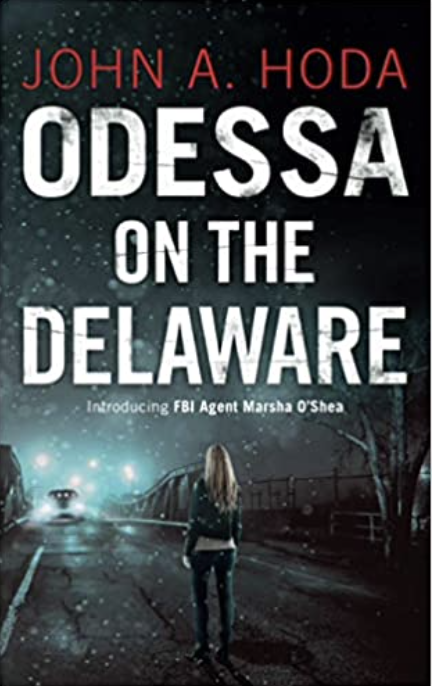
I joined a writers group last year and I’ve been trying to read something written by my fellow aspiring authors. Most of them haven’t figured out how to self-publish, or don’t have anything ready, but several have managed to jump that hurdle. I reviewed one several months ago and found it interesting and well written (The Tollkeeper), even though it wasn’t a genre I read regularly. That was a paperback.
Todays’ review is by another fellow Inkling, but it I read it on my new Kindle because getting paperbacks has suddenly become challenging (I heard that the printers are running out of paper). I wrote a review for Amazon but that was brief, so I’ll elaborate here.
There isn’t much to say about cop/organized-crime thrillers. There are only so many combinations of bad guys/good guys (including girls), so this story couldn’t help but feel formulaic. Authors in this genre have to use words to get their readers’ attention and, unfortunately, this story doesn’t use language well. It comes close several times, but it was inconsistent, as if the author wasn’t really in the minds of his narrator’s subjects (the story is told from multiple points of view). It reminded me of the TV show, Dragnet. But it wasn’t told in the first person, and it couldn’t have been. Several threads are woven together, but then the pattern is broken and new cloth is woven; this was one of the strengths of the story. Very clever, but the storyline slipped a little, and the tension on the plot line increased to the breaking point. By the end, I was counting pages.
Part of my criticism of this book is due to the lack of proofreading. Hoda wrote an imaginative story that fits well within the crime genre (as I understand it) but he fumbled the ball at the five-yard line. As an author, I am familiar with the problem of deteriorating editing as a manuscript progresses because the later chapters simply aren’t viewed as often during the writing process. I combat this natural phenomenon by reading all of my books at least five times (often ten) after the first draft has been completed. That said…this book wasn’t ready for publication.
This isn’t the first self-published novel I’ve read that disappointed me in its lack of quality control. Maybe some readers don’t notice but, as an author, I catch every grammatical error, missing comma, clumsy construction, and it seriously detracts from my enjoyment. I don’t mind wordy writing, sentence fragments, lots of unnecessary punctuation (I love ellipses and 2m dashes), but I get confused by missing articles, conjunctions, repeated words and even scenes.
And when I get confused, I don’t write good reviews…
Hologram
It was a dark, rainy night. I was driving along a winding country road on my way home from a late meeting at Imagination, the company where I work as an electrical engineer. I was thinking about the challenging new project we were beginning, rebuilding the electric-power grid to integrate renewable energy and mobile storage. My mind was going through the list of requirements when I entered a sharp turn. Distracted, I didn’t slow down enough and the car’s tires lost traction. I hit the guardrail on the wrong side of the road. I breathed a sigh of relief and started the engine, glad to have survived but not looking forward to explaining the damage to my husband. My effort was thwarted when a pair of headlights appeared suddenly in the gloom, rounding the turn, heading straight at me. I pressed the horn futilely. The semi-truck hit my car and pushed it over the rail, my seatbelt pressing painfully against my shoulder as I was catapulted into space…
I woke up in a cold sweat and sat up in bed, mouth dry, shivering with the realization of imminent death.
“What’s wrong?” Jake asked.
The clock said it was five-thirty a.m., only a half-hour until the alarm would go off. I swung my feet onto the carpeted floor and stood up before saying, “That was the worst nightmare of my life. I died in a traffic accident. It was so real.”
“What time is it?”
I didn’t answer, instead going to the bathroom to wash off the sensation of death. I smelled coffee brewing by the time I finished my shower. I still ached as if I’d somehow survived the accident when I entered the kitchen, my head throbbing.
“Feel better?” Jake asked, handing me a cup of coffee. We both drank our coffee black.
“Sure, I guess, but that was unreal. I mean, I was there, as if it really happened. My clothes were still damp from running to the car in the rain. I had been at a meeting on a project we’re planning to put in a bid for. Do you think I’m just anxious about getting such a big job?”
We sat down as the toaster browned the bagel we would share, my half to be covered with avocado, his with peach marmalade.
“What else could it be? You aren’t about to be fired, are you?”
I shook my head and we kissed briefly, before our mouths would be contaminated with bits of bagel and fruit. Jake and I had been married six years, after living together for two years, after dating for a year. Neither one of us was quick to make personal commitments. But he was growing impatient with my reluctance to have a child, an idea that didn’t frighten me; I simply needed more time to solidify my career. That’s why we gave each other quick pecks instead of passionate kisses. We finished our breakfast, brushed our teeth, got dressed, and went to the parking garage to get in our cars and head to our separate jobs. Before climbing into my Honda, I smiled at him and waved.
“Drive carefully,” was his response.
*
I was lying in a bed, tubes running from my arms, aching from head to toe, my mind dulled, scared and confused. A stranger, an old man, stood next to me with an old woman.
“How do you feel, Mom?”
I was too frightened to speak. Who were these old people? My left hand raised, shaking uncontrollably as I muttered, “Give me a mirror.”
An oval hand mirror appeared, held in front of my face, revealing a shrunken countenance that couldn’t have been me. My hand fell. I gasped, “This can’t be real…”
Awakened from my nightmare, I jumped from the bed and staggered blindly to the bathroom, swiping at the light switch. Afraid of what would be revealed by the light reflected from the mirror’s surface, I dared to look. I gasped for breath, relieved to see that it had only been another nightmare of my death, then I was overcome with retching. But nothing came out. I was staring into the mirror when I heard Jake’s voice.
“Close the door, Kacey, I’m trying to sleep.”
I slammed the bathroom door and slumped to the floor, struggling to breath. My stomach hurt as if I’d been punched. I could barely move, so I sat a while, glad to be alive despite the pain.
*
“What the hell is going on?!”
I looked at Jake but didn’t recognize him. After two months of dying in my dreams, I didn’t know myself. I was a stranger in my own mind, whatever had been my life obliterated by my nightly encounters with death.
“I don’t know. Maybe I’m losing my mind. The pain dissipates within a couple of hours and I feel fine all day, until the next morning. Maybe I should go to the doctor?”
He shook his head. “You aren’t suffering from a brain tumor. I read about it. Your symptoms are all wrong. I think you should talk to Pastor Genoa. You’re probably having a psychosomatic response to the dichotomy of reconciling your career and—”
I held my hand up to stop him. “You have a point, Jake. I do want to have a family. Believe me, I’ve been struggling for years with that. I like Mark Genoa, he’s a good pastor. I’ll talk to him next week.”
*
“Dreams figure prominently in the Bible, as one method God uses to communicate to his people, such as the dreams of Abraham, Joseph, and Daniel; even the adversaries of God’s chosen people were contacted through dreams, the Egyptian Pharaoh and Nebuchadnezzar for example. Despite the importance of dreams as a means of communicating with God, it’s easy to misinterpret an experience we all have nightly as a message from God. From what you’ve said, these are persistent dreams with a clear message of your death, not calling for action that would advance His work on earth. Do you know what I mean?”
“Sure, Pastor Genoa, I’m not dreaming about the end of the world or even a catastrophe, unless my death is seen as a disaster. I guess I’m the only one with that perspective.”
He smiled knowingly. “Your death would be a great loss to all of us, but probably not the sort of thing God would warn the world of. Also, your dreams are not the same. If you dreamed of the same death every night, you could take precautions to avoid it, and thus live a full life doing God’s work. But there is no central theme to your dreams other than your death in innumerable ways.”
“So, you don’t think God is sending me a message?”
His head shook slightly and he changed the subject. “Do you mind if I ask whether you and Jake are having any marital issues? I’m here to help in any way I can, to help you identify family strife before it becomes a problem.”
There it was again, this time from my pastor. “We want to have a family but I’ve been putting it off, wanting to establish my career. There’s nothing wrong with waiting, is there; after all, I’m only thirty-four.”
He thought a moment before answering. “In one dream, you died alone on a bleak and dreadful night but in another you died an old woman with grown children at your bedside. Do you think you are conflicted about having a family? Young women in your situation have successful careers as mothers…might you be hiding something even from yourself?”
Just like that, he’d put his finger on it. I had to confess what was the likely source of our marital strife. “Three years ago, I became pregnant but insisted on a medical abortion, which made Jake very unhappy. He saw it as God’s will but I… I wasn’t ready. I think he may resent my decision, made over his strenuous objections. Do you think I’m having nightmares of dying because of guilt?”
He thought a moment before replying. “Your situation is not unique, but your family is, so let’s not be too quick to leap to judgement. Don’t be too hard on yourself. Do you think Jake would agree to a counseling session, an opportunity to talk freely about whatever’s on his mind?”
Pastor Genoa had shifted the topic from my dreams to my marriage in a heartbeat. He was right of course. About Jake’s resentment of my decision, but we hadn’t delved into why I was having those dreams. Maybe his experience told him that I was imagining many different scenarios, like having a family or being an old maid, but I was married. I wouldn’t die alone. Still, it struck me as curious that Jake didn’t appear in any of my dreams.
*
I convinced Jake to join me for a counseling session with Pastor Genoa, a licensed counselor and therapist. We aired our grievances and the blame landed squarely on my shoulders; I didn’t want to have children, for whatever reason. So, I had to deal with that, one way or the other, before Jake and I could straighten out our marriage, and I could hopefully stop having dreams about dying, whether alone or with others present.
*
Dr. Shera Knight wasn’t as easy to talk to as Pastor Genoa, not because she was a black psychologist, mostly because I didn’t know her and wasn’t as comfortable speaking to her openly as with a spiritual leader. I didn’t even know if she was a Christian.
“I’m not sure why I’m here, Dr. Knight,” I began.
“Dr. Genoa—you do know that he had a Ph.D. in theology, don’t you?”
“He never talked about that. He isn’t much for boasting.”
“Well, Dr. Genoa suggested that you may be suffering from a mild form of a personality disorder. He didn’t elaborate, leaving that for us to determine, but his summary of your sessions suggests that you are obsessive-compulsive. Mind you, he never said that and it’s only my preliminary diagnosis and—”
I interjected, “He’s—your right about that, but why would my being too organized and controlling make me not want to have children? Wouldn’t I just want to control them too? I mean, isn’t that what a soccer mom does? Why would that make me dream about dying?”
“You have a lot of questions and I don’t have the answers. Let’s start by getting acquainted. First, are you comfortable speaking to me, an African-American woman, about private matters, your thoughts and feelings, baring your soul so to speak?”
I nodded. “Not so much as with Pastor Genoa, but I don’t have a problem with your ethnicity. After all, Pastor—I mean Dr. Genoa—recommended you, so I have no problem with trust. I’m more concerned about being treated as a test subject, if that makes any sense…” I stopped talking, feeling that Dr. Knight wouldn’t understand where I was coming from.
She smiled knowingly. “You are not a test subject. I admit that every psychologist has an agenda, something we are interested in, but that never takes precedence over helping the patient. Helping you get through this is my highest priority.” She paused and looked at me, her brown eyes peering into my soul, before she added, “Why don’t you tell me the real reason you are here.”
I had been doing some internet research on dreams, neuroscience, quantum biology, and a host of related topics. I shared my conclusions with a skeptical Dr. Knight, ending with a supposition that I was experiencing a quantum leap in consciousness.
I got a CT Scan at her insistence, which showed no abnormalities.
Our sessions continued until I grew tired of talking about myself because whatever was driving my dreams wasn’t due to an abnormality in my brain or my upbringing. My personal research had continued and our conversations became more divergent as I obsessed more on quantum biology and its ramifications for my mental state. I didn’t need to speak to a psychologist, a fact she finally admitted.
“You aren’t suffering from any known personality disorders, Kacey. Your brain is functioning normally.” She paused, shook her head as if confused, and added, “I think Dr. Genoa referred you to me because of my interest in paranormal psychology. However, I don’t think you have presented clear signs of paranormal neurological activity; in other words, your case doesn’t fit into existing models of psychology, neither abnormal or paranormal. What I mean is that—”
I leapt from my chair and exclaimed, “You never told me about your interest in parapsychology! You’ve been leading me on, pretending that I had a normal disorder, maybe something from my childhood. I can’t believe you did that. I never should have trusted you!”
She explained the difference between her clinical commitment to her patient and her research interests to my satisfaction. I retook my seat as she elaborated.
“I think you should speak to a physicist who—”
I was on my feet again. “What is going on? All of a sudden, you think there’s a physical basis for my dreams?!”
She waved me back into my chair. “I have worked with a reputable researcher, who is very interested in a hypothesized phenomenon called quantum noise. The field of quantum biology is progressing very fast and conjectures are flying fast and furious, but Dr. Chris McGuire isn’t a dilettante. He may be able to help you either understand of what may be causing your unremitting dreams of death, or suggest a no-doubt controversial hypothesis of its cause. Either way, I encourage you to contact him. We should also continue our sessions, to help you digest what he may propose. He is not a psychologist and he’s a very difficult person to deal with, but…this is a controversial and unproven treatment for your condition. Let’s not get our hopes up but keep our fingers crossed.”
“How do I contact him?”
*
I checked Dr. Chris McGuire out and found his credentials to be in order so, rather than emailing or calling him, I flew to Miami to attend a conference on quantum biology at which he was presenting a paper about reducing reality to a point. Jake didn’t accompany me because it was a spur of the moment idea; in fact, I was planning to return the next day. I read several of Dr. McGuire’s papers and, although the math wasn’t particularly difficult, I didn’t see why Dr. Knight had suggested I speak to him. A holographic universe seemed light years from what I had decided was a simple case of extrasensory perception of alternate realities. Realizing that I was grabbing at straws—clever ideas I’d found on the internet in this case or seen in movies—I decided to follow my therapist’s advice.
His talk was interesting, delivered in an animated fashion, with the usual typos and oversimplified bullets littering too many slides for his fifteen-minute presentation. There were lots of questions, mostly critical of his mathematical theory, which I found to be the most consistent part of his talk. I was too confused to ask any questions but, fortunately, he would be presenting a poster on a related topic. That’s when I would introduce myself. I remained in the same room for the entire session and noticed that he had plenty of difficult questions for the other presenters. He gave as well as he got.
They were serving beer and wine during the poster session, so I got a glass of cheap white wine and wandered towards his poster. He was arguing with an older man about the parameters required to encode multi-dimensional information onto fewer dimensions. His poster suggested that the cosmic microwave background recorded the generation of the universe as a hologram. His older adversary was arguing that the cosmological constants had the values they did because that led to the existence of humans; the Anthropic Principle wasn’t an oversimplification of reality but a nod to the fact that we existed, an there were fundamental quantities determining the character of the universe. Dr. McGuire’s position was that they were imaginary parameters, created to fit our observations into our limited mathematical models. The debate ended in an impasse, the old man wandering off muttering to himself.
Before I could introduce myself, Dr. McGuire said, “I’m going to get another beer. I’ll be right back.”
“I’ll join you,” I blurted. I finished my wine and added, “I think I’ll need a fresh drink to understand your poster, even if you explain it yourself.”
I introduced myself while we waited in line at the bar. I skipped the reason for my presence at the conference, which could wait until a better opportunity.
“So, you’re an electrical engineer. What brings you to a conference filled with loonies?”
We made our way back to his poster as I explained that I worked on the power grid, designing control systems, but that I had a personal interest in his work. I wasn’t ready to admit that I was the biggest looney in attendance.
He explained his ideas to me, with frequent interruptions by others, as I sipped my wine. His basic thesis was that the existence of parameters in all of our equations was irrefutable proof that we were on the wrong track. There was no way to describe physical reality with the constraints imposed by such crude models without them. He became very animated when I mentioned all the parameters required to create an electric current, much less a functioning microchip.
“Just what the hell is permittivity?”
I grimaced and replied, “A parameter.”
“Just because our complicated models produce useful devices doesn’t mean they’re correct,” he retorted.
I saw an opportunity to steer the conversation to a topic of personal interest. “I see your point. Let me ask you this, if we are living in a holographic universe with no parameters, where does the individual fit in? Are we real or nothing more than an image, projected from the mind of God?”
“That’s one way of putting it, assuming that you’re referring to God as the enervating force behind the universe and not the deity of superstitious religions. We share a perceived reality because we—our essence—is contained within the same…the same bundle of information which determined from the beginning of time how we would develop, I mean how…” He jabbed his finger at an image of the CMB and continued, “For all we know, that speck in the CMB contains everything that has happened within the Milky Way in the last thirteen-billion years, including you and me standing here talking.”
I surprised myself by smiling shyly and saying, “And no parameters.”
A middle-aged woman interrupted us and, while she was talking to Dr. McGuire, I thought about his proposition. It wasn’t inconsistent with how Pastor Genoa presented the Bible. It made more sense to me than the idea of a Big Bang sending all those elementary particles spinning into space, obeying the laws of physics to become matter and energy. But that didn’t help me. I needed to tell him the reason for my attendance at the conference.
“Do you think dreams are real?”
He studied my face for several moments before answering. “Everything is real, including what we imagine. However, we haven’t evolved the neurological ability to grasp reality in its entirety, so we have glimpses, snapshots, bits and pieces of the picture, totally lacking in clarity and consistency. We call these fragments thoughts when we’re awake and dreams when we’re sleeping.”
I felt like a teenager, a groupie, suddenly enthralled by Dr. McGuire’s intellect and energy. I was more sexually aroused than I’d never been in my life and I wasn’t self-conscious about it. I started to respond but we were interrupted by the middle-aged woman, who had been listening to his explanation.
“Why don’t you join us for dinner Kacey and we can discuss Chris’ speculation further.”
I nodded emphatically, wanting nothing more than to be near Dr. McGuire.
I joined a party that grew until there were more than ten people. I was worried about where we might eat with such a large group. My fears were alleviated when the woman who’d invited me to dinner announced that she’d made a reservation at a restaurant that served an eclectic blend of styles. My relief turned into excitement when Dr. McGuire introduced me to everyone as if I were his date. I forgot about Jake and my marriage, overwhelmed by the atmosphere of camaraderie I felt, always finding Dr. McGuire at my side. He even made a point of seating me next to himself at the stylish restaurant.
*
“Tell us about your dreams,” the woman who was apparently the matron of the group said, facing me as if I were a student. Her name was Sam.
The topic hadn’t been forgotten in the fifteen-minute walk to the restaurant. At first timid to speak about something so personal, I opened up when Chris—it was an informal group—encouraged me to share my data as he called my dreams. My usually reticent personality dulled by wine, I described a few of the deaths I had dreamt, to the angst and awe of my audience, expanding on details when prompted, Chris at my side, touching me gently now and then. No one had heard of anything like my experience although Sam mentioned several studies that reported similar phenomena experienced by shamans in many cultures.
The analysis of my case proceeded as dinner was served, plates shared between us, and everyone expressed their opinions. Chris and I focused on the shakshuka and chicken pitas. When everyone had had an opportunity to express their opinion, he shared his.
“Kacey is the first datum to support the holographic principle that doesn’t come from an anecdotal story collected in the scientific hinterland. She is an engineer and, despite her Christian beliefs, she has shared her data with us, without disguising the facts within her personal faith. After listening to everyone’s comments, I am convinced that we are entering a new era of human evolution, a time when we will become aware of reality, although we won’t be able to prove this hypothesis for years. Furthermore, her case suggests that holographic noise is more than a conjecture. I propose right now—mark the date and time—that all of reality is contained within each one of our brains, possibly within our DNA, and we have only to find the key to unlock the mysteries of the universe. Her experiences are the result of holographic noise, expressed to her consciousness in dreams. I challenge everyone at this table to find a way to measure this noise and discover who we really are.”
He had stood up during his monologue, but now he retook his seat, and took my hand, holding it up like a prize. I was overwhelmed. Apparently, Chris was often inspired during roundtable discussions, so his pronouncement was followed by a vigorous conversation. I had come across the idea of holographic noise during my casual research, but he explained the idea while we finished our meal. I had another glass of wine.
When the discussion had settled down, Sam challenged his conjecture. “That is unsupportable speculation Chris, and you know it. You are grandstanding, like you always do.”
He held his hand up in defense. “No, I’m not using hyperbole, Sam. Kacey’s experience is consistent with the anecdotal stories told by spiritual people from around the world and throughout the centuries. We all heard her detailed accounts of death; they were just the tip of the iceberg. Imagine it, she dies every single night! This is bigger than quantum physics. I’ve been inspired to find a way to investigate this phenomenon.”
We had dessert and Chris convinced me to have some warm brandy, before the group broke up for the night. I was standing outside the restaurant, confused, uncertain where I was, planning to call Uber, when his voice brought me back to reality.
“Would you like to spend the night with me?”
Relieved, I nodded emphatically. “Thank god.”
*
I woke in a strange bed in a strange place, lying next to a stranger, but Chris wasn’t a stranger. He was my lifeline to reality, so how could he be strange? I remembered every detail of the previous evening, especially when we’d made our way to his hotel room and…and made love, because that was how I’d felt at the time. It was a necessary act, to finalize my understanding of my place in the cosmos. It had been an unworldly experience.
“Tell me about your dream.”
His blue eyes were hovering expectantly inches above my face.
“Since I’m already an adulteress, can’t we make love again before doing all that science stuff?”
“You’re married?”
I nodded shyly. “I forgot to tell you, with all the excitement, and hoping to find a solution to my dilemma, I got carried away. Please forgive me and make love to me again. I’m not over you yet.”
He shook his head. “First you tell me how you died last night.”
I sighed with frustration. “It was my twenty-first birthday. I went skiing with friends from a college I never attended—in fact, I never skied in my life—and someone, a guy I was dating named Lenny, convinced me to try a black diamond slope because I’d caught on pretty fast. I was really good after a couple of lessons. Anyway, I did well so we did another slope, the whole gang of strangers, who I knew well in the dream, doing this several times, really hard slopes. I guess we did one too many, maybe I was tired or my luck ran out, but I went over the side and fell…I felt my bones snapping before I died. I lived long enough to feel a lot of pain.”
I gave him a sarcastic smile and added, “Now, can we get back to what’s foremost on my mind at this moment…in this reality? I have a splitting headache and I hurt everywhere, but I think you can distract me from the aftereffects of another traumatic death.”
*
I didn’t tell Jake about my encounter with Chris, partly because I was unsure what to expect from the dinner I’d shared with a group of people he had described as loonies. I checked my email constantly, hoping for some kind of follow-up, a contact, something.
My prayers were answered when I received an email from someone called dreamer57, inviting me to a palm reading at their studio in Nashville. This person had been given my name by Dr. Samantha Adams and, after reviewing my case, was willing to meet me in person. I couldn’t believe the news. A contact, someone who didn’t speak in scientific theories, but actually read palms, obviously legitimate if Sam had arranged a meeting. I was elated. I shared my anticipation with Jake.
“So, you’re going to Nashville for a palm reading, is that about it?”
“I certainly am. I’m having regular counseling from Pastor Genoa and Dr. Knight, and they haven’t offered a better course of therapy for whatever is wrong with me. They’ve both expressed support for what I’m doing, and it would be nice if you did the same.”
“This isn’t like you, Kacey, to go galivanting around the country in search of a miracle cure for bad dreams. Next thing I know you could be using opioids and we all know—”
“Narcotics aren’t going to help me, Jake. No one has mentioned them, except you, just now. Desperate times call for desperate measures, not narcotics and addiction. I am going to exhaust every possible treatment to either end my nightly death or learn to deal with it. It would help if I knew I had your support…”
He finally looked at me. “Fine. Go to Nashville to talk to a psychic if that’s what you want to do, but you’d be better off spending more time praying, or maybe having a family…”
*
I parked my rental car on the damp street, and stumbled up the broken sidewalk, slipping on wet leaves, finally climbing a narrow wood staircase that led to a bright blue door. I raised my hand to knock but my act was interrupted when a disembodied voice said, “Come in, Mrs. Aston. I’ve been expecting you.”
I knocked anyway before opening the door to find myself in a small salon, furnished with two armchairs, a coffee table, and end tables adorned with decorative lamps. A map of the world hung on one wall, punctured with thumb tacks. A worn rug partly covered the freshly painted wood floor. I closed the door and stood motionless, feeling as if I were in a holy place, in the presence of God. A short, stout woman who looked Native American appeared in a doorway.
“Good morning, Mrs. Aston, I’m Halona Descheene. I am full-blooded Cherokee, the daughter of a shaman, my lineage goes back too many generations to count, all spiritual leaders of my people.” She stepped into the room and beckoned me to take a seat in one of the chairs.
I sat down and said, “Then, I guess you’re the right person for me to talk to or do whatever it is that you do…in the spiritual realm I mean. This affliction is driving me crazy, destroying my health, my marriage, upending everything I’ve worked so hard for.”
Instead of sitting down, Halona started boiling water on a hotplate I hadn’t noticed before. “Let’s have some tea,” she said, depositing leaves into a glass decanter. I wanted to ask if those were coca leaves but didn’t, afraid of insulting my host.
Still standing, waiting for the pot to boil, she asked, “Do you have something personal that I could examine?”
I started to remove my wedding ring but was stopped by her firm voice. “Something that predates your marriage, maybe a photo?”
I dug in my bag and retrieved my wallet, producing a photograph of me with my parents when I was a baby. I held it out and she took it from my grasp, before examining it closely for several minutes while I waited impatiently. Halona wasn’t in a hurry. When the teapot began to scream, she dropped my precious memorabilia on the table and poured water into the decanter. I scooped up the photo while she was distracted and slipped it back in its proper place. She placed the tea decanter on the table and produced two small teacups without handles, before sitting down.
“I don’t think I can help you, Mrs. Aston. Your spirit is too strong, greater than mine, the most powerful I have ever encountered. I should be asking you for guidance. I’m sorry…”
I hadn’t come to Tennessee to be told how powerful I was. “Let’s have some tea and break down your concerns, point by point, before we make any hasty decisions.” I took it upon myself to fill our cups, before adding, “I may be spiritually powerful, Halona, but I am a ship without a rudder. I need your guidance to keep from running aground in the tempest.” I held my cup up and she reluctantly did the same.
“I will try to give you guidance, but I don’t know…”
We sipped together, then I set my cup down and explained what I’d learned from Chris and his fellow metaphysicists. Halona was familiar with the Holographic Universe hypotheses so she nodded knowingly, occasionally asking for clarification on minor issues. I finished my monologue with, “So, do you think I am somehow manifesting the cosmos in my dreams, through my DNA as Chris—Dr. McGuire—imagines?”
She took my trembling hands in her meaty palms. Fear and anticipation were juxtaposed on her chubby countenance for several minutes, during which I felt nothing, not even a sense of my psyche being invaded. Finally, Halona released my hands and fell back in her chair exhausted.
I refilled our cups with the strong, aromatic brew.
She sipped from hers before saying, “My earlier sense was correct. You are Nunnehi, one of the Great Fathers of the world. I never dreamed that immortals were still among us…you have forgotten your own origins, probably because of spending so many millennia in a mortal body, witnessing the tragic downfall of the Cherokee despite your efforts to save us. It is difficult to speak of such things in English, Mrs. Aston, but you…you are not bound by space and time.”
This was a big leap for me to grasp. “What does that mean?!”
She refilled our cups and emptied hers before responding, “The Nunnehi—beings like you—were nothing more than myths and legends passed down orally for many millennia by the shamans of the Cherokee. This is the twenty-first century. I know that your race was never meant to save only my people. You are here to save humanity in its direst moment. I just never imagined it would occur during my life…”
After my conversations with Chris and his collaborators, I accepted Halona’s story and my place within it, but I didn’t see myself as a messiah; that was probably her interpretation of something she’d sensed, something scientific instruments couldn’t measure. Maybe she was right and I was simply an immortal imagining a death I would never suffer; or maybe Chris was correct, and I was seeing multiple, divergent realities; maybe I had chosen one and that was the one I was living, bringing him and Halona along for the ride. I wasn’t satisfied with that dichotomy. There was no reason, under either of these scenarios, that I would be aware of my status as one of the Lords of the Universe. The entire situation was ludicrous, and to think I’d let myself be drawn into such a fantasy world, where I was deciding between alternate fantasies; but the dreams were real and both a spiritual leader I trusted, and a psychiatrist who spoke openly, approved of the path I was following. Nevertheless, I doubted they would be so supportive after Halona’s revelation. It was obvious to me that centuries of scientific progress hadn’t improved on an oral tradition of ghosts and goblins.
I had several questions for Chris McGuire, besides asking him to help me forget my dreams for a few hours. For one thing, if I was living in a holographic universe in which my dreams had become a window to other worlds, why hadn’t I found a way to get off the treadmill? Another burning question was: Why was I experiencing these alternate realities now? I hadn’t suffered any brain trauma; nothing unusual preceded the onset of this phenomenon, which didn’t even have a point; no messages and no clues to the meaning of life, nothing.
I insisted on taking Halona out to dinner, to get to know each other better because, as I explained to her, I would be visiting her regularly in the future unless that would make her uncomfortable. By the time I dropped her off at her studio/apartment, we were friends and she was no longer calling me Mrs. Aston or one of the Great Fathers. I had also learned more about the oral tradition surrounding the Nunnehi, about her culture and how their spiritual beliefs weren’t so different from my own.
*
I opened my eyes to find Chris’ blue orbs gazing into my soul. Before he could ask about my dream, I volunteered a summary. “It was rather benign, as dying goes. I slipped on some ice at an apartment I didn’t recognize, although I was about seventy, maybe older. It didn’t look like a retirement community, no handrails or anything. I cracked my head on a step and died instantly. Can you make me feel better now?” I pushed the sheets down, baring my body as openly as I’d shared my soul.
Chris and I had become lovers after our encounter at the conference in Miami. I naturally turned to him after my disconcerting visit with Halona in Nashville, skipping returning to work, making excuses about a sudden death in the family; what counted was that I was with Chris, my rock-star science hero. I shared my feelings with him as he did his best to distract me from my rapidly escalating problems.
“Oh god…oh god, I love you Chris, even if you don’t feel the same…oh god, that feels so good, even if you don’t feel it like I do, I don’t care because you are the key, oh god, do that again!”
“Shut up and let me think,” he retorted as he fulfilled my request.
I was still shivering when his face reappeared between my thighs. He pulled himself up to face me and blurted, “I love you too Kacey, even though you’re a married woman. Goddamnit! I swore I would never have an affair with a married woman, but then you showed up. I don’t know about you, but I’m not a—you tricked me when we first slept together and now, I’m lost, confused…”
I breathed a deep sigh of relief, holding him close, clinging to my lifeline. Emboldened by his ambiguous support, I made a wild conjecture that felt right at that moment. “I think we’re a lot more alike than either you or Halona thinks. I feel something lying here with you that I’ve never felt before. I have a superpower…don’t get me wrong, my talent is loving you, not flying or any of—”
His finger against my lips stopped my foolish rant. “We’re going to talk to Jake and sort this out. I won’t live like this, sneaking around at night, meeting clandestinely. I have to make it right by him, at least not backstab him…”
It was my turn. “We’ll come clean but I’m not letting you go, Chris. You’re the only person who can help me determine if I’m crazy or immortal.” My grin must have given me away.
“You’re immortal all right, but I don’t want to risk your life to prove it because I could be wrong. No experiments with immortality, except maybe as I get older and you remain young and healthy. Deal?”
One thing no longer bothered me. “I wonder what our children will think about that?”
*
I accompanied Jake to a retirement party for one of his coworkers the day before Chris was going to fly down to settle things. Our affair wasn’t really his fault; after all, I’d forgotten about Jake during that incredible evening in Orlando and subconsciously tricked Chris into falling in love with me. And now, he was so invested in whatever was happening that I felt like a lab rat, devoted to the scientist experimenting on me. Chris and I had had several other meetings with his colleagues for official interviews and even experiments in a sleep center; and now he was coming to Alexandria to announce his feelings for me to my current husband, as if asking my father for my hand in marriage. It was overwhelming. I was sure that Jake suspected our marriage was about to end because I started sleeping in the guest room after my trip to Orlando. I didn’t think Jake and Chris would get in a fist fight or anything, but I was definitely nervous about their meeting. I was going to make this Jake’s and my farewell celebration, a good time we would remember for years to come.
Jake didn’t drink much at the party because he would be driving home later. He always drove because he didn’t trust my driving. He also wasn’t much of a drinker; a glass of wine with dinner and a couple of beers on the weekend sufficing; thus unburdened, I let myself go. I was nervous to say the least.
People tend to be more judgmental when they’re sober. Jake was like that when the conversation turned to everyone’s plans for retirement. Alvin, the guest of honor, was planning to stay right where he was, but start taking long walks to become familiar with the town he’d lived in for thirty years. The next-oldest person, a thin woman named Maggie, shared her vision of moving to Florida to escape the cold and the endless chores associated with owning a home. Her husband had recently died, so I understood her better position better than Alvin’s. The participants in the game were apparently rank-ordered by age, so it took a while for Jake’s turn to come. I was pretty tipsy, having forgotten how many glasses of wine I’d consumed, not to mention a couple of gin and tonics shared with Maggie and some other women. I was playing my role, our last party together, smiling and holding his arm to keep myself steady as much as to give him spousal support. I was glad I’d drunk too much when Jake started with the past-perfect conditional and imperfect subjunctive tenses in the same sentence. He had some complex issues to resolve.
“If you had asked me how I would spend my retirement six months ago, I would have said we’d be living in the Caribbean, maybe Barbados or Belize, but that was before my wife began having nightmares. Now, I don’t know what to expect, maybe one of her dreams of death will come true and I’ll be spending my retirement alone…always thinking about a trip to the Caribbean with Kacey.”
Determined to have a good time and go with the flow, I smiled nervously, welcoming the interest of the other retirement plan contestants, reminding myself that this wasn’t the time to announce our imminent divorce. The mention of death had aroused a great interest in me personally, so I shared everything that had happened, regaling my audience with stories of horrible deaths as well as quietly passing into oblivion.
“Did you get some help?” Alvin asked.
“Oh yes,” I replied conversationally, a fresh glass of wine in my hand. “I am currently following a rigorous treatment regimen, including therapy sessions with my pastor, a psychiatrist, a genuine Cherokee Shaman with an impeccable pedigree, and a neuroscientist specializing in paranormal phenomena.”
The room exploded in a hubbub of disparate conversations centered on me. It was a nice feeling, to be the center of attention. That thought made me laugh and then the hiccups appeared. I knew they would pass so I sipped wine. When everyone was assured that my hiccups weren’t a sign of my imminent death, a possibility I hadn’t dreamed of yet, Maggie dared to query me.
“What is the consensus of all these experts?”
I scoffed and waved my hand, spilling a little wine on the carpet. “I’m either losing my mind or—” I laughed, blowing wine out my nose, sneezed a few times to a captivated audience, and finally finished my thought. “I may be immortal.”
The room was silent.
Finally, Jake said, “That would at least explain why you don’t want to have a family.”
That was uncalled for, but I didn’t lash out, too drunk to care about his fantasy retirement. I nodded and shrugged at the same time, trying to indicate my awareness of a potential problem with having a family, remembering my jest to Chris. I replied in a noncommittal voice, “Probably, because if Halona Descheene—my Cherokee Shaman therapist—is right, I don’t remember my previous lives in detail. I could forget who my children are!” My laughter was joined by others. I was on a roll, enjoying my fifteen minutes of being the life of the party for the first time in my life.
Another guest, a young woman who hadn’t had her turn to fantasize about retirement, spoke up with a concerned expression. “I can see that you’ve done everything possible to diagnose whatever’s happening to you but…well, do you think it’s a supernatural power, like…like God or maybe Satan, who’s trying to tell you something?”
I dismissed her naïve question with the flip of my free hand. “Been there, done that. My pastor, who is a licensed therapist, has assured me that my dreams aren’t a message from God. And they aren’t an enticement to do evil, delivered by Satan. My psychiatrist assures me that my dreams are not symptoms of a behavioral or psychiatric disorder.” I took a drink from my wine glass and threw my free hand in the air as I added, “I’m off the charts!” A little wine spilled and I grimaced, apologizing for my clumsiness.
“Don’t worry about it, Kacey,” I was assured by my hostess. “It’s obvious that you’re a very intelligent young woman, tormented by something neither faith nor science cab explain…this must be terrifying for you.”
My wine glass was taken from my hand by someone and I hugged Willena, catching her off guard in my sudden, emotional embrace. I held her and felt her arms wrap around my shoulders. I cried. My tears turned into a torrent, a flood of fear, pain, anticipation flowing down my cheeks as I clung to this older woman for dear life. She shared my emotional release, squeezing me, her hand caressing my head, telling me it would be okay, as long as I remained true to myself. She was right about that. I finally lifted my head from her shoulder, smiled tearfully, and reluctantly stepped back from her comforting presence.
“I don’t know what came over me. I’m sorry for spoiling Alvin’s retirement. I just felt so comfortable with all of you, I guess I got carried away…”
I was assaulted by everyone, except Jake. They shared their recurring nightmares, their fears of failure, dissolution, even death, with me as they hugged me, holding me as tightly as I had held Willena. I felt their fear in a way I hadn’t empathized with anyone before in my life. Having admitted my anxieties, I was capable of sharing theirs. I didn’t understand why Jake was staring at me as if I’d shared his deepest secrets to these strangers because I hadn’t mentioned him once during my monologue. I smiled, still trying to make this a great last date, took his hand and kissed his cheek, a kiss goodbye. I wouldn’t be comfortable pretending to be his wife when Chris arrived the next day, but I liked Jake; maybe I had loved him once upon a time, but that time was gone.
Jake and I were the last to leave. I was drunk but he was as sober as a church mouse.
I relaxed, knowing I wouldn’t be trying to follow those winding, poorly marked roads back to Reston. I was about to take a nap when Jake’s voice, dripping with sarcasm, jolted me awake.
“You should get an Oscar for that performance. My coworkers were standing in line to kiss your hand, as if you were Jesus, and I can’t imagine how your crazy story will impact my position within the company. Do you have any idea what you’ve done?”
Fully aroused by his strong words, I sat up and faced him, blinking to reduce the double vision, which was a waste of time because I was really intoxicated. “Why don’t you explain?” I asked, hoping to nap while he ranted about everything I had just shared at the party. I had revealed my innermost fears to complete strangers, but apparently my action had only been a ruse in Jake’s mind.
“You have continually undermined me in our dealings with my coworkers. Do you remember last year, at the Christmas party? You maligned my greatest accomplishment of the year, calling it a hack job to cover a technical error that had grown into a marketing problem. Do you know how that felt to me?”
I was drifting in and out of consciousness by this time, unable to formulate a coherent response, so I remembered my vow to myself. “I’m sorry about that, Jake. I guess I got carried away. I’m really sorry…”
I dozed for a few minutes as Jake’s voice rambled through time and space. I was awakened when my seat belt cut painfully into my shoulder. Time slowed to a crawl. Fully conscious, I screamed when the car tumbled off the road as if we were in a dryer. My head was bouncing around, hitting the roof, colliding with Jake’s skull. His eyes were open and dull, his brain unconscious from the beating it was receiving. Probably dead. As if following a script, my hand found the seatback lever and I reclined fully, escaping the collapsing roof as it crushed Jakes head against the steering wheel, spewing a fountain of blood on me. I hung on to my seat but it didn’t help. I was tossed around as much as Jake, sharp metal tearing at my flesh, turning him into sushi, swords plunging into our bodies as if wielded by the devil. I was in hell.
Our tumultuous careening down the steep slope was stopped suddenly by a large tree. It was dark and raining, just as I’d dreamed months before, but reality had continued beyond my death. I hadn’t died. I was alive, trapped in a twisted car with my husband’s lifeless arm draped across my chest, covered in his blood. I was hanging from my seatbelt, the crushed roof inches from my face, the passenger window a slit beckoning to me. I could move my legs, the front of the car having suffered minor damage, a significant deviation from the head-on collision of my dream.
I smelled gasoline. Motivated, I released my seat belt and winced as I fell onto a sharp piece of the roof, before struggling through the jagged aperture that had once been the passenger window. I felt my flesh tear as I crawled towards freedom, away from the time bomb that ensnared me. I was struggling to get my hips through the window frame when I was plunged into the depths of hell.
My waist was twisted painfully against the door frame by the blast, flames engulfing me, burning my clothes and searing my flesh. I ignored the agony and pulled myself out of the pyre, running then falling, sliding down the slope, cold rain extinguishing the flames behind me as I came to a stop at the edge of a cliff. Pain motivated me to get to my hands and knees in the rain, lean against a tree, struggle to my feet, before I realized that I’d held onto my phone during the entire ordeal. I glanced down and, lit by the dying flames of our car, saw that my pants and shirt—even my underwear—had been burnt by the inferno. A thin ribbon all that remained of my bra, jeans reduced to a few wet and blackened shreds clinging to an elastic strap around my waist. I felt like Eve in the Garden of Eden, covered by a fig leaf, only I was in Hell.
I collapsed on the wet ground, shivering in the cold rain, and called 911. After explaining my situation, I made a point of asking them to bring something for me to wear. That request confused them; I probably shouldn’t have mentioned it, but I was more than a little freaked out and not thinking clearly.
My second call was to Chris.
Tormented

I watched the hands on the clock slowly mark the passage of time. Seconds sweeping by, their expiration represented by the thinnest needle on the clock’s face. Normally, I wouldn’t have noticed the imperceptible movement of the minute hand either, but these weren’t normal times. We didn’t have a lot of customers in the restaurant where I worked as a short-order cook because of the COVID-19 restrictions. Take-out only. Masks. All that jive. The servers were the first to disappear, quietly fading into the humid, shaded streets of the French Quarter. I didn’t feel too bad for them because they would be getting fat unemployment checks.
The hours were an interminable series of eternities in purgatory, the hour hand standing over me like a prison guard, watching, noting everything I did. Aware of its scrutiny, I worked harder than usual, getting the few take-out orders that came in perfect, cleaning and wiping the entire grill area afterward. I would have kept cleaning that kitchen until hell froze over if I’d had any control over time. But I was only a cook.
The day ended and I removed my apron, washed my hands for the umpteenth time, and went to collect my paycheck from the manager.
“Look, I’m sorry to have to let you go Devon but…well, it looks like we’re all going to be unemployed. I feel like I’m standing on the deck of a sinking ship, going down with it. For what it’s worth, you’ve been an outstanding worker and I’d be happy to give you a letter of recommendation, talk to a prospective employer…”
“Thanks, Tom. We both know there’s not much chance of that. I guess I’ll just ride out the pandemic like everyone else.” I was struggling to keep the darkness from closing in, standing there in Tom’s office, the clock watching me, counting the seconds, waiting for me to implode.
But I didn’t, at least not right away. You see, I suffer from severe, episodic schizophrenia, which is like losing my mind every now and then, like when something really stressful happens, like breaking up with a girl or losing my job. There’s no cure and drugs like Thorazine, Prolixin, Haldol, and all the others don’t work for me. The problem is that the cure is worse than the disease for people like me; my episodes don’t last as long as it takes for the drugs to kick in. But I got to tell you, I wished I had a bottle of Navane in my pocket when I left the restaurant, out of work, my last paycheck in my pocket, facing the prospect of dealing with the unemployment office to get my COVID unemployment checks coming in. I was stressed. At least I didn’t have a girlfriend.
Whenever I feel an episode coming on, I head towards Jackson Square. That’s where the homeless hang out, many of them suffering from severe schizophrenia, unable to keep a job or even have a relationship, not even with themselves. They don’t scare me because I’m like them—now and then.
It’s pretty weird, knowing you’re about to have a psychotic trip, like doing LSD. I don’t need that shit because my trips are way stranger than what hipsters get from diluted acid. Mine are real, and I mean real.
I knew something was wrong when my path along Royal Street took me into the Quarter, crossing Orleans Street, passing windows filled with artwork, antiques, shit like that. Everyone was looking at me as if I was running through the street naked. I was in my work clothes—jeans, long-sleeve green shirt, boots for working in the kitchen—but everyone was watching me, trying to get into my head. They were trying to assimilate my consciousness into a group think through my phone. Unwilling to throw my expensive mobile device in the gutter, I winced but kept moving. I turned the phone off, knowing that wouldn’t stop them. I had an objective, the Café du Monde for a cup of coffee, if I could only make it without being overwhelmed by the relentless onslaught of the people around me. They were all unwitting accomplices of the Deep State.
I sipped my coffee, accompanied by a beignet, and avoided making eye contact with anyone, but there was one guy who kept watching me. He wasn’t much older than me, with short-cropped blonde hair and mean eyes. He looked familiar but I couldn’t place his face.
Fuck your feelings, I feel like I play for the Saints,
I just want to hurt you, aim for the skanks.
That guy was in my head. He wanted to kill me. An evil look transformed his face into a caricature, a demon with horns, grinning at me. Then I recognized him as the evil twin of Eminem, the rap star. His words gave him away. I had to escape, so I jumped up, knocking my table over, and confronted my tormentor.
“Stay away from me! Get out of my head, motherfucker!”
I left him with a surprised expression at my recognition of his identity, and ran out of the restaurant without paying. I fled from his retort.
This darkness comes in me
And comes again
That ain’t me
He’s just a friend who pops up now and again
So don’t blame me, blame him
My hands flew up to cover my ears, running; out of breath, I stopped in front of an art store, not far from Jackson Square. The evil countenance stared back at me from the glass, taunting me, its smug look reminding me that there was no escape.
“I am not you, asshole!” I shouted, turning away from the reflection, fearing the truth, I was the evil twin, destined to commit some evil act to appease the monster that had gotten inside my head.
Stumbling, driven like cattle, my footsteps carried me to my destination.
Welcome back to the land of the living, my friend
You have slept for quite some time
“I don’t want to hear your foul words,” I said, falling onto the steps of St. Peter’s, oblivious to the people walking past. I looked up at the ornate doors, closed to me, not letting me enter and seek asylum in a house of God. I got to my feet and fled, seeking sanctuary elsewhere, stumbling into Washington Artillery Park, collapsing on a bench under a live oak.
Bed-written and destined to never leave the
Bedroom ever again like the legend of Heather Ledger
My suicide notes, barely legible read the
Bottom, it’s signed by The Joker
I had to fight Eminem’s evil twin, who was not my own, with the only weapon that would work against such unspeakable evil. I joined battle.
“I hear you talking you sonofabitch,
Kiss my ass and go to hell, like the stench that I smell,
Every time your filthy mouth rings a bell.”
And I got an evil twin, so who do you think that’s 3rd and that 4th spot’s for?
And as crazy as I am I’m much tamer than him
And I’m nuts, then again who the fuck wants to plain Eminem?
“Is that all you got?
Fuck you must have been shot
In the balls to talk like such a big fool,
Cause only a fool wouldn’t know what I got,
I’ll rip off your head and throw it in the gutter
Just to show I don’t stutter”
My last verse was met by silence.
I’d won the rap battle with my evil twin, silence was golden as they say, so I leaned back on the bench, enjoying the sweet smell of victory, but my triumph was short lived.
“Are you okay?”
I looked up to be confronted with my evil twin, no wait, not mine, Eminem’s evil twin, standing there with the same smug smile, taunting me, pretending to ask about my condition, his sarcastic smirk revealing his true purpose. I had won the battle but not the war. Evil never surrenders and it never sleeps.
“Hey fool you talking to me?
Like get outta my face before I feed your gizzard to a lizard
Just to see how it feels.”
Despite getting the upper hand, I knew that he was devious, acting like my friend. Sure enough, he rapped his true intent, the words I heard with my inner ear not matching his lips.
Reversed evolving, turning people into beasts
They’re feasting on each other, strong consume the weak
Flaming ruins, society is lost
Shattered city streets filled with blind, nameless creatures
The sky cracks open, dust is descending
Breath the black air, feel darkness in your lungs.
His vision of hopelessness was drowning me, filling my mind with doubt and a torrent of incoherent thoughts with one purpose: my evil twin wanted me to jump in the Mississippi River.
“You’re so full of shit your breath stinks,
Suck my dick like eating sausage links,
Get outta my face and crawl back in your asshole,
Punk whore you got no game, just a big mouth and a mind game.”
My words made him reveal his true purpose. His leering expression molded into hate and destruction as he advanced, planning to use his super-strength to throw me in the river himself. I fought him physically, pushing his grasping claws back. He stumbled and fell to the sidewalk, a look of defeat and revenge on his face. No more mister nice guy game.
“What the hell’s wrong with you? You can’t talk to me that way and knock me down. You should be in jail, asshole!”
I laughed in my—no, not me but Eminem—evil twin’s face and flipped him off.
“Stay in the gutter you skank whore,
Get in my face again and I’ll show you more,
Who’s gonna throw who in the river shore?”
“You’re fucking crazy,” he said as he got up to face me, his eyes admitting that I’d won.
“Fucking right, motherfucker, and don’t forget,
I’m the bro who knocked you on your ass,
Yeh I can take your best and give back trash.”
I felt better about not being deceived by my evil twin, another victory. Our battle was interrupted by a familiar voice.
“What’s going on her, Devon?” It was my friend, Dwayne Peltier, wearing his uniform and a gun to protect me from Eminem’s evil twin.
“It’s the man in black in black in black,
Got my back my back my back,
Not gonna let evil suck me dry not today not this shack.”
The evil twin faced Dwayne and said, “This guy assaulted me. Arrest him. He oughta be locked up. He’s crazy.”
Dwayne looked at me and at Eminem’s twin, nodded, and said, “I saw the whole thing. You were approaching him menacingly and he overreacted. But he didn’t hit you or threaten you, did he?”
“He was going to throw me in the river!”
Dwayne looked at me again. “Did you threaten…” He turned to the evil twin and asked, “Do you mind if I ask your name, sir?”
“Robert Johnson, from Milwaukee. Down here on vacation. I just asked if he needed some help. He was ranting and crazy—”
Dwayne interrupted, “Yes, sir, Devon does that sometimes, when he’s having a really bad day, not that often most of the time.” He turned to me and said, “Why did you threaten to throw Mr. Johnson in the river?”
I’m not so sure anymore. Another trick of the evil twin. He had possessed this guy, who no longer looked like Eminem.
“The evil one possesses who he wishes,
It’s just like doing the dishes,
He just steps in and fulfills his wishes,
Swish swish swish until the man in black claims his riches.”
Dwayne nodded and turned to Robert Johnson, who was no longer possessed by the evil twin. “Devon didn’t mean you any harm, Mr. Johnson, but he mistook you for someone else and your threatening behavior made him defensive. He thought you were going to throw him in the river. In his state of mind it was an act of self-defense. If you insist, you can press charges against him but, I can tell you from experience that it won’t go anywhere because he has no history of violence. He works and has a home, he’s not a vagrant, but only suffering from episodic schizophrenia.” He turned to me and asked, “Isn’t that right, Devon?”
“I don’t hurt no one,
It’s the evil twin who does that shit,
Invading the brain, deluding the wit,
I got none of that, not a bit.”
Eminem’s victim shook his head in bewilderment. “No, I’m not hurt, so I guess it’s okay,” before turning to me and adding, “Did something happen today? What made you think I wanted to kill you?”
“The clock goes ticktock ticktock ticktock,
A big fat check and a foot in the ass,
Turned my world into grass,
Mowed down by the boss’s cock.”
Dwayne added, “Do you understand what he’s saying, Mr. Johnson?”
“Yeh, I get it. He got laid off today, and it sent him over the edge. I’m sorry for scaring you like that, Devon. Please accept my apology.” He offered a hand, no longer a claw, and I grimaced as I accepted his proof of being freed of the evil twin’s control.”
“Cool cool cool cool cool,
But you gotta watch your six
Or you’ll become his bitch,
Ain’t no other way to not be a stitch.”
Robert Johnson left and Dwayne looked me in the eyes, his gaze assuring me that I had defeated the evil twin again. “Are you okay, Devon? Can you get home on your own?”
I was tired. I looked up at the sky, bright clouds dotting an azure background, then at the deep green of the live oaks, then at his dark face, my ally in the fight against evil.
“You got my back,
I got yours,
We scratch each other to get the cures,
Hell yeh I’m straight thanks to my man,
Never let me down don’t think we can.”
He nodded and slapped my shoulder. “Good man. See you later.”


Recent Comments