
Review of “The Brothers Karamazov” by Fyodor Dostoyevsky
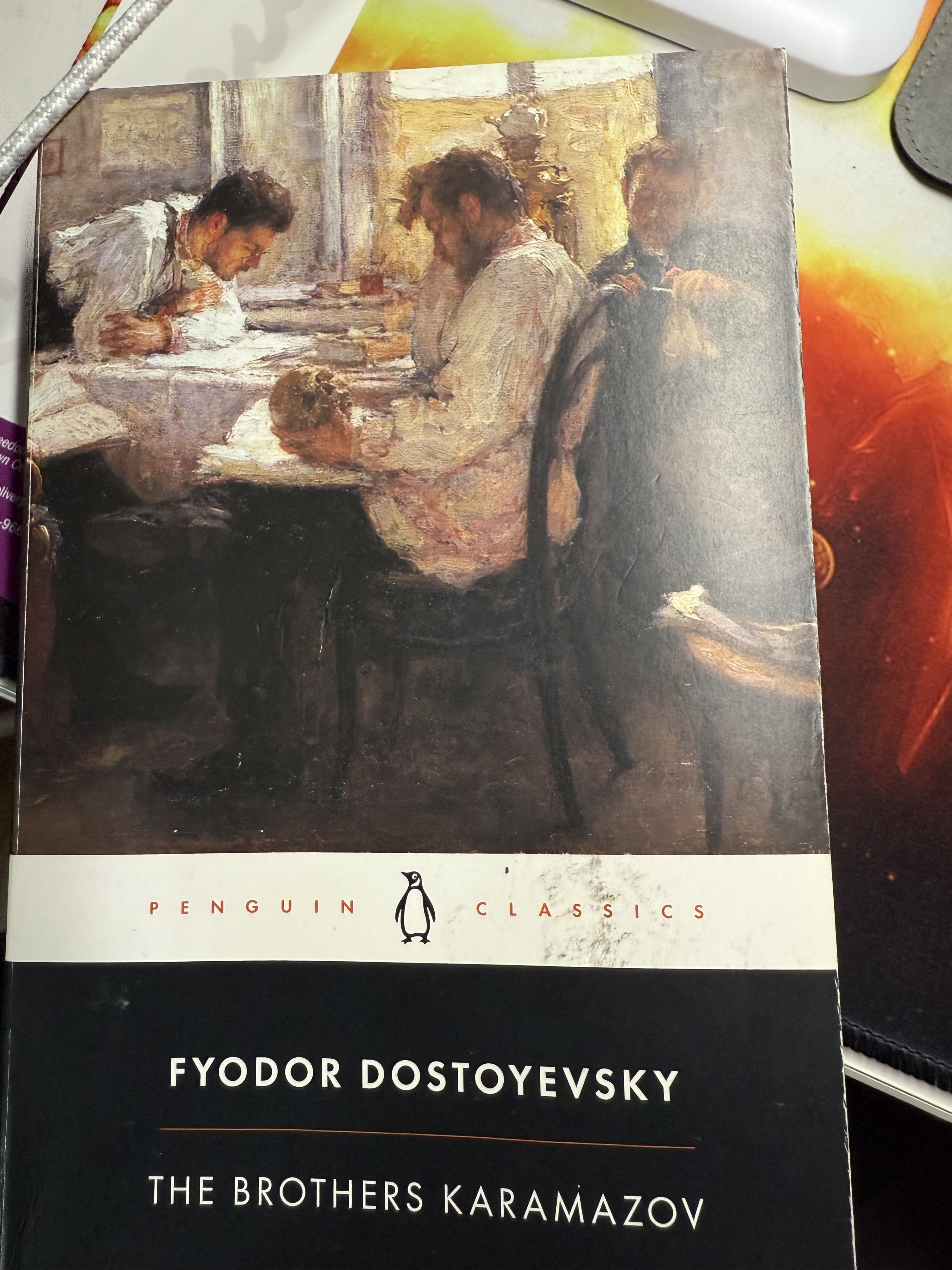
This review isn’t going to be as long as this literary classic (985 pp). I’ll skip all the usual analyses about the author’s commentary on contemporary Russian society (circa 1880), although it is set in a small village during the 1840s. The three brothers, Dmitry, Ivan and Aleksey, represent three types of character: rash and brutal; thoughtful and intelligent; emotional and sympathetic. The story centers on Dmitry, who has an ongoing conflict with their father Fyodor over his inheritance from his deceased mother. They are also in love with the same young woman. The tension is palpable and leads to violence. Eventually, Fyodor is murdered and Dmitry is tried for the crime and found guilty by a jury in a fair trial; the incriminating circumstantial evidence is simply too much to overcome. Enough of plot details.
No character is too minor to have their life described in detail, even if they have no relevance to the story. These ancillary stories make up about half the book, including entire chapters, filled with characters who serve no purpose other than showing something about life and death in nineteenth century Russia. The writing is extremely wordy. Some sentences are half a page long; some paragraphs several pages long; none of this makes sense from a literary perspective but appears to be whimsical. No thought by any character is left untouched by a narrator who claims to live in this village, but has the superpower of reading everyone’s mind. Nothing is left for the reader to figure out; every act, desire, emotion is fully explored through contrived scenes that make certain of this.
This book is considered a classic of existentialism for good reason: the characters make no attempt to change or even offer excuses; their innate personality is the reason for the most scandalous behavior — take me as I am or leave me alone! This is the appeal of this gritty story of bad decisions leading to foreseeable outcomes. The take-home message is that people cannot change who they are and should embrace their weaknesses as much as their strengths.
I cannot recommend this book. It is simply too long, filled with extraneous stories, and poorly written. However, if you want to have a taste of the Russian love of pain and suffering, I would suggest some short stories by Chekhov.
Review of “Existentialism from Dostoevsky to Sartre” edited by Walter Kaufmann
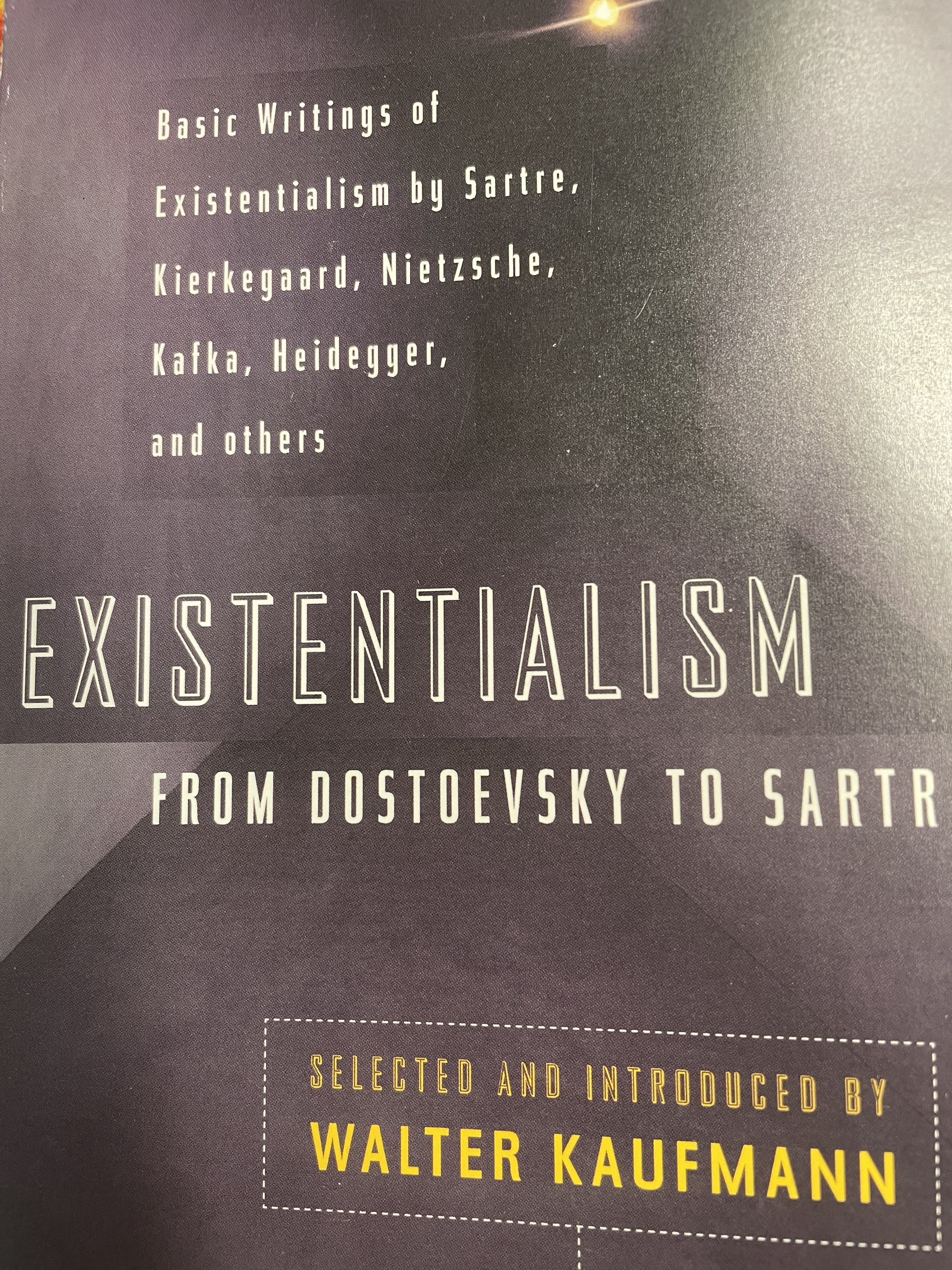
This book contains excerpts and essays written by a number of writers who’ve been identified with Existentialism. Apparently, no one wanted to be identified with the new philosophy; furthermore, the common thread between these authors is the analytical method associated with this movement, but they were interested in different questions. Some of them are simply writers who revealed Existentialist ideas through their characters; several were theologians looking for a way to find the roots of Christianity; it wasn’t until Sartre that someone called themself an Existentialist.
These authors (except the professional writers like Dostoevsky and Camus) write horribly; even the best of the philosophers (Sartre) wrote obscurely, whatever he was trying to say lost in recursive, circular reasoning that abused common words like “being” to the point of insanity. His fiction was fine, however, which leads me to conclude that these serious thinkers were struggling to describe what today might be called “mindfulness”, by which I do not mean meditation but, rather, awareness of the whole mind-body system and how it is impacted by our actions and thoughts. I could be way off base there because I really couldn’t say what Existentialism is, after reading these critical works.
But I don’t feel too bad because this was a complaint mentioned by Kaufmann (a renowned philosopher); Existentialism isn’t a dogma or ideology, but instead an incomplete and abstract approach to being in yourself and true to who you really are all the time.
I’ve heard various rumors about several of the authors included in this anthology (especially Nietzsche and Sartre), but the editor addressed some of these in the prefaces. I think, from this brief introduction, that their ideas changed over time and the statements accredited to them are both taken out of context and from earlier periods of their careers, when they were more likely to say outlandish things for the hell of it.
I can’t really recommend this book because so many of the essays are unintelligible; however, I wrote copious notes within its pages and plan to revisit it.
I hate finishing a book and don’t know what it was about …

 Timothy R. Keen
Recent Comments