
Review of “Satantango” by László Krasznahorkai
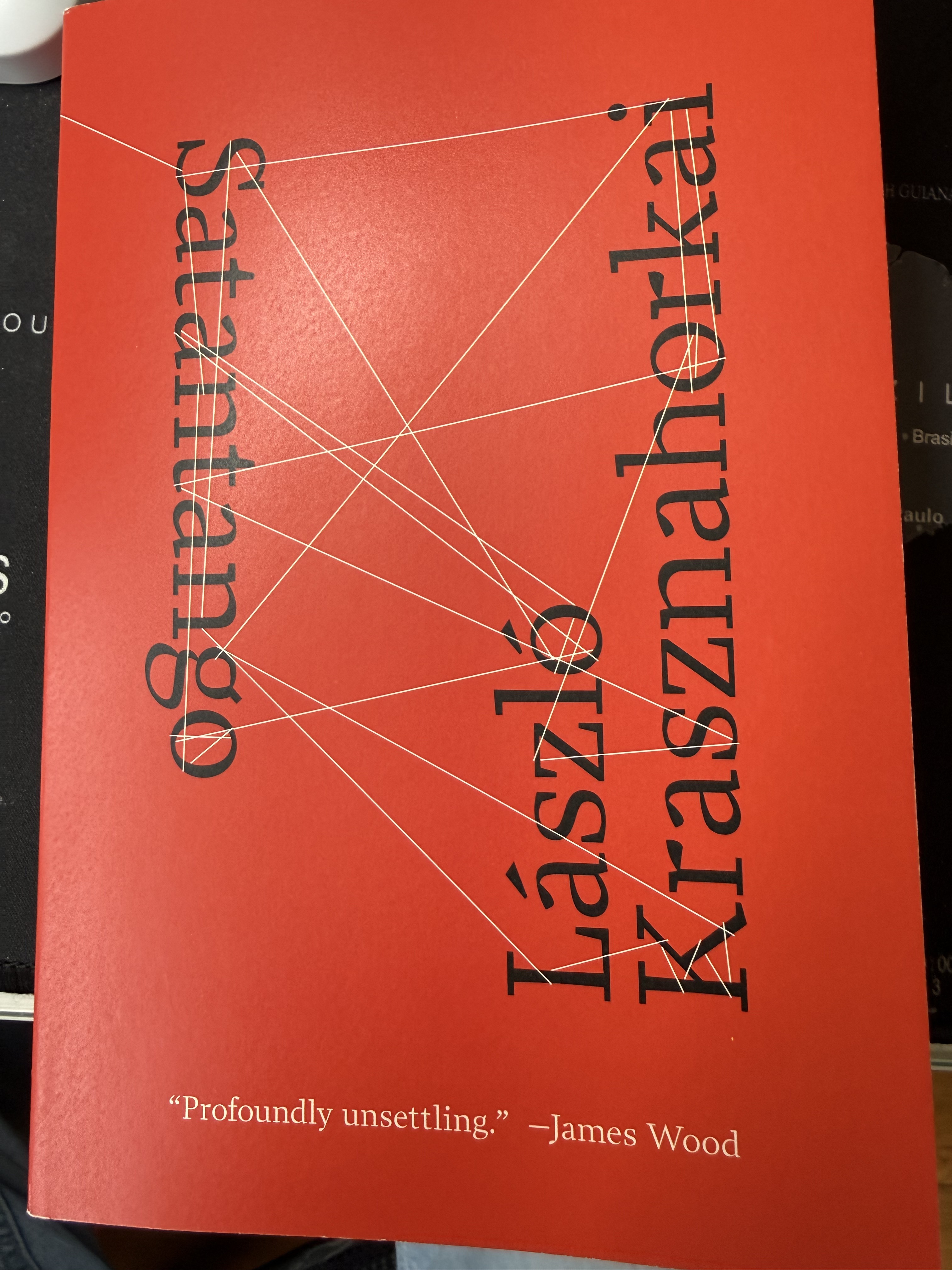
I don’t agree with James Wood, whose summary review is printed on the cover of this post-modern novel. This story is not profoundly unsettling; however, I think I know why they used that phrase.
This book was translated from Hungarian. I give two thumbs up to the translator, George Szirtes, because this was undoubtedly a monumental effort. There were very few grammatical errors and only a few missing words. The reason I am so impressed is that each twenty-plus page chapter comprised a single paragraph, which ranged across time and multiple characters, rather than focusing on a single character’s state of mind. Needless to say, this was a page turner; I couldn’t put it down until I finished each chapter/paragraph.
I couldn’t easily identify a plot, character arcs, or any other common literary themes in this work. The best way to describe it is as a literary journey into the lives of several individuals left behind in a changing society. No one is spared having their minuscule existence laid bare for the reader, even those who think they are in control. Everyone is portrayed as an unnecessary and redundant piece of machinery that is being tossed into the garbage after the social system on which they depended has broken and cannot be repaired. But none of them suspect the truth as they drag their tired minds and bodies through rain and mud towards a goal they know to be futile. If they are lucky, they can remain in stasis until they die, hopefully soon.
This bleak summary may sound “profoundly unsettling”, but only from an existential perspective. The reader shouldn’t be upset by their pathetic lives, however; there is no undue violence perpetrated on the characters, no shootings, not even self-recognition of their sorry state. They are oblivious. Perhaps that is why James Wood found it so disturbing; they didn’t even notice that the world had left them behind. I try not to read too much into novels, so maybe I don’t give as much weight to such literary analyses. I’ll leave that to scholars of literature.
You might be surprised to hear that I recommend this book, not for its literary value or deeply spiritual insight into post-modern civilization. It was simply fun to read a book where I didn’t have time to think about what came next. The author succeeded in bringing me, the reader, into a stream-of-consciousness experience in which I lost track of time.
I was just along for the ride…

 Timothy R. Keen
Recent Comments