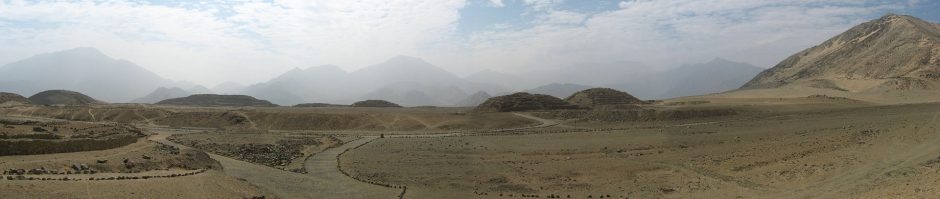
Awkward Meeting
I will never forget how I met Dr. Zola Brown. My thesis advisor, Dr. Daniel Greeman, wanted us to meet in a setting she would find comfortable because, apparently, she didn’t like meeting new people outside of the classroom. From his description of her personality, I expected the soon-to-be outside member on my Ph.D. thesis committee to resemble my fourth-grade teacher, who happened to have the same surname; that’s a thing about being African-American with a lineage that extends into the slavery period of American history. We all have similar surnames, like Washington, Jefferson, Lincoln, Brown (you can guess where that one came from), and Wilson, which happens to be the appellation associated with my family’s distinguished lineage. The resemblance between Mrs. Brown and Dr. Brown didn’t end with their last names.
Dr. Greeman had declined to tell me why he wanted me to meet Dr. Brown incognito, in disguise as an undergraduate enrolled in Physical Geology at San Francisco State University, on a field trip to Marshall’s Beach. I had done some research because I didn’t know if he was playing a prank on a colleague or making a fool of a new graduate student—some kind of initiation rite to the halls of academia. I was determined to play along because, to be honest, I was overwhelmed by the halls of academia and wanted nothing more than to have fun while joining the two-percent of Americans with a Ph.D., and if that meant pretending to be someone I wasn’t in order to meet an antisocial future collaborator, I was all in.
“What are you doing here?”
Oh yes, Dr. Brown and Mrs. Brown had a lot in common. She examined me from head to toe. She frowned at my makeup, shook her head at my large earrings and nose pins, scoffed at my form-fitting top and jeans; and her jaw dropped in shock at the high-heel pumps that adorned my feet.
I smiled nervously (easy to do under the circumstances) and replied, “I’m a new student. I missed the van and drove so that I wouldn’t miss the field trip. This is really important to me.” That part turned out to be true, but I’ll get to that later.
Her response caught me off guard.
“You look like a Klingon at a Death Ritual. What were you thinking, coming on a geology field trip dressed like that?” Her downturned nose hid what must have been nostrils flared with righteous indignation, her eyes indicating that I would probably fail her class.
I grinned at her comment, pleased that she appreciated my carefully applied makeup. I had always been enthralled by the Klingons and their culture, in which women were the equals of men, willing to kill and die for their honor. Furthermore, the Klingons are dark-skinned, not pasty like their Vulcan cousins, although my complexion isn’t as dark as Dr. Brown’s, which is probably why my surname is Wilson.
“Take me to your leader.”
I was certain I would become accustomed to her abrupt demeanor, but I was surprised when a rock hammer was suddenly thrust at me, along with a pair of safety glasses. “Join the others and let’s see if you can tell dip from strike.”
I accepted the heavy tool and tiptoed through the tall, wet grass fronting the low bluff, inwardly grimacing that I would probably ruin my new shoes in the muddy soil. The students were confused by the twisted mass of shale and what was probably sandstone; some of them were pouring dilute hydrochloric acid on the unresponsive silicate rocks (HCL fizzes on limestone); others, mostly guys, were beating the rock to death with their cheap hammers. I joined a mixed group of men and women who were peering through tiny magnifying glasses at what I had learned from Wikipedia was a melange of sand and mud, buried deeply enough to harden into rock, and then scraped off as the Pacific Ocean’s seafloor plunged beneath North America. Feeling empowered by this knowledge, which the undergraduate students enrolled in Dr. Brown’s class apparently lacked, I nevertheless refrained from sharing my wisdom and instead acted as confused as they.
“It’s all messed up,” a man with dark skin and close-cropped curly hair exclaimed in frustration.
A white girl with dark, straight hair, who could have lost a few pounds, added, “I don’t know if it’s sandstone or shale.”
I pointed to a chunk of shale, embedded in a matrix of mudrock, and tossed out, “How can sediments like this, deposited on the seafloor, become so tangled?”
A black girl who had been studying one of the lightly colored sandstone blocks exposed along the bluff put her hands on her hips and declared, “I can’t tell what this is. I don’t see any bedding like in the shales, even the pieces we’ve been looking at.” She poured some more dilute HCL on the shiny, unspeaking rock and added, “It isn’t limestone.”
“I think it’s a schist,” announced a white guy who looked like he hadn’t gotten enough sleep the previous night.
I shook my head in frustration and corrected him. “Schist would have foliation that would be continuous. These rocks look like pieces that were mixed up together.” I looked towards the Pacific Ocean, hoping they would get my drift.
Another student joined our group, a black guy who had been diligently pounding on the helpless rock. “This is fucked up!”
It was time to collect their observations and come to a conclusion. “Let’s put it all together.”
They looked at me blankly. It was hard to believe I had been just like them only a few years earlier. Before I could elaborate on my statement, Dr. Brown’s commanding voice broke everyone’s train of thought. “Okay, you’ve had enough time to make your observations. Does anyone know what we’re looking at?”
A few hardy souls spoke up about it being igneous or metamorphic, but the guy who had called the rocks “fucked up” held his hand up, before quickly lowering it and, with a grimace that said a lot about his classroom experience with Dr. Brown, offered, “It’s all mixed up, some shale, a little of maybe granite or sandstone, something like that, but now it’s all confused…a mishmash, like my mom’s surprise dinner on Saturday night.”
There were a lot of laughs at his analysis.
Dr. Brown corrected him. “You are correct, Damon, but we call it melange. However, that isn’t granite, but only recrystallized sandstone that was mixed in with the shale matrix. It lost its original bedding when it was buried, every rock has its own chemical signature and responds differently to changes in pressure and temperature. But what caused it to look like this? To become a mishmash—a melange?”
The overweight girl looked at me, then at the calm Pacific Ocean, and offered, “It was caught in the subduction zone.” She pointed towards the sea and, with the others nodding enthusiastically, added, “It got all tangled up and was dragged along…” She grimaced and waved her hands as if imagining being dragged along with the subducting Pacific plate.
I guess she was taking Geology 101 as a science requirement for a performing arts major.
Dr. Brown then strode to the outcrop and proceeded to show her students the details that revealed the complex history of what is now called San Francisco, a tumultuous interval that began more than 150 million years ago and continues to this day. I was as fascinated by her recitation of the Mesozoic past of Northern California as any of the undergrads. I was smiling in anticipation of sharing my discovery with Dr. Greeman as I handed the heavy-duty hammer back to Dr. Brown while the students filed back to the van.
She looked at me with narrowed eyes as she said, “You aren’t on my class roster. I don’t mind an interested observer joining my field trips occasionally, but I don’t like disruptions…you fit in well with the others and seem to know strike from dip. I can see that you are serious but, still, don’t make a habit of it. You should register for the class if you want to take part in future field trips. I would welcome your participation.”
I finally found the appropriate response to her earlier comment about my uninvited appearance on her field trip. I showed her my best Klingon smile and said, “We Klingons do not believe in wasted effort or time, and we have no tolerance for foolishness or idle talk…”
She was still watching me, her jaw agape, as I climbed into my antique Toyota Corolla.
Review of “The Knowledge Machine: How Irrationality Created Modern Science,” by Michael Strevens

The author is on the faculty of the Philosophy Department at New York University and has been writing about a range of issues relevant to the scientific enterprise for more than twenty years. Some of his essays and papers sound quite technical, but this is a book written for entertainment as much as the serious ideas it presents.
First things first; the grammar was a little clumsy at times and I had to reread several paragraphs. This is a typical complaint I have with science writers; I think our thoughts jump before the pen has caught up. I noted (for the umpteenth time) that the number of (blatant) grammatical errors increased towards the end, as if he just wanted to get it finished. Still, it was well written overall.
I enjoyed the general approach used; setting out to debunk two of the more famous ideas about science is a great attention getter. He did a good job of it too. However, I’m not sure if the basic tenet (I’m not giving it away) justifies a book of this length. Some of the examples used to present his ideas weren’t very convincing although I agree with his conclusions (in general). Of course, I am a scientist, so maybe…actually, I would go further than he does in criticizing the practice of science .
The author goes out of his way not to offend anyone; all of the examples he uses are from the physical sciences, e.g., physics and chemistry, but social sciences like sociology and economics aren’t discussed. However, by neglecting disciplines that don’t have the clarity of conceptually simple measurements, his discussion can be interpreted as either chauvinistic or overly simplistic. The closest thing to a discussion of social sciences is taking aim at two famous philosophers of science, as the thesis of the book. This omission makes the author’s premise less convincing, possibly even reducing it to no more than biased speculation after an evening searching the internet for anecdotal stories.
I read this book on a Kindle, so I couldn’t easily go back and search for something forgotten. Thus, despite the repetition of several stories and ideas, I don’t recall exactly what “The Iron Rule” is.
That may be because I’m stupid, but still, shouldn’t even the densest reader get the main point to a book-length discussion of what is basically a simple idea?
Despite my criticism, I recommend this as light reading, especially for non-scientists who may mistakenly think that SCIENCE knows what it’s doing. I think the author paints a pretty accurate picture of how scientific inquiry proceeds, despite his bias.
As the author concludes, science is an unthinking golem, despite being practiced by the most intelligent animal on earth…
Review of “The Garlic Ballads” by Mo Yan
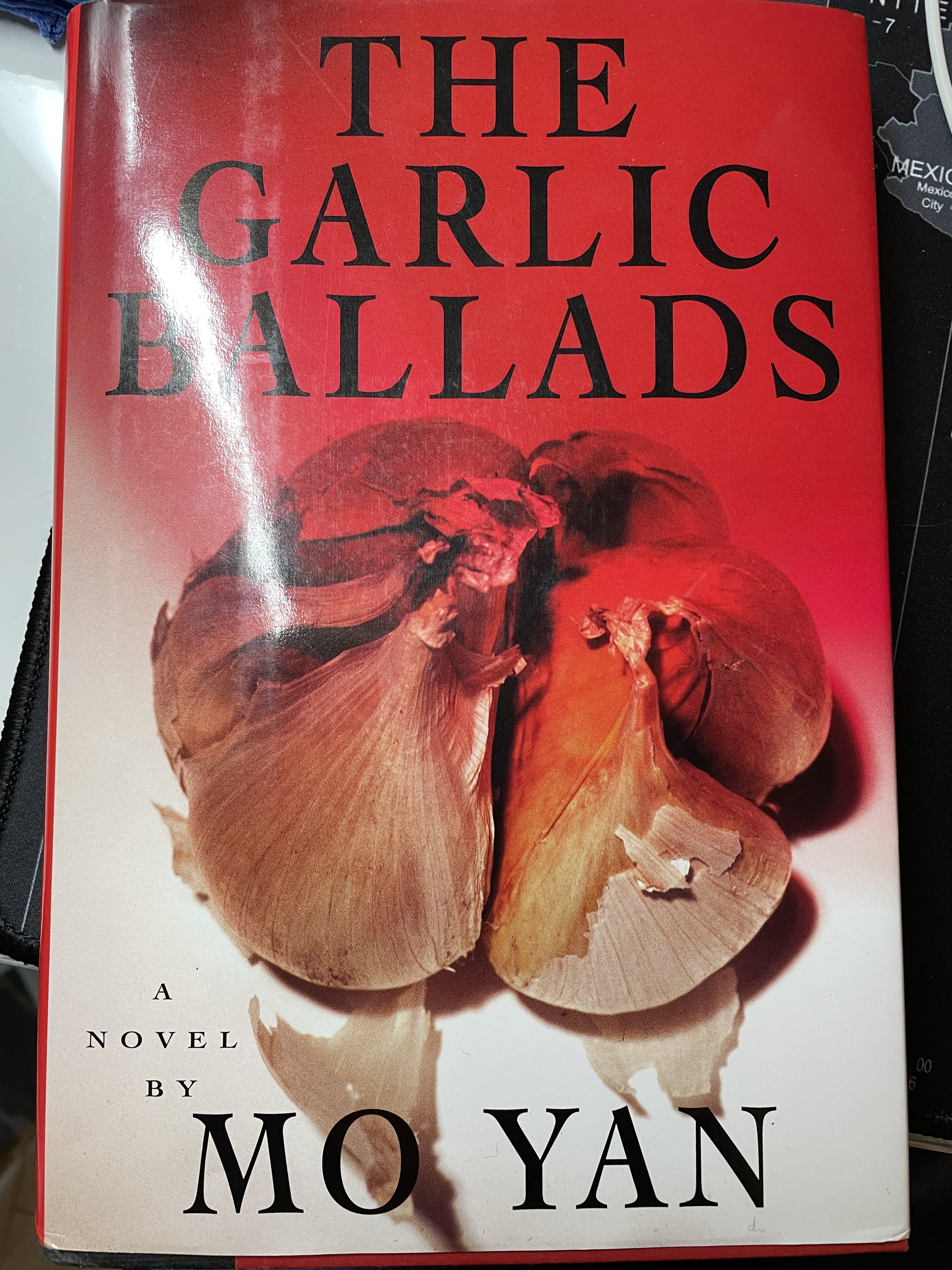
My international literary adventure has moved to China. This dark novel about life in a rural town after the rise of Deng Xiaoping was published in Chinese in 1988 and translated into English in 1995. The translator deserves credit of course, so I would like to congratulate Howard Goldblatt for doing an excellent job. I know nothing about Chinese, but the translator is well known and worked with the author, so it’s probably a pretty good English translation.
I’m not sure where to start.
Well…
Hmmm…I’m going to just jump right into the deep end of the pool.
At first, I thought this was a slapstick, black comedy because there was so much head-banging, kicking, and urine drinking. (No that wasn’t a typo.) The author was hung up on physical abuse (short of death) and the central character’s multiple experiences with drinking piss. It added nothing to the story, so it must have been fun to write about. I think (as if I would have any insight into the characters’ lives) it was to demonstrate the miserable state of the peasants who are central to this novel. But it came across as a Marx Brothers’ story, with their abusive behavior towards each other pushed to the point of nausea…
However, there was no laughter in this book, which was the problem because the entire story could have been told in a fraction of the words used. The repetitive beatings, abusive treatment, wailing and moaning about the plight of the peasants, and general patriarchal corruption and familial misbehavior lost its shock factor after twenty or so pages. The ending was as predictable as I imagine a Russian tragedy (I’ll be reading Dostoevsky and Chekov next), with practically mass suicide by the characters, described in hopeless detail. The survivors were either in prison or left to starve…
I lost track of the dialogue because of a complete lack of dialogue tags. He and she was used so much, in conversations with several characters, that I had to reread way too many paragraphs to sort it out, especially since everyone had the same grim, hopeless view of life. This is a dystopian novel of the first degree, right up there with 1984 and A Brave New World, but it didn’t have a message.
The story was broken up, with very few plot markers because all of the characters were the same. There were different threads centered on several characters, but there was no consistent timeline. The scenes jumped around, covering a year or so in current action, with many sudden flashbacks. The disarrayed storyline reminded me of “Catch-Twenty Two.” The disconnected development was exacerbated by the aforementioned abuse of pronouns, and sudden leaps from a third-person, past-tense narrator to a first-person, present tense narrative. What was that about?
Chapters started repeatedly with He, and matters were made more confusing by the characters having only a few surnames because it was a rural village with only a couple of family lineages present. (The translation follows the Chinese convention of surname first.)
And then there was the garlic.
This is a literary drama, which means it uses metaphors and colorful descriptions until the reader is fed up. If I never hear another reference to the smell of garlic or jute, it will be too soon. And what was with everybody having green sparkles associated with their eyes? Even the birds and lizards. And not by one character, but several. Were they all schizophrenic? There were some great metaphors and the hint of good literary fiction, but the author failed to broaden their horizons, metaphorically speaking. Rather than revealing the breadth of the rural experience, they kept jamming the same images down my throat…again and again, until I was fed up.
I can’t recommend this book. I can’t even think of a reason someone would want to read it. The blend of juvenile behavior (e.g., bodily functions), slapstick physical humor that wasn’t funny, and complete hopelessness doesn’t work for me.
Review of “The Girl, the Gold Watch & Everything,” by John D. MacDonald
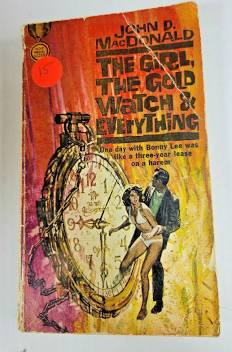
I found this oldie (published in 1962) as a Kindle book at the Fairfax County public library. It is a kind of screwball science fiction/fantasy adventure romp with strong romantic and sexual overtones. However, there were no overtly sexual passages, only references and brief summaries. I’m not here to summarize the book, however, only share my opinion about it.
First off, despite how old it is, I had no idea what it was about other than finding it listed under “science fiction.” So I was surprised at discovering the implications of the title–twice. I like to stumble into stories most of the time.
The story was told with a lot of dialogue. Everyone was given an opportunity to rant about their plans and aspirations regarding the object of their fascination. Unfortunately, the conversations got confusing because of an almost total lack of dialogue tags. I had to reread a lot of it over again to sort out the “he said/she said” problem. A lot of this was to try and keep the pace fast, but without male/female voices to distinguish their lines, it didn’t work very well. Then, sometimes, the author got carried away with redundant “he said” tags. Inconsistent. When the narrator was describing action (third person past tense), they almost never used the male protagonist’s name (Kirby). I got really tired of “he did this…”
Many times I got the impression I was reading a poorly written screenplay. (It was turned into a TV movie in 1981.) The plot is straightforward, so much so that I was inventing possible complexities to make it more intellectually challenging. It just plodded along, but that’s not fair: The action was constant if implausible, but even that got a little repetitive. I guess some stories are best told in film…
This is a classic 60s romantic adventure…with a twist. Despite my harsh criticism, I enjoyed it overall and would recommend it to anyone looking for some light reading. I wouldn’t call it a page turner, but I didn’t dread continuing my reading.
Broken Mirror

I live in northern Virginia, less than an hour commute on the Metro, from the Mall in D.C., and I’ve never been further north than Philadelphia or further south than Virginia Beach. I didn’t know there was a western Virginia. I had to use Google Map to find Blacksburg, just off old Interstate 81, when I went to my father’s funeral. Don’t get upset because we weren’t close.
My dad was a handyman, so my family was always cutting coupons. My mom was lazy, and she used me and my younger sister as an excuse not to get a job, which would have improved our family’s socioeconomic position substantially. I left home when I was sixteen to escape the prison in which I’d spent my life, but I remained in contact with my sister, Sheila. It was her imploring that coerced me to drive my ten-year-old Tesla to the frontier of civilization as I perceived it. The funeral was a disaster. Mom put on a mournful, widow show for a lot of people who didn’t mean anything to me—I didn’t even remember their names, or even their family relationships. My impression was that they were all waiting for their turn to die. Sheila was no different. I swore to myself that I would never contact her again, if I escaped this death trap alive. I frowned and smiled in turn throughout the tortuous day, but kept my mouth shut, and finally escaped, back to the studio apartment I shared with the woman I hoped to some day call my partner.
***
“Is your father finally buried and out of sight? Can you stop living in his pathetic, underperforming shadow, and stand up for yourself? I expect more of you than being a handyman, a job you were actually fired from, which is difficult to wrap my head around after Congress passed the Job Protection Act.”
Anong didn’t pull any punches. “Actually,” I began, “My dad was never fired, but proudly cleaned sewage pipes for forty—” I didn’t finish my sentence because she slapped me so hard, I bit my tongue.
“This isn’t a joke, Ellison. You haven’t proudly done anything in your life. That’s why the Department of Labor has finally found you, just like they found me. I know you don’t give a damn about working at the restaurant, but it means the world to me. I like being the head hostess. Labor found this job for me after I went through a thorough screening and evaluation process…”
Anong was a lot stronger than her 110 lb. physique suggested. I rubbed my stinging cheek and waited until her words faltered before interjecting, “What are you getting at?”
Her usually passive face contorted in frustration because she wasn’t able to communicate her concerns more clearly to her devoted but emotionally clumsy boyfriend. She finally found words, which stung me more than her palm had. “I grew up in Los Angeles, but when I failed to succeed and was sent to the retraining program, I had to move to Manassas, a town I’d never heard of in my life! It turns out that I love it here. That’s another issue. My point is that if you fuck up again, you could be sent to the other side of the country. I haven’t seen my family in two years. I can’t afford it. What happens if you find the perfect job, which just happens to be in Alaska? I don’t want that to happen because I—”
I finished her sentence. “I love you too.”
She was on me before my words had died in the chilly air of our studio apartment. I fell backward on the sofa as her lips assaulted me. It was several minutes before she spoke a complete sentence. “I don’t want to lose you, Ellison, so please don’t be sarcastic when you report for evaluation. And for god’s sake, keep your political opinions to yourself. I don’t mind, but the Department of Labor might not understand. The government can be sensitive about some things, like criticism.”
She expected a response. I cleared my throat and began, “The main reason I love you is that you are so open and honest in expressing your feelings.”
Her expression became skeptical, expecting a snow job, but I didn’t let that distract me. “I’m not like you—maybe it’s a case of opposites attracting—at any rate, I don’t know how to share emotions spontaneously like you, but I do readily express my opinion about what’s going on around me…I love you intellectually whereas you love me emotionally. Get it?”
Her brow furrowed in thought, then her pixie face nodded decisively. “I agree, but what are you going to do, so that you can stay with me?” Her hands were on her hips as she sat on my lap, her dark eyes challenging me.
She always asked simple questions, ones that never had easy answers. I began as well as I could. “Just like we love each other with different parts of our minds, we interact with the world from unique perspectives. I don’t think I’m going to be happy as the head waiter in a restaurant, or even the sous chef. But I promise you this: I will not be separated from you any longer than it takes to complete whatever bullshit testing and evaluation the Department of Labor has in store for—”
She straightened up as if electrocuted. “What kind of attitude is that?” Anong never asked multiple questions at once, which made it difficult to respond ambiguously.
I took a deep breath and said, “I love you.’
She smiled.
“I will not be separated from you any longer than is necessary to get through this Department of Labor bureaucratic nonsense. I don’t know what is going to happen but it won’t deter me from returning to you. Maybe I will be brainwashed as you’ve suggested several times, or perhaps I’ll be sent to a toxic waste recycling center, but I will come back for you. I am not the kind of person who spends his life fixing broken windows, like my father did.”
She grinned, pushed against my chest, and sat up while conceding my point. “I’m so worried about losing you, Ellison. Unlike you, I commit my entire being to someone when I feel the way I do about you…”
I grinned, pulled her close, and retorted, “My intellectual commitment is of similar magnitude to your emotional response, but it isn’t only as strong, it is more flexible. I will find a way to be with you. Do you trust me?” I had asked a simple question, like she always did, and she couldn’t avoid answering.
Without hesitation, she said, “Of course I do, but be careful. You are dealing with the government now.”
***
Anong’s words were quickly forgotten when I found myself in what felt like a detention facility. One of my first formal activities was a lengthy and repetitive conversation with a middle-aged man who was inordinately interested in how I had managed to be fired from a handyman job. The entire interview seemed to be choreographed. The Department of Labor knew why I was fired. I had confronted a gorgeous blonde woman, a wealthy tenant, with a used sanitary napkin I’d extracted from her toilet and suggested that she should read the disposal instructions the next time she shoved such a device up her cunt. I hadn’t bothered with an appeal because I saw the entire procedure, including my working as a jack-of-all-trades, as a farce. I hadn’t known what I was meant to be, but it sure as hell wasn’t the guy who unplugged drains and replaced light bulbs.
That preliminary interview earned me a chat with a psychologist.
Dr. Echo Heard had freckled cheeks that looked like they were about to explode. Her slightly wavy blonde hair framed a cherubic face frozen in a smile that suggested she didn’t believe anything she was hearing. She was the epitome of everything I loathed about modern America.
“Why are you here, Ellison?”
I had to think a minute to come up with a response to that question. I finally figured it out and, leaning back nonchalantly in the comfortable armchair that faced her uncluttered, glass-topped desk, I replied, “Because I don’t like talking to morons.”
“I was referring to why you are at the career center.” There was no sign of humor in her face, fixed in the same incredulous smile.
I modified my answer. “I don’t like doing the same thing day after day, year after year, maybe for the rest of my life. My girlfriend—maybe she’s my fiancee—doesn’t mind that kind of life, which is fine by me, but it doesn’t work for me, personally. We’ve talked about it a lot. She’s brain dead, but I’m not, so I can’t pretend to be happy doing menial labor, I know I didn’t go to college. I didn’t have the grades. Whatever. Look, Dr. Heard or Echo…whatever…the bottom line is that I don’t fit into this fucked-up world, and I just want to be left alone. Is that too much to ask?”
There were no notes on her desk. Her pale blue eyes never strayed from my suddenly self-conscious hazel ones, looking into my soul, before she said, “You could have gone to college. You had reasonable grades, if not outstanding, but you never applied, not even to a community college or vocational school.” She paused and her index finger touched her lips as if thinking, before she continued, “Why is that?”
She asked simple questions, like Anong. Difficult to duck. “I know how it works, Dr. Whatever, we slip into our cogs…just another piece of the machine, but I’m not doing that, not that I think the rest of you are stupid or anything, but I can’t do it!” I was on my feet, pointing my finger at her.
Her expression reflected none of my frustration as she calmly replied, “Do you think it’s a conspiracy?”
Her question caught me off guard. “I don’t know…uh…maybe, but it’s more likely just the human condition.” I caught on to her game and continued confidently, “The world, society, government, are nothing more than collections of people acting like me most of the time. They don’t have an agenda, or even a purpose. They only want to be left alone. But there are some people who have to keep themselves busy poking into other people’s lives, like you and the Department of Labor, but at the top are the elites, with a plan, no matter how ludicrous it is, to conquer the world and tell others what to do. I’m not sure I’d call that a conspiracy but it sure as hell is an elitist syndicate that couldn’t care less about everybody else…” I was sure I’d said too much, but Dr. Heard didn’t seem to care.
“What do you mean by the human condition?”
I hadn’t expected her to focus on something so obvious. “Well…uh…we’re just a bunch of monkeys with language. We’ve fucked up pretty much everything we’ve done. For example, I’m sure that whoever created the Department of Labor just wanted to help people find a good job, like Anong—she loves being the head hostess in a steakhouse—but the effort has turned into a witch hunt of unlimited breadth, which is why I’m sitting here instead of looking for another job.”
“How do you feel about your mother’s tragic death in an industrial accident?”
She’d done it again, just like Anong. I didn’t think before retorting, “What the fuck does that have to do with finding me a job?!”
“Do you resent her untimely death?”
I was on my feet again. “How would you feel if your mother was crushed beneath an eighty-thousand-pound container?! Hell yes, I resent a society that would allow that to happen, and her paltry death benefit was barely enough to cover rent for the shithole we lived in. I stopped caring about getting an education because I had to earn enough money to put food on the table for my family, which your detailed records certainly tell you included three younger siblings.” I sat down again and added, “Yeh, I resent it, just like I resented my father getting run over by a rich motherfucker, and becoming a paraplegic, another mouth to feed.”
Her faded eyes never wavered as she coldly asked, “Do you think their injuries were the result of an unfeeling syndicate, the inherent stupidity of people, or bad luck?”
I was starting to catch on to Dr. Heard’s method. I met her steely gaze and said, “All three, as well as their failure to foresee the potential consequences if they didn’t focus on what was going on around them – their accidents were partly their own fault.” I hated myself for admitting that my parents had both been complicit in what had happened to them.
Dr. Heard’s expression didn’t change as she said, “I think that’s enough for today, Ellison.”
***
The food was pretty good at the training center. Breakfast was served at six a.m., lunch at noon, and dinner at six p.m. exactly, with no exceptions. They were brainwashing us like Pavlov did his dogs—be on time or you don’t eat. It worked. I anticipated every perfectly planned and executed meal, and it was better fare than I’d had at home, even better than the restaurant where I’d worked with Anong. This place was like a country club, except for having a roommate who wouldn’t have been my first choice.
I shared a studio apartment with a guy I’d seen in a hundred movies. Jack was a fast talker who always had an angle, even for why we were being treated so well while spending our days playing roles in different work scenarios. To him, this wasn’t an opportunity to use role playing to find a situation that felt right, but instead they were poisoning us with psychoactive drugs to make us pliable for what was coming next. This wasn’t a government program that had gone off the rails. This was a conspiracy to perform some unnamable atrocity on us for an unknowable purpose. Jacks paranoia made me look benign. He’d been in trouble with the authorities throughout his life, mostly simple theft. He wasn’t a big-time criminal, but he told me about some guys he’d met while serving three months in a county jail in Illinois. Under the influence of total boredom, they’d talked about the underworld. In an affected Irish brogue, to match his red hair and freckles, he explained how an underground society of antiauthoritarian individualists had been created by people like him and me. When pressed, he elaborated on a clandestine network of hackers who could produce whatever digital identity was desired, for enough money. That was why he had focused on property crimes recently, to get enough cash to buy into the underworld. With a conspiratorial look, he boasted that he finally had enough money and it was all stashed in a safe place. I had saved a lot myself after meeting Anong and not needing much spending cash.
All we had to do was get out of the detention center. He’d contact his underworld connection, find out the details, then we’d get our financing together and make the deal. Anong could get another minimum wage job and I would have time to figure out what I wanted to do next.
Security was pretty loose at the center, but the campus was surrounded by a ten-foot-high brick wall topped by surveillance cameras. Jack knew a lot about security from spending some time in jail as well as his line of work (breaking and entering), so he’d spotted a camera that wasn’t operating and the adjacent one wasn’t installed for the best overlap. That’s where we would make our break, using a ladder he’d found in a shed. Jack was also a skilled lock picker. A very handy fellow to have around for a prison break. Trainees were allowed to wear our own clothes at the center, supposedly to increase the reality of the training exercises, so there would be no problem once we got over the fence. The most dangerous part, according to Jack, would be the two miles of woods and grassland separating the training facility from a nearby town.
Once we got to town, Jack would use an alias he’d created for just such an eventuality. It wasn’t solid but would work for a few days, maybe a week, enough time for us to get our money and contact the underworld.
The plan worked flawlessly. Right up to the point where I told Jack my account information and login credentials, so he could transfer the money to his account and buy our new identification documents. He verified the transaction, which had been executed on a computer in the public library, and we went to a quiet park to plan our next step. Jack’s eyes were twinkling when he explained what was going to happen next.
“This is where we part ways, Ellison my boy. I no longer have need of your services, now that we’ve completed our financial business.”
“Say what?” I stammered. His smile reminded me of a bully from fifth grade. In fact, Jack was the spitting image of that guy, older and with red hair and a different name.
“I didn’t have enough money to buy my way into the underworld, but I do now. Thanks for the leg up. So off you go. Go on now and don’t get any ideas about beating me up and getting your money back because, for one thing, I’m a lot bigger and meaner than you and, for another, it’s all in the cloud. Don’t have a dime on me.” He turned out his pockets to emphasize his last point.
I charged and knocked him to the ground, landing a couple of punches, before he regained his poise and fought back. I jumped off him before he could roll over on top of me, which would have been a very bad situation for me because he outweighed me by at least fifty pounds. I noticed a police officer on a bicycle entering the park and decided that if I was going back to the training center, so was Jack, and maybe I could sue him to get my money back.
I started jumping around, darting in and throwing ineffectual punches, avoiding his powerful but slow responses. I made as much noise as I could, taunting him, calling him names, lots of shouted profanities. It must have looked like a comedy sketch to the policewoman who came over to investigate. I noticed the pistol on her belt and smiled at Jack, dropping my fists.
“What’s going on here? Are you guys doing some sparring this morning?” Her disarming smile was no doubt the result of long practice and lots of experience dealing with violent men.
Personally, I felt better already but Jack looked nervous, his brown eyes shooting threats in my direction. I immediately answered her query. “We escaped from Cookstown Training Facility and were planning to disappear into the Underworld, as my erstwhile friend, Jack Sharp, presented his intention. What he failed to divulge was that he would steal my money and disappear, in effect financing his disappearance through a con game. I would like to press charges against him for wire fraud, theft, impersonating a fellow escapee…”
She wasn’t listening to me. Her hand was on her weapon as she completed a brief conversation on her headset. “Got it. Awaiting backup—”
Jack flinched and her weapon was facing him as fast as a rattlesnake’s strike. “Stop right there, Mr. Sharp, and get on the ground with your hands behind your back—you know the drill. Do it now!”
Jack obeyed and she put cuffs on him. He wasn’t going anyplace, although what Officer Mancini said next suggested he might be going to a different kind of underworld.
“Your buddy is looking at twenty years for escaping from a federal detention facility, not to mention that his criminal record meets the Public Safety Act’s criteria for life imprisonment. No wonder he wanted to escape to the underworld. The transaction you referred to has been cancelled, Mr. Barber, and you will be returned to the center because the federal government has no interest in filing felony charges against you.” She paused and asked Ellison, “Is it that bad in Cookstown? We have people showing up all the time. They don’t run or resist, and they don’t seem to be afraid when they’re returned, so why the whole underworld scheme?”
I recalled how I’d been talked into this stupid escape by a hardened criminal who had seen me as a victim, a thought that made me cringe in embarrassment. I shook my head. “No, but some of us, those who’ve had trouble finding a career—we don’t all know we want to be police officers when we’re kids—get a little freaked out at what might happen if we fail…again—if you know what I mean.”
Several patrol cars pulled up as she replied, “I know what you mean. I didn’t want to be a police officer until I went through the same training program as you, but in Florida. I love my job and my community, and you will too. I guarantee it.” Her understanding smile warmed Ellison’s heart as she went back to work.
***
I noticed a nuanced change in Dr. Heard’s demeanor when I entered her office after my return to Cookstown. Her expression was more like Officer Mancini’s supportive smile, until she introduced the older man waiting for me like a snake, his wrinkled hands laying on the glass surface of her curved desk, black eyes hiding what was going through a devious mind.
“Ellison, this is Dr. Defoe. He is the director of Cookstown Training Center. His presence here indicates nothing more than his personal interest in learning why some participants in the program try to run away. He is not here to judge or punish you, but he may have some comments after we’ve discussed what happened. Okay?”
I looked at Dr. Defoe. He had a square forehead framed by unnaturally brown hair for his age and his bent nose looked like it had been broken more than once. Maybe a boxer? Not a heavyweight like Jack, possibly a middleweight, but he could have kicked my ass even at his age. He nodded his agreement with Dr. Heard’s assessment of his role, so I nodded too.
I expected her to clear her throat but she just got to the point. “What happened?”
Another simple question. Ambiguous enough to encourage me talk about what was important to me yet focused on a recent event. I thought a moment about taking the deep, personal road or the freeway, finally choosing the first. “I was desperate to get back to Anong, which made me easy prey for a confidence man like Jack Sharp. Also…I admit I’m a little concerned about what happens to people who fail—”
Dr. Defoe interjected, “No one fails, Ellison, not at Cookstown or any of the other training centers.”
I couldn’t believe I’d answered her first, skillfully buried, question as well as her second. She was good, but Dr. Defoe worried me. The edges of his mouth were sinking under gravity, giving his facade an undeniable look of disapproval. I nodded curtly, avoiding eye contact, but didn’t continue my unfortunate tirade.
Dr. Heard’s hands disclosed nothing as she continued, “If everything had gone according to plan, would Anong have joined you and Jack in the underworld?”
There she went again, asking a single, unavoidable question. “I didn’t have a chance to talk to her about it because—I didn’t know we had that option, and we just wanted to be together, but she was so happy that… No. I don’t think she would have even packed a bag. She isn’t a fool like me, even though I call her brain dead all the time, to her face—why do I do that? I guess I’m just a stupid, fucking asshole!” I was on my feet but there were too many targets for my accusing finger, so I sat down, suddenly exhausted.
Dr. Defoe cleared his throat before beginning, “Do you have any more questions, Dr. Heard, or is it my turn?”
Dr. Heard almost grinned at his question but settled on nodding discreetly.
“What were you running from, when you joined a known felon in an escape from a low-security facility?”
I was too tired, after escaping and hiding out, not eating enough, dealing with Jack’s treachery and my own stupidity, to come up with a glib response. “I was just running…just running, always running… What do you want to hear?”
“The truth,” was his dry response.
***
“I love you!”
I grinned at Anong’s exuberant greeting. “I love you even more.”
She was laughing as she retorted, “I doubt that, Mr. Barber, but I’ll let it go for now. Are you getting used to being treated with respect?”
I spilled my guts about what had happened. She told me stories of people who’d done the same thing and returned, just like me, and finished the program. She saw it as a promising sign that I was on the right track. When asked what my favorite section was, I lied and said that I liked law enforcement—only because of Officer Mancini’s advice.
“Did you make sure to tell them about our relationship?”
Another unambiguous question. “They know that I love you and we are engaged.”
A sudden indrawn breath. “Really?”
“Several times, but whatever happens, believe me when I say that I will come to you and we will be married and live like real people—adults. I’m tired of this way of life… I’m sorry, I got carried away. We’ll be together and you will pursue your career while I follow mine, whatever it might be—”
“You’re scared. I can hear it in your voice. I know how hard this is for you, so I won’t lecture you, but remember one thing: We are going to be married and have a family, and how successful we will be is up to you. Do you understand?” She was doing a good job at being the supportive partner.
I got it, loud and clear. Stop fucking with Dr. Heard. Compromise. Find something in those occupational lessons that I could live with. Think about a job rather than drift into one. That was her real message. I had to give the subject a lot more thought. The problem was that I wasn’t intentionally antagonizing Dr. Heard and Dr. Defoe—I simply can’t control my mouth when confronted by authoritarianism. Unable to resolve my internal dispute, I settled for another compromise.
“It’s going to work out, Sweetheart—”
Did you just call me sweetheart?”
Her expression said it all, so I nodded my acceptance of whatever that appellation meant to her—and me.
***
The other trainees grilled me on why I had tried to leave the program without authorization, and what had happened, especially what had happened to Jack. I told them the truth. No one called me a fool but neither did they express any interest in attempting a similar escape, to become permanent exiles within society. That thought had never occurred to me. It sure as hell would have occurred to Anong, however, a fact that had somehow escaped me when I’d been under Jack’s influence. I sure as hell felt like a fool.
The training program continued. I concentrated on our assignments and tried not to think of it as a colossal waste of time. One-by-one the others found a trade that suited them and advanced to the placement program. They underwent more psychological testing and completed extensive interviews, as well as simulations of life in different social environments—no wonder Anong was so happy in her career. I was convinced that the training center represented a legitimate effort to place people in the right working and living situation by the time I was the only one left in my class. They had run out of occupations. No one had tried to convince me to choose one of the many we had been introduced to, not even a suggestion to think about it. It was like they didn’t care what happened to me. Paranoia convinced me that Anong was right about the hard labor that awaited me, as the only person to fail the program. I was pretty despondent when I reported to Dr. Heard to discuss my predicament.
Dr. Defoe was sitting in the same chair as before when I entered Dr. Heard’s office, but the atmosphere was subtly different. I couldn’t tell what was going on. For the first time, she cleared her throat before speaking. “How do you feel about the training program, Ellison?”
I found it easier to speak openly after spending several months at the Cookstown facility, so I didn’t hesitate to answer her question. “I’ve been trying, Dr. Heard. I really want to find the right career, butI don’t know…maybe I should be a carpenter, or stay in the restaurant business—”
Dr. Defoe interjected, “Why do you think you have failed to be placed, Mr. Barber?”
That was a hard question. I shook my head indecisively and said, “Maybe I’m an incorrigible nonconformist. I’ve had many of the jobs that were part of the training program, so…maybe I’m not cut out for doing anything. Maybe I’m a failure…”
Dr. Heard smiled sympathetically, her head imperceptibly shaking in disagreement. “No, Ellison. Everyone has something they enjoy doing, but for some of us it isn’t obvious. Tell us about your feelings with respect to the occupations you found most interesting.”
So I rambled for a half hour about appreciating the complexity of many of the jobs I’d had in the past, and some I’d been introduced to at the training center but, based on my experience with many of them, the challenges decreased with time and they would all quickly become routine. I pointed out that my average longevity in a career was less than a year.
When I ran out of steam, Dr. Defoe said, “I see your point, Mr. Barber, you may not be suited for any of the careers available through this program. What do you think, Dr. Heard?”
She nodded uncertainly and replied, “He will need further processing, probably at the Silver Springs facility. We will need to complete a few more tests to be certain, however.”
I imagined being connected to a brain scanner, the results of my further processing relegating me to a lithium mine in Utah, maybe a recycling center in Mississippi. My worst fears had been realized.
I was a useless human being.
***
“Things work a little differently here at the Silver Spring training center.”
I had already surmised my status as human refuse before the middle-aged woman seated across from me, in a nondescript office with a single window looking out on a luxuriant lawn, had pointed out the obvious. This was the last stop—lithium mine or recycling center?
“How’s that?” I asked, resigned to my fate and no longer willing to play the game. The boldness of a condemned man.
Dr. Springer smiled at me and said, “For one thing, Mr. Barber, you will need to upgrade your wardrobe. Managers don’t typically wear T-shirts adorned with pop art and those jeans belong in the trash can. For another, this is an open facility. You probably noticed the lack of security. Silver Spring is an open campus. Despite the absence of barriers, no one has ever failed to complete our program, a statistic we are very proud of. Finally, you will be expected to perform at the highest level which, from your work record and Dr. Defoe’s report, I don’t think will be a problem. Are you prepared to begin your advanced placement program?”
From the satisfied smile on her face, I assumed my mouth was hanging open. I closed it and said, “Yes, ma’am. Is there some way I can contact my fiancee and let her know where I am now? She’s been very concerned about my…well, about my lack of progress in the training program thus far.”
“Classes begin next week, so you have until then to complete any personal business. After that, you will be occupied with becoming the person you were meant to be, so I suggest you visit Anong and spend a few days together, before beginning the most intellectually challenging experience of your life.”
***
I could come and go as I pleased, so I followed Dr. Springer’s advice. I took the Metro from Silver Spring to Ashburn, Virginia, where I got a Lyft ride to the steakhouse where Anong was the head hostess. My stomach was demanding immediate gratification when I stepped up to the hostess station to face my fiancee.
“What are you doing here?!”
“I’m hungry and I heard that this is the place for a great steak and lobster dinner. Do you have a table, or should I sit at the bar?”
She led me to a secluded booth and immediately demanded, “Why did you quit the program and ruin our future?!”
I smiled sarcastically and replied conversationally, “I can’t wait to correct your misunderstanding, Sweetheart, but for now could I get a menu and a glass of water, and a glass of my favorite beer?”
She tensed, then her jaw relaxed and she nodded. “Your server will be with you shortly, but I’ll get your beer myself. I love you.”
Review of “The Memory Police” by Yoko Ogawa

This novel was written in 1994 but not translated to English until 2019, so this is a hybrid like other novels I’ve reviewed by Japanese authors. The translator did a very good job, however, and it reads very easily. The sentences are mostly very short, which conveys the sense of hopelessness that dominates the novel. The narrator tells the story in the first-person past tense, which is curious considering how the book ends.
The author uses a very clever technique to tell the story in two separate threads within one novel, with separate protagonists dealing with antagonists who steal their identities through a series of exhausting tribulations. This is a story about the hopelessness of fighting to stay alive in a confusing world. It can be interpreted as either a commentary on postmodern society or personal depression. It carries both messages equally well, at least to me. I lean slightly toward depression myself. It was a very depressing story.
The author does an excellent job getting inside the head of the main narrator (shall I say “outer character?”). However, there isn’t much there, just an inevitable spiral into resignation and submission to the unknowable void. Even a brave act of rebellion turns out to have neither meaning nor chance of success. The nameless heroine is representative of the world depicted in the story, a world with no names for places or people, where fatalism rules and those who resist are swept up by the “Memory Police” or go into hiding for the rest of their lives.
This book was classified as science fiction, but I would call it either fantasy or a horror story. Although it has some similarities to “Brave New World” or “1984,” it is more like “Animal Farm.” The plot is simply too fantastical to interpret as being anything but a metaphorical twist on social problems like alienation and depression.
As a science fiction story, “Memory Police” is a failure, but it is successful as a social commentary expressed by a likable, if simpleminded, narrator.
But I couldn’t take too much of it at a time. It’s that much of a downer…
Review of “Little Women,” by Louisa May Alcott

Read whatever you find. That’s my motto. I always heard about this book but I managed to never read it or see any of the movies based on it. It wasn’t my “thing” even though I had no idea what it was about. The title says it all.
It turns out that this is a short novel (probably even a short novella) written for teenage girls. It is also a literary study in character development — introducing, challenging, revealing the inner thoughts and emotions of four sisters during a tumultuous personal and family period as it does. Nevertheless, Jo is the central character and most of the action focuses on her growing friendship with the boy next door, but this line is dropped suddenly when the narrator’s attention turns to her older sister, who has a potential suitor. The whole story is like that. The focus jumps around a lot because of so many protagonists in such a short story. No subplot is pursued. Everything is in the air at the end, which leapt on my like a hidden tiger. Boy was I surprised…
As an adult fiction, it would have needed a lot more explanation of convenient gaps in the action, not to mention a better ending, but adolescents don’t have time for that.
Don’t Say a Word
This flash fiction is something I wrote as a practice piece in the writing group I’m in. It is in response to three prompts: 1) A character needs to display at least three clearly identifiable emotions; 2) Two characters are engaging in conversation, but one never speaks; and 3) Only 5 sentences can be longer than 10 words. And it has to be less than 500 words. (Note that I used italics on the longer sentences.)

I was having a bad day, one episode in a bad week. Thank god for Freddie. We met at our usual place, for a few beers. It was Friday. He was waiting for me, sipping a Bud. He didn’t look up as I sat across from him. Something was wrong. I let it go and ordered a Bud Light. I knew what was wrong, why the silent treatment. Marital issues. I kept my mouth shut until my beer arrived.
“Was it about last weekend? Did Lisa go ballistic because we got drunk?”
He nodded but didn’t look up. White knuckles said that this was worse than I thought. Freddie wasn’t a violent man, but Lisa was a handful. “Did she…like…you know…?”
His dark eyes met mine in confirmation. His fist suddenly slammed the mug into the table. Beer splashed. The server came quickly to clean up. The young woman knew Freddie.
I finished my Bud Light. “Another round. He’s cool…”
A nod from Freddie, acknowledgment, a moment to reconnect with my best friend since high school. We had always used subvocal communications to share our feelings. “You don’t have to say a word. We’ve been through this before. Lisa is really hot, right?”
He nodded, started to speak, but I interjected, “You hate each other, right?”
Another nod.
“But you both like the sex, am I right?”
His face lit up, illuminated by memories of his and Lisa’s sexual activity, which wasn’t limited to the bedroom. His brow furrowed in deep thought. I knew what he was thinking, so I added, “I don’t get it, Dude! You and Lisa are like wolves, the way you fuck and fight. But it works for you… Did she throw you out?”
A shake of his blonde head confirmed my suspicions.
“It was that Mexican chick, wasn’t it? Did you fuck her?”
He nodded. I threw my hands up in exasperation. “I can’t believe you fucked her for those big tits!”
Freddie shrugged, wanting to say something he couldn’t form into a sentence. He’s like that. The strong, silent type. I’m not like that, so I let him have it. “You are an asshole! Do you understand that simple fact?”
He nodded and his gaze focused on his beer.
I hadn’t finished. “I would kill you to fuck Lisa, she’s that hot. Well…you know what? Your most-recent extramarital affair isn’t such big news. I have a bulletin for you. I lost my job today. I’m out of work.”
Tears appeared at the corners of Freddie’s blue eyes. His marital concerns morphed into empathy. He does that naturally. He hugged me, offering to do whatever he could to help. His sofa was at my disposal.
Review of “Gods and Beasts” by Denise Mina
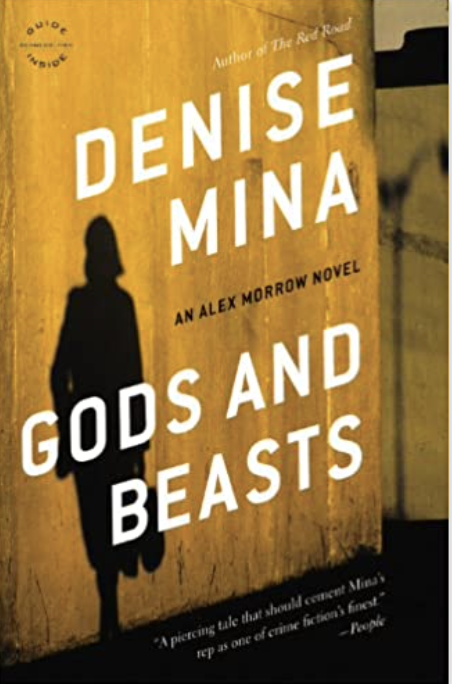
Another random read, another crime drama, but this time an incomplete part of a series, starting nowhere and leading to a dead end, and best of all, based in Glasgow, Scotland. The dialogue may have been accurate but how am I to know? Even the narrator (the story is told in threads based on close-in POV characters) uses slang, which meant northing to me. I looked a lot of it up.
Grammar and punctuation followed the usual paradigm, deteriorating at the halfway point but, because of the slang used by the narrator I don’t know if it was intentional or not. This book should not have been released outside of Scotland, or maybe the U.K. Maybe it should have been translated to American English.
I am certain there is a plot, but it’s a lot bigger than this novel, which I was not told was incomplete when I started reading it. This piece of the story had no plot to speak of. It was like a narrative of a…actually it wasn’t even a good episode of a police drama. The solution of the crime graphically described on the back cover was only in the minds of the characters, with no actual evidence. Pretty cheap.
The cast of characters promised a lot but the plot (such as it was) failed to bring their stories together in anything close to a coherent picture. The author had a great idea but utterly failed to deliver an interesting and rewarding, not to mention entertaining, piece of imaginative fiction. This novel isn’t worth the time it takes to read the back cover.
Thank god I borrowed it from the library and didn’t waste my own money…
Review of “A Consumer’s Republic” by Lizabeth Cohen

This is an older nonfiction book that has recently been rediscovered by the media. I heard an interview with the author on NPR and immediately purchased the Kindle version. Overall, I found it very entertaining and informative, despite a few issues. By the way, the subtitle is incorrect; the book is definitely not limited to “Postwar America,” assuming that is a reference to the Second World War. It actually starts at the turn of the twentieth century. It was first published in 2003, so it covers a tempestuous century of changes in how and why we buy stuff.
The grammar and punctuation are good, but the sentences get a little long, sometimes losing their train of thought and morphing into a new sentence before they end. I did a lot of rereading. At its core, this book is the culmination of an in-depth study of economic growth in New Jersey, extrapolated to the entire nation using reasonable assumptions, usually demonstrated to be legitimate. The Garden State is a good prototype because apparently that’s where the suburbs and mass marketing began, a response to the cost of living and lack of space in the New York City metropolitan area.
The author does a good job presenting the lighter side of consumerism while describing the struggle of disenfranchised groups (e.g., women and African Americans) to gain access to the market, which was seen as just as important as political rights. The entanglement of economic and political development is complex but presented pretty well in this book.
The author proves the existence of the “Consumer Republic” using many quotes from social leaders from the era that demonstrate the intentional development of the modern segmented, mass-market political economy called America. I had never heard any of this before, even though I lived through it and was one of the consumers that made it tick.
Everyone should at least be aware of their part in the evolution of identity politics in the segmentation of the mass market, which occurred over the last third of the twentieth century. It is a humorous and frightening story.
Unfortunately, I don’t think very many Americans will read this book (it is 800 pages long); at least, try to find a summary or, better yet, an interview with Lizabeth Cohen.


 Timothy R. Keen
Recent Comments