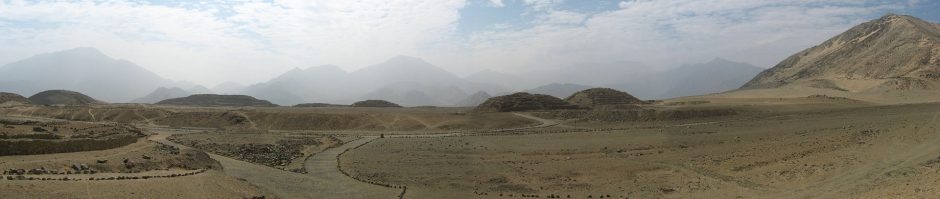
Hemlock Overlook Regional Park: Proterozoic and Cambrian Metasediments

Figure 1. View looking upstream at the confluence of Bull Run and a minor tributary that is examined in this post (see Fig. 2 for location). The morphology of this area is typical for Northern Virginia’s Piedmont region; ridges and small plateaus dissected by many, irregular, often meandering streams, most of which flow into the Potomac River. Basement rocks are weathered on the ridges and are only visible along the streams which have deposited tens of feet of mixed sediment. The flood plain is several hundred yards wide in some locations, consisting of mud and silt; cobbles and some sand line the active channel, forming bars like those seen in this image.
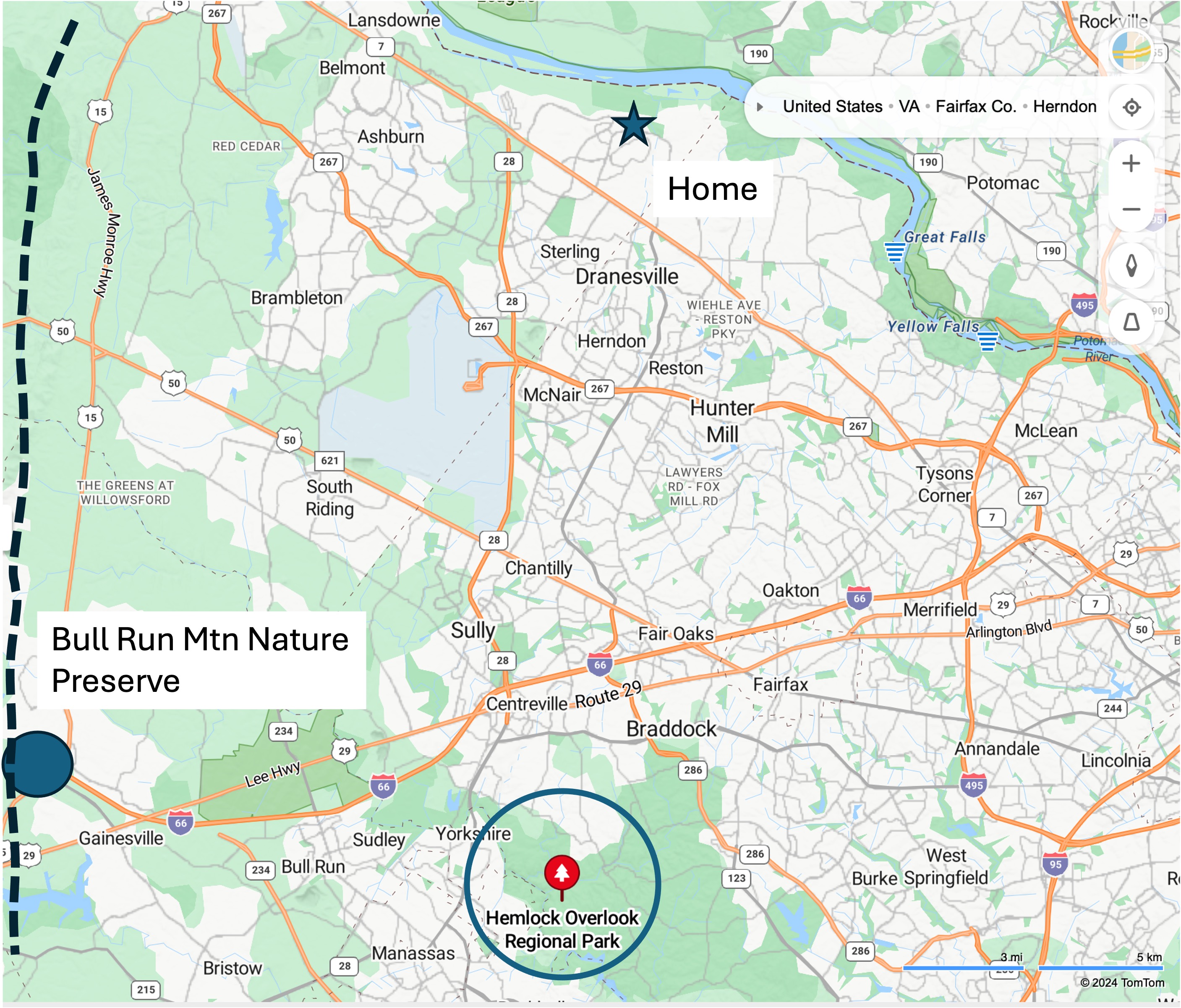
Figure 2. This map shows the area I have been exploring in recent posts. Hemlock Overlook Park is circled. Note that the study area is less than 10 miles from Bull Run Fault (dashed line), and an area we studied previously (indicated by the purple circle to the left of the map).
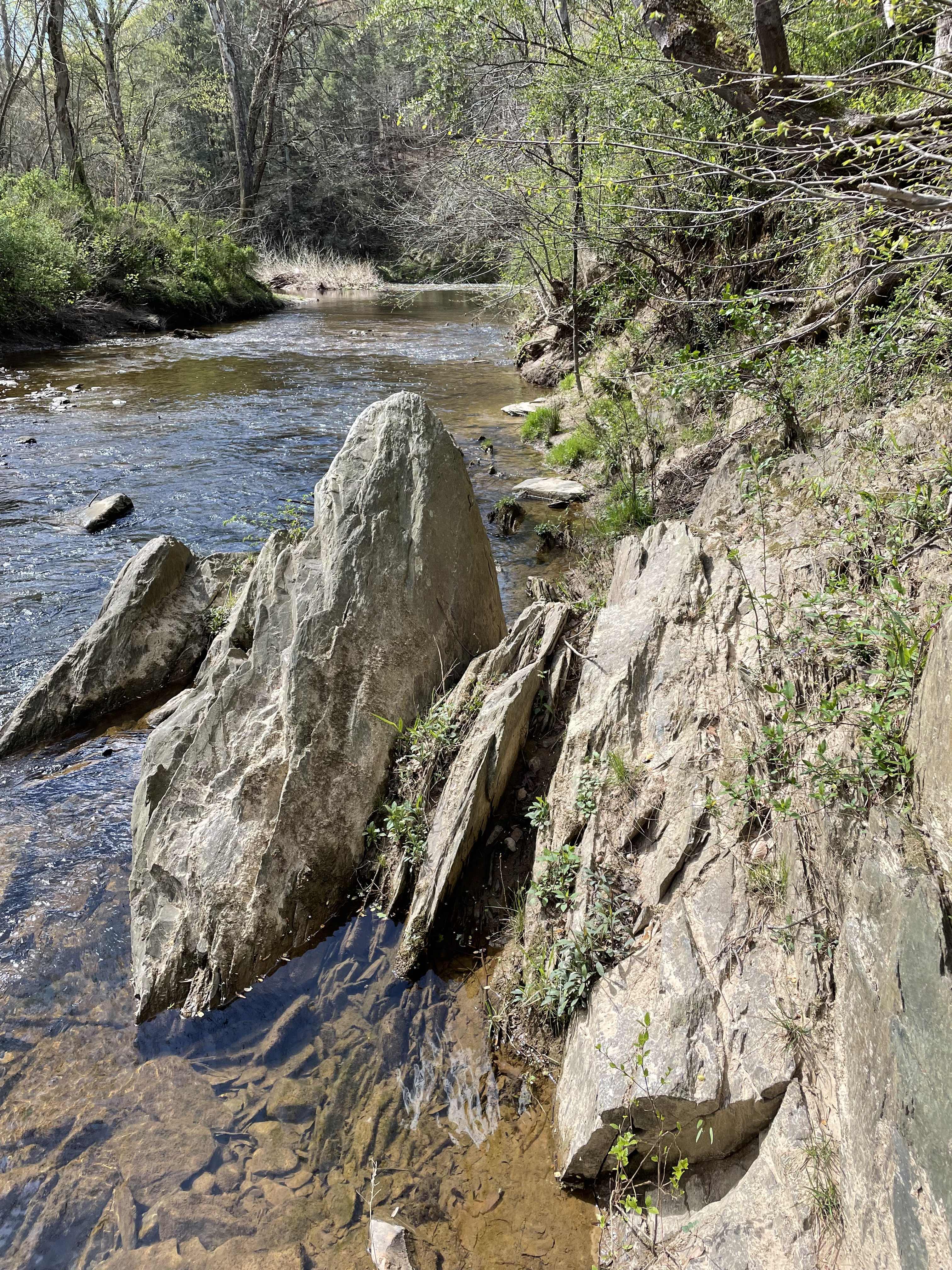
Figure 3. Photo of metasedimentary rocks exposed along the tributary creek shown in Fig. 3. These rocks have been rotated approximately 90 degrees and are vertical, with a northerly strike (not measured). They are fine grained and thin bedded, with thin layers weathering (fissile) in various locations within the study area.

Figure 4. Geologic map from Rock D of the study area. The blue dot is the location of Fig. 1. The green shade represents Cambrian metasediments (538-485 Ma). The lighter area is Proterozoic schist (1000 – 511 Ma). Our route followed Bull Run south (blue meandering line along right side of map).
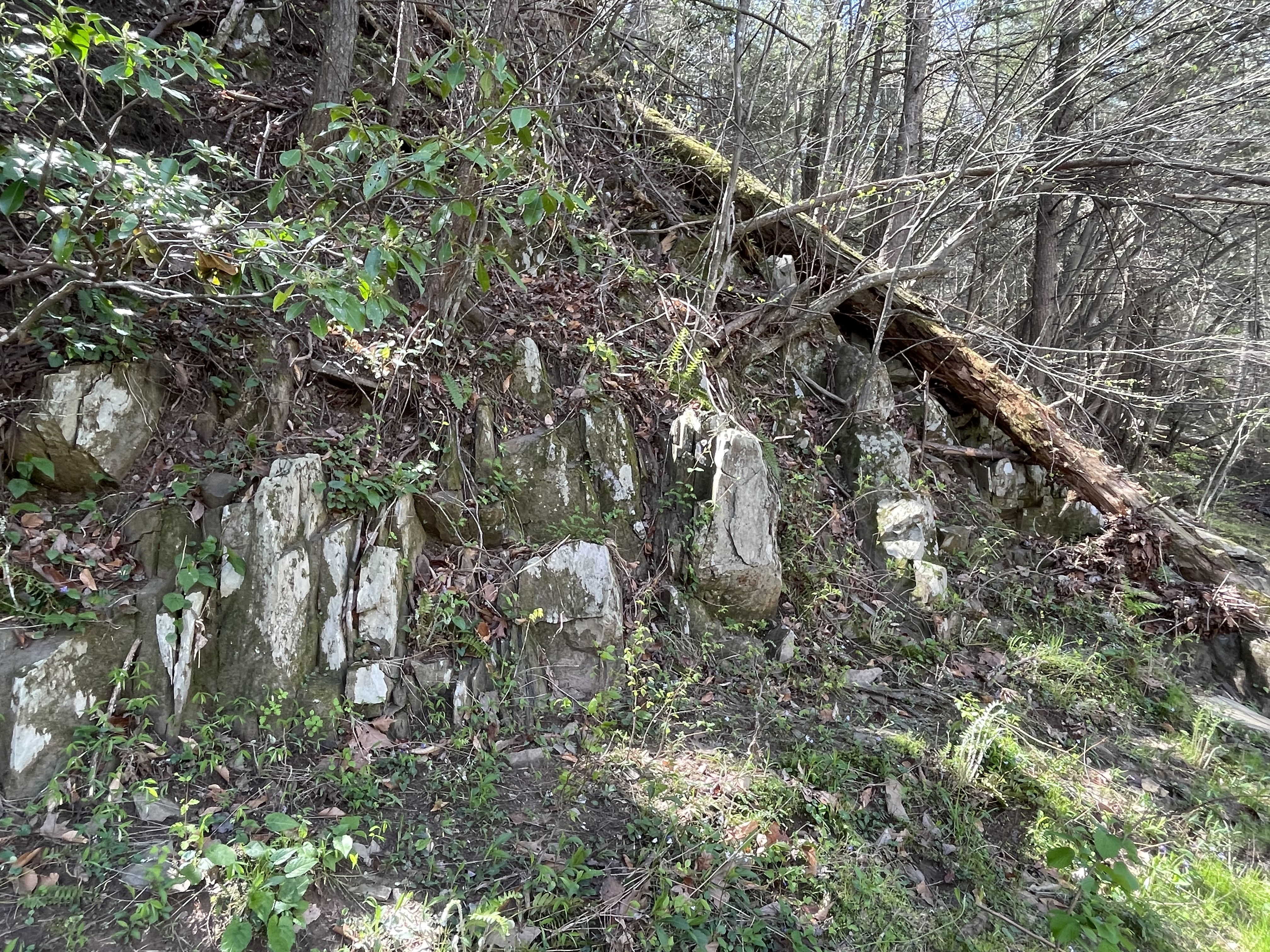
Figure 5. Photo taken further to the south along Bull Run (see Fig. 4), where the rocks aren’t as weathered as further upstream. Their metamorphic grade is increasing as well.
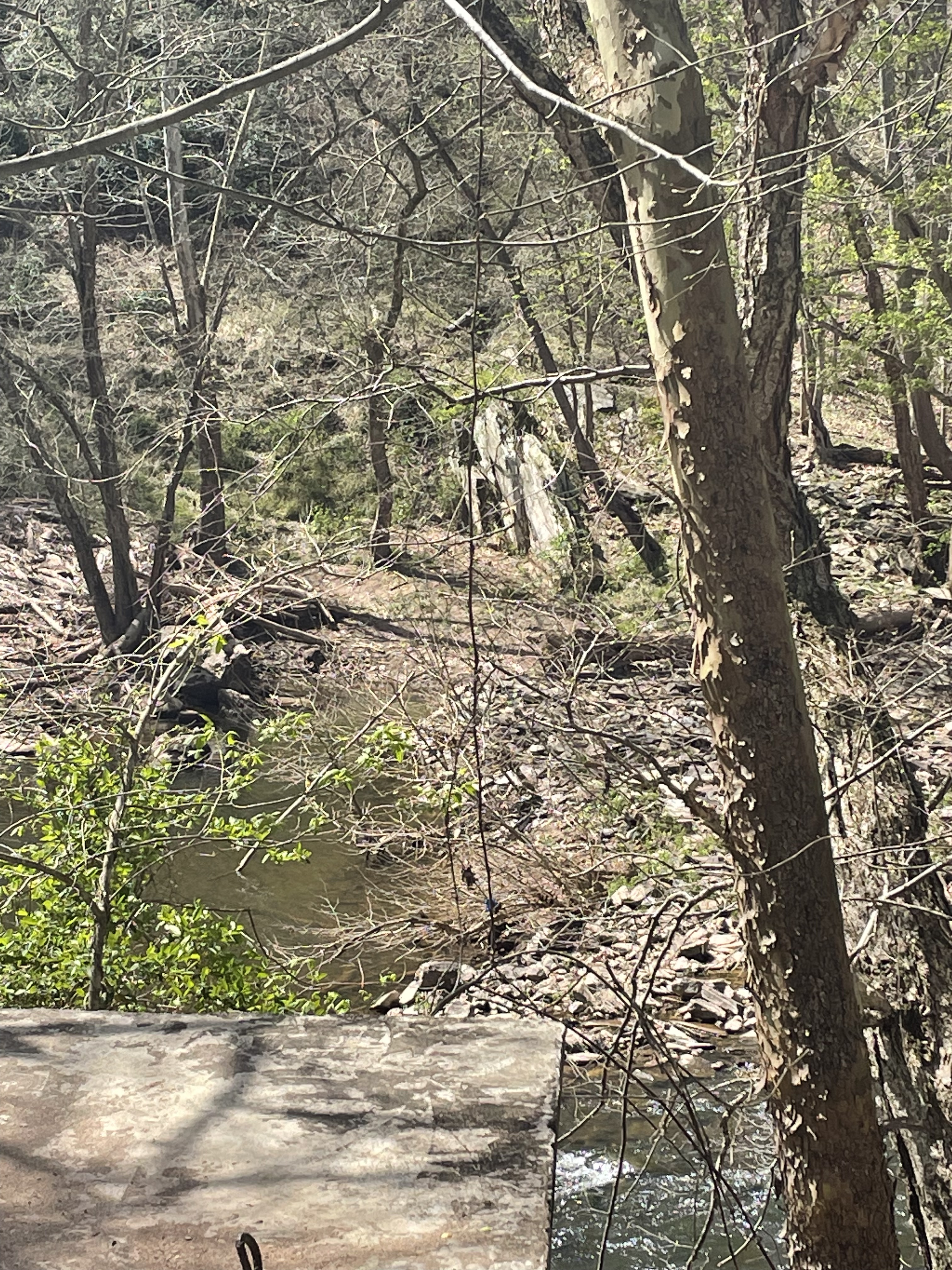
Figure 6. When we entered the Neoproterozoic schist (light-shaded area ~800 m south of the blue dot in Fig. 4), the river channel narrowed, which allowed the construction of the first hydroelectric dam in the region. Note the vertical schist exposed on the other side of Bull Run.

Figure 7. Photo taken several hundred yards south of Fig. 6, showing the resistance of the schist to erosion. This rock hasn’t weathered much and appears to be a massive layer, but looks can be deceiving when dealing with rocks in the wild.
SUMMARY.
The rocks we saw today are typical for this region: a period of mud accumulation in deep water, burial many miles beneath the surface; the older (and more deeply buried) sediments were transformed into schist while the younger rocks were heated less under less pressure. The higher-grade metamorphic rocks (i.e. schist) are stronger and more resistant to weathering, creating a narrow canyon that allowed a dam to be constructed.
This was a continuous orogenic event that lasted from about one billion years ago to 500 million. Needless to say, there is more here than meets the eye, but the rocks are not library books …
Review of “Hard-Boiled Wonderland and the End of The World” by Haruki Murakami

The title of this science fiction novel is a bit off-putting, but you can’t judge a book by its cover. This book was written in Japanese, so the English translation has a little of Alfred Birnbaum (the translator) in it as well. Between them they created a very good story. There are some loose ends and irrelevant additions, but I’ve seen those errata in every book I’ve read. And, as with other novels, there is some deterioration after the half-way point, but nothing distracting.
The style is interesting. The first-person narrator alternates between present and past tense in a deliberate manner, a clue to what’s really happening. The book is filled with clues that got my attention but which I was unable to connect. I don’t want to say too much about the plot because, on face value, it’s a story about parallel worlds and a man caught between them. The story reminded me of The Matrix (1999) and Inception (2010), but the truth is that those films were probably inspired by this book, which was published in 1991.
With dozens of clues presented to the reader, Murakami leaves the most important question unanswered, allowing the reader to add their own ending. I have my story and I’m sticking to it.
I recommend this book because it is readable and fun. And when you finish it, you have gained insight into …
Review of “Dava Shastri’s Last Day” by Kirthana Ramisetti

This is a story about a wealthy woman’s assisted suicide, but she had her death announced several days early because she wants to see what people say about her. I was expecting a lot of drama and disappointment. However, I was disappointed rather than the main character. The big surprises are presented early and discussed repetitively throughout the rest of the book. There is a lot of repetition as her adult life is presented in a series of flashbacks, which often occur without warning.
The author sticks to multiple point-of-view narration for most of the book but, confusingly, the narrator begins hopping between perspectives, even within a paragraph. That’s called “head hopping” and it is very confusing to read. No matter whose POV is used, the narration reads like a technical report. That’s too bad because the story is weak and needs some good writing to prop it up.
The characters are mostly undifferentiated, with a few exceptions. Thus, the dialogue is confusing because there aren’t enough “dialogue tags” to keep up. I had to reread a lot of the dialogue.
The central character likes music, so the author uses a nice trick of having songs from different periods of her life appear to represent her dying memories. I don’t think it was done well because I found myself annoyed at not knowing if real and fictional songs and artists were mixed up; you see, the story takes place in 2044. Usually, I would have checked out some of them, but it wasn’t worth the effort. Of course, I recognized Pink Floyd and a few others from more recent decades.
The reader is supposed to have mixed feelings about Dava Shastri, but I just couldn’t get involved with the story enough to care. To ruin an already poorly written book, the epilogue explains what happens to Dava’s children (all adults) over the next months to years.
Talk about beating a dead horse …


 Timothy R. Keen
Recent Comments