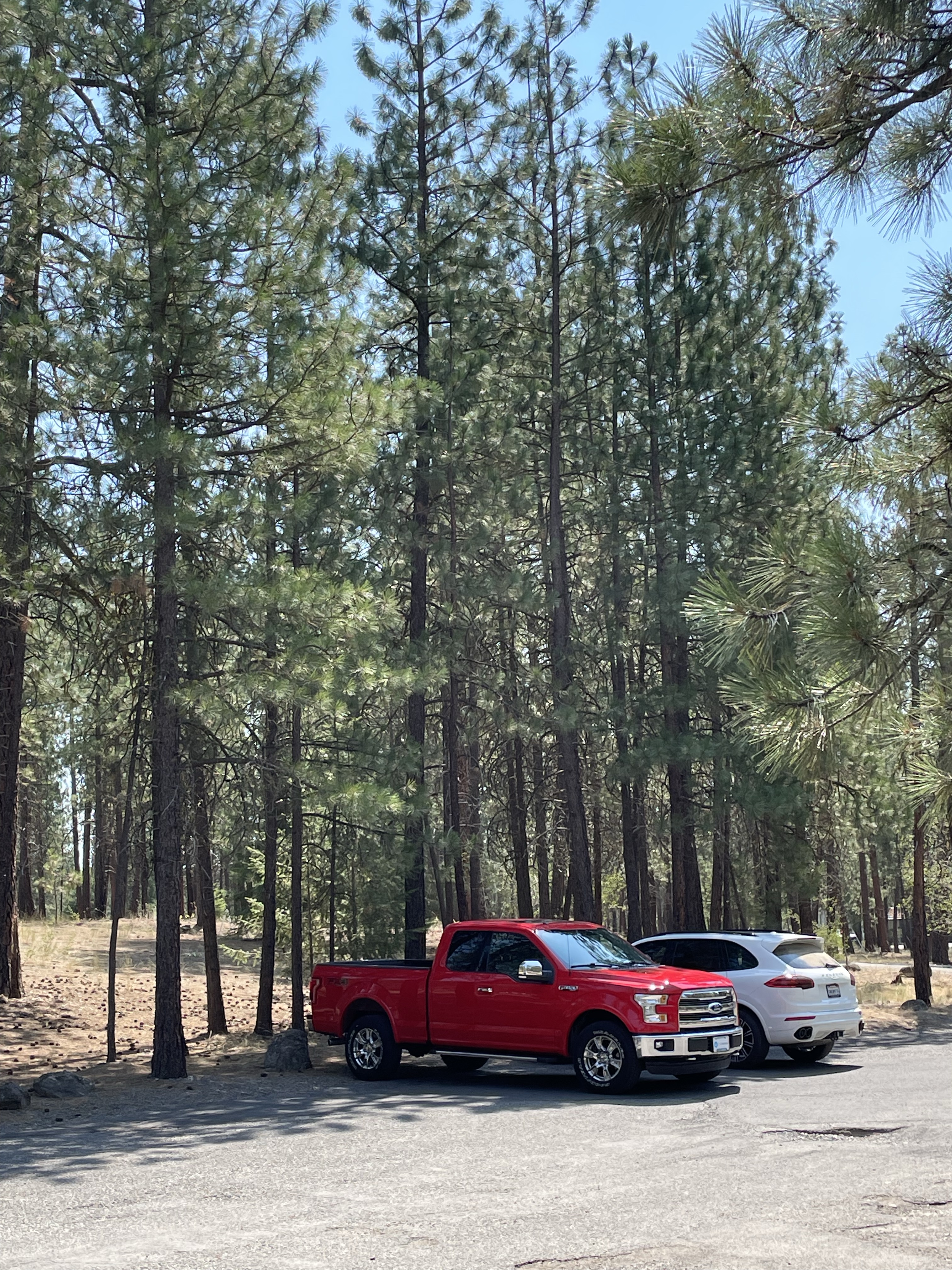
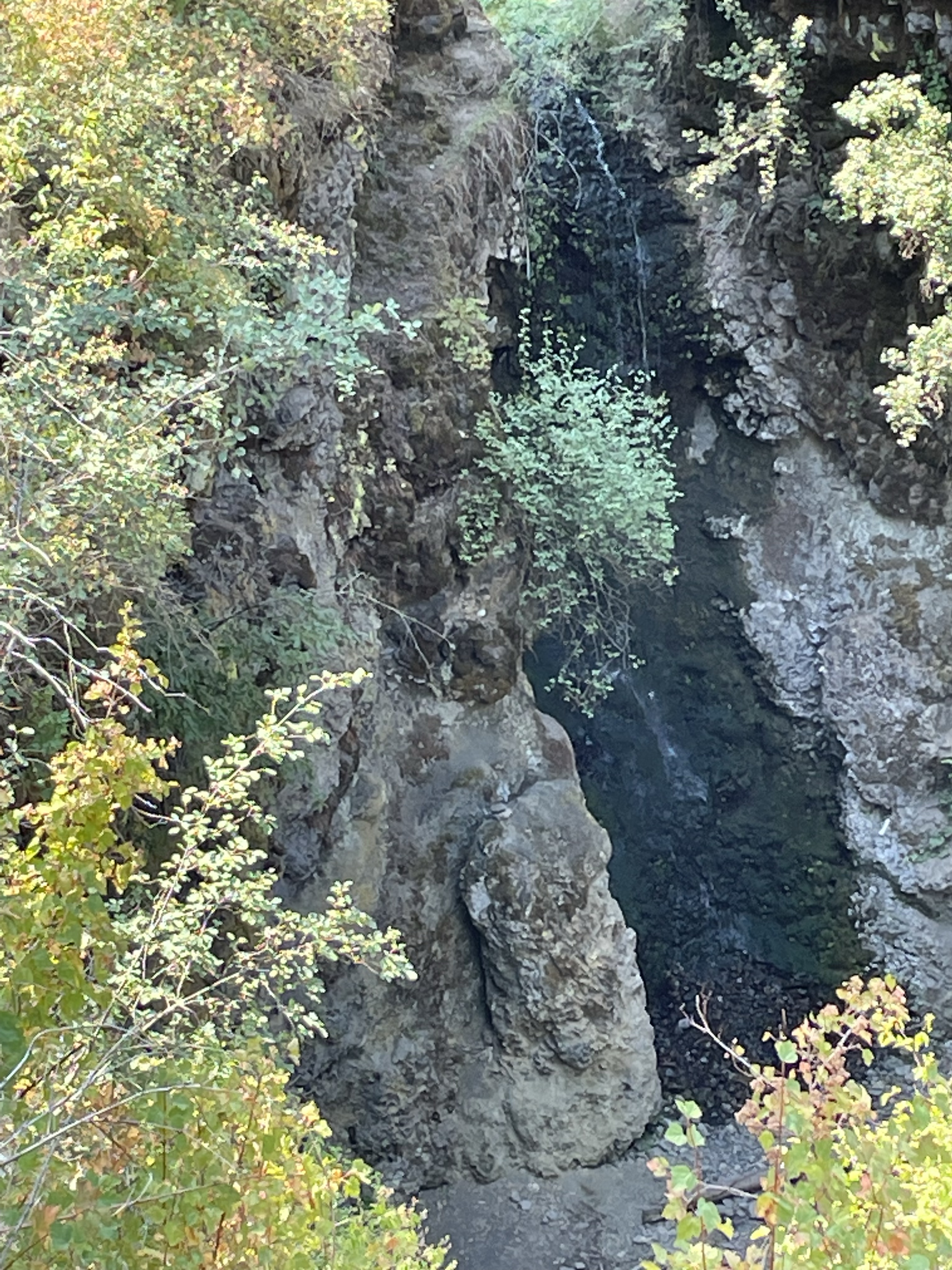
Figure 1. This photo doesn’t have anything to do with this post, but this is where I parked when I explored Riverside park, along the Spokane River. I didn’t have an opportunity to get a big picture of Indian Canyon falls, which is only 15 minutes from the “Bowl and Pitcher” because it is located in an area with heavy undergrowth, hidden between basalt scarps.Figure 2. Indian Canyon falls should be called “Hidden Falls” because it occupies a narrow crevice in a thick sequence of basalt. In this post, I will try and show how running water slowly but irresistibly forms chasms as big as the Grand Canyon. This photo shows the middle terrace of Indian Canyon; the top is about 20 feet higher and couldn’t be photographed properly to convey the correct sense of scale.Figure 3. Photo looking into the lower “gorge” of Indian Canyon. A cave can be seen along the far wall and the bottom is somewhere “down there,” about fifty feet below my vantage point.
Video 1. This video is from the same vantage point as Fig. 3, but now you can hear the water trickling over the ledge, see the water moving in a thin flow, and see the surrounding morphology. Figure 4. Photo from slightly further downstream. A thin, bright line shows the “water fall.”
Video 2. This short film shows the dynamics of the water running over the ledge in the context of the inner canyon. It really brings the experience to life.
Summary. I found Indian Canyon falls by looking for Lake Missoula park, which turned out to be closed to the public. However, the Park Service supplied a link to other geological attractions, with navigation instructions—GoogleMap took me to a nondescript, heavily wooded area, where I found something I hadn’t expected to see.
The rivulet of water flowing over the “fall” during the dry season is an omen of what is to come for this relatively unknown canyon (it was actually covered with biking and hiking trails). At first the trickle carries only mud, then sand, then gravel, then boulders, then …
Indian Canyon falls is how it begins. Where it ends …




 Timothy R. Keen
Recent Comments