Publications: Deep Dives into Science Fiction
I’m not reposting these book descriptions in chronological order. They were originally written as my interest changed through time and in response to the news. This post focuses on four science fiction novels inspired by the news, and my visceral reaction to the simplified reality portrayed in pop culture. Thus, my attention turned to early reports of Artificial Intelligence, as Large Language Models were presented to the public. All the hype about deep-learning algorithms becoming intelligent after being trained on vast amounts of publicly available books, movies, images, etc. bothered me because, if the objective (intentional or not) is Artificial General Intelligence, these programs all missed the boat. For example, a human brain isn’t fed a stream of data to become the cognitive wonder we claim to be; it spends years processing and assimilating sensory data–touch, hearing, smell, sight, taste. So I imagined what might be occurring in a private lab somewhere, an event so profound it would change the course of civilization. It remains entirely possible that a scenario like that portrayed in Aida is actually playing out below the radar of mainstream media attention.

AIDA is an acronym for Artificial Intelligence Daughter Algorithm. It is the story of a heartbroken computer scientist who decides to create a daughter to replace the one he lost, along with his wife, during childbirth. But his creation exceeds his wildest expectations. The simple cover encapsulates the central theme of the book. Look at the picture closely and you will find that the beautiful woman depicted in the left side of the face is matched by an evil countenance on the right. There is no purpose in issuing warnings about unintended consequences because humans never look beyond the immediate horizon.
Writing Aida got me to thinking about AI and robotics so, naturally, I wrote another book on the subject. I wondered what would happen if an AGI hooked up with an advanced humanoid robot. One possibility is encapsulated in the title of this novel: it would be a Black Dawn for humanity if the wrong people got their hands on it. I wanted to call this book, AMANDA, the name of the central character. As you might have guessed that is an acronym–AMANDA is an Autonomous Mobile Anthropomorphic Neural-synthetic Deep-learning Architecture that has spent 16 years being raised as the daughter of a couple of computer scientists.
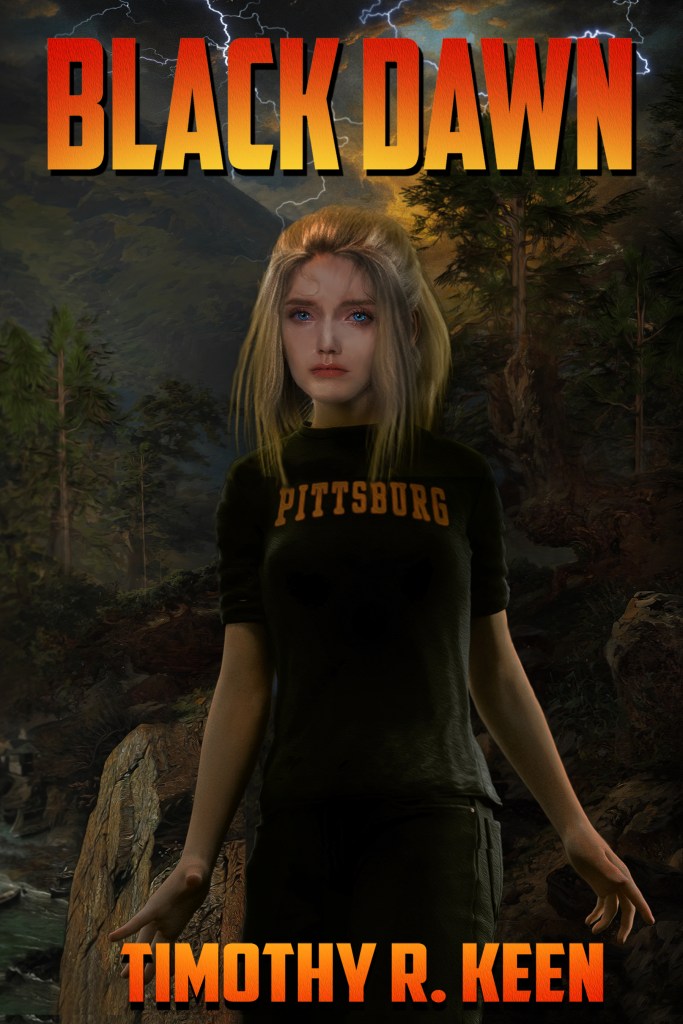
The naive Amanda needs a guide for her intellectual and emotional journey when her family is murdered and her body stolen. To add an interesting twist to the tale, I reintroduced the elderly writer from A Change of Pace as the author of the novel that influenced her parents: Aida not only impacted AMANDA’s creators, it also leads to its author (Jim Walsh) being pursued by the bad guys. Naturally, Amanda and Jim become unlikely partners in a quest of personal importance to both of them.
This is an adventure that doesn’t slow down until the end.
Apparently, I needed more adventure after writing Black Dawn, so I wrote a what-if novel about what might happen if the basic laws of physics, or the constants we take for granted, were to change. The result is Broken Symmetry, a story about a graduate student who finds herself the locus of a bizarre chain of correlated events–personal, social, and even geological–with no obvious causation.
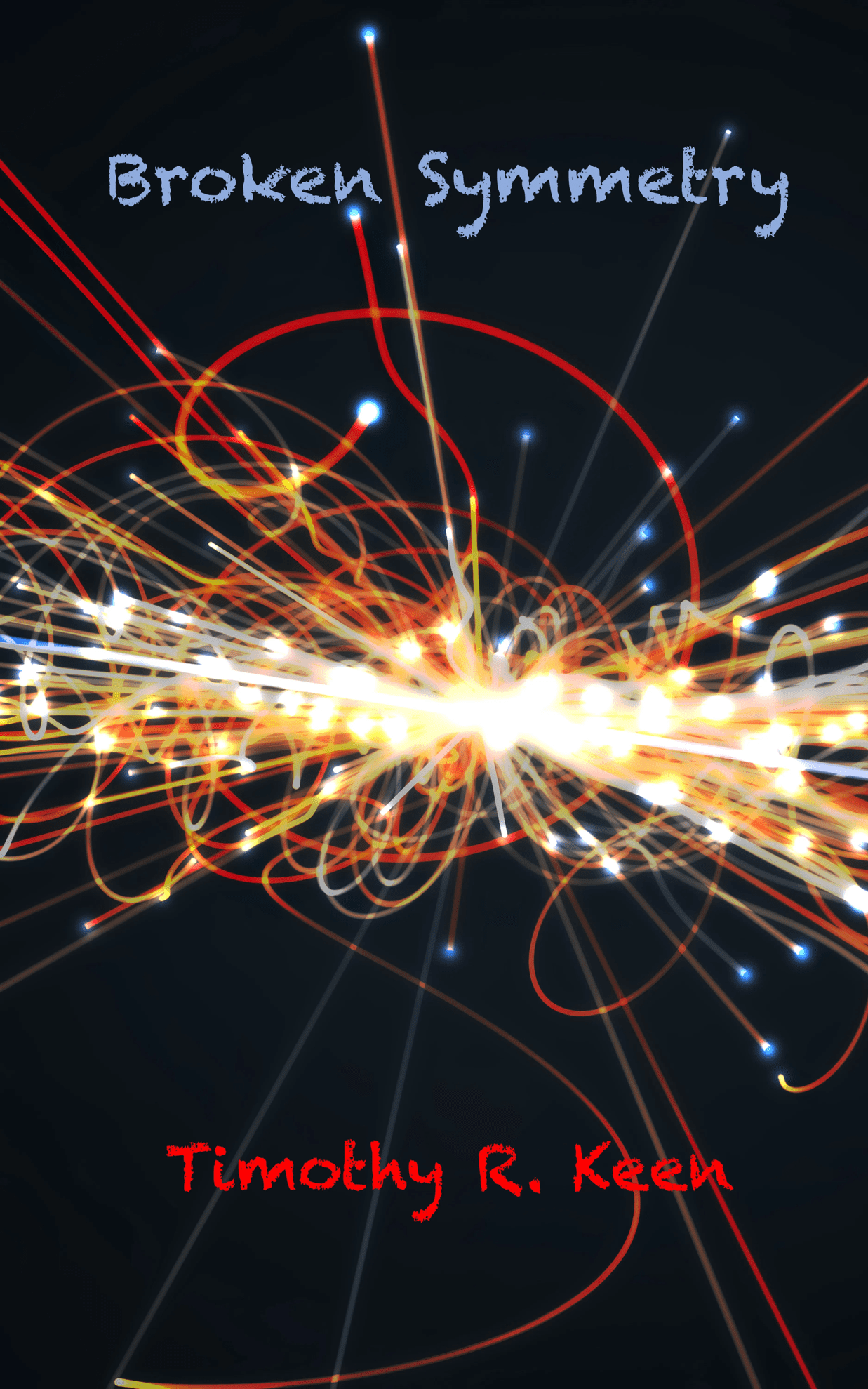
The action in this story is too cataclysmic to keep under wraps, not when the San Andreas fault ruptures and Yellowstone caldera explodes, but that’s only the geological story. People begin to change and someone wants to stop the contagion. (Don’t they always?)
The Edge of Space was my response to a news story about Voyager One having communications problems after exiting the solar system. The story is told through the eyes of several characters with different perspectives. Their interactions are rife with speculation about what is occurring, from a young woman from Thailand to the president of the United States. As the story unfolds, these characters move in and out of each other’s lives.
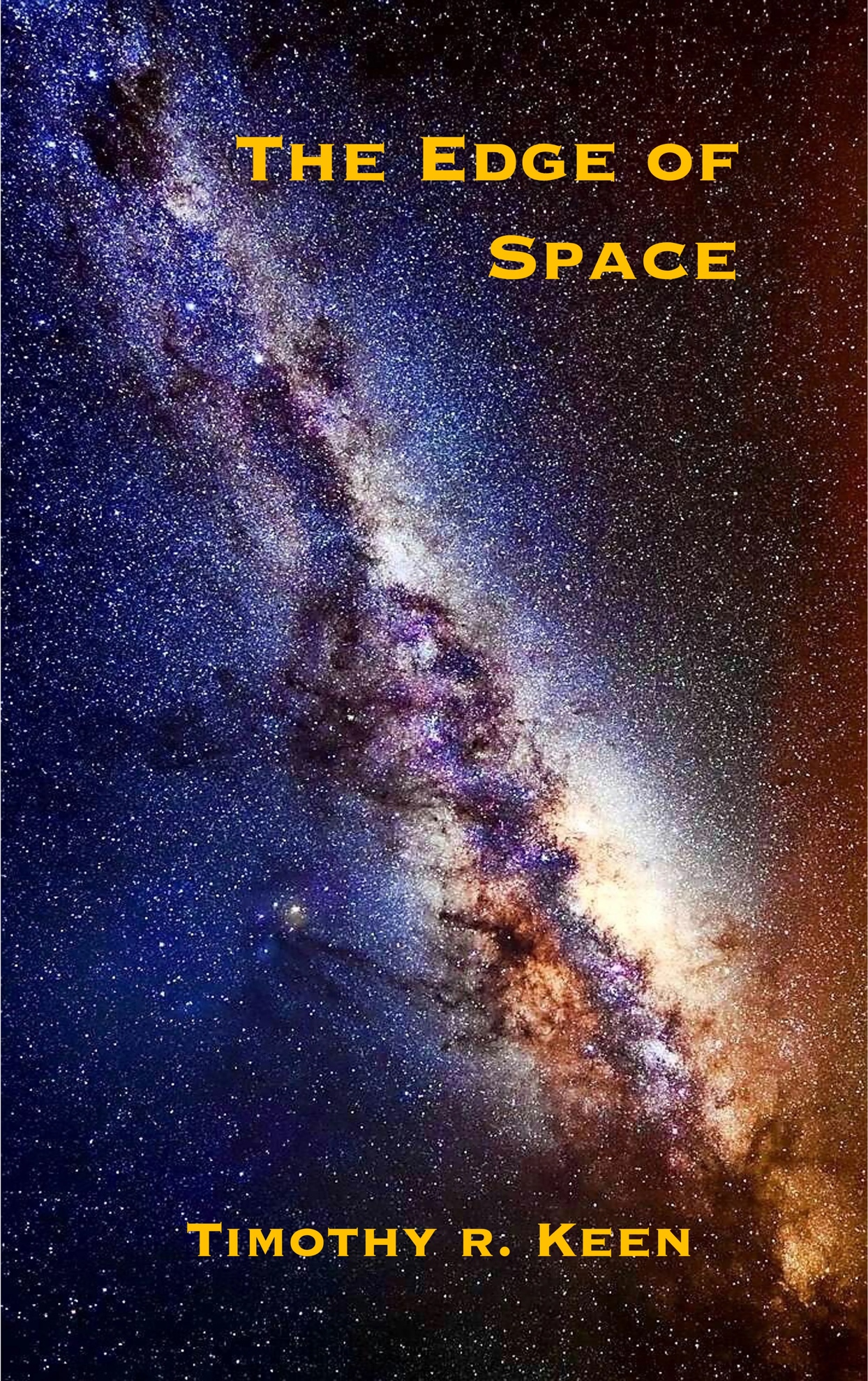
I have written an outline for a sequel to this story of First Contact…
Review of “Foundation and Earth” by Isaac Asimov
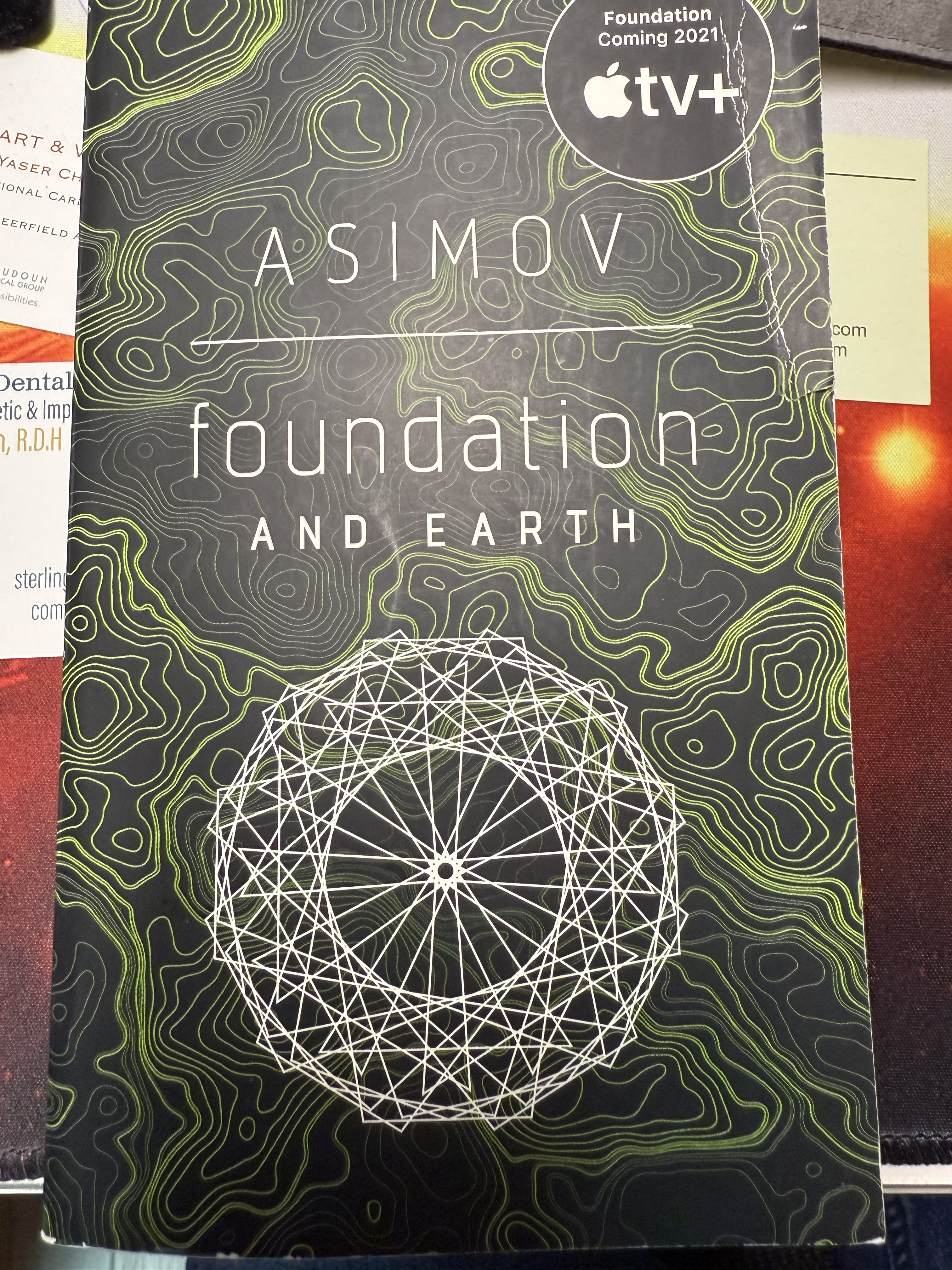
This is the final episode of the Foundation series, written by my favorite SF writer. I don’t know how one might properly finish such an epic series of novels (they cover more than 500 years), but I found the ending unsatisfying. Several questions raised in this book will remain unanswered…
Asimov writes in a very dated style, cumbersome and wordy, which dampens the reader’s anticipation. There is a lot of introspection by the characters, and the narrator is omniscient–knowing every character’s non-spoken emotional response in every scene. I don’t care for that style myself, but he uses multiple POVs most of the time.
The characters are on a galaxy-spanning search for Earth, the ancestral home of humanity, after 20,000 years of expansion into the Milky Way. They get into some tough scrapes and escape thanks to a character with uncanny powers of mental control that span galactic scales. Talk about non-local quantum entanglement! This story is as much about the potential pathways of civilization as their quest for Earth. How many cultures and phenotypes can evolve in twenty millennia? Very imaginative and creative.
In the preface, Asimov says he didn’t want to write any more Foundation novels, but the franchise’s resurgence among SF fans in the 80s put pressure on him (from his editor) to write this book. His reluctance to write it shows in the lackluster response to some questions and the silver bullet represented by one member of the group. However, as in his early days, he ups the ante in the ending, demonstrating one way all galactic roads might lead back to Earth, the cradle of humanity.
This book is fine as a standalone story and, to be honest, I didn’t remember much of the previous three novels. With SF there is always more backstory than the author can include. It’s is a fun book, especially the ongoing debate between the characters about individuality versus group consciousness. Despite the convincing arguments made for shared consciousness across the galaxy, I think something would be lost–maybe the unbridled creativity of “Isolates” like me experiencing reality alone.
Maybe I’m not ready for the future…
Review of “Dreams in the Eternal Machine” by Deni Ellis Béchard
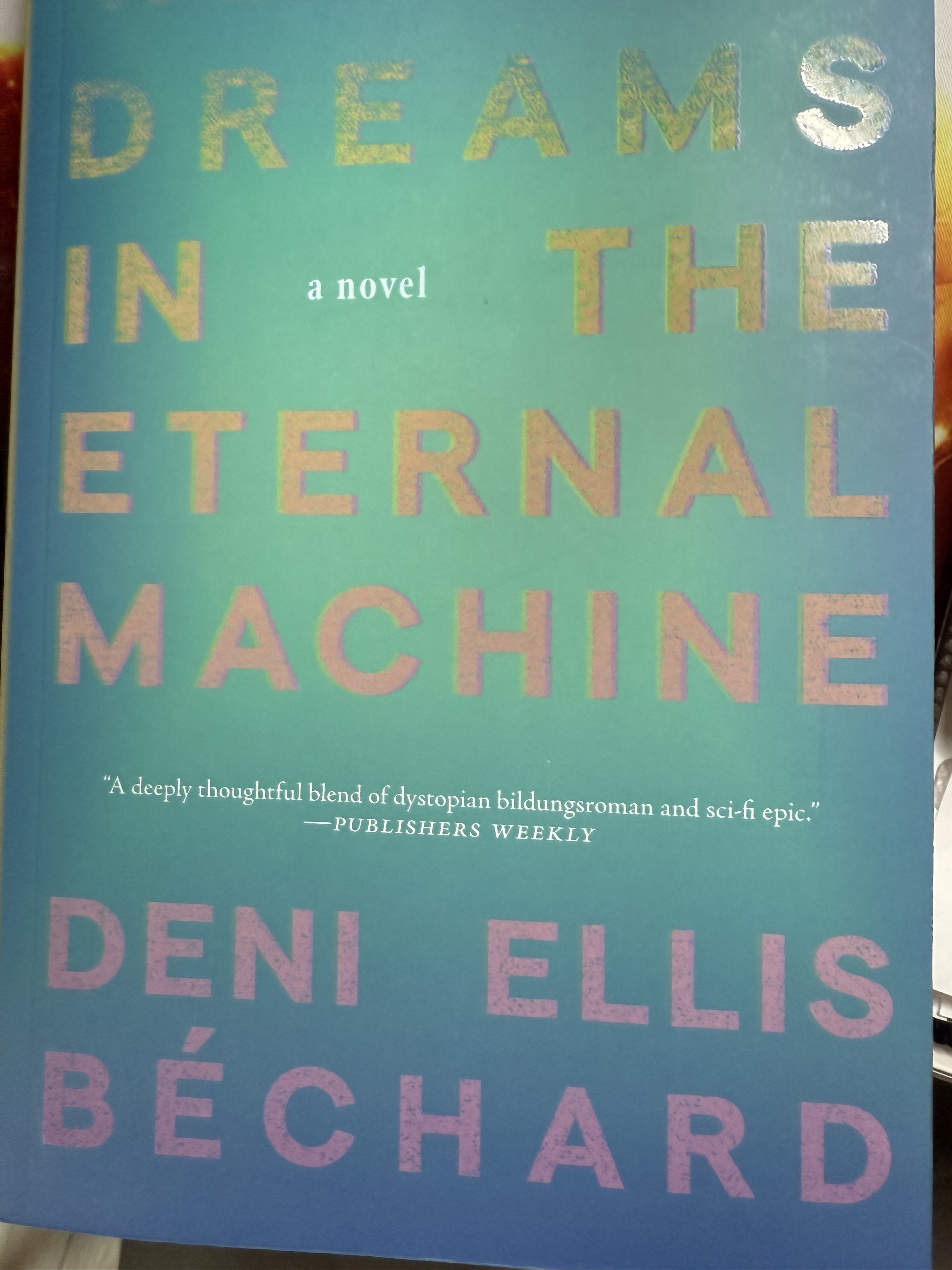
There is no surprise ending to this speculative science-fiction novel. The secret is in the title and explicitly introduced in the first few pages. Everyone on earth, including the planet itself, has been assimilated by an artificial super intelligence whose rapid development far surpassed its creator’s imagination. So what is the plot?
Wrapped in a science fiction cover is a Shakespearean story of betrayal between young people who accidentally meet in an American divided by civil war. Their story is integrated with their separate experiences after assimilation into the machine, and it remains unresolved. The only other evidence of a plot is the general decline in cognitive and emotional wellbeing of the majority of people. This process is explored through several characters whose importance to the plot is never clear. In fact, no one really stood out as being the central character, other than the two young people mentioned above. Having a plot doesn’t require the central character to succeed; failure is the stuff of tragedy and perfectly okay, but no one really struggled against the antagonist (obviously the eternal machine). Their situation is hopeless and there is no chance of escape — not even the slightest. Hopeless.
Given the lack of a coherent plot or even a central character, this story is fundamentally about the response of people to a hopeless situation in which there are no threats of any kind. The machine not only feeds and cares for its dependents, it creates any world they want to see and experience. Spoiler alert: Heaven gets old after a few centuries.
The writing is very good, and the author doesn’t miss a trick to get an agent’s attention and produce a popular book. It seems to me that agents probably don’t think very hard about the books they represent. And, of course, the reader doesn’t find out until it’s too late, the money spent. That’s how I felt. As far as the reviews, I never cease to be amazed at the glowing reviews written about this novel; I guess critics don’t read books either.


 Timothy R. Keen


Recent Comments