
Review of “Other Voices, Other Rooms” by Truman Capote
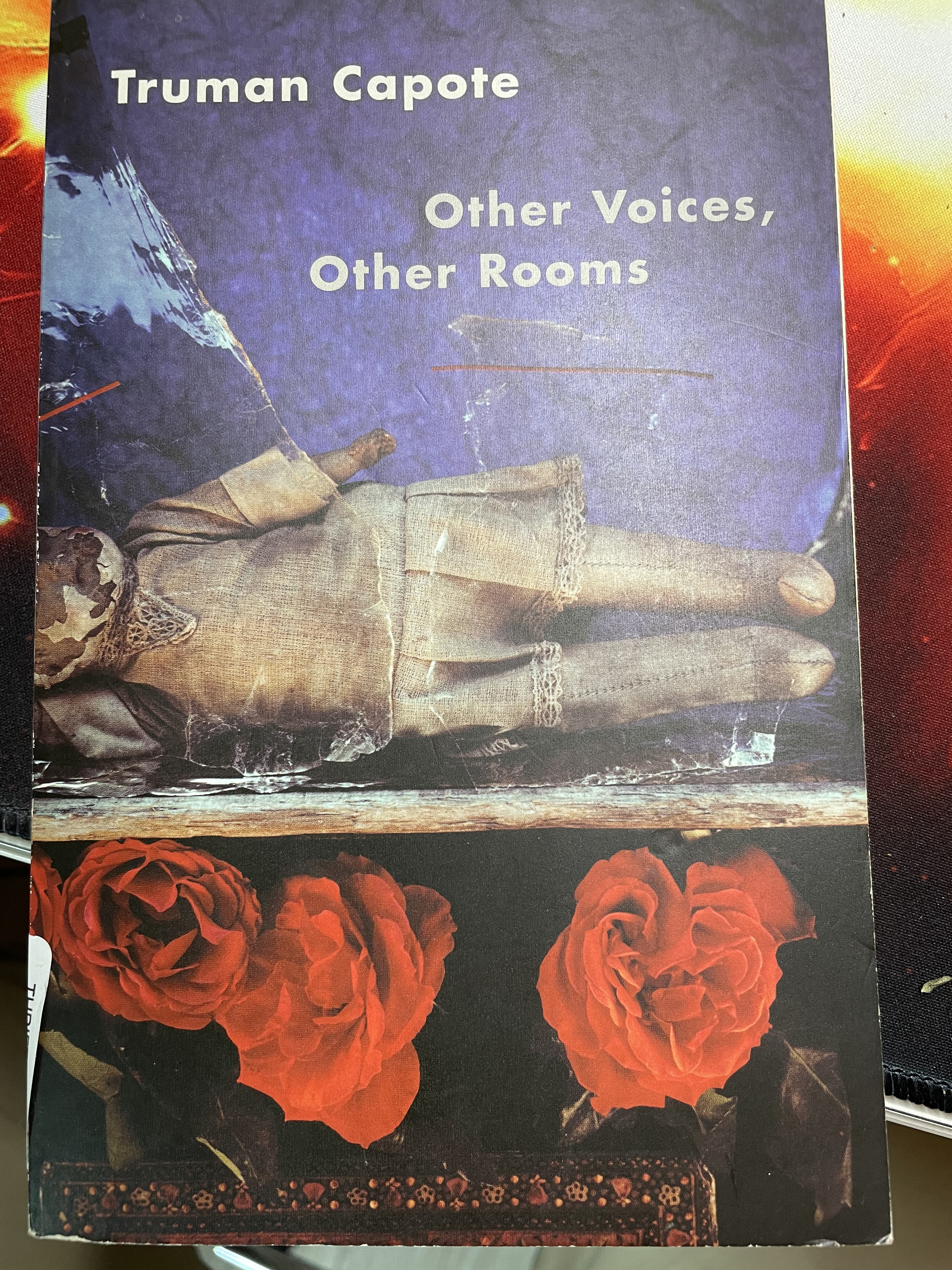
This is the author’s first novel. I read it because I enjoyed In Cold Blood, but it wasn’t fiction. I wanted to see how he wrote in my genre. This is obviously a first novel. It is both overwritten and underwritten; I will address these bold statements in this review.
First, the grammar and punctuation are excellent, and the writing style is easy to read and quite clear.
The author must have used every metaphor and simile available in English. He was apparently trying to write his “great American novel” so he packed in colorful, often nonsensical, metaphors. Some entire paragraphs are allegory. He must have read Ulysses. However, this is not a literary masterpiece; for one thing it is too short …
Underwritten, what do I mean by that? While written in the style of a nineteenth century English novel (e.g. Pride and Prejudice) this book is incomplete. As written it is 186 pages, much too short for such a writing style, and there’s a reason: the author didn’t have the stamina to complete it. Several interesting threads arose and were built up but, when they occurred, they were either wrapped up in a few sentences, or dropped like a hot potato. As with most novels I’ve reviewed, at about the halfway point, the author lost interest. They started using metaphors with no obvious connection, shutting down side subplots, and (seemingly) just trying to wrap it up.
This is a painful story told from the perspective of an optimistic boy of twelve (or so), although not in the first person. That was one of the disconnects I found in the use of metaphors: many of them were beyond the experience of the protagonist. Perhaps if Capote had gotten closer to his main character, he would have completed the book.
This is the last book by Truman Capote I’ll be reading …

 Timothy R. Keen
Recent Comments